AGI, Biotech, and China vs. The Internet | Balaji Srinivasan
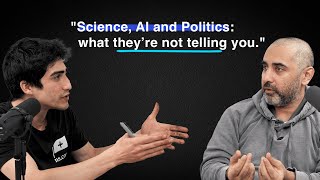
Balaji Srinivasan discusses how the FDA blocks medical innovation, why regulatory competition between states and tech platforms matters, and how AI systems will remain limited in adversarial domains. He frames geopolitics as China's centralized model versus the Internet's decentralizing networks.
For example, imagine you had a very fast spaceship, right? You still have to point it somewhere in three dimensional space and then go zoom in that direction. China's been like working out for like 45 years. China's really, really, really ridiculously strong. Ridiculously strong. Academic journals think, oh, my God, it's a corporation. They're so evil.
I think we really touched it all in this podcast and this was probably my favorite podcast we've done. Balaji is, as always, brilliant.
Balaji Srinivasa. Balaji Srinivasa Balaji Srinivasa Balaji Srinivasa. Balaji Srinivasan is an American entrepreneur and investor. He was the co founder of Council, the former chief technology officer of Coinbase.
What do you think about, you know, these foundation models coming, raising, you know, whatever tens of millions, maybe hundreds of millions of dollars.
You think, good luck. Obviously you can only know if you have a control. Oh, boom. Head explode. Headshot. Right. We didn't do a case control study on the FDA itself.
All right, we have a very special episode today of high alchemy. We're actually calling in very close to Singapore at the network School. We have Balaji here, who is, Needs no introduction really, founder, investor, philosopher, clairvoyant, you know, caller of society and culture. How are you doing today, Balaji? Good.
I'm doing great.
Yeah. It's great to have you. We were just on a stage actually giving a talk about genetics, and I want to start off actually in a place that usually people don't take you. They know you for crypto, they know you for, you know, politics, they know you for, you know, in a network school, network state, et cetera. But one thing that has always struck me is very interesting is you started in genetics, yes?
Yeah.
Right, yeah. So tell me a little bit more about Council. Tell a little bit more about kind of what you built in.
What.
I mean, you were at Stanford doing a lot of different computational genomics work actually. Tell me about that and how you started Council. Why there? Yeah, tell me more.
So, so actually, you know, I. In a different life, I would have just remained like an academic researcher. And I actually have, I think like 5,000 citations or whatever on, on Google Scholar or something like that. That was a very important metric for me 25 years ago. It's completely unimportant today. But it's interesting. I had always been interested in genomics and I'd interested in genomics before it was even called genomics, DNA and all that kind of stuff, partly because I was interested in Longevity. Back in the 90s there's this book, this author named Vikram Seth, you ever heard of him?
I don't think so.
He's kind of a very poetic kind of writer. And I wrote this book called Golden Gate and it's actually like almost a, it is a poem, so it's very old fashioned. It's actually rhyming like every sentence all the way through a book length. It's very unusual and it's this beautiful book and towards the end there's something, it's very melancholy and there's this part at the end where he's like, oh, and they were all going to die someday, blah, blah. And I probably had a reaction that one out of a hundred thousand people had who read that book. And I grabbed the book and I just threw it across the room. I'm like no way. And I just opened up this Stanford bulletin. I was like, okay, how do we learn about telomerase? How do we learn how to fix this? Or what have you. Just something about how he had said it, it was so.
So what year is this in your Undergrad? Undergrad?
Late 90s, something like that. Yeah, yeah, yeah. And so like right around the Human.
Genome Project, then that's going on properly corre.
That's right. And the thing is that was around the time that bioinformatics became a subject because prior to that there wasn't enough information. First of all, computers weren't advanced enough, the Internet wasn't advanced enough, there wasn't enough data collection. But essentially the advent of both the Human Genome Project and the Internet roughly around the same time in the 90s led to people sequencing DNA, putting it on the Internet, having other people analyze it. And thus began the concept of a so called dry lab, you know, in biology, where you could, without any pipetting or what have you, analyze it and produce results. So in the early, you know, basically I worked in many different areas of genomics, human genomics, population genomics, drug dosing, like the Warfarin consortium and so on and so forth. And eventually it came to the conclusion that if you were doing something as an academic project and you spent a thousand bucks, for example, and it's more than that, but 1000 bucks on every row when you're genotyping it, than to do a thousand people would cost you a million dollars, right? But if you can make even a hundred dollars per row, then after you did a thousand rows, you wouldn't run out of money, you would keep accumulating money. This is a very obvious calculation but it was non obvious at the time, which is like, oh, if you could make even a small margin on every row, then you could collect enough data to actually analyze things. You don't have to go and beg the government for, you know, money. Because the thing about grants is they decelerate. So grants decelerate. And because they decelerate, then it's harder to get more money. Well, what if we, you know, you built actually accumulate data on its own and then, you know, at that time, the thing is, I was still, even though I always had quasi libertarian intuitions, I didn't really understand what a business was, what a P and L was, anything like that. Nothing, nothing of that. I actually thought that business was hard insofar as it was math and computers and everything else was just trivial stuff, whatever. And of course, I was completely wrong about that. I had to learn all that. Anyway, point though is that after many trials and tribulations, we built a large company. The single most important thing that I took away from that whole experience was the extent to which the FDA is the primary bottleneck to global health. Right. Like, you know, what year, what year.
Did you start the company? What year was it?
2007.
2007, yes. And so basically the core premise was, hey, let's use gene panels, presumably using genes.
Yeah, yeah, that was mutation. Exactly.
Let's use gene panels and let's identify people are basic carriers for genetic markers that don't impact their risk but could impact their future children.
Right. This is like 20 years ago almost. Right. And the thing is, in the early 2000s, people had not yet cracked the code on polygenic risk. Right.
It's classical Mendelian analysis, right?
That's right. And in my view, in general, what you never want to do is PhD.com? phD.com means you are trying to make a basic scientific discovery work in the context of a Time Limited.com vehicle. Right. A lot of people do that, right. PG.com never works because you're trying to do the core discovery as you're trying to build a company. And those are two totally different kinds of things, right?
100%.
And so when people try to do that, they are. They're very. Once in a while, once in a blue moon and biotech, it can work, but most time they set themselves up for disappointment instead. What you usually want to do is you want to say, okay, there's all this academic research out here. Let me take the thing that's actually become a little boring, that is two or three or five years Older. Exactly.
And productize it effectively.
Exactly, that's right. Because that's the kind of thing that it's no longer exciting academically. It basically works. And now the hard part is the logistics and implementation and it's always hard to actually scale something up and there's new things you learn about that and so on and so forth.
No, I think that's exactly correct. It's like very much productizing some sort of intellectual frontier.
Right.
That hasn't yet been touched. It's not the peak of the peak, it's not the edge of the edge, but it's a little couple of degrees before you productize it. Which in that case classical analysis on a gene panel is like, I mean, customers don't even know that exists.
That's right. That's right.
So it is novel to the marketplace.
That's right. And one way to think about that is your basic technologies fire has to be incredibly reliable. Yeah. Because that's like the engine that drives your whole thing. So because of that I, I picked Mendelian diseases because also one of the things is they sell to clinics.
What was the go to market? You went to clinics, I'll tell you.
That's right. But basically the thing about Mendelians, and this is another very important point is there's another version of PhD.com, which is when.coms try to publish papers right then, and this may be a little different now, 20 years later, or maybe it's even worse. Academic journals think, oh my God, it's a corporation, they're so evil. And you have to just fight more peer review type battles to get it through. And reviewer number three will stab you after three months and you have to rewrite it and submit to another journal and so and so forth. Right. So. So because of that it's very hard to establish a technical result as corporation that advantages your product. The way to work around that is again what I just said, which is you go to research that's already been published by others. So you are not the one who's coming up with the scientific discover to sell your product. Somebody else has come up with that interpretation. You are simply the neutral implementation mechanism. In a sense it's quote decentralized. So someone from Harvard, someone from Sloan Kettering, whatever, Mayo has developed this genotype phenotype association and you're just packaging it, bundling it and so on and so forth. You're not trying to establish it from scratch later, after you've got enough scale now you can.
Exactly. And then you Build your. And you use the data to then funnel more, you know, kind of innovative models. Exactly.
That's right. That's right. But a lot of what I'm describing is something which maybe it's obvious, but like what I just described there is something that like kills 20%, another 30% of companies, right? People who try to discover the technological fire early in the company or who try to publish technical results that benefit their company at the beginning. And the thing about the publication thing for people who don't know this is that huge amounts of reimbursement in medicine, huge amounts of adoption by clinics, they'll say, do you have a paper? And is it peer reviewed? And what they think peer review means is they think it means like fact checked and so on and so forth. Actually, you know what a good model for peer review is? Imagine there's a private social network of academic researchers and if you had three likes, you could post. That's what peer review is. Now as a consequence, one thing that's happened and I. It's not just that undergrads dropout, you know, like the classical Zucker or Gates kind of thing, which is one of the very first of those or jobs. It is that you actually have a lot of professors and grad students that drop out. So why Mendelians, right? Basically. So Mendelian satisfied all these things, they, their technology, in a sense. The hundreds of Mendelians that were known and discovered we weren't discovering cystic fibrosis or sickle cell. Those already existed, right? You know, torsion dystonia. There's papers on this stuff for many, many years, right? Spinal muscular atrophy, et cetera. And so A, we weren't discovering it. B, there were existing research institutes, lots of people, patient groups for each of these things that wanted more testing for these. Right? Nobody wants more testing for, let's say than a mother who's had a child with sma, right? So this was something which was solving a problem with existing demographics, weren't coming up with a new problem. And so that's like a coalition of different market groups. Third is that it was just like a clear thing to slam dunk because it was already a known thing. People have written that others should be tested for this and so on. But we ran into some interesting mental peccadillos, okay? A big one was a fair number of people were mad that we were testing for so many things.
Classic, classic. You heard, oh my God, nothing's more familiar than that.
But. But these same people, you can often find Them writing papers that say something like, you know, the future is the genome. And in particular the point about inflation. It maps to longevity in the following way. The current financial system presumes, Keynesianism says, well, hyperinflation is bad, right? Like losing, you know, 50%, you know, devaluation or currency a month. But deflation is also bad because that'll lead to liquidity trap and people will hoard their money and they won't do anything. So a little bit of inflation is good, right? Like basically a little bit losing a little bit of your wealth every month, every year is good, right? And this is very similar to medicine which says sudden death is bad. Like call it hyper death is bad, but life extension is weird. So a little death every month is good. Okay, so it's actually very, very similar, right? The, the financial system wants you to lose a little bit of wealth every month, and the medical system is set up for you to lose a little bit of health every month. And what's considered extremely weird is to push against this and to actually say deflation is good, life extension is good, right? That is the moral premise that's inverted. So Brian Johnson, for example, you know, my friend, colleague, and, and so on. A lot of the things he does superficially look like medicine, 20th century medicine. I mean, not superficially. They are 20th century. The testing, you know, box plots. And so to serve, even if he trolls, he trolls with a purpose, which is he trolls and then he gives us citations, right? Very, very man after my own heart and so on, right? So he trolls and he. Then he gives the citations and he gives the, the, the data and so on and so forth. But what he's doing, like bitcoin, is he's inverting that fundamental premise, that moral premise that underpins the whole thing, which is that, you know, like a little death is not actually a good thing, right? There's certain people who get so mad. Oh my God. There isn't universal health care. And what are they mad about? They're mad that somebody would die at, you know, 83, that could have died at 85 or, or something along those lines. But if you get them to say, why are they dying people dying at all, right? Then they, they just look at you weird. Like, that's weird, you know, and so they, they're almost like just moving the mashed potatoes around the plate rather than actually trying to solve the problem. Does that make any sense? Right? They're like, oh, we'll get plus 1 or 2%. They get super mad about, like like universal healthcare. But universal health care is not enough. You need eternal life, right? And once you reframe the problem that way, you know, like Larry Page has this great saying, which is 10x is easier than 10%, right? It might literally be easier to go after aging as a disease than it is to treat all the symptoms. When we actually saw this with AI in the sense of like the transformer solves so many other kinds of problems in machine learning in sort of one format, like optical character recognition and you know, like image labeling, image classification, summarization, category categorization, 15 different kinds of problems where all these special cases get like kind of bundled into sort of one thing. It may be the case that there's some set of upstream interventions and we're finally starting to see as we're going back to the future in a certain way, you know, why we're finally going back to large effect size drugs, right? Because the thing is what the FDA did over the 20th century is they minimize side effects. But that's not the same as maximizing effects, right? Maximizing effect size is actually like, like caffeine you don't need to do. I mean, you can, but you don't need to do a clinical trial to be like, okay, that's waking me up, right? The effect size is so large, and this almost seems like a caricature because it seems like a totally different domain. But if I, like, if we both have Google, right? And I type in some characters and I get back a search result and I have you replicate that experiment typing the same characters, you'll basically get the same search result. So the input and output is, it's very cheap for you to do. It's very deterministic. What the result is, it's very reproducible. You can archive it, you can show it to others and so on and so forth. Biomedicine, the smaller the effect size, the more you need like a statistical microscope to determine whether something even happened or not, right? And so when you go to larger effect size things, you start to clear away a lot of cobwebs and it's just like obvious that the thing works. And this is what drugs used to be before the modern era, right? The entire thing about like, you know, case control trials and so on and so forth is all meant for very small effect size things. Whereas, for example, when Banting and Best came up with idea for treating type 1 diabetes, they did not do a case control study. You know what they did? These are noble laureates, by the way. Okay, this is A pre fda. Here's how they did it. They came with the concept of basically treating diabetes with insulin supplementation. And they, they first tested on dogs, then they tested it on themselves and on human volunteers. They found that it worked. That was like 1921, 1920, 22. By 1923, Eli Lilly had scaled production for the entire North American continent and they'd won the Nobel Prize for biochemistry, right? So that was when pharma moved at the speed of software, basically like wonder drug from concept.
This is pre fda.
Pre fda. When was the FDA started so well, there was the ancestors of the FDA in 1906, which arose out of the jungle. Like, it's like meaning there's a book called the Jungle that aroused a public consternation over the purity of food or what have you. And so it's the answer to the fda. But the modern FDA is, if I recall correctly, it was only after the elixir of sulfonyl milamide episode in the early 30s that basically some kids had some, you know, some, some like cough syrup like thing and they died from that. And so FDR gave it, gave the, the modern FDA powers and so on. And the problem with this is that's always how these regulatory agencies get booted up. See, when you deal with regulation on a daily basis, it's the most boring thing in the world. But when regulations themselves arise, it's always a non boring thing thing. It's always like thalidomide leads to FDA and 9, 11 leads to TSA and some catastrophe. Enron leads to Sarbanes, Oxley. Right? And the logic is something must be done, this is something, therefore this must be done. Obviously the space of things that must be done is very large. And just pointing at increasing stringency of regulation is actually the wrong paradigm. And the reason why, and this is how we can actually reinvent this, is you actually want to zoom out and think about regulation as a binary classifier. Do you know what I'm talking about here? Okay, let me explain. So binary classification is about. You let imagine you had a bunch of drugs coming through like widgets on an assembly line, right? And for each of them you want to determine if it's good, then you want to mark it positive. If it's good, you don't want to mark it negative. If it's bad, you want to mark it negative. And if it's bad, you don't want to mark it positive. Right? So there's four possible outcomes, right? True positive, false positive, true negative, false negative. Okay? So it's a two by two matrix of whether they were good or bad and whether you mark them good or bad. So that is the binary classification problem. And this is a fundamental problem in machine learning. There's all kinds of, you know, like, you do this for spam classification, you do this with malware identification, so on and so forth. Right. And, and there's a lot of, for lack of a term technology around this, right? Now imagine you've got, you, you've got this drug application that's coming through and you pick a bunch of features out and you essentially give an estimate of whether it should be approved or not. And then you also have, and this is very important, some way of checking whether you were right. Which means in a jurisdiction where people can opt in to just take that drug, despite what you said. Okay. The reason for this is, you know, the FDA will often talk. And by the way, they, they omit the, they'll just call themselves fda, right? So FDA will talk a lot about regulatory science and case control studies. But you know what, they don't do case control studies on themselves. So here's a jurisdiction with the fda and here's one without. What are the health outcomes? Are they actually adding value? You can only know if you have a control. Oh, boom. Head explode, headshot. Right. We didn't do a case control study on the FDA itself. Let's do that. Right?
Yeah.
And so how do you do that?
Well, start network school.
You start network school. Or you basically have state level approvals, for example. Right. One way of doing this practically would be in the US you have all these states and you have, you know, like Mayo Clinic, you have, you know, Harvard, et cetera, et cetera. And what you could do and you, within US States or you do this globally is one of the secrets is fda. Its expert panels are often composed of professors and people from all of these different regional schools. And so you could do, is you could give those regional areas the ability to essentially approve drugs at the local level. And, and you approve them for Massachusetts because Harvard says so. And you prove for LA, because Cedar Sinai says so, because they have a local strong medical brand there. And, and now you actually have regulatory competition between jurisdictions. Right? Now historically FDA has been against this because, for example, thalidomide was approved in Europe and some, some babies lost limbs and so on and so forth. So therefore they said no, we have to have a global lock on all medical innovation everywhere and nobody can have any, anything before FDA does.
And, and then America basically exports its regulations so because everyone Ends up following the regulations as a de facto, can't they sources to independently.
So this is, this is actually the single most important concept in the world. It's called regulatory harmonization. What you just described, and the reason it happens is FDA exports its regulations, FAA does, SEC does. Why do they do this? Well, first is if you rise to run a regulator, right? Like if you, if you become a federal regulator, what do you want to do? Well, let's say you become CEO of a giant company, what do you want to do? You want to increase the profit, you want to move it into new businesses and so on. Right. So if you become the head of a large regulatory agency, you want to increase the ambit, Right. Basically they're into power as opposed to money. Okay. Ambit is the dual of profit for the regulator. And what that means is they want to say, okay, we weren't regulating genetic tests and now we are right. We weren't regulating medical apps, and now we are right. I expanded our scope into this and that area. Right. And another way of doing it is you say, guess what? The Hungarian fda, first we set it up. Why do they even have a cognate of the American fda? Because the regulation was exported. And second is they adopted our guidelines at the Hungarian American convention for, you know, regulation. One of the other things that's not obvious here is American large businesses support this. You know why?
Because then they could easily just export their drug.
Exactly. You get the approval, you get passed.
It's not good for startups, but it's, I mean, it's great for fda. I mean, it's great for the, you.
Know, all the big pharma companies. So the big companies like this because they get through the rigmarole and the hazing of the US FDA process and then they can export global, globally. Right. And, and there is a logic to that because it is something where you don't want to also have another crazy process somewhere else. If you have some reciprocity, that'd be great. Right now that reciprocity could work in reverse. Alex Tabrock and others have talked about this, where if like a drug is approved somewhere in the world, it should be approved in the US if it's among a set of peer, you know, organizations, Right. Like if it's in the EU or Japan or places you think of as high quality, then anybody, if it's approved anywhere, basically an or function rather than nan function. Anyway, the thing is, is what's happening right now is that global golden billion market is getting broken down and you're going to get much more in the way of regulatory competition. I think you're going to get different jurisdictions that are seeking to differentiate themselves by having more favorable or more liberal regulations in one area or another. And biotech is a very important one. So. Okay, so coming back up the stack. So basically, one thing, one thing that's.
Interesting here to me is that you've been talking about this for, for years and it seems as if now it's kind of being almost instantiation, right? Because you must be looking at me like, okay, wow, look, you know, kind of government funding, maybe it's starting to, you know, slow down. Like Elon is, you know, obviously running Doge and everything is maybe the regulatory states becoming weakened. Do you, do you think of it? How do you think about this? Do you do like, you've been saying this for, you know, a long time. You're kind of thinking about this.
Yeah.
Do you think it's like finally coming, like, is it becoming like the, the zeitgeist?
Is it here, like very complicated? So, so the way it's sort of. It's a good question. I think so. All the way more than 10 years ago, by the way, I made a table of what things get disrupted in what order. And we're actually playing. That's playing out as I kind of had thought, because in the 2010s, early, early mid 2010s, what was getting disrupted was local, physical, right? Meaning Uber and Airbnb. This now is taken for granted, but there's a huge battle with taxi and hotel regulations, like they were burning cars in Paris and so on and so forth because of the disruption that Uber and Airbnb were, and more generally Lyft and, and, and Grab and DD and whatnot, right? Then I, I thought, okay, what's going to come after. That's the federal digital. The Federal digital being crypto, right? And clearly that's a massive smash mouth kind of battle that just happened, right? And we finally basically just won that. You know, like there's that. It was funny when Gensler resigned or whatever. You know, there's, maybe we can put this on screen. The, the Iwo Jima bitcoin flag like this, right? Incredible amounts of blood spilt across the industry. Massive because like so many companies went bust, people went under, you know, like companies wrecked and so on. And it was, it was, it was really like just this military campaign kind of thing, right? Cold war against the state. Because they were really set up to beat the network work and they lost. But it was close Right. It's like a one point kind of thing. Right. Now consolidating that win was with the bitcoin reserve and, and so on and so forth. Right. So now the next step is the federal physical, personal. Right. And I think that's biotech, I think that's genomics, I think that's don't die. I think we're now ready for that, having consolidated the win. So the point is kind of the.
Parallel between you know, know, crypto and kind of fiat and crypto and then longevity and like now the next phase is kind of longevity hitting escape velocity.
Yeah. Because people need to increase their risk tolerance piece by piece. Right. Like the thing is in the, in.
The, I guess like financials maybe in a way easier than like actual health. Like people are maybe even more conservative about like oh, extending lifespan. Let's talk about human health. It's even inherently more.
Yes, it's, it's several things. It's several things that I think need to stack on top of each other. First is we needed social media to be able to just get a message out. Right. And just get a message out that's, you know. Second is, and this is very important, I am actually, I'm not a, what I call a naive anarchist. Right. Essentially I believe in cycles of centralization, decentralization. There's a reason that the regulatory state arose. And the reason the regulatory state arose is to steal mana. Because you always want to steel man something before you tear it down and then you rebuild a better one or whatever on the other side. Right. And often that nuance gets lost in like 140 character tweet or whatever because you can only express so many twists and turns in one tweet. Right. But why do people actually want regulated marketplaces? Well, well, you don't want to have to go into Starbucks with like a, a dipstick and put it into every coffee and look at it to see whether it's poisoned or not. Right. Is a regulator that A, gives star ratings of good or bad actors and B, bans malware like zero star actors from the marketplace. And those are two different things by the way. The first is a well intentioned person who's getting like two stars or three stars. And the second is a genuinely bad actor who might be very smart part but is is actually trying to scam people or whatever. Right. Those are two different kinds of things. And you require different kinds of filters to classify them. Amazon does. And here's a secret. One way of doing this has been the nation state regulator that's fda. That's at the state level. It's like or city level. Taxi medallions, SEC and so on and so forth. That's a, that's the 20th century way of doing it. There's another way of doing it. You know what that is? The cloud regulator. The cloud regulator. Basically every sufficiently large tech company that has tens or hundreds of millions of users on its platform become a cloud regulator. Why? Amazon has star ratings of books and bands of bad actors. Ebay has star ratings of sellers, bands of bad actors. Google is a regulator of the Internet. Why? It ranks and it filters malware. Right. Apple in the App Store has star ratings of apps and bands of bad actors. So does PayPal. Right. So every large enough. Uber and Airbnb have star ratings of both driver and rider and bands of bad actors. Right. So when you think about it, the value of being a regular regulator is in the billions or hundreds of billions of dollars. Okay. So if you can be a cloud regulator, that means commerce now flows freely because you build a high trust marketplace. Right. So the abdication of responsibility of the SEC and FDA and so on and so forth, they have, they've become unable to filter good from bad. So the regulatory system is just completely broken. And that's applicable across, across the board. But that doesn't mean you want zero regulations. What it means is you want a version 3.0, a cloud regulator to sift good from bad. Right.
And what most then what you're saying implicitly here is that if you look at the different kind of larger tech companies, their regulations is. Is good in a way because it's like they're. They're actually, they're doing building a good system to regulate.
Yeah. So essentially with Uber and Lift, for example, you have a fusion rather than the adversarial concept of the regulator versus the corporation, instead you have a regulator market fusion versus another sentence are aligned almost. Yeah. So because Uber is not just the taxi driver, it's the taxi regulator versus a different taxi driver and regulator, namely Lyft. Right. And if you now you actually have competition between regulatory systems and if Uber was too stringent or 2 lacks, then people would go to Lyft. If it's too stringent, there wouldn't be enough cars on the road, it was too lax, their drivers would be of low quality and then people would go to the other regulator. And this is basically the libertarian.
Yeah, because it provides it. It is this idea of competition amongst. It's almost like amongst the states as well. It's like this different Competition, right?
That's right. And it's basically a civilization. Essentially. There's all this libertarian theory about so called catalyxy polycentric law and so on and so forth. That was incredibly impractical in like the mid 20th century when people came up with it, because it's like, how are you going to have competing legal systems at the same jurisdiction and so on. They could come with all these theoretical arguments over how that could work. And now we've got a practical one, you know, that is you hit this button on the app or this button.
The other one.
Yeah, yeah. And that's literally a different legal system with all the roots in the cloud and hundreds of thousands of lines of code that adjudicate disputes differently. And the, and the blockchain is really the ultimate version of that. We can have very different rule sets that you can opt into or even hedge between and have totally different contract enforcements where you might want the harsh enforcement of Bitcoin, but also the looser enforcement of, you know, another blockchain and you might have some hedge between the two. Right, and so this is something. Go ahead.
No, I'm just thinking what you're saying. So, so then, so that in a way you're also saying that the market will end up because, you know, the market kind of regulates itself in a way.
Right?
Like you don't necessarily even need the, the fda. You don't necessarily even need the SEC or the.
Right.
Because ultimately it's going to be the decision of the customer to choose which regulatory framework do they want to go under.
So here's. Yes, yes, but let me add a few asterisks on that. I do think that, you know, like in China they've got this saying which is the empire, long united must divide, long divided, must unite. Right? So it's like basically the. If you've been centralized for a long time, everyone's like, oh, I'm so choked up. I need freedom. Right? And then they've got lots of freedom. They're like, wow, this sucks, this anarchy. We need order, right? So essentially like the US is going into its American anarchy state. It will also mean like total free form to basically rewrite what the 20th century was. And one, go ahead and do you think that.
But so, so then again, implicitly you're saying here that like, you know what Elon's doing and the kind of massive deregulation that's going underway, it's going to create kind of more. And this kind of. You always talk about this, right? Centralization, more decentralization eventually maybe there's like an intuition, it's too much much. So there's going to be almost a rebuilding of the kind of, you know, kind of like the idea of like the FDA, like post, you know, World War II was created, whatever, and then that's going to happen again. But this time it's going to be, you know, better basically.
So here's my, here's my.
The United States. You think no, right? Isn't that because as you're saying no, because the entire ether.
Yes, here's my view, here's my view on what, what comes next. And I'll probably do a longer podcast on this. But basically I think the not too distant future is China versus the Internet centralized sinic super state with a billion people and then like a thousand million person network states. And the reason I say that is China's radically underestimated in the Western discourse in terms of how strong it is. Like among other things, for example, have you been to China? No. Okay, everybody should. They've actually opened up travel post Covid or whatever. You should go to China just to experience it and just see what it's like. Like, right, leave your devices at home if you want or what have you, right. Go for a week to Shenzen, but also like to some smaller Chinese town, like the 75th largest Chinese town or something like that. And you'll see it's actually like nicer than San Francisco. It's nicer than la, it's nicer than Seattle, it's nicer than Portland. Like the, the 87th town or something like that has like a beautiful clean subway and so on. And the other thing you'll see is China's been sand bagging. You know why? Why? They have hyper deflated their costs so their GDP per capita radically underestimates their actual productive power. Like one of the things, if you're tracking this globally, China's now number one in cars. Globally, they're, they'll already be number one in steel, they're number one in phones or number one in drones, or number one in X and Y and Z sector, in every sector. And actually they're also going to be number one in academic biomedical research. You know why? Because all the cuts that are happening in the U.S. basically even before those cuts, China had flipped the U.S. in terms of highly cited papers in terms of the top seven, you know, out of 10 universities. Nature had done all of this analysis showing like Chinese researchers had just been taking over, right? And the thing that had sort of been keeping the US in the game was the legacy of these, you know, US institutions or what have you. But all that Chinese talent is now excluded from the US Lots of Indian talent will also soon be excluded from the US I think because there's a turn against H1B and student visas and so on and so forth. And American academia because of all the, you know, terrorism stuff and so on and so forth, and because it's being very blue oriented, it's just going to be cruising for a bruising. I don't think American academia will exist in its current form by 2028. Maybe sooner. Right. The massive budget cuts, there will be cutoffs of talent, cutoffs of endowments, taxes, all kinds of crazy, crazy destruction will be wreaked there. And there's already been a diaspora out of academia, but that's just going to absolutely accelerate. All kinds of really smart professors and, you know, students caught in the collateral damage will either go and found companies, go abroad.
Is that a bad thing though?
It's, I mean, I mean, maybe, you.
Know, what do you think? Yeah. We're talking earlier about how maybe it was a good thing for the person not to become a tenure professor.
Right.
Maybe it's better than they start startup. How do you think about that?
Here's how I think about. I think like if the future is China versus the Internet, if your life is aligned with one or both of those vectors, you'll be okay. If it's neither of those two, you're in really big trouble. So if you're like, like not Chinese and you're also not, you're anti tech, right. Then your standard of living is going to drop a lot.
Like a lot at some point though. I mean, even China, you say China versus the Internet. You know, the Internet's only going to sell, right? Right. Like when you say the state of the Internet, do you think that's going to last? Like would China forever?
Like, it just seems really, really, really ridiculously strong.
Yeah, but something about the Internet seems fundamentally like inherent.
It's like yin and yang, right. Think of China as like, like this gigantic. Like it's, it's easier to do things centralized, right? Because you have like one leader and you have like one country and everything's in one place, it's under one system and like it's just easier. Right. But decentralization scales to large numbers of people, right? So you get like, you know, I have this, I have this tweet. We can probably put this on screen like China versus the Internet. China is Apple, the Internet is Android. Right. China's like 1 billion people, highly polished, closed system. The Internet like billions of people. Messy but free. Right. And of course there's things that are in the middle that have aspects of both or what have you. Right. There's going be apps that run cross platform, just like in the Apple and Android analogy. But that's like the US versus USSR of this century, except it's asymmetric rather than symmetric. This is like, you know, are you a tributary state of China and you're part of their ecosystem but you're also basically tracked and you're kind of folding into the emperor? Or are you a part of this coalition of ragtag independ where you might have actually a lower standard of living, but you have more practical freedom. Right. So basically 2000s was gray and blue against red. 2000s was red and blue. What's coming is going to be blue and red against gray. Because if AI takes all the jobs, quote unquote and crypto takes all the money, tech guys will take all the blame. And so to be like an immigrant tech guy in the US when there's a bunch of people on the left who hate the tech guys and a bunch of people on the right who.
Hate immigrants, the theory is there's a diaspora.
Diaspora.
And then they come to the network state.
Yeah, exactly.
That's the idea.
That's right. That's right. And I think basically the thing about that also is another big dimension to all this.
That's interesting. Yeah, I could, I could buy that.
I can see that. Yeah. Because, because actually, so let's stack a few things, right? First is you can build a following online, Right. Second is you can start your own currency, right? Yeah. Third, that currency can't be easily seized by legacy states based on cryptography. Right. Fourth, you can essentially, with encrypted encryption, you can coordinate large numbers of people from an Internet connection and you can do so in a way that's hard to shut off completely. Right. Not impossible, but hard to shut off completely. Fifth, lots of legacy states are already negotiating with tech founders. Like if you have like 50,000 followers or something like that, many governments will take a meeting with you. Many, many governments, Right. Because they kind of want you to come to that country. Only like San Francisco is so wealthy that it can hate tech guys. Right. Many countries want you to, to come. Right. That's why they're rolling out the red carpet. So as the US is going very anti tech and anti immigrant, many other countries are going opening out the red carpet for the the digital nomad for the remote worker, for the tech founder, and so on and so forth. So the rest of the world is going in a totally opposite direction from the US on these kinds of things and so add a few more. So now one of the big thing that we're doing next I think is not just starting new companies and new currencies, but new communities. Right. Actually crowdfunding communities and event cities and, and so on and so, so physical kinds of things. And I, I think that basically the network state concept is, you know, one fusion is like what China did is they took the state and they fused it with the network. Right. Most people don't fully understand what China is, but think of it as like there's the, the party and the state. There's a Chinese nation which is like the Han Chinese people and language and culture and then there's the Chinese network which is their cloud and all Chinese language apps and, and all of these that are all within their great firewall. So they've got network state, the new.
Great Wall of China.
Yeah, exactly. So it's a vertically integrated full stack thing of nation, state and network. Right. But the English speaking Internet is not like that. You have India and the US and the UK and Australia. All these countries are next to each other on the English speaking Internet. Right. And so it goes across national borders in a way the Chinese Internet really doesn't. 99% of Chinese speakers are on the Chinese state, Chinese network, Chinese nation. There's some people in Taiwan and Singapore, but for the most part it's basically full stack integrated. The English Internet is not like that. It's just basically pure anarchy. It's as if, imagine if India and the US and the UK they'd all been smashed together into one giant open borders kind of thing where they're all like shooting it out. That's why it's so anarchic as it is. Right. So that's going to get redefined and the digital borders and physical borders are going to get realigned, right? That's going to be like a huge set of migrations. And so this is already kind of happening where you have blue and red tribes migrating, but you're going to have many smaller kinds of tribes and different interests. And this is going to be a story of the next several decades. What that means is China will be ordered and stable and basically like a source of stability during this whole kind of thing. And lots of people will just accept Chinese control and then when they're under Chinese control, they'll chafe at Chinese control because Chinese control is very controlling. And then they're going to on their side there'll be American anarchy. And in the middle we can maybe restore some order. Now I know that this sounds like totally radical relative where the current world is and so on and so forth, but if you.
And so the network school is in the middle, right?
The network school is in the middle. That's right. Like it's basically like not full anarchy, not full American anarchy, not Chinese control, but actually like re establishing an international intermediate, you know, where you have a thousand different leaders to choose from and we actually rebuild democracy. Why you have the democratic choice of which government you live under because you've got a thousand different, different, you know, founder, CEOs to choose from and you can become the thousand and first yourself. Fundamentally the thing is that for biotech I think your remark on stage is a very good one, which is the like to actually change regulation, you need moral force behind it. You basically need people to make it an issue, right? One way of putting it is jump market depth is okay, so this took me a long, long, long time to understand. Let me see. This is, this is like top 10 concepts that I'm going to try to explain. You know, if you go to the store and you buy like one quart of orange juice for like a dollar, right? You're just a price taker. If you buy out the whole shelf right now you go to the next store and now the price of a quart of orange juice is like a 110, right? I'm not sure I'm making up the numbers, but just to say, right then you buy out that whole shelf again and there are 60 units and you go to the next store, they've heard you're coming, the price is dying $20, right? So as you start buying in bulk, you start shifting the price over, right? Demand and supply interact in this way because you just chewed up a bunch of supply, you start moving the price up, right? This is how the price of bitcoin moves up. People chew up all the units of bitcoin that are available and the price shifts up or they dump a bunch and the price moves down. That's called market depth, the buy and sell orders, right? So what that means is if you're just one person and you're just buying retail, you don't really move the price. It's just like you're just a price taker in a dollar, but you start buying wholesale, you start moving the price as, as far it that way. This is a good analogy for politics. There's a certain set point which is if you're just an individual, you have to take the law as it is. Here's a law, you better abide by it. But if you have a strong enough coalition, you can push the law. Okay, you get basically you got a block of votes. And that block of votes says I want the law to be this. And they push the law with crypto. We saw a crypto. Exactly right.
And I guess next is maybe biomedicine is your point.
Yes, exactly, that's right. So essentially what you want to do is you want to, to write out what the ideal, whether it's an executive order, whether it is like a model legislation at the state level, you want to write out what your ideal legislation is. You want to build a coalition of influencers behind it. Then you want to take that to the politicians and state governors and you want to just shift the law in that direction. And it might be a negotiation, but the thing is, so China is a very legible physical. Like you think of the American empire, it's going to have two descendants. China picks up all the physical and the Internet picks up all the digital. Right. China is basically like the 20th century American empire, but like 5x bigger. Like imagine the most tricked out 1950s America you can imagine now multiplied by 5x, that's China. It's like basically the strongest power maybe in human history. Most people have no concept of what China actually is.
But is there a world with like, you know, Elon kind of at the ELM here? You know, enough deregulation happens, enough things open up. I mean, you talk about anarchy, that's kind of like liberty to some extent. And you know.
Yeah. So basically what that's like is like somebody who's out of shape deciding to start working out. But China's been like working out for like 45 years. Right. They deregulated in 1978 and it says that's what communism was. It was just regulations. Right. The Chinese people were always competent. In the current American empire, the way it's set up is something where essentially every country around the world pays tribute to the US for running the rules based order like inflation is taxation and every time a dollar is printed, you're taxing essentially 6 billion people around the world, 8 billion people who hold dollars directly or indirectly. Like their countries hold treasuries, they hold dollars in bank accounts, they participate in the US financial system in some way or the other. Right. So this is the business model. It's like the US was a factory worker who became founder and CEO of the World Order, right? So they just get, they're not doing physical labor anymore. To go from that back to the factory is like a domain emotion. Okay? Now sometimes you quit a company and you restart from scratch, that's great. But you then lose that control of.
That whole company in this intellectual map. One thing that we haven't necessarily explicitly mentioned too much was the kind of ascendance of a potential AGI or the like, right? So where does that kind of fit into your theory now?
Right?
Because like, maybe there's like a maybe like everything's nullified because, oh, actually there's this emergent conscious, you know, in silico being anything like that.
So it's funny. AI, I think now in 2025, I can pretty, pretty confidently extrapolate this. Whereas I'd say late 2022, early 2023, it was harder, right. Today, I think AI simultaneously overhyped and underhyped, right?
I literally said the same thing.
So here's why, just to talk about that for a second. First is the single most important question is whether you're going to get prompt lists, AI or not, okay? Because what is a prompt? A prompt is like a vector in a very high dimensional space. Like, for example, imagine you had a very fast spaceship, right? You still have to point it somewhere in three dimensional space and it'll go zoom in that direction, right? It'll move really, really fast, but you just have to point it and then you point it again and it'll go like this, right? That's kind of like what AI is. The, the text that you type in to an AI is like a vector in a high dimensional space. And you point and it goes zip. And it does that really fast past. But it's a very high dimensional space. And what I mean by that is like the direction basically is the direction that you're pointing this incredibly smart AI in, right? Number one. And that direction cannot be intuited by the AI, yet it's not promptless. It is sitting there passive, waiting for your prompt. Number one, right? Okay. Number two, we've seen over the last two and a half years that it's not trivial to get rid of that prompt because even mind reading wouldn't do it. You know why it might be a dumb person's mind that you're reading. Like they may be like just a blank, you know, you know, thing or whatever, right? Like, you know, and, and frankly, the, the quality of what an AI outputs is a quality of the Prompt input. So you start realizing, oh really, what AI is, is just a higher order programming language, right? You have assembly language, which is like machine. You have programming languages and you have, have AI, right? And so we are called IS low level language, high level language and AI level language. Right? So once you start thinking about it that way, you're like, okay, this is just programming, right? And so I will probabilistically program with AI, then I'll drop down a level to optimize it by actually looking at it deterministically. Then maybe I'll drop down a further level and I'll look at the machine code. And just to make it very clear, like Deep Seek, for example, which is crushing it, they only were able to build AI. They did because they actually went down three levels because they were optimizing ptx, which is actually even lower level than Cuda and Nvidia. Idea, right? So now, now with that said, what could make me wrong? Right? What could make me wrong about this.
Is so, but implicitly also you're saying here that AI is, you don't necessarily expect it to be some sort of immersion conscious phenomena because a lot of people do prescribe to that.
It's passive rather than active. Yes, Right.
But like even AI agent still needs a prompt. Yeah, that's the most upstream thing.
Let me give two more arguments, right? The second argument is that right now the paradigm for AI is this, the train and test paradigm. And that works well on time invariant domains. So what's a time invariant domain? Like the rules of chess, they don't change over time. The label of what a cat is, right? That mapping between the characters and the image, that doesn't change over time, right? Or you know, something like, like a, like anything that's a, like a body of text doesn't change over time, even with the Internet. Because you know, perplexing others, they've got these search engines where they, they do change over time, they're just adding more text onto the end of it. In a time invariant domain, you can test, you can train a model and then you can run it, right? Where AI gets harder to for it to work is in a fundamentally time varying adversarial domain. And the two most important, I would argue are markets and politics. Right? Because in a market you are not only is the same input does not give you the same output. Like if I give an image of a cat, it's always labeled a cat, right? If I, if I give this chess board position, there's only a few moves that one can make and the best move is usually obvious if you've got a smart enough, enough algorithm. Whereas a market position, if I make the same trade over and over, at a certain point someone will adversarially look at that and make an opposite trade. And I won't make money, so I'll make money, make money, make money, then I'll just stop making money. Right? So it's an adversarial, time varying game where also the other guy can have an AI on the other side, right? So that kind of situation as well as politics, right, where you know, if you tweeted something in 2017 or, or 2021, you would get a completely different response if you tweet the same thing in 2020 25, right. That's a time varying thing where the software in people's heads is radically changed, right? So that type of stuff is actually where humans in the sense are sensors and actuators on the world, right? They sense the world, they give instructions to the AI and then the AI then computes on it and then goes back and forth, right? It's almost like man's best friend, man's second best friend or man's new best friend, right. Another way of thinking about it is a whale is very strong under the ocean, but they just like will flap and die on land, right? This AI is incredibly strong in digital space space, but it can't actually sense the world, only you can. So you have to give it instructions, it'll compute, you know.
What if there's a humanoid robot though? What if there's something.
Now, now we'll come to the exceptions, right? If you have a, a billion humanoid robots, which is like some time away because they don't work yet B, those robots can literally autonomously go and set up a data center and set up like power and mine and you know, or, and, and like basically have it like fully autonomous such that you can have an AI replica, like a Skynet kind, right? Literally you've got an AI brain that scripts humanoids and it can replicate itself. If you can get the full replication loop going, then all bets are off, right? Because then you could actually get a self replicating terminator like that. Okay? But that's not today, that's not tomorrow. That's actually still pretty hard. That's still quite a ways out. And in the event before that happens, what I actually think will happen, this is something. Go ahead.
So, and then, so then you're basically saying here that than that the kind of AGI, the kind of worst case scenario where it kind of takes over and maybe kills everyone, whatever is. When actually you have, it has some physical, it has to have some physical card. It can't just exist in silico, is what you're saying.
That's right. And there's other arguments I've made. For example, if you take like Yudkowski, he likes this argument of what if you had an intelligence that could think for a billion years when you make one move, and so on. And I say, well, think about chaos or turbulence. You can give mathematical proofs or, or like cryptographic hashes, right? When you have finite precision arithmetic, there's very simple mathematical situations I can set up where the divergence of possible outcome spaces goes so rapidly that it doesn't matter if they can compute for a billion years. You can, you can have whatever epsilon it gives, I can have a delta that's, that's bigger or vice versa, right. So if you look at chaos, you look at turbulence. I can get to the math of it, but look at chaos, look at turbulence, look at cryptographic caches. These are things which are set up to be so mathematically unstable that doesn't matter how much compute you have, you can't project it out beyond a certain number of epochs feasibly within the amount of matter in the universe. So it doesn't matter. In some cases if you have a super intelligence in a chaotic or turbulent situation, you can easily set up situations to be chaotic, turbulent, like the flow of fluid within a tank is turbulent. So a certain level of intrinsic unpredictability of the world that even a super smart alien AI can't deal with, it has to actually be sensing the world state and then acting on it as opposed to just thinking its way through everything in a non empirical way. Does that make sense?
Right, makes sense.
Okay, so given a few arguments. First is you need to prompt the AI to get something out of it, and that's a very high dimensional thing. Second is AIs are trained on time invariant things and time varying domains puzzle it. Third is the one we just made, Chaos, turbulence, cryptograph hashes. Fourth is what I call polytheistic as opposed to monotheistic AI. Right? So this I feel I had to lend on it from crypto and also just from upbringing that I feel some of the people who came up with AI, as great as they are, didn't have, they have an implicitly Abrahamic monotheistic view of AI, right? Why they think of it as like, oh my God, it's going to turn us all into Paperclips like the vengeful God turning us into pillars of salt, right? Because they think of it as one AGI. Right? This is also how like Dario or others talk about like the one AGI make a big push to get the one thing. Whereas what I always thought about it as is polytheistic AGI, war of the gods, not one God. Right. And, and very early on I actually, you can see my tweets, I was like, we're going to at least have two and maybe three AIs, because there'll be the Western AI, there'll be the Chinese AI and if we're lucky we'll get the decentralized bitcoin like AI, right? Which will be trained on everything. Trained on all the, all the SCI hub lib gen, open source types of every, you know, song, the Napster that you couldn't train in a centralized way. All the copyrighted stuff. Right. The YOLO AI might be the smartest AI, right? And it might have the least capital, but it might be the smartest. I still think that might be true. Right. What I didn't expect was the Chinese AI would also be open source. That was actually the twist outcome. Right. But that's played out as we've thought. Like essentially the non obvious thing about AI is there's actually a lot of high quality models and a lot of high quality open source models, which is counterintuitive because they're so expensive to make. So that means that the concept of like a single AGI is off. Instead it's going to be something where every society of a sufficient scale has its own AI models of varying qualities and they'll be playing chess effectively against each other and they'll consult.
So then are you also saying there that the United States will basically at some point merge with whatever OpenAI whoever the leading LLM based company is, because you're saying the United States AI, is that, is that a company? Is that, is that, is it like nuclear weapons? Like what is it?
I just, I don't think the United States, I think it's talking about the USA is like talking about the ussr. Okay, I like, like the USSR doesn't exist.
You did just say, you said the United States AI and then the kind of Western.
Okay.
Oh, sorry. So Western AI, China, Chinese AI and the Western AI is, is that a company? Is it a.
What is. It was chat, GPT and Claude and so on and so forth. Right now I think we're just going to have the Chinese and the Internet AIs, right?
The Chinese and the what?
The Chinese AIs and the Internet AIs, right. Like so the Internet AI's being. But the thing is the Chinese AIs the non obvious thing, the thing I didn't get is the Chinese AIs would be more Internet than the Western AIs meaning they would leapfrog them on decentralization. Like Deep Seq is the truly open AI because it's open weights, right? That you can just run it and it's cheap and you can run it anywhere. Claw like I have much respect obviously for the American pioneers is really, really hard to develop what they did. They deserve millions of dollars. I'm happy they've got, you know, the high valuations they do and whatnot. However, from a, from a freedom standpoint, the, the fact that the Chinese models are open weights is very, very important. And in fact here's. You call this a prediction, right? The deep sea guy, deep sea founder actually went and met with the number two and then the number one met with she in the premiere number two. And they did a lot on a little, right? They just did. They were not like China's champion or anything like that. Now they're like China's. They're. They're the golden child within China. Deep seats everywhere. So moreover, China saw that releasing that one Deep Seq model took like a trillion off of American tech market caps, right? So what is the natural conclusion? Over the next year or two you're going to see extremely high quality open source Chinese models, models for every area. Computer vision, robotics, genomics, image generation, video generation. They're just going to release them and be like, okay, knock another 50 billion off of US market caps, 100 billion this, that and the other. Just going to let these fly because like how can you attack them for doing that? It's like cheap open models, right? It's like, you know, it's not Chinese anymore, it's Internet, right? And this is actually what the Chinese do when they really win an area. They do quote, overproduction. Like their cars are really high quality and really cheap. That's why all these countries are trying to put up tariff barriers because their, their companies cannot compete against Chinese companies when the Chinese companies really get going, right? So they're going to do overproduction now in quote, the overproduction is a funny way of putting it, right? It's like they're so good, so scaled, so cheap.
What's interesting, the Chinese models then. And then the, the. Because you said the Western model, the Chinese model and then there's like the kind of open source model, but then in 2022, but then you're saying that was the twist and now it's like converging and that's.
But the point being that you don't have one model, right? You have a bunch of models. Right.
And then isn't that then undercutting though a lot of the US based companies that are raising whatever billions, tens of billions of dollars. It completely undercut it. And then to your point too, China does this. They know it's going to do it. They know you know it's going to destroy the market cap. Basically.
That's the whole point. China wants to take all the profit out and they make their money on massive scale in the physical, physical world.
What do you think about the, you know, these foundation models, company raising, you know, whatever tens of millions, even hundreds.
Of millions of dollars, you think good luck obviously. I mean, you know, I mean like look, I, I never want to take the bread out of the mouth of an entrepreneur. I'm always rooting for the entrepreneur and so on and so forth. Right. But like this space is like, here's what I actually think. What I think is as like you're either you're levered on China or the Internet, right? And, and so with the Internet you've got AI and you've got crypto and AI and crypto are compliments. AI is probabilistic and crypto is deterministic. Right. AI is digital abundance and crypto is digital scarcity. Right. AI fakes everything and crypto makes it real again. Right. They're very complimentary technologies here where crypto's like hard deterministic constraints. Like you cannot synthesize bitcoin digitally, but you can synthesize infinite amounts of AI slop. And so this becomes scarce while this is you abundant. So an AI agent is earning cryptocurrency. Right? An AI agent is verified by cryptographic authentication. You know, and even if you've got all these foundation models that can generate all this stuff, you're still going to have the crypto represent real world scarcity and that's what people are paid for. For example, as, as an example with interviews, I think interviews, because people can just submit AI answers will instead become paid bounties. So you, you take a bunch of problems in your code base, you open source and you make them GitHub issues and then people actually have to solve them and then you pay out a bounty. And that is actually how you interview people. They actually like interview by doing things. Does that make sense, which kind of already exists. You make that like the front because now you've got a digital scarcity thing because the digital abundance thing is as kind of being a robot it. Right. So anyway, tldr, though, is I don't think the deus ex machina of AGI is going to save us. Is is going to materialize like people think it is.
I think we really touched it all in this podcast, and this was probably my favorite podcast we've done. B is, as always, brilliant. So thank you.
Sam.
More from Balaji



34 - Network State Conference 2025 - Fireside with Vitalik and Balaji on Zuzalu and d/acc

33 - Network State Conference 2025 - Fireside with Amjad Masad of Replit and Balaji





06 - Network State Conference 2024 - Fireside with Naval Ravikant and Balaji Srinivasan