Balaji Srinivasan at the 1517 Assembly
Balaji Srinivasan argues that social media shaming economically punishes unpopular ideas, citing Galileo and China's secret Xiaogang farmers' contract. He proposes two fixes: build personal runway through remote work and relocation, and create a parallel tokenized economy where people earn under pseudonyms separate from their public names.
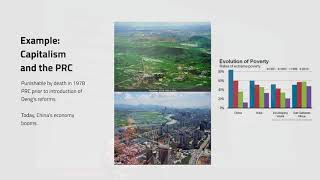
So one of the most creative people here, he is the founder of Council, which is a very successful genomics company. He went on to become a board partner at Andreessen Horowitz and he is also the CEO of 21Co, a Bitcoin company that he is going to tell you about. So without further ado, I would like to introduce you to Balogy. All right. Okay, can everyone hear me okay? Just using this mic. Great. Okay, so I've got a very practical talk, I think here where if you listen to it, by the end of it you will, you know, beyond the path to being personally richer maybe and getting some digital currency. So just to just to motivate this kind of what I want to talk about is how we can enable discussion of truly new ideas. And I think there's two ways that you can do that. There's an individual solution which is to maximize your personal Runway, and a more collective solution which is to help build a parallel economy. Let me motivate this. Cause it's kind of right out there. You know, Michael gave you my background, you know, very briefly, you know, like I taught CS and stats at Stanford, founded genomics company, et cetera, our current vehicles at 21co. So you can go there and check that out. But let me just dive into today's talk. So the problem I want to talk about is that today, increasingly, not just in the U.S. but worldwide, speaking your mind may mean losing your job. And this is a big problem for people who want to explore new ideas. Like for example, the concept behind 1517 fund or other things that are like that. The more innovative and new your thing is. By definition, if it's innovative and new, it's not yet popular, so it's unpopular. And unpopular things can sometimes get you fired. And so there's at least two ways that one can buffer against this. There's the individual solution, which is basically become wealthy enough that you essentially have f you money. And then you can just say, hey, who cares? And I've actually got a deterministic path to getting there, which I'll get to. And the other solution is actually to build a parallel economy where you separate your earning name from your speaking name from your real name. And if those are disaggregated, you know, there's this saying that in computer science the answer to every problem is another layer of indirection. Then if your earning name and your speaking name and your real name are all different things, then you can speak under this name. And if somebody attacks you, it doesn't matter because Your earning is uninterrupted, and the real person walks unscathed. So I'll get to that as well. Let's first talk about that first part. Let's motivate this, Right? So there's this guy, Yakov Smirnov. He does all of these jokes. They're better in his accent, but one of the jokes goes like this. In Soviet Russia, we too have freedom of speech, but in America, you have freedom after speech. Now, this is a funny joke, but increasingly an unfunny joke is that there's less operative and practical freedom of speech in the United States nowadays, because, you know, social media, especially Twitter, is just a war zone, and people are just yelling at each other all the time. And, you know, there have been articles on this, you know, but people here are probably familiar with the concept that Twitter mobs are just now routine. You know, you can lose your job for saying something dumb, or even if someone close to you says something dumb. It's no longer limited to journalists versus public figures. Now everyone's a journalist, and everyone's a public figure. A concrete example this just happened a few days ago is there is a woman who was, you know, working two jobs as an Uber driver and running a small coffee shop. And she's just driving. And what happens is not her, but her daughter makes some post that's like, you know, critical of the police, and, you know, the details aren't that important. But basically, you know, she's working her second job as an Uber driver when she sees a notification. By the time she sees it, it's too late and it's gone viral, and people are screaming at her on the Internet. And, you know, like, basically her coffee shop, you know, its business has gone away because the police boycotted and other people aren't there. And so, you know, that wasn't even her who said something. It was just somebody in her social network who said something. And it just killed this small coffee shop, and this woman was working two jobs. And that, in my view, under no model of the world, is like a just punishment. And so the issue here is basically that one way of thinking about this is that negative press is an attack on your social network. And that can be from the press or it can be from a Twitter feed. But let's say you've got this person over there. Let's say they're apolitical. They've got some apolitical friends, They've got others of different hues. And then what happens is there's some article that comes out that says, this guy is a bad person. And this periodical is not read by everybody, but it's read by enough nodes in their social network that now those people are either no longer his friends over here or the tie is weaker. Okay, now this is kind of funny looking, you know, as a diagram, but this is exactly what happens when negative press happens. And nowadays it doesn't even have to be like a credible, you know, like mainstream ish institution. It can be just like a Twitter feed. So Turtle Boy, you know, is actually what blew up that poor woman's coffee shop, right? So everybody is now a journalist and a public figure and, you know, can just put stuff out there that'll just, you know, harm somebody's reputation. And it's very, very difficult to recover from that because once you've been shunned over here, then you don't have a platform, you can't speak to people and so on, right? So basically, like, you know, one of the most important things to think about is what periodicals do your friends read? Because those periodicals have power over you since they can install software into the brains of your social network and make them, you know, turn on you or whatever. Right? Or, you know, they can also turn them for you, which is a positive version. Okay? So recognizing this is kind of the dynamic. You know, there's an interesting quote by this guy, John Ronson, who wrote this whole book on social media or public shaming. One of the things he said was quite interesting to my eye at least. He said, there's a journalist that he did a pile on against, and he wrote over here. He was among the first people to alert social media because Gil always gave my television documentaries bad reviews. So I tended to keep a vigilant eye on things he could be got for. Okay? So the ideology is often just a smokescreen for kind of personal vendettas. And this is actually very similar to what used to go on in the Soviet Union and, you know, like the People's Republic of China. So there's this great monograph, the Practice of Denunciation in Stalinist Russia. And so, you know, denunciation is, you know, defined for the purpose of this report as an unsolicited written communication from a citizen about the wrongdoing of another citizen. And others were written manipulatively to get the state to act on behalf of an individual's private agenda. This is, you know, this has a long pedigree in Russian history, right? So, you know, it's not quite the same as reporting somebody to secret police and getting them shot, but it's still pretty bad because they are losing their job, if not their life. So, you know, in the USSR or prc, you lost your life, liberty and property. When you're purged in the usa, you aren't killed or jailed and don't lose your bank account, but you do lose your job and you're a pariah. And that's, that's still pretty bad. So the thing is that when folks are actually interviewed at the other end of these things, it's not just that they're yelled at online, there's real consequences for them. Like Ronson interviewed them. They're unemployed, broke, and just confused and traumatized because humans are social animals and losing your social network is a big deal. So this is a problem. Why would we want to solve this? Well, one very practical argument as to why you want to solve this is sometimes, yes, many of the kinds of things that people are attacked for on the Internet are just stupid things. And they would agree they're stupid. Maybe the punishment's disproportionate, but they're stupid things. But once in a while, there's actually something that seems stupid but is actually smart. And this is the true but surprising idea. And ideas like that are the core of big new things. So I'll just give a few examples. One, you've definitely heard of heliocentrism, right? So Galileo, you know, in 1633, Italy, not that long ago, wasn't like 10,000 years ago, but like, you know, 400 years ago, the Galileo affair, for on the order of 20 years, was persecuted and eventually died under house arrest because he was suspect of heresy. Now, had he not pushed the ball forward and taken that hit, taken one for the team, basically that's the basis for GPS and satellite Internet and space travel because of Galileo, in part, that's why you can tag your Instagram photos with being at the coffee shop. So literally, this guy is locked to death in a room for death. So. So you can tag your friends. So another example of this is actually one that's much, much more close in time, really, just 1978. Most people don't know that capitalism entrepreneurship was literally punishable by death in China and the ussr, especially in China, until Deng Xiaoping's reforms. And there's a great article on this in Planet Money. You can Google this. A secret document that transformed China. But essentially this happened in a bunch of different places. But these were guys who actually lived. Most of them got executed. So the farmers in a small Chinese village called Xiaogang gathered in a mud hut to sign a secret contract. They thought it might get them executed. Instead, it wound up transforming China's economy in ways that are still reverberating today. And so their idea was, hey, the contract was so risky and such a big deal because it was created at the height of communism in China. Everyone worked on the village's collective farm. There was no personal property. So basically people said, what about the teeth of my head? Do I own those? And no, your teeth belong to the collective. That was the level that communism had gone to there. And so they came up with an idea. Rather than farm as a collective, each farm would get to farm its own plot of land. If a family grew a lot of food, that family could keep some of the harvest. Now, that's an obvious idea. Yes, you get to keep some of what you own. Your taxation rate is not 100%. You keep your teeth and maybe also keep some grain. And this is an old idea, but it was such a dangerous idea in communist China that the farmers had to gather in secret. They signed a private contract among themselves and they hid it in the roof of a hut. And it basically said, hey, if one of us is executed or tortured for practicing capitalism, then the others will take care of our children. Literally at that level, like starting a company punishable by death. Okay, so that was pretty brave of them. Really brave. That's an example of an idea that was unpopular. I mean, really unpopular, but a really good idea because, you know, I can give you 10,000 photos like this. There's certainly pollution in China and what have you, but it's become, you know, a first world country in many ways, and extreme poverty has just absolutely plummeted in our lifetime from like more than 80% in a subsistence level to like less than 10%. That's a gigantic achievement. And you know what other there's many issues with, you know, the Chinese government. I'm not a fan of everything by any means, but this is something that has been gotten right. Like the introduction of capitalism really did improve human welfare for hundreds of millions of people. It was a good idea that people risked death for that had high upside. And a third example, again, very contemporary, this is bitcoin and its precursors. So one thing most people don't know is that all the previous creators of new currencies were jailed. So the guy who did the Liberty Dollar, prison may be the next stop on a gold currency journey. Bernard von Notthaus, he was a physical dollar. He got capped. And the Liberty Reserve guy, that guy was actually more of a real Criminal, but he was jailed, right? This guy was really just like an old guy who was just selling some gold coins, to my knowledge, do anything wrong. But Satoshi managed to take this good idea, and he added a bunch of new developments. Obviously, he added, you know, the Byzantine general's breakthrough, that is the Nakamoto consensus algorithm and a bunch of other things. But one of his most important things that he did was he stayed pseudonymous enough, long enough to let the idea stand for itself. He put this thing out on the Internet, stayed pseudonymous despite the attempts to unmask him, which were unsuccessful. He has stealthed all the way through. And now bitcoin and the entire blockchain industry is at 170 billion market cap. And it's basically got kind of this freight train like momentum. That's another example of such an unpopular but good idea that the precursors were literally thrown in jail. And he figured out a way around it, which was to go pseudonymous. Go Satoshi, get the idea out there. And is now the world's first pseudonymous billionaire, but probably not our last. So those are three examples of really good ideas. Heliocentrism, capitalism in China, and bitcoin that could have had house arrest or death or jail or worse. And so some of these unpopular ideas are very good. So how do we open up the space to discuss them? And I'm not talking about just stupid insults that people get attacked for on social media. I'm talking about good ideas that people get attacked for. How do we open up space to discuss them? And I propose two solutions. The first is an individual solution, which I call maximizing your personal Runway. And the second is a collective solution that complements that individual solution. Let's talk about the first one. So, you know, everybody here is living in San Francisco or probably is nearby, actually, not everybody, but a lot. And the thing is that the single most important metric for an individual is your personal Runway, right? That is your savings divided by your burn rate. I know it's an extremely anti American concept, savings, but it can be measured, okay? And the thing that's very counterintuitive or that people don't even talk about or think about, is that it's easier to cut the denominator by 5 to 10x than it is to increase the numerator by 5 to 10x, right? So if you've got, you know, this is a fake bank account, don't worry, like, but that's, you know, if you've got a bank account over here and you've got savings yes. You can spend, you know, burn, you know, $4,000 a month in San Francisco, or you can work remote in chiang Mai at $800 a month, $900 a month. And that's like basically 1 3rd to 1 4th the cost, and therefore 3x to 4x the Runway. If you have a job that allows you to work remote, that's really good because now you've got 4x Runway for the same amount of work. The thing is, the rest of the world has gotten very livable. And so this is a simple deterministic recipe for financial independence. Okay, you know, in 2005, okay, come to Silicon Valley, found a company, raise VC. In 2017, it's leave Silicon Valley. Don't found a company, don't raise vc. You just need to be willing to move and live like a grad student. You don't need to be a founder or even a smart or lucky crypto investor. In a little more detail, basically, my advice to you would be get a remote work job at a big company, potentially like a Google or Facebook or, you know, or a stable startup like a GitHub or Airbnb. Be on site here if necessary for like, a year to prove yourself, and then after a year, turn down the promotion. If you're actually promoted, then you have to be a manager, you have to be local, you're a hub. But if you're a spoke, you can be remote. So make yourself indispensable. And after a year, rather than getting promoted, say, I want to work, not to be promoted, but I want to be remote. Right? Once you do that, now you can just cut your burn rate by 4, 5, 6x. Basically, sky is really floors the limit, Save tons of money. And now you don't need angel funding, okay? Because basically, if you had a burn rate before, let's say your income is 120,000, and you go from a burn rate of like 80 or 90,000 a year to 20,000 a year. Every year that you work, you're getting three or four years of Runway. So you don't need angel funding anymore, right? You're now financially independent. Voila. So, congratulations. And there's great tools like Nomad List and Teleport that'll help you do this. And one of the biggest new things over the last 10, 15 years is the rest of the world. Because capitalism has gone into China, it's gone to Vietnam, it's gone to all these places. They've become very livable, very nice places to live, especially if all you're doing is sitting in Your room coding all day. So check out Nomad list. Check out Teleport. That's a company that I founded that got acquired recently. These will help you do these kind of compare and contrasts and really dig into where you actually want to live. And the thing about this is financial independence is personal independence. You should take some of that Runway probably and put it into crypto. And once you're financially independent, you can choose to speak your mind without fear of economic consequences. So like, you know, we downvoted you on social media and you think this gives you power over me. Right? Like, so you're now like invincible. Right? So it's pretty cool. Okay, so let's talk about the second thing. So now this is something where, this is a longer term thing. I'd say this is ripe to do. Like right now. Right? Right now you can go and you can move out of the US and you can save 5, 10x. Okay. But the thing about this is it's kind of an individual lifestyle. It's something where, yes, you can save money. It's a very good thing to do. But we also want to do something more collective. Right. And this is a longer term project and this is what we're working on. So a parallel economy. So let me just explain what we're doing at 21 and knit the pieces together. So we have this app@21co that lets you make money online. After Monday, by the way, it's going to be@earn.com but just 21co for now. So this lets you make money online and basically it's like a news feed, except it's not distracting and it's not people yelling at you on Twitter, but you're actually making money. Right, so reply to emails, complete tasks, click buttons and make money. And so basically you do this and it's a positive. Some social network. Every single notification you're getting is something that's good. We've got this token launch coming out in December where you can also earn for signing up and inviting friends. Twitter token. And so basically all the folks you invite also give you some. So it's something where you're actually incentivized to invite your whole contact book. And it's basically like this, like a token based social network which doesn't require an ico, but it's something where the edges now have currency associated with them and allows you to earn digital currency rather than mining or buying it and makes social networks actually useful. Right, so how does this relate to our previous topic? Well, basically, if this works, then we can start building a parallel economy where people aren't just liking and tweeting and poking at each other, but they're actually buying things from each other, buying time from each other in particular, because time is a really good digital good. You can buy bug bounties or surveys or emails back and forth. And if this thing really works, then it closed loops that happen at scale. You start to get a parallel economy. Once you've got enough people in the network with enough different skills, you can have the equivalent of the butcher buying from the baker buying from the, the candlestick maker. You start to build a whole parallel ecosystem. And because it's crypto, over time, users can earn pseudonymously, right? You can just swap out and start to go satoshi. Now, if you've got pseudonymous nodes in this network, well, they're now immunized from those social network attacks, okay, because they're earning pseudonymously. Wall Street Journal or whatever says this person is now bad, but they can't connect this to this person, right? Like the underlying human isn't targeted. And so as such, your job doesn't go away. They've targeted a speaking name. Here's your earning name. They're two different things, unless they can map them together, which is doxing and not that easy to do necessarily. Your earning name, your speaking name, your real name, can all be distinct things. Now, to be absolutely clear, I recognize that's a journey of 1,000 miles. It's going to take a while to get there. But if you want to join us, go and try 21 and you can, you can see what we've got today. So just in summary, speaking your mind today can have economic penalties. The crowd can gang up on you. As an individual solution, I propose that you can maximize your personal Runway by working remote and moving overseas, cutting this denominator B by 5x or more. And as a group solution, help us build this parallel economy at 21, where eventually, in five or 10 years, people can start earning pseudonymously and becoming more and more immune to social network attacks. Thank you.
More from Balaji



34 - Network State Conference 2025 - Fireside with Vitalik and Balaji on Zuzalu and d/acc

33 - Network State Conference 2025 - Fireside with Amjad Masad of Replit and Balaji





06 - Network State Conference 2024 - Fireside with Naval Ravikant and Balaji Srinivasan