Balaji Srinivasan: Technology Will Lead to a Borderless World
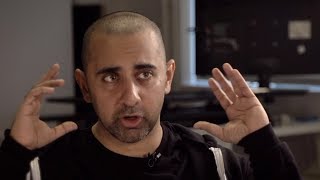
Balaji Srinivasan argues that technology lets people exit broken institutions rather than fight to change them. He sees cryptocurrencies and cloud computing enabling work and organizations across borders, while genomics companies like Council give people new reproductive choices outside traditional medical gatekeeping.
Soon you'll be able to earn virtual currency and virtual reality. If you take the number of hours that you spend looking at a screen, a good chunk of that, maybe all of that gets replaced with a VR helmet, which means that for a good chunk of people in the world, the majority of their waking hours are going to be spent in the matrix.
The Silicon Valley entrepreneur Balaji Sreenivasan is a modern day polymath who venture capitalist Marc Andreessen has called the person with the highest output per minute of new ideas of anybody I've ever met in my life. A PhD in electrical engineering, a co founder of a genetic testing firm, and a Stanford computer science lecturer, Sreenivasan was also on Donald Trump's shortlist to head up the Food and Drug Administration. Today he spends most of his time as CEO of the cryptocurrency startup earn.com Srinivasan believes in the power of technology to provide a way for individuals to migrate away from ossified institutions or destructive policies. Borrowing from the classic book by Alberto Hirschman, he refers to this path as exit.
While we talk a lot about voice in the context of the US and talk about democracy, that's very important. But, you know, we're not just a nation of immigrants, we're a nation of immigrants. We're shaped by both voice and exit. Voice gains much more attention when people are leaving in droves. One of the things I think a lot about is if you've got an existing system and it's ossified, there's kind of at least two responses to it. There's more than two, but at least two. One is, you know, voice, which in its extremist is revolution. Revolution is extreme voice, where, you know, it's saying, oh, I'm so dissatisfied, let's take the whole thing over, right? And then democracy is like a much more limited version of that, but still also effective. In many cases, you can actually vote to go and change things. Alternatively, if you believe that it's going to be too hard to change things that way, but you're also cognizant of the fact that certain people like it that way. There's an alternative you can pursue, which is exit, right? You say, okay, I'm not going to be able to change the system. I recognize why you guys have it the way it is, but doesn't suit my preferences. So I'm going to leave and start something new. All progress is really the process of you exit. You build something up and then it gets ossified and the next generation Exits again, for example, a startup starts, and what happens is the libertarian founder ends up rebuilding the state. That is to say, you start as, like, an individual. And often people do that because they want to have total autonomy and control. And then what they find is, as they get to a certain scale, well, they sort of need to have some policies, they need to have something in place so that you don't have like 500 autonomous people just moving in their own direction, but you have 500 people working as a team.
A startup gets big enough, then you got to bring in an HR person. Then you got to start saying, oh, no, you really. You got to wear shoes in the office.
You got to do this, all that type of stuff. Exactly. And so as you transition from, like, burn rate to bus number, bus number is how many people can get hit by a bus. For this thing to continue enduring once your bus number has to be bigger than one for every position, you start to actually have to view people as replaceable, because if they're not replaceable, you haven't done your job right as kind of the founder. And that's a critical transition that happens in companies where they transition from a collection of individuals to a multicellular organism. Now, what happens then is if that goes too far, you get initiative being kind of constrained, you get bureaucracy, you get all these kinds of things that potentially in the long term are to the detriment of that multicellular organism, and they cause people to leave, and that's exit, and then you start a new thing.
Sreena Vasan sees his current venture, Earn.com as a tool that ultimately could provide workers. The company allows individuals to get paid for accomplishing small tasks like completing surveys and answering emails.
What if we could kind of exit the current system of how folks try to employ others and get jobs and so on, and actually have like a completely frictionless digital workforce, right, where you could hire anyone from anywhere and if they had the merit, they could do the job. Now, there's all kinds of national boundary issues, compliance issues, regulatory issues, etc. But as an ideal, what if you start with something which pays you to reply to emails, but then in five or 10 years, you open up Earn.com anywhere and you've just got a feed of tasks and that's your job, sort of actually like Marx talked about, even, you know, in the Communist Manifesto, he talked about, hey, you know, wouldn't it be awesome if you could be a hunter in the morning and a tailor at night and switch through all these different professions? You know, what if you could actually do that in such a way that didn't involve killing millions of people like the communism did. Right. What if you could just actually, you know, flip through these tasks, look at all the ones you're qualified for. Do this, this and this. Guess What? You made $100 for that day.
And it's an interesting twist on exit because the pilgrims left or the Puritans left England, moved to America to try something here. You can stay in Nigeria, you can exit in place. I mean, we're living in multiple communities and multiple orders at any given point in time.
That's exactly right. And I think that's what technology is doing is it's reducing the barrier to exit. And there's two dimensions on which that is true. The first is a dimension that you just remarked about, which let's call that the cloud dimension. Right? Because the cloud you can earn from anywhere, you can collaborate from anywhere, and soon you'll be able to join like a VR world and earn virtual currency in virtual reality. Right.
And finally realize that you hate your co workers in the cloud just as much as you do in the office.
Maybe. Yeah, exactly. But if so, it's utopian, right? So you can hit the back button and just warp into another virtual reality. Right. So I think that particular combination, by the way, VR with virtual currency is going to be a huge, huge thing. We haven't yet hit the next dogleg up in VR. There's something missing. There's probably going to be an iPhone or VR kind of moment. Something is not yet being out there in the market. But when that thing actually hits, you're going to see something very interesting, which is if you take the number of hours that you spend looking at a screen, for many people, many of the folks who are information workers, that's the majority of waking hours of your day, Especially if you add up the amount looking at your phone and your tablet and what have you. So a good chunk of that, maybe all of that gets replaced with a VR helmet, which means that for a good chunk of people in the world, the majority of their waking hours are going to be spent in the matrix. You're going to be earning in the matrix and you're going to be earning with co workers who are from Brazil and Japan and all this other stuff. And so machine translation becomes extremely important. Real time, machine translation, digital currency becomes extremely important because you need to be able to transact across borders. And where people are being organized is by their interest, not necessarily by their geography. Right. So let's call that the cloud Axis where you can kind of just put on your VR headset, jack in, and, you know, you'll be part of whatever kind of group around the world you want. The two senses that are missing are taste and smell, but you'll be able to get sight and sound. And then with haptics and kind of omnidirectional treadmills, you can get touch. So haptics people probably know about, you know, your hands will vibrate and so on. Omnidirectional treadmills are kind of what they sound like, where you don't just walk in one direction, but you can walk in 360 degrees. Being developed for games now, they give a much more immersive experience. It's a combination of those three. You can do most things other than touch and taste and smell. The second major axis is mobile. Mobile is making us more mobile. Your geography becomes less important. By that, what I mean is there's a logic that is held really since the Treaty of Westphalia, which is that implicitly your neighbors share your values and your physical neighbors, and you roughly agree on what the law is for that jurisdiction. Increasingly, what's happening is you live in an apartment complex and you wouldn't even recognize your neighbors. But you have long conversations with somebody 1,000 miles away. You know, there's a one liner which says, you know, Snapchat is on a straight line with the dissolution of the nation state because you're sharing intimate moments with people who are hundreds or thousands of miles away and you don't know your next door neighbor.
Srinivasan says Bitcoin and other cryptocurrencies are another key technology in creating a borderless world, because they make it possible to transfer value anywhere without relying on a trusted intermediary.
With Learn.com, if you're sending a message to a thousand people in 100 different countries and you want to pay them about $10 to reply to an email or fill out a survey, that'd be the kind of thing where wiret transfer fees would kill you if you're using SWIFT to do that. And it would just be a huge hassle to try to automate all those wires. Plus, it'd be hard to get people on the other side to set up bank account integration for just relatively small amounts of payment. So for all of those reasons together, it becomes something where paying people small amounts of money across borders quickly and settling it is the kind of thing that cryptocurrency is very good for, and the blockchain is very good for. That was not possible in the previous world. So what do I mean by Silicon Valley's ultimate exit? It basically means build an opt in society run by technology. Drones warfare is going to become software, laws are going to become code, management via robotics is going to become automation, and property rights are going to become a network effective.
In that 2013 talk, you discussed how Silicon Valley, which is a physical place, but it's separating from other great cities, Boston as like the ultimate education city, New York as the ultimate commercial, DC as the ultimate legal or giver of laws, LA and entertainment. Silicon Valley was separating from that in various ways. But is there something about space? So, you know, Silicon Valley in many ways is the outgrowth of Stanford and Berkeley and a couple of other universities, plus one or two companies going back to the 50s, whether it's Fairchild Semiconductor or whatever. I mean that, you know, where you can kind of create a family tree. Would that kind of stuff happened if these people were not meeting in close proximity? And can you, can you replace that in virtual space?
Yeah, so that's a very important question. And I think though that there's a bunch of factors that are going to lead to decentralization of technology out of Silicon Valley. There's the cost of real estate, you know, just the, the fact that immigration to the US is becoming more challenging for in many different ways the home countries are getting better now, right? Like, you know, India's really not that bad to live anymore. And every year remote work technology becomes better and better, right? You get sl. You get better mobile hangouts and video and all those things kind of keep improving. And companies that are just starting out, they have something very interesting which is they have the ability to go and negotiate with cities and negotiate with countries. So for example, let's say you're a country that's got a sovereign fund, you want to track technology to your locale, you say, guess what, we're not going to regulate cryptocurrency for the next 10 years. Blockchain regulation, moratorium. Come on in, the water's warm. And we'll also take a 5% stake in your company throughout sovereign fund, right? So I think you're going to see a lot more stuff like that.
Does that bother you? As a form of crony capitalism, that might really screw up markets.
So no, it doesn't. And the reason is because, so first, disclosure, like it's something where it's going to be done in a very above board way. These are reputable sovereign funds and whatnot. Second, there's competition because you Know if Dubai wants to get in the bidding, if Israel wants to get in the bidding, if Estonia does, I'm sure that company would be interested in the thing. Third, is there should, if everything goes well, be a significant benefit to the locale, you know, because guess what, they've, they've got the next Detroit or the next Wall street or whatever they are because they adopted self driving cars or they adopted cryptocurrency and blockchain earlier. So you know, whereas corny capitalism is usually like more of like a bribe or a payoff that's done non transparently, that's done without a competitive process and that doesn't actually benefit the population.
So do you think the locale or, and I guess part of it depends on the final price tag. But we have seen, you know, just a grotesque outpouring of graft, of honest graft, public graft from cities saying, you know, Amazon, put your headquarters here and we'll give you $5 billion, we'll stop, we won't charge you any taxes, we'll build the infrastructure, we'll do this. Dallas says they're going to build a high speed rail stop, you know, at the Amazon hq. If it comes to Dallas, where the train would go from there, who knows? Right, right. I mean is, is there any way that that's actually good for capitalism or good for markets?
Well so first is it's a refreshing change from the opposite which is if you have a jurisdiction that takes a large entity like Amazon for granted, they can just pile on the taxes, pile on the regulations and eventually whether they kill the golden goose or they just stop it from building in that region is one thing. So this is a refreshing change in the other direction, frankly. With that said, there's principal agent issues. Right. Where for example that HS high speed rail thing or what have you, maybe it's something where the mayor or the governor is effectively spending money out of their own, not out of their own pocket, but out of their constituents pockets for something that's not actually that beneficial. I think what happens is over time you get a market process that lands you somewhere in the middle if they don't act in your interest. Well, you as a citizen also have the ability to move because taxes got too high in your region.
You used to, particularly on your Twitter account, which is kind of on missing late silent, but you used to cite the 1997 book the Sovereign Individual. What is that book and how does that inform your worldview?
So awesome book. And it's also Peter Thiel's, one of his favorites. He's talked about that. Other folks like it a lot in Silicon Valley. The thing about that book is it's kind of like, it's like the book of Prophecies. And what I mean by that is it was written in 1999 and you open it and you read through it and many of the sentences seem like they were ripped from last week's headlines. Right. And some of them have yet to happen. And so what's remarkable about this is that typically when you take a nonfiction book, like say, like a Malcolm Gladwell book or something like that, you can often summarize 400 pages in a sentence, whereas the sovereign individual is the opposite. Where I could take a sentence in it, I could expand that into its own book. So in a nutshell, what the thesis is is that there's different ages of history, and during these different ages, the relationship between property and violence has changed. Now we're transitioning into a new era where the network and the nature of property with respect to digital currency and other kinds of things related to the blockchain is something where no amount of violence can solve a math problem. And so what that means is if you just know somebody's, I wish you.
Had told that to my non math.
Teachers, sure, they could apply it to.
You, might not make it, did not solve many problems.
Right. But the thing about that is you might see $100 million in the Bitcoin blockchain. But first you need to identify that person who has that which is non trivial in its own right. And then second, you would have to figure out how to get that private key from that person, which again is not that easy to do. It's not like, you know, the wire transfer system where you can just hit a button and just, you know, garnish the wages or debit the account. That's a very new thing. What that does, it shifts the logic of violence where it used to be that if you had, you know, the biggest military, you could always take the most money. But that's not going to necessarily be case as things move forward. And so what the sovereign individual is about is tracing that thesis through in much more detail than we're currently talking about and saying, okay, what happens when you can't just see somebody's money right now there's good things that happen, which is that, well, you know, everything becomes voluntary. And you know, if you're a wealth creator, you can keep the wealth that you create. There's bad things that happen, which is that if robberies happen, if criminals happen, it's harder to follow the money, cut off their flow of funds. And so one of the things that the guy predicts is you're both going to have more upside and more downside, right? You're going to have these incredible cities and organizations that push the frontiers and you're going to have lots more petty crime. But one thing you're probably also going to have a lot less of are massive wars. There might be like one big transitional war as you kind of go into the new era, but after that point, because you can't just seize funds, it becomes harder for governments just seize funds for their military to start wars. So on net, I think it's actually a very positive thesis for kind of humanity, but there's going to be some rocky transitional moments between now and then.
Srinivasan actually began his career as an entrepreneur with a healthcare startup. While he was teaching at Stanford. A decade ago, he and his older brother Ramji founded the genetic testing firm Council, which aims to improve the way genetic diseases are identified and treated.
What are, what are the most popular services that Council offers to people?
I've got several different genetic testing services, but the first and kind of the flagship product is a test for every major Mendelian genetic disease. And one way of thinking about this is prior to Council, it was common for doctors to go and sort of imprecisely bucket people by ethnicity. Okay? So this couple is African American, this couple is Jewish American, this couple is Southeast Asian and so on. And then they would say, okay, this group is at risk for sickle cell anemia and this group is at risk for Tay Sachs and this group for beta thalassemia and whatnot. Right. But for many different reasons. First is that ethnic bucketing is imprecise. Right. For example, Obama is at risk for both sickle cell anemia and cystic fibrosis because it's in at least two ethnic groups. And second, it's not just imprecise, it will mean that you don't catch every risk allele. Right. And there's African Americans who have cystic fibrosis genes and vice versa. And third is it's also something which is error prone because you sometimes don't test somebody for something that they should have been tested for. So instead what we were able to do is take all of these Mendelian genetic diseases and test for them in one assay, which is actually cheaper than the blood based assays that used to happen with this new kind of genomic test. And before, you'd have to basically do These individual tests for each one. And now you can just one unify test.
What do people do if they both realize the husband and wife or whatever are Tay Sachs carriers and they choose not to have kids? Or do they do IVF and do selective embryos and things like that?
Yes, so they've got several different options. So the earlier you know, the more options you have. Right. So you know, Dory Esharim for example, actually does this kind of testing even before marriage so that a couple can choose whether to get married or not. Right. That's a couple that, that's an organization, does juice genetic testing and matchmaking together. If you know after marriage but before conception, then yes, you can do in vitro fertilization plus a procedure called pre implantation genetic diagnosis where you take a plate of embryos that have been fertilized, you diagnose them prior to implanting into the mother's womb and you find the one that does not have the genetic disease.
As gene editing technologies advance and costs plummet, some bioethicists have expressed concern that in the future parents will abort children with genetic diseases or create so called designer babies whose genes are altered to improve their intelligence or physical appearance.
The state of Ohio just banned recently at the end of 2017 and I don't know exactly how they're going to enforce this or whatever, but they banned abortion based on amniocentesis or a sonogram that showed that a fetus has down syndrome. How do you feel about that kind of intervention?
Well, so first is the IVF PGD thing that I talked about is not abortion. And so the advantage of that is it's something that, you know, both increases reproductive choice. So it's something that the left get behind and it reduces the number of terminations because you know, prior to, you know, when the child has a thing, so that's something the right can get behind. So in general we try to look for those kind of win win things with something like the Ohio matter. It's very hard to get inside a woman's head and try to restrict her autonomy on something like that. Certainly I'm not in favor of a law like that. But you know, I think that it's also something that's very difficult to enforce because you could probably just drive across the border.
So again to, to bring it back to exit. This is the type of thing where the law, a state, big or small, tries to maintain a certain code, a law and people can exit that system relatively easily, right?
Yeah, that's right.
And I guess what your technology would do at Council is that it allows. It helps. Not always and not perfectly, but it helps you really minimize the chances you're going to be in a situation where something like that would be.
That's right. Because basically by knowing prior to the pregnancy, that's when you have both more reproductive choice and you have fewer terminations. So you don't actually have to have that trade off, you know, like if you know prior to it. Right. And that's generally the Silicon Valley thing, is the more information you can get earlier, the more educated and informed decision you can make.
You talked with President Trump about being the head of the fda based on your experience with Council. What was that like? What was he like? And what would you have done if you had actually become the head of the fda?
I think that the current head of the FDA is actually doing some good things. Like I like what Scott has been doing on the legalization of DTC genomics and he has reduced the barriers to entry for medical apps and stuff like that. I think that there are areas like crispr, for example, where the United States is potentially in danger of falling behind.
And CRISPR is relatively easy gene editing.
Yeah, that's right, yeah. So very fundamental technology which is just being pursued aggressively. For example, in China, there's a Walch journal article on this the other day. But it's common knowledge to the people who are in the field. And so there's areas where, you know, it just may be something where, you know, computer innovation happened in the United States, but many kinds of biotech innovation may just have to be done outside the United States.
And is that because I don't. I will try to say it as politely as possible, and I'm not sure that it will be, but it's just that in certain countries, either the government is in charge and they can kind of force a level of experimentation we're uncomfortable with, or they don't have the same kind of moral hangups that we might have in the United States.
I think it's a little different than that. It's not. I mean, because this is not the 1970s China where it's like forced abortions and so on. This is much more of a free market. You know, I'm not saying I'm thinking.
Also, even South Korea has clearly been doing a lot of stuff that would not. Would not even be tried in the United States.
Right, right, right. So. So I think the way. A different way of thinking about it is that these are still, you know, civilizations, countries that feel like they're on the rise. And you know, when America was kind of confident like that, there were plenty of folks who are volunteer test pilots. You know, planes didn't just start to fly themselves or guys who took, you know, very substantial risks as being the first people to pilot an experimental aircraft. And a bunch of people died. If you go to the history of automobiles or aviation or railroads, a lot of people died. If you look at the history of chemistry, there was, you know, the CRC handbook of chemistry and physics prior to, you know, kind of the modern era has lots of tastes and smells for compounds because people used to just taste and smell new compounds, right? And I'm sure there was some guy who, you know, sniff some cyanide and the last thing he wrote down was almonds and he collapsed and he took one for the team basically and kind of advanced science, right? And so, you know, the way that I sort of think about it is if euthanasia is legal, right? If you can choose to end one's own life, if it's legal to go and bungee jump and skydive, if it's legal to go and fight in a war and potentially die for a futile reason, well then it should be legal to take an informed risk for a treatment that could help you, right? I mean, essentially your body, your choice, right? I would try to have the United States be competitive with the rest of the world. And one way that you could do that is actually try to keep most or really all of the existing FDA intact. But look to what the FAA and some other regulatory agencies are doing. So for example, the FAA has these drone zones that have been opened in various areas which are meant to, in low, lightly populated areas, allow the flying of drones with less regulation, right. There's also these so called fintech regulatory sandboxes where you can have startup companies with less regulatory overhead than they would have if they had to comply with the full panoply of laws. And you've got things like this.
It's almost like charter schools where you give like a space for innovation and experimentation.
Loaded term, but I'd say I call it a special innovation zone by analogy to a special economic zone. Relatively few people know how big a deal special economic zones are, but outside the United States they were like the primary engine of growth for China and for other countries. And if we did something like that here, where we already got a precedent for it with the drone zones and the self driving car zones and so on, we might be able to have a zone. Let's say the Mayo Clinic was Overseeing it where it was willing doctor, willing patient.
Who are your intellectual and business heroes and how do you identify yourself kind of ideologically or what do you call yourself?
I'd say pragmatist technologist. And I for the most part try to decline any kind of political or ideological label outside of those for many reasons. One is that I do believe in the ability of technology to improve the world. And I would like to have the largest possible coalition behind something like that. And I think that ideological and political labels tend to repel more than they tend to attract. Whereas a new technology, you don't need to be a Republican or Democrat to buy cryptocurrency or use ride sharing or stay in an Airbnb. And in fact, many of the earliest adopters are Democrats, actually, at least nominally. So it wouldn't be even if it's arguably anti regulation or what have you.
There was various moments in the 2016 campaign where Bernie Sanders and Hillary Clinton, both of whom talked down the sharing economy or the gig economy, but they almost exclusively took Uber or ride sharing companies to campaign events.
The ideal is to get something which is so useful as a technology that even people who might disagree with certain aspects of it ideologically, nevertheless it improves their lives. Right. And so at least the way I try to identify is I'm a technologist who wants to build things that improve people's lives. I think I was able to do that with my first company. Hopefully we can do that with this and other ventures.
Well, who. Yeah, I mean, you have a PhD in electrical engineering.
Electrical engineering, yes.
So who are the egghead heroes of your life? Who are the technologists that you look up to?
Srinivasa Ramanujan, you know, India's greatest mathematician. He's got kind of a romantic story in India because he's sort of the combination of the Einstein there, like, you know, like smart guy, but also a rags. To quote Rich's story. Even though he didn't get rich, he was truly destitute in India and was able, through pure genius, to actually become a mathematician at Cambridge and publish a number of papers. And he died in a young way, very romantically. And he's somebody who motivates me because one of the things I'd like to do at some point in the future is have a worldwide talent search for all these kids around the world in South America, Nigeria, in the Middle east and Eastern Europe and India and China who for a reason, the 20th century missed out on them or missed out on their parents. And so now they could actually with the Internet, have the opportunity to rise. So that's one person I think about a lot. Second person, Lee Kuan Yew. So not necessarily a scientist per se.
But this is the father of Singapore.
Father of Singapore, that's right. A pragmatist who, you know, if you read his, you know, he's written a lot, he gave a bunch of interviews. You know, he had a great book, Third World first. And that's literally what he did. He took a country that was, you know, really had no natural resources or any advantages. It was a swampy kind of land, it was a post colonial society, it was riven by language, had all these different, you know, ethnic groups there that weren't necessarily all that friendly. And he turned it into one of the wealthiest countries in the world. And so the choices he made there I think are really interesting to look at because Lee Kuan Yew, you would not describe as easily pigeonholed as libertarian or conservative or socialist or.
I mean, he actually mixes from a lot because it was definitely for economic freedom. Also kind of authoritarian, but also kind of socialistic. And the level of government services that are provided by Singapore.
That's right. Like Singapore's HSA is simultaneously both to the right and to the left of the United States. So you know, the HSA there, the way it works is you are forced to save in a separate savings account which is to the left of the US because it's not just a tax, it's like a forced savings account, but then you can spend in a completely free market way from that forced savings account. So that's like to the right of the American system because it's no insurance or it doesn't work in the same way. So it's just something which is sort of outside the bounds. And that's something I think about a lot in the context of startups, for example, because startups have a combination of both right and left aspects, or classically right enough aspects. They have some degree of hierarchy, they have capitalism, they have funding and Runway and profit. All those kinds of metrics, obviously, which are typically right of center metrics, but they work in large part because they're egalitarian, they're mission driven, they have informal attire, they have a screw the man attitude. And the best ones actually genuinely perpetuate or accomplish a revolution. Right. And that's definitely not a right of center thing, that's not respect the existing hierarchy, etc.
Do you think, as you know, effectively you're living your entire life in the 21st century, are these Cat. I mean, we need new categories probably.
Yeah, I think so. I'll give an example which I think is interesting. So when Google initially introduced free lunches, you know, like, this is not like a long time ago, like 15 years ago. It was for many, you know, what I call right of center CFO type bean counters. This was looked at as this really dumb liberal hippie thing they were doing. But it actually turned out to be something that was better by both metrics because it gave both more community feeling within the organization. Everybody had something in common. They could all go to lunch. Right. And it was, it was in a sense a seizure from their paycheck. Right, right. So, you know, rather than giving everybody the right libertarian thing would be give by an extra thousand dollars and they'll be. Their utility will be increased. That was not what actually.
How do you give them a dollar hamburger and they love you like you're the greatest thing in the world?
Well, I'm not saying it might not even be. It might even be more expensive.
Right.
So not necessarily cheaper per se. But it is something where there was a solution that was not the classically, you know, like dollars and cents individual solution that did optimize community feeling. And so I think a lot about stuff like that where ultimately you're looking for a pragmatic best outcome and not something that just has to be right or left.
As a final question, your father in India grew up in a house or a hut with dirt floors. You grew up in Long island, which is, you know, a mild improvement.
Sure.
You have a one year old child who now is growing up in, you know, in the, in the Bay Area, in San Francisco. Very successful set of parents. What are the things that need to, you know, what kind of world do you think your son will grow up in? And what are the one or two things that will either make it much, much better than it is today already or will like plunge us backwards in time?
That's a good question. I mean, I think this transitional era that we're going through now, I think is going to be something where there's both nationalist and socialist responses to this kind of emerging cloud economy that are often going to be very negative. One thing I think a lot about with my son actually is I probably want him to go Satoshi. And by that, what I mean is Satoshi Nakamoto is the world's first pseudonymous billionaire, but he won't be the last. One of the great things about Satoshi is you couldn't discriminate against him both positively or negative. Right. You know, if he's Bill Gates's son or, you know, or daughter, you wouldn't know that. But you also wouldn't know if he was from some disfavored, you know, group or whatever in whatever country. He just competes completely on the base of ideas. I want to start him at like kind of that equality of opportunity level. And then he knows whatever he achieved is kind of on him. In terms of the, the kinds of things I would look out for, I think it's going to be pretty good. Like the, the transitional kind of thing. I actually think that. I believe in the Steven Pinker thesis for the most part that violence is decreasing. We're aware of it more because there's 247 news coverage. But it is something where on net it's getting better. And especially if the long term consequence of cryptocurrency and the blockchain and so on is to limit the ability of states to wage wars. Maybe there's one big one coming up. That would be unfortunate. Assuming he survives through that, I think it'll be pretty good. Sam.
More from Balaji



34 - Network State Conference 2025 - Fireside with Vitalik and Balaji on Zuzalu and d/acc

33 - Network State Conference 2025 - Fireside with Amjad Masad of Replit and Balaji





06 - Network State Conference 2024 - Fireside with Naval Ravikant and Balaji Srinivasan