Ep 57: Balaji Srinivasan on the Severity of the Bank Crisis and the Future of Bitcoin
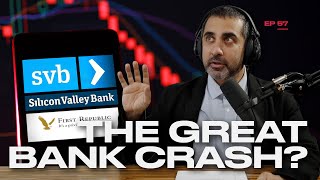
A May 2023 interview in which Balaji Srinivasan argues the contemporary U.S. banking stress is severe (comparing it to 2008 and 1930s-era crises) and primarily caused by prolonged low-rate guidance that left banks holding long-duration bonds and mortgage-backed securities when the Fed rapidly hiked rates. He explains why this creates systemic fragility, outlines historical parallels (FDR-era interventions including the 1933 gold seizure), and warns of possible outcomes such as "digital lockdowns," financial repression, and a period of financial disunion. Srinivasan proposes state-level countermeasures (state 'digital gold' windows, state-chartered crypto banking, corporate portability) and discusses geopolitical risks from a stronger China. The tone is cautionary and strategic, urging preparedness (Bitcoin/foreign fiat, onshore/offshore planning) and state-level innovation to preserve economic freedom.
Paolo's crashing the plane, and SVB and FRC and others were just positioned near the front of the plane. Okay, so, like, everybody's going to die is my point. CEO and co founder of palace.
Welcome to American Optimist. We have a special episode for you this week. My friend Ball Balji and I got into a back and forth on Twitter about the banking crisis and who's to blame and what's going on in the world. Balji is one of the great thinkers of our time. He's one of the lead thinkers in the crypto world, in the world of network states and what power is going to look like the next hundred years. Balaji talks about American Disunion talks about America versus Chinese power. And there's a big question of what to do with your money with the crisis that's going on. Let's hear from Balaji. Balaji, welcome to the American Optimist. Excited to do a special episode with you. We got a lot going on in the world. Let's dive right into it.
A lot of crazy things.
Last week, Balaji, you tweeted, who caused the banking crisis? A, there is no crisis. B, the Russians did it. See your tweets. Did it. Or D, Jerome Powell, what's going on here? What's. What's happening with this crisis? You have a lot of opinions about what's happening in America and its banks. You're pretty bearish.
Yeah. So, I mean, a lot of things are happening. I think this is one of the three most important things in the world that's happening right now. Obviously, AI is big. We're all paying attention to that. China is doing a lot of things abroad that I don't know if enough people are paying attention to, but this is a big one. So the short version is this is. This is 2008 on steroids, I don't think. Actually, that's not even the right analogy because ultimately, 2008 was, quote, just a recession. And I think things came back to normal in a sense, afterwards. I don't think things are going to come back to normal after this one. I think this is the big one. And let me explain first what has happened. And then I've got some videos and links and stuff that, you know, if the audience, if you go to BS.comF IAT fiat. BS.com fiat all right. Yeah. So let me just quickly summarize. So you remember in 2020 when all that printed money came for, there was.
A ton, a crazy ton of money that came into the system in the banks.
Ton of money. And we all knew that, that in the, you know, after 18 months of pandemic and riots and lockdown, that it was crazy to be setting stock market records. Right. That was obvious. Obviously something was, was off.
The money had to go somewhere. It was very strange.
Yep, exactly. So all these banks, especially, like lots of regional banks, lots of tech banks, had all this money on their books. And even if your viewers don't know what bonds are, basically these banks and these institutions had to invest that money into something. And all through 2021, Powell and Yellen were basically saying inflation is transitory and therefore they're going to keep interest rates low for a long time.
They basically believe inflation was never coming back after having zirped for a decade. So they screwed up.
Exactly. Basically because people had been wrong about predicting inflation. They've been wrong for a decade, saying things are going to, you know, have inflation. And they thought that they, there's a new paradigm. Inflation would never come back. So also they wanted the, you know, the Biden boom, you know, basically taking office. You want to show a huge recovery from the Trump.
And Trump also printed a lot of money. But then Biden even kind of went even more overboard, basically.
Oh, I mean, it's absolutely bipartisan. This is definitely something.
Both sides are addicted to this, the, to the, to the opiate of cheap dollars that they got forever until they caused the problem.
Absolutely, absolutely. So, but basically in 2021, what happened was, and essentially Powell and Yellen told the market, hey, come on in, buy bonds at 1%, you know, or 1 1/2% interest rates. And there's actually this NYT article, August 25, 2021, called Banks are binging on bonds, but not because they want to. Okay, maybe you're. Somebody can put that into the show notes and show that on screen. And the thing is, this makes a point that late into 2021, all these institutions were buying huge amounts of bonds. Why? Because consumers weren't, weren't getting normal loans and, you know, because they were flush with printed cash.
Yeah, I mean, you get $100 billion of cash in a bank, all of a sudden you have to put it somewhere and then they're told exact things are safe. Couldn't they still have hedge themselves? Like, I actually have a friend on the board of one of the two big banks. They went under and they, and they thought they were hedging more than they actually were. So it seems like some of the hedging went wrong.
So, so the analogy I would use without getting super Technical, it's like, okay, when you're on a plane, yes, it is good practice to fasten your seatbelt, okay, for normal kinds of oscillations and stuff like that. It's good practice to do it. They've got fastened seat belt lights and so on. However, if the pilot is crazy and they're just ramming the plane down and up like this and everybody is flying around, you know, the entire plane, right? That's the situation we're in now. And fastening your seatbelt doesn't work when Powell is a pilot and the pilot is crashing the plane.
But couldn't you, couldn't you have like a really cheap out of the money puts that are some of your. That like somehow protect you if you were thinking really creatively about how to.
Hedge so well, first of all, all the guys who are currently at the major banks, all the creative people have come into crypto or fintech or whatever, right? These are the people. The people who are left at these institutions are not thinking about like creative hedges, maybe with the exception of Goldman, these are rule following people who essentially what happened was Fed lied. Banks died. In mid-2021, the Fed and the treasury assured everybody that they were going to have low rates for a long time. Come on in, buy billions and billions of dollars at 1 1% interest rates. And then what happened was even six months later, by early 2022, they totally reversed and started hiking rates to the moon. And you know, an analogy for people who don't know the bond math is it's like imagine, you know, that you've got Best Buy and a bunch of retailers and Apple is telling them, buy billions of dollars of our iPhone, we're not going to release a better iPhone for a long time. Buy billions and billions and billions of dollars of it. So Best Buy, all these guys, they buy billions of dollars of the iPhone 10, okay, based on Apple, say so, and then Apple releases, boom, a new iPhone 11. That means that all the billions of dollars you just bought of that iPhone 10 are now that's worth like 30% less, 20% less. And it's on your books. And Apple just totally screwed you. That is essentially what the Fed and the treasury did to all these loyal institutions that bought huge amounts of bonds. They said that they were going to keep interest rates low. They either lied or they changed their mind to such an extent that it was equivalent to lying. And people made multi, multi billion dollar, trillion dollar decisions on this collectively and then they all got destroyed at the same time in the same way. Because they bought the same asset from the same vendor. And so it's like this enormous centralized thing. It's like lemmings just going off a cliff. And, and so, so the thing is, you can't hedge that to, to your point, you just can't. When.
Well, well, like it's your point. You probably could if you had really smart people, but they' there. I think, I think the risk officer at SVB resigned actually in protest a couple years ago is my understanding. And then the only risk officer left was the risk officer in the UK who constantly talks about how proud that person was for being LGBT and all these like virtue signaling things, but maybe doesn't really focus on substance very much. You know, nothing wrong with being lgbt, but you probably should be focus on risk at the bank that's blowing up. Yeah.
I mean, the thing is. So just to touch on those two points, right? Absolutely. Look, just like you, I think a lot of this woke stuff is incredibly stupid. What happened though, what was interesting with SVB and others is I saw it getting caught in this interesting crossfire where folks on the left are saying, oh, these are rich tech guys who just made stupid bets and you know, they're, you know, they blew up their bank with like VC bets and so on and so forth. Right. And folks on, on the right were saying, oh, it's wokeness. And you know that that's what killed it. Right. And I'm not saying that, you know, wokeness is good. I'm not saying there weren't guys, you know, who made investments that didn't work. Neither of those things are what blew up the bank. What blew up the bank is that they bought Treasuries.
Yep. No, and I think the ones that, I think the banks that got hit first were probably also exposed to tech. And the main reason that Treasuries hurt them because of technology is that all these tech companies raised hundreds of billions of dollars, put it in these banks, then they spent it all down. And now the banks, they couldn't hold it to maturity any longer because if the bank still had all the cash, then they wouldn't have to mark to market. But, but svb, all of a sudden they're losing all this cash because all of a sudden tech's not raising the same kind of money they were before. And so now they have to sell those bonds and they have to realize the losses. Right. So the tech exposure caused the bond thing to hurt them more. I think it's partially true.
I want to talk about the hedging thing for a second and I'll give you like a note on this afterwards, but just a few points on that. Basically the seatbelt on the plane versus a plane crash is the right analogy. You can hedge if, if it's like a 1%, you know, if you expect 1% interest rate and it turns out to be 1.2% or something like that, fine, you can hedge that. That's when the normal envelope, if you are told and everybody's told that it's going to be at 1% forever and, and, and if there's hikes are going to be gradual, as Powell November 3, 2021, he's still saying rate hikes will be gradual. And then suddenly you're put into, boom, it's 5% in like a year. That's just out of envelope. You can't hedge that. Right. And nobody can hedge that. And the way to prove that is if this was, if this was one bank that messed up, okay, that's a bank problem. When it's all the banks that are dying, that's a central bank problem. Right. It's like all your passengers are being thrown around and turned into paste on the walls of the plane. That's the pilot's fault, that's not the passenger's fault for not fastening their seatbelt. Right. And so these, these entities could not. I mean you're talking about the safest asset in the world. You're talking about a country that markets itself as being financially stable, not wildly veering up and down and radically changing monetary policy overnight. Right. But instead this is like a passenger plane that's steering like a fighter plane or something like that.
There was a huge inflation shock that they didn't expect. And so all of a sudden, yeah, it becomes more like the fighter plane having to react to it.
Well, well, that's the thing is it's something where there's at least two different versions of that. One version is nobody expected the inflation shock. The other version is the banks thought that the government was basically lying, but that they were so stuck in their ways that they were going to still keep low rates despite the inflation. They were like, well look, we're getting killed on inflation. What's the best we can do? I guess we'll have to take, you know, we'll have to be invested in it for 10 years, but at least we can get 1% on this 10 year bond or 1 1/2. So let's do that. That's the best we can do in this inflationary environment. And then because we're being told we're not going to get a better rate and then suddenly they're getting a much, much better rate in like six months, eight months. So in a sense, what happened was the government just fooled all of these institutions. It's like, you know, Stalin, you know how Stalin killed his most loyal communists? Powell killed his most loyal capitalist people.
Who listened to him too carefully. No, that, that, that's fair. And I, and I want to move on to the next step with you, but I do want to say. Yeah, I do want to say, I think that's true. At the same time, the reason SVB is and the reason signature and the reason FRB failed first is because they were probably, they're exposed to people who took money out for whatever reason, be it because of tech, because of crypto and because, and because of very wealthy people not trusting the 250k limit. In the case of FRB, the banks that had the money taken out were forced to kind of mark to market. And then when you mark to market being when you sell these bonds have gone down, that's when you go under. I guess the question is you're assuming that the rest of them are going to be somehow forced to mark to market and go under two or is there some way that a lot of these banks can coast and survive for five or six years and then be okay again?
Well, well, to your analogy, Powell is, Powell is crashing the plane and SVB and FRC and others were just positioned near the front of the plane. Okay, so like everybody's going to die is my point.
You are, you are more, you are more bearish. So that's, that's fair. There's a lot of, there's a big gap in the banking system. That's fair. That's fair.
Yeah, yeah. And here's, here's why I say that is the Fed itself has a report saying 722 banks have like this was as of Q3 of last year, it's gotten worse since then. They've hiked rates. 722 banks have, have these problems. Amit Seru at Stanford has a study saying it's $2.2 trillion in losses. FDIC is saying as of Q3 last year was like, Q4 was like 600 billion. I haven't seen the latest. Okay, but basically these numbers are ranging from several hundred billion to several trillion dollars. You're talking multiple studies, different studies with different assumptions saying hundreds of banks, maybe most of the banks. Roubini has totally different ideologies. Saying many of the banks are technically insolvent. So you've got a lot of different people who are saying actually this thing is dead. And it's not just Treasuries, by the way, it's also mortgage backed securities. Basically the toxic waste of this cycle is Treasuries.
Okay, it's fixed income though. It's fixed income when the rates went up.
Yeah, yeah, that's right. So, but, but the toxic waste of last cycle mortgages, Mortgage backed securities is also the toxic waste of this cycle.
If you had any long duration bonds, you're aft. And so, so what does history teach us? Bald? You've Talked about how 90 years ago the government responded to bank runs by doing all sorts of crazy things like is that what's going to happen this time? We have a whole nother really crazy cycle ahead? What are they going to do?
So, okay, here's my view if you want. My view is, I think history is running in reverse where 1950 is like peak centralization and you had one telephone company and two superpowers and three TV stations. And as you go forward and backward in time, you see a lot of the same events but with the opposite outcome. For example, 1991, the Internet frontier opens. 1890, the American frontier closes. Okay. Or you go forward in time, you've got COVID 19, which was global coverage 24 7. Backward in time you have the Spanish flu, which was totally censored. Okay, Forward in time you have the tech billionaires actually beating the journalists, you know, backwards in time you have the robber barons getting beaten by the journalists like Ida Tarbell got, you know, basically beat Rockefeller, forced the money into foundations and so on. Now I think, you know, the, the tech founders are winning. Right? And so lots of other examples like for example, today China is a senior partner in the China Russia relationship. In the past Russia was a senior partner and today India is the senior partner in the India UK relationship. And there's like an Indian and Pakistani guy that are partitioning the UK and the past. It was the reverse. It was, you know, UK guys partitioning it.
That is, that is fascinating. In UK it's Indian and Pakistani. That's very funny.
Yeah, it's crazy, right? And so the thing about this is I don't, I've got dozens and dozens exam of examples of this. It's something where it's a phenomenon where I can't purport to fully understand why it's happening. But I do think it is because it's like the entire world got pushed into A certain confirmation as due to mass media and mass production, all the centralizing technology, and now that you have the transistor and the personal computer and the Internet and the smartphone and cryptocurrency, decentralizing technology is unwinding the last several hundred years of centralization in a few decades. Okay, so now with that as macro, what does that mean here? A lot of the conflicts that happened in the early 20th century, I think are going to happen again with the opposite result. Okay. For. And, and not exactly. One of the things about it is history is messy. So it's not exactly abcd, dcba. It's not exactly like, you know, like, like a cord. But for example, in the 1930s that was a period of massive centralization. Somebody's said that 1933 was, was the most insane year in American history. That wasn't a war. Okay. And the reason is FDR took office in March of 1933 in the middle of a series of bank runs. And one of the first things he did is he imposed a quote, bank holiday where he shut down banks for four days. Then he started doing all kinds of crazy things. But one of them was gold seizure act where he had denied during the campaign, he had denied that he was going to do that, by the way, during the campaign. And that's what they always do.
They always say, they always deny. Abraham Lincoln denied he wanted to free the slaves. So somebody, you know, say it was just good, good thing he did it anyway. So. But yeah, they always do the. I never admit what they're going to do because it's not, it's not possible to get elected.
That's right. Or even like the small thing, like the gas stoves thing recently. Oh, it's, it's. You're a paranoid conspiracy theorist for thinking they want to come after your gas stoves. Now 11 states announce some ban some gas stoves and they always have some parsing where they're like, oh, we're just talking about future gas stoves we're going to ban.
No, you're right. And the gold sieges are really creepy to me too. Like that was a huge, huge deal to basically take all the gold from because they basically re centralized. They wanted to re centralize and don't want people to have access to this.
So it turns out actually if you Google gold clause and you read about this, that case or that set of cases, that basically what happened was when FDR sees the gold, as you point out, there are a bunch of people who sued, it's supposed to Be a free country. Right. Literally you're seizing gold out. And what happened was they seized the gold, they paid people $20.67 for them for each ounce of gold, and then they sold it on international markets at $35. So they basically purloined almost 70%, 69% of the value for the government. Okay, how about that? And the thing is, of course, lots of citizens resisted this. You know, they literally, you know, put golden safety deposit boxes. They couldn't get it back, and they were indicted for trying to get it back. And all these cases were bundled into a series of cases called the Gold Clause cases. And like, the most important was like, I think Perry versus United States, where they literally had a contract from the US Government saying you can get back what you've asked for in ounces of gold. And these cases, by the way, at the time, this was sensational stuff. It had more coverage. It was like the coverage of the 9, 11 attacks. Okay. It was, it was like big, bold, front page, massive event in American history was the Gold Clause cases. Absolutely the most important thing happening in the country.
What happened with the Perry case?
So the Supreme Court was intimidated into siding with the government where FDR essentially threatened that he was going to pack the court. And the. There's a bunch of legal scholarship on this, but basically what happened was they all the judges, there's a, there's a blistering dissent, but the judges, the five who agreed with it, they also spent their affirmation, most of it was actually attacking the government. And then only the last few sentences or whatever were finding for the government on technical grounds because they just didn't want the court to be destroyed.
Yep.
Okay, but you know that, that Andrew Jackson saying, like, the court has made its decision, now let it enforce it. Right. That was essentially the threat that FDR gave. Because basically, see, the thing is, the conventional interpretation is, oh, you know, FDR's experimentation got the US out of the Depression and then the war helped and so on. And there's a totally different interpretation. You know what that is?
What's that?
That fdr, FDR was just the least bad socialist dictator of the early 20th century and he brutally died. And after he died, fortunately, we got Harry Truman. And because Harry Truman was actually like a decent guy, the economy turned around and everything renormalized after two decades of depression and more.
Yeah, the 1930s is a Rorschach test. Depending if you're on the left or the right, basically. And I've read all the histories on both sides and yes. Based on where I'm coming from, like, I, I obviously don't think FDR in the war saved the country. I, I basically agree with some version of what you said.
Yeah. And, and the thing about this is people, I mean, like, one can decouple. Like, were the Nazis bad from. Was FDR good? Because FDR did. It wasn't just a gold seizure, obviously. He did the Japanese internment, something else most people don't met. He did like entrapment of gay sailors. Did you know about that?
I do know about that. You can explain to our listeners, though, it's pretty, pretty crazy.
It's pretty crazy. He got like teenage boys to go and sleep with, you know, men in the Navy to find guys who were gay to get them thrown out. And, you know, this was something where obviously getting those, like, young men to do this was a huge scandal and he did all kinds of crap like that. Right.
So, I mean, he had the biggest criminal. Right. The SEC act of 1934. That all. By the way, since we're talking about banks in this conversation, all of our banks are in straitjackets that were created for them in 1934 that prevent them from innovating in ways that they naturally would have. Like, all of our banks would be using much more advanced technology. You and I would not be putting money in banks without all sorts of new distributed advanced technology. That's just illegal. Thanks to obviously, like, you know, jfk, his father, who was a. One of the major criminals at the time and had done a lot of scams. So we got put in charge of this.
You know, that's right. And the thing is that basically one way of thinking about it is just in terms of the tides of history, centralization was just so strong that the centralized state would beat the decentralized forces. Even if you thought the decentralized forces were on the side of good, centralized, centralized forces were on the side of strength. Okay. And now, though, I think history is running in reverse and we're going to have the opposite outcome. So bringing us to the present day, it's not exactly the same, but a lot of the same things are happening. We have a series of bank runs now. We have not a populist anti gold movement. We have a populist pro gold movement, pro digital gold for Bitcoin. We have what I think happens. I mean, the thing is, the first thing to understand is the crisis is very severe. Right? It's like the mortgage crisis where people were talking about it and it's like Wile E. Coyote where you kind of look down and then you just fall like 50 stories down. You know, these banks, right, they have analog market caps and then somebody looks at their financials and they die digitally. You know, they just.
Yes, I mean, they're talking about banning short selling for banks right now. It's crazy, right? So things are, things are a mess there.
Yeah, exactly. So, so what I think is coming in a phrase is, is digital lockdown. Okay? Digital lockdown encapsulates essentially, obviously bans on short selling, attempted bans on crypto capital controls, probably wage controls, price controls, anti hoarding laws. They may make it difficult for people to leave the country. For example. One thing most people don't know during COVID you know, passport issuance was like cut off for, for a long time.
It's massively slowed down.
Yeah, yeah, it was massive. It was, it was actually stopped for a while and then, and then was slowed. Okay. And so if you had one, you could get it, but you couldn't get a new one. And so, but so Balaji, let me.
Ask you, if they're gonna cut off all these things, I think it's very possible. Some of this happens in a crisis and they use this to get more power, which they want. Would they also cut off ways to get money in and out of bitcoin? Wouldn't it be like really hard for us to get our money if, let's say, like I personally own a lot of bitcoin and a lot of gold and a lot of equities and companies. You know, it's my main thing. I do and I have both. And it's partially like I'm worried even though I'm bullish on bitcoin in a medium to long term sense. Can't they just like totally cut it off for years potentially for us?
So, so here is where I think some important things are, are going to happen and have to happen. So fortunately there are pro freedom people in the U.S. and there's both red tribe and gray tribe. Right. Versus blue tribe. And the hour is late, so I have to kind of talk about it in terms of tribes. Okay, but like the, you know, red tribe and gray tribe, like conservatives and tech libertarians versus blue status. It's not exactly that, but because there's going to be reds who side with the state and blues who don't like RFK and Greenwald. But let's say that's like 60, 40 or some, some, some fraction of it. So basically I think in red and purple states you're already seeing in Texas for example, the right to buy, sell, send or receive bitcoin shall not be infringed. You've got Colorado accepting crypto for taxes. That's a purple state. New Hampshire doing something similar. And obviously you've got Wyoming and Tennessee with the Dow laws. You've got DeSantis in Florida saying he's against CBDCs. You've got Mississippi and Montana with the Bitcoin Mining Protector Acts. And so you're having good things happening at the state level as opposed to the federal level, where bad things are happening. And you're also having good things happening outside the U.S. in states like El Salvador or Dubai. I mean, most countries, most regions in the world are actually like, if you look at Europe, Europe is actually to the libertarian right of the federal government, you know, on this.
Well, when the world becomes more distributed in order to compete, I mean, I think you're saying there's all these forces that are pro distribution, which I agree. In order to compete and actually pushes things in a pro liberty direction everywhere in the world, on average. Right. In order to get better. Is there something like that going on?
Well, what's basically happening is, I mean, even China is more liberal on crypto than the US Is. They're like liberalizing crypto in Hong Kong. I couldn't believe it.
Well, but China is not liberal on crypto internally at all. Right? It's only Hong Kong.
No, no, no, not at all, not at all. But basically, at the like, for rare reason, they've made a decision to allow crypto in Hong Kong. So, like DC Is the least rational government organization in the world on this. Okay, so, so the good news, here's the good news about that. That means that Europe, the Middle east, big parts of Latin America, big parts of Asia, it will be at a minimum legal to buy, sell, send or receive Bitcoin.
So we're going to see Coinbase move offshore then, like, what's going to happen with stuff like that?
So, as you know, I obviously, I love Coinbase. I have zero involvement with their decisions. I have no knowledge of what they're doing, you know, et cetera. I, I know what I see in the headlines and, and, and Brian is certainly looking at that. He's talked about that. And I think that's good. I think basically, whether it's Texas or, or it's, or it's Dubai or it's some combination, I love as a Texan.
That you say Texas is offshore from the U.S. thank you for that. Because we're doing our best.
It's it's funny because that is actually increasingly being true. Right. Like, I mean, I mean look at what Elon has done. And, and you know, that is. He's very smart. He's doing that with the governor of Texas. Right. Because essentially Florida, Texas, you know, have you. I don't know if you heard my, like as my saying, I'm sure other people have come to this. Make America states again.
Yep, yep. Well, you know, this is my policy group, the Cicero Institute. We work in like 15 states and that's how we get all of our best ideas done, as you know. And that's. Yeah. So the states is the right framework to actually fix things.
That's right. And there's rational people at the state level. That's where, I mean, see the thing is what people will try to do is they'll try to conflate, oh, you're critical of the federal government with you're anti American. Actually, I can't think of anything that's more American than being critical of the federal government. You know, that's like something that, whether it's on the left, being skeptical, the CIA and cointelpro and so on, or on the right, overreaching government, like the whole thing, you know, we're supposed to.
If you're American, you're supposed to attack the federal government and try to make it better, try to try to fix it. Yeah. 100 agree.
Yes or sorry. So. So coming, coming back. So what do I think actually happens? What I think happens is here's. Let me give at least a sci fi scenario, something that could happen. Okay. So taking all of those prerequisites and also taking it against the broader background of states breaking away from the feds both to the left and right, whether it's on abortion or gun laws, drug laws, sanctuary cities, immigration policy, as you can see, states are innovating and they are just not listening to the, to the feds anymore, just marijuana alone. Obviously the states differ from the feds dramatically. Right. Gun laws, immigration laws. So now apply that to crypto. DeSantis has talked about allowing state chartered banks to bank crypto companies. This solves several problems at one stroke. First is it brings deposits back to red banks that are losing all the deposits to the, to the too big to fail banks. Second is it puts the Fed in a tough spot where either A, they have to allow that to happen and allow, you know, wires to go into something that they're trying to kill, they're trying to block the exit to Bitcoin, or B, they actually Try to stop Fedwire, Ach Swift chips going into Florida state, state level banks which would show their hand and it prove that DeSantis was right that the CBDC would be used for financial tyranny. Okay. Y. So it kind of proves that point. Third is he could do something like bitcoin.florida.gov and Abbott could do something like bitcoin.texas.gov and others could do it as well. What would that be? It's just a, it's a.gov website. It doesn't have to be, but it could be where you can just do, buy, sell, send and receive bitcoin. That's it. It's like 2013 Coinbase.
That's great. So if you want to push back on the federal government and all the crazy things they're trying to do to lock this down, let's just do it with a state. Basically we have our own utility basically for bitcoin.
Exactly. It's, it's, you know, the gold window. Do you remember that? Like the concept of the gold window.
Yep.
This is the digital gold window. Okay. States open. Right. And here's what's cool about that. They, in return for essentially quote, taking the political risk, whatever. This is commodity technology. It's trivial. To set up a buy, sell, send, receive bitcoin thing in 2023. You can do that. Like I shouldn't say one engineer, but a few engineers. Should we build it for them?
It sounds like we should build a forum and go bring it to them.
Maybe we should. Okay. And now this. All they have to do is give state chartered banking support so that wires can come in and out. So it's just USD exchange. That's it. And then what does the government do? It takes, let's say 1% of every transaction. So Florida and Texas start accumulating a bitcoin reserve number one. Okay. And then number two is you have like a feature on the exchange where it charges somebody, I don't know, maybe 10 bucks or 0.1% or something like that. Like a significant penalty for keeping your bitcoin on the exchange because they want people to pull it off. Okay. So you want local custody. You do not want it to be custody there. Okay. So that you have the decentralization baked in what I just described there. You make that open source and that order book can be shared with Coinbase and Binance, but also across all of the bitcoin states. And I actually think this becomes a very important dividing line and political issue where it's essentially the bitcoin States where, you know, people are allowed to hold bitcoin in private hands and the dollar states where they're not basically meaning you literally can't hold it in private hands. Like guns being banned in private hands. Right. The right to Bitcoin shall not be infringed. Like that's already in Texas, GOP platform and other states or something where they're going to try to seize it. So the reason I think that's important is like a company, let's say just an exchange versus the government. You're seeing the movie Pacific Rim.
I don't think so. Tell us what Pacific Rim is.
Okay, so Pacific Rim, it's like these giant monsters come out of the ocean and humans can only fight them so much. So what the humans end up doing is they build giant robots and now giant robot versus giant monster. That's actually a fair fight. Okay, so when the giant monster of the federal government is coming out of the ocean, like a mere human, like a startup, can't really fight it. But like Florida or Texas, now it's like government versus government. And now it has enough hit points to actually have a real fight.
And let's step back. Who?
Who.
I know you talk about this a lot in the past, but some people may have heard, some people may have not. Like, who in the federal government is actually doing this? It seems to me like it's Elizabeth Warren, it's Janet Yellen, it's maybe Powell. I don't even know if it's Powell. I don't think it is. But I think there's all these people who are just real ideologues who are for centralization in the world and who are. And who don't want to see decentralization happen.
Yeah. Yeah. So basically, here's how I kind of think about this. See, on the one hand, if you read the articles on like operation choke point 2.0 by like Nick Carter, it's on Mike Solana's blog. You've probably seen that, right? If you read those articles, it really does look like a coordinated attack by SEC and Treasury and the Fed and so on and so forth. The Fed is denying licenses to crypto banks and. And treasury is making negative statements about crypto. And SEC is attacking nnn. All these. CFTC is attacking. All these guys are attacking the same time. On the other hand, obviously these guys have their own conflicts. Like SEC and CFTC have jurisdictional conflicts. All. All these guys, you know, have. Have conflicts. Right.
But a lot of them are on the same team behind the scenes. They're from the same groups of people, these deep state kind of groups in general. Right?
That's right. And so I think the right way of thinking about this is not, quote, conspiracy theory, but community theory. The only premise you need to believe is that let's call them blues, okay? That a blue looks at every single decision they're making on the basis of whether a, this is good for blues or bad for reds or grays, okay? And ideally it's both. Basically, they're calculating the political aspect of it. For example, even with the COVID vaccine, that was not just an apolitical process to benefit all Americans. Even. Do you remember that, like, Christmas time statement, I think in 2021, where it was like, you know, republicans will die if they don't take the vaccine or something. Do you remember that? Right? Yeah, it was. It was like something where even something that should have been totally neutral, apolitical public health had this partisan edge to it, unfortunately.
It was a cold, dark winter. That's right. I remember that.
Yeah. It was some. It was something like that. I forget the exact words, but I do remember that it was like it was something where the most. I mean, the way to think about it is it's not a single country anymore. It's Sunni versus Shiite. Right. It's a binational thing. And actually a lot of people on blue team think of it this way. This guy Podorzer in the Atlantic, who this is, had you seen this article, he's like, it's actually a binational republic and we should not think of reds as fellow Americans. Do you see that?
I didn't see it, but I could believe it. I mean, this is like the Tim. I think Tim Urban had a really good book on this and where people tapping people's tribal brains and like the giant golems they formed to fight each other. I think it's very unhealthy. And America has definitely moved them more that way. I mean, I'd have to say Balaji. Your other analogy works well for this too. In the 19th century, I mean, we.
Had a civil war, right?
I mean, the 19th century, we had all sorts of divisions. We had newspapers were either one side or the other. I mean, there was a time when we had this. This is not abnormal to human nature. It's actually. This is actually, I think like 1950s were more the exception. I mean, there were tribes then too. It's just the tribes have come to the fore again and they become the main thing, which is very sad.
And I'll Give. In fact, there's visuals of this if you Google, like the Vox polar watch. Congress polarized in one graphic, right? 1950, 1949. FDR had created the uniparty. Like, you know, Republicans and Democrats voted with each other. By 2011, they had pulled apart. By 2017, that was manifest in the broader public. And now if you go and look at social networks, you just have totally disjoint social networks. Republicans are friends with Republicans, Democrats are friends.
I know, I know, I know. Like, the small number of people on the. On the far left who are. Who follow me and comment on my Twitter, there's only a few of them left. It's like. It's like. It's just. It's just. It is crazy, right? It's like. It's like spread out. You know, even though I have 110,000 followers or whatever, there's. There's probably like a few percent of them who are on the extreme left, and I'd bet like 10 or 15% on the left. It's crazy how much it diverges.
That's right. And so basically what's happened is we have cognitive separation. Cognitive separation has happened. Social separation has happened. We're still physically proximal. And what that portends, in my view, is something similar to. Do you know what partition was in India?
Yep.
Yeah. So partition in India. Around the time that India got independence, Pakistan was created. And essentially it was like the balloon goes up and many Muslims made their way into Pakistan and many Hindus had to make their way into India. And literally millions of people died. And it was really chaotic. And it was. The bloody birth pangs of.
It was. It was terrible. And I'm afraid to talk about any of these things because there's so many people who speak English now from that part of the world that if I get it wrong, they all get angry at me. So.
Right, so. So it's. It is. It was. It was like. It was a very. It was a. You know, normally you want a new country's beginnings to be positive and so on, but let's just say that that that was something where there was a lot of bloodshed at the very start.
I think normally new countries, beginnings involve bloodshed, but this. That was particularly bad, I think.
Yeah, that was particularly bad. Right. And the. Now the thing about that is it's only known by. It's known by like one term. If you just say partition India, everybody knows what you're talking about. You don't have to say the Indian partition or whatever. It's like Saying the war or whatever. Right.
Y.
So something like that. See, the thing is, Hindus and Muslims live near each other and then suddenly these borders arose and they geographically sorted. And for decades we've had the big sort going on, okay. Where people have been clustering on the basis of their ideology.
And we're purposely accelerating this in a lot of places, like a lot of red states. And I don't necessarily agree with this, but a lot of red states are being more extreme than even the average person there on social issues in order to try to sort. In order to say we don't want blue people coming.
Yes.
Like if, like we're going to be much more extreme on our abortion rules because it'll keep those people out and it'll separate us. Right?
That's right.
That's fascinating. Like, this is literally how they talk now in a lot of these places. And the other side seems to be doing it too, in San Francisco. Like, well, if you like guns, we're going to ban your security guards from having guns. Like, that's Dean Preston, you know, today on the left. So I mean, these, these both sides are like, seem to be doing this to drive the others away.
That's right. And that's because we're kind of going, in my view, just the trends of techno, I don't know the timescale, but the secular trends are towards a line of disunion where whatever that new relationship is, it is something where states are relating to each other. Make America states again. It's not like one centralized government. It's some huge messy American partition. And here's one sci fi scenario for how it can happen. Okay, let's say that this banking crisis. And by the way, one thing that I thought was like the dumbest, the dumbest argument I've heard on the whole thing about the bank crisis, and you actually mentioned this at the beginning, is who caused a banking crisis? The Russians? Your tweets or whatever. Obviously the Fed caused a banking crisis. That was my sarcastic tweet. But the point is people are like, why are you trying to cause a bank run by tweeting that? And I'm like, the bank runs started before anybody tweeted. Right. And the reason that they happened is because the Fed fundamentally undermined these portfolios. It's literally something where people are blaming. The way I put it is some H1B immigrant in Sunnyvale is supposed to find the hidden Footnote on page 70 of their employer's bank's financial statements that discloses the hidden insolvency Jerome Powell is responsible for nothing. Okay. Like, I mean put it like this. Have you seen on, you know your bank web pages, there's like those pop ups that tell you whether they've got cookies or not?
Yep.
Yeah. Wouldn't you want a pop up that tells you whether they're insolvent or not?
Yeah, I mean, I mean basically your point is that people, because we're dividing, we're going more crazy, we're going to blame everything on the other tribes that we're angry or for the reasons we're angry at, which is what's happening.
Yeah, that's right.
So.
So essentially right now you pay for all the regulation, you get none of the protection, you fork it all over to the state and you just, you get nothing. Okay. That is going to lead to a renegotiation of what the whole thing is and it's going to be super messy probably. And I think one way it could work is financial disunion because it's not just a banking crisis, it's not even just a bond crisis, it's a commercial real estate crisis, It's a student loan crisis. You know, student loan payments were suspended for three years and now they're starting up again. That's actually the worst of all worlds. If you had just forgiven them, that's one thing to suspend for three years. What's happened is everybody's consumption has now.
It's actually totally crazy. My assumption biology is that Biden and people around him will realize how terrible this is for them and continue to suspend it further and make the next people deal with it. But who knows?
Maybe. But there's some Supreme Court case on this now. Right.
So maybe they can't then got. I'm not up to speed on that, so. Well, yeah, so therefore it's just absolutely the worst thing for themselves too. It's pretty stupid, right?
Exactly. So, okay, and then there's credit card debts at all time highs and oh, by the way, like the, the countries, I mean here's the thing that most people don't get is it's. I've done both and it's much easier to launch currencies than to scale factories. And once you have that in mind, it's way easier for China or any other country frankly that has natural resources or manufacturing or both to launch a currency than it is for the west to just quickly build factories.
I mean it's possible AI saves us and makes it easier to build factories. I don't know. That's a question. But what you're Saying is unless something dramatic changes, we lose our reserve currency status and things are messy and they fall apart. Is that what you're saying is when do we lose it? That's the next decade, but we don't know when or you think sooner.
Basically what I said in this thing was 10% months, 70% years, 19% decades, 1% centuries. So, you know, like, for example, just this default that might be coming up, people think, you know, it's debt ceiling vote. Right. It's not just like a clean thing. By the way, even if. And by the way, I'm actually, I'm sympathetic, of course, to the idea that we shouldn't keep spending money ad infinitum. Right. The issue, of course. Right. The problem is, I think, and many of the Republicans might realize this, but. But it's kind of past the point of no return. That is to say, like, you cannot even, Even the extreme cuts by Republicans or whatever, they're not actually getting to a balanced budget or anything close to that.
Paul Ryan was Speaker of the House, is a friend, and he was the last person who was a speaker to propose a balanced budget. And I actually, I actually, I think this is where you and I differ. I actually think you can get a competent enough leader in charge that we go Supreme Court, get the right to fire people and just like clean house. And like the other sci fi version is that we actually do like totally like fire and remake a bunch of this stuff and just like root out the deep state and, and actually like just put in all sorts of accountability, Cicero type rules we're doing in states. We put them in the national level as well, make everything more accountable. Just fire all the useless people. Like, I think there's some version that saves the country.
I. I think that that window has been missed. And that's me. That is maybe where we.
So to be fair, I think, I think you can still do it maybe in the next decade if you have someone really good, just because America has such resilience. But I get what you're saying, that it is a freaking mess the way it's set up right now.
Right. And so, so essentially, let's talk plan C. Okay. Because plan A, what is, you know, save. Save the US Right as it was, okay, Plan B. And here's the thing that I think is really important that I think most people are not thinking about. So, you know, with East Germany, a lot of the guys there who had been during the war became communists and the Soviets found that that certain kind of personality of being like a Hater or whatever. It like easily flipped over 100.
I mean, they're very, they're very similar in a lot of ways. They're both totalitarian.
That's right. And so one thing I don't think people are taking into account is that a lot of people who are, you know, currently very, for the federal government, if it has serious financial difficulty, will simply fold into the new Chinese overlords. Okay. Like the flip will be much more.
Does it really disagree that China has any chance in near term of doing that? But I understand, I understand you think that way. Yeah.
So basically, like I, if you give me two premises, then let me give a spot a third. Right. Those two premises are A, there's a lot of financial problems and we may have missed the window. And B, China is actually very strong. And that's why I'm concerned about them. Like, like, they are strong in my view.
I think China's strong in some ways. You know, I'm, I'm, I think the leading defense entrepreneur in the US I've built a bunch of top defense companies. Aside from other things I do. Right. I think that there are areas where they've gotten ahead and there's areas where they're ganging, but I still think overall our military is way stronger. Like, way stronger.
Okay, so, so here's, here's, here's the thing. There's actually a really great graphic that came out recently that was looking at like edges of tech. And it's like the US contested areas AI and they're ahead on like 5G and America's ahead on Quantum or something like that. There was like some Venn diagram.
We're ahead on A.I. yeah, I think.
Right. The issue is, okay, yeah, that's cutting edge tech, but when it comes to just like mass producing screws and steel and stuff like that, it's not even a contest. Unfortunately. China is, you know, like I pasted this graphic Basically in 1970, the US was making 10x as much steel as China. Now it's like 14x the other way.
Well, that's because it's a low value good. Which I agree we shouldn't have given up. But it's because it's extremely low value good. That we don't necessarily, we could make our own for key things that we need.
But know, I, I, so here's the thing. Do I, do I believe it is possible to turn this around eventually and over time? Yes. But it also took China 40 years from 1978 because they were under, I mean, in a sense Communism was just regulations holding back China. It's funny to put it that way, but you know. Right. And so they, they, it took them 40, 45 years to build this behemoth that they've built. And it's kind of like, do I think that, you know, there's lots of Americans who could build amazing things? Absolutely. But it's like lifting, you know. You know, the US was a manufacturing powerhouse 40 years ago, but if you haven't lifted weights for 40 years, you can't just walk.
We're getting a bunch of manufacturing going and we've started a lot of multibillion dollar manufacturing things in the last decade. But I see what you're saying. We're behind, but. So let's go back to your three premises. So, so what are the three premises?
So my premise is basically A, that unfortunately the. I think we've passed the window for the turnaround at the federal level. B, unfortunately China is quite strong. So C, how do we defend freedom in that world? That is the thing that, that I think a lot about in the, in the world because that is, that is two steps out from today's world. Unfortunately, I actually think it's got a much higher probability than other people do.
I'm not one disagree, but I respect the position. I definitely think it's a huge mess and you may be right. I'm optimistic we could fix it. This China strong thing, like, China has like this like crazy debt crisis. They have a demographic crisis, they have crazy, crazy corruption. They have a crazy madman who took over and like killed all sorts of people and like just like shot their tech sector in the head. The tech sector used to be great, but now it's like, no 1 I know 10 billionaires, none of them want to build a company. All of my billionaire friends in the US are building companies. Like I just saw three of them today. They're all building new companies. None of them want to do that in China right now. China's.
You're, you're totally right about all that. And that's the thing is lots of Chinese liberals have left. Z totally screwed up. COVID lockdown. He, he burned a lot of political capital with, with, you know, Jack Ma is basically like one of their best guys is basically in hiding and all.
And every other mini Jack Ma you and I don't even know is also like terrified right now.
Yeah, that's right. All of that is true. However, here is the thing that, that they have shown over the last couple. And again, I'm saying this from the perspective of somebody who is concerned about, like, what I think of as their strength, what they have flexed over the last couple of months is the new diplomatic muscle. Right. They've managed to get France and Brazil and a bunch of neutral countries, formerly neutral countries. They have peace between Saudi Arabia.
We elected Biden, who's. Who's, like, the worst foreign policy presidency since Carter. Right, so. So that's definitely part of it, too.
Yes, absolutely. But the net of it is that, like, you know, it's like, I mean, these are. You're not talking anymore about Russia, China, Iran, like, known enemies, right? You're talking about them coming into America's backyard and America's allies and picking them off. And that is a new thing, Right. Essentially, they. The Chinese, for years, you could bank on them doing. Have you heard the term Wolf warrior diplomacy, where they basically, like, yell at people, right? Yeah, for years, you could bank on that. They've somehow figured out. They switched gears somehow.
I think we. I think we are particularly bad right now, this foreign policy era. And I think China is definitely stronger in that sense that they're able to play that game. I think with a really good president, we would run circles around them. But, yes, I think that's where we are right now.
Yes, unfortunately. And so now you're seeing Blinken talking about. Actually, Zelensky took a call with China, and he's saying, you know, China should negotiate peace in Ukraine. Right. And. Or should help. And Blinken is agreeing to that. He's saying that they'll negotiate with China and Ukraine. All of those things portend something where. Unfortunately, Because. Because here's the thing, you know, like, as you know, if once China kind of rolls into a territory and Everybody is running WeChat and AliPay and so on and so forth, they've got a backdoor into everything. It's got Huawei, it's got this. It's got no.
I mean, I was furious. I met with my friends who run one of the small European countries, and they'd put in Huawei. The security guy had put it in, and they didn't even know the people in charge. I'm like, what the hell are you guys doing here? And it's like, is this. It's ridiculous. People giving China that kind of access to their country.
Right. And so. But right now, essentially, like, China is out executing Biden, unfortunately, that's what. At least on. On. On things which should be a total layup like France and some of these things.
He's not. He's not out executing the American technology sector. But he's definitely out excluding our pathetic government.
Yes, yes, exactly. That's right. So this is a key thing is gray and red Americans. I still have confidence in blue Americans. I don't. And the problem is blue Americans are in, you know, and now they control.
The deep state right now, which is broken. That's fair.
That's right. So at the, at the state level, at the, you know, like for example, you're doing or American dynamism, you know, stuff like that. I think, I think a lot of that is actually very good. Um, I think however, it's something where, you know, there's, there used to be that saying, like what intel produces, Microsoft disposes of. It's like back in the 90s, like intel would come up with all these chip innovations and Microsoft would have this very bloated operating system that would chew it all up. Right?
Yep.
And it's like mess it up. Just think about, I mean, you and I know how hard it is to build like a billion dollar company, let alone like a trillion dollar company. And I mean they will just, if you just think about every time they say another $300 billion, you know, this $300 billion, that, that's like 300 of those companies just being thrown in the trash compactor. Right. Like so what, what the, you know, tech or reds or whatever are producing. Moreover, the blues don't allow things like Keystone xl. They don't allow.
That's why it's very crazy. So studying backbog, I want to wrap up to the key points you want, you want to get across. What do we face? So we have to defend, we have a big thing to defend freedom going on with, with what's going on with our federal and China. Like what, what's going to happen otherwise?
So, so in that world, what I think you want to, I mean, what I think is going to happen is I think it's going to be financial disunion. I think the blues are, are managing the money so poorly that whether it. There's, there's several different paths to this. But I think what happens is there is a genuine debt crisis that involves asset seizure. Okay. Where what happens.
The blues are in charge during the debt crisis. If they're not in charge during that crisis, they could be very different.
Correct. But we've got about two years for that at least. And so, and I don't think they can kick the can for two years. So during this process, I mean, think about lockdown right at the beginning in January 2020, it was denied that it was even a problem. In fact, you were. Erase it. Like people called me and other people on Twitter. Oh, my God, I can't believe you're even talking about this. This virus, you know, you're a terrible person for doing this. It doesn't exist. You're paranoid. And then they flip completely to, you know, from denying the virus is even problem to imposing lockdowns on like school children who weren't even at risk. Right. Obviously you remember that.
Yep.
Honestly. So we're in the middle of that flip where a few weeks ago they were denying there was a banking crisis. Just a few days ago, they finally published an article in NYT saying, yes, there's a banking crisis. It's real danger. You should be worried that augurs a flip. A flip is coming. And they're going to flip into something that I think of as digital lockdown. And if you've heard the term financial repression, it's when like an emerging market country doesn't have enough money to pay its bills, so it implements all kinds of policies that are basically taxation, seizure by other means, including inflation. Just seize assets. Right? Seize assets. Don't they.
Don't they need Congress to do this? Because we have the court, like the blues do not have the court, which is why they're attacking it so much right now. They hate that they don't have the court and the blues do not fully have Congress. So it seems like in America today without the court or all Congress is going to be tough for them to do these things, which I agree with you. Some of them probably would want to do in a crisis.
Right. So. So you're right. Like the Supreme Court, you know, they may examine Chevron deference now that could limit the federal government.
That's going to be a amazing. If we fix Chevron deference, which, you know, gets, you know, gets rid of the arbitrary power of regulators. That'd be amazing.
That's right.
That's.
People have speculated that's why you suddenly are seeing all of these crazy personal attacks on judges is because they want to try to hit them before the Chevron case. Okay. That. Because that's like. That's like hitting the. That's the most important case that people don't know about. Exactly. Anyway, what I do think is, I think that there is probably enough strength among grays and reds to prevent a complete repeat of executive order 6102. I think it's going to be attempted.
6102. Is the gold. The gold seizure.
No, the gold Seizure. Right. I mean just think, imagine if every American is like a Canadian trucker.
Yep.
Okay. Where your assets can be frozen around them. And one way of thinking about this by the way, is those people, just from the very beginning, Powell's most loyal banks trusted the US government and they bought those bonds and they bought them on the assurance that the interest rate wouldn't be hiked, that inflation was transitory and they got completely destroyed. And what that means is if even the richest and most loyal and most powerful institutions that are very close to the Fed are just getting killed like this, nobody's safe.
I think this is a very good point. I think there's a big crisis coming. You know, I have this company add a par which has I think $5 trillion plus reporting through it. And so I, I, we have a general arrogant sense of what all the top families are doing and other things. I, I actually think our country has like more sophisticated top families even by far than our institutions in a lot of ways because these are actually the wealth traders and these people and I think I, I don't think any of them are being fooled. I don't think any of like almost none of them were owning any of these kind of long duration bonds. I think they're, I think they're all in short term Treasuries which I, I have too by the way because you have to, to manage your money and not trust the banking system. And so there are some ways the short term treasury things can get hit.
But I, there's risk of that now also because no, I know of course.
They could, they could not pay the Treasuries temporarily. I don't think they'd actually long term default on Treasuries. But you're right with the debt crisis, you know.
Yeah. Well basically what'll happen in my view is they will, they won't, they may not default on it long term in the sense of pay cash but they'll inflate it away to such a point or make it illiquid or suspend convertibility. TLDR is at least. I personally prefer to hold Bitcoin and stable Foreign fiat over USD stable Foreign.
Fiat, Bitcoin if you're, if you're worth 100, 200, 300K, if you're worth millions, just more into more and I mean, listen, I think, I think it's having some foreign fiat, some Bitcoin makes sense too. I like, I like high growth profitable companies that's, you know, or companies that will be profitable soon. That's what I Do you know, it's probably still fine.
So. Yeah, so. So. So with those companies, let me give a maybe seemingly crazy piece of advice. Okay? Or. Or let's call it. Let's call this an out of the money suggestion. Okay. So the thing is, in much of the 20th century, in China, in Russia, in many countries, most of the world, there were revolutions where companies were seized, assets were seized, companies were nationalized. That happened in Iran under the fundamentals revolution, South America, in fact, much of the world outside of the. The west, basically, that happened. Right. So in the event that it actually gets that intense, what is the backup plan for companies? I think one answer is if you think about the level, like when a company is about to get acquired, it has like a folder with all of its documents. You know, it's got every contract that's ever signed. It's got its charter and bylaws, all this type of stuff. Right. It's like acquisition ready. And that's actually kind of like a good thing to do anyway for a company because rather than doing it all in a rush at the time of an acquisition, you just.
So you want to get it ready just case you want to move it offshore or something really fast is not the worst idea.
So. So that's right. So basically, let's say that you have to go and move from Delaware to Miami. Okay. Or Delaware to Austin.
You know, Texas just are setting up their own business courts to compete with Delaware. So we're going to have a good system here.
Exactly. So the porting of a business could be done relatively easily if all of your contracts are there. And then it's. It's like porting a smart contract from one chain to another. It's like a provision for a corporate refugee or corporate asylum.
I think it's super interesting. We got to be making preparations for the just in case. I am still the American optimist who thinks there's ways around this, Balaji. But this is very valuable for us all here because I think you're right. There's a big crisis coming and there's a lot of ways this can go.
And I think the more prepared one is, I mean, like, Dalio has a great saying. If you're worried, you don't have to worry.
If you're worried, you don't have to worry. Let's be USB ready.
Yeah, exactly.
Thank you, Balaji. Wonderful talk tonight.
Thank you.
More from Balaji



34 - Network State Conference 2025 - Fireside with Vitalik and Balaji on Zuzalu and d/acc

33 - Network State Conference 2025 - Fireside with Amjad Masad of Replit and Balaji





06 - Network State Conference 2024 - Fireside with Naval Ravikant and Balaji Srinivasan