The President of Palau | Network State Podcast with Balaji #3
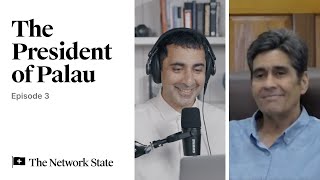
Podcast episode (Network State with Balaji) interviewing Palau President Surangel Whipps Jr. and William Wang (RNS ID founder). Covers Palau’s geography, history, and governance; President Whipps’s US education and business background; Palau’s push to diversify from tourism via fintech and blockchain initiatives (on-chain digital IDs, corporate registry, planned US-dollar stablecoin with Ripple); RNS digital residency (physical plastic ID + on-chain DID across multiple chains) and partnerships with notable crypto figures and firms; infrastructure and sustainability priorities (renewables, fiber-optic expansion); and efforts to attract vetted digital nomads and entrepreneurs.
Questions this video answers
About 454 square kilometers.
Approximately 20,000 people.
1994.
Over 105 countries.
13 senators; Palau has 16 states (delegates represent each state).
Welcome to the Network State Podcast. I'm here today with our first head of state, a leader of a UN member country, President Sarangel Wips Jr. Of Palau. Palau is a small country in the South Pacific that has nevertheless established diplomatic relations with more than 100 other countries, including the U.S. australia, India, Israel, and the UAE. Palau gained independence in 1994, and it's recently been gaining momentum as a startup country and tech pioneer. In fact, President Whips is himself a former executive, and he's brought that DNA with him to the presidency. He's going to talk to us today about Palau's tech initiatives, including their new digital ID program, which combines an offline ID with an on chain identifier. Joining us is also William Wang, founder of the RNS ID service that Palau uses to provide digital identifiers. Palau digital IDs are now being issued to venture capitalist Tim Draper, Ethereum founder Vidalik Buterin, Binance, Coccz, and many more besides. Our discussion today begins with an introduction to Palau, an overview of everything it's doing in tech, from digital IDs to stablecoins to a possible on chain corporate registry. We then talk about how small countries have punched way above their weight, from Estonia to the Cayman Islands to the early US To Palau itself. And we discuss why Palau chose to become its own independent country with its own culture and sovereignty, rather than becoming just part of a larger union. At the end, President Whips rolls out the red carpet. If you're a digital nomad with remote income, you're welcome to come there to come visit Palau and see what startup country looks like in person. Let's get started. All right, well, we are back on the Network State podcast. I'm here with a head of state, the president of Palau, and please tell me if I'm pronouncing this correctly. Sarong Whipps Jr and also William Wang, who's the founder of Cryptic Labs and has developed an RNS ID program that Palau is using to issue a new kind of digital id. Did I get all the pronunciations right? Was that right?
That's correct.
Perfect.
So I'm Serangle and there's William.
Amazing. So you know you are the head. You're the president of the country of Palau. Many people haven't yet heard of Palau. Do you want to kind of put on the map for us, tell us what it's about, where it is, you know, its history, all that type of stuff?
Well, probably the reason they haven't heard about Palav. If you look at your globe behind you, if you go to look for it on the globe, it's very hard to find. Most globes don't show it if they're small. You know, it's a very small island. It's about 454 square kilometers of total land area. To give you a perspective, actually it's about the size of Singapore before they filled in all the area around it, you know, so it is small in a sense, geographically, but. But we are what we consider ourselves, a large ocean state. The ocean area that we cover is the size of France. It gives you a perspective. We're in the Western Pacific. Our borders, our ocean and our islands border Indonesia, the Philippines on the west and south and then on the east, Micronesia. I like to tell people that we're five hours by plane from every major city in Asia. Beijing, Seoul, Tokyo, Singapore. Well, I guess eastern Asia, southeastern Asia, because Dubai is also Asia. But they're eight hours. So we are small. We only have 20,000 people. That's our current population. We became independent in 1994. We were prior to that a trust territory of the United States. So Palau, the people have lived here for thousands of years. They have some terraces that go back 3000 BC is what they say. But really the first discoveries happened around of Westerners to Palauig first coming, Paul happened around the 1500s. So they were the Spaniards that first came and then later Captain Henry Wilson on a freighter coming from England.
When Was that? Like 1700s? Ish.
1780. 1783.
Okay.
That was he shipwrecked. That's how he discovered Palau. And the height here helped him, rebuilt his boat and in fact sent his son back with him to England. Now he was, we could say, our first ambassador to Great Britain. And he's buried in London in Rotherhide, in a church there because unfortunately, when he got there, he got the black plague.
Oh, well, that's bad timing.
Yes. He never made it back to Palau. But so because the Spaniards first discovered us from, you know, they claimed us to be their territory and they brought missionaries here. And so we were under Spain until 1898. And then we were sold to the Germans in 1898. And we stayed under the Germans until the end of World War I. And at the end of World War I then we were then given over to the Japanese, who under the League of Nations took over Palau. And then after World War II, given to the United States to be a trust territory. But the trust territory Agreement under the UN was that the United States would help these islands develop economically, socially, and politically so that they could eventually become independent nations. So in 1994, Palau fully gained independence from the United States and became a member of the un. We are one of the least populated nations on Earth. I think we're third, I think, ranked. There's Tuvalu and Nauru, maybe ahead of us on that list.
Well, it's interesting. I mean, they're also kind of in your general vicinity, right? Like, you know, Tuvalu and Nauru, also Federated States of Micronesians on a bunch of small Pacific islands, kind of countries there that are, you know, probably a little bit of a social network. And. And, you know, my understanding is, you know, when you got independence in 94, the US was sort of like a. Like a great power sponsor, right, because there's kind of a military, you know, relationship. And then on that same day, like, the US Recognized you, Micronesia, Papua New guinea and Australia, so several of your neighbors, and then Narau just a few weeks later. So it was kind of a. It was an important moment where you got diplomatic recognition from a big country early on, and that was what got you on the path to sovereignty. Is that correct?
Yeah, that's correct. And now we have, of course, we're a member of the UN and we have diplomatic relations with over 105 countries now.
So that's amazing.
The list keeps growing, and we make new friends every year. And, you know, it's. For a small nation to be recognized for its sovereignty is important. You know, we were sovereign before the colonials came and claimed us. But we had, for generations, had our own customs and practices and way of doing things. One of the things that we advocate for on the world stage is our conservation ideals. For thousands of years, you know, we protected our reefs, we managed our resources through our traditional methods with chiefs. And. And the chiefs would say, no hunting here, no fishing here for a while. Let it rejuvenate, let it build back, and that let us live here sustainably for the thousands of years. And some of those principles that we continue to apply in this modern age, that we're trying to combat climate change and protect biodiversity. So it's interesting how things come back in vogue, but we're fortunate that our ancestors practice these things. The other thing that I don't know if you know about, Palau is also well known to be. Have. Have been the place that Yapi's stone money was mined. All the stone money that's known about in Yap was mined in Palau. And that money, wherever it is, has a. Has a. Has a story and has a history.
It's very important in cryptocurrency, actually, as like. It's like one of the things about the origins of money. Do you want to tell that story?
Yeah. So we have limestone hills here. Yap doesn't have limestone. So the sailors came down from Yap, made friends with the chiefs of Koror and Irai, and stayed here for months on end looking for. It's like. It's like almost like crystal inside the caves. And then they. They would find the vein, and then they would carve them out, and then they put them on, you know, these big disk, some very big, some small. But the value had to do with how many lives, how much effort went into making them, and then transport them back to Yap, which is about 300 miles from Koror, and you think in a small canoe. And some of These disks are 8ft in diameter, so they're big. And then there's, you know, there's somebody say they're between here and Yap, and they have a story for that, and there's ones that are still here in Palau, and there's a story for that. So that's why we always say that's the original blockchain.
Yes.
Yeah. And Palau has. So Palau, I say, innovated one step further than that, because Palau said that money is just too big to transport around. So we went with smaller money. And our money is actually, we call them beads. So these beads, there are some that are orange in color, yellow, green, with white on them. And so these beads, they were used to be traded to buy a house, buy a canoe, a marriage settlement at a funeral. And those beads had value assigned to them, but that value was a lot of it had to do with what funeral it took care of, what house it bought, what canoe it bought. And so that recorded history was also our blockchain. But because they were small beads, much easier to transport and much easier to move around. And now, of course, now we can do everything digitally, so that's even better. Right? We don't have to worry about moving around because we can keep it all on the blockchain.
Well, you know, immediately our audience will be thinking, how is it? How do you have. A lot of heads of state are not conversant with technology. They're not conversant with business, but you actually have a background in business. Actually, you also have an American ish kind of accent. Right. In English. Right. So do you want to talk about that like, you know, your business background, your kind of U.S. relationship?
Well, you know, my father, when he left Palau, his goal was to get an education in the United States and he joined the US Military and ended up being in the army and ended up working as a medic in the US army in Baltimore, got the GI Bill and went to college. But because of that experience, he of course met a young lady from Maryland who is my mother. And so I have the opportunity to speak English and Palawan. But you know, in our Constitution, Palauan and English are our official languages because it's taught in schools. But I have that extra benefit. So I was educated here in Palau, of course, for universities. We don't have four year universities here, so we had to go to the United States. I was fortunate to go to college and get a degree in economics and further and get an MBA from UCLA in 92 and then return back home to really run and help grow our family business, which were in retail construction before I decided to go back and do my part in helping the public and serve the people. One of the things I learned when I went to grad school is, you know, MBAs, you all, you're always getting educated and your goal is to make money. But it should be more than making money. It should be about giving back and being responsible citizens. And this is one way I can give back. I had the opportunity when I was there at UCLA to get a fellowship. It was called MBAs in government. So we went to D.C. for the summer, which was a great experience. And at that time is when the savings and loans had failed and they were saying, oh, you can come and work for the IRTC and help the SNLs and all that. But anyway, I said, no, I'm going back home because I'm going to help Palau develop to be a successful country.
2009 to 2016, you were a senator and then you were elected as president in 2020, if I'm not mistaken.
Correct. Right. Got it.
And, and did you, you know, were you. How did you get into technology originally? You know, William, did, did you, you know, talk to the President about crypto or how did, how did that whole thing kind of happen?
Well, well, you know, one of the things that we've always been. We've always believed when I was in the Senate is, is we've got a. We've got to diversify our economy. We cannot be just dependent on tourism. And what just proved that even more is our experience with COVID it just wiped out our economy because we depend so much on tourism. And so while I was in the Senate, one of the things that I was trying to do is get our local bank to be able to accept deposits, move to the next level, improving the financial sector here, also improving the corporate environment to attract foreign investment. And one of the things when we passed in, when we were in the Senate was the shipping registry law so that we can register ship. So it's looking for other industries that a small island can maybe help promote and help provide sources of revenues to help the economy. So when I ran for president, one of the things I said is we have to develop our financial industry and let's find ways that we can do that. And I don't think the blockchain and digital currencies and these kinds of things were actually on my mind. No, it was really the introduction of people like Brill and others that really helped bring us together and put us on this path. And it's really learning from them, learning from William on their vision about freedom and how blockchain and this really just unlocks freedom and gives you that opportunity. The idea of digital nomads. I was in Kauai last year, and I was just going around, and there's so many digital nomads staying there because they've run away from COVID and moved to Kauai. Well, why not move to paradise? Why not move to Palau and do the same thing? These are models that we need to look at, having digital nomads move to Palau, developing the digital residency program, developing a digital corporate registry. These are things that, you know, we think there's opportunity there that, you know, we can create a space where entrepreneurs can grow. And, you know, America is successful because it's the land of opportunity, where you can dream the impossible. So we want to be that home for the digital world. Right. Come here. But, you know, we've been very, you know, we've been very careful. We're. We don't want to step in any potholes that would make it, you know, difficult to transact, transact business around the world. So where we study, we try to say, okay, let's do this project. Let's add on another phase. Another phase. William has been a great partner in this, and maybe he can share a little bit about what he's done today. But that's just kind of our thought process. And we want to attract investors, really, entrepreneurs that have great ideas that can help us grow this digital space and create opportunities for people.
Well, that's great. And I know actually US citizens can kind of move to Palau and check it out for, I think up to a year as a tourist. Is that right? And then they'll need to get like kind of a long term kind of path. So let's say you were a digital nomad. You did want to move to paradise or at least check out Palau. You go and check it out. Now, if you've got a passport that gets you there. And then is there a way that they could be there indefinitely or is something where you expect them to be there, let's say three or six months out of the year? How are you thinking about that?
Yeah. So right now tourists can come in, stay here for a month, get renewed up to three months. So that's something that we're exploring is. So how do we maybe expand that, maybe have a program for our digital residents? Maybe another layer on. I was looking online in Croatia, for example, where if you could prove that you had €3,000 in income a month, you could come and stay for a year or something like that. We also have challenges with people that just show up and they're looking for work and then we.
Right.
And then now we have problems of how to get them repatriated and all that. So, you know, we've got to balance that. Right. We want true digital nomads that already have an income, come and enjoy and let's grow together. That's the idea. So, you know, one of the things that we're working on now is becoming a member of Interpol. So by the end of the year, we hope to be a member of Interpol because, you know, one of the things we value is that it has to be secure. And that's one other thing. On the RNS platform, unlike any other citizenship, we can be selective and say only if you have a clean record, you can be a digital resident of Palau. I mean, that's the process and I think that's really the goal is to provide a safe environment, a good regulatory environment that really spurs entrepreneurship.
Well, that's awesome. And actually that's a good kind of segue into maybe William, you can introduce yourself and kind of talk about RNS ID and you know, the digital ID program and how all that works.
Yeah, absolutely. My name is William. I've grown up in China, moved to US about 13 years ago. Originally, like planned to finish my PhD, but I just finished master's and then start working. So I got the, you know, the opportunity to meet with present web's in the Bay Area and we have, you know, like a conference set up, like a discussion of how to, you know, actually like to help allow to improve the diversity of its economy.
And when was that? 2021. 2020. 2021.
That was the end of 2021.
Yeah. End of 2021.
The end of 2021. Yeah. You know, I think the, I think the goal was to basically like improve the economy without having to follow the Singapore model, which is to bring millions of people. Right. So Palau still wants to stay comparatively quiet. And then I think one of the few ways to do this is basically to improve the population without having to bring condensed people to the island. We basically reference to the Estonia model. They have done that in past, in 2018. So definitely we're not the first country to offer this program. On top of that we can actually do a little bit of innovation which is to bring this identity program on chain. One thing is to make it a lot more secure because we do like the KYC AML check before they can actually get the digital residency. So President was saying that this is actually the, the cleanest residency program in the world because if you're a U.S. citizen, you have a criminal record, there's no way that the US government can say oh, you cannot be a US citizen anymore. But as the Pilates residency office they have the option to say no. If you have a criminal record, if you did money laundry, if you're on a sanction list or if you're politically exposed person, then we have option to say no. And then on top of that, this identity is not just like an ID card. I brought my plastic version over here. So basically we offer in two formats. One format as this plastic ID and another format is as a DID on chain. So basically this identity is offered multiple chains, right? It's not just on ethereum on the layer 2, but it's also on CK Sync on BNB chain. So that we can pre qualify a wallet address as a white labeled KYC wallet, which you can do KYC instantly with finance, with exchanges, or also decentralized applications like Uniswap, lending platforms like Arviv, stuff like that. So that's kind of like giving the users a lot more flexibility of using the digital version as well. You can just use your wallet as a fully KYC solution.
That's really awesome. I mean one thing so you know, basically you have both the government ID and you have the on chain ID or the physical ID and the digital id. The way I kind of think about this Is, you know, at Coinbase and other places I've talked about how the fiat currency cryptocurrency interface was very profitable and actually much bigger than anybody thought. And we're having interfaces between now in your case, fiat identity and crypto identity. And then we could also have, for example, Wyoming's Dow law is fiat companies and crypto companies. So building those kinds of bridges, not just a fiat, you know, to cryptocurrency exchange, but a fiat to crypto identity exchange and a fiat to crypto company, you know, transition and so on and so forth. You know, president reps, you just talked about improving the corporate environment and whatnot. Wyoming and Tennessee and other states in the US have passed these dao laws. If you're familiar with those. That could be an interesting thing to look into where you essentially just like what RNSID is doing in terms of an on chain identity. You could have an on chain company. Have you guys looked at that? Or it may be something of interest.
We were talking about that. It's something that we need to look into. Definitely.
Yeah. It's called the corporate registry and then that's, you know, we're seeking ways to put the company on chain too.
Yeah. So right now we already have a corporate registry system, but it's, the next step is to put it on chain.
Right.
And so we're still trying to design the regulatory law to make sure that we do it right.
And now just like with the, you know, you mentioned, it's funny you mentioned Estonia and Singapore. Those are also very tech savvy startup countries, you know, in their own way. And you know, Estonia has X Road, which you're probably familiar with, which is their like overall identity program. They got independence also around the time you did in 1991 from the Soviets and they were also got into software. And, and in this case when you mentioned that getting the regulations and so on, right. Wyoming, Tennessee and others have at least a template that you can now, you know, clone and edit and whatnot. And you know, I like the strategy that you, you are using. It's similar to Estonia strategy where Estonia also is a small country. It's funny, there are a million people and you guys, you know, like it's such a small population that you have to use a lot of Estonia's tactics. They have a million people, you have like 20,000. But some of the same tactics apply where they have essentially made software their national export. And that's kind of what you're doing here, right? In the sense of the combination of software and sovereignty is becoming a national export.
Yeah. And that's the advantage of being small. You know, I can reach out to the president of the Senate and the speaker and all the congressmen and meet with them and try to resolve these issues that we may have conflicts and get things done quicker.
And how is the government set up? Is it similar to kind of the US where there's a president and a Senate and a House and whatnot? How should we think about that?
Absolutely. And even our Capitol building looks like the Capitol building at Washington, D.C. so it was an interesting story. One of the high chiefs of the village where the Capitol is, I said, why didn't we. Why didn't you select a building that was more traditional in the way it looks? And he said, but that wouldn't be the symbol of democracy. So those are our traditional men's meeting houses. And that's what they're for, traditional men's meeting houses. So let's keep them that way. And this new form of government should not conflict with that. They should work together.
Interesting. So a combination between the tradition and. That's really cool. And how many people are in the Senate. And so how does that all work?
We have 13 senators, and the senators represent the population. And then the delegates represent. Actually represent each state. So we have 16 states in Palau, which are really the traditional villages that existed for thousands of years. So they had chiefs and they had clans that all territories that were already divided up that they fought over for thousands of years. So just naturally, that's.
That's really interesting. So, so Basically it's like 13 senators, 16 delegates, and then a president. Is that correct? So like 30. 30 people. What's great is you could probably get everybody into a room and get consensus on something. And, you know, it's relatively small country and folks are aligned. That's really good.
But we do a fairly good job in really maintaining those three branches of government. So, you know, you have the legislative branch, we have the executive branch, which the president is. And we're elected separately, not part of parliament, like in a lot of jurisdictions, and then the judiciary. So there are times that it's pretty vocal and very. We make use of the media quite well, too. So we've. We've adopted, you know, as much of the good practices of transparency and open government as we can, because, you know, I think that's important for democracy. Successful democracies have to be open.
I'm really impressed with, you know, how far you've Commons, a very small country. I mean, one thought is you know, just like as within a company, you can decide to build something yourself or buy it and a startup will take things off the shelf because they, they can't, they can't go and build a data center, for example. Right. You know, as a small country, you have to make the decision as to are we doing something within the country or are we going to do a treaty with another country? For example, like the US Military provides defense to, to pull out. Right. And, but, but you are managing diplomatic relations with 100 countries essentially, which, so that's something that you've done internally versus militaries externally. Right. So how do you think about that division between like internal versus external? Like what kinds of things do you run yourself versus what kinds of things do you, you know, sort of do with partnerships or treaties?
Well, I guess that would be the example of partnering me with William to run rns. We did not, you know, we don't have the technology. And it's about finding the right partners to do it. 20,000 people, you cannot, you don't have the capability of protecting yourself. And so that's why a partnership or the relationship that we have with the United States is so important. So of course we help with the defense of the United States, but at the same time they protect us. So it goes hand in hand. You work together, so you've got to find those special relationships where, you know, ultimately the success of a relationship is you both have to win. It can't be lopsided, and it's only a one side benefit. So. And as long as you, you have that goal together, you're working together and saying, well, these are the challenges we have, but what can we both do to make it better? And you just got to keep doing that. When it comes to education or it comes to healthcare, it's about partnering with not only the Pacific, but the world. When it came to combating Covid, it took everybody working together. I mean, we, we use the who, we asked for help from cdc, our closest allies, Taiwan, Japan, Australia, you know, the United States, they're all there helping. And then it's taking that information and what the data that they've given us and saying, okay, does this make sense for us? So we adopted the model that it's most important for us to get vaccinated as soon as possible. So we had the highest vaccination rates in the world, really for. We still, I think, have the highest vaccination rates. And we've been very fortunate. You know, when Covid first came out, it was 2% mortality rate, we have one in a thousand. So that's because, you know, you take that information, your experts here look at it, work with partners, and try to find the best solution for whatever situation that you're in. Also, in coming up with new business ventures as a small tourism market, know that we have to depend on large companies to come in and help us with our tourism. We know that you need the marketing, you need their expertise, their resources to really help market Palau to the world. If you want to grow it, maybe.
The Airbnb CEO can talk about Palau or something. That's actually another kind of partnership, Right. Basically.
Right, Exactly. And we already have Airbnb here, and it's been successful. They've done well.
Yeah. And the Palau ID can get verified on Airbnb, too, so it's not just for crypto.
Interesting.
That's really interesting. Yeah. Because once it's digital, you can use it on even Web two things as well as web three. Right?
Yeah, yeah. Banks, you know, hotel check in, flight check in, domestic flights, not cross border. And, you know, register a scooter, you know, go into a bar. Yeah. So, you know, for anything requires age verification, ID verification. Those are all working. And then it's. Right now we're even adding more benefits. Like, you know, if you stay in hotels or, you know, board an airline, you have, you get discounts. Or a car rental for Palau is a lot more discounted. So you can enjoy the. The local rates. Like, hotel is almost like 40 off.
Oh, that's good. So basically, if you get, if, if you get an id, then there's some discounts in visiting. That's really cool. I mean, it's funny, you know, I, I missed out. I, I should have seen this in January 2022, because I see Tim Draper was a founding digital resident. Tim Draper, Steve Jurvetson and I were actually the first three Estonian E residents when they opened their thing in 2013. So. But I want to see what the country is like. That's going to be really cool. So Tim became, I think, the first digital resident in, like, January 2022, I think. Actually, you know, you mentioned these partnerships, which is, it's really interesting because in a sense, you, you're, of course, you're partnering with states, you know, on, on defense and so on, but you're also partnering with networks. Right. Like, I think Vitalik has an RNS id. You know, I think CZ of Binance also did something with you guys, if I'm not mistaken.
Yeah. Czvid in June and then announced the RNSID issuance on the BNB chain which is as a formal form of kyc. So you don't need to carry your ID everywhere anymore. Right. You can just log in with your Web3 wallet and then do the full KYC with Binance. Actually JP Morgan also mentioned us during a call with CK Sync. You know, so like we're also expanding to the banking sector that you know, they can use as you know like a form of ID verification.
That's really interesting. I mean does Palau have a bank?
We have local banks that are US banks. So that's bank of Hawaii, bank of Guam, but we have our own government bank, it's called the National Development Bank. And one of the projects that actually we're working on with we found another partner which is Ripple, is a Palau digital stablecoin project and we hope to have that launched. We're hoping within the next few months start it locally, see how the local appetite is to it learn and hopefully expand to be something that the world can use, not just Palau.
That's really interesting. And the stablecoin, would it be like a US dollar stablecoin would it be and running on Ripple, is that right? Or how should I think about it?
US dollar yeah, US dollar back stablecoin and and on the ledger.
That's really interesting. I mean you are at the frontier of quite a few different things here. As as a sovereign you've done state visits to the uae, you've done state visits to Riyadh, right? In Saudi Arabia. Tell us about that.
Well, you know one of the things we are very emphatic about is protecting our environment because as a small island we have islands that will disappear. So we have to do our part. And when I we went to Abu Dhabi for was the Irena conference which is the International Renewable Energy Conference and then also the Abu Dhabi Sustainability Week. So we were looking at how to find you know the UAE and Saudi Arabia are really leaders especially in the solar technology and renewable energy space and how to bring leverage that relationship and bring investment. Because right now all our energy is is based on fossil fuels and diesel runs our power plant. So when the price of fuel went up of course it just causes inflation to go up so much because and really pushes people back into poverty. So it's really a win win for us to transition to renewables and at the same time so it's going to lower the cost of power but at the same time help the environment. So you know, going out there and Learning about that, but also learning about all the, you know, incredible things they're doing over there in terms of investment and trying to diversify their economy and, you know, just how they're so open and bringing investment in and really spurring entrepreneurship. So we went, had an opportunity to go to the Dubai Finance center, talk to them, see what they're doing, talk to different initiatives that they're doing there about setting up corporations and just their fintech industry and maybe some of the concepts we can adapt and use in Palau to help develop that on this side of the world. There's Singapore, there's Hong Kong. You know, we think Palau is an opportunity to be definitely in a small niche to attract the financial industry here too. So.
Well, you know, the thing is that actually I think people, people know that startups, which are small companies, can punch way above their weight. You know, like the 13 people at Instagram were able to basically tackle kodak, which had 13,000 people, and Google at IPO had only about a thousand people in 2004. And it changed the world. But I think people don't realize how, you know, for example, the Cayman Islands is only about four times your size right there, like 60 something, 65,000 people. Maybe you become the Cayman Islands of the South Pacific. I mean, that's a reasonable ambition. Actually. They became a financial center. And, you know, so. And you're in the Asian time zone. Could be, could be an interesting thing if you're getting into crypto in a big way. You know, also like, you know, ancient Rome, like the capital only had like a million people. The U.S. you know, at the time of independence was like 2 million people or something like that. I think, I think people really underestimate how much a small and motivated state with competent people can do.
No, that's exactly the model that we're looking at. We're looking at like there's Switzerland and then there's Lichtenstein. So we say we're Lichtenstein or, you know, and then in the Caribbean, there's Cayman, there's Bermuda, there's, you know, so that's a very good, you know, analogy that, that's, that's really one of the things that when I was in grad school, I did a study and it was on foreign investment, minimum wage and foreign labor. And we were, the countries that we used as examples were the Caribbean. And Cayman was one of them because of their tourism, their financial sector, and then how they manage the labor, it.
Feels, it feels like the Caribbean Islands and the South Pacific. Countries are kind of similar in the sense of being relatively several independent countries near each other, relatively small island nations. Probably something to learn from each other or something like that. Is that correct? Would you agree with that?
Yeah, yeah, yeah. The only challenge that we have is that it's the Pacific is huge, right. So just with our Micronesian region, to get from one side to the other, which is Kiribati, which is on the other side, and we're only one part of the Pacific is like an eight hour flight. The three freely associated states, which is Palau, FSM and the Marshall Islands. It's the size of the continental U.S. we, the challenge is for like cruise ships. So the cruise ship industry has not really looked at this area because the islands are. You can't visit one island every day, you know, like in the Caribbean, you just hop across. So that, that is our challenge. But our advantage, Palau's advantage compared to the rest of the Pacific is we're so close to the rest of Asia.
Yeah. It's funny, even though you're remote in some ways, in terms of physical space, your time zone is actually pretty good for doing business in Asia. So that might be something where the digital nomads, even if it's a plane flight out there, it's pretty good time zone. You're English speaking. You know, I've actually thought Guam, which is somewhat nearby to you, would also be interesting because US citizens can just go and set up and they don't even need a visa. They can just go and like, you know, live in Guam and then you could work in an Asian time zone remote, if. And then, you know, maybe go on site once or twice a year or something like that. That might be a model that you could look at if you had, you know, you basically set it up for remote. It seems like you've got decent Internet over there, right? So if you've got Internet, then, you know, maybe you can, you can support that.
We have a one fiber optic cable already. We have a second one that will come online at the end of this year. And they're looking at. Palau is also another place that might be a hub for cables. And then we have a project within the next two years to put fiber to the home everywhere on this island. So. But we have, we have pretty good cell service everywhere. And yeah, the Internet speeds. We'd like to have 200 mips at every home, but we're not there yet.
Well, it's still pretty good. Pretty good. I mean, like, it's, that's the Thing is, it might be a little tricky to get out there, but then once you're there, you're connected to the world still, especially if that second cable comes in. I mean you mentioned cruise ships. Is it just like do they not come at all or they just find it hard to come?
Well, I think the cruise ship model is, you know, you want to be able to pull into a port, next day you're, you wake up, you're in another port and kind of hop around the islands.
There's a fascination within crypto and digital nomads of, you know, crowdfunding cruise ships and living on them full time. And you know, maybe they can dock in Palau for.
Yeah, bring them in and just have park them here. They don't have to leave.
Right, exactly. That's right. So maybe you spend three months of the year in paradise, four months, something like that and then you. Right, that might be. The model is like, you know, the so called perpetual traveler where you're not resident in any one place too long and you've got great Internet. And so the tricky part will be cruise ships require maintenance so you need to work out all the parts and all that type of stuff and that, that's something which, you know, the cruise ship, you know, like industry have to figure out but modulo that could be pretty interesting. And park them, stay there for a while, they provide jobs and so on for you guys. And then maybe you say okay, if someone's living on a cruise ship, they could have a, they could have a longer visa, something like that, figure out the residency aspect.
Or they could have boats, you know, just buy yourself a 30 meter yacht, come and park it here and stay here for a while.
It's funny, people think, you know, normally that land is so called inelastic, if you've heard that term meaning you can't build more of it. Right. Maybe you can if you've got big enough boats that are coming in. It's actually like every parking space it's you know, 5,000 people if it's a cruise ship or something. So we've covered actually quite a bit. We've covered, you know, kind of an overview of Palau, the journey to sovereignty, your election. Talk to William about RNS ID and how you guys met, you know, talked about Palau and crypto. You know, I have a couple more questions which are maybe we can, you know, wrap up. But basically what other technologies are you interested in? So you know, for example, would you want to have an island that was a self driving car zone? Or something like that. Like, would you be interested in entrepreneurs coming to the country to try to do things like that? What is your take on that?
Well, we were approached last year and we hope that they're still exploring it, but drones delivering packages to homes. We're also working on electric cars and seeing how we can start that here in Palau. And also hydrogen making use of hydrogen. That's on the renewable space. So yes, we're definitely like new technology and like ways we can work together with partners that want to develop new technology because we have a, an extensive reef system, you know, technologies in aquaculture to produce more, more fish and, and seafood products. So that would be something I think that we would definitely like to explore.
That's really interesting. So basically essentially growing either, I guess edible algae or just more generally our cultures like fish and, and, you know, shrimp and other kinds of things, crabs.
Because we get more tourists, we need more seafood. So yeah, and you, and you don't want to, you don't want to take too much from the reef because then it's not sustainable.
That's right. So it's, everything has got to be sustainability, renewability when you're a small island.
Well, one of the things Palau, of course is known for is its, its marine environment. And I've always believed that, you know, we have the opportunity of being a really a research hub for the marine sciences and maybe we can have, offer university courses here or extension programs. I know like Stanford, they come and do some work here, but more of a base that actually really spurs innovation because, you know, cancer research, there's all kinds of things that you can learn from the environment. But also we found that we have coral species here that are very resilient to heat and resilient to coral bleaching and how we can share that with the world. And you know, so we have a coral reef research center trying to improve our small community college, the upgraded science department. But I think there's opportunity really, you know, our dream is to have a university here that's, you know, world renowned, that's really in the marine science and that kind of space and, and can contribute to contribute to the world.
That's really interesting. I mean, I think, you know, you have a few of these unique advantages with the marine aspect, with the crypto aspect, and you start to build a parallel academy. You know, you've got subjects that are for, you know, you actually have a local advantage. And that's really, that's really interesting. The one other question I had was basically the Path to diplomatic recognition. Right. You know, it was a long path for Palau, but not an infinitely long one. You start as a trustee and so on. A while back, the, the president of Kazakhstan made the remark that if every nation that wanted independence got it, we'd have something like 600 sovereign countries in the UN, not 180, you know, and, you know, I think that there probably will be. I mean, this is one of our theses, is there will be many more new countries, many more nations getting it. What do you think about the path to sovereignty, to getting independence? How should, how should people think about that?
Well, I think. I think first of all, you have to have people that share the same values, same interest, working together. That's what's important. And kind of the same culture. Sometimes it's difficult. So Micronesia, as I said, was the size of the three, what we call freely associated states now is the size of the continental U.S. at one point, the U.S. says, you guys go independent, but all of you stick together because, you know, of course, we'd be a much bigger country. But our leaders at the time said, but we're very different culturally from them. It's going to be difficult for us to come to agreements and get through things. So we said, well, we're going to secede and not be part of that grouping. So that's why we're not part of the Federated States of Micronesia. So there became Palau on one side, and then in the middle there's the Federated States of Micronesia. And the other ones that seceded was the Republic of Marshall Islands, because we all have different languages. And I think that was what kind of set us apart. So we have different languages. It was hard. But the US Said, no, you should just all be lumped together one country. But, you know, we're glad that they recognize that we, our sovereignty and we are able to, you know, be on our own. I think in hindsight, you know, we. I think we're happier that we did that because it ultimately we have our own language, we were able to preserve our culture, and we can move forward and not have to try to mix everyone together, which is sometimes difficult, with that solid base and that solid language and culture. Then you bring people in, but at least we are defined as an entity.
I, I love that, you know, honestly, you're speaking my language because that concept of having a strong community and culture, and then you can get alignment within it, and then you can have friendly relations with Narao and the Marshall Islands and the Federal, you know, States of Micronesia, because each group can kind of manage their own things and then they can kind of interact as friendly neighbors, but recognizing that, you know, there's certain things that they want to manage things differently internally. Right. I think that model has worked quite well for you and helped to lead to your, you know, current innovative status.
Right. I mean, it's going to be much more difficult to get everybody to agree now. Let's try this digital residency program. It's harder if we had to get everybody together to agree on that.
Yeah. Actually, I know that Marshall Islands is also starting to do some interesting things in crypto and. Right. And so what happens is, you know, maybe they made all. Everybody might not agree with you at first, but if you're small enough and agile enough, you go first and then you pioneer it and then people can say, oh, actually, you know, that was a good idea. We'll copy them, we'll clone them. And that's kind of worked within the US with small states like Wyoming going and pioneering, and now it can work outside the US with foreign states like independent sovereign states like yourself going in pioneering.
Yeah.
Awesome. Okay, so. Well, I think we got a lot of awesome stuff. Let me know if there's anything, President Whips or William that you'd like to talk about. I think this is going to be a really great episode.
No, it's just been a pleasure talking with you and sharing about Palau and, and sharing with the world the opportunities that are here. And, you know, we really encourage everyone to come and visit, especially the digital residents, and see how we can grow together. So I hope that the digital residency is not just something that they, they keep and say, oh, well, we never have to visit Palau. I'm hoping that every digital resident visits Palau and it's part of bringing new ideas and helping Palau grow to be maybe a place that they want to live eventually. Right.
I will, I will. Actually. I hope Arnest ID can handle a million clicks, because you might get a million clicks soon. We'll see. William, do you have any thoughts?
Yeah. So Palau is actually like a very welcoming country. So, you know, like, when you get here, it's actually very rare to, you know, to get resided, you know, American town in, in Asia. So, you know, you go to Singapore, Tokyo, they're like Asian style. But here it's just like another small town in the US So, like for, you know, like outsiders, pretty easy to get, you know, situated. You know, there's no discrimination. There's, you know, like people are very friendly. Yeah. So, you know, again, you know, we welcome all the Dish residents and yourself and your followers, too.
Well, we have a lot, so we'll have. Maybe we will break 10,000 just to start or something like that. But I'm looking forward to visiting. I've really enjoyed talking to both of you and hearing about what Plow is doing in terms of innovation and crypto innovation specifically. And hopefully this podcast helps put Palau on the map in tech, and everybody knows what you guys are doing. So thank you very much for coming on.
Well, thank you. Thank you for the opportunity, and we look forward to seeing you in Palau.
More from Balaji



34 - Network State Conference 2025 - Fireside with Vitalik and Balaji on Zuzalu and d/acc

33 - Network State Conference 2025 - Fireside with Amjad Masad of Replit and Balaji





06 - Network State Conference 2024 - Fireside with Naval Ravikant and Balaji Srinivasan