Unitize2020: How COVID changed everything: crypto,macro, and beyond
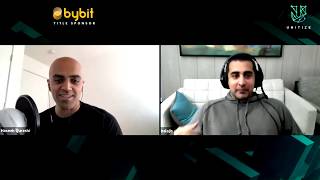
Balaji Srinivasan on how COVID reshaped state power and crypto's future. He argues Twitter has become a governance tool for Western elites, the economy is a computable structure that can be paused, and blockchains will function as a law of the sea between competing geopolitical spheres.
Sam. Hey, Balaji, how are you doing, man?
Hey, how are you?
Doing well, doing well. So I want to introduce today we're gonna be doing a fireside chat with the one and only Balaji. Normally, Balaji does not need an intro, given that this is crypto. But just in the interest of completeness, Balaji, you were a PhD at Stanford. You co founded a genomics company Council. You Also co founded Earn.com and Coincenter. You were a general partner at Andreessen Horowitz. You, you were CTO of Coinbase, and now you are an esteemed member of the Twitterati. So you've got a very extensive background. So across all of that, you've been an academic, you've been a founder, you've been an operator, you've been an investor, and you've been an influencer. Which of these things do you wish you'd done more of and wish you wish you'd done less of over your career?
That's a good question. I think it's been very useful to be on multiple sides of the table for, for example, as a student and teacher, as engineer and engineering manager, as entrepreneur and investor, as critic and as journalist basically, over the last several months, because it gives you an appreciation for both sides and the incentive structures and so on. Things that are not always apparent just sitting on one side. What I actually wish I had done more of and what I want to get more into is actually art. And, you know, so by that what I mean is. Yeah, I know, I know. Like back in, you know, high school, there was a. There was a choice where I either I was going to take this freehand art class or, you know, I think it was BC calculus or. I don't remember, it was. It was either a math or physics class that, you know, overlapped. But I'd always been interested actually in art. And insofar as that comes out in any of my work that I've done, I think I have reasonably okay slides. Like, you know, I spend some time on the aesthetics of slides, but I've never formally trained on that. Right. And so I'm just trying to boot that up. And one of the reasons for that is I think we're about to get into the era of decentralized Hollywood where an individual can make full length, you know, movies and stuff on their, with their phones and their laptops. And there's at least two ways, you know, first is recording video with your phone. Right. TikTok has shown how high quality that can be, frankly. Right. Like it's Very entertaining. People, you know, go for it. And the second is virtual influencers on your computer. So, you know, you're synthesizing it. So I'm just actually imbibing and learning art and you know, applied art history maybe may be one of the things I'm thinking about.
What medium of art in particular are you paying attention to?
Digital. So what I think a lot about is a cryptocurrency is a prelude to a crypto country. And when you think about France, the first thing you think about is not their stock market. What do you think about when you think about France?
Food.
The Louvre. Right. The Eiffel Tower.
Okay, fine, fine, fine.
Yeah, right. Baguettes. No, that's also important, right?
I'm clearly not as sophisticated as you are.
No, no, no, but you know, you know what you're talking about is the food and the culture, right? Like, you know, when it's actually, it's relatively infrequent that the first thing you think about when you think about a country is their, their markets, you know, you know, that happens. You know, for example, like if you, you know, the usa certainly capitalism would probably be one of the top five, five things that people would come up with when they're talking about what the US is, New York City and Wall street and so on. So it's identified with that. Like capitalism is part of the culture and there's nothing wrong with that. But when you talk about culture and a lot of it is art, a lot of its aesthetics, and this is something that crypto and bitcoin has started to do more of. There's certainly obviously the logo. There's folks who have memes like Moon and Lunar, right? Like Hodl. You know, those, those are like kind of what I call pigeon art. You know, it's not intentional, it's not funded, it's not like meant to be inspirational. For example, there's huge, there's huge holes. We don't have a bitcoin anthem, right. We don't actually have songs. We don't have, we have, we have some documentaries and so on. We don't have like movies. We don't have art. Yet on the other hand, if you think about a huge part of what boosts cryptocurrency, it is like the community. And so again, we have the pigeon version of that. We have Twitter, obviously, and we have Reddit and we have blog posts and whatnot. You have sort of text based evangelism. But one thought is that text only works for a subset of people. And then to Reach like a larger audience. It is going to have to be video, it's going to have to be songs, it's going to have to be images, it's going to have to be things that are maybe more feeling than just pure thinking. This is actually also related to something, you know, I've been tweeting about, which is we haven't made the emotional case for technology. You know, we have, we have only talked about the costs and benefits from a very left brain analytical perspective. You know, it's 10x faster, it's 10x cheaper, it's more efficient, or what have you. We haven't said something like, hey, if you are blocking self driving cars, you're killing 30,000 people a year from car accidents. We haven't made that moral case. We haven't said, hey, the FDA is stopping genetic tests and so therefore it is literally killing people by disabling our sensors around the coronavirus. We haven't said, hey, the SEC is preventing capital formation, is keeping you poor because you, you can't invest. Right. We haven't made that moral and emotional case. It's like this huge missing thing and this is kind of related to that. Anyway, maybe a long answer, but something you might be interested.
No, it's interesting. We might come back to that at some point when we talk more about crypto. But the theme of this particular interview is about COVID 19 and how it changes everything. Sure. You've of course been in the spotlight lately because of your presence on the COVID 19 pandemic. I remember, you know, in our conversations you were one of the earliest lucid voices that I heard claiming that COVID 19 was going to come to the US, that it was going to be big and that it was going to disrupt the world and even spark social unrest. And so far you've been vindicated on every count. But I want to ask you, what do you think you got wrong in your predictions about how this will play out and what has most surprised you in the way that the pandemic has progressed to the world?
Yeah, I was actually going to say I would not call myself vindicated on every count. If I score myself, Scott Alexander actually, and Brian Caplan, they both have this really good exercise of self scoring their own predictions, both as a public accountability mechanism and as a personal accountability mechanism. What did I get wrong? Because when I have a theory of the world that is disproved by events, I've learned something and then hopefully I can update, you know, in Sisco signal processing, like you think about the Kalman filter, this so called innovations process where the delta is actually feedback in and then you change the trajectory of your, of your, you know, space shuttle or what have you that's guided in this way. That's like, you know, basic control theory. So without that feedback, you don't actually change your course correction. So what do I think I got wrong? I'd say the biggest thing that I got wrong was, was I underestimated the degree of ADD and irrationalism among the American public. Despite actually thinking of that as at a pretty high level, it's actually off the charts in an unquantifiable way. Okay. And basically with COVID the country went from. It was almost like the classic Gartner hype cycle, right? Ignore it. Oh my God, it's the most important thing ever. Then, oh, it went away for like two weeks or three weeks when we have all these protests and what have you, right? Huge crowds obviously. And you know, then suddenly it surges back. Oh my God. You know, and you know, this may be something that everybody has different root causes of it. I frankly think if you take all the accusations on one side and all the accusations on the other side and you put them together, they're both right. Masks, you know, if you don't wear a mask, probably going to spread it. You know, you're more likely to get it. If you're in a huge crowd, probably more likely to get it. These are, that's just like basic biology 101. You know, the virus doesn't care how righteous one's causes, you know. And so, you know, essentially what I got wrong was I thought that the level of energy around stay home, stay safe. Do you remember where the guy was on a beach and he had like a grim reaper, you know, thing like, you remember that? Yeah, so, so like that was there and that was being celebrated by all these people on Twitter, literally like two weeks before these gigantic, closely packed protests. Right? And you know, you can argue maybe that. All right, hey, this is like, like higher in the priority stack, you know, like one can argue about that, like, oh, maybe this saves more lives or what have you. Okay. But you can't argue that it's not going to spread the virus. Right? And so the level of kind of irrationalism has been much higher than I expected. And of course, this is very much a universal thing. It's actually insane that you can't discuss a biological phenomenon without it becoming partisan in America. Right? What, what happened very quickly was people, rather than fighting the virus, were much more comfortable fighting each Other. And so it mapped onto this stupid right left template that we have for basically everything. For example, Remdesivir is championed by the left and hydroxychloroquine by the right. Can you imagine some sort of treatment of a normal flu where amoxicillin or whatever is considered right wing and like Robitussin is left wing or whatever? Like, that's insane. You know, it's something where that should just be like a scientific process. Right. You shouldn't have these lunatics, you know, making it partisan. Right. But that's what we've got. So that's what.
Go ahead. It's interesting because I think what Covid has shown us is that if Covid were more straightforward, if it were like, you know, like the Black Death, then it would be a lot easier for people to calibrate correctly to, you know, just social, new social norms that everybody follows without really thinking too much about it. But it seems like Covid is all about externalities, right? Like even. Even a mask protects other people more than it protects you, right? Yeah. Sort of social behavior going out, especially if you're young and you're relatively in good health. Right. It seems like the. A lot of the. At least to my perspective, a lot of the difference in behavior and performance between different countries has to do with their norms around sort of. Sort of community versus individual identity.
Yeah. So that's another thing where I think Covid has affected my thinking on philosophy. I don't consider. I wouldn't say I got this wrong, actually. I think I called. I thought through this early enough in the thing, you know, in the whole, you know, pandemic and I tweeted about it where basically there's definitely a tension between the level of state power capacity that you need to fight Covid and, you know, the ideals of cryptocurrency and small l. Libertarianism and freedom and what have you. Right. There's absolutely a tension there between antivirus and pro crypto. However, you know, early on I had this tweet which was, you know, Ben Gurion, one of the first leaders of Israel. You know, he had the saying, fight the war as if there is no white paper. Fight the white paper as if there is no war. Meaning During World War II, the British had put out a white paper on the disposition of Palestine that the, you know, the proto Israelis were, you know, not happy with. And so they were against the British on this issue. On the other hand, they were allied with the British against the Nazis. And so, you know, even though that these Two goals clearly had, you know, differing things. One was basically allied with the British and one was, you know, very much against them. He recognized that actually he wanted both outcomes, which is both wanted to defeat the Nazis and wanted to have an independent Israel. So he said, fight the, you know, fight the war as if there was no white paper. Fight the white papers if there was no war. And they got both of them. Right. So over time, you know, they both defeated Nazis and they got an independent state. Right. I'm not getting into like, I mean, there's lots of politics or whatever. I'm just talking about that particular, you know, strategy. Right. Similarly, I think, you know, fight the virus, you know, fight Covid as if there is no crypto. Fight for crypto as if there's no Covid. You know, what gets interesting is you don't want to undermine a legitimate quarantine regime because that's not only not in your self interest, that is arguably violating like the non aggression principle and so on, because you're visiting harm, potentially lethal harm on other people. Right. And again, I wouldn't call myself like a narrow libertarian, but just if one is going by those principles, on the other hand, certainly Covid has been cover for this incredible roll up of power where there's lots of TSA style policies, a cargo cult lockdown where basically the US just completely wasted everything it did. Trillions of dollars was incinerated. There was this totally performative TSA style cargo cult lockdown which was a copy of Italy, which was itself a copy of China. Without admitt. You just couldn't admit that it was copying China, so it copied it through a proxy. It was this really bizarre elite discourse where folks either thought of China as a third world country or something, they didn't realize that actually China is in many ways very technically sophisticated, very good at execution, especially in the physical world. If they were having trouble containing this, well then the US was going to have big trouble. And it seemed only real for people when it hit Italy and then Italy did a lockdown and then the US copied that. But the problem is when you do a copy of a copy, and I tweeted about this as well, and you're in denial about the fact that you're copying. Well, the only thing they copied was the dumbest possible instruction, which is stay home, stay safe, right? There's like 50 other things that, you know, Asian countries did, not just China, but like Taiwan and others, you know, and not every one of them did all of these things, but for example, they had central quarantine so if you had the disease, you weren't actually kept at home or you could spread it. You went to such quarantine. Obviously there was testing everywhere. There was testing like with thermometers and at restaurants and certainly at airports, other places. You had constant check ins. They closed borders early on. They had, in China, they had mobile imaging machines so they could do CT scans of people's lungs as a proxy or as an alternative or complement in some cases to genetic testing and so on and so forth. There's like a whole list of things. Taiwan itself had like a 52 point plan. So it wasn't just like, stay in your room. Right. So the US managed to basically ignore it until it basically, you know, panicked and pooped its pants and literally just incinerated trillions of dollars basically for almost nothing. Almost none of that initial bill was actually allocated towards, to my knowledge at least, biomedicine or drugs or vaccines or treatments or fast track. It was all just, you know, treating the thing as a financial crisis, treating it as an economic or political problem as opposed to a biological problem. And then, you know, now everybody came out of lockdown with zero plan. And so you just got the worst of all worlds. Right. And again, you can look at my tweets in March and that's kind of like, you know, I think we're going to get the worst of all worlds where we're going to get a lockdown that destroys the economy and we're going to have the worst outbreak in the world. And that's what American leadership at all levels has delivered.
Very true. So let's turn the subject from COVID to crypto.
Sure.
So it's been claimed by many people that Covid is going to accelerate crypto adoption. There's been six months now, roughly, that Covid has been spreading around the world. Has it been accelerating crypto adoption? And if not, what exactly is it going to take for that accelerant to really take place?
I think it's so, I'm not sure that. I don't know, maybe I have a tweet or something on this. I don't think that Covid, it's not like an A to B, it's more of an A to B to C. What Covid does is Covid powered up the state everywhere. Right. Like, you know, things that were previously edge cases, like, you know, surveillance, you know, house arrest of everybody, control of the economy, you know, all of these things. Like there are now reasons where, you know, the state basically says, hey, we need to Contact trace you. Right? We need to track everybody you've ever associated with. Okay, Number one. Number two, we need to put you under house arrest even if you haven't committed a crime. Like, you can be, you know, like, basically yacked off the street. Like there's a curfew. Right. Number three, the, you know, imports, exports, tariffs, all of that is on the table. Like any economic intervention, print a trillion dollars, tell Walmart that there's non essential goods and they can't sell it. Tell a restaurant that it has to, you know, basically implement biohazard mode or shut down, you know, like just, just anything is possible. We're in the time of the unlimited government, right? Seize masks, seize, you know, things, you know, on the basis of them being hoarded. We're, we're just outside the bounds of any limits on government economically, right? So, so what Covid has done is it's just unleashed the state completely. Now here's the thing. The, you know, I had this kind of, you know, doggerel or whatever, which I thought was funny and everyone gets, you know, may get offended by it, but I do not mean any offense, but it was basically like, Democrats need to learn that experts are sometimes wrong. Republicans need to learn that experts are sometimes right. Progressives need to learn that a state can sometimes fail, and libertarians need to learn that a state can sometimes succeed. And that to me, like, is the kind of non ideological take on the last four months where every one of the sentences you can immediately pull some incidents to mind where, you know, people are either like mindlessly trusting espers or mindlessly dismissing them, or they're saying, oh, like anything the government does is obviously bad, or anything the government does we must obey without question, right? Now the point of course, is there's an enormous parameter space in the middle. And what I've increasingly realized is our actual form of government is in the US and much of the west is no longer the Constitution. Or, you know, like regulators even, or you know, academics, journalists, you know what our form of government is? Twitter. Twitter is the supreme force in Western civilization, okay? It stands above Trump and the Times, okay? Because, you know, Trump can't post something online if Twitter doesn't want it to. And neither can Salzberger at the Times, right? Within the span of basically 10 days, in different ways, Twitter edited both Trump and the Times, right? And so Twitter is now actually the supreme force in Western civilization. But it wasn't set up to be a government. You wanted E voting, we got it, right? Like basically a politician goes and Floats some proposal and they count how many likes and replies. It's a new, you know, phone into your, you know, your senator or whatever. They just count, you know, the flames or what have you. It's extremely influential on their thinking, you know. And you know, I sort of sarcastically remarked, you know, people say that Western civilization has no telos, you know, no sense of purpose or direction. I'm like, are you kidding? The purpose of every single journalist, academic, influencer, politician, Western civilization is very clear, which is to gain more likes and followers on Twitter, right? So like, once you actually phrase it like that, it's actually kind of true that all of them value that. They don't necessarily share common like, like ideological goals. They may not believe in the flag or something like that, but they believe in followers. And I mean, I'm being sarcastic, but it's also unfortunately true. Right? And the problem of course is that status and attention are fundamentally zero sum games. This is a deeper concept. Let me go into this for a second. But if everybody has a Nobel Prize, nobody has a Nobel Prize. The entire point of the Nobel Prize is out of 7 billion people, you're picking a few people for this honor. The more it's expanded, the less exclusive it is, the less of an honor it is, or what have you. And so status is inherently zero sum in this way, right? If, you know, if you've got a leaderboard and there's 10 people and the first guy is 100 votes, now let's say everybody got 10x the number of votes, the first guy is a thousand votes, he's still number one. And so attention is still there, right? Status and attention are zero sum because they're leaderboards, right? One person's gain is another person's loss. It's inherently zero sum. Now the interesting thing about it is locally it appears non zero sum because when you give somebody else an upvote, it doesn't seem to cost you anything and it seems to increase them, so it seems to cost you zero and give them a plus one. And so locally it seems like it doesn't cost you anything, it's positive sum, right? Because sum up the two things, you had zero status, you still have zero. This guy had zero status, now he has plus one seems positive sum, but globally it's zero sum since your gain is their loss and vice versa, right? It's very deep actually. And what it comes to is because there's a renormalization, there's everything is being divided by a divisor and by you giving that even though you don't think you're giving yourself a negative. You actually are because your status is decreasing by like a certain amount relative to that other one. It's like a, like a. Whenever you link to a site and don't do no follow, you're actually putting that site above you in search rankings, for example, typically. Right. At least according to the original page rank. Now, with capitalism, though it's the opposite. It appears locally zero sum because you give somebody five bucks and you're a minus five and they're a plus five, right? So it seems that that sums to zero. However, globally it's non zero sum because if everybody has a cell phone, then, you know, it's actually better that everybody has a cell phone. It's actually wealth increasing. There's a network effect and so on, right. It's not like, you know, the Nobel Prize or if everybody has a Nobel Prize, nobody has one, Right. If everybody has cell phone, cell phones are more valuable. Right. And other goods are like that as well, you know. So what's the difference here? Well, when you gave that person five bucks, something flowed the other way. They gave you a Coca Cola or they gave you, you know, a piece of paper or a notepad or whatever it is, right? They gave you something of value, ended up with more of what you wanted. This is the whole coincidence of wants kind of thing. So the fundamental issue then backing it up is that leaders in Western civilization have come to play this incredible zero sum game of Twitter, which is our actual government and wasn't set up to be a government. Twitter was set up to tweet your breakfast. Twitter was not set up to think about checks and balances. It certainly doesn't really have a police force beyond the most arbitrary flagging of posts, which people make fun of, by the way. If you, if You Google like 5G frequency or whatever, you know, you've seen these things, right? You can tweet things and Twitter will put a warning underneath. And it's just like a dumb reg ex. It's looking for words in your tweet to like warn you of it, right? So Twitter wasn't set up to be a government. And look, I'm not attacking Jack. You know, this thing started as tweeting, you know, one's breakfast. And it grew to something that literally heads of state are angry about whether they can or cannot write to Twitter's database. You know, this is also a deep point, by the way. Like, you know, people talk about, oh, the President's the most powerful man in the world. No the president isn't even the most powerful man in his own country because like Dorsey and Zuck can control whether or not he's able to post online. Right. Like that's a totally new thing. Right. The same, same with, you know, the press. Like the press is no longer the primary thing because Dorsey or Zuck can, you know, up or down, prioritize them. Right. So remind me where my initial train of thought was, because I got into Twitter and leadership for a reason.
Yeah. We were originally talking about COVID accelerating crypto adoption and I think we ended up doing a few function calls.
So here's what's happened. Covid has massively powered up the state. In some countries, that state has for the most part taken that power and used it responsibly. So for example, you know, Singapore has privacy preserving contact tracing and has managed to mostly get their epidemic under control. I haven't looked at the last few weeks in New Zealand, so, you know, like, my news might be a little bit out of date on this, but New Zealand did for a while get to zero new cases. Then they had large protests and so on, which, which may have brought it back. I haven't actually looked at, you know, the last few days, but New Zealand for at least a time did have a competent government that used their powers for good. Right. And, and this is the thing that libertarians often, you know, that they're ideologically against it, you know, because they genuinely, they're correct in saying a state can fail, but a state can also succeed. And it's. There's certain things that are hard to do unless you do them centralized. So it's not the case that every government failed. It is the case that every government powered up, and it is the case that every government powered up and gained lots of powers over the economy to basically just pause transactions and so on. Bruno Mackay had a good essay on this where he basically said, look, the economy is now a program and we all learn something that we didn't know before. The Hayekian model of it all being free exchange and so on is one model, but there's another model where this is a program that you can just hit pause on and halt it. And there's a depth to that in the sense of if you're PayPal, if you're Stripe, if you're the Federal Reserve, if you're looking at a blockchain. You know, an economy is no longer an abstract thing. It's a data structure. Right? Is a record of all the transactions that ever happen, along with metadata on each edge. In the same way that in the late 90s, you know, people talked about six degrees of separation as a sort of abstract concept. And then we had the social network, which is a very concrete thing that you can compute on. You don't just say six degrees of separation. I can give you like a time series of the degree of every node and all these analytics, right? It's a data structure, right? So now the economy is a data structure. Now people realize it can be paused, it can be edited, it can be analyzed. So that means enormous amounts of temptation and probably result of state control over the economy. And that is what stimulates crypto in the medium to long term.
So I think much of the cryptoification of the world thesis assumes that technology is this kind of neutral, permissionless substrate that anybody can co opt, right? You know, they can, they can write whatever code they want to run on whatever hardware they have. But it seems like recently we've been seeing an increasing dividing line showing us that it's not quite so neutral of a substrate. So for example, you know, India banning Chinese applications from the app stores. Right. Or Google and Google and Facebook enforcing Covid apps from not being able to be deployed onto, onto mobile or the Chinese firewall. Or Russia trying to import the Chinese firewall, or the EU for that matter, trying to import their own version of a firewall. How does that affect the storyline of how crypto gains a chokehold if sort of, as you mentioned, states are powering up and there's particularly powering up around their control over the Internet?
Yeah. So what I think happens is we're in for an era. It's funny, it was either December 31st or January 1st. I tweeted something like a decade of disruption followed by a decade of decentralization. And I think that's holding up pretty well actually, in some ways. But an interesting point, which is we're both decentralizing and centralizing at the same time. And let me explain, the virus breaks centralized states. Any state that is incompetent is basically going to face like de facto independence movements. For example, in the eu, down to the individual city level, Italian cities are banning people from entering, they're doing border control to prevent people from entering. And the EU is this huge new hit of the pandemic came on top of all their existing tensions over politics and immigration, economics and what have you. And then this new force has just been pushing people apart. So I think the EU is not long for this world. Brexit is obviously the first country, you know, The UK breaking away from the eu. But I would be very surprised if the EU makes it through this decade. Right. It's already in some ways a dead letter because when the pandemic hit, their first instinct wasn't to cooperate and act as one. You know, like India is actually one country. You know, it didn't, it didn't like break up in the same way, which is interesting. India has actually in some ways got higher state capacity and internal cohesion than Europe or even the US nowadays, which is astonishing, by the way. But the point being that it decentralizes, so it breaks into these states, but then within those states they centralize and they gain more power. Right? So simultaneously decentralization of breaking down and then you have like more authority within that locality than you did globally. Right. And arguably that's a better outcome where rather than some person having like, you know, kind of wishy washy bureaucratic control over, you know, a huge group of people, you have n, you know, CEOs who actually have control and therefore they have not just responsibility, but power to accomplish things. And at least in theory, you can exit from one to another right now. In practice, you can't right now because of COVID that has put all these immigration restrictions on people. But I think that's another thing which is interesting. All of my stuff on exit, you know, and so on from 2013. Right. And exit as a fundamental human right. I think people are going to value that way more once it's taken away from them. Right? Like the fact that you cannot leave, you know, that you're in lockdown in your home, or that it's hard to get out of the country is, you know, or, you know, UK people are also feeling this with Brexit, you know, oh, the, you know, my ability to leave is being impeded. It's not even so much that you want to use it right then, it's that it was taken away from you. Now it's like, oh, my freedom to travel is gone. Right? So that's another aspect in which this decentralization and centralization combined. It boosts the energy for thinking about exit as a fundamental right. Now return to your question though. You said something about, I want to make sure I answered all of it.
The question of whether the neutrality of technology is maintained going forward.
I'll come to that point. So you have this decentralization. You have these states powering up, right? And as they power up, they do things like what India has just done where they like, knock, you know, Chinese apps out. And so on now, not every state is capable of doing that. You know, you have to be sort of like an anchor tenant, you know, like, like India is an anchor tenant and you know, arguably like Sri Lanka or, you know, Bangladesh maybe could, you know, be friendly with it, Right. Pakistan probably not. Nepal maybe. Right. China is also an anchor tenant. And Vietnam and others could be under its sort of sphere of influence, so to speak. Right. And, you know, so you have these anchor tenants and they have spheres of influence, right? And you know, the USA would probably, you know, it have Canada, it'd have the UK and it have, you know, New Zealand, etc. But it doesn't have China in its sphere of influence as much anymore, right? So what you get is you get, I don't know, maybe six or seven spheres of influence. Roughly speaking, there's the Anglo sphere, right? There is the vice grad, right, which is, you know, Hungary, Slovakia, basically four countries in central Eastern Europe. You have the Russians and Belarus and so on, kind of the, you know, the Slav sphere. You have the Chinese, you have India, you have Japan, which is its own thing, right. And Korea is interesting, maybe that's also capable of. It's got naver, it's got quite a competent tech ecosystem. And then big piece of Africa will probably be siding with China for a while because there's a lot of Chinese boots on the ground there. South America, I don't actually know as well who would be the anchor tenant there. Maybe it'll end up being the US or something, but I actually don't know as well. So you've got like, I don't know, maybe six or eight of these spheres of influence around the world and you have, you know, just like we talk about, Alibaba is the Chinese Amazon, right? You'll probably get a Russian Amazon and maybe a vice grad Amazon and a South American Amazon, which is like Mercado Libre by Wences. So, you know, you basically get eight of these spheres and you have different versions within each. So you actually have more choice in the sense of Internet giants. And one of the reasons is it's easier to clone, right? Once you know that something works, you can copy Amazon's UX, you copy Facebook's UX. It's something where those UXs have been stable for a while, so you can just clone them, okay? So it'll probably work within these things. You have these protected spheres and then between. The Internet is like the ocean, okay? So you know what the law of the sea is? The international law, law of the sea Sea, right? So the oceans have long been effectively, and I shouldn't say a demilitarized zone, but they've been something where, you know, you'll have a Portuguese ship flying near France and England or what have you. So there's been need for a long time when there's this international waters kind of area, right, to have laws that govern the interactions of ships. Like they get in a fight or they crash into each other and they're 30 miles outside of, you know, or more than 30 miles outside. It's like in the middle of the Atlantic, what happens, right? So the law of the sea is worth studying because it governs what happens in this no man's land, right? It governs what happens when ships go and hit. And I think that's a model that we're moving towards. We have these powerful spheres, and then in between them, the interstices. That's the Internet and that's crypto, okay? So blockchain is the law of the sea or the law of the Internet. And so, you know, folks who cannot, like, collab, it's basically the place where internationalist capitalism happens. And even as all these countries go nationalist, socialist, and so that's what I mean, you've got both decentralization and centralization become these countries, right? In the same way, you have a huge push for centralization within the countries, and then there's actually a corresponding demand of some kind of free trade zone in between, right? And you can rationalize this in the following sense, which is there's roughly two modalities that people will accept, right? A, we have total power. B, no one has power over us, right? And these two things are kind of the two parts of the spectrum, right? A, we have total power, meaning, you know, for example, India has power over these apps, right? Like Indians will figure out what, you know, who's eavesdropping on them or whatever. It's not TikTok, right? Or it's a technology like Bitcoin or Ethereum, where it's open state, open source, open execution, totally inspectable, totally transparent. And it's more like mathematics where it's a property of the world so nobody can deprive you, or no one has power over it right? Now, of course, it's an idealization because there's still human beings who are reading and writing to the blockchain. And I'm aware that, I don't know, maybe Russians may be more friendly to Ethereum because Russians and Canadians might like it more because Vitalik. Right? And that's fine. I think Ethereum is actually quite neutral in general. Bitcoin's even more neutral because there isn't a founder around. Right. So at least in terms of optics. Right.
We're right up on the end of time, so I think we'll end it there. But that was a fascinating note to end on. Anything you'd like people to do to follow you or to keep up with your stuff?
Well, follow Balaji S B A L A J I s at Twitter. And, you know, if I launch something new, I'll tweet up.
Excellent.
Awesome.
Well, thanks for joining me for this conversation. It was fun.
Cool.
More from Balaji



34 - Network State Conference 2025 - Fireside with Vitalik and Balaji on Zuzalu and d/acc

33 - Network State Conference 2025 - Fireside with Amjad Masad of Replit and Balaji





06 - Network State Conference 2024 - Fireside with Naval Ravikant and Balaji Srinivasan