Getting the Most out of Transformation Programs
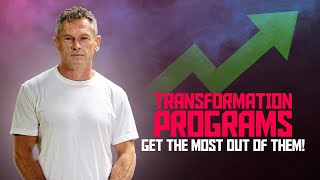
Barkus Luckey, a mental fitness coach, presents a motivational monologue for participants entering a 12-week transformation bootcamp (group + one-on-one options). He congratulates new enrollees and emphasizes that personal change is hard but possible through curiosity instead of judgment, clear goal-setting, consistent daily practice, and immersion in the program. Key practical recommendations: write specific goals, treat new practices like learning a language, use the program app for daily 7–30 minute activities (meditations/gamified tasks) to reinforce habits, and prioritize regular physical exercise. He stresses the value of group connection and available one-on-one support, notes the program is typically 12 weeks because that timeframe produces change, and encourages participants to engage fully for best results.
Questions this video answers
12 weeks
7–30 minutes per day
26 of the 29 most common non-communicable diseases
Chapters
Foreign. Hi there, Mark Lucky here. I'm a mental fitness coach and a quality mind mentor and I'm here to congratulate you for taking the first step for making that decision to bring about change in your life, to activate yourself and to get something underway. It's often a long series of steps to get to the start of a program or the journey you've been through to get there. Just to say congratulations for getting yourself underway. It's awesome. I wanted to share a little bit of a free flowing conversation with you about my journey into mental fitness, a bit of my work history and a bit of study and just to share what, what I've seen has gone really well for people in a coaching environment when they've undertaken successful transformation change in their life. This project that you're undertaking, whether it's the 12 week bootcamp by itself, the one on one component or the best parts all combined together, is you are now working on the very biggest project of your life. You these are holistic programs and when we work on us, that in turn radiates out to benefit every part of our life. So if you consider, for example, you were to improve on a work skill or improve on a study skill or a physical skill, you would be good in one of those domains. But at the core of our lives is us. So if we put the work into ourselves, that benefits everything else that we do. And the best news is you've already started. But what I need to remind you about as you undertake this change process is that change is, is tough. And the reason change is tough, particularly with ingrained habits, particularly as we get older, is we're trying to stop doing something that we've been doing maybe all of our life. And so it can be very challenging at times. But at the same time you have the opportunity to say, well that's why I'm doing this course is to change. And you'll find the resistance to change drops really considerably. And as you go through a course like this, you will encounter new things. And by default, when you new things or new behaviors are designed to be challenging because we've never done them before or we've not used that practice in our day to day before. And you will find throughout this 12 week program, whether it's in the one on ones or in a group, you will be challenged. Take it on and embrace it because that's where the change will come from. One of the parts of being human that I find most fascinating is how we evolve and develop and start operating as higher beings and A lot of that is to do with the, the habits we build up, the processes we build in our life. And a really key factor to helping us move on fast is judgment. So as a result, judgment about something is very, very easy to do. But if you find yourself going through this change process or this transformative course and you find that something isn't sitting very well with you, or that someone in the group isn't vibing for you, or maybe my choice of words or the words in the material aren't working for you is rather than judge it as wrong or, or I can't do that, take on a more curious approach. Well, why is it like that? What do those words try to mean and convey as they go along? How is this working for other people? And it's actually the most normal reaction to judge something as foreign as we start going through a course, because it is that new material. And I'd like you to ponder a little bit about not just the sequence of events that led up to you joining a boot camp such as this one, but really consider why have you joined? Why have you taken the time, the money, the expense, the emotional anguish of making the decision, having the conversations, doing the planning, why did you do this? And so what a really good thing to do is at this point, just before you begin a program is really get specific about why you joined. Not just the thing that finally happened to make you join, but what do you want to get out of this 12 week boot camp. Be specific in your want, be specific in what you want to achieve for yourself over the course, course of time. And what happens is not only do we write things down, our chances of committing to them and doing them increases, but it allows you to start getting into the process of setting goals and visions which are what, essential about driving you through the change process. One thing that I noticed, particularly as I made my shift from IT into a more holistic aspect of IT, AI and coaching and everything that goes with it is I found myself getting very hung up in on the words. And it's easy to do. You'll find, particularly when you're going into wellness conversations, people are talking about things like vibrational energies or chakras or alignments or manifesting these words can feel a bit triggering for some people and it's totally fine. But what I've learned is don't just look at the words, but try and look at what they're trying to communicate with you. And the reasoning for that by being curious with it is it allows you to see past it and accept that maybe the this person just uses those words, or this book uses this language structure for a reason. And I find that language is really, really important as we go through these change processes. And it can feel quite foreign at first being picked up on your language. But the language we use when we discuss ourselves is really important. The words that our brains hear can be different from what we think we're saying. So, for example, our brain struggles to actually recognize sarcasm in the recall of words. When we say things like we want or we need, we're coming from a place of we don't have. And this can in turn affect our perception, especially when we hear the words that we're saying. We'll delve into that more later on. But just remember, language really does matter. And on that. Going into something like a program like this is like learning a new language. I love a good analogy, but if you can imagine that going into a program like this, you're starting off with no words, and you learn a couple of words one week, and then you build a sentence the next, and then you're able to have a conversation after a few weeks. And it's the same with this. It's a new word, a new language, and a new way of being. So really get into it, embrace it. And a great way to do that is to talk and to be philosophical about the sorts of things that you're learning. I mean, I love stoicism. I've got a few stoic books up here, and I've become fascinated, particularly as we become more digitally oriented about the art of communication. So it's great to get philosophical with yourself and with others in your group or around you who are aware you're doing the course, to ponder and to deconstruct some of these ideas, because as you do, they'll begin to make more sense for you. And as you share what you're doing with those around you, you will find in almost every occasion they'll become some of your biggest supporters. But on the flip side of great conversation and interpersonal skills is the role of technology in these programs. I've had a long history in technology. I have a love hate relationship with all things digital. But in this context, the technology is essential. And I'll give you the analogy. Imagine you've injured yourself and you go to the physiotherapist. So you're chatting with the physiotherapist. You see them twice a week for half an hour. They give you some exercises. So you've got a whole 167 hours a week away from them. Now they can do great work on your knee for you, but if you don't do the one legged squats every day, 12 times each side on each leg, your injury won't improve. So what the technology does in this course is it helps keep us connected in those moments when we aren't in a group scenario or when we aren't having the one on one discussions. And by connecting it seven to 30 minutes a day, it's not much. But the regular meditations or thought shopping or bubble popping or some of the really cool little toys that are built into the app, keep the change process front of mind and help reinforce the new habits we're trying to build. And you'll notice that you get different points for doing different things. And there's a global leaderboard. The gamification in this case and with a tech background is that pretty much you get more points by doing a balanced approach to the things that will help build you a quality mind. It really is that simple, that if you do the group, do the one on one and do those few behaviors every day for seven to 13 minutes, you are guaranteed to have staggering results. And we do guarantee the program. And with that notion of keeping things front of mind, look, people sometimes go, oh, 12 weeks, it's too much, it's too much. Well, 12 weeks in the context of a life is not very much. Yeah, it Normally takes about 12 weeks to bring about change. And that's why our courses run for about 12 weeks, to get the most out of it. The people who have gotten the best results are the ones that immerse themselves and put in the effort. And look at it this way, this is your time. You are doing this for you. So why not give yourself the very best chance of getting the best result for you? If you don't do the work for you, who else will? The more you are willing to put in, the more you will most definitely get out. This is a very simple fact. Just to outline something is that in almost every person I've coached, be it in group or one on one, moving more is one of the foundational aspects that they build into their improvement and building that better new version of themselves. And the reason is that science shows time and time again that the more we exercise, we not only make ourselves healthier, but how do we do it? Well, exercise increases our immune system. It releases all the feel good hormones, it actually triggers our brain to act at a higher level and maintain more new knowledge and memories better. The more we move, the Better. We get movement increasing. Exercise is now the first line of medication for 26 of the 29 most common non communicable diseases in the world. Exercise outperforms antidepressants when it comes to treating mental illness into your program over this period of time, everything will get better. And if you build in time to move more part of this communication as well. You know, we live in a very different world in the coaching environment from say five years ago because a lot of it's zoom. A lot of the people that we interact with in coaching, we don't meet these days in the flesh yet the connection is great. Connection is a great part of this journey as well. That by being in connection and connecting with the other people in your group, we build rapport, we build momentum, we have shared experience. And the people in the group will be the ones who will support you the most through this period of time. But also with that, I'm here to help. We have the one on one schedules booked for most participants in the courses, but for those who don't getting stuck, drop us a line because our job is to help you make the transformation that you set out to do. And we know that sometimes everyone needs some help. Please don't hold back from letting us be part of the journey for you and more active with you. But most of all, I'd like to reiterate once again, thank you very, very much for taking the time to not only listen this video, but to invest your time with us and to allow us to walk side by side with you in this bootcamp journey. Give it a crack, have fun, really, really challenge yourself. And I promise you, everything you put in will be amplified out towards the end. There'll be some more videos coming to support this one, but if you have any other questions, please don't forget to be in touch. Bye for now.
More from Barkus










Tim Ferriss: How to Learn Better & Create Your Best Future | Huberman Lab Podcast
