How do you Engage the Troops in a corporation?
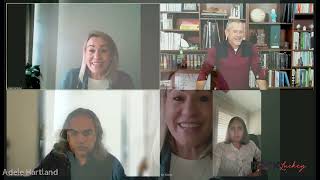
Barkus Luckey and coaches Adi, Kay, and Adele discuss how to engage employees in modern corporations. They cover building shared purpose through workshops, emotional intelligence in leadership, succession planning in family businesses, and creating psychological safety for intrapreneurship.
Chapters
Hi there. In June 2024, I was fortunate to be part of a panel of multinational business and wellness coaches discussing all things business in the modern day. We had a long ranging discussion and the extracts contained in this video are all about how an organization and the individuals can stay engaged, productive and enjoying the work they do. Hope you enjoy it. Look forward to hearing your comments. Adi, when you're dealing with enterprise and so on, how do you get the juniors or the middle level in the organization to adopt or accept or imbibe the why of the bigger organization? You know, how do you get the new clerk to buy into the corporate vision?
Wow, that's a very interesting question. And we actually, in our own organization and in teams with which I work, we spend a lot of time do that. What works is to create an open space, put a big whiteboard out there and then to really ask people, you know, what is their why, what excites them about what they do, you know, and just really listen. Whys are aligned, some fresh thinking or some people with different thoughts about their why. It adds to the direction of the organization. But we need to listen and we need to be patient and we need to allow those differences to emerge. When we sit down in the room and we say that, look, we're going to workshop this together and let's, let's all of us speak about what's bringing us here, what do we love about being here, what do we not like about being here, you know, what's the direction or the intent or you know, what's the magic that we want to see happening in a few years and when we listen to everyone and then put it all together, you know, on whiteboarded or put it on sticky notes and it starts to form a pattern when people believe that I've been a part of creating the why or, or my voice has been heard, I think that's when people buy into the vision for leaders. It's really about hearing and giving people a chance for their thoughts and their voice to be heard. And I think that's a big part of the buying in process.
I've had some wonderful, wonderful experiences over 20 years in working with Indian companies and Indian CEOs and bosses and so on. If I can make a broad, sweeping generalization though, with regard to sort of the emotional intelligence in corporate leadership, particularly in India, this is not the feeling that I've had From many Indian CEOs over time that they are in fact willing to come down from the top of their pyramid to see how people feel. I Know you do, which is why we got along so well. But is that changing in India? The, the emotional intelligence of the corporate leaders?
It is absolutely changing. It's absolutely changing. And I think you're right because India has, has been a developing country for a long time now. In the last five or maybe even 10 years, there's a change in the, you know, in the youngsters, in the millennials and the Gen Z exposure to what's happening in their world, the exposure to what's happening on the planet, their level of understanding of opportunities they have in their life. I think any business leader today, especially, you know, even in India, probably especially in India, will not be able to get, you know, the youngsters, the young people, the young, fresh talent, inspired, if they're not clear about the why and they're not able to get people on board. Because today people don't want to just work for a successful company, but they want to work for a successful company that has a clear mission, wants to do its bit of good in the world. You know, doing good is today a part of business. It's as simple as that.
Oh, I wish it was, but I, I wonder how many people would forego the dollars if it meant for doing good. But I'd like to flick over to K if I could because K's working right at that interface of old school and new school in the succession planning, whether it's as I saw with my families, my brothers, digitizing the family window furnishings business. Kay, what do you see happening in new leaders when it comes to emotional intelligence?
Well, I think there's two spheres we can talk about. One is the big larger businesses, corporate as we would call it, where the system of business is already there. It's in place. As a leader, you have to follow that system, right? So there's less room for emotional intelligence and authentic leader, the shareholder that comes first. It's so now the business that comes first. Well, when I work with owner directors who, who have their own businesses who are in charge of the decision making and the, and the culture of their business is very, very different. Right, because it's around. I want my people to feel like they belong here. I want them to be long term contributors to this economic environment. It means that I've got that engage their minds and their hearts and their intellect and at the same time create trust and psychological safety. And that happens when the leader themselves shows some of that vulnerability in their being, if you like us. So the conversation is very much about the hearts and minds of people in those organizations. Because they lead with purpose. Right. This is what we're trying to do for work in this organization but also what we're trying to do for our customers but also what we're trying to do for the wider community that our people belong to. It becomes a legacy thing for the, for the owner directors and their businesses versus a legacy thing for the board that sit in a big corporate who just offer a dollar.
Adele, you've had some experience in building resilient leadership. Do you think that that AI component is part of building resilience into the modern day leader?
Absolutely. And you can see it. I agree with what Kay is saying. I mean I've worked with some bigger organizations where we've done workshops around intuition and emotional awareness. And you know, I'm talking about big tech. Cor, obviously your smaller companies that you work with like, like cases, you've got direct access and you know, the leaders that are stepping down, showing vulnerability, trust, you know, that's happening. There's collective buy in. I think it's really important like for a leader to be able to manage their emotions, express their emotions and be able to understand that of others. That's what, you know, emotional intelligence is. That's what emotional intelligence is. That's what we're talking about, that's important.
You raised two things though. One is managing emotions for a leader, but then the other one is a leader comfortable showing or sharing their emotions. And I reckon I could go back as little as 10, maybe 15 years ago and, and most bosses would be quite wouldn't. Indian guys would be very wouldn't. But they wouldn't share their feelings. They wouldn't talk to you how they felt. And if I would go to India and talk about how I felt. So I went over just after my dad died and literally had just been given the job as CIO three weeks before I buried him. Flew sat down with the team and said, I'm really sorry guys, I'm a bit of a mess but I had to come and I've just buried my dad and so on and a couple of them pulled me aside later on and the most telling one said to me was my dad died three years ago and we're just not meant to talk about it. We don't talk about how we feel about this sort of stuff. Where for me that was, that's my lead. It's kind of here I am, here's how I'm feeling, here's my vulnerability and I'm quite comfortable with that. I challenge the notion of how many people are really comfortable with that overall. Adi, what do you think? Do you think Indian males are comfortable sharing their feelings or are they still getting there?
Well, in general, no, there's different words. India is a complex country like any other country in the, in the smaller companies, owner driven companies or smaller startup driven by people who are, you know, in their 30s and 40s, there's a lot of change happening. Not speaking about the large corporates, right, with 10,000 and 20,000 people but if you look at the startup world and the medium sized business world, there's a huge amount of change happening especially with AI and automation. And I think business leaders are realizing that you need more people to be entrepreneurial. You can't be the one shouting out instructions and orders and people are just going out and doing them because you just can't survive that way. You need innovation to happen at the front lines and that's only going to happen when people feel to be entrepreneurial you have to let some emotions come into play. You have to allow risk taking to happen which means things are going to go wrong. And I smart young businessmen, smart businesses, I see that change happening. I see that openness to being able to be vulnerable, to speak about what's not going well, being able to create the space to have those difficult conversations. I think Indian men are not yet comfortable in general to be vulnerable. But there is also a world where the changes happen. It's very exciting.
Hey, do you see many succession plans or succession activities happening which go from lack of a better explanation, an Australian to an Indian or an American to an Indian or significantly older to significantly younger across cultures? Do you see these sorts of tensions coming into the conversations?
Absolutely. I mean thought family businesses where grandparents started these businesses, the middle aged kind of mums and dads have taken over. Now it's the younger generation taking over. There's an absolute clash of leaderships styles and what makes a successful business. Before it was command and control and that's how we did things. Now everyone's contribution counts before we make strategic decisions about the direction of this company. But also, you know, across cultures I've worked in organizations, even slightly medium and large organizations where merges and acquisitions happen. So that is a massive thing there. You know, when we've got two different cultures and you're trying to assimilate teams into a single business way of operating the leadership styles and the way they operate the business systems is so a jar with one another. I've been involved in whole teams, just been what we call integration teams being formed just to make those two things, two businesses that are totally unalike come together, where you get leadership from both entities to then agree on at least interim steps to work in an aligned way. Because you can't step in from one pond to another straight away. There's a transition that has to happen, but the transition only happens when you systemize that transition and you have a diversity of views and approaches at the same table and then you organize to agree on a way of working. You know, that process is difficult. It's not. He talks about not just the owner being entrepreneurs being, you know, the ones leading everything. A lot of the coaching I do, especially when I have done in corporates, I started to talk about to leaders about intrapreneurship. Entrepreneurship is all around how do you see yourself as the owner of the unit that you're working in versus, you know, you never. If you're not, you're not going to be the general manager, but you will be a unit leader. If you see that as a business in its own entity and you have the decision rights for this place and the organization, structural rights for this place, what would you do?
Are you talking about, rather than having a position description of this is how you must do this job, it's a bit more, we're going to start here, we want to get here. You're the expert, plot the journey within the confines of those bookends. Is that what you say?
Absolutely. It's. It's a whole new way of organization doing organizational design.
The idea of being an entrepreneur, exactly what think about entrepreneurial mindset. It's not about being an entrepreneur in the sense of having taken a financial risk and started a company, but it's about having the mindset that says that, hey, you know what, I'm going to go out and look for opportunities within the business and I'm going to go out and, you know, take some risks. And those risks may be bounded and well defined. It's not about just following orders. It's about understanding the vision and the direction and then being able to, you know, create new initiatives, bring in innovation to the table, take some calls and, and that's what today every business leader wants their teams to have. You know, today you're no longer looking for people who just take a list of tasks and get them done. Of course that has its own value, but you're looking for entrepreneurial or entrepreneurial leaders.
Adele, I'm going to put you on the spot with something here. Is there a predominant management style in South Africa? Because we're all Kind of. We've all been ruled and bossed about by the British over time. We've sort of all kicked them out eventually. What's it like on the ground in South Africa for managers? Oh, see that contemplative look she out the way.
I mean, you know, because I'm thinking obviously I spent a good deal of time in, in the UK and I was obviously quite a. You know, I worked in really big companies in South Africa and there was a probably a more nurturing management style. Yeah like really building leaders up than I experienced in the uk. That's, that's being employed. But generally the people that I work with, when I'm looking at working with, you know, most of your entrepreneurs, Most of your CEOs are your fast paced like when I'm talking about behavioral stuff to talk about your high ds, you know, sometimes they.
Your high ds.
Yeah.
So like a high D in the disc, you know, they dominant, they moving forward, they're moving at a pace they what drive a business forward. They can sometimes be the problem a lot of the time, more often than not because they drag in the rest of the business who's perhaps not the same behavioral style but is very much needed to carry out the tasks. So this is where communication, culture, behavior, all of those kind of things become quite important. So I haven't worked in a business in, in South Africa or the UK for quite some time. But obviously the business owners that I work with, I get varied people. So you know like I love working with leaders or owners who are extremely people focused because that's my thing. Like for me it's all about if we can get the people, if we can get everybody working. Let's be honest, like managing people is probably the biggest issue most businesses deal with. But if we can get all aligned. You know that same 5, 5 a process that I spoke about, alignment collectively as well as individ individually, things become a lot easier. You know, we can, we can play to the strengths because that's the thing everybody, people have got their strengths and people have got their development areas.
More from Barkus










Tim Ferriss: How to Learn Better & Create Your Best Future | Huberman Lab Podcast
