Mental Fitness for Hybrid Work
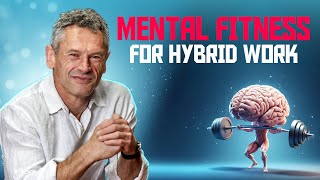
Barkus Luckey argues that mental fitness — a disciplined, practical mix of mindfulness, resilience training, gratitude, visualization, physical practices (sauna, ice baths, movement), and continuous learning — is the overlooked edge for individuals and organizations in the hybrid work era. He frames hybrid work as a strategic opportunity (not just a pandemic response) to redesign environments and routines for improved creativity, productivity, wellbeing and loyalty. The talk mixes classical references (Darwin, Aristotle, Stoics), personal anecdotes (parenting, sauna/ice experiences), concrete practices (box breathing, flow yoga/Tai chi, journaling) and leadership prescriptions (cultivate growth mindset, harvest discomfort, support employee mental fitness) and ends with a call-to-action to adopt mental fitness at personal and organizational levels.
Chapters
In life, especially in our careers, if we have ambition, we're often searching for an edge. And often the edge takes the shape of updated education or new digital toys that give us productivity at the desk. But a fundamental aspect that is frequently overlooked is the holistic practice of mental fitness that strengthens the core of everything we do. Us. It's the pathway to making our ordinary remarkable through fostering an adaptable mind that thrives in the chaos of the day to day. And right now, we stand at the crossroads of a unique opportunity. The hybrid work model is more than just a response to the pandemic, but a testament to to our adaptability as a species. Charles Darwin's famous observation that the most adaptable among us are the ones who thrive is just as true today for our future. And that matters because hybrids under threat Big business wants us back in the office. And to be honest, a lot of workers aren't exactly over performing. And it matters because work from home also opens doors to unprecedented levels of work life, balance, productivity, and holistic mental and physical well being. Put simply, we can't afford to let it go. Our working environment significantly influence our mental state and productivity. And when Aristotle said pleasure in the job puts perfection in the work, he nailed the truth about human nature and performance in the workplace. Because a workspace that's functional and inspiring can bring about staggering results. When you're at home, think about, what do you actually do? And if you strip it right back to the essence, the answer will be something like, you make phone calls, you work at a computer, at a desk, you have zoom meetings. And maybe every now and then, you even meet with a real person. Shock, horror, real people in the flesh. And from that perspective, the challenge then becomes to create environments that are tailored for these tasks and are wrapped in a practice that nourishes our minds and our bodies. Because when we integrate nature, ergonomic design and personal artifacts, we can create a working ecosystem where creativity flourishes and stress diminishes. And this means we can design our days and spaces in ways that align with our needs and our aspirations. To me, hybrid is more than zero commutes and zoom meetings in my underwear. It's a golden opportunity for personal and professional growth. And it's beyond just stand up desks with the odd kettlebell laying around even. It's about transformation through consistent mental application. It's a puzzle where we can break free from the matrix, the 9 to 5 mindset, and architect the workday to build lives of balance and fulfillment. And I shit you not, it's all very doable. Mindfulness is a word that can trigger me a bit. It's overused, rarely understood and seldom activated. But what does it really mean? It means be here now, be where you are and be present. The Stoics like to say that having emotions is fine, but don't attach to them. But you can only do that if you are aware of them in the first place. Mindfulness makes us more productive and less reactive, which is as handy on the sports field, the adventure playground, with our kids, as it is in the boardroom. A sauna like this one is a luxury, but it's good on the body and a great sanctuary for meditation. If you're worried about the cost. Awesome. Research shows that people who regularly sauna live significantly longer and higher quality lives. I shit you not. It's more than just relaxation and recovery, but a powerful tool for enhancing mental clarity, emotional regulation and overall resilience. Finish that with an ice bath and you can't help but be brought to the right here and right now. I really wish that I'd done this filming in summer, mindfulness practices are simple. Start with box breathing, mindful movement like flow yoga or Tai chi, and regular reflection through a few minutes of daily journaling. Because just a few minutes of this, strategically integrated through our day, keeps us anchored in the present. But the magic happens when that sense of feeling good extends to our interactions with our colleagues, decision making and creates an ability to lead through empathy. Mindfulness contributes to a more supportive and productive work environment. Why don't you be the one that activates that in your workplace? The challenges we face in professional life, setbacks, failures and the constant pressure to perform can erode our confidence and well being. But it's only through these challenges that we learn and grow. Similarly, resilience learning, like emotional intelligence, can be developed through a deliberate practice of cultivating a positive outlook, setting realistic goals and embracing failure as a stepping stone to success. And it's helped through a support network of mentors, colleagues and friends who encourage and keep us accountable. It's a gratitude practice that gets me out of my head and puts my own dramas in perspective and gets me back on track. And that's because the gratitude method activates the abundance principle, where we get to see what we have instead of focusing on what we lack. But my favorite gratitude application comes through being a parent, where raising a teenager can just be a total rolling cluster, just like I was when I was 15. Everything about the design of my teenage daughter is all about making me lose my shit. She may well be 11,000 days of life experience behind me, but she has developed an exceptional skill at pushing my buttons. But if I start my day with gratitude for the role of getting to guide her through life, it makes me a better dad for some. Visualization can also be very, very powerful as it prepares us for future obstacles and helps reinforce our belief in our ability to succeed. But it's not about visualizing success or outcomes, but visualizing what our actions will be. And finally, like Kaizen, lifelong learning keeps us agile and adaptable, staying ahead of the professional game and stimulating curiosity which is fundamental to any good resilience practice. Continuous learning is essential in our journey of mental fitness and resilience. And like plants that reach towards the sun, we also need to keep reaching and stretching beyond our comfort zone zones when you view it through the lens of today, the Stoics might seem a little bit harsh, but if today they were down at the pub and in modern times you'd find Epictetus postulating if you fancy taking a leap, be alright with seeming a bit daft. Now what he actually said was if you want to improve, be content to be thought of as foolish and stupid. But Seneca would slam his pint down onto the bar and say something along the lines of there's no mug dafter than the one who shuts his book on learning in it. Or in other words, there is no one more foolish than the one who stops learning. It gets real when we consider mental fitness beyond personal development, but to become a strategic corporate asset, it is the way forward in optimizing our overall satisfaction with our lives. And right now the world is moving and changing faster than ever, making the ability to maintain clarity and to make make decisive choices under pressure, keep your shit in an ice bath and to adapt to changing circumstances as a priceless skill. And this is what will distinguish exceptional professionals from the merely competent. My mate Paul Taylor speaks about harvesting discomfort to build strength, but he doesn't have ice in his ice bath. Leaders that embody mental fitness inspire their teams to navigate organizational challenges with vision and integrity. And organizations that prioritise the mental fitness or mental well being of their staff see remarkable improvements in creativity, productivity and loyalty. But so far I see very few organizations extending that same practice to optimise how employees work when they aren't in the office. And for me, to them that's a massive missed opportunity. Unless of course you are part of an organization who does want the best bang for buck when it comes to getting an edge over your competition, it makes this an amazing opportunity because implemented well at a very low cost, it can shift a workplace from just a place of employment to a thriving community. No matter where people work, where individuals feel valued and engaged, a growth mindset or the belief in the potential for development and progress is critical for personal satisfaction and corporate performance. It drives us to seek out challenges, learn from feedback, and persevere in the face of setbacks. Marcus Aurelius was the one who said, you have power over your mind and not over outside events. Realize this and you'll find strength. Now, I'm clearly not Marcus and It is about 2,000 years later, so I'll rephrase that into modern day language. And that is that by the time shit has hit the fan, nothing can be changed. All that is left is how we respond to it. So instead of going bonkers around the water cooler or on the zoom meeting, a boss should take the attitude of, well, let's see what we can do with that and try not to let it happen again. And this is how leaders can in fact unleash the full potential of their teams. This means projects can be approached with creativity and enthusiasm. Problems are solved with innovative solutions, and employees are empowered to to take ownership of their work, leading to breakthroughs in performance and satisfaction. The deeper I dive, the clearer it is that mental fitness bridges personal and professional achievement to enhance every aspect of our lives. There is simply nothing that isn't improved. And that's because mental fitness addresses the core of everything we do in our lives. Us. So if we strengthen that every weight we lift gets easier, we become not only more effective in our roles, but also more balanced, resilient and contented individuals. And the easiest way to sustain this change is as part of our hybrid better new normal. Where challenges are met with courage, where continuous improvement is the norm, and personal and professional fulfillment go hand in hand. And like the principles of Shu Ha Ri in martial arts, we start by learning the rules, we progress by mastering them, and finally we transcend them to create our own path. And so if you're looking for an edge in your career, or maybe your organization wants an edge over their competitors, and if you're looking for just that extra few percent in your everyday, get in touch and let me show you how mental fitness is the way. Until then, see you next time.
More from Barkus










Tim Ferriss: How to Learn Better & Create Your Best Future | Huberman Lab Podcast
