Unlock Your Full Potential With Mark Luckey's Personal Optimization Strategies For 2024
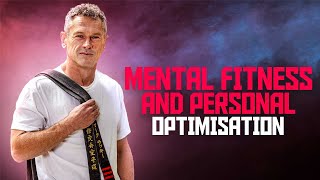
Barkus Luckey outlines mental fitness as a combination of mindfulness, physical activity, nutrition, and recovery. He ties goal-setting to personal values, uses cold therapy and ice baths as examples, and argues that daily incremental work and treating setbacks as growth opportunities drive sustainable improvement.
Chapters
Foreign. Fellow humans, and welcome to the April 2024 Digest on Mental fitness and all things personal optimization. This month we're drawing on five recently published articles which covered topics including mental fitness versus mental health, getting strategic with a mental fitness practice, how we can break through some of those barriers holding us back, the art of goal setting, and the science of sustainable self improvement. And I've drawn narrative from the trenches of daily life as well as the very pinnacle of scientific research. And that's another way of saying some really clever people who wrote amazing books like that that I read and the stuff of theirs that I went outside and tried out. And you might think of that as a crossroads of modern chaos meeting ancient wisdom. And yes, the words can change over the millennia and between cultures, whether it's Japanese martial arts or Stoic philosophy. But the journey is still about a quest for the better version of ourselves. And this isn't just about exercise routines or eating right. It's about constructing a fortress of resilience and vitality within our minds and our bodies. And the true rule across all of those time, eons and ages is that it's all about what we do. Because until we do something, nothing happens. The idea of mental fitness isn't new, actually. Well, if you compare it to things such as getting diet right, exercise, or even meditation, I guess a decade in the mainstream consciousness isn't that long. But for mental fitness to have an impact in our life, we need an approach where we can transform it from a concept into a concrete strategy for thriving amidst life's relentless challenges. Like any seasoned strategist, I've learned the success hinges on a well drafted plan. We don't build a software platform, never mind a house without a plan, strategy, materials and methods. And it's no different when it comes to elevating our lives through consistent application of incremental daily efforts. The one thing central to everything we do in life for all of those other things that we plan to improve and elevate, is us. But when did you last sit down and strategize for the better version of you? Embarking on a strategic mental fitness practice requires a foundation that is both sturdy and flexible and capable of supporting growth and withstanding life's unforeseen challenges. And this foundation is built on understanding the intricate relationship between mind, body and spirit. And it involves tailoring a regimen that incorporates mindfulness, physical activity, nutrition and recovery. Just as a craftsman selects quality materials, we must choose practices that align with our goals, values and our current life situation. Being strategic means setting Clear, actionable steps, measuring progress and being willing to adapt. This isn't a one size fits all solution, but a bespoke design for many. Version 2, crafted through introspection, experimentation and a commitment to continuous improvement, or kaizen. Most of all, we have to feel like all this hard work, because it is hard work is taking us somewhere. And that somewhere is closer to our vision. Goal setting in the realm of mental fitness is a bit of an art form. Blending ambition with realism, dreams with discipline. It's not merely about setting targets, but weaving them into the very fabric of our daily lives. And a successful weave is when we incorporate new microhabits into our day to day, replacing those that no longer serve us with things that elevate us. And I'm not trying to reinvent the wheel here. It is still about smart goals, but it's also about the emotional connection to the goals that gives them color, shape, granularity and real meaning. To us, these sorts of goals are deeply rooted in our why, the driving force that propels us forward even when the path is steep. And this art form involves setting milestones that challenge us, yet are within reach, ensuring that each step taken is a step towards a grander vision. And it does include celebrating small victories, learning from setbacks, and recognizing that each goal achieved is a brick in the edifice and the ultimate version of ourself. So let's dive a little into the science of transformation. A mental fitness practice, or mfp, is about making our ordinary remarkable through creating elite level habits that underpin our existence. So imagine turning the chaotic energy of life into a wellspring of focus, purpose and emotional balance. And this isn't just physical fitness, although it does help to think of discipline, focus and self control, which are the bedrocks of transformational change, as muscles which can be exercised and thus developed. But like muscles, they're also prone to fatigue and do better when we optimize the conditions around us. Oh, good catch. And the actual work is about conditioning our minds to be resilient, adaptable, and continually striving for improvement. Or kaizen. There's a favorite Japanese proverb I have, which is that the bamboo that bends is stronger than the oak that resists life throws up walls that seem insurmountable. Whether it's a professional plateau, a personal struggle, or the seemingly Sisyphean task of balancing work and family life, these barriers can all feel very defeating. Just like learning what Sisyphean means, which apparently means a problem that can't be solved. Word for the day for you. But A mental fitness practice provides the hammer to break on through. It equips us with the resilience, clarity, and the strength to push past our perceived limits. So when we're faced with setbacks, we learn to see them as opportunities for growth rather than insurmountable obstacles. And often the only change that takes place in that transition happens between our ears. By fostering a resilient mind that thrives in chaos, that can maintain focus and balance our emotions, we can turn challenges into stepping stones. And this practice isn't just about bouncing back. It's about bounding forward, breaking through barriers not just once, but as a habit and as a testament to our unbreakable spirit. People are just fascinated about lifestyles as well as making suggestions about my sanity. So why do I do them nearly every day? Well, it's great for my body. It reduces inflammation, it increases my rate of recovery. And as I'm nearly 50 and yes, my body feels better than ever from doing these thermal therapies, but ice baths like this, especially mornings like this, are very tough to do. And as my face shows, as I get used to the 2 degrees and the ice enveloping my body. Marcus Aurelia said, the impediment to action advances action. What stands in the way becomes the way. Resilience doesn't come from comfort. It comes from facing our deepest fears and our challenges head on to achieve things we previously couldn't. And Oren Woodward said, you must be willing to do what others won't if you want to achieve while others don't. It's about knowing that every cold shock, every moment of discomfort is an opportunity to grow stronger, more focused, and more connected to our inner selves. This is also a great opportunity to freeze my tits off and I've got to get out. It was Socrates who said, the unexamined life is not worth living. And it begs the question, well, where do we start with all this? Where do we apply our focus? And it begins with understanding the core of many of the problems and challenges we face in this modern digital life that we lead. Our enemies are not just physical lethargy or unhealthy diets. They're the unseen battles taking place within our mind and the habits and thoughts that hold us back from achieving our true potential. Building mental toughness is like any muscle. It requires consistent work. Every push up, every sprint, every moment we choose the healthier option. We aren't just strengthening our body, we're fortifying our minds. Every time we say no to a temptation, we are just like my mate Burke Berridge says, becoming a fraction stronger. But this journey isn't about or just about the sweat and the grind. It's about finding joy, humor and learning in every step. Mark Manson even said, find the grind that you love, and I don't think he even swore when he said that bit. So let's talk about Evidence Based Strategies for Implementing Successful Change Transforming our lives demands more than just wishful thinking. It requires a foundation built on solid evidence based strategies. And these strategies are the amalgamation of rigorous scientific research as well as the wisdom of lived experience of those before us. It's about discerning the signal from the noise in a world that is saturated with competing information. Implementing successful change involves integrating practices that have stood both the test of time and scrutiny, or adapting habits supported by science such as mindfulness for mental clarity, exercise for physical and mental health, and proper nutrition for mind and body. Yet it was Lao Tzu who said knowing others is intelligence, but knowing ourselves is true wisdom. So that means at times personalizing our mental fitness practice to fit our unique needs and circumstances. Successful change is a symphony of science and self exploration. It's a dance between what's proven and what's possible. But that doesn't mean taking the easy option because we can't be asked. It's about being realistic, scrutinizing our capabilities on that given day, but at the same time getting our asses into gear when we really need to. We've also got to have a growth mindset and that is the belief that we can change and to be willing to change. And Epictetus says it's impossible for a man to know what he thinks we already know, and what's important is we understand the outcome we desire. Because change isn't just for the sake of it. This is about getting better. A mental fitness practice starts with understanding the solution that we seek. That might be getting a better exam result, not losing our bundle under pressure to our kids or our colleagues might be getting our headspace ready for a promotion, or logging our personal best at the next Spartan event. It might even be lifting ourselves up after life gives us one of those inevitable slaps to the face. You see, our biggest battles are often around the tension with our thoughts and our habits. So it's about simplifying the problem, surveying the landscape for tools and allies and and committing to kaizen, or continual improvement. Fueling our journey isn't just about what we eat. It's about nourishing our minds with positive thoughts and inspiring conversations as well as a relentless curiosity about learning. It's about embracing the simplicity in life, putting some analog back into our digital world and making the right choices. You know, like choose the apple over the ultra processed snack, choose a book instead of doom scrolling social media, putting the phone down to leave room in our hand for the child who wants to walk with us while we walk the dogs. Those dogs, they just never bloody leave me alone. And let's not forget the importance of balance. Standing in front of hundreds of people, presenting, teaching a martial arts class, or trying our very best to be a loving and supporting parent, the next moment, it's about being present, engaged and fully alive in every role we play. This journey of mental fitness isn't just for ourselves. It's about setting an example, leaving a legacy of resilience, joy and balance. It'd be much easier if I wasn't trying to stand on that. We've all got our range of what is normal and in life, what is A great performance for me might be a middling performance for you. What freaks you out might not fuss me in the slightest. Truth is, life just has a lot of crap that just happens. People die, injuries, illness, professional setbacks, or emotional wear and tear brought about by change. Over the past few years, a lot of us lost businesses because someone ate a bat sandwich in a fish market in a faraway land. Go figure. And these things all suck and they take their toll. When I talk of my experience, it's important to understand no one is shooting at me, no one is trying to harm my family or persecute my beliefs. And I think that's really important for anyone to remember that often our struggles are pissy little battles that mostly take place in our heads. And there is always someone having a much harder time of it. So if they can persist, so can we. And another Japanese proverb, fall down seven times, stand up eight. And as we circle back to where we started, remember that this journey of mental fitness is ongoing. There's no final destination, only waypoints of growth, learning and transformation. The game only ends when we die, and I'd like to keep playing and playing well for a little bit longer yet. By remembering who we are and by integrating ancient wisdom with modern science, we. And by embracing the challenges and joys of life, we can break through the barriers that hold us back. So to all of you out there seeking to optimize your life, whether in your professional work, in your physical health, or your personal growth, remember, the key to elevation lies not just in the strategies we employ, but in the daily practices that define us it's literally turning your ordinary into remarkable. Embrace the journey, laugh at the setbacks, and always strive for that next level of excellence. So it's the end of our video, but the start of our conversation. I'll be back in a few weeks to explore new strategies, stories and insights on the path to mental fitness and beyond. And until then, find your smile, dig deep, and do that thing that you really should be doing. And goodbye for now.
More from Barkus










Tim Ferriss: How to Learn Better & Create Your Best Future | Huberman Lab Podcast
