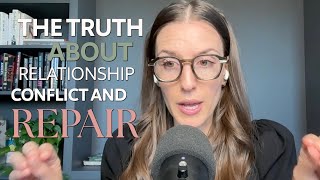
If your partner doesn't respond well to your complaints, watch this.

Bea teaches how to complain so your partner actually listens. Notice when you're dysregulated (tight chest, fast speech), calm down first, then use a soft startup: name the specific thing, say "the story I make up," skip past grievances, and ask for what you need.
Team fam, friends. Anybody who's listening, who's in a relationship. I'm Bea. I'm a couples practitioner. If you know, you know I am coming to you straight from the gym because I can't not say this right now because it's making me insane. I cannot tell you the number of comments I get on my Instagram that say some version of, well, I tried. Well, every time I say this, they shut down. Well, in fact, somebody just told me the other day, someone literally just commented me, commented. Was being kind of a dick. The other day I posted a video about how to bring your needs in relationship. And they commented something like, oh, bring your needs in relationship. Well, how about this? I've been trying to bring my needs for this long and try that. You know, like, anyway, it was kind of a piece of shit comment. But I will say this. 99.999% of the comments on my page are people who are complaining about their partners. Now what do we do? Is it just that everybody has ended up in relationships with shitty partners? No, it's actually not your fault either. It's because we live in this culture where what is going on? This is going to drive me crazy. We live in this culture where we have not been taught relationship skills. So here we are, coming out of our families, full of fucking trauma, probably. And then you look at Hollywood, you look at rom coms, you look at Disney, you look at social media, your favorite couple, who you're like, how are you so hot? Like, do you ever. Do you ever look like this? Do you ever get out of bed? Do you sleep with your makeup on? You have seven children and somehow your relationship is still functioning. So it's not really our fault. Because what we are seeing, what we are watching, what was modeled to us from our families is not real. It's not real. It doesn't exist. It doesn't. Well. Well, what does exist is shitty family modeling. That definitely exists. But what is not real is all the other stuff. It's Disney, it's Hollywood, it's social media. And so here we are with really shitty examples. On the one hand, we see our families and we're like, wait a second, that's not what I want. I definitely, definitely don't want to sign up for that. That, like, you know, slamming doors shut and screaming and then never making up and drinking all the time, and then being nice because you're so drunk, but then being super kind of angry and annoying when you're hungover. And then you as a kid don't know what to do. So you're being hyper, vigilant and you're like, ah. And then on the other hand you have Disney and you're like, wait a second, but this is all I want. This is what I've been dreaming of. Can I. But what if I just. And we don't have the skills to get there. This is the problem. There's this huge gap between what we see. Excuse me, what was modeled to us, what we experienced, and then what we see. There's this huge gap. And in between what does it turn us into? A bunch of blamers. A bunch of people who are like, well, my partner sucks. Well, I tried this this one time and it doesn't work because my partner's kind of a dick. And that might be true. You may have gotten into a relationship with a dick. But if that's true, then almost everyone married a dick and there's nobody else to be in a relationship with at this point. So I don't know, we're all fucked. Or we all just self pleasure for the rest of our lives and never have a relationship or, you know, we end up in relationships with our best friends. I don't know what we're. I don't know what we do if that's the case. But what I'm arguing is that that's not the case. That's actually not the case. We didn't all marry dicks. So here's what we need to work on. This is the one thing we need to work on. How our communication lands. We are responsible for how our communication lands with our partners. That doesn't mean there's not work to do for them. Of course there's work to do, but I'm talking to you. So I don't have them here. Maybe you two are sitting watching this together, in which case I'm talking to both of you. But we have to start considering. We have to start considering that the way that we communicate with our partners is going to land in a different way if we communicate with shame, if we blame them, if we make them wrong. Honestly, with my wife, any hint of making her wrong, she completely shuts down. And I could use by the way all the I language. I could be like, you know, the story I make up is, oh, my experience is. And the minute I say my experience is that you did a bad job cleaning the bathroom or something, she's like, wait, but I'm a good person and I tried really hard. And so what do you mean I'm doing a bad job how does she hear that? No matter how hard I try, no matter what I do, I will fail. No matter how hard I try, no matter if I squeegeed the squeegee spot in the bathroom, what are you gonna notice? You're gonna notice how I didn't squeegee the squeegee spot on a toothbrush. So we have to understand that when we point any amount of blame, even if it's small. And actually, a lot of times we do this, we'll do it in, like, a really under the. We do it kind of like, you know, we'll hide it by being like. Well, by being kind of COVID about it, right? Like, oh, if only you would have called me, you know, on your way home, then maybe I wouldn't have been mad that you were late. Like, we do it in kind of COVID ways. More. Some of us do it more subtly. Some of us do it really overt. We're screaming, yelling, whatever. And some of us just make our partners wrong without even worrying realizing we're doing it. Why? Not because we're bad people, but because we have never learned, because there are no models. And so what do you do here? Okay, you start to own that you are dysregulated when you are dysregulated. For a lot of us, we don't even know. We're so disconnected from our bodies, we live from the neck up, that we don't even know when we're dysregulated. Dysregulation doesn't necessarily mean you have a rapid heartbeat and you're sweating. And it might mean that you're tripping over your words. It might mean that you're talking really quickly and you just need to, like, get your word out. It might mean that you go completely numb, that you feel nothing. But you have to begin to understand what are the cues for you when you are dysregulated. How do you know that you're not in a place to bring something to your partner? For me, it was really subtle because I'm an emotional person. You may or may not be able to tell that. And so it started. I started. It was confusing for me, actually, to understand what my dysregulation looked like because it wasn't necessarily. I mean, sometimes it was that I was crying, or sometimes that it was really. I was really angry. But actually, the form of my go to dysregulation is fawning. It's appeasing. It's not wanting my partner to be mad at me. So if she says something to me, my initial response will be, oh, my God, I'm so sorry, I didn't mean to do that. Like, you know, oh, you didn't watch the foster puppy. We have, we have a foster puppy right now. Oh, you didn't watch the foster puppy. And there's pee over there. And my initial response was like, oh my God, how did I miss watching the puppy? Not like, hey, let me just take a beat here, where what's actually mine to own, right? But if I am bringing something to her from a place where I'm appeasing, where I need her to understand my perspective, and if she doesn't understand her my perspective, I'm gonna have a meltdown. If I don't know that what I do is go numb, then I'm going to bring something her in a way that maybe I think I'm regulated. But the second that she then speaks back to me and it's what. And it's not something I want to hear, then I'm going to completely melt down, right? I'm going to like. And my meltdown might look like, oh, no, no, no, you're totally right. Yeah, I shouldn't have brought it to you in the first place. That's me. So we have to start understanding step number one, that we are dysregulated. What does our dysregulation look like, sound like, feel like in our bodies? For some people it's going to be. I start to talk really fast. For some people it's going to be like, I don't use my breath. For some people it is going to be kind of sweating. For some people it's going to be automatically defending themselves. But start in the body. Start in the body. What does my body feel? We are a culture who lives really here. We don't get into our bodies. And when we slow down enough to be like, okay, wait a second, what just happened? Oh, I had flutters in my stomach. Oh, wait. I realized that my tight was chest. My tight was chest a little bit dyslexic. My chest was tightening, right? You start to understand, like, okay, wait a second. This is what happens in my body before I speak up. So the first, the first thing to do is to shut the fuck up. Shut the bleep up so that we can understand what, what happens to us when we're disregulated so we understand when we can bring something. I don't mean you have to be not disregulated at all. I think that's honestly, I Think it's a really hard thing. I think it's like, it's asking for a lot to not come with any amount of dysregulation. And sometimes you'll be able to do it and sometimes you won't. But if you can actually come with like, hey, I'm mostly calm here, and then you co regulate the rest, like the rest of the way is going to be you two co regulating to fully calm your system. That's a really good starting place. So it might look like, okay, I can feel I'm pissed that the puppy peed on the floor and my wife didn't clean it up right. This is a fake example that I'm using. Although we do have a foster puppy right now. So I am, you know, I'm pissed that she didn't clean up the pee that I'm now cleaning up for her. And now guess what it does. It reminds me of all the other times. All the other times that she's, you know, I've cooked dinner for her and when I cook, I clean, and when she cooks, I clean. And I'm like, wait a second, why are the dishes still dirty after I'm the one cooking? When. When you cook, I clean. Now all of a sudden I'm, wait a second. This is actually a pattern. Where else does this show up? And I'm making up all these stories about how I don't feel acknowledged or seen or understood or like she prioritizes me. All because the puppy, you know, pissed on the floor. Okay, so all of this is happening in the background before I bring anything to her, which is what we do our brains, pattern recognize. So my first job is to be like, okay, wait a second. I'm clearly dysregulated because I am making her wrong. And I can feel in my body that there's a lot of heat starting to rise. Like I can feel that I don't want to bring something to her until I can feel the heat start to dissipate a bit and until I don't go to her needing my perspective to be right. This is step number two. We know we can't bring. We haven't even brought anything yet, by the way. This is not something we have. This is before you have even. Does it keep going black for you? It keeps going black for me because my computer's plugged in, but I don't know if you can see that. Anyway, before I have even started talking, right before I have brought anything to her, what am I doing? I am making sure that I Understand what it means to dysregulate it. And I'm taking myself down. Maybe I've gone on a walk, maybe I've meditated, maybe I've phoned a friend, maybe I've called my therapist, right? Whatever it is, maybe I've done some breath work, maybe I've exercised. But I can feel myself start to a little bit. How do I know I've started to a little bit? Well, how I know is I don't need to be right. I can actually go into this conversation and I can be curious and I can have a perspective. I can be hurt. I can say like, hey, you know, it hurt my feelings when I saw the pee on the floor. I can do that. But. But what I'm not doing is going. And because now I've made. Now I've pattern recognized, right? And so now I'm pissed because I don't feel appreciated. What I'm not doing is going up to her and being like, how come you left the pee on the floor? Like that really pissed me off. I don't understand why you did that. Which, by the way, I've done stuff like that. So, like, I'm definitely not perfect. Perfect here. This is a work in progress for me too. Always, always, always a work in progress. No, what I'm doing is now I have been able to take ownership by down regulating myself, right? Doing what I need to do to. Now I can come and I can be like, okay, I want to tell her I'm upset. I understand. She has a perspective too. That's like step number two, where you can understand you're now more down regulated is because you can even have that perspective. You can see that she probably has a perspective too. Doesn't mean she's right, but she probably has one too. Okay, now you're in the point where you get. You're like, okay, cool, I understand. This makes more sense to me that I'm gonna come to her in a way that feels like I'm not a totally full on psycho. Okay? So now I'm coming to her and I'm saying, hey, there was pee on the floor. I'm naming what happened. I'm naming what happened. Hey, there was pee on the floor. And now I'm starting to use soft language. In the Gottmans, they used soft startup. I actually learned this way back when in Landmark. Oh my God. Which I did a million years ago. And I'm not saying I would recommend it, by the way. Anyway, story for another time and we could talk about that. Later. But anyway, it's a self development program for people who haven't heard of it. So it's a Gottman thing. But the whole idea is you don't come in hot. You don't come in saying they're a dick. You come in being like, hey, here's what happened. The dog peed on the floor. The story I make up about it or my experience, right? You're lightening it. You're bringing it into the eye. Step three, eye. You're bringing it into the eye. The story I make up about it, right? My experience. All of a sudden, you know what they can do because it's not about them. They can be like, great, you're crazy. This is your experience. And they don't have to be defensive, which, by the way, means your needs are probably going to get met. Whoa. Okay. So when you start speaking from the eye. The story I make up is that you weren't paying attention to the dog. And it's. You know, and it felt like all these times I could remember before, and I can feel myself literally making up all these stories about all these other times, and I don't want to. Kitchen sink. You. What does the kitchen sink means? It means you throw all the things in. All the things in. All the. All the times you did this, all the times you did that. Right? All the ways it reminds me of this. No, we're not kitchen sinking. We bring one thing at a time. The story I make up is that you weren't paying attention and it felt like you didn't care or that you weren't thinking about what a busy day I had. The story I make up is. So now that's all the story that I'm just making up in my head. And then you end with a request. You end with a request. A lot of times we just bring our partner a complaint and we don't know what the request is. So for something like this, like, here's what I would love. If you're on dog duty, if you're on puppy duty, if you could please just make sure you're watching the dog at all times. You don't want this puppy out of your sight. It would make me feel really cared for if you did that. And then she can be like, yeah, okay, I can do that. She can give me what I want. Because, by the way, I've now made a request instead of just dumping on her, bringing her a complaint, and then not giving her some possible solution. So this is like, there's a lot of nuance here that I'm missing. I understand that, but I had to just get on because it's making me crazy how many comments I'm getting about blaming everyone, blaming their partners. This is a way that you can take responsibility for your communication. We all have to take responsibility for our communication. Every single one of us. This isn't just your job. This is your partner's job too. But again, since I'm talking to you, I need you to be the one to start coming up to the bat first. And guess what? You build stronger muscles that way. That's what all we're doing is going to the relationship gym. That's it. And we all have to do it if we want to have healthy, long term, secure, functioning relationships. We all have to go to the relationship gym. So good. You're getting stronger if you're here. Okay, great. You can find more on my Instagram a voce on my website. A voce. I'm going to launch a group pretty soon so that we can learn all together. So you can learn more about that on my website too. Excuse me. Bayavoche. Com. Psyched you're here. Leave a comment. I want to hear how this communication is going for you. And thanks for watching.
More from Baya


Love Coach: Should You Use ChatGPT for Relationship Advice? How to Find True Love in Modern Times
The Art of Repair: How to Fix a Relationship & Reconnect After Conflict (The Key To Lasting Love)

How to Handle Relationship Conflicts with Confidence with Baya Voce | Mary's Cup of Tea Podcast
How to Handle Relationship Conflicts with Confidence with Baya Voce | Mary's Cup of Tea Podcast