Behind the Scenes of Revamping an 8-Figure Shopify Store (Founder Interview)
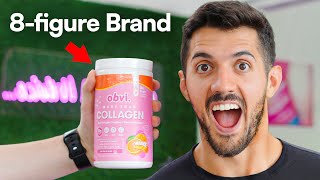
In this interview, Ben Sharf talks with Ron Shah, CEO and co‑founder of Obvi, about the complete overhaul of their eight‑figure Shopify storefront using Platter. Ron explains how the legacy site had become a chaotic dump of 60+ SKUs and dozens of third‑party tools, leading to poor performance, broken links, and a reliance on landing pages. A pivotal moment came when a peer highlighted that a brand should only claim the title after six years, prompting Obvi to demand a site they could be proud of. After evaluating designers and developers, they chose Platter for its focus on conversion‑driven design, performance, and low‑maintenance architecture. Their three primary goals were: (1) brand‑level visual excellence, (2) performance‑optimized product pages and checkout, and (3) cost‑effective, easily iteratable infrastructure. The partnership proved “extremely smooth,” with a request‑to‑delivery workflow that minimized back‑and‑forth. Early results show higher email/SMS‑driven conversion, increased revenue, and faster load times, positioning the site for a strong Black Friday push. Ron shares strategic outlook—expanding into gummies, food‑beverage SKUs, and treating the site as a growing home rather than a patchwork. He offers advice to other founders: focus on controllables, launch SKUs intentionally, and prioritize functional, testable storefronts over purely aesthetic ones, especially as traffic costs rise. The conversation ends with a call to action for other founders to reach out to Ben.
Chapters
How was the process working with Platter?
The process was extremely smooth. What's going on? Good to see you. You too. How was the ride in? Good. How are you?
It only took 20 minutes today.
How many cold plunges you do today?
Uh, zero today. No cold plunging.
So you guys know Wonkit, he's our founder.
It's been a while. Good to see you.
I'll let you guys introduce yourselves.
What's going on?
How are you?
Good, how are you? Good. Good to see you.
Good to see you.
But yeah, you guys can settle in, set up shop.
Just makes me realize that we need a space at some point. So much more— I feel like the productivity you get.
Yeah, dude, you just get— you get to be productive, like You can do as much as you think you can from home, but there's just something about a setup.
For me, every time we do an offsite for 2 days and then we leave, I'm like, damn, that was so good. Like, imagine if you had that every single day.
I mean, I give kudos to the brands that have gone, you know, absolutely humongous, just fully remote. But I think you have to have operations at your core then, not something you're going to learn through your business. We don't have operations at our core, so there's no way we're going to just learn it by being remote and doing offsites and stuff, you know. But we're also— the weird part is also everyone's really heads down and working here. So it's not a lot of let's meet and talk. No, but there's proximity. But there's proximity. Yeah, yeah, there's proximity, which helps.
Did you guys launch any new SKUs recently?
Just— I'll show you guys some of our products.
Yeah, I want to see them.
We just launched Colostrum in Walmart. It's doing really well. So it's our third SKU in Walmart. Yeah, we've been sold out. We like treat the office stock as like, hey, give us the tail end of it. But yeah, we've been launching some cool SKUs. Our most newest set of SKUs is our colostrum, our hydration with collagen, and our greens with collagen. So our base is obviously put collagen in everything. So these two are probably our, plus our colostrum, our newest. This is like a SKU that went We went crazy with formulation, but it's dangerously crazy to take, so we're kind of just discontinuing it. Um, you take this and you will sweat for 4 to 6 hours non-stop, to a point where you're uncomfortable.
I kind of want to try it.
Try it. I mean, we've all tried it, we've all taken it a bunch, but—
So this is the best way to drop weight for my fight?
Literally, yeah, yeah. And then we have, yeah, a lot of innovation going on, so we're trying to do something in the gummy space. This is really cool that we launched. We launched a Burn box and the whole concept was that if we sell a system to people where you tell them, take this in the morning, take this in the afternoon, take this at night, it comes with 3 products. This has been like crushing. So this is like our top of funnel. Also really good AOV.
What's the difference in the one that you just showed?
Oh, that's just Burn Sweat. This is regular Burn. This is a, this is a burn that mimics— this one doesn't make you— yeah, and this is what you take at night so it keeps helping you lose weight.
Got it.
At night it's a different function of how it— how you feel on it, but this is a system that's sold more individually. Oh yeah, I'm just going downstairs. Yeah, this is more an aesthetic walk. Take you guys from the back end.
What is the big priority right now for the team going into Black Friday?
I think the biggest piece has just been, can we nail down what we want to do for offer? Because I think we've really toying with the idea of maybe not going super deep, 40, 50 this year, and just going super deep on value and launching new SKUs. But then it also disrupts retail. Like, retail is like becoming really big for us. Hey guys, my name is Ron Shah. I'm CEO and co-founder of a brand called Obvi. We're a women's health and wellness brand focused around making collagen-first products so women can focus on their hair, skin, and nails and looking like they're young again.
You've practiced that a couple times.
Couple times.
The beautiful world of e-commerce and selling products online. Can you tell me problems that you were running into selling on your old storefront?
Yeah, I mean, I think you can probably only list a few things that were probably going well versus like a list of problems. Pretty much everything was going wrong. I think what happened is, is like over the course of a brand that's you know, scaled in 5+ years. We did a lot of what became a brand that was like a marketplace almost. It's like we could sell different things. At one point we had protein bars. We also sold— like, people don't know this— we sold ready-to-drink beverages called collagen water. We had pre-workouts, we had collagen, we have fat burners, we have your nighttime regimen, we have hydration, we have 21 different flavors of collagen. And the fact that that's all over, you know, 60 months or less, that's actually a lot of SKUs, right? And what happens with like SKU addition is you get into a habit of saying, all right, let's find a place on the site. And so as time progressed, the place on the site just started to become, just put it on the site. And then it just became, I don't even care where it goes, just get it up there. Right? We need somewhere to send traffic. And as you start to, like, see that degradation, you kind of start to see, like, you care less and less about your site. And then the second piece that was happening was a lot of our top-of-funnel traffic was going towards landing pages because we were just seeing better conversion there. And I think we were seeing better conversion there because we always treated the website as, like, a dump yard of, like, let's just drop things in here, and when people find it, they'll find it. And it's mainly for our email and SMS. Traffic and organic. And so over the course of 5 years, it became where if you look at our website, we probably had every different tool on the site, every vendor that you can test out and try from retention to OpenSend to Rebuy to custom carts to, you know, AfterSell to even Zipify to literally I can't even like name all of the different tools. That were on our website. Half of them were there to test. Half of them were because we also worked with a lot of agencies. At the core of what we are, we're a 10-person team, so we rely heavy on agencies. Every new agency had something else they wanted. So when I zoom out, over the course of 5 years, what happened was we started to have a website that was a dumpyard of products, a, a literally like a, a bee's nest of just different vendors and tools. And then it just started to become one of those things where it's like we didn't even like to send people our website because it was like, we don't know if there's a broken link. We don't know if it's going to load too slow. We don't know if certain things are even going to glitch out at checkout, add to cart button's going to work, if the cart's going to work. And sometimes you just feel overwhelmed to a point where you're like, you know what, I'm going to get it to a point where I'm literally not even sending 1% of traffic there. There. That's how unproud we were of the brand from a website standpoint. So, I think the problem, if I had to encapsulate all of that, was we tried to turn our website into an Amazon lookalike while not being anywhere near an Amazon-type brand.
How do you feel like having a website that you weren't proud of held you guys back as a business?
Yeah, I think it held back because like, I think all the time when you're trying to think about different efforts, campaigns, things you're trying to do, you almost always have to think about, all right, where are we going to send this traffic? Instead of like, oh yeah, anywhere we send, anywhere we get traffic from, it's going to be good because it's a great experience. It was never like that for us. It was like, got to create a landing page, got to make sure that we capture this traffic somewhere else. Let's go and create a completely new, you know, advertorial, whatever it may be. Everything was a diversion, and it just created a lot of bottleneck in certain ideas we wanted to even launch. Like, there were sometimes influencers, celebrities we want to like maybe even send product to or a brand to. We didn't feel proud enough to. Damn. Yeah.
Why did you decide to partner with Platter for the storefront rebuild?
I think maybe even zooming out from that question, right, it's like why did we decide to rebuild, right? I think the, the, the, the starting point of it came from— if you— and it was actually, I think it was like Sean from Dude Wipes who came, and he had said that, you know, I just, um, just finished 10 or 11 years on my brand, and he was like, I can finally call myself a brand. And we're like, what do you mean by that? He was like, until you're 10 years old You're not a brand, you're just finding product-market fit. And we're like, oh wow, super interesting. And I think it intrigued us from the standpoint of saying like, we're 6, we're going, we're in year 6, going into year 7 next year. Like, we're getting to a point where we're probably going to be considered a brand. Doesn't matter size at some point, it's like you're a brand and we're on the cusp of that. And I think the fact that like we are are— have this website that we're not even proud about and on the cusp of calling ourselves a brand. I think that triggered us to say, no matter what it takes, we at least need to be proud about our homepage, our website. So I think that started the trigger to look around. From there, obviously, the natural course of action is like, all right, who is the best designer? Who is the best developer? The sites you like, who built them? And so you start to do that search, and then you start to see, like, pretty much you're going and picking whoever has the nicest portfolio, and you're not actually really thinking about who cares about your build, right? And so I think a lot of builders out there for website building and website management and development are just really good designers that, you know, have gotten some really good brands, but they don't actually understand what your brand needs. And I think that's when, like, the conversation with you guys has always been more about like, don't worry about design, we'll make that look good. But let's talk about what your brand needs, what your product needs, what's conversion focused around, what is your guys' objective? Like, all the questions that were never asked were asked. And I think it was like, Wow, that's refreshing.
What were your goals going into this process?
I think the number one goal was we want— I think we had three different goals, right? One was, I think, Ankit, as you know, our chief brand officer, he wanted to make sure the site looks incredible from a brand level. You know, Ash, our CMO, from a performance level, wanted to make sure that, you know, the product pages, the checkout, the add to cart, even parts of the homepage had elements which drove good performance, right? And I think from my end, I wanted to make sure that we were as cost-effective but also had the ability to build something that wasn't going to cost us tens of thousands of dollars down the road to just change or iterate on, or, you know, having to get a developer to do every piece of it. That was super important. So I think those were the 3 objectives going into it.
And how was the process working with Platter?
The process was extremely smooth. I think any time you go into some of these things, you have to kind of like hold your breath because everyone's kind of been scarred in any different way. So you kind of go in it with a little bit of like, okay, there's going to be maybe some bumps in the road. But I think for us it was more of like, I think you guys got what we needed to know right away from a design perspective. I think you guys really understood what we're doing with our landing pages. You understood the performance element. I think you guys really understood that we didn't want to have something that's just going to be this clunky, heavy development thing. So like for me, it's really nice to know that like we don't have to have a developer full, you know, a full stack here just working on our site all day, which is super helpful. And so I think the process was extremely smooth from the get-go. But I think any time there was like, oh, I wish this looks a little bit better, or I wish we can change this, it wasn't too much of like, oh, well, we can't do that. It was more so like, OK, here's when it'll be done. And I just love that approach, which is less of the back and forth and more of like, cool, you'll have it this day. And I think that was— if I had to define it, it was more of a— request turned into delivery on day.
And what has the reaction been from team members, investors, customers, prospective customers?
And just, just from the lens of if you look at our— I think you can take a different few different tiers, right? First, the first people you always want to send it to is your team, right? And I think everyone was just like super pumped from the, from this point of like they themselves want to send it to friends and family. And they weren't proud about it before. I think they were very excited to represent it. You know, we posted about it, we talked about it, this and that. And it's like something that felt like all the other brands you go to and you're like, wow, what a cool site. I think we could finally say that about our brand. I think the next tranche is like, you know, your investors, these are people who spent money on it. You know, people had great feedback. They were like, oh, wow. Like, this is— it looks like the brand kind of just kind of got reborn, which is really refreshing to hear after 6 years. And then you have the tranche of customers, right? How are they performing and whatnot? And I think for us, the cool part is to see that, you know, customer conversion rates up when we send our email and SMS now to the homepage or the product pages. Conversion rate is up. Revenue from the site compared A to B is up. And then on time of, you know, website load time, is, is down, which is incredible. So like all the metrics you would want out of a homepage is great. Now I think it's on us to go and start to utilize it more from a performance aspect, which is what we're going to be doing actually for Q4 because we want Black Friday to run through our website. So we're really pumped about it. So a lot of things getting geared up for that. But, you know, you look at those buckets of friends, family, employees, investors, and customers, those are the most important people that will comment on your website.
What would you say you're most excited about in terms of where the Storefront can take you guys as a business over the next 6 to 12 months?
Yeah, I think, I think being able to know that we're going to continue launching SKUs, we're getting into, you know, gummies, we're going to be getting into food beverage again and go deeper into that. You want a site that's functional, that doesn't just feel like you're adding a part, but more so that you're extending part of your home. Home, right? And I think I look at it very much when you're building a home, you can go and build a detached garage or you can build a sunroom, and there's two different ways how those interact with the home. And I think the most important piece I think we are going to be able to do now is we're going to continue to be able to extend our website to just be bigger parts of our home rather than just adding little parts to it and hoping people get to it.
If you were talking to a brand founder dealing with similar challenges, what would you tell them about working with Platter?
Yeah, I think, I think the number one thing I would tell them is if you look at this from where we are today, if you zoom out again from the lens of cost of traffic is at an all-time high, cost of traffic will continue to rise to an all-time high every time you look at it, which means every person that goes to your website or landing page or wherever is more important and more costly than ever. So if you think about, you know, what websites used to be, which is like, oh, it's this beautiful site, you know, it creates a great experience. People can browse, window shop. You can't afford to just have a website that's like one of the shops on Saks Fifth Avenue. You know, you have to treat your website right now as something that needs to bring in people, make sure the brand gets through, but performance is right next to it, has the ability to change things, A/B test things, has the elements that, you know, you can add and not have to think about how long it's going to take to add. So, I think anybody who's thinking about cost of traffic going up, you know, conversion rate being a thing that they're trying to focus on, don't just build a site that looks pretty. Build a site that's gonna be functional, I think you can only do that with Platter. Do you think most people use landing pages because their storefront sucks or their product page sucks? Both.
I know I didn't want anybody coming to our website ever because it's a reflection on me, as selfish as that sounds. But it's definitely because their storefront, obviously it might not look great, but I think The other thing is a lot of these product pages don't convert as well as landing pages, and that's because of whoever went and designed the product page and didn't do enough testing. So even if your product page looks beautiful, there's probably reasons why it's not converting, and you're just not putting enough time into fixing that problem. Instead, you're just creating a bunch of other problems by creating all these different landing pages.
Can't wait to see Ankit's answer, because I'm convinced that that's the the issue. Yeah, like maybe a presale page, I'll listen. Yeah, I think for the most part people use these pages because their website's bad.
And for the longest time I used to say, why don't we just send them to our product page? Why don't we just send them to our— I'll redesign the product page myself. And what ended up happening is I'd create this beautiful product page on Figma, and then you'd hit up a developer and be like, make this. And then you'd get back something that looks like 60% of what you made. And then now it's not even an accurate test anymore. So at that point I'm like, alright, screw it, let's just go and build a landing page.
Another question I have, you've been in and around this ecosystem for a long time now. I'd say compared to most brand founders, have a more unique lens because you know everyone and have worked with all the different tools and tried everything. If you can consolidate into like 2 or 3 bullet points What would you say are the things that brand founders should be focusing on right now? Because I think a lot of people watching this video are just like looking for, for ways to expedite their learning curve and try to avoid making some of the mistakes that other brand founders have made in the past.
So I think there's a few things that as a brand founder you should be focused on right now is number one, focus on what you can control. I see a lot of people just like every single day battling their time with like trying to get Meta cost down and their ad cost down and traffic cost down. It's like, yeah, you might be able to get it from like $2 per click to like $1.80, but like you're not going to get it to $0.80. And so build for what you think you can control and where you can get things to instead of just like this hope and prayer. I see a lot of people doing a lot of hopes and prayers. And then I think number 2 is like, I think really, really understanding why you're launching a new product and SKU. I think this is our biggest lesson is it's actually become ridiculously easy to launch a new SKU now, right? Whether you're in health and wellness, apparel, jewelry, you know, beverage and stuff like that. MOQs are at all-time lows. There are terms being handed out left and right. There is a lot of innovation and there's a lot of ideas, a lot of ingredients, a lot of patents, patented ingredients and suppliers. So, at the end of the day, creating something that you believe is unique is actually very easy now. And it's actually pretty easy to bring it to market, right? It costs like anywhere between $5,000 to $25,000 for us to bring a new SKU to market, which is comparatively speaking, nothing what it used to be. So, when that becomes the case, you have to ask yourself, just because I can, should I do it? Because I see a lot of people just launching SKUs and we did it too. Well, actually, this is a lesson is like, don't just launch it because you can do it. Launch it because people need it. Going right now.
I feel like we got everything we needed. Efficiency, dude.
Crazy efficiency. You guys don't want like a snack or anything?
Sure, you got one.
Okay, good.
Maybe I'll take it. What's that? Is that a C4?
Again, um, excited to see the car.
Let's do, uh, you want to co-host a poker night soon? Yeah, we can, we can do it at my— we just ordered a table, so we're going to make it a weekly thing.
Let's do a poker night.
I would love to.
Let me know.
All right, I'll text you, we'll pick a date.
Okay, cool.
All right, thanks, Ron. You're the man. This is the exact reason that we built Platter. Feels like every brand founder I talk to has a horror story from either building or managing an e-commerce website. So we set out to alleviate that pain point once and for all. If you're a brand founder, would love to meet you. Send me a DM on Instagram @bensharf. And also don't forget, like, comment, and subscribe below. Excited to see you guys next week.
Peace.
More from Ben









Episode 3-From Boarding School to Building Platter: Ben Sharf on Betting on Yourself

