💰Ben Sharf is a Rising Star
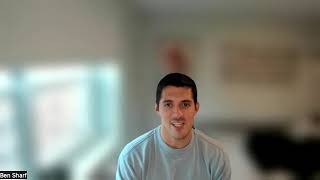
Ben Sharf, co-founder of Platter, went from Division-1 hockey to a COVID-testing startup that hit $50 million revenue in five months before acquisition. He built Platter, a Shopify bundle charging $15-25k upfront plus $699/month, after learning instant delivery at GoPuff. He hosts Turning Pro as a networking tool and invests in YC startups.
Chapters
Welcome to another Founder Wisdom pod. We have Ben Sharf with us. He's the co-founder at Platter. He's also a podcast co-host, Turning Pro Podcast. Go check it out. He's an investor as well, an angel investor, invested in a bunch of cool YC startups, which is always a good signal for me. Gonna talk about D2C today, SaaS, Shopify, commerce, e-commerce. Ben is in New York. I'm in Oaxaca, Mexico. And it's on a Friday today, so brain's a bit tired and Ben was asking me some questions about scaling the pod. Well, yeah, sometimes I'm tired, but I'm always super fascinated to meet new humans and learn about them. So that's what we're gonna do with Ben today. It's gonna be a good one. This one is, is presented to you by podfire.com. Do you want to start or scale your own podcast? You can go to podfire.com. I'll help you do that monetize the unconventional way. Ben, welcome to the pod. Tell me a bit more about yourself and Plattr.
Thanks for having me, Charles. I appreciate it. Yeah, quick, quick backstory on me. I grew up on the East Coast in Buffalo, New York. I was a Division 1 hockey player, had the opportunity to play professionally, and COVID flipped my world upside down. I didn't know when seasons were going to start, how much guys were going to get paid, if the world was ever going to come back to normal. Decided that wasn't the path. I then had a corporate job lined up that I told 12 hours before my first day that I wasn't coming. Ultimately decided to join an early-stage COVID testing startup that scaled to $50 million in revenue in 5 months. I then went and spent a year at a company called GoPuff, if you're familiar. While I was at GoPuff, I was working on building out a business unit to essentially unlock instant delivery for direct-to-consumer brands, which is where I got my first insight into this world. Spent about a year there and ultimately decided it was time to go off on my own, which is then when I started building Platter. To give you a quick backstory on what Platter is, Platter is a theme and app bundle for Shopify brands. Our business is built around a couple core theses. The first one is that a lot of apps in the Shopify ecosystem are features, not products. And so brand owners get stuck with too many apps and too many support teams. And the second is that, uh, there's a misconception in the e-commerce world that building a high-converting storefront is expensive and takes a long time. But the reason people think that is because that large agencies are disincentivized to productize that process to build a new store. And so what we do is we natively build a lot of the most popular functionality around marketing and conversion. Into one solution to unify all your apps and build the store that helps increase your conversion rate and your average order value.
I'm impressed with you now. Like, it's funny because you mentioned a bunch of fascinating things and opened a bunch of portals. Let's start with the first one, quitting your job 12 hours before showing up. Like, what happened there? Like, did you mental ego and burnout and were like, fuck that, I'm not doing that. Like, what happened there?
No. So I think it was actually more I fell into this hole of seeing everyone else around me. I went to a school that was very like corporate heavy where it's like, go get the best investment banking job, go get the best consulting job. And I'm a competitive person. So I was like, okay, I'll go get the best job. Also, I got the job and then I realized like, wait a minute, I don't actually think I want to go to this job. I got this because everyone else around me told me that this was the thing I was supposed to be doing. And then I think I really, I realized that you kind of have, you only have one life to live and you can either live the life that other people want you to live or you can live the life that you actually want to live that you find fulfilling. And someone said to me, regret hurts a lot more than failure. And that was the thing that I, that I needed to hear to realize, like, I would go to this corporate job because I was told that's what I should do. But really, I knew at my core that I was an entrepreneur and that I wanted to bet on myself, and I wanted to be able to just like own my time and do what I wanted to do. And so I really just like the day before, I kind of had this light bulb moment. I'm like, you know what, this isn't it. Like, I'm not, I'm not doing this. And I, I just told them I wasn't coming, and that was it. I never looked back.
What about the hockey career? You've gone to high levels in New York. Uh, yeah, it's the city to play hockey. I mean, it's probably one of the highest level Canada. Is that as well. I grew up in an environment in which a bunch of my friends went to play in the National Leagues. Still competing with these assholes on a salary side, by the way. And every day I wake up, I'm like, I'm gonna make more than a couple mil per year. Now, what happened there? Did, uh, you— were you like not performing enough? And how did you react to like— I guess that was your dream, right, to have your dream broken?
Yeah, so it actually— my, my dream when I was a little kid was just to play Division 1 hockey. It wasn't even necessarily to play in the NHL. And I got, I got to Division 1, and then my freshman year I only played 8 games. I was like, this is kind of stupid, I'm not having fun. You work just as hard even if you're not playing in games, so it, it starts to take a toll on you. Long story short, I kind of just worked my way up the ladder every year, and then fast forward to my senior year, I was, uh leading my team in points, and we won the first round of playoffs in overtime. I'd signed with an agent at this point, was talking to a bunch of teams. We beat Brown University in overtime in the first round of playoffs, and 2 days later, the athletic director walked in our locker room and said, your season's over because of COVID So it basically went from like living out your childhood dream to then just getting everything ripped out from under you. So I think for me it was like when someone says, do you play every game like it's your last? Don't take it for granted, because I played my last game and didn't even know. And then it was just— there was this uncomfortable period of the next 6 to 8 months. They didn't know when seasons were going to start, how much guys were going to get paid, and I had a lot of other ambitions outside of hockey. And so eventually, to me, it was just like, this is a signal that it's time to go do your next thing.
Wow. Okay, let's talk COVID now. $50 million in 5 months. How does it feel to be part of such a rocket ship? And what happened to that rocket ship?
Uh, the first, the first part of the question, which is how did it feel to be a part of that, I think it was one of those things where you didn't actually process it until it started to slow down and you looked back and you're like, holy shit, I cannot believe what just happened. Like, it went from one COVID testing shop on the side of a road, basically, in LA to being across 14 states with 800 employees. I— yeah, I mean, I didn't— I didn't have a day off for months. It was the craziest startup experience I've ever had in my life. To answer the second part of the question, when we first started the business, it was an LLC, so it was just like an absolute cash cow spinning off money. And then eventually they decided to convert it and try to build like an actual tech company out of it. Ultimately, like, they ended up getting acquired. The founder probably made $75 million in like under 24 months. Not too bad. Ended up getting acquired because they did, like, the product market fit wasn't there for what they envisioned, like, in a post-COVID world. But there was a lot of technology and value in the brand that they had, so they ended up just selling it. But it went— I mean, you talk about people who just like are scared of like the future or don't think they're ever going to make it. Like, this man went from an idea to $75 million in like a couple years.
And what's this psycho's name so I can get him on the pod?
His name is Felix Huettenbach. I can send it to you after.
Yeah, I think I— yeah, that rings familiar. Um, okay, now I want to talk about the pod. What was the thesis behind your podcast, and do you feel you've achieved your goals with that?
Yeah. So I mean, the thesis behind the podcast for me is that I like talking to interesting people when there's not a camera on. So my thinking was, why not just put on, turn on a camera and record these conversations? A lot of it was like a digital diary for me because like I said, I like to have these conversations anyways. I think the second piece of it too is that call it spade a spade, a podcast is a networking ploy. People like to talk about themselves. If you give them a platform to do it, they'll do it. And so I think it's a really good platform to get closer to people that you want to build relationships with. And I think for me, like, I, I'm fulfilled by doing it. I don't really think I had like overly ambitious goals in terms of like financial outcomes or anything to that effect. Like, to me, it's really— I just like meeting new people and it was building a platform to be able to get more interesting people on down the line.
Now, Platter, give me some stats about the startup? Like, how much clients do you have? How much does it sell for? How do you guys make money?
Yeah, so we— the way that our business operates is it's twofold. So there's a services fee, which is like the implementation of the product, and then there's a subscription fee, uh, to keep using it on a, on an ongoing basis. The value prop is that you're essentially getting the economies of scale because we've been building all this technology into one solution over the course of 2 years. So if you tried to go build something from the ground up on parity with what we can offer you, it would cost you well into the six figures. So you're looking at like an implementation fee of anywhere from like $15,000 to $25,000 upfront to get a full store build, designs and implementation, and then the subscription is $699 a month. And then in terms of clients, I mean, we're into the six figures at this point working with some, some pretty cool brands.
Very cool. What are your ambitions? Because you're still young, do you have, uh, goals? For example, I would guess before 30 or before 40.
Yeah, I think it's a great question. I think my, my goals are, are very simple. I think the first one is to have true freedom over your time, uh, for the rest of your life at the expense of nobody. And the second one is I don't want to have to look at a receipt.
What does that second one mean? A receipt. What kind of receipt?
Like when you buy something and you have to check how much it costs.
Oh yeah, do you even check? Well, I mean, if you go to the restaurant, I mean, you'll check the bill to make sure that they didn't overcharge anything.
It's always nice to have some data, but you mean like, like, can I spend this amount of money? Like, I think Look, I don't— I do— I don't believe that money buys happiness, but I do think there's a minimum threshold to be able to do the things that make you happy without money being the blocker.
Yeah, I feel that it's the idea of not having money and the idea of scarcity that really tortures people, and comparison, you know, where it's like thinking that I'm sick, you know, I have a sour throat, but a sore throat, that is, and all of a sudden I think that I'm super sick, that I have COVID and gonna die, you know, I think It's the power of the mind that amplifies the negative. That's a pain to humans.
100%. It's a lot of it is in your mind. And I think, look, like the last thing I'll say is that I'm, I'm definitely someone who chases fulfillment, right? Like, I want to, I want to do things that allow me to wake up every day to be excited about it. And my biggest fear is being stuck living in a reality that I'm not happy about.
So your daily routines, what does it look like? Walk in the park, workouts? What do you have in there?
Yeah, health and wellness is a big, a big aspect of my life. I'm training for a marathon right now, actually. So there's, there's definitely some form of a workout in there every day. I think that that's kind of like a non-negotiable for me. I think another, another one that I think I like to say, but I don't actually do a great job of, is just like trying to be present in situations when I'm not working because my brain is always consumed by the things I'm building because I love it. Right? Like, I think it's undeniable that if you just look at successful entrepreneurs, like, something a lot of them have in common is obsession, where like you just can't, you can't shake it. Like, it's the thing you want to do and you're able to push so hard because you actually enjoy it and find fulfillment in it. But for me, with my daily routines, it's like I want to, you know, I want to make sure that I'm taking care of my body and my mind. I want to make sure that I'm learning something every day, and I want to make sure that I'm, I'm continuing to just push forward on the things that matter to me because if you just follow the right daily habits and get 1% better every day, it's a lot easier to look back a year from now and see all the progress that you made.
Yeah, it's crazy when you look back. It's a beautiful sight for sure. Who do you learn from nowadays? What does your learning routine look like?
It's a great question. Um, I've always tried to become a reader, but I'm just like, I'm just not. Uh, I did just actually finish the first book I've read in a while, but I'm much more of like a podcast guy. I watch some YouTube stuff and I'll like, I'll binge like when there's articles or things to that effect. I'm not a big reader, but there's also just people that I follow. And I think at every phase in my own life, it becomes contextual to like the challenges that I'm facing or the curiosities that I have will influence like the things that I'm researching to learn about.
The other day I saw the Brodo lady. I think she closed down her startup and I started my own owned NewTropic 10 years ago, had to close it down. What do you have to say about D2C being hard vs. the agency model?
I mean, it's very hard. That's why profitability is the thing that people are focused on right now because there's also just not a lot of money out there being thrown at D2C brands in a, in a market downturn. So I think that like the advice that I can give to brands, number one is Don't fool yourself about the quality of your product. Doesn't matter how much you spend on ads or how great your website is. If your product sucks, you're not gonna, you're not gonna make it. And then I think the second thing I would say is just like try to have a better understanding of what's a nice to have versus a need to have in terms of how you're allocating resources, how you think about prioritization of, of different channels to grow your business. And then specifically within e-commerce, you need to just continue to find ways to make incremental improvements because if you can make a couple more dollars and save them a couple more dollars every single day, you'll, you'll still be alive, which like default alive is the way you should be thinking in a market downturn for sure.
If I'd have to restart in D2C, I would take the B2B route. I would target CEOs and people with money, family offices. I would go high-end luxury. So I'm in Oaxaca, Mexico. I'd probably have custom AI-made bottles, right? Like people could 3D build their own mezcal bottle. Um, and the mezcal would be finest quality. They could even choose like their tastes, their palettes of tastes, for example. And I'd sell the bottle for $10K, you know, so my CAC would probably be $15 or $50 or something like that, guarantee my margins. What do you think of that strategy?
I actually just had a friend, uh, who sold his D2C-focused business for $50 million in He's like, if I could go back and do it again, even though he had a successful outcome, he's like, I would sell higher ticket items because you just need to sell way less of them to make a lot of money. It's a lot easier. It's a lot easier to sell 100 products that cost $1,000 than 1,000 products that cost $100.
Right. And shipping as well. Where can people find out more about you, Ben?
They can find me on all socials, Instagram, Twitter, LinkedIn @bensharf. That's B-E-N-S-H-A-R-F. And then my email is ben@platter.co. That's P-L-A-T-T-E-R dot co.
More from Ben









Episode 3-From Boarding School to Building Platter: Ben Sharf on Betting on Yourself

