Build Your Dream Store 2024 - Full Panel Conversation
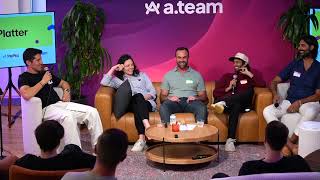
Four DTC founders discuss building profitable stores in a tight economy. ShipPlug automates refunds, Pietra bundles manufacturing and fulfillment, BlackCrow AI personalizes repurchase messages, and Andy Swim uses chatbots and celebrity collabs. They share what metrics matter most and where AI can cut waste.
Chapters
Awesome. Well, I first of all want to thank everyone for coming tonight. This is the first event that we've put together as a company at Platter, so I'm excited by the turnout. I really appreciate everyone coming. And then also the ShipPlug team, thanks for helping make this happen. Nick, you want to come up here?
Paula?
Say a few words?
So basically what ShipPlug does— keep it simple. We help anybody who ships get money back for shipments that are late. So if you're thinking that you don't really get a lot of shipments that are late, it's because you only know they're late if your customer tells you. And we basically automate the entire process of knowing what shipments are late and getting you money back for that. Because if you're not doing this already, which you're probably not, you're leaving money on the table that could be in your pocket. So the best part is we don't charge anything unless we save you money. No setup time and it's commitment-free. So no-brainer. Come talk to me.
And then the last thing I'll say, for those of you who don't know what Platter is, Platter is a theme and app bundle for Shopify brands. We help improve profitability on storefronts. So the thesis of our business is that a lot of apps in the Shopify ecosystem are features, not products, which causes app bloat on storefronts. And you have too many support teams, too many monthly expenses, a slower website, worse conversion. So what we do is natively build a lot of the most popular app functionality into one solution to unify your app stack to help improve profitability. All right, now we will jump into it. So I'm very excited about this panel because these are 4 people that I've been following for a long time and have built amazing businesses. So the theme of the panel today is Build Your Dream Store. In today's world, in today's economy where money is not floating around everywhere, specifically for D2C brands. They have to start to figure out ways to get scrappier with building their businesses, prioritize profitability, and figure out how to just stay afloat in this economy. And so we've brought together an amazing panel of people from both the brand side and the software side that can help speak to this common theme that we're talking about today. So I'm just going to let you guys start by maybe introducing yourself and what you're working on. We only have 4 mics, so we might have to just pass back and forth.
All right, I'll kick it off. By the way, now I'm so curious how many— I mean, I should know, but I don't— how many shipments we do every day, so— or like yesterday, so I'm gonna check afterwards. Or just like the joy of knowing. I'm Melanie. I'm the founder and CEO of Andy Swim. Andy is a global direct-to-consumer swimwear brand for women. We launched 7 years ago now, so I feel old, but it's been It's been a great ride. What did you— what else were we supposed to say?
Basically, that was great.
Okay, so I'll stop there for now.
All right, my name is Nick. I'm the founder of Shipplug. We started 3 years ago. What our intention is, is just helping customers get refunds back for late FedEx, UPS, DHL, the post office shipments, because we found that brands, they don't even know that's a possibility, let alone want to file for them. So it's just found money pot money in your pocket. So that's what we do.
Sweet. I'm Ro, founder of Pietra. Second row in the house. Um, everyone's back there.
Yeah.
Uh, I'm a founder of a company called Pietra, and we help people start and operate their businesses more profitably. Um, we're a full-stack platform that allows you to find manufacturers, set up your fulfillment and logistics, And then we build a bunch of software to help you sell stuff online. So, if you have an idea for a product line, you can launch that company in just a couple weeks or a couple months.
Cool. Nice to meet you. Is this on? Oh, hello?
Okay, cool.
Hey everyone, I'm Shahzad. Nice to meet you. I'm one of the founders and chief product officer of a company called BlackCrow AI. We are helping businesses with their marketing challenge. So specifically paid ads, email, and SMS. How can they use the data that they have to make those marketing efforts more effective than they are today, which I know is the bane of our existence.
So awesome. So first question for the entire panel based around the theme of this conversation. What does build your dream store mean to each of you?
Sure, I'll go first. I think build your own, build your dream store to me means that if you're a founder of a DTC brand, you can really focus on your product and your customer, and technology doesn't get in the way of if you have a great product that should resonate with an ideal customer profile that's out there that it serves a need for, um, you can go ahead and do that and you'll be successful for that reason and not because of like barriers of the right tech stack or using the right agency or my website being set up correctly and me running personalization and all this other junk that you have to figure out basically.
Sweet. Um, yeah, mine's a little bit different. I think mine's, uh, about flexibility. Which is I think I've seen so many different operators that have different skill sets. And I think for me, a dream store would be something that caters to my strengths and then removes my weaknesses or doesn't allow me to spend time on those things. And yeah, so I think each person likes to do something else. Like, I actually love coding and I'm an engineer, so I do want a highly technical store, you know? But I suck at marketing and communications and I'm like, okay, what? How can you help me in that area? So mine's a little bit more about flexibility.
Yeah, my idea of dream store is the perfect store. So what I mean by that is something that not only helps you sell things, right? We have the top of the funnel, but then what is that customer experience like after we sell something? How does the delivery experience happen to the customer? That, that perfect delivery, the perfect experience really helps the customer buy again. That's my idea of a dream store. A store that just helps get customers in the door, but then keeps repeat customers.
When you first asked the question, I thought, "Well, Andy, it was my idea. It's my business and I've built it. So therefore, it's my dream store, literally." But then I was listening to you guys speak and I realized I hate so much of the site. There's always things that are broken. There's always things that are not working. So I guess my actual dream store would be— I think you said the word perfect, which is like an impossible standard. But, you know, like I think right now we have too many different options and there's always a link that leads to a bad gateway or whatever those 404 pages are. And, you know, like the dream store is one that works. It works for those who are working at the company with all the operational pieces on the backend. And it works for customers who are coming to buy a swimsuit. Andy's not there, but you know, we're pretty damn close.
Love those answers. Alright, so the next question is for everyone except you. You have a special question for yourself after because you're the only one on the brand side. So what innovation or technology has your company developed that helps brands build better shopping experiences?
I went first last time.
Okay.
So I think what we've done is we help in the post-shopping experience. Where all of the brands are dealing with chargebacks, customer experiences. So what we help you do is we help you get a refund for those shipments that are lost, damaged, that are definitely not a brand's fault. So the brand gives the package or your product to USPS, the post office, and that's where, from your perspective, the experience ends. But from the customer experience, it's all the way to the end. So what we do, if the shipment is late, we're going to get you a refund for that. So what that allows you to do is either refund your customer or send them another product, and then you're not eating the margin for something that's not your mistake. So that's what our company does. We try to really help solve that delivery experience problem.
What was the question again? Tequila's really hitting. I'm good. It was what, yeah, what was it?
What innovation or technology has your company provided?
Oh man, so many.
Or what's your favorite flavor of tequila?
No, no, no, no.
I'm not even drinking, it's just water. It's allergies. No, no, I think like where we saw like for Pietra there was innovation was not necessarily in any single technology, although we did push the technology forward, it was in the way the puzzle pieces actually came into play and got put into place. And so we knew there was a bunch of point solutions out there, but no one had really tried to do the crazy thing of bringing it together. So our innovative solution was, you know, there's all these point solutions that allow you to run a business, like profitably in the world. Can we put it all together in a seamless way so someone can open up their laptop on a Saturday with a cup of coffee and be like, I want to start the next Kiith. And do it. So, you know, it's a different flavor of innovation, more around aggregation and putting the pieces together and built on, you know, standing on the shoulders of giants essentially who have built the technologies.
Cool.
Yeah, sure. I'll highlight one specific one that I think is cool. So, we focus a lot on machine learning and generating predictions on shoppers and customers. And then applying those predictions to create marketing experiences or shopping experiences that are going to resonate. One we have, we call it predictive repurchase where let's say you're a Shopify brand. Every day a job will run, it'll look at your email SMS subscriber list and it'll say which of these people is ready for either a replenishment, an upsell, cross-sell, or potentially being pushed into a subscription. from having just made an à la carte purchase, and we'll dynamically go ahead and trigger the message for one of those three experiences. You'll have a nice clean message that resonates, and then you'll get deep linked into a version of the store streamlined to buying that specific SKU that's relevant to you. Make it really easy to check out, one click to purchase, and you'll see the type of click to conversion rates from that experience that really resonate because Context is highly relevant. Person getting the message understands why they are. It's at a moment in time where it's helpful instead of annoying. And so, I think that's an example of utilizing your data to create a relevant and memorable shopping experience.
Awesome. Great answers.
All right.
You're the star now, Melanie. How has your brand innovated on customer service as a revenue driver instead of a cost center?
I was wishing— when you said there's a special question, I knew you had emailed me and I was I'm really wishing I had read it so I would be able to prepare. But that's good.
Now the answer will be more authentic.
It'll be authentic. So how have we innovated on the customer—
Customer service as a revenue driver instead of a cost center.
Whew. Okay. Let me think about that for a second. There's a few different ways in which we've— I wouldn't say we like fully— I wouldn't necessarily say our entire customer support division is fully a revenue driver now. But we've done a number of things. So we lean into AI for customer service a lot. So most of the, like, you know, half the questions we get are, where's my package? I'm sure you're familiar with those. And what size am I? And we've answered those questions a trillion times. And so we've trained an AI bot named Nancy or something. Not Nancy. I don't know what she's called. She has a name. Everyone thinks she's real, even though it says she's not. And so that has been a tremendous cost savings. And then the other thing that we more recently did, you mentioned at the beginning, this economy is quite difficult and everyone's really pivoting towards profitability over pure growth. We're the same way. And so we actually decided to take our entire team and they're based now in India and the Philippines. We have one in-house still here in the United States for escalated cases. So those are some things that we did recently to just reduce cost. And then the way that we train the AI bot, our virtual agents overseas, and of course the woman here in New York who manages the whole infrastructure is always, always around. First of all, providing a great customer experience. So we will— I don't know if we use you guys. It sounds like we should. We'll replace, you know, we'll replace anything. We'll send you a new thing if it's late. Swim is a, you know, it's like, it's like a Band-Aid. Like women tend to— I'm not trying to discourage anyone from shopping for swim if you don't have a vacation, but We have found that women tend to shop for swim when they have something coming up. It's like, "Oh, I'm going to the beach this weekend. I need a swimsuit." And so it's really important that they get their package right away. So just making sure they're gonna get all of that so that they come back to us. 'Cause customer stickiness is so important. And then upselling, cross-selling. We have some third-party merch. You want your cover-up to go with it? Great. You want your flip-flops? You want— we use vacation on our site, which I think you guys probably started. Yeah. So a lot of ways to encourage customers to just buy more whenever they reach out to us. And we know— sorry, this is the last And this is the last thing I'll say. When a customer reaches out to us, she's more likely to keep what she ordered, to come back to us and order again, and to order more in that first purchase than customers who do not reach out to us. So we actually really like it when they reach out to us, 'cause it does become a revenue driver.
Amazing. I know you touched on the idea of everyone prioritizing profitability over growth in today's economy, but what would you guys say are the other big challenges you're seeing brands face today? This goes for everyone.
So I think a lot of brands struggle with repeat customers, right? So how do we get our customers to want to buy our swimsuit again or whatnot? What we see them struggle with in our industry is the delivery experience. So I'm going to use an example. I have the swimsuit. If I tuck it into a poly mailer and I send it to you and you open it up and it's wrinkled and it's It doesn't look like a swimsuit you would go into Saks to buy or a high-end brand, right, to buy. So, or compare that delivery experience to Tiffany's. When you buy Tiffany's online, you get a brown box that's packaged inside the nice iconic blue box, which the jewelry is set in there specifically. So when you open up the box, you have that experience that you're almost in a store. So what we see brands, especially new brands, struggle with is how do I make that delivery experience online the same as when I'm in a store so that I get that repeat customer. The brands that we found are the most successful are those customers or companies that can ultimately dictate that customer delivery experience and really entice repeat business because of the whole experience.
Yeah, I think to add to that, I think the, one of the major challenges that I see, and I don't envy anyone who's running like a successful brand, is as soon as something starts working, the goodness gets arbed out like so quickly, and it's like on to the next tool. I can, I've worked in many different like, you know, areas of technology, and I've never seen something moves so quickly from working really well for one person to being like every single person in this space uses this thing and now therefore it's ruined for everyone. And I think like it's just one of the challenges I find with brand owners where they're always, and you guys probably know this, which is like they're always looking for the next thing. And like as soon as you find something, it's like you're not even happy about it. You're like, okay, but this is not gonna work in 3 weeks. Like what's next? And It's just crazy because the pace of technology needs to keep up. And mostly what happens is the price of the things that work just go up. So less people use it. Not really that the innovation is that fast. And I think that's just a very difficult space to be in, to continuously have to reinvent the ways to reach a customer, convert a customer, delight a customer. Thank God people like you exist where, you know, you're trying to invent new things every day.
Thank you. Thanks for that. Yeah, sure. So I think I'll build on what Nick was saying where I think probably all of us are intimately familiar with how much CAC sucks for the last few years since all of your privacy changes. And so I think the pressure that that's putting on LTV to make the economics work is real. But then what makes it even harder is the ability to forecast. LTV in kind of an accurate and reliable way. And so, you've got this cash flow management problem of like, when is my CAC gonna pay back? What's kind of the expected LTVs from different marketing channels that I'm bringing in? And that's like a complex and highly inaccurate process today, but there's actually a lot of P&L benefit to getting better at that. And so, certainly another thing that we can help with, but I think a challenge that I see a lot of people struggling with.
Yeah, all of those are challenges that Andy faces from, like, everything. And I was trying to think of what I would add, but I guess just to zoom out, you know, the biggest challenge, we just talked about it a little bit, but the biggest challenge is just like truly being profitable. We're profitable if you like squint and round, but like truly not really. And capital is so hard to come by these days, certainly equity capital. And if you do come by it, it's usually gonna be at punishing terms. There's debt, which is great, or can be great, but can also, you know, like really, really hurt you. And so, You know, it's kind of like you have to do whatever it takes to be profitable. And if you've been on a path of growing and growing and growing and sort of paying for that growth, and then suddenly you have to push the brakes, like, it's sort of— Andy's navigating it, I think, you know, relatively speaking, we're doing it quite well. But it is the hard— I mean, it is the hardest thing that I've faced. And it's— we're 7 years in and I thought it was hard the first 6 months and like now I think it's harder than ever. So it's just like never easy, I guess.
Yeah, but it's those who can just stay in the game long enough. It's default alive.
That's literally it. Like you just have to run through brick walls and then just keep going and like—
and never stop.
Yeah.
In spirit of building memorable commerce experiences and dream storefronts, what metrics would you say you guys are focusing on the most to help ensure that either brands you're working with or your brand is like operating effectively and flourishing for that matter in today's economy?
I just spoke, so there you go.
Sure, I'll go first this time. I think a few different ones. So one with, if I'm focusing on the sales and marketing equation, like with CAC sort of getting challenged in the way it has, we've seen owned communication and email and SMS really rise in importance. And so, uh, one of the things I think really becomes super important is you're going to spend money on paid traffic. How much of it are you going to actually get to sign up for your email and SMS so you can find a way to actually continue some sort of customer journey and communication? Because you can't rely on retargeting and things like that anymore. And so in order to push people through the funnel, you need some mechanism to get back in touch with them. So I've seen people's focus on subscriber list and list growth really increase in importance a lot. I think that's the one I would focus on. Obviously you have your CPA, ROAS, your standards, but—
Yeah, mine on the operational side, I think, it's like, I don't know how to really quantify it. I don't think a lot of people measure it, but from our perspective, when we are powering all these businesses, it's like, I wanna say the best metric is like time wasted on things that don't matter. And half the time they don't know that these things don't matter. Um, so instead of paying for a service that's actually gonna give them some leverage, you know, they're obsessed about squeezing out every last cent of, outta something that is not actually gonna be a difference maker. And I don't hold it against these operators for, you know, for in their defense, I think it's very hard to know what you should focus on because it all seems like something you should do and then do really, really well. And in reality, it's like one of the 7 things is the one that's going to be the difference maker. But wow, I think like the people that are so successful are so laser focused and knowing that like, this is where I'm going to get leverage and I should put If I put a dollar into paid ads, this is what I'm gonna focus on. And the people that we see don't last a long time are the ones that think that every single part of their business, every single moment needs to be done, you know, 10 outta 10. And that they can be better than an Amazon or something like that. And you're like, okay, at some point you gotta like give up. You're not gonna be that great. It's not worth the extra, you know, 1 cent. You should go figure out how to like tell your story on social or something like that. So time wasted would be the metric.
So the metric we actually track the most, because we're a post-sale experience, we track the on-time delivery percentage of all of the 4 major carriers. So think UPS, FedEx, the Post Office, DHL. We focus their on-time delivery and their days in transit. Now we can track it a few ways. So we can track it for you specifically. And maybe you had a one-off driver that, that was making your packages late, but we can track it overall for all of our customers. So we can help you make the decision not only on cost but delivery experience on what company is actually going to get your product there safely, on time, and without chargebacks. Now, why that's important is, is because of simply your repeat order, right? And your "where's my order" calls. We've had panelists up here mention that that's what they use AI for. Well, if you can just cut that out because your delivery experience is much better, think about also the cost you're now saving on AI, the repeat customers. So we really want to arm our customers with the data to see which carrier actually has the best on-time delivery percentage and then accompany that with What makes sense? We can ship everything overnight by 8 AM, but does that make sense for your business? And we can help measure that cost-benefit analysis.
I have one question for you off of that, 'cause I'm genuinely curious. What is the average on-time delivery percentage of like any of the major carriers? I couldn't tell you, like I have no idea.
So typically in an e-commerce space, people are gonna be on time around 96% of the time. So very—
All right, that's higher than I was expecting you to say.
That's now when you get into things that are important, think food, right? The last thing you want is to have a food delivery company and it shows up spoiled, where that drops down to around 89%. So we see around 11% of the next day deliveries are late, which is a horrible experience. Imagine if you're a food company and someone gets sick because they ate your spoiled food because it was hot in Arizona and you delivered meat. The next thing you know, I mean, yeah, girl, it happens.
Classic scenario.
Yeah. Oh, it happens all the time.
I mean, the old meat Arizona scenario.
Yeah, meat, wine even, right? And beverages, even if you're non-alcoholic beverages, still that delivery experience of a poor delivery that causes your food or drink to spoil, I mean, that could ruin a brand. Imagine you have 500 customers that had a late UPS trailer that didn't get delivered, now it shows up spoiled and everybody got sick, that's an easy way to go out of business.
Sure, I'll answer quickly. Main metric we pay attention to these days, different folks on my team would have a different answer, obviously. ROAS would probably be like one that we're really paying a lot of attention to because we spend too much money on marketing. It's where most of our money goes. But like really, really the key metric that matters to me is— I mean, I sort of waffle a little bit, so this probably puts me in the placement of bad CEOs, but net revenue. I don't really care about gross revenue because people return swimsuits. That's fine. It's like money in, money out. Net revenue and gross profit. And just like if you can get your profit, your gross profit at a good healthy margin, then you're gonna be in good shape over the rest of your P&L. So that's really on a sort of daily basis what I look at.
Yeah, just building on that, one thing we've recently started doing with brands out of actually a request from some forward-thinking brands is we'll actually push revenue net of COGS into Meta so that the ROAS and your CPA reporting is done on your revenue net of your cost of goods sold, which, you know, no one ever gave a shit about until very recently.
All right, so this next question is to a point, Ro, that you made before where innovation is happening at the speed of light. I feel like whether you're on the brand side or the tech side, you just see new point solutions, new things popping up all the time. If you guys could go back and start over, what would you do differently?
Like with the company?
Yeah. Based on just knowing and recognizing how fast the innovation is happening right now. I think you should be the first one to answer this.
Yeah, like a lot of stuff I would do differently, I think, to save myself pain. I think there's like two major areas. One is, I think as a first-time founder, you read all these blogs and you go into it and you're like, this ain't gonna happen to me. That's like the first thing. I was like, I should not have that attitude going into it. It will probably happen to you, and you will probably be in the masses of like the problems. And that led me down, you know, those set of problems led me and my team down the path of reinventing the wheel of stuff that now looking back, we didn't need to reinvent. We, you know, it wasn't worth the time. But everyone thinks that they're their own snowflake. So, you know, that's definitely something I would do. I would, if I was to redo it, I'd be like, listen, we're not. We should just use the stuff that is already built. And the second one was expecting everything to work well on the first try. Like, I think I have to go back. I'm like, okay, everyone, everything's going to take 2 times longer than you think, and it's probably going to take a couple of iterations to be right. So that first iteration, like, you're not Apple, like, revealing some device. Like, it's going to be hard, and it's probably not going to be right. And then orienting the processes, the people, the bets that we make with money and technology through that lens.
For everybody? Sure. Yeah, I mean, definitely one specific thing comes to mind. We launched, the first product we launched was an audiences product for paid advertising. And that was going great until Meta released Advantage Plus and sort of told everybody that audiences don't matter anymore. So we had to do a hard pivot, which was not fun, but we're on the other side of it, so.
You know, over the years of building Andy, I've made a million mistakes, but at the same time, when I started Andy, I was selling like 10 swimsuits out of my living room, and I don't think I ever imagined where we'd be today. I mean, we've sold millions of swimsuits, and Jay-Z led my last round and put $20 million into the company, and like, you know, meeting him is awesome. And Mindy Kaling just did a, you know, collection with us. So in some ways, like, I don't know, it's gone way bigger and more successful than my wildest dreams when I started it. So, but like, you know, and there's no way to build a company without making tons of mistakes. Like, it's just gonna happen. So I'm not sure that I would have done those things differently. I think what I would have done differently is just had a little more like grace and patience with myself. The last 7 years have been, I mean, really wonderful, but like God, so many fights with my spouse about things related to the company. And you know her, so that's awkward. And like tears and frustration. And you know what? Like it's all good. Like it's fine. And I think that if I were to do it again, I would just be more patient with myself is really what I would say.
Love that answer.
So, so for me, I think what I've learned is it's hard to know what you don't know. So when you're starting any business, how can you really pick and choose what's the most important thing that you would change? Now, now for us, what I think we would have changed is we spent almost no time advertising. So I would have started right away getting our message out there and trying to talk about what we do. So one of our biggest challenges is most people don't know that what we do is even an option, let alone that you can do it. So we spent no time marketing, and, and I think that slowed us down tremendously because we have a product that's free. So, so we don't charge unless we get you a refund, but the issue is it's almost too good to be true. So What we could have done differently is help make our messaging more simple, and we've had a kind of a convoluted way of that we marketed. Now, we did build a $35 million business off of referrals, so I wouldn't have changed that. Like, we have a really good referral network, but we have no real brand awareness, first off, which I think is important because we sell something Over time, that's gonna be expensive. So we want to make sure that people understand the value that they're getting, and, and that's what we could have done differently. Because what I find a lot of companies— and I was actually having a conversation with one of Ben Sharf's partners— is how do you charge for what you're worth, right? And I think that's what we struggled with at first. We did a very good job with partnerships, a very good job with marketing— or a bad job with marketing— and But the reason it worked is because we had good referral partners that knew what we were worth. We had a lot of customers that we changed the customer's business, and, and we needed to do a better job of spreading that message and then not discounting ourselves early on for the value we knew we brought, but that maybe our customers didn't realize. But the reason they didn't realize it is because we didn't do a good job of simply explaining the message of what we're trying to accomplish. So I would say not to discount your product early on.
Awesome. I now have one question for each of you specifically, and then we'll wrap up shortly after that. So, Shazad, we're gonna start with you. How do you see customer intelligence changing the way that brands market to their customers, or specifically high-value customers?
Yeah, sure. So, I think customer intelligence paired with marketing automation We're gonna see increasing amounts of it. Specifically when it comes to high-value customers, I think one thing people can be on the lookout for is if you advertise on Meta, in their server-side conversion API, they've recently released a field called predicted LTV. If you send a value into that field today, it doesn't, actually do much, but in talking to a bunch of people at Meta, there's a whole host of functionality about to be rolled out in the next 6 months on the basis of that field. And what it's going to enable is for you to point the bid algorithm specifically towards the customers that you acquire that you deem to be high LTV or high value to your business so that they can point their algorithm towards the types of customers that you care about, rather than treating any customer that's created as equal. I think a lot of people have probably experienced that problem of, yeah, I'm getting a lot of purchasers, but they're crappy customers, low AOV, one-and-done types of people. And so being able to, you know, say, hey, I don't want that, I want this, I think is gonna be a welcome wave in, in CAC for people in the coming months.
Good answer. All right, Nick, this one's for you. At its core, all our jobs are to get products into customers' hands faster. What are some common mistakes that brand owners make when it comes to operations and fulfilling orders?
So I think there's countless ones, but I think— so how do you— so everybody, every brand owner wants their product to be in their customers' hands the same day. So how do we measure, is it worth it, right? So I'm gonna use the example of Nike. Nike, big customer. I'm a big customer of Nike. So today I went online and I bought a shirt, a pair of shoes, and 4 socks. Well, Nike tries to deliver from the store. So what happens is they want the Amazon model where their product is close to the customer. But how can you keep all of the inventory in one store? How can you keep it that close to your customer, right? So now my Nike shoe shows up, I have a shoe box. Now I have 4 socks in a box and a t-shirt in a box. So think about that customer experience. What happens is people try to get faster to their customers, but they forget about the experience. So what happens is I'm getting my Nike shoes. Well, they forgot to deliver my socks and my shirt. Well, the next day I get my socks, but my shirt didn't come. So now I'm waiting for my shirt. So think how many more customer calls you get. Then not to mention you've paid 4 times more in the shipping. So how can we measure that? Is it, is it worth the speed that we can make that customer experience Or is it better to ship from Middle America? We consolidate everything and you get it at the same time, but it might take 10 days. So how do we measure that? Is the ROI worth the speed to delivery? Or is your customer experience better by getting it there faster so we'll pay more? And I think that's what people struggle with the most is how to measure that customer experience versus the cost that it takes to fulfill that order.
Ro, we talk about barriers to entry becoming lower and lower to get into the e-commerce world with innovation and technology. How are you guys specifically lowering that barrier to entry for people to start and launch a brand on Shopify?
Yeah, I think the, the biggest thing was, um, we found that new business owners would have an idea but then they would either not know how to start or go down this windy path of reinventing the wheel to get their business off the ground. Um, when really realistically they should have been working on the small part of their business that's actually differentiated. Um, usually isn't around, you know, the, the setup process or the fulfillment center that you use, or honestly even like the startup software that you use to get your business off the ground. Not like Shopify, but the tools that you would pay for. So what we have done is we have looked at, you know, the last decade of e-commerce and said, okay, what are the evergreen things that a person with an idea needs to do? What are the evergreen pieces of infrastructure that we need to build so that it feels to the world like a shared, like, software and infrastructure platform that anyone from anywhere in the world can tap into? And so we went and started to build that piece. And so it's not complete by any means. Um, but anyone with an idea can tap into the mothership and launch their business and be confident that what we have built is something that they don't need to reinvent the wheel on. And most of the time I would say isn't going to be a differentiator for your business. It's something that has economies of scale, is commoditized in many ways, is a mature industry. Something that is ripe for turning into a turnkey technology solution. And so we put all those things in one place and we said, okay, world, like, go forward and try and invent, focus all your time on product design and brand storytelling and content, the things we can't ever turn into turnkey solutions. And I think that has been the biggest, like, like, reward or the most rewarding experience, I think, for Pietro is just seeing hundreds of thousands of people around the world be like, hey, I used to have an idea and I would just sit with beers and my friends and just talk about it. Now I'm gonna try and actually launch this business. And they can be from anywhere in the world. Like, it's not just America that has a monopoly on starting businesses. You can do it from anywhere in the world.
I found out my sister used— she launched a brand on Pietra. I found that out today.
I found that out too.
Um, all right, Melanie, question for you. So you recently launched that amazing collaboration with Mindy Kaling. What have been the biggest learnings from trying to differentiate yourself, uh, in a category like swimwear?
I have a lot to say about that, but maybe going back to your question about what would you do differently, I would probably launch on Pietra nowadays.
Thank you, thank you.
That just, the whole pitch was—
Did you record that? Did someone record that?
Chief hype officer is here.
It really saved me a lot of heartache. How do I differentiate myself? Or how does Andy differentiate? Yeah, I mean, it's challenging. Swim is a very crowded, very crowded market. I do think The challenges in the economy today have actually been good for Andy's, good for Andy because frankly a lot of our competitors have either gone out of business or they're massively struggling. So a bad economy can sometimes yield nice results. But I think the celebrity thing is definitely an angle that we leverage at Andy. We were careful in the beginning when we started working with celebrities not to have one come on as like creative director or whatever 'cause often that's what people do with celebrities. But that we would have at least, you know, at least 2 per year. And so we did a collection with a woman named Claire Holt, who has like 10, 15 million followers on Instagram. It was so successful. So then we did one with someone named Iskra Lawrence, also massively successful. I think she has like 6 or 7 million followers. And then we sort of like amped up and we partnered with Demi Moore. And first we did a campaign with Demi. It was great. She became a friend and an investor in the brand. And she actually was like, I would like to launch a swim line, which I thought was like just amazing that she would trust, you know, my brand to launch her first swimwear line. So we did that. And then we realized this was a great way to both bring in new customers without having to, you know, spend more on Facebook. And provide a differentiated offering and just something new to talk about, both from content and product. And so then we partnered with Mindy Kaling and we did her first swimwear line last summer. And it was so successful that we did it again and we just launched it, I think, 2 weeks ago now. And so that is something we're going to continue to do. We're deep in conversations with which celebrity will do our— which celebrities will do our 2025— summer 2025 campaigns with. So that's something I think, you know, from a From a product standpoint, this is like too granular, but we sit, like we're not super skimpy. We're not like Gen Z swim, which is great. And I think people can and should have that in their swim drawer. But we're also not like your mom's swimwear. We try to find that place a little in the middle. I was, well, I'm 38 now, so I was 31 when I started the company. And I really wanted a swimsuit that I could feel good in, shop in, like that was affordably priced. Where I wouldn't feel like I was sort of like uncomfortable in showing everything off at the beach, but I also wouldn't feel matronly. I was not a mom at that time. Now I am, and I'm expecting my second. And so Andy was— thank you— Andy was born to fill this gap from a product standpoint of something that like looks good, feels good, is easy to wear, easy to shop for. And I think that from a product standpoint is, yeah, also sort of white space still somehow in the market.
Amazing. All right, last question. I don't think you can do a panel in 2024 without talking about AI. So what do you guys think are the biggest opportunities to leverage AI today in e-commerce?
Should I go first?
I feel like you have to go first.
All right, fine. The layout.
Yeah, I mean, uh, I don't want to— I won't shamelessly plug some of our solutions. You can check them out, uh, if I move on past that. I think the other thing is how can you leverage or put generative AI to work for operational time savings? I think in particular, um, creative and, uh, let's say like writing and content generally. So, uh, more personalized landing storefront experiences, uh, better email and SMS experiences and just like the velocity with which you cycle through your ad content and ad creative. 'Cause at the end of the day, that is your brand voice. That's how you connect with potential consumers. And I think it's been a rate limiting factor historically. It's expensive to produce a lot of creative and experiment. And you might have a lot of great ideas, but you're sort of held back from executing on them. And so I'm excited to see what that frontier looks like. And I feel like the DTC Shopify world will probably be blazing the trail in a lot of ways in terms of stuff they do with it.
Yeah, I think even outside of like generative AI and content, I think what's really interesting is when you look back at the last, you know, 10+ years of DTC, it feels like Shopify when they were like, we're going to arm the rebels, basically built an environment of I'm going to be a, you know, a team of operators. I'm going to pay for cheap ads on Facebook. You know, if you think 10 years ago and I'm going to be off to the races. And I think as soon as, you know, CAC started rising and just in general, social media matured and stuff was starting to get more expensive. Companies were left with these bloated teams. And so the I'm the Rebels generation was like, okay, now that the CACs are rising, we have these massive teams of people which make it hard to acquire the business. You know, sometimes a G&A is like 40, 50% of the sales volume and you're like, wow, these are massive costs for a company that make them both hard to IPO, hard to be acquired. And then you see that these businesses are like, we need to do a cost cutting exercise and get profitable now, like fire everyone or whatever it is. Not like a bad way, but that's what they have to do. And I think when I look at AI and we look at what, how we're thinking about it is it's essentially infinite labor that's extremely cost effective. And can you deploy agents in a way where it feels like you've got these people running your business for you, right? In some places, it's going to be pretty cool because they can do things 10 times faster than a human, 1,000 times faster than a human. And I think what it will also do is Show us where you can't really have a computer do things for you. So I think there's gonna be a whole wave of these, you know, 1 to 2 person teams that can do $100, $200 million of sales. Like, I really believe in that future, and it's gonna be all these little mini agents that are running around, basically running your business for you in the background. And the 1 or 2 or 3 people that you have on your team are gonna be doing the things that computers can't really do well. And some of those things are yet to emerge, I think.
Yeah. So our business, we actually have AI software, but I think just AI in general, if your business isn't using AI right now, I think Jamie Dimon actually said it, if your business isn't using AI, you're going to be out of business. So what we do for AI is, yes, cost. We try to do the marketing. But we're also using AI to help predict the best delivery experience for a customer. So what I mean by that, we can track it by weather, we can track it by on-time delivery, by shipping location. So as that changes, right, let's say the post office opens up a new hub in New York, your on-time delivery is going to be significantly higher. So what we're trying to do is track that to help our customers understand the best experience, the best shipping company to use, to ultimately, like we mentioned, lower your costs. But our business, we're trying to gain sales through AI. I mean, I think there is the marketing side of it that's definitely going to lower the copy cost, the generative AI. I mean, content costs are going down, but how can we use AI to grow sales based on making the delivery experience impeccable. And that's what we're doing right now. So we can then make recommendations to help decide the best carrier based on cost and on-time delivery percentage. So that's what we do. But I think in whatever your business is, if you're not using AI right now, if you're in swimsuit marketing, whatever it may be—
auto-generated bathing suits, right?
I mean, you can create new ideas quicker, right? Faster than humans, at a lower cost than humans, and likely even better because of all the data that, that's running through there. So I think without AI, our business would be stagnant. And, and we're all in on AI, but I, I really believe if you're not, you're going to go out of business soon. So the cost Effect is definitely huge, but also how much more profitable can it make you by growing your sales? That's kinda where we're focused on.
You know, it's funny you said that about designing swimsuits. I was thinking about a meeting I had recently with an investor. Not one of Andy's investors, but he sort of owns a lot of brands in and around New York City. And he was showing me that to design their next collection for one of his brands, they were using— I forget the name of the tool, but not ChatGPT, but— Midjourney? Yeah, maybe it was Midjourney. I think it was Midjourney. And they were putting in prompts like live in front of me, him and his team saying like, you know, Tommy Hilfiger meets, I don't know, like Lily Pulitzer, weird brands I'm listing. But like, the point is they would say two brands and say like, you know, meets this for a summer shoe and it would spit out designs for the shoes and they would do a couple of refinements. This was actually all happening embedded in Slack. And then when they got to some designs that they liked, they immediately sent it over to their factory in China and they were like, come back in a week, we'll have prototypes of these shoes. And one of these brands, I'm sure you guys know them all. I know that their summer, one of their upcoming summer collections was entirely designed by AI. And I just think that's like wild. We don't use AI to design our swim, but like maybe it'll come.
You can log on to Pietro and type in cool bathing suit.
That's the exact thing that we have. Oh, now I'm like very interested. Yeah.
Okay. Well, we can talk later. I could— I really couldn't believe it. I was blown away because it's so— it was so fast too. No, we use AI for boring things. Like we have a company ChatGPT account, so like we can ask it questions about random things and we have our AI, you know, customer support thing. I agree with you that I think that companies, you know, to survive and thrive should really be leaning into AI. I don't know that like Andy is really on the cusp of that, but we leverage it, you know, here and there.
Amazing. Well, could we give a quick round of applause for this amazing set of panelists? We can open it up for a few questions if we have any curious people out there.
Go ahead.
Most people call me Andy, so that was— How did you get into swimwear and why? Like, why specifically that? She's asked, "How did you get into swimwear and why specifically that?" So before I started Andy, I worked at a bunch of startups in New York. So I was very familiar with the startup ecosystem. I started at Foursquare when it was cool to like check in and be mayor. And then I worked at Kickstarter, the crowdfunding platform. And then I was at BarkBox. And really like was so enamored with the startup lifestyle, and I was watching these founders build their vision and put a team together and raise money and execute, and I really wanted to do that, and I just needed an idea. And then I was going on a work retreat at BarkBox to a lake in upstate New York in the summer of 2016, and I thought, okay, well, what kind of— I was close, I was like fairly high up at that point, so I was reporting to the CEO, and I knew I'd, you know, spend a lot of time with him. And I thought, okay, well, what kind of swimsuit should I wear with the CEO? And that search led me sort of far and wide. And I realized like, oh my God, like this is either like something really kind of like way too matronly, sort of what I said before. And I ended up with something I didn't like that I overpaid for. And on the trip, almost all my female colleagues, every single one said, oh, I hate my swimsuit. I hated shopping for it. And so it was sort of a lightbulb moment. And I thought, if everyone hates this, Maybe I can just like start something that I would like and then like maybe other women will like it too. And so we started with a Kickstarter campaign actually to just like test the idea. And that was back in the fall of 2016. So it just sort of like worked from there. But that's sort of why Swim. It was that one summer that I had a miserable experience and realizing everyone else hated it.
finding a celebrity to work with?
I know you mentioned the DK collaboration, the Demi Moore one, but, uh, just the process of bringing somebody in even if they're not the creative director and being, uh, thoughtful of how cancel culture and, you know, uh— oh my God, yes.
And you have a celebrity tied to a certain collection.
Do you want to—
she asked about what the experience is like bringing in a celebrity to work with on your brand.
Cancel culture is definitely what— like, we were flirting with that with Mindy this year because she went to the Met Gala and then there was the whole cancel, the celebrities who didn't talk about Palestine. It was— I never thought that the war in Gaza was going to be so impactful on my swimwear business. And it turns out it really was. But so was the war in Ukraine. And so, I mean, things just like impact you and you don't expect it. So, I mean, really just the way that we do it is we approach the agencies, WME, CAA, UTA, the sort of like 3 main ones. And we say, we give them a short list of people we know they represent and say, you know, we're looking for somebody who fits this criteria. And rough sense of economics that we could offer. And then we say, could you provide back a list? And we go from there. And, you know, that's basically how we do it. And I always make sure that I have a conversation with the celebrity first, 'cause it does have to be somewhat authentic. And I will say that like Mindy, she has probably texted me during this call or during this, whatever this is called, talking thing that we're doing. And, and me, well, she's like in Cannes and stuff, so maybe not. But like, I get really close with them and that I think makes the partnerships way more successful. They care about Andy. It's still their like profile pic and LinkedIn bio way past contract dates. And I think it— I mean, there's so much to say about it, so I guess I'll just try to keep it short. But like, we do it by reaching out to the agencies, like very straightforward, easy to do. Have a compelling economic package. Get to know the celebrity, sort of work your way in, and sort of like become real friends. And then like magic can sort of happen from there. But they do tend to fall in love. Demi I had to reject from a third year. Mindy, I don't want to do it again. She's great. I love her, but like we got to move on. And they all fall in love and want to like stay. And so you have to really put your foot down at a certain point and say, "Got to move on to the next person." And we do have clauses that say, "If you get canceled, then we don't have to pay you." Just in case.
Um, I work with small brands and startups and founders. What would you say is in the last 5 years that's changed and shifted if you're launching a product? Um, could be CPG, it could be a food item, that founders need to be aware of when they're watching their costs overall, whether it's launching with Pietro versus Shopify? Like, what are the tools that you would recommend in general that people look at differently today than they would have 5 years ago?
Yeah, that's a good question. I think, I don't know if they didn't look at it 5 years ago as much as like different things matter. Like what's your true landed cost? You know, like have you thought about what tariffs are like now? You know, like I see you're gonna, you wanna market this as made in America. Like where are you assembling it? What percentage of your parts are coming from the right places? I think those types of things change not very frequently, but it's things that I have just started hearing in the last 3 years, where if my friend who started it 6 years ago, Xurp Company, they're not really thinking about these things. And so, I think the summary or the punchline to that would be, I think it will be best if these founders now look at, you know, the things that look easy and fast and ask all the right cost questions about like when it actually shows up to my door, when we actually launch it, like what are the prices? And when something is really expensive, you should ask the same questions, but in reverse, like, hey, the world is not like— the markets are not so efficient that there's truly 10x cheaper options and truly 10x more expensive options for most things that I see people sourcing or manufacturing. Right. It's, it's the little things that people miss, like, okay, the packaging that you made might be cheaper if you made it in China, but you're going to air freight it over. So it's going to wipe all your savings out versus making it in North Carolina and trucking it over to your fulfillment center because they're in the same town. And it's just one level deeper of like on a P&L. It's like I used to— I like to say, as times get hard, you just look lower and lower down your P&L. That used to be gross revenue. Now it's net revenue. Now it's gross profits and it'll be contribution margin. And like, it'll just keep going down and eventually it's just profit, right? And so 5 years ago they're like, let's just start at the top. Now I'm like, ask the hard questions and get to the level and you'll be better off if you ask all the questions that get to the bottom, like the bottom of it. But I still see people getting tripped up by like, hey, this is way cheaper from this area. And I'm like, ooh, like, you've got to, you got to pay import taxes on this and it's not going to be that much cheaper. You didn't know that. And obviously your factory didn't tell you and you're going to get hit with the payment when it delivers onshore. So I don't know if that was a good articulate answer, but hopefully got to the point.
Time for 1 or 2 more.
If we start a brand right now, it's super important to share the brand out there, right?
When is the right moment, in your opinion, in your founder opinion, to bring influencer marketing to the brand?
So like pay a person to talk about your brand. Yeah, this is my question.
Sure, I mean, I can weigh in. I think Melanie probably has a great perspective too. You know, what I would tell you there is, and we've done the same thing, we've started to work with some influencers and it's been effective. I would say first and foremost you want to just get past the hurdle of like basic validation of your concepts, doing some like cheap landing page testing, etc. See that you can generate, drive traffic to some sort of page. Have some sort of conversion event, start to understand what the cost dynamics in your business might be. And then I would say actually that if that looks good, then I would probably say now leaning into community sooner is actually a good idea because it's a foundation that, let's say, pays dividends or multiplies or compounds in a way that continuously pouring money into Meta ads doesn't. I think Jolie Skincare is probably like a recent example of a brand who's shown the power of like, uh, let's say bucking the trend on just pouring money into, uh, CAC and Meta ad spend as the way to grow and really leaning into, uh, influencer and community as a way to drive organic growth. So once you kind of have maybe a handle on the fact that you can drive people repeatedly through a conversion funnel, I think it's actually worth exploring earlier than it used to be.
Yeah, I guess I agree with that. The only thing I'd add is that we use influencers all the time on Facebook. So like I don't know what the word is— third-party presence or whatever. So that, like, if we spend a million bucks in a month on Facebook, probably $400,000 of that is actually being run through influencer accounts so that, you know, Samantha Jones or whatever is talking about Andy. And that's like a really effective way, or at least for us, but I'm curious what you guys think, but of diversifying your meta spend but still getting it on Facebook. 100%.
One more.
You have a half question?
Yeah, I mean, that's, uh, they have the most efficient, uh, advertising ecosystem. I think if you're gonna do it in TikTok, there's probably the most like organic potential virality stuff going on over there, but they're, if you talk to marketers, their ad buying infrastructure sucks, their measurement infrastructure sucks. And Meta on the other hand is obviously much more capable in that regard. And if you're one of these DTC type of brands, you really rely on discovery, right? Like Google is an intent-driven channel where you're gonna enter keywords and you know what you want. And there's giant brands who are already dominating every keyword. So leveraging social media's fact of discovery to find stuff you didn't know you wanted is gonna be the name of the game. And then, uh, it's just harder to pull off in TikTok and measure it.
Amazing. Well, thanks again for everyone, uh, to everyone for coming out. This was amazing. We are gonna stick around until 9. There's still more food and drinks in the back, so feel free to stay and mingle. But that's all.
Thank you.
More from Ben









Episode 3-From Boarding School to Building Platter: Ben Sharf on Betting on Yourself

