Challenges and Myths of E-commerce with Ben Sharf - 91
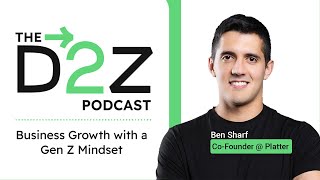
In this D2Z podcast episode, host Brandon Amoroso interviews Ben Sharf, founder of Platter, a combined Shopify theme and app bundle designed to streamline storefronts and boost conversion. Ben shares his unconventional path from Division‑1 hockey to a COVID‑testing startup, GoPuff, and finally Platter, explaining how the product emerged from observing excessive app usage and fragmented agency services in the Shopify ecosystem. He describes Platter’s hybrid model—a productized, SaaS‑like theme with an agency‑style implementation fee, complemented by a soon‑to‑launch self‑serve app—aimed at reducing tech‑stack bloat, cutting costs, and delivering rapid time‑to‑value (e.g., a full store launch in 16 days). The conversation delves into common e‑commerce pain points such as app overload, low‑utility features, and inefficient checkout flows, and Ben outlines concrete CRO tactics (cart drawer checkout, social proof, mega‑menus, gamified bundles, progress bars). He discusses how Platter aggregates analytics across client stores to identify high‑impact features, and how they educate merchants to prioritize core functionality over endless app additions. Scaling challenges are explored, including distinguishing “good” versus “bad” revenue, building processes for a fully remote team, minimizing meetings, and maintaining profitability as headcount grows. Ben explains product roadmap decisions, balancing customer requests with strategic vision, and the importance of incremental improvements rather than last‑minute holiday overhauls. Finally, he critiques headless architectures as premature for most brands, arguing they add complexity and cost without guaranteeing conversion gains, and emphasizes focusing on fundamentals like product quality and CRO basics before considering headless solutions. Contact information for Ben and Brandon is provided at the end.
Chapters
I'm Brandon Amoroso, and this is the D2Z podcast, building and growing your business from a Gen Z perspective. Hey everyone, thanks for tuning in to D2Z, the podcast about using the Gen Z mindset to grow your business. I'm Gen Z entrepreneur Brandon Amoroso, founder and president of retention as a service agency Elektric. Today I'm talking with Ben Sharf, who's the founder of Platter, which is a theme and app bundle for Shopify brands used to build high-converting websites that drive profit. Thanks for coming on the show, Ben.
Thanks for having me, Brandon.
So before we dive into all the nitty-gritty e-com things we want to cover today, can you give everybody just a quick background on yourself and how you ended up being the founder of Platter?
Yeah, definitely. So quick backstory on myself. I played Division 1 hockey in college, ultimately decided that I didn't want to pursue professional hockey, was planning to take a corporate job, which then I gave up 12 hours before my first day. Ended up joining an early-stage COVID testing startup that scaled to $50 million in revenue in 5 months, where I met one of my two co-founders of Platter. And then before starting Platter, I spent a year at GoPuff, building out a business unit that essentially unlocked instant delivery for D2C websites, which is where I got my start in the Shopify ecosystem. And from talking to brands over the course of that year, I realized there were a lot of things wrong with how brands are managing their storefronts today, which ultimately gave me the idea for what is now known to be Platter.
Awesome. And for everybody that's listening who isn't familiar with what Platter is, Platter is, can you give just a quick sort of TL;DR on, on Platter?
Yeah, so Platter is a theme and app bundle. Uh, effectively what we've done is we've natively built a lot of the most popular app functionality around marketing and conversion into one theme and one app. The thesis of the business is that a lot of apps in the ecosystem are features, not products. And so brand owners get stuck paying for too many apps, dealing with too many support teams, and having a slower website experience because of a bloated tech stack. And so by natively building a lot of that functionality into one solution, we're able to consolidate your tech to solve those issues and then layer in best practices around increasing AOV and conversion from a CRO perspective. So we can quantify making you money and saving you money at the same time.
Yeah, the, the sort of app overload, uh, is, is a real thing when it comes to a lot of our clients' websites. They'll have 70, 80 apps in some cases, and it slows down the site. It's expensive. Most of them aren't being leveraged in the way that they should be being used, if they're being used at all. It's a, you know, it's sort of a blessing and a curse, the Shopify ecosystem and how easy it is to download functionality onto the website via some sort of plugin.
Yeah, I think there's a couple pieces to unpack in regards to the apps. I think the first one is One of the other things we noticed when talking to a lot of brands before we, we went really deep into building Platter was that there's a huge drop-off in terms of utility on a lot of these apps after accomplishing the core functionality. And so what I mean by that is, let's say you're using an app to accomplish upsells in your cart, and then a certain app then tries to sell you that they use AI to surface the best product, and so they increase the price. But from the merchant's perspective, they really just wanted to ensure that the core functionality was being accomplished. And so they can't necessarily justify paying that incremental cost. And if you take that concept and extrapolate that across, you know, 50 to 60 different apps, you end up stuck with a ton of apps where you're only using a very small percentage of the functionality offered within those applications, which is why we felt there was an opportunity to consolidate a lot of that functionality into one solution.
Yeah, how, as it relates to the fact that you're entering into this ecosystem that is accustomed to sort of dealing with all these different, you know, plugins and apps, how has it been like, you know, your, your sales process or, or your messaging to, to customers? Um, because there's not really anything, at least that I'm familiar with, that is sort of like your solution. In a lot of cases, you know, there's, let's say you're looking for a quiz builder for Shopify. Well, there's like 15 of those. And I feel like, you know, it's just easier for customers to attach to that. How have you gone about sort of architecting the messaging and what's it been like, you know, selling into these brands who are used to dealing with this?
Education has been a huge focus of ours within our business. I always joke that a couple of years down the line, if Platter was successful, it's because we debunked this myth that building a high-converting storefront is super expensive and takes a really long time. I think there's nuances around that statement, but there's a lot of brands that overspend and take longer than they need to. As you become larger and you get into brands that are doing high 8 figures, of course there's going to be a lot of bespoke customizations that are required. But for brands out of the gate, there's ways that you should be able to have storefronts that are still high converting, that don't take a long time. And the way that we're solving that for brands is by giving them an out-of-the-box solution that has a lot of functionality built into it to try to minimize the amount of customizations they need to get to a point of a store where they can go live with it or reduce the number of applications that they need to put on top of the base store that they've built. And so in terms of the education, it's, it's really getting brand operators or owners to look inwards in terms of like, how are you managing your store today? Are you using a ton of apps? Are you using an agency? And if you are using an agency, like, what are they actually doing for you? Um, what is the base infrastructure of your storefront? Are there ways to improve it, etc.? Because I think what we've come to learn is that there's a time and place for brands to use agencies. There's a time and place for brands to use a ton of third-party apps. And there's a time and place to use a healthy mix of the two. But what we realize is a lot of brands are doing the wrong thing for what suits their brand, which is where we kind of come into play.
That makes, that makes a lot of sense. Um, and I think the timing is sort of right for the market as well too, based off of all the consolidation that I've been seeing. With apps in general and brands trying to simplify things. Are you able to like, are you aggregating it all across however many storefronts you're now powering? You know, like things that work very well from a conversion rate standpoint versus those that don't, and then you can share those learnings across all the clients.
Yeah, so we're in the process now of actually building out an analytics dashboard to have like direct attribution on a feature-to-feature basis. Uh, but I can tell you just like broadly speaking, we've come to be able to understand like what high-level best practices or functionality tend to work just across storefronts. I would say that there is some nuance and variability depending on the price point of your products and the SKU count of your catalog. Because what we would see and or recommend for a brand that sells like a $3,000 necklace with 5 SKUs is going to be very different than you know, supplements business where their AOV is $60 and they have 1,000 SKUs. Um, but we definitely see certain functionalities or best practices that we look for when we look at any site off rip, because there's just obvious things that brands aren't doing where they're leaving dollars on the table. I think the first one and the most obvious one is brands that use a page load instead of a cart drawer for their checkout experience. We know it to be true that by adding clicks into your conversion funnel is going to result in a decrease in conversion. So to the effect that I've seen brands still forcing the consumer to go through a page load in order to get, or in order to allow a customer to check out is something that still blows my mind. That's like an obvious one where I don't think it matters what your price point is, your catalog size is to be able to do it, to utilize a cart drawer. So that's one. I think another one that's more high level, but understanding what kind of social proof brands are putting on product pages. We always say that social proof and validation is a very good way to get a customer to go forward to buy something. If they have to leave the product page to go find information that they weren't able to find there, whether it's reviews or testimonials or proof of people using the product or FAQs being answered, they're less likely to come back to the product page to buy. And then I think the third thing is just understanding information hierarchy and how you're actually guiding customers through a shopping experience. So for example, we always recommend to our brands to use a mega menu where you can display creative, whether that be specific SKUs or collections or promotions that you want customers to visit. We realize, we've learned that customers are lazy. They want to see imagery. They want you to hold their hand through the shopping experience. So if you're making it really hard for someone to find what they want, odds are they're probably not going to end up buying it when you look at the numbers at scale. So to the extent that you can make the shopping experience easier by adding a lot of these incremental improvements, you'll see large impacts in the long run.
Are you, um, when you're onboarding like a net new client, is there any pushback towards some of those things? Uh, or no?
I would say we have, we have brands that come to us with different pain points. Uh, number one, I would say number two, Brands have different level of opinion, I would say, based on their own knowledge base and also based on what it is that they're looking for, right? We have, you know, oftentimes we have the brand that will come to us that says, hey, I'm doing X amount of revenue. I've kind of hit my ceiling in terms of my own knowledge. I'm looking for incremental ways to improve my AOV and my conversion. We would like to lean on you as thought leaders to help tell us what we should be doing and how we should be doing. Or I have a brand that comes to us that's maybe larger that says, hey, I need these 3 features. It's very hard for us to implement those today on our storefront for X, Y, and Z reasons. Oftentimes you'll have a brand that has a legacy codebase that's just been added to over the course of multiple years, and then they're kind of stuck when trying to add new things. So they want to get to a clean infrastructure, but have a very clear understanding of what it is that they want on their store. And we can just provide them a path to get in there for faster, getting there faster and cheaper.
Yeah, I think the time to value for you guys is significantly quicker than, you know, trying to cobble together all the various solutions. And that doesn't even get into the fact that each of those solutions has their own pricing model. And there's 100% overlap too when it comes to, you know, maybe you have 3 apps taking a percentage of that sale because they all touched it in some way. On the buyer journey. Um, it's like the, the tech stack I think we were using in early 2022 for a Shopify Plus store, probably around, you know, $5,000 a month at, at a minimum, I would say. Once you start to add in all the pieces, uh, and the way that they price too, it can get very cost prohibitive. Uh, and the other thing that is frustrating as an agency is not being able to do best practices with all of your clients because they're boxed out of it because of some sort of paywall or, you know, they don't have the budget to be able to onboard certain tools or solutions. It's, it's always been a challenge for us. And it's one of the reasons that we shy away from certain apps too. Like if they don't allow us to be able to leverage it the same way across all of our clients.
Yeah, I think there's a couple, a couple of things you said that I want to highlight. The first one is the time to value piece. I think there's two, there's two components to that for us. The first one is the time to value, and then the second one is the ability to try to get an alternative storefront at parity with what we can offer you relative to the price we can provide it at. Because brands are able to benefit from the economies of scale of all the functionality we've been building over the last couple of years. So we can deliver you a storefront very quickly with our productized delivery. But if you tried to leave to go build the same exact store we can provide you from the ground up, it's going to cost you way more money to do so because we've been building functionality for 2 years. Uh, but anecdotally around the time to value, we actually had a brand go live a few weeks ago that went from signature to live in 16 days. Uh, and that included entirely new wireframes of the entire store, plus all the functionality integrated in QA before being deployed. Which was probably a new record for us relative to the complexity of the storefront.
Yeah, that's insane. I don't think we've done anything in 16 days when it comes to like net new website builds.
I think part of that though is two components to how we're different maybe from certain agencies. Like we won't engage with a client who isn't on our product. So I know there's some agencies who will offer ad hoc work for a client who has a storefront and you have to go in and understand how the store is built and how you can maneuver within it to be able to add incremental functionality. We only work with brands who move to our storefront, at least for our product, at least for the theme product. We can talk about the app product, which is being released actually this month as a self-serve, which is separate. But in terms of the theme product, we only will touch brands on our theme. And the second piece of that too is that we've really tried to focus on building a productized delivery over the last 2 years of building this. And what I mean by that is we have a full design system that works one-to-one with our theme products, uh, with a lot of the best practices integrated into it directly. And so we're able to build new wireframes that take into account your requirements and then deliver those into a storefront very quickly.
Yeah, the productization side of things is something that I feel like no agency has really done. Um, I mean, you might have like some base templates. Um, I've heard of a few agencies creating Shopify themes, uh, but not— I mean, how would you How would you classify Platter? Cause it's a theme, yes, but it's kind of, you know, like a traditional SaaS as well.
Um, it's a hybrid model. Uh, the way that I would describe it is a hybrid. So if you ever use like a Pilot or a Rippling where it's like they hold your hand for the first 30 or 60 days, kind of take you through this checklist of requirements and then send you on your way. I would say that like the theme product is a productized delivery, which has an agency component, right? Cause there's services associated with it. Um, but the app product that we have is traditional software and a lot of the functionality, uh, on a go-forward basis will be. So it's kind of a healthy mix of the two where you're paying an implementation fee the way you would to an agency to get up and running. But what we're doing is actually implementing the software product that we built because there are software companies out there where like you can't, they don't have like a self-serve option, which is how we are with our theme product. Because we've realized that there's just a lot of complexities with it that if you offer it self-serve in the current state, just based on the amount of documentation and tutorials that we have, you end up opening yourself up to a whole series of new issues that we aren't properly staffed to deal with at scale right now.
Mm-hmm. How has that process been? Like, you know, pulling back a little bit from the actual details of your product offering, on the business growth side of things and being— this is your first startup, right? Or no?
I would say it's my first real startup. I think most entrepreneurs have— I shouldn't say all, but a lot have tinkered around with 20 different ideas before they actually found one that had legs.
Yeah, that's fair. That's fair. Well, let's just call it the first-time startup then. As you've been growing rather quickly, what's it been like scaling out the team, building out your processes? I'm sure you've had to encounter some issues where you could grow more with more brands, but maybe you're not able to onboard them as you mentioned in a way that was scalable or sustainable. So what has that process been like for you?
Yeah, I always say that when your team size doubles, it usually breaks the internal operations and you have to reinvent how you're doing things as the team grows. Those. Uh, one of the biggest learnings we had during the process of scaling was understanding that bad revenue is really a thing. Uh, I think in the early days of startups, for any startup, you're always a yes man where you just want to sign any customer you have because you know that your product is half-baked and you want revenue and you want to grow. And we've definitely were guilty of that in the early days where it's like, hey, we have a couple brands that are willing to use this and pay us. But we know internally we're still working through the inner workings of how does this actually work. Uh, you know, we're talking a couple years ago at this point, but I would say the learnings from that now is just being really intentional, number one, on like what's good revenue versus what's bad revenue, and then also just understanding and tracking utilization, uh, to recognize like how fast can we grow. I would say we've gotten to a place now where we have a process both internally and externally to be able to like hire as we grow, where we're not really limited from a scaling perspective at this point in time. Uh, but the nice part as well, as I alluded to earlier, is that our app product is going to be available as a fully self-serve, uh, hopefully in the next couple weeks. So we'll be able to let that kind of scale infinitely in terms of not having to tie like a math equation to number of employees to service. Certain number of storefronts. Um, but in terms of like the, the theme product, we've gotten it to a place now where the unit economics are fantastic, where you really, you need to hire like every couple hundred clients, uh, like a new pod, I guess would be the best way to describe it. Um, which is like very profitable for us in terms of how we've set up the, the economics of the product.
Yeah. I mean, that's critical. To be able to, because you have like some white glove components to the product, which I think is also what makes it unique, but not being too white glove where you're essentially just, you know, like an agency where you're restricted by people versus being able to actually scale with the software and technical capabilities that you've built out.
Exactly. So we, we have like different ways that we've engaged with clients. Post-handoff, uh, right? Oftentimes it's just the occasional support ticket that comes in. Um, some of them will buy like a couple hours a month of ad hoc work if they want like bespoke customizations. And we've had brands that are, that come to us and ask to be put on retain, that put us on retainer, which we've done with a couple of brands. Um, but we are very cognizant of the fact that like when it comes to engineering specifically, there's a number, there's only a certain number of hours in the day and a certain number of hours that can be allocated. So you trust your technical project managers who are assigning tasks and tracking hours to be able to let you know, hey, you know, we have 300 hours of work this month and our engineering team only has, you know, 290 hours of available time. Like we're not gonna be able to fulfill this, which is how you are able to track or have the foresight to know when the team needs to scale.
Yeah, we're going through that sort of process or I guess dilemma if you want to call it that with Skalus right now where we have custom ad hoc requests coming in from a third party who is willing to pay for it and pay for it in a way that it is profitable for us. But like, does that, you know, we only have so many developers, we only have so many resources, is that the best use case of their time? Given all the other requirements and all the other things that we want to block and tackle.
Um, so it's, uh, I think for us, the only, the one value point I will say in that regard is because we're building a product, the services part of the business, as we describe it, is R&D work that we actually get paid to do. So like if, if a brand wants a certain feature, there's scenarios where we can actually build that feature. For that brand and then roll the core tenets of that feature into the core product, which is interesting because it also allows, allows us to just stay super close to our customers as we continue to, to build out like the future product roadmap.
So you're basically getting, you know, your product development sort of written off by, you know, clients who are willing to pay for it, and then you can roll it into the full product that everybody else gets as well.
Yeah, people always ask, oh, like, how do you determine what's being built next on your product? And I was like, well, which feature has been the loudest request from, you know, a percentage of customers? That's the thing we're building next. My technical co-founder is great at that, where I always say there's a difference between knowledge and belief of like thinking you know it, like thinking you know what to build versus knowing you know what to build. Um, the product has, you know, taken different, different shapes and sizes because we just listen to our customers.
I guess, how do you, how do you balance that though? Because I've heard from a few technical founders, or founders of apps rather, not everybody is technical, but they have to balance customer demand and customer requests versus where they see the product and envision heading. For example, uh, in subscription programs there was a bunch of hoopla around the ability to gift an upcoming order to somebody else. And I want to say maybe Skia launched with it or somebody, one of the, somebody not Recharge, like 2 years ago, a year and a half ago. And we heard that all the time, like, you know, as a reason or just one example of why a brand should think about migrating from Recharge or think about going with one of those other third-party apps for subscriptions versus Recharge. Recharge ultimately ended up building it. But now today, like in any of those platforms, less than 1% of customers use it. Like, because if you step back and actually think about it for yourself as a customer, why the hell would I want to gift an upcoming, like, order of— I don't know, let's just say Olipop. Like, maybe I have my monthly soda coming in. Why am I going to just give that to a friend? I would just skip the order and have it come at the next month. If I wanted to do a gift for somebody, I would go and place like a gift order for them. So that's an example of where, you know, they like listen to the market even though they were hesitant and resistant towards it. But because of the sales cycle and just all of the noise, they had to build it. But that's one use case or one example, I guess, where the brand, the brands requesting something ultimately weren't right in their hypothesis of whether or not it would be leveraged or not.
I think it's twofold. It's a really good point that you bring up. I think one side of it is tracking like quantity, right? So it's one thing if one brand is like, hey, I really want this feature. And it's another thing if it's like 25% of your customers are all asking for the same thing or asking like, when is this coming? Right, where it's like you got to listen to what's in front of you. I think the second piece to it too is we have an understanding of where we would like the product to go. So when we think about certain features that come down the pipe, whether it's through customer requests or from our own roadmap, you want— there's a— it's a little bit art, a little bit science of understanding if we go a little bit off the path because we have a couple customers asking for this one feature, How does that affect us today and how does that affect us down the road? And so I think there does just become a little bit of qualitative decision-making that needs to be had. With that being said, the other caveat that I'll layer in is I think the size of your business has a material impact on how you're able to prioritize customer requests versus not, right? So a company in the early stages where you only have a couple customers, versus a company that's, call it Series B or later, when you're getting customer requests, it's a whole different decision-making process to know like what to build next. Because there's a lot different downstream effects of veering off your roadmap or building a feature when it's for 10, 20, 30 customers versus, you know, 1,000 or 2,000 customers.
Right. Yeah, that's a fair point as well. I can't even imagine managing some of the scale that a few of these Shopify apps have gotten to. Where, you know, your teams are hundreds of, in some cases, thousands of people. Uh, you know, there's a lot of power with that, but it also feels like there's definitely a lot of, uh, say, inefficiencies that can come up.
I think, I think a lot of early founders, like new founders or inexperienced founders, for whatever reason, there's glorification around raising as much money as you can and like building as big of a team as you can. Because I think, I don't know, I think there's like this power struggle association with like, I manage a lot of people, I've raised a lot of money. And I think those are two misconceptions when building a business, right? There's businesses where you need to raise a lot of money based on whatever problem you're trying to solve, where you don't have another option. But I can tell you, as someone who's raised substantially less than some other players in our space, Uh, I think there's actually something valuable about that where you learn to solve problems by doing things other than just throwing money at them. And then in terms of scaling out a team, uh, people don't understand that the larger your team gets, the more people headaches that you have to deal with. And with every incremental hire to your team, most of the time it just slows you down from trying to make changes. Like I remember when I was at Gopuff before I left to build my own company, I would have meetings about meetings. And in my mind, I'm like, all right, that's, that's it. Like, I want to go build my own thing where it's just move fast, ship things, break things, no red tape, not like, why are we having a discussion to analyze what we just talked about on that call? This is the most inefficient thing ever. And I think it was Google or someone released like a plugin where you could associate like an hourly rate with every person on your team. And then you could look at the calendar invite and see like how much money went out the window by doing like this internal meeting. And it like made people realize how much money was being wasted just like talking about things. So yeah, to your point around inefficiencies, that is so true.
That's insane. Like, I, I can understand why, why you wanted to leave for starters. And then I think that's part of the issue with remote work too. Is remote work lends itself to more meetings. I remember being in office, we didn't really have as many formal meetings because we're just like there right next to each other. So things that come up, you know, might take 2 minutes versus, oh, we need to block, you know, a 15-minute call or whatever. Um, and I just remember things better too when I'm in person versus when I'm doing, you know, 9 hours straight of Zoom calls one day. By 6 PM, 7 PM, whatever it is, I don't care at all whatever my 10 AM call was about. And like, you know, the last thing I'm thinking about at that time then is, oh, let me make sure that I, you know, get all those follow-ups and whatnot. And I'm the founder, so I can only imagine how little the employees give a shit about, you know, the call that they did at 10 AM versus, you know, just being able to finally get off the damn computer and interact and socialize with people. So are you guys fully remote or do you do like hybrid and offsites and stuff like that?
We are fully remote. Um, my head of growth is in New York, which is where I'm based, and we work very closely together, so we'll meet in person periodically. Uh, but I would say that one thing we've preached since day one with our team is the ability to work asynchronously. Like our team does very well with using Asana and, you know, writing out tasks and messages. And minimizing the number of meetings and that you need to have. And every couple months I go through the calendar and just like strip back every recurring meeting and then like build it back up again because you realize what were nice to haves versus need to haves. And it's something that I'm hyper-cognizant of knowing, you know, what you just talked about where it's like you get this fatigue from so many meetings, then effectiveness goes out the window. Uh, but we are fully remote. We are on multiple time zones, but we try to at least make sure that certain teams are on the same time zones to work effectively together. Right? Like I, it's not as crucial that my sales and marketing team are working at the same exact hours as like our product and engineering team. Because they're not overlapping that much day to day. Uh, and if there is time where it needs to happen, you know, we probably have a meeting on the calendar. That accommodates everyone's schedule. Um, but look, the other interesting piece is that I've actually never spent a day in my life at a business with a 5-day in-office mandate because I graduated during a global pandemic. So I actually don't really have something to compare our output and productivity to because I don't have the other side of the coin of being in office with my full team every day. Right. When did you graduate? I graduated in 2020. I played hockey in college, so people who understand how the whole hockey thing works will be able to empathize. Those who don't just think that I'm like slow, uh, but I did 5 years of high school and then a gap year where I lived in Western Canada.
I always like with my hockey friends, depending on when they graduated, like they could be, I don't know, like 22 or they could be like 30 depending on what they did with the various like different paths that you can go on. I feel like of all the sports, that one's the most convoluted in terms of how you could potentially get to like the NHL. Whereas— it is.
And the other issue too is the fact that they built this process to be the way that it is. It's very hard to unwind at this point in time. So it kind of just lives on the way it is.
Yeah, it's crazy. I mean, like for football, you just play at your school and then you go to college and then you go to the NFL or you don't. Hockey, I mean, fuck, you just feel like some people don't go to college. There's like 87 different leagues that I know of. It's just all over the place. It's true. It's overwhelming. Um, well, you navigated that, you know, successfully to this point, so, uh, entrepreneurship will be easy for you. I appreciate that. Um, well, I guess, you know, you're in a lot of storefronts. Um, what's one thing that you saw work really well for Black Friday, Cyber Monday, and what's one thing that you maybe it didn't perform the way that you thought it was going to and you're thinking about that going into this coming season.
So I'm going to give you a crazy answer for what did perform well and that is brands who didn't think or decide to try and reinvent the wheel right before a holiday and like recognize that you have months in advance to plan for these things. Like don't, don't try and fix something at the 11th hour all because it's the holiday, because then you just expose yourself to, to issues that you don't want to have. Um, so I would say broadly speaking, that is probably the biggest thing to call out. Um, but if we're getting more tactical, I would say that something we saw that worked very well, broadly speaking, was just the mechanism of gamification. So we've built gamification into a lot of different aspects of our product, right? We have a mix and match bundle builder where you can set incentive thresholds based on adding more products to the bundle. Uh, we have progress bars in the cart experience. You have banners that you can put on, on the homepage that can persist across pages around, uh, what type of behavior to, to enact in order to release certain unlocks. That's something that we saw a lot of success with. I would say in terms of like negative impact, it kind of goes back to what I just said was like it was the brands who were coming at the 11th hour were like, oh, it's the holiday. I want to try this and I want to change this. And not only are you stressing yourself out, you're then trying to stress out whoever's going to help you implement these things. And then you're going to want to hold someone else responsible if you didn't get like proper QA and implementation of all these new ideas you had at the 11th hour. So I think the learning there for brands is like use the time leading up to the holiday to like figure out what works and what doesn't and have a clear plan once you get there. So it's like you're not changing anything day to day in your process. It's just like another, it's another week. I understand the stakes are higher because there's, you know, there's more traffic for certain brands in those days than you see the rest of the year. But fundamentally speaking, like you got to approach it like any other day. In terms of managing a store.
Yeah, no, that's fair. I don't think making changes the day before Buy Friday, Cyber Monday is the best, best idea ever.
You'd be shocked how many brands like week before even are saying, hey, we want to add this functionality. And it's like something that takes days to implement. It's like, well, maybe if you mentioned that a month ago, we could have explored the idea, but we're going to do you a favor and just suggest you don't do that today.
Some of the brands that we work with have like code freezes, but you know, when you have a code freeze, you actually have to abide by the code freeze, which doesn't happen a lot. And then, you know, there is some gray area too. Like if it's very easy and you know, like, you know, why didn't we already have this to begin with, then go ahead and implement it. You know, even if it's a week or two weeks before, even though you have a code freeze.
But I think you bring up another point to what you just said is oftentimes brands will actually start to look deeper into their storefront right before holidays around things like, why didn't we have this feature to begin with? And I don't think enough brands make a point to do these tear downs of their own storefronts on a recurring cadence to continue to make incremental improvements. So one of the things that we always say about our value proposition for our brands is instead of getting to like a certain incentive or a certain revenue threshold, and then waking up one day and deciding if to strip everything down and start over because the storefront that you had to support a $5 million store doesn't support the $20 million store. We always say you should be making incremental improvements all the time and constantly looking at ways to get better. So it's an ongoing, ever-evolving process instead of like this stressful biannual meeting where you're like, why isn't this happening? Let's just like reinvent the wheel. So if you're doing those incremental improvements, like I said, you shouldn't get into these situations where you're in a gray area of like, this is an easy fix. We have a week to do it. Is it worth it? Is it not? Because that thing hypothetically should have come up if you were analyzing your store multiple times before that day. What do you—
one last question I have for you is on headless websites. What do you think of headless websites?
Yeah, I would say that our business model is kind of built around being anti-headless. First product we actually started with before we went to market, broadly speaking, was a headless product. And the first 30 brands we spoke to were like, what's headless? So the first thing I realized is that I think it's a couple years away from being mainstream. I think the second thing I realized is there's a misconception around if and when you should be using headless as a brand, right? Like, to me, again, this is just one perspective. Headless solutions are there for brands that are doing very high volume and have very high traffic, uh, like the Nikes of the world. And even then, not necessarily is headless the right answer for you. I think one of the issues we see is that a lot of brands are looking to headless as a solution way too early on in their own evolution as a business. Um, and I've yet to see brands in that middle part of their journey where the value outweighs the challenges in terms of going headless 'cause there's a whole nother set of complexities that comes with building a headless store that you don't have with the alternatives. But oftentimes you went to headless to get rid of a different set of challenges. So I think there's just like a really long list of pros and cons that you need to understand as a brand before making that decision. One thing I can tell you off, you know, off rip, I know there's solutions out there that are trying to make headless easier to manage, but fundamentally, it's just a more challenging thing to manage. It requires a lot more expertise to make small changes. So in a lot of ways, it prevents you from iterating quickly as a brand as you scale.
Yeah. And I've seen brands think that that's going to be the, you know, the thing that saves their conversion rate or, you know, magically makes dramatic impacts to their business. And it isn't. And then it ends up adding on like 10x the cost and stress and, you know, just general pain in the ass that making changes to a headless website entails. And then, you know, they ultimately come back from a headless website to go on like a Shopify 2.0 theme. With PTSD.
And so then they try to get a new store for less dollars because they overspend with the expectation of trying to maintain parity, which opens up a whole other slew of issues. But the last thing I'll say is when brands think headless is solution for their challenges, again, I think you need to look inward at the fundamentals. Like, do you have a quality product? Do you have repeat purchases, which means people do like it and there's data to protect that? And then are you incorporating fundamental CRO best practices that are less nuanced than going to headless before thinking about that being the thing you need to fix your your problems.
Yeah, I feel like a lot of brands go to this optimization phase before they look at the actual, you know, core of the business and the products. Like, you know, including a bunch of AOV, like boosting tactics on site is only great if, you know, people actually like your product and are coming back and purchasing it. And if that's not occurring, then you need to be focusing on other things than making tweaks and trying to pull additional revenue out that way. 100%. Well, thank you so much for coming on. Uh, this is super fun, but before we hop off, can you let everybody who's listening know, uh, where they can find you online or, or get in contact with you?
Yeah, you can find me on all socials @bensharf, B-E-N-S-H-A-R-F. And then my email is ben@platter.co, P-L-A-T-T-E-R.co. Uh, you can feel free to draw me a line via email on, uh, on Twitter, or you can visit our website at platter.co to check more.
Check out for more information. Awesome. Well, thanks again for coming on. For everybody listening, as always, this is Brandon Amoroso. You can find me at brandonamoroso.com or electricmarketing.com, and, uh, I'll see you next time.
More from Ben









Episode 3-From Boarding School to Building Platter: Ben Sharf on Betting on Yourself

