He Got Sponsored by Nike with Only 1,000 Subscribers
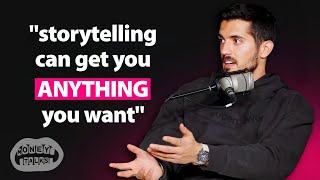
In this Money Talks interview, founder Ben Sharf walks host Jesse through the evolution of his e‑commerce optimization company Platter, a hybrid services‑plus‑software business built on Shopify that helps direct‑to‑consumer brands increase storefront revenue through psychology‑driven features and gamified upsells. He recounts raising roughly $1‑1.5 million in multiple tranches, emphasizing storytelling, warm introductions, and the importance of investor belief in the founder rather than just the product. Ben debunks common venture‑capital myths—money raised isn’t a success metric, capital efficiency matters, and taking outside money adds fiduciary guardrails. He explains Platter’s business model: aligned‑incentive pricing where the firm is paid based on incremental revenue it drives for clients, and highlights a client roster that includes over 100 brands such as Bleacher Report and Mrs. Meyers. Ben describes his founder‑led marketing philosophy, detailing how he runs a weekly podcast (Turning Pro) and a YouTube channel with a lean production workflow (bulk recording, outsourcing ops) to amplify brand storytelling without sacrificing core work. He shares the Nike sponsorship win for his YouTube “Birthday Series” channel, illustrating the power of narrative, FOMO, and strategic partnership. The conversation shifts to technology and AI: Platter owns Platter.ai, uses AI for internal efficiency, and plans to apply personalization at the storefront level, while remaining cautious about hype. Ben also touches on personal optimization—consistent sleep, sobriety, boxing, and habit routines—as critical to his entrepreneurial stamina. He recounts a painful crypto‑wallet loss and recovery, the lessons of detachment, and his modest angel‑investing approach, citing investments in companies like Colossal, Atomic, Dog Is Human, and Superpower. Throughout, Ben stresses relationship building, long‑term compounding effects, and the importance of genuine self‑belief in convincing others to back bold ideas.
Chapters
So you raised a bunch of money.
Raised like $1 million. It's all storytelling. You can convince people to do shit and to give you things that you'll never imagine. Oh my God, I lost so much money in the last hour. To be like, yo, I invested in the company that brought back the woolly mammoth. Like, that's crazy.
Ben Sharf, welcome to Money Talks. So you're the founder of Platter, host of Turning Pro Pod. Let's just start with what Platter does and your journey to get there.
Yeah, Platter is a solution to help e-commerce e-commerce brands build more profitable storefronts on top of Shopify. So to simplify it, we basically just help e-commerce brands make more money on their storefronts. I don't like to go too deep into the weeds on it, but it's really just technology to help to increase the amount of revenue that you're driving for every visitor that comes to your store.
Why that? Why e-commerce optimization?
I was actually, I was thinking about this the other day. Um, I was actually writing a post about this specific topic where I feel as though, uh, most entrepreneurs, the first real business that you get into is largely driven by being opportunistic. So I feel like when you're a serial entrepreneur, you built your first business, you either have a successful outcome or not successful. And then after that, you start to think about what are the things I could have done better? Um, what are the questions I maybe ask myself before I start a new business? Because if you really think about it from the perspective of becoming an entrepreneur, there's usually a moment in time where something happens where you kind of just jump into it and then you don't really look back, right? Whether it's you have a friend who asks you to be their co-founder, someone offers to give you money to go build something. I was thinking about this with my current roommate where I had an idea for a company, but I am building Platter, so I didn't have capacity to build the company. But I was like, hey, if you want to take this and run with it, you can. Long story short, he quit his job in Cyprus, moved from Cyprus to the US, is now my roommate, is now building this business. The business is doing very well. It's called Windmill Growth. I think he'll probably sell it in 2026. So like, you know, less than 36 months from inception to, I think, exit. And he'll tell you like, this isn't the thing I can see myself doing for the rest of my life. But there was a moment in time where an opportunity happened, so I just jumped on it. That's all to say that I was always entrepreneurial since a young age, but I made a few stops along the way. And then my last one before leaving and starting Platter was working at GoPuff. And I was working in an e-commerce business unit working with direct-to-consumer brands. So inevitably I was getting exposed to like that part of the market. And then when I started talking to— with my now co-founders, they were also working on e-commerce in different capacities. And it was like the first time I was starting a company. It was like the thing that I knew, the thing I was comfortable with. So we kind of just jumped headfirst and started building in this space, right? I think I love it. It's awesome. But now that I understand what it takes to build a business, the questions you need to ask yourself when building it, I think the next business I build, I'll probably just be more intentional about thinking about what vertical do I want to go in? How big is the TAM? Like things like that. Whereas this business was really just following opportunities in front of me and jumping headfirst. And now we're 3 years into it and we're off to the races.
I feel like it goes like like that a lot. Like, you're not as intentional about the opportunity when you're starting the first thing, you know?
No, and it's— that's why it's like a funny question that you asked, because it was a topic I was thinking about yesterday.
So you raised a bunch of money, right?
Nah, I wouldn't say a bunch relative to standard software businesses. We've raised like $1.5 million.
Okay, that's a bunch.
I think that's like, you know, I guess it depends who you spend your time with.
Relative to like normal people and even like bootstrapped entrepreneurs, like, I think that's, you know, it's a good amount of money for someone to inject, like How did that process go? And like, how did you as a— because that was your first company you started, right? So how did you go like, okay, cool, we need millions of dollars to do this, we're going to go get it. And like, yeah, who were the investors? How did that all happen?
Yeah, I mean, it's definitely not a black and white answer. We raised that money in multiple different tranches, so it wasn't all at once. Huge learning curve in raising money, eating a lot of shit in the process of doing it. I think one of the misconceptions about raising money is like there's a very, very, very small number of entrepreneurs who like go raise money and the first person they talk to says yes and they take their money and they keep going. Like the most famous story is Airbnb. Like Airbnb got rejected by like their first 50 venture investors that they pitched. And I mean, everyone knows what Airbnb is now. So that process for me was really a combination of learning from a lot of my friends who had done it before. I think I'm a huge proponent of Exponentiating your learning curve by leaning on people who've done something that you're going to try to do. I think the second one is eating shit and getting rejected and then just continuous iteration of your story and your pitch. It's all storytelling. Like the whole concept of raising money is can you paint a picture for someone else to see the vision that you see in your head? Because the concept of entrepreneurship is largely just being misunderstood for a long period of time and a vision that you have that most people don't understand. And it's on you to convince a select number of people to be in line with the vision that you have to give you the money that you think you need to go accomplish whatever that thing is. And so look, when I— like, I remember back to the first time I tried to pitch someone, I don't even remember who the first person was. Actually, that's not true. I do remember who the first person was that said no. And the first time you get rejected raising money, like, you just question everything. Like, okay, so this is a bad idea. Okay, so I'm inadequate and I'm not a good entrepreneur. And it's just like a mind game with yourself. And in those early days of entrepreneurship, when you realize that building a business is actually just getting hit in the face over and over and over and just getting back up and doing it again, you start to detach like the emotional element from it and realize that it's part of the game. And so for me, it was just relationship building, storytelling, like building trust with people and ultimately convincing people that there's FOMO, right? Like it's either you get on the train or you come back to me in a few years and be like, fuck, I should have listened to you the first time.
So what did that actually look like? Like how many meetings did it take? Like who was kind of the first person to really believe and write you a check?
Yeah. So to answer the first question, my advice for anyone who's listening that is maybe thinking about raising money is that my recommendation is that you make a list of people that you want to talk to and then find someone who knows that person to make a warm introduction for you, because raising money is always a FOMO thing. So if one investor tells another investor like, oh, have you heard about this deal? They're like, oh, I want to know. It's all optics. It's such bullshit. But it's like if a founder comes to you directly, if you don't do it the right way, it can be perceived as like desperate. And people always want the thing they can't have. So optically, like playing hard to get, if you do it the right way, is actually like very effective. The first person that believed in me was Marshall Sandman, who's the GP of Animal Capital.
Yeah.
Marshall basically came to me and was like, I'm in, I'm investing. Now tell me what you're building. Right. So like that was a really good example of someone who was more so bought into the vision of like what it is that we were trying to build. And sorry, he was more bought into me as an individual, as a founder, in terms of just like trusting that I'll figure out whatever it is that I'm going to set out to do because he had gotten to know me for a period of time that he was less worried about like the tactical what is the business and more so like I'm going to bet on this kid because he's a winner and he'll figure out a way to like make it happen regardless of if the thing I'm investing in today is what the business is, you know, at the end of the journey.
What do you think, you know, the misconceptions are of like you being a venture or whatever, you raising money as a founder and doing like a startup?
The biggest misconception is that people correlate how much money you've raised with success, and it couldn't be further from the truth, right? So I actually, I saw a post a few weeks ago about a guy who bootstrapped his business, does like $25 million in ARR now, 12 employees and he was at an event and he met someone at the event, you know, and they're like, oh, what's your name? Nice to meet you. What are you building? Says, oh, this is my company. And the first question this person asked him was, oh, how many employees are you? And he's like, we're 12 people. And she goes, oh, so you're like early, you're, you're at the beginning of your journey. And he talks about like how he left this event and was reflecting on this interaction and how he felt so insecure about it. Because it was perceived as like he didn't raise a bunch of money, he didn't have a bunch of employees. So all of a sudden someone just assumed that he wasn't successful. This dude is probably putting $10 million in his pocket every year and not reporting to anyone.
Yeah, right. From—
but the outside looking in, the way that like the concept of venture capital has been built, there's a perception of like the more money you raise, the more successful you are, the more employees you have, the more successful you are. It's all bullshit. Like we actually are a more capital-efficient business than your average business who's raised money, because I still believe in the concept of turning a profit. I think the way that I think about it is that you should raise money to double down on solutions versus raise money to solve a problem, which is, I think, a philosophical question for people to ask themselves, because some founders would just go raise as much, as much money as they can because it's available to them, not necessarily because they needed it or even knew what they were going to do with it. For myself and my co-founders, it's more just like being intentional about every dollar we take in and like, why are we doing it? And can we turn 1 into 2 or 3 or 4 versus just like take the money because it's available to us and then figure it out? I think the other thing that a lot of people don't realize is when you take in investor money, you can't just like do whatever the fuck you want with the business, right? Like a business that doesn't have investors, they can wake up tomorrow and be like, you know what, I'm going to pivot this to a lemonade stand and there's no one there that's going to tell you that you can't. Once you take outside capital, you have a fiduciary responsibility to do right by your investors. So there's a lot of red tape and a lot of guardrails that come in place with doing so. So I just think you should never associate good and positivity with raising money when it comes to business building, because that's not necessarily the case. But there are certain businesses that are very hard to build without capital upfront. Yeah.
Now I find it interesting because I'm like on the other side of the— I've never raised any money. I've always just done my own thing and built it with my own money. More slow but steady. But But yeah, one thing for sure is like, like I guess with if you use your own money and kind of bootstrap something, yeah, you can, you can pivot, you can, you know, decide to take some money out of the business. You can decide to like, you can kind of do what you want with the direction of the business and the profits. Whereas like for you guys, like I guess there's like you need this liquidity event, right? For this to be like a financial success for you eventually. How do you think about that? Is it like You basically need to like build this and take a salary until then and then one day like sell for $100 million. Like, what's kind of that look like for you?
Yeah, I mean, there's, there's a couple of different ways that it can go, but that's like the one that we're, we're gunning towards is like, you know, I'm taking a college intern salary right now. Like, it's, it's nominal and it's, you know, this joke about being rich over like the overnight success that took you 10 years to build. Um, for us, it's definitely gunning towards having some sort of exit opportunity down the line. I think looking back at it, it's, it's like a philosophical question to ask yourself. Like, do you want— again, this goes back to the question you asked before about the opportunistic discussion that we had. Like, I think the first time you build something, you jump into the opportunity that's available to you, don't necessarily put too much thought into it. If I could go back again, would I raise money? I don't know. Do I regret doing it? Not at all. Now that we're in it, like, I enjoy it and I'm like fully heads down on the outcome that we're gunning towards. But it definitely takes some options off the table. But that's not to say that at the end of the day, like, if you're building a business that is either generating profits or has a path to doing so, like, there's a way that you can slice it and dice it where you'll still get rewarded for doing good work.
No, I think it's actually— I mean, I always say this, I think it's an amazing setup to have because I think like the two most important things in like life and career is like the sort of like the baseline thing, which is like meeting your needs, like paying rent and eating and whatever. And then having the upside of making the kind of whatever it is, $100 million or something. And everything in between is kind of like nice to have, but you know what I mean? So, so your position is actually great because it's like you have a salary that covers, you know, your life and then you have this thing where it's like if this happens, then you take the massive step up. So I think it's a cool place to be.
The only other piece about it I think is an important detail is just like how— what your risk profile is like relative to where you are in your life.
Yeah.
When you think about it in like traditional terms, it's a lot easier to do what I'm doing now versus when I'm married with kids and a mortgage.
Yeah.
So I always joke like if I wake up at 35 years old with very few dollars to my name because I did this and it didn't work, like I'm sure I'll be okay and I'll figure it out. But that's not to say that when I'm married with kids, I can't necessarily, like, take a risk like that because you need to be able to provide. So my risk profile is like I'm all in in terms of like my risk up until I get to that point because there's no going backwards. Like once you decide to evolve into that next chapter of your life, you need to have a much typically a higher baseline than you can when you're like a young kid, either just like with a girlfriend or single.
No, definitely. I mean, you feel it as you get older for sure. Yeah. So you started your podcast also. What— like a lot of people would say, like, if you're doing a startup, you should be all in on that and only do that and focus. But like, you're also like doing the podcast and you did a YouTube channel and like, what do you think about all that? Or like, what's the decision behind doing all that at the same time?
Yeah, I mean, I think it's— I think content is a very, very important part of business building in general. I think we're now starting to hear about it. What another thing, another belief that I have is that when you live in like these circles of entrepreneurs who are always at the forefront of every new trend and idea and concepts, you start to recognize that the rest of the world sometimes is way behind some of the things that you hear about. And now, like the latest craze over the course of this month has been around this idea of like founder-led marketing. But that's been, that's been like something that I've been talking about for a lot longer than just this year. But now all of a sudden it seems like it's starting to pick up. I think that to differentiate, you need to have like a founder presence because like traditional channels are just so oversaturated that you need to do something that's unique or try to stand out in some way. And so for me, I think marketing and storytelling and relationship building is where I'm in my zone of genius as far as like what's the best thing that I can give back to the business. So to the extent that I can find other people who can help support in areas where maybe I'm not like best suited for that role, it allows me to do what I'm really good at. And I think that using content as a medium to storytell and build relationships is actually really valuable for the business. I think the other thing that I'll add to this is there's a huge misconception in terms of like what you see online versus what reality is, right? So yeah, I have a podcast. Yeah, we post an episode a week. But like, how much time do you think I spend weekly on my podcast? Well, I kind of know, but yeah, but like the average person from the outside looking in would be like, how the hell are you spending 15 hours a week building your podcast while also building a company? I spend 5 hours a month on my podcast, right? I don't really spend that much time on it. Those 5 hours would have been spent on Zoom calls or at coffee meetings with the same people that I just opted to get into a room to record our conversation instead of it being offline. I'm on meetings all the time. I'm always meeting people. The difference is that I'm using this forum as a way to not only do the meeting that I wanted to do, but take the content and redistribute that on different platforms to build more brand awareness. So I think that's not to say that I don't understand a lot of people's perspective of like, you need to be all in one thing, one thing only. I just think there's certain activities that can be additive if you do them the right way.
Um, it's all part of the flywheel, right?
Yeah. And look, my perception of what I think the flywheel should be doesn't necessarily mean you have the same perception as I do. And the beauty of entrepreneurship is like, I don't really give a fuck what your perception is. Like, I'm going to do it the way I want to do it. And if you're investing in my business, you're either going to buy into my vision or you're not. And if you're an outsider and you're critiquing me, like, I'll see you at the finish line.
What allows you to spend 5 hours a month? Like, what's the setup? How did you set that up? Like, let's say with the podcast?
Yeah, I mean, definitely spent a lot of time and money making a ton of stupid mistakes to figure out how to get to this point. Um, but ultimately to simplify it, it's, uh, bulk recording episodes, right? So I typically only record once a month where we'll do like 4 or 5 episodes in a day, which is grueling. And it's not— I don't necessarily recommend that, but in terms of trying to optimize for building my business, it's the most effective thing to do. The second one is, um, hiring someone that runs the podcast. With the exception of the actual filming, to run all the operations around guest research, editing, posting, short-form editing and posting, weekly newsletter. Like, I don't touch anything for the podcast outside of the actual sit-down conversation. And then the other piece is that because I knew that we needed to optimize for consistency and not virality, it was about figuring out how to reduce the barrier to entry or the friction points to keeping keeping up with consistency with the podcast, which meant buying all the equipment and turning my living room in my apartment into a podcast studio. So not only do I bulk record episodes to get to where I need to go to film, I walk up 2 stairs, right? So I really, really like brought it to me to, to make it as easy as possible. And now, you know, we're 75 episodes into the podcast and it's the setup that we have now and the workflow that we have now. I can see myself doing 1,000 episodes.
So it's really just like kind of frontloading the work of like setting up the infrastructure and building the machine and then like once it's going, it's going.
I see it as a business. I think it's no— there's no difference in like running a podcast compared to any other type of business. It's a media property. Like there's just— there's different ways you can go about it and you need to work smart, not hard. I think a lot of people who get into the space, they're naive to what it actually takes the same way I was when I started. And passion is the thing that drives them to start and to try and to learn. And don't get me wrong, like, I was fortunate enough that we also had financial resources to put against this, which is obviously another barrier to entry for people. Because if you can't hire employees, if you can't hire producers, if you can't afford equipment, it becomes really hard to do. But we were able to like overcome that to just like, you know, get out of the mud per se, because as you know, 99% of podcasts don't make it. Very far.
It's funny you said the founder-led marketing stuff. So when I like, I used to have a cookie company, it was called Yodo. Like back in, I started in 2010, but that's, but when Instagram came out, like I made my Instagram like it was Yodo, but it was my personal Instagram because my theory at the time, which is 2011, was like, people don't want to follow companies. They want to follow people like doing things. And yeah, it's just funny.
It was like you're two decades early on that, bro, at this point.
Like, literally. And I saw that the other day too, and I'm like, literally, like, you know, this is 15 years later and now it's like, oh, this is a thing. Founder-led marketing. I was like, I was trying to do that, you know, way back.
Yeah.
And I think, you know, and it's not any different than like 50 years ago when people— we didn't have Instagram, but people were, you know, everyone wants faces and personalities in front of things, you know, that's never really changed.
Yeah. And the way to like look at it Because that's amazing that you were on that trend in 2010. I mean, I wasn't thinking about anything intelligent in 2010, probably. But like, the easiest way to think about it now is go on any social platform. I guess this doesn't hold true for everyone or every situation, but a lot where like a company account that's active versus a founder of that company who's also active, like the founder is typically going to have more engagement than like the company account. To your point, because people want like a real face behind it, they want authenticity, they want to feel like it's a human element.
And many companies have now put a person who becomes like the face of that company or a mascot type thing.
Yeah, I mean, JT Barnett is the one who talks about this all the time, where he's basically now just like helping creators become faces of brands. Yeah, because you're realizing the power of that. It's defensible, like brand and community is defensible.
What else really excites you right now?
What excites me right now? That's an interesting question. I think, uh, it's probably It spans across a couple different buckets and topics. Um, I think on like a personal level, I've been very obsessed with boxing. I think I'm gonna fight someone this year at, uh, like a fundraiser event, which I think is really cool and scary at the same time. Um, I think I'm also super excited, and this is like on a personal level, but just like I feel like for the first time our business is really hitting a point where it's becoming like a real company. Like I always joke, it was like 3 dudes in a basement with an idea. And I feel like this year was kind of the first pinch-me moment where I'm like, holy shit, we have like a leadership team and we're 24 people and it's like a real business. Wow. So it feels like there's just like an opportunity to really grow up and be a leader, which I'm very excited about. And then I think the other thing that's like more broad is I just think the barrier to entry to just build shit is so low, which like really is exciting to me because I think that entrepreneurs were always perceived as like these foreign people because like corporate is always— this has been the standard that I now want. I'm excited that I think a lot more people are going to start to like catch on to this wave and start to like become independent and start building things. And I think it's something that I'm excited about just like around me.
So can you— what can you say about like the size of your business now, how it works, the margins, the— you just said 24 people, but all that, like how big is it?
I mean, we're— we do 7 figures in revenue annually right now. So I mean, in my— in the back of my head, I still feel like we're in like the infant stage. There's like a lot of room to grow, but like it's, it's not, it's not an idea on the back of a piece of paper anymore, I guess is an easy way to describe it. But I also think that part of being an entrepreneur is just never being satisfied. Yeah, like there's just like levels to the game. And then when you feel like you got to the top, like you're like, I'm just at the beginning still.
And how does it actually work? Like in terms of who the customers are, what they pay for, what they get?
Yeah. So our business is services and software, which I think is unique and it's actually another trend that's being talked about a lot this year where like a lot of technology companies are finding ways to like make money versus just waiting 10 years before they turn a profit. But the way that our business works is essentially any direct-to-consumer brand can come to us and we'll rebuild their storefront for them, their website, and essentially use the technology that we've built to enable customers to more easily buy more things to make more money for the brand. So a lot of the technology that we build is grounded in like consumer psychology and gamification. Right. So if you've ever gone on a website and it says like, oh, buy one more thing to get free shipping, or like after you place the order, it's like, do you want to add this item to your order for 20% off? Like it's little bells and whistles like that that help drive more people to make money. And ultimately, like the mission for the business is to combat the misalignment between development agencies and brands. And what I mean by that is like historically the way that a traditional development agency works, like you go to them, you say, hey, I have this idea for this Brand, I want to build this website. They're going to be like, great, it's going to take 100 hours. It's going to cost you this amount of money. They trade money for time, which basically means that you guys don't have aligned incentives, right? Like a brand wants cost effective and fast. An agency wants like completely dragged out slow and they want to make as much money as possible. So our mission with Platter is how can we build technology to have aligned incentives with you as a brand? Where we can build your storefront as cheap and fast as possible. And then the way that we get paid is by the incrementality that we can drive to you as a brand by helping your consumers make more money.
How many clients do you have at one time or how many?
I mean, we have over 100 customers now and it's with, I mean, anything from like early stage startups to like Bleacher Report and Mrs. Meyers. So like, cool. We kind of span the gamut in terms of size of business.
Are you guys implementing AI in the business at all and are you personally using it? AI tools right now?
Uh, we are. I joke that I, I hate businesses that just start throwing the word around just to like make you think that they're using AI, but like they're maybe at best it's like a ChatGPT wrapper.
Yeah.
Um, I joke that the extent of it is right now is that we own Platter.ai. Um, but no, I mean, our— I would say that we spend a lot of time thinking about it. We're definitely more patient in terms of like where we actually are going to make moves and be intentional about implementing it. But ultimately, like when I think about AI, to me it's something that can be used to just streamline mundane processes. So like if you have humans that are doing the same thing over and over, like that to me is an opportunity where like an AI agent or any of these tools can like help solve that problem. And so the vision I have for our business is Okay, so the first step was we wanted to compete with the people who trade money for time by building technology and having more efficient processes and more efficient people. But the second step to that obviously is how do you now use AI to make their jobs even faster? So like, to me, I want a world to exist where like you have a brand and your website isn't good and you're not converting as many customers as you want, and you come to me and I can just like put you through a car wash and like in a couple of days be like, here's a new store back. So like there's a lot of like micro efficiencies where you can implement AI. And then the way that we're really going to implement it is around like personalization, right? So the way that we think about it is that if you go on a brand website, you, Jesse, should have a different shopping experience than me, Ben, because you're a different human with different spending like profile and based on historical data can figure out ways to like show you what you want to see versus what I want to see. But I think to kind of wrap that up without going too deep into the weeds, like AI is inevitable across most businesses. I think that it's going to take a long time for it to actually hit mainstream, right? Like, I bet you still 100% of the US doesn't know what ChatGPT is, right? So again, we live in these bubbles where we hear about all the trends and you're at the forefront of all the technology. But I think we're still a ways away from like mass adoption with like people who maybe aren't in this little world the way that we are. But I think if you don't at least spend time thinking about how you can implement AI in your business, like you're going to be left on the curb a few years from now.
Yeah, it's really wild. Are you doing stuff like anything in your routine already?
No, I— the only way— the only way that I use it is using ChatGPT for grammar.
That's it. I'm like trying. It's like I feel like how it must have been for my parents when like email came out and it were like, you know, like Excel. And it was like, I, I remember my dad like, or the iPhone, have the calculator out and be like calculating. And I'm like, you know, you could just drag the profit column or whatever, you know?
Like, yeah, yeah.
I feel like that. I'm like, I feel old with it. I'm just like, no, I need to like force myself to use all these tools because they're just— but they're not quite there yet.
You know, I use ChatGPT to like riff on ideas, whether it's like headlines or concepts or topics. But I would say on a scale of like 1 to 10, I'm like at like a 2 or 3 relative to like how much I use it in my everyday life. Yeah, because I'm also someone who has been so hyper obsessed with like optimization in my personal life to a point where it's like at a fault that at a, at some point as well in my day-to-day work, I'm like, I can't, I don't need to like optimize every single thing and automate every single thing, but I'm sure there's use cases that are way more pragmatic that I'm not exploring right now. Yeah, that I should be.
You're definitely like someone who appreciates like personal growth and that kind of stuff. Like, what do you think some life hacks and changes you made that have really like helped your life?
The biggest one for sure is around sleep. I feel very strong. I feel very strongly about this topic. Brian Johnson, the dude who like talks about wanting to live forever, which, by the way, like, I appreciate what he's doing for society and that like he's pushing one end of the extreme to just show you what's possible. Do I think that you should be subscribing to what he's doing? Not necessarily.
But interesting to have people in the world who will be human experiments.
You know, you need pioneers. No, what he's doing is amazing. But I think there's a lot of people who subscribe to it for the wrong reasons or just don't actually understand what they're getting themselves into. I bring it up because he said one thing that really stuck with me, which was that we all know that sleep is like the most important thing for us, yet it's the one thing that we let get dictated by everything else around us. Right? So like your friends want to go to dinner, you want to go to a sports game, you want to go out to a club, you're going to stay out late, you're going to adjust your sleep schedule to go do that thing instead of flipping that on its head. Right? So instead of going to bed at 9:00 PM every night, you'll go to bed at 11, at 1 AM, at 8:30, and it's all over the place. You have to take it with a grain of salt because obviously there's like human element to life. Like, dude, shit happens. Like, you can't just be robotic and like go to bed at the same time every night. But I was so intrigued by that. So for like a small period of time, I was like, all right, I'm gonna commit to going to bed at the same time or same window of time every day for like a small amount of time and just see how it affects me. And then you realize it's so many, so many problems in your life go away if you get good sleep. Like the mental health issues that so many people talk about. I'm not going to give you like mental health advice because I— but I can say that if you probably fix your sleep schedule, you'll see like a net positive impact. It's like that your mental health, your physical health, your clarity. Like for me, going to sleep around the same time, waking up around the same time, getting enough sleep. I feel like I'm a different human ever since I really started to take sleep more seriously. So I would say like that's a big one. Another one, I don't like push my agenda on people, but I don't drink alcohol. I stopped drinking over 2 years ago now. I think that one is like a very, very obvious benefit on a personal level for me. Same thing, like clarity, energy, things like that. Can't hurt. No, it can't hurt. But I don't think there's anything wrong with drinking or drinking in moderation. It's just for me as an individual, it just like doesn't work for me. And then I think another thing that I've really done that's been really helpful for me is basically just finding an intersection between the things that I genuinely enjoy doing and spending time with people who also like doing those things. It's like my choice of activity is doing a podcast or like doing a workout or sitting in a sauna. So to the extent that I can like marry the things I actually like to do with the people that I actually like to spend time with, it just makes life so much easier versus going against the grain of what I want to do just so I spend time with people. I think naturally you start to gravitate towards people with similar interests to you. And so I think letting go of relationships, not because anything bad happened, but because you grow up and like grow set— like you grow in different ways than others, and just being okay with that, um, is like a huge personal growth moment for me. Because I think when you're younger, you just like can't fathom ever losing friendships. And recognizing that certain people serve certain roles in your life, and like not everyone has the same role as you grow up. So I think like recognizing that and being more introspective about who I spend my time with and how has been really helpful as well.
What do you think you do that other people would find really weird?
I like that question. Oh man, I wish I had my girlfriend sitting here to answer that for you because she'd probably give you a long list. Uh, things I do that are really weird.
I just think that like, you know, people who stand out, who are entrepreneurs, founders, like have success in different ways or like they're always going to have weird habits. And that's what like— and then, yeah, a lot of people would be like, that's weird. But it's like, no, that's what makes people kind of— so I'm just interested in—
yeah, it's like that. I mean, I think it's just that I'm just like kind of robotic to some degree. Like I, I do the same shit over and over. Like I— it's weird because I consider myself— I feel like it's changed over the last couple of months because I generally consider myself a spontaneous person, but I've become such a habit person lately that I think someone might just find it weird in terms of like my regimen and not like sacrificing things that are important to me at the expense of like anything, right? Like, I don't know, is it weird that I wear mouth tape and a nose strip and an eye mask? Like, it's probably not normal, but like, I sleep really well, so I do it.
You told me you had a crypto story for me.
Yeah, I So I was like, I was a bit of a— I was like pretty early into like I— the first time I ever bought crypto was in 2017. So it wasn't like 2012, 2013. Yeah, but I think Bitcoin was at like $2,000 or something in that range when I was at least like curious about it. Ended up like dipping my toes into it a little bit, like bought a decent amount of crypto, didn't really understand it when I first did it. And I remember I could never wrap my head around the volatility of crypto. So I would like look at it and then like an hour would go by and then I would look at it again and be like, oh my God, I lost so much money in the last hour. And it would like dictate the rest of your day because you were either really excited or really not. It was like a terrible dopamine hit. And so eventually I remember my dad saying this to me. He was like, Ben, you need to just put it away and like, forget about it. Like, stop. You're driving yourself nuts when like this goes up and down and up and down. So anyways, like, I had a bunch of crypto on a crypto wallet, like, just kind of put the wallet away. And then one day I was like, you know, like, I haven't looked at my crypto in a while. Like, I want to go check and see how much I have. Like, what is the value of it? Whatever. So I take out my Trezor and I plug it into my computer and I, like, type in the code and it, like, wouldn't work. I was like, wait, what? And I'm, like, sitting there. And then I, like, look at my recovery passkey and like type it in, it was like invalid. Long story short, lost access to my wallet. I spent the next 2 years trying to figure out, like, I like thought I was losing my mind. Like I had the recovery key. I tried to reach out to these like people who would claim that they would hack it and they keep 20% of whatever they could find. I was going through severe like mental issues, like anxiety, because it wasn't a fixed amount of money. So I had this irrational, like, logic in my mind that like with crypto, it's like, okay, you invested $1,000, but imagine 10 years from now that $1,000 is worth $1 million and you just like watch it go up knowing what you could have had versus like I lost $100 USD. And so for that reason could never like really get over it, really went through like a volatile mental state for like 2 years because crypto was ripping and I just could not get access to what I had. Eventually I mentally was able to just accept the fact that like it was gone and I had a lot of like I couldn't just ruin my whole life because I like lost my crypto wallet. And so at that point, just fully detached from it. So then when I would see crypto go up and down, I just didn't pay attention, didn't care because I lost all my crypto and was cleaning out my room like a couple of years later and in one of my drawers like found a passkey and basically realized that I had two wallets and had the passkey for the second wallet in the box with my first one. But the first one was where 99% of my crypto was being held. So I essentially was able to recover everything. But what I realized in hindsight was that had I had access to that wallet, I totally would have sold everything. Like, the only reason I held it was because I literally couldn't sell it. So by the time I was able to recover it again, I had detached from it mentally. So I, like, I have it now, but I don't— I don't— I couldn't even tell you what Bitcoin is at today. Like, I don't pay attention to it. I don't care about it. I've always told myself, like, I'm just going to hold it for decades and it's either going to be a good decision or not. But it allowed me to learn how to detach from the asset itself because I went through this period of acceptance that, like, it was gone. And then now that I got it back, it was more just like, I'm happy that I have it back, but I don't I don't have like an emotional relationship with it anymore. So I think it was like a fortunate, unfortunate lesson that I went through.
We always say the, the coma portfolio always outperforms, you know, if you just like went into a coma for 10 years and woke up like you'd likely outperform trading every day and getting emotional about prices. And it's so hard to detach yourself. Like, I think angel investing is not really the best way to deploy money and whatever, but it's like—
I love it.
One of the reasons it is is because it's just illiquid. Like you write a check and then it's not like buying some crypto stuff where every day you look at the price and you have to make this active decision like sell or hold or whatever. It's like I write you a check and I'm either going to get back 100x or zero. And like just that, removing that from your mind is like actually worth so much. That's why people do so well in real estate because it's just like it's illiquid and you can't just like click a button when you feel emotional and sell a building like you would a stock or something, you know?
And that actually helps. I think the other piece to it too is like if you're subscribing to people's like get-rich-quick schemes on the internet, like, you should just know that if it was that easy to get rich quick, like, all these super wealthy people would have done it differently. Like, yeah, with access to the internet and like shitcoins now you, you can, but typically in ways where you can get rich really quick, you can lose everything just as quick. Um, and I think now with the internet and with crypto, it becomes very attractive to people to try to do these super risky things. But that's why I like diversity is really important. So I don't think there's anything wrong with taking a percentage of your money, angel investing it, putting it into crypto, trying high-risk things, because in the odd chance that 10 years from now one of those founders calls you like, oh, here's back 100x of what you gave me. Like, that's— yeah, it's a nice, nice potential outcome to have.
You do some angel investing. Yeah. How many checks have you written?
I've written a decent— I've written a decent amount.
That's kind of rare as like a founder yourself. Like, are you just kind of taking the money that you— that you're kind of building?
They're not— they're not like the largest checks. Yeah, I'm not necessarily breaking breaking the bank with, with doing this. I think I— that's why, yeah, I basically set aside a fixed amount of money, um, that I was willing to part ways with in the form of angel investing, uh, because I think, A, the relationships that I'm able to get out of it actually largely outweigh the monetary amount because I'm not investing crazy checks, um, B is because I like the investing I think that like it would be great if there was a world where like there's an intersection between when I have a good outcome on the business building side and maybe potential outcomes on the investing side. So then it gives you credibility to be like a professional investor if I ever want to do that. And the third one is that I like to bet on crazy people trying to do crazy things because like those are the pioneers that are moving the world forward.
What are some of the companies you've invested in?
Like one crazy one. Have you heard of Colossal?
Is that the company trying to bring back the woolly mammoth?
Yeah.
Yeah. Okay.
Like when I got access to that deal, I was like, dude, there's no fucking way that I'm not going to write even a small check into a business to be like, yo, I invested in the company that brought back the woolly mammoth. Yeah, like, that's crazy.
Yeah, that is.
Yeah. I mean, there's a handful. There's a handful that are, that are really cool. One of them, it's called Atomic. They're basically using AI and machine learning to automate the injection molding process for products. So think about like that cup right there. If you decided you wanted to like make that rim on the cup like a little bit thicker, that's not just like one quick fix. It's like you got to go through a month and a half of making a new prototype, testing it, whatever. So they're trying to like cut down that timeline. But think of it at mass scale. So like OtterBox with phone cases, like you want to move one little button down a little bit. How can we iterate on something like that in a matter of like minutes instead of months? Again, if it works, it's, it's a billion-dollar business. A couple of consumer brands that I've invested in that I like. One's called Dog Is Human. It's a pet supplement brand. It's like a multivitamin for pets. It's like, dude, if you convince someone to buy that, like, the only way they're not going to keep buying it is if their pet dies, doesn't eat it on the first time, or like you run out of money.
Yeah.
So like that I think is a brilliant idea. I invested in a brand called Create, which is a creatine gummy.
I've had those.
Yeah, they're doing, they're doing pretty well and a handful of others. But again, like, it's not, it's not checks where I'm retiring even if I did. Oh, I guess the other one that I love is Superpower. I'm wearing the hoodie right now. It's basically like a new age digital health platform. Yeah, these guys are maniacal. Like, I love what they're trying to build. But again, like, none of these— I'm more do it because I want to be a small participant in the journey and the ride. It's not like if any of these, if any of these had a major outcome, I'm still not going to be retiring off of it. Put it that way.
No, I like things. I mean, you seem to also like these kind of things where you're not necessarily doing it because you're like, this is the best use of my capital and it's going to return me capital. You're doing it because you want to be involved and you want to build that network and you want to like build these relationships because you're playing the long game with a lot of things. Like you were just telling me something else with the sponsor of your podcast. Like what other things like that do you think that you actively do? I mean, you could tell, you could talk about the podcast sponsor if that's something, but yeah.
Yeah, I mean, I just think like I play the game of relationships in decades, right? Like, it's really hard sometimes for young people and early founders to understand the concept of like compound effects, right? It's a known thing that making your first million is the hardest and it gets easier from there. Why is that? Because you have more relationships, more access to things you need to solve problems, etc. So I always I always think about it, like even when I look at, you know, my dad who was a first-gen immigrant, like when he was my age, he wasn't doing the things that I'm doing right now because he didn't have access to the same things that I had access to. So I'm obviously grateful for being able to be in the situation that I'm in. But if you do the same things for an extended period of time and do right by people and do them well, like it will end up coming back to you in a very positive way. So when I think about like writing a small check into a company or making an introduction for someone to be helpful to them, whatever it is. Like, I want to be doing this for the next 50 years of my life, so I don't want to shortchange a relationship or decision at the expense of something that could jeopardize that but give me like a fast win in the next 3 months. Yeah. And so I think about that a lot with what's important to me, right? Like, relationships are very important to me and it's something that I spend a lot of time on and think about a lot. But the, you know, the outcomes are really just a byproduct of the actions that you take. Right. So for the example that you just brought up, like, I was very fortunate to get a great sponsorship for my own podcast. That was awesome. But really the reason that I was able to get the sponsorship was because I was— I provided so much value to the person who sponsored it that like he didn't really give a shit what he was sponsoring. It was like this, you know, this guy's opened a bunch of doors for me. Like the least I could do is is help him in return. So the sponsorship wasn't because I get millions of listens or clicks or views on my podcast. It was really just Relationship 101 of like someone does something for you and they take care of you and it works out like you pay it forward and you guys will be, you know, on good terms forever because of that.
Yeah, I like that. And then you had a YouTube channel also, but you guys got sponsored by Nike, right?
We did.
How did that happen?
The Nike sponsorship is awesome. I don't even know if you've seen it. We actually have like a— it's like a 6 or 7 minute video on the channel. That's a BTS video of that video.
Okay.
I think that's the best. The BTS version of that video is probably the best video we ever produced, which actually just told the story. Like, how did we bring this to life? I guess to give a little bit of context, I had a YouTube channel called Birthday Series, which was basically every episode had a different creator as a guest and they would blow out a candle and make a wish. And it was something actionable on their bucket list. And then we would serve as the forcing function to bring it to life. The one episode that we did, we had a running creator, Tyler Schwartz, who wanted to do a 131-mile relay run from Montauk to Times Square. And we ended up— we got carried away with it. We had 20, 20 runners that were all running creators and 21 brand sponsors and a 17-person production team. It was like this chaotic thing that we did. And in the process of it, we had an apparel brand that offered us a sponsorship for like a very small amount of money and it wasn't like a well-known brand. And I was like, how the hell do we get this in front of Nike? Because we had 3 Nike athletes that were already participating in this. So I knew who the decision maker was in New York City for this exact thing, whose budget it would be pulling from to sponsor something like this. I found 3 people who all knew this person. Had all three of them backchannel with this person. And eventually she was like, all right, who the fuck is this kid Ben Sharf? Like, someone get me on the phone with him. So we get on the phone and I pitched her on like the vision and what we were doing. And I was like, but we have another— we have another, like another very big apparel brand that's already agreed to like sponsor this. She basically was like, I'd be willing to give you guys apparel like shorts and t-shirts for everyone, but like, I don't think I can give you money. And I was like, unfortunately, we have another apparel brand that also committed money on top of the apparel. So like, I just— we got to go where the money is because we're paying for this out of pocket. And she was like, are you willing to disclose who the brand was? And in that moment, like in the back of my mind, I had a decision to make. She's like, if I disclose who this brand is, she's going to laugh at me because it's not someone on the same level of Nike. She's like, I like— I don't give a shit about this. Like, okay, go ahead, take their money. Or I can say no. And I looked her dead in the face. I was like, no, I'm not sharing who the other brand is. And she was like, all right, give me till the end of the day to like talk to my team to see what I can do. She emailed me, I think it was 11 minutes later, and said, fuck. She said, fuck the other brand, we're in.
Nice.
And gave us money and apparel for all the runners.
That's amazing.
But again, it was like, it was just straight storytelling. Like, dude, the channel has like 1,000 subscribers.
Yeah.
And that video maybe got like 5,000 views. Yeah, I mean, a lot of the short-form stuff did really well because we had a bunch of people posting about it, but the actual long-form video like didn't have that many views. But again, I wasn't, I wasn't like selling her on views and likes and clicks. For her, it was, I don't want— like, we as Nike want to own the NYC running community, so I'm actually like paying to not let other brands penetrate that. This is my theory, is that she was paying to not let other brands penetrate that rather than like the fact that she really wanted it. But we did a really good job of getting all the right people around the table that were participating. So she was like, I don't want these people wearing other brands. So for that reason, like she did it.
It's back to the FOMO thing, right? It's like you'll see these huge tech companies get acquired by Apple for like $40 million and then they just end them the next day and you're like, why would they pay that? It's because they don't want to use it, but they don't want someone else acquiring it for $40, for whatever, and then blowing up. So they just rather buy it and shut it down and whatever. It's kind of like that on a smaller scale. It's like they don't want— 100% willing to pay for someone else to not be wearing whatever other brand that was going to be.
But sometimes it's actually financially responsible depending on what the— what the business is.
It's really interesting though.
Yeah, but I think like the biggest takeaway for that in the spirit of like this concept of storytelling is like if you truly, truly believe something at your core, but like you're not bullshitting yourself, like you actually can look in the mirror and be like, no, like I actually believe this. You can convince people to do shit and to give you things that you'll never imagine because the second you have any sort of self-doubt that is so visible from the outside, people can sense that. And the second they feel like you don't have conviction, they don't want to be a part of it, right? It's the podcast sponsorship. It's the investors for the software company. It's the Nike sponsorship for the YouTube channel. I, I like genuinely at my core felt like I was worthy of this and I was giving them back something that they would want, that they believed it. And it's not— you can't fool someone or lie to someone because it's really like you either genuinely feel this way or you're just like a slimeball and that will just like come back and haunt you in the end anyways. But I think a lot of people struggle because they lack like self-belief.
Yeah.
Especially in a world of like social media where a lot of people use like vanity metrics to judge their own success, even though like it's all bullshit. So I think that once you can like unlock that barrier or I guess remove the barrier of like caring what other people think, so you like don't really fear that judgment. And then also just like not being afraid to put yourself out there and like stand for what you believe in. I just think like it opens up a whole new world of opportunity.
Yeah, well said. I think that's a good place to end, man.
Love it.
Thanks for coming on.
Appreciate you having me. Yeah, I ain't really got a flex. I've been putting work in, so you know what to expect.
More from Ben









Episode 3-From Boarding School to Building Platter: Ben Sharf on Betting on Yourself

