How This Founder Built a Personal Brand That Drives Customers, Investors & Hires | With Ben Sharf
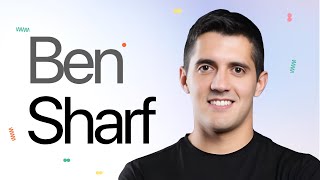
Ben Sharf, co-founder of Platter, built his SaaS company for $3-$30M e-commerce brands partly through consistent LinkedIn and YouTube content. He argues that while AI will eventually replace many creators, founders who show up authentically still win customers and investors. By 2030, he expects so much AI-generated marketing noise that real human attention becomes scarce enough to make in-person retail matter again.
Chapters
If you're just like posting salesy content all the time, people are just going to mute you or unfollow you. This is Ben Sharf, co-founder at Platter, host at Turning Pro Podcast, and incredible content creator. People start to resonate with you as an individual, and then they almost want to like root for you and see you win. And so you're able to like sprinkle in posts about your business and about the problems that you're solving. But it's not just that all the time.
Hmm.
I think traditionally most founders building software are either a very A, boring on the internet. B, not willing to get in front of a camera. And C, not willing to like take a stance and be opinionated.
Oh. So for LinkedIn, is there such a thing as like get on that hype train or trend?
Oftentimes viral moments are not real fans of you as a creator. They're fans of like one concept or one video.
Yeah. And what's your AI stack for churning out content?
I really don't use like a lot of AI tools for my content, to be honest with you.
Really?
No.
Why aren't you using it? Um, so Ben, when did you know you had to be the face of your brand? You have to put yourself out there online every day.
I think it was when I started to think about like, what is my value back to my business and what is my differentiator that makes me unique as a founder, right? When you think about the lens of any person that would bet on you, whether it's like, why would an employee join your company? Why would an investor invest in your company? Why would a customer trust using you? Uh, I think there needs to be some level of uniqueness and trust. And for me, I realized that my superpower is relationships and storytelling. And so I realized that I need to just double down on that and, and be the best version of that that I can. And ultimately find other people with like complementary skill sets to support me in maybe other areas where I don't feel I'm the best person to do it.
And, uh, you know, I saw that you'd written a ton of posts, published a ton of videos. There's also videos where you're like showing a day in the life of founder, like all these different pieces of content that are, I feel, have like virality built into it. So how much of the real Ben is out there and what do you choose not to show online?
It's a great question. I mean, I honestly, I try to show as much as I possibly can. I think there's maybe moments where it's not as much as it could be. And I think that's something that I'm always working on. I think the best founders and the best storytellers are truly just vulnerable and authentic online. Um, I think it was for me less about controlling like what I show versus what I don't show, uh, and more about just figuring out like, how can I continue to create content and storytell also building a business, right? I think like there is a bit of a misconception, which, you know, it doesn't necessarily matter, but I think there's people who think that like I just make content all day and I don't actually like build a business, which it couldn't be further from that. I think it was more about understanding like what are the processes, the systems, and the people you need around you to allow you to like continue to live the life that you're already living, but like documented online. I think, um, this is actually a timely conversation. I have a full-time videographer starting tomorrow.
Okay. And so far, how has that setup worked out for you?
It's been just a combination of like, I've had some, I've had like a producer for my podcast who will maybe come over for like an event or spend like one day with me when I have like a day that I think is worth capturing. Um, I have a couple like, uh, editors that aren't based here, but we work together to like upload content, organize content, understand like the story that I want to tell online. Um, but I feel like now I've gotten to this point and we can go deep on this where I think like the next level of the founder-led storytelling is just like the, the raw day in the life, authentic long-form content. And yeah, there are a couple people who are smart enough and savvy enough where they can like manage all that themselves and build a business. But I've always said that the way that I see myself being good at content is living the life that I'm already living and just have someone who's helping me capture that story and tell it online. And I've gone back, I've wrestled with this idea for a couple years at this point and finally decided to give it a try. So tomorrow's actually day one. I have a full-time videographer that's starting. I'm like, I don't really know what to expect, to be honest.
That's amazing. That's like, yeah, that's turning pro, the next chapter. I guess, you know, Platter's helping a ton of D2C brands, Shopify stores, like really get their consumer journey together, make it delightful. So at the end of the day, it's kind of a software plus service that's helping them. Why should those, why do those customers care about what Ben thinks? Why is your founder story very important and central to the business?
I think what you realize in building any business, I think it holds true for the business we're building and then it also holds true for like a brand that's building, a brand founder that's building a business, there are a million things that you need to do when you're building a business. And oftentimes you are looking to subject matter experts on very specific parts of your business to like lean on to help you solve that one problem, right? Whether it's creating content or creating your website or figuring out your supply chain or your packaging or your pricing, like there's a million things you need to do. So as a service provider, whether it's a service business or a software business, you need to have like an opinion and a belief and a reason for like your potential customer to look at you and be like, oh, I trust this person's word. And here are the reasons that I'm willing to like give them money and give them my business to help me solve the problem that they say they can solve. Right. It's building like domain authority in your line of work. And I think that can manifest in a lot of different ways. For our business, we're a tech-enabled service business. We're not a business that has like in the current state, our focus is not like a pure-play software product. So like we can't onboard 150 customers in a month even if we wanted to. It's a lot more high-ticket price points with less customers. So because of that, we need to build more trust and more domain authority in our space because we know that we're only going to be able to work with a couple of brands every month. So it's like, how do you trust a brand that's doing $50 million in revenue on their online store to understand you telling them they need to rebuild the entire thing?
Hmm. And is there like one piece of content that you put out that kind of cemented that trust you had in founder-led marketing where you felt like this is what I need to be doing more of?
No, I actually feel like it's— it couldn't be further from that. It's like, what's really funny is for some reason over the last week I've had a handful of people who are like, Ben, I love your content. Uh, Ben, I want you to teach me how to do this. And in my mind it's just so ironic to me because I feel like I wake up every day and I'm like, why am I doing this? Should I still be doing this? I feel like I have no clue what I'm doing yet. I've still been like, I've been doing it for year and a half now. I really just think it's consistency and it's authenticity because the other thing to realize, and this is usually the thing that I give it, this is the number one piece of advice that I give to people when they're scared to put out a piece of content here. You know, we'll walk through this exercise with you. Do you listen to podcasts?
Yeah, a lot.
What's your favorite podcast that you listen to?
Right now, Dwarkesh Patel's podcast.
Do you remember the first episode that he put out?
I don't think I've watched this first episode.
That's the point though, right? You don't remember. Like, people move past your content really quickly. It's like people don't care about you as much as you think they do. That is like the number one most underrated piece of advice that I can give to anyone who's scared to put content out. You can go stand in the middle of New York City and put on like a duck costume and start barking at people, and they will just keep walking by you, and they are unfazed. It's just, it's a volume game. Like, I I made a post about this the other day where I think one of the biggest mistakes that I have is I don't annoy people enough about beliefs that I hold. Posting one video or one tweet or one Instagram post about one idea that you have is not a sufficient amount of content for people to really hear you and resonate with it. Think about when you go on social media, you're just scrolling. You read something, you go past it, you read something, you go past it. If I want to hammer a point home, I need to post it so often and reframe it in so many different ways for you to like finally associate with that. And what I realized is that, yeah, there's certain opinions I have about like how you should build a website, for example, and like I post about it, but it's about the fact that I've been like posting about it for months on end over and over and over. It's not typically like you— it happens, but I wouldn't assume that the baseline norm is I made one post that went viral and I never have to talk about that point again because everyone read it and everyone knows it. It's not the case. And I think that that's like very misunderstood where people just assume, and I, and I'm a victim of this and I still have to get better at this. It's like if I post about the same thing multiple times, I'm like, oh, I'm gonna annoy my audience. I like, I wish someone would come to me and be like, hey Ben, you should probably stop posting about this one idea because you've posted it so many times already.
Yeah.
That's when I'll know like I'm doing the right thing.
Yeah. Yeah. You know, like I struggled with this. I definitely used to be one of these people who's like, really scared or like very thoughtful about what needs to go out. But obviously I can't take days because who knows, the shelf life of that content might be 2 seconds or 2 days, I don't know. Um, but something that all founders struggle with is there are these thread boys on Twitter, on LinkedIn, there's a lot of cringe content. I don't know if you just have to embrace the cringe, but with AI, the cost of content creation is virtually nothing. Perhaps some of the well-produced videos take some investment. So how do you even compete with that when some of those posts go viral when you have an original thought and barely anyone blinks twice?
Look, I think it's a long conversation that I don't even know if I necessarily have the answers to it, but I think the only thing that AI can't necessarily replicate today, or you hope it can't, is like your true authentic self. Right, like using, using AI to create a post, you're giving it inputs to try and generate something, but it's not ever going to have like, at least today, 100% of your authenticity. But that's all the more reason that I think figuring out ways that you can create content styles that are like different and unique, because a long-form LinkedIn post, yeah, a lot of it is AI and a lot of AI posts do very well, but it's like, how can you do something different? Because at the end of the day, like, what— how do you build authority in any domain? It's like building a relationship with your audience, right? So I'm trying to figure out different, like, content styles that I can do that are maybe not as easily replicable using AI. Um, but look, I don't, I don't have the answer to that because it's a very challenging— it's a very challenging topic to discuss. Look what hap— look what's happening in, like, Hollywood right now. Yeah, it's like you have these production companies that are spending hundreds of millions or more to produce these films. And then you have someone who's on like Midjourney, just like prompting it and building some sort of show with like 2 hours of their time for, I don't even like a nominal amount of money.
Yeah, I guess, uh, maybe let's dig into this a little deeper. Day zero, when did you decide to put the first piece of content? Then how did you build this loop of consistency and Then let's dig into a little bit about how has your storytelling evolved?
Yeah, my first piece of content, uh, I posted it probably 5 years too late. Yeah, I thought about posting content for legitimately almost 5 years before I ever did it.
Uh, where were you gonna post it?
I just— YouTube, maybe. I don't even remember at this point, but it was more just like I knew intuitively that I needed to be doing it, but I could not get over the fear of like being judged. It was it, it sat with me for years. Uh, you're scared about what other people are gonna think. Like, this concept that you just talked about of being cringe on the internet, uh, is typically like the one reason that people never do it. And eventually I came around to posting it. I don't even remember necessarily what the first piece was, but I've dabbled in all different types of content. Like, I had a YouTube channel for a hot minute. I obviously have a podcast. I've tried posting some short-form stuff on Instagram, on TikTok. Like, I've really just like thrown a bunch of different things at the wall. I do a lot on LinkedIn just to kind of see what works, what doesn't. But to be honest with you, I still don't feel like I have it figured out. I think the difference between me and a lot of people is that I'm testing it by actually doing it. I'm not just testing it by like making hypotheses in my head and then never actually putting it out into the world. Yeah, I still feel like on a scale of 1 to 10, I'd give myself like a 3 out of 10 in terms of my capabilities of like posting content.
And, uh, right now it looks like LinkedIn and YouTube are like big drivers, uh, just because of like the kind of business that you are in and the kind of stories you're posting. So how did you grow your LinkedIn audience?
Uh, LinkedIn consistency is by far the number one thing. I think showing up every single day is so important on LinkedIn. Uh, that one was like the biggest one that I made a commitment to myself about a year ago. I, I've missed a single-digit number of days in the last year and a half of posting Monday through Friday every single day. I think showing up is the most important thing. And then I think the other thing is, again, there's nothing wrong with putting out a post that just like flops. You just post another one. You have to just— there's no other way to learn than by doing, right? Like, understand what types of posts does your audience resonate? Like, what storylines should you lean into? And I think Um, early on I would just over-process and overcomplicate everything. Like, you want it to be perfect because you just— you don't want to put out something that is imperfect. And then once you have your first imperfect post perform significantly better than any of your perfect posts, that's when you realize, like, oh wait, so it's not actually— there's not really a correlation between time spent on the post and the outcome of it necessarily. Yeah, because there's a lot of thoughts that you have that are like off the hip that really would resonate with your audience, but oftentimes people are scared to post those because they don't think there's enough substance there, but that's not the case.
So when you write a post on LinkedIn, what kind of feelings do you want to evoke in your audience? Do you think a lot about what that's going to be, or what's your method for crafting posts?
So there's a couple pieces to it. I think the first one is you want to diverse— at least for me, I want to have like a diverse set of pillars that I'm posting about. And I think the reason for that is the number one thing that I'm trying to get across on LinkedIn is that I'm also a human. I think when you try to be too polished all the time, it like takes away from the fact that you're also just trying to figure this all out.
Yeah, right.
So I've made posts about personal struggles, about business, about fitness. It's not just like platter, platter, platter, because if you're just like posting salesy content all the time, people are just going to mute you or unfollow you. What ends up happening is you diversify the content that you're posting. People start to resonate with you as an individual, and then they almost want to like root for you and see you win. And so you're able to like sprinkle in posts about your business and about the problems that you're solving. But it's not just that all the time because you want— there needs to be a level of relatability. Like you want people to understand the struggles you're going through, the hardships of building a business, but also seeing the success that you have. Like, I, I don't think necessarily my best performing posts all the time are like my Platter case studies or like, here's why you need to do these 3 things on your e-commerce website. But the idea is that if I'm posting all the time and I have a set of people who are really engaged with my content, then when I post something like that, they don't feel like I'm just attacking them and selling them all the time. Like I actually had a brand founder who messaged me the other day. I think he messaged me on Twitter, but he told me that he started following my content on LinkedIn because he also loves to use a sauna. Oh, which I was like laughing to myself. I'm like, wait, actually? He's like, yeah, I'm a big sauna person and I love your because I don't know if you saw, but I started doing like this short-form content series in the sauna and cold plunge, like with brand founders. But it was unrelated to Platter. He's like, I also like the sauna, so I was curious in the content you had. And then I started to see your other content about Platter, and then you basically gained like a follower in me. Like, I enjoy reading your content when you post it.
That's really cool. I guess you never know, like, which part of the funnel you catch them in. Like, you just can never tell because, you know, traditionally, if you go talk to a a marketer or anyone who's working, like, I've worked in big tech and the way they talk about all of this is, so let's segment the audience, like, this is what they like, let's go after this funnel. Like, the way you structure everything is very different. And here I think you are doing it more like, these are people with interests, let's just like talk about interests that appeal to them. And then they also have jobs and they might refer the stuff that you're building in their jobs because you acquire them from for a different interest journey. Um, how do you know that you're attracting the right type of audience and it accrues value towards your business?
It's, it's a— that's a really good question. I think, uh, something that I don't do that I think any person who knows anything about content would tell you that you have to do is like, I'm not someone who's like looking at the data every day. I'm not like measuring the success of one hook versus another, the format of one versus the other. I think for me the first year was just prove to myself that I can be consistent with posting content and then we can think about like, how do you actually use data to drive like what's working and what's not? So that's one thing to note. I think the second piece in terms of how do I know that I'm attracting the right audience, I think there's a couple of pillars to that. I think the first one is that I use my social capital as far as like content as a means to build relationships. I've found that one of the most valuable parts about posting content is being able to get in the room with people that like I never thought I would have been able to. Because there's a lot of people in the ecosystem that I'm like meeting face to face who's like, oh, I've seen you online before.
Yeah, right.
So I think making sure that some pillar of my brand always ties back to the world of consumer, which is really easy for me, which also ties into like, why did I start this business to begin with? Like, I am a consumer myself, right? Like, I love trying new products. A lot of my friends are like building brands or software businesses in this space. And then I started building one. So it's like the things I like to do, the people I like to spend my time with, and the work that I like to do are all like at the intersection of the same things. Yeah, it's almost harder for me to like proactively make content that's like so in left field away from like the core pillars. I think the one way to be sure of it is just remembering on some cadence that I'm making like super nerdy like e-commerce specific posts, right? Yeah, you can't just like drift away from that for a month's time and just talk about like your fitness journey or like why starting a company is hard. Like I'm still remembering like post case studies about like, you know, customer wins you had. Make posts about like the biggest problems that you're seeing within your niche. I don't have necessarily like a formula, but I can definitely tell if I'm like drifting too far away from it or if I'm posting too much of it. So it's trying to like always find that middle ground between the two.
Yeah. You know what this reminds me of? Every celebrity now has a makeup brand, but it's not like the makeup that they sell cannot be found on like the more traditional consumer brands. But I feel like people aspire for these celebrities' brands because of whatever, like the content they post, the lifestyles that they bring. So I feel like almost if you are in tech, you really need to bring more to the table than just a SaaS tool and a chart that shows this is what my product does and this is what the other product doesn't.
Yeah, and I think one unique lens in the realm of founder-led content for software businesses, I think traditionally most founders building software are either A, very boring on the internet, B, not willing to get in front of a camera, and C, not willing to like take a stance and be opinionated. So I actually think when I started doing this, it was very interesting to see a lot of people who were like, hey, Can you give me some advice on like how I can get started on this? Because people, it's just, it's, it was never been normal for like a software founder to like just go yap on the internet all the time. And I joke like I have two co-founders, right? Like not everyone wants to have a business with three co-founders, but it was like, let's figure out what we need to do to win. It's like I have a technical co-founder who's not really interested in posting on the internet. I'm like, I can be the guy that's all over the internet posting about it. Because I know that there's not many of our competitors that are like posting videos on the internet all the time. And so I think trying to be different in some ways is very helpful. So it's like if you can be— if you can do things unique from your competitors and also like have unique opinions that will maybe either draw up a little controversy or just get people talking about something, like you're, you're on the right track.
What does the funnel look like? Can you talk a little bit about like how do customers find you? Because your content is touching various topics, not necessarily everything that Platter sells today, probably not much of it is about Platter. So what does the funnel look like? How do they find you? How do you convert them, retain them?
Yeah, so the one thing to note about our business is there's a high barrier to entry, relatively speaking, for a customer to work with us, uh, because we're effectively rebuilding a site, right? It's not— there's not really a path today where they can come to us and be like, oh, let's just run this quick test and see how it works. Uh, and for that reason, it's more of like a long tail relationship building tool. So there's a couple different pieces to it, but largely the first point of awareness comes on LinkedIn.
Mm-hmm.
Um, we do a lot of things on LinkedIn, like we do LinkedIn Lives all the time where we talk about very specific e-commerce topics. Uh, we do outreach on LinkedIn. I'm posting content on LinkedIn. So when we're getting any sort of intense signals of people being interested on LinkedIn, Uh, there's a couple different ways it goes from there. I think one is I actually do a lot of in-person events. So trying to get people who were somewhat curious online in person is really like my number one focus, whether it's bringing them on to do some piece of content that I have, um, whether it's bringing them to an event that I'm hosting or just like getting a coffee with them. My philosophy on building a business similar to the one we're building is that it's a lot easier to do business when someone feels like a friend, right? So like they start as a prospect, you build a relationship, you build trust, and then it feels like you're actually genuinely helping each other.
Yeah.
Um, I think this strategy works for us because it goes back to what I said where we're not signing 100 new brands a month.
Yeah.
So it's very, very relationship-driven. So it's about using any touchpoint that you can to get someone engaged to then try to get them off the internet as fast as you can. Uh, but I would say that LinkedIn, Twitter, and relationships and referrals are 98% of our business.
Yeah. What kind of growth stages are these companies in? Does it work for, let's say, large enterprise businesses versus like, I don't know, like how does it work for startups? Like what kind of stage are you targeting and how does it work?
We target like middle market in Shopify language, which is really like the $3 to $30 million online. We have brands on both sides of that. I would say brands that we work with that are larger than that is more been a function of social proof that's compounded over time. So I found like when you talk to a large brand, their first question is always like, what other large brands have you worked with? Like, why should we trust you?
Yeah.
So just like getting those first couple of logos has made that a lot easier. Yeah. And then the middle market and the like, the long tail brands, it's really all seeing me online or getting introduced, because what I also found is there's a lot of groupthink that happens in the world of e-com and brands. Their first thing they do is ask like the 5 other brand founders that they're friends with, like, oh, who did you talk to to solve this problem?
Yeah.
So like, how do you become— when I think about Platter, I'm like, how can we become synonymous with this concept of like anything in the realm of struggling with my website? Who should I talk to? Yeah, like I want Platter to be the first word that comes out of your mouth. When that happens, whether it's another partner of ours or a customer of ours. Uh, I want to make sure that there's an association in the ecosystem of what we do and the fact that we're good at it.
Yeah. And is there like a terrible piece of feedback that you got for your content that you still remember? Like the worst ever?
Um, I actually, the only, the only negative feedback that I get on content is from like real close friends. Okay. Which I really appreciate. I think oftentimes there's people— I think the way that most people on the internet will basically tell you that your content is bad is they're just going to stop engaging with your content or paying attention to it. Don't get me wrong, you have instances of people who just like comment on social media and say, this is terrible. Yeah, I've never had that happen, but I have a couple of friends who are creators, one in particular who like watched a piece of content the other week and was like, dude, this is awful. Like, you have to stop posting things like this on the internet. It's not authentic and it's It's just like a waste. Like it's making me cringe for all the wrong reasons. And I, and my first response is I appreciate that. It takes a real friend and a real honest person to feel comfortable saying that to you. But that feedback is way more valuable than these people who are like, oh, I love your content. Like keep, keep posting it.
Yeah.
So that's not helpful.
Yeah. Yeah. And what's kind of your ritual and a system to come up with content every day? Because you don't have, you say you don't have to think too much, post it, but if you have to post every day, like walk me through like your system.
I'm very impulsive in the sense that like I, I might get up from this conversation and like have an idea in my head and just like send a text to someone on my team like, hey, I need to make a post about this. Like I will, you know, send you a voice note or, or a concept of what I think the post should be. Uh, at some time, sometimes we do like weekly brainstorm sessions where I'll just go for a walk and like word vomit into a, into a phone for an hour.
Yeah.
There's other moments where I just feel like I have a lot going on in my life and it's like I can't get everything out fast enough, but it really ebbs and flows. I would say the one note is that if you can find some piece of content that you put out consistently weekly, it makes it a little less, a little less daunting. So like, for example, your podcast, I don't know your cadence and when you plan posting, but it's like if you're posting your podcast once a week, For me, it's like, I know every Thursday my post on LinkedIn is announcing the new episode of my podcast.
Yeah, right.
So having like some of these cornerstone pillars makes it a little less daunting to be like, oh my God, I have to come up with 5 or 6 or 7 new LinkedIn posts this week.
And what's your AI stack for churning out content?
My AI stack? I mean, I don't— I use ChatGPT sometimes, but I really don't use like a lot of AI tools for my content, to be honest with you.
Really?
No.
So why aren't you using it?
I, part of me doesn't really understand. Like I think there's just a disconnect that happens between you as a human and your content if it's not actually you creating your content. Like I think, I don't know, I think I, I, uh, have yet to figure out the best way to feel like I'm conveying my authentic self.
Yeah.
Through AI-driven content that's going to like keep my audience engaged because I am who I am.
Yeah.
I'm not— I wouldn't say that I'm necessarily opposed to it.
Yeah.
But right now I'm— I really do try and like keep it as, as organic, as original as I can. And like, look, it's ironic for me to say that because I'm definitely like an optimization nerd in every other aspect of my life. But I don't— I don't know. I guess my question is what what is the value of building like a, your own personal brand if it's not actually like your brand? Yeah, it's a, it's a weird like existential question because I also think that it's an inevitability that most content will be AI-driven at some point. But then I just don't understand the relationship between like the consumer and the content. I guess if it's indistinguishable, they don't really care.
I guess, uh, one way to look at it is maybe they just look at the insight or the learning. And if you're not a good writer, like sometimes, like, you have to tell stories well. If you ramble on and on, people kind of drop off. But a founder told me that, uh, he intentionally, uh, adds typos after ChatGPT writes his post, just so people think it's like something he wrote and it's like human. So I found that really funny because everybody is trying to engineer authenticity today because It's assumed that you just use AI.
Yeah. I mean, it's, that's almost to me like just deceiving your audience. It's, it's a hard, yeah, it's a hard topic because I think in some ways you're almost like, you're kind of just watching the, the wave pass you by if you're like not using it.
Yeah.
But it's inevitable. It's where the world is going. There's no, there's no denying that.
Do you use it at Platter for your other customer workflows? Yeah.
I mean, we use it, we definitely use it in, in different ways around like efficiencies with a lot of different things. But I think I decouple like Ben Sharf's brain and thoughts and brand versus how can we make our business more efficient. I think they're— I see them as kind of two different things. But it's, it's a very hard, it's a very hard conversation to, to continue to think about because I feel like maybe my output would increase tenfold, maybe I don't know, maybe my thoughts would improve, but I guess the extent of it for me is like using ChatGPT as a mechanism to maybe like ideate on concepts or figure out like ways to tell stories. But I'm sure there's millions of tools out there that I could be using for content that I'm not.
Yeah. So you've put out so many pieces of content, so I'm sure there's a ton of learning about what storytelling formats work, text, video, images, whatever it is. So can you give a little bit of an overview of like, what are these formats? How should people think about them? What's worked for you?
I think the first question to ask yourself is like, what platform are you trying to create for? Because a, a piece of content that you post on LinkedIn, if you post the same piece of content in the same format on TikTok, Twitter, YouTube, like it's not going to perform as well on every platform.
Mm-hmm.
Uh, I think the thing that I can tell you is that the, and this is coming from me as someone who struggles to do this, the lower fidelity, less thought out pieces of content typically perform better on LinkedIn just in general.
Okay.
I really, I really do believe that. Like it's the people who are literally just picking up the phone and rambling while walking on the street about like whatever the hell is on their mind. And you can tell that it is so honest.
Yeah.
And so genuine. I think on LinkedIn video, vertical video right now is very much the thing to be focusing on. I actually went to a LinkedIn creator workshop a few months ago that I got invited to, and that is like a huge focus for them. And because of that, it's very overpowered in the algorithm right now because not enough people are doing it. Yeah, I, yeah, I can send you the post. I made a post about it. It was like the, the different like tips and pointers that they have. I think the other thing is like keeping short-form videos to like less than 90 seconds or 2 minutes. You don't want to have like super long super long short-form videos. I think, yeah, it really, it really just depends on the platform. But I realize that the, the things that matter are really the vulnerability and the authenticity. And the second one is people really appreciate when you try to remove it feeling so polished.
And, uh, how do you balance your storytelling to be, you know, relatable is one, but at some point I think it shouldn't become like a sob story. So How do you balance your content to be a bit more aspirational versus relatable?
I think you have to ask yourself when you're posting a piece of content, like, what do you want someone to walk away from that piece of content feeling or thinking? Right? Like, I think I've, I'm guilty of this in the past where like I've just posted content because I know I need to post content, but there should be intention behind it, right? So when you make a piece of content and you post it, it's like, is this intended to inspire someone? Uh, is this intended to educate someone about a very specific topic? Like, Why would they watch this piece of content, walk away from it, and send it to a friend and be like, hey, you also need to hear this and here's why.
Yeah. Yeah.
So it's almost like reverse engineering. Like you need to know the end of the story to get there. So it's like, why, why do I want to post this piece of content? And if you don't really know why you're posting it, then it's probably not that good of content.
Yeah. Yeah. I'm very product focused. Uh, and you know, like obviously people have to learn as they become a founder, like the other things that are really important as well. And there's a slew of companies that have cropped up where obviously there's no product, but there's a lot of hype, there's a lot of vibes, uh, they go viral. Uh, I don't believe you can engineer product-market fit through content, but I'm curious, what do you make of those companies? Uh, what's your take on people doing content before they have anything? And can you engineer product-market fit through content?
I don't think you can engineer product-market fit through content. I think you can do in the short term, but I think to build a long-term sustainable business, you can't. I think that engineering the virality is really interesting in terms of when you think about wanting to do it, because you have— you kind of— there's a couple different angles that you can look at it from. One is if you're getting the attention, you can expedite like the feedback that you need to actually take the product in a direction that people want.
Yeah.
The second one I think is, again, people resonate with like this authenticity where it's like just they're just doing it and figuring it out along the way. And you either become a supporter or you become a hater. Like everyone knows that the, the one company everyone's talking about right now is Cluey.
Yeah.
Like they have generated billions of views online. I saw a post yesterday about this guy basically saying like, here's why I think Cluey is going to fail. It's basically just like a ChatGPT rapper. And someone responds to that. It was like, dude, what product isn't a ChatGPT wrapper? Like, that's what all— like, only a, only a hater who isn't a product person would give the answers. Like, the reason it's not going to work is because it's a ChatGPT wrapper. I think that's such a garbage answer. Like, the reason it will work is because they have a billion eyeballs looking at their product all the time. It's on them to figure out if they can build something of value before those people stop paying attention to who they are.
Yeah.
So I definitely don't think you can engineer product-market fit. I think you can do it for a small amount of time, but not in the long term.
Yeah.
So I think it just becomes more of a decision for you to make as a founder or as a team. Do we want to like drum up all this attention before our product is where it needs to be?
Yeah.
Or would we rather continue to focus on a product and then when we feel like people resonate, then it's about like, how do we get as many eyeballs as we can?
Yeah, that makes sense. And maybe talking a little bit about like your podcast, you have spoken to so many D2C founders. Are there like moments where you felt like, oh, this person is such a good storyteller and they kind of have helped define the brand into what it is today?
Yeah, I think there's a lot of different ways you can go about it. I think there's some founders who prefer to find like other figureheads that can help tell the story and then you have founders who want to be the person telling it. I think one that sticks out to me is a guy named Michael Fisher. He has a brand called Rotten. They make, uh, candy.
Okay.
And his content, just everything he posts goes viral. It's really crazy. And he's just so like authentic and honest about it. And then I know other founders who aren't really interested in like posting on the internet, but they have enough, uh, either like other creators or other people on their team that figure out a way to just like get the brand out there. So I I don't think there's necessarily a right or wrong answer in terms of like how you can build your business. I think like for me, my, the reason that I post content and the reason that I think personal brand is very important is that as AI continues to develop, software just becomes a commodity.
Mm-hmm.
And the only thing that's really defensible is community and distribution.
Mm-hmm. And at what point do you think your personal brand will hold Platter back from growing and it might become a liability.
Um, I don't think that will ever be the case.
Never?
No, I think that it, uh, I think it's completely additive to the business that we're building. I think it gives it personality and uniqueness, and people either resonate with it and subscribe to it or they won't. I think the only way that that happens if I just go in the deep end and start posting like reckless shit on the internet.
Yeah.
Um, but that's like a, that's a larger conversation if that's happening.
Yeah.
But I think if, if I were to stay the course, in the lane that I'm on now, I don't see a world where it necessarily becomes detrimental because I think the other thing about content that people don't realize is the vanity metrics that you can see on someone's profile are not a good indicator of how much value that they're getting from their content.
Hmm.
I've closed my biggest deals with customers, my largest investors, and some of my biggest hires through people who've come inbound on LinkedIn that I never once saw engage with a single post on the internet.
Okay. So then how are you measuring success if they've never engaged with your content? How is the value of your content measured?
I don't personally look at one specific metric and say this is working or this is not. Um, I know that a lot of the relationships that I've been able to build and the opportunities that I've gotten have been an entry point through content one way or the other. Um, and I've seen enough value from that to know that I need to just trust myself to continue to do the same things. Because for me, I think meeting someone on the internet, uh, or starting a conversation with someone on the internet is potentially just a rabbit hole to so many other opportunities. Yeah, you meet one person who introduces you to one person who introduces you to one person. And it's like, you're like, I'll give you one crazy story so you can like understand how many like layers that it can go. I had a YouTube channel a couple of years ago. I did this video which was a 131-mile run from Montauk to Manhattan, and I needed 20 runners to participate in this episode that I did. And I was very strategic about the people that I picked to participate in this because one of the other beautiful parts about content, which is, I think, a piece piece of advice for you is that if you have a platform to allow someone else to tell their story, you're adding value to them where they appreciate you, but you're not asking for anything in return. So it feels like you have a leg up on day zero of that relationship, right? So for this piece of content, I invited all these people. We had Nike sponsor this, we had Athletic Greens sponsor this, we had 21 brand sponsors. If I'm going to you as an individual, I'm like, hey, do you want to come run in a relay race with 19 other creators, get a bunch of free shit from brands, and like be a part of a really cool video? Why would someone say no to that? Right. So I got all these people to participate. And of that group of people, like I said, there was definitely intention behind who I was asking. There are people from that who have become customers of mine, who have become investors of mine, who have introduced me to new customers and investors. I filmed this 3 years ago, right? Like when you sit here and ask me, like, how do you quantify it? I can sit here and start thinking about like all the moments that have happened in my life that wouldn't have happened without content. But they did. And so you just have to continue to realize that these things only compound.
It's like a butterfly effect.
100%. And it's just on you to continue to maintain those relationships, to build more relationships, and to, like, extract whatever you can out of them.
Yeah.
And so I think you're kind of missing the point on content and personal brand if you're like, oh, my content's working because I got 50 likes on this post, or like, I closed one deal on this post.
Yeah.
My largest investor came inbound and he was like, I've been following your content for a year. I would love to talk. Okay. If I stopped posting content tomorrow and you asked me, was it successful? I think getting your largest investor, one of your largest customers, and one of your best employees, all three inbound on content. Yeah, I think you'd be pretty satisfied if those were three quantifiable outcomes.
Yeah, that sounds like kickass outcomes. But I guess like something I feel like is still a greenfield is LinkedIn. So I know like you have been going pretty hard on it, but if you look at Instagram or TikTok, there's a race, right? Like somebody starts a trend, everybody is chasing to somehow replicate it. Or like there's like 10 videos, uh, while I'm doom scrolling, you see the same thing over and over. Whereas for LinkedIn, it's not clear. Like maybe you see similar threads, like, and you get like very tired of it. So for LinkedIn, is there such a thing as like these trends or like competing creators, you have to like somehow get on that hype train or trend. I know you talk a lot about like not looking at metrics, but if you take a step back and analyze what's happening, like how do you see these classes of LinkedIn creators succeeding?
Yeah, I mean, there's, there's definitely certain people that I look to, uh, and every time I read their posts, I'm like, damn, that is a really good post. Uh, I think it's also about finding the format and voice that works for you because I know some creators. who only post short-form videos, and I know some creators who post like really long-form threads, like, here are the 10 things I learned from doing X, Y, and Z, but they're actually like very thoughtful and very engaging. And so I think part of it is just finding your voice. And I think the other thing that I would say is that if you're going to be someone who's creating content, I think there's very few scenarios where the appropriate, uh, strategy is to chase virality.
Sorry, can you repeat?
You should— like, I don't think chasing virality is the answer on socials, right? Because it goes back to the point that you just made around, do you think that you can engineer product-market fit in a business? What's the point of engineering hundreds of millions of views if you don't have a product that actually, like, works?
Yeah.
And I think the other piece of it as well is that oftentimes viral moments are not real fans of you as a creator. They're fans of, like, one concept or one video.
Yeah.
Right, so you see someone who has 10,000 followers, let's say, on LinkedIn who got a million views on a post, and then they got to like 10,500 followers. I just— as an example, it's like, that's awesome because you're getting awareness that people would pay a lot of money for. But I think there's a reason that this concept of like micro-influencers being the audience that a lot of brands go after is because I would rather have 1,000 people who are obsessed with my content than a million people who like, I'm lucky if they pay attention to You know, that, that definitely makes sense.
But I think for someone who's in the arena, like just trying to get attention, sometimes they try all these kind of things and they get into like weird spots where they don't have much of a product to show, but they feel very attracted to the proposition of like, oh, if so many people are gonna follow me, like maybe that gives me this satisfaction of like getting this vanity metrics. Oh, so many eyeballs, I must be doing something right.
It might be an instance, honestly, where like if we sat down again, I don't know, let's say 5 years from now and I was building a different business. Yeah, maybe I'd feel differently.
Yeah.
If I was building something that was like, hey, we need to maximize eyeballs now and then we'll figure out the product later.
Yeah.
I just think that hasn't been the philosophy that we've used for building the current business that I'm building. And so for that reason, maybe my perception is a little bit skewed towards what I think makes sense for our business.
Yeah.
But look, like engineering virality is a superpower.
Yeah.
Not a lot of people can do it.
Yeah. I guess the only drawback is like the people who engineer virality don't always overlap with the best product builders. At least there's not a ton of examples of people who do both of those things really, really well today.
No, usually they, what do they call those unicorns? The people who can do both.
Yeah. Maybe taking a slight tangent, the storefront, the first storefront has moved to these platforms like TikTok and Instagram. Uh, and you are kind of in this niche where you are helping consumer brands shape their websites to be the best thing that it can possibly be so you can delight your customers. And there's a bunch of different ways to do that. Is that gonna be relevant?
It's a good question, I think. And I mean, you'd, you'd obviously assume that we've been asked this a million times cuz we have.
Yeah.
Uh, my personal philosophy on it is that I think the.com website will always be like the digital representation of your business. Like it will always exist because people, let's say like a brand that's more retail focused, for example, someone might go on the internet to want to find you, to have a.com website is just like, hey, this is us. We exist. Here's what we have. To say that it remains as like the superior demand channel. I don't know necessarily if that's the case. Um, because you have TikTok Shop and you have, you know, Instagram and like all these other platforms that can— in live shopping and like all these different things keep popping up. Uh, I find it hard to believe that the.com website goes completely obsolete. Yeah, because I just see that as like the, the home base of your business, and from there you have all these other pillars of like these different types of channels to buy on. Because I also just think there's there's different types of consumers on every, every channel.
Like, I don't—
my mom and dad aren't on TikTok Shop, like, buying products.
Yeah.
Who knows, maybe 40 years from now when, like, the young generation is the old generation, it's like, that is the default. Um, but I don't necessarily see, like, the storefront going obsolete in the short term.
I actually— I mean, I talk to a ton of brands and I think they don't want to be on TikTok just because they cannot control a lot of things that happen there. And their goal is always to use these platforms ideally as a top of the funnel channel to bring people, but then the website and the email newsletter, like they all become a channel for them to retain those customers, build those long-term relationships. But they understand like the dynamics is that a lot of consumers are on Instagram and TikTok and they just want to have impulse buys. So it's better to have a storefront there. I guess like what trends are you seeing now, now that you're helping so many brands like shape their websites? Like what's important? What are some important distribution channels, what needs to be really good on their website to make things work for them?
Yeah, I think the first thing is that omnichannel, like, is table stakes at this point.
Yeah.
Right. I think all brands recognize there's levels to it, right? You don't have to be on every single platform or trying every single tool, but most brands are definitely doing more than one channel and should be. I think when it comes to the website, there's really a couple of things that stand out for us, which I think is very relevant for this conversation. One is the quality of the content, and the second one is social proof.
Hmm.
Right. So we always say like, we can give you all the bells and whistles that you need to build an amazing website, but if your content sucks, your website's still going to look terrible.
Yeah.
And I think that's something that's very underrated and something that we oftentimes voice to our customers, because even when, when I have other customers or people who are looking at our portfolio of brands, and like, wow, you guys did such an amazing job on this website. I, my first response is their assets are gorgeous.
Yeah.
Or like one that I'll call out because I think they're one of the best in the business is a brand called NeuroGum. It's like energy and focus gum and mints and they just, their assets are always amazing.
Yeah.
So I think taking away like all the nuanced bells and whistles that we can provide, it's like if a brand comes to us, I'm like, I want you to have good content and I want you to have good social proof. And from there, like there's a lot that we can do around helping you just simplify the customer journey and having all the different bells and whistles that you might need to maximize the amount of dollars that you can extract from every person that lands on your website.
And how important is it for them to refresh these creatives, or, or do you, would you call them like evergreen? Maybe do a bunch of upfront investment and you're good to go.
I think it depends on the business, right? I think we have some customers that are very seasonal. So for that, in that case, like you definitely need to be continuing to refresh it. I think there's also brands that maybe have always-on SKUs that are evergreen that can kind of just live as is. Yeah, I don't, I don't think the answer is black and white necessarily, but at a minimum, I think brands need to be aware of the fact that like it's different for every brand. Yeah, but for us, we don't— we're not someone who's creating that content, so we can really only play with what you give us. Which is why we're always voicing like you can never have enough assets, you can never have enough creative, because it just makes our life easier and it allows us to give you a better end product.
And what does the relationship with these customers look like? Because redoing the website sounds like a ton of work, but do you continue to hold the relationship after? Is it a one-time thing? What does retention look like? For a business like Platter?
We have very strong retention numbers because we're so integrated into their business. And I think we have such an intimate relationship with them because of what we're doing, right? Like, I think there's, there's like an inverse relationship between how easy is it to install and use your product and then like what level of relationship do we need to have and trust we need to have. Yeah, because if you're just like a widget that takes 2 seconds to turn on and off, it might work really well and have really high retention, but it's not necessarily from a brand's perspective, like a huge risk if it's something that you can just like add and remove. Like we're rebuilding a full site. So for that reason, like I would argue that we're probably, we probably have a deeper relationship with most of our customers than like any other vendor on the entire tech stack.
And do you think agent ecommerce or answer engines are going to change, like how these websites are going to get built, or are you already seeing these changes?
Yeah, I think, uh, I think two things. I think one, uh, agentic commerce will be inevitable. Uh, I think there's going to be different ways that you can utilize it. I think one that's very popular right now is like utilizing it for the chat.
Yeah.
So like basically having a sales rep in a chatbot on your website that's like guiding the consumer through the journey.
Yeah.
Um, I think the second thing I was thinking about this actually on my way over here. We live in a world where like we're at the forefront of like all the cool things happening, whether it's through like investors or social media or our own businesses. The large majority, in my opinion, of the ecosystem is years behind. It's like I, I don't even know how many brands are like even going on ChatGPT today to like search for something. It's— I find that we hear about trends so early. So frequently that you all of a sudden assume it's like the norm. But there is so much work to be done on like education and distribution in terms of like the latest advancements with technology. So while I do think it's inevitable that that's where the world goes, like, I don't really have a good gauge on what the timeline is where that becomes the reality.
Hmm. Do you think like these celebrity-led brands have a leg up when it comes to building direct relationships via their own websites as opposed to I don't know, a D2C brand started by a mom somewhere in, in central US?
It's a great question. I actually, I have a friend, uh, Scott, who only invests in consumer-led celebrity brands, and he made a post about this last week that went viral actually on LinkedIn. And it was talking about the reason that like thousands of these celebrity-led brands fail. Like people don't, people don't actually understand the metrics of like what percentage of them succeed. And the reason for that is there's always hype around it when they start. The sales go through the roof in like year 1, year 2. And then the second that that celebrity just like stops engaging with the brand the way they were at the beginning, it dies off. It's like the real brands that have staying power in the realm of celebrity are those where one of two things happen. One is the creator is so invested and embodied into the brand that they will be there for the entire lifetime of that brand. Or the second one is you build it in a way that you could eventually remove yourself as the creator from the brand and it really just lives on as a really good product.
That's an interesting insight because I, I think the only brand that I was like, oh, this doesn't look like it's going anywhere, was, uh, um, JLo.
But I don't even know JLo's brand.
Oh yeah, she does. It's not going very well. But, uh, I think Rode got acquired, uh, but look how involved—
yeah, Hailey Bieber, she was like the creative director for the whole lifetime of the brand from idea to acquisition.
Yeah, yeah. Because at least instantly you'd be like, oh, these people have so many eyeballs, distribution, credibility built into it. Must be very hard for someone starting up to be able to convince a bunch of people that, hey, you can trust this brand. But it's interesting that those celebrity-led brands are not doing as well as like previously thought.
Well, the difference is like, take, take like the, what was the example you said? Like the person in Middle America who has no audience. They might not have the distribution out of the gate, but typically those people are building the brand for the entirety of the brand. Yeah, a lot of these celebrities, it's like someone either throws a crazy cash deal at them or they get excited about it and then they have other opportunities that just outweigh the benefits of continuing to, to deal with the brand. They just like throw it to the wayside. I think if the question is, do you believe that celebrity brands where the celebrity is invested in the business till whatever the outcome is, will do better than the middle America brands? Absolutely. But the unfortunate reality is that's just not how a lot of these celebrities operate because a lot of them have shiny object syndrome because they're getting thrown opportunities at them every single day.
Yeah. And what do you make of, uh, AI avatars that are selling products today? Uh, do we really need humans to sell something? Do we need humans to tell stories? Let's say another couple of years?
Uh, no, I don't think we do. I think so.
There's going to be an AI Ben in 5 years.
Uh, yeah, I actually wonder, I'd be curious to understand from your perspective as the product person, do you think there's ever a world where there's either A, a social platform that could actually flag something that's real versus AI, uh, and B, do you think that there's a world that a lot of these like human creators go obsolete because you have people who are controlling a bunch of like AI creators that can do what they're doing way better?
I think you can already using technology identify if something is AI or not to a fair degree. But I also think in a couple of years, maybe for a lar— large amount of things, you probably don't need humans just because it's just not scalable. Like I think every brand wants to, you know, wants diversity and inclusion and whatnot. They all sound great on paper, but How do you visually represent, let's say your brand, you're wearing jeans, it's different fit for different body types. Like how do you show that? I think AI can do that very scalably. So you don't really need humans and I'm sure H&M and bunch of other brands have already decided that this is the future. But I do think that at some point, just like handmade ceramics for example, or handmade like cashmere sweaters, like they cost 10x more. Uh, I'm sure in the future to access human content from real humans, like cells instead of bits, that's gonna be much more expensive and there will be a market for it, but it might become like this priced item. But I do think that it's now all sloppy. It's all AI slop. People can tell, but in the future it's pro— it would probably be become very practical to start accessing AI content and That seems like, okay.
I've had a conversation actually with a creator who was talking about how it's inevitable in the future that he will have to like manage multiple AI creators. Yeah, like he'll still be the creator behind the creator in terms of like prompting it and guiding it, but he's like, it's inevitable that I'm gonna have like multiple personas of myself in the form of AI because if not, I'm just gonna fall behind like the inevitability.
I think the other thing, because you run websites, you help build them. One of the trends that I see, maybe not a lot of people are talking about, is I used to work at Snap. So we used to build AR technology for try-on and it was very clunky, it never took off, never found product market fit. But with AI, you can, it still doesn't look perfect, but you can try on any dress and you generate a PNG file, right? So it's not as immersive, But right now what Google launched, I think it's fairly good. Of course there are artifacts. So I feel like in the future, if you have these AI worlds where you are represented, websites probably can start selling like digital replicas of like these clothes. Uh, and this is already happening on Roblox. There are a lot of kids who wear these like 3D clothes of like Prada and Gucci. And I feel like these are all the kind of innovation that I would expect like brands to come up with on their own channels. Like this cannot happen on Instagram because they have to provide platform support. Like you don't even know if your brand will be represented well. But for websites, it's a great way for them to check out like a piece of like digital clothing and use it and like have those images generated and put it on a website. So I feel like there's a lot of cool things that can happen even though a lot of it looks sloppy today.
Yeah, I just think it's, it's inevitable. It's more a matter of when.
Yeah, yeah, yeah. Last question. I like to ask this to everyone. What does the future of like consumer marketing look like in 2030?
In 2030, just 5 years from now. I think the piece of it that is really hard for me to wrap my head around is I just think the volume of content and the volume of marketing is going to be exponentially greater, which will actually just make it significantly harder to, uh, capture people's attention, uh, which makes me think that at some point there's going to be some sort of disruption to like how we know it as it is today. And I don't actually know what that's going to be, but if you think about it from like a volume perspective, let's assume today like on your feed you're scrolling 100 pieces of content, like that 100 is going to turn into 1,000, into hundreds of thousands. So now it's like, what is your algorithm actually feeding you? And what is like customer acquisition costs look like when it's just like a sheer volume play? So I don't really know how that gets disrupted. I, I want to have faith in believing that there will be some element of like IRL marketing that is going to be very unique because people are just going to get trapped on the internet with like an overflow of content because it's just so easy to produce today.
So you think there'll still be phones and no replacement of phones with glasses or any other device?
No, I think there will probably— it's either going to be— I think it's going to be glasses and then it's probably going to be like a Neuralink where you're not wearing anything and now you're just thinking ideas. It's pretty scary to actually think about. Uh, I think nonetheless I'm more interested to see how it translates into IRL because I will— I do think the loneliness epidemic is only going to expedite, uh, the more that you're seeing all these like new technologies come to, come to light.
Yeah.
Um, so I'm curious to see how that manifests as like the way to, uh, try something new. But yeah, it's really scary. Like you're talking about the glasses, it's like you're wearing glasses and you're you're in a store and it's like you look at a shirt and then you get like a picture of you wearing the shirt. It's like, oh, you want to buy this? Look how good it looks. Like, it's so scary to think about.
That's exactly what I was working on at Snap, but it didn't work very well.
Yeah, I— it's really— I, I like— I was joking about this when, when Bitcoin became a thing. Everyone's like, oh my God, this is like the greatest revolution we're ever gonna see in our lifetime, like a new way to transact and trade goods.
Yeah.
And then like AI happened. I'm like, okay, well, like Bitcoin's way less interesting at this point.
Yeah.
It's really scary to think, like, the realm of possibilities. Uh, I'm also just really curious to see what goes mainstream and what doesn't.
Yeah.
Because I do think there have been attempts at, like, very futuristic things that haven't worked yet. Like, think about the metaverse.
Yeah.
That was, like, a really, really big concept, and I'm sure there are still plenty of people who, like, hang out in the metaverse.
Yeah.
But by no stretch of the word did that stick the way that I think some people maybe thought it was going to.
Yeah.
So I'm just curious to see like what of these different trends will humans adopt?
Yeah.
At what rate? Because then, you know, if you're getting more philosophical, it's like fast forward 50 years, what is a life for like the next generation look like? I have no idea.
Yeah. Yeah. Well, definitely a lot of interesting things that can happen. But it was great chatting with you. Thank you so much.
Thank you for having me. This is awesome.
More from Ben









Episode 3-From Boarding School to Building Platter: Ben Sharf on Betting on Yourself

