How Work-Life Balance HELPS Your Business
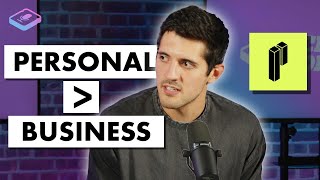
Ben Sharf, co-founder of Platter, went from pro hockey dreams to building a COVID-testing startup that scaled to 60 people in two months. He explains how fitness, therapy, and sobriety fuel his work, and why delegating C-tasks and outsourcing lets founders focus on what matters.
Chapters
When I stopped drinking like a year and a half ago, I realized that there's so many founders who are all in on this fitness concept where you can act like— my meetings are like, let's go for a run, let's do a cold plunge, let's go get a coffee. It's less about like, let's go to happy hour. And it's not to say that I judge people who do that. It's just like, find the things you do in your life that you enjoy and figure out a way to intertwine those with your relationships and your business. So like everything could be moving forward at the same time.
Welcome back to Season 3 of Chew on This. Today we got someone special who wears a lot of hats, not just in what he's created, but also what he does for the community. Whether you're in New York City or traveling around, you've probably heard of Ben Sharf. He's a co-founder of Platter, uh, which is an incredible tool that consolidates the ability to use one website creation for all of your tools and apps in one place. What Ben's done for the community, bringing people together, giving back, connecting people. It's something that resonates across the D2C community. And it's awesome to call Ben not just a friend. We've also been able to luckily work together on the Platter side and most recently also got to work on our website through Platter with Coffee Over Cardio. So as you can tell, Ben's been an incredible piece to what we're building. And today we're here to tell a little bit about his journey, both on what he's done on the lifestyle end, but also on the business end. Being co-founder of Platter. So Ben, if you take a couple of minutes to tell the people who may not know you for some reason, what are you up to and what's been the history of Ben Sharf?
Yeah, I appreciate you guys having me on. First of all, this is awesome. I can give you a quick background on myself and then what I'm up to. Basically, when I graduated college, was planning on playing professional hockey. COVID flipped my world upside down and took me on an adventure that I'd never expected. When I decided that I wasn't going to play professional hockey after college, I thought I was going to go do M&A consulting at one of the Big Four consulting firms. Ended up telling, telling them 12 hours before my first day that I wasn't coming anymore, which is a whole story in and of itself. Ended up joining an early-stage COVID testing startup that scaled to $50 million in revenue in 5 months and 800 employees, where I met my now technical co-founder of Platter. We worked together there. I was there for a little under a year, and then after that ended up joining a company called GoPuff, which you guys might be familiar. Some people aren't, but I was at GoPuff for about a year building out a business unit called Powered By, which was essentially unlocking instant delivery for.com websites. So the idea was that if you went to Liquid Death to buy a case of water and the SKUs in the basket were in the fulfillment center that was geofenced within the delivery address, we can unlock instant delivery of via the dot-com, which is like revolutionary. It never really been done before. So I spent a year there and then once I hit a year, I was like, you know what, it's time to go build something on my own. Had spent that time talking to a bunch of people in the Shopify world on the brand side, software side, saw a lot of the same problems coming up over and over, which ended up, uh, resulting in me leaving and starting what is now known as Platter.
I want to dig in right away into the fact that like in a couple short years You went from hockey to like figuring out this D2C world and solving, and then now really solving problems in that world. Between just, you know, getting it to GoPuff and then figuring out that you want to do something, you really were at each of these, the COVID facility, COVID company, and then, sorry, GoPuff, you were there a year each. Right, or even less than a year in both cases. What did you do on that, on that time, on your free time to be able to get into a universe of learning so much and connecting to the DDC world? Because we've been in for 12 years, you know, and like, yeah, over each year you meet more people, you start to build a name, this and that. I just want to get into like your connecting prowess, you know, that sounds fascinating.
Yeah, I mean, I think it's twofold. I think the first one is that I always knew that I wanted to be an entrepreneur and start my own company. But for me, I wanted to expedite my learning curve by going and learning from people who've been there and done that before. Right. So I— there's a lot of people who start companies right out of college with no experience and make it, which is fantastic. But for me, I figured if there's an opportunity to go learn what not to do and like how to structure certain things, I can avoid making a certain set of mistakes when I decide to ultimately do it. So that was the first piece in terms of going and working at these different companies, getting exposure. Like at the COVID testing company, I scaled my own team of 60 people in 2 months. On someone else's dime, right? So like, it was the— it was an amazing opportunity that you can't really turn down. It wasn't necessarily like I was going to retire over this from life-changing money perspective, but it set me up to be able to go do something on my own beyond that. And then I think the second piece of that, I, you know, spent time doing business development and partnerships and I was at GoPuff. But beyond that, I've known since a young age that being a super connector was definitely my superpower. And so for me, it's about leaning into that and figuring out how to actually utilize that in business. So I say that one of the best pieces of advice that I ever got was make your A's, A pluses, and find someone else to do your C's for you. And for me, that is my network and my relationships. And so it was always about nurturing those and like figuring out where I could lean in to maximize whatever it is that I'm working on. And a huge part of relationship building is giving value back, right? So I struggle to ask people for things. It's just by nature of who I am and trust that it will come around when the time is right. And so for me, I think it was spend time learning from other people, build up the network of people that you need in your corner when it comes time to build whatever it is that you're gonna build. And when you feel comfortable and confident, make the jump and go do it.
It's incredible.
What was that, the saying you just said? Turn your A's into A pluses and get somebody else to do your C's?
Yeah, make your A's A pluses and find someone else to do your C's for you.
I love that. I absolutely love that. I mean, the fact that—
The only person who doesn't agree with that is David Goggins. He's like, oh, you suck at something? Like, go do more of it till you're good. And I'm like, I don't know, there's a— Silver lining.
That's great. My biggest problem, right, is like delegating. I hate asking people to do something. It's like, especially things that I'm not really good at. I don't know how to even ask somebody else to do it if I don't know how to do it right. I mean, the fact that you built a team from 0 to 60, can you talk a little bit about how you did that in like 2 months?
The number one word is trust. That comes down to even what you're alluding to now. Like you struggle to delegate something because you feel like if you're not good at it, how can you explain to someone else how to do it? But the whole idea is like, why would you hire someone to do something if they're not better than you at it.
Right, right.
So there's an element of trust, an element of letting go. And even now, I would say that I'm still working on that. Hiring a team within an org is a lot different than hiring a team where you're one of the founders and it's like you're the backstop. So I would say, number one, there's definitely nuance in the situation. But in terms of like scaling a team, number one is trust by far, because you need to just be willing to let go of certain things and like trust yourself and trust this person. And if you don't trust, then like don't work with them, find someone else. I think the second one is understanding that when you solve one set of problems, there's going to be another set of problems. Like there's just never— as much as we all want to believe there's like a finish line, there's just not, right? Like even with you guys starting your businesses, it's like one thing happened and now you realize there's another thing to do and you just— it's perpetual.
Yeah.
And so recognizing that it's always a process, trusting people. And then I think the third piece is just being solution-oriented versus like problem-oriented. It's like, don't talk about it, just like get it done. And if it's not great, like we'll figure out how to fix it. But we can sit here and draw charts and SOPs and concepts all the time. But until you actually break something by executing, like stop wasting time on like making ideas up.
Hmm. I think I just— I'm just so fascinated that you were able to hire 60 people in 2 months, right? So like you hire these people How do you set KPIs for, for everybody and how do you understand that? Okay. Yes, this was the right person for that role because I feel like the main mistake that we've always made is we've may or may not have hired the right person, but we take so long to figure out that. And then it's, it just, it's just a waste of time for both sides. So how do you actually like optimize that whole process?
Yeah, it's, it's a great point. I want to preface this in saying that we were in uncharted territories with the world we were in and the market share that we were trying to gain. It was COVID.
Yeah.
None of us have been here for a global pandemic before. None of us really knew what was happening. But this company found like a white space and the ability to execute where it was like, we can't go fast enough. And so for context, what that team of 60 was is I basically was overseeing multiple states in a region of spinning up new locations, building out like the full function, everything from finding the real estate, getting the permitting, building out the SOPs for the on-site staff with like sending out results to testing, the marketing, customer service, etc. So what we did was we basically built a playbook. My job was hire a manager that would oversee this location and basically lay out the guardrails of like, here are the people you need, here are the things that matter, and here's what needs to happen. And the number one thing that I had to do was basically force them to fail on their own to figure it out, because like about 3 months into it, one of the founders of the company called me and he's like, Ben, I got to be honest with you. What you've done is amazing. You're making a lot of money right now, and I feel like you're not really— you're just kind of hanging out at this point. And you know what I said to him? I go, don't penalize me because I was able to delegate this fast enough and train up people under me because there were other operators in different parts of the country who were like, I haven't taken a day off in 50 days. I've been like showing up to all the locations. How have you— how did you do this? I was like, well, when they called me and asked me the question the first time, I didn't drop everything and show up and solve it for them. Like, you have— like, struggling a little bit is actually a really good thing for you. So being honest with myself about how I can only be in one place at one time and recognizing the urgency and the time, I had to just hire that first person correctly, make sure they had a playbook in place, and just be like, follow this. And eventually, after the first two, that playbook was refined enough where it's like, if you follow these 10 steps, you're, you're probably going to get within reason of what we're looking for.
And I'd probably want to like piggyback off that question and, but go to the other side of your world, which is, um, you, you've been building GetPlatter. Um, and I think the problem that you're trying to solve, which is at the end of the day, a lot of us and a lot of the viewers are our founders and operators of brands where we all know we're building sites and then we're getting 50 other things to decorate the site, right? And 50 other ways to power it and apps and this and that. And I think part of that obsession came from also what we do with our iPhones, right? Or in some ways, whatever Android or Apple use where we're okay, I have this phone, it does the basics, but then you get an app for this, this, this, this, this, and everything. And so I think we also trained our website to have to behave like that. And then that created the app marketplace phenomenon. And I think where you're coming is like, hold on, It's gotten a little out of control. It doesn't need to be like this. And you're solving that problem, but also trying to educate in the same time, because the world of consolidation, although it's upon us, it isn't here yet. And so I feel like you're taking that first step forward. I'd love to get a little bit of insight into Journey of taking what you started with concept-wise and to now you also have a team, you've raised money. What does that look like?
Yeah, so it's— what's really interesting is the thing that most people don't know is Platter is actually like the fourth iteration from a brand perspective where I like— people will come and be impressed with like how concise we are about the problem we're solving. But people don't understand that this has been multiple years of iteration and research and learnings to be able to synthesize it, make sense of it, and then articulate it back into the market. And I'll give you the journey in a second. But the business is built around a couple of core theses. The first one is that a lot of apps in the ecosystem are features, not products. I'll preface that in saying there are plenty of apps that are products, but there are a larger percentage of them that are features and not products.
Right.
And so what that does to brand owners as they scale is they get stuck with too many apps, which is too many support teams, a bloated tech stack, a lot of monthly expenses, and then a slower website, which results in a reduction in conversion. That's the first piece of it. The second piece of it, in a lot of cases, there's a misalignment between development agencies and brand owners because brands are looking for cost-effective and efficient, whereas most development agencies, if they're getting paid purely for their time, it's in their incentive sometimes to make things a little bit more complicated, drag things out to maximize the dollars they're making. And then the third piece of it, which I think is the most important piece, is we found that there's a huge drop-off in terms of utility from a lot of these apps after like the core functionality. Right. And I'll explain to you why that one is important. And what I mean by that is let's take any app where, you know, the— let's— I don't know, I'm going to give you a simple example because I don't want to sit here and like target people. Let's say like upsells, right? You have an app that offers upsells. Now that upsell app tells you that they're using AI to like surface the appropriate upsell at the appropriate time. And now it's 3 times as expensive as it was.
Yeah.
What we found to be true is that most brand operators, they care about that core piece more than they care about like that last 20%, which are all the bells and whistles that a lot of vendors end up using to justify like the increase in pricing. And so the reason that's important is that gave us the conviction that there's value in actually building horizontally versus vertically out of the gate, which is a contrarian product perspective where it's like you should be the best at one thing, but The Shopify ecosystem is like one of the examples where I actually believe if you can offer 90% of the functionality at like 50% of the cost or less, it will be good enough for a lot of merchants. And if there's an instance where it's not good enough, you have other apps that are available, right? Like, I'll never sit here and tell you that we're trying to replace the whole app ecosystem. There's a ton of categories that we don't touch and that we'll never touch. We're channel partners with a lot of different software companies. It's more so, can I provide incrementality to you as a business? By reducing a couple apps, making your store a little bit faster, and on the other side of it, providing best practices around how to increase your average order value and your conversion rate from a CRO perspective. So I can actually quantify making you money and saving you money at the same time. And so to close that out, like, if we can debunk this myth that building a high-converting storefront is really expensive and takes a really long time, then I think Platter wins on the other side of this, this world.
And you can touch a little bit on the journey of building Platter. So I mean, I want you to start right at the point of like concept to, again, you've raised money, you have a large enough team now, and you've, I think, correct me if I'm wrong, but you've found product market fit. And after you get PMF, now it's all about scaling. So give a little bit of color there too.
Yeah, so when we started this business, we actually just started as an agency and the sole goal was to work with the people that we wanted to make our future customers and learn their pain points and just work with enough of them to figure out a way to productize this into a future state software business.
Yeah.
So when we started in the early days, like my co-founders and I, we all worked in e-commerce or direct-to-consumer in some capacity. And so we basically came together, started consulting with a handful of brands as a pure agency, and the sole goal was to use profits from an agency to self-fund V1 of a software product. Which is exactly what we did. Took the agency model, was talking to a bunch of brands, working with a bunch of brands. They were all saying the same things where there was no consistency in terms of like, how do I rebuild the website? What apps do I use? How do I increase my conversion rate? So we took that and synthesized that. First product we built was a theme product. Eventually, when it got to a point where the software product was far enough along, we could kind of focus less on like positioning ourselves as an agency and more as like having a software product with services, which is like a whole nother big topic in the world right now of like tech-enabled services. And then once the software product existed, we actually got to profitability, at which point we raised a pre-seed because we just weren't profitable enough to go fast enough. We raised less than $1 million, uh, to date. We actually were profitable in Q1 with a team of 14 people. So we're now like at a point So just to close out the journey piece, it was like agency built the theme product, focus less on the agency. Then we had a theme and app bundle, which is now what we have. And then we have like the tech-enabled services where we'll help you on the implementation piece up front and the software piece trailing in the back end. And now we're a team of 14. We were profitable in Q1. And I mean, I like to think we have product-market fit. So at this point it's just how do we get the word out there?
Yeah, for, I guess, the ideal customer, right? Is this a completely new brand owner or is this trying to take established brands, kind of assess like, hey, like you could be a lot lighter on your Shopify store. Let us kind of take it from here and take you to the next level.
It's existing brands. So I would say it's typically brands that are doing at least 7 figures on their Shopify store. We've found that brands that are doing less than that, it's not necessarily that like the way that that grows is by trying to increase their conversion to their AOV by a few points here and there. There's like a lot of operational and infrastructural things to focus on. But you start to get into the 7 figures, you can actually justify reinvesting dollars back into your e-commerce experience. And from there, I would say we have a couple of different personas, whether it's like the bootstrap founder who's now gotten to 7 figures, who just doesn't have time anymore to be managing the store because they have so many other things to do. Or you have the e-com director of like a mid-7, low-8-figure brand who's responsible for the e-com experience and is looking for ways to improve operational efficiencies, increase AOV and conversion. Then if you move a little bit more upmarket, any incremental benefit can help. Even if like you can, you know, you help a brand doing $20 million increase their conversion by a quarter point. It's like what, what our product and service costs is pennies on the dollar compared to what us helping get you an incremental bump like that would do for the business, right?
I mean, like when we, when we started Avi, just the standard theme, then we did We literally loaded it up with every single app possible, hired a web developer, and his main job was to literally recreate every single app, um, hardcode it, this and that. And like, that cost us so much money.
Just, just once, I remember, would always keep telling the developers that we would hire, hey, can you clean up some of the apps? Can you clean up some of the app?
And then the answer is no.
And sometimes they would, and then it'd be messy again because we like add 3 new things.
Yeah, I mean, you add an app You delete it, it's still in your store. Like there's, there's shit that's in there that we've started with like from day one, right? So I mean, just the cost benefit of like hiring a full-time developer, like that's six figures, right? Versus signing up with you guys, getting something made, built out. I mean, it's crazy. It's insane.
You know what actually is really interesting to the point you just made? Another persona of brands that are starting to come to us are larger brands who have really good conversion funnels on their website. Who just have so much technical debt because they've been building on the same codebase for 5 years and to your point, had so many apps they installed and removed and installed and removed and the code is still there. And they come to us and say, we want the same UI/UX, we just want a clean infrastructure to remove all of the noise because it's now really hard to bring in new engineers. It's very inefficient. And the second piece I'll say is we're also starting to talk to a ton of holding companies who have, you know, 10, 20 brands because they're like, if I can have a clean infrastructure that all my developers can work across in a cohesive way and And every time we have a new brand, we can just rinse and repeat this process. It's extremely scalable.
Yeah.
Chew on This is sponsored by— One crucial strategy that we just can't ignore as D2C brands, and that's email and SMS. We'll be sending a ton. And guess who's our go-to? We use SendLane. It's not just another tool. It's a revolution. With real-time segmentation, you're reaching users with precision when you hit send on that email or SMS. The reporting UI, you may ask? It's a breath of fresh air. Simple, straightforward, and gets right to the point. No more sitting through confusing data and random charts. You have no idea about what it's saying. And here's the crown jewel. Their customer support. Round the clock, weekends, holidays, 24/7, 365, always open like 7-Eleven. No exceptions. They've got your back. Always. If you want to elevate your email and SMS game and you're tired of what everyone in the industry is used to using, Check out SendLane and see why SendLane is the name that's buzzing in everyone's ears. Dive in and you'll thank us later. Now let's get back to the episode.
You know, I didn't even realize this, but as we've gone through like the last 5 years, we've had several web developers, CRO teams, whatever it is. I actually did not know this because I'm not really a web developer, but like everybody codes differently. And so like when you come in and you see somebody else's work, you're like, how the fuck does this make sense? So it's like you need to kind of like standardize everything just to like even push forward. And I think that in itself is just a benefit.
We built, we built developer tools specific to our products with documentation. And so when we work with brands who have either in-house developers or agencies, which is, I think, another thing a lot of people don't realize, we have a ton of brands that come to us who have developers who are just like, hey, can we build on your product? And then like our developer will manage the store once you build it, we'll just train up those engineers. We'll do like a developer tool session to show them how to use it, best practices, etc., to keep that cohesive framework, to your point. Because when you have different developers with no cohesion over the course of 3, 4 years, there is just so many different things like taped together into one product.
So bootleg. Massively bootleg. I have one question around Shopify. I feel like in the last couple of years, they've now started to kind of add their touch on different apps, right? So like subscriptions, bundling, etc., etc., right? Do you feel at all that they'll get to a place where, you know, these feature apps are just not necessary? Like, are you worried about it? Like, how do you think about, you know, that?
It's a really interesting question. Do you guys know Privy?
Yeah.
So do you know Ben Jabawi? Ben was the founder of Privy.
Okay. Who's the— who's the female co-founder? Oh, Privy.
The— they were acquired by Attentive.
Not Priv, the subscription company.
Correct.
No, no.
Privy was acquired by Attentive.
Yes. The pop-ups, right?
Yeah. Yeah. So Ben, Ben was one of the first people that invested in our company. And one of the first conversations I had with him was platform risk.
Right?
Because I mean, for me, even before I started this company, if I didn't have conviction in the obvious elephant in the room, like I'd be doing myself a disservice to spend all this time and energy going down a path that I think is a dark hole. And the way that he described it to me gave me all the conviction that I needed to go this path. And basically what it was, if you look at everything historically, and I think subscriptions in the current day is the most perfect example. When Shopify enters a new vertical, we'll use subscription in this case. What they're actually doing is validating that vertical for the ecosystem, but they're never going to be able to build something that is at par or parity with some of these other players who are only doing subscription. And so I think the first question was like, oh my God, are you all— is like all the other players in the world, like the Skios of the world, the Stays, the Recharges, are they all going to get cannibalized overnight? The answer is no. The real answer is it validates this ecosystem or this vertical or this feature. These brands will use like the free version if they're starter brands. And when they start to scale and need more sophisticated functionality, that's when they'll go talk to one of these other brands. And so if you look at like Shopify's track record when they have these feature releases, that are very extensive, they're not— they don't like— let's say they release 100 updates in a feature update. They're not going to allocate 10% of their company to all 100 of these feature releases because they just can't. So there's certain elements where like they might double down and you just have to continue to shift going forward the same way they do.
Yeah.
And so for us, like to tie back to the original question, am I worried about that? The answer is no, because I don't really think there's a world where they're just going to try to cannibalize their entire ecosystem because that ecosystem is actually what drives them. Is there a world where like a percentage of it they might take over? Yeah, of course. Like subscription is a great example.
Yeah.
But like if you ask me, you know, 5 or 10 years from now and when there's hopefully some sort of outcome for Platter, like, did you fail because Shopify cannibalized you? Like, I don't think that's the reason.
Yeah, that's fair. I mean, what's that stat like? What is it like? There's only 2,000 merchants that are even doing 7 figures and the rest are all just startup businesses. I guess they have to appeal to the majority, which is people who just have an idea, they want to start up, they need all the features that they need without spending money on apps. And I think you're that, that mid to upper market.
I also think there's another misconception that we don't realize that like this D2C community that we're in, it is like 0.01%. Yeah, not even of like actually D2C e-commerce.
Yeah, right.
Like I like to think that like the noise and chatter that happens and everyone's all freaked out about it. It's like 100 people heard about this. Like, don't, don't lose sleep over this.
Yeah, yeah, 100%.
Oh yeah.
Um, I, I, I like to mention that point because I, I wanted to touch on, um, some of the community elements too, because how quick you've, you've built and, and gained experience in what you've done is, is phenomenal. But I, I always am impressed with also how you've sacrificed and find time to do what's also important for you outside of business. This, which is one, you've literally sacrificed— I don't think you look at it as a sacrifice, but I've come to your apartment to record a pod and you have like a beautiful space in SoHo, but you've literally taken your living room and turned that into a place where you can meet founders and operators to record them for your, uh, Turning Pro podcast. Then you have this beautiful outdoor area and deck where you use for like cold plunge with founders, use it for founder dinners, founder get-togethers, and it's like you are fully immersed, right? Like, yeah, I know, you know, we do a lot on The Chew on this end and there is, you know, a great play there. But on the way you are, you're one, you're in the heart of the community, which is New York City. Two, you're fully immersive and always offering to be that person. And I want to touch on like how you balance that portion of your lifestyle because you also are up at 7 AM cold plunging and then doing like a 13-mile run. Um, and so like when I'm waking up and I'm looking at Instagram, it's always Ben first, and it's like he's already finished a full run. Um, and I'm like, shit, I should probably go shower, right? Um, and so I want to understand that component of your life, uh, because you were, um, not just fit in health and wellness, but you're also fit mentally to manage a lot. Um, How do you do that?
Yeah, I mean, I think number one is just like you have to understand what matters to you, right? Like priorities are the obvious answer there. I think for me, I'm not someone— and it's actually funny because I feel like I'm working on this. Like when I talk to my therapist, like not everything needs to be so—
you have a therapist?
Oh yeah, I'm so bullet— I'll talk about therapy for hours. I think everyone should have a therapist.
Wow.
The 2 seconds I'll say on that before getting back to the question is It's the only relationship in your life that you'll have where they won't have preconceived notions, which will not force you to subconsciously, like, reframe how you think about things or project things, right? Like your business partner or your parents or your spouse will all, like, think of you because of the way they've seen you act or behave. Your therapist doesn't. They only know what you say and you could just tell them everything. So even just to process your thoughts out loud, I'm pro therapy. It's been life-changing for me.
Wow.
And is remote or—
Yeah, yeah, I do it virtually, but I don't think therapy shouldn't be a thing where it's like, I have a problem now, I get a therapist. Like, I think therapy is healthy for people who think they're okay. Like, it's just to process your thoughts with someone who doesn't have like any sort of judgment on you.
Super cool.
But no, back to the original question. I think for me, like, I struggle with moderation where like I'm always all in or all out with like everything I do. And so I think for me it was you start building a business, community building is something that you enjoy. Like, how do you just kind of marry everything together? And so it's like if I can have the intersection of like entrepreneurial friends with fitness, with business building, like what does that look like when you bring that together? But do it in a way where it doesn't feel like the difference between work and life. Like to me, I don't know, I have a hot— I don't even think it's a hot take, but my perspective on like work-life balance is like when work is your life, you love it. And I know you guys like you live that as well. And so I don't see it as this hard line delineation between the two. I think there's a time and place where it's like set boundaries to spend time with your family or significant other or whatever. Like, don't, don't be like half in, half out because then you're pissing everyone off, whether it's your family or your work colleagues.
That's right.
But in terms of like day-to-day activities, like I just do the things that make me happy and try to like marry those things together. So when I stopped drinking like a year and a half ago, I realized that there's so many founders who are all in on this fitness concept where you can act like my meetings are like, let's go for a run, let's do a cold plunge, let's go get a coffee. It's less about like, let's go to happy hour. And it's not to say that I judge people who do that. It's just like, find the things you do in your life that you enjoy and figure out a way to intertwine those with your relationships and your business. So like everything can be moving forward at the same time. Because if you told me that I can get better, like personally, whether that's through like a workout or some sort of wellness activity while simultaneously like building a deeper relationship with like a partner or whatever it is, that's like a win-win for, for me because both categories are moving forward at the same time.
It's interesting because you're like, you talked about like, I enjoy working out and meeting somebody, right? And I, and you know, the flip side, right, who from someone who hasn't given up drinking in many years, um, is like, I do also enjoy having a drink and meeting somebody, right? And it's like that, but the, the, the, the negative is is that the effect of having the drink and what kind of causes— what happens to, you know, the next morning and the effects of it always also feel like that's a worse decision, let's say, right?
Yeah, but like, I don't— I don't like— I don't even know, like, the drinking thing. I have no problem with it. Like, I never would ever push my agenda on someone. I'm like, no, you're still drinking. Like, you're a bad founder, right? It was more that, like, I stopped drinking one day and felt so good that I never went back.
Back to it.
But there's nothing wrong with still doing the meeting. There's a lot of people who would prefer to go get a drink. Yeah, yeah, yeah, there's a, there's a lot of people who don't want to wake up and go for a 5-mile run at 7 in the morning, and I know that.
Yeah, but more so my— where I was getting to was more like, do you look at and say, hey, I don't drink, and now there is certain things that you're like, oh well, I can still go to all of it, right? Everything's accessible to everyone, and a lot of people do it. But do you ever have this element of FOMO? Because I think on the flip side there are times where I'm like, damn, this person like did this cold plunge, did this workout, like looked like they started their day with 100%, right? And I'm like groggy or something, let's say, right? I do have FOMO. I think the problem is will and then like true desire, right? But so I'm just curious, like on the flip side, do you ever feel like, damn, um, if I didn't give up drinking, I maybe could have done this, this, and this as well?
I have zero FOMO. I think there's a couple reasons for that. The first one is like, I've lived that like life of doing the partying and the drinking. But I think the second piece of that is more mindset, that the grass is always greener on the other side. Whether you're doing one thing or the other, you're always going to be looking at the other side. So let's just say you stop drinking tomorrow and started doing all the fitness things. You're then going to look at your friends who are still drinking and partying like, shit, I really miss that. Like, I want to go back to doing that. You have to just find what works for you and not try to like reduce the noise that's out there because there's always going to be options. There's always going to be temptation. And it's just staying the course and figuring out what you prefer. I think, as crazy as it sounds, like, I prefer waking up in the morning like full of energy, well-slept, because I found like that is such an important thing for me to perform at my highest level in everything that I do. And I think the feeling of that has started to outweigh the benefits that I might get from going out and drinking and whatnot to where I just haven't felt the need to go back to doing it. But look, it's not like I still socialize, I still go out. I think I'm probably more selective in terms of like, you probably won't find me at a bar at 3:00 in the morning. Like, I— sounds like terrible being fully sober, like standing there with a bunch of drunk people yelling. But, um, it doesn't stop me from like going places, I guess is the point.
Makes sense.
A lot of temptation. Yeah, no, I think, um, even for, even for me, it's like you, you hit the weekend, you're like, damn, I need that drink.
Right.
Um, but then the weekend I feel is the time to re-energize, recoup, and then hit the, hit the week running. It's like sometimes we have these, you know, what is it, like birthdays, whatever it is. Monday is just terrible. Yeah. And it's like I didn't, I didn't recoup, I didn't re-energize, I didn't get anything done. Um, so I, I, I, I think we've been thinking about it.
Yeah, we talked about it. We even did it I think for like a week.
Yeah.
Here's another, here's another, here's another question that I'll pose to you guys that might help provoke the thinking a little deeper? Because I don't think you guys do, but I'm curious, like, do you treat your weeks as Monday through Friday and then the weekend, or it's just like a 7-day week and like that's, that's how it goes? Like every day is just part of this one journey.
I feel like it's Sunday to Friday because like Sunday I still try to like get some stuff in, but definitely Friday 5, 6 PM to like Sunday morning. Is like the week is off.
Yeah.
Got it. So I think one reframing that I've had for myself at least is like, you won't catch me awake ever at like 1:00 in the morning doing work. Like, I just won't subscribe to this idea of like, smoke your Juul, drink 3 coffees, take your Adderall, and like, you got to stay up till 4:00 in the morning and then you got to be up at 6:30 in the morning because like, if you don't do it, someone else is going to do it.
Yeah.
Like, I would rather have a little bit more balance and maybe put in a couple of hours on a Saturday, put in a couple of hours on a Sunday. And you're still making progress and being productive. But I think one of the biggest mindset shifts for me was getting out of this like framework of measuring my hours and like, how much am I working and thinking about the person next to me? Because it's like, I only worked 42 hours this week, but I know my banker friend did 110. Like, why am I not doing that? When you start to realize that time spent on something does not necessarily equal the outcome you're going to get because you just got to start spending your time on higher impact things. Look, do I think you need to work more than, you know, 10 hours a week to be successful in an early-stage company? Yeah, for sure. But I don't think spending 100 hours is the solution. You just have to be smarter with how you spend your time. And so I think for me, when I treat it as like every day is part of this broader journey, like, okay, if there's a Thursday where I'm just not mentally up for wanting to do anything after 4 p.m., like, no one's going to yell at me because I'm responsible for making sure that I cover whatever it is that I have to do.
I think the— I think the weekend, and maybe you feel the same way, but I think the weekend, at least now at like 30 plus, right, um, you know, you have— you have your significant other, um, kids, right? Like that time is reserved for that, you know what I mean? I feel like when it was before, um, like maybe, you know, had a girlfriend or maybe didn't have a girlfriend, like I, I felt like that where it was just like, yeah, I'd wake up have my day the way that I want it and then like maybe start work, take a break, and then work in the evening because that's when I really like to work. And then the weekends just felt like if I had nothing to do, cool, I'm pulling up the laptop and just knocking some stuff out because I want to, right?
Yeah.
I think now it's like priorities have shifted. So I think that's the way—
at least that's how I think about it. I mean, I can— I'm sure when I come back to you in 3 years, I'll probably have a different perspective. Yeah, I don't have—
no, I don't have little Ron's lifestyle. No, lifestyle makes lifestyle and where you are in life too plays huge parts in it.
Hey guys, we're going to take a quick break from the episode to analyze some of our top performing ads in our ad account. A lot of people have been asking me, what have you been running, statics, videos? Well, I'm going to show you our top performing ads utilizing a platform called Motion, which pretty much analyzes all the data of all of our top performing creatives, ROAS by spend, by CTR, CPCs, everything. So check it out. What's going on, guys? Today I'm going to show you some of our ads that we've been creating that kind of allows you to get away with something similar to before and afters. Obviously, when it comes to like beauty, weight loss, health related, before and afters are really annoying. So you can't necessarily show actual before and afters, but what you can do is maybe show progress, right? So for our product, you know, it takes anywhere from 30 to 90 days to see results. And we wanna showcase what exactly is going to happen, right? And so instead of showing like, okay, a before and after, which is obviously gonna get rejected, what we're doing is we're showing, okay, on week 1, here's how the product's gonna affect you. By week 4, you should see this. By week 8, you should see this. Week 10, da da da. Week 12, da da da. This sets expectations for the customers. So when they get in, they understand, okay, this is what I should expect to see in 90 days. Our product is clinically proven. There's studies that says if you take this product for 90 days, you will see on average 30 pounds weight loss. And by setting expectations, you are attracting the right audience. So let's take a look now. At the click-through rate. Um, click-through rate and the CPC— I'm not really a fan of the CPC. It's in the, in the $3 range. Um, the click-through rate is actually not bad, right? It's closer to 2. Um, but this really just shows me that we're hitting the right audience, right? Um, this is why CPC and CTR, like, are very soft metrics to really assess, um, the performance of your ads. But I've had ads with CPCs less than a dollar but lower return and a higher click-through rate. And now we have this ad where it's a higher CPC and an okay CTR, but has a 1.76 return on the ad, which is way above our breakeven. And so these metrics really correlate to the quality of the audience. And if you're getting the right quality, your conversion rate should be a lot higher. So definitely try this out if you're in the supplement industry or something where you see results from a product. And just make things pretty transparent on how customers are going to see results and when they're going to see them. And test this out, let me know. If you're looking to sign up for Motion, click the link in the description for a special offer today.
Now let's get back to the episode. One thing I also wanted to ask you, because this is, I mean, you're a wealth of knowledge, especially when it comes to looking at things from a broader scope is you've been able to work with a lot of brands from the platter side. And I think one thing that all of our viewers and listeners always bring up, or when we ask like, hey, this person's coming on, what do you want us to ask? Is like, what do you think of the market? What are you hearing? What are some of the challenges that aren't so obvious that people are dealing with? And again, you don't have to name brands, but more about like just what are you seeing in the market too from your lens?
Yeah, I mean, I think one of the big obvious things is that there's just not a bunch of free money floating around the ecosystem anymore. That's right. Like brands were able to raise money left and right with no business model, growth at all costs. And now in a world where profitability is the priority, there's a lot of brands who are getting pinched with, you know, placing POs and continuing to scale their teams that I think efficiency, figuring out how to get your money to work for you to do more with less.
Yeah.
Is the thing that we're seeing, which is why I also think this concept of like consolidation and cost efficiency is really resonating with brands. But it's a very, very tough market right now. I think like bear markets are healthy because it helps weed out a lot of the noise, but at the same time it makes it even harder for like winners to really come out on top. So I think I would just say like be cost conscious, always save for a rainy day, because even when markets turn, you have to understand that it's cyclical, right? Like it's probably going to come back again. So don't just— don't get aggressive and reckless all because like markets are starting to turn. I think the brands that we see right now that are like really standing out from the pack, at least in terms of the brands we're working with, they're just so efficient. And even though they make a lot of money, they're so intentional about decisions they make and they don't just throw money at problems.
Intentional and efficient with product selection, innovation, performance marketing? What— where can you— if you can shed some deeper light from—
yeah, I think it's isolating for them what moves the needle the most for them and then figuring out like where should they be spending time and resources, right? So like how much does it cost to be innovating and making new products? Is that the best use of the money that you have? Or if you have really good conversion and ROAS on certain products, like in the meantime, should we just be doubling down there to get more profitable? And so I really just think that those brands are very intentional in terms of just analyzing like the effort versus impact analysis and understanding like how many big bets can we really be making right now relative to the market to like make sure our business is still healthy. Like, I'll give you, I'll give you one example. I'm obviously not going to name names. We had a brand that we were working with, pretty sizable brand. They overindexed on their retail push that flopped. Their e-com part of their business, super, super successful. Their conversion rate was literally double digits. Like, I've never seen anything like it. Insane, but they had to trim back their e-com team because they over-indexed on the retail side and they were short dollars. And that they basically then had to go make cuts and changes on the one part of the business that was working because they over-indexed on something that wasn't working.
It's crazy.
And so like to see that from our perspective, it just like hurts.
Yeah.
I'm like, I hope nobody else like does that.
Yeah.
I need to know who that is after the—
Yeah. A couple more questions before we run and have Ash queue up a chew from you. But Just on the side of like with Platter and building, do you call it a SaaS?
I say it's a product as a service.
Okay.
And technology service.
No, because there is a traditional software piece to it, which our product-led motion is. We have some fun things coming in the next couple of months, but we'll have like our self-serve product launch in the next couple of months. But it will always be a hybrid, at least for the foreseeable future. And the reason for that, from my perspective, is that when you have tech-enabled services, you have a deeper relationship with your customers and can have a much better understanding of what they want and where to take the product roadmap. And I think the second piece to it as well is that the service business is actually really just R&D for the core product.
That's right. Yeah, you just get—
so I think from a thesis perspective, like, I just believe in it. I don't think in a future state the services piece should ever be like the main revenue driver.
That's right.
But to have your ear to the ground is really valuable when you're scaling the product side of the business.
Yeah, makes sense. My one question was going to be just around like building in today's environment with the tech-enabled service. Any challenges or advice that you have for people who are in a similar boat in building just from your experiences so far?
Yeah, I would say the biggest thing is the concept of knowledge versus belief. Like, don't, don't build something because you think it's a good idea. Like, build something because you know it's a good idea. Lean into your services as that competitive advantage. Right. I think something I see that happens a lot is you'll see competitors in certain verticals build features because their competitor has it. Yeah, but like, why would you build that unless your customers were asking for it?
Yeah, right.
So I think the point to just leverage the, the services part of your business in a meaningful way is really important. Like, look, call it spade a spade. Services businesses with tech behind it is actually just profitable R&D.
Yeah.
And so lean into it, like make it, make it that. Don't, don't try and like go against the grain. And I think the second piece that I'll say, the reason that I think tech-enabled services is like a hot topic right now is because profitability is now prioritized more than growth. Services in a growth model are stupid and investors will just yell at you for doing that. But in the days of profitability, services actually help increase profitability, which is why all of a sudden everyone's doing that. It's It's 100% correlated to the concept of profitability versus growth and what's more important in the market.
So I know you've had so many like great, great points. I mean, everybody should be taking everything and implementing it, but always a good therapy session. Yeah. But if there was one thing out of everything, whether it's on the personal side, the business side, one thing that you want viewers and listeners to take back and implement in, again, their business or personal side, what would that be?
I think the personal side is more important to me than the business side, because I think at the end of the day, when it's all said and done, like, people are just going to remember how you made them feel and like what you did for them, number one. So like, I think personal is more important than business. But the second piece of that, I think if there's one piece of advice that I could give to people, it would be to live the life you want to live and don't live a life that others want you to live. Right. I think oftentimes in today's society, you get pressured into doing things to please others versus doing what you want to do because you're scared of being judged. Right? Like, the best example is you want to be a content creator. Like, nothing is more cringe than your first video that gets 2 likes and 2 comments. But like, people won't do it because they're scared of judgment. But like, if that's what you want to do, just like do it.
Yeah, I agree. Chew on that. If you want more from us, follow us on Twitter, follow us on Instagram, follow us on TikTok, and check out the website chewonthis.io.
More from Ben









Episode 3-From Boarding School to Building Platter: Ben Sharf on Betting on Yourself

