Quitting His Corporate Job To Launching A Shopify Company | Ben Sharf
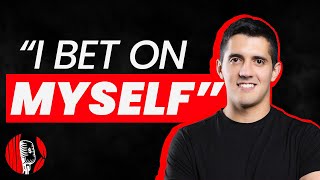
In this episode of the Beyond the Wealth Podcast, Ben Sharf shares his unconventional path from a corporate job offer to founding multiple ventures. He recounts quitting a corporate role just before his start date, joining a fast‑growing COVID‑testing startup, and later moving into a business‑development role at GoPuff where he helped pioneer instant‑delivery integrations for Shopify merchants. Those experiences taught him the balance between process and progress, the importance of delusional optimism, and the power of super‑connecting. Ben explains the problem he sees in the Shopify ecosystem—fragmented app stacks, costly agencies, and misaligned incentives—and introduces Platter, a theme‑and‑app bundle that consolidates over 40 functionalities, reduces tech debt, and boosts conversion rates. He also discusses his parallel content projects (the Turning Pro podcast and the “Birthday Series” video adventures), the role of sobriety in his productivity, and his long‑term vision of freedom, financial independence, and continual personal growth. Throughout, he emphasizes grit from his Division I hockey background, a bias for action, and the need for self‑belief when negotiating with brands like Nike.
Chapters
I don't want to be forced to live a life that I didn't choose for whatever external reasons that is. And so I think that I, you know, the quote that resonates with me in that regard is like, live the next few years of your life like most people won't so you can live the rest of your life like most people can.
Welcome back to the Beyond the Wealth Podcast. Today we have Ben Sharf. Ben is building a software company that we're going to dive into. He's got a podcast and he's also got a YouTube series. I'm really excited because we just talked about it beforehand. I've had some technical issues in the other episodes, which I'm sure you guys have seen. This is a guest that will probably understand and feel for me if something does happen, but we're shooting for a perfect episode. So thank you, man, for coming on the show.
Thanks for having me. Appreciate it.
Yeah. I like to jump right into it. Regret hurts a lot more than failure. What does that quote mean to you?
Yeah, I mean, I think there's— I think a lot of people talk about having dreams and wanted to do things, but they're too scared to try things. And then a decade goes by and they can't believe that they never actually tried to live the life they wanted to live. Oftentimes it's the life that other people want you to live. And so for me, that quote became a really big part of my life because I gave up my corporate job 12 hours before my first day. Yep. And I think I fell into this trap of watching everyone around me who thought that the normal path was go to school, get a corporate job for a couple years, and then once you get the pedigree and the experience, you can go on and do whatever you want. And so being in that environment, like everyone else, I went and got the best corporate job that I could. And then once I got it, I just, at my core, I was like, this doesn't, this doesn't feel right to me, you know, like I joked that I, in college, I'd get the Sunday scaries because I just, it was like, oh, I gotta wake up and do another week of school. And I didn't like school and I felt like getting a corporate job, I would have the same feeling. Like you wake up Monday morning and you just, it's stress and anxiety. But for me, I knew that it was possible to actually wake up every day and be excited by what you're working on. And I knew at my core that I always wanted to be an entrepreneur. And so I told myself, you can either, follow the path that other people want for you, or at least give it a try, right? So to me, it's if you fail trying, it's better than never knowing what the outcome could have been.
Yeah, no, I think that's spot on. And the Sunday scaries is a funny thing. I haven't thought about those like since being in college, like that Monday morning class is horrid. So you, you got that job 12 hours before. I know you had the opportunity to defer for a year. You said, screw it, I'm not going. You tell your parents you're not going to go. You get to go out and get a year to try things. What did the COVID testing job provide you that said, you know what, I'll give that a try? Like, what resonated more with that than the corporate gig?
I think it was the opportunity to like own your own destiny and like create something for yourself, right? Like, I, I wasn't the founder of the company, but it was a very small company. There was no time for people to just sit there and be micromanaging. A lot of these corporate jobs have very structured programs. No matter how much of a great performer you are, there's a ceiling on your opportunity in the early days. In an instance like this, it's chaos and it's what you make of it, right? So you kind of just get thrown into the fire. If they trust you at an early-stage startup, it's what you make of it. I had a team of 60 people working under me within 2 months. That's awesome, right? So it was just the opportunity to jump on a rocket ship early on, not knowing what was gonna happen, and 5 months later it was a $50 million company. And I couldn't believe it, and then once that happened, I was like, there's no way I'm going back to a corporate job because I just got exposed to the other side of the coin to see what's possible when you can create your own luck. And I've always been someone that wants to bet on myself. I can sleep at night if something doesn't work if I know that I gave it my all and I was the one who was convicted. Had more control over the outcome than me just having to depend on someone else all the time. And so I think getting to step my foot into the unknown of the startup world while having a safety net, because I hypothetically, if it all really failed, could have gone back to the corporate job. Yeah, it was a really unique situation that many people don't get to experience because typically when you want to become an entrepreneur, you're kind of jumping into it with no backdrop. So I told myself I'd be silly to not at least try, and then once I tried, there was no going back.
Yeah, and I give you a lot of credit too for that because that is a really unique opportunity and there's not a lot of times where you get to go bet on yourself with an insurance blanket. And kudos to you for standing— I mean, standing up might not be the great way to put it, but like being able to tell your parents, hey, like I'm not just going to mess around for a year. Like I'm going to use this year to prove to myself that I don't need this job. And then you were able to actually go ahead and do it. And then that, I love like the startup mentality because it's something that's very attractive to me. I work in corporate America at one of the most desirable companies selling software and it's an amazing gig, but I get that issue where it's like, man, I've got like really good ideas and like I could really change things up, but I can't, like I actually can't because of the fact that there's 8 or 9 people above me that if I make the decision, it's like, well, Why didn't I think of that? Like, I can't approve that, it looks bad on me. So it's really cool that you got that experience in that like very, very high stakes environment. Like that COVID testing business had a small margin of error to go and scale because everybody was jumping in. What did you learn at that business that you were able to take to where you're at now?
Uh, not the delineation between process and progress. Is a very important one in the early days of building a company, where if you want to move fast, you— it's an art and science. Like, you have to know when to implement process versus just prioritizing progress. And a company like that, and day one was just go, it was just progress, progress, progress. And then it finally got to a point where it's like, all right, we got to take a step back, implement some process to make this sustainable and scalable. But I think not falling into this trap of over-engineering things that just don't need to be over-engineered, right? Like, I— you, as a first-time founder or early-stage founder, you look around at other companies, and oftentimes bigger companies that you're familiar with, and you see that they have these very robust systems and processes, and then you feel the need to try to do something similar to what they're doing without remembering the fact that you're still early stage, right? Like, big companies still use Google Sheets to like manage anything, whether it's just like client count or revenue, whatever it might be. And so I think that, that experience for me really helped me like check in with myself every step of the way of like, should we implement process here? Should we, should we? Knowing when the right time was, and that really allowed us, I think, to move quick with my company. And then I think the second thing too is that people don't believe it or believe you or think you're doing something that's real until it is. Right? You're the only person whose vision needs to never waver from where you're trying to get to. Because everyone else around you will always have moments of doubt and they'll write you off and they won't believe you until they do. Right? Like, I think the analogy that I use is when a founder sells their company and it's deemed an overnight success where you were poor yesterday and now you're rich today. But it's, you know, a culmination of years and years and years of building, waiting for that moment or that opportunity to happen to you. But the unwavering self-belief is just so important starting something because no startup is a linear path ever.
Yeah. And I love that you highlight that because I always try and take away from each guest, like, what are some of the baseline things that they need or that they do to be successful? And like across the board, like, what are some similarities? And like borderline delusional self-confidence. Is like by far the trait across the board that everybody has.
I don't even think it's borderline, I think it's actually delusional optimism. It's a real thing. You know who speaks about this a lot or has in the past is Gary Vee. Yeah. You have to be delusional and optimistic if you want. Starting a company is kind of crazy.
It is. I mean, it is like 9 out of 10 will fail. You're gonna put, you're gonna work double the hours you would at your corporate gig. You're gonna make probably 3 times less than you would during that period. Like, there's so many negatives and very few positives, and you need to be able to just be obsessed with those positives and continue to push forward. It's not made for everybody. Like, we have this culture now that glorifies entrepreneurship and tells everybody that you should try it, and I'm all for it, but not everybody's built for entrepreneurship, not even close. And I think that, like, this example, like, you as an example, like, having that not even beyond, like borderline, like delusional self-confidence is the reason why you will succeed.
I think you bring up a good point though, and I, I have a huge problem with it, how from the outside looking in of social media that entrepreneurship is most often perceived to be the most glamorous lifestyle ever.
It's hilarious.
There's a lot of people out there, you know, they, they have all the nice watches and the nice cars and all the things that— and then you have a subset of people who just latch on to them as the people they follow and look up to and you're just chasing an unattainable thing. That is not what entrepreneurship is. Entrepreneurship is the 99% of the stuff you don't see on social media, where you're on the phone with your co-founders at 2 o'clock in the morning, just like, our business is going to zero, we just lost our biggest customer, and our employee quit, and our investor's not happy, you know, like all these things. And so it's really important for people who are interested in it to look inward and ask themselves, why do you wanna do it? Because if you're doing it because you think you're gonna get to that lifestyle that you're seeing on Instagram Reels because someone had an editor put together something really crazy, check in with yourself. Because to get to that point, you need to go through all the other things first.
Yeah, and I love highlighting that because I'm a big advocate for the fact that entrepreneurship isn't what you're seeing online. Like, it's not even close. Like, all of the people that make entrepreneurship look fun unfortunately are most likely selling you on a course or on a program on how to become an entrepreneur, where like my best advice is just go start something, and if you don't like it, just stop and go get a corporate job, or go work for somebody who is an entrepreneur, and then go decide if you really like it. Like, you don't need to pay somebody to show you. And that's not mentorship, because I think mentorship is really important, and finding great mentors, some paid, some not paid, is really important. But don't go buy a course on entrepreneurship just because you saw someone's Instagram reel in a Lamborghini. I've met enough of those people to say 99% of them are rented. 99% of what they're doing isn't real, and it's all for what they're trying to do is— and they did it, they got you to be interested and get you in. That should be the red flag. Real entrepreneurship is what you said, being up at 2 in the morning thinking your business is going to go to zero. Dealing with managing people, like all the not things that wouldn't be posted because nobody would care about it. And that's what real entrepreneurship is.
The highs are really high, the lows are really low, and it's an addiction. Like, it's an obsession. You go through, you eat so much shit for that one thing that clicks. You're like, oh my God, this is— I now remember like why I started doing this or why I am doing this. And I think you mentioned it before, it's not for everyone, but something someone said to me a few years ago, a mentor of mine, was, would you rather bet on the entrepreneur who read about building companies for 10 years or just actually built companies for 10 years?
Yeah, I'd rather.
You need to, I think the other common thread of high performers, aside from the delusional optimism, is a bias for action. They just get shit done. Yeah. You just, you go forward. It doesn't matter what's in your way. You figure out how to get forward and just keep making progress because there's always gonna be another issue that when you solve one issue, it's just, it's time to solve the next one.
Yeah.
There's always gonna be something else to do too. I think something that I struggle with is like turning off my brain, right? Like it's, it's a 24/7 thing. I, I joke, one of my co-founders in my company that I'm working on right now is a childhood best friend of mine. And we were at a bachelor party for one of our other best friends a couple months ago. And we were actually out at a club sitting in the corner. Like, we had a table, we were sitting in the corner actually talking about our business, and one of the other kids came over and said, 'Can you guys shut up? Like, this is pathetic.' And I was like, 'Sorry.' Like, I'm, I'm glad you just called me out on this to like help me snap out of it. But that's when you know that it's actually real, is when you can't stop thinking about it versus you have to try to force yourself to get excited by it. That's when you know you're doing something that you should be doing.
Yeah, no, I think that's spot on. And it's funny, I had I had a previous company with a best friend of mine and it was the same issue. It's like we're hanging out with people, we're doing stuff, but it's like, guys, shut up. Like, we don't care about your business. I mean, not that we don't care, we don't care about it right now. Yeah, we want to enjoy what we're doing. So you were a Division I hockey player, college athlete, athlete your whole life. I played baseball, college athlete. What skills, because almost anybody, almost all the entrepreneurs I interviewed were athletes, and most of them at a high level, which I think is really interesting. What do you think you learned being a high-intensity athlete that you were able to take over to what you're doing now in business?
The grit and the competition, just wanting to be the best. It's not something you can teach someone. I think that as you go up the ranks as an athlete, you start to learn the common thread of all the people around you. It's like, you don't It's very rare that someone trips and falls into those situations. I think it's the willingness to want to be the best version of yourself all the time, regardless of those around you, and just like pushing yourself to new limits. You can't teach that mindset and that obsession. I think it's very real. I don't know the statistic, but if you look it up, it's pretty mind-blowing. Like the percentage of— I think it's like percentage of Fortune 500 company CEOs that are former athletes is It's like in the 90s percentile. And I think that's because I, at least for me personally, it's like taking all that energy that I devoted to hockey for so long. It's like the energy, the sacrifice, the commitment. And once hockey was done, I still have that desire to allocate that to something. And it was finding that next thing, which was starting a company. And so for me, the same level of commitment and routine that I put into trying to be the best version of a hockey player that I could is now that as an entrepreneur.
Yeah, and I think people overlook the intensity of being a young athlete and going through all of that time. Like, you're 12, 13 years old in a car with your parents every weekend at tournaments. You spend more time with your teammates and coaches than you do with your brothers, sisters, and parents. You're going to high school in one of the most intense social times of your life, but no matter what, there's always a before school, after school, and on the weekend obligation that you have. You go to college, it's the same thing. The amount of discipline and ability to understand what it's like to put your whole body into something is something that if you don't play sports, I think it's hard to really comprehend. Like, you can get it, but I don't think you can feel it like you did. Like, those days where you've played 4 games in a week, you practice every other day, you're on the 8th week of the season, like, that's when you gotta really dig deep And I think a lot of what you learn in those moments at a young age gets kind of like ingrained into you. And then when you go and start a business, you're back in the trenches. There's a gun pointed at the back of your head. You're working in high intensity kind of situations all the time. That comes right back out of you and starts to show again because it's natural.
And I, but I think in a weird way you crave that. Oh yeah. Oh yeah. I moved away from home when I was 15. I went to a boarding school. I then lived in Western Canada. Alberta for a year. So I was out into the world at a very young age because of hockey. And so you talk about that discipline and that sacrifice, being forced to grow up a lot younger than normal. And then those other kids around me are the only ones who can relate to like what it is that I'm doing. And then I felt like when I transitioned to becoming an entrepreneur, the only ones who can relate to the life that I'm living are my other friends who started a company. Rather, it's not that working a corporate job is wrong or bad. It's just different. And there's, there's a right and wrong for every individual, and it's on you to know what's best for you. But I'm someone who needs to be in those like chaotic environments. Like I just, I seek chaos for better or for worse, and I enjoy it and I love to like work through it despite it being stressful. It's rewarding.
And I think it's important that you mention that because just because you love it doesn't mean it's easy. And some people will say, oh, well, like, I think I like it, but it seems hard, so I'm just going to go the easy route. But you just touched on how rewarding it is to go and push yourself and be in those uncomfortable, chaotic situations. And that takes a lot of, like, self-awareness to know that that's the environment that Ben operates best in, so that's where I'm going to put myself.
Doing hard things is something I enjoy, and I know that's a common thread of a lot of my founder friends around me said, you seek uncomfortable situations because those are the situations where you're going to grow. When you force yourself to do something that feels not normal.
Yeah. So the COVID startup blows up, you then get connected to somebody from GoPuff. Everybody listening at this point definitely knows what GoPuff is. It's a, it's a huge brand. What did that opportunity at GoPuff look like and how did it come about?
Yeah. So I finished working at the COVID testing startup about 3 weeks before my first day at the corporate job was supposed to start. And I was out in LA visiting my 2 sisters at the time. In this moment, I was planning on going to work at EY, which is where my corporate job was. And a mentor of mine had introduced me to another mentee of his. He's like, I think you 2 should meet. So we arranged to have breakfast when I was out in LA. And we started talking and had a ton of mutuals. He was asking me about what I was working on and we were just having conversation. One thing led to the next and he looked at me and he goes, do you have any interest in coming and doing BD, business development at GoPuff? And in the back of my mind, I was like, that sounds very interesting because I knew early on in college when I got the corporate job, the goal was to, I thought the goal was to work at a corporate job for 2 years and then go get a business development role at a high-growth tech startup. And so when this opportunity presented itself in the back of my head, I thought to myself, you're telling me that I could skip, you know, a step on the ladder. Why would I go one step back to go two steps forward when I can just go forward? And so I told him I was interested in the opportunity, but then my job was starting in like 2.5 weeks. And so I went through 7 rounds of interviews in 9 days. They gave me an offer 48 hours before. I countered 24 hours before, and then we agreed 12 hours before, and I signed the paper and told UI that I wasn't coming anymore and ended up joining GoPuff. I spent a year there. Majority of my time was spent working on a business unit that was essentially unlocking instant delivery for dot-com websites. So the idea was that if you went to liquiddeath.com to buy a case of water and the SKUs in your basket were geofenced— sorry, in the fulfillment center that was geofenced within the delivery address, we would surface GoPuff on the e-commerce website as an instant delivery option, which was revolutionary for dot-com. It was basically taking Amazon, which was 2-day delivery at the time, or now I guess 1 day, um, and bringing that down to 30 minutes while you also being able to own your customer on your own website versus on Amazon because they don't own their customers on Amazon. So it was really an insane concept, and the only way that it actually works is if you have enough market share and you cover enough ground in the US to actually allow enough customers to use a service like this. And through that process, I spoke to so many brands and people in the e-commerce ecosystem. That was kind of my first entry point into this world that then eventually led me to now starting what is called Platter. Dude, that—
I mean, one, that concept is amazing. And it's, it's pretty impressive, like, to think of that. That's like the Amazon of food, but Amazon on steroids. There's definitely people listening now who are thinking, all right, well, Ben just worked at this COVID startup. He hasn't done anything out of college other than that. Like, what qualifies him to go and get a big role at GoPuff like that? What do you think the people at GoPuff saw in you that was like, you know what, let's take a bet on this individual?
Couple things. I think the first one is curiosity, right? Like just having, having innate curiosity shows other people that you want to learn and you are willing to learn. I think the second piece to it is that I always say that my superpower is super connecting. My network is my, my superpower. And so being in a role like this, when the guy that I first met realized that I knew all the same people as him, he had the faith that I would be able to get a seat at the tables that I needed to, to get us to where we wanted to go. And then I think the third piece of it is that undeniably my operational, uh, and execution experience at the COVID testing startup spoke for itself, where yeah, I was a little green and there was going to be a learning curve, uh, for sure. But I think you want someone who comes from that hustle environment, understands how to solve problems when they don't have a silver platter with all the rules and guidelines on how they do things. Like, you need to be a problem solver. Um, being able to learn how to learn is very important. And ultimately, like, they're at some point or another, it takes a little bit of a leap of faith, right? I'm thankful that they did that because it, you know, it helped me get to where I am today.
Yeah, that's something you mentioned there I wanted to touch on. You, you mentioned on a couple other podcasts that you're a super connector, you have a really strong network. What would you say to the person that's listening right now that wants to grow a big network but is struggling with the piece of adding value to others for free?
It's a really, it's a really good question, and it's one that's talked about a lot. I think the first one is that not enough people— so a couple things. The first one is that not enough people truly try to understand what other people are struggling with or what they're trying to solve. So the only way that you can add value to someone is by understanding their problem. Right, like if you don't actually know what they're looking for, you're not able to give them something back that's valuable. I think the second piece of it is that you need to have confidence and conviction. You know, fake it till you make it is not that far off from it, but if you don't believe in yourself that you deserve a seat at the table with a certain person, like they're sure as hell not gonna believe in you. Yeah, right. I had a friend of mine who sold his company for $50 million at 27 years old and And one of the biggest things that I learned from him, as simple as it sounds, is just self-belief. It's like if you don't truly internalize something and believe something, I could tell you for a fact the person across the table won't either. And so the second that you get out of this mindset that thinking, all because someone else has a bigger title than you, has made more money than you, or is more successful than you, that you're not qualified to add value to them or to help them, it's not true. People don't have it figured out. There's a lot of very highly successful people who are coming to people like me and you that are looking to to solve one problem or another. So I think it's having the confidence and conviction that you deserve a seat at the table and that you should be the one having the conversation. The second one is having a better understanding of what someone's problems are to be able to actually help solve them. And then I think the third one is, and this is the, the superpower per se, but it's really being able to talk to someone and then understand who else in your network can actually help solve whatever the issue is that they're looking for. And it's funny because the way that I operate in that sense is like if I talk to someone and they say something to me and it just like a light bulb goes off in my head, like I'll fire off 5 intros on the spot. 'Cause if I don't do it right now and then, like I'll forget about it. And I think it's one of those things that you just gotta work at it and build it and it compounds over time and eventually it just becomes a really strong asset for you. But I think the fourth piece of it is you have to know what your superpower is, right? It's not one of those things where you can force it to be something that it's not. I wish I could sing and be an actor, you know, but like, that's not my superpower, right? So it's, it's about figuring out what you're good at. And I think the best quote I heard that made me spend more time on it was, make your A's A pluses and find someone else to do your C's for you.
Yeah, I've got that written down here. I heard that, that you mentioned. That's the first time I'd ever heard that, and I love that quote now. I'm definitely gonna use it on other podcasts, but I knew you'd mention it in this one. Um, okay, so you're at GoPuff, you're, you're working in this, you're trying to accelerate this Shopify arm that they have to integrate— well, maybe it's just.com, not Shopify specific.
It was actually Shopify specific.
Yeah, okay, great. So you're in that niche, you're meeting all these brands that are wanting to use this service. At what point did you realize, hey, I think I've got something here in this niche that I can go build on my own?
It was twofold. I think the first one was that I definitely approached it with the lens of knowing I wanted to start my own company and my co-founders had a curiosity in this ecosystem. But the second one was after enough conversations, recognizing that the same things were coming up over and over and the same pain points and the same blockers that ultimately I realized there was a problem that needed to be solved. Didn't necessarily know how to solve the problem, but it was enough. There was enough conviction that it was worth my time to go explore this like dataset of problems that I was interested in, which it is now what our business is. It's built around a couple core theses. So like the first one, I guess I'll preface this. I don't know what percentage of your audience is really familiar with how Shopify works in general.
Give an overview.
Just to simplify it, like when you think about an iPhone in the App Store, like every time you want to add functionality on your phone, you go to the App Store and buy an app, right? Whether it's a map app or a calculator, whatever it is, Shopify enables the same thing for e-commerce websites. So if you want to add certain functionality to your storefront, you have a couple options. The most common one in today's day and age is going to the Shopify App Store and you download an app that does one specific thing for you. Now, the challenge with that is that a lot of the apps in the Shopify ecosystem are features, not products. Yeah. And so what happens is stores get stuck with too many apps, which means too many support teams, too many monthly expenses, a bloated tech stack, which then results in a reduction in your conversion. The second piece to it is that at large, development agencies are disincentivized from productizing the process of building a high-converting ecommerce storefront because they get paid for their time. Yep. So it's a misconception that building a high-converting storefront is really expensive, it takes a really long time. It's just because there's a misalignment with incentives between a brand and a vendor that's helping the brand. And the third piece of it is that the innovation that's happening, it moves at the speed of light, and a lot of times you have people who are brand builders but they're not ecommerce nerds. So they actually want someone who can tell them what they should be using, when they should be using it, how they should be using it, so they can focus on building their brand, right? So to tie that all together, what Platter now is, it's a theme and app bundle which includes over 40 categories of app functionality built into it. What we do is we natively build a lot of the most popular functionality around marketing and conversion into one solution. To unify your app stack, your support teams, your monthly expenses, and then we provide best practices around CRO, which is conversion rate optimization, to increase your conversion rate and your average order value so we can quantify making you money and saving you money at the same time.
So you have 40 natively built features in there. If I'm a customer and I want to subscribe, do I need to use all 40? Do I get to pick which ones work best for me? Do you guys suggest that?
So we'll give you, if you want our recommendation, we'll tell you. But the reason the name of the company is Platter is like we build all these different options and you can pick your platter and choose what you want to use and how you want to use it. It's just on us to give you the optionality and guidance if you want it and what we recommend.
So I'm sure you've ruffled a few feathers in the Shopify app space because I mean, you're calling it out like as point-blank as it is, all of these point solutions have no incentive to really like grow because they want you to just be focused on that one thing. And then all the agencies that push the point solutions have no incentive for them to get bigger because the more time they spend on the project, the more they get paid. You guys come in now and offer this kind of white glove à la carte solution where, hey, well, I could just go work with Ben Sharf and get all this done right now. You're saving me time, you're saving me money, you're making me more money on top of that. What founder, Shopify owner, website owner would say no? What, like, what have the reviews been as you've started to onboard clients and work with bigger clients? Because I looked at your website, you have some amazing brands that you've gotten the chance to work with them that you're probably still working with. What is the feedback then?
I mean, it's been fantastic. There's been a couple people who genuinely didn't believe us. I have one in particular, it's a brand that we're working with. The operator is a very experienced operator, has built a couple companies in the past. I'll never forget my first call with her. She came to me and said, hey, we're looking to build our new website. I got a quote from an agency, I'm looking for a second quote just to compare. And the first quote she got was for $100K over the course of 8 months to build the website.
Wow.
Ours, the quote we gave at the time was, I mean, ballpark, it was 80% less. Wow. Or more. And we did it in under 60 days. And when I put that offer in front of her originally, she's like, I don't get it. Like, are you scamming me here? Like, truly, she didn't believe me.
Yeah.
And I was like, no, like, this is the problem we're solving. Like, what you— the other quote you're looking at shouldn't even exist. And so there's been some disbelief in that regard, but beyond that, it's working.
I mean, that's insane. And it's funny, and we'll talk off camera about this, but in my corporate job, a lot of these things that you mentioned are in my world, just at a massive scale. So I have a bunch of stuff to debrief with you once we get off the cameras. How have you been able to navigate? Because I'm 100% not surprised that she thought you were scamming her. I mean, $100,000 bill down to, let's say, $20,000. Well, how do you go and deal with that objection? Because that's a massive delta, and you're telling them you're going to provide the same value. How do you go in and win that person over and get them to trust that you're actually going to deliver?
Yeah, I mean, the first couple are the hardest because you're selling the dream, but beyond that, you just let— you let like the data and the case studies do the talking, right? Like, we have customers that are always willing to get on calls to be references for prospects. We have case studies that have real results to show you that it's real. And I think that's the hardest part of any, you know, first business— a new business is getting your first couple champion customers who are crazy enough to like pay money for something from someone who has no proof that whatever they're selling you is actually going to work. But it's very important as a founder, find your champion customers, keep them close to you, and treat them right because they will be the ones that help propel you to the next phase. Because now we're at a point where we're getting inbound people like, oh hey, I saw you work with Brand X or Brand Y, we would love to talk. Yeah, but it's how do you get that Brand X and that Brand Y to then feel that compound effect of these other people wanting to come to the table.
Yeah, none I love that, like, keep your champions close because those are special people. People that are willing to take bets on founders that are new like yourself in that moment in the early stages should be, should be held on a pedestal because they really are the backbone to all of these startups. Because it takes a lot of guts to go— you've got management hounding down on you, you're trying to figure out what the best way to build your company, or if you're a solo founder, you're putting a lot of faith in you to deliver the results that they're paying for in that moment.
Like, those people are really important to this ecosystem, especially because our ask to them is actually to like migrate their entire storefront to a new infrastructure. Like, our— it's not a small— that was probably, I would say, the most mind-blowing part of this whole thing to me is how successful we've been able to be at convincing a 7, 8, 8-figure brand to switch their entire website over to our solution.
Yeah, it's a huge ask. They're already making 8 figures.
Yeah.
How, like, they're like, well, what if we break something? Like, what if something happens here? Man, I would love to be a fly on the wall in those conversations because that's got to be deep in the trenches right there of like, you're probably getting some really deep objections on like, well, we're making this much, what if this happens, what if this happens? Is it typically you that's running all of those like sales conversations, or do you have one of your co-founders usually owns that?
Yeah, so we're 3 co-founders. One is technical, does everything product engineering, and then the other 2 of us, me and one other, are both selling right now. I am getting close to the point where I'll probably start to delegate more of it to him just as a function of bandwidth, and because our team is growing, like, we're, we're about to be like almost 20 people. Um, so there's just like a lot of a lot going on. But right, I love selling, it's so fun. And, and we're, we're at a point now where it's kind of a well-oiled machine where I can get ahead of every single question that I know is coming. And we're able to— we've been able to structure in a way where we'll walk brands through like an audit of their existing website and basically just use enough examples to show them like why they should be doing this instead of that. And they get to the end of the call and they're like, I can't argue with you. Like, this is objectively— it's objectively clear to me, like, why this is a better alternative to what I have for these reasons. Because to the same point you made about you're already doing 8 figures in revenue, why would you switch? On the flip side of that is you're already doing 8 figures in revenue, so if I can make incremental improvements for you, you're gonna actually see a lot of money come back to the door. So for a brand, let's just say doing $10 million a year If I can increase their conversion rate by like a quarter percent or half of a percent and my solution is only a couple hundred bucks a month after the implementation, it pays for itself like 100 times over.
Oh yeah. I mean, that's amazing. Like just the way that it all works from that perspective. So it's funny as I, when I'm always watching my guests on other interviews, I try and pick up on what areas of the conversation or what topics really you can tell that they're very passionate and excited about. And not to say that you're not insanely passionate about Platter and what you're building, but it seems like when you talk about the content side that you get really excited about what you're doing, what you're building. You have a podcast now that you just started. You filmed 27 episodes before you even launched one to prove that you'd be consistent. And then you created this birthday series, which I had never heard of the birthday series. I think it's awesome. Like, literally, I think it's so awesome. I went and watched all of them yesterday, started with the run. The concept of it is genius, and I'm super excited to now follow that journey. But at what point did you say, okay, I've built what I'm— I've built a business here that can operate not completely without you, but you can step a little bit away? At what point did you say it's time to crack on the content?
To be honest with you, I think something that's been really important to me is figuring out a way that if I'm doing content of any kind, that it's actually conducive and additive to the core thing versus the opposite, right? Like, I mean, look, I'll be the first to admit that the birthday series is so much fun, but it's so much work. And like, I, I'm— you're— it's probably gonna be on pause for a little bit right now just because it's it really is a full-time thing.
Yeah.
Um, but I don't want to like lose sight of the fact that like the first episode we did, for example, we had 21 brand sponsors and 4 of them are now customers of Platter. So like, yeah, there is— my thesis behind it is real. Like, I know that it works, but at the same time, like, there is just a time element to it. And I think I— yeah, I don't know, the content thing's so interesting for me because I love it. It's a lot of fun. I'm very fascinated just by how you can increase your surface area of eyeballs and attention with just one video or one— like, there's a misconception between how many followers or subscribers you have and the value that you can get back from putting out content, because all it takes is one person to resonate with something that you do, and that could be the person that changes your life or whatever, whatever way it is. I think Birthday Series for me was kind of the intersection of all the things that I enjoy, which is like adventures uh, with cool people and working with cool brands, and it all just kind of gets married together. But ultimately, like, right now, because Platter is taking off and it's just taking up so much of my time, I've told myself that, like, Birthday Series is one of those things where I can come back to it in a few years. Like, it'll always be there. And right now, any content that I'm putting out into the world, it needs to be additive to what I'm doing with Platter one way or another. Um, But the content is fun.
Yeah, no, I mean, look, I just— I jumped into this content journey 11 months ago, and it is a shitload of work. Like, like, I don't want any— and I say this a lot, so anybody that regularly listens knows, like, it is not easy. It is a blast, but it is not easy. I actually think it's most of the times harder than just doing a traditional business behind closed doors because you got to be ready to show up on camera all the time. You got to be thinking of content. You got to be finding guests for my specific sake, like the podcast. Same for you. It is a lot of work. Like, it is not something that you could just do for fun because you need to put almost all of your effort into it to really put out a great product.
Yeah, I mean, I think my, my favorite piece of content that I've ever put out is probably the behind-the-scenes video, uh, for the Montauk to Manhattan run that we did. Because that was the closest I was able to get to actually try to show someone like what it takes to make something. Because typically any— not any, but a lot of videos that you see out in the world are usually a polished version of whatever the thing is that you're working on, but it's not always reality. Yeah, you have a call, you know, and right now like the best creators in the world are the vulnerable ones who do just have like this, you know, raw, unfiltered approach, but Though the Birthday Series videos are more of a polished thing. I mean, with your podcast, you're doing post-production, you know, you're editing things here and there, whatever it looks like. But man, I was— the only reason I was able to do, I think, what I did was because of how naive I was to what was actually required to accomplish, uh, building a company, doing content at scale. It's crazy. I'm, I'm very fortunate now, at least on the podcast side, where it's pretty automated. Because we've been able to put like an infrastructure and a process in place. And then on the Birthday Series side, I was also fortunate to have a lot of the right people around me, but that doesn't take away from the amount of mindshare and stress and time that goes into it. And so I think for me, I'm sure at some point I'll like jump back into it headfirst, but it's its own beast is kind of what I've come to terms with, and I'm trying to be honest with myself about it.
Yeah, no, and again, like back to being very self-aware, like most people would say, you know what, I'm just going to continue to push forward. I'll spread myself super thin. I'm going to focus on Birthday Series. I'm going to do the podcast. I'm going to build Platter. But that's not always the right move. That honestly, it's borderline selfish to do something like that when you have one business that's crushing it. And I think that happens to a lot of people. Like, they have a business that's crushing it, but then they kind of see the shiny object and get really attracted to this fun, like, new style of business, which is creating, and then you don't give the proper love to this business that's making you the money and crushing it. So I think it's really commendable that you're willing to say, you know what, I loved what I was doing here, but I need to pause because I need to focus on this business that's blowing up right in front of my eyes.
I'm very honest with myself though, like, the shiny object syndrome has always been an issue for me because I'm just someone that has a million and one ideas in my head all the time, and I always come up with new things and want to do new things. And my favorite part of business building is definitely that like zero to one phase where you just take like an idea in your head and actually watch it come to life. And so I, you know, I would do that with my company and my podcast and the YouTube, and I was like all over the place. And I don't know, I don't even know what it was, but I just woke up one day and like a, a switch went off where I just realized like I actually want to just lock in on this because it's working right now and I'm really enjoying it. The podcast is very additive to what I'm doing. Yeah, because it's a lot of like the people in the industry and the relationships have been extremely helpful and it's now not time-consuming at all. Birthday Series definitely was a little bit of like a veer off the path, but there were still benefits there. But now I'm at a point where it's like, you know, build the business, have a successful outcome, and then you can kind of decide what you want to do from from there, but I think that focus is definitely really important and it's something that I think I underestimated. But again, it's because you fall into this trap of looking at what other people do on the internet. So it's like, if this guy can have 9 businesses, like, why can't I? It's like, it's not really reality. Like, there's, there's some people that can do that, but that's because they have the cash to be able to do it.
Yeah, they're— they have hired enough people to make it work that we're not seeing. They're not a solopreneur running 9 companies, all of us. But that's what it looks like to the outside. So, I mean, people are going to listen to this, hear the Birthday Series, look it up, go watch the first video, the run to Montauk, from Montauk to Times Square.
That video is nuts.
It's amazing. Like, it's great. The production was amazing. I have to ask the question that I'm sure you get asked all the time: how did you get Nike to sponsor your first piece of content? You hadn't put any content out. How'd you get Nike to sponsor your first piece of content?
It's a great question. I would say that the way that we went about it, similar to like raising money for a company— the approach we got to getting sponsors was very similar to like raising money for a company in that like you have to create demand and you have to create FOMO. So the way that it essentially unfolded was that we had a very, very solid roster of runners that were participating participating in this episode, some of which were already Nike-sponsored athletes. And we— the first conversation that we actually had with people about it, I was told I was crazy multiple times. It's like, you're not getting Nike. I understand the ambition, but the timeline, so on and so forth. Uh, I basically went about it where I had multiple people backchannel to the decision makers, just like, oh, did you hear about this thing that's going on? You hear about this thing that's happening? Eventually it got to a point where they're like, alright, can someone get me on the phone with these kids? Like, I'm interested now in hearing more. And we got on the phone with them. We had another brand competitive to Nike who had offered to sponsor us, to outfit all the runners and give us money on top of it. And I got on the phone with Nike and we were having a conversation. I was pitching the vision to them and she goes, this is fantastic, we would be more than happy to you know, give you guys some clothing and all the runners could be wearing Nike apparel. And I said to her, I was like, respectfully, we're self-funding this. We had another clothing brand that offered us money and apparel. We have to follow the money because we're paying for this out of pocket. But if you guys were able to match what this other brand gave us from a cash perspective in addition to the apparel, like, we of course we would love to work with Nike.
And so she says to me on the phone, uh, "Keep me till the end of the day, like I gotta talk to my team and see what's possible." And she messaged me 11 minutes after we got off the call and was like, "We're in." I don't know about hockey, but Nike is the pinnacle of sports for all of these, and I'm sure even, because I know hockey has a lot of different sponsors for gear, but Nike, as growing up as a young athlete, like having Nike shorts, Nike Tech, Nike shoes, like it was always the coolest apparel. What was it like to tell Nike, no, we need this and then we'll work? Like, what was it like to counter Nike like that?
Well, the second— I actually forgot to add a very important detail, uh, that you just reminded me of was she asked me on the call, who's the other brand? And in that moment, in my mind, I was like, all right, I have one of two options here, right? Like, I can either tell you the other brand was, and between me and you lose my leverage because it wasn't on the same level as Nike.
Yeah.
Or I could say to her, I don't feel comfortable sharing with you, and putting my nuts on the table and taking a chance. And I looked at her and said, I don't feel comfortable disclosing, uh, who the other brand is.
Sorry, dude, it's crazy. And I've had this conversation with other people Millisecond, seconds of decision-making are the difference between massive outcomes. You say the brand right there and they say, oh great, like, we appreciate it, but you should just work with them. You say, I'm not comfortable sharing, piques their interest, she says, let's do it. That's the difference between you having Nike sponsor your video or another brand. It's insane how such a small margin of error can happen where you either get gifted a huge opportunity or you miss a huge opportunity. And I'm happy that it worked in favor of you there with that bold move of like, I'm about to counter Nike right here and tell them no, we need this and this, and let's see what happens. And then it comes through.
Yeah, I mean, it's the self-belief, it's the confidence and conviction. Yeah, it's like if I didn't believe myself that I could figure this out, I know for sure they would, they would feel that from the other side of the table and say, this is cool, but it's not for us. Yeah, um, yeah, I don't know. I, I joke that like that, that'll probably stick with me forever, to be able to tell someone that I got Nike to sponsor my first video before ever putting out a piece of content.
That is— it's sick. So we've talked through your whole journey here at this point, and you started college athlete, got the corporate gig you thought you wanted to, said, you know what, no, I'm gonna go join a, a fast-growing COVID test startup. From there you get connected to GoPuff, get to go and get involved in the Shopify world, build out a team, learn a lot more. Then you go out and build Platter, have a podcast called Turning Pro, build this birthday series, like all of these amazing accomplishments. There's one moment here that I want to highlight that you have said before was a big turning point. How much did becoming sober affect everything that you've created?
It's a huge piece of it. I think for me— and I, I like to clarify that, like, I'm not fully sober, I just don't drink alcohol. Yeah, but I think it's an important distinction because there is a delineation there. But I think for me, that was probably one of the most game-changing things that I've ever done. I just realized that to be able to operate and function at a high level all the time it's something that I had to do for myself. I just found that when I was drinking in college, I was able to bounce back and it was fine. But post-college, I, I would be hungover for 2 days. I wasn't someone that could wake up and be productive the next day, although I know people who can. And it would make me anxious. And I just realized after long enough, it was just deterring me from what was really important to me and where my priorities were. And so when I trained for my first marathon and I stopped drinking to train for it because I couldn't fathom running hungover for 15 miles on a weekend, I really started to enjoy that feeling of clarity mentally, like waking up on a Saturday and a Sunday being productive. And so then after the marathon, I went back to drinking because I was like, "Oh, the marathon's over, I'll do it again." I did it for like a week and I was like, "I'm done." Right, and I just stopped cold turkey from there. It's been, I don't know, 15 months or something at this point. But I think that it's, for me, you start to see the compounding effects of it and it becomes addicting where I actually, it makes me anxious to think about like going backwards. I don't put pressure on myself where it's like if I sat down one day and I wanted a glass of wine or I wanted to crack a beer, I would. Yeah, it's not like I'm competing with anyone or anything, but I just know that the amount of momentum and the amount of progress that I've made personally and professionally from that moment on has been— it's definitely been— it's undeniable that it's been a huge piece of why.
Amazing. I've been thinking about what I wanted the last question in the conversation to be, and something that I noticed that you mentioned on another podcast is is you like to look at your life in decades. You're not short-sighted, which people on this podcast know I absolutely hate short-sightedness. I think it's like an epidemic that we have going on. Everybody's looking for the why now, what are you gonna give me now? Not looking for what is this gonna do for me in 3, 5, 10 years? So you look at your life in decades, 10 years from now, what does success look like for you?
I mean, I think the first thing for sure is that I never want to live a day where I can't decide what I want to do in that moment of time ever, right? So that to me is like freedom of time. I always joke that I don't want to have to look at a receipt. I think that's just like an egotistical thing to say, but, and I think the other thing too is I just genuinely want to always be doing what makes me fulfilled and what excites me, like, at the expense of nothing. So I don't want to be forced to live a life that I didn't choose, for whatever external reasons that is. And so I think that I— you know, the quote that resonates with me in that regard is like, live the next few years of your life like most people want, so you can live the rest of your life like most people can't.
I love that.
And so I think that to me is like how I carry myself every single day right now, because because I have a vision of where I want to get to. And yeah, it's not very clear necessarily what, you know, a decade from now looks like, but I know directionally like where I'm trying to get to. And I think people lose sight of how important your daily habits are and your incremental win stacks like early on will matter 10 years from now. Because I think the thing that hit me the most when I started to realize that is with hockey, when I was 15, 16 years old, you're just like a young kid having fun, right? And then you wake up at 19, 20, 21, 22, and I was, you know, one of the worst players on the team at 15, and at 22 I was playing at a higher level than 95% of the kids that was on that team when I was 15. But that's because those daily habits mattered. And so I think if you operate with integrity and you're honest with yourself, like, you'll get to where you want to go. And for me, like, that vision is definitely Um, like freedom of time, financial freedom, and just the ability to work on whatever the fuck I want to work on. That excites me, dude.
I love that. I'm sure people listening now want to know where they can follow you, connect with you. What platforms are you most commonly on? And all of your stuff is going to be linked in the bio, but I like to service the people that are too lazy to even click the description. So where should people go to connect with you?
Yeah, I'll make it easy. It's just @bensharf on all socials, LinkedIn, Twitter, Instagram. It's B-E-N-S-H-A-R-F. And then my email is ben@platter.co, which is P-L-A-T-T-E-R.co, uh, if you run an e-commerce brand or interested in learning more about that.
Dude, thank you so much. I know this was short notice. Thank you for being willing to come on the show. I feel like it was kind of like fate. I just randomly messaged you after a few weeks of not talking saying, hey, you want to come on the pod? You're like, I'm in Miami actually again this weekend. So I really appreciate you being flexible and coming through, and this was an amazing conversation.
Thanks, man. I appreciate you having me.
Thank you, brother.
More from Ben









Episode 3-From Boarding School to Building Platter: Ben Sharf on Betting on Yourself

