R4E #59 - Ben Sharf - Co-Founder at Platter
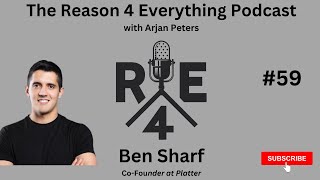
Ben Sharf, CEO of Platter, built a Shopify app bundle that consolidates multiple tools to boost conversion rates and average order value for merchants. He pivoted from hockey at Colgate through EY Parthenon and GoPuff before co-founding Platter, which has gone through four product iterations and raised a pre-seed round.
Chapters
If you've been enjoying R4E, The Reason for Everything podcast, please be sure to like, follow, and subscribe on all platforms or wherever you get your podcasts. Right before we started filming, you said you had a crazy day today. You wanted to film a day in the life video. What went on today that made it so crazy?
Uh, it started in the morning. I'm training for marathon right now, so I have a running coach actually, which is something we can talk about, but the workouts are not easy. Uh, today I did hill sprints on the Williamsburg Bridge, which was a battle, but, uh, started with an hour and a half run. Then I, um, had another podcast this morning that I was interviewed on. And then I had a couple investor meetings and sales calls, and then a meeting at Amazon's office about a partnership we're working on. Um, and then was back for, back for this episode.
Beautiful, beautiful segue. Get the audience up to speed. What do you do? Tell them about Platter. Give them the rundown.
Yeah, so I'm a, I'm a co-founder of a company called Platter, which is a storefront accelerator for Shopify brands. So in its simplest form, we try to help you make more money and save more money at the same time. We natively build a lot of the most popular app functionality into one solution to unify your support teams, your app stack, and your expenses. And then we help give you ways to increase your average order value and your conversion rate. So if we can make you more profitable, we're doing our job.
Beautiful. Now, I've spent time on Shopify. I've built out my storefronts in the past. Layman's terms, what do you guys do for the average listener that's—
Yeah, so in layman's terms, the way that I describe it for for people who aren't as familiar with Shopify, if you understand how the App Store works on an iPhone, it's like every time you want a new functionality on your iPhone, you go to the App Store and you download. It's like, I want a map, I want a calculator, so on and so forth. Shopify has the same thing but for functionality for a storefront. So you want to offer discounts, you want to offer bundles, you go to the Shopify App Store and you download an app. The problem with that is when you start adding all these apps to your store, you're now dealing with a lot of support teams, you have a lot of monthly expenses, and you have a bloated tech stack. Which then makes your store slower. A lot of those apps are features, not products, right? So what we do is we build them all into one solution so we can unify all that, and then we'll give you best practices on how to increase your average order value and your conversion rate. So I can save you money by reducing the amount of apps you use and then make you more money by telling you what functionality to use on your storefront. I can make you more profitable.
So you guys are actually like aggregating those tools together and populating a new, basically like full-on product for your end user?
It's a theme and an app bundle. So every store that lives on Shopify, it goes Shopify, and then you have to build on top of a theme, which is the layer that sits above Shopify. And then above the theme, you add all these apps. We built a theme, and then we have one super app that works in conjunction with our theme. So the idea is to consolidate a lot of the functionality that you need into one solution. But what's valuable about it is as a brand owner, you benefit from the economies of scale because we're giving you functionality that we've been building for 2 years into one solution at a fraction of the cost.
Nice. Okay.
All right.
I'm going to pull it back because I could— I went right into the rabbit hole because it's fascinating to me, but I want to make sure we don't brush past how you got to where you are. So you're what, 26?
27.
27. You know, typical 27-year-old working in their corporate job. We talk about this all the time on the show here. How did you make the jump? Give us a little bit of rundown in terms of how you got to where you are today.
Yeah, so I played Division I hockey at Colgate University, was planning to potentially play professionally after that. I graduated in 2020. COVID flipped everything upside down. We beat Brown University in overtime in the first round of playoffs, and 2 days later our athletic director walked in the locker room and said, your season's over, which That's, you know, that's a story we could unpack much deeper. It really just changed everything in my life, that exact moment. I also at the time had a corporate M&A job lined up, uh, at one of the Big Four consulting firms. And when COVID hit, they gave us all the incoming analysts an option to defer for a year because they didn't know what was going to happen to their business. And so they wanted to like do whatever they could to their balance sheet to just like make their own business work. And so it's very hard with kids graduating to like take jobs away. So it's like, take option for a year, come back in a year, and then we'll have a spot for you, right? Right. Colgate was a very corporate competitive school, and so I fell into this trap of go get the best banking or consulting job that you did. And I'm a competitive kid, so I just went and got this job. And then when they gave us the option to defer for a year, I took the option because I knew at my core that I was entrepreneurial. And I feel like I was listening to everyone around me on what I should do. And then once I was given this option to defer I feel like it was a blessing in disguise for me to have an option call to go try out new things, knowing that if it all failed, I still had a safety net waiting for me. So I ended up joining an early-stage COVID testing startup that scaled to $50 million in revenue in 5 months and 800 employees. And I was there for a period of time. When that ended, basically the, the quick version of the story is it went from an LLC to a C-Corp and it was a cash cow, and then they were trying to build a real business out of it and just a lot of people weren't aligned with what the vision was for it. So it was just like, it served its purpose, but it was time to move on. And I, I had about 3 weeks between when I stopped working there and when my first day at EY was going to be. I have no problem sharing where it was, it was EY Parthenon, but, uh, when my first day was going to be. And so I was kind of just hanging out. I went to LA to visit my sisters and a mentor of mine wanted to introduce me to another mentee of his who happened to be in LA. So I went to get breakfast with him. And we were talking and he's like, oh, what do you do? And I was like, funny you ask. I did this, but now I'm going to do this other thing. I'm kind of in transition. And we started talking and we had a lot of the same mutuals. And he looked at me and he goes, would you have any interest in doing business development at GoPuff?
Huh?
Are you familiar with GoPuff?
Yeah, very familiar.
And so when he said that to me, I was like, it's interesting, but my job starts in 3 weeks, so I don't know what kind of timelines you're working with, but I'm not leaving it to chance. It's either this works out before, it's not going to happen.
Right.
And so he goes, totally understand, let me see what I can do. In the back of my mind, my logic was, okay, so when I graduated Colgate, the plan was go to get a consulting job for 2 years with the goal of then doing BD at a high-growth tech startup. That was always like what I had in my head.
Yeah.
And so then in that moment, I thought to myself, if I could just skip that step, why would I go one step back to go two steps forward? I'm now being given the opportunity to do something that I would have wanted to do out of that consulting job anyways. So long story short, I went through, um, 7 rounds of interviews in 9 days. GoPuff gave me an offer 48 hours before my first day. I countered 24 hours before. We agreed in 12 hours before I told EY that I wasn't coming at all. Um, ended up joining GoPuff. I spent a year there. For the last 8 months or so of my time there, I was building out a business unit called Powered By, which was essentially unlocking instant delivery for.com websites. So the idea was that if you were going to buy a case of water, let's say from Liquid Death, and the SKU in the basket was geofenced within the delivery address of the fulfillment center, we would offer GoPuff as an instant delivery option, which is revolutionary for.com because it's never been instant delivery for D2C websites before, which was amazing. And 2 weeks before we went to launch the new business unit, we realized that the product manager built it wrong and they had to start over. And at that moment in my head, I was like, that's it. I'm, I'm like, I'm not doing this. Um, and so I ended up starting what is now Platter. Um, one of my two co-founders was the head of product and growth at Same Day Health, which is the COVID testing startup that I was at. And my other co-founder is a childhood friend of mine. And when I met Kieran at Same Day We'd always been tinkering on things, talking about things, and Mike and I, same thing. It was just kind of a function of time and ideation until we felt like we actually had something that made sense. And it took us 4 iterations to get to where we are now. But I mean, we're off to the races at this point.
I'm excited to learn more about Platter and current state of the business. I want to take a step back. You mentioned you are always entrepreneurial. What does that mean to you? What was that like for you as a kid? Were you the kid on the corner doing the lemonade stand? What's that like for you?
Yeah, I mean, for me it was driven by a couple things. Curiosity and autonomy and freedom of time were like the things that mattered to me. I, I'm not someone who does well with red tape. I'm not someone who does well when I'm being told what to do all the time. And so I think there's a qualitative element to it just in terms of how I want to structure the life that I want to live. But in terms of the other side of it, for whatever reason, since I was a young age, everything I was doing was how do you make money off of it, how does it become a business. I was doing I remember in college I, I was doing a coat check. I had a company called Campus Coat Check where like a huge issue at Colgate with like the frats and the bars where people would lose their jackets. So I started a coat check business there and then the school would start paying me for events. Uh, when I was in high school before that, I started an app called Spark It, which I look back now, had I actually followed through with it at the time, it was a really good idea for when I did it, but for a lot of reasons. It just didn't make sense. The idea of it was to basically increase the likelihood that people that match on dating apps would actually meet offline. So it was effectively a dating app centered around events. So the idea was that if you were going to a music festival, you would declare your attendance to the event, and then all the people who you would be able to swipe with were only people who also declared their attendance to the event. So the idea was that you had 100% chance to meet offline if you wanted to. And it was in a public setting, so it was less weird for females. Um, in hindsight, I think it was actually a really cool idea, but for a number of reasons it didn't work. But it's an important part of my journey because I couldn't figure out how to build it, and I ended up actually moving to California for 4 months to do a coding boot camp because I was like, I'm sick of waiting for people. Uh, because I was just so eager to like build things. Yeah, I've always been— I've always been a builder. Um, I think ADD is probably something to do with it. I'm always just tinkering with things and curious about things, but it's definitely been something, uh, in my blood since a young age.
Yeah, it's interesting. I mean, one of the common threads I find in a lot of the conversations I have with people across the table, across the mic from me, is actually going out and building the thing. And it's so easy, like you said, even the, the coding example for— was it Sparkit you said?
Yeah.
Could have been so easy just to pack it up, or at that point, you know, try to find someone to outsource it to, but But I feel like the founders that come back time and time again are the ones that actually go and go the distance with the business, even if it ends up dissolving or doesn't go anywhere. You put it on the shelf for a couple of years, pick it back up. The entrepreneurs that actually do that, I feel like they're the ones that end up succeeding on, you know, the next iterations of whatever that business is down the line, or when they pivot and do something else entirely. And I think it's just a matter of, you know, getting your hands dirty and actually doing the thing.
I think one of the hardest parts of being an entrepreneur, especially in the early days, is actually accepting the fact that all your failures and the things you've tinkered with and tried they all have impact on how you got to where you are today. Yeah, right. I think when you have a failure, a lot of times it feels binary, like I either succeeded or I didn't. And it takes a lot of time, I think, in maturity and reflection to recognize that had I not done multiple of these things that I've done in the past, I wouldn't be where I am today. And so you have to learn to be thankful and appreciative for, for things that have happened. I'm not one to say that, you know, all because you failed or succeeded means you're gonna have the same outcome the next time. Like, I don't know, people talk about these things like, oh, just keep trying, eventually you'll succeed. That's not necessarily the case. But I do think it's important that you get 1% better and you learn from your mistakes to not make those again. And so there's two ways you do that, right? It's either you learn from your own mistakes or you expedite your learning curve by surrounding yourself with people who've been there before to make sure you're not doing the mistakes they made.
Yep. Yeah, and I talk about this all the time, and, and, you know, you hear this like situation of things happening for you and not to you. And I think that's the same case with, you know, failing when you're trying to get a business off the ground. Everything you learn from Spark It, you know, not succeeding or you not running the distance with it, is helping to fuel where you are today with Platter. And it's so easy, to your point, to think that it's a binary, you know, I fail here, it's never gonna— I'm never gonna use these skills again. But you had to have failed there to be where you are today, you know what I mean?
Totally. And it's actually crazy, I've never talked about Spark It on a podcast because it's so— I think I was like 16 years old when I, when I was building that. Crazy. Uh, yeah, it's over a decade ago. I haven't talked about that on a podcast. It's just crazy to, to reflect and think about it.
Yeah. And then for the Coat Check— what was the Coat Check business called?
Campus Coat Check.
Or Campus Coat Check. I mean, that even that kind of— it's like, uh, the College Hunks business. You guys have that up here?
Yeah.
I mean, like, same thing. There's just probably a couple guys that wanted to, you know, fix a problem in their small town, and now it's this big national business. I'm sure there was other iterations of, or other versions of, uh, Coat Check across, you know, other campuses, but You know, I feel like there could have even been likes to that if you ended up, you know, continuing to move forward there.
Totally.
I can shepherd different ideas forward. I think that's the cool thing about building is you can kind of pull things together from time to time. It's obviously, you know, a jack of many situations sometimes. But if you're able to kind of balance— I mean, you see some of the best founders in the world, they're able to balance multiple entrepreneurial ventures at once, you know?
Yeah. And I also think the final outcome you get to any business is usually a function of iteration.
Yeah.
Right. So what Platter is today it— this is the fourth iteration of the name, the brand, and the value prop. Not from the perspective of like we're pivoting because we don't know what we're doing. It was just a natural evolution of like, here's where we started, here's where we wanted to go, and here's where we're at now. But we wouldn't be where we are, we wouldn't be able to articulate the problem we're trying to solve today if we didn't have all the experience over the last couple years of going down this rabbit hole of learning.
Yeah, let's double-click on that. So you have the Turning Pro podcast. At what point when you were at GoPuff did you decide to turn pro with Platter? Like, what was that criteria like for you? Were you, you know, looking at a spreadsheet trying to figure out what breakeven looks like for you? What was that, you know, thought process like for you?
It got to a point where any incremental time that I was spending on GoPuff was starting to hurt the Platter business, because like most businesses, it starts as a side hustle, right, until it's not a side hustle. And so I think at the, at the beginning, it it was real, but it wasn't real enough. And there was actually value in staying there because I was able to get a seat at the table with people in the industry that I wasn't going to be able to with the no-name business we were starting at the time, uh, with the GoPuff name. And so there was value in like the relationships I was getting. But at a certain point, in a lot of instances, you— when you know, you know. It's, it's like either do this now or it's not going to happen. And so I think there was just this natural progression for me of recognizing like now's the time to, to make the jump.
Yeah. I mean, for me and my journey, I've switched jobs 3 times in 3 years or so. And you'll always hear the criticism on, you know, any of, a lot of podcasts and even from a lot of business leaders about, you know, you gotta be loyal to your business, gotta stick around. But in my head, I was like, hey, I know that I'm kind of staying stagnant. I want to grow and continue to learn more. And I just wasn't facing that or feeling that in the original 2 roles that I was in. But for me, I just, I feel so grateful looking back, and I feel very validated looking back in the decisions that I made on, you know, my W-2 job. For you in that decision-making process, were your friends and family supportive of you turning pro with Platter? What was that like for you?
Yeah, I mean, it's definitely— it was a learning curve, uh, for my parents, right? I come from a traditional family where my dad's a doctor, my mom's a nurse. They went through all the years of schooling, you know, there was a very clear path to where they were going to get to to make money and and they're doing it. And so I think to have a kid who goes off the beaten path, they can't wrap their head around it. Leaving Gopuff to start my company actually wasn't the hard part. It was telling them that I wasn't going to EY to join an early-stage startup.
Huh.
That was actually— once I got over that hump, they kind of just accepted who I am and what reality is. But trying to tell, trying to tell my parents that I wasn't going to the, you know, the flashy corporate job that paid a nice salary that every kid at the school wanted to get. They couldn't wrap their head around it or understand why I didn't want to do that. Huh. And so I actually had to lay out a pros and cons list and almost pitch my parents. I'm like, look, here's the value of why would— what I would get if I went there. Here's the value if I didn't go here, go there. And here's why this is more valuable than this. And yeah, for that reason I'm not going.
Yeah, full-on Shark Tank style pitch, right?
Yes, to my parents.
Now, you started Platter. You're living in New York City at the time, I presume, right?
Yeah.
Not an easy place to make ends meet for anyone, let alone people that are starting their own business. What was that experience like for you? At any point were you looking to pull the parachute and go back to GoPuff or reach back out to EY? What was the mechanics like for you there?
Yeah, it's a great question. When we started tinkering on ideas years ago, I wasn't even in New York yet. Like, Mike and I, one of my co-founders, had been iterating for more than 2 years. Um, I was able to build up enough of a base with GoPuff, and then I was also doing some consulting work on the side, uh, to supplement the fact that I wasn't making a stable salary with my company, uh, until we got to a point where I was able to make like enough of a full-time salary to devote a meaningful amount of attention to it. But it's definitely top of mind of like always wanting to be scrappy and find ways to make money here and there because I mean, even at this stage, you know, like, founders aren't making $250,000 and they're at the pre-seed stage, like, not even close to that, right? Like, I don't even know why that's the number. It's like I'm making like an intern salary, I joke with myself. Um, but I think it's like you need to be able to, to have a clear path in your own mind of what are the sacrifices I need to make to be able to do this, what are like the wins I need to have before I start doing this to understand what I'm about to endure on, and like, what is the path to getting to somewhere where you have that level of stability. I always say that there's two ways early on in your career to start companies. You either go the agency route where you become cash rich on day one, but you don't necessarily have this big exit waiting for you at the end, or you are rich overnight where, I mean, hopefully you have a successful outcome where you went from making a regular salary to having a lot of money in your bank account when someone acquires you. And I think there's no right or wrong answer. I think people who start the agencies who have a lot of money are envious of the people who have an opportunity to build something that's worth way more. And the people who build something that's worth way more are like, shit, I wish I could be, you know, making a much bigger salary today. And it's funny because my co-host on my podcast, we went completely different paths and we talk about it all the time of like the pros and cons. The grass is always greener on the other side. There's no right— there's no one right path. It just is what's right for you.
Yeah, it's like, uh, the me— the bell curve meme. I mean, you have the agency on one side and the founders that are building on the other, and then corporate America just sitting in the middle there, you know, trying to see which side what they think is better, speculating there. I'm curious from your seat, when you're getting this business off the ground, a lot of different ways you could go with a business, especially in this landscape, especially a couple of years ago when Shopify was truly just, I feel like, becoming more of a household name than it is even today. What was that experience like for you getting that business started? I know you were thinking about a couple of different iterations around actual product and names. What was MVP V1? Of Platter from a name brand and actual output perspective?
Yeah. So I just laugh even thinking about this. We went through 4 iterations. It started in my basement in Buffalo, New York, before I even moved to New York. Mike and I started a consulting business called Aquarius Brands because we were both born in February.
Okay. Hey, when in February?
Valentine's Day. All right.
On the 17th. So we're right there.
Hell yeah. We were quite literally just selling anything under the sun to anyone who was willing to give us money. Uh, this was years ago. Consulting, strategy, outreach, business development didn't matter. That was more us being like, we want to be entrepreneurs and start things. That was iteration number 1. When I went to, uh, Same Day Health and I met Kieran, our other co-founder, he had his own consulting business called Frame Collective. He was doing more product and engineering stuff because he's technical. So like, we were doing strategy, he was doing, uh, technical work. So we were like, why don't we just combine them together and offer like a full service agency? Which then turned into what we called Framework Labs.
Okay.
Once we started Framework Labs, we had a very clear goal in our mind that we wanted to, uh, self-fund the first version of a software product as an agency.
Okay, so we have an agency as opposed to what, uh, traditional SaaS company?
We're like, with an agency it's more services so you can charge more money up front versus traditional SaaS is like they're buying, paying for a license. It's typically with economies of scale they're paying less and It takes— it's very hard to build SaaS bootstrap because you need to fund R&D and like growth, right? That's why most SaaS companies have to raise money very early on. Our idea was, can we generate enough money via an agency model to self-fund R&D of a software product and then hopefully get to that inflection point where you can sunset the agency and become a software company? Started this Framework Labs. The goal with Framework Labs was let's start working with direct-to-consumer brands in the Shopify ecosystem. Just to get a better understanding of what their pain points are, start to aggregate that data, see where the same things are coming up over and over, and then try to understand, is there an opportunity to productize those pain points? So after doing that for long enough, we then landed on this concept of building a theme product where we would start to build this functionality into the theme. The next iteration was called Smart Theme, so it was just functionality into this theme. We started selling that before we actually had the theme and would almost like build We were like billing customers agency services. And then when they would ask us to build something, we would like build a feature and roll it into the theme. Like it was the most scrappy startup shit ever. And I'm so proud of the fact that we went that route because you learn to appreciate a dollar coming into your bank account when it's your dollar that's leaving the bank account.
Right, right.
And so we started that way. We got to SmartTheme, started to scale SmartTheme, and then we realized that the name SmartTheme was limiting for like the problem we wanted to tackle because we weren't just building a theme. The vision was much bigger than that. Um, we ended up raising a pre-seed in Q1. We actually bootstrapped the profitability as an agency.
Excellent.
And then we decided to raise a pre-seed in Q1 of last year because we realized we weren't profitable enough to like be aggressive to actually try and scale. And so we raised a pre-seed in Q1 of last year. After we did that, we eventually went through different iterations of the product and then through a long exercise where I recognized we needed to change the name and the brand, etc. Which then landed us on Platter, which is where we're at today. And I mean, I've always had this vision in my mind. I knew that SmartTheme wasn't it. It was just another step in the process. But I can tell you with high conviction that from till the end of this company, whatever the end looks like, it will always be called Platter. Like, we're— this is it.
Now, why Platter?
So the reason that we landed on the name was a couple of things, but the main one was that in my eyes, what we're building is a suite of tools for you as a merchant to pick and choose what you want to use and craft your own journey. So in my eyes, it was like pick your platter. And what I was able to do with that from a name perspective is like the trademarking was safe, the domains were available, and the branding that I wanted to use with it was like a fun, playful building block type brand where you almost think of like Legos or Tetris, where we're giving you these different components for you to build your store.
Nice.
Okay, so this was, this was 3 months of me sitting in a room not really doing much on the business. Other than processing what I wanted this vision to look like with the name and the brand and how we communicate about it. And I'm pretty freaking happy with where it landed.
Yeah, super unique. And, uh, I love— I mean, I love hearing the backstories for brands. I feel like I always have. But just digging into the intricacies of, of the why around brands, I feel like is so cool. And probably why people pay these— some of these big marketing agencies so much money to actually like rebrand some of these big Fortune 500 companies. Now in your, in your days of pulling together the business, especially with 3 founders, what was that like? Because you always hear how important it is to have a co-founder, especially one that's more technical if you're building, you know, a tech-enabled business of any sort. You know, 3 is a magic number for a lot of good and a lot of bad. What's it been like having 3 founders, especially people that have been maybe outside, like Kieran's outside of your and Matt's, you know, close circle from friendship?
It's been the most seamless integration ever. I think we're like a thruple made in heaven. We were actually talking to an investor the other day. He's like, Usually when I get on a call with co-founders, there's typically something wrong with the dynamic, but this works. Um, we just have very different personalities. It was very clear, like, what lanes we were going to swim in, and it was just an organic, like, evolution of the business, right? Kieran wants to— doesn't want to talk to people. He wants to build the best product he can and talk to his customers to make his product better. Mike is a sales guy. That guy can sell you quite literally anything. And I'm more of a vision guy, right? Like, I'm a relationship person. I'm a super connector. So I always said to them, like, Guys, I'll get the investors, I'll get the money, I'll go get all the people that you need in our corner. Like, Mike, you go convince all the brands to buy this, and Kieran, go build the thing that Mike's going to convince them to buy, and I'll be the one that will just unblock any blockers that get in your way. I come from a BD background, so like, I can also sell. I work more on enterprise, larger strategic partnerships, uh, but Mike is more selling day-to-day, and I'm more working on just like the broader big picture thinking of like, where are we taking this business, how are we allocating our capital, who are we hiring next, etc. And so I, I think it's really about making your A's, A pluses, and find someone else to do your C's for you, and just being able to lean into the things you're best at. And with my two co-founders, they've allowed me to do that myself because their natural strong suits are the things I don't want to do or I'm not best at.
And that gives you that flexibility and ability to do what you want to do, which you mentioned earlier around why you've always been entrepreneurial, which is interesting. Now, you mentioned the point about, you know, going to companies and getting in front of them. You guys work with some of the biggest companies in the world, you have to go out to investors and raise capital. I imagine the question that comes top of mind is, "Hey, why should we give this money to a bunch of kids?" And I talk to a lot of young founders. How do you guys address that? Obviously, Kieran came from a big startup that raised money back over the last couple of years. For you guys though, it's still a group of younger guys. How do you go and address that concern? Obviously, the bias isn't what it was a couple of years ago. There's a lot more younger founders today than ever, but how do you guys go about addressing that?
I— it's conviction.
Yeah.
If you don't genuinely believe in yourself that you're the guy for the job or the opportunity, there's no way that anyone else is going to believe in you. And that energy radiates. You, you actually have to genuinely believe that you deserve what you're asking for because it's like— it's in like that feeling. Other people can see it and you— it's— there's no bullshit. Like, you, you can't— you can only tell a story for so long if you don't actually believe in your story. And so I think having the confidence and the conviction, the conviction and understanding that you're— the way you carry yourself is infectious. And like, people will know if you're telling the truth or not. You get to a point where people on the other side of the table are like, shit, I don't want to miss out on this opportunity. Like, these guys are, are for real and they mean it, right? Like, of course you have, you have a little bit of credibility from your backgrounds. Like, I was working in a position that I was working with big e-commerce brands. Like, Kieran and I were working at a company that was doing real revenue. He built an entire product that got to $50 million. Mike, you know, built a business unit at his old company that was doing $11 million in revenue. So there is a little bit of pedigree there and market expertise. But at the end of the day, it's really just the analogy that I always used. Like, someone would ask me, uh, if someone asked me like, why should I hire you? If I was in a job interview, which I just— I hope I'm never in another job interview ever again in my life. But like, and this is a friend of mine, his dad said this to me once and it stuck with me forever. But like, the answer that I would give you is that if you put me in the room with someone else and put a tennis ball in the middle of the table and turn the lights off, I would come out of the room with that ball 10 out of 10 times.
It's that, uh, competitive hockey nature in you too.
Yeah, 100%. And it's taking that— it's taking that drive and focus and dedication to something. And, you know, it was hockey for so long, and I just channeled that into my entrepreneurial ventures. And so now it's like, it's all in. There's no plan B.
Ties into an interesting analog you mentioned earlier about your experience when you guys had beat Brown. The athletic director comes into school and says, "Hey, you guys are shut down. We're not doing this anymore because of the pandemic." You hear a lot from athletes when they retire, especially at the professional level, saying, "Hey, they just didn't really have an aim after they were done with sports. They didn't have anything to keep them motivated." Interesting how you were— the cards that were dealt to you, and again, kind of in the theme of Reason for Everything, the cards that were dealt to you were, "Hey, you're no longer a hockey player." you could have potentially gone pro, but even pro sports were in flux because of the pandemic. And you channeled that to your point into your own investing in yourself, whether it was as you're getting started with GoPuff and then now in your entrepreneurial venture. What do you have to speak on around that in terms of thinking about sticking around at— because you have another year of eligibility because of the pandemic. Could you have stayed in the hockey realm or were you just done and ready to move on to the next thing?
I didn't have another year of eligibility with college, but I I mean, just for quick context, the other reason that it, it really messed with me and took me for a loop is because my freshman year at Colgate, I played 8 games. Like, I was a depth guy on the team. I was, I was one of the GPA boosters, right? And I played 8 games my freshman year. Sophomore year, played about 34 of 37, so it was almost in every game, still like a depth guy, third, fourth line. Junior year, played every game, same thing, like, you know, just at the bottom of the barrel. And then senior year came around and we— 5 games in the season, I think we started like 1-4, 2-3. It wasn't a great start. And my college roommate, who's my roommate for 4 years, uh, was the best player on our team, had always been the best player on our team. He's actually on the Maple Leafs now, but, um, at the time when we were in college after those first 5 games, I went up to my coach after practice one day and we had a good relationship. I knew what I was and he knew what he— like, I was. And you know, when you get older, it's like you respect the player. Like, it's not like you're not a freshman anymore. And so I walked up to him and I go, I go, Coach, I'm just gonna throw this out there because to be honest with you, I have nothing to lose by saying this to you. I was like, I know Bob better than anyone on this team and in this locker room. I know what makes him tick. I know how he operates. Put us on a line for one game. Just take my word for it. And he looked at me with 10 heads like, what are you talking about? And he goes, all right, I'll think about it. Like, I'll let you know. He ended up putting us on a line together for that next game, and I never played another minute for the rest of my senior year away from him, uh, and ended up tying him for the lead— the leading— or for leading our team in points. Uh, so I basically went from like 8 games my freshman year to living out my childhood dream my senior year of being like the go-to guy alongside my best friend from college And I was truly living out my childhood dream. Never thought professional hockey was possible my freshman year. And senior year, I signed with an agent, was talking to teams, and it was like really on the table, uh, and then the whole thing happened where I set up an overtime winner to beat Brown. On cloud nine to the whole thing just getting pulled out from under you. And one of my favorite stories is that at Colgate, we did this thing called the Letter to Your Younger Self, where I would write a letter to the number 17 who came in as a freshman, and he would get my letter. And the thing that I wrote in my letter was, when someone says, do you play every game like it's your last? Don't take it for granted, because I played my last game and didn't know it was my last game, right? And so as a little kid, when people say that to you, you just don't— you dismiss it, right? Everyone's heard those words from someone at one point or another, and you don't take it serious. And then when you're laying on the ground of your locker room crying, when you won your last game but it wasn't a championship and you had no closure, like, your closure was just sitting in the basement at home, like, processing this, graduating online. It was just a very hard thing to go through. And so I, I just basically built up resentment towards the game, and I was just over it, and I didn't want anything to do with it. And so when I kind of decided to just to move on, I accepted that it happened for a reason, and I'm thankful for everything I got from it, from the relationships to the opportunities to the intangible skill sets that I've acquired from going through the adversity that I did. But I also just realized, like, you know, everything happens for a reason. It was another step in the journey, and it was just like, what's next, right? So when I went down this journey that we've talked through, one of the things that was missing for me was the physical— like, the physical piece of it, the fitness piece of it. And I remember I, I went through this identity crisis, like, what am I going to do with all this pent-up energy that was allocated towards hockey for so long? I— 2 years ago, I woke up 12 hours before— or 12 weeks before the New York City Marathon having never run more than 5 miles at one time in my life, was like, I'm gonna run the New York City Marathon. And I did, and I destroyed my body. I kind of just like willed my way through it. It was terrible. Um, but that was part of my process of just finding my new identity as not being a hockey player anymore, because it was tied to me for so long. And I, I made a conscious effort in school to not just be a hockey player, which is why I was entrepreneurial, which is why I was always doing other things. And I think it just propelled even further once everything ended the way that it did, that I was ready to move on into the next chapter of my life.
A couple, a couple of questions off the top of my head there. First, on an Israeliter note, why number 17?
So my, my cousin, one of my cousins who lives in Israel, who was a soccer player when he was younger, wore 17, uh, lived in like— his building number was 17, his apartment number was 17, and it was just a number that he wore. And when I was younger, I just kind of took it from him and That was really it. And then I kind of just fell in love with it, and I'm a creature of habit.
It's a— I have to always ask. Uh, the second part about that I found interesting is the point on closure. And I hear it from so many folks that graduated in 2022 or 2020 as well, that they just didn't have that sense of closure, you know, wrapping up school then, even without the sports component of it. For you now in, in Platter, do you have like a piece of closure you're looking for as you're you know, see that business growing in the horizon? Are you looking to, you know, exit down the road? Are you looking to IPO this? What's that vision in your head of winning the championship for Platter?
Definitely an acquisition.
Yeah.
Yeah.
You guys buying someone or you guys getting acquired?
Getting acquired.
Yeah.
I think that's, that's the goal for us at this stage. I think we're all aligned with our first business that we want to have a, a pretty sizable outcome. Um, and our eye— that's what our sights are set on, right? Like, I think it's— we have a clear path to doing so in our opinion, right? We have the team, we have the conviction, we have the ability to innovate and move fast. And so I think it's just staying the course and getting 1% better every day.
Yeah. The other point you mentioned on conviction, I think you said it earlier, and we were talking about, you know, talking the talk, walking the walk. The fact that you went up to your coach senior year and said, hey, put me on, on the line with, with my roommate and he did it. I mean, going up to that, most people, 99% of people wouldn't go and do that. And it's just a— again, that's one of the dominoes that had to fall in order for you to be sitting here today, you know?
100%. I think one of my— one of the quotes that I live by is that regret hurts a lot more than failure. I love that. Don't ask, don't get. I think it's something that holds true in, in every situation in your life. And I'm also someone who's very hyper-attentive to what you just said in terms of like every step along the way had an impact and influence as to how I got to where I am today. Because it's like, if I don't go talk to my coach, I don't have the senior year of hockey that I did, which then doesn't open up my eyes to like what could have been, which then maybe built up that anger and frustration to allocate towards something else, you know? Like there's just so many, and it goes all the way back even further than that. Um, and so I, I am appreciative of those things and, and always try to not lose sight of all the things that have happened to get me here.
Yeah, I mean, as we're rounding out here, one of the other things I found interesting was your, you know, your point on being a competitive individual. And you hear this a lot for why athletes, college athletes, end up placing so well at big consulting firms, at high— in high finance roles. And it's because they have that ability to multitask, ability to manage their time well. In your eyes, in your world, Not only are you starting your business or building your business now, you have your podcast, you have your birthday venture on YouTube as well. Talk me through how you're balancing your time right now as a founder and content creator right now.
Yeah. I mean, I think for me, I don't— the concept of work-life balance doesn't really exist to me. Like, work is my life and it's not— I don't say that for someone to feel bad for me. Like, I chose— I choose that. Like, I love what I do every single day. Like, I work all the time, but it's because it's fun for me.
Yeah.
Like when I talk to someone who dreads waking up on a Monday morning and going to work, I feel, I feel bad for them. Cause I'm like excited to do these things. Right. So for me, I think there's an element of being realistic with like priorities, right? Like I spend majority of my time on Platter. The content stuff is really fun for me. And I always try to find a way to make it additive to the things that I'm doing. Um, I've also spent a lot of time from a content perspective of building like an operating system to be able to delegate a lot of the work that comes with it. To make sure that I'm spending my time on the most high-impact things all the time. And so like the podcast piece, for example, I don't really do much anymore other than actually sit down and talk to the guests. Like everything post-production, there's a process for it. Even pre-production. I mean, you saw today with— shout out, Kev.
Yeah.
Uh, and that's because I, I don't have the time to do those things. And so I always knew if I wanted to do things in content, I had to be willing to like sacrifice not sacrifice, but like spend the time and the money to make sure that I have the infrastructure and the resources around me to allow me to do these things.
Yeah. What would you say is the— what do you say is the biggest burden for you right now outside, you know, as you're balancing Platter, the content creation? What's, you know, weighing on you today, top of mind for you right now?
That's a really good question. I think one of the things that I'm— I don't know if it's necessarily a burden, but I would say the thing that's most top of mind for me today is starting to have more respect for my own schedule and being way better about saying no and way more rigorous about saying no, right? So I, I joked— I actually was talking to my therapist about this this morning— when you're like a young entrepreneur first starting your business, I'm talking at this point with this, this analogy, like 5+ years ago, you get excited when people want to take a meeting with you. You're like, oh, I have 2 meetings tomorrow, like, this is awesome.
Yeah.
And now it's just the complete opposite, right? Like, I have too many meetings. And as you grow and become more credible and build something bigger, only more people want to talk to you. And becoming— saying no becomes harder and harder. And so I think now I need to be a lot better about, uh, a filter with what can— what needs to happen now, what can wait, and what just doesn't need to happen at all. And so I think the burden for me is sometimes I overextend myself And, you know, maybe in the context of calls, I'm like sitting on calls all day and I get to 7 PM and I'm like, okay, now I have to start working, right, right, right. And so I think it takes a level— and I actually tweeted about this today because it's been on my mind— but it, it takes a level of maturity. And I think that's part of turning pro and leveling up, is, is being able to filter through noise and understand what is moving the needle in the right direction at all times. And so that has definitely been something for me because opportunity is everywhere. It's about being able to to filter into what really matters.
Yeah, filter, cut bait when you need to, or dive headfirst into stuff that you need to be, you know, that is the high impact, high likelihood, high impact things of ROI. Now, last few here for you. One of the things I love about, you know, putting my podcast together, which as you know, it turns out to be a full-on business. Like, that's the first— I feel like I love what I've been doing with this, and I think it's a great entry point in terms of building any sort of business. Because you end up wearing, you know, the executive hat of managing a whole bunch of different operations at once. You're doing the marketing, the outreach, the sales engine of it as well, and there's a bunch of different components that go into it. One of the things I love about it though is that I feel like every interaction that I have is helping me level up, turn pro in what I'm doing as a podcaster. Whether it's a conversation with someone, you know, at a coffee shop that just happens to be like a random run-in, or even when I'm out at dinner with my friends, I feel like every interaction, I constantly have the business on my mind, the business of podcasting for me. I'm curious, is that the same for you with Platter? I feel like, are you just seeing life through this lens of how can Platter, you know, integrate into this? Not even out of a— from a sales perspective, but more just of a— to your point, love of— a love of the game, if you will.
Yeah, I mean, you— I don't have an off button. Yeah, right. Like, it's impossible for me to approach relationships and conversations through a lens that doesn't somehow integrate just what I'm passionate about and the things that I do. And so I think by nature of my passions and how I choose to spend my time, it has filtered the people that I spend my time with. Because the people who don't want to hear about it, I'm just naturally not going to be around. Not, not because there's anything— there's no bad blood, there's nothing wrong with it. But like, I, I'm someone who feeds off of the energy of those that I'm around. So I need to be around people who are fueling the fire in a positive way of the things I'm working on. So it's the things they're working on, and we all work together, and it's exciting. It's not like, I don't want to hear about your businesses, like, we've already talked about this. It just like doesn't work. And so I think because I can't turn it off and because I'm proud and excited by it, it naturally just, uh, like drives the conversations I have and the people that I spend my time with.
So spot on. No off button. Last two for you, one of which is— so I've been on TikTok for a few years now, but I've been hearing all about TikTok shopping. I'm sure that was top of mind for you guys and, you know, your execs group chat today. What was— what's going on with TikTok shopping? How are you guys thinking about attacking that as operators?
It's actually an interesting point because we're not, um, we're, we're staying in the belief that like the dot-com D2C website will always exist for brands because you'll never be able to offer the same experience that you can offer, uh, on TikTok. And so I think there's, you know, there are a lot of businesses that are tackling that component of it, but it's just not our focus area. And I think that plays into something that requires a lot of maturity, which is not falling into the shiny object syndrome, but also like making sure you're doing your research and having conviction to not fall into it. Because sometimes it's not just a shiny object syndrome, it's actually a signal.
Yeah.
Uh, and so that's an instance of one where we're, we're not jumping into that, at least for the time being.
Makes a ton of sense. You guys have good product market fit now for, for where you are. To that end, as we're rounding out here, what's to come for 2024 with Platter? What are you most excited about? What should we be on the lookout for?
Yeah, I mean, the most exciting part for me is just putting us on the map in a more meaningful way, right? Like, growth is our focus right now, so I want it to be something that everyone's talking about. Like, when you think of building an e-commerce storefront, you think of Platter. Like, I want those to be synonymous with each other. And so for me, like, that is top of mind. I have the utmost conviction in my product and engineering team. They're— they've built an amazing product, and so now it's about just getting it in the hands of hundreds and thousands of customers.
I love it, man. Where is the best place for people to get in touch with you, find you, find Platter?
People can find me on all socials @bensharf, B-E-N-S-H-A-R-F. My email is ben@platter.co, that's P-L-A-T-T-E-R dot C-O, and then our website is just platter.co.
Love it, man. Well, thanks for tapping in today and excited to keep the dialogue going.
Appreciate you having me.
Awesome. Thanks, guys.
More from Ben









Episode 3-From Boarding School to Building Platter: Ben Sharf on Betting on Yourself

