Why more founders should build personal brands with Platter co-founder, Ben Sharf
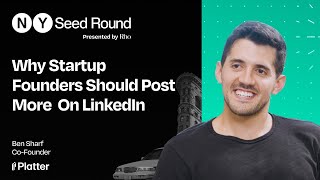
In this interview, Ben Sharf, CEO and co‑founder of Platter, walks through his unconventional journey from Division I hockey and a deferred consulting role to rapid‑scale COVID‑testing startup work, a business‑development stint at GoPuff, and ultimately launching Platter—a toolkit that consolidates Shopify app functionality to create high‑converting storefronts. He explains the misalignment between agencies and brands, the problem of app bloat, and how Platter’s product evolved from a vague idea to a data‑driven solution. Ben shares founder‑level lessons: the danger of chasing urgency, the importance of prioritisation, and the need to expect ideas to morph. He advocates building a personal founder brand, describing a content‑first mindset, the "surface‑area" benefit of posting, and how vulnerability can attract community. He outlines hiring tactics (curiosity, autonomy, friction‑based applications), fundraising philosophy (bootstrapping, avoiding over‑capitalisation), and the value of community through the Turning Pro podcast and NYC founder meetups. Finally, he contrasts New York’s hustle culture with the Bay Area, rejects the notion of work‑life balance, and stresses integrating work into life as a founder.
Chapters
You just start working on it and you don't even really talk about it and you wake up 3 months later and you're like, oh my God, this is a business. It might seem like a good idea at the beginning, but once that dopamine hit dies down and things get tough, if you're not passionate about it, you're probably going to fail.
Is that like an insight for people that are building startups? Should they be more transparent about how things are going? In this episode, I talked to Ben Sharf, co-founder at Platter, a toolkit that helps brands create high-converting Shopify storefronts. As if running a startup isn't busy enough, Ben has invested significant time and attention into building his own personal founder brand across social media platforms. Ben shares the benefits from building a personal brand, why he feels more founders should do the same, and how they can get started. So Ben Sharf, CEO and founder of Platter. Thanks for joining me.
Thanks for having me today.
You have a really cool background. Could you give us— catch us up to speed of your journey to where you are today as the founder of a fast-growing startup?
Yeah. So I played Division I hockey at Colgate University. I at the time was intending on going into the corporate world. I got a job in M&A consulting and then I graduated in 2020. My senior year playing professional hockey became a potential reality, which was not something I was expecting in my first couple of years. And so throughout that senior year, I ended up signing with an agent, was talking to a couple of different teams simultaneously, had got the corporate job. We beat Brown University in overtime in the first round of playoffs, and 2 days later the athletic director came in the locker room and said, your season's over because of a global pandemic, which flipped my world upside down. At the time, the consulting firm that I was supposed to go to had told all the incoming analysts that they could take a year and defer their job because that company didn't know what was going to happen to their own business, but they didn't want to, like, you know, pull it out from under the rug, if you will, from these incoming analyst. And so I took the option on that year. And in my mind, it was basically a free year to go try to do entrepreneurial things. And if it worked, great. And if not, I always had this backstop, which is very unusual for an entrepreneur, aspiring entrepreneur. Yeah. So I joined an early-stage COVID testing startup that scaled to $50 million in revenue in 5 months, which was a crazy experience.
And then what were you doing at that startup?
Expansion. So I was essentially going from city to city, opening a new location, hiring a team, and then moving on to the next one.
That's awesome.
Uh, so I hired like 60 people in 60 days essentially, which was crazy. And then after that, I was actually planning on going to my corporate job. And about 2 weeks beforehand, I got connected to a mutual friend and effectively we were having a conversation. He's like, what are you doing? And I was like, I'm actually about to start a new job. And he's like, do you have any interest in coming and doing business development at GoPuff? I was like, that does sound interesting. Cause as a college kid, I told myself, I'm gonna go get a corporate job for 2 years and then go do BD at a high-growth tech startup 'cause for whatever reason, I just thought that was the path. So in my mind, I'm like, if I can skip a step instead of going one step back to go 2 steps forward, why wouldn't I? So I had 7 interviews in 9 days and basically told the consulting firm 12 hours before my first day that I wasn't coming. Went to GoPuff, spent a year there working on e-commerce business unit within GoPuff and then, ultimately left there and started what is now Platter.
How did you land on the idea for Platter?
So at GoPuff, I was building out a business unit to essentially unlock instant delivery for e-commerce websites.
And for those that don't know GoPuff, it's instant delivery of groceries for others.
Yeah, it's essentially like the way I describe it to people is Uber Eats, but for convenience store goods.
Yeah.
And so the idea was, could you enable this instant delivery concept but from a dot-com website? So I spent a full year just talking to direct-to-consumer brands, people in the e-commerce world, very quickly realized that that was a space that I was interested in and knew that I wanted to eventually start my own company. So I think it kind of altered my approach every day when I was working there in terms of trying to just identify a white space or issues that were coming up. And ultimately I saw the same problems coming up over and over when talking to all these brands while at GoPuff. And so I ended up leaving and starting what is now Platter. And the business was built around a couple ideas. The first one was that there's a huge misalignment between development agencies and brands in terms of building websites because development agencies get paid for their time. So they're incentivized to make things really complicated and expensive.
To move slow or long process.
Yes. And the second— and brands want cost effective and efficient. And the second one is that in the realm of the Shopify world, there are 12,000 apps in the App Store and a lot of those apps are features, not products. And so when brands scale, they get stuck with too many apps, too many support teams, bloated tech stack, slower website, worse conversion rate. So what we did was build a lot of the most popular functionality into one solution to productize parts of the process to build a high-converting storefront so we can do it cheaper and faster without compromising quality.
Got it. Is that an insight for folks that are considering entrepreneurship and becoming a founder, like how to choose the right job to get the right experience to do that successfully?
I think it's more so just reframing your approach in every conversation that you're having through the lens of if you know you want to be a founder, like pay attention to the things that are important to you. Like when you hear common themes come up, like how do you synthesize that and make something of it? I think also it's a lot easier to figure out what you don't want to do than what you do want to do. And so through trials and tribulations of doing different things, find what interests you and just go a layer deeper.
Are there any things that you don't do or behaviors you don't do as a founder because it was informed by your experience at GoPuff?
Maybe just some philosophies in terms of how I run my own business. Like I always say, I think it's a lot easier to learn what not to do than what you should do when you're working at another company. Yeah, right. Because when you're at another company and if it's big and it's successful, the things that are working seem very easy because it's working. But it's a lot easier to look at all the things going wrong or the things where you deem to be inefficient and figure out what would you draw from that experience to make improvements if you were to do it again by yourself?
Yeah, that makes sense. If you're talking to, you know, Ben at the start of the Platter journey today or other first-time founders that are out there, What's the— what are some of the biggest mistakes, honestly speaking, that you've made today?
I think the first one, which I'm probably still guilty of, is thinking that everything needs to be done yesterday. Like, when you get through your to-do list, you're going to have another to-do list. Like, yeah, I think having understanding how to prioritize is a really big thing and not getting stressed out about the wrong things. It's something that I still work on every single day. That's the first one. I think the second one is not recognizing the reality of the initial idea that you start with is going to evolve so much. Yeah. As you build the business. Like where we're at today, I would argue directionally, like we were trying to go into this ethos of what we're doing, but it is not even close to the pitch and the product that I thought we were going to build when we started.
Well, compare those two things. What is it today and what did it start as?
I mean, when it started, it was kind of just like selling the dream to people we wanted to make our future customers and seeing what they needed help with and telling them we could help them work it back. Honestly.
Yeah.
And today it's like an actual product with a lot of data points from a lot of customers that what we're doing actually solves an acute problem for them. Yeah, but I think you need to recognize that things are always going to evolve. And so you don't need to be so hard on yourself if someone tells you that what you're currently offering is not what they want, because you need to get used to hearing no a lot when you're a founder.
One other thing about the GoPuff experience, though, that is striking to me is that you talk to hundreds of D2C folks in an industry that seems directionally at least related made it easier for you to like pitch Platter potentially to customers. Like it built out your network, didn't it?
Yeah, 100%. I think it wasn't, it wasn't a coincidence that we had ended up in the e-com world based on my experience and my co-founders' past experiences because we had a crazy network out of the gate to like allow ourselves to get early conversations with very important people in the industry.
It's something I've been thinking more and more about, like talking to founders, because I've heard from the investors I speak to on this podcast when I ask them the type of like qualities they look for in founders, a lot of them are quick to mention, like, I want founders that have been directly impacted by this problem. I don't want an engineer in search of a problem. And so I think that could be potentially instructive for people who feel like they have that startup bug to pick the right first job to give them that experience that will set them up to start up. They know they want to start a startup, but they're not sure where.
Yeah. And I think the important piece to what you just said is there needs to be longevity to your passion for whatever problem you're trying to solve. Yeah. So I feel like if you don't really internalize it or relate to it, it might seem like a good idea at the beginning, but once that dopamine hit dies down and things get tough, if you're not passionate about it, you're probably going to fail.
Side question: do you think your experience as an athlete gives you a competitive edge as a founder?
Oh my God, in what ways? 100%. My competitiveness. Yeah, I, um, I actually— one of my, one of my really good friends, his dad said this to me one time. He was hiring someone and he said, why should I hire you? And this kid said to him, if you put me in a room with all the other candidates and put a tennis ball at the center of the table and turn the lights off, I'll I'll come out of the ball— I'll come out of the room with the ball 10 out of 10 times.
That's great.
And I heard that and I was like, I resonate with that so deeply. I just think as an athlete, you don't take no for an answer and losing is the worst thing in the world. Yeah, I don't think you can turn that switch off when you stop playing sports and do something else. That competition is always there in your mind. And so I think like I treat building a business like a game.
Can you speak to first-time founders who— well, I'll first set the scene here. Like I feel based on observations and being in marketing myself, If you're a founder, you have a really like a great product. That's great. It could have product-led growth and can go viral, but you're not doing yourself any favors by not building a personal brand for yourself as a founder. You're somebody who has invested time to do this. Exactly. Speak to somebody who has like 10 followers on Twitter as a founder and is considering building their audience. Why should they do it?
There's a huge misconception that you need a lot of followers to start posting. It's like a chicken and an egg problem. But I think people don't understand that the purpose of posting content is that you increase your surface area of exposure exponentially. And all it takes is one person to see one thing that could potentially change the trajectory of your company and your life. I think the second piece to it too, that people don't understand is that when you post content and build your brand, like you don't lose that. It only compounds and it only gets bigger, faster and easier. And I think that everyone needs to understand also that no one else cares. Yeah, there's this huge issue in content where people are so self-conscious about, oh, but what if there's a typo? What if someone judges me? What if I don't get a lot of likes? I'm like, go walk around in New York City and make barking noises as a human on the street and maybe one person will look at you and stop? Probably not.
Yeah.
And I think you need that same mindset with content is you just need to do it and stay consistent with it. Because I know a lot of people who don't have that many followers that have had crazy opportunities come from content and even more opportunities than people I know who have a lot of followers. So I think the vanity metrics really deter people from doing it because they think that's the only way that you can actually get success.
Maybe this isn't the case, but have you had an interesting or funny moment where somebody brought up content and you're like, wow, this is like getting outside of like tech Twitter even?
Yeah, I was— I mean, I was walking on the street 2 weeks ago and someone stopped me. He was like, hey man, I love your podcast. I was like, wait, someone listens to that? Like, I didn't realize that. There you go.
As a founder today, you built the audience. Any tactical tips for people, though, to get started there?
Yeah, I think, I think there are ways to build process and structure around content. I think you can, you can build a framework in that you understand the topics that you're going to be posting about, the topics you want to be thinking about. And then I also think time blocking to bulk record or write posts and then just schedule them throughout the week. Like I have a friend who will sit down on a Sunday for an hour and write one LinkedIn post Monday through Friday on Sunday and just schedule them and then doesn't even think about it for the entire week. I'm not saying you have to do that. I think you have to find what works for you, but ultimately don't overthink and just start writing and recognize that it's a process and you can always improve, but something is better than nothing.
Yeah.
Yeah.
For the audience, fun fact, Ben actually helped me with this. I was— we were talking about this early when I wanted to start this and I was like, can I ask a dumb question? Do you have to like bring a change of clothes? Like, because are you like— because you mentioned I like to time block the interviews and get them all out on Friday. I'm like, but aren't people going to remember what you're wearing? Do you remember what you said? To me.
Yeah, I said if someone reaches out to you and complains that or mentions the fact that they saw you wear the same outfit 2 episodes in a row, like they're your biggest power user that you've ever had and they probably should get a hobby if that's actually the thing.
They're watching all of my podcasts, right? You know, I want to point out one tweet that you did recently. I'll read it out to you. Said being the one about being a founder isn't glorious. And I think that is a reality for a lot of founders that see the highs of like massive acquisitions, massive exits, you know, people posting about how they're having a lot of product velocity. But there are some like lows that come with it. So why do you think that that side of things is something that founders shy away from posting about more? Because it's something you do.
Yeah, I think vulnerability is scary, number one. And I think the second piece too is that founders always— a lot of founders feel like they need to uphold this image of like perfection and everything's great, whether it's for like investors to see or other founders to see, because I think some people see it as like a sign of weakness if you show struggle online. But I think any founder knows what the reality is. And so I think from founder to founder, when you see another founder who's just saying everything is so wonderful, you kind of know at the core that's probably not fully true. And I do actually think that from a content perspective, people gravitate towards the lows more than the highs because it's way more relatable.
Yeah, I'm seeing like a dynamic here though. Like to your point, it's healthy to have a perspective that like when you're posting, don't worry so much about the small things because people don't care. But then you also post like updates on how things are going with Platter and the momentum you're seeing and people like really resonate with them. It's super positive and like folks like me included are rooting for that. Is that like an insight for people that are building startups? Should they be more transparent about how things are going with in the business, how many customers are getting that sort of thing.
I think building in public is great because I don't really, I don't really see what the downsides can be unless it's like some super proprietary thing that you— but there's very few companies that kind of fall into that bucket. I think to your point, it's like people will start to root for you because they feel like they're actually in the journey with you and they know so intimately what you're doing, what went well, what didn't go well. Yeah. And people start to follow that when when they don't really know that much about what you're doing or who you are, I feel like it's harder to relate. So you kind of just don't really stay top of mind for someone after they maybe digest one tweet.
Yeah, that makes sense. I want to talk about something we were talking about in the elevator— hiring. You're, you're hiring a few people right now as you guys scale successfully. Congratulations.
Thank you.
Give us sort of your overview on hiring as a practice. What's your experience been? What are you learning? Hey, before we get to their answer, I want to take a quick second to just thank everybody that's been a part of the NYC round journey so far. If you've enjoyed these conversations we've been having with investors and founders, like, subscribe and comment down below. Now back to the conversation.
Yeah, I think the first thing is when you start to hire in volume, you need to be okay with like cutting interviews short if there's not a fit. Like guarding your time as a founder as you scale is so important. And I think it's something that I struggled with out of the gate. And then I think the second thing as well is you need to be very clear about what you're looking for and what you want. Because if you go into the process a little with like some ambiguity, I think you just set yourself up for failure. So for me, I'm like very rigorous around the type of people, type of person that I'm looking for from a culture perspective. And then from like a technical perspective, we're very clear about what the requirements need to be. And we, you know, we have parts of the interview process for people to showcase that. So it's all great if you give me all the right answers in the behavioral side of it, but you need to be able to do both sides in order for you to be someone that I'm interested in bringing onto the team.
Well, you mentioned given the size of the company, you're doing everything from recruiting to hiring, the onboarding, your HR. What, like how, what's the best way for people to figure, like a founder to figure out of the 100 applications that I'm getting today, if they get that many, how do I pick the right person out of that group?
Yeah, I mean, I think, I think the application part is challenging. From there, it's like looking for relevant experience. One tip that I can give that we do is in our application process, we make people submit a 2-minute video. So something that I read is if you add friction to the interview process, it will weed out a lot of the people that you don't even want to deal with anyways.
Yeah.
So that's been a huge, a huge help actually by doing so. So not only does it reduce the number of applications, but you can actually see someone on camera for 2 minutes and I feel like you can get a pretty good sense if you think you're going to like vibe with that person before even taking time out of your day to have an intro call.
Yeah. I've also seen people like add a bullet, like hidden in the bullets of like special instructions when they're, they're applying to.
Yeah, it gets rid of the people who are just hitting like auto apply to, you know, 150 jobs pretty much.
And then how do you weed folks out? Like what are the qualities that you identify that this is just not going to be a fit?
I need people who are curious. I think curiosity is the number one. I talk about this all the time. Like you want— I want someone who wants to know why things work the way that they do and takes pride in why they do what they do. And then I think the second one too is being able to be autonomous and be a problem solver. So like in an early stage startup, you don't have the luxury of putting people through these very long, intensive onboarding processes. It's kind of like you're jumping right into the fire and you got to figure it out. And I think you can tell when you talk to someone based on what their responses are to certain questions, is that something that they can do right? Like I, I had someone the other day, it was like, I'm very used to working on tight timelines. I don't get stressed out by chaos. Like they said, they said that preemptively before I allude to anything. Yeah, not necessarily do I want to set the stage that our company is just chaos, but it's like if someone out of the gate is being able to say they can handle that, like that's a good thing to me versus someone who's like, I don't like stress. I only can work like in these hours. It's very comfortable. Like, I don't know, you got to know what you're signing up for, I think. So I, I also say that you need to share the bad parts of any job. And if someone's still equally excited about the job after they know that, then it's probably a person to keep talking to.
That makes sense. Switching gears a little bit on fundraising as a founder, what's been your experience with that? What are your general views about it?
I would say so. I'll start on the second part first, which are my general views about it. I think that a lot of first-time founders raise money to solve problems instead of raise money to double down on solutions, which I think is a really big issue in that like a lot of people associate success with how much money did I raise or like, did I get my TechCrunch headline yet? And I think that's a really broken philosophy. I think more people should be focusing on like building sound businesses that have good unit economics and scalability. I also think there are certain businesses where just a different amount of capital is required to realize whatever the problem is they're trying to solve. And I think oftentimes there's a huge misalignment between what founders think they need versus what they actually need. But I think in a lot of cases, money will counteract like doing hard things because you can just like pay for problems to be solved in a lot of instances. For us, we bootstrapped to profitability before taking in any money. We raised a pre-seed in January of last year while we were profitable because we just wanted to go a little bit faster. And we've been profitable every month this year since. So I mean, I, I haven't gone down like a true traditional fundraising path. We've raised less than $1 million to date. So I, I probably can't speak to it as much as some of my friends who've raised a lot more.
Do you have an example that comes to mind when you, when you talk about the misalignment between founders, what they think they need and what they actually need when it comes to funding?
I think a lot of founders like overestimate how many people they need to get things done.
Yeah.
Or they overestimate the level of urgency required to do something. So you get in a situation where you overhire planning on growing into this scenario versus the reverse, which is like Why don't you go get too many customers and the system breaks and then you have to hire people to service it? Yeah, like I always say, you should build it in a way that you're not betting on a future. Like, don't hire a bunch of people because you think you're about to solve a problem and you think you're about to get a bunch of customers. Like, go prove that you're solving a problem. Go get people that are interested. And then when you can prove to yourself that the only thing you're lacking is like the resources to service the problem that people are looking for you to help them with, then you validated the thing you're trying to solve.
Right. You and, uh, and Adrian started a podcast called Turning Pro. I think it's a great podcast. Tell people what it is for those that may not be aware.
Yeah, Turning Pro is a weekly in-person conversation with founders unpacking their turning pro moments in their life, both personally and professionally. And so I think the easiest way to describe that would be the analogy of getting up from one poker table and going to a more high-stakes table. Like, what are those moments in your life where you're like, wow, I took things to the next level? Yeah, hence the concept of Turning Pro.
That makes sense. Why did you start it?
The first one is I learned by talking to interesting people. I'm a very curious person. I'm not the biggest reader, and I feel like I always enjoyed having conversations like that and just figured I could just hit record on a camera and it's not that different from what I was already doing. And then I think the second piece of it as well is it's a great relationship building tool. Like, yeah, call it spade a spade. When you have a podcast, you can give someone a platform to tell their story and like give value to them and also build a relationship with them.
What's your favorite question to ask people? On the pod.
I love knowing— this is one that I do love, which is asking people what they think to be the 3 most— the 3 commonalities of high-performing people. Yeah, um, is one of my favorite questions, and I found that the most common answer is insecurity.
Yeah.
So like, a lot—
why do you feel that is?
Because a lot of high performers, specifically founders, never feel like they do enough and never feel like they're good enough, and so they always do more. And it's this perpetual cycle where you can never actually catch the thing you're chasing.
That's right.
And so it's endless.
Yeah.
And I feel like that is actually very accurate because you're playing a game in your own head.
I love asking about the sort of the setbacks and mistakes. I love hearing how, you know, founders and investors, honestly, they like, they tell you, they describe the mistake that they made using like really colorful language and really strong stories. But then how they like, what was the learning for them and how they apply it today? I always feel like I get a lot from that question.
Yeah, I think being introspective is really important as a founder. And I think oftentimes it's very easy to get distracted and forget about doing things like that because you're always so busy.
So one of the byproducts of starting your podcast, I feel like you— well, you definitely built a mini community here in New York of founders. Like you tell people what you do on Saturdays for the community.
We do cold plunge and coffee hangouts.
Right. It's like on your roof, right?
Yeah.
Yeah. Okay. What value have you gotten from that personally? And do you think others should should get involved with communities or start them?
Honestly, I think first and foremost, I feel this way about a lot of things, but you have to do things for yourself, right? Like I genuinely do it for me where like that's what fills up my cup. I love being around other like-minded individuals who have the same level of ambition. Like I, I feel like the old version of me would prefer to like go out and have a bunch of drinks on a Friday night. And now genuinely my choice of activity is waking up and having coffee on a Saturday morning with a bunch of other founders, like learning what they're working on, seeing how we can help each other and have fun with it. Yeah, I don't, I don't really think it should— you, you should overthink it when you want to get into community building. Like, I think you genuinely have to enjoy it because the same way with building a company, if you're not actually in it, it's going to, it's going to fizzle very quickly.
Yeah. I think you're going to have to plan shortly because like, I don't know how many your roof can, can hold up because it's quite popular at this point.
Yeah. I mean, we, we try to— we all, we do try to cap how many people we do at one time because we don't want it to lose its feeling of like intimacy in doing so. So I would say now it's really no more than like 15 people at one.
You have brought up, you know, you, you experienced setbacks early in your career, like the delay of your first role, but you turned it into an opportunity. So there's been a helpful sort of framework that you use or just, you know, learnings that you've had from doing that that you would share with others.
I think it's so cliché, but I really do believe that everything happens for a reason.
Yeah.
And I know a lot of people think it's a cop-out to say that, but to me, I think when one door closes, another door opens, and it's really just a mindset approach to every situation that happens in your life and how you take that. And so I think there's been a lot of moments in my life where I've been like very upset or very frustrated or confused.
Yeah.
And then when other things happen, you kind of look back. Something that I do often actually is when I have a moment in my life that I'm very appreciative of, I'll think about all the things that had to happen in order for that thing to happen.
Right.
So it like allows me to look back and be like, that one bad thing that really got me caught up for a while, had that not happened, like, I wouldn't be here today, right? Like, my, my example for you is Platter would not be a thing if we didn't have a global pandemic because I probably would have went into corporate America.
Yeah. Yeah. Plus a lot of e-commerce popped up as a result of it.
100%.
Their businesses. Yeah.
We've been very fortunate. My technical co-founder oversees everything product and engineering. My other co-founder does all sales and finance, and then I kind of oversee marketing ops, partnerships, and I guess investor relations.
Right.
But I also come from a selling background because I did BD at GoPuff, which has been really awesome because to get to our first 100 customers was just me and him selling. And then when the team got big enough, I started to like delegate responsibility to him because I can't do everything all the time.
Yeah, that makes sense. I've met quite a few founders that are in the co-founder dating kind of phase. How did, how did those early conversations go with you and your co-founder?
So it's actually— I was talking to someone about this earlier today. It's really— I think the best opportunities are the best success stories with founders is when they happen super organically. Yeah, it's not like, hey, I have this idea, do you want to join my company? It's more like you start riffing on something with someone and you guys are up till 2 in the morning texting about it and you just start working on it. You don't even really talk about it and you wake up 3 months later and you're like, oh my God, this is a business.
Yeah.
And then you wake up 2 years later and you're like, I can't believe we started this. Like for me, it was kind of like that where one of my co-founders is one of my childhood best friends and we had been riffing on ideas for years and we kind of would just hack away at things. And then my other co-founder I met at the COVID testing startup and I found out that he was doing some e-commerce work on the side. So I was like, oh, so am I with my friend Mike from home. We should just get on a call and jam. We started talking and he's like, yeah, I'm technical. We're like, great, we're not. And we're like, what are you talking about? We're like, what are you doing? and we would just like communicate and it was just one thing led to the next. We're like, all right, we're, we're in this now.
Right.
And it was so it wasn't like a, I'm going to talk to 5 technical people and decide which of these 5 is my favorite and then offer them to be my co-founder. It was kind of just like friends in a basement hacking away at things that turned into something more than that.
We were talking earlier, you talked about you felt like the first stage of hiring should be a conversation. It's not an interview.
Exactly. And I feel it's even more important. It's even more important with your co-founders.
Yeah. That makes sense.
Like, I think for me, I needed to make sure that my co-founders were equally as obsessed as I was with whatever it was that we were building.
Right.
I was like, if you're not losing sleep over this the same way that I am, then I don't think we're going to make it.
What would have happened in the scenario where Platter didn't find product market fit, though? Does that— do you think that that would apply in that case? What's it like? Because let's say that the challenge or problem that you're trying to solve fundamentally changes. Do you still feel like you still would have kept going if you apply that framework?
Yeah, I mean, knowing their level of intensity and obsession with just like what we were doing together, I mean, we just would have pivoted and figured something else out. I'm confident of that.
That makes sense. You are very public about your feelings around imposter syndrome. What are you— what advice or what's— what have you found helpful for overcoming it?
I think reminding yourself that people don't really care.
Yeah, they don't care.
It took me a really long time and I still feel like I'm not perfect at it. I still definitely struggle with it at times, but I think that's Really, the biggest takeaway is you'll shock yourself when you put something out into the world and recognize that people really don't care. Yeah, both in a positive manner and the negative manner. And I think the second piece to it as well is I found that a lot of people struggle with it, not because of what strangers will think of them, but they're worried about what the people closest to them will think. Family, friends, mentors, colleagues, whatever. Because you always have that first tweet or that first video that you put out that gets 2 likes and it's cringy and your friends look at it like, dude, what is that? But when you realize, you realize very quickly that those who support you when you do something like that are your real friends. And those who start to judge you, you realize they don't actually want the best for you and they don't want you to win. So I actually think being authentic with content is a really good filter for building relationships.
Yeah, that makes sense. You've also tweeted in the past that, you know, making the difficult decisions isn't always the easy one. How do you think about that? How do you approach making difficult decisions? Any learnings for folks that, I mean, it could be anything. It could be like we have to do a pivot. We have to say goodbye to this customer because they're a difficult customer. How do you deal with that?
It's— you got to remove emotion from decision making. Yeah, it's very, very important that you make objective decisions and have like good reason as to why you're doing it and not just doing it from an emotional, rash place because it will come back and bite you.
Yeah. Walk me through an example, like any sort of process, like how somebody could construe emotion and objectively needing to make a certain decision and things they can tell themselves to overcome that.
I mean, we just let go of one of our highest paid employees that has been with us for a long time. And it was an ongoing conversation and challenge that we were dealing with for a while. But ultimately, when you looked at objectively why we were doing it, it was so black and white that it it, it had to happen. It was not an easy decision for a lot of other reasons that aren't even necessary to go into, but it was just a very challenging discussion, a very challenging decision that took a little bit of time for us as founders to collectively agree on it. But ultimately, in the end, we knew it was the right decision.
That makes sense. My last question for you, because it's NYC round, like, I, I want to hear your thoughts on building in New York specifically. You're somebody who is outspoken on this topic. Why did you choose New York over Bay Area, which is a more obvious choice for a lot of founders?
Yeah. So I think the difference is in New York, the default mentality is hustle and you have to like figure out how to turn it off.
Yeah.
And elsewhere the default mentality is like relax and chill and you have to figure out how to motivate yourself. And so I think as a founder and a builder, to be around people who by default have the same level of energy and intensity as you makes it way easier to do it versus being in other places where you don't have that same level of energy. And I think for me, like there's no other place I'd rather be right now building a company.
Maybe one other question related to that. I saw you tweeted recently about work-life balance. Share your general views on it.
I don't really— I mean, I don't really think work-life balance is a thing. I think like work is your life as a founder and it's kind of on you to just intertwine the things that are important to you into like a 7-day week of how you live your life.
Find a way.
Yeah. Like I don't see it as you close your laptop at 5 p.m. on Friday and don't open it until Monday at 9 a.m. You know, but there's sacrifices you make along the way. And so I, I don't really— I hate the term work-life balance. I think, like I said, work is your life and it's on you to just balance how you live.
It makes sense. Ben, thanks for joining me. This was super fun and I learned a ton.
Thanks for having me.
More from Ben









Episode 3-From Boarding School to Building Platter: Ben Sharf on Betting on Yourself

