Why Most People Never Turn Pro - Ben Sharf - #033 The Chase Merrill Podcast
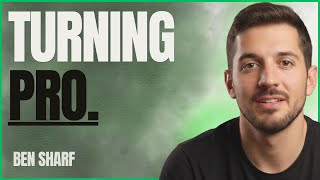
Ben Sharf went from Division I hockey to founding Platter, a tech platform for direct-to-consumer brands. He wrote down a Forbes 30-Under-30 goal as an uncomfortable target, quit his job at GoPuff after spotting a problem DTC brands faced, and built Platter by staying disciplined about scope and focus.
Chapters
January 15th, 2020, you write down a goal of being named to the Forbes 30 Under 30 list. And last week you and your co-founders got named to that list. My question for you is, at the time of actually writing that, did you actually believe that was something that was achievable and attainable?
I think when the— probably the first time I wrote it down, it's more about like have a goalpost that you want to strive towards. Like I think probably at the time I had no clue how I was gonna do it. But I knew that it was something that I wanted to do. So I think at least you have something to strive towards. And, um, we applied last year and didn't get it. And then this year applied again and I turned 30 in 3 months. So I was like, all right, well this is it. Uh, and I, yeah, I don't really know, like I wanna say yes, but I think the truth is that the 25, 24-year-old version of me was probably like, I want this to be the goal. I don't know how I'm going to get there. I don't know if I'm going to get there, but at least I'm striving towards something and, you know, hopefully I can bet on myself and figure it out.
Yeah, absolutely. I mean, you always hear that, that quotes like strive for an A and get a B is better than, you know, striving for a C and getting a D. So it kind of seems like you put that thing on your list, like, okay, I need to have that grandiose goal. That way I'm not selling myself short, but you don't actually fully believe or you don't actually have that conviction there when you write that. But like, like that quote says, is like, if you put that grandiose goal and even if you fall short of that, you're much higher than where you, where you would have been had you fallen short.
I don't think it's a real goal if it doesn't make you like a little bit uncomfortable.
Yeah, absolutely. I completely agree.
I don't really think, I don't think the purpose of goal setting is to write down a bunch of things that you know with 100% certainty that you're going to accomplish.
Exactly right. If you set these goals that are unattainable and then you start to fall short and then you, you and the people around you or the people in your company are like, oh my goodness, we're not going to hit this goal. We need to, we need to revise it. We need to, you know, revamp it. So it's a little bit more attainable. Like you're missing the entire point of the goal. Like you shouldn't be hitting goals 10 out of 10 times.
100%.
Not to jump too far ahead, but I want to start backwards and then move forward. You wrote this January 15th, 2020. But you were playing Division I hockey at the time and you had aspirations to maybe play pro and you were still in the middle of your hockey season. Your actual last game wasn't until March 7th against Brown. So why were you writing? You gotta study up, right? My question for you is, why are you writing these goals when you're still in the middle of your hockey season? You have an agent at the time, you have these aspirations to go pro, your season hasn't been canceled yet. What maybe were you not 100% on going playing hockey? What was going on there?
Yeah, I think it was like, like the first 3 years of my career. I first year I only played 8 games. My second and third year I played most games but was more of a depth guy. And I mean, at the Division 1, basically like every level you go up the ladder, even before you get to D1, like you typically have to be one of the best players on your team, right? It's like when you're younger, you're one of the best players on your team. You progress to the next team and the next team, the next team. And then when you get to Division 1, Division 1 is a culmination of all the kids that were the best player, best, you know, couple players on all the teams they were on previously. And then you get to Division 1, the guys from Division 1 that make it onto the NHL, it's the same exact thing. It's like the best players in all of Division 1 are the only ones that might get a shot. And the statistics are so extremely low. And after my third year, it was very clear that like playing pro wasn't really— I mean, playing pro is, I guess, a generalized statement because there's a lot of pro leagues. But when I was refer specifically to playing in the NHL, you kind of have an idea like if it's viable or not. I think going into my senior year, like I was a depth guy, I wasn't really producing points and I was, it was fun and it was awesome. And then I got to senior year and I feel like I had a year that I knew I was capable of but never had the chance to like prove it to myself or other people. And then like fast forward to the middle of that year, I was tied with my roommate and best friend from college with the lead lead or the team lead in points. And that was when I signed with an agent and the opportunity became more real, not necessarily to play in the NHL, but at least to get a sniff in like the minor league system and like test it out. So I think for me it was, look, I think it's appropriate for me to set goals beyond this. And if the opportunity presents itself, I'm going to ride the wave. Like we talk about, not every goal is achieved. You don't achieve every goal, but at least you have something you're striving towards. During the hockey season, I was all in on the hockey piece and like anything else beyond that was not going to be viable until I was done playing regardless. And then that senior year just continued to turn out to be better than what I was ever expecting in my wildest dreams. And then we got to that point where COVID ended it and it all took a turn from there.
Are you— I mean, looking back at it from, from where you are now, are you upset that COVID ended it early?
I've always been a believer that everything happens for a reason. I think it definitely changed my relationship with the game of hockey.
Right.
Like, I think I've had some resentment and frustration about how it ended because you always have the what-if thought lingering in your mind. I would say that I, yeah, I definitely believe that everything happens for a reason. I think every step along the way informs what the next step becomes. So I think I wouldn't be where I am today if all those things didn't happen before me. And I know that. So while it would have been cool to see through that last year and you know, see where the wind would take me. At the same time, who the fuck knows what my life would have been. And, you know, I'm happy with where I am now, so I can't say that I am angry about it, but I would say I maybe have a lingering curiosity.
Were you exposed to entrepreneurship early on? Like, was it something that your parents did?
My parents did not. I grew up in a very traditional household. My dad's a doctor, my mom's a nurse. I, one of my dad's friends, uh, who's a very successful entrepreneur, would always talk to me about his businesses and he was always the guy like barking in my ear telling me to start companies and go into it. So I, I definitely had the bug from a young age. Like I, I remember like at 15 years old when I was in high school, I was like always trying to figure out how to make a dollar and how to build businesses. And I think for a long time I lived in this, I lived in a reality that was what other people told me I was supposed to be doing, not necessarily what I wanted for myself. Right? Like I was told, go to college, get a really good degree, get a good education, go get a stable job, you know, meet a girl, get married, have kids, and you know, the life is over. Like you just gotta follow this very, very structured standard path. And there was a part of me that always knew that like, that wasn't what I wanted, but I think I was kind of scared to rip that bandaid off. So I fell into it for a long time, despite the fact that I was always doing entrepreneurial things when I was younger. I never 100% leaned into it. I think I was always someone that was like trying to diversify and hedge, which I think is a very bad trait for entrepreneurs, right? It's kind of like you're all in or you're all out. And then eventually I kind of hit my, my breaking point, which is when I gave up my corporate job 12 hours before my first day and never looked back from there.
What were these entrepreneurial Traits or, or things that you were doing in, in middle school and high school that kind of where you are now, you can look back on and be like, okay, I was always destined for this based off the, based off of these characteristics or things I was doing.
Yeah. I mean, I remember one that still I laugh about till this day was when I was in high school, my roommate at the time, cause I went to a boarding school, uh, the two of us, we wanted to build a dating app that was basically The idea of it was to increase the percentage likelihood that you would meet someone offline. So it was supposed to be an event discovery platform where you would declare your attendance, like a concert or a music festival, and then all the people that would come up on your screen that you could swipe on were other people that were also going to that same event. So we could combat this idea of like women being unsafe in like creepy environments versus in a crowd of people, and also remove the logistics of like figuring out where you're going to meet that person instead of like knowing you're going to be in the same place. I actually, till this day, believe that had we launched it and knew what the fuck we were doing at the time, there was a space in the market for it. We like built this prototype. I remember we like got the whole auditorium full of like 500 students and we presented it to the school. We did it as part of like this thing called senior project when I was at, in high school still, and built like a waitlist of a bunch of students. And then, I don't know, neither of us knew how to code. I actually went to a coding bootcamp. In California for 3 months to try to figure it out. And it was just, I don't know, we had kind of like drifted away from the idea, so it never materialized. But that was like the first time I really tried to build a business. I remember I started a coat check business in college because kids would go to frat houses and bars and just like leave their coat at the door and everyone was getting them stolen. So I was like, okay, well, if I'm going to go out and also just make like $5 off every kid that's going to like wear a coat, it will just like pay for my night out.
Yeah.
So there's just like little things like that. It's not that those were like the billion-dollar business that was going to help you retire for the rest of your life. But I think understanding that fundamentally building a business is just like solving a problem that someone is willing to pay for. And that could be at like a micro level or a macro level, as simple as I lose my coat, so I need to pay someone to hold it for me. All the way up to like, we're going to build rocket ships because we need to go to Mars. So like, there's a wide spectrum of, of what entrepreneurship can mean. But I think once you have a knack for just seeing the world through the lens of like, how can I make things better? It just snowballs from there, in my opinion. How did—
I mean, you have these characteristics, you have these actions, you have this insight where you're looking at the world through that lens. How does that fit into being an econ major? Was it completely antagonistic? Was it just like, like you were saying, this is my fallback plan or what I'm being told I need to do?
Yeah. I mean, I think so. Colgate's a liberal arts school, so they don't, it's like a unique setup in that sense. I guess my logic at the time was like economics, you know, there's like the finance piece to that and there's money involved in building businesses and I don't know what else I'm gonna study and At the time, I thought that I had to go do 2 years of consulting or banking. So like an econ degree is like really good to, to go that route. So that was definitely part of like doing what other people told me I should do. I was also a theater minor and I was also in the entrepreneurial program. So again, like those are the characteristics of like, while I was an econ major, I was still dipping my toes in some of these more non-traditional areas to, to kind of get exposed to it. But again, Back to the point I made earlier about like hedging, it's like I was doing the econ and the other things. I wasn't really just like leaning into one.
How, after you did, you know, take that leap and lean into it, how did your parents react? I mean, like you were saying, they're more traditional doctors, nurses. Were they apprehensive? Friends, welcome back to the show. I wanted to take a few moments and speak no script and we'll see where it goes. I just wanted to give a sincere thank you. Thank you to each and every one of you that listens to the show. I know you could be using that time to do anything else, and I'm very conscious and protective of that time, and I'm always looking for ways to add more value through things like production as well as through myself as a podcast host. And I'm at the point where I feel like I'm just getting started. I promise to continue to work each and every week to add more value and get you guys more return on that time. And my only ask is that you take a moment to go ahead and hit the follow or subscribe button that's right here on this app. It helps tremendously in allowing more people to find the show, and in turn, that allows me to get the guests that you guys want me to speak to. Thank you so much.
I remember sitting in my backyard with my dad, and I basically had to build a full pros and cons list and pitch him about why I didn't think it made sense for me to go to my corporate job. I wonder actually if I would dig up in my computer if I still have that file. It was just like all the pros and cons about where I want to go in my life, the different characteristics, and ultimately making him realize it really did not make sense for me to go. I think at first he was confused and maybe a little bit disappointed, but at the same time, I think he knew my work ethic and knew that I wasn't a kid that just wanted to, like, not do it because I wanted to be lazy and just hang out and be unproductive. He knew that I was a self-starter and that I would drive myself to do whatever it is that I put my mind to. So I think for that reason he trusted me. So while it was foreign to him and confusing to him, he's like, you got to live your own life. And that was the first time that he really like came to terms with it being the right decision.
It reminds me, it's so similar to obviously the, the Robert Kiyosaki Rich Dad Poor Dad. Like you've got the, the good dad, which is the professor, get a good job, you know, be safe versus the, the entrepreneurial dad and that being your friend. That's, that's very, I'm sure you've drawn those parallels before.
100%. And it's also funny cuz my girlfriend is also in medicine and like went to, you know, many years of school. And so we always joke about it, like, you know, if and when we have kids, like what would that, what would the expectations be? Cuz I, you know, I feel very strong, very differently about it now than I did. You know, years ago.
Yeah. I mean, my, my wife's currently in medicine right now. She's a, she's a med student. So, uh, I get that. Speaking of like, if and when you do have kids, yeah. What would be your push? Would you be like, hey, go to school or start early, start out of high school?
Uh, I would, I would let them do what they want to do. I think it's like, if you want to go to school, like to college, at least like it needs to be logical. Like, if you want to just go to school to, like, be a kid and meet people, like, by all means do it. Yeah, because I don't regret going to college. I think everyone wants to hurry up and grow up and get rich and build businesses. And then if you talk to any logical, like, 40-year-old who's uber successful, they're like, I'll give you back all my money to go be 20 again. So I don't— like, I met some of my best friends and made some of the best memories of my life. Like, I have the next, you know, 60 years of my life to be building companies. Like, I don't regret doing that at all. I think it's more so don't, don't go to school to do something that I think is gonna be obsolete. Honestly, a lot of these things will probably be obsolete by the time I even have kids that are old enough to go to school. Yeah. Right. Like my kid's not going to law school. I can tell you that for free.
Yeah.
Like, and we're gonna, everyone's gonna be using AI to write legal contracts and whatever. So I think it just depends on what it is that you want to do with your life. I think it's more so exposing you to a lot of different options and seeing what draws your attention and, and really just, I care more about you leaning into whatever it is that you're doing versus making you do what I want you to do.
Yeah, I, I totally get that. That's a conversation my wife and I have often. She's getting her medical degree as well as her PhD. And we were talking about this the other day. I was like, okay, you, you have your PhD, but soon it's like, you're not gonna be doing research. I mean, they're gonna be able to have AI that's doing it 24/7 in, in every category. And so, What did she say back to that? She said, well, the— she said the AI can't work with mice. I was like, yeah, but robotics are soon going to be right behind. And so, but she's a student. A part of doing the MD-PhD program is no debt. Like they pay for her schooling, which is nice. But also she loves to learn. Like she's— that's something that she's wanted to do since she was like 4 is be a doctor. And so that's one of the instances where I would, I completely agree. It's like, hey, you know what you want to do. You're doing it because you love it. And not, and in this case, like we had the conversations like, okay, now that you're in it, are you in it because you said it's something that you always said you would do? Or is it something that you actually enjoy now that you're here as well? And she came back from the OR, she's a second year student. And it was like a 9-hour surgery where she was in there the whole time. And she came back from the OR yesterday and she's like, this is the best day of my life. I'm like, okay, that's something for me where it's like, keep doing it because you love it.
Yeah.
Yeah.
100%.
Yeah. That's awesome. What are some things that you would maybe, I don't know, like just to keep going with the Rich Dad Poor Dad theme, what are some things that you would do for your children that would maybe teach them some characteristics and some skills of entrepreneurship early on?
Yeah, it's a really good question. I actually think the irony, in my opinion, of like the current education system is you learn a bunch of things, but like very few of them are actually like practical to like your real life. Mm-hmm. Right? Like, what does it mean to get a mortgage? What does it mean to file taxes? Like, how do I understand like a P&L and like, how do I learn about generating income from— I mean, that like you do by getting a job, of course. But I think that there are just basic skills in your life that kids don't really learn at a young age. Like I've always joked, I think there's space for someone to build like a school curriculum that's actually just about like all the characteristics of how to like optimize your life when you're like an older person. Yeah, sure. You can learn the basic characteristics and fundamentals about how to add and subtract and whatever, but you know, learning about your taxes and accounting and like how to buy properties and car loans and all these just like things that you have to endure at some point in your life. It's like, why not, why not teach kids that? So when they get to that point, it's like very normal. I think from an entrepreneurship perspective, it, it actually goes back to the most basic level of what I just said is solve a problem for someone to make money or understand the value. Like I've always joked that regardless of how much money I make one day, like God willing, if I have kids and I have like a lot of zeros in my bank account, that will not change the fact that I joke that I will still make my kid like go earn the minimum wage amount of money. It's like, go get ice cream with his friends. Mm-hmm. Like, yeah, sure. I'll take you on amazing family trips and whatever, but like understand the value of a dollar. The value of the dollar is not just me giving you the dollar. It's like, I also had to work to earn this. So you're going to learn what it means to do so. And I think that's just, That's more just like basic morals and principles that you instill into your kids, right? Like, I very, I very much appreciate kids that I know that come from crazy amounts of money that are super humble and super hardworking, and it doesn't like distort their perception of reality. And I think that's something that's very, very important to me. So I think it's really just understanding like, what are the things I learned later on in my life that I wish I could like learn a little bit earlier and then like doing that for them.
I also think exposure plays a huge role. In modern-day America, bills are hidden, finances are hidden. It's between the parents and not discussed between the kids. And I think that's a super— like you're saying, it's just a large disservice to the children because once they actually get in that position, they have to figure it out by themselves versus if me and my wife were sitting down and we have a child and we're talking about our auto payment and then we talk about interest and the total amount that we'll be paying on the car over the course of the loan, you have that appreciation. And it's not just, you know, $500 a month, it's, you know, this X amount of money on top of what the car is actually worth. And you, you really teach them that early on.
Or even like investing.
Yes.
You know, like I would love to give my kids each like $1,000 in an account and be like, go, go understand what it means to turn $1,000 into $1,100. You know, like what, go figure out how to put this in a stock and research. And like, to your point, understand what it means to accrue interest on something. These are just like very basic things and understand like what a credit card is and how does that actually work. Yeah. It sounds trivial, I think, when you're older and it's like second nature to you, but when you meet like young entrepreneurs, like kids who started when they were 15, 16, 17, and didn't go to school and made successful businesses, they learned all these things because you're just thrown into the fire way earlier. It's like, why are the people who go through like the regular education system limited from these other characteristics because they didn't opt for the route of like self-learning, I guess.
I mean, it's so true and it's so interesting. It's like once you do get that exposure early on and you get that appreciation, it impacts the decisions that you make, you know, growing up. Like that would impact if you were exposed to that early on, that would impact your decision to go to college or what you're doing in college versus versus getting that information in college when it's already, you know, too late.
100%.
So I want to talk about you out, you outside of college, you then got a corporate job and I believe that was at GoPuff.
Um, uh, no, I, that was actually at EY.
Okay.
Okay. But I never went.
You never went.
Yeah.
You, you started—
When I usually talk about it online, I don't usually reference the firm, but, uh, I did go to, so I didn't go to EY and I ended up going to GoPuff instead.
Okay. Okay. And then at this expo, or when you were exposed to these things at GoPuff, you were exposed to the idea that made you start your company, Platter.
Correct.
How, what were those things that influenced you to start that company?
So I think the first thing was when I decided to go to GoPuff instead of EY, it was because I wanted to work in a high growth tech startup environment and ultimately be exposed to how the ins and outs of that worked with the goal of starting my own company one day. And then more specifically in terms of like how I landed on the business that I'm building right now with Platter, it was basically because I was working with direct-to-consumer brands every day at GoPuff. Uh, I was building out an e-commerce business unit there. And every time I would talk to a direct-to-consumer brand, whether they were doing a million dollars in revenue online or a hundred million in revenue online, Building and managing their e-commerce store was always a point of frustration. And it just never made sense to me when it's like you are building a business to sell products on the internet, yet the thing that helps you sell the product on the internet is the most frustrating part of your company. Like why? That doesn't make sense to me. So we ultimately just, that led to me basically going down a rabbit hole with my co-founders of trying to like understand why that is. And you know, one thing led to the next and obviously the business we have today is not what it was when it started. Like people don't understand how much iteration you go through to get to where you are. It's not like you just skip 20 steps.
Yeah.
Um, and ultimately it was figuring out how can we solve that problem of making it easier for brands to build and manage their online storefronts, which is ultimately how we got to where we are today with Platter.
How long were you at Copuff before you had the idea of Platter and then you actually started Platter?
So it actually didn't even start as the name Platter. We went through multiple iterations before we landed on that. I was, I was at Gopuff for a year.
Okay.
I would say probably like the second half of my time at Gopuff, I was spending time like, you know, tinkering on the weekends and figuring out what it is that I could potentially do outside of there. And then it just like started to get more real over time. And then one of my co-founders left his job and went full-time first. And then it kind of just snowballed from there. It's one of those things where like when you start a business and you start to gain traction, when you hit that inflection point where it will start to go backwards because you're not giving it enough time is kind of when you, and of course everyone has a different financial situation. So where it starts to go backwards and you know that you can financially support yourself with it. It, like, you kind of know when it's time to, to lean into it. But I think that is probably the scariest part. Uh, and most people who never make the jump, it's because they're scared of the unknown. Because look, it's a very well-known thing that most startups fail. So you're like leaving the stability to jump into something that might have a higher return on the back end of it, but there's a higher likelihood that you're actually gonna have nothing to show for it after years of work.
Your co-founders, did you know them prior to starting Platter and start it together, or were they involved as a necessity to facilitate a solution?
Yeah, so one of them was a childhood friend of mine and the other one I used to work with at the COVID testing startup. So I actually brought the three of us together.
And, you know, once you guys— you founded Platter 2021. Um, one of your co-founders went first, then all three of you guys jumped in. How did it start to snowball and grow once you guys were all together versus when you started it? You know, you still had your corporate jobs and things like that.
Yeah. I mean, I think a big part of it is being able to scream from the rooftops publicly about it. Mm-hmm. You know, like when you're at a job, you don't necessarily have the, you can't just be out there like posting about the new thing you're building. Um, I think it's just doing a lot of the right things for an extended period of time. Like compounding is real, you know, you, you get your first customer, you do good work for them, they introduce you to their second customer and to your second customer, and you post about it and you meet more people. And I think you just have to like put your head down and, and do the things right. It's, it's meet more people, tell your story online. Get the opportunity to get your foot in the door with people that you never thought you could. And I laugh, like, I, I was talking to my girlfriend about this yesterday, actually, where I remember when we first started the company, like, at the beginning of a week, I would look at my calendar and be pumped when I would have like 2 meetings during a day. Like, oh my God, I get to like talk to these 2 brands. And now I like look at my calendar and I'm so pumped for days that I only have 2 meetings. It's like, be careful what you wish for. It's like when you start and you don't have a network and you don't even know where to go or what to do, You have to like build it. And then once you get to the point where, you know, you have a ton of employees and investors and customers and new pitches and whatever and podcasts, and now you're like, oh my God, I can't wait for the day that I have nothing. Right? Like I was talking to my roommate earlier this morning because tomorrow I'm like going to have lunch with my girlfriend's family and I'm like, yeah, and I'm coming home and working after. Like no one's gonna bother me and it's gonna be a Saturday afternoon and I'm pumped.
Pumped. How did Platter evolve to where it is now versus, versus what you initially thought it was gonna be? Like, what are some services or things that you added on?
Yeah, I mean, I think at the beginning we directionally, we always knew that we wanted to go towards this concept of like helping brands make the process of selling products online easier. I just think the way that you do that in terms of the technology that you build, the messaging that you use, iterate, like you iterate on that. And I also think there's an element of like building the plane while flying it. Like we had no clue what we were doing when we started. You're like selling a dream and then someone believes you and buys into it and then you have to solve it and you just keep doing it over and over and eventually you hit a point where you're like, okay, we're actually really good at this now. So I think the same— the goal has always been the same, but the way we position the business, the way we build the product, the way we talk about the brand, has continued to evolve over the years. And I think it just leads to once you get signal on what is working and can understand the concept of focus and simplicity, that's really like when things change. I think that's a very big mistake for a lot of entrepreneurs is you try to overcomplicate things because you think you sound smart or look smart, but actually like the best entrepreneurs in the world very much value simplicity. And then I think the other thing is focus is like you try to do everything And when one person is willing to pay you for one thing, you want to do it because you can't fathom like turning down the money and whatever. But like focus and simplicity are really two characteristics that I think took us time to learn as like green entrepreneurs that have like served us well over the last year.
Are there times in recent memory where you, you have had to say no to, to potential money, to potential, you know, partnerships because they didn't align with your focus?
Absolutely. Uh, I think what's interesting about our business is because we're a tech-enabled service business, that's ultimately helping you build and manage your storefronts. A lot of our clients will ask us like, oh, do you guys do email marketing? Do you guys do paid ads? Can you guys help build this feature or do this? And, you know, my one co-founder a few months ago was like, I really believe if we launched an email marketing practice, like we could scale that to 6 figures in like a month because we have so many customers. That are paying us for other things that we could just offer this new service. And I'm like, yeah, in the immediate term, it sounds awesome. Right? Like a little bit more revenue through the door, but you're not calculating the downstream effect of like literally launching a new thing that we've never done before. Hmm. Like how does that affect it down the line? And it, it's just like staying focused is very important.
Is there a time when a business is, you know, established enough when it's got, you know, enough speed and enough, um, you know, name brand recognition behind it where you feel a little bit more comfortable then focusing on, on like your co-founder's idea? Or is it you need to stay focused the whole time?
I think it depends what the goal is for your business. I think it depends what type of resources you have, how much funding you've raised, what is the end goal. And I also think understanding where you are in your life cycle, because one very important thing is if you expand your services horizontally, You need to just make sure that the business is mature enough and stable enough to do so. I think it's inevitable for a lot of companies, but if you do that at the wrong time, you can, you know, kill the business.
What is the end goal for Platter?
I want to sell it. It's a business that I want to sell. I think it's a valuable business. It has a very, very good customer list and something that a larger business in this ecosystem can basically pick up to add this as an additional service to their business and also take our client list to expand whatever their other services are back to those customers. But I think, you know, as a first-time founder, looking for a non-zero outcome is something that I'm excited about.
How important is passion when being a founder and starting a project? Like, are you passionate about— I know you're passionate about Platters, your company, but are you passionate about the space that you're in, that what you're doing?
Yeah, I think it's very important. I was talking to, uh, I was actually talking to a founder last night about this at the Forbes event that I went to, where I have a friend who launched a company a couple years ago and it's absolutely crushing right now. And I was, I was talking to this other guy and I was like, dude, I can't imagine waking up every day and like spending my time in like insurance. Like it's just not, it's not exciting to me.
Yeah.
Like you have to have at least a little, I shouldn't speak for everyone because I do know some people who just want to make a lot of money and want to solve a problem. They're agnostic to what the problem is, right? Like, I have a friend who, he runs a business. They do like a lot of accounting services and he's like, dude, I don't like love accounting, but I just think it's an amazing business and it works. And I'm like, yeah, that's totally true. But I think it depends on your personality type, right? Like, for me, the thing I like about my business is that it's at the intersection of the things I think I'm good at. The things that I'm interested in and like as a consumer myself, the products that I use, right? So for me, it's very easy because I'm always meeting brand founders because I love products. I'm always trying products, learning about it, etc. And so I've been able to find a really nice overlap between my professional life and my personal life. So for that reason, I think like the founder market fit concept is really important. But I think my— to synthesize that more clearly, my answer to the question would be I don't think it holds true for everyone. I think you need to know yourself.
Are there any systems or things that you have in place for your day-to-day life that help you stay focused and help you achieve your goals? What are some inputs that you have that allow you to get consistent output?
Um, I have a couple of different ones. I'd say the first one is like, I don't really do meetings before 10:00 AM. Like I value my mornings. Like my mornings are like my religious time to myself. So that, that is a huge one. I think that's really helpful. I found in the past, like if I'm waking up and just jumping right into things, it makes me feel very like chaotic and on edge and I don't feel like I settle into the day in a clear headspace. So that's usually to dedicate time to like fitness and wellness type activities. I think another one is I try to have different themes from like different days of the week. So like I try to, I, it's not perfect always, but like I try to make Mondays and Fridays days to do more internal stuff. Tuesdays and Thursdays are more external stuff. And then Wednesdays I don't really do meetings and focus more on like content and deep work. So I think having some like consistency or predictability around my days is, is important. Mm-hmm. And then I think like, I don't know, I, I'm always like testing different things at like a micro level, I would say. Whether it's different ways to improve my sleep, different ways to improve my focus, like figuring out things that work for me in terms of diet, et cetera. But it's, it's like a constant science experiment. I'm always like evolving and trying new things and it, and it ebbs and flows. But in terms of just like, what are my constants and non-negotiables? It's like not taking meetings too early in the day. Making sure that I'm taking care of my body and my mind regardless of how busy I am. And those are like the baselines for me.
I started listening to podcasts back in early 2016, and since then I've listened to a lot of episodes and I've covered a lot of ground. And I always get asked, hey, what's your favorite show? What's your favorite episode? So I made a list. I made a list of the 10 most impactful episodes I've listened to over the 9+ years, and it's completely for free. You can find that in the description of these— this episode or on my Instagram in my bio. And I hope you find those episodes as enjoyable and impactful as I did because they are in part a huge reason why you guys are listening to me right now. Thank you very much. Now back to the show. What are some things in those specific categories of taking care of your body versus— versus your mind?
Yeah. So like a small example is I don't sleep with my phone in my bedroom. Like that was like a huge change I made a few weeks ago, actually, like pretty recently after I did like a 10-day silent meditation retreat. That was like one of the biggest things I took away from it. That one has been huge for me. I think my water consumption seems like a silly one, extremely important for me. I think the other one is just like the type of food I'm eating at what time of day. Like I don't really like to eat heavy foods before dinner. Uh, because I find that like it has a direct impact on my energy. Um, I think my phone usage, generally speaking, like I basically try to stay off social media during the day unless I'm actually doing something for my own, like work per se. Mm-hmm. Um, and then the other one is just like being active. Like I try to work out every single day. If I take days where I'm not doing a hard workout, it's like at least go for some walks and like stay active. I, I've, I've always talked about this on the internet that I don't subscribe to this idea that you can't build a successful business and take care of yourself from a health perspective.
What are some reasons, obviously you're active on social media, you've got YouTube, you've got your own podcast, you post on Instagram. Are those things that you do because you just enjoy building things and enjoy being creative, or do you see them as aids towards your potential business?
I think it's both. Okay. Uh, I think on one hand I appreciate the fact that it's like a creative outlet for me. Mm-hmm. Uh, because I think that it's something that scratches my itch in terms of just like my curiosities and, and like a hobby of mine. But I think it's cool that it's a hobby of mine and something I enjoy, but it also is very valuable for business. Right. Like I, I get a, I drive a lot of business through my social. I was at an event last night and some guy was like looking at me weird and I was confused and he walked up to me and he's like, yo, are you Ben Sharf? I was like, yeah, why? He's like, I love your content. Like I have run a brand, like would love to talk to you about it, et cetera. And it, that was like kind of a cool moment for me where I'm like, it doesn't really matter how many followers you have, but like if you get in front of the right people and they resonate with your message, like it can be very impactful.
Is that something that you'd recommend to, to founders, especially like newer ones? Obviously you've got people who are running, you know, multimillion, multibillion. It's less important for them. But how would you say towards like people who are starting new, new businesses, would you say, okay, it's also like post as you go, you need to build this too?
Yeah. I mean, my philosophy on it is that the distribution you can get on the internet, you can't match in real life. Right? Like I can talk to you and have a conversation one-to-one, but if I post something on the internet, potentially thousands or millions of people can see it. So I think by posting your story on the internet, it just increases the likelihood that, you know, one person will see it that could potentially change the trajectory of your life, whether it's an investor, a new customer, a new friend, a new whatever. I don't think there's a downside to posting what you're building or posting your thoughts online, because I think everyone has a corner of the internet where there's people that will be interested and invested in what you're doing. And as long as you don't act like an idiot online, I think it's only a net positive. Yeah.
I mean, absolutely. I've, you know, with this podcast, I've been connected with some awesome people. I get to talk to people that I probably shouldn't be talking to in terms of, I actually listened to your most recent podcast with, what's his name? Justin, the Meme Lord. He's, Oh, Jason Levin. Yeah, Jason. Jason, stud. But he's exactly right. Like, he was— you guys were talking about cold sending DMs. I'm like, I've been doing that all year. Like, that's an hour of my day is just sent, you know, finding people I like and sending DMs. And it's crazy. Like, the worst thing that happens is they see it and say no. A lot of times they don't see it. And then you occasionally get people who see it and say yes. And so, like, you're just in front of people and talking to people that I wouldn't be expected to be talking to, and then you get that connection and they connect you with more people, and it really just allows the podcast or my now personal network to grow. It's really interesting and fun.
It's a numbers game. To your point, it's like entrepreneurship is full of just being told no. So like you send a message to someone, what's the worst thing that happens? They don't answer?
Nef.
Close the door. Um, yeah, I'm, I'm a huge, I'm a huge fan of it. I've met a lot of great people that way. And also like, I try my best to respond to everyone who messages me because I have empathy for being on the other side of that message.
Yeah, absolutely. So you've got Platter, it's, it's growing. You're putting a lot of time into it. You've got your socials, you've got your YouTube. How are you prioritizing your time versus that and your personal life? Like, is like, what's the balance? How are you finding the time to strike that?
Yeah, I mean, the content piece, I have a full-time videographer who runs all the socials named Adam. None of it would be possible without him, honestly. I've always seen it more as like, continue to live the life you're already living and just document it. It's not like I'm changing the way I live for the camera. It's like I'm already doing the things I would be doing. I'm just recording it. And then like he's doing a good job of packaging it so we can storytell about it. I would say this concept of like personal life versus business life, it's like one in the same to me. You know, I don't really treat my weeks as like Monday through Friday is the week and Saturday and Sunday are the weekend. It's just like the next day. Yeah. And, you know, it's important to like have a partner who's fully supportive of that because it's definitely not like a normal life by any means. But I, yeah, I don't know. I don't even, I don't necessarily see it as like struggling to prioritize because I'm able to integrate the things that are important to me in my life every day. You know, like this morning my girlfriend and I worked out with my trainer and then, you know, came home and had breakfast together. And then I was able to sauna with a friend of mine who's a brand founder and then jump on this podcast. I would do that on a Friday or a Sunday. Like, that's a great start to the day.
Absolutely.
So I don't, I don't find that I struggle with prioritization. I think it's in terms of just like learning what to prioritize as a matter of what is the most impactful thing for the business that you should work on. I think that's something that everyone continues to iterate upon over time, but I think the main takeaway is just there's not really like a huge pattern disruption between what my life is and what my work life is, because I think all the things I care about are blended into one.
Once Platter sells and you get your exit, are you— are there ideas in the back of your mind? You're like, okay, I can't wait to start this, I can't wait to start this, or what's the plan after?
I don't know. I try to live in the present.
Okay.
I have no idea. It's— I try to take it day by day. Uh, I mean, I'm always coming up with crazy business ideas, but not even because I'm gonna go start them, but because I'm like, I wish this existed. But it's not even, yeah, it's just, I, I think one problem I've always struggled with myself is like the what's next kind of thing. Mm-hmm. Uh, and always like thinking that once you achieve a tangible outcome, then you'll be happy, then you'll be successful. It's like, you know, by, by the time I get to the exit, I'm probably gonna be sad because the journey to getting there was actually the coolest part of the whole process. Yeah.
I mean, on that same vein, you achieved your goal of being named to the, you know, 30 Under 30 list. How did that feel versus what you expected it to feel?
I didn't even— I didn't even— honestly, it was like so long ago that I wrote that down and forgot about it. And it's like out of sight, out of mind. I think it's like a cool milestone to be like, okay, well, like I'm going in the direction that I told myself I wanted to, but it wasn't like, okay, now I can feel like I made it because it doesn't actually mean anything in the grand scheme of things. So it's just like a little subtle reminder to like enjoy the micro moments and the micro wins along the way.
What are some things you would— well, firstly, do you think everybody should start their own business, should be an entrepreneur or founder?
No, absolutely not.
Definitely not. What are some things that people should reflect on before they do that? Like, what type of person should they be?
Yeah, I mean, I think understanding that it's not as glamorous as people make it out to be, right? I think a lot of people on the internet talk about it being the best thing ever, but it's actually important to understand that what you see on the internet is what people want you to see on the internet. It's not necessarily reality. Entrepreneurship is generally very lonely. It's generally very hard. You're largely misunderstood for a long time, and there's no guarantee of success. I think one of the beautiful parts about like a lot of other jobs There are a lot of people that are in like 9 to 5 jobs who will make way more money than 99% of entrepreneurs because there is predictability in their income growth. And there is value in the longevity of staying in a job and growing in the business that you're in. And also like, I've talked to a lot of people about this. There are people who are like, I want to close my laptop at 5:00 PM every day and go home and hang out with my friends and my family. And I don't want to think about work. And there's nothing wrong with that at all. I envy that sometimes. Some of my happiest friends are people who are like very simple and they don't care about money and they don't care like to the same degree and they don't care about this drive to have this success. And there's probably something that's very peaceful about that. So I think it's, are you someone who goes home and you can't turn your brain off and you're just thinking about solving problems all day and all you want to do is build things? Like, you'll know when you should be in that environment, but don't, don't think you have to do it because you don't. Is there—
I mean, we're into this kind of weird limbo state right before— I mean, AI is obviously more popular than it's ever been, but it hasn't kind of— it hasn't flipped the switch yet where it's, you know, AGI, general intelligence, you know, better than humans at everything. What are you— is there any degree of apprehension about that?
Yeah. Have you listened to the podcast episode that Stephen Bartlett recorded with the The dude who like wrote the first textbook about AI.
Yeah.
I mean, if listening to that podcast episode doesn't make you realize that you can do whatever you want and post whatever you want on the internet, 'cause it literally doesn't matter. 'Cause who the hell knows if we're all gonna be here in a couple decades.
Yep.
Yeah, I think the AGI thing's very scary. But again, I think it's one of those things where you kind of learn to be at peace with it because you recognize that like, I mean, it's cliché, you know, it's like the famous Gandhi quote of like, be, you know, be the change you want to see in the world. But like, let's be honest, I'm not going to be the one that's going to influence the outcome of AGI happening or not. So just knowing that it's out of your control, it's like, why beat yourself up every day when you live your life because of that?
Yeah. I mean, exactly right. You could have the outlook of like, oh, why start this? It's not going to matter anyway. AGI is just going to beat me in, you know, whatever timeframe that comes relevant. I'm not going to be here versus, well, I'm doing it for the journey. You know, I want to enjoy it. I'm not happy with what I'm doing. Let me start this and whatever happens happens. Yeah.
It's just like finding fulfillment in your everyday life.
Are you, do you find fulfillment in your everyday life? Yeah.
I have so much fun. I was, I was filming a clip with Adam earlier. I was like, I, the fact that I get to wake up and do this every day, like, is so much fun. And I feel bad for people that wake up every day pissed or miserable or angry about what it is that they're doing. Because no one's going to save you. That's like the bottom line.
Are there some things that I mean, like, like we're saying, social media is a highlight reel. People post what they want to see. Are there some things that you don't enjoy or some things that maybe you didn't expect when becoming an entrepreneur?
Yeah, I think like there's problems that you have to deal with that no one's going to deal with for you and you have no choice, right? Like, I think a lot of the people problems are challenging. I think that there are like issues that come up in the business that aren't going to wait for you, right? So you might have to be on a call at 11 p.m. on a Friday night and that sucks. But like, you signed up for that. I think it's also frustrating when things don't go right and you think that all because you worked hard, you should be rewarded. But that's just not how it works. Right. Like back to my point of all, because you're an entrepreneur does not guarantee you're gonna be successful. So at times it can be demoralizing when you feel like you're working harder than everyone else around you, but having less success than them. It's like, what is that self-talk to allow you to overcome that knowing that like that's part of the game? Are there some— and I also think there's moments where you wish you could just like sit still and, and hang out, but your brain is wired differently and like you just have to accept you, you for who you are.
Are there some things that you could be doing, or, you know, people who start businesses could be doing to improve their odds of success? Because you're right, you know, most businesses fail. Most, you know, most entrepreneurs aren't successful. What are some things that they can be doing to increase those odds?
Yeah, I think the biggest thing is just expediting your learning curve by being exposed to people around you who've been there before. Most businesses are not novel. They're just like minor iterations on existing businesses. Right. So my example to you would be like, if you're launching a consumer brand, it's like, well, you should go talk to people who've done that to understand like how to build a website, how to build a package of product, how to do fulfillment, so on and so forth. Like, don't think that you're being unique and trying to reinvent the wheel on something that has proven success. So just being exposed to people, uh, whether that's through in-person relationships, media, et cetera. I think you need to be a curious lifelong learner in order to find success in that manner. So I think that's the, I think the biggest thing is like, know what the end of the story looks like so you can reverse engineer how to get there. Because if you don't know where you're trying to go, you're not going to get there.
Yeah. I mean, you have that, that mindset of, you know, just throwing everything at the wall and then you don't even know what, what you're trying to get stick versus, you know, if you have a clear picture, you can actually aim for the bullseye and actually get where you want to go. What does Turning Pro mean to you? Obviously, it's the name of your podcast. It's a, you know, a famous quote as well, or a famous ideology from, from the book. What does it mean to you?
I think it's basically taking moments in your life to look back at where you were before you got to where you are. Right. I think oftentimes we get so caught up in the day-to-day of just reality and life that you never stop to like realize how far you've come and like where you've leveled up. And so to me, this concept of turning pro is basically being able to point to like tangible outcomes or moments in your life where you can look at yourself and realize that you are playing a different game and really leveling up. You know, as I mentioned earlier in the podcast, what the business was when we first started versus what it is today is very different. I think we've leveled up. I also believe that this concept of turning pro is— it doesn't end. Like there's always room to continue to become more professional at the thing that you're doing or the pursuit that you're on. Like that's just the journey of life. Even like the most successful people in the world, there's no one that's like, oh yeah, there's, there's nothing else for me to do. There's no area of my life to improve in. There's nothing else to learn. I think it's just a— it's more of like a philosophy or an ideology on how you continue to show up every day. To find fulfillment for yourself and also like to just like show up for those around you.
You played, you know, Division I hockey. How often did you see people come in who were like, I work really hard, but they had no idea what actually working hard was or what they actually needed to do to excel at the highest levels of the sport or to go to a professional area? I mean, you see that all the time as people like, oh, I'm doing, doing everything I can, But in reality, it's like, you're not, you can always be doing more. You can be finding, you know, more efficient and better ways to do the things that you're doing.
Yeah. I think one piece of that is the difference between working hard and working smart.
Yes.
Right. Like, and I, and I think that I would, uh, draw that also to the concept of entrepreneurship where you shouldn't judge your output based on how many hours you spent on something. It's the impact, right? So like you can work hard, but if you're not working hard correctly, then it's actually unproductive. So I think that holds true in everything in your life is like understanding what you should be doing and how you should be doing it is very, very important. I think there were a lot of, you know, athletes I came across who were some of the hardest working people but didn't necessarily have the knowledge to know like where to work hard, right? Like what are the things you need to improve on if you want to get to the next level in whatever it is that you're doing? So there's like a self-awareness component to that.
Yeah, absolutely. I mean, that's something I struggle with or find myself doing all the time. It's like you have that voice in the back of your head or that knowledge is like, oh, I need to be doing something. I need to be doing something. And so you fill that with quote unquote work or quote unquote stuff that you should be, you know, that makes you feel like you're working. But if you sat back and looked back, it's like, okay, I'm not actually moving the needle or I'm not actually doing something that does that. I just need to feel that impulse in my mind.
Yeah. My, uh, I feel like my girlfriend's been actually really helpful with that. There'd be moments where I'd be like sitting on the couch. I'm like, I need to do something. She's like, this is, you're doing something like relaxing and disconnecting is doing something. Stop acting like this isn't helpful for you, which is fair. I think it's, um, most entrepreneurs, I think, struggle from the insecurity of inadequacy, which is the reason that you always feel like you need to be doing more. And I'm the first to admit it. It's something that I struggle with all the time. So I think having people around you who can maybe help keep you honest in certain moments is super helpful.
Well, I have a question that I ask all my guests towards the end of the podcast. It's going to be a little bit different for you because you actually have your own podcast. But that question is, is, you know, assuming this person— assuming you had a podcast, who would be the person that you'd be most interested in speaking to and why?
My answer would probably be Jesse Itzler at the moment. Okay. I think he's an entrepreneur who genuinely has carved out a way to like live the life he, the exact life he wants to live with the people he wants to live it with. And like, creates so much success around it. It's like turned so many of his hobbies into successful businesses, has been able to just like have that overlap between business and pleasure and family and friends. At least what you see on the internet where it's like, I, I very much admire that where you genuinely can live every single day of your life doing exactly what you want to be doing with the people you want to be doing it with and be able to like financially support yourself to do that. Like the thing I strive for the most is to be able to to live the exact life I want while being able to just make sure I meet all the needs around me. And so when I see someone do that, I think it's really, really cool to watch.
Outside looking in to him and to his life, is there anything different that he's doing that you maybe don't think you are or should be implementing? Or do you think he's just further down the path than you are? Or do you think you're exactly where he is?
I think he's proved that staying consistent for an extended period period of time, uh, even when things get hard, is, is the way to go. But it's very challenging, right? Like, it's one thing to, to stay the course for a year, 2 years, 3 years, but if you can do it for 1, 2, 3 decades, you know, it's like Hormozy would always say, the only way that you fail is by giving up. So I think it's just illustrating the ability to, to stay consistent, uh, have a pulse on what you should be doing, when, and why. And doing that over and over and over again successfully is It's a skill that very few people have, in my opinion.
Well, Ben, thank you so much for your time today. Where can people find you? Where can they get more, you know, more Ben Sharf?
Yeah, I would say right now I'm most active on YouTube and LinkedIn. Are you— LinkedIn, Instagram, and YouTube are the 3 platforms that I post the most on. It's just @bensharf on all of them. B-E-N-S-H-A-R-F. And my email is ben@platter.com if you're Building a Consumer Brand and Wanna Jam.
Awesome. And the Turning Pro Podcast.
The Turning Pro Podcast as well.
Awesome, Ben. Well, thank you again for your time.
Thanks, Chase.
More from Ben









Episode 3-From Boarding School to Building Platter: Ben Sharf on Betting on Yourself

