Why Nike Sponsored His Youtube Channel With 0 Subscribers - Ben Sharf
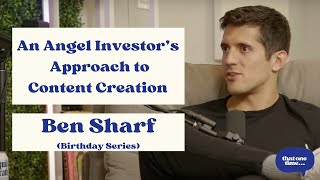
In this interview, Ben Sharf shares his unconventional journey from Division‑I hockey player to serial entrepreneur and content creator. He recounts early career moves—including a rapid‑scale COVID‑testing startup and a stint at GoPuff—before founding Platter, a Shopify storefront accelerator. Parallel to building his software business, Ben deliberately built a content ecosystem (the Birthday Series YouTube channel and Turning Pro podcast) by first establishing infrastructure, assembling a production team, and targeting a decade‑long niche. He explains how he leveraged a network of creators to secure a Nike sponsorship for his first video, the strategic steps he took, and the importance of consistency over virality. Ben discusses his mindset—obsession, curiosity, delusional optimism, and the drive inherited from his immigrant father and competitive sports background—and how he balances it with personal habits like sobriety and dopamine‑reduction experiments. The conversation also covers his approach to networking as a “super‑connector,” co‑founder dynamics, risk management with Shopify’s platform, and long‑term visions for Platter, his media properties, and personal fulfillment. Additionally, Ben reflects on the Japanese Kaizen philosophy, embodied by his tattoo, and recommends the book "Chop Wood Carry Water" to emphasize loving the process and incremental improvement. He shares anecdotes from a bootstrapped Thailand festival, highlighting the joy of hard‑working early‑stage experiences. Ben distills his life advice into three principles: go all‑in, choose action over regret, and have fun along the way. He concludes with his view of life's meaning: to leave every place better than you found it, contributing positively to humanity.
Chapters
Ben, welcome to the podcast.
Appreciate you having me.
Appreciate, appreciate you coming. How's your world today?
It's great. Things are happening. I was joking with you, dude. I had my first Instagram Reel go viral today, which is hilarious because this whole content thing has been like a huge, huge focal point of my life for the last few months. But I've always said, like, you got to chase consistency, not virality. But it's still pretty funny and cool to see things like this happen. So it's just funny that happened today.
Well, once you've done it once, you know, you can do it again. That's, that's where it kind of opens the door. You're like, okay, my account isn't shadowbanned.
Yeah, people can see this.
It wasn't, it wasn't the— it wasn't Instagram that was the issue. I love it. I mean, I— do you know Joe Fowler, my friend Joe?
Uh, I think I know the name, but I don't think I've met him.
So he does a lot of content as well, and he, uh, produces a podcast for me. And recently he did this just like funny little reel, and it's got 40 million views on it, and we just are laughing about it.
Maybe my clip didn't go viral. Let me like retract that word.
More people normally sees my clips, but it all It all begins from, you know, it all starts from that number, you know, the 70,000, 100,000 becomes 200,000 next time. And then next, you know, they all become 100,000. Then next, you know, one hits a mil and then you— it's part of the same journey. So yeah, so beginning, you're on the right track. I love it. I haven't kind of had anything go crazy viral in my world yet on the podcast front. So we're in that slow build phase.
Consistency wins, man.
Yeah, yeah, it's a challenging one to be consistent with the work when these— this game is very, very time-consuming. So you really got to figure out a way to get yourself financially settled in or just absolutely love the craft where you can cop just eating into your time and money for a while until you get it. Get it right. But I think if you push long enough and hard enough, you get— end up getting better and better and better until the point where it just starts to make sense. Like the converging of you getting better, your content getting better, and people seeing you. It's this point.
No, it's an interesting point. I think it plays actually a lot into like where I'm at on my journey right now. So, you know, I've— just a quick background on myself, like I was a Division 1 hockey player in college, uh, had the opportunity to, to play professionally, ended up not doing it. Then I thought I was gonna go to the corporate world. I had an M&A job in consulting lined up, told them 12 hours before my first day that I wasn't coming. Uh, ended up joining an early stage COVID testing startup that scaled to 800 employees and $60 million in revenue in 5 months, which was like a whole experience in itself. Jesus Christ. And then from there I worked at a company called GoPuff, if you're familiar, for a year. They basically do— think of Uber Eats, but for convenient, convenient store goods.
Oh, okay.
Ended up working there for a year.
Is this in New York?
Yeah. Well, the COVID testing was during COVID I was traveling. Ended up coming to New York after that, worked at GoPuff. Then I knew— I always knew I wanted to do my own thing, and that's when I left and started my software company. But in parallel with starting the software company, I've always had this curiosity about the world of content, right? Like for the longest time I've helped a bunch of creator friends launch businesses, invest in businesses, help them think about how to monetize their audience. And so it was so, it was so like, I don't know, it was just this itch that I've always had, but I knew that if I ever wanted to step foot into that world, I was gonna be very intentional about doing it because I didn't wanna do it and drop off. Right. So then I started to think about it and marinate on it. And I realized that a lot of my creator friends went from building a following to then understanding the business acumen needed to like monetize the audience. I came at it from the complete opposite, right? Like I've been a business builder my entire life and I'm like, all right, I'm gonna take that business acumen that I understand and now figure out how to become a creator and know the pillars that are needed to then be ready for when I'm consistent enough and have an audience, right?
Mm-hmm.
So like my fun fact is for the first video we put out on our YouTube channel, I got Nike to sponsor it and I'd never released a piece of content before.
Mm-hmm.
It's like, that's just like an anecdote to think about how you can leverage your business acumen to help capitalize in the world of content. But going a layer deeper in the world of content, I always said that if I'm gonna release content, there's two things. The first one is I wanna optimize for consistency. And so I want to have an infrastructure in place before I ever put out my first piece of content. And the second one is that I want to produce content about something that I can genuinely see myself doing for the next decade and beyond. Right? So the anecdote there, you know, I have a YouTube channel called Birthday Series. I have a podcast called Turning Pro, and I have a software company. And people are like, I don't understand. Like, if you're doing everything, you're doing nothing. Like, what do you— how do you manage all this? I spent a year and a half building infrastructure for my podcast and my YouTube channel. Before I ever put out a single piece of content.
Mm-hmm.
Right. And so what I, what I mean by that is like, number one, I took the time to talk to industry experts across both verticals, understanding all the things that are required to be able to do those things, not only do them, but do them well.
Mm-hmm.
I understand the different pieces to the puzzle that you need from an execution perspective to be able to fill in those holes with individuals who can help me do so. And the third one is that I actually took that plan and that roadmap from talking to people and executed against it. Right. So like the living room of my apartment is a podcast studio. I have an in-house editing team. We have producers, we have people who help on social, we have copywriters. And so now the podcast is at a point where the second that I sit down with a guest and record and we hit end, that file goes from end to posted in short form and long form across every single channel. And I don't touch it anymore.
Yeah.
Now it took me a long time to get to that point. But now that I have this team in place and I have a path to where I'm trying to go, I genuinely can see myself on this path for the next decade or beyond while still having the bandwidth to build my software company because I have people supporting me in every aspect of my life.
Well, I think the content ties into the business side. You know, it, it's kind of a top of funnel for everything else that you do.
It is, especially because of what my business is. So we have, my company is called Platter and it's a storefront accelerator for Shopify brands. So our target persona is consumer brands, right? So in the world of consumer, everything I'm doing in the creator world is also consumer. So like when you build a personal brand and you build media properties, everything overlaps and it just propels and compounds one on top of the other, right? So the first episode we launched on the YouTube channel, which is called Birthday Series. So just for the audience, what Birthday Series is, the concept of it, every episode is with a different creator. They blow out a candle and make a wish. That wish is something actionable on their bucket list. And then we serve as the forcing function to bring it to life. So the first episode— excuse me, the first episode on the YouTube channel, we had a running creator who wanted to do a relay run, what evolved into a 131-mile relay run from Montauk to Times Square in New York. We had 20 runners, 21 brand sponsors, a 17-person production team. 2 RVs, and it ended with a billboard in Times Square. But the takeaway from that is not only like, I mean, I'm a nut job for doing that to begin with, not knowing anything about YouTube or content, but the most important piece in that is 3 brands that sponsored that episode are now clients of my software company. On the other side, the first guest, uh, sorry, second guest that we had on the podcast is also gonna be a customer of my software company. Right. So there are overlaps there.
Yeah, it all ties into the same ecosystem. I want to, there's a lot that I want to dig into here, but just on a higher level, let's just talk about like who, what would be the elevator pitch of kind of who you are, what you do and how you're contributing to the world just so people kind of understand you a bit more.
Yeah. So I would say that like, who, you know, by trade I'm a software founder and a content creator. Uh, but I identify myself as a super connector. I thrive through creating epic experiences for myself and for those around me. Right. So like I always say that, like, chase what— like, do what makes you fulfilled. I think, like, you know, I think there's a delineation between do what makes you happy and do what makes you fulfilled. Like, I'm someone who always wants to chase fulfillment. And you do that where it's not at the expense of those around you who you care about. Right. So like, for me, if I can curate the people that I are important to me and I can do fun things with them and everybody wins, like I'm happy. And so like when I think about my YouTube channel, it's about doing epic things with epic people. When I think about my podcast, it, it ties into my curiosity where I'm just interviewing interesting people for my own learning and for other people around me to listen and learn. And for my software company, it's about impact, right? Like we're trying to help other businesses succeed in whatever it is they do. And so for me, like as long as I'm having fun, as long as I'm fulfilled, and a lot— as long as those around me are happy and feel the same, like, I'm living my best life.
Yeah, there's a lot of— how old are you?
27.
Okay, yeah, still very, very early. Where do you think this kind of— this drive to, to hustle and create, create, create has come from? Like, what's the context of your early years that kind of allow us to understand that?
Yeah, so I— to be honest with you, I think a lot of it stems from two things. Uh, the first one is that my dad immigrated over to the States with nothing, uh, and built this, uh, from Israel.
Mm-hmm.
And built this amazing life for my, my sisters and I and my, my mom and our family. Uh, and so I think his work ethic was definitely inspiring to me. But then I think the second piece to that is it actually stems a lot from the competitive nature that I got from being an athlete. Right. So like I was a Division I hockey player. I played hockey for, uh, you know, 23 years of my life. Uh, and the moment that I decided to step away from playing hockey, I had this like competitive nature inside of me that I just needed to channel into something else. Um, and so it was about finding whatever, whatever that next thing was. But for whatever reason, like I'm just obsessed with pushing the limits and like challenging myself mentally and physically. Uh, because I just find so much fulfillment in seeing things come to life. Like, I'm someone who always says that, like, if you— if I think about where I sit in terms of, like, my superpowers, because one of the best pieces of advice I ever got was make your A's, A pluses, and find someone else to do your C's for you.
Yeah. Like, where I think we watch the same content. Yeah, we watch the same things, read the same books.
Probably. I'm, I'm a vision person. So like, I'm the person that can tell you, like, I know this sounds crazy, but like, this is the thing we're going to do and this is how we're going to do it. And we now need to go find the people who are gonna help execute it. Right? So like, I'm not at my best when I'm a devil in the details. I'm very detail-oriented, but from afar. Um, and so I just, I'm so obsessed with watching things come to life and I'm a nerd. Like, I don't know, people are like, you work so much. I'm like, this is fun for me though. Like, I don't, I don't see this as work. I think, you know, the concept of work-life balance is like, if you love what you do, work and life are one in the same. Like, I don't, I don't treat my weeks as like Monday through Friday and then the weekends. It's like, you have 7 days in a week to make of it whatever you want.
Yeah, I'm a similar thing. I've kind of integrated everything into one element. Like, my days are complete messes, but I just do a bunch of stuff and it's been enjoyable. The sport side of things is interesting because you've said that you've gotten a competitive nature from the sport. I feel like there's— that's a consistent thing that I've seen very competitive sports people then move into business very competitively as well, um, or gamers, very competitive gamers in their youth. It's as though something clicks and they just know how to operate the world differently. So I've seen that very, very consistently across the board. The, um, you mentioned briefly on the content pillars and the pillars of the, the content side of the business, um, what are those pillars? In, in terms of like the types of content I'm putting out or the actual, like the infrastructure pillar, like you talked about the pillars of the actual framework.
Got it.
Very briefly.
Yeah, yeah, yeah. So the first, I mean, if I were to break it down in terms of the steps in the process of it, like step one is the ideation piece, right? So it's like what, what it is that you, that you wanna do, like who do you wanna do it with? How do you wanna do it? The second piece to that is like, do you have the people in place that can actually help you execute that? Um, right. Cause this goes back to what you were saying before that like when you love a craft, you have two options, right? Like you either do everything yourself or you figure out scrappy ways to try and delegate some things to like buy back your time, uh, to be able to move forward while having that output. Uh, and so the second piece is identifying. Like what needs to be done and like who can help support you on that.
Mm-hmm.
The third piece of it is making sure that you have the infrastructure that entails the equipment, uh, the relationships, the financial backing to actually do the thing. The fourth piece of it is the strategy around post-production and distribution. And the fifth one is consistency.
Mm-hmm.
Like I always say that the people who win, especially in content, And this is coming from someone who's only done it for a couple months, but like, I've been around the game long enough with other people who I've seen win on large scale. They just stay in it longer than everyone else.
Yeah, I think that's a common thread with most things.
It is.
Like, just stay in it. If you like it enough, you stay in it for long enough.
Yeah, totally. I think like my favorite example of that is like, I don't know if you're into the YouTube world, but like MrBeast. Yeah, people are like, I don't understand, like, how does this guy get 100 million+ views in every video? I'm like, the dude's done nothing but YouTube for a decade. Like, he— yeah, he deserves everything he has and more. Like, he's— I don't know, do you follow— do you know who Zak Pogrob is? Zak Pogrob is a very good friend of mine. He has a massive newsletter called The Ten Bullets, and his whole mantra is built around the concept of obsession. And like, that to him is like the key similarity among successful people is like they're obsessed. You know, like think of like a Michael Jordan of the world, right? Like it's obsession. It's like nothing can get in the way of you doing the thing that you love. And if you do it long enough and you devote heart, like you devote yourself to it long enough, you will become good at it. Are you just willing to stick things out longer than others and endure, you know, eating shit longer than other people are?
Mm. Where do you think you can find your obsession? Like, how, how do you find what makes you obsessed?
I think that's a great question. And I think, uh, I would say that if I had to guess, the majority of people who, if you talk, if you just took a poll, like, do you know what your obsession is? The majority of people who would say yes to you are naturally curious people.
Mm.
So to me, I think obsession and curiosity go hand in hand with each other. Because I think you need to have innate curiosity about the world in order to land on the thing that you're obsessed with, because you won't just stumble upon it unless you're trying things, reading things, learning things, breaking the status quo, uh, and continuing to push yourself. And so, I don't know, I think for me, candidly, it'd be hard for me to tell you, like, how do you find your obsession if you're not curious? Because to me, like, the common thread of all my successful entrepreneurial friends, uh, who I would define as obsessed with something, they're so curious.
Mm-hmm. Yeah, you probably— I think you're right on that one. The key element to all of it is to keep looking for things until something sparks that curiosity further, and then you go down the rabbit hole. But you need to get to the rabbit hole, you need to pretty much be exploring pretty widely.
Yeah, and you need to be— you you need to like, I mean, the way that I guess, you know, thinking about this in real time, one of the other anecdotes or pieces of advice I would give if you're like someone trying to find your obsession is work backwards, figure out what you don't like. It's a lot easier to figure out what you don't like than what you do. Yeah. 'Cause when you talk to someone who's like, I don't know what I want to do. I'm like, okay, well what don't you want to do? Like, let's start there.
What don't you want to do?
Yeah.
Yeah.
And we'll figure out from that, like process of elimination, we'll find what you do want.
Yeah, that's great. I, I've been listening to— do you know the Founders Podcast by any chance?
Yeah, of course.
So good. I've been listening to a bunch of them, just I've been binging it quite lately. And, um, I'm listening to Warren Buffett and Ed Thorpe and Charlie Munger, and they talk about, um, solving problems through basically working backwards and elimination. And figuring out if you've got a thing that you want, like what do you want in your life? It's yeah, no, what do you not want in your life? And then once you've figured out the negatives, you figured out, gotten rid of everything you don't want, you begin to hone in on what you do want, which echoes the exact same sentiment that you've just said. So, I think you're very much on the right track. And if I even do 1/10 of what those guys have done, I'd be pretty happy.
You and me both.
I love it. The, um, you mentioned about funding and tapping into industry experts. How have you gone about doing that sort of stuff without the runs on the board on the, say, in the content game, for example? Because I don't know, just for me personally, sometimes I feel like I'm wasting people's time trying to tap into their understanding and knowledge without anything of value to bring yet. Um, so how have you kind of worked through that?
Yeah, I would say like first and foremost, like my superpower is my network. Yeah, like I always— if I could define myself in one word, it would be super connector. And so I think building and nurturing my network has been the most valuable asset for me. Because it's a very low-touch way to add value to others and it compounds on itself. So when you meet someone, you know, you try to understand what are the things that they're working on, what are their priorities, and are there people in your world who can help them get closer to where they want to go? With that being said, undeniably, you'll meet people sometimes who just— you can't offer them value. Sometimes they're just way above you that like there's just nothing you can do. And that's okay, right? Like you have to understand that, that will happen. Um, I think another important thing to note is don't ask, don't get. Yeah. Like if you don't, if you don't ask for advice, if you don't ask to talk to someone, I can tell you for a fact it's not gonna happen. But if you ask, there's more than a 0% chance it'll happen.
Yeah.
Yeah. So I think, I think there's a couple of ways to think about it. The first one is understand what you wanna be known for, or like who is the audience you're trying to tap into and like what is the network you're trying to build. Like understand at large what are those people interested in and just figure out how you can slowly compound in that ecosystem, right? So for me, it's been a combination of, uh, linking creators with business-minded people with investors and like kind of that triangle back and forth with each other. And it takes so much time. Like your network is something that you'll continue to grow. There's certain relationships that you'll nurture deeper than others. You'll have a better mutual, you'll have a better understanding of what certain people mean to you and how you navigate that. But I think once you have that, that's like pillar one in terms of value add. And then when you become a, you know, an industry expert or you, you start to do things that other people like, like people just want to be involved in cool shit. And so I think like that, it sounds so simple, but it's true. Like just do things that bring value to others and like keep doing it and things compound. Like they always say, the, you know, the overnight success, it's like, you know, you sold your company. Yeah, it's like, oh, I sold my company for $100 million and just in one day I'm rich. It's like, well, no, like you've been building towards this your whole life. You were just ready for this moment.
Yeah, exactly. The, um, the— I think the key thing that I took from that is when I am at a place of expert expertise, it's help those in my place now, you know what I mean? That'll be a big part that I, that I've done in other industries, you know. I work— I've worked heavily in the events industry, so, um, trying my best to help lift up the other people that are coming up and supporting has been a big thing that I've wanted to push because when I started, I felt like I didn't have that. Um, and in a weird way, now that I've begun to do that more, it gives it— I feel more confident in just picking up the phone and calling, you know, the touring people, say at Live Nation or something, or like the bigger, the bigger dogs again, because I know it's— in a weird way, I've contributed to the community and asking for support from those bigger guys isn't as daunting. But that's a very new thing that's developed.
So yeah, I mean, it's, it's building, it's building conviction, confidence and conviction through reps, right? Like when you do things enough, it's, it's one of the things that goes back to like, for myself, around especially around being an entrepreneur, like if you don't believe in yourself, no one else is going to believe in you.
Yeah. So like, what point is that delusion though?
I think every successful— I think every successful entrepreneur has two things in common. And this is like, like generational entrepreneurs. I think they have two things in common. I think the first one is insecurity. So the reason— no, really, I mean that.
Yeah, I mean, it's so true.
The reason that they always strive for more is because they're never good enough for themselves. And I think the second one is delusional.
Do you feel like that?
I always, I would say that the way that I feel about it is that like, I always think I could be doing more. So I'm, I'm like insecure about where I'm at because I know there's another level. And then I know like, call it spade a spade, once I get to that next level, I'll be like, all right, well, I know there's another level. It's, it's actually like an illness. I really think it's a real thing. No, really. I think every entrepreneur, how many entrepreneurs do you know that like built the company in their early 20s, had a successful exit and then retired for the next 50 years of their life?
Never. It's the game.
It's a game. It's not a money thing. It's a game. And so I think that's number one. I think the second thing they have in common is delusional optimism. Like they see a vision that nobody else sees and they're willing to stick with it long enough until other people see it.
Mm-hmm. Yeah, it's, uh, it's a—
you know what I think actually? Hold on. I took a screenshot of a quote yesterday. Let me see if I could find it quickly.
Yeah, do it.
Because it really, it felt relevant. It's stop playing it cool. Just be passionate and intense and insane. And whoever sticks around is meant for you.
Yeah, I love that. So why did that resonate with you?
So it's like, it resonated with me because I think you have so many people who get stuck in this like mindset of always wanting to do what other people want them to do and they're scared of judgment and they're scared of like, it always, it always is like that 3 to 6 month period of the uncomfortable, the unknown, you know, for content creators, it's like that first video that you post that gets 2 views that your friends are making fun of you about. Or it's like you quit your job that had like a stable income to go like start a company and you didn't make money for 6 months and people are like, you're crazy. So many people are so scared to be the unapologetic, authentic version of themselves that they think about being. That they live in this thought of like curiosity for the rest of their life. And like, I feel like I lived in that for a period of my life where it's like, I dream about being, you know, doing this or doing that, but I'm scared of what these people will think. The second that you can make the jump and do genuinely what you wanna do and who you wanna be, like, there's no going back from that because it's the most liberating feeling in the world.
Yeah.
And you weed out people who aren't meant to be in your life. Yeah, absolutely.
Yeah. Yeah. Brandt, I love it. That's a good place to be. It's, uh, how do you think you got there?
Um, it's, it's taking a leap of faith and it's also being willing to part ways with relationships in your life that you don't wanna let go of, but you know at your core aren't necessarily meant to be there. Or you accept that when you make a change in who you are, certain people will cast judgment on you and those people aren't meant to be in your circle if they do. And I'll tell you, one of the, one of the biggest changes that I made in my life that had an impact on this was stopping drinking.
Yeah. How long has it been?
Uh, I think it has been, you know what, I actually have a counter on my phone. I'm gonna tell you the exact number of days.
Nice.
It's been 338 days.
Yeah, brilliant. And how do you feel?
Coming up on a year. Yeah. Like Superman.
Did you have a drink to celebrate?
Uh, I don't, I actually, people call me crazy when I say I don't know if I'll ever have another drink again for the rest of my life.
Dude, I get it, I get it. I'm, um, just getting my streak app up, but my phone doesn't want to do it. We are at—
it's, uh, it's a weird—
it's, it's like a 389 days effect.
Wow.
Yeah, so, so you're on the, you're on the same page.
You get it. I love that.
Yeah, yeah. Yeah, when you said, um, I don't know if I'll ever drink again, I, I've said that sentence many times. I've kind of said to people, I could drink tomorrow, I could never drink again. I don't actually know at this point. I'm just going with it.
I think the important part about it, that the most important part about it in my opinion, from my experience, is you don't put pressure on yourself.
Yeah, yeah, exactly.
Like, if I want to go down this rabbit hole and have a drink, like Sorry, go ahead.
At 8 AM, have a shot of vodka at 8 AM. Let's do it.
Yeah, rise and grinds.
That's it, that's it. I've, uh, I've been going down this rabbit hole at the moment of, um, scaling back on external dopamine-producing activities. I'm just trying to figure out where my closest baseline is So we cut, we cut alcohol. Then the second one has been caffeine. So I'm— I did like 2 months of no coffee, no caffeinated teas. Maybe every now and again I might have a Coke Zero, I might have some dark chocolate, but that's about as far as it goes. I've completely— it's been, it's been probably years since I've watched porn. Like, I don't jerk off anymore. I've cut sugar completely right now. So, I'm aiming for a month of no added sugar. So, that means like no soft drinks, no chocolates. I mean, 99% dark chocolate, I don't think counts because I'm basically eating dirt. But the rest— The rest is, uh, the rest is okay. Um, and then fruit, I'm just eating fruit. So fruit and dark chocolate are kind of the only sugary things that I'm eating right now.
Um, wow.
And it's been interesting, my, my baseline levels are raising and I'm settling into this just like energetic state that is just consistent. And I've noticed that I've been very distracted over the years. You know, I've always— I've had a lot of kind of different projects I've worked on, and I've, I've always been a bit scatterbrained. I've kind of got through, but I haven't been as effective with my time and energy as I would like to normally be. And I've noticed since cutting caffeine and cutting out sugar that I'm much more focused. Like, I can sit at a task for a lot longer than I ever used to be able to. I can have much deeper focus. I get into flow quicker. It's really, really strange, and it's a real surprise. And my anxiety levels have gone through the floor because I've been generally kind of anxious over the years, but just cutting out the sugar and caffeine and honestly eating steak for breakfast, it's like taking it from a 7 to a 2.
Yeah, it's amazing. I mean, I think like when you think about dopamine, I also tie that to just the concept of gratification, right? Most, if not all, activities in your life that give you instant gratification probably aren't healthy for you.
Uh, yeah.
Versus the concept of delayed, right? Like, think about when you exercise, it's not fun necessarily when you're doing a hard workout, but the way you feel after is great.
Mm-hmm.
Or like when you cut out alcohol.
Exactly.
Um, it might not be fun to go out when you first do it, but like the compounding effects in the long term make it addicting and worth it. Uh, and I think that, that notion, you know, extrapolates to a lot of different areas in your life. Um, but it's impressive that you've, you've continued to build another rung on the ladder, like, after you've conquered the previous one.
It's just curiosity, bro. As you were saying before, it's just— I think starting with internal curiosity is, is where it all should begin, because the only reality that we have— this is getting a bit esoteric— but the only reality that we truly know is fact is what we feel internally. Like, the rest, we're just extrapolating our idea of what we think on the world. Like, the closest thing to reality is what you feel inside. So that's where I'm starting. It's like, what do I do if I do this? What do I do if I change this? What happens? It's a good starting point. Yeah, it's just tweaking, and it's fun. It's really fun. Like, I find it so interesting. You know what That's probably what I'm obsessed with. I'm obsessed with understanding the world around me, and I'm obsessed with the mind, and I'm obsessed with health. Like, I listen to a podcast, uh, you know Rick Rubin?
Yeah. What?
Who?
Does he have a famous quote? Like, like one?
I don't know.
I feel like I've— I feel like I've seen— I'm like, I have like a visual memory, and I feel like I remember seeing his name on a poster of a specific quote, and it's bothering me. Yes, I know who he is, but I feel like he's like one quote.
He's a very famous producer, um, like worked on Red Hot Chili Peppers and some other really, really big, um, really, really big artists. Like, you know, you know a lot of them if you look into it. But he's just started a podcast recently, and I think he's a big connector, uh, and he did this podcast with Andrew Huberman and a guy called Jack Kruse, which is a which is a neurosurgeon that, uh, has a lot of deep understanding about the interaction of light on the body and stuff. And he's going— he's, he's, um, he's kind of one of the main proponents of, say, like, all the red light therapy and, like, wearing blue light blocking glasses and your circadian rhythm. So it was— it ended up being a 6-hour podcast of this Jack Kruse guy just, like, taking Andrew Huberman to school on these scientific things for 6 hours. And I listened to the whole thing and I had so much fun. I was like, this is great. Yeah.
Wow.
Yeah. 6-hour podcast. And you know what my thought was? This is me just working through this in real time now. My thought was after I listened to it, I'm like, ah, there's a lot that I didn't understand about that. So, what I'm going to do is I'm going to go back and listen to it again, but this time with ChatGPT by my side. And I'm going to like, every time I don't know a term, I'm going to ask what it is. Oh my God. That's what I want to do for fun.
And then you woke up 3 days later and checked your to-do list.
Yeah, pretty much. Pretty much. We don't talk about the to-do list. That's not something we want to get into.
That's so funny.
So, you know, but the, but the thing is, I don't know how to apply that into a business yet. Like, I know there's some knowledge that I've got, but I don't know where to take it. I don't know what to do with it. So right now it's just like accumulation.
Hopefully I'll let you know. Try things, break— you got to try things, break things.
Yeah. Yeah, breaking my brain with that 6-Hour Podcast. You mentioned with your series that the first video you did, you got Nike to sponsor it. How did you go about even doing that? Like, what was the pitch?
Yeah, it's a great question. You know what, we actually— my favorite video that we've put out so far on our YouTube channel is a behind-the-scenes video about how we got Nike to sponsor the video.
Yeah, nice.
But that, that was a culmination of a lot of moving pieces. So I, I think like first and foremost, we had 20 creators participate in the episode with a cumulative following of 5 million plus followers. And not only that, it was a very hyper-targeted group of individuals who are in the fitness world and the running world even more specifically. And so these are individuals that fall right in line with Nike's like identity and persona per se. And so when they found out, we had a lot of backchanneling that happened. Like we had people barking in the ears of the decision makers like, hey, have you heard about this? Do you know these guys? Do you know these guys? To the point where they're like, can someone get me on the phone with these guys? Which was by design, by the way, because you come from a place of leverage when you have other people talking you up versus when you look like you're just begging, asking for things. And eventually it got like there was enough people talking about it that they're like, all right, I want to have this conversation. And so we got on the phone with them and when they realized we had a lot of the biggest figureheads in the New York run community participating, they were interested. And so we got on the call and I said, hey, we would obviously love to work with Nike. I just want to let you know that we have another brand competitive to you guys that offered us money and product, which is a true story. It's not a joke. We had another brand that offered us money and products to outfit all the runners and to sponsor the video. With that being said, we haven't agreed to anything yet. We would like— Nike is our first choice, candidly. And at which point, yeah, the decision maker on the other side of the table looked at me and she said, if you don't mind me asking, who's the other brand? And that was a moment in time where I had a big decision to make, right? Like I had one of two options. I could either tell her who the brand was or I could decide to not tell her who the brand was. You know, like you're kind of playing hardball, but it's like, it's not your, you just, you're not entitled to that information. And you know, now that it's after the fact between me and you, the other brand that was offering us money and, uh, apparel was nowhere near on the same level as Nike. So I knew in my mind that if I told them who it was, they'd have been like, oh, okay. Like, go ahead, do that. Don't care.
Um, yeah.
Yeah. Because initially they had only offered us apparel. And I told them, hey, this is Bootstrapped. We would love to work with you, but the only way we can work with you is if you match the donation that— or the sponsorship dollars that the other brand is offering us. And she said, okay, understood. Give me till the end of the day to talk to my team internally and we'll come back to you with a final answer. And I said, great. She emailed me 12 minutes later and said, we're in.
So, um, I mean, how did she respond when you said, I don't want to— I'm not going to share that information? Like, what did you even say?
I said, respectfully, I don't feel comfortable sharing the name of the other brand. And she said, okay, I get it. And we continue the conversation. She was like, I get it. Like, I can't tell you. Like, I can't force you. And if she tried to play hardball, like an ultimatum of like, if you don't tell me, I'm not going to work with you. I'm like, okay, like, I don't want to work with you anyways. Like if you're gonna treat—
yeah, yeah.
And she was very respectful and empathetic and understanding because look, like, the same way she has a business to run, like, so do I. By no means is my business Nike, but like, it's still, still a business.
Hey mate, Nike wasn't Nike until it became Nike, so don't worry about it, you know. Yeah, well, let's, let's switch up into what else you're working on. Um, What made you want to start Platter?
So I have always had the desire to start a software company. Um, I think the reason that I ended up on Platter was because I spent a year at GoPuff and I was building out a business unit within a larger company that was very tailored towards e-commerce. And I spent, you know, the better part of 8 months of my time there talking to direct-to-consumer brand founders. Understanding the inner workings of the Shopify ecosystem and really just like consumer. The reason I love consumer is because it's so relevant to like everyday life, right? Like I'm sitting here at my desk. I have like, you know, right here I have a product from a brand that's called Create. It's creatine gummies. Like it's cool when there's products that you use in your, you use in your life. They're also selling online. So it's like, if I can work with brands that offer things that I use, like, I just think it's super cool. It's tangible. So that was a huge reason that I loved, um, I love the space. And then the second piece of that is when I started to go down this rabbit hole of talking to all these brands, I just saw like a huge pain point and an opportunity to solve an issue in tandem with the fact that I met, uh, my now technical co-founder, uh, at the COVID testing company I was at previously, who also had an, you know, a love for e-commerce. And so it's kind of like one thing led to another and we're me, him, and our third co-founder, Mike. You know, we're just nerding out, grinding away at this thing with nothing to show for it for the longest time. You know, when you have, when you're building a company, it's like you need to have the vision before anyone else and you need to stick with it despite people doubting you. Um, and here we are, you know, 2 years later and we have, you know, we're at a team of 13 now. We have 70+ customers. Uh, we raised a pre-seed in January of this year and we're kind of just off to the races.
Yeah, brilliant. So what's the goal with this business?
Uh, I want to sell, I want to sell this company. My goal, my goal is to continue to build it over the next 3 to 5 years and, and sell this for a meaningful amount of money because I think that'll be quantified by the amount of impact I think we can make in the ecosystem.
And what, um, do you have concerns about building a business on the rails of something like Shopify when they can change their— whatever they do on a dime?
It's a very good question. Um, it's something that we spent more time than I'm willing to admit researching before we made the decision to build the business that we are building. Um, I would say it's a nuanced question. Like, we could easily go down a rabbit hole for an hour just talking about this topic alone, but like High level, high level, the response to it is basically that number one, when you think about e-commerce and direct-to-consumer, Shopify is like the go-to place for that. Like they just have majority of the market share. And I don't think that'll change anytime soon. I think the second piece of that is it's just impossible for them to do everything. Like, you know, they just can't do it all, uh, which is why they have their partner ecosystem. To empower other people to support. Uh, and so I think the third piece of it is like, you just have to have your— you need to have the right people on the inside and outside. You need to be very knowledgeable of how the space operates and have the foresight to know like where to invest resources and where not to. Um, and so we're very intentional about how we spend our time knowing that like they can change things to cannibalize businesses overnight, and they've done that a lot. Uh, but at the same token, they've bought businesses and invested in businesses that are in the space. And so you make a good point. It's something that we think about is like, how can you be additive to their ecosystem, not a point of friction and risk where they're like, we want to take these guys out.
And you kind of don't want to be— you don't want to become too big, because if you become too big, they go, oh, this is juicy, let's divert some resources to this.
Maybe, but maybe you want to be just big enough where they're like, well, Well, it makes more sense to just buy them versus build them.
Yeah.
So it's a fine line though. It's like, I'd be lying to you if I told you there wasn't some level of risk, but like we knew that when we started it. But it's very hard.
What was the inspiration?
Yeah. So I think like—
What was the inspiration behind the Storefront Accelerator?
The inspiration for that was understanding. So for those of you listening who maybe don't know the Shopify ecosystem that well, the way that it operates similarly to like an iPhone. In the sense that like every time you want to, uh, enable a new functionality on the iPhone, you go to the App Store. It's like, oh, I want a map. I got a map app. I want a mail app. I, you know, I want mail. I get a mail app. Shopify has the same thing, but for storefronts. So it's like every time you want to offer discounts to a customer, you go to the Shopify App Store and you get a discounting app. Every time you want to offer upsells, you go to the App Store, you get upsell apps. You either do that or you pay an agency a lot of money to custom build the functionality that you're looking for. The problem with that, yeah, or a code app for sure. A lot of the, a lot of the apps in the ecosystem are features, not products. And so what that does to—
what do you mean? Sorry.
So like, it's just like a plugin. It's not like a standalone feature. So what I mean by that is, yeah, I'm trying to think of a, of another example for you. Um, think of, uh, this is like a silly example, but think of like a pencil, right?
Like.
The pencil is the, the product and the eraser is just a feature on the product. Like it's just like an add-on. It's not like the base of it.
So my, basically when you think about it, you could sell, you could sell the eraser by itself.
Another, a better, a better example for you would be think about a car, right? So the mirror on the car, the steering wheel on the car, the seat within the car, like those are features, those are add-ons. To the business. And the caveat to that is, yes, you can sell them by yourself, but when you're a product in what we define as the base layer infrastructure, your product is a lot stickier. And what I mean by that is it's a lot easier— it's a lot easier to change the color of the leather on your steering wheel than it is to go change the car.
Yeah.
And so for us, we wanted to take a bunch of these bells and whistles and combine them into one product. So like when you tell someone, oh, I, I have an app that just does bundling or just does upsells, like, that's cool. That's great. But like, that's something that Shopify can cannibalize overnight because we're the theme of the store. We're literally the base layer infrastructure that sits on top of Shopify that powers the entire store. So it's really hard to replace us.
Yeah.
You could replace subsets and features within our products. But because of the depth and the width of our product, it's very sticky. And I always said that if I'm going to build a SaaS product, I want something that's going to have low churn because I don't want to play a game where you're just chasing like volume of top of funnel prospects, knowing that 90% of them are going to like churn and you're just in a rat race with yourself.
Mm-hmm. Um, so what, what gap did you see in the market when you were coming up with this concept?
It's the fragmentation. So like the thesis around how a lot of these apps are features, not products. You require so many different apps, which means different support teams, which means a lot of expenses, which means a bloated tech stack, which results in a slower performing website because you just have a lot of shit like tied together, whereas we're unifying it all into one.
So will you, are you rebuilding a lot of the things that other, um, features— so other people are making that are solid, but they're— so basically you're rebuilding all of the features that are solid, um, and putting it into one tight-knit system for one price.
Correct, correct, correct. So we're undercutting, we're undercutting the market in the sense that you benefit from the economies of scale where you're getting something for a comparable price to one of these standalone apps, yet you get everything.
Mm-hmm.
So our goal is to make an offering where as a brand—
is it problematic to be— sorry, you go, you go.
I was gonna say the goal is to make it, uh, into an offering where as a brand you almost can't walk away. But I think I know what your next question is gonna be, which is, is it problematic where you're trying to build everything and so you're actually not building anything well?
Yeah, yeah, yeah, that's right.
Yeah. I feel like I'm on an investor call.
How do you navigate that?
I feel like I'm on an investor call because these are all like, I had to think about the questions people would ask me or else I can't answer them. Right. So the response, the response to that question is that one of the biggest insights we had in our discovery process was a large drop-off in terms of the utility on a lot of these apps after the core functionality. And so what I mean by that is let's say that you downloaded an app that was maybe, you know, $30 a month and it was just like an app that offered like recommended products for like, oh, you should buy this or you should buy that. And then the software brand product comes to you and they say, we just integrated AI into this and now we're gonna charge you $500 a month instead of $30 a month because it's AI. The brand owner. They care way less about all the extra bells and whistles compared to how much they care about the core functionality. And so for us, we realize that if we can build something that's comparable to what's out there, it's not necessarily better as a standalone, but if you add in the fact that we have all the other things to work in conjunction, the whole is better than each part individually. And so like there are certain features where like there's alternatives that are way more in depth, way more sophisticated, that those might be better for you. But we have something comparable that if you're also looking to get the other 39 things within the same price, like it tends to make sense.
It's giving me the, uh, like a similar model to what Microsoft does with a lot of product stacks. It's like, hey, every— have everything for $9.99. It's not going to be as good as Slack, but it'll do the job.
100%. That's a great example.
Yeah, for sure. Cool. Oh, good luck with it.
I, um, thank you.
It sounds like it's developing solidly. And let me know when you're doing your next funding. I will. You have passed the investor test.
Yeah, it's, uh, it's been, it's been quite a journey. It's been a lot of fun.
I bet. What's been the kind of lowest low so far in this journey with this business?
I mean, man, being like, there's just moments where you're like, what the fuck am I doing? And you're questioning everything and you're like, is this actually a business? Even though I just spent 2 years working on it, you know, like, and you just find ways to overcome these points of contention and these, these problems, you know, a problem comes up and then my co-founders and I are like, is this a problem that we can't solve? Like, what do we do? Where do we go? And it's just the highs are high and the lows are low. Um, and so as an entrepreneur, the challenge every day is to just stay even keeled and continue to like push forward.
How do you maintain your even keel? Like what habits do you have?
Uh, I would say my biggest habit is not a habit, but it's actually the difference in personality of myself versus my co-founders. Where we offset each other very well. So I would say—
So where are you on that?
I would say that I tend to have more polarizing opinions and more aggressive conviction around thoughts, and my co-founders will like bring me down to earth and be a little bit like less of the, you know, their risk aversion is a little different than mine. And they're also a little bit more pragmatic in some situations where like, okay, I understand what you're saying, but like, let's break this down a little bit before we just like jump to conclusions. And sometimes they can like reel me in from like making— they can reel me in when I'm like on the verge of making an emotional decision. But what's amazing about it is like, I prefer to be overexpressive with them because I know in the back of their mind that like they will give me that response. And so it's okay because I'm not like out there making rash decisions. I just love that I can be fully expressive with my co-founders knowing that like they'll be able to give me a response that like I'm looking for.
Hmm. The, I think the magic in all of these businesses and most things that you do comes from the, the tension between parties. If you can navigate the tension in a respectful way and not let it get, you know, become toxic, that tension is what actually creates really good things in the world. Like having that person say, you're an idiot, have you thought about this, or what about this? So, um, you always see it. There's, there's kind of two ends of the spectrum. I've got this, I've got this event that I run with a few partners in Thailand. It's like a destination festival.
Think I'm coming. I want to come to that next year.
What? It's in Feb. Yeah. So it's like, it's like 4 days on Koh Phi Phi, Phi Phi Island. We do, we do, we charter a, a huge barge from Phuket, and we do a part— we do like this boat party around the island, and we stop at Maya Bay, and it's really special. We do like yoga, we have like group dinners, viewpoint walks, we do this beach party. It's really— it's all a couple hundred at the moment. It's— we started off first year was like 8 of us, second year was about 30 of us, third year was about 80 of us, and this year I think we'll get to a couple hundred.
I'm gonna talk to, uh, about that one. We might have to make the trek out for that.
I'll send you the details afterwards, bro. And yeah, you should come, you should come. But, um, um, I'm gonna write this down. Um, but that process, he's a very creative— my, the, my business partner with it locally. He's very creative. He's very smart. He gets caught in the weeds a lot, but he's really, really solid. And then I'm a bit more like, doesn't have to be perfect, just like get it done, move forward, let's go. Have you thought, you know, very, very logical, not as emotional. And we go back and forth a lot, and but the combination of us working together has— is beginning to create something really, really special. And also, you know, we have this little dynamic where it's kind of good cop, bad cop now. So it's like he's a relationship guy and everyone loves him, and then I'm like, yeah, nah, it's not gonna happen, you know what I mean? But we're all on the same team. So it's, it's cool. So I really think that what you were saying about having that push-pull and that kind of pressure from the parties is a good thing because it creates better products and it gets to better decisions. You just have to navigate the relational elements of it with as much respect as you can.
Dude, business partners are like a marriage, literally. Like, the compatibility needs to be there because there's very few businesses as well where you're going into business with someone and it's only going to be for like a week, right? Like there's longevity.
Like typically this is a week.
They're not. That's the point. It's not like you're not going on like a weekend one-night stand getaway with someone. Like it's businesses that have success.
It's called dropshipping, bro.
Yeah, there you go. Go, go, go buy my course on how to dropship. No, but the way, the way that you build longevity in businesses is you do it with people that like you have chemistry with and you guys complement each other. Right? Like my co-founders and I were very different than each other, but I know that like our business wouldn't be successful if one of us wasn't involved, especially at the early stages. Like as you scale businesses, you can build process and infrastructure where like the best businesses in the world are the ones where the founders can remove themselves because they've just like built this engine, right? Like, you know, look at Apple, you know, Steve Jobs unfortunately is no longer with us, but like that business lived on. Look at Amazon.
I wonder where it goes from here.
But like, look at Amazon. Jeff Bezos isn't as involved. That business is still like existing. So thriving.
Anything.
Yeah, exactly. But like when you at the earliest stages, it's different because you don't have that much infrastructure, right? Like we're a team of 13. Uh, any individual that's not lo— no longer involved has like a material impact on the trajectory of the business. Mm-hmm. Um, so I do think it's really important to be very intentional about who you get into business with. And to date before you get married.
Yeah. How do you, how do you think you date? Business date though?
It's ideation, it's riffing, it's testing things before. The biggest mistake that I made as like a young entrepreneur, when you're like 15 years old, it's like the first thing you want to do is incorporate the business and sign legal docs about equity allocation and NDAs.
You were doing that at 15? What the fuck?
Yeah. I mean, like, I started my, I started my first company Started my first company at 15 years old. It was a coat check business at my prep school. So there's a huge—
that's so funny.
There's a huge problem there with like coats getting stolen at like events at school. So I made a business called the Campus Coat Check.
Uh, make money?
Oh yeah. You know, we made like, we made like a couple hundred bucks per event. It was, it was dope.
I love that. And you've got NDAs and you've got—
dude, I like— you're like a young naive entrepreneur who's just ambitious and you don't know, like you just learn. And then, uh, wait till you hear this story. So I was, uh, it was my senior year of high school. We had this thing called senior project at my school. And what that was, was you could submit a proposal to the committee of this, or like, you know, the senior project program. And the idea was that you could spend the last 2 weeks of school pursuing a passion that you didn't get to pursue while you were in school. And you would just have to like build a report around it. So it could be anything from like wanting to build something to like going deep on a topic and learn something. We said that like my roommate and I in high school, because it was a boarding school, we basically proposed that we wanted to build a business plan for a business we wanted to start. Right. And so the first business idea that I ever had was an app called Spark. First one that I think had potential in hindsight, like the Coach Check thing was just like me being like a scrappy young kid.
Bit of hustle. Yeah. Yeah.
But the first idea and In hindsight, I still think when we timed this, it actually could have done well if someone who knew how to build a business was working on it, who wasn't like a naive kid in high school. Um, but the business was called Spark It, and the idea of it was to increase the offline interaction of people from dating apps. So like the insight that we had from dating apps was that a lot of people had an obsession with going on and swiping. And there was this aura around like matching with people, but the actual, uh, percentages of people who matched that ended up meeting offline were like almost zero. So my whole thing was like, if you could build an event-based dating app, mind you, this was in 2012. So like, you know, Tinder was a thing, but they weren't as like advanced as they are now. Um, but the idea was that if you can basically take the concept of an event and then once you declare your attendance to the event, the people that pop up on your swipe mechanism were other people going to that event. Not only did you have the artist of the event as a mutual interest off the bat with you and the other people, but the second piece of it was you had 100% chance to meet them offline if you wanted to because they were going to be at the event. And the third piece to it was that it wasn't as dangerous because you could be in a group setting.
Hmm. Hmm. Hmm. And so— I wonder— you go ahead.
And so we had this idea that we'd actually been working on for a lot of our senior year in high school. And so what we did for senior project was we made a proposal that not only about how we wanted to build a business plan, but that it was a mandate that we had to spend a week in Florida at our advisor's house because he was helping us incorporate the business and set up the legal entity and blah, blah, blah. Part of the proposal process to get approved to do senior project was outlining the deliverables that you were gonna deliver in the process. And so what we did was our proposal outlined a bunch of things we already completed.
Yeah. Yeah. Yep.
So we spent, we had a 1-week vacation in Florida, like while everyone was studying for final exams, we got exempt to do senior projects, but the last piece of it was a final presentation to an auditorium full of the senior class. But, you know, it was like, that was the entrepreneurial mindset of like, I basically gamed the system, or like, I spent my last 2 weeks on vacation at school and then also presented this concept to a full auditorium of students.
I love it. I have a similar story. I mean, not quite similar, but when I graduated, well, in my final year of engineering, because I did civil engineering at uni, college, You had to do placement, and the placement was an industry-based placement, and you had to go and find work at an industry— at an engineering firm and do 3 months, either paid or unpaid. And, and then that was a requirement to get your degree. And then after that, you had to do a thesis. So final year was a thesis. I did my placement at the local government in the construction industry, and they had some issues with their tech stack. And I basically pitched to the university to do an industry-based thesis, which meant that I would work with— people don't really do this— so I would work with the business to put together their industry, their engineering tech stack, and then I'd do a thesis on it and then submit the thesis. So I had to find a thesis marker that was in the project management side of things. He never gets thesis. No one does thesis with him. And then I ended up getting him to agree to it. And then I ended up getting the council to agree to it. And then I ended up working at the council one day a week, paid, working on my thesis.
Wow.
And most of the work I'd done, I'd already done in the 3 months leading up to it. That's right. So I was kind of just like slowing the whole thing down, spreading it out for ages because I'd already done most of the work. And then at the end of it, I got a distinction. It was like, it wasn't the craziest mark, but it was good enough for what I'd done. Yeah. Well, everyone else is checking the fucking tensile strength of concrete.
I always say that two things. The first, like, the first point of this is like, what did I learn from school? And the second piece is like, what do I think is a key characteristic of successful entrepreneurs is the ability to learn how to learn.
Yeah. Right.
So like the ability to critically problem solve and be thrown into a situation where maybe you don't have all the facts, but you know where to go or how to get them. That's what it takes, right? Like every day when you're building a business, you don't know necessarily what your next problem's gonna be, but you do know that you have to solve it.
Yeah. Yeah. Yeah. That was, that was something that I picked up very early in my engineering degree. I remember doing. It was all good and well, like I understood all the concepts until about second year when I got into this really dire class called Engineering Mathematics, and it's just basically the most fucked mathematics you could ever think of. I'm good. And the failure rate was massive. It was a really, really tough class that everyone struggled with. You know how there's always one or two classes where people, it's just notoriously hard? Yeah, that was the one. And, and I remember just having these ridiculously complex problems, and then I knew all these frameworks of how to, like, I didn't know how to solve the big problem, but I knew how to solve all these other problems that were partial problems within this big problem. And then I started getting to this point where I didn't really understand the problem set that I was given, but with enough breaking it down, I would eventually get to a point where I knew how to solve the subsequent problem. And then in that process, I could solve the bigger problem just by going back up the steps. And I clicked and I said to myself, holy shit, I can apply this to everything I do.
Wow, this could help me in every part of my life.
Everything. All I need to do is get the problem, break it down into the smallest steps possible, and solve those small steps. And then eventually I solve the big problem.
Dude, everything— simplification wins.
Yeah, it's crazy. It's crazy. So, um, I've also had this idea. I don't know, maybe you could do something with it, of just an online change room, like an online 3D change room. So basically you have a, you have your body dimensions somehow, it like works in a way that it, it fits out who you are and then it connects with different clothing stores and you can kind of like shop. I don't know, this is the idea.
Dude, this is such a freaky thing that you're saying. I legitimately had coffee today at 12 o'clock with someone who's building like a version of that where they're basically building a tool that can like, when you shop for a certain item, it will like help you identify items from other brands to like help dress you.
Yeah. Yeah.
So it's called Collab Market.
So how does it work?
So it's, it's not exactly the same where it's like the 3D change room, but it's basically a a software tool where like, uh, an apparel brand can like put this on their website. So like, let's say you sell t-shirts, right? And let's just say you sell like Lululemon t-shirts and it's popular that people wear Lululemon t-shirts with like Nike pants and Adidas socks, right? So like they have a tool where they aggregate these brands that are complimentary to each other and using like AI and your recommend and like your preferences, they'll help you make outfits out of one piece of clothing.
Mm-hmm. Mm-hmm. So, so this would be a second part to this, but I think the core thing that I was looking to figure out, and I've had this idea since 2016, 2015, but I've not done anything. I briefly looked into finding a coding partner to do it, but I couldn't figure it out locally in Australia. And I've just— it's kind of just been iced for a long time. I think the tech is getting to a point where it's probably achievable now. With, with like the AI tools. So if you know anyone that wants to work on this, this, uh, if you know a technical lead that wants to work on something like this, let me know. But the, the core pain point was, the core logic was the biggest cost for online clothing retailers and the biggest annoyance for customers is returns, right?
Yeah.
So the cost is huge for retailers and the annoyance is huge for the customer. So if there was a way to create— you could basically either you took 6 photos of yourself and it uploaded it and the tech knew pretty, pretty well where you're at, or you figured that out. You upload it, you create an online persona of yourself that's got your skin tone, that's got your, your— the way your facial structure is, it's got your body, and then it connects in some way to clothing label fittings, and then you can try on different, different types of clothes, and you can see where the fit is, where the— what the fit would look like. B, there's a bit of like a— there's a bit of kind of like knowledge in how— where maybe tightness points might be, for example, and you could see that in a heat map. I don't know, I'm just—
dude, I should honestly— I know, but I should introduce you to the founder of the company that's building the other piece because I feel like that is like an an additive layer to what they're doing. It's like—
so this would be the base layer, what I'm saying, and then what they do would be an add-on.
Their layer, their layer would take your digital persona that is created and then applied to the actual interaction with like pieces of clothing and recommendations based on your characteristics and features as a person.
Exactly. And then you work, and then you bring in different clothing labels and then you can, you can check out through this process with multiple brands. And then maybe the business takes a small clip of that, like it's free for the customer. Um, and then costs for the business and then they save money on a, their returns. Or you could even just package this up into, or you just become the picks and shovels for the online, online clothing stores and you sell that technology to their checkout process separately and they own it all. Anyway, that's my idea.
Execute it. Figure it out.
I don't know what the fuck. I don't even know where to begin.
At the beginning.
True. So, I'm conscious of our time. So, I'd love to understand what, looking ahead, what's your long-term goal with Platter, the podcast, and you know, podcast and the YouTube series and, you know, your personal life. Where do you want to go from here?
Yeah, so the vision I have is I want to use my content channels to build a distribution platform, both personally and for these businesses, to further propel each of them individually and collectively. Like, I truly believe in this concept of a flywheel. And once you have distribution and exposure, it all works together. And so for me, like I've always had the idea of using content as a means to propel my core thing, which is my software company. And so if I could, you know, paint, paint a picture or wave a magic wand, it would be using Birthday Series and Turning Pro to build distribution, to accelerate my software company to eventually sell it. Uh, you know, in the next 5 years, let's say. And then from there, I want to basically have this built-in audience on the podcast and the YouTube channel to then have the ability to either go start a new software company or make the jump to become a full-time content creator.
Cool. It sounds solid. Good luck with it.
Thank you.
I mean, I feel like you'll, uh, you'll, you'll make it happen by the sounds of it. You just, you just get shit done. Which we love.
Consistency wins.
Exactly, exactly. Um, let's do a bit of a rapid-fire few kind of questions and then we'll, we'll wrap it up for you. Um, if you could only do one tourist activity before you died, so you can only pick one thing that you did that you could do, what would it be? You could have already done this or you might want to do this.
Oh man, one tourist activity. I have an activity that I want to do, but I don't know if it's— I want to, I want to— this is like a crazy answer, but I want to do an Ironman.
Yes.
Not even a tourist activity, but it's like, it's an activity that I want to do.
Yeah, I'm the same. Have you done any marathons?
Done one marathon.
How'd you go?
It was a grind, but we did it.
It's fucking grind. Yeah, I did one as well. I haven't run since.
That's like the common, that's the common response.
I love it. Yeah, nice. Um, yeah, it was not good. Horrible. But I did it. I did it. It's funny, it's funny with the runs as well when you're doing a marathon, you know. I— the story was I was never a runner, still not, but I'm a bit more confident on it and I know I can do shit now. But it's like you get your first 5K and then you hit your 10K and then hit your 15K. And then, and then, you know, I was training for a half marathon, and then we did the long runs, or, you know, 18K. And the first half marathon was complete hell, right? Complete hell. Because I'm not super athletic either. Like, I've been playing sport my whole life, but I've never been world-class. Um, and then, and then I said to myself, I'll do another one. So I did another half, and then It was a lot easier the second time. And then the third one was, all right, I'm going to do a marathon. And training for the marathon, it was like 12 weeks, not even, maybe 10 weeks from like couch to marathon. And by the end of the training, the, the long runs are getting to 30, 35 kilometers, which is— I don't know what that is in miles, but it's a lot. It's long. And I'm just blowing past the half marathon with ease.
You do like so many half marathons in a proper program. It's funny.
Yeah. And it's, and it's like mentally I'm thinking to myself, this was the mile, this was the peak not that long ago. And now with the more ridiculously audacious goal This is just training.
It's consistency with anything else.
Yeah, consistency. I've got a tattoo, um, you know kaizen, the Japanese concept? It's basically this concept of, um, little incremental changes over a long period of time makes big changes. And I came across it It's a Japanese concept I really liked and I thought, I want a new tattoo. I'm going to get that tattooed on me.
I love that.
So I digress. So what if you could only recommend one book for somebody to read in their whole lifetime? What would it be?
I got it right here.
Hey, here we go.
Chop Wood and Carry Water by Joshua Metcalf.
Interesting. Why?
You gotta fall in love with the process. There's no, there's no shortcuts to greatness. There's just not. You have to learn to love like every step of the process that you put in to get there. It's not, this is a book you can sit down and read in one, uh, one sitting. My, one of my old hockey coaches actually got it for me. Um, because I've always been someone that was so fixated on the destination that I would never take a second to actually enjoy the journey. And so like this book reminds me of that. It's, it's to your point, like the incremental improvements, the 1% better every single day to get to where you want to go. You actually have to enjoy the 1% improvements. Um, because when you get to the final destination, it's, you know, from what everyone says, it's not as rewarding as the actual work you took to get there. Cause then you get there and you're like, oh, now what? Especially if you let the actual work pass you by.
Yeah. You know, it's funny you say that. I've been thinking about this a lot with the Thailand festival, for example. We're pretty bootlegging. It's very bootlegged. It's me, one other partner, and then two partners in Thailand. And we're the guys, like, we're doing everything, right? We're lugging speakers in the sand after a hungover night. We're setting up, we're organizing the people to build the stages. It's— we're doing everything. We're selling all the tickets, we're everything. And my business partner said a couple of times to me that he feels that things are going to be easier, you know, once we've got a bigger team, and it's going to be, you know, it's going to be better once we have more people to help us so we can chill. And I looked at him and one of my other business partners for it, and I said, Honestly, us sitting here lugging speakers hungover after the event, we will look back at it at this time period and go, that was the most fun we ever had.
100%.
I'm like, just, it's all part of the fun. It's all part of it.
Like, true. Yeah, it's good that you, it's good that you don't lose sight of that.
Yeah, it's all, it's all part of the fun, bro. And you know, there'll be different fun when maybe we're doing thousands of people and it's a crazy, crazy festival.
Totally.
Um, but yeah, we will probably look back, highly likely look back at those, these time periods now, those little moments, those little wins, and go, yeah, that was, that was sick. Um, if you could give the listeners the top 3 things they could do to create a life similar to yours, what would you tell them?
Uh, do anything you're gonna do, like either do, go all in or don't do it.
Mm-hmm.
Um, the second one would be regret hurts a lot more than failure. So, fuck, don't, don't just like live in your dreams, actually go do them. And then if you're gonna, so it's like those two work together, right? It's like if you're gonna do it, do it for real and don't think about doing it, actually do it. Um, and I think the third one and. Would be like, have fun along the way.
Yeah, because, you know, none of this really matters in the grand scheme of things.
Something someone said to me was like, at the end of the day, uh, the only thing that people will remember is how you made them feel.
Yeah, yeah. How have I made you feel today, Ben?
Great.
This was fun. I love that.
I really enjoyed this. Look, I've always said that like the best podcasts are the ones where you like the conversation that you have is a conversation you would have off camera. You just turned the camera on.
Yeah, well, we would have probably spoken about all this shit if I hadn't turned the camera on.
Well, camera, but yeah, for sure. But I'm saying like, if you're with people in person, you can connect. Like, I'm— how I would quantify a good conversation is like, I'm sure if we sat down together to get to know each other, we would have a similar conversation, uh, because we're both curious, curious people. But, uh, you know, it's, it's cool when you record it because now you have a digital journal of it.
Exactly, exactly. And, um, just to round it off, a nice little simple question: what do you think the meaning of life is?
To leave it in a place that's better than when you— when you— to leave it in a place that's better after you left it than before you came.
Yeah, nice. Yeah. So just to contribute to the human society, human race, the progress of the human race in our own little way.
Yeah, play your part.
Dope. Dope. All right, Ben, thank you so much for being on the podcast.
You got it, dude. This is awesome. Appreciate you having me.
Appreciate you.
More from Ben









Episode 3-From Boarding School to Building Platter: Ben Sharf on Betting on Yourself

