#1 Exercise For Low Back Pain, 4 Must-Do Exercises, Keto - Carnivore Transition, with Dallas Jenkins
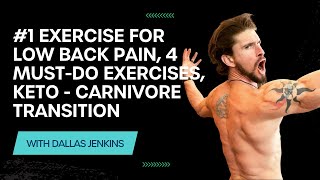
Dallas Jenkins, creator of The Chosen, shares his morning routine with cold plunges and kettlebell work, then walks through four exercises for low back pain: band pull-downs, glute foam-rolling, farmer's carries, and backwards treadmill walking. He also discusses his 30-day carnivore experiment and sleep tools like the Chili Pad and Retimer light.
Chapters
My name is Ben Greenfield and on this episode of the Ben Greenfield Life.
Podcast, I feel fantastic. I mean I'm 47 years old, skin, joints, I mean I have no pain, no inflammation or anything like that. I don't think I'm going ever going to go full carnivore. But it was good for me to kind of eliminate everything else and figure out as I brought back in fruit going, okay, it looks like I'm responding pretty well to fruit. I'm still back and forth. I'm curious where you stand on vegetables because some of the things that I'm hearing that that are against vegetables are compelling but yet I know that 95% of medical community and science community thinks vegetables are the greatest.
Faith, family, fitness, health, performance, nutrition, longevity, ancestral living, biohacking and a whole lot more. Welcome to the show.
Well, howdy, howdy ho. My apologies if my audio sounds a little funky or different. I happen to be on the road. I've been hunting in Hawaii. But I have some great, great stuff to get out to you. First of all, we are working with a new company that makes an amazing kid's multivitamin. So if you're looking for something for your kid, but you have realized that most typical children's vitamins are basically candy in disguise. They got like two teaspoons of sugar, unhealthy chemicals, a bunch of gummy junk that growing kids should never eat is a problem. I'm always looking at these labels for my own kids and in the past I've just fed them liver because I haven't been able to find a good multivitamin. But there's this company called Hya H I Y A. It's a pediatrician approved, super powered, chewable multi. Right? Most children's vitamins have again like 5 grams of sugar, a couple teaspoons that contributes to a variety of health issues, paradoxically. But HAYA has zero sugar, zero gummy junk, non gmo, vegan, dairy free, allergy free, gelatin free, nut free. So super safe for any kid who's sensitive to that kind of stuff. They formulated it with the help of a bunch of nutritional experts and physicians. It's a blend of 12 organic fruits and veggies. Then they supercharge it with 15 other essential vitamins and minerals like D, B, 12C, zinc, folate. So it supports your child's immunity, energy, brain function, mood, concentration, teet, teeth, bones, you name it. And the best part is my kids go ape nuts over this stuff. They're going to give all my listeners, whether you Have a kid. Or maybe you just want an amazing multivitamin that tastes great. Because I have to admit, I've snuck a few myself. They're going to give us all 50% off. That's pretty big. 50% off. It's your first order. Okay. To claim that you go to hiahealth.com Ben H I Y A health.com Ben that'll automatically get your kids the full body nourishment that they really need to grow. What mattress do I sleep on? Well, I'm picky. I'm very picky. I wanted a mattress that blocks emf, that increases deep sleep cycles based on my actual measurements, that actively cools my body even if I can't use one of those fancy bedtop cooling thingamajigs. Accelerates recovery. Something my wife likes and I like. Something that doesn't off gas, a bunch of chemicals. Something that is designed using your health in mind and nothing else. No fancy bells or whistles or wi fi or gadgets or springs or anything. Okay? This is like sleeping on the most natural surface imaginable. They've even done what's called dark film microscopy on people's blood cells when they sleep on this mattress. And it actually allows your blood cells, your freaking blood cells to return to a natural free flowing state that allows your bloodstream to optimize the oxygen flowing through your body. Improves your body's nighttime recovery cycle, improves your sleep quality. Sleep is so important to me, you know that I'm super picky. I don't just sleep on stuff because people give it to me. I sleep on stuff because I do the research. And this mattress is top of the top essentia E S S E N T I a you go to Myessentia M Y E S S E N t I a myessentia.com BenGreenfield Use code BENVIP that'll get you an additional hundred dollars off your Essentia mattress. So. MyEssentia.com BenGreenfield and use code BENVIP Are you ready to get a golden milk latte without spending eight bucks at the local coffee shop? There's this stuff. It's this gold latte, premixed blend. Delicious and filled with superfoods and medicinal mushrooms. It is one of the best nighttime tonics. Keeps your mind off of ice cream and other sweets at night. Kind of heals your body while you sleep. I shouldn't say heals. I don't even know if I can say that heals cures. All I know is it makes you feel amazing because it promotes restful sleep and supports physical recovery. You wake up refreshed without drowsiness. Tastes delicious and like a little bit of warm coconut milk. So good. Low sugar. So it's a dessert like tea that's guilt free, 100% USDA certified organic. It's called Organifi Gold. Organifi makes these amazing juice powders. Organifi Gold is turmeric and ginger and reishi mushroom. And oh, it's all blended together and tastes so, so good. They've got lemon balm in there and turkey tail as well, which super nourishing to your gut and your immune system. You get 20% off of this stuff. You go to Organifi.com Ben that's Organifi with an I.com Ben and that will get you 20% off your order from Organifi. And that's the gold juice powder I just told you about. All right, folks. So last year, even though I don't watch that much tv, barely any TV at all, my sons convinced me to sit down with them and watch this TV series that they seemed kind of addicted to at the moment. It was called the Chosen. I actually watched nearly the entire first season of this show with them. And it's basically the story of Jesus and Jesus's disciples. But it's told in this really, really compelling and entertaining manner, like just getting into how Jesus reaches out to people with all of his miracles and his ministry through the world. But it's funny and it's humorous and it's joyful and it's personable and I kind of enjoyed it so much. I wound up talking with a few friends about it. And one of my mentioned to me that he actually knew the creator of the project, a guy named Dallas Jenkins. And it turns out that Dallas is actually, in addition to being the man behind this series, the Chosen into fitness and recovery and mind body connection and biohacking. And so after a few brief exchanges on text messages and email, I decided that it would be really interesting to get Dallas on the show and kind of hear a little bit about how a guy like him in the filmmaking industry is taking care of himself. And a lot of things he's learned along the way in terms of life hacking and biohacking. And he just seemed like a really interesting guy. Now, the other thing that you might find interesting about him is if you're a Christian or have been associated or interested in the Christian entertainment industry for any amount of time, Dallas is the son of the guy who wrote the Left behind series author Jerry Jenkins. And Dallas produced his first independent feature called Hometown Legend when he was 25 and that got distributed by Warner Brothers. And since then, for the past 20 years, he has produced dozens of feature and short films for companies like Universal and Lionsgate and Hallmark Channel and Amazon. And this latest project, the Chosen, which you should check out by the way. You might not be a Christian if you're listening in, but I honestly think that it's just a really, really great show either way, whether or not you're interested in Jesus, you probably will be after you watch it. It's actually the largest crowdfunded media project of all time and is now a multi season series, even though Dallas don't kill me. But I have yet to even get into season two just because I watch TV so infrequently. But man, the first season was really good and it's going to be fun to have you on the show, man.
Oh, I'm so thrilled. I got really nerdy when our mutual friend David told me you like the show and he's like, you guys should talk. And I am. So I got totally into your podcast. I've got your, your, your sleeping pills or whatever you call on thing. We'll talk about that at some point because I have some questions about it. But I mean, yeah, it has been, it's just been so fun. So yeah, this is like a dream. My wife is teasing me about coming on show.
It's, it's always fun to interview a podcast guest who may or may not have an NAD suppository up their butt. So we don't have to go there though. So actually I, I am curious though, just, just so I can kind of get a little bit of, of the type of stuff you get up to. We're doing this interview like mid morning my time. You're down in Texas, probably closer to noon your time. What's a typical kind of morning look like for you? If there is a typical morning as far as the type of must dos or real non negotiables for you, particularly in kind of like the health morning routine type of sector.
Yeah, so my days change quite frequently. But you asked a good question, which is what are my non negotiables? So when I'm filming, which is the most insane of my life, that's where you know, 80 days, you know, five days a week over the course of multiple months, you know, I'm doing 14 hour days, most of which is spent on the set. And so some of those days start at 6 in the morning, some of them start at 4 in the afternoon, I'm a night guy. I'm a night owl. Most of my writing and editing and stuff is done, you know, 11 to 4 in the morning. I'm a big. Yeah, I'm a big night owl, but sometimes I can't afford to be. So no matter what, every morning when I wake up, first thing I do is I'll usually drink something, whether it's, you know, I have like a. Because I'm. I'm kind of keto ish, Carnivore ish. I'm.
Right.
I'm actually. As we talk, I'm in the middle of a transition, but I always start my morning with some sort of drink of, you know, some apple cider vinegar and some lemon juice and salt and cream of tartar for potassium and whatnot. Usually some sort of mix. And. And then I get my cold tank. So I've got a Renu Cold tank. Renu is the name of their company, and they're great.
Renu?
Yeah.
Okay.
They're pronounced renew, and they. I did a lot of research on cold tanks, and theirs seems to be the best combination of practicality and ease of use, but also working really well. I mean, their chiller is really great. You can set the temperature, whatever you want. Some people just would prefer, you know, a bucket and they just pour ice in it. But because I'm in a rush, usually it's better. So every morning I get in for about 45, 45 seconds completely submerged.
45 seconds. But you must keep it pretty cold to just go 45 seconds. Holy cow. I just pulled up a picture of it. Wow, Siberian cold plunge. Do you have this large tank, the big one?
Yeah.
Wow, that's really nice. That's like almost a $14,000 cold plunge. That looks pretty. Pretty sexy.
Yeah, it is. It's a nice one. So, yeah, I saved up because when I moved to Texas, I don't get cold enough water for showers. The water isn't cold enough. So I always took cold showers. But, you know, and I had a friend who had a really awesome cold plunge that he built himself, and I used to go to his place once a week or so. So eventually I saved up, invested in this cold plunge, and it's been fantastic. Now, yeah, for 45 seconds, I just hold my breath. I do some breathing before I get in. So I do about 20 them off. Inhale, exhales, and then I hold my breath for about 45 seconds completely submerged. So that's every morning, at night, usually a Few times a week I'll get in up to my neck for about six, seven minutes. I keep it at 45. A lot of athletic recommendations are in the 50s, but I prefer it colder. I just tend to be a little bit more of an extreme guy, so I do 45. My whole family does it now actually as well. I have multiple kids who have various health issues. I have one daughter who has Ehlers Danlos syndrome. She's really hard on the joints and skin and whatnot. So she, when she's not at college, she's doing the cold tank. So yeah, I've got, I've got multiple reasons for it, but every morning, no matter what, first thing, 45 seconds, totally submerged, head underwater. Then on shooting days, I don't have time for a full workout. So I do about eight to 10 minutes with a, like a heavy kettlebell. I'll do like 50, 75 swings while I'm standing on a vibrating. One of those kind of. You stand on, it vibrates your legs and stuff like that.
Oh, you do the swings while you're on the vibration platform?
Yeah, yeah.
That's one exercise I actually haven't done on the vibration platform. Like my go, I have one of those big power plate platforms. And my go to workout is I do a minute long isometric squat, then a minute of push ups. This would be like when I have serious decision making fatigue and all I want to do is just a super simple workout. So a minute squat, hold to a minute push ups and I'll just jam back and forth for 10 rounds for so a total of 20 minute workouts. But I haven't thrown the swings in.
Yeah, so I'll just do anywhere from 50 to 75 swings and I'll do it while I'm standing on that. The other thing, that's a non negotiable for me. And I learned this from Athleanx. You know, Jeff Cavalier, he said, you know, do this every day. And this has been a game changer for me because I had lower back pain for 20 years. And this has been, I think, the top things also for my kids because my kids are all, you know, on their phones. I mean, I think everyone needs to do this exercise which is I just take a stretch band and I hold it above my head. So if you can picture this, my, my palms facing me and I, you know, it's almost like you're doing a chin up. So I put my palms above my head and they face me and I put my thumbs out and I hold the stretch Band and I pull it down to my chest and with. With the hands out. So it's like a, you know, it's like I'm doing angels to my chest.
Yeah, it's almost like a band pull apart, but you're moving it down towards your chest as you pull it apart.
Yeah.
Okay, gotcha. That's something that I don't know if you looked into Ben Patrick much the. He's known as the knees over toes guy. But he also has a really great book on Amazon, tiny little book, but it's called the. The. The ATG at. There's two workouts in there. You just do one day of the week, one another day of the week. And they're all these really simple injury prevention workouts like split squat lunges and low back extensions and some variations on the tib anterior exercise. But he has those band pull aparts because it trains all those muscles that tend to get pulled forward as you work on your computer or as you're driving. But I hadn't tried bringing the. So you're starting over your head and then bring it down to the chest as you pull the band apart.
Yes. And I don't remember the science behind it. I just know that it's been working for me. But I think it's about. It works some muscles that you don't get just from traditional face poles and other band apart. And here's the main thing, I think also because I know Jeff Cavalier is big on shoulders, like shoulder injuries. I've had shoulder surgery. I dislocated my shoulder multiple times until I finally had surgery. It runs on my family. So a lot of the stuff I do is really to help my shoulders. One of the reasons why I don't do a lot of push ups because they tend to harder. But Anyway, I do 12 to 15 of those every single morning. I also do those on the vibration machine just for no other reason than just it's, you know, I'm in a rush, so I want to get as much little help as I can get. Well, that. What that does is it works the muscle memory for posture. Like it really like the moment you're done doing those, your chest is up, your shoulders are back.
You mean the band. The band pull parts?
Yes.
Okay.
And I get comments now. I used to slouch. And I get comments now from people who didn't even know that I used to slouch, who'll just say, well, you really have good posture. Like, what is behind that? You know, I'm like, band polls, you know, The. And today it's even more important than ever with all the how people are on their phones and slouched over and neck down and everything. And I'm pretty obsessed with my kids about putting their chin up while they're on their phone. But this. This exercise is, again, a non negotiable. So whether I have time or I don't, I do the. The. The. The. The band poll every. Every morning. And then the other. Only other one that's non negotiable is foam rolling my glutes. That's another thing that has changed the game for my lower back. I mean, it has been. I used to foam roll. Yeah. I used to foam roll my lower back because it hurt so good. I felt like I was doing something for years. And I then saw this video online that was like, do not foam roll your lower back. Your curve, your spine is already curved in that direction. You're making it worse, you know, yada, yada. So now I foam roll my glutes, and I actually line up the foam roller perpendicular to my leg. Not. No, sorry, parallel to my leg.
Yeah.
And. And I foam roll my glutes every morning without exception. And that has more than any other thing, including some other things that I do for my back that are great too, like, you know, luggage carry and all that. But the. The foam rolling my lower back, or, sorry, foam rolling my glutes every morning has just completely changed the game. And now I stay on, like, I'm on my feet, you know, literally 12, 14 hours a day without a single issue. And that's been a big game changer for me.
Yeah. So when you. So when you see your foam rolling glutes and it's parallel, so it's lined up along the same axis as your leg going down towards your quad. And are you kind of like shearing back and forth that way?
So what I do when I foam roll, and this is again, another Jeff Cavalier tip, is instead of just rolling back and forth, I'm doing little pulses, like kind of, you know, just like back and forth, you know, five seconds at a time.
Yeah. Almost like flossing, like Kelly Starrett would call it.
Exactly. And then I slowly move it across from one side of the cheek to the other and, you know, towards the crack, and then I go to the other cheek, and then I do that. And so it's, you know, 15. Well, not longer than that. Probably 30 to 45 seconds per cheek. Yeah. And I'm telling you, man, that is a absolute game changer. And everyone that I have recommended that to. Because on, on movie sets, I'm running into people who are always stretching their back and they're always like, molar back's killing me. I'm like, dude, I'll buy them a foam roller. I send them a video that I once posted on my, my Instagram page. These four things that changed my life with my back. And, and I send it to them and all of them come back and go, oh my gosh, instant relief. Total change. I mean, it's just. I don't know what I think. It kind of like almost releases the tension that's existing in your back. But, man, between that and the. In the upper body, sorry, upper back kind of band pulls.
So you said there were four things. The band pull aparts, the rolling, the glutes parallel. What were the other two? Do you remember?
The other two things that have changed my lower back are the luggage carry, the farmer's carry. Whatever you call it is walking on the treadmill just holding heavy weights at my side. I just saw that that was one of the most common exercises that was in every popular fitness routine that really just worked the core. And then I also do it on one hand at a time too. So I'll do, I'll carry like maybe 70 or 80 pounds in both hands and, you know, do that for, let's say a minute. And then I'll also then do like £60 in one hand for a minute or minute and a half or two minutes. Switch to the other side. That really works. The lats, like when you're holding a heavy weight on just at your side without even moving, you're just holding it, touch the other, the opposite lat, and it's just totally like ripping and engaged. So I lift weights, heavy, heavy weights, three days a week. And on the off days, I walk on the treadmill.
Yeah, you, you walk, you walk on the treadmill, but you hold the dumbbells while you're doing it.
Yeah, not the whole time. I mean, I'll do a treadmill walk for about 45 minutes. Now the other thing that this is, the fourth thing is from knees over toes guy, which is walking backwards.
Yeah.
So walking backwards on the treadmill for 15 minutes. I usually do that, you know, early on or near the end of that workout. I'm usually wearing a weighted vest. I got a 60 pound weighted vest that I wear, but so I'll do 45 minutes on the. This is, this is again, when I'm filming. I don't have time for this. When I'm filming. I get in about 15,000 steps a day. Just naturally I'm not. I don't need to be on a treadmill.
Yeah.
But day like today where I'm not filming anymore, I get up, I do a normal workout, you know, 45 minutes or so. And I'm lifting weights one day. And then the off day, quote unquote, I'm on a treadmill wearing a weighted vest and I'm doing the farmer carry for some of it. I'm walking backwards for 10 to 15 minutes. But all that core work is been the biggest thing when it comes to long term back relief. And you preach this more than anybody. You can just take a pill to make it feel better. You've got to over time recreate your system so that it's foundationally stronger for things like your back. And so the core work and the footwork, I mean, Ichirou Suzuki was a Japanese baseball player, played in the major leagues and lasted until he was like 46. And they talked to him about the secret of his fitness and his success and his longevity. He's like, feet, I take care of my feet. So I've got a slant board, I've got, you know, I walk backwards when I'm on the treadmill. I wear flat soled shoes like those, you know, running shoes that have no.
Yeah, like, like the minimalist 0.0drop. Yeah, zero drop. Yeah. It's funny you said that because like right now as you're talking about foot care, I. I have this, this one company, Naboso, they sell like proprioceptive foot mats. I got one in my sauna. And then they have like the little toe blade devices and socks that have the, the proprioceptive material built into it. But then they have, you know, on. Well, you're at your desk and I have one of their little balls underneath my feet. Right now I have that in one of these topo mats. So I'm constantly doing footwork while I'm podcasting with a guy like you. So I get it. Yeah, they're Naboso. Emily Splichow. S P L I C H A L. She's like the go to person, the go to Dr. For foot optimization. She was on my podcast a while ago. But their products are super cool for anybody who's just like standing around their desk anyways and wants to do the foot care.
Are you an advocate for avoiding cushions and stuff? Because I used to wear lifts and cushions and fix old shoes and I've started to come off of that.
Yeah, it kind of depends let's say your goal is just the biomechanical aspects of hip and knee alignment and getting stronger feet and avoiding the compressed toe box phenomenon that a lot of times wind up reshaping people's feet and leading to the upper biomechanical issues. And yeah, I'm a fan of the minimalist approach, but I think there's also practical aspects when I race. And I tried to go minimalist for a while, but the problem is you're on rocks and you're going over barriers and you'd constantly be injuring your feet. Because these minimalist shoes didn't provide quite enough cushion. So I went kind of like mid cushion for those while still wearing for my day to day footwear for my long walks, things like the Earth Runner sandals or Vibrams or other minimalist footwear. Another example would be like hunting. If I go hunting in Hawaii and I'm on lava rocks, or if I'm traipsing around the snow out here in Washington. Yeah, I'm not gonna be an idiot and wear like the old Tamahara sandals, or you probably call them Jesus sandals, I guess, in your sector. But I'm kind of picky, choosy. But then the other thing is a lot of people nowadays, they have gout uric acid deposits in the toes, they'll get foot injuries or plantar fasciitis, et cetera. And for somebody like that to wear minimalist shoes, like torture. I had a foot injury a few months ago and I actually, for the first time in my life, bought one of the shoes I would have made fun of like two years ago. These big cushion like cloud running hokas and oh my gosh, they're so comfortable. Like I could walk for miles and miles and miles and I would think about my feet or foot pain or foot discomfort at all. And I realized, yeah, maybe if I were to use those all the time, I'd be getting weak feet. But I think for the rest of my life I will have one pair of these big built up, super comfortable Cadillac like cushion shoes just because they do make long walks super comfortable or like a day of travel where walking through airports, things like that. I do like the idea of throwing in the big old cushion ones every once in a while. For me it's probably 80, 20, I'm 80% minimalist. Get the feet stronger, do the foot therapy with the ball, wear the Earth Runner type of sandals or the Vibram type of soles, or what's the other company, Vivobarefoot. But then for Long, long walks or times when my feet are just beat up, I'll do the hokas. And then the other one is I've been getting super into pickleball. And so for a lot of those type of sports, minimalist just doesn't work. They just don't have enough toe protection, et cetera. But that's my take on the foot care stuff. You did mention a couple things I wanted to dive into briefly because I had a few thoughts that went through my head. I didn't want to interrupt you as you're going through your routine, but you talked about the backward walking on the treadmill, which I have this philosophy that when I go for a walk back to that 8020 approach, I try to walk backwards for 20% of the time. I'll get texts from people near my house who see me walking up the road. They're like, hey, I saw you walking backwards up by your house the other day. And it's because I always throw in. And it's just like sometimes for every mile I walk, I'll throw in 100 steps walking backwards. But I think that whole idea of it being the Chinese secret to longevity, or as Ben Patrick, the knees over toes guy says, one of the best things you can do for your knee musculature, I think there's something to that. But I was recently looking and I realized this might not be up everybody's alley, but since Dallas, you, you spent $13,000 on a cold plunge. You might be interested in this, this new treadmill called a sled mill. Have you seen this thing?
I haven't. Although, I mean, I've seen Ben do on his videos the sled poles and stuff.
Yeah, this is like a treadmill because, like, I live on a north facing slope out in the trees. I got a long driveway, but it's all gravelly. Like, I don't have a lot of places I can do sled pushing and sled pulling. But this is like a treadmill you should Google. It's called the sled mill mill, and it's designed for people who want to do some of those really rigorous sled pushes, sled pulls, backwards walking, etc. But it's all just on a treadmill, so you don't actually have to be covering 100 yards or whatever. So that's an interesting device. I haven't gotten one yet, but it's probably the next kind of purchase I'm going to do for my home gym. It's called a sled mill and that one's interesting. But Then the other thing you were talking about, the. The farmer's walks, I had a coach, I've interviewed him on the show before. He was my kettlebell coach, Joseph Anu. And he introduced me to the concept of death walks. And this is like a game changer when it comes to taking the idea of luggage carries on the treadmill, activating the lats and kind of keeping the shoulder complex in place. If you have good, nice, upright posture, it's like that on steroids. What you do is you do that same type of long walk, but you do it with two kettlebells. And you start with the kettlebells overhead, like literally both of them overhead, shoulders locked, as good a posture as you can maintain. And then once your shoulders kind of poop out, then you move them down into a racked position on the chest. And then once you get to the position where you can't hold the rack position anymore, then you drop them and you go into the standard farmer's walk. And I started doing that instead of just the standard farmer's walk. And I mean, the idea of the full body workout, kind of the inspiratory and expiratory muscle training when you got them racked right at your chest, and then the final component, just doing the L luggage carries until your grip is gone, it's kind of like. Like an upgrade to the idea of doing just the luggage carry. So it's a death walk with the kettlebell starting overhead and then rack position and then down by the side. And I. I like that one even better than the luggage carries now. So if you have a couple of kettlebells, you should try that one out. You get on a treadmill or you could do it, you know, in your. In your yard or whatever.
Yeah, I mean, I'm looking it up while you're talking and. Yeah, that's a dumbbell death march is what it's what it.
Oh, is that what they call it? Yeah. I've only ever done it with kettlebells. I've never dumbbells. But you could. Obviously, you could pull it off with dumbbells, too, or sandbags. The other thing I was going to ask you was you mentioned that Instagram video that you shared with the band Pull Aparts and the foam rolling and the backwards walking and the. What was the last one?
The luggage carry.
The luggage carry, yeah. If you have that video and you want to email it to me or text it to me, I'll put it in the show notes if people want to go check it out, it's going to be at BenGreenfieldLife.com Dallas D A L L A S because I know for some people they'll probably want to see this. So can you shoot me that video?
Absolutely. I've shared it with a lot of people and my social media pages are primarily for film, of course, but I started once a week just doing little tips and I'm getting people now, when they recognize me will come up and go, oh, I'm loving your health tips. I just started eating egg yolks instead of whites. It's so much better and it's so gratifying. So the back thing was huge. So yeah.
Okay. So if things don't work out in the film industry, you can be an online Instagram influencer for fitness. There you go. I was going to ask you one other thing too, and then I want to hear a little bit more about your diet, your late night work and this idea of working from 11pm to 4am or whatever. Obviously I can tell by the way you're talking you're no doubt aware of the elements of circadian rhythmicity and how hard shift work can be on the body and things like that. But do you have certain hacks, whether it's nootropics or smart drugs or light producing devices or things, things that you use to kind of get you through a sleep deprived day or a lot of that late night work?
Yeah. Here's the thing. I wish I had better advice on this, but I think a lot of this for me is genetics. I just have always been a night owl. I don't need quite as much sleep as the average person. Some people have told me it's because of how I eat. When I was keto for about five years now I'm transitioning a little bit more towards into the pulse Aladino realm of things. I'm introducing more fruits and whatnot and I think the cold plunge makes a difference for me. So I do have, occasionally I do have those. I don't remember the name of it. I wish I could, but there's like a device you wear on your eyes. It's like goggles but.
Oh, the Retimer glasses.
Yeah, exactly.
Oh, I have a set of those. They're amazing. They produce the greenish blue wavelight which is the one that's closest to the wakefulness spectrum of sunlight. They work actually, actually really well. Like if you combine those with the. Have you seen the in ear one that they make in Finland, the human charger?
Oh, I haven't seen that now.
Okay, so the human charger does the ears, and then the retimers do the eyes. And that's what I'll use when I travel. I'll just do that 12 combo. If I'm in some place where, I don't know, like Vegas or whatever, where it's almost impossible to go find sunlight in the morning, I'll put those on. And for. For jump starting the circadian rhythm or keeping you up if you got to work late at night, that. That's a really good one two combo.
Yeah. So the, The. The light stuff, I. Yeah, I haven't heard about the years. That's interesting. I'll look into that. But the, the putting the thing in my eyes, usually I don't do it at night, but I'll do it midday. Like, if I wake up at 10, like, let's say I'm in a real intense writing session for a couple of weeks where my hours are like, my wake hours are from like 10 or 11 in the morning till, you know, three or four at night. I might do it, you know, in the afternoon just to kind of. Just to kind of shift the hours a little bit. But a lot of the thing is sunlight. I mean, I. I used to be a total vampire. My wife used to tease me about it. I mean, I didn't like sunlight. I always had the shades down. I just preferred it didn't. Hated the heat, you know. Now I moved to Texas, so I still hate the heat, but I've been forced to get used to it. But I'm just really embracing sunlight now more than ever. When Covid hit and I just. Every single, you know, bit of research I was doing because I was just obsessed with our country fighting Covid differently from just trying to take. I mean, I'm not against vaccines or anything, but I was just like, I think our country as a whole needs to be better prepared with our bodies to handle viruses than just solely, you know, trying to cover other stuff. But. So I was just looking into all that. And it just seems like across the world, throughout the history of time, all the way up until today, every smart person says sunlight is the cure to like, half of our issues. So I've just decided to embrace that more. So when I wake up, even if I'm waking up at 10 or 11 in the morning, I'm. When I go out to my cold plunge, I'm going outside. I'll walk around for a few minutes, stare, you know, into the. Not at the sun, but in the direction of the sun. And then I'll do that again, you know, maybe in the afternoon, just to try to really tell my body we're awake, we're vibrating. And so even if it's. I'm doing that at 4 o'clock in the afternoon instead of someone like you who might be doing it at nine in the morning, I'm trying to just trigger my body to be on a. On a normal cycle, but just at a different time.
Right. You're shifting your circadian rhythm forward, right? Yeah. I wonder, have you ever done any gene testing? Because the sleep genes, I think it's the DEC2 gene, was the original one. And then they found a couple other mutations that allowed the few people who actually are telling the truth that they actually do get by in short sleep. Because there's certain people who say, oh, I'll sleep and I die, and they technically are horribly unhealthy and they can't get by in short sleep. Then there are certain people that actually go through their full sleep cycles in a shorter period of time, and they have these gene mutations that alter the neurotransmitters in the human brain that allow for shorter sleep cycles. Probably the same type of people who, I don't know, in ancestral times would have been wired up to be the sentries or the people guarding the cities at night or whatever, whatever. You can actually have this short sleep gene and live healthy with it. I don't know if you've ever tested your genes for this, but I got to ask you, I've talked to a few people who actually have done the 23andMe or the full genetic analysis and found these sleep genes. I'll link to an article in the show Notes if anybody wants to read up on them. But these people have reported me that they also tend to have super crazy dreams, sometimes almost nightmarish dreams, but every night they seem to have intense dreams. Have you ever found that to be the case for you?
What's funny is the time that I have the most intense dreams and my sleep cycle is the shortest is when I took. When I usually take certain types of sleeping aids. And the biggest one, I told you this when I took your. How do you pronounce it again? Is it kion or Kion?
Oh, the kion sleep with the tryptophan.
Yeah. So I got your kion sleep after I listened to one of your podcasts. Because when I'm filming, sometimes I'm up late, but I still have to get up early in the morning. So anyway, I don't want to fall asleep fast. Well, when I took your kion Sleep. Sleep. I had super intense dreams and I woke up, I think it was four or four and a half hours into, you know, like, just woke up. Like I was awake and I didn't feel exhausted and that's why I was texting him. Like, how do I get back to sleep if I'm waking up at, you know, four in the morning? But I don't want to wake up at 4 in the morning.
Yeah.
So I think now I use your pills on nights when I've stayed up too late and I. But I still have to get up early and I need four and a half, you know, because I try to time it according to 90 minute intervals. You know, 90 minutes, 3 hours, 4 and a half, 6, 7 and a half. Those. That seems to be a good, good pattern. But I'll get like if I want short but good sleep. Your pills worked. But yeah, I haven't done any testing. I'm actually going to be doing 23andMe here on a couple of days. I was, I just ordered the kit. What's funny is my dad's the opposite. My dad gets up and does all his writing from like 5:30 in the morning till 11 in the morning. But I've always just been a night owl. Now to be fair, I don't want to be. I still try to get six hours of sleep. That's my. Like, if I can get six, that's ideal for me. If I can get more, that's great too. But I've just found that even when I get a short amount of sleep and I have a full day of 14 hours on the set, I just don't find the things that other people talk about. Brain fog.
Yeah.
Crash in the afternoon or anything like that. Like my mood doesn't seem to be affected by it. And you know, the cold plunge has ensured that even more, I feel even more alive shortly after I wake up. But I'm telling you, I. I don't feel a lot of the things that other people talk about. My workouts, I don't sense like if I've worked out after having a. Not a great night's sleep, it doesn't seem to impact. Like I don't feel like I'm. And I don't sense that I'm lifting. I have to lower my weights or anything like that. It's just a unique thing.
So, yeah, you probably do have one of those genes. Although I don't. I don't know if the 23andMe me sometimes they don't report on those genes. There are places you can export those results out to, like Genetic Genie, for example. They give you a more full analysis of your genes. The one I tend to use a lot that again doesn't give the sleep genes, but will tell you all of the variants that are the ones that are most significant in terms of susceptibilities to specific health issues, is Strategene. And you can do your 23andMe test like you're going to do, and then export the results into Strategene. And that's what I have a lot of my clients do because it identifies the major genes that you actually have to worry about. Right, because 23andMe will tell you some stuff that's not that important, like your propensity towards blue or brown eyes or whether or not you're going to lose your hair or something like that. But then Strategene will give you your nitric oxide synthase genes, your methylation genes, your glutathione profile, a lot of stuff that is a little bit more actionable in terms of data. Another thing that I thought of when you were mentioning the kion sleep and it actually does help you get back to sleep if you wake up during in the night and you got to take it whatever, like 3am but you don't want to wake up at 5am Groggy, which would happen if you took melatonin or CBD or something like that. What I do with the kion sleep is I either use the powder which gets absorbed a lot more quickly if you just let it dissolve in your mouth or else I'll actually chew on the cat capsules. They don't taste that great, but you get into your system a lot more quickly. But what I do now, since you texted me, this is a new thing that I've been trying and it works really well, is a non sleep deep rest protocol after you dose. Let's say I wake up at 2:30 because I had to get up to a pee and I'm having a hard time getting back to sleep. I'll do the key on sleep, but the non sleep deep rest protocol is basically like a body scan where you start at your feet awareness into the feet, feet, then let the feet relax and then move up to the calves, move to the knees and the quads and the hips and the low back and so on and so forth all the way up to the arms and then finally if you're still awake at that point, the neck, the back of the head and then the face and the top of the head. And what inevitably happens to me is by about the time I get up to my torso, I just lose track of time and then I wake up a couple hours later. The guy who has made that, that protocol popular who actually has a YouTube video where he walks you through it, although you can download. They're called NSDR protocols. They're also known from a more ancestral standpoint as Yoga Nidra protocols. But essentially it's like a body scan. There's something about it though, and I think it's because it keeps your mind from thinking about other things like ruminating thoughts, such as what you're going to do when you wake up later on to work is is it allows you to focus on just these body parts. You almost get bored doing it. Very similar to counting sheet but more effective. And man, that 1, 2 combo of doing NSDR or yoga nidra plus the kion sleep has been really, really good for me for those early morning awakenings where I really know it's not quite time to get out of bed.
Yeah, that's really good. Do you find that? Because I find that when I have to get up early for a specific thing, that's the worst because I. Even if I get to bed at a normal hour, I wake up at three, I wake up at four. I wake up looking at the alarm clock. I can't.
You mean like when you have a plane flight or an important phone call that's early in the morning? Yeah, yeah.
I can't figure out how to trick my brain into not stressing about it, you know, while I'm actually sleeping. Now, the things that have helped me the best with sleeping is I had sleep issues for years and years and years. I mean, meaning I like, as I said, I feel like I don't need as much sleep as the average person. And yet I know that's not ideal. I know you. Just because I can function doesn't mean it's healthy for me, so. But I would have trouble just falling asleep at night. I have adhd, just, you know, my brain was always firing on all cylinders. But weighted blanket has been a big difference maker for me because it keeps me from moving around so much while I'm sleeping. Chilipad really, I think helped, you know, keeping me cool because I get really hot at night. So the chili pad was a big game changer for me. And then the cold tank, if I do it too close to bedtime, then that seems to be difficult. But if I do it maybe 30 minutes before or 45 minutes before bedtime. Oh, man. It's like a sleeping pill.
Yeah, the cold tank's interesting because if you do the super cold or a super cold shower right before you go to bed or in the couple hours before you go to bed, it's kind of similar to a hard workout. You get this adrenaline epinephrine response that paradoxically keeps you from going to sleep despite your core temperature being lower. So the trick for the night is you kind of go like lukewarm or slightly cold or very, very brief for the cold exposure. Just enough to get the body's core temp down. And if you already have the chilipad, then you really don't need to go much longer than that. But you said you used a gravity blanket. Have you seen that chilipad? Although I think they changed their name to Sleep Me now. The company, they do a weighted blanket that you can get that attaches to a chilipad device that actually circulates cold water or warm water if you want it through the gravity blanket.
Oh, no, I haven't seen that.
Yeah, it's super cool. I use it in the winter because the gravity blanket just. It's kind of like if you were a kid swapping bottled up in clothing. It's got this soothing effect. But, man, with the cold water going through it, you've basically got the cold underneath you and on top of you at that point.
Wow. Yeah. Well, I'm taking more notes during this conversation than I'm probably going to cost.
You a few dollars now. Between that and the sled mill and the extra kettlebells. The other thing kind of related to stressing when you have to get up is really interesting because you hear a lot about that with medical stuff. Students who will have to sleep during their residency or whatever, but know that at any point, and physicians too, that they got to be on call and get up. There's this weird shift that takes place in the human brain where when you know that you're going to have to wake up or you don't even know when you're going to have to wake up, but you know it's going to happen, the body doesn't sleep that well, the same as when you're going to catch a plane flight or when you have an early morning appointment. That's why I personally, even though I'm highly productive in the morning, I try to as much as possible avoid any actual appointments until about 9:30 or 10:00am and everything else. All the work up to that point is on my own time just because I have the same thing. If I know there's something coming up early in the morning, it's strange. It's actually much, much harder to actually get to sleep.
It's brutal. And I have not figured out how to do that the night before the first day of the week. In fact, I have a few other crew members who say the same. So Sunday night we know that the first day of the week is coming. We've had a weekend, we've been resting and you know, first day of a filming week is usually very early in the morning because. Well, it's a long story why, but you're usually because of union rules. You know, you have to give what's called turnaround at the end of each day, meaning you have to have a certain amount of hours before the next day. So if you have any night shoots that you have coming up, they're always at the end of the week because you have. You can't do a night shoot at the beginning of the week and then try to expect people to get up in the morning after that. So long story short, short, Monday morning is always at the end of a, you know, obviously at the end of a good weekend and you have to get up early. And every Sunday night, man, all of us say the same thing. We cannot fall asleep. You know, we're stressed about it. And then when we do fall asleep, you wake up every hour. It's just brutal. And I have not figured out the life hack other than I know that the, the kion pills or Kaya again, I forget the pronunciation. But those pills that I got from, from you, those do help me fall asleep. It just. I just wake up four and a half hours in. But at least I got that deep sleep where.
Your dreams are telling brand new stories that could be their own movies.
Yeah, exactly. I haven't found anything to get over it again besides something like the key on sleep plus the non sleep deep rest protocol. Now how about when you are up, are you into any particular nootropics or smart drugs or wakefulness promoting agents?
Not really. I think, I mean I probably could look into that and deep dive a little bit more. I feel like I'm already obsessive enough as it is on some of my other things. I'm like, if I try to look into one more thing, I'll go down another rabbit hole. But I find that I haven't needed that. I mean I'm not even a big coffee person. I drink some coffee every now and then and some green tea just for health benefits. But I Don't find that it gives me any more of a boost or wakefulness than intermittent fasting does or the kind of the higher fat diet that I do, low carb stuff because I'm now incorporating fruit more. I'm really looking into, you know, every other day now I have tons of fruit along with my higher fat high protein diet. And I'm kind of experimenting with that a little bit, but I just don't have some of the crashes that most people do. My brain is always firing pretty well, so I just haven't felt the need to look into more of the stuff you're talking about. Now I'm not saying it wouldn't help me, but I just haven't really needed it.
All right, so whole body wellness is obviously a big part of my life. I'm always looking for new ways to make my body feel great, make my brain feel great. One non negotiable for me is a daily dose of red light light. I can use it to simulate sunlight. I can use it to simulate sunrise, sunset right in my office, bringing the sun into my own office. The infrared light spectrum is fantastic for boosting cellular energy for healing damaged cells that are under oxidative stress. There's a ton of clinically proven benefits to it. Better skin, higher testosterone, better blood flow to the whole body pre workout or post workout for recovery. Use them in your office at night when you don't want to flip on all the bright lights, but you want that giant dose of soothing red light therapy. Therapy. And what I go to is joovv for my red light. They source from the highest quality materials. They got medical grade components. They went through third party testing. They have safety marks from nationally recognized testing laboratories. They give you the safest, most reliable product. It's unmatched. There's a lot of red light companies out there, but Joovv is unmatched. They have a whole body treatment device. I can treat my whole body in 10 to 20 minutes. I do it once a day. They even have a little handheld device called the Joovv Go I can throw in my suitcase and take with me on the go. Barely weighs anything and so I can do my red light when I'm in my hotel room anywhere in the world. This stuff just works. It travels through GSA too, also just fine. So Joovv.com Ben J-O-O-V-V.com Ben apply my code BEN to your qualifying order and you can feel what infrared's actually like in terms of a big upgrade in your health J-O-O-V-V.com Ben and you're going to get an exclusive discount on your first order when you use my code Ben on your qualifying order. Order. I'm pretty stoked because this is now something I can do and I'm on the go. And it's based on this idea that the human body being mostly water, but what you probably don't know is everything else in your body is 50% amino acids. That means basically water and amino acids are two of the most important things that you can have in your body. And some amino acids are essential. You have to get them from food, from breaking down steak and chicken and eggs and everything else. But this stuff called kion aminos is a a plant based full essential amino acids profile backed by over 20 years of clinical research with the highest quality ingredients, no fillers, no junk. Rigorous quality testing. Tastes amazing with all natural flavors. I got on the amino acids bandwagon way back when I was racing Ironman triathlon. Started with branched chain amino acids, realized those were a waste of time, switched over to essential amino acids and it has been been a game changer ever since. Now what did I mean when I said travel? Well, these kion aminos, which are the essential amino acids that I take, they have for the watermelon flavor, the lemon lime flavor, the berry flavor and the mango flavor. They got stick packs now so you can take them on the go anywhere. I honestly have like a couple packs in my fanny pack now. I can dump them in water when I'm at a restaurant, have that instead of like a bread, a basket that comes out or a cocktail. They satiate the appetite, they accelerate recovery. They're amazing pre workout or during a workout, the list goes on and on. Fact is, if you haven't tried essential amino acids, you're missing out. And you can save 20% now on any monthly deliveries and 10% on any one time purchases. If you go to getkion.comBen that's getkion.comBen to get my fundamental supplement for fitness, Kion Aminos. GetK-I-O-N.com.
There's obviously a lot of formulations out there. Probably I think the coolest company out there right now doing nootropic formulations is called Nootopia. I interviewed the guy that is a formulator for that company. And you go online, you fill out a questionnaire that identifies the unique neurotransmitters that you might need during any given day. If you're short on sleep or you Want a cognitive pick me up? And then they kind of customize a package and they send it to your house with these little formulations like Brain Flow and Brain Upgrade and nectar and these little brain nutrients. That company I think is doing a really good job. But then my latest find that I've been using for about the past four weeks, especially on sleep deprived days or travel days, is this molecule. You can technically find it in coffee. Coffee gets broken down into caffeine, which everybody knows. And then theobromine, which is the same feel good, good euphoric component that you might find in chocolate or cacao. And then the last one that a lot of people don't know about is Paraxanthine. It's spelled P A R A X A N T H I N E. And there's this. The movie, I'm sure you probably heard of it or have seen it. Limitless with Bradley Cooper was inspired by this anti narcoleptic agent called Modafinil or also known as Provigil, which will keep you awake for like 24 hours. I have it in my emergency travel stack. If I fly overseas and get in at 2am and go speak on stage at 8am and then go through a full day at a conference, I'll actually take some of that Modafinil. But the problem is it'll keep you up for 12, 16, sometimes 24 hours. This paraxanthine stuff gives you the same hyper focus, feel good euphoric effect, but only lasts for about four to six hours. And so that's the one that I'm using now if I am sleep deprived or if I just got to hammer through a morning, but I don't want to stay up later on that night. Sounds like you don't even need something like that. But I figure for people listening in who want to look into something like that, there's not a lot of companies that sell it right now because I think it's kind of new, but it's called Paraxanthine. So it's an interesting one to look into if people are sleep deprived and want to try it.
Yeah. What have you found for focus? Because I would say my bigger issue is not alertness, it's focused. When I'm sitting down to write, my desire to browse, to check scores, to. I mean I'm just so easily distracted. And unless I become a cannabis addict or something, because I know that can help with focus, but I'm trying to avoid being dependent on that kind of stuff.
I think cannabis kind of makes you A little loopy. It's not that great for testosterone too. With long term use, it kind of impairs testosterone and fertility. But yeah, for the focus. In the past there's been two things I've used. One is caffeine, like a cup of coffee, but you add L theanine to it and L theanine kind of elongates the effects of coffee but produces a little bit more alpha brainwaves. And so you get less of the jitteriness from the coffee, but it kind of gives you this long slow bleed of focus. What you do is like a typical cup of coffee. You add 100 milligrams of L theanine powder or you take like 100 milligram L theanine cleaning capsule at the same time that you have your coffee. So that. And or microdosing with psychedelics, particularly psilocybin or lsd. I'm not a fan of heftier doses of those for other reasons. I just think they're overused and abused. But very, very slight, small doses of either of those two can be really good for enhancing simultaneously focus and creativity. Of course, the problem is they're illegal, they're difficult to get, they're difficult to source, and the quality varies widely. But up until a few weeks ago, again, I would have done caffeine plus L theanine or a microdose of psilocybin or lsd. But now I've been using that paraxanthine thing and I think it works even better, particularly for focus. So that's kind of like my new one that I like. And it doesn't seem to have a, a waning effect. It actually seems to work better the more frequently that I use. Almost as though the body has learned how to handle that molecule effectively. So those are probably the top three would be microdosing or caffeine plus L theanine or paraxanthine. It's kind of like the top three for focus.
Yeah, I'm going to look into that. Yeah, you mentioned the microdosing. My first thought was, is that legal? Because I know that, I mean, I'm in Texas, I know it's not legally, but I've been looking into that. Just psychedelics in general, just because I think that there's some extraordinary progress being made in that field. But yeah, the theanine I have tried, there's a. I don't know if you know this fitness influencer and I'm sure you may disagree with him on things, but there's Kenobody which is a guy named Greg Go Gallagher. Oh, yeah, I've heard of him.
Yeah.
Yeah. He has a product called Kino Octane, which has been really, really good. In fact, I drink that sometimes instead of coffee. And my wife now is, is, is really into to it. Keno Octane really has, has been a big benefit. And I've noticed my focus and mood change. I don't usually try to do things at night just because I don't want to stay up till, you know, eight in the morning. But. Yeah, but I might actually start thinking, look, if I'm going to be writing from 11 to 4 at night, I might as well take maybe some of that at, you know, 9:30 or so.
Yeah, it looks like I just pulled up the label. It's got, it's got caffeine and L theanine. So basically exactly what I just described, which is great. It's probably why you notice that effect. But then it's got ginseng biotin, which is really interesting. Biotin's super cool too. Just because a lot of guys who are deficient in biotin, they take it and they notice a bump up in testosterone and thiamine, B vitamin and L citrulline for the blood flow. Yeah, that's pretty well formulated. I like that. Kino Octane, huh?
Yeah. K I, N O Octane really has been a big help. And again, my wife, who's very different from me, and she does get up early in the morning because she has to with the kids for school and, and she's often tired and she felt, she said her writing and her mood is better from keto octane than it was from coffee. So that's been a big help.
Yeah. Yeah. And you always want to look for like sucralose and artificial sweeteners, but it looks like they sweeten this one with stevia. So, yeah, it looks pretty solid.
Yep. And the only thing I'd be curious what you think of this is he says, what I do is Kino Octane first, and then he'll do like coffee a few hours later. And he says, says that the coffee before the workout kind of hypercharges the theanine you took a couple hours earlier. It almost becomes an additional boost. He goes, they make each other stronger.
Yeah, I guess it would depend because it looks like they already have caffeine anhydrous in the compound. But if somebody's a fast caffeine metabolizer, which a lot of people are then redosing with the caffeine could give it A little bit of an extra effect pre workout. So, yeah, that's solid. I like that formula. This whole transition that you're doing from keto into carnivore, tell me about that. What inspired that move?
Well, I've been doing keto for about 5 years. Worked great for me overall. And then I saw online, I finished filming. And while I was filming, I realized I was, you know, for. I know on your podcast we can talk about these kinds of things. My wife will roll her eyes, but gassiness. So I was really, really, like, gassy for years. I mean, I was known among my friends as like, like, just like, if I fart, stay away. It's absolutely brutal, right?
Yeah.
And when I switched to keto, that all went away.
My wife, she's lost all the fermentable carbohydrates, right?
And she would say, I can tell when you cheated because, you know, I. That day would be farting. And the biggest thing for me seemed to be carbs with dairy. That was like the, like, you know, a bowl of cereal with milk is like just Titanic, you know, so. So keto, I was like, I can tell. Bloating and gas were the things that were the markers for me as what was healthy. And for a few weeks I found myself. I'm like, man, I'm gassy again. What is it? What am I eating? That in addition to my normal keto diet? I couldn't quite figure it out. I decided I was going to really figure it out. And plus, my daughter has a lot of health issues, so I wanted to try to find something optimal for her. So I was like, I'm going to eliminate lemonade, and I'm gonna. I'm gonna do. I don't know if you've heard of this, the BBBE challenge. You know, 30 days of just bacon, butter, beef and eggs.
No, I haven't heard of bacon, butter, beef and eggs for 30 days.
Yeah, just nothing but that. And then of course you can drink, I mean, like water and. And salt and stuff like that. But yeah, so Dr. Ken Berry is kind of a popular carnivorous keto ish guy on. On YouTube, but he said 30 days and just see how he feel. And so I did that. Not because I want to do that for the rest of my life, but because then I wanted to, after a month, introduce fruits and see what that would do and then. And then eventually introduce some dairy and see what that would do. And I was starting to get intrigued by some of Paul Saladino's stuff. I don't Agree with them on everything. But I was intrigued by the idea of at least for 30 days, just eliminating everything else and seeing how I feel. So I did beef, butter, bacon, eggs for 30 days and felt fantastic. And I lost 10 pounds. I don't know that I needed to lose 10 pounds, but I did. Felt great. No gas whatsoever. And then I introduced fruit. So now I'm doing every other day. I guess I'm a form of carb cycling basically, which is every other day I'm having lots of fruit and it's on my lifting day. So for today. See, normally I intermittent fast too. I won't take too much time on that. But I've been intermittent fasting every day for years, you know, 16 to 20 hours. And there's some new research that indicates that maybe not doing that every day is better that, you know, doing it maybe once or twice a week.
Right.
Just because your body gets so used to the intermittent fasting that it ceases to be as effective. So I'm, and I'm such an extreme person. Like I really need the discipline of a routine. Meaning like an eating routine or a fasting routine because I'm such a food addict. My dad was my dad and both my brothers have each hit £400 in their lives at one point or another. Super obese family. And I've been desperate to avoid that. But I have the same food addictions and cravings and stuff that they do. I just am more vain. So I've never let myself get that heavy. But I need those kinds of rules to keep me from completely binging on cookies for three hours. So all that to say I'm trying to shift gears a little bit bit. And so today for example, just to not take too much time on this. But for today I didn't intermittent fast. I woke up and I had a drink with my concoction and then I ate bacon and eggs and then I had a big fruit smoothie during my workout. I've also seen recent research that intra workout carbs can sometimes be helpful. So I mean, I've been so anti carb for so long. But Paul Saladino saying that he did it for two years and then had some issues and you know, started to see the benefits of carbs. But carbs through fruit. And so that's what I'm trying right now. So I had a fruit smoothie during my workout. Like I kind of spread it out through the 45 minutes of lifting. And then I'm going to have, you know, three full meals today. And I'm going to eat a lot. I'm going to have a lot of calories, a lot of fat, a lot of protein and fruit. And then tomorrow I'll probably intermittent fast and have two meals. And they'll both be primarily focused on fat and protein and not. No, no carbs. So I'm just trying that out.
Yeah.
And seeing, you know, and I feel pretty good. I just, I just started to think like, is it good? And I think Paul Saladino says this. And again, I don't agree with everything he says, but it just seemed like the rest of my life. I don't know how important this whole ketosis thing is. And I started seeing some research that long term ketosis isn't necessarily ideal. So I'm just trying, I'm just trying it right now. And I'm feeling, I'm feeling good. The fruit, plus I love fruit. And I'm experimenting with reducing or eliminating vegetables because I've been hearing some of that. So I'm just trying different things to see how I feel.
Yeah, I mean, for management of like type 2 diabetes or epileptic seizures or something like that, long term ketosis can be a good medical management strategy. But I mean, the long term carbohydrate deprivation, it has an impact on testosterone levels, the proteoglycans in the joints, the thyroid. So, yeah, I think the idea of carb cycling, or cyclic ketosis as it's called, is a much more sound and I think more ancestrally appropriate, appropriate strategy. I personally kind of hack that by not consuming any carbohydrates or barely any carbohydrates at all until the evening, at which point, because that's a more widely varied meal, even from a social standpoint, when my wife makes sourdough bread or we have a dinner party and somebody brings over some casserole with carbs in it, or having red wine or a little bit of ice cream after dinner or whatever, that's when I'll have anywhere from 100 to 200 grams of car carbohydrates, which is great too, because it's a precursor for serotonin. So you produce a little more melatonin, you sleep better at night, and you sock away some glycogen in the tank for the next morning's workout. And that tends to work pretty well compared to the same thing I experienced with strict ketosis back in the day, was you eventually reach a wall. The workouts aren't quite as good. Testosterone suffers, thyroid sufferers, et cetera. Now what's interesting is that I used to have the same deal with the gas. And at the time I didn't understand fermentable carbohydrates, but I was doing like big green smoothies in the morning. And so all that prebiotic fiber was making me gassy. And then my wife called it my microwaved oatmeal cookie. I would literally get up, make a giant thing of oatmeal, put a couple scoops of whey protein in there, some sweeteners, a little bit of almond butter or peanut butter, microwave it for two minutes until it was almost like a souffle. I'd eat that and of course, within two hours, just peeling paint off the walls with the gas. And this was way back in the day, before I understood much about how how gas and bloating occurs was in addition to the whey protein and the oatmeal issue and then the giant green smoothies, both of which I thought were healthy. This was back in the day where I would read recipes in Men's Health magazine, which is anything but healthy, and kind of replicate those, whereas I was doing a lot of fodmaps. This whole idea of fermentable carbohydrates, fodmaps is oligosaccharides, disaccharides, monosaccharides and polyols. And that would be be people who have gas who think they're eating healthy again. But this would be like dried fruit, dried mangoes, big stone fruits like apples and pears and peaches, onions and garlic and apples are three biggies. And then anybody who kind of got back in the day when Tim Ferriss made it popular, the whole slow carb idea of beans and lentils, so many people, when they just get rid of fodmaps, not only get rid of pretty much all gas and bloating, but irritable bowel issues, irritable bowel syndrome just goes out the window. They've even done studies that have shown that people who thought that a gluten free diet is what fixed their gut, turns out that wasn't it. It was just the idea that at the same time they eliminated a lot of gluten containing foods, including wheat, which is a fodmap, they were also eliminating a lot of the carbs, a lot of the dried fruits, and a lot of the things that cause the gas. So that low fodmap diet or a low fermentation diet is a game changer as far as the gas and bloating goes. Because a lot of times you, you don't have to go into ketosis or go strict carnivore. To get rid of gas, you just need to eliminate the carbohydrates that are fermentable. And once you eliminate those, but you can keep eating the carbs that are not fermentable, like, let's say rice, blueberries, a little bit of honey here and there, some of the smaller fruits, things like that, you can be just fine. So the fodmaps are a big one when it comes to that issue. You.
Yeah, that's been big. Yeah. I used to do the big oatmeal too. I would do. And I would pound onto the oatmeal all these healthy things because I'm like, well, I don't really care about the taste as much. So let me just get it, get everything I can. Oh my gosh. Like you said, just brutal. There are certain things I still can't do. You know, like you said, beans and lentils, like, no matter what, those. Those wreck me. Even though so many people say they're. They're really healthy. I think for me it's just not. Not great. But I'm finding that, that again, it's a lot of times it's the combination. So I can have dairy. Like, I thought I was lactose intolerant. I might be still, I don't know. But I. When I. When I'm doing no carbs with dairy, like if I can have some health, some good aged cheeses and have no problem whatsoever and occasionally even have a little bit of milk, like whole milk. I don't do skim milk or anything, but whole milk, you know, in smaller quantities. My problem is I do everything huge. I mean, I have huge. I'm just such a.
That, you know, sometimes it's just a matter of, no, you can have some milk just pound three glasses.
It's like, it's like my morning smoothie. I accidentally get it up to 1600 calories some days. Just because everything's got to go in the blender.
Exactly. You're thinking, hey, I might as well keep pouring this in. So my smoothies now a little smaller, you know, and I'm leaving out. Yeah, whey protein killed me. I was having whey protein every day for years. Heard how great it was. Healthy it was. It may be for some people, but for me, me, it's awful. And, and I didn't know it. I thought it was great. So I'm just having different, different proteins now. And my daughter, she. Because she was having so many issues with IBS and Whatnot did a, you know, kind of one of those food allergy profile things and whey showed up, you know, at the top of things to avoid.
Yeah.
And I thought, well, maybe that's probably true for me too.
Yeah. It kind of depends on the food allergy test. Like, like a lot of them are testing just the IGG sensitivity and you get this huge laundry list of false positives that are typically a so called allergic reaction to a food that's simply antibody reactions to a food that you eat regularly anyways, like eggs or beef or something like that. People will test and they'll be like, I've been eating omelets for years and turns out I'm allergic to them. When in fact you're just producing antibodies to a food because you're consuming a lot of it. The trick is to get an IGG and IGE test. There's one company called Cyrex C Y R E X. And that's what I have all my CL for food allergy testing. Because it'll tell you the foods you're actually allergic to. And then it tests the white blood cell reaction to both the raw and the cooked version of a protein, which a lot of companies don't do. They'll just test the white blood cell reaction to raw proteins in the human body in general in response to like raw eggs, raw beef, raw chicken, et cetera, is going to mount a more significant antibody response to those foods. And so this Cyrex panel just basically gives you a more precise list of the foods that you should actually avoid. And I'll have a lot of people do this like an IGG test and be allergic to everything and then they'll do the actual accurate test for IGG and ige and it turns out that there's not that much, or at least less than they thought that they were allergic to that they're actually allergic to. So that one's called a Cyrex panel. I think that's pretty solid for food allergy.
That's really helpful because yeah, my daughter, we were a little confused. Now what about? Because you talked specifically about eggs. Because that is something that the consultant that we were talking to is like, well, you know, you just eat. If you eat something too often then you can develop a problem with it. Are you saying that you actually don't have a problem with it or are you saying no, you should? The issue is you're allergic to it, is that you shouldn't eat it quite so much.
Right. It's no problem at all. It just Means that your body is producing antibodies as a reaction to that food just because it's built up the ability to be able to handle it normally. And so, no, it's not an issue. If you take an IGG food sensitivity test. And in terms of like eggs and whey protein are an issue, I would do an IGG plus IGE instead and that would be something like the Cyrex panel.
So she could have eggs? Yeah, she could, yeah, as often as possible. I mean, it doesn't matter.
Well, I mean, any, anything in moderation. She probably won't do the whole, you know, rocky slamming, you know, six raw eggs in a smoothie every day. But yeah, I think eggs within reason are just fine. And most people who think they're allergic to eggs aren't actually allergic to eggs. If you were to do an IgG IgE sensitivity to test and something like a Cyrex panel and still shows that you're allergic to eggs, that's when I would consider avoiding them. But if it's just a standard IGG panel, I don't think that's enough to actually avoid. I do have to ask you though, when you were doing the bacon butter, beef and eggs protocol, which I'm sure would have given anybody at the American Heart association an actual heart attack just hearing about it, did you do a blood panel at all and look at your lipids, your triglycerides or anything like that?
Yes, and I have very high cholesterol. But what I, I mean, everything that I've read and I don't, I actually don't know where you stand on this, but my triglycerides are awesome. My inflammation is awesome. It's just my, my LDL is. Yeah. And everything that I'm reading is that that's not an issue and that that's common for, for that kind of a diet, and that's not a problem.
Yeah. I mean, unless it's through the roof because you have familial hypercholesterolemia or something like that. I think decent levels of LD, LDL. Mine are typically between 200 and 230, which flags as high. But because it's so critical for things like cell membranes and precursing to hormones, I think that if your blood glucose is under control, your inflammation is under control, your triglyceride to HDL ratio is good, and your apple B count is within reason that all the things that would cause that LDL to be atherosclerotic becomes a non issue. So. So yeah, I think it's better to pay attention to all the things around the cholesterol. And if those are elevated, then you tackle blood glucose, tackle inflammation, you tackle your vegetable oil consumption, things like that. But I think just myopically going after LDL really isn't that useful. A lot of people would do that bacon, beef, butter and eggs protocol. But maybe they're whatever doing the dirty Atkins approach where you're eating out a lot and getting exposed to a lot of vegetable oils and the chickens that are making the eggs that you're consuming are getting fed a lot of omega 6 rich grains and the beef isn't from a great source with the hormones and antibiotics and things like that. I think that's where you would develop an issue. But I mean grass fed, grass finished beef and some grass fed butter and eggs from pastured hens and things along those lines, I don't see any issue with that.
Yeah, that's the thing. I was eating pretty clean and when I would go to a restaurant instead of of the burgers I'd get, I would get the good steak. You know, in Texas it's easy to get really good steak. My cholesterol for sure, my LDLs were got higher than normal men. I've always been high, but this went really high. And so I'm starting to round the edges off just a little bit because I don't want to go so crazy. But yeah, my triglycerides and inflammation were just like pristine, like lower than the low marker. So. And I feel fantastic. I mean 47 years old, skin, joints, I mean I have no pain, no inflammation or anything like that. I don't think I'm going ever going to go full carnivore. But it was good for me to kind of eliminate everything else and figure out as I brought back in fruit going okay, it looks like I'm responding pretty well to fruit.
Yeah.
And this good thing I'm still back and forth. I'm curious where you stand on vegetables because some of the things that I'm hearing that are against vegetables are compelling. But yet I know that 95% of medical community and science community thinks vegetables are the great.
Well, it's the idea of the fact that yes, they are rich in micronutrients and flavanols and polyphenols, but they have all these built in plant defense mechanisms in them that may do a number on the gut like lectins and glutens and phytic acids and mineral inhibitors and things like that. And even a high amount of raw rough edge fiber can contribute to gastric inflammation or diverticulitis or things along those lines. But the fact is, and I've said this before on the podcast, just don't be an idiot about the food that you eat. If you were doing carnivore, you wouldn't just jump out of a tree with a knife in your teeth like a pirate and try to wrestle a deer to the ground and eat the meat raw. No, you'd have to shoot it ethically in the vitals, process it, smoke it, sous vide it, cook it, and basically render that meat digestible. And it's the same with plants. Yeah, you're supposed to rinse and soak quinoa for 12 hours before you eat it. And you're supposed to ferment and soak and sprout seeds and nuts and do a sourdough bread to deactivate a lot of of the phytates in wheat and lower the gluten content and pre digest some of the carbohydrates. And this whole idea of slow food prep, especially when it comes to plant matter, is something that renders the plants digestible and less harmful. We have the average person doing giant kale smoothies and eating the standard non fermented wheat bread and not cooking their quinoa correctly and not sprouting their seeds and nuts. Yeah, that person could technically feel better just going carnivore because they're not taking the time to actually render vegetables digestible. But I think it comes down to more smart eating and actually making sure that you make vegetables digestible. So I don't do the big raw kale smoothies and giant ass salads for lunch anymore, but I still do a lot of pureed and steamed and blended vegetables. Vegetables that are low in oxalates. I'll do a lot of underground storage organs like pumpkins and parsnips and, and carrots and beets, sweet potatoes, yams, purple potatoes, things like that as carbohydrate sources. And if I do seeds and nuts, in many cases they are soaked or they're sprouted. When I do vegetables, a lot of times I am doing sprouting in jars or using these countertop sprouters or in some way rendering the vegetables digestible. And yeah, when I'm out at a steakhouse, I'll occasionally just order standard salad off the menu or whatever. But this idea of thinking about whether or not the vegetables that you're eating have been treated properly is a good way to go. But don't get me wrong, you could do strict Nose to tail carnivore and be healthy your entire life in most situations. But the fact that it's so societally restrictive and the fact that God covered this planet with so many amazing foods that you could eat if you weren't a dummy about it, dictates to me that it's just more fun to be an omnivore, in my opinion.
My opinion that's really good. That's really helpful. Yeah, I, I, I found that doing smoothies actually helped me a little bit. I, I used to just eat a huge salad and I would feel, I wouldn't feel great. I'm like, why is that? This is the healthiest food out there. And then when I, when I started eating it as a smoothie where I just take spinach and put a little apple cider vinegar in it, put a little cinnamon in it, put it kind of put all my, even some, some healthy oils into it, I didn't have the same bloating and issues that I used to have. The other thing was, and this is, I think still a good practice, is that if you do eat vegetables, to maybe not have a bunch of vegetables with your main course unless you're at someone's house. Because I'd heard it was Dr. Berg who, again, I'm not saying I agree with him on everything, but he was saying, do you ever feel bloated, you know, after a healthy meal? And I'm like, yes, yes. So sometimes it's because you're trying to eat the chicken, the sweet potato and the vegetables all at once and your body's trying to digest all these different types of food sources at once. So maybe consider just eating the vegetables separately, you know, maybe 30 minutes or 60 minutes. And that made a big difference for me. So right now I'm not eating vegetables just because I'm practice. I'm trying, trying something new and experimenting a little bit. But I have found that when I was eating vegetables, I got helped a lot by separating them from my main course time wise and then blending them instead of trying to, you know, have these huge, big leafy green vegetables on a plate, just didn't process as well.
Yeah, yeah. And the obvious hack, although a lot of people use activated charcoal or something like this. And even, even though I'm not a big fan of a lot of pharmaceuticals or OTCs, is the, and I use this a lot when I'm on a plane because stuff expands in your stomach when you're on a plane. If you do want to have a meal. I mean, anybody who's been on a plane, had a meal. You know you can get bloating and pressure and gas is these Simethicone tablets. Those things work like gangbusters for relieving bloating almost instantly. I mean, that's just the standard stuff you can buy at Walgreens or CVS or on Amazon. Like if I'm at a party or a dinner and I just know I'm going to have vegetables and fermentable foods and fodmaps, I always have a little packet of that in my fanny pack. And it's just standard Simethicone and there's nothing like that to just sop up gas and keep you from any type of embarrassing situations if you are going to go outside your diet. So it's a good hack for people who don't want to peel the paint, so to speak. I got to ask you one other question that might be related to Fodmaps, because every time I go to the Mediterranean, to Dubai or Israel, you're eating hummus and turhina and lentils and beans and yogurts and just about everything that would cause gas and bloating and discomfort. Yet it's such great cuisine. Do you actually, or have you, in doing the chosen, traveled to Israel or Galilee or Jerusalem or places where Jesus visited? It's kind of a selfish question, honestly, because I'm. I'm really wanting to go back there after not having been for a few years because I used to. I think the Israeli Chamber of Commerce used to think I was a Jew because my name is Benjamin Greenfield. And so they would sign me up for these blogging tours of spas and foodie locations and health clubs and gyms. It was fantastic. I went there a few times, did a lot of writing, but I never did a Holy Land tour like Jerusalem and some of the places where Jesus and the disciples visited. So I'm of kind curious. A, have you spent much time in Israel? And B, do you change your diet up much when you go to a place like that?
So I have been to Israel, yes. I did it a couple years ago just in preparation for the show and I'll be going again. It's extraordinary and I had a very powerful experience there with God. And just for sure, as someone whose life is dedicated to Jesus and my show is about Jesus. Now, as you mentioned in the intro, you don't have to be a believer that Jesus was the son of God to still appreciate the show or appreciate the stories of Christ. But going to Israel and seeing the history of it, especially when I'm making a show that is currently considered to be kind of the definitive portrayal. It's not only important, but very impactful. When I did go there, I did end up having kind of a gas fest because I was having so much of their hummus. When I go to Greece or Middle east or whatever, they have the best hummus in the world. And so I think that. I think I just overate hummus because hummus has the beans and.
Yeah, chickpeas.
Chickpeas, yeah, chickpeas. Yeah, sorry. Chickpeas. Yeah. So I've learned, you know, hummus in moderation is better for those around me than just having a little bit. But it was so good there. When I travel, I will say that's the hardest for me to maintain a diet, partially because of societal. Just being with friends. You don't want to be the guy who's refusing to enjoy. Enjoy something with everybody else, like a good, good health, you know, even if it's a mildly healthy pizza, you know, I just don't want to be that guy's like, no, no, sorry. I only eat meat. So traveling, for me is when. Because I'm such a creature of habit when it comes to diet and exercise that when I'm traveling, I'm not good at it. I'm not good at exercising. I try to get in steps. I, you know, I try, Try not to binge too much. But yeah, when I go to a country especially, I'm like, I'm not going to be here and only eat. Eat the food that I can get.
You miss out a lot in the culture, too.
Exactly. I want to enjoy. And Mediterranean diets are great, too. I mean, and you can have. Even if you're keto, you can enjoy a lot of the good things there. But, yeah, I just. I tend to be like, I'm in a local culture. I want to. I want to try their best thing. And I'm not going to go to Italy and avoid bread and pasta. I'm just. It's just not going to happen. Yeah, so. And what you find is too, you go to these other countries sometimes like it Italy, and the way they do their bread and their pasta is different than the way we do it here.
Let's glyphosate. There's some rumblings, I don't know if this is true, about the genetic modification of the wheat having less concentrated gluten, et cetera. Maybe it's because you're less stressed when you travel, so you get a little more blood flow to the stomach if you're kind of out of your daily work schedule. But either way, I agree I can eat a lot more more broadly expanded diet, especially from a carbohydrate standpoint when I'm traveling. And then there's also the idea that a lot of these travel hotspots, like near the equator, the body, based on vitamin D production, actually does a better job processing without high rises in blood glucose, things like wheat, citrus fruits, et cetera. So I'll do a lot more fruit, a lot more carbohydrates, a lot more potatoes, things like that when I'm traveling, especially to sunny climates and feel just fine with that type of protocol. And I'm kind of the same way. Dallas with fitness and travel, my go to is I walk everywhere. If I got to get anywhere, it's less than three miles. I walk there. And then my only metric when I travel is I have to do 20 to 30 minutes of something that's a little bit more difficult at some point during the day. And usually for me, that's like elastic bands or BFR bands or something like that in my hotel room. So I don't put myself under the pressure of having to go and hunt down a gym when I travel, which, which can be stressful and time consuming. But I tell myself, and I can do this, even with a lot of decision making, fatigue and tiredness from travel or whatever, I know I can do 20 to 30 minutes of pushups, squats, lunges, et cetera in my hotel room or in my Airbnb. And at that point, the only thing I tell myself is, all right, did that. Now all I got to do is just walk everywhere I go and I'll be fine. And I stay pretty fit when I.
Travel just doing that, yeah, you're better than I am. But I'm working on it. I'm working on. And like this, like you just said, the stuff in your hotel room, because I just tend to be all or nothing. So I, when I travel, well, I'm not in my usual environment now and I'm going to just enjoy myself, but it's, I end up coming back, not feeling as good. And then I, when I have to gear back up into my workouts, it's harder. So I'm like, I, there's nothing, like you just said, there's nothing. I have the time and it's not a huge. If anything, it helps me enjoy my time bit more. If I can just slip in 20 to 30 minutes of something. Something. Yeah, like you. I do try to walk everywhere. That makes a big difference.
Yeah, well, man, I feel like we could talk for hours about all this stuff. But last question I have for you is if people want to watch this show after hearing a little bit more about the man behind it, the Chosen, are you guys still, I have to admit, like, again, I watched the first season and a couple of episodes of the second season with my sons, but are you still making episodes?
Oh, yeah, yeah. No. Season three, we recently finished filming launch in theaters November 18th. And then it comes to streaming. The thing about watching the Chosen is we're not. I mean, season one is on a bunch of different platforms. So you can go find it on Amazon, you can find it on Netflix, you can find that on a bunch of places. But season three is exclusive to the chosen app. So if you just look up the Chosen wherever you get your apps, here's the cool thing about it. I'm not giving a big plug here, but it's totally, totally free and easy. So you don't have to subscribe to anything. You don't even have to give your email address if you don't want to. So if you're listening and you're going, well, I'm not a big Jesus guy, but I do like good television. And I am intrigued by history. And obviously this is right now one of the. I say this with no arrogance, but it's one of the most popular shows in the world. It's been over 100 million people have watched it and yet it's the most famous show no one's heard about because it's a. Because it's not on Netflix and because, because it's a Jesus show. It's just not as on the radar in the mainstream as much. But if you're intrigued by the idea, just look up the Chosen wherever you get your apps. And it's something that we could talk about some other time, but we've done something really interesting which is just, it's completely outside the system. You don't have to subscribe to anything. We make our own rules. We control all the content. We're owned by nobody. And our first season was crowdfunded. I mean, we generated over $10 million from 19,000 people invest season one shattering the all time crowdfunding record based on a short film I did for my church, you know, four years ago. And so it's a show that's, that's at least demanding to be taken seriously. And if you're interested in it, it doesn't cost you anything. So you don't have to go through a bunch of protocols. We're not going to try to sell you or convert you to Christianity or anything like that. It's just, it's easy to give it a try. So just look up the Chosen in your app store or on your TV apps or whatever and we're easy to find.
Yeah. And it puts you in a good mood. It's just like the humor and it's not just like some kind of a Bible thumping religious show. It's like that. What's one show that somebody mentioned to me I should watch that they said would just put Ted Lasso. Ted Lasso. And I watched one episode and again, I don't get into TV shows that much, but I watch them like, oh, this is like, this has a good vibe to it. It's nice and positive and upbeat and humorous and doesn't have a bunch of vibes silence and all the other rigmarole that you see in a lot of these shows. So yeah, I really liked all the episodes of the Chosen that I saw and so I'll link to them. For anybody who wants to go do your treadmill dumbbell death marches while watching a decent show, this would be the one to check out. So I'll link to everything because obviously Dallas and I talked about a ton of little things. I know there's all sorts of little toys and things you want to look into. So I'll put together some really fantastic show notes for everybody listening in. And Dallas will send me his video too of his four moves for the low back. And I'll put all that@BenGreenfieldLife.com Dallas that's BenGreenfieldLife.com D A L L A S Dallas, this has been super fun, man. I'm actually really glad we hopped on a call because I wasn't quite sure if a film director would have that much to talk about in the realm of biohacking fitness and health, but this was just a blank blast.
Yeah, man, I really appreciate it and I can't, I can't. I can't wait to listen to it because I'm googling and giving myself notes while you're mentioning a few things. But I'm like, I gotta, I gotta get these links as well because some of these things are really. Yeah. So I appreciate that.
All right, well, you got my number too. So, you know, you can text me anytime if you have you have questions about any of this stuff.
And.
And for everybody listening in, again, it's BenGreenfieldLife.com Dallas and I'm Ben Greenfield, along with the creator of the choir, Dallas Jenkins, signing out from BenGreenfieldLife.com have an amazing week. All right. This is cool, but you want to pay attention because it's coming up right around the Corner on Friday, December 2nd. You're going to get a chance to join me and some really powerful healing physicians down in Sarasota, Florida. This is a live event, goes from 8am to 5pm I'll be there. My friend and a brilliant former podcast guest, the Doctor Strange of Medicine, Dr. John Laurentz is going to be there. HBOT USA. Dr. Jason and Melissa Saunders are going to be there with their hyperbaric oxygen therapy. Brian Richards of Saunaspace, Harry Paul, one of John's friends who I recently met, who's also an amazing healer for an event that's super unique. It's all based around the elements, Earth, fire, air and water. Water with a ton of treatments and technologies and modalities and very unique biohacks that you're going to get exposed to during the entire event. Basically what I mean by that is when it comes to air, you're going to learn about hyperbaric oxygen and ozone and air filtration. Everything you need to know to upgrade your air when it comes to earth. Pulsed electromagnetic field therapy, earthing, grounding, a host of other ways that you can use the power of the planet planet to enhance your health, your sleep, your recovery, your muscle gain, your fat loss, a lot more water. You'll learn about proper water filtration, how to upgrade your water, hydrogenated water, structured water, basically soup to nuts. Everything you need to know about water and how to apply it in your home, in your office, in your life. And then finally, fire is a fun one. Lots of cryotherapy, a little bit of ice too. Breath work, inner fire practices, a ton of stuff when it comes to introducing the element of fire, fire into your life. So this event is super unique. John and I have been working on it behind the scenes and it has come together amazingly. There's even a VIP experience. If you sign up for the VIP experience, you could come two days early or stay a few days after the event. And basically you will get all the medical protocols customized by Dr. John and his staff. If you claim one of those 10 VIP spots that'll include IV methylene blue flu laser treatments, John's really unique Bliss release, which is basically an endonasal adjustment, which is essentially like a chiropractic adjustment through your nose for your entire skull, which if you've had TBI or concussion or allergies or things like that in the past. It totally reboots that entire system. There's gonna also be ozone treatments, Meyers IV cocktails, exosome treatments, IV laser access to a CVAC machine, and John's entire facility is gonna be at your beck and call if you got one of the VIP tickets. And then we're also probably gonna have a little bit of a party later on in the evening after this event. The whole thing is going to be a pinch. Me, I'm dreaming full on cutting edge of biohacking experience and I'm just now letting the world know about it. So spots are gonna fill up pretty fast. Space is limited. But if you wanna get in now, here's how you go to BenGreenfieldLife.comElements event event. That's BenGreenfieldLife.comEments event. It's in Sarasota, Florida. Again, it's all day Friday, December 2nd. I would come in early and stay after if you just want to try out all the crazy modalities there. You know, I don't know how fast those VIP tickets are going to sell out, but either way this thing is going to be absolutely amazing. I just can't wait. Like I'm pinching myself. Can't wait to be on the plane to head down there and do this. So check it out. Ben Greenfield Life Elements Event and I'll see you there. I hope.
More than ever these days, people like you and me need a fresh, entertaining, well informed and often outside the box approach to discovering the health and happiness and hope that we all crave. So I hope I've been able to do that for you on this episode today. And if you liked it or if you love what I'm up to, then please leave me a review on your preferred podcast listening channel, wherever that might be, and just find the Ben Greenfield Life episode. Say something nice. Thanks so much. Means a lot.
More from Ben




The Solution to Aging Might Be Closer Than Anyone Realizes - With Ben Goertzel



