2-Day Eating Cycle That Mirrors Foraging, Fasting, and Feasting For Optimal Gut Health & Performance
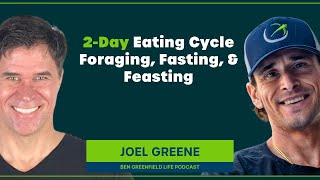
Joel Green describes a 2-day eating cycle: one day of diverse plants like nuts and berries, the next amplified fasting followed by calorie-dense animal foods. He argues dietary diversity protects against toxin buildup, and the microbiome breaks down compounds like oxalates and triggers GLP-1 to regulate appetite.
Chapters
There are dietary patterns in nature and refrigerator insulates us from those and scarcity is the driver and the product of scarcity is diversity scarcity forces you to eat things you probably wouldn't eat and what's interesting about that is there are synergies between foods synergies between opposing food groups such that we're in this era where the meat guys vilify the plants the plant guys vilify the meats and it's really fascinating when you dig into this what you see is that the exact category of food the other guys are vilifying is exactly what you need to offset the toxicities of your own hero food.
My podcast guest who i have on today i think it was one of the few times that i almost broke the health podcasting internet or at least he did because we recorded a doozy of a two parter episode that just blew people's minds in terms of nutrition myths and truths and super practical advice about your gut your biome the way you eat et cetera well i've invited him back his name is joel green and joel is a man of many talents he just finished this book which is basically dog eared already i have so many things folded over and highlighted in this thing joel that we get a chance to talk about every time i hang out with joel i learned something new i don't know how he stays so on the cutting edge of what he does besides maybe he lives in his mom basement reading books all day i don't know but joel how do you describe yourself to people because i know you're not like a doctor or i don't know if you're an rd or what do you.
Say i would say an autistic embittered.
Consumer an autistic embittered consumer all right you're aec joel green aec there you go.
Well yeah well you wrote that original book and the original book that we did that podcast episode about oh and by the way i should tell people you gotta go listen to the other podcast i did with joel and so all the shownotes for this one are going to be at bengreenfieldlife dot com immunity code that's bengreenfieldlife dot com immunity code so anyways joe you wrote that original book the immunity code and then this thing shows up at my house like three months ago called the way the way i interpreted the way is that it's kind of like boots on the streets how you eat based on everything you saw in the immunity code but am i correct and that was kind of why you wrote it.
I think the main reason the number one reason i wrote it was confusion i just you know what had bubbled up i think in the interim time from publication of the first book was just completely polarized beliefs about everything and more and more just people not knowing what to think so what i wanted to do in this book above all was lay out kind of a framework that the average person could just rely on sense more or less to just kind of make sense of things just return to sense without know over complicating things so that that was kind of the number one reason and then there was a lot of ground still left to cover i think in the first book and i didn't have the room to do it in fact the original book was eight hundred pages when i.
First wrote it so yeah yeah but your books are fun you don't do like the cartoons and the illustrations in.
This thing do you no yeah so the funny thing that happened there was.
I certainly wish i did yeah yeah that would be fun to have that.
Skill yeah.
Well the reason i bring that up is it actually does have really great illustrations and graphs and i'm not just blowing smoke i read a lot of nutrition books and yours are very good before we started recording we were talking about how i did a workout with my sons this morning where we did some breath work did some heat and some cold we put on some weighted vests and did some calisthenic stuff around the house and i said well i'm just fostering their pathway into becoming harder to kill and maybe that that was an accidental segue into what i actually wanted to ask you about as kind of a lead off and that's this whole concept of dietary diversity you're not really like a follow this exact diet type of guy from the impression that i get but you almost describe dietary diversity as like a protective mechanism.
I just want to hear in your own words why you would say that how you would describe dietary diversity as nature's protective mechanism yeah maybe the.
Easy way to answer that is just a couple simple questions that kind of illustrate it so are blueberries healthy would.
You say blueberries are healthy well joel they must be organic and if not organic taken home and rinsed in vinegar and water and if eaten in the in the morning thus breaking your eighteen hour intermittent fast could make you obese but besides that yeah i would say in general i and most people might.
Say they're healthy what about blueberries at bedtime.
I think it would kind of depend on metabolic flexibility on how much how much fructose you've consumed the rest of the day or calories in general.
There you go what about two pounds of blueberries at bedtime.
Can they be an ice cream.
That'S whatever you want.
To do.
I think that that might be a little much okay all right.
So yeah so this kind of illustrates it right there and i think we'll probably come back to this here and there but what we just did was showed something really kind of it's always been true and has been lost and that's that the health of any food does not depend solely on the health properties within the food it depends on other things equally it depends on the dose like how much it depends on when you eat it and context so so a lot of different things actually play out into the health properties of a food right and so so that's interesting kind of as a foundation because we're in an era diet wise that to me is mind boggling because i grew up in a world where everybody agreed what a healthy diet was that it was nutritionally dense balanced and diverse that was everybody agreed that was what a healthy diet was and so this kind of really was the motive behind the book which is that's gone that doesn't exist anymore i read science papers literal science papers talking about the problem that that we don't have a definition anymore of what a healthy diet is what's interesting is that we've kind of drifted into the notion or an age of.
Exclusionism or rather cutting out entire categories of foods is the way you get to health and the interesting thing is you have different tribes who fight over you know well no your food's the bad category mine's the good one you know you got it all wrong you know so that being said it just brings up a really interesting question which is well could you eat too much anything i mean is it possible that you that you could get it doesn't matter what it is is it possible you get too much anything and when you look at i i've spent quite a bit of time looking at ancestral diets looking at the research on them and pretty much seems to be like the weight of the data supports this idea that they were quite varied actually and when you dig into it the driver is scarcity so that so civilization is a bubble and it insulates us from these patterns in nature light and dark heat and cold right but there are dietary patterns in nature and refrigerator insulates us from those and scarcity is the driver and the product of scarcity is diversity scarcity forces you to eat things you probably wouldn't eat and what's interesting about that is it seems to protect you from eating too much of anything and when we get into this rabbit hole what becomes readily evident quite rapidly is that there are synergies between foods synergies between opposing food groups such that we're in this era where the meat guys vilify the plants the plant guys vilify the meats and it's really fascinating when you dig into this what you see is that the exact category of food the other guys are vilifying is exactly what you need to offset the toxicities of your own hero food.
And it's yeah so yeah yeah.
I want to get into that because you talk about that quite a bit in the book about how everything from the way that you combine foods to the nature of the microbiome et cetera might dictate whether say meat is good for you or meat is bad for you or potatoes are good for you or potatoes are bad for you but back to the scarcity thing as you were talking about that i thought well there might be other things that could have from an ancestral standpoint influenced food choices and the reason i want to bring this up is because i think it does impact a very small part of the exclusionary nature of many popular diets you know carnivore diet paleo diet vegan et cetera and that would be that i would still imagine that even many many many years ago that if someone consumed a food group and even author fred provenza has a has a book called i believe it's called norrish about how even animals will self select a diet based on the impact on things like nausea fertility et cetera that if someone to eat a particular food group that did result in nausea sickness death large amounts of that food appearing in the fecal matter afterwards et cetera they might based on their probably their individual gut tendencies avoid that food for life or for a certain period of time and based on that i think that it's possible that some of the exclusionary nature of of some of the diets that people choose like let's say a carnivore diet due to autoimmune issues or low fodmaps diet due to sibo issues or an antihistamine diet due to you know sympathetic nervous system overstimulation histaminergic issues might be appropriate in certain contexts if that diet were harming someone from a health standpoint and it wasn't just based on scarcity or availability.
Yeah so.
That that brings us into what i think is a really fascinating point and i agree i think there are definitely times and situations and occasions where you need to have an exclusionary diet for different reasons i'm certainly not against that that being said i would venture to offer that there's really only one path that is going to give everybody the thing they want long term which is lasting and real health and that is a diet that's nutrient dense and diverse and i would just argue that's the only path now what you just interjected was.
What i talk about quite a bit in the book which is the variable of time and how time changes the equation of things and this gets into something i think is missing which is that.
When we look at food and diets and we assess them in our brain we're not actually overlaying a template of what's going to happen over time such that it's pretty easy to see there are real forces that change the equation over time in the book i wrote about for the simplest one is just accumulation.
You could accumulate things from a given diet and they can change the equation example would be leafy greens and nickel so you're eating way too many leafy greens and at first there's all these benefits from it but then over time you start to accumulate too much nickel and then you get a nickel allergy from that now you have to avoid leafy greens okay.
And there's tons of examples like that organ.
Meats and uric acid that would probably be another one i could think of.
Top my head so that being said there's also a way out of that and it's well known in immunotherapy it's just titration which is that you can slow titrate your way back into diversity the issue we run into most often is that there's no accounting for time so we think that once is forever so if i have something that's developed that's it i'm done i can never eat this thing again and then the second issue most often is that there's no accounting for microdosing in the thing that is troublesome and microdosing your way out of the problem but you've probably seen it i've seen it dozens of hundreds of times where you can have an allergy to something and you start with a half a pea and work yourself up to a p and then you know after about a year the.
Whole whole nature of that new book blind spots i'm going to interview the author about the tragedy of advising mothers to avoid eating peanuts and advising mothers to avoid giving their baby peanuts ever and the surge in peanut allergies that resulted because of that yeah and all.
This just speaks to is there's a variable that's been missing and it's the impact of time and it's the most important it's reality that you're going to run into and if diet as a paradigm just starts to factor time into the equation it really changes how we look at things so that's what i.
Would offer right right that makes sense so the boots on the streets when it comes to this whole concept of dietary diversity i think it's chapter seven in the book where you start to lay out well this food is good for you and by the way this food is bad for you and you do it with some popular items you know steak i think is one potatoes i believe to be another can you use a couple of those as illustrative examples for people to understand why it is that a food could be good.
Or bad for you yeah so we've entered this era where you have polar opposite tribes each talking about things that are true and scaring the daylights out of everybody so that meat is good meat is bad and i don't know what to think because this guy's really convincing but that guy's just as convincing and he says the opposite right and.
He has a six pack there you go but he's rich and a billionaire and you know brandon doesn't live in.
The bubble that anybody else does so so yeah so by the way i loved your blueberry answer that was that was very nuanced.
Yeah so i just did it as an exercise like okay let me argue both ways we'll do anti mutual and then we'll do love mutual either way and just take one example so you can look at you can look at the issue of non human sugars you could look at i remember we went to dinner i don't know a few years ago and your friend max was there and he brought up neu five gc which is a non human sugar yeah it's n glycol neuraminic acid so this is a sugar that is it's not native to humans but it's found in meat and you can make a really good case that you should avoid meat because you can accrue this sugar over time in fact the world health organization actually puts recommendations on meat intake to prevent the excess of the sugar from lodging into human tissues and what happens is we eat meat the sugar gets incorporated into our cell membranes it's a foreign object it's the immune system sees it starts to attack it and so you can make this case that if you're eating too much meat you can develop an autoimmune issue and there's some evidence to support this when certain kinds of tumors are looked at they're supersaturated with neu five gc okay so i could just scare the heck out of you based on that right and then i can go and look at i could pull up a graph in fact i use the same graph to argue different ways in the book so i start with i start with trying to scare you about cattle meat and i make the case that cattle cattle organs are super saturated with neu five gc you know you better better avoid those and then i just make the reverse case where say there's another sugar it's closely related it's called neu five ac and it's a cousin of that and the thing about neu five ac is it's essential for brain development like if you don't get this sugar in the diet principally you get it from the mom's gonna get it from animal sources your brain never fully develops so that's kind of important if your brain doesn't develop and the cool thing about it is the best.
Sources of it basically it just comes down to do you want an autoimmune disease or do you wanna be stupid.
Isn'T that always the choice in life.
It'S always a choice do i want diarrhea or stupidity i think i'll take.
The autoimmune issue we can hack my.
Way out of that.
So with the meat thing back to the neu five gc versus the neu five ac how do you tackle that yeah so the.
Issue with that just becomes number one diversity in the diet prevents you from getting too much of anything and then the the issue with neu five gc what we find is that the very foods that are vilified by the other side of the equation by by the but so some of these plant foods actually stimulate bacteria that help you break it down.
Yeah i was hoping you would go there talk to me about that about how microbiome diversity can actually solve a lot of these issues yeah.
Very interesting so.
The there's a mistaken belief right now it's widely prevalent and it's that if you eat a food then you absorb everything in the food that's not the reality the reality is that the microbiome acts sort of as a as a cloud as a filter and it's the makeup of the microbiome cloud that ultimately is going to determine things so really good examples oxalates so we have this whole line of this whole school dedicated to anything with oxalates avoid it well what you find is that there are over fifteen hundred bacteria that can break down oxalates in the colon and.
Several of those are bifido and lactobacillus species something like it's in the dozens that do that and so what you find is that an optimized microbiome that are rich in those species has the potential to break down oxalate and then you get the benefits of those foods without the negatives all right i this is a greta thunberg moment i can hear it how dare you.
Benefits yeah exactly and you know by the way you know i hope people don't miss the nuance of what you're saying and that is that basically and correct me if i get this wrong joel many of these foods say spinach or kale that might contain oxalates that we're being told to avoid are the same fibrous foods that help the butyric acid production and bacterial balance in the colon that would then allow you to be able to digest those same oxalates.
Yeah so it's this it's this weird catch twenty two so a lot of these foods actually feed the bacteria that help break down oxalates and there's another level to it which is.
When you begin to look at the most serious problems you're going to have to solve like if you're interested in health you're going to have to solve the aging in the cardiovascular system there's no getting around that i mean i hate to break it to everybody but the number one thing that's probably going to kill you is thirty percent thirty one percent likelihood death from some cvd related thing that's mostly dietary so when you look at the when you look at the cardiovascular issues you have to solve guess which foods are foundational to solving those it's leafy greens it's nitrate rich veggies things that feed the nitrate reducing bacteria in the mouth and stimulate the gut immune axis and there's a lot of reasons why so you could look at these foods and say oh they're bad they contain oxalates you could also look at them and say oh they're good they help solve the decline of the cardiovascular system so what do i believe and a more correct version is just to understand that an optimized microbiome helps you to negate and helps you to break down oxalates now there's a dose issue here because right away i can already hear it out there that there's a conflation that happens which is yeah but the average person's getting way too much you know and so oh okay we just conflated the health properties with the dose so now we're talking dose we're not talking okay so now that it's a dose issue yes that's correct but that's true of anything so if you're overdosing anything you're going to find issues so yes it's it's entirely possible to overwhelm an optimized microbiome eating way too much that's true however diversity in the diet and here's an example protects.
You yeah and it's a little bit again kind of like a paradoxical you said catch twenty two situation because the longer period of time you go restricting certain food groups and limiting dietary diversity the less diverse your microbiome becomes and the less and less likely you are able to handle dietary diversity.
Yeah yeah.
And so it's so that's an you see this on a lot of different diets you see it on carnivore diets for example so you can make a case that carnivore diets improve the gut you know we see akkermansia levels increase somewhat yeah but the problem is you're reducing the diversity of bifido at the same time and bifido is a controller on achremansia keeping you from getting too much of it so you've taken away the control spigot and and now over time you reduce your diversity of bifido which is the center of the gut immune axis and you're increasing this thing that eats the gut lining okay and you can have problems from that so again it's the same thing over and over and over where as you begin to reduce diversity in the diet you see these consequences long term yeah and.
I was going to save this question actually i wanted to ask you this a little bit later on but i think i might just throw this in there right now because i'm sure people are wondering how would you therefore eat like like in your book you kind of lay out like a two day protocol of what a perfect scenario would look like and obviously as you know this is a big question you could probably spend the next twenty minutes kind of getting into the answer to this question which i don't mind but but how how are you suggesting that people then eat.
Yeah well what i lay out in the book is at its core super simple and it's here it is basically it's you have a day that is foraging foods and then the following day is a fast amplified by modern supplemental technology and then you have feasting foods and that's it that's the gist of it and then within that there's tons of layers and all this stuff we could get into complexity but you know it's designed the design of that is is designed to mimic the the four dietary rhythms that you will see in nature and what i mean by that is that again going back to biohacking you know we're we're into like you know we're into matching nature's rhythms of light and dark and now it's night you gotta put these glasses on okay and then you gotta do this thing to block these frequencies you know because nature has these and civilization has nerfed it and oh right right.
Now you gotta get cold because leave.
Out the blueberries y and not two pounds yeah nature has dietary rhythms in fact literally everything that lives is consumed during its waking hours of getting food so nature has dietary rhythms and they're actually quite easy to see one is just going hungry we call it fasting now the other is foraging which i call basically just looking for foods you prefer not to eat the other is.
The other is feasting which is you know animal proteins when you're it's funny.
I i you should throw out a caveat in there by the way because i don't like to eat domino's pizza so within reason foods that you don't like to eat you know what if.
You come down here we got to go to truly did you see dana's review of truly pizza i don't even.
Know what that is oh my gosh.
You gotta come down here all right yeah so dana white did a review it's the best pizza in the world it's being a point.
Feasting feasting so feasting is you you you know you got you got a deer you got a fish and you eat the whole thing all right but then you go back to being hungry and then there's a season of abundance where you know whatever you got a whole herd and you eat good for six months but those are the dietary rhythms of nature and that pattern is is designed to replicate that so foraging foods are again foods of lesser preference you know things like roots roots are a food of last resort they they actually did a quiz with the hosta and asked them hey stack rank it and they were like oh honey number one roots blast nobody wants to eat roots but roots mushrooms leafy greens berries all that stuff yeah and then the second day is.
Feasting okay all right by the way the people who didn't like roots must not have discovered my recipe for carrot fries yet but we can save that for another day so we got foraging foods then we have a fasting period then we have feasting foods food feasting foods i am a practical guy walk me through what these two days would actually look like and you even talk a little bit about like the movement patterns that might be woven into that so give me the practical nitty gritty of what i'm going to wake up and do on day one one i'm going to wake up and do on.
Day two yeah so day one either one of these days first of all either one of these days can be sub caloric i prefer typically the first day to be sub caloric but you can do it either day so wake up usually nuts and berries that's what i'm doing of late and my food of choice is walnuts and blueberries usually i don't i don't measure calories the foraging day yeah foraging day so walnuts blueberries typically and there's a lot of reasons behind those two that we can get into and then lunch is typically for me like purple sweet potato or like a greek salad or you know baked potato like some kind of roots resistant starch do it cold and then there's a couple of preload meals before each meal so i'll do you know something like an apple or maybe a little bit of nut butter what's the.
What'S the purpose of the preload meal.
A lot of different reasons you can use them for different purposes mainly it's a glp one activator so you just hit glp one twenty minutes before your your meal and the really weird thing on this you know like through the first half of the day is i'm not hungry at all it's really weird and it's you're not eating much either you know there's not a lot of protein not a lot of things in there but you're mimicking foraging and then dinner typically is usually leafy greens with some kind of white meat you know chicken fish that's the first day and then the second day would be wake.
Up wait just backpedal just a second on that first day are you exercising at all because i eat a lot of calories what's the actual workout look.
Like yeah mostly it's cardio stuff mostly it's cardio stuff so it's either i like to do stairs of late so i'm either running stairs or you know some time on the bike or it's anything to keep the heart rate and.
Push vo two max okay vo two max so so when you say cardio like you're relatively high intensity cardio yeah.
Okay yeah i think we've both been on this vo two max kick for.
A while yeah okay all right got it so so day one's foraging you're still exercising you're doing cardio pushing yourself in that respect you get to the evening you fasted overnight then what comes.
Next so then this is the what i call the amplified fast so the thing to understand here what sets this up is that we have entered this age of fasting where you just think fasting is this thing you do but if you do fasting in nature you never do fasting alone you always do fasting with foraging always you never never in nature are going to sit around and just be hungry you're not going to do that you're like going to be looking for stuff and so typically.
When you're looking unless it's some intentional religious fast or self you know self denial you know like like a monk who might crawl to a cave and fast for one hundred days or something.
Like that or something you might do on a ben greenfield retreat right exactly yeah there you go yeah yep yep so.
By the way your your one where's the one next year i have.
Many but the one coming up is in ibiza spain and then portugal yeah.
Oh my gosh that looks cool yeah.
That'S gonna be cool.
Yeah so you know wake up and then the main thing here the thing to understand and this is fascinating to break down the bacteria the keystone bacteria that are spun up by those foods on day one that go with foraging when you look at the benefits of fasting they nearly one to one mimic them they almost exactly mimic them you can look at like for example species of bifidobacteria you're going to see ampk activation you're going to see hdac inhibition you're going to see all this stuff resulting from that same with akkermansia and so nature has kind of provided this way when you're in a starved state to optimize the renewal of the body through going hungry and foraging foods at the same time and so what that whole first day exists for is to spin those bacteria up that mimic fasting so the following day in a fast all those pathways are already lit.
And then we just add all the modern stuff so typically like for me that would be get up cold plunge supplement different stacks for different purposes of supplements usually longevity based so i do my own stuff which is young body which is nac glycine akg white willow bark and then i'll stack other things around that and then it's usually something intense so like either sprints or go to the gym and what i find that's really cool is i don't have to warm up if i get cold first like i just get out of the cold and slap my muscles and i can go right to it i don't have to warm.
Up yeah that's actually what i love about a pre exercise cold plunge it works wonders right now i'm on this kick where i do a cold plunge within twenty minutes of waking every day which is also a slap in the face but yeah doing it whenever you work out doing a cold plunge pre workout there's even a guy named thomas seeger makes a pretty strong case that the surge in endorphins and the endocrine response including testosterone from that approach paired with the you know the potential for a high amount of anti inflammatory activity and a drop in those same compounds if you do it post exercise we dictate that anytime you can choose to do so do your cold plunge pre.
Exercise yeah i mean i've been doing that for years it it it's i think it's kept my hormones you know i'm not on i'm not on trt i'm going to be sixty this year and i think i think it's the thing is you know you you in a cold state you're doing things like sprints and then you're augmenting that with supplements and it's all that window of time three times a week so i'll do that and then i'll just fast until noon and then i'll and then i'll feast so like feast typically could be you know a giant omelette with giant egg white omelette with cheese and a couple of burgers you know big big caloric meal huge amount of protein huge amount of animal protein and then i'll fast and then i'll go six hours and then i'll have a really.
Big dinner typically yeah so so the general mentality here if i could sum it up the way i'm thinking about it joel is day one the foraging day might be a day very similar to how you'd act if you were truly out foraging or like what we might consider to be mostly aerobic activity nuts seeds berries greens et cetera go to bed wake up the next morning and now you're jumping in a cold plunge you know maybe mimicking the ancestral activity of swimming across an icy cold river and you're charging up a mountain with a spear and you're killing a deer or you're harvesting the twelve eggs you've chicken laid or whatever and and then you're going into feast mode choosing foods that would be foods that from an ancestral standpoint would be less available in a foraging environment pretty much yep interesting so there's a lot of you know a lot of subtle nuances in terms of the the science behind it which you lay out in the book but i have specific questions about some of the specific subtle nuances i think would be most interesting for my audience one that you already mentioned glp one and you say that we can trigger glp one from addressing the gut and the biome can you get into that.
A little bit more yeah so when you look at first of all let's just take as a high level insulin what glp one s have brought to the forefront is this notion that efficient insulin function is not just about insulin it's actually about other hormones as well and so i lay it out in the book which is the complete family and so if we start talking about insulin we've got to talk about insulin glucagon glp one gip adiponectin and then that all rests on a layer of the microbiome and it all works together as one thing so if we're going to look at hey what would be the perfect diet to stimulate insulin we got to take all that into account so with respect to the microbiome what's interesting is that the keystone bacteria that get fed by that pattern for example akkermansia make proteins that stimulate glp one and they also together work to modulate insulin function so for example bifidobacteria modulates the composition of bile acids it helps to make insulin more sensitive and so these bacteria are actually very much involved in the family of insulin function making insulin efficient and specifically making peptides and proteins that stimulate glp one.
So when you look at a lot of these fibrous foods foraging foods et cetera i'm assuming that those would have more likelihood to increase glp one than some of the feasting foods is that kind of the idea behind a lot of these companies now that are producing supplements that are supposed to increase glp one via the microbiome like pendulum has their akkermansia there's another one called callocurve that's making the one that's super bitter to trigger the bitter receptors in the intestine these seem to have a lot of the same compounds of vegetables herbs spices seeds nuts et cetera might have.
Well i.
Wouldn'T say that fiber or compounds from the microbiome have a greater potential to trigger glp one i would argue probably the feasting foods have a greater potential potential to trigger glp one like things like eggs yeah like when you really look at it and you look at what triggers it dairy eggs you know all this all these things work together but they work together with with the foraging foods they actually work together so you'll find like for example something you'd never think of like apples apples really trigger satiety so the it's i guess it gets to the approach in the way you want to do it i would i would me personally never ever do it through trying to supplement things like akkermansia because you can it needs to exist in a balance with bifido and you can you can throw that balance off and get more problems than.
It'S worth right and then by the way in their defense i think this one company it is akkermania bifido and butyricum that they use i believe yeah.
Well that being said i just think the the optimal way to get it is through diet and through food i think you can you can do it through food where you're not only stimulating glp one but you're also accounting for adiponectin and you're accounting for glucagon and all these other things that are part of the equation that only food can.
Address so dietary diversity is directly linked to satiety via these glp one mechanisms in a potentially much more complete way than say just supplementing your way into.
It i would say at the highest level it's linked to efficient insulin function and it's quite fascinating when you look at i've looked at this there's not a diet that's ever been that exists right now that has purposely set out to hit everything to hit all the insulin hormones and the microbiome not one like they don't even think about it but when you look at how insulin.
Works i don't know joel i need to send you my cookbooks and in your diet by the way it seems like your diet does that the immunity of course yeah of course okay so we'll quit tuning but do progress yeah.
Excluding said company here how dare you excluding excluding said company you're gonna get optimal glp one activation when insulin works efficiently and so it's it's it's kind of this thing of like you're not going to get real health lasting health unless insulin works efficiently and if you want that you're going to need this whole family of things being hit and dietary diversity not just doesn't address just glp one and gip it also addresses adiponectin it also addresses glucose in fact this is really interesting the fingerprints of dietary diversity are everywhere once you start looking for them so if you look at like let's take insulin and let's just accept the premise that you're not going to have lasting health without efficient insulin production okay so simple simple layer okay that means you need minimally insulin and glucagon to be very very efficient okay so those two are mutually exclusive like you cannot they both need to be stimulated but you can't stimulate them at the same time right so what that speaks to is that these distinct mechanisms you can have insulin resistance you can have glucagon resistance they both need to be stimulated but not too much and it's different elements different mechanisms that optimally stimulate both at different times which itself just points to diversity goes right at all of the mechanisms of insulin not just glp one and yeah that is a function of that is a fingerprint of dietary okay got it is.
It true that you actually have a shake before dinner and if so is it based on some of the mechanisms that you just described as far as the ingredients in that shake sometimes sometimes.
I mean everything's context so if i'm hungrier like i'm feeling a lot of hunger and i'm just whatever feeling it that day then there's a shake in the book i call the glp one shake and it's it's just a combination of things that hit glp one glp.
One shake i guess you know i can find this i actually i do remember one part i was going to ask about you said honey and stevia can act together to stimulate glp one i remember that part in the pre.
Dinner shake yeah so whey protein stimulates glp one it's just stacking everything that we believe stimulates glp one so whey protein definitely stimulates glp one honey stimulates glp one stevia so there's some good research two hundred milligrams of stevia will stimulate glp one really does stevia need.
To be combined with honey is there.
Something going on there it's just synergistic okay yeah what's been shown is that stevia works better with sugar so stevia on its own stimulates glp one to one degree but then when you add sugar to it it stimulates glp one even better and so honey is kind.
Of your perfect sugar okay that makes sense okay yeah i was wondering about about the the reasoning behind that so the pre dinner shake theoretically this might be something that you could do before you go to a party social event maybe you've been invited out to a restaurant that doesn't have the the greatest things on the menu from a health standpoint you could flip to the pre dinner shake page have that you know the honey the stevia the whey protein et cetera and have a pretty satiated appetite going to dinner yeah so like.
Let'S take that in its simplest form just super simple the idea would be like have an egg hard boiled egg twenty minutes prior to going to your whatever your dinner party so that egg's gonna hit the gut it's gonna trigger glp one gip and so as you start eating you're just gonna get fuller much quicker it's just simply timing things.
Please tell me i can put salt and hot sauce on the boiled eggs absolutely okay good good yes all right.
Of course mandatory those don't kill the.
Little glp one babies all right good to know we love our glp one babies all right so we're on the glp one topic obviously related to weight loss right now but you also talk about something called neurotensin i haven't seen that written about too much what is neurotensin how does that relate to weight.
Loss well it's a hormone it's a neurotransmitter and it's involved it's kind of it's involved in the hunger response or the food response in an interesting way basically glp one the gip gop one axis kind of acts like a enough not enough kind of thing it's like okay i've had enough where neurotensin does that but.
It also sort of throttles the reward from different foods so it's like first slice of pizza ming bugling fifth slice of pizza didn't taste you know and so there's a hormone in our brain at work that's throttling down or throttling up the reward from food and neurotensin does that so what's interesting about it is.
Some interesting research one is in mice it's really depressed after fat loss and what's very interesting is bariatric surgery it doesn't lower after bariatric.
Surgery so neurotensin does not get lower after bariatric surgery okay yeah and it.
Kind of explains the success of bariatric surgery in a way because so one of the key hormones related to food intake is not perturbed post fat loss and all of this is under an umbrella which is the post fat loss rebound i wrote about quite a bit in my first book and it's only made a better case since then there's just a boatload of research that is now showing that this is quantifiable it's measurable there are clear mechanisms at work and they're they're multiple redundant there's tons of science papers on this now showing that basically you know over many thousands of years our bodies are rigged to defend against going hungry defend against starvation defend against fat loss to keep us alive and neurotensin is one of a number of ways we can measure the rebound effect post fat loss so this thing post fat loss drops and it is it is the number one predictor of weight regain so far that we.
Have do you mean because if neurotensin drops the food reward is going to go up or the the desire for food is going to go up both.
So so food reward you're going to be more rewarded for food and you're going to want to eat more and that's just neurotensin that's not even counting leptin or any of the gut hormones and all those are dysregulated too post.
Fat loss so if i was going to lose weight but based on what you just explained i wanted to keep neurotensin somewhat elevated so that i didn't have as much of a risk for weight rebound is there a way to.
Do that yeah yeah i built a whole course on it called beat the rebound but essentially the first thing we have to do is we need to recognize weight is like top of the list sleep sleep and weight i mean those are top two problems most people struggle with sleep weight and gut so this is a huge problem it's only getting worse and one of the reasons it's just getting worse and worse and worse despite every diet under the sun is there's no acknowledgment of an entire set of mechanisms and processes that kick in in the post fat loss period that are nature's way of regaining all the weight you lost so the first thing is we have to recognize hey there's a whole bunch of mechanisms that are going to start now that you've taken your post fat loss selfie and you got about six to twelve months where you need to counter these okay and some of it gets pretty esoteric but the simple simple thing that we're trying to do post fat loss we have to get energy expenditure up and we have to get all of the signaling for food intake down that that's that's the thrust of it so we have to reverse those two things so typically post fat loss energy expenditure is lower and the drive for food intake is higher and so we have to put our hands and reverse those two.
Things right metabolism has gone down desire for food has gone up yeah yeah.
That'S that's there's there's other things going on a lot of other things but that's like to make it simple that's that's the gist of it so let's start with you know kind of like a foundational element which is in order to get our metabolism up we need more we need a higher caloric load in the morning and it needs to be very strategic so there needs to be a bunch of protein in there and there needs to be fermentable carbohydrates in there things that ferment and the reason is both of those things so we got three things going on we got the meal size we have protein and then we have fermentation in the gut all three of those hit glp one all three of them do so when you combine things that ferment in the gut you tend to produce the bacteria that trigger glp one so potatoes for example and when you combine that with protein then protein also hits glp one so in other words like steak and eggs at breakfast for example excuse me a baked potato and steak at breakfast with eggs it's a natural response everybody kind of you intuitively know what i'm saying is true and it's it's when we're doing it so we're in the post fat loss phase we're increasing caloric load and then we're we're skewing the macros at breakfast to just lay the hammer down on all of the satiety hormones all of the everything that signals satiety and fullness and we're trying to get your calories up we're trying to get your metabolic expenditure up as.
High as possible and you're not eating like that the whole day because obviously you're eating but you're starting off the day in a way that many people might think is paradoxical to fat loss and i should mention by the way subtle nuance when joel says fermentable carbohydrates that's different than fermented carbohydrates so this wouldn't mean like prioritizing even though it might have some benefits here and there could be some crossover yogurt sauerkraut kimchi et cetera you're more talking like resistant starch potatoes inulin things like that yeah.
But but those things can work too you know we're we're looking to create those bacteria we spoke of that hit glp one in the gut and we're looking to do that in conjunction with glp one stimulating food like protein like you know small pulses of fat everything together and the caloric load you know is very high so that's when the body has the greatest ability to take all those calories and turn them into heat energy in the morning got it which goes against a lot of schools of thought so there's there's the don't eat breakfast school of thought you know like nah never eat breakfast blah blah blah all that and the thing i think that's worth mentioning is that this is a strategy and it is done at a specific period in time which is the post fat loss period and i personally i don't think this whole weight thing's ever going to get anywhere until there is complete acknowledgment of the post fat loss mechanisms that kick in they are real they're quantifiable i talked about one in the in the book another one and i talked about and this is brand new study you can measure it this group out of harvard they were able to measure post fat loss tripling of the synaptic neurons that drive food reward so they looked at the agouti related complex and they measured pre and post fat loss and they saw a tripling of neural traffic that drives increased food intake post fat loss.
This is so it's quantifiable yeah yeah and so it's obviously an uphill battle and i would raise your it's not going to go away until we do something about the reward mechanisms and say it's also probably not going to be until we get better padlocks for the refrigerators and app locks for uber eats just because of the rampant access as well i think that that's that's that's an elephant in the room of course back to the the the ancestral hypothesis here of constant twenty four seven access to hyper palatable foods and paired that with low dietary diversity to a certain.
Extent your stand up's getting way better.
Are you working on it i'm actually walking not standing joel okay so a couple other questions i know we still got time for a few more so saturated fats you know you talked about the time.
Factor and how things certain things will build up over time but this is kind of like the opposite of that it seems to me the argument for saturated fat certain things will decrease over time in the body and affect our ability to be able to deal with certain compounds and you say that we might have more difficulty being able to handle i think what you mean by that is we might have increased cardiovascular complications to saturated fat as we age can you explain how that.
Works so this gets to the aging of the cardiovascular system and i would offer it's poorly understood rather not poorly understood in science circles but certainly poorly understood within the biohacking community and even more so the public at large and basically it's this.
There is a one to one correspondence if you graph this out between the decline in the cardiovascular system and the inability to lose weight one to one like it's it's it's it's amazing yeah and when you begin to break it down it makes perfect sense so there's three major things happening with the cardiovascular system as we get older so the first thing is there's this class of enzymes called the nox enzymes and they have a big word it's nadph oxidases they're the only oxidative enzymes that we know of in the entire body the only enzymes whose purpose is to produce free radicals and we find them in immune cells but they also line the entire vasculature and what they do is they take superoxide and they dismutate that down into hydrogen peroxide and then from there hydrogen peroxide is used in insulin signaling as a throttle as a feedback mechanism so when you bring glucose into cells hydrogen the nox enzymes activate hydrogen peroxide is produced and it helps with vasodilation and it helps control just how much glucose do we need in the cell so what happens as we get older is they break they tend to just hyperactivate and they begin producing more and more and more hydrogen peroxide and so when that happens free radical stress tends to take place in the vasculature in the endothelium well that breaks the whole body that breaks the entire body because it breaks insulin function it breaks glucose signaling but a lot of other things too so what happens is when the nox enzymes hyperactivate with age a number of things happen one of those things is that they are able to oxidize saturated fats into a particular compound called an oxysterol i see where you are so anoxysterol is an oxidized form of a cholesterol and they're not bad they're actually essential they serve as critical signaling molecules but the issue is when you make too much it's like anything else you make too much so what happens with age is that the nox enzymes go and then when the nox enzymes go another mechanism goes that's called the glycocalyx glycocalyx lines the vasculature it's a tension mechanism it's hair it's fur and what it does is it uses mechanical tension to tell the tight junctions of the vasculature kind of where they should be at you know it's very similar to leaky gut so you can get leaky vessels so when this happens now your percent likelihood of cardiovascular disease shoots through the roof you just have a much higher percentage and the reason has to do with a number of different things but particular and unique to saturated fats is that over time the body can accrue accumulate oxysterols in the body now the body's super good at getting rid of cholesterol and that's why you can measure cholesterol intake and it doesn't seem to do anything you can measure someone give them tons and tons of cholesterol it doesn't seem to do much body's really good at getting rid of it it also doesn't stiffen the arteries not so with oxy sterols the body is terrible terrible at getting rid of oxysterols and there's different forms of them and the different forms can be incredibly pathological for example there's one called twenty seven oh so twenty seven oh is the primary oxysterol like when you take when you look at alzheimer's disease and then they do samples of the spinal tissue of people with dementia it's supersaturated with twenty seven oh and it's the primary oxysterol going into the brain when you look at it breaks kico it breaks the calories in calories out paradigm so what you see with mice there have been tests done on mice where you give them twenty seven oh they gain weight without changing calories without more fat absorption in other words they just gain weight without simulating more without absorbing more fat it's.
Incredible and is that because of an effect on the the hpa axis or a downregulation of metabolic rate or impact on thyroid function or something i don't.
Think it's known i don't think we understand it yet it seems to break the paradigm of calories in calories out but what you can see in humans is that when twenty seven oh is elevated it's very difficult you have a very hard time losing body fat so to answer this question there are these key problems happening in the vasculature as we get older it's the increase of the nox activation it's the it's the decline of the glycocalyx and then the aggregation of oxy sterols all these things are happening all at once and the net of these things is one big thing all metabolic all cardiovascular disease is characterized by a loss in nitric oxide production so what happens is two things one we're producing less nitric oxide and nitric oxide is becoming less bioavailable at the same time so nitric oxide is going down and then what is now happening is you can be you can you can have saturated fats in the diet that had that caused no issue whatsoever when you were young and now because of the decline of the vasculature you can be creating oxysterols and damaging the endothelium just due to the decline of the vasculature the idea here then.
Would be we'd want to figure out how to keep nitric oxide elevated keep the nox hyperactivation downregulated and protect the glycocalyx and i actually have talked about protecting the glycocalyx on shows before about heart health you know sulfur based compounds for example being one of the compounds that can help out with that but when it comes to the whole no knox issue how do you tackle that.
Diet wise which is what we're talking about foundationally there's two things so so the job is we have to increase nitric oxide production we have to increase nitric oxide availability we have to spin down nox hyperactivation and so the foundation for that are two two food categories which is.
Nitrate rich leafy greens nitrate rich vegetables and then berries those two things cover the ground we need to cover so nitrate reducing bacteria in the mouth essential essential you must have them number one source leafy greens nitrate rich veggies number one source and humans lack nitrate reductase so this is the enzyme that reduces nitrate to nitrite we lack it and so the bacteria in the mouth are essential because they help increase nitric oxide production and you know there have been a lot of guys talking about this we were just at an event together where one of the guys talks about the nitrate bacteria in the mouth and you know mouthwash and all that stuff and you know i shouldn't.
Use mouthwash and fluoridated toothpaste because it'll decrease the activity of those that nathan brian he talked about that on my.
Show yeah oh okay yeah so you had him on yeah nathan so yeah i wrote about it in the new book as well which is just that there's this bacteria in the mouth they're essential you have to have them and you have to feed them and the way you feed them principally is through nitrate rich veggies principally so the net of that number one is you're gonna increase nitric oxide now when you add berries into the picture so berries have two effects one is they tend to across the board.
Favorably impact the nox enzymes in different ways different berries will impact the nox enzymes in different ways but generally speaking they tend to kind of turn down the rheostat on the nox hyperactivation so that's one thing the other thing is they make nitric oxide more bioavailable so dietarily speaking these things these foraging foods seem to have a synergy that impacts the cardiovascular system in beneficial ways particularly as we age interesting.
Okay so that that seems like a pretty easy way to do things versus just taking viagra i guess for for the nitric oxide piece and then for the saturated fats what you're saying is one could continue to eat saturated fats as they age but the key would be including nitrate rich veggies and berries as a staple in the diet.
I would call that the simple thing yeah i would also add to that.
Again with our blueberry example we started the whole show off with we just quickly showed that you can get too much anything even a good thing i mean that didn't take much brain power to figure out the funny thing you'd never know it we've entered this age where i mean there are groups of people out there right now that would vitriolically say no not dude there's no amount of saturated fat that could be detrimental none we vindicated that we know that now there's no amount of cholesterol that could be bad i mean there are really people that think there's no amount like this is immune from homeostasis it's true of everything else true water it's true there's it's true of fiber but not this stuff no you can't get so when when you take that argument the first thing is when you look at it when you look at all the studies ancestrally that have been done there's kind of a range there's a true north in ancestral diets it seems to be roughly seven to eleven percent of the diet was saturated fat and that seems pretty consistent it's i mean you're a hunter it's tough game animals are not the same as hybridized holstein cows they're very different in terms of like fat content so i would just say that there's a true north that nature provides for saturated fats and it's not an unlimited amount it's kind of.
In this range yeah yeah thanks for reminding me i've got my elk hunt in two weeks okay so we've got a little bit of time left joel and these are going to be more like rapid fires obviously i'm holding up your book right now go to bengreenfieldlife dot com immunity code if you want to get into the nitty gritty details of all this stuff i'm going to throw a few at you joel some of these you actually call them food hacks in the book and you give me like the you know twenty thirty second lightning flash as to why you think these are cool trypsin go cheese.
Enzyme helps break down cheese helps release a helps release a peptide in cheese alpha queso something i forgot alpha queso.
Z five zeppin there you go yeah.
There you go yeah age i would have got that twenty years ago yeah.
It helps you sleep yeah okay all right so and you said you could break it open and add it to mozzarella so you combine trips in with cheese and it helps you to sleep oh no okay citrus peels i know you're a big fan of those yeah.
So quick useful hack if if there's a nuclear war you combine you combine chlorella with citrus peels and it's been shown to protect against radiation but the big thing there is polymethoxyflavone so polymethoxyflavone is found in citrus peels tangerinetin is a really good example of that mind boggling stuff really is works on a number of different levels very synergistic with apple peels actually so those two together in the diet a few times a week do a number of really good things possibly may help to burn brown fat and do all kinds of good.
Things right so a lot of people who might be like peeling their apples or i don't know like a peach or whatever like you should actually be eating the peels of those i assume you're not talking about like lemons and.
Limes.
Yeah no no not so much that but like orange orange peels as long as you can get you know the issue we're up against is getting unadulterated food so that's that's the big.
Challenge yeah yeah and the bitterness geez okay so that's pretty cool actually about chlorella and peels i didn't know that how about trehalose and it appears as a sugar and a few of the shakes in the book what is it about trehalose that you like trehalose it's.
An autophagy inducing sugar it seems to block mtor seems to work on a number of levels to induce autophagy i first started writing about that one i think in twenty twenty one on my instagram and i use it during the amplified fast every now and then periodically so it's really good to combine with fasting it initiates initiates autophagy and it does a bunch of good stuff so there was there was for a while some chatter about well you're gonna spin up a certain bacteria that's toxic if you eat that but it's true of all sugars and anyways it's something i've.
Debunked is it sweet like sugar like could you use as a sugar substitute yeah okay just like amazon for example i assume you can find this stuff.
Yeah okay it's easy to find i've.
Never used it much okay this is a fun one it has to do with a dietary diversity feast i think casein phosphopeptides in dairy yeah that just.
Yeah that just gets to that just gets to all the cool stuff that's in dairy i mean dairy is like this treasure trove of peptides and so this is one this is a peptide that's found in dairy that makes a case for dietary diversity what it does is helps bind heme iron so like if you have meat in the diet and you're worried about iron overload then you know dairy is a good way to neutralize that and this is a peptide that helps to bind iron that's.
Amazing it reminds me of that what's the tribe that the masa maasai tribe that does the blood and the milk together as like a dietary staple so they probably didn't know about the casein phosphopeptides just stumbled upon it ancestrally there we go the dairy with with the meat and the dairy with the blood okay no poly no poly no poly.
Yeah man maybe maybe i've spent a lot of time over the years trying to either debunk or confirm this but working theory may be the most powerful natural glucose disposal agent in the universe of foods geez can't one hundred percent.
That'S right cactus it's cactus leaves it's.
Cactus leaves yeah back in twenty twelve when i was doing my nutrition software we had a bowl called the napolita bowl and i think i put that in the new book but it's it's a very powerful glucose disposal agent in fact the way you know that's true is that there are cautions with diabetics about eating nopalas because it can drop.
Your blood sugar interesting yeah is that something that people like put into blood sugar control supplements now are there companies.
Doing that i think there might be.
Huh no polish there isn't they they might want to think about it i don't know yeah it looks super interesting turns on amp k as well and increases glucose uptake by increasing the number so yeah so it's a glut four or glute transporter agonist okay how about palatinose this is the last one i promise joel platinum yeah i first wrote.
About this back in two thousand six it's so it's a weight loss sugar essentially it's a sugar it has most of the sweetness of sugar but it seems to have a glycemic yield very similar to raw oats so like if you're eating you know the the rate at which sugar hits the blood is very very slow so there's there's a company called the brand name is bineo and they've got research on it showing this stuff actually helps you drop weight in fact when i first wrote about it back in two thousand six i the headline was a weight loss sugar question mark so wow so so what.
I'Ve learned is like for the sweetener section of my pantry i could look into adding the trehalose and the palatinose and then we talked about the honey and the stevia and those would all be good ways to be sweetening my you know my pre dinner shakes and my my midnight blueberry ice cream two pounds two pounds of it that's right yeah yes yeah joel you are a wealth of knowledge as usual and again folks like if you like this episode we cover so much more in the other two that we did which are also highly relevant this new book the way the immunity code diet i'll put a link to it in the show notes as well highly recommend you read it don't worry it's not like one of those things you got to be a nutritionist or physician to be able to understand there's even cartoons and qr codes and all sorts of helpful stuff in there so i'll link to that at bengreenfieldlife dot com immunity code joel thanks once again for crushing it man.
Thank you so much for having me on it's always an honor all right.
Folks well i'm ben greenfield along with the great joel green signing out from bengreenfieldlife dot com community toad have an incredible week do you want free access to comprehensive show notes my weekly roundup newsletter cutting edge research and articles top recommendations from me for everything that you need to hack your life and a whole lot more check out bengreenfieldlife dot com it's all there bengreenfieldlife dot com see you over there most of you are who listen don't subscribe like or rate this show if you're one of those people who do then huge thank you but here's why it's important to subscribe like and or rate this show if you do that that means we get more eyeballs we get higher rankings and the bigger the ben greenfield live show gets the bigger and better the guests get and the better the content i'm able to deliver to you so hit subscribe leave a comment ranking leave a review if you got a little extra time it means way more than you might think thank you so much.
More from Ben




The Solution to Aging Might Be Closer Than Anyone Realizes - With Ben Goertzel



