A Spy's SECRETS! What You Can Learn From A Former CIA Officer That Will Improve Your Life!
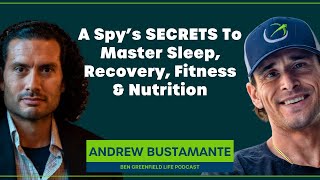
Interview between Ben Greenfield and former CIA officer Andrew Bustamante about applying CIA skills to everyday life (EverydaySpy). Covers operational recovery and biohacking (R&R routines, sleep, hydration, supplements like L-theanine, electrolytes), no-wearables security policy, morning meditation/journaling workflows, fitness principles (variation, periodization, simple routines), parenting/relationship tactics (perspective-taking, false dilemmas), and EverydaySpy learning offerings.
Chapters
CIA officers. The big challenge for us happens immediately after we come back from an operation. Our version of biohacking really comes into play when we return from the operation, and we have to recover because that recovery time is critical to our operational utility. If we take too long to recover, we become less operationally viable.
And what does optimal recovery look like?
A lot of sleep. We have exercise scientists, so we get balanced diets, balanced supplements, along with tailored exercise routines that are aligned with our biology, our age, our hormone levels. They know us very well, so they create these tailored programs for us to get us back up to operational utility.
Well, folks, I don't know if I've ever interviewed a spy, but I have a friend who's a former podcast guest, Adam Wengauer. I think he's been on the podcast maybe three times. Friend of mine lives down in Florida. He runs a CBD company down there. He's a great man of adventure and a good father and a husband. And anytime he texts me an intro to somebody who he thinks would be cool for me to meet, slash interview, my ears perk up. And he text entered me to this guy named Andrew Bustamante, and he said, oh, this guy, he's really, really good on marriage and homeschooling and biohacking. Oh, and he is a former covert CIA intelligence officer, military combat veteran and corporate Advisor to Fortune 10 companies, and also a husband and a father. So I thought, gosh, I should interview this dude. His name's Andrew Bustamante. He founded everyday spy.com, which is a digital spy trading platform, which I actually want to learn a lot more about. And he's ye. Basically a former spy, I suppose. Is that how you like to introduce yourself, Andrew?
Yeah, former CIA intelligence officer is the more. The more official terminology there. But, yeah, you got it, man. And Adam's a great dude, and it's flattering to know that you've got friends like that who advocate for you.
Yeah, he's a good guy. I have to admit that his CBD sometimes knocks me on my ass, but take an extra dropper full of it, but he's a good guy nonetheless. And he hunts pigs and alligators. So how do you like that? So.
So.
But I want to talk about you. How do you even become a CIA officer? Like, what's the recruitment process for that look like?
Yeah, I mean, it's. It's actually a little bit different for everybody, but for me specifically, I was leaving the Air Force, and I was looking to go into a government role that was more in the like humanitarian sector. And in that transition process, I was kind of scooped up and invited to interview with CIA.
Okay, so you go in, you interview with CIA, and do you know what you're getting into? Like, had you thought in the past, whether when you were a little kid or in the Air Force or whatever, that you wanted to be a spy?
I mean, everybody, I assume that every little kid at some point thinks to themselves, I want to be a spy, I want to be a fireman, I want to be a police officer, something.
Like that, or the president. For me, I was the President and I think short time police officer.
Yeah, right. So we've all been there, but that doesn't mean that it's a realistic thought. So it's really funny because I had a brief when I went to a military academy, I went to the Air Force Academy for college, and there was a brief time when I was at the academy where I thought maybe I'd want to be an intelligence officer. But the Air Force is not. The Air Force is the military. So they decide where you go. And to a certain extent you start to believe that maybe they know you better than you know yourself. So when the Air Force decided that I was not going to be an intelligence officer, I, I kind of saw that as a hint that maybe I shouldn't do that kind of thing. So I was really surprised when six years later, CIA tapped me on the shoulder and said, hey, you might actually be a very good fit for clandestine intelligence, or what some people call covert intelligence. And that's where it went from there. There's a whole series of interviews. It's not like a one time interview. There's like a. The first round of interviews is an interview typical to a normal job search. But then there's a second and a third and a fourth round of interviews. So one of those is nothing but psychological tests and intelligence tests. Another one of those is scenario tests and briefings or interviews by a board. So by the time they actually say yes to hiring you, they know exactly where they want to put you. So you don't really find out what they're thinking of you to do until much later in the process.
Are you allowed to talk about the type of things that you do or did in the CIA or any interesting stories that kind of highlight what type of job you had?
Yeah, there's. We have a lifetime secrecy agreement that we sign, and according to that secrecy agreement, our personal operational histories, meaning the operations that we did, the sources that we used, the technology that we applied, all of those Things remain classified until we get approval from CIA to have those things declassified and we can share them publicly. So when it comes to my specific background, I'm very, very limited. Which is why my company is focused on taking non specific skills and tactics and tools that the CIA uses for all operations. That's the big benefit about being able to talk about my background at CIA. It's not about me and the secrets I stole. It's really about what the tools and techniques and tactics are that all CIA officers use to optimize mind, body and health.
So is that how you describe everyday spy? Like you're taking CIA skills and applying them to the general population for enhancement in communication or relationships or something like that?
Yeah, exactly right. I mean, our mission is spy education, to break barriers for everybody willing to learn. So it's all about taking spy skills, spy knowledge, spy tools, and using them to break barriers in your personal life, your professional life, your career, your business. And we understand, I fully understand that there's 8 out of 10 people out there don't trust CIA or they think I'm some kind of secret plant or some sort of like influence operation to infiltrate American public media, who knows what. But there's plenty of people out there who won't listen. Which is why we add on at the end. Anyone who is willing to listen, we will teach them something.
Okay, number one burning question, you've probably been asked this before, but the first thing that comes to mind, Andrew, so I'm just going to ask it. Can you teach someone how to pass a lie detection test?
So this is a great question. There's so much that people don't understand about a lie detection test, which is called a polygraph. So a polygraph is actually a measure against a baseline. That's really how the test works. It's not like a yes, no black, white, ones and zeros type of test. So yes, you can learn how to defeat a polygraph, but the actual way that you defeat a polygraph isn't about defeating the machine. It's about defeating the polygrapher, the actual trained technician who is reading the machine. And that is a much, much more difficult task than people realize. Which is why I never advocate for trying to defeat a polygraph. It is actually better to be brutally, painfully honest during a polygraph than to even try to make stuff up. Because the machine will show the polygrapher all the variations from baseline. So if you're painfully honest, that actually creates a more difficult polygraph for the polygrapher to translate. Because let's be honest, Ben, being honest is way harder on like your physiology than actually telling lies.
Yeah, that may well actually. What do you mean by that? Being honest is way harder on your physiology than telling lies.
So think about it. When, when you're sitting with your wife, or you're sitting with your kids, or you're sitting with your in laws or even a close friend and you're really being vulnerable, really being honest, what's happening to your body? Your blood pressure spiking, your body temperature's increasing, you're feeling fidgety, you're stumbling over your words, your, your mind to mouth muscle connection starts to kind of fail you. Like your, your head starts moving in all these different directions as you're trying to decipher what you're trying, what you want to say, in which order you want to say it, et cetera, et cetera. Well, all of those are indicators, according to the polygraph. Those are all physiological indicators that it's measuring where a lie is actually much easier on the body. Because a lie might create a small spike in blood pressure, but it won't create all the nervous energy that you get from actually telling a painfully like, sensitive truth.
That's actually really surprising me. That's a news flash for me. I would have expected lying to induce a more pronounced physiological response, but it sounds like a polygraph is indicating that that's not the case.
Associate a polygraph with like a car maintenance 52 point inspection, right? You drive your car into the auto shop. They'll plug a little plug into your CPU for your car, and then they'll press a button. And that one button will measure.
All of the core digital processes in your car and it'll determine whether or not you've got the right oil pressure, whether you've got the right tire pressure, whether your, your belt is running behind schedule, or whether your pistons are all firing in line. It's measuring 52 points of, of automated digital capability simultaneously. The polygraph is essentially the same thing for the human body, only instead of plugging in at a single port, they sit you down in a single chair, but then they actually have a sensor under your rear end literally to measure the pressure in your sphincter and the movement in your legs and your glutes. They put a blood pressure cuff around your arm and they put blood pressure cuffs and heart rate monitors around your fingers, and then they put some probes around your forehead. They're measuring multiple data points simultaneously. But when you and I and the average person tells a lie, there's only a few of those contact points that will come to life. Not all of them, but when you tell the truth, especially if it's a difficult truth, all of those nodes kind of come to life. So you end up showing very significant variance for a truth that's difficult or sensitive than you do for a lie.
Got it. So we're already going to be lit up like a Christmas tree, so to speak, telling the truth. But the detection of a lie would indicate that some of those lights start blinking a little bit differently.
Right. And that's exactly what a polygrapher is trained to do. A polygrapher is trained to see the variances that indicate what they call sensitivity. Again, it's called a polygraph. It's not called a lie detector in the actual profession, but in common vernacular, we call it a lie detector. It's actually not designed to detect a lie. It's designed to detect sensitivity to a certain question.
Right, right. It's really a physiological measurement tool.
Bingo. It's a body optimization tool to vary, to measure a variance from baseline.
I'm curious. I imagine that you actually did get a polygraph yourself. What about a polysomnography? I believe it's called a sleep test, in which you're actually hooked up to a bunch of data that's collecting sleep architecture parameters. Have you ever done one of those?
I have not done those, and I've heard about them, but I've never been part of a volunteer group, and it was never a requirement for our training or operational certification.
Do you use a wearable to track any element of your nervous system or your sleep?
So the answer is no. During my time at CIA, we have a strict no wearables.
Rule, because most wearables actually let off some kind of signal. They either let off a Bluetooth signal or they. They push off some kind of RF signal. And what ends up happening is those signals can be tracked, hacked, and then they can be used to monitor locations where intelligence officers are either gathering or routinely exercising.
Right. And the data can be actually either hacked into or used against you. I actually had.
An employee once who asked me how I was doing. And this was right before I was about to go step on stage, and I said, great, I feel fantastic. And they're like, well, that's good, because you only slept four hours last night. And I'm like, how do you know? And second, why is this the time you'd be telling me that? So, yeah, people can get access to that data, and it can't backfire.
Yeah. So it's a big thing for us you can imagine when you are, when you're trained, and there's so much investment in keeping you essentially off the radar. Then there's all sorts of policies that prevent you from using smart watches, trackable Fitbits or fitness tracking, Internet of things kind of accessories. You don't have Bluetooth enabled headphones or Bluetooth enabled speakers. You don't have any smart glasses, anything like that.
Now, Adam, when he introduced us, had mentioned the word biohacking. He said that you were into kind of like fitness or hacking. What's that look like for you?
It's really very practical for us, which is it's an important thing to understand because when CIA officers, the big challenge for us happens immediately after we come back from an operation. So unlike the movies, we usually tune our bodies to some sort of optimal state before we deploy on an operation because we assume that over the course of that operation, we, we will degrade, we won't sleep very much, we won't eat very much. A lot of what we eat will make us sick. We'll have a great deal of stress, a great deal of anxiety over the course of the operation. Oftentimes you'll actually pick up, like a worm, right? A stomach worm or a digestive worm. There's all sorts of terrible things that happen to you when you're on op, and then the body that you had optimized before you left becomes degraded and damaged over the course of the operation. So we're biohacking. If at. Where our version of biohacking really comes into play is when we return from the operation. And we have to recover because that recovery time is critical to our operational utility. If we take too long to recover, we become less operationally viable. So we have to recover quickly so we can get back up to optimum status to get back out into the field.
And what does optimal recovery look like?
A lot of sleep, a lot of rest we usually get. We have exercise scientists who kind of serve as interlocutors with our health. So we get balanced diets, balanced supplements, along with tailored exercise routines that are aligned with our biology, our age, our hormone levels, our VO2 maximums. Like everything, they know us very well. So they create these tailored programs for us to get us back up to operational utility.
So I'm just curious, coming back from what it sounds like would be a pretty exhausting or draining operation, how many hours per day would you spend, let's say, like in the equivalent of a spa or a health club or a gym environment, recovering, exercising, et cetera?
What's the daily hours look like it actually it varies. So when you first come back, there's a process we have called R and R rest and recuperation. And during that R and R, it's a fixed number of days per deployed days. So for example, if you were deployed for 30 days, you would come back and have seven days of R and R. I'm just giving you that as an example. Right? One week to one month for ease of understanding. So if you're deployed for six months, you're coming back to six weeks of R and R. And then when you start that RNR period, there's an element where they front load. True. Medical.
Medical exams, medical treatments, pharmaceuticals to aid in whatever might be needed.
Right.
Whether it's, whether it's penicillin to get past infections or bacterias or, or any kind of IV based supplement, something to boost your vitamin D or your vitamin C. That's how we always start with a lot of time in bed and a lot of time basically with a. With some sort of what we call the Office of Medical Services oms with some sort of doctor leading our initial assessment of what our health status is on. On return. And then as the weeks progress, we get less time in the. In let's say a medical scenario and we get more time in with the nutritionist and then we get less time with the nutritionist and more time with the gym. And less time with the gym and more time in an academic scenario prepping for our next operation. And it's kind of like a pendulum or a sliding scale where as we regain our health during that R and R period, we're getting ourselves back to a status where we're preparing for the next operation.
Man, that is involved. Were there any elements of the R and R component that for you now I'm assuming that being X, you're not going in a lot of these operations anymore or any of them. But based on the R and R principles used that you experience, are there certain things that have stuck with you now that you say, hey, I'm beat up. I know this worked really well. Whether it's, I don't know, hyperbaric chamber or infrared light or some supplement or medication or anything like that?
Yeah, actually there are. So L Theanine is a supplement that has become kind of ever present in our house. It's a leveler for any kind of anxiety or stress. CBD oil was not something that we used at the agency, but it was something that had a very similar effect to some of the anti. Anxieties that we were given when we were at the agency. And then as funny as this is, one of the core things that we were fed was an electrolyte that was mixed with water. So instead of drinking just straight water, we would drink this mix of 50, 50 of a sugar based electrolyte that was, that was watered down and that would become kind of our go to drink. Kind of like you would go to drink water. It's essentially Gatorade, but of a higher quality. So even now in our household, anytime anybody gets sick, anytime anybody feels down, we immediately start splitting a standard Gatorade 50, 50 with water and that becomes our go to drink because it gives you calories and salts or electrolytes and hydration all kind of simultaneously.
Yeah, there's a lot of people who are a little bit orthorexic in the biohacking and health sector who say, well, what about the sugar? You're going to get diabetes, bro. But if you look at it from.
Biochemical standpoint or a physiological standpoint, the addition of sugars and the increase in what's called the osmolality of the fluid, when you, let's say, take your, I don't know, let's say you're using LMNT electrolytes or something and you add honey or some form of a sugary solution to the water. You actually allow for better driving of the minerals across the intestinal border and into the bloodstream. And of course, like you mentioned, Andrew, you're getting easily digestible calories when you're sick. So there's actually a case to be made for going with something that actually has the calories or the sugars plus the electrolytes in it. Especially if you're down, you're depleted and you can't eat much else. The L theanine thing is interesting. Are you using a powder or a capsule or taking it at a certain time of day or what's that look like?
Yeah, so we use a powder and then we also use a powder based magnesium and I'd have to pull up the actual. I'd have to go and actually pull it from our shelf to find out the. It's one of those multi name magnesiums, but those are two powder based supplements that we just add to water and we use anytime that we know that we're coming into a stressful period. Because you know a stressful period is then going to have secondary effects on your cortisol level. It's also going to have secondary effects on your immune system and it could Be the gateway point for what turns into a viral infection that takes out the whole family. Right. So it's for us, we try to front end load as much as we can using what we learned from the practice at oms.
Yeah, the cool thing about L theanine, I don't know if you've messed around with this at all, is if you combine it with any caffeinated source, like an energy drink or a cup of coffee, around 100mg of L theanine gives you an extended release formula version of that energetic compound with less jitteriness and increased production of what are called alpha brainwaves, like more of the focused brainwaves. You can literally take any stack, like a caffeinated stack, nicotine stack, energy drink stack, whatever, and by adding 100mgs of L theanine, you kind of convert it into something that lasts longer with less of a kind of like a spiking high.
That's interesting. That is not something I've ever experimented with. And that is something that I literally want to experiment with like tomorrow morning. Because that's the problem with your energy stacks. That's the problem with caffeine.
Right. And I have L theanine on hand as well. Anytime I take a smart drug or a nootropic or something that I immediately feel, oh, this thing's hitting me kind of hard, theanine almost instantly takes that edge off within about 20 minutes.
Oh, that's awesome, man. But yeah, so for us, we keep things very simple. And I appreciate that in the biohacking world there's a general, I think, assumption that biohacking is a very kind of intelligent chemistry based scientific practice.
Not really.
Which is why I try to keep it very, very simple. I just do what smart people tell me works for the body and then if my body responds, I keep the practice going. But there was lots of stuff that my body never responded to. Right. My body never responded to. Meditation, increasing sleep performance at night, acupuncture, acupressure, reflexology. Those things never really resonated with my body. So those were all practices I kind of let go to the wayside where like self massage or trigger point massage all have resonated very well. Like those are things that my body does respond to.
So what would an ideal pre sleep or pre rest routine look like for you? Now?
One of the things that I do on a regular basis before, before I try to lay down, I. I make sure I'm not looking at screens and I don't look at screens for Two reasons. One, I do believe there's something to the whole, you know, blue light effect on, on stimulating the brain. But more importantly, I don't want to get my brain into a position where it is starting to absorb new information in the last 90 minutes of the day. Because the brain, the brain only has two switches, right? It's either learning something new or it's indexing something that it's already learned. Well, the whole idea behind sleep is to let sleep be a period where you're indexing. So the last thing I want to do is, is supercharge my brain with things that it's learned new right before bed. So I don't want to read the news, I don't want to scroll through social media, I don't want to be, you know, I don't even read a book before bed because I don't want to instigate any new creative thoughts in those last 90 minutes.
That's interesting. That's interesting. And by the way, I have a different approach. Even though I like you avoid blue light due to the suppression of melatonin and sleep drive. I will often study either a problem that I want to solve, such as re reviewing an email about some problem during the day I haven't yet solved or read a book that isn't super stimulating but typically involves something like self improvement. Sometimes a book that's got new and interesting information in it that I then want to consolidate during sleep. Relying on the old adage to sleep on something that allow your brain to kind of tick into problem solving mode while you're asleep. So although I'm very careful with stimulation social media, checking for new emails, right? Like letting the world push new information to me versus information I've self selected that I want present when I'm going to sleep, I still am okay with presenting myself with information prior to sleep that I actually want my brain to subconsciously work on during sleep.
So I don't think we're that different actually then because where you're self selecting.
You'Re self selecting business and personal growth concepts that you're going to take with you into that indexing phase. Because your indexing phase is also the phase where new neural links are created and disparate ideas are also subconsciously connected all through sleep. That makes total sense for me because I have two young children. I think what I've come into the habit of is those last 90 minutes of the day are really spent with them. So then I get the neural connections, I get the memory boost, I get the connection.
Satisfaction of basically taking my wife and my children as the final things with me to bed. So I get to retain those memories, I get to retain those, those moments. Plus I get to build that relationship with my family in a closer way right before bedtime. Which is doing the same thing for all of them. Right. It's permanizing or cementing memories with dad for my 7 year old daughter and memories with dad for my 11 year old son and memories with children and bedtime routines with my wife. So we're having similar benefits but using it in a different way. Not new information, but information that I am prioritizing as something I want to retain.
And a lot of that happens. That memory, that learning consolidation, that emotional processing during REM sleep. You know what's interesting, Andrew, is you know that the two things that a lot of people. I'll give you a more precise clue, supplement with or take prior to sleep, that absolutely crushes your REM sleep cycles, thus crushing your ability to do learning process, emotional processing, memory consolidation, et cetera. You know what the two things are?
I'm on the edge of my seat.
Okay, number one, thc. A lot of people use these edibles now prior to sleep.
Really?
They decrease your sleep latency, they cause you to fall asleep very quickly. But your sleep architecture, if you do use a wearable or something like that to track sleep, REM sleep drops by like 10 to 15%. And this is why people who use THC rich cannabis prior to sleep report less dreaming because they actually are dreaming less. The other one is Diazepam, like anything, like Valium, unfortunately also very commonly prescribed for sleep. But both of those give you sleep, but it's not the type of sleep that you need if you want to be a complete human, especially in the emotional memory and learning departments.
How interesting, man. Yeah, actually it's interesting to me that people would ever seek out to reduce REM sleep because REM sleep is the sleep that most people are pursuing.
Yeah, yeah. I think the reason is that when it comes to sleep latency and the fact that Valium and THC can increase or I'm sorry, decrease sleep latency, the amount of time that it takes for you to fall asleep. Many people like that sledgehammer like effect of not having to sit with their thoughts right prior to sleep, the anxious racing thoughts that keep them up. Obviously there are alternatives. Cognitive behavioral therapy. Short inhales, long exhales or some form of breath work. Some people meditation, some acupressure, both of which obviously didn't work for you. But Worked for some people. It's just easier for a lot of people to chew on a gummy or pop a pill. But unfortunately you get decreased latency. But non rem versus with practice and using other tactics, you can have decreased latency and still have your REM sleep.
Yeah, absolutely. So another one of the cool practices, it's not part of the sleep cycle, but we actually had an, in a, in a waking cycle. Right. We had a morning routine that was always very important to us at CIA. And it was during the waking routine that we instigated more of the meditative practice and where we instigated more of the, of the intentional. What we would call seeking quiet. Essentially reducing stimulation on your five senses and giving your wake up, wakeful brain a chance to optimize and index information from the night before. Because during your sleep it's your subconscious that's doing all of the work. So then when you actually wake up, it's a period of time where you have the closest proximity to that subconscious mind. But what ends up happening is we often jump into the day so we give up that opportunity to be connected to our subconscious mind. When in fact it's a very unique opportunity for us to capitalize on the indexing that happened overnight, the processing that happened overnight, and bring it into the present, bring it into conscious thought. Plus what ends up happening, at least for me, is when I take that 15 to 25 minutes to meditate in the morning, essentially to seek that quiet non stimulating time. I find that there are certain thoughts that naturally present themselves as priorities for the day, not priorities that somebody else created or priorities that pop up because they just happen to pop to mind, but actual priorities that will boil up from the subconscious.
It's very interesting that you bring this up. I actually have a podcast, I remember the title of it. It's called why to meditate when you wake up. It's with Joe distefano who since changed his name to Joseph Anu. But I'll find it. I'll put it in the show Notes. If you're listening, the shownotes are going to be@BenGreenfieldLife.com everyday spy BenGreenfieldLife.com everyday spy he described how the brain is in a high degree of theta brainwave production upon waking, which is kind of like the monk meditating on a Himalayan mountaintop style of brainwaves. And that if you seize that opportunity before email, preferably before bright light, before anything that's going to shift you into more of alpha or beta brainwave. Production, you could have some very meaningful and deep meditation sessions. And since that podcast, I also interviewed Justin Rothlingshoffer, and he describes his first 30 minutes in the sauna within about a half hour upon waking, where he's just staring at the wall, thinking. Well, not thinking, but just allowing thoughts to pass through, much of which involve ideas about what he's going to do or accomplish later that day. I'm curious what your morning meditation practice actually looks like from a logistical standpoint.
Yeah, absolutely. And, you know, it's great to hear that there's. There's multiple data points that you've experienced that. That speak to why it's so powerful. So what I was taught and what I still practice to this day is you. I wake up to no alarm, so I wake up naturally. I also have windows in my room that are. That are not blocked from the light. So there is an element of natural daylight that also comes in, that engages in. When I wake up. But I will wake up. And then upon waking up, sitting next to my bed, I'll have 500 milliliters of water. And I will sit on the edge of my bed, literally just kind of pivot from where I'm sleeping, put my feet over the edge, plant my feet solidly on the ground, and then I'll start drinking my 200mil or my 500ml of water, not in any kind of rush, but in a. In a fashion that is intended to hydrate, not a fashion that is intended to just sip away at water. And during that period of time, I will just sit in a comfortable position. It's very similar to Transcendental Meditation. And then, personally, I will close my eyes, I'll cross my fingers so that I have connection from left hand to right hand. That's a physical connection, kind of a closed circuit of the body. And then I will repeat a mantra in my head that was given to me when I learned Transcendental Meditation. And then I'll just essentially practice that transcendental mantra and constantly trying to push it further back and further back into my. Into my conscious mind. And it's through that process that I will start to see what thoughts are dominant against the mantra. And that kind of helps me see what my mind is subconsciously stewing on and what those priorities are to me. And oftentimes I'll find myself thinking about, you know, a deep problem at work or in the business or a deep problem in the family or deep concern for a family member. But. But it gives me a chance to kind of connect At a very deep level with what is sitting on my brain, both conscious and subconscious.
I think that's a critically important statement that you made. Assessing the thoughts that arise against the mantra, the thoughts that are powerful enough to seem important enough to overpower that mantra. Are you then doing any type of writing afterwards or during in a journal to capture those thoughts?
Correct.
Yeah.
And then there's a. And then I have a very light journaling process. I am not good at journaling and I am incredibly jealous of people who are good at journaling. And again, I'm using a values based judgment. Right. To decide this. But when I journal, I don't journal in detail. I don't journal in full sentences. I kind of journal in fragments. So I'll write down whatever is at the top of my mind. Right.
The baby got sick last night, or I'm worried about my grandmother's health right now, or the business needs a new marketing strategy for Q3 or whatever else it might be. I'll journal in fragments. But then what it gives me a chance to do is by the end of the week, I can review the fragments of the week and I'll start to see the true anchor points and which of these patterns are consistent patterns.
Exactly. That's very interesting. Okay, so you have this meditation component and these journals. I'm assuming you just kind of save them and come back to them or review them.
At a certain point, I'll actually translate my written journals into dashboards, like Excel dashboards that I can then categorize and sort over time. So I think I have somewhere 370 or so.
Lines of journal entries that I can then draw from for the entire year.
Yeah, it's basically working in the process of integration from an analytical standpoint, which is smart versus just having a bunch of random thoughts that you never come back to.
Right. And that's the thing that I am not jealous of people who like journaling is oftentimes they don't organize their journaling notes. They have journal upon journal and they can go back and they can page through their thoughts and they can get a bit of a dopamine rush when they remember, but they lose the opportunity to apply it or actualize the ideas and the thoughts than the patterns that were in their journals.
Right. That is the one thing I like about the Kindle is all my highlights automatically get saved into my Amazon account. And then I use a program called readwise to send me a weekly email with the most important or memorable highlights that I've been going through in my Kindle. So I have this weekly reminder and I'm not quite as systematic as you at putting those into an actual spreadsheet. But I've automated that process of bringing back top to mind those things that were most important highlighted in my Kindle reading.
So the only thing I want to add, and it's a bit of a departure from the whole meditation practice, Ben, so feel free to bring me back in. But for a morning routine, the meditation practice was really only the beginning. And a big part of the reason that we drink water before starting the meditation is to prep the body with hydration because it's coming off of essentially an 8 to 12 hour hydration fast in the sleep period beforehand. So you're kind of shotgunning this water into your system, which is lubricating your digestive system, it's lubricating your bloodstream, it's rehydrating your body, and it's also creating that more efficient blood flow to the brain in advance of the meditation practice. But then very quickly following the meditation practice, we also have a regimented, relatively regimented routine for introducing food based calories into our system in a way that is also designed to kind of benefit and optimize our meditation practice.
Tell me about that.
So essentially we just, we start with, with easily digestible, high fiber, natural sugar sources. So ideally ones with high antioxidant levels. So a lot of berries, a lot of simple fruits is the first thing that we'll put in our system after we complete our hydration. And the whole idea there is because you want to jumpstart your body with simple sugars, but you want those simple sugars to be delayed in their absorption, which is why you have fiber based sugars, which is why we're using berries and then on the tail end of having that fiber based, antioxidant, heavy, essential, natural sugar rush. That plus the meditation is really giving you all the energy that you need to make it through that kind of morning period. So you don't need to rely on external chemical stimulants like caffeine when you have a natural sugar based or natural organic based stimulant that is already merging with a more wakeful, lubricated brain from the hydration practice.
Yeah, that's super interesting. I'm going to assume based on the calorie intake that some section of the morning involves physical activity, which I'll ask you about in a second here, but you're reminding me of actually a study I was reading just yesterday about fruit and berry intake and the rise in Glycemic index. And it turns out it's much lower than what a lot of people would think, the rise in blood sugar that occurs in response to berry and fruit intake. But as a matter of fact, and this shocks me, if you blend your fruits and berries, you see an even lower blood sugar response. Assuming these are like blended whole with the seeds and the skins and everything. Apparently, because the blender does a much better job masticating or chewing the food than even you can do. And all of the flavanols and polyphenols and seed based components and fibers are even better absorbed if you blend. It's very interesting. It was almost counterintuitive to me. I thought, well, if you smoothie something and you suck it down real quick, you're going to get a bigger blood sugar response. But it turns out the blender turns it into an even more nutritious approach.
That's awesome. It's funny because when I'm living in the first world, like when I'm at my home just out of convenience, I'll oftentimes use a blender to blend berries and cherries and bananas and proteins together. But when you're actually on operation, you don't have that kind of support. You don't have a blender, you don't have an energy source that you can just plug in your nutribullet to.
Right.
Which is why we eat so many whole foods. I mean, you eat whole foods when you're on OP because one, you can get access to them, but also because you can control the bacterial foodborne illness element better because you touch your own food, you clean your own food, you only eat the food that you believe is going to keep you healthy. So that's a big part of why we start with raw berries.
Yeah, yeah. It's an interesting approach. And yeah, like you noted, a lot of people will turn to coffee or nootropic or smart drug or something else was energy. But often all you need are some calories and some nutrients. Now what about the physical activity? Are you doing any type of exercise or fitness routine? Especially anything that you learned during your time in the CIA or tactics that you learned during that time?
Absolutely. The big thing with the Agency, the agency isn't really, actually they're not very particular about what physical activity you do in the morning as much as they are focused on increasing your blood rate, your blood flow, increasing your heart rate early in the morning. So whether you do that through push ups or whether you do that through StairMaster, whether you do that through a walk or whether you do that through yoga, it's very much a personalized process and your assigned exercise scientist will help coach you through whatever is the most natural for you. Because for some people it's very natural to lay down on the floor and start doing sit ups. For other people it's more natural to throw on a jacket and go outside for a walk. And for some people, they, they want to do a quick stretch and then go for a half mile jog or whatever it might be.
Right.
So everybody's a little bit different. But the main thing is they're looking for a variation in heart rate against what you had during your sleep cycle. So coming off of a 10 to 12 hour low heart rate period, what they want is to essentially stimulate the body with a spike in heart rate, not necessarily to your cardiovascular level, your cardiovascular fitness level, but a jump in heart rate to create the variance in heart rate from resting to active essentially every 12 hours or so.
And so for you, what does that look like?
For me, that looks like walking, it looks like running. I'll do yoga practices in the morning as well. But the yoga practices I do are generally more of a flow yoga based practice because what I'm really trying to do is I'm looking to take advantage of lubricating my joints and lubricating my lower back and increasing my muscle flexibility because of my age. That's what it looks like for me now. When I was younger, it was much easier for me to get up and then go into a push up, sit up, jumping, jack squat jump kind of routine. But as I get older now, I'm much more interested in the longevity and the comfort level in my joints and in my muscles.
Yeah, reduced friction and low barrier to entry for that as well as meaning you're more likely to stick with it on a consistent basis. This is very interesting. Now, the Everyday spy, it intrigues me and we haven't dug into that too much. When you're teaching these tactics that you learn in the CIA or so called espionage tactics, I would imagine there are a few that kind of catch right away that might be easy to teach with a high degree of benefit. And for me and for my audience, I'm just curious if you can think of any that you could teach me right now during this podcast that would be a good example of the type of tactics you teach at Everyday Spy.
Yeah, you know, so what I'll do, Ben, I'll start with a couple of fitness and nutrition based ones because those are going to be the ones that you most likely already know and already practice. But it's a very cool opportunity, I think, for me to understand it more from your point of view, from the operational point of view. The thing that people don't understand about CIA is that CIA is a secret organization. True. But it is also a very, very pragmatic organization. Very practical. It's not trying to change the world. It's literally just trying to make a 10% improvement at any given time. So when you look at a CIA officer, when you look at a CIA operation, you have to keep in mind that they're thinking very practically, what can we do in a short period of time to make the maximum impact? Which is exactly what you're asking, right, Ben?
Yep.
So. So from the morning routine that we just went through, the fact that we eat berries, the drinking of water, those are all some of the first things that we teach people at Everyday Spy because it is truly transformative.
I just had a podcast interview recently with somebody where I told them, all I want you to do is drink 500ml of water tomorrow when you wake up. That's it. Not anything else. Just wake up, have the water next to your bed, have it on your bedside table. And then when you're groggy and you're stupefied, first thing in the morning, just drink the water. And then 25 minutes later, 15 to 25 minutes later, I'm willing to bet you won't be craving your coffee because you'll already be awake and alert instead of needing the coffee to make you awake and alert. And then like eight times out of 10, they will, somebody will send me a text message or a message on social media saying that just that, just that simple change transformed their life in a matter of hours.
Right?
And then we layer on top of that the berries. And then we layer on top of that what we call a white diet first thing in the morning, which is, you know, egg whites, cheese, bananas, basically high protein and higher glycemic level index foods that you introduce after you've already provided your body a foundation, antioxidants. So, like, all of those are simple things that we'll teach on the health side right away. On the fitness side, one of the things that we often talk about at the Agency is really about maintaining fitness by maintaining consistent activity. Not trying to optimize your activity, but just trying to maintain consistent activity again, because for us, if we're, you know, in. In the armpit of the world trying to carry out an operation, we won't get to Change. We won't get to go to a gym, we won't get to have a 60 minute workout session, right?
No, no. Fancy equinox in Afghanistan or whatever.
Correct. But what we do know is that empirically, if we do some sort of physical activity that is outside of the norm, meaning it's normal to don all of your, you know, all of your weapons and your body armor and go for a patrol. That's normal. So it's normal to go for a walk carrying 60 pounds of gear. That's normal. What you need is something that variants a variance from the norm to challenge your body and challenge your muscle through some sort of muscle confusion that then optimizes continued body maintenance while you're on deployment. So maybe going for a run some days or maybe doing yoga other days or maybe doing some sort of resistance band training, which is easier to do than weight training whenever you're traveling.
Yeah. And by the way, if you look at neurogenesis and neuroplasticity, if you actually want to grow your brain and reap the brain building benefits of exercise, including the generation of things like vascular endothelial growth factor and brain derived neurotrophic factor, and these things are like miracle grow for your neurons, then it's not enough to just do something that gets the heart rate up. You need to introduce novelty, which is basically what you're describing, meaning every couple of weeks you're changing up the exercises, or every day you're introducing a new exercise, or every four weeks you're changing up your block. And so there's definitely something to not just getting the heart rate up and making the muscles burn, but doing so at new angles with different exercises, in different modes than you might be doing the rest of the day or in a previous workout block.
So these are simple practices that we applied all the time that people in the everyday world can implement immediately and just like you said, have immediate benefits. I'll never forget, I had a, a customer who was a beautiful mid-30s female. She was fit, she was smart, she was successful. And what she said is that she attributed her success to a strict routine. And part of her routine was that every day she'd wake up at the same time, 7am and she would go down to her treadmill and she would put in the same speed and the same incline and she would run the same distance and the same amount of time every single day, seven days a week. And that, that was for her, that routine was part of why she was as successful as she was. So one of the first Things that I told her to do was vary her routine. I was like, the thing is, your body's not improving at all. All you're doing is you're just, you're doing what your body already sees as normal, right? Your two and a half mile run at, you know, incline level five, pace level nine. Your body is now adapted to that and it is just normal. It's like your morning bowel movement. It's just normal. It burns calories, yes, but it's not, it's not challenging your body or challenging your heart or challenging your muscles. So all I had her do was, was on the fry on Friday of each week, I would have her step away from the treadmill and do like a four exercise rotation of different squat style exercises, right lunges, squats.
Pelvic pulses, that sort of thing. Just simple, simple changes that were still focused on her strongest muscle set, which was her lower body. And within two weeks she came back and she was like shocked at how challenging the workout was. Even though it was a simple workout. She was shocked that somehow her legs were strong enough to run every day, but they weren't strong enough to handle 30 squat pulses. And she was kind of floored by that. But then also on top of that, she found that the break in the routine actually created a new level of energy and excitement throughout her Friday afternoon. So her Fridays became a more energetic, more exciting day just because it started a different way. Both of these are processes that CIA taught me, right? Body changing your body, exercise patterns, but then also introducing a break to routine which nobody ever thinks of. An intentional break to routine can actually benefit your routine.
Yep. Yeah, yeah, that's spot on. I mean, what you're describing basically from an exercise science standpoint is the concept of periodization. Breaking a training year or quarter or week or even day into certain periods of fitness devoted to certain tactics and changing those tactics up throughout the year so that you get a stair step based increase in fitness as you work, recover, work, recover, but work with different modes so, so that your body does not adapt to imposed demands and becomes more fit at a faster pace due to the chain. So yeah, it's a perfect example. Now I do want to ask you though.
When it comes to everyday spy and espionage tactics with regards to relationships or communication principles, we've established the fact that you have a wife and children. Do you have any type of tactics that you carry into your family life, your relationships, your community building, or even just daily conversation that you teach at Everyday Spy that really resonate with people?
Yeah, Absolutely. So let me give you, Let me give you a couple of these. So speaking kind of husband to husband first, right. One of the best things that the agency taught me how to do was exercise something called perspective. And perspective is different than perception because perception is related to your five senses and how you interact with the world. That is your perception. Perspective means that you actually step away from your five senses and you put yourself into the shoes or the position of somebody else. So this was an exercise that we had to do every time we were going to go after a new case, right? So if you're going to talk to a North Korean missile engineer, or if you're going to talk to an Iranian nuclear scientist, or if you're going to talk to a, a Chinese medical researcher, one of the first things that you do is you take time to kind of reflect and settle. I mean, you sit in a room with a blank sheet of paper and you start to put yourself in that person's shoes and you start to make a list of what that person cares about, right? What does that medical, that Chinese medical researcher care about? Well, maybe they care about their wife or maybe they care about their kids, but they're Chinese, so they also have to care about their parents, and they also have to care about their wife's parents or their husband's parents because they are the Social Security for the other generation. So 30, 45 minutes of this exercise and you have a whole list of all the things that somebody else cares about. The reason that's so powerful is because nobody thinks about what somebody else cares about because we're too busy thinking about what we ourselves care about. So when I got married or when I met my wife, who was also CIA, one of the first things that we started doing because of our training was making this list about each other. Like, here's what I think my wife worries about day to day. Here's what I think my wife is thinking about from, like, month to month or week to week. And then because we were both trained, we could cross reference our notes and find out where we were right or wrong. The impact of those initial conversations, now that we've been married almost 14 years is unbelievable because I know with high confidence what she values at different moments, on different days, at different times, different times of her menstrual cycle, different times of the year, different times of, like, of the.
Significant events that happened in her family, right? Her sister's wedding, her grandmother's passing, et cetera, et cetera. Like, I'm more in tune with what she is feeling based on my perspective on her. And as a result of that, I can literally change my behaviors to impact her behaviors, which can make for a happy day. But it can also help me get more productivity that I need because I can choose to do something on one week and not some other week because I know it's going to be easier for her to accept one week than a different week. And of course it prevents a lot of fights. The fights that we do have, however, are quite breakdown, scream, blast out fights.
Well, I can imagine if it's that rare that a fight actually does happen. It's gotta be pretty serious. But what you described is really based on that human psychological need to be seen, loved and heard. And you're equipping yourself to better do that, to see, love and hear in a more personal way with the focus on perspective, understanding.
Yeah, absolutely. And then the same thing kind of applies as a father to children too. But the biggest hack, the biggest hack that I give people about parenting is not about trying to understand how your children see the world. Frankly, you can't. Their brain is at a whole different developmental level than your adult brain. It's very hard to be able to correctly assess where and how they're thinking. But what you know for a fact is that every child, as it ages every child from day to day, what they're seeking is more and more control of the world or around them, guaranteed. So as a parent, oftentimes what we struggle with with our kids is the fight for control. They want something, we want something different, and then we just overpower them because we're the parent. Well, what we have found because of the agency is you can also use a technique that we at the agency called a false dilemma. A false dilemma is when you artificially only create two options.
Okay.
Now in analysis, a false dilemma is a terrible thing because you're basically like, oh, this bad thing happened and it, it, it happened because of this or this and that's it. And then you don't consider anything else. So false dilemma in analysis is a, is a fallacy. But when it comes to giving somebody the perception of choice, when you're giving somebody this idea that they have a choice, when in fact they don't, false dilemma is super useful. So for both of our children, we were able to save most of the bedtime routine. Fights about brushing your teeth, are you referring to the.
Do you want to use the yellow toothbrush or the green toothbrush?
Yes, exactly right. Do you want to brush your teeth now or in five minutes? Right. There's no way out of brushing your teeth. But they still feel like they get a sense of control in making a choice. And oftentimes at a childhood developmental stage, they're more excited to have power to make a choice than they are to even realize that the choice they're making is not a choice they really want to make.
Right. Yeah. It pairs very well with this parenting approach called Love and logic, which involves educating your children about the consequences of any decision that they may make, equipping them with the knowledge to do so intelligently, and then letting them make the decision. So it's not, you know, for my 16 year old sons, it's not no porn, don't touch it, you're in trouble if I find you whatever on pornhub or whatever. It's instead dedicated time spent on the your brain on porn website learning about dopaminergic desensitization, learning about the sex slave industry, and basically educating them to the point where they're very empowered, comma, there's no forbidden fruit in the house. They just feel as though they're equipped to make the right decision. And when you pair that with setting a good example yourself, you can't say.
We don't do screens at the dinner table and you're glancing for six important emails during dinner. Instead, the phone's just not on the table. They see that and it's just not a thing that we do. So love and logic, parenting style, it kind of goes hand in hand with the illusion of control example that you just gave.
Yeah. And it's, I mean, as a parent, it is an incredibly useful thing because you want to raise children that will make good choices, but the first step to making good choices is teaching them how to make a choice at all. So before you can get to a 16 year old who's choosing voluntarily not to watch porn, you have to first create a five year old who is choosing when they brush their teeth.
Yep, exactly. I love that approach. So Everyday Spy is this like a membership website. People join and they learn certain tactics throughout the month or throughout a certain learning process.
So no, actually everydayspy.com our homepage is a full blown learning management system. So there's free learning, there's blog learning, there's free downloads, there's free study guides and case samples of everything from like real world espionage cases, because that's what we were built on is real world espionage. So you could download and learn about real world espionage cases, or you can learn how we carry out our morning routine. We actually have A free download for our Spy morning routine. So all of that can be pulled directly from everyday spy.com but then for the people who want to go deeper, we have more complex multi week learning programs that are basically, you know, standalone price. We also have membership programs for people who want to tap into our community because we have a, an international community of people who have now used and learned these skills to get ahead in business, get ahead in their career, get ahead in their relationships. We've had people. I just had an event in New York actually. We have live events and we had an event in New York where one of the students who came to the event just got hired in the highest paying science job they'd ever been hired into. In part because they used our techniques for how to win an interview when they did an interview with the medical university they were talking with.
Wow. Hopefully your royalty check is in the mail for that one. Jeez.
I know, right? Well, we don't work off of that aspect. But what ends up happening is people who break barriers, man, they come back and they break more barriers because there's always something to achieve.
Yeah, I dig it. Well, I'm going to have to spend even more time on your site now that I've met you and kind of got a chance to see how your brain ticks. I'm going to link to all your stuff as well. So for everybody listening in, if you go to BenGreenfieldLife.com EveryDaySpy I'll link to all of Andrew's socials and his website. Also linked to a few other podcasts that came up. The one about meditating in the morning, the one with Justin about staring at the wall of the sauna in the morning, and some other related podcasts that I've recorded similar to this one. So go to BenGreenfieldLife.com EveryDaySpy Andrew, you're a fascinating guy. I really appreciate you coming on. I'm super glad that, that Adam introduced us.
Yeah, absolutely, Ben. And hopefully the next time we talk, man, I'll be in your back, back patio or in your backyard.
Heck yeah. Well, if you. I mean, I'm moving from Washington soon. I'll be out in Idaho, but you're welcome anytime. All right, cool. Well folks, thanks for listening. I'm Ben Greenfield along with Andrew Bustamante from Everyday Spy, signing out from BenGreenfieldLife.com have an incredible week. Do you want free access to comprehensive show notes? My week weekly roundup newsletter, cutting edge research and articles, top recommendations from me for everything that you need to hack your life and a whole lot more. Check out BenGreenfieldLife.com it's all there. BenGreenfieldLife.com See you over there. Most of you who listen don't subscribe, like or rate this show. If you're one of those people who do, then huge thank you.
But here's one why it's important to.
Subscribe, like and or rate this show. If you do that, that means we get more eyeballs, we get higher rankings.
And the bigger the Ben Greenfield Live.
Show gets, the bigger and better the guests get and the better the content I'm able to deliver to you. So hit subscribe, leave a ranking, leave a review. If you got a little extra time, it means way more than you might think. Thank you so.
Much. Sam.
More from Ben




The Solution to Aging Might Be Closer Than Anyone Realizes - With Ben Goertzel



