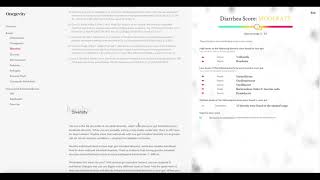
Ben Greenfield previews his personal Onegevity gut test dashboard, describing the gut-panel metrics (inflammation, constipation/diarrhea risk, bacterial diversity, micronutrient production, detected pathogens, phyla ratios, and DNA breakdown) and the platform's personalized recommendations (diet, recipes, supplements, probiotics, and exercise). He reports specific results (high inflammation score, low constipation risk, 58% diversity) and notes the service will expand to blood/urine/saliva and add features like food delivery integration.
Questions this video answers
6 gigs of data.
39 different cells of his microbiota.
High inflammation score.
Low risk for constipation.
58% (moderate).
Chapters
I've been since my podcast with Longevity, getting a lot of questions about this actual test and what the results look like. So I'm gonna just briefly show you what my own dashboard looks like here for the gut test. And if you go listen to my podcast with Longevity, which you'll see linked to underneath or near to this video, you can go listen in and find out that this will also be rolled out for the blood, for the urine, for the saliva. But ultimately, this is what the gut panel looks like. After they analyze these 6 gigs of data and look at 39 different cells of my microbiota, you can see here that one of the first things they do is they run through inflammation. When you log in, you can see I possess a lot of the bacteria that would put me at high risk for inflammation. And later in this video, you'll see that there are specific recommendations for what could lower that inflammation and assum assist with this. But this is very valuable data for me to have because I have a high inflammation score and that's something I can start to work on right away. Constipation. You can see that I have low risk for constipation based on this analysis. And what I really like about this analysis is I can see every single shred of research, like it's all very research backed. And I can also go over here and I can review the different interventions recommended to improve that score, which I'll show you farther down. If I click on this, it'll just jump farther down. And you can also see the different bacterial species and be able to delve more into those. Diarrhea. You can see that everybody loves to talk about diarrhea. My potential for that, as well as the interventions that could be indicated to help me out with increased risk for diarrhea. Bacterial diversity, you can see that I was at 58% diversity scores, moderate. This influences my need for a wide variety of ferment as well as probiotics that would actually seed the gut. And, you know, and rotation of probiotics is even something that can help out quite a bit with this diversity score. Just not myopically using just one probiotic and also not myopically using just one fermented food, but using a wide variety like kefir, yogurt, kimchi, sauerkraut, natto, etc. These are my micronutrients which are produced by the bacteria in my gut. So I can see if I have risk for deficiency on any of those, which I don't. You can see the different probiotics that I'm actually deficient in. And while there isn't a great deal of research showing that, hey, you're deficient in whatever, let's say Bacchus coagulans or Bifidobacterium bifidum, that supplementation with that would necessarily fix all the issues because sometimes it doesn't populate the gut. Unless you decide, and this is something a lot of people do, that you're going to crack open the probiotic tablets and just do an enema, just like hang upside down on an inversion table and administer yourself a probiotic enema with those specific strains. That can work, but taking them orally may not actually replenish some of these. But taking probiotics orally, even though the mechanism of action is still not quite clear, can at least help with the symptoms induced by certain bacterial species being low in the gut. So it's like take them orally, but also if you can, take them anally, pathogens. You can see I've got Cryptosporidium here. So I'll be investigating and you'll see some of the recommendations farther down on how I can get rid of that Cryptosporidium parasite that was found in my gut because that can be a pathogenic organism. You can see here my phyla, my pharmaceut bacteria ratio, which influences body composition. You want that to be high above 10. Ideally mine is good, so I'm happy about that. And then you can see even the breakdown of the different DNA found in my stool sample and how that compares to other species. You can also read up on some of the research that indicates what that DNA actually means. And then we get into the actual recommendations. Right? My recommendations for a Mediterranean diet, which based on my genetic testing, I know to actually be the diet that agrees with me quite a bit. The only modification I make is because I'm an athlete. I work in a lot more organ meats. And I also work in kind of like the Weston A. Price diet, a wide variety of fermented foods. So the only thing I do is I modify Mediterranean diet and actually do consume red meat. Even though this says consume rarely. You know, I'm probably have red meat at least a couple of times a week. Then what's cool is they have recipes here. Onegevity is going to start working with food delivery services for those of you who are lazy and don't like to cook, to actually deliver the foods to your house. And then there are certain supplements that are recommended here and you can even just like click and get them if you wanted them. Like for me, they're recommending enteromend for the digestive inflammation. I'll also be using the Thorne Mediclear. They recommend certain probiotic strains that specifically address the probiotics I'm deficient in. They're recommending a few other things for some of my specific profile. In my gut, your recommendations might be different then they've got some exercise recommendations on there and as they roll out more and more data, more and more profiles. Since they've got all your data, your dashboard kind of expands as new research comes out. So it's pretty slick. Just wanted to give you a quick video that outlines what that looks like.