Ben and Luke Storey Reveal Secrets To Life Optimization, Plant Medicines, Rites Of Passage and more!
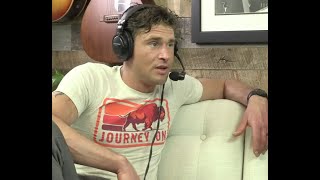
Ben Greenfield and Luke Storey discuss biohacking, spirituality, and plant medicines, sharing personal recovery stories and practical routines like family meditation and journaling. They emphasize preparation and set/setting for psychedelics, explore rites of passage for adolescents, and balance ancestral practices with modern life.
Chapters
We're here again with Ben Greenfield, folks, listening and watching. Last time Ben was here, we had every intention of sitting down and having a proper conversation, but then we ended up hanging out in the house and going through the supplement cabinet and the.
Wiring from room to room of your. Of your palatial estate.
And it ended up being like a two hour tour. We probably could have gone longer. And then Ben's like, dude, I can't record. I gotta go.
You know?
So that became the podcast, but my original intention was to really sit and talk about some of the deeper life experiences with you and both. I like that perspectives.
And for the video version of this, it's almost like that Funny or Die show between Two ferns with Zach Galifianakis. Because I don't think this is a fern.
No, it's not that we're sitting.
We're not sitting between it. We're sitting on either side of it. But, yeah, we've got a plant and a really shitty book, a giant book called Boundless, and this is the first.
Book that's dwarfed the plant. Usually there's a nice little symmetry here.
But all we're missing is a president or a celebrity who we can roast and ask stupid questions to, and we'd totally be on Funny or Die.
This is true. Yeah, this is true.
Probably closer to die.
Well, we might be able to match that content wise.
Are you all right? Nadir? Thank you for your adjustment.
We're on a three camera shoot here sometimes, and getting all three to actually look perfect is a science in and of itself. So before we start, what's new and exciting? You're in la, you're visiting. What's the latest in your life?
New and exciting is all different these days. New and exciting is being parked in front of my computer working on new book ideas. I just finished a cookbook as a companion to Boundless, where despite me having imposter syndrome, meaning I never grew up as a chef and always feel like. Like I'm really cowboying in the kitchen. I just want to take all these recipes from camel's milk kefir with gelatin in it for a bedtime snack, to my little coffee rubs in reverse sear process I do on steaks, to the little sprouts that I grow and how I dehydrate them and salt them for a snack. And almost like a blend between really novice molecular gastronomy and kind of a whole foods approach to diet with a few little supplements and mushrooms and things like that thrown in.
To add in even more Better living through science. And so I put the finishing touches on the cookbook a few weeks ago, and now we're working on beautiful photos and everything for that. And now I'm working on a book more focused on spiritual fitness and caring for our soul. And aside from that, just a lot of time spent with my little boys out in the forest. They're unschooling and for me to be able to be home more, present with them and helping on that front has been magical. Not being on airplanes or in airports until coming down here to LA and then last week to San Jose has been absolutely wonderful. I'm probably fitter than I've ever been. I'm healthier than I've ever been. And a big part of that is due to not having to engage in the so called dark side of hypermobility. And yeah, I feel good. How about you?
It's fun. Well, it's funny. Dude, before I answer that, looking at your Instagram, which I do periodically, I would never guess that you're not naturally a chef, because I'm not. I'm not a foodie myself. It's more of a utilitarian kind of like. And I got to get it done, got to get something in there. But when I do actually sit down to a great meal at Bel Campo or something like, oh my God, I should do this more often.
I went to Bel Campo last night and had a greasy burger on the sidewalk at 3rd Ave with some of that, with some of the tallow fries, big smile on my face, grease and ketchup and their secret sauce dripping down my chin. And I was in heaven. I literally was just listening to music at the end of a really long day of podcasting and traveling and Ubers, just sitting there, stuffing a burger into my face, watching the cars go by. And it was fantastic. You're right, they do good meat. And.
I get what you're saying about the cooking and the food prep piece. I'm spoiled because Jessa, my wife, is a full on make everything from scratch, not just food but furniture and campers and anything around the house, she just makes. And I have been very self conscious cooking around her and trying to make recipes around her. And you know, even when I first met her and for the first few years of our marriage, you know, I was still sweeped in, steeped in whey protein. Well, typically for me it was whey protein shakes, a lot of whey protein shakes, a lot of microwaving. Like I would microwave hot dogs, microwave oatmeal, microwave pop tarts, you know, full meal deal, but very kind of old school fitness approach to cooking. Definitely an Iifym. If it fits your macros, eat it. Not too selective on food, sourcing on food quality, anything like that. And she didn't really come at things from that angle just because she was so used to gardening and having fresh meat around to prepare and had a whole different perspective. But then she, because she had some pretty concerning skin issues, both acne and eczema brought home this little tattered coiled PDF printout book from the University of Idaho library home one night and it was called the Dietary Cure for Acne by Lauren Cordain. This would have been probably, oh, 14 years ago. And she read it, she implemented a lot of the insulin controlling plant defense mechanism inhibiting type of aspects of that early version of a paleo diet, long before folks like Rob Wolf, for example, came onto the scene and heavily popularized it. And I watched her skin issues clear up literally overnight. I read the book myself and that was my first foray into beginning to understand a more ancestral approach to nutrition. But I still was microwaving hot dogs after that. Well, I mean, they're hot dogs. They're kind of would have stuck them in a microwave if he had it. He probably had to put them out on a cave in the hot sun. And so, yeah, I've come a long way, baby, since those days. But that was kind of my initial exposure to a more ancestral approach to food preparation.
Well, it's one thing preparing food that is good for you and another thing entirely cooking food that is good for you and tastes like food that you would get at a restaurant that is not good for you. Yeah, it's like, how do you make healthy food?
Actually, you know, there's a one word answer to that. Salt. Really good salt. Right in my fanny pack I'm always wandering around with, I always have some form of really good salt in a Ziploc bag sometimes. I also, if I've remembered and thought ahead, when I travel, have a little 4 ounce travel container of a really good extra virgin olive oil. And even if I wander in, you know, like I'm eating at some bistro tonight with a bunch of guys and I think they've got like, you know, wraps and kale salad. There's just kind of the usual bistro fare. I guarantee olive oil and sea salt will be coming out of my bag.
Yeah, yeah, yeah, Wise. So, yeah, so that's a lot of new and exciting stuff, books and all. Like after doing the book Boundless, which those of you Watching on video, you'll see the book I'm referring to. I mean, it's literally like the bible of all things health, biohacking, better living through science and nature. Um, after writing that book, I would have like taken a 10 year hiatus of trying to write anything.
You always think that you. Have you written a book yet or have you. Noodles?
Yeah, the process of it. Yeah.
Tell me more.
Well, I don't, you know, I don't want to give away the title of the book because for some reason it just feels like I shouldn't. But plus, plus it can get stolen.
Until you actually copyright it.
This is true. This is true. So, you know, holding that one close to the chest. But essentially, you know, Ben, it's been God now 24 years that I've been on this journey of spirituality and what we now call biohacking, which used to be just called being a health nut or into anti aging and stuff. And you know, along the way I have picked up a lot. But I think because I'm always learning from other people and especially having this podcast, sometimes I sort of discount the progress that I've made because when I started making content, as you know, I was coming out of the fashion industry, where all of the things I was doing in meditation and yoga and health and healing were all just kind of part of my private life. So I just considered myself a perpetual student and had neglected the fact that I'd actually learned a lot along the way. Having now been on a lot of other people's podcasts and spoken on a lot of stages over the past four years, I've realized, wow, shit, I actually know a few things myself. And so figuring out what the first book would be was a bit of a challenge because I think a lot of what makes my perspective compelling is that I have a really crazy past. And the arc of the hero's journey is pretty insane. From where I came to starting in childhood into 20s and just living through mostly self inflicted hell and surviving to tell the tale. Not only surviving, but now thriving and, you know, carrying that to so many people. So the initial thought was, well, I guess it should be a memoir. This tale of triumph over one's difficulties and follies and that felt just too self indulgent. And frankly, I didn't think I'm famous enough to pull off a memoir. Like, okay, this dude writes a memoir. Yeah, everyone's had a rough life, who cares kind of thing.
Yeah.
And it just feels too like, I don't know, self important or something, you know, So I struggle with that a little bit, but also just having a book that omits the story and is just like, here's lessons of life. Well, whose life and why? So, so far, the book is shaping up to be kind of part memoir and part, you know, some tales, but also teachings along the way. So, you know, childhood trauma.
Yeah, the storytelling is smart, and I tried to do it with boundless. I lead in every chapter, if the astute reader might note, with a personal anecdote, a personal story that is related to the topic of that chapter, whether it be about I had with MRSA or giardia for the immune chapter, or hefty periods of stress that I went through, that I eventually tackled with breathwork practices and the stress chapter, et cetera. But the storytelling is important. I even tell my kids this when they're working on a book report at home every week. I let them select a book or I help them select a book that they write a book report on, with the general overview of that being that I figure if they have the mentality growing up that they can easily go through and assimilate one book a week, that's going to really train those muscles for them going into life, just being able to digest information at a reasonable pace and then be able to teach others that information. And I always tell them to weave their own personal anecdotes and stories into each book report because people don't want to read facts. What people resonate and connect with are stories. But I'll tell you, as you work on your book, probably the most difficult aspects, at least for me, of writing that you may find is a. It's hard to write an entire book while keeping everything that you're writing held, as you noted earlier, including the title, close to your chest. That is very difficult for me, which is why often when I am writing a book, I will take pieces and snippets and put them out as tweets or blog posts. Something that's just too good to wait for two years until it hits the bookshelves. I got to get this information out to the world. Now, giving yourself permission to do that, rather than thinking, oh, if it's been out there, and then the book gets published and it's already been out there, people aren't going to like the book. But taking some of the really important stuff and just giving yourself permission along the way as you write to put something as a blog post or an early draft of a chapter out, as a few paragraphs on Instagram, et cetera, I find that Kind of fuels my fire, giving people an insider sneak peek of the book as I'm writing it. So that's one thing that I found to be helpful. And then another is there's probably two other things. One is.
The organization component, meaning that as you gather data, as you research, as you find articles, books, interviews, podcasts, et cetera, that are related to a chapter that you're working on or a chapter that you're creating a skeleton for. Because every chapter you must skeleton before you. You don't just sit down and write a chapter, start to finish, right? You're always bouncing around, typically laying out the framework, laying out the foundation for that chapter, but figuring out a way to assimilate all the data, all the research can be very daunting. And so many authors will use a platform called Scrivener for that. And while that software is very useful for being able to organize what you're writing, the problem is it's not designed for cloud based interaction around anything that you're writing. If you have a scientific editor, if you have a research assistant, if you have a publishing editor, et cetera, then they can't be seeing and editing chapters as you go. You can't just share a chapter in the cloud. So what I do when I write now is I start a separate Google Drive folder for each book, and that Google Drive folder has a folder for each chapter, and that folder for each chapter has all the links to research, all the links to interviews, the chapter itself, any revisions of the chapter as they're ongoing, so that previous versions of the chapter don't disappear and get deleted forever. And so I found Google with as much heat as they're getting today, right now from the alternative health community, based on selective censorship. I haven't found a more convenient solution than that yet. So organization, and specifically cloud based organization for collaboration in writing, I found that to be very important. And then finally.
The last is that at some point, especially when you're writing a book about science or a book that might incorporate a lot of advances in, say, biohacking technologies, or new research on things that might assist with supporting healthy immune system, or new compounds that have been discovered that might heal the gut.
You get to a point where you simply have to say stop. You get to a point where even for your editors and your publisher's sanity, if you're going through a traditional publisher, which is not necessary these days, but can be convenient for bookshelf space, you have to get to a point where you just say, okay, that's good enough. This needs to go in the SQL, or this is going to get added to the ebook, or the Kindle version, which is far easier to edit, or this is going to go in the special bonus chapter of the website. But that's the tricky part, too, is just fricking stopping and saying, okay, I'm done now hit publish and send.
Yeah, that's. That's really good advice. And I'm seeing that come to fruition now as I'm pulling together all these different elements. You know, there is sort of a narrative of a story that's coming together, and then there's punctuation points throughout the story where huge insights or lessons have been learned. But it's almost as if each chapter could be its own book. You know, as I start to really dive in there, I'm like, oh, shit, I'm 49 years old, man. So it's like, you know, even if I just went from the past 24 years since my awakening and think, you know, when things really change and had this pivotal spiritual experience that just transformed everything, it was like I was born again at 26 years old. Even from 26 to 49 is a lot. So it's.
It's.
I think what I'm doing now is. It's fun because I'm really. I'm in this sort of archeological dig where I'm just pulling everything now and just putting it where it needs to go. And then I think that what's going to happen is there's just gonna be a lot of fat trimmed as I go.
Definitely find that, and it will feel like kissing your babies goodbye. The way that I kept myself sane was I actually retained a full and complete version of each chapter in Boundless, with everything that the editor cut, right? And I simply made a special hidden resources website. You go there and you type in your receipt number, your Amazon number, or whatever, and then it unlocks all. There's over 600 pages that I cut from the book that still live on or could be turned into additional books, et cetera. But I don't know if you fancy yourself as this, but I think I do. We are storytellers. There's probably a reason that we are drawn to podcasting, that I'm drawn to books, and that you're now in the process of writing a book. We perhaps would have been in ancestral times, the people who passed on either wisdom or stories or advice to future generations. I don't feel as though I would have been a gladiator or a warrior or up at night protecting the Camp. I know I wouldn't have been doing that because I love to sleep, but sitting around the campfire sharing stories and finding out cool things and passing on wisdom, I think that being a storyteller is a fun thing to do, and I just feel incredibly blessed to be able to do that, whether it be a podcasting or writing or producing books or whatever the case may be.
I think this ability to be able to pass on wisdom to future generations and to current generations. If you want to call what I do wisdom, you might just call it random piecings of crazy biohacking knowledge. But.
I think it's a really cool thing to do. And I don't know about you, but I feel blessed just to be able to be in a position where I can, you know, in a very amateurish way of phrasing it, find out cool shit and tell people about it.
Absolutely. I'm shocked continually at the fact that this is actually my job, that I parlayed my passion into a career.
Me too. And I mean, when I tell my boys, dad's going for a three hour hike, I have an audiobook I need to listen to because I need to interview this person on my podcast in two days. He's a really smart doctor who would probably not give me the time of day at all otherwise if I didn't have a podcast for him to come onto and talk about. So my job is to go hike, learn, come back and talk to a really cool person and then press, publish, and tell the world about it. I mean, it's a fun job.
Yeah, it is. It is. And to be able to continue to work on oneself and, you know, discover what works, what doesn't, and then share it with people. And then I realized, like, not everyone is like us, where they want to research and try everything. That's what I'm discovering. The feedback I get from people that follow the stuff that I'm doing is like, thank God people like you are doing all this. Because I just want the results. I just want to know what the net, you know, the net value is and, like, what I can skip and just get to the point. And I understand that. I'm just not that way. I want to try everything and really dive into how everything works. And I think it's just part of that innate curiosity.
Yeah.
It'S a consequence of being supremely curious. And I think you're right. Some people want the convenience of getting all the best information that's already been filtered. Right now I like to dig into 100 research studies on carnosine and whether transdermal versus oral administration is best and which different supplements have the best versions and what form of exercise, at what intensity, for what duration is it actually going to help you reduce the burn or whatever the case may be, and then say, okay, here's what I found. And you know, I think the world needs people like that and the world needs people who are out doing other things like say, you know, whatever protecting our country's borders or you know, making food or, you know, or being, you know, in any other position in society and they can simply take what we produce and have access to the good stuff in a shorter period of time.
Yeah, so. Well, I want to talk about.
The.
Well, you know, you kind of alluded to it in that you're writing a book about spirituality. And I think for people like you and me, to some degree, people get caught up in kind of the low hanging fruit of if I just get healthy enough, fit enough, have good enough sleep, lose that weight, find the newest biohack, the newest supplement, the newest gadget, then I'll feel this sense of completion and wholeness, you know, and it's like I go to these health conferences sometimes and I look at the crowd and I think, what's the, what's the why here? You know, is the why, like so you're fit, then what? So you optimize your brain function, then what? There's then what, then what? What's the end goal? And ultimately the end goal is I think for most people, a feeling of purpose and a feeling of.
Or. So you're 160 now? Yeah. Then what?
Yeah, so you're, you made it, and.
You'Re, you made it longer than other people. You, you hacked that. Then what? So, and, and.
The way that C.S. lewis described this was a God shaped hole, an abyss deep down inside each of us that no matter how many fancy cars and how many bank accounts and how many houses and, and how many attractive partners and how many noble and laudable things like children or good relationships that we pour into that hole, it will never be full and it will never feel fulfilling because it's a God shaped hole. And deep down inside of every one of us there is a yearning for something bigger that goes beyond us. And I think that that is a relationship with creator God. Augustine wrote about this. He also described it as something like a hole, something like an abyss. He actually called it a never ending yearning that would not go away until the day that you die. And if you recognize that, and Blaise Pascal, a long Time ago in the 1600s, he wrote a book called Pensies. It's actually a collection of writings that are largely. They're kind of a defense of the Christian doctrines. But he has a lot of wise sayings in there. And I don't have the quote memorized, but you could find it. If you were to Google Blaise Pascal Pence's P N S E E S.
God shaped hole, you'd probably find something like that. And he noted the same thing. People are searching, people are striving. People get to the end of their lives and still feel as though they never reached that peak of fulfillment, never filled that hole. And the people who actually do, the people who actually find that vibratory frequency that David Hawkins would refer to as peace or even enlightenment, are the people who have discovered that that hole can be filled by a deep spiritual connectedness to God and a practice of the spiritual disciplines just as much as the physical disciplines or the mental disciplines. Caring for one's soul just as much as one would care for one's bank account or fitness. And really, I think that that is the key, that it is a God shaped hole that will never be filled until you figure out a path to God to fill it.
Yeah, well said. I know in my own experience it's.
Been.
You know, early in life due to.
Childhood experiences that were traumatic and painful that.
Caused a further separation from that relationship with God, even though I wasn't conscious of it. I think that all babies are born connected, right? And then we have experiences, I mean, even circumcision and traumas that happen at birth. I was put in an incubator.
Seriously, birth is fun. You get slapped in the face, part of your penis cut off, and then your lifeblood cord tied off and tied in a knot and you know, and then a tit shoved in your face. Yeah, one of those things is okay, if you're lucky.
Yeah. I was thrown in an incubator for the first week of my life and cut off from all human contact, you know, which seems like, oh, poor me. But looking back at different patterns that have manifested in my life, there was a real disconnection there. And then, you know, things that happen that shouldn't happen to kids happened. And you know, my refuge from that was seeking some kind of connection. And I was able to find a facsimile of a connection to myself through drug abuse and started that when I was really young. And people like me in recovery that have made it out the other side of that know, or at least at some point will learn that we were trying to fill that God shaped hole with that feeling of being satiated or.
You know, soothed, self soothed by changing our chemistry. And then you, at least I, I won't project on any other former addicts and alcoholics listening, but.
If you're so lucky you don't end up in prison or a cemetery, you realize, oh shit. What was missing was this relationship with God. And then there's a lot of missteps typically in trying to fulfill that with the, the partner, the supplement, the job, right. The money, when, when in fact losing the weight, gaining the weight, you know, all of the things that are, you're still like, you might not be doing something so self destructive in that escapist way, but you're still looking for something that seems to be elusive. And it's that connection to one's true or higher self which is at one consciousnessly speaking, with God. It's like the God within you kind of gets lost in the chase after that feeling of.
Existential loneliness or separation.
Right. And I don't mean to vilify nice cars, a great wonderful family, a lot of money in your bank account.
Drugs, supplements, gyms.
Gold spandex, leotards and bench pressing, whatever it is that you derive joy from. Different people are wired up in different ways. But like we were discussing in the kitchen before we came in here and I was telling you, I recently had this Dr. John Laurence on my show and he sent me up some of his Zen spray, this nicotine based hop a extract from the Amazon. I just took a couple sprays up my nose. It kind of clears the head after you do your blow at all the snot, it induces and.
It can be addictive. As we were discussing, nicotine can be addictive. Ayahuasca retreats can become an essential rather than a connection to yourself or to God.
Cars can become something that you define yourself as being attached to rather than a passing pleasure in life. And even when we were in the kitchen, I mentioned this. As Anthony d' Mello says in his book Awareness, we should be able to look at all of these things, all of these things that surround us in creation. Whether things that humans made in God's image have created or whether God has created, whether.
Plant extract of psilocybin or LSD produced in a laboratory, whether a fancy Ferrari or a big oak tree providing shade in the backyard. We should be able to look at each of these things and recognize them as pleasures, things that cause this dopaminergic response. It's built into us. It's a fantastic response. Right. And you and I were talking briefly about this. We call it addiction in many cases when we like to do something repeatedly over and over again. But honestly, human beings, from a biochemical standpoint point, we're created to take a great deal of pleasure in many things that we come back to over and over again for another hit of pleasure, right? Coffee, exercise, nicotine, sex, you name it. And that doesn't mean that the thing that produces dopamine is bad. That doesn't mean coming back to it repeatedly is an addiction or at least should not be vilified if it is an addiction. But you should be able to take anything in your life that you're throwing into that God shaped hole and say you are again, as Anthony Di Mello would say, you are something I derive pleasure from. But I am not attached to you. I do not depend upon you for my happiness. If you can't say that to all of these fancy tools and toys and gadgets and supplements and drugs and medicines that surround you or any of them, or there's a certain one that you can't say that to without cringing or feeling a little pit in your stomach, then that is a sign that you do have an unhealthy attachment, that you do have potential for an addiction to something. And I just like to paint it in the I'm going camping now with my backpack scenario. You should be able to just go off and camp for three to five days without any of these things in sight, extract yourself from them and not feel as though you're supremely unhappy because they no longer exist in your life temporarily. And you would be surprised. We were talking about this with nicotine, how sometimes it's not the fact that you're severely addicted to a substance as much as the fact that because it's constantly around you, it's a cue to partake making it. And I've found that if I simply remove myself from an environment where I might have access to something like food or a kettlebell or caffeine or whatnot, and it's no longer around, it's not that hard to become detached from it.
Yeah, well, it's funny you frame it like that because I think my view of all human pathology is really a deviation from nature and natural human ways.
Right?
So the hunter gatherer connectivity and intimacy and human support and love and affection, physical touch, all of those things combined with the loss of our connection to the land, I think that's at the root of all pathology. Both emotional, spiritual, and physical. And so a good experiment would be to actually go immerse yourself in nature with no props alone, I guess, would be the real warriors way to do it. But with a couple loved ones, you know, like you have family, kids and whatnot. To go out there and really experience what it's like to be in true wholeness and completion in the way that we were designed. You know, it seems like as we've deviated further from that, then all of these props become necessary. Like you wouldn't. And I always say to people when they write, because people write in there like, you know, people that have this scarcity mindset often that are like, well, I can't be healthy because I can't afford the biocharger or the, you know, the infrared sauna or whatever. And, you know, the first thing I say is like, yes, you can. Like, if my ass can figure this out, like, I didn't even graduate high school and I'm doing it. So it's just a mentality thing more than anything. But more than that, I always say, you really don't need any of that shit if you have the discipline to align yourself with nature. Sun, gaze at dawn. Sun, gaze at dusk. Get in some cold water, get hot, move your body a bit, do some breath work, meditate. Most of the things that really move the needle are free, but people don't want to do those because they want the quick fix. It takes more discipline to do that than pop some modafinil. And.
At the same time, I would.
Never freaking want to be a caveman.
Nor would I want to live in a tent. If I had to choose, I would not want those things because our modern life is pretty freaking magical. We live like kings. And then sometimes we find in our whole, especially if you're steeped in the paleo, the ancestral community. Oh, ancestral man or woman wouldn't have done this. They wouldn't have done that. They wouldn't have gotten on an airplane. They would have traveled by covered wagon across the US and half the family would have died as they traveled 3,000 miles to go see Grandma. But I'm not going to get on an airplane because that's unhealthy and subjects me to radiation. Or I have an entire emperor's worth of library at my fingertips. But I'm not going to access it that much because I don't want to get irradiated by Wi fi.
You have to draw a line somewhere and accept the fact that a lot of the conveniences of modern life, despite having a few biological downfalls in terms of them being evolutionary mismatches that perhaps our cell membranes and other parts of our body have not yet been able to fully adapt to present a wide range of blessings and conveniences that I think sometimes because we have this nostalgic view of how good ancient life must have been, we neglect to appreciate. And, you know, I've certainly been guilty of that, you know, on my own show, you know, and in teachings or speaking, you know, saying that we need to be as close to. As close to earth as possible and as ancestral as possible. When in fact I think that you can, to a certain extent, have the best of both worlds. Right. You can marry ancestral living to modern science. Make some good educated decisions. Yes. Don't strap a wifi enabled meditation neurofeedback device to your head and sit there for an hour with rampant levels of EMF floating around your brain. But if you got some Bluetooth enabled Muse headband or something like that that you're putting on for 10 minutes a day because it's assisting you with steepening the curve or lowering the steepness of the curve of your meditation practice or something like that, go for it. Embrace technology. Embrace something that our caveman ancestors wouldn't have done. And I think that many of us would be healthier and better off because of that.
Yeah, that's a really keen observation. Someone was asking me yesterday if I go, if I do, you know, like, backpacking legit. Not like put on a backpack and hike a mile up a hill, but like, go out for nine days.
Yeah.
With your backpack. I'm like, that is dope.
Right?
Like, I would rather do anything other than that. You know, it's like, well, where's my chili pad? I mean, what if the ground, you know, what if it's too hot or too cold? What if I'm uncomfortable for just a few minutes? So I am absolutely guilty of.
Excursions like that do help you appreciate the. The chili pad, though.
It's just, you know, like, the ground's too hard. Are you kidding me? I value my sleep. But it is about, for me also a balance, but also acknowledging that the reason that so much of these props and things like that are needed in order to just sustain and evolve in a new way is because the deviation from our natural life way is so far off. But there's also no going back. And if you become domesticated, like, I absolutely have. I'm not going to live in the woods in a cabin with no electricity. This ain't going to happen. It would be. I don't know. Well, you don't know until you try it. But it would be, it would be like the life of the renunciate. You know, the monk who just drops everything. Like spoke of David Hawkins, he did that. He left a huge practice in New York City as a psychiatrist of 50 years and just abandoned all his finances and everything and just moved to Sedona with the pickup truck. Yeah, you know, and that's one path. But then eventually you're going to have to start building a life back up probably and reentering the world in order to carry whatever it is that you learn.
You know, many people have that all or nothing approach. They say, oh well, I need to go live in a cabin in the woods forever or sell all my belongings and become a monk forever. And I do think that brief excursions here and there into those uncomfortable scenarios are very developmental for character and do really help you to appreciate the pleasures in life that you might have lost your full mindfulness around in terms of appreciating and being present with them. That piping hot cup of coffee in the morning that you grab and suck down while you're hunched over emails on your computer that you barely appreciate anymore, even though it arrived to you from freaking South America selectively roasted and handpicked and all the jet fuel that got burnt to bring it up to you and you suck it down morning after morning, morning after morning without being aware of it. You go camping without any coffee for a week, you come back and you might be a little bit more appreciative of that cup of coffee. And so I think that for self awareness and for appreciating a lot of these modern pleasures in life that extracting yourself on a regular basis, having. There's a wonderful book that I'm taking my family through right now called the Spiritual Disciplines Handbook. And every two weeks we visit a different topic within that book. The topic last week was teachability. The topic this week, fittingly enough, is unplugging. There was everything from charity and service to worship to self examination and a host of other topics that came before that. But one was retreat the value. And we see this over and over again in great philosophers and thinkers and authors of having some structured scheduled retreat each year in which you do escape a lot of the modern conveniences of life. And in many cases it is accompanied with things that go quite well, that pair quite well with a retreat, particularly fasting, prayer, silence, solitude, study. These things that a retreat better enables us to do when we are Free of distractions. I especially think that anybody who is attracted to this new sexy world of plant medicine and fast tracking the self discovery process through ayahuasca or through complete ego dissolution via whatever psilocybin or MDMA or anything else needs to take that route first, needs to go off by themselves and.
Experience.
What a plant medicine or a drug free journey of self discovery is like. In other words, do the hard shit first before you pop the pill.
Or that pill popping could be a lot harder than it needs to be because all the shit that you've been and suppressing and repressing by not wanting to go just face silence and face yourself is going to be shoved into your face like a giant funhouse.
I know many people who have gone off on implant medicine immersions and couldn't even handle a week long dieta going in. Couldn't handle restricting meat, restricting alcohol, restricting the use of other compounds that they've become attached to, doing at least a 12 to 24 hour fast beforehand because they really had never put themselves into that scenario. If a week before going into a ceremony like that, you can't even do that, it's a pretty good sign you're not prepared to do it.
You just reminded me of one element of that is the character building and discovery of one's self reliance also. There is a lot of value in that. I'm thinking about where you live in Spokane. I think I've told you this before, but I went to a boarding school there that was this quasi reform school, sort of very cult like, bizarre place in Bonner's Ferry, Idaho.
Oh geez.
Yeah, it's not a stretch you can imagine, you know, it's like 30 miles south of Canada or so. But I remember telling you, I was like, oh, Spokane, that was the big city for us. Every once in a while they would set us loose in our little, you know, short bus and take us to Spokane. It was like being in Manhattan.
The moms are all, they're not driving minivans, they're driving pickup trucks with, with 44s, you know, holstered to their hip. Yeah, yeah.
But at this school, it's called Rocky Mount Academ. One of the beautiful things that they did for us is they sent us out on a vision quest. So they'd give you like a 50, 60 pound pack. I'm 14 years old at the time, God knows how much I weighed, but it was probably double the pack if that. And for you, hike up into the mountains, you know, three feet of snow, snowshoes the whole deal. And then they give you a tarp and teach you how to build a, you know, a little ice shelter or snow shelter. And they're just like, here's your journal and a can of Sterno and some beans. And by.
Well, I gave you beans at least.
You'D have to go out and find your own food. But yeah, and it was, you know, of course it was extremely challenging and scary. You hear noises at night. I'm 14, I'm from California. Like, I miss my skateboard and my walkman and my Black Sabbath tape, you know, and here I am. And it was challenging. But man, coming down that mountain, I was a different person. It really was like a coming of age rite of passage kind of thing. And I was like, holy shit, I did that. You know, and it gave me a lot of confidence as coming out of that, you know, afraid little boy that's kind of afraid of the dark of that man. I hung out here for three days and nights with just myself and a pen and a journal and, and lived to tell the tale, you know.
Well, you had very irresponsible parents to allow you to do something like that. There are people jumping through the radio waves right now.
No, this was under supervision.
Yes, you know, at the school. No, I'm joking. Actually, I think that more boys especially should go through a rite of passage like that. You know, my boys will have their. Well, they'll have a kind of a four day group wilderness survival next spring. They've been doing camps with this same facilitator for the past six years. So they've already built up their spear making and their bow drill and their sheltering and their plant foraging and their general survival tactics. And then that four day immersion will be finished with a 24 hour solo. Right? River will be cut off from his twin Taran, Taran from his twin River. They'll similar to you, have a backpack, a journal, wool blanket, a knife, and be forced to fend for themselves for.
24 hours with no sternum.
When I say force, this is not like dad is cake. But it's one of those things where I'm setting it up and should they choose to swallow that pill, that's, that's all there for them when they're 13. The following year when they are 14, they will go through from that rite of passage into adolescence through another rite of passage into adulthood where it will be four days solo. And during those experiences they will experience loneliness, they will experience ego dissolution, they will experience greater connectedness to God because there isn't a whole lot aside from that to connect with once you've been inside your head for that long, out by yourself, usually hungry and undergoing some element of hardship and fasting and thirst. I truly wish that I had done something like that when I was 13 or 14, because my rite of passage was about 20 years of Ironman triathlon and Spartan racing and death racing and adventure racing and, and bodybuilding and kettlebell swinging. Everything else to prove to the world that I was a man. And I think that had my passage to manhood been more clearly recognized as an adolescent, and I think this would be the case for many men out there who are still searching and who still deep down inside are boys, right? They're not fathers, they're not leaders, they're not kings. They're still boys deep down inside.
You talking about antifa?
Antifa, yeah, sorry.
Couldn't resist.
Inside joke.
They need that. And I think that culture would be better off for it. We would have stronger fathers and leaders and kings if rite of passage was built into our westernized culture in the same way that it's still built into many indigenous hunter gatherer cultures. It doesn't have to be evil and wicked and, and vehement and overseen by elders who lack humbleness and meekness. It doesn't have to be like the wild Wild west story book I was reading to my boys last year where they take the youth and they put holes in their skin and hang them from hooks from a ceiling and twist them in circles while they attach buffalo skulls to the chains that hang off the hook so they get heavier and heavier. And then once they drop down, they have to run those buffalo skulls through the tribe while they're getting kicked and punched and, and scraped. And then those who still have the buffalo skulls attached to their hide after all of that, they then have to drag them out to a field and just live out in the field until the skin rots and the skulls eventually get detached because the rotting skin has allowed the cable hooks to come free. And then whether you go through that long route or whether you go through the route where you're dragging your buffalo skulls through the village and all of them eventually just become detached from the skin. You then return back, you get one of your fingers cut off to signify that you have made it to warrior stat and then you are a man. I don't want my boys to do that. Right?
Damn, who is this?
Maybe they can carry a buffalo skull up a steep hill. I forget the tribe. It's a wild Wild west storybook. I was reading to my kids.
Oh my God. So a Native American tribe.
Yeah. And this is real American. Oh, yeah. This is all for real shit.
That's a little extreme.
Yeah.
But we do need our adolescents to have a little bit more of a remarkable recognition of their passage into adulthood and a recognition of their increasing responsibility in society and contribution or potential for contribution to society recognized. And I think that's wonderful that you did something like that in Bonner's Ferry.
I mean, it was part of the journey. And I think that whole two year stint there really was the pivotal experience that changed the trajectory. Even though I came out of there and still became an incorrigible drug addict, it did stop me from.
Committing crimes against other people, which is a pattern that had developed up until the time I was 14. And so after that I, you know, not that I never committed any crimes, but they were just crimes around breaking drug laws basically, not breaking into people's houses and all kinds of things that I was getting into when I was real young. So, yeah, definitely. You know, that sense of self worth and of self empowerment was huge. And there was a lot of stuff like that there that just made you tougher. You know, you mentioned indigenous peoples, and I think it's been really interesting over the years, past two years specifically, of going into different ceremonies with people of different traditions and just being curious, as guys like us are and asking them questions and in some cases interviewing them. But what was it like for you growing up and tell me about your lineage and.
When you came into this life and started doing medicine? And I was actually shocked to find that many of these indigenous peoples that practice the use of plant medicines start really young. And their initiations often include the use of plant medicines with their kids. Now that's obviously in our culture that's not something that would be kosher in most cases due to the technicality.
It's not legal, of course, in most situations with most compounds, unless you're, I don't know, your kids can have their first glass of wine or something like that. They've been ceremonially inducted. But I actually am not opposed to the use of plant medicines, especially in a ceremony that's taking place during the rite of passage or after. I think that that's something that just further allows for a dissolution of the ego and a greater connectedness to self and to God. And I'm certainly not tabling the idea of that for my own voice again. Although at that point we have to be careful with anything we say because I don't want social workers showing up at my door digging under their beds for their cup of ayahuasca or something like that.
Hypothetically speaking.
Hypothetically speaking, my boy will have a very responsible attitude towards and use of plant medicine probably by the time they're 15.
Yeah. Speaking of plant medicines, what was the first experience that you had and what different experiences have you had? What different compounds have really moved the needle for you or had an impact?
Well.
As with many of the forays that I take before, I fully understand the power of something, I. I cowboyed a lot in the early days of my use with some of those compounds. And by early days, not very early, I didn't really touch anything except alcohol until I was 31 and I am 38 now. Had smoked half a joint in a parking lot once, and I'd certainly drank a lot of Everclear and beer and wine in college and went through a stint where I was a bit of a wine aficionado and went everywhere with my wine Bible and did wine tastings and, you know, but. But for me, it was pretty much all alcohol and, you know, the occasional cigar, you know, a little bit of a joint here and there. And.
I started to look into a lot of these. A lot of these compounds that are so called lysergamides or variants of LSA or LSD for enhancing cognition or to be used as a microdose for left and right brain hemispheric activity. Started to look into psilocybin, just based on a basic Stamets protocol of psilocybin and niacin and lion's mane again for nature immersion or for a day of creative thinking. Did a little bit of microdosing with MDMA and with ketamine, primarily with mdma, really, for sexual experiences.
Oh, interesting.
Yeah, yeah. A little oxytocin usually along with that for the trust, for the connectedness piece. And did my first ayahuasca ceremony here in the US with a very good facilitator who a lot of people are probably familiar with. And that was paired with DMT and went through that for a few days. And that was my first realization of how deep.
So you're smoking DMT wall on ayahuasca.
Yeah. How deep? What go.
In terms of what I would consider to be a very intense journey into pure light and love and a connectedness with God. And I've never had that much baggage in my life emotionally or even from a relationship standpoint. I lived a pretty clean life as a young Christian kid. I never went through A whole lot of of trauma.
I haven't had a lot of baggage that I've needed to deal with. So I never really approached plant medicine from that perspective. Thus, most of my experiences have been pretty dang pleasant and full of just light and love and bliss.
And from that, the ayahuasca and DMT ceremony did a few other ayahuasca and DMT experiences.
Are you doing the Bufo toad or the synthetic dmt?
Both. I made a few orders from Sigma Laboratories. I think it was lysergy at the time. And these are synthetic variants of dmt, synthetic extracts of psilocybin, et cetera. And.
Just kind of cowboyed around with it for a little while. But even and even still didn't have until I was 36 years old, a great deal of intentionality, a great deal of set and setting built up around some of these immersions. It was more just sheer curiosity. What's this one do? What's it make me feel like? What different things do I see when I use this? How does that make me feel? Which one makes you feel like you got run over? Train the next day versus having a super clear head and happy clappy the next day?
And I, a couple years ago, began to work with a facilitator who uses about 60 different Amazonian plant medicines and decided that after having seen my father go through what I would consider a midlife crisis, he became a member of the Eastern Orthodox Church. And he and I love my dad. I don't want to talk down on him on the podcast, but he seemed to go off on his own journey of self discovery. He moved to Vashan island to live with some monks for a while. He traveled to the east to study Eastern Orthodoxy. There he began to have his own private prayer practices and icons and began to go to a different church and eventually divorced my mom and left the family. And I think that a great deal of the journey that he went on actually made him.
To a certain extent, a wiser, more enlightened individual. He did change. He released a lot of judgment, a lot of shame, a lot of ego. But at the same time, the journey also left his family in the wake, left the whole family behind. And that in and of itself can create a lot of trauma, especially for my younger brothers and sisters who were still in the house at the time and had to deal with all of that. You never want to see your parents split up, and of course you never want to hear them blaming each other or shoving each other under the bus. And all that happens as parents are going through divorce inevitably, at least. I've run into very few people who still don't badmouth someone they had a divorce with or claim it was someone else's fault or whatnot. And that's hard on the kids. I did not want to begin delving because I found my consciousness expanding. I found my ego was somewhat dissolving. I found myself becoming a different person. When it came to the way.
That.
I approach my spiritual practice, Enhancing my own breath work, my meditation, my yoga, my journaling, my delving into scriptures, everything began to change. It was as though my consciousness was expanding to a certain extent, which I think is one of the beneficial effects of these type of compounds. But my wife, Jessa, had no clue about any of this or how it worked. All she knew was, ben's getting a little different. He's not as into riding his bike down the highway super fast in spandex anymore. He's getting a little bit more into meditation and journaling and these weird forms of breath work down in the basement in the sauna. And I could see that it was taking us in two different directions. So two years ago, I began to work with this facilitator who primarily works with couples. You're doing a ceremony together, you're in the same place after you've gone through a series of different medicines and soundtracks, et cetera, that he chooses for you. You then face each other in bed for a good five to seven hours, talking about life, about family, about relationship, still in the medicine space, but looking deep into each other's eyes. We have done that six times, you know, just in the past two years. And it's been transformative for our relationship in terms of journeying together, rather than me, you know, going off on my own journey. And I have to tell you, for legal reasons, my facilitator will not even tell me what he is using. You know, I can tell you it's both synthetics and plant medicines. You know, having experienced all that stuff kind of individually on my own, lsd, ketamine, mdma, Ayahuasca, dmt, ebo, yoga, all this, I can kind of tell. I'm like, oh, I think he just injected this into my shoulder. Or I'm pretty sure that last capsule I took was this or that. And there's even a microdosing protocol that he puts me on in between our sessions where I'm taking these little pills on one day. One's called Creativity, another is called Focus, another is called compassion. And you kind of weave these into the month on a certain scheduling basis to kind of keep you in the space to a very small extent, so to speak. So you continue to get downloads and continue to. To merge left and right hemispheres and continue to be in kind of an ego dissolved state. So it's a really, really interesting approach and that's pretty much for me. I'm good with that. Quarterly plant medicine retreat with my wife overseen by a facilitator with a little bit of a microdosing in between. It's working extremely, extremely well for me, with the only exception being that early on in the process.
I was always the physiologist, always in me, was always aware, just like I just described. Oh, what's that? Or could you change the soundtrack? Or hey, I think I'm too lucid and I pay attention to sounds in the room and kind of self analyzing and my ego is just so big it would not turn off. And so I did go through. This was a year and a half ago. I've had a lot of comments from people actually since I did this, that even my personality changed and my writing changed and the things I would say on stage or in podcasts began to change. But I went through about a. A 27 hour, very, very unpleasant experience that I wouldn't wish upon my worst enemy with vomiting and urination, sweating through the bed sheets and crap in my pants. It was just deep, deep into very uncomfortable medicines in order to kind of crack open the ego, to allow myself to release the built in belief that I've grown up with, that I am the hero, that I am God's gift to mankind, that I am the truth, that I am the Jes. That I am the Savior. I really had that complex just spinning away at the back of my mind and that ceremony just ripped all that wide open. And since then I've realized frankly, in a nutshell, that I don't need to be the hero. That any shame I project on people, any judgment I project on people. None of that is necessary because we are all saved by the death of Jesus. We are all therefore accepted. And at our death we can pass into eternal bliss with God the Father. And who am I to tell anyone that they are on unequal footing or that Jesus didn't die for them? Who am I to say that I'm so powerful, I can be the hero, I can save the world? That's already been done. My only job is to just tell people the good news.
And that was really transformative for me. So.
Yeah, yeah, the, the medicines have a way of changing one's perspective powerfully and profoundly. Yeah, you know, after I was sober 22 years and I'd heard about psychedelics and plant medicines with, you know, done intentionally, whether in a therapeutic setting or in a shamanic traditional ceremony. And I thought, that's great for you people, but I can't do that because I'm not allowed to do anything mind altering as a practice of self preservation. Because historically had I thought, well, I've been off drugs for a little while, I could probably drink a couple beers. Then there I go again. It's just like the pattern is so obvious every time, going back into my 20s and stuff. But after I started to explore a bit a couple years ago, I started to remember that even before I got sober, when I was just using psychedelics to escape a couple times, I did have experiences similar to what you described that helped me to see myself in a way objectively that would have been impossible had I not had the assistance of that change of consciousness. And in one particular situation, I'd totally forgotten about this. I took a bunch of mushrooms because I used to sell mushrooms for a living back in the day here in Hollywood. I had these big five gallon buckets, you know, and I used to buy like, that's funny, you know, five pounds of shrooms at a time.
My mom actually, she sold a lot of shrooms before she moved, before she moved from, from Detroit to Moscow. Like she, she was deep in shrooms. Yeah, I mean, she was pretty much on shrooms. She, she told me this last year pretty much every day.
Really? Yeah. I mean, they're a good business because the markup, you know, your margins are good, but you can still offer value. I mean, you could basically double, you know, your wholesale to retail price and still be solid with your customer. So I liked it. But anyway, I digress. You know, one time, I don't know, I probably took 5, 7 grams of mushrooms or something just because I was depressed and sad and anxious and suicidal. And I thought, well, if I just pour mushrooms on this, I'll feel better. And of course that didn't happen. What happened was I had this experience in which I was able to see what a train wreck my life had become. I'm maybe 25 years old and you know, it was just the clarity that I was given. Even though I was drinking with him and stuff like that and was trying to party, I had this basically like a nervous breakdown. It was just sobbing. And my, you know, my buddy, Repo was his name, he was the drummer of my band. He's like, dude, you're a bummer. Like, you're the worst guy to shrimp with. Because I was just melting down, you know? But what happened was I just realized, like, man, I think I identified there was this seed of potential in me, and the mushrooms helped me to see that. That if I could just get. Get sober, ironic as that might sound, that I could have a life that could actually contribute something to the world and that I could make something of myself. And I forgot about that for a very long time. And then shortly after that, I did. I checked myself into rehab and I, for the first time in my life, started praying to God. Just in a nebulous, vague kind of way, just creator, whatever you are, I mean, I don't care if. If you told me to be a Hare Krishna, to become a Christian.
Judaism, whatever, I would have done it, but I didn't really have any specific path. It was just like, God, help me because I can't help myself.
And it came and it happened and it did. But then it took 22 years of just doing things on the natural and just looking at myself in the mirror every day and doing all of the meditation, all the work, going to India and all that before I finally did the medicines again. And I had to say, man, it's like.
The rewiring of my brain that has taken place through the experiences I've had. You know, a few with peyote, a few ayahuasca, one bufo handful of mushroom journeys. I mean, I was thinking about it yesterday. I'm just going, I don't get triggered anymore by the shit that I used to get triggered for. It's like, even after 22 years of just digging and digging and working and working and growing and surrendering and surrendering and all of that, there were still just pathways, I think, in the mind that just couldn't be reached, you know, where a certain experience, or especially in romantic relationships, just things that would happen and. And patterns that I was acting out that were. That weren't productive, you know, in various ways that I could see, but I still couldn't really stop. You know, I'd be like, well, I'm never doing that again. And then that neural connection would draw me back into that felt sense of experience or the pattern that results from it. And I swear, those medicines, man, have just gone into my psyche and rearranged things in a way by me just voluntarily letting go and trusting that process and trusting God and God's creation and working through those medicines and the various very talented facilitators and therapists that I've worked with. It's like, like I can't imagine where I would be right now if I hadn't, you know, made that decision and followed my intuition two years ago to Costa Rica and do my first series of four ayahuasca ceremonies. Yeah, it's just a completely different world. The thing is though, and you mentioned this earlier, is that I made very sure I did my research that none of the things I was taking had any potential for addiction. And still to this day, I've never heard of someone like smoking bufo toad and be like, I'm gonna do that.
In a couple hours. If you take 8 grams of psilocybin, you don't want to see psilocybin, then next day for sure.
Actually, I do.
I would have. Oh my.
Yeah, the last time I, I did that, I was. The next day I was like, that was awesome. I should do that again. But point being is I, I did research, you know, I'm talking about cocaine, crystal meth, heroin, alcohol. I mean, those are the, that's how I rolled back in the day. I'm not proud of it or ashamed of it. It's just, it's the medicine I needed to not kill myself, basically. And so I researched all this stuff to make sure that I wasn't going to like, like, you know, put my toe in the water and fall in the pool again, so to speak. And so after talking to so many people that had been sober or that were rendered sober even by these profound experiences, I went into it and I, I don't feel at all that I've. Anything has become habit forming at all. But I have noticed because I've accomplished so much spiritually in those experiences and I've overcome just such deep seated wounds and as I said, broken those patterns that, that part of me that wants to keep improving and keep merging with God and keep growing has tended to want to seek out those experiences with pretty rapid succession.
Yeah.
And thankfully, you know, I'm dating a woman who's a shaman and a spiritual teacher and is wise and I trust her wisdom. And she pointed that out to me. She's like, I know you're not getting a date addicted to this stuff, but I don't know if you're realizing like you're going to the ceremony pretty often with a lot of different things and that's cool, that's you, that's your path. But there's something in it to her. She communicated. It feels off to me. And I'm like, what I'm not addicted. But what I realize is it's what you mentioned earlier is kind of like it's not addiction, but it's the attachment to those peak experiences is the potential risk there, I think, you know, and the attachment to those peak experience for me, I think I'm more susceptible to that because the benefits of those experiences are so profound and so obvious to me and I'm not delusional. So if I do a mushroom journey and have some deep healing or realization. A lot of my book came to me in the last MDMA psilocybin journey I had and it was just like, boom, this is what happened. I was going to write a book just so I could get paid more to go do public speaking, to be like, oh, I'm an author. To put that in my bio. I mean, it was literally self serving, just 100% just for my career. Took the mushrooms and I was like, yeah, what's up with the book? What am I supposed to do? And it's like, boom, you're supposed to do this for other people. And then the whole thing unfolded. So when I have something like that, I'm drawn like, well, shit, if that happened last weekend and that totally changed the trajectory of a huge component of my career, then what could happen this weekend? So it's an attachment to the experience more so than, oh, I hate my life, so I want to escape. So I'm going to go do coke and hang out at strip bar tonight.
Yeah. I have two observations and then one question for you. My first observation is that.
You do need to be cautious because I view something like a plant medicine experience from a neural health health standpoint as being similar to a TBI or concussion in terms of the potential for neural inflammation and neurotoxicity that it can produce. This is why many people going into and coming out of such a ceremony will use antioxidants such as glutathione, N acetylcysteine and vitamin C will replenish serotonin with things like 5 HTP or S adenosylmethionine or amino acids. They will often benefit from things like ketone bodies, high dose fish oil, hyperbaric oxygen therapy, the laser lights that you wear on your head, those V light devices. I treat a ceremony which for me would be quarterly maximum as something that really beats up the brain, similar to the way that I would not do an Ironman triathlon six times a year without accepting the fact that it was going to damage some joints and result in some endocrine disruption, overtraining, training, thyroid depletion, et cetera. I would be cautious with hard and heavy use of higher dose levels of these plant medicines for those reasons. I also do not want to give people the impression that this is for everyone. I think that you need to be ready. You need to have already implemented the spiritual disciplines in your life. You already need to have a fasting practice. You already need to be able to have had released your attachments from a lot of the pleasures in life that you might be addicted to. From a negative standpoint, there is a lot of preparatory work that goes into even being ready to consider something like this. And if you're not willing to do that prep work, it's probably not for you because you don't do this work to enable yourself to do the prep work. You do the prep work first to then allow yourself to get the most benefit get out of a medicine. That's, that's very important.
100.
You must do the hard work first.
One of the first chapters I wrote in my book was like a check yourself the set and setting thing. It ended up being quite a dense piece because I realized especially for people in recovery, I mean there's, I would 10x your, you know, stand of prudence and discernment there. But yeah, I've been invited to ceremonies like here in Hollywood. Oh, my friend's doing an ayahuasca thing next weekend. I'm like.
Just doesn't feel right.
I've been part of a session like that a couple of times actually and it's a complete waste of time and waste of medicine in my opinion. It's kind of an excuse to party with something that might be considered noble and laudable, but out of context is just not something I think most folks are going to get much out of aside from a pleasant conversation with friends in a more open hearted scenario than you might normally be in. But I don't think it's worth it. And then a question for you is I know that you have your own, I guess I would say spiritual disciplines practice, whether it be journaling or meditation. And when I did the home biohacking tour with you, we went up to your Zen den where you'll combine things like a dispenza meditation with nucalm with a biocharger. And I'm just curious for you, boots on the streets when it comes to your spiritual disciplinary practice, what things look like for you these days? What are some things that you do that you think people could or should try themselves at home?
Well, I think I've.
That don't involve some $15,000.
Yeah, I mean, I've gone through so many iterations. You know, when I first got sober, as I said, I wake up in rehab, 26 years old, burned my life to the ground. Not that there was a lot to be burned there in the first place, but what little there was just been decimate, suicidal at death's door, yellow, 135 pounds. And I said the first honest prayer of my life. And that was just, God, I don't know how to live life. You gotta help me, I can't do this. And that was the beginning of my spiritual path. And it was just such a surrender moment when the arrogance and bravado and pride that I had propped up with all of this shit in my life had all crumbled. It was just, just me and the creator there. And in that moment, something happened to me. And for the past 24 years, Ben, honestly, all I've been doing is just exploring with curiosity what was that thing and who did it? Because it weren't me. You know what I'm saying? I could not release myself. And for anyone that's not had that experience of acute addiction, I think some people think, like what? Don't just pull yourself up by your bootstraps. Just self discipline, just let it go, just stop. And it just. It doesn't work like that.
The jocko approach.
How do you get tough? Just be tough.
When you're 26 and you know you're addicted to heroin for five years, it's not just like, I'm gonna wake up tomorrow and not do this and think positive, you know, it's just, it doesn't work like that most of the time. So that was the beginning. And really, thankfully, you know, I'm so grateful that I had that experience because.
There was no choice but to pursue a spiritual way of life. It wasn't like, because I want to meet cute girls at the yoga class or the breath work class. It was like, I know I'm going to die if I don't build a relationship with that thing that came into my heart and mind and released me from that bondage. And there was just no denying it. I don't care. You could have held a gun up to my head and said, you have to disavow God. It's not real. It was a fantasy. There's just no way. When you know, you know, and I'm sure you've had these experiences. And. And so because my pathway to a spiritual life happened to be based in addiction. My entry point was the 12 steps. And the 12 steps are loosely based on different Christian principles. Actually.
That's the AA, right? 12 steps.
Yeah, yeah, yeah. And this has to do with acknowledging that you, in and of yourself, can't solve your problem, that there is a power greater than you, call it what you want, that can solve your problem. I'm kind of running through the steps here. Once you've identified that you can only go so far on your own, that there is another power available to you, and you open your mind to that, then you make a decision to turn your will like what you want in your life, your desires, and the result of your desires, which is your life, the outcome over to that power that you call God. Then you go on to inventory all of the things within yourself that have blocked you from God. And that experience of wholeness and completion that you were innately born with, you make restitution to the people that you've harmed along the way, and you make that a habit. You learn to pray and meditate and you build this life of observing your character defects as they arise and having self honesty and building a life of humility and a life that is truly surrendered to a higher power. And as you've lived that, the purpose is to remove everything that's blocking you from the relationship with God. And when that's happened to a point where you can be functional and carry that into your life, taking those spiritual principles and applying them into the fabric of your character, then you've got something to offer other people. And you come to understand that life is about serving others. And so the whole foundation of my path was so simple and grassroots. It's just like 12 spiritual truths. You apply those to your life in earnest at first, out of desperation because you're in so much pain. Then as your life starts to improve and you realize, wow, it feels pretty good to actually contribute rather than just, just be a deficit on my environment and the people in it, then you're driven to pursue that further. And that's in kind of deepening the relationship with prayer and meditation. And so out of that foundation, when I realized something had happened to me and for me, and I start to build a little foundation and get a bit more solid. Then I went to India and studied meditation and something called diksha there, which is an energy transmission, and got into Kundalini Yoga and did that for. I mean, I still do, but really devoted for about, about eight years. And included in the Kundalini Yoga path is they don't call it breath work, but many of the kriya involve all kinds of different breathing patterns, as I'm sure you're aware. And then I learned Vedic meditation, which is. I'm going like the. No bells and whistles, and I'll work my way up into the experimentation and complexity. But in Vedic meditation, it's out of the TM lineage. They kind of split off from the same teaching and took on two different brand names. But essentially you're. Your teacher gives you a mantra, which is a Sanskrit sound or word that you repeat effortlessly and silently, kind of in the back of your mind. And it has the net effect of distracting your awareness from your thoughts so that you can transcend into that kind of theta space, which I love. My favorite brain state to be in.
I know you're a true TM practitioner because you didn't reveal your mantra, which is a big no, no. Yeah, yeah, right? Yeah, yeah.
I follow tradition. I do and did that for years and still sometimes do. But I think what the Vedic meditation did for me is allowed me to identify when I've hit that spot, like, oh, yeah, here it goes. And the nervous system just goes and just winds down and you start to watch those thoughts go by like grasshoppers on a wheat field. And so once I started to be able to do that just on the nats, just by sitting there and being quiet even. And I used to meditate in the middle of New York City in Union Square. Be like, oh, 6pm Time for my daily 20 minutes. The afternoon one. And I could do it there. Then I started to discover things like New Calm and the Fisher Wallace device and the, the circadia. Yeah, yeah, the circadia, the sota, the S T S O T a sota. The little electrodes that go on your earlobes and popping in the hyperbaric chamber.
A lot of things that stimulate the vagus nerve. Yes, yeah, yeah, I have. Although I appreciate the simplicity and beauty of so called stripped down meditation, back to the better living through science piece, I have found myself able to enter into much deeper delta and theta brainwave production, much deeper state of relaxation, much more, much greater feelings of refreshment afterwards. Particularly with the use of the Nucalm device. Absolutely. And people. I heard about that. People jump into the comments section and they'll say, oh, Ben's getting paid to rep some device or, you know, this is yet another passing trend. But I use that every day. Every single day when I'm at home. I always do it in the hyperbaric chamber because as you have experienced that shoves you even more deeply. And so for me, perfect afternoon meditation at home is essential oils like lavender or bergamot etc sprinkled into that hyperbaric chamber.
Oh that's a good idea.
And then the new you could put.
Them in the little cannula thing too.
I just wrote a big article about this on my website, kind of detailing the the entire stack. But in essence, if you have a hyperbaric chamber, great. If you don't just find a quiet place or if you have a grounding mat or a biomat, any surface that's different or even just going outside on a rock or under a tree. You put on the headphones, you put on the little nucalm disc right above the acupressure point on your wrist and then you put on noise blocking headphones and a mask. I will either use the mindfold mask and some good Bose wired noise phones or I've been using lately a device that is called a silent mode mask which is a full wraparound cocoon over your face which is absolutely stellar because it doesn't have to operate on Bluetooth. I can wire it straight into my phone. And so I'll play the Nucalm track on that. Typically just one of the 20 minute power nap settings or if I have a longer period of time to meditate, the really long brand new recovery session. Delta recovery session.
That one's ins.
I did that. So I woke up about 5 o' clock this morning, but I got out of bed at 5:50 because I ran that session and oh my gosh, it's amazing. I go off to another planet. I don't fall asleep, but I'm almost subconscious. It's very, very odd. It's hard to describe the feeling but you just completely lose connected with your body and I'll always wake up with drool coming out the corner of my mouth.
That's what I was about to say. I'm like, if I ain't drooling, it wasn't a good meditation.
Exactly. And then on top of all of that, usually something that I'll take internally to relax. I find reishi mushrooms to allow me to get through a session like that and not be groggy afterwards. So usually for me it's just a little bit of mushroom, Reishi mushroom. And then I wear that Apollo, that Apollo ankle band.
Mine just broke. I'm so bummed, dude. I love that thing.
And I put that into relax and unwind mode which I found to be the best. Even though I think they Have a meditation mode. Relax and unwind seemed to work best. And that is my afternoon meditation. When I travel, I do do all of that, except I'm just laying on my back on the hotel bed or in the back of an Uber if it's a long Uber ride, or at a park if I'm walking to an appointment. I'll just stop off in the park, go under a tree, pull that out of my bag. It's just the wristband, the headphones, the mask, the app, Boom, Go. And I pair that with a morning practice in which I wake up and I do this with my whole family. I gather the whole family on the back porch and we do a quick five minute meditation. The whole family. We use an app called Abide. It's a Christian meditation app that starts with scripture, brings you through prayer, and typically has some kind of lesson and a little bit of breath work as you go through it. They have 10 and 20 minute options. But because we're doing this all as a family, you know, everybody's making breakfast and getting ready, and some people have half their clothing on and it's just like, boom, go, dad. Somebody has to be the leader, right? So I'm the leader. And I just walk down and I'm super rude and I just say, everybody ready? Drop everything. We're ready. Here we go. And we go out on the back porch and we all sit cross legged on the back porch. We listen to that, and then we take out our journals and we write down one thing that we are grateful for, and one person who we can pray for or help that day. And that is a foundation for the Greenfield family every single day. And then in the afternoon, that meditation. Then in the evening, we all gather in the bedroom. We sing for typically about 10 to 15 minutes, play hymns, spiritual songs. We all sing together as a family. We're starting to harmonize. I'll usually play guitar. The boys will play little bongo drums or hang drums or whatever. So we all sing. And then we do the second part of our journaling. So the first part is gratitude and service in the morning. And then in the evening, it is self examination. So we answer, what good have I done this day? And what could I have done better this day? So that we identify not only the things that really helped us live out our life's purpose, but that also.
Equip us with a little bit more insight into how we failed and what we could do better to improve that. And then finally, what is one way in which I lived out my life's Purpose fully today. And so those are the four journaling questions. What am I grateful for? Who did I pray for, help or serve in the morning? Then the evening? What good have I done? What could I have done better?
And how did I fully live out my purpose today? What's one way I fully lived out my purpose? The other elements are that we say a really good prayer and do a lot of breathwork before every meal, that we're eating together. And then we always read a psalms or a proverb or a scripture before dinner. And I've found that.
Weaving those into the day, the morning journaling, evening journaling, the morning quick five minute meditation, my own personal 20 minute getaway in the afternoon, and then the evening songs, journaling and scripture reading, that's pretty much the Greenfield family spiritual disciplines in a nutshell. And every day is magical. Every day is magical because of that. And aside from that, there are, of course, the quarterly plant medicine retreats with my wife. And man, I'm very, very happy with the way that life is right now.
Your boys won the karmic lottery. Honestly, can you imagine? I mean, it sounds like your childhood was fairly stable. And I, too, I love my parents. I always say that they know that they had their challenges. Most people I know, I think it's because I roll with people that are pretty deep and have been through some shit. Most of their parents were nuts and came from this highly dysfunctional environments and things like that. And I think that there's a certain karmic gift in that because then your ground floor gives you a lot to work with. You have a lot of grist for the mill, as Ron Doss used to say. And that's a beautiful path, too. But I hear the story about that and your kids, I'm like, oh, these kids scored, man. It's like, dude, to walk into life as adolescents with that kind of a framework where you're learning universal truths, not just as a construct mentally, but how to apply them, to make them actionable and actually integrate them into your character. And that's the fiber of who a kid becomes.
Yeah, it's incredible. I don't care if you are the star of the football team. I don't care if you take your little tennis career and begin to play Club Tennis and WrestleMania through the ranks and decide you want to go into pro tennis. I don't care if you're a famous artist or an author, which is what they want to do right now. And one wants to be an artist, one wants to be an author. And I Tell them dad would be just fine if you guys had sandals on. You were traveling around the world as prophets, spreading light and love to the universe. That's what this world needs way more than some muscly hunk thrown around a pigskin on a football field on the gridiron. We are living in an era now where we need profits, we need world changers. And the best I can do is not to live life vicariously through my kids, to go be a prophet in my stage, on my podcast, in my writings, continue to steer my direction towards deep, fulfilling, and meaningful messages. But if my children can follow in my wake in whatever way that God has given them to live their purpose best, using their unique skill set. And my wife, who she doesn't like the limelight at all, her purpose statement is that she. I forget exactly how she phrases it, but she loves hospitality ministry. She just wants to be a hospitable and ministering godly woman and just support her men at home. And so she almost fancies herself as the armor bearer for one big warrior and two little ones. And that's just makes me incredibly happy if my kids can go forth and spread a message of light and love throughout this world with their lives. And the best I can do is give them an example of how best to do that.
Yeah, I like the part. They're very fortunate indeed. I like the part you were saying earlier about you having those ceremonies with your wife Jessa, periodically throughout the year. And I think back to some of my prior relationships that didn't work out for whatever reason. I think, think God, man, if we had both been in the place to have the understanding of ourselves and also of the use of tools and support, you know, from shaman counselors, medicines, et cetera, to be able to use those as tools by which to understand ourselves and one another and really to use them as a. As a bond, you know, and I've experienced that with Allison. You know, we were really brought together in a peyote ceremony. You know, we were friends, and we'd been friends for a few years, and that was that. And then we had gone on a couple dates and went and had an experience. And it was just like, you know, you know how it is that for the right people in the right time, again, you know, always the disclaimer there, not a blanket recommendation, but just where I was at in my life emotionally and in terms of romantic relationships and wanting true love and longevity and intimacy and, you know, really wanting to build a life with someone. And I don't know that it would have happened in the way that it did, hadn't that door just been slammed open by the peyote.
In our case, Full openness and transformation.
It just like, opened my heart and allowed me to. To let go of some of the constructs that I had had in place to what I thought was protect myself, you know, from being hurt or from hurting other people. And that was just like. Like barn doors being blown off by a raging bull, you know, just like, nope, Luke, you're playing. Ain't happening. And essentially she, you know, she was seeing that there was. Was potential there and had feelings for me. And it was just like, dude, I don't know what you're up to here, but I'm ready. If you are. And if you're not, that's fine. But here I am, kind of. And I was like, oh, shit, I gotta jump.
You know, I should. I should connect you with our facilitator. I think. I think you guys would really dig the experience with him. It's. It's.
Please do.
Pretty cool. Maybe later I'll. If you. If you remind me. Wow. Well, there's a. There's a lot that we've dipped into. Yeah. Yeah.
I'm stoked.
Is there anything else that you think that people would really like to know about your spiritual disciplinary practice? We had a whole bunch of questions that we wrote down. I think we fit in maybe, what, 10%, possibly 11 of the questions we wanted to ask each other.
But.
And we covered a lot in our last biohacking episode. But I would like to ask you one last question in looking over this entire list of questions. And.
For me, it's not really something that appears on this list. But I'm curious because I often ask myself this question. What is your vision? Where is Luke's story in five years or in 10 years, besides a world famous author having published a massive tome on spiritual awareness or. We don't know the title. You're not going to reveal it. It's held close to your chest. But where do you see yourself?
That's an interesting question. And I guess if one doesn't have that answer, they're going to end up wherever the tide takes them. I think for me, Ben, the relationship I have with my girlfriend Allison is so solid and feels so right and is just. It's just. She's just amazing. And so it includes her. And it includes a unified vision of us having a home together, possibly a family. For me, the sense of having a home and having those healthy, close interpersonal relationships Is huge because it wasn't really part of my life experience up until now.
You know, it allowed me to explore other areas of life. But that has always been one that's really been missing, even as a kid. And so now that I've really found a home within myself, and I know that I'm also okay by myself, having someone else in my life that is able to be with me in a way that's mutually autonomous, if that makes sense. You know, like, she has her life, I have my life, but we also come together and share this beautiful. And so a big part of my vision is just continuing to explore the intimacy, the closeness of the mutual, healthy dependence of that relationship and to not only grow together in a relationship, but also share some of the things that we've learned on our journey to get here together and some of the things we're learning together. I see in our future definitely some things that we can share as a couple, because she does very similar to what we do. I mean, in a different lane, but she's got a lot of wisdom and experience and shares it for a living as well. And then really, the element of just building a home, you know, I love. I haven't been to your house, but, you know, I've seen pictures and heard you talk about it so much. But really just having a place in nature that is a true refuge for me and my family, that is closer to nature and out of a city where I can just, you know, really have some space to think and space to breathe. And then as far as career, I mean, I'm doing exactly what I want to do. And.
It'S not even necessarily that you want to scale it per se, as in, like, I need to be more famous or make tons more money. It's more about, like, start a series.
Of grocery stores called Storyville and retire.
It's more about, I think, where I am right now and seeing the vision is how can I really refine the systems that keep me free of stress and employ other people to be in their zone of genius in a way that makes sense. That keeps me in my lane, in my zone of genius and having a life that is as free of frustration as possible by not doing the things that I'm not good at and don't like doing. And so right now, as we speak, I'm just in the middle of kind of rebuilding my org chart and SOPs for my team and really wanting to refine things so that I can employ the right people and have the right people in the right seat. On the bus and have them doing something that they're passionate about on the mission, which is to help alleviate suffering and help people to really find a God of their understanding and to optimize their body to the point where they have the vitality and energy to go out and actually find and fulfill their dharma. In order to do that, it requires a structure and a support. And I'm not a guy that typically gravitates towards structure. So in the vision, I see a life that is more structured in terms of my career so that I can really focus on the one thing that I'm good at, which is doing what we did here today. And that is, you know, sharing my experience and the nuggets of wisdom that I'm able to pick up along the way and have fun.
I hope for you that someday you'll be able to write CEO on your business card.
Stoke that ego. That should be, I think, every entrepreneur's goal, to be able to reach the day where they scratch CEO off their business card.
Yeah, I don't want to be a CEO. It's funny, I have this other company called School of Style, and, well, I'm in the process of making some changes with it, but I've owned that business for 11 years, and I'm so grateful for it. It's been like a kid that's grown into an adult and taking care of me. And we've helped thousands of kids that have been and sort of outsiders from this elitist fashion industry, and we've helped all these kids from the inner city and stuff get into the industry and just people that would have never had a way to crack in. And that felt so good, but it only felt good when I was passionate about that particular path, which has been a very long time. And so the opportunity to kind of move on from that soon is really exciting and really focus on the thing that I'm most passionate about, which I have been all along, you know, and. And having a life of simplicity, you know, so it's like, how do you. How do you scale your mission and also keep it lean and streamlined and not too complex?
Yeah.
And that's really, you know, I think the challenge I. I see now, and when I go into my Joe Dispenza meditations and you're envisioning the future, it's like, I'm helping so many people, but it's done with simplicity and clarity, and it's a streamlined machine that's able to contribute content and information in a way that keeps everyone on the team in Their lane in their zone of genius and not stressed out.
I love it. I'll drink a little coffee. MCT Oil and stevia to that. Yeah, there we go.
And you seem to be doing a good job, too, of it, of being extremely productive in your zone of genius. And I know you have your systems and your team and stuff like that. I'm. Every time I see you, we talk about other, and I'm always like, so how do you manage your this and you're that, you know, because it's just like as the thing grows, when it was. I never intended it for it to become a thing so much. And it is. And I'm kind of like, oh, wow, this is. I am a CEO now.
Oops. Yep.
So, yeah.
Yeah. Well, how about you?
What's. What's your vision moving forward?
It's very simple. To.
Become each day less of a boy and more of a man. To be the very best father that I can be. To be the very best leader for my household that I can be. To wake up each morning and do the very best that I can with whatever God has put on my plate for that day, and to never go to bed at night feeling as though I have wasted the day feeling as though I have embarked upon 24 hours that involved wasting one's life. I live to make impact on this planet. And each day that yearning grows deeper. And I realize it's very esoteric and we could talk about my business and Kion and the supplements company and books, but ultimately.
If I am a father, a leader, a king, a man of God, and can live out my life's purpose in full excellence and selfless love in full presence for every human being that I come across, then.
I'm happy.
Excellent.
That's the big vision. And I know that folks might wonder where they can get some of the books that we talk about and some of the devices that we've discussed and the other podcast episodes that we've done. And I know you always put together amazing show notes.
Crate Media, my team, give them a shout out.
Yeah. So Luke's got lukestory.com you can find my stuff@bengreenfieldfitness.com.
I will be giving you guys a handy dandy link that you can use for accessing the show notes to this podcast. I would imagine you might be doing that as well.
You know what's sad about that? When I listen to your podcast in the middle, you'll be like, yeah, and you can find this on Ben Greenfield, Luke Story, or whatever. And I'm like, I never know what my link is until it comes out. But that's really smart. I've always admired that as a listener. It makes it really easy because on your iPhone, you can just be like, oh, I want those show notes right now. Bing.
Yeah, I try and link to them in whatever app that you listen to a podcast on. There should be a clickable link to the show notes there. But, man, it was cool sitting here and getting to know the other side of you. The side that goes beyond subjecting your glass water bottles out in the kitchen to laser red lights and jumping up and down the trampoline, getting the I bath. Although I might actually go jump on your trampoline.
Ice bath is nice.
I've got dinner after this, so I'll do trampoline and ice bath and you go do it time permits. I'll hit a new calm session and.
You can do a hyperbaric and go hit the biochar, do the whole thing.
I'm tempted. I'm tempted. That was fun, man.
Yeah, likewise. I'm glad we got to have a deeper conversation. And something I've been wanting to do with you for a while. I know you're. You know, I've watched your messaging kind of move more in this direction over the last couple years, I think. I saw you at Paleo FX maybe two years ago, and I stumbled into part of your talk, and you were like, you know, you guys, all this stuff's cool, but we really need to do the inner work. And I was like, right on, Ben.
Cool, man.
So it's been fun to dive into this. I appreciate you stopping by.
Awesome. Thanks, bro. I love you.
Love you too, man. Thank you.
More from Ben




The Solution to Aging Might Be Closer Than Anyone Realizes - With Ben Goertzel



