Ben Greenfield Interviews Dr. Amy Killan About Stem Cells, PRP, Exosomes & P-Shot
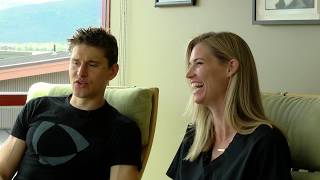
Ben Greenfield visits Doceri Clinics to talk with Dr. Harry Adelson and Dr. Amy Killen about regenerative therapies like PRP, stem cells, and exosomes. They discuss a "full body stem cell makeover" that combines joint, skin, hair, and sexual-optimization injections, plus how exosomes are sourced and what early results show.
Chapters
Welcome to a very special edition of the Ben Greenfield Fitness Show. I'm sitting in Park City, Utah right now at Docera. Do you pronounce it Doceri?
Docera Clinics.
Docera. I had the e at the end. I think it sounds more sophisticated.
Doceri Clinics.
Yeah. Doceri clinics with Dr. Harry Adelson and his partner Amy And Amy, what's your last name?
Killen.
Amy Killen. And the reason that I'm here is I am about to embark upon one of the most fringe and unique forays into self experimentation that I have ever done. This is one of the most cutting edge things that a human being can do to their body to enhance their health and their performance and their longevity. And there are very few people in the entire world on the face of the planet who have ever, ever done what you are about to hear about. And then in the follow up video what you are about to witness. This is what is called a full body stem cell makeover. And it really is pretty much the most cutting edge thing that you can do with stem cells, period. So I didn't just want to get the procedure, I wanted to make sure that you guys know exactly what, what is up. So that should you want to take a deep dive into this yourself, should you be an anti aging enthusiast, should you have a friend or a family member who you want to introduce to, some very, very interesting and compelling information on stem cells is going to be right up your alley. So Dr. Harry, Amy, welcome to the Ben Greenfield Fitness Show.
Thank you.
Yeah, so we were introduced, Harry, by a mutual friend. As a matter of fact, the guy was having dinner with just last night, Dr. Dan Pompa, a previous podcast guest and an expert in his own right on detoxification. And he knew I was into stem cells. He knew that I had already had stem cells stored via my fat, via my bone and done systemic stem cell injections and of course been the poster boy for the now world famous penis stem cell injection and, and all other mantle of stem cell craziness. And he said, you gotta meet this guy, Dr. Harry. He not only speaks your language but he's doing stuff you've never even heard of. So we had a phone conversation and you filled me in on some things about stem cells that I was unfamiliar with. And you particularly were talking about things like bone marrow aspirate and exosomes and a full body stem cell makeover. So tell me first of all before we delve into some of those fancy pants stem cell things that you're up to, what is Doceri clinic. What do you guys do?
So doceri clinics, we're here in Park City. We practice regenerative injection therapies. I started out doing prolotherapy, which is really the predecessor of stem cell therapy.
Prolotherapy, also known as prp.
Well, PRP was actually the next step. Prolotherapy was the predecessor even to prp. So prolotherapy is the injection of natural substances which are simult, simultaneously nutritive and at the same time, slightly irritating to trick the body into thinking that it's been re injured without actually causing any tissue damage to thereby launch the body's natural healing cascade. Started doing that in 2002. And in 2006, PRP came along. And that really is the same idea. You're taking peripheral blood, concentrating down the platelets, injecting the platelets. Platelets are what are responsible for clotting after injury, but they additionally launched the endogenous stem cells in any given area to heal after injury. And in 2010, when stem cells really, you know, when I first learned about doing stem cells for bone marrow, I immediately jumped on that. What I found is that instead of, you know, six or eight treatments, now I was doing like one or two treatments and getting phenomenal benefits.
You mean with stem cells compared to PRP and Prologue. Exactly.
Exactly. We have stem cells in every major tissue in our body, and their job is to maintain the health of their microenvironment. And as we go through life and we age and we, you know, the stem cell theory of aging states that really what biologic aging is, is we reduce the number of stem cells in any given microenvironment, thereby diminishing our ability to heal ourselves after injury. So what we're trying to do is we take stem cells from an area where you still have a very robust population, your bone marrow, we supplement them with exosomes, which we're going to talk about a little bit, and then we inject it into the damaged area. Now, the way the full body stem cell, the full body stem cell makeover came about was over the years, I've had a big part of my population. My patient population has been farmers, ranchers, oil fill workers, people who really depend.
Folks in Utah.
No, all over.
All over. No.
We get a lot of Canadians. We get a lot of people from the western United States.
Canadian farmers.
Yeah, we get a lot. And those guys.
Why do you say farmers? Is that just what you're known for?
Well, I'm a celebrity in Moose Jaw, Saskatchewan, Just sort of hit it big with those guys because those guys have really exceeded the terms of their warranties. I mean, these are guys who have worked extremely hard their entire life.
When I was a personal trainer, I had a lot of construction workers and it was kind of similar. I just started working with Juan and the word spread. Yeah, these guys, they were just constantly paying.
Yeah, they're beating themselves up. And that's a perfect example is these are people who. Because one of the things, the way stem cells work is stem cells have the unique ability to either turn into.
New versions of themselves, self replicate, or turn into target tissue cells. Well, when you continually injure yourself and don't give your body enough time to heal, then those stem cells constantly shunt in the direction of that differentiation and they're not able to regenerate themselves. So you get degeneration of joints. So stem cell theory of aging states that biologic age is actually determined by your stem cells ability to regenerate tissue. So the idea with stem cell, the full body stem cell makeover is that these are for people who we treat so many people just arthritis in their entire spine and their shoulders and their hips and their knees and their ankles. And because we do so many of our procedures under sedation, pretty much all of them at this point, we've just had more and more people who say, hey, I want to be injected in basically my entire body, in all the moving parts of my musculoskeletal.
Why not? I'm already sedated anyways. I'm already here.
I'm gonna go to sleep. So we may as well just do it all.
Everything. Hair, skin, face.
Yep, that's my part. That's me.
Dr. Cohen, fill me in on where you fit in here.
So I do the hair, the face and the P shot or the O shot with stem cells and exosomes. So the genital sexual optimization plus hair and skin, he does all the joints. And so we kind of combine together.
To do the whole body joints with stem cells. You're doing prp, prolotherapy and stem cells.
So I'm doing PRP with the stem cells and or exosomes for hair, face or skin and then the sexual optimization.
Okay, got it. Wow. So both of you are just tag teaming someone. As you guys are going to see. Those of you watching, you're going to get to witness this not only live, if you're here watching live, but you also get to witness the video that I'll release after the procedure as well. So you'll get to See what this actually looks like now, you dropped the term there. Exosomes. And I certainly want to get an explanation of what exosomes are. But before we close the book on the history of Dr. Harry and your clinic, I have also seen you, I believe, in a giant fish costume photographed at Burning Man. I admittedly was not at Burning man, but I saw photo evidence. So tell me about the giant fish costume.
Well, it's a fish car.
It's a fish car.
Yeah. A 40 foot long, 8,000 pound fish made of steel, which if you'd like, we can get you some photos of the pilot fish. Which is my other car. It's a. Yeah, it's the car that I bring to the burning manifest.
And how many years have you been doing that?
Well, its first year was 2013.
Wow.
Wow.
Crazy. Okay, so that has nothing to do with pain management. Stem cells, prolotherapy, PRP. It's a fun fact about Dr. Harry. It shows that he actually leads a rather interesting life. It turns out that we're speaking at a lot of events together in the anti aging and longevity sector this year and had no clue. But the stars align, I suppose, so. Exosomes. Back to exosomes. What exactly are those? Because that was a new term for me.
Sure. So exosomes are the currency of stem cells.
The two things that are really the superhuman powers of stem cells. One is the stem cells ability to differentiate. So they have the ability to turn into new versions of themselves and also turn into Twitter target tissue cells. But really what we found, where the true mechanism of action is with stem cell therapy, is its paracrine effect. The word paracrine means intercellular communication. So it's the stem cell's ability to recognize the state and the status and the health of the cells of the tissue cells around it and then respond. So they're able to communicate with damaged cells, to repair themselves and restore themselves. They do this through first recognizing that a cell is injured. Then they sprout these vesicles filled with growth factors that are called exosomes. So therapeutically, when we use exosomes, we use Chimera Labs out of New Jersey, this lab. What they do is they remain recruit these women who are scheduled to undergo cesarean sections. They screen them for every imaginable communicable disease and.
Genetic disorder. They then purchase the placenta, they take the stem cells from the placenta, they culture, expand them. So now you have hundreds of millions of stem cells. They put them in a stressful culture medium. So what that Means is they trick the stem cells into thinking, thinking that their host is undergoing duress. So they're preparing for lean times. They sprout these vesicles filled with growth factors, which is the exact. That is in fact the active ingredient of stem cells. That's the good stuff. They then destroy the stem cells, get rid of the nucleus. So you're getting rid of the other person's DNA and you're just harvesting the exosomes. What we do then is we suspend those in your own bone marrow. The bone marrow aspirate concentrate, which is very rich in your own stem cells. It's also rich in other factors as well. Think of raw bone broth from your own body. There's lots of collagen in bone broth.
But we believe that these exosomes can actually be taken up into your own stem cells. And this is really, I mean, again, when we talk about stem cells as you age, decreasing in their function, it's these communicating factors that are decreasing.
How new is this? I mean, because, you know, admittedly, I think, you know, from what I understand, I'm one of the few people who have, who have undergone this exosome therapy. Why doesn't anybody talk about that? I mean, is this just brand new stuff?
It's pretty new. It's just the last couple of years of people have been using them therapeutically. They're used for.
More advanced pharmacotherapy agents. So you can actually there's a lot of research being done where you're putting medication into exosomes and using the exosomes as carrier molecules, Carrier.
What would you call them, organelles. But to use them purely therapeutically like this has really just been couple of years.
Okay, now how is this any different, you know, in terms of the placental extraction that you just described in great detail from this Chimaera Labs. How would this be different than just going out and getting say umbilical or amniotic?
Well, what's nice about it is you're using, is that they actually destroy the stem cells and just use the exosomes so you're not taking in somebody else's DNA. That's the main thing.
They're also a lot smaller, so you can get them into places more easily.
What you're saying, if I understand correctly, is that if someone's going out to a clinic and getting an umbilical injection or an amniotic injection of stem cells, which a lot of people are doing.
It'S faster, it's less expensive, obviously than going, getting your own fat cells extracted or your own bone cells extracted, they're actually getting injected into their body. Someone else's DNA?
That's right.
Are there risks of doing that?
Well, we don't know exactly. I mean, what's interesting about using umbilical cord stem cells is from the data that exists, it seems that those cells do not replicate. There have been groups that have done studies where they take radioisotope marked umbilical cord stem cells and inject them. And these cells have a strong paracrine effect where they arrive to the area and they engage in an intercellular communication, but they do not replicate once they're in this new. They're in the new host. So you get the benefit of the paracrine effect without actually transplanting permanently the stem cells. Well, with the exosomes, because you're not transplanting cells, clearly you're not transplanting cells. So they're not going to integrate, but they're not going to anyway. But because they culture, expand these cells before they destroy them, you're getting in the hundreds of millions of. The equivalent of hundreds of millions of mesenchymal stem cells worth of exosomes.
Now, the exosomes that you have used so far, because from what I understand, you've been doing this for a few months.
Coming up on six months.
Okay. What have you seen so far in the people who you have injected?
Well, I've been using bone marrow stem cells for three, eight years now. Okay, that's right.
Yeah.
Just a little over eight years. And I've been very satisfied with the results. We get consistently good results with bone marrow. One of the things that I've noticed is that as people age, the consistency drops off a bit. When people hit about 70, 75 years old, you know, their, their stem cells are not as robust when we add the exosomes. And now I can't say this with complete certainty because I have a very formally investigated this, but just my own observation is people seem to have a stronger response. They seem to have reactions of younger stem cells.
Okay, so a part of this is involving actually being sedated. Now, why do I actually need to be sedated for this procedure? Can you go into this? Because I am about to chew my arm off because I'm going to eat anything, walk like seven miles this morning. We'll make you a bunch of phone calls. And I haven't been drinking water because I'm supposedly. I might have a. Is it like a, like a pneumonia type of issue that happens if you.
Well, when you're Being sedated? Yeah. You don't want to throw it up, right?
Okay. Yeah. That was my understanding from a little bit of research.
You need to have a completely empty stomach. The reason we sedate people, there's two reasons. One is it's extremely uncomfortable. So especially with the stem cell full body makeover, we're talking about doing literally hundreds of injections. I mean, your spine alone will get over 50 injections into your back. So what we do is we inject from the base of the skull down to the tailbone at every level, both sides, and there really is a cumulative effect. You know, if we're just injecting, like, your neck or something, it's not that bad. But by the time we get your entire spine and then flip you over and then do both shoulders, both elbows, both wrists and hand, both hips, both knees, both ankle, foot, then duck to my painful injection.
So you're saying I would benefit from being asleep during this?
It's a lot happier for you, and it's a lot happier for me.
I can't just box breathe through the whole thing.
It would be very difficult. We're talking about a lot of pokes. And what I found is that with sedating people, I think I get better outcomes. Because if people are awake through this many pokes, it's extremely uncomfortable. And people, they now associate the treatment with this, like, torturous experience. They have this, like, really bad association.
Yeah, I've had a lot of needles put into my body. You know, I did a protocol at Dr. Jason West's clinic over in Pocatello where he did a lot of These procaine and B12 injections up and down my spine and up and down my abs, and it was like a hundred little bee pinpricks. And I was just breathing my way through that. But I could see having, you know, that was about 10 minutes, several hours.
This is close to three hours.
Yeah. A little bit laborious. So in terms of the photographs that I've seen, I think one that you sent to me almost looked like slime covering a man's face. Was this similar to the procedure that.
Was the founders of Chimera Labs? One of the first treatments that they did, it was a. They were. They were. They were. Had a stem cell laboratory, and they had a friend who had a.
Grilling accident. His grill blew up in his face, and so he burned his face very badly. And one of the founders of Chimera Labs said, you know, I've got this culture medium which is loaded with exosomes Might be helpful to put those exosomes on his face. And he had this miraculous recovery. And that's really how Chimaera Labs started, by launching their exosome products.
Okay. Now, in addition to exosomes and bone marrow aspirate, two things that you've explained in good detail, another term that gets thrown around with stem cells is mscs. What are mscs and where do they play a role in this whole picture?
Do you want to answer that?
Yeah. Mste's is just mesenchymal stem cell. So it's the type of stem cell that we're actually trying to use from the bone marrow or from fat, if you had fat stem cells in the past. But it's basically the type of stem cell that we're actually harvesting.
Okay.
From the bone marrow.
Is there a difference between a mesenchymal stem cell, or what would be abbreviated an MSC versus just a normal stem cell?
Well, mesenchymal stem cells, they're the ones that we use because they're the ones that are responsible for regeneration of things like cartilage, skin, blood vessels. A lot of the different organs in your body are going to be able to be regenerated by that type of stem cell versus, like, a blood stem cell, for instance, is not what we're looking to do. We're not trying to get you to have more blood. There's all different types of stem cells. But the mesenchymal stem cells, the adult mesenchymal stem cells, are the ones that are going to really be the most effective regenerating the areas that we're trying to regenerate.
Okay.
Mesenchymal stem cells, on the one hand, they're able to differentiate directly into the musculoskeletal tissues, unlike hematopoietic stem cells, which become blood. But the other thing is they really have this strong paracrine effect, and they've been dubbed. MSC also stands for medicinal signaling cell, meaning that they have this very direct impact on damaged cells. What is a paracrine effect is intercellular communication.
So it's just signaling, essentially, like it's messaging your own stem cells, your own cells in your body to repair themselves. So stem cells work. And like he was saying, in a lot of ways, a lot of their action is actually the mismessaging action, telling your own body, hey, it's time to get those stem cells back into action. Kill your own body versus those cells necessarily getting, you know, brought into your body and replicating.
Now, from what I understand, a big part of this, you Know when you talk about a farmer with a construction worker would be for someone to do this or even to do a local version of this full body systemic kind of like, you know, Cadillac of stem cell procedures that we're doing is elimination of pain, restoration of movement and functionality, getting your life back from functioning standpoint. Now, I'm in pretty good shape. I have almost zero complaints, aside from the fact that, as you know, Harry, you and I were both a paleo effect because I got hit by a car at that event while riding my bike and had whiplash and a bunch of facial bleeding. And there's a few issues still going on with my neck, which I would hope might be affected by the fact that these stem cells can actually travel to that area and assist with healing. But aside from that, I feel pretty good. I feel good from a performance standpoint, from a sexual standpoint, from an overall health and immunity standpoint. So what can a guy like me expect by going through a protocol like this?
Well, there's a saying that if you don't have a headache, taking aspirin isn't going to do much for you. So I don't really expect a dramatic difference in the short term with you. I think the reason someone like you and why more and more people are electing to do the full body stem cell makeover is theoretically this could help in just your overall future health.
Overall future health meaning resistance to illness, joint stability, integrity, longevity, you know, telomere length.
I mean, we're talking about. No, I mean specifically stem cell population in musculoskeletal tissues.
Okay. More available for my body to be able to repair itself like wolverine. Right.
And again, I can't say this with certainty. I don't know that this is the case, but this is. You know, it makes sense that this could be helpful.
Right. How many other people have done this before?
Full body stem cell makeover?
Yes.
Well, I mean, the official. Where we call it that, you know, I've only been doing it a few months, so I mean, we've done maybe a dozen people, but we've done a lot of people over the years that have come close to it.
Right.
Where we've done their entire spine. We just finished the case we just finished before you. It was someone we had agreed months ago to do it was his entire spine and both knees, or we've had plenty of people redo their entire spine and both hips and both shoulders. And it's not so much the full body makeover. We didn't call it that, but we've done a of lot, lot over the years, and we're one of the few places that do these big treatments. And that's how. That's how full body stem cell makeover kind of evolved because we developed a reputation as a group that will do these big treatments. And especially since I started working with Dr. Killen and she does her part at the same time, we've done more and more of these large treatments.
Can you speak at all to the future of stem cell therapy in terms of. And I honestly, I can even edit this out if I need to. But, you know, as far as like, legality or issues that you face, anything in terms of where you see the future of stem cell therapy going, Because I've heard, you know, I've heard everything from it just getting outlawed, period. Because, you know, the government thinks it's dangerous to it being literally just like, you know, the future of anti aging medicine and pain management.
I think it's the future of anti aging medicine and pain management, absolutely. I think there's some hurdles that need to be jumped, and the biggest risk is how disruptive it is to the system.
How do you mean?
Well, this has the potential to dramatically lower the number of hip and knee replacements done in this country in a year, and that is in itself extremely disruptive to the entire system.
I used to work for a hip and knee surgical sales company. I've seen the price lays on those things.
Yeah. If you reduce the number of hip and knee surgeries, hip and knee replacements by 10%, it would be hugely disruptive to the entire industry.
Does it affect the pharmaceutical industry at all? Yeah, potentially, I imagine, like opioids and.
Things like that, you know, isolation, potentially. It has the potential to affect all sorts of things. So anytime there's something new in medicine, it's met with extreme resistance. I think just this simple type of thing that we do here, which is take your own stem cells, supplement with exosomes, inject into musculoskeletal structures, has the potential to change a great deal of the way business is conducted. But I think, of course, in the field of tissue engineering, I mean, that is, there's tremendous potential for like, growing organs in labs.
Okay, now, what folks are about to witness, if they are watching Facebook Live, is I'm going to be going into this actual procedure that we've just discussed. So if you're watching the Facebook Live live, you're going to get to see this literally within the next hour after we transition into the surgical suite to actually undergo the exact protocol that Amy and Harry have outlined. Now, in addition to that, if you're listening to this or viewing it afterwards, what I'm going to do is over@BenGreenfieldFitness.com stemcellmakeover that's BenGreenfulFitness.com stem cell makeover I'm going to put more information for you to take a deep dive into this as well as all the contact details for the Doceri Clinic in Salt Lake City, Utah. If you're actually interested in undergoing something like this yourself, if you're listening to the recording and you're not on live with us, what you're going to hear next and.
Be able to view a little bit of if you go to BenGreenfieldFitness.com STEMcellMakeover is my follow up interview with Harry in which we're going to talk about what happened, what ensued, how I feel a couple weeks out from the procedure because Harry and I are going to be discussing this again. We're both speaking in Sardinia, Italy. So there'll be a follow up. Amy also will be in Sardinia.
I will be.
I always have difficulty. By the way, it's awkward interviewing two people.
I know it's hard, right?
Like I'm giving one person more.
That's all right.
But I guess, I guess Amy's gonna be far more well rested for the surgery since you had to talk less so because from what I understand, you'll be the person injecting my penis, which is, that's true, important part of my body.
But anyways, if you have questions, if you have comments on the Facebook live, you can leave them. And again, you can leave them during the actual surgery as well because my wife will be holding the phone and doing a Facebook live during the surgery. If you have other questions or comments as part of this, for the actual post surgery interview that you're listening into on my podcast feed, just go to BenGreenfieldFitness.com STEMcellMakeover Leave your questions, leave your comments and and either Dr. Harry or Amy or myself will jump in and reply. So thanks for tuning in. This is literally, folks, the future of medicine is the Cadillac of stem cell procedures. It's called a full body stem cell makeover. And this truly is one of the more fringe things I've ever done to my body. So it should be quite interesting to see and hear what ensues next.
More from Ben




The Solution to Aging Might Be Closer Than Anyone Realizes - With Ben Goertzel



