Ben Greenfield | Peptides, Biohacking & Health Optimization #74
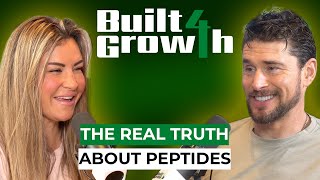
Biohacker Ben Greenfield breaks down peptides for performance and longevity, covering eight major categories from exercise mimetics like MOTS-C to growth hormone secretagogues like CJC-ipamorelin. He explains delivery methods, dosing, and how to source quality peptides with verified certificates of analysis. The conversation also touches nutrition, training, and why placebo effects matter more than most people think.
Chapters
Welcome to the Built for Growth podcast. Today was a fantastic episode, and I'm not just saying that. I feel like I kind of say that every episode, but I, I really love having Ben Greenfield on the podcast. He's actually one of the only repeat guests I've had at this point, so I think one of two. Um, he's just an amazing guy. He's so fun to talk to. He's got a great sense of humor. Um, and let me read you a little bit about him. He's a biohacker, obviously, um, and he focuses in human performance. He's a coach, um, and he's made a career out of questioning mainstream health advice, known for extreme self-experimentation. You'll hear about that in the podcast a little bit. You know, he's just always kind of, um, he uses himself a little bit as the guinea pig. But I mean, I think because he understands the way that things work, he can kind of do that in a way that benefits the rest of us because, uh, we get to see how things work out for him. I think he has an unapologetic take on fitness, longevity, and modern medicine, and he really challenges people to rethink what it really means to live and perform at their peak. He's got a degree in sports science and philosophy— a full lot— physiology, excuse me, not philosophy. Philosophy is a fun one. Um, and, uh, today in the podcast we really dove into peptides. That's where we started. Um, then we kind of moved into some foods and supplements that, like, which, you know, are bang for buck better for you. Um, we had a little, uh, bit about salmon and, and beef, like which one was better. That's been something I've been wanting to know, and now I know. And, uh, we also moved into, you know, female and male training, maybe a little bit of nuances, a little bit of differences, and I think one of my favorite parts was talking about the self-accountability and, you know, feedback from yourself and placebo effect and how that feedback that you have, um, can affect you in one way or the other. So how do we listen to ourselves? Um, and I'm a big proponent of that. You know, science is great, it supports everything, but it's slow and, and sometimes it's not clear and sometimes it's hard to access. So Point in case is, you know, I think we need to combine both. Listen to yourself and also understand the science. And that's what we did here today. So as always, thanks for listening. Well, Ben, how are you feeling after a 3-day long, 4-day long weekend? How long have you been in Vegas?
I don't know, too long.
This is like—
you're in— sorry to offend your wonderful city, but it's a little toxic.
No, it's okay. I'm, uh, I'm actually prepared to move out here myself. I was just mentioning that we bought 3 acres up in Boise. Yeah. Boise area. So yeah, little homestead, some fruit trees, some grapes, a little barn.
Don't talk too much about how good Idaho is.
Yeah. It's a, it's a, it's a, it's not very well kept secret anymore, but I feel like, yeah, 'cause a lot of people are going there, but it's so great.
If you're listening, don't move there.
Yeah. Don't move. It's horrible. It sucks.
Of course, big ass streets.
Yeah. Love West. It smells cow poop everywhere. It's just terrible. Just don't, don't even, yeah. Don't even visit.
You don't. Well, I did have, I do have an air filter. Have you interviewed the guy from Jasper? No. They have really cool air filters. And when I travel to a city that's decently sized, I text them and just see if they've got a dealer in the area or whatever. So, I have an air filter in my hotel room and I have the glutathione nasal spray and hydrating like a freaking animal and taking tons and tons of melatonin at night because of all the light.
So because of all the, oh, all the light.
Yeah. Because anywhere you walk, you're just, I mean, yeah.
Yeah. Like overstimulation central.
Yeah.
Yeah.
Like LED and flicker. And so it's, it's hard to, I don't know how people are healthy in Vegas. I guess they aren't.
Yeah. I mean, not like, not if you, yeah. If you, yeah. If you spend a lot of time on the strip, it's just not healthy. I think it takes a little time off.
Well, we're at a health event and I kept running into people who have headaches. Like I have a headache. I have a headache. And I think it's because all the vasoconstriction from your your blood vessels just tightening up from the air and the dryness.
And yeah, maybe the toxins too. I'd be like, a lot of hotels and stuff.
Yeah, yeah, yeah. You're never gonna get a casino to sponsor your podcast now.
No, I don't think I am. Good thing I haven't looked in that direction yet. But yeah, I think that's, uh, case closed. Yeah. Um, yeah, so we're here for A4M, and you, you did two talks on—
three, like a panel on regenerative medicine.
Okay, nice. And we're talking about peptides, which is great. I'm like, this is perfect. It's fresh in your brain. It's a super sexy topic. So, so let's dive into a little bit. Where are we at with peptides? Like, what's going on and how's the safety on it?
What do you feel like the research and the regulatory landscape is always in fluctuation. So pretty much whatever I say, like, it's probably going to be irrelevant by the time this comes out in 1 day or 3 days or whatever. But right now, a lot of the peptides that like a doctor would normally have gone to a compounding pharmacist to make in what I would say clean and healthy way, those are kind of getting cracked down on and regulated pretty heavily by the FDA. So, for example, CJC with ipamorelin, which is a really great one for growth hormone and sleep, you just can't get it. Or, retatrutide, which is a GLP agonist but acts on 3 different mechanisms of appetite instead of one, more powerful, but you just can't get it. And when I see you can't get it, I mean, you can't get a lot of these from your doctor writing a prescription for them and then getting them made by a compounding pharmacist and sent to your house or having you pick them up from the office. Instead, you can get them but from sold-for-human-research-only companies. And that's a problem, A, because quality varies widely amongst the fly-by-night. And, some of them are good. Some of the sold-for-human-research companies are good. I'll talk about that in a second. And then, actually, I'll cut straight to that. So, when they're sold for human research, you can look for a certificate of analysis like a COA. You can look for whether or not it's produced in a CGMP, a Certified Good Manufacturing practices facility following general FDA guidelines. You can look at where it's sourced from. And typically, the stuff that's coming from China is a little bit more suspect. You can get peptides that are made in USA or Germany, but they're still sold for human research. And one of the other problems is a lot of these companies kind of like CBD used to be like this because I used to have a CBD company and you'd have to change your payment processors and your URLs. You know, it'd just be running from regulatory agencies. The peptides are very similar. You might find a favorite peptide brand, then just not be able to order the peptides you liked or not be able to order peptides at all from that website or from that company because they got shut down and then you just move on to somebody else and you got to start quality control over again. So, as you can imagine, it's the wild, wild west.
Is that because there's not enough research on them yet? Like, why are they not—
Well, there actually isn't. I mean, to be fair, there isn't a ton of long-term human clinical studies on a lot of the peptides that are popular. There are some like the GLPs that have pretty good research on them for managing diabetes. Question is, what happens when those get unleashed on the general population for something like hunger management or appetite management or weight loss? And, you know, some big new report came out last week about suicidal ideation and, you know, people having mental issues and I don't necessarily know how much of that is the effects on cognitive capacity versus just sucking out one enjoying part of life, just food enjoyment. I suspect it's a little bit of both and it probably affects dopaminergic pathways in general also. But, back to the root of your question, yeah, I mean, as is the case with a lot of biohacks, whatever, like plasma replacement or blood filtration or gene therapies or stem cells, there's not like iron clad research on a lot of this. And so, some of the regulation I think does make sense, but I don't want to be like the tinfoil hat-wearing conspiracy theorist guy. I think maybe there's some pharmaceutical lobbying at play also because a lot of peptides are, in my opinion, pretty safe, pretty effective, pretty affordable. And I think that maybe pharmaceutical companies don't like that as much also.
Yeah, maybe, maybe, might be safe to assume. It's just an assumption.
Yeah.
Yeah. So, what peptides are you a fan of? What do you see going right in the peptide world? Oh, here you— and are you taking any? What do you like?
Yeah, I take some. Let's think, what are some cool categories for peptides? Exercise mimetics are kind of cool, which sounds like a reason not to exercise because as the name implies, like they're supposed to mimic the effects of exercise, but I would consider them to be something thing that accelerates the effects that you would get from exercise. And also, if you're just super busy on the go, you're kind of doing the minimalist training thing, then you can make a case that exercise mimetics would be somewhat helpful. So, an example of that would be when you work out, your body burns ATP. And so, as you run out of ATP, that ATP because you got to cleave a phosphate, so it's adenosine triphosphate. So, there's 3 phosphates on ATP. When you cleave that to make energy, one of the leftover products besides the phosphates and the electrons that you produce is AMP, adenosine monophosphate. So, you've just got one phosphate. And that's like a signal to your body that you've been exercising that it should do things like churn up the production of mitochondria or increase the production of signaling reactive oxygen species or shift your body into basically a state that would be the same state that you get into after you've exercised. So, there are things that are like AMPK-like agents that do the same thing but without you exercising. So, an example of that would be MOTS-C, M-O-T-S-C. All the peptides have funny names. Most people know that by now. But, MOTS-C is something that increases AMPK very similar to if you were exercising or fasting would be another thing. So, it's like a fasting mimetic or an exercise mimetic. So, that's one. Another one that's kind of in that category of exercise mimetism, which may or may not be a word, so make— look that up. I'm going to roll with it, is SLU-PP32, like SLU-PP-32, and it acts on a couple of estrogen receptors in the body and mimics the effects of endurance exercise. So, it's probably one of the more powerful mimetics out there for doing something like increasing VO2 max, for example, without actually exercising as much as you'd normally need to exercise to increase VO2 max. So again, like, I do not want to give the couch potatoes an excuse not to get out and move, but it is cool that you can simulate some of the effects. So yeah, SLOO and MOTC are a couple. A lot of peptides are kind of like in the whole longevity realm mostly because they either increase mitochondrial health or they increase telomerase activity, which would decrease the rate at which your telomeres shorten. And, a couple that do a really good job of that, one's called Epithelon and one is called Humanin, like H-U-M-A-N-I-N. Epithelon, Humanin, and even the MOTC that I was talking about, those are not something that you take all year long. You would do just a 10, 20-day cycle 1 or 2 times a year. So, you're just kind of doing a brief foray and it's not a daily thing. A lot of peptides are not daily. Because you can get what's called a taphophylactic response, meaning your body can just get used to the peptides. And then, some of them is just like, well, why take more of the peptide if research shows that all you need is a 10 to 20-day cycle a couple of times a year?
This is where it could get dangerous though, right? Because people tend to think more is better, right?
Yeah. Or, I have this refrigerator full of peptides. It's like if you had a refrigerator full of food do like open the refrigerator or just like eat all the food in your fridge. No, it's like use this to make a meal and use this post-workout and this pre-workout and this if you're having a dinner party and whatever. So, similar to peptides, like if you have a bunch in your fridge or you have peptides or access to them, it doesn't mean you take them all nor do you take any of them every day. And so, a few other cool ones I mentioned like that there's a growth hormone precursor that you can't get right now called CJC with ipamorelin. It's basically is almost like a way to increase the pulses of growth hormone that occur, in this case, during the night because usually we take this one before bed. So, it helps with anabolism while you sleep, repair and recovery while you sleep. And then, there's another growth hormone, it's like a secretagogue. It increases your growth hormone receptor sensitivity to growth hormone and also helps you naturally make more. Via acting on the pituitary gland. And, that one's called tesamorelin. And, that also really significantly decreases your visceral adipose tissue, which is kind of like the nasty kind of fat tissue that you don't want as much of. So, that would be a stack. And, I know I'm throwing a lot at you, so interrupt me anytime.
No, it's okay. I mean, I'm glad this is recorded. I'm definitely going to listen back.
So, you would do 12 weeks a couple of times a year or 5 days on, 2 days off of these growth hormone precursors, a little bit in the morning, a little bit in the evening. And essentially, what you're doing is really accelerating muscle repair and recovery, getting better sleep quality because you're producing growth hormone during sleep, helps with deep sleep cycles, and then muscle gain and visceral adipose tissue loss. So, that's kind of a cool combination and a pretty powerful one. And, by the way, there's like, you know, 80+ different peptides, but I'm specifically naming a few stacks that are like pretty good, like that move the dial. Two that people probably know about, they're usually called like the Wolverine stack. TB500 and BPC-157. Those work really well if you have an injury. Those again would not be a daily thing. So, TB500—
Is BPC-157 good for your gut too?
It can be.
Yeah.
Yeah, okay. Yeah, it can be if you take it orally. So, it stands for body protection compound 157. You naturally find it in gastric mucosa, so you make it yourself. But then, if you take it orally, that and another oral peptide called KPV are really good for inflammation, for leaky gut. I use it when I travel, just because I'm eating stranger foods and I got a little bit of the gut stress going on. So, KPV.
By the way, dinner at Tao was phenomenal. Yeah. That was really good. Thank you for inviting me.
Yeah. You're welcome. Shout out to our friend Jason. Yep. Tao Nightclub. It's really good, really good food. And they even cooked it in butter, not seed oils.
Did they? Yeah.
That's amazing. And I'm not full on, maybe we can talk about that later. I'm not full on against seed oils. I'm not one of those guys, but that could just because there's nuances. But maybe we can get to that. So, KPV and BPC-157 are good for the gut, but then for injuries, if you inject BPC, especially close to the site of damage, it's good for inflammation, it's good for angiogenesis, building new blood vessels, new capillaries. More and more doctors and practitioners are leaning towards injecting it closer to the site of injury than what people used to recommend, which is just You grab some fat around the belly button and just inject it and it goes systemically wherever it's needed. That's not as much the case with BPC-157, but with the other one, TB-500, that's just more like systemic repair and recovery for muscle tissue. That one, you, if you were injured, you could just like inject it and, and do it systemically around the belly button and still get pretty good effects. And then I guess like one other category that's kind of interesting even though we could just go for hours on peptides, is for the brain because there's so many cool peptides that help out with things like neural inflammation or the production of brain-derived neurotrophic factor, BDNF.
Do you think a lot of people are suffering from neuroinflammation or is that like—
Yeah. Air quality is a big one, like back to Vegas. And, any history of TBI and concussion, which I know in the world you lived in for a long time, there's a ton of going around. And lack of sleep, stress, sympathetic overdrive, even that stuff can cause mild neural inflammation. So, you've got that, the ability to increase BDNF, the ability to increase blood flow to the brain. And then, there is a lining of the mitochondria called cardiolipin. And there are certain peptides that can actually protect that from damage by reactive oxygen species. So, you got just a healthier mitochondrial membrane. So, a few in in that category, and these are pretty good, is intranasal peptides because a lot of people think peptides and they think the insulin syringe. But, you could do some intranasally, you can do some through patches now, which is kind of cool, just transdermal delivery through patches. You can do the injectables and then nasal sprays. And, those are the main delivery mechanisms. I feel like I'm blanking on one, probably suppository or something like that. But, the intranasal ones, and I have these, they're my backpack's out in the other room and these are in the little cooler in my backpack because I travel with them because they're just great for cognitive support when you travel. One's called SS31, and that one helps out with that mitochondrial membrane piece that I was talking about. Helps to protect you from neural inflammation, from excess reactive oxygen species. And, you would just do 2 to 4 sprays. And, it's not like it's a cup of coffee central nervous system stimulant, don't do this right before bed. It's just good for the brain in general, but it's not like you feel the limitless drug or anything like that. It's more like battling inflammation. So, it's like a brain longevity agent. And then, there's another one called Semax, like S-E-M-A-X. And, that one helps you to produce more BDNF, more of the stuff that's like miracle growth for the brain. And then, the last one called Selank, it's what you call a GABAergic. Even a glass of wine is GABAergic. So, GABA is gamma-aminobutyric acid. It's an inhibitor inhibitory neurotransmitter. And when you hear inhibitory, that doesn't mean that you're going to fall asleep or quit caring about life or just completely check out. It's more like it just kind of calms you down. But in the case of C-Lanc, it's more like calm focus. So, it would be maybe a little bit more like what you'd feel from kava. But unlike kava or a glass of wine, there's not really much tiredness. It's more just calm. I guess probably the closest it would be would be L-theanine. Here's L-theanine.
Okay.
Yeah, L-theanine is like, it's not a peptide, it's a supplement that you take with a cup of coffee to take some of the edge off of a cup of coffee or you do find it in some sleep supplements, you find it in some nootropics or energy drinks, but it's kind of like a calm focus type of ingredient. And, C-Lanc is like that. So, those 3, SS31, C-Max, and C-Lanc are kind of the holy trilogy of intranasal peptides you can just have up your nose, feel really good, give your brain a little bit of longevity. And so, that's just scratching the surface of some of the ones that are out there. But, the ones I just talked about would be a few that I've definitely used and found efficacy with. But again, like I mentioned as we were just starting to talk about this, good luck, whatever. A week from now, if some of those are available, some of them aren't available, So, yeah.
Well, you talked about the labels to look for. I think that's important. Yeah. I mean, so you can at least try to test the or, you know, find the efficacy.
Yeah.
Yeah.
There are some that you can still get compounded, which is great. So, you just talk to your doctor. And if you work with a doctor who knows peptides, they can do it. Then, there's some like nationwide clinics. Like, one I've worked with in the past was Game Day. Like, that's an example of like one of those clinics, like a hormone optimization clinic. And all those type of places, they have access. And then, for the sold for human research only ones, the company I'm getting buying from right now is called Peptual, like P-E-P-T-U-A-L. You have to do a telemedicine consult with a doctor to get them. So, they kind of like gate it to make it safe and make sure that people know what they're doing. And then, the peptides are not made in China. They have a certificate of analysis. They're made in a pretty good facility. And you can get like patches, nasal sprays, injectables. So, that's one company. That's pretty good.
Sweet. Um, I love that you've gotten so comfortable, but will you turn your mic towards yourself? I just want to make sure we're getting the good audio. No, you just—
you've relaxed. Podcast before, just— yeah.
Um, is there anything else that we should know about peptides in general? And you just did a bunch of talks on it, so what else is there to know or to take into consideration that might be helpful for listeners?
So, they are really precise in terms of being able to act on specific organs or organ pathways. And let me think of a good corollary. Okay. So, for anybody who's dropped acid, you know that—
I've done that so for 3 weeks. Okay.
Let's just say you had that, it seems like there shouldn't be any difference between like a teeny, teeny, tiny little square and doing half of it versus a quarter of it. But because we're working with micrograms, if you take 10 micrograms of LSD, you might feel like you've had a couple cups of coffee. And if you do 100, everything's fractal and you have a very interesting day. And so, with peptides, the one thing I would caution people is, and this sounds obvious but I have to say it anyways, if you get a peptide, and you're using an online peptide calculator or whatever. And so, for people who haven't used them before, they come in a vial. A lot of them that are injectable come in a vial, and it's a powder, and you have to put a reconstitution solution in there, typically what's called bacteriostatic water or sterile water into the powder, and then that reconstitutes it. It makes it able to be drawn up into an insulin syringe and injected. And so, just super easy math, let's say you you had a 3-milligram bottle of, um, I don't know, like a GLP, like tirzepatide, and you put 3 mL of water into there, then you know if you were to pull that back to 1 mL on an insulin syringe, you would get 1 mg. And if you were to pull back to like half an mL, you would get, um, you get half a, a mg of tirzepatide. But when you're dealing with small doses, especially when you get down into micrograms, um, typically your calculator will say, well, pull back to the 12-tick or pull back to the 15-tick mark. Going an extra, let's say, 5-tick marks on something like a growth hormone precursor is the difference between sleeping well and getting good recovery and being in hot flashes all night with your heart racing and sweat just pouring out your eyeballs. So, dosing is important. Understand that you can't just go willy-nilly. And, it's not like creatine where if you take an extra scoop, the world's not going to end. Just be careful with injecting because these really small doses, or these really small dose equivalents mean that if you don't make sure you're, you're taking the amount that you're supposed to take, you can kind of mess yourself up.
So, okay. Yeah. That's really good to know. You mentioned oral peptides and that was something that I was curious about, because I just heard about taking the oral peptides. Before that I had only really heard of injections. Yeah. I think, I know BP-157 is like not allowed, like I'm not allowed to take it as an athlete as long as I'm under the UFC contract. Banner. But so, but oral, do you think that there's a— like, what's the, what's the scoop on that?
Like, does it actually— regulatory piece between injectable versus oral, I think if you're not supposed to take it, you're just probably not gonna get delivery mechanism, doesn't matter. But, um, not that it's even detectable, so it's just basically just like a scout's honor. Um, but the, um, the The difference when you're looking at oral versus injectable is that the oral typically is something that is going to act in the gastrointestinal mucosa or somewhere in the stomach. And so, there's not a lot that are that bioavailable orally. Well, I take that back. There's not a lot that have superior bioavailability compared to the injectables. But the ones that you're taking for your gut specifically, those are actually a pretty good idea to take orally. And probably the top 3 in that category would be BPC-157, KPV, another one called PEA, which stands for something like palmitoyl ethyl amide. And that's a pretty good anti-inflammatory injectable. It's pretty good at killing pain. But those 3 are good if you've just got gut inflammation, leaky gut issues, anything like that. And if you take them orally, arguably even better for you. The only one that I would say is I don't think bioavailable orally because of the way this is broken down, but does have good effects if you inject it as an antiviral and basically something you would use if you had food poisoning or some kind of bacterial contamination. It's not like an antibiotic per se, but it helps out quite a bit with that. It's called LL-37, and that's an injectable.. And we just have a bottle at home in case anybody gets sick. It's pretty good for that. And that actually reminds me, I forgot to say one other that people should know about, one of the peptides people should know about that's really good. It's called thymosin alpha-1 and it acts on your immune system. It acts on the ratio of something called CD4 to CD8 in your immune system and also your NK cell production, your natural killer cell production.
So, for cancer?
That's something. I mean, well, people do hefty doses of NK cell infusions for cancer, just because you're not making them and you need a lot more of them. But for this, this would be like if I'm going to— I injected some like right before I came to Vegas or right before I know I'm going to be going through a period of sleep deprivation or there's been a bunch of kids with the sniffles around the house. That one's super potent. It's called thymosin alpha-1, TA-1. So, that's another one to know about and have in the peptide medicine cabinet if you can get access to it.
So, I recently learned that GLP-1s are peptides. Um, I just didn't know that before. You hear everyone talking about GLP-1s, but I never heard anybody categorizing them as a peptide. And then I, um, started to understand that, um, that there's more research on it. I've been very concerned about GLP-1s because of what you're kind of talking about. Like, you know, it is a shortcut, or it can be a shortcut, and I'm not sure that just handing someone who doesn't want to change their life, you know, don't wanna change their life and exercise and eat better and they just wanna take GLP-1s. I, I get worried about that and about the potential downside of that. But I did find some comfort in knowing that GLP-1s had been studied longer. I mean, we've only been hearing about this, what, the past year or so? I feel like it's burst onto the market in the last year. Yeah.
It was like, I don't know if it was maybe a little, little more than a year. It was kind of like, yeah, somehow 2 years, 1 year. I don't know who was patient zero, patient zero fat person in Hollywood, but somehow it kind of like started to saturate like the Hollywood community and people began to lose a lot of weight and you could see it on camera and just word spread that people were using off-label diabetic medications that shut down appetite considerably, which is what GLPs do. And, they are a peptide because the P, glucagon-like peptide, actually stands for peptide. And, when you see numbers after them, there's a GLP-1 that acts on one appetite-regulating mechanism. And then, there's others that act on dual pathways like on ghrelin and GLP, and others that act on triple pathways like ghrelin, GLP, I forget the name of the last G, that's something like retatrutide works on. But, the long story short is that they do a really good job suppressing appetite, which is great if you have some type of appetite dysregulation. Like I am one of those like blood, sweat, and tears, get your ass in the gym, don't shove cupcakes in your face, just like shut up the inner bitch and stop eating kind of guys. But, I also understand some people hormonally have issues with leptin regulation. They have often some deep-rooted psychological self-comforting issues with food, things that I know are hard to deal with and hard to shut off. And, I think peptides can be used as almost like training wheels to learn what it feels like to actually quiet food noise and to not be hungry and to know that your body can actually do that. I don't like the idea, kind of like you alluded to, of them being a crutch for life, especially if they're replacing eating healthy and exercising. So my take on it is if someone is morbidly obese and has severe issues with appetite regulation, a standard dose of a GLP can be a good idea, but because of the host of side effects like impaired gastric motility, so you get constipation and you get some gastric inflammation and there can be effects on the pancreas. And then that whole like depression suicidal thought type of thing would dictate that you don't want to be on it for life. And you can lose muscle because you are not eating enough protein and you're not eating that many calories in general. So when you do try to go to the gym like you're supposed to, to put on the muscle, You just feel like crap and you're super flat. Anybody who's gone to the gym fasted, it's just harder to get a good workout in. So, there's so many variables that dictate that if they're going to be used for weight management, I think the long-term vision should be to use them temporarily until that person is ready to kind of take the training wheels off. And then, for people who just want these things for general health, you could make a pretty good case for using 1/10 of a standard dosage. So, let's say terzepatide, you'd normally— standard dosage, that would be 2.5 milligrams. But then you could also take less like 0.25 milligrams, get a little bit of a quieting of food noise, less impairment of gastric motility. So, there's a little bit fewer gastric side effects. And then, you still get some of what would be called the pleiotropic effects of something like that. That's basically a fancy word for the system-wide effects because there seems to be a pretty good impact on some other things that go beyond just like, you know, not eating too many pieces of cheesecake, like, uh, shutting down neural inflammation, um, really good blood sugar management, um, which is not surprising because it was used in diabetes or is used in diabetes, um, and a loss of adipose tissue. And so, and, and again, with a microdose, there's less of you feeling so nauseous that you can't eat much at all unless you can't maintain muscle and you can't hit the gym. With a microdose, you can usually still eat, but you're not overeating, and you can still eat enough to go to exercise. You're not as constipated with something like that. And so, the only thing that I would again question is, like you said, Misha, are you using it as a Band-Aid? But if you're not and you have a good plan for when you're going to get off it or how small of a dose you're going to take compared to a standard dose, I think you can make a case for them being pretty decent ideas. I used Redotrutide for 8 weeks just to see what a microdose 3 times a week felt and it does like quiet food noise. And then, I decided about 6 weeks ago that I wanted to just put on more muscle and not have any quieting of food noise at all and just eat everything on the table. So, I'm not taking it right now.
So, tell me about your experience then. What is that like? What is a quieting of food noise?
It means that you eat because you know that you should or because you're obligated to socially. And when I say know that you should, know that you're going to be working out or you need proteins for repair there, but you don't eat because you have to.
It's not like calling to you. You don't feel like you need to eat.
Yeah. For example, and this is not just me, this is proven in nutrition science literature. If you eat at specific times during the day, you kind of train your body to be hungry at those times. And so, people may have experienced this Thanksgiving meal, maybe like whatever, 1:00 PM and you eat a massive amount of food, like enough calories for 3 days, and then at 7:00 PM you're kind of hungry and it's like, "Oh, well, I'm hungry because it's dinner time." Your body's been trained.
Your body's ready to receive food at that time.
Yeah. And so, with the quieting of food noise, an example of that would be I've trained my body that lunch is usually around 2:00 PM. That's usually when I have lunch. And when I was on Road to True I didn't really have any desire at all to just leave the office and go eat lunch. But normally, if I was off it and I've just been working all morning and thinking and getting things done and straining myself, lunch is something that really calls me at 2:00 PM. I'm thinking about it starting from noon on like, "Oh, what am I going to eat for lunch?" And you just don't think about that. It's not like you're not interested in food at all and it doesn't taste good, it's just far less interesting.
Interesting. And what about while you're eating the food? So, you're eating the food, do you kind of get disinterested in it sooner than you—
Depending on how much you do, if you're taking a standard dose, you are full-on nauseous. You sit down to your favorite ribeye or smoothie or whatever and you just don't want to eat and it makes you feel like you're going to throw up. But, on a microdose, it's more like, yeah, you almost have to force yourself to finish the whole plate of food or finish the whole smoothie. Not because you're nauseous, but mostly 'cause you just feel a little bit full. You're not that interested in it. And again, for me, it was just like I just put on my science hat and I'm like, well, I need to finish this smoothie because otherwise, I won't meet my calorie allotment for the day and I'm going to feel like crap tomorrow or lose muscle or whatever. But, it's pretty impressive how good a job they do quieting the food noise.
Does it do anything as far as differentiating your preferences of food? I think you're a pretty diligent person, but let's, um, you could use your personal testament or anybody that you know, but like, let's say somebody is, um, used to eating more processed foods, right? And then they get on this microdose. It's like, will that make the processed foods less interesting? Like, or equally to the state? You're saying like, like, does it affect the, the choices, or is it just minimizing your craving for whatever?
Like, more effective on hedonistic foods versus like shredded wheat cardboard? Um, I don't know. I don't know. I mean, I didn't notice much of that. For me it was just like, yeah, pretty much. I can't think of a single meal where quieted the food's noise more than another meal. So yeah, I don't know.
Or preference of food. Yeah. I wonder if it would be, you know, make, you know, like let's say somebody's like really drawn to carbs, like they just love the carbs in the meal. And so now do the carbs kind of drop, you know, to maybe equally like the steak and the carbs are equally as appealing or something. Yeah.
I wonder. I kind, I kind of, So, I'm going to think out loud here. And this is the way I think about a lot of things is if you look at it mechanistically, right? So, it's affecting pathways related to feelings of satiety, the feeling of fullness that you get when eating, which is different than the dopaminergic response to Cheetos or ultra-processed foods or something like that. And so, because it's not acting on dopamine pathways as much, I doubt it would have as much of an effect on hedonistic foods, but yeah, I'm not sure.
So I'm one of those people, I think because of cutting weight and like having extreme food deprivations, I definitely have some like emotional, like a little bit of trauma, a little bit of like a bond with food. Like it's been diabolical at times. It's been really hard for me to manage at times. And I've really had to work through that. Like, I know it's like my mind and it's a scarcity, you know, this, my body feeling like, Oh man, I better eat more of this now because there's gonna come a time when I basically can't have it.
Knows when I'm gonna need to cut.
Yeah, who knows what I'm gonna need to cut. And so I understand the other side of it where, um, and even just being a female, understanding like my hormones and how that changes throughout the month, it's very difficult for a female to be very consistent on a diet because there are points when your body's just craving something different than they are. So it's like, no matter what, it's a little bit more of a roller coaster, I think, for women. And then I believe when we deprived specifically in the latter part of our cycle, in that luteal phase, when our body is trying to prepare whether we like it or not, whether we are on a mission to be pregnant or not. Body's still saying, hey, this is our biological duty. Yeah, we have to prepare in case you're pregnant, right? So we're burning—
it makes you human beings, so we need—
right, we're gonna burn an extra 100 to 300 calories in that second. And then if we're trying to adhere to a strict caloric deficit in a time when our body is actually burning more and a degree warmer in temperature and doing all of that, then we're actually going in a bigger deficit than we even realize. And that even there can cause, I think, yeah, you know, these psychological warfare. And you just think like, you just— well, I'm just not— I think a lot of women blame themselves, like, I'm just not diligent enough, I just don't know. But I also think that there's, um, argument that that plan sometimes can work well for men, sometimes not. I don't think everybody can just say like, well, I'm going to adhere to this amount of calories. Yeah. Then take nothing else into consideration. But for women, it's a little more tricky.
Yeah, yeah. I think that the idea of microdosing, even though it's not totally without risk and even though like we talked about earlier, there's still, I think, lack of really good long-term clinical research on just the general population using this, it does address a lot of those issues that you just described because it becomes less psychological craving-based, emotional-based, hormone-based, and more just Hey, I'm going to eat what I know I should eat and stop when I know I'm supposed to stop because this peptide that I'm on allows me to do that, which sounds like a shortcut and it sounds like a hack and it sounds like cheating, but that's just the facts. It actually does do that.
Well, I mean, think about this. There's already some warfare going on with our food. Our food is weaponized in large part. And then, if you're not already eating a very healthy whole food diet, which let's be honest, most Americans are not. And, I think most people when they go into the grocery store—
I'm glad you're clarifying because there's some people who heard weaponized and they think there's fire ants and lasers. Razors in their foods. So you're talking about the hyperpalatable.
There might be bugs in our food, but yeah, they're— anyways, so, you know, when we go in and we do our hunting on the grocery shelves, I think most people assume that everything there is safe.
Yeah. A lot of people are just under the assumption that somebody put it in a box, they put a label on it.
Yeah. And it's, you know, it's got all these vitamins on it. Look at this, you know, these Cheerios are good for you. And it's just not fair how it's designed to be hyperpalatable. It goes down in 7 chews or less, a lot of these things, you know, so we're not getting the satiation feeling from even chewing our food enough, you know. So, um, so in that sense, this could be a good argument to just help people with what they're already dealing with and start making change. Because if everything becomes a little bit less, like, interesting, maybe they could focus easier, right? It's like one less battle to have to fight when you're already on the uphill climb of things. If you're not, you know.
Yeah. And it's, it's tough, like, the whole, like, weaponization of food and all this hyperpalatable food that we are greeted with when we walk into a grocery store because we could say, well, let's get rid of all that and let's make it so people can't put whatever Cheerios into a box and—
Well, at least they're taking it off food stamps, some of it, right? Like soda, stuff like that. We shouldn't be subsidizing that food.
You're less able to get a lot of that. And I don't want to pay for other people to be able to afford food that's going to make them sick and burden the healthcare system even more.
I completely share the sentiment.
Neither do I want to live in a country where the government can tell businesses what they can and cannot produce to a certain extent. I am a little bit of a libertarian capitalist. Yeah. And because of that—
That's a good way to think.
I think that a lot of the onus lies upon parents, it lies upon educators, and it lies upon people who are teaching other human beings how to make responsible food choices. Because in that scenario, which is more of playing the long game, you create a populace who is going to, just by the nature of supply and demand, put the companies making the unhealthy foods at a higher likelihood of going out of business simply because people are making healthier food choices versus us having to live in a society where the government could just shackle any business and whatever. Who's to say that your shoe company or your podcast company or whatever else could be labeled as a threat to, to society. So I think we always have to be careful with, with, with, um, the idea of completely shutting down a lot of these companies. But I think the claims that are being made, like back to like the heart-healthy label on a lot of like cereals that aren't actually heart-healthy, or the subsidies behind being able to get access to this stuff without being able to use your food stamps on healthy food— I mean, those are the type of things that I think we can go after And that all being said, I really like what Meha is doing as far as label transparency and food dyes and seed oils to a certain extent. But I do think that the overarching message that a lot of people need to hear more of, and maybe it's because I'm biased as a guy with a background in just fitness and stoicism, is move more and eat less. Move more and eat less is still just like the most important thing. Like, I don't know if you've seen the videos of like kids' PE back in even like the '60s compared to how it is now. You know, it's, it's crazy. Oh yeah. Kids are doing like pull-ups and monkey bars.
Well, RFK was in the airport. Was he 72? He just did like 20 pull-ups. Did you see that?
Yeah.
He's an animal.
It's great.
Yeah. Yeah. Yeah. But is he even, I mean, not, not to, I'm not trying to talk down at all. I would just say like, we look at it and we're like, that's so rare.
But I'm like, yeah, you're right. Yeah.
Right. I mean, like, couldn't it be more like normalized? I feel, I feel like it should be. I think that 72-year-olds are clearly capable of that. I don't think he's like some freak anomaly. I just think he's been healthy. And like, I believe you at 72 are going to be able to do that because you're choosing to live a life that's as much testosterone as RFK does.
Yeah, I mean, there's a little bit of that, there's a little bit of that, but at the same time, yeah, he's super fit, he's super dedicated. From what I understand, the dude just like doesn't miss a workout.
Yeah, but don't you think that there's like, um, environmental factors that are depleting or taking down the level level of testosterone or healthy hormones in human beings across the board. Oh yeah. I mean, so like, so he might be taking testosterone, but like, I don't know how normal a 72-year-old's testosterone should be, but I bet you when we see, you know, 50-year-olds, 40-year-olds, 30-year-olds having low, 20-year-olds having very low testosterone.
If you were a male, a modern male, and you lived on a pristine Himalayan mountaintop and you were doing like cold plunges and getting your testicles nice and icy every day and you were getting a lot of time in the sun and, you know, eating a lot of really good, whatever, like omega-3 enriched fatty foods and red beef with the creatine and doing all of these kind of primal things, you might be able to maintain a really high level of virility that matches a modern urban male who has to take testosterone replacement therapy because they're drinking out of plastic cups and eating out of heated plastic containers and walking through the perfume section of Macy's a couple of times a week and getting all this synthetic estrogen and hormone disruptors and the shampoos and the conditioners and the air and so much that, that inhibits a guy's testosterone. So I think that for people who just because of our jobs and because of where we live and because of the life that we have live in an urban environment, like I think a lot of modern males who are pushing, you know, much past 40 years old can benefit quite a bit from testosterone.
Yeah. Do you use hair gel? You have a hairstyle.
Let's be honest. I used, I used clay this morning. It was like hair clay. Clay.
Okay.
Is it like healthy? I'm pretty brand agnostic. No, it's just like, I don't use any unhealthy products. I don't use anything that's not like organic, EWG, you know, no synthetics in it. But there are certain brands that I use for my skin that I just swear by, like Young Goose and Olitorra. Like, those are my two skin brands. And then for shampoo and conditioner— I think the fragrance And sometimes in toothpaste. Yeah, their fragrance is good. Um, Ollie Torres fragrance is good. Uh, Wellness for toothpaste and for shampoo and for conditioner. But I actually haven't found— I'm sure they're out there, I just haven't found like a hair pomade or hair clay company that's just like my go-to. Yeah, so I think, uh, yeah, I don't remember what I'm wearing.
Hair clay, I've never even heard of that. But you know what, um, I've discovered for hair gel, and that's going to make your hair more like you know, like you're gonna— you'd be able to like, you know, yeah, yeah, it's got a little crackle in it.
Hairspray it.
Yeah, a little bit more like that, or like a hardened gel. But if you take honey and you dilute it with water and you run that through— I know that sounds crazy. No, it doesn't make your hair sticky. So you could use just sugar too, but like sugar and water. I've literally styled my son's hair for it and it looks just like gel. It's not sticky.
You're gonna feel so bad when your son gets an anaphylactic reaction to like 10 hornet stings on top of his head and he's at school one day.
No, I— yeah, I probably would. I don't do it every day. It's only picture day. My, my kids' hair looks like rat's nests a lot of time because I don't put any stuff in it, you know. I don't put any— like, I try to, and— but I'm trying to find it. That's why I asked you. I was like, your hair, I mean, it looks good. And I was like, what can I— yeah, what are you using that I could put in my child's head and not feel bad about it?
My sons are 17 and I don't think they've put a hair product in their hair in their entire life. So yeah, if you have a boy, you might just want to get used to them having that permanent bed head.
Okay, perfect. I like that. Salmon or beef? What do you think as far as what's king?
Well, I mean, there are nuances. So this is interesting. You've probably heard that some people based on a certain tick bite can have a beef allergy. Other people, if they get a food allergy test, can have have a bovine serum albumin reactivity. And I think you could make a pretty strong case for getting a good food allergy panel and making sure that you can deal with beef protein okay, because we hear about how hypoallergenic beef is and how the, you know, carnivore diet is a full-on autoimmune diet. But for some people, not a lot of people, but for some people that might not be the case. And there's less people who have allergies to salmon than there are people that have allergies to like beef, for example.
I had a friend of mine who was eating like a ton of beef, just red meat all the time, and then all of a sudden his skin was just— I mean, it was bad. It was really bad. And he started eliminating a lot of things but didn't think that it was beef.
Yeah, but it was. That's crazy. Yeah, because, because we hear— I mean, that, that is one of the premises of the carnivore diet.
I mean, he was like in his 30s, like late 30s.
Yeah, so it's— so carnivore is supposed to be like full-on autoimmune. You're cutting out all the plant defense mechanisms and you're not getting gluten and lectins and saponins and, um, that is true, comma, some people actually do have a food allergy to beef. So that being said, um, if you look at like the creatine content, the, uh, the protein-to-calorie ratio, the ability to upregulate insulin and muscle protein synthesis, there is a greater response to beef protein versus fish protein. But then if you look at fish protein, you've got more DHA and EPA in many cases. Even though grass-fed, grass-finished beef can have a pretty high amount. If we're just looking at a really good, I don't know, like an Ora King salmon, I mean, it's like the wagyu of the sea. It's super high in DHA, super high in omegas, and it's a little bit more digestible and potentially more hypoallergenic. So, the source— Yeah. The other thing is the source. So, that's why I was just going to mention that. So, obviously, what the cow is fed, matters, which is why grass-fed, grass-finished is important. Um, but not as important as I think many people have been led to believe. Like, I bought a whole cow last year and it's, um, fed on like pressed grape skins and some different kinds of nuts and some grass. And, um, I believe they have some berries in the feed. So it's more like natural feed from birth to slaughter than it is that it has to be purely grass. Like, a lot of farmers will tell you, no, cows don't just eat grass. And for the microbiome of the cow, sometimes diversity is important. It's more important that what they're eating is not high in grains, high in omega-6s, and sprayed with herbicides and pesticides.
Yeah, like, if those are going by a grape bushel, I wonder if they would have, you know, picked a few to eat them. Or like, do they pick blackberries? I have no idea.
I've never Well, they're a cloven animal. I don't think they would've picked it, but they would've eaten it. Yeah. I get what you're saying.
Yeah.
They would've chewed it. And so that's something of course. And then with fish, any fish, not just salmon, for a long time I thought that if you got wild caught, that was better than farmed. But then I realized, and this kind of makes sense when you think about it, you don't know what something that is wild-caught is eating. You don't know if it's just trolling off the back of a cruise ship somewhere or if it's getting exposed to a bunch of microplastics because it's near one of these ocean trash heaps or if it's eating other fish that have been contaminated with microplastics and with metals. And so, it's kind of like— because I hunt and I hunt deer. And, if I go hunt a deer, and I'm deep in the woods and I know that deer's basically just been feeding on, for example, wild nettle and grass, then that deer is going to have cleaner meat than one that I shoot at the edge of a farmer's field, you know, at a farm that's non-organic, using glyphosate and herbicides and pesticides. And so therefore, um, in ideal scenario, I would shoot a deer on a farm where it's heavily controlled in terms of what it's eating. And when you look at a fish, if you could get a fish that's farmed but farmed in such a way that the diet is really controlled and really healthy and it's got all the right ratios and it's not getting microplastics and metals in the tissue from the food that it's eating, that would be better than wild-caught fish. So I look for farm-raised fish that is raised on a good clean farm. One company I found that does that is Seatopia, S-E-A-T-O-P-I-A. Have you heard of them? So good. It's like sashimi-grade fish collected from one of these 30+ different farms around the world, flash frozen, they ship it to your door. And if I, gun to my head, had to choose right now, hopefully this doesn't happen, between salmon, really good clean salmon, farm salmon, and beef, I'd probably go for salmon. If I had to take whatever—
Is that just personal preference or are we talking about like bank or black?
That's personal preference. That's personal preference. Okay. Like if I can do like crispy skin salmon, you know, just like put it in the oven, um, you know, broil for 4 minutes skin side down and flip it over skin side up for like another 2 minutes and get it nice and crispy. Like, I will eat salmon all day long.
Salmon's great. I love salmon. Do you think that there's one that's overall better for human health, or do you think it's just between salmon and beef?
Yeah, I mean, all the— yeah, between all God's creatures.
Oh gosh. Well, let's go salmon and beef. Let's keep simple.
Hedgehogs, squirrels. Between salmon and beef, um, man, it's tough. It's a tough call.
Maybe just have a good balance of them.
It's a tough call. Um, so I'm gonna, I'm gonna hedge a guess that if you can get really good access to good quality fish and eggs, and I wish I wish this study had been done in a well-controlled environment, but I don't know that it has. And somewhere to go like pesca, ovo, really good plant-rich diet and doing a really good job with the plants and plant combinations for the rest of their lives. And then somebody were to do mostly beef as their protein, I'm betting the fish and egg population would be healthier. And that's mostly based on the omega index and then just a few of little gut issues that beef can potentially cause in people. Yeah. So I'm gonna, I'm gonna bet on the, the fish eggs, pescovo thing.
Fascinating. So I had to throw that one out there. I know that was a curveball. We were not at all talking about nutrition, but it was the one I, I wanted to know. So, um, okay, let's move into this little bit. Hungry. Yeah. What are you gonna do?
They do not have beef or salmon at the airport. I, um, I'm glad you, I'm glad you threw me a softball and asked me that question. I'm gonna have a Boundless bar because that's, I've, a Boundless bar or a bar with it. I made like the world World's first ketone bar.
Oh yes, I just got them. I just tried the vanilla one.
Yeah, yeah, yeah. Vanilla cheesecake and cinnamon roll. And it's got like a whole gram of beta-hydroxybutyrate ketones in it. So I brought like 14 of those things with me to LA. Thank you, brother. One left in my bag. So yes, 260 calories, but it really does do a good job. I'm tooting my own horn, but it does a really good job keeping your appetite satiated.
What's the, what's the cinnamon? What's your favorite? The vanilla, the cinnamon? I haven't tried the Cinnamon. I just got them yesterday.
Well, it's cinnamon roll.
Cinnamon roll.
Okay. Cinnamon roll for sure. Let's get cinnamon roll for sure. And at home I mix coconut cream with vanilla stevia and a little bit of vanilla extract and salt and whisk that up and actually make frosting for my cinnamon roll boundless bars and dip it in the frosting. It's pretty good.
Yeah, that sounds good. What else about these little bars? What, what is there anything else?
You know, they're keto bars. 18 grams of collagen, a gram of keto ketones. And I don't— so, um, ketones are, are kind of cool because they mimic what you'd get if you were fasting or carbohydrate restricting for a really long time. And people, I'm sure, have heard of ketosis and how it can do things like help out with brain conditions like dementia and Alzheimer's, help to keep the appetite satiated for a really long time, help with endurance. But they taste like ass. Like, liquid ketones do not taste good.
Yeah, I've had them.
Some companies like Ketone IQ have kind of cracked the code on making them somewhat palatable. But even then, they're using a ketone called 1,3-butandiol, and that's good and it works, but it doesn't taste quite as bad because it's also not quite as powerful. So it doesn't keep the appetite satiated as long as like the super potent stuff like the beta-hydroxybutyrate, which is—
so it tastes disgusting.
Yeah, super disgusting. So I work with some flavor profiling agents, and we figured out how to actually get it tasting pretty good and put a gram of it in the vanilla cheesecake and the cinnamon roll bar. And so, that's the idea behind the ketones. Then, everything else is just stevia, sea salt, nuts. So, yeah, super clean.
Yeah. Okay. What about men and women? What can you tell me about some differences in the way that you work with men or the way that you work with women? I mean, just in general, nutrition-wise or training-wise, do you— Do you separate the two a little bit?
I do a little bit. Um, however, you know, I, I gotta say that a lot of the training principles that I implement are pretty universal across the sexes, meaning functional training, um, heavier weights, lower reps in most cases unless someone's biomechanically compromised or new or injured. Always some kind of blood testing. You know, we talked about this in our last podcast a lot about self-quantification like blood, urine, saliva, stool, and genetic testing to see what someone should be eating. And then, as far as like the, the cycle tracking piece and adjusting training based on what stage of omen cycle that she's in, I will typically just get feedback if a workout's super hard or if someone's having difficulty with endurance versus HIIT versus strength, but I don't get as nitty-gritty on that stuff.
Yeah, I think that's, that's great because I believe that intuition is king. Yeah, I really do. I think that everyone is so, so unique and so different that even this, the science is slow, first of all. Yeah. And the women are understudied. And when we are studied, we're usually studied in our estrous cycle, not really when we're in the luteal phase. Um, so we don't have a lot of research there. And, uh, so, so what do we got to do? Like, we got to listen to ourselves and we can say— and not every woman's the same. Some women really feel like it barely makes a blip on the radar. Yeah. And other women are like, no, this is like, you know, maybe they're— they've had kids, you know. They— and for me, I didn't feel like it affected me as much earlier in my life as I feel like it does now post-2 kids. And just, you know, paying more attention, I kind of realized like, oh, okay. But I don't go according to a, a calendar. Like, I don't look at the calendar, be like, okay, on this day I'm sure to feel this way, because it changes. Sometimes my cycle's 24 days, sometimes it's 32 days. Sometimes I feel great in that week before my cycle when typically I wouldn't.
And you can quantify that now. Like, my wife started using the Whoop, and it helps you to understand how your heart rate variability and your body temperature and your ready readiness and everything else correlates to what phase of your cycle that you're in. So, you can start to kind of understand versus just fully guessing and intuiting based on what a wearable is telling you. And then, I mean, yeah, back to the intuition thing though. I'm married to an athlete. My wife ran track and field and she comes from just a family of jocks. And I see her train and she does a lot of time just wake up and do what it is that her body's wanting to do. But, but it's always like some kind of lifting, some kind of high-intensity cardio, sometimes tennis or a sport. And I think even from a supplementation standpoint, there's not a lot of supplements that like men should take and women shouldn't or vice versa. And there's some that are super important like creatine, for example, right? Women tend to have naturally lower levels of lean muscle, a storage depot for creatine than men do. And so, you could make a case case that like it's even more important for women to take a supplement like creatine.
Do we, when you said storage place, so, so mean we're storing less naturally, you're not taking it and then it, it needs more muscle to be stored in. It's not like that, right? You're not, that's not what you're talking about, right? It's that we just don't produce as much of it or have as much of it.
Exactly. You don't, you don't store away as much of it. So supplementing with it is a pretty good idea.
Yeah. I like creatine. I got my mom on creatine.
Yeah. Creatine's amazing. You've, you probably I'm sure this is like made the podcasting circuits by the time we're talking about this, but like sleep deprivation and neurological performance, like it seems to be pretty good, especially if you're in a sleep-deprived or some kind of compromised state. Yeah, higher dosages.
What about glutamine? You like that for the gut?
Uh, L-glutamine, yep, for the gut. Um, that's kind of up there with bone broth, with colostrum, as long as you do okay with dairy, for, for helping out. Uh, I have to admit that like those are, those are all like fundamental supplements if you have leaky gut or gut inflammation. But some of those peptides that I was talking about, like even BPC-157 and KPV in particular, like they are even better than something like L-glutamine, colostrum.
Yeah.
I realize they're harder to get ahold of, but those are like peptides are even more powerful.
Yeah. I think peptides are going to facilitate the really the healing from from. Yeah, yeah, the ground up.
Yeah, yeah, yeah. And they're just like, they're just so efficacious and so quick.
Yeah. Well, we're coming to a close. Um, I know you got to get to the airport, so I don't want to make you late. You got your Uber coming. Um, is there anything else that you just feel like, what's hot, what's on the scene? Like, what are people— what should people know about?
Um, what should people know about? Let's see, what, what is something new? Um, okay, so here's, here's something interesting. And this is related. The reason I'm thinking about this is we were just talking about intuition. So, I think that while intuition and unplugging and following your primal soul, those are all really good ideas, but there is a reason that I really like the idea of self-quantification, blood testing, using wearables, and using a little bit of better living through science to know what's going on with your your body. And there was a recent study, this was like 4 weeks ago, that took people who were gluten intolerant, or at least they said they were, and they gave them gluten without them knowing it, basically telling them that they were eating a gluten-free food but they were actually getting gluten. And— or they told them they were eating gluten-containing food rather, but they were not getting any gluten. And because they were told that they had had gluten, that they'd been exposed to gluten, they actually got gas and bloating and indigestion, all the things that they thought they were getting from gluten when in fact they were having a gluten-free food. So, the long story short, the moral of this story is that you can think yourself into having some kind of reaction or being allergic to a certain thing when in fact it's all in your head. Yeah.
Yeah. That's powerful. Like your mind is so powerful because you, you can literally facilitate a cascade of hormones or effects in your body based on what you really truly believe.
Right. MRIs, very similar. Like you get a full body MRI and a lot of people, like 80% of people have, including me, neck arthritis and knee arthritis and hip arthritis and low back arthritis. Like, and I'm not making this up. Like I have that. My wife, according to went to her MRI has neck arthritis and low back arthritis and left hip arthritis. And both of us are just about pain-free in all of those areas. Like, I have a little bit of a buggy left knee, but that's about it. But if I get that MRI and I see that, and I'm not aware of the fact that most people who get an MRI show that stuff and they're pain-free and symptom-free, I all of a sudden would walk out of the MRI results reading and be like, man, I think my low back's kind of acting up, or I feel like I probably shouldn't run today, I've got hip arthritis and my hips are feeling kind of tight today. So yeah, um, you, you can, you can be told something is wrong with you or perceive that something is wrong with you and cause just as much pain or as many symptoms as, um, as actually having something wrong with you.
Yeah. And you can also, I think, do it the other way too. You can help yourself heal. I believe that. Yeah, you know, you can really be like, no, like, I'm good. And that's, I think, is a good way to approach things, especially— I could use cycle tracking for, for an example. Obviously that only applies to half of us, but, um, but I mean, just listening to yourself, like, truly, and without like a predisposition, without this idea that you're gonna feel a certain way, like, let's just wipe it, wipe it clean, and let's just actually analyze what your body's, you know, giving you as feedback. Right. As opposed to thinking.
Right. Is how it's happening.
No thinking, thinking. Yeah.
Yeah.
So good. You're great. I hope you have a very uneventful trip back home.
Hope so too.
No delays.
And lots of salmon. Yes.
And lots of salmon.
Don't eat salmon on the airplane. It never goes well. No.
Yeah. Oh yeah.
No. In any dish, as a matter of fact. Okay. So last tip, the healthiest pre-ordered meal you can get on a flight is usually Asian vegetarian.
Why?
It's just like the cleanest.
It's the cleanest.
Yeah. It's the, like the proteins, meats especially, like, yeah. Like just because they concentrate a lot of the stuff in the flesh. That's, that's the thing you wanna be the most careful with.
The concentration.
But Asian vegetarian tends to be like any toxins, like what the animal was raised on, you know, it's why if you don't, it's like the cheapest, you don't know where the shrimp came from or where the shellfish came from or the pork came from. Those are the ones to avoid at a restaurant for sure because those are the ones that concentrate the toxins the most. But then, on an airplane, Asian vegetarian is low sodium, a little less processing, it's usually kind of fresh. And, I can usually get a pretty decent meal that I can at least eat if I'm on a long-haul flight. And, I don't even preorder meals on a domestic flight if I get the Asian vegetarian. So, there you have it.
Learn something new every day. Are you a low You're a low sodium person? Why did you say low sodium?
I'm low sodium chloride. Yeah, it was like sodium chloride would be the high amounts of isolated sodium that's added to say ultra-processed food or table salt. Okay. Way different than the full spectrum minerals you would get from food grown in really good organic mineral-rich soil or Celtic salt or Kalina salts or any of these Redmond salts or any of these salts that are really rich in minerals. So, if you look at the food label, of a packaged product and it says like whatever, 30% plus your daily recommended value of sodium, that usually is just like isolated sodium chloride. And that's usually the, like the salty taste you get on an airplane. It's, it's not 'cause they're putting a bunch of like Celtic sea salt on there. Yeah.
Well, you know, I have pink salt and it's not that salty. Like it's not like, you like, it's not like table salt. Like table salt can get offensive to me. Yeah. Yeah. It's, yeah, it's interesting. But you're, so you basically, it's the balance of it. You're just, you want something that's got the full spectrum. Yeah. Just like the omegas, right? Yeah. It's like not the seed oils are like the extreme problem, but it's when they get way out of ratio, right? The omegas and things like that.
So, okay. Exactly.
Well, Asian vegetarian. I never would have known, but next long-haul flight, we're actually flying to Hawaii for New Year's. So if we're just in case, no way I'll go Asian vegetarian.
They probably do a pretty good Asian vegetarian because a lot of Asian people go to Hawaii, right? Yeah. Yeah. There you go.
Okay. Thanks for the tip. That's the one I'll take away from the podcast.
Wellness Parks.
Thanks. All right, see you later.
Cool, thanks.
Bye.
More from Ben




The Solution to Aging Might Be Closer Than Anyone Realizes - With Ben Goertzel



