Ben Greenfield: The Unconventional Path to Becoming A Superhuman | TUH #083
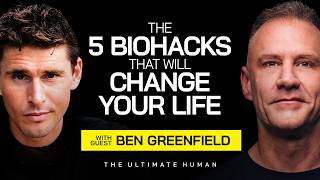
Ben Greenfield discusses cutting-edge biohacking with host Gary Brecka, covering exosome infusions, gene-therapy platforms from Mini-Circle, and light-based performance tools like re-timer glasses. They debate seed oils versus sugar, explore glucose dynamics with continuous monitoring, and detail membrane-repair strategies and strategic carb timing for endurance.
Chapters
I think that vegetable oils are a much worse case than sugar.
There's plenty of people out there that would say that seed oil thing is fearmongering.
If I have a corn dog that has been fried in vegetable oil, I can't just go burn that off, right? Those lipids are used to comprise my cell membrane for sometimes months or years on end, accumulating in the body, creating inflammation.
I want to talk about some of the ways that we are enhancing the body's ability to heal and police itself. You start increasing red blood cells, hemoglobin, and all of a sudden they start existing in these higher-tier emotional states, I mean, it's motivating.
That's one of the reasons your Superhuman Protocol works, right? Yeah. My sons, they're 16 years old, they take supplements, and they do that based on what I learned about their genes when they were 10 years old. And that's just like their supplement stack to give them a step up in life.
Where do you see the industry headed? Longevity and anti-aging? Is it bio-optimization? Where do you really see the innovations going?
I'll, I'll keep this quick.
Hey guys, welcome back to the Ultimate Human Podcast. I'm your host, human biologist Gary Brecka, where we go down the road of everything anti-aging, longevity, biohacking, and everything in between. And today I'm super pumped to have a very good friend of mine and co-biohacker, um, an absolute icon in the fitness and wellness and biohacking industry, someone I consider a mentor and a friend Um, and, and what's really funny is if we, we did half the podcast before the podcast, we're like, let's just turn the cameras on because we're so intellectually curious that we started eating each other's face before the podcast. So, um, welcome to the podcast, Ben Greenfield.
Thanks, man.
Dude, I'm pumped. And we're in London.
I know, right now.
Yeah. Um, yeah.
And, uh, which means we get to have crumpets after this.
Well, I, I don't think crumpets is on the biohacking list, is it?
I think if we put ghee on them, it counts. Yeah, I think that's how you fix everything. Yeah, or grass-fed butter. Yeah. Ghee on my burritos, ghee on my empanadas.
Paul Saladino is taking offense to that right now. He's like, don't, don't, don't.
He'd be okay with this. Avocados.
Don't diss on my ghee.
As long as it wasn't with avocados.
But, um, you know what was so funny was that Ben walked into the hotel room. We're in London, so we're here for the, um, uh, Health Optimization Summit, which was amazing.
Spelled with an S. Yeah, like they do.
What summit?
Yeah, no, no, no, Optimization. They spell with an S over here.
Oh, they do. Yeah, there's a lot of funny things about the English Like, um, and their verbology. Yeah, like health optimization.
Why couldn't they have a Z? Because they even have the word for Z is Zed.
Well, they also— things that are a scheme are actually legal, and it's like, it's like a positive thing. It's like, um, we should, we should form a scheme, we should develop a scheme. I'm like, no, we don't want to develop a scheme, that's, that's a hair shy of a scam. But here, scheme is like a good thing, like it's like a, it's a healthy joint venture.
Oh, so I tell— if I tell someone I'm scheming, yeah, that's great, that's honorable, that's honorable, good.
It's like, we should develop a scheme for to launch a new product. Like, we would never say that in, in the US. Yeah, they got all kinds of— they got all kinds of stuff over here that's, that's a little different. It's a little funky. Mate and bloke. Yeah, like, like, if you want to—
if you're like, mate is Australian gay.
If you're in a bar, do you actually want to challenge somebody to a fight outside? You say, would you like to have a go?
Yeah, yeah, it doesn't sound like—
yeah, would you like to have a go?
Yeah, sure, I'd love to.
You know what, I've got a few minutes.
Take a piss and have a go.
Yeah, which doesn't mean take a piss, it means have a drink, right?
Yeah, I don't know how many people are we offending right now. All right, with our Yankee bastardization of British culture, cut our audience in half.
But one of the fascinating things that we— I, and I know that we're going to talk about so many things, I want to go down the road of, of, um, what you and I think are some of the most promising things coming out of the biohacking industry. It's one of the things that we were talking about before the fire alarm went off, um, was the, the pace of innovation right now in the, in, in the biohacking, wellness, longevity space, whatever you want to call it. Wellness and, and longevity has become the new luxury. And not only is there a lot of money chasing it, but the efficacy, the science has caught up to some of the stranger, more, you know, esoteric things. And you know, we talked about that the regulatory environment's not going to be able to keep up. Obviously, you can't keep pace with the pace of innovation.
And so for the consumer, it's like trying to keep up with the Tour de France cyclist who's doping, right? They're just— there's just no doing that.
That, you know, theoretically they could win 7 back-to-back Tour de France.
Yeah, that's never happened.
But yeah, but, um, so, you know, you've got the pace of, of this market and, and You know, so what are, in your opinion, um, what are the most promising things? You're watching this podcast and you're like, man, there's so many roads I could go down. There's, you know, gosh, there's red light therapy. Yeah. And there's like, for example, you just introduced me to a group out of LA and we did plasma exchange, therapeutic plasma exchange. Yeah. Which was amazing where they actually took the plasma out of my body and replace it with—
it's like an oil change for your body. Yeah.
And I was tired the day that I did it, but the next day I felt amazing. Like, I felt like I was looking through a 4K screen, like I took a Limitless pill. Um, but where do you see the, the industry headed? Um, you know, longevity and anti-aging, um, is it bio-optimization? Is it, um, you know, learning to, um, reduce the risk of pathology and disease? Like, where do you really see the innovations going?
I mean, where a lot of money is going longevity and anti-aging, age reversal, because that's what, you know, Silicon Valley entrepreneurs and tech billionaires are most interested in. So that's where a lot of the money's going. Um, I think if you were to look at some of the things that are interesting right now and still fly under the radar and are still kind of like, go to, go to Tijuana or Cabo, or, you know, do a protocol that's unproven yet, in my, in my opinion, is kind of like the wave of the future.. You could look at, for example, um, you and I both talked about exosomes before.
Yes.
I don't know if you saw the study like 2 weeks ago. It was something crazy. I believe it was over 16% increase in lifespan in rodent models with an exosome infusion based on stimulation of the mitochondrial pathways. The, uh, really the PGC-1 alpha pathway, which is something that you could trigger with, um, this is one of the reasons that high-intensity interval training works so well, right? You're triggering that PGC-1 alpha pathway for mitochondrial proliferation. Meaning better health, better ATP production. But in this study, it was an exosome infusion in mice. And the, the idea of exosomes, these tiny little signaling molecules— it's actually kind of fun. Nanoparticles. I, I did my, my studies at University of Idaho. My master's degree was in exercise physiology and biomechanics.
Okay.
And when we were looking at cellular function and structure, one of the things that my professor— this was, uh, Dr. Dennis Dolny at Idaho He's showing us these little vesicles that are coming out of the cells. He's like, yeah, this is basically cellular poop, right? Just like the metabolic waste that cells put out. Well, it turns out, fast forward 20 years now that I'm aging myself, and exosomes are these same vesicles that we once thought were cellular waste products that it turns out are, uh, they're considered to be paracrine molecules, things that cause cell signaling, draw stem cells into specific areas, increase blood flow, allow for intracellular communication. And it appears now they have a lifespan extension effect that could be equivalent or even superior to something like a stem cell infusion. Wow. And a lot of doctors now are combining them with stem cells because, you know, like, especially in the U.S. where you're not allowed to expand a stem cell, that you're considered to be a pharmaceutical company if you're expanding a stem cell, right? Which is why you got to go overseas if you want to get like the high mesenchymal stem cell counts and you want to take whatever fat or bone marrow or expand it, or umbilical tissue or neonatal product and expand it. In the US, you can't do that, but in the US, you can take non-expanded stem cells and you can combine them with exosomes. That vastly increases the, the efficacy and the signaling capability of the stem cell. So one thing that I look at in the biohacking industry is, gosh, like, with the studies I'm seeing on exosomes, that's one field I could see taking off even more than it is now.
And what is it? It's the growth factors, the high molecular weight hyaluronic acid. I think it's also important to point out that exosomes exosomes don't have DNA. So unlike stem cell, right, they're not capable of really transmitting a signal to—
Exactly, exactly. I believe they have some microRNA components, but they don't actually contain the DNA, right? I mean, I've experimented with them. I've— have you gotten an exosome infusion?
Oh yeah, yeah, plenty of it.
Have you ever done intranasal exosomes?
Um, my wife did for, um, for aznosmia and parosmia when she had— when she had COVID. And what was crazy, Ben, was she had Um, I still have the video. Um, 18 months she had no taste, no smell. And that— and then, and then she got that— remember everybody got that perverted taste, right? And smell where everything was like garbage or trash.
And like, better than GLP-1 for weight loss. Just don't smell anything.
Okay, it was awful.
I mean, my wife hated it, by the way, because she, she got COVID, same thing. She felt fine except she lost her sense of smell for 2 weeks, and she'd sit there at dinner and just be like, I don't even enjoy this.
Same, same with mine. And my, my wife's thin to begin with, and she got real skinny, like very, very frail, um, to the point where her family was like pulling me aside like, hey, what's, what's going on? And I'm like, look, yes, it's the— as nausea brought us— me up, there's nothing going on behind the scenes with us.
By the way, we're coming up with a new diet, the clothespin diet. Just close pin your nose.
She literally would clothespin herself. But my, my whole point was that she, um, uh, somebody told her to take a nasal cannula. Now this was an injection, this was just with the soft like sponge, um, that little cylindrical nasal cannula, and fill her nasal cavity, lay at 45 degrees, fill it with the excess exosomes and let it naturally drain, fill it again, let it naturally drain. She worked her way through 5 mLs in, in each nostril. And I kid you not, 40 minutes later she's sitting at the, um, breakfast counter, and I had made eggs and avocado, and which she never ate. And she took a bite of it and she just started sobbing, like pouring tears. And I was like, taste it, because she could taste it and it didn't taste like garbage, and she could smell it and it smelled like eggs. And avocado, and it tasted like eggs and avocado. And I actually— I still have a video to this day because I sent it to, uh, my buddies at, uh, JuveXO.
Yeah, yeah. Well, first, first of all, that's, that's, that's interesting because, you know, joking aside, yeah, one of the side effects of GLP-1 agonists, the injectable GLP-1 agonists that are super powerful, is some people get depression. And part of that might be they've completely lost the dopaminergic stimuli from food. Which is meant to be enjoyed. And when something that's meant to be enjoyed instead makes you nauseous, you know, it's like your wife cried over the eggs and avocado because we don't even realize the emotional sensation that we can experience or the happiness that we can derive from food until we lose taste or until we're taking some kind of a supplement that makes us nauseous in response to food. Later on, I can tell you an interesting story about the, um, about some of these GLP-1 alternatives. But back to the exosomes, you know, your wife did you know, the equivalent of like the world's most expensive neti pot.
Yeah, yeah, exactly.
You can also— what I did was I got one of the, the nasal sprays, um, like an Afrin kind of, like one of the ones I had, like one of those silver injection nasal sprays for, for immune function, like when I travel. But I emptied that out of that, I put the exosomes, a little saline solution. It was like a vaporizer. My head went clear as a bell for like 2 weeks. It was nuts. One vial of exosomes that I went through over the course of 2 days, just kind of huffing it pretty unsystematically, just whenever I felt like it. Yeah, went through the whole bottle in a couple days and it was incredible, the increase in mental clarity. And then, I went to India. Have you been to India lately?
Not lately.
I did a 3-week tour of India.
Yeah, really?
And I mean, the air hazard quality index was above 500, meaning that for me to go out on one of the walks that I enjoy because I love to walk outside, 2-hour walk is the equivalent of smoking 20 cigarettes. That's how poor the air quality is.
2-hour walk is 20 cigarettes?
Yeah. This is literally like if you were to have that in the U.S., it would be warning, don't go outside, you know, stay indoors with your HEPA air filters turned on full blast.
I challenge you to transform your life in just 3 days. Join my 3-day cold plunge challenge and experience the incredible benefits of cold water therapy. For 3 minutes each day, immerse yourself in cold water and feel the difference. Cold plunging can boost your energy, improve your mental clarity, and enhance your mood. It's easy to join, so head over to theultimatehuman.com, download The Plunge app, track your progress, and connect with our community. Let's do this together. Now let's get back to the Ultimate Human Podcast.
So anyways, I got back from India, and you know, I do a lot of like underwater swimming and hypoxic holds, and you and I did a bunch of breathwork in Miami where we were just holding our breath after the Wim Hof breath-ups. I could not hold my breath even 3/4 of what I was used to, and I could tell I had a just a shit ton of water degradation that fast, right?
Yeah. Wow.
Well, I was there for 3 weeks. Anyways though, so I, you know, I did all— you know, there's a lot of things that you would see applied to COPD or lung function. Um, hydration is low-hanging fruit, but then glutathione, vitamin C, you know, citrus-containing fruits, um, uh, N-acetyl cysteine, a lot of the things that would be considered popular antioxidants, those are, those are really good, right, function. But I talked with a naturopathic doc over in India, and what she uses with her patients, especially in Delhi, which is one of the worst areas, is nebulizing. A mix of hydrogen peroxide. And you can do this, like, if you're listening right now and you've been a former smoker or had COPD, or you just want better lung function, or there's some kind of wildfire where you're at, you take a 3% hydrogen peroxide solution and you mix it 10 to 1 in saline. And then you get one of these, like, you know, $40, $50 nebulizers from Amazon. And a nebulizer is just basically turning all the little liquids that you have in the container into microparticles that you breathe in, and those saturate your lungs. And hydrogen peroxide actually helps out quite a bit with air pollution. But I talked with another doctor and they said, well, I've done this successfully with exosomes before. Wow. So I nebulized exosomes for a couple of days after I got back from India, and my lungs felt great within half a week. And so, so there, I think that, you know, back to the root of your question, I think that's one field that will see continue to explode. And then another one You mean the, the field of exosomes and their applications? Another one is, um, and they're very—
they're relatively safe. Not relatively, they're very safe.
They're pretty safe. Yeah, yeah. They're literally just a signaling molecule. You can think of them as like upgrading whatever your body's normal cellular function would be.
They're about an 800th the size of a normal cell though, right? So they actually don't ask permission, they go right through. They're very small.
So exactly, so well, so membrane, just about anywhere in the body.
And I think that's part of their um, you know, that's part of their efficacy because they, you know, they can go into areas of inflammation or they don't have to ask permission across the phospholipid bilayer. They're like a ghost, right?
That will just walk right through. Yeah, exactly.
So I think that's, um, I think that bodes well for inflammatory conditions or just like you're talking about, the neural inflammation, um, pulmonary inflammation, you know, areas where larger molecular size compounds are just not going to make it in.
Yeah, I had no clue that the direct impact on lifespan though until I saw that, that road.
That's pretty interesting.
I gotta look, I gotta look that up. Yeah, it's crazy. It just came out, I think it was Nature.
Nature.
Okay, I'm gonna, um, the, the other one, and you and I talked about this a little bit this week, is gene therapy. You know, like, it's like the old school CRISPR gene editing that everybody was afraid of, and, you know, rumbles about the Chinese super soldiers and, you know, crazy, you know, growing a third eye. Uh, it, you know, the idea of precision gene editing, reversible precision gene editing, is very This is something we talked about at dinner the other night.
Yeah, uh, with Dr. Cook, Matt Cook. Yeah.
And, and one leading company in the field, uh, they're called, uh, Mini Circle. They've developed a reversible technology. It's, it's a, it's a plasmid-based gene therapy that is targeted to specific tissues. It's also reversible. It's reversible technically. It's like, it's like a tetracycline-based antibiotic that you would get injected if you ever did want to reverse I suppose if you actually did start to grow a third eye or some giant research study came out showing that, that it was, you know, because, because this is some of the stuff we're talking about, this is still, you know, again, back to the root of your question, these are still like the fringes of medicine and, and things that haven't yet been approved, but that could be the wave of, of the biohacking and, and in human science sector, right? So gene therapy, as of right now, there's only one that's effective that I know of and approved in certain places have done. You would still need, like, if you're a U.S. listener, you would still have to travel internationally to have something like this done, right? Like Tijuana, Cabo, Dubai. Those are a few places where I know you can get it done. And, uh, it's an intramuscular injection. The one that I got is called follistatin. And if you've ever Googled, or if you're, if you're listening right now, you could Google, you could Google myostatin knockout bull. Or myostatin knockout mouse or myostatin knockout dog, and you see these massive, just like absolutely swole bodybuilding-esque animals who unfortunately, because that, that myostatin therapy actually results in such steep amounts of muscle growth that it can be so anabolic that the animal just dies an early death. Wow. Because same, similar as bodybuilding, it's like you and I know that, that being a bodybuilder isn't the healthiest thing, right? Because, right, not long-term cardiomegaly, enlarged heart, you know, it's a lot of stress. It takes a lot more antioxidants for the body to produce to carry the muscle, to cool the muscle. There's a law of diminishing returns, right, when it comes to muscle. So with follistatin gene therapy, it's a little bit more of a gentler form of that, meaning all it is, it's an injection that slows down the degradation of muscle tissue, basically.
How does this slow down the degradation of the muscles? Stop the body from— um, there, there are, there are things that inhibit muscle growth, right? Myostatin, right, right, right. So does it inhibit myostatin?
Is it— follistatin is similar to myostatin in that if you were to, if you were to trigger follistatin, you would see an increase in muscle protein synthesis. I believe, I believe the mechanism of action is an increase in MPS. So it's not that you're inhibiting follistatin, you're, you're stimulating follistatin. So again, a lot of this is just purely anecdotal, but I'm, I'm part of a WhatsApp group of a whole bunch of other people who have had this done. I think there's only a few hundred folks who've actually had it done, and everyone is experiencing the same thing that I've experienced. I weighed 175 pounds in early March when I was in Cabo and had a nurse walk into the clinic And she literally goes, hey, do you want to be superhuman? I'm like, okay. So, and she— quick intramuscular injection in the left shoulder. Yeah, in combo in the right shoulder. And that was it. Took 5 minutes. I walked out of there, and since that day, the gym has been easier, recovery has been profound. I topped out at 191 pounds, started training for a Spartan race with my sons, which involved a lot of running and endurance. Went back down to 185 pounds, which I'm at right now. I've never put on muscle that fast in my life. Wow. And that, that was gene therapy. And so now the next two that are in the process of approval are Klotho gene therapy, which would have a significant impact on cognitive performance specifically, and apparently you see a stimulation of NAD pathways as well. So if you were supplementing with NAD, theoretically you wouldn't need to even take NAD if you had the Klotho gene therapy, right? And then the other one is LH therapy, luteinizing hormone therapy, which would increase testosterone, very similar to taking testosterone replacement therapy. And the effects of these gene therapy injections are about 1 to 2 years.
Oh wow. So you get this injection and it lasts for 1 to 2 years, right? Now when you say it's reversible, is it reversible because it ends Or is it reversible because you can actually—
because if you were to actually get— I actually asked the doctor, the doctor that did my procedure was Dr. Khan, and I asked him like, well, what if like I got sick and a doctor puts me on an antibiotic? Yeah. And he said, well, if it's a tetracycline-based antibiotic, technically you could reverse the gene therapy if you were on tetracycline-based antibiotics. So that, that is the mechanism via which it's reversed.
Uh, tetracycline.
Yeah, yeah, yeah.
So, so these gene therapies are basically targeting, shutting on or shutting off—
exactly—
a certain gene. So you've got the outcome.
So if you— precision gene therapy.
Yeah.
So if you stop CRISPR, which has a whole bunch of downstream implications—
yeah, you stop the inhibition, uh, and it would be permanent. I mean, you know, if you take it out, I mean, maybe you can put it back.
I don't think CRISPR gene editing is reversible, as far as I know.
Yeah, I don't think it's reversible either. Um, yeah, because I would think that once you— yeah, if you took like a cytosine-glycine-glycine sequence out and you took it out, it's gone. Yeah, it's gone. So you can't just sort of— yeah, scoot the DNA and make room for it again. Um, but, um, so, so, you know, these gene therapies either turning on or turning off or inhibiting— well, more enhancing, I guess, would be the right term. Um, so you— if you inhibit the breakdown of muscle, or you inhibit the building of the inhibition on building muscle, then all of a sudden you get these outcomes like what you're talking about— 14 pounds of muscle in what, 2 months?
Same reason you and I would use like protein or amino acids post-workout to increase muscle protein synthesis. You're doing something very similar with that gene therapy.
That's amazing. Yeah. Well, um, and, uh, and so, but you don't feel you've had any other side effects from this, positive or negative?
Just none at all, just the muscle, besides a little bit of extra wasted time in the gym. Because, because you— like I was telling you, I was at the gym like that week I was visiting the gym in Cabo, and I would be there like an hour and a half and look at my clock thinking like 20 or 30 minutes had gone by just because you're enjoying it and you're crushing it. A lot of people who get on testosterone replacement therapy, one of the side effects of that is a stimulation towards forward progress, towards wanting to achieve things both mentally, from a business standpoint, physically, biologically. And so that's one of the reasons that people who are on testosterone like to go hit the gym, right? This had a very similar effect to something like that. Like, you just feel like going out and lifting. So there's even— the motivation is higher. And of course, since you're recovering faster and you're building muscle faster, you know, it's actually— it was, it was incredible.
I call it that old school positive aggression towards working out. Yeah, you know, you see people have that all the time. And I, and I think a lot of that comes too from— I mean, I'm sure there's a hormonal component to it, but the, the alpha male side of things. But, you know, you start increasing red blood cells, hemoglobin, the capacity for the blood to transport oxygen, you start raising that oxidative state, people have more energy, um, they've got more oxygen and energy available for elevated emotional states. So it's easier for them to be passionate or related or joyful or aroused. And all of a sudden they start existing in these higher-tier emotional states. I mean, it's motivating, right?
Right. I mean, that's one of the reasons your Superhuman Protocol works, right? Yeah, it's, it's PMF to, to open up cell membranes, and then you hyperoxygenate them and then produce more ATP with red light.
Yeah, it's— yeah, and, um, uh, so I, I want to transfer now and talk about some of the ways that we are enhancing the body's ability to, to heal and police itself. You know, I was talking yesterday at the Health Optimization Summit, and we started stumbling upon ways to— you know, everybody's talking about cancer preventative measures, and, you know, reducing the toxic load in the body. But what about strengthening the immune system that actually is the best at catching metabolically healthy cells that are switching their metabolism to being metabolically unhealthy cells and doing things to really greatly enhance the immune system? So, and giving it support, things like plasma exchange. Exactly. Um, and, um, you know, you're actually the one that turned me on to that. Um, I had it done in LA. Um, I haven't done my post-labs yet, um, but I did have some, um, mycotoxins. Um, I had a little bit of LP, uh, little a, which, which was a concern to me because, um, the rest of my panel looks right.
Amazing. Little a and ApoB. Yeah, are the two to look at.
Yeah, yeah, LP little a and ApoB. Um, but you know, multiple mycotoxin-wise, I had some minor ones, but I'm really going to be interested to see if after taking out that plasma and exchanging it with albumin and then retesting, you know, how much I dropped some of those little toxic loads. Because I live in the— I live in the mold capital of, yeah, the world. I found out Dr. Minkoff told me that Miami is the mold capital of the world. It's like, shit, of all the places. Um, so I did see some— I did have some, you know, uh, mold spores, some little, right, mycotoxin. So I'm going to look at those. And I had some minor heavy metals that were just starting to get into the yellow. Yeah. Um, so have you done the plasma exchange? Do you see this becoming something that's mainstream?
I mean, right, plasma exchange, I mean, it is expensive and a lot of times it requires a series of treatments. And apparently there's a newer form of it. You and I were, were talking with a gentleman at the symposium this week, uh, who has developed a different protocol, Lumati, which is more of a heparin-based therapy that that is still like a filtration type of protocol, but like a dialysis. Yeah, like dialysis, different than therapeutic plasma exchange where you're not removing albumin and a bunch of good stuff, but you're filtering the blood very similarly to how you just described. I, I think that there's definitely efficacy to that when it comes to immune system regulation. The problem is it's expensive and it's hard to get, and it's still one of those things that, you know, especially for, for the alternative therapeutic plasma exchange, you still have to go overseas to Right. I think another thing that you have to think about though is the actual cellular damage, the cellular membrane damage that can occur if you've had mold, mycotoxin, any type of stealth co-infection like that. And that's another thing you have to target in, in addition to just getting the bad stuff out. So this is where I think is—
what is the damage that it causes? What do you mean, like endothelial damage or what kind of—
like, like cell membrane and so this would be where things like, uh, phospholipid therapy or some type of a phosphatidylserine or phosphatidylcholine protocol comes in. Because I, I look at it from two different perspectives. You want to, you want to heal the cells and the cell membranes, and you also want to heal the blood-brain barrier issues that have arisen as a part of that. So there are many doctors now that will put someone on a mold and mycotoxin eradication protocol. Many are not using therapeutic plasma plasma exchange just because it's so fringe and hard to get. They're using a lot of the traditional approaches of upregulating liver detoxification pathways, sometimes ozone, but usually something like glutathione and N-acetylcysteine, you know, spread throughout the day, which is not that difficult for people who even have like a low budget for this stuff to be able to do, combined with a binder, you know, like activated charcoal or chitosan or chlorella or, yeah, or clay or something like that, that binds what you're detoxifying. And then you combine that with the two primary detoxification pathways that you're doing a lot of sauna, you know, infrared sauna particularly, just because of the penetration of the light more deeply into the body. And then something like a, you know, like an enema protocol, like a, like a coffee enema protocol to actually get stuff out. But then you also have a lot of doctors now using phosphatidylserine IV protocols, which help to repair the cell membranes. And then there's now There's, there's one company I found the other day, they're called, uh, NT Factor, and they actually have a small oral phospholipid-based product that you can consume orally to help to supply the body what it needs to heal cell membranes. So the idea is you don't just have to eradicate, you also want to heal. And the eradication protocol could— how are you healing therapeutic plasma exchange?
What, what heals the phospholipid bilayer? Like, what, what actually repairs cellular—
it's actual, you know, from, from these supplements like the phosphatidylserine or phosphatidylcholine or even these, these absorbable oral phospholipids, it would be actually consuming the lipids themselves that are used to comprise the cell membrane. Like the whole idea of why, you know, seed oils would be a prudent thing to avoid based on the fact that they can accumulate in the cardiolipin layer in the mitochondrial membrane. They can accumulate in cell membranes. That's, that's why it's kind of like the UR you are what you eat type of concept. So in the same way that you want to consume healthy fats, you can also consume lipids that help to make that cell membrane even healthier.
There's plenty of people out there that would say that, um, you know, the whole, uh, seed oil thing is fearmongering. I get it all the time, every time that I talk about, um, seed oils.
And I, I disagree too. I, I—
it's— where do you fall?
It's interesting because what people say is if you look at at some epidemiological data that consumption of some of these polyunsaturated fats rich in omega-6 fatty acids seems to be correlated with reduced risk of cardiovascular disease. I am not convinced that they're actually looking at rancid oxidized forms of those oils, which the lion's share of people are consuming when they're eating fried food at restaurants or cooking with vegetable oil from plastic that's been stored on grocery store shelves. Right. I mean, you've, you've talked extensively, yes, on your podcast about, you know, hydroxy nonanol and some of, some of the ways that these oils are actually extracted. Yes. And the inflammation that it can produce in the body and how long these fats stick around. I mean, there was a time when they would say 2 or 3 months, and now I think there's, there's data of up to a few years that many of these lipids remain in the human body. Again, coming back to you are what you eat.
That's right.
And this is why You know, I, I have just a very, very simple illustration for people. I tell them, well, look, if you were— if you were at the fair, if you walked up to me at the county fair, right? I don't know about you, Gary, but I spend a lot of time at the county fair. I do too.
Favorite places.
I pretty much live there. Zipper and the Gravitron and yeah, petting the pigs.
You can't turn on Instagram without watching somebody getting flung off of one of those teacup rides. It's like, I don't think I would ever get on one of those.
No thank you.
And you see the dude that's running it too, and he looks like he just fresh out of a, you know, a big old fat bag of weed.
Yeah.
Um, yeah, he's got a couple tats on his face.
God bless the Carnies. Yeah. So anyways though, if I, I tell people, if you were to walk up to me at the county fair and offer me like a stick of cotton candy or a corn dog, I'll take the cotton candy 10 times out of 10 because that's just sugar, right? You can eat sugar and you can walk around, you can burn it off and go ride the teacup and get thrown out of that and burn off some more sugar.
But basically you can get through, you can burn through glucose.
I mean, yeah, and maybe we can talk about this later, about how my blood glucose hit 200 in the last Spartan. I definitely want to talk about that last week. So we, we can come back to that and why that, that may or may not be an issue. But your body can do a pretty good job if you're a physically active person metabolizing sugar. And you can even make a case for sugar being a sometimes drug. Like, if you're going to go throw down a hard workout or do a Spartan or do some highly glycolytic CrossFit workout or something like that, sugar can actually be be pretty helpful for enhancing that glycolytic process. It's not necessary, but it can be helpful. And in some cases, you know, for example, in, uh, in endurance sports, uh, even in bodybuilding, you see this. You do glycogen or carbohydrate or sugar deprivation to upregulate the body's ability to be able to pull it all into muscle. And then when competition day rolls around, you eat a whole bunch of sugar or carbohydrates, etc. Your body has upregulated the processes responsible for pulling the sugar into the muscle, and you just soak it all up. And that's how You know, a bodybuilder will sometimes gain 10 pounds between the morning flex-off show and the actual evening competition because now that they've weighed in, they go eat a bunch of carbohydrates. And because they've been carbohydrate depleted for so long, their body just soaks it all up. Yeah, Ironman triathlon, if you train low carb— and there's been studies on this— training low carb allows you to more effectively use carbohydrates when you get to race day because your body just burns it up so readily, just, just absorbs it and uses it way more effectively if it hasn't had it for a certain period of time, right? Because it's upregulated all of the transporters necessary because it's been such a, such a, a, uh, an unavailable commodity that your body wants to use it as effectively as possible when it does get it, right?
So you're saying occasionally it's actually not a bad idea to do that?
I think it's actually, it's actually a cool little hack to go low sugar, go low carb, and then when it's time to do the big workout, or when it's time to like, whatever, go to the beach and you want to look swole, or whatever the case that you might want carbohydrates for, then you do a carbohydrate feed and your body just soaks it all up. Boom. Yeah, but the, um, the, the deal with the, the cotton candy is, yeah, I'll take cotton candy 10 times out of 10 because again, I can walk around, I can burn it off, I can bench press, push-up, you know, walk, sprint, whatever. But then if I have that corn dog that has been fried in vegetable oil I can't just go burn that off, right? Those lipids are used to comprise my cell membrane for sometimes, you know, months or years on end, accumulating in the body, creating inflammation. And so yeah, I mean, I think that vegetable oils are, are a much worse case than sugar.
Yeah, I think, I, I think that's, that's true too. I mean, one of the things we talked about before the, the podcast was, um, not just what happened to you in your race, but, you know, I have clients that would start using a constant glucose monitor like what you're wearing and the first thing that, that would shock them is that their blood sugar starts rising in the morning upon waking when they haven't eaten, right? Freak out time. Yeah, yeah, people are freaking out.
They're like, I'm pre-diabetic, what's going on?
How is my blood sugar rising and I haven't eaten since, you know, 8 o'clock last night? And, you know, we talked about this gluconeogenic response, you know, where the liver is creating new glucose. I think obviously everybody knows that, um, But you said you were recently, um, in an intense race.
Yeah, I did. I did the Spartan DEKA fit, and I was running. My blood sugar hit— it was just below 200, about 198. That's incredible during the race, you know. And, and so stepping back and looking at the reason for this and the reason that people might wear a blood glucose monitor or take their blood glucose because they're trying to pay attention to their health, which is a good idea. I mean, I, I mostly wear this thing now not because I don't know what a certain food is going to do to my body, because I've worn it long enough to know how green beans versus steak versus, you know, a Twinkie are going to affect me, right? Not that I eat a lot of Twinkies or crumpets or cotton candy. Yeah, but I wear it because what gets measured gets managed. This is the same reason I wear a ring to track my, my steps, because if I wear it and I check it at the end of the day, I'm going to be a lot more likely to say, like, take a postprandial stroll after dinner to hit my 10,000-step allotment. Or if I wear it when I'm sleeping, I'll do a better job getting lights out early, taking care of my sleep hygiene, just because I like to have a cool score, right? And when you measure it, you manage it.
Want to get an extra hour of quality good sleep every single night? Let me tell you how I do it. My wife and I sleep on Eight Sleep's Pod 4 Ultra. This is a technology that fits over your mattress to cool or warm each side of the bed, giving you up to an extra hour more of quality sleep every single night. My wife likes her side of the bed warmer than mine, but I've noticed that I improved deep sleep at cooler temperatures. It even elevates automatically when it detects snoring to improve airflow. With 99% accurate sleep tracking, you can leave your wearables on the nightstand. And I even had this thing independently EMF tested to make sure that I was not getting any extra EMF at night, which I'm not. Get $350 off the Pod 4 Ultra at 8sleep.com/Gary. That's 8sleep.com/Gary. .com/gary and use the code GARY, G-A-R-Y, for your discount. Transform your nights and elevate your sleep. Now let's get back to the Ultimate Human Podcast.
But anyways, the, the idea is your body has mechanisms to mobilize glucose when your body needs a hit of energy. Even if you don't have exogenous sources of glucose like a morning stack of pancakes or bowl of cereal, right, you'll see that blood glucose rise due to the cortisol awakening response You wake up, light hits your eyes. You'll notice if you want to experiment with this and you're wearing a blood glucose monitor, if you have one of those seasonal affective disorder light boxes, for example, that blast your body with light, which I use. I have this pair of re-timer glasses back in my hotel room here in London right now, which blast my eyes with bluish-green light when I wake up in the morning.
They're called re-timers.
Yeah, they're called re-timers. There's another brand called AYO, A-Y-O. Both of these glasses are designed to simulate the bluish-green spectrum of sunlight in your eyes when you wake up. They stay on for about 20 minutes. And if you were traveling, if you're whatever in Vegas and can't get out in the sunshine because the buildings are blocking all of that, or you're in your hotel room and you got to get some work done, you can't necessarily, you know, put on your hotel bathrobe and wander outside in the sunshine when you first get up, kind of resets your circadian— yeah, Yeah. And then I, I double up. I've got another one called the Human Charger that goes in your ears and it blasts the photoreceptors in your ears with light. So I'm getting full sunlight on my eyes and in my ears. And since we're all tidy little biohacking schemers here, the, the other thing I do is, well, when you look at the light spectrum during the day, you've got a certain amount of blue light somewhere between 40 and 60%. I forget the exact value of blue light, from sunlight, you've got about— it's, it's around 40 to 50% red light, right? Near-infrared red light, far-infrared light. And then you've got, uh, it's around 5— I believe it's even below 5% UVA and UVB light, right? So you've got the, the UVA and UVB, which helps you with the vitamin D3 and the nitric oxide production. Then you have the red light spectrum, then you have the bluish-green light spectrum. So in an ideal scenario you should be trying to match those spectrums as closely as possible in your indoor living environment and waking environment, which is why if you really wanted to geek out—
Can you do that though with— well, they have lights that emit those wavelengths.
You can do it. So first of all, when I wake up in the morning, especially if I'm traveling, that I, I get adjusted to my new time zone way better when I do this. I use the little glasses that make a bluish-green spectrum. I put in the ones for the ears.
As you're telling your brain it's morning, you're telling your brain it's morning.
What are you missing out on if you're using bluish-green spectrum and bright like LED in the ears? The red light. Yeah, the red light. So then I also have these red light devices, the same ones as you would use for like joints. I have a couple of wraparound red light joint devices and I just put those on as well. Okay. So I basically, I'm blasting my body in the morning with red light. With bluish-green light and with light in the ears. And if you wanted to do this at home, you would technically, I mean, if you really want to be as scientifically accurate as possible with daylight, I know some people like to geek out on this. In all of the waking daylighty working exercising areas of the house during the daytime, you want about 75% blue light and 25% incandescent light. If you want to match outdoor daytime as much as possible, and there's two ways to do that. You can either literally go through the cans of the house and have three-quarters of them be overhead LED light, and you want to use good LED light. So if you look for LED, you want what's called OLED. OLED, yeah, is low in flicker, it's low in EMF, and there are companies like, uh, BonCharge or Block Blue Light that actually make healthy OLED lights. And then in the other 25% of the cans, you would put incandescent light. So you're basically matching as closely as possible sunlight. And then in your more relaxing areas of the house, say like the dining room where you're going to have dinner, yeah, or a master— even the lower levels of light, not so overhead hallway leading up to the master bedroom, whatever— it'd be the complete opposite: 75% incandescent, 25% OLED, right? And this obviously sounds really laborious, or you're going to be telling a lot of how many, yeah, insert XYZ here people, does it take to change a light bulb? Uh, and so both BonCharge and Block Blue Light, now this is super cool, this is what I'm outfitting my entire new house with in Idaho. Yeah, one light bulb, you put it in and you turn on the light switch once and it does daylight, right? The perfect combination of blue and incandescent for daylight, right? You turn off the light switch, you turn it on again and it does twilight, the perfect combination of 25% LED 75% incandescent for twilight, like after 6 PM or whatever. And then you flip it on again and it goes full red light. So you could literally have your whole house and all you do is flip a switch and it goes to whatever you want for whatever time of day. So that, that's what I'm going to have in, in my new house, is just every can will have those bulbs. That's so cool. But if you were to just use the— you know how they'll have like seasonal affective disorder boxes that produce a bunch of, of blue light that really like wake you up. And these are like high flicker, high blue light. This is like the kind of light that you should avoid most of the day, but if you blast yourself with it in the morning, it can really help wake you up. And I have one of these on my desk. The one I have is called a, um, a Beacon 40, and it's literally like looking at a strobe light. And really, I mean, it wakes you up. Wow. But if you were to test your blood glucose— back to the blood glucose piece— along with that amount of light, you would see a steep rise in blood glucose in the morning. And back to what you were saying is the frustration a lot of people like, why is my blood glucose going up in the morning? I haven't eaten anything.
I've been— yeah, cheesecake for dinner last night. Because you would think conventional wisdom says the opposite, I'm burning glucose.
It's glycogenolysis. It's— yeah, the idea that your liver and your muscles to a certain extent will release glucose into your bloodstream anytime that it sees a need for energy, for wakefulness, for combating stress, for fighting, whatever the case may be. And this is why when you wake up, you see that normal cortisol awakening response causing a surge in blood glucose. Yes. And if you have a cup of coffee and you look at a bunch of blue light, or especially if you like jump in an ice bath, which some people do, like, you'll see that go up even more because you're amplifying that cortisol awakening response, right? This is even why, um, you know, some people, probably Dr. Huberman being the foremost amongst them, who have heard say Yes. Is that if you don't want to get tired earlier in the day, if you don't want to accelerate sleep drive too early, yeah, try to stave off that cortisol awakening response. Try to wait a little bit to jump in the cold bath, to have a cup of coffee, to blast yourself with blue light. And this is actually what I do is, yeah, when I get up in the morning when I'm at home, because unlike when I travel, I don't have to like be on a stage speaking or, right, you know, be in a podcast with fire alarms going off in the hotel room. And, and so when I'm traveling, I just blast myself right away because I, I gotta get the F up when I'm traveling, right? But at home, for the first hour when I wake up, my whole home is the way that a lot of people should have their home at night. It's all red light. I keep my phone with the, with the blue light turned off. My screen monitor still has the, like, the, the dimmed light. I don't turn on that blue light box on my desk until about an hour after I've been awake. Because if I just shove too much at my body right when I wake up, I'll get really tired like 2 or 3 PM in the afternoon because you're accelerating my sleep dive too quickly. So it's this concept of easing yourself into the day, right? You would also see a lower blood sugar response if you do that, which would result in less of a hypoglycemic drop, which would result in you being a little less hangry, right, when breakfast rolls around. Or hypoglycemic when you go to the gym at like 8:30 to do your workout and you've already had that blood glucose spike, and so you've kind of like, you know, you've kind of like blown your load for, for the workout later on, meaning you'd have to—
that's what I was gonna say, like, for the workout, when are you positioning your workout in that? And then, um, so what do you— you journaling? Are you looking at emails? Are you—
I get up, I pray, I read my Bible, I stretch, I do some foam rolling, and then I start to turn the lights on and stuff. And usually about an hour after I'm awake, I'm in front of my computer making sure there's no email fires to put out. I'm running that blue light kind of waking my body up while I'm drinking a cup of coffee. And then, I gather the whole family for meditation. We have meditation as a family every morning at 7:00 a.m. We have a big team huddle. We gather, we read the Bible together, we pray, we talk about what's going on. When do the boys have jiu-jitsu and tennis? And what time is dinner and who's making what for dinner? And it's almost like a team huddle and one big giant hug. And then I go work out after that. So, so I'm usually working out like 2 hours after I get up, right?
But you see this sort of— I mean, you find that you're, you're, you're well energized and like easing into your day rather than get it—
because a lot of people just get up and get after the cortisol awakening response, obviously, you know. So there are ways to manage that, and there are reasons that you may want to manage that, but you should also not freak out that you're pre-diabetic if you wake up and your blood glucose is much higher than what you'd want to see for a normal daytime value, because that's your biology. Doing what it's supposed to do, waking you up. You see the same thing though in the sauna, right? People go hyperglycemic in the sauna.
That's right.
Which throws a lot of people for a loop because they're like, well, I heard the sauna was good for my blood glucose and may lower risk of diabetes.
You see, for insulin sensitivity—
yeah, yeah, for insulin sensitivity. You may see the same thing with cold, which again, people think that's paradoxical because you're supposed to see good metabolic stability, you know, as a response to cold thermogenesis. And it is indeed, one of the best things to do for lowering blood glucose. Matter of fact, if I'm going to go out to a, to a restaurant, I know I'm going to have what you might consider to be a cheat meal. If I do cold shower, cold soak beforehand, that's one of the best ways, even stronger than weightlifting, to stabilize my blood glucose. And then people go to the gym and their blood glucose will go, you know, way up in the gym. Or this Spartan Race that I did, it hit almost 200. That's incredible. But it's this idea of an an acute response to an activity that increases blood sugar in many cases return— results in long-term stabilization of blood sugar in the same way that an acute rise in heart rate from exercise, an acute rise in blood pressure from exercise results in a long-term decrease in heart rate and decrease in blood pressure. Right. So, in many cases, if you're doing things that cause your liver to dump a bunch of— or to break down a bunch of glycogen and dump a bunch of glucose into the body. That doesn't mean you're doing something wrong if you're tracking that with blood glucose.
It's a normal response. How long can the liver sustain this kind of, um, gluconeogenic response? Let's say during intense exercise, if you do the math, you've got—
so we all have tens of thousands of calories of storage fat, many of us much more than others. But this is why human beings can go for a very long time at the proper pace without even eating, and you can train yourself into that state. Yeah, you're going to break down a little bit of muscle tissue, but if you were burning at a low to moderate pace at a fat-burning intensity, let's say even like 300 calories an hour, and you got 20,000 calories of fat to burn, I mean, you're, you're looking at like, you know, 60+ hours that you can just go without actually running out of fuel. Well, in comparison, your storage of carbohydrates in a steady state, much lower. Yeah, steady state. And then it's kind of funny because a lot of people were like, well, you're saying I could race an Ironman triathlon without eating? No, you could, but it would be a 17-hour Ironman triathlon. Because, because like, I used to race Ironman, and it kind of looks good on paper to say, well, I'm just going to ride my bike at an aerobic race. But in an actual Ironman triathlon, if you're trying to go fast, there are certain things like a 20-second window to be able to pass another cyclist, which means that you might be pushing 200 watts and you have to do a 600-watt surge to make a pass within 20 seconds. You can do a 600-watt surge on a bike burning purely fat, right? So even an Ironman is like aerobic, aerobic, aerobic, and then boom, anaerobic, and then aerobic and anaerobic. So, right, you— it's even very difficult to stay aerobic for, you know, for especially a race that includes cycling or, you know, swimming where you're trying to stay on somebody's feet or something, running for that matter. Yeah, but in comparison to the tens of thousands of calories of storage fat that you have, you have around 400 calories in your liver and you have around 2,000 in your muscle. Depends on how much muscle you have. If you look at a bodybuilder, they could probably push closer to like 3,500 of actual storage carbohydrate in the muscle. So if you look at 2,000 calories, for most people working out hard, you're gonna bonk or hit a wall after around 90 minutes. That, that's about how long you could really go without eating, which is why for about anything longer, you know, for, for the average person, something like a half marathon or a 90-minute gym workout, you're gonna feel like crap within 90 minutes. And in some people, it's even shorter than that. Especially if you're like a low-carb person, because you're going in there with already lower levels of muscle glycogen. Usually your liver glycogen levels are store— are full, but it's a pretty short period of time. And this is why even for someone who's well-trained, fit, a fat-burning machine, whatever, even if you're doing like a long race or a workout, you're still going to need like a slow bleed of carbohydrates to be able to replenish that muscle glycogen or liver glycogen, right, that you're burning through. And this comes back full circle to what I was talking about earlier, how you can actually go low carb to allow yourself to be able to use those carbohydrates more efficiently when they are released, and then go higher carb when it's time for the, for the hard workout or the hard race, and really fill your muscles to get that, you know, right, right.
I think the visual benefit anyway.
Yeah, yeah. So like the sweet spot for me, when I got to my last few years of Ironman racing, I had kind of for the longest time swallowed hook, line, and sinker the whole Gatorade Sports Science Institute, have, you know, 400 to 500 calories of carbohydrates per hour from the sugary sweet fructose maltodextrin mixes during the race. And I instead switched to about a quarter of that and then combined it with ketones, essential amino acids, amino acids and electrolytes and had the best 3 years of racing of my life, right? Eating less carbohydrates, just enough to stave off the liver and the muscle glycogen stores from being emptied, and everything else I was getting from the glycogen and carbohydrate-sparing nutrients of ketones, amino acids— wow— and electrolytes. And that, that worked perfectly as a race fuel.
Is that what they meant when they said— I remember Lance Armstrong's, uh, coach saying, I I switched him from a sugar source to a fat source, right?
He was actually a fat-fueled athlete. Yeah, and, and when people say a fat-fueled athlete, you still need a slow bleed of carbohydrates coming in. As a matter of fact, beta oxidation, the process of burning fat, still relies upon trace amounts of glucose. So you still need glucose, but you need less than what you would think of glucose. As a matter of fact, before we started recording, um, that, uh, the, the— we were talking about the low-carb ultra-endurance athlete Zach Bitter, right? Zach and I and about a dozen other athletes were part of a study at University of Connecticut. I think it was about 6 years ago. It was called the FASTER study, and it literally rewrote exercise physiology textbooks because what they did was they had a high-fat ultra-ketogenic group. Like, we're talking like 10% carb intake, like very— like almost therapeutic ketogenic. Yeah, I was in that group. And then they had another group that was eating the, the standard stereotypical around 55 to 65% carbohydrate intake diet, right? And then they had us all go into a lab at University of Connecticut. They did muscle biopsies, they did, uh, bloods during the entire protocol. And so we— I arrived the night before, checked into my hotel, went over to the lab. They punch holes in both the thighs. And so they do the muscle biopsy. Have you had a muscle biopsy?
No, but I've had an 18-gauge to the thigh, and that's— it's like, it's about an 18, right? Yeah.
Or is it 16? Yeah, yeah, it's, it's, it's a big needle. Yeah, it might, it might even be bigger than that because they literally have to pull the muscle like a guillotine out of the thigh. And then they did the back of the leg as well, and then they did a fat biopsy to look at that, the composition of the muscle and the fat.
And then, and you of course volunteered for this.
I was getting $1,000, which for me at the time was a lot of money. That was a lot of money. Plus I was training anyway, so I'm gonna do this. Times were tough around that training session and get paid $1,000, get a free plane ride to University of Connecticut. Sounds great. So anyways, I, I show up, they do the muscle biopsies. That night they have you do a VO2 max test going as hard as humanly possible to see your maximum oxygen utilization. Then the next day you wake up, uh, you've collected overnight urine, you stool test, and then we got our pre-race meal, which was run strawberry in a 6-ounce cup of heavy cream. So that, that was, that was what they gave the, the ketogenic people before putting us on a treadmill. And this is the worst part— no TV, blank white wall, run on the treadmill for 3 hours as hard as you can.
3 hours?
3 hours. Yeah, yeah. So I did 23 miles on the treadmill just staring at the wall. And oh my God, and you've got the mask on for the indirect calorimetry the whole time to see how much fat and how much carbohydrate hydrate you're burning along with the cannula attached to your arm for collecting the blood while you're running for 3 hours. So anyways, leading up to that point, if you were to read the textbook, it says the maximum amount of fat that a human body can actually burn during exercise is 1 gram per— I'm gonna have to, have to remember what it is. So one gram, so it would be 1 gram per minute, 1, 1 gram of fat per minute. And we were on average, and some people were as high as 1.8, but on average, as the ketogenic group, we were burning 1.5. So what we showed in that study was that by switching to fat as a fuel, you're actually able to burn more fat during exercise. So it was, it was very interesting, you know, showing that you can have a glycogen-sparing effect or fat during exercise, right? You're able to actually increase your body's fat oxidation ceiling during exercise, which would mean I mean, if you're— and I'm not like a full-on like keto enthusiast, you know, I— my typical diet is—
you could be more efficient at burning fat.
You can train your body to be a fat-burning machine. That's undeniable now. Like, like, there's, there's no question about it. Science has shown that. That study has shown that. That doesn't mean that a strict ketogenic diet is great. As a matter of fact, right, you should have seen what happened to my testosterone and my thyroid during those 12 months. Thyroid plummeted because my body you know, carbohydrates are necessary to a certain extent for proper thyroid function. So my body was getting this starvation signal for a year. Yeah, so my thyroid stimulating hormone went through the roof and my free T4 plummeted. My testosterone also got down into the 300s because, again, my— you know, the human body is smart. We're in a time of starvation and famine, it's not a good time to make a baby, so we're going to reduce testosterone production. And it took me a year and a half to get my values back up by doing what I do now, which is I don't eat that many carbohydrates the entire day, keeping my body in a relative state of fat burning, keeping energy levels stabilized so I'm not— besides that cortisol awakening response and my workout and sauna session— getting a glucose spike. And then at the end of the day, I eat as many carbohydrates as I want, to a certain extent. Usually it's about 200 to 300 grams of carbohydrate. Wow. Advantage of that is that carbohydrates assist with serotonin production, which can help you to produce melatonin. So you get a better night of sleep if you have more carbohydrates in the evening.
And when you said more carbohydrate, what's a typical meal look like? You— like, what have you eaten so far today?
I'm having like— like today I had a bottle of ketones and a protein powder that I mixed up. And, you know, normally if I was at home, it'd be more like a like a high-fat, high-protein post-workout smoothie. Coconut milk.
Clean Whey.
This was something I got at the, uh, at the conference. It was like a, like a bone broth protein, like a mint chocolate bone broth protein. So when I'm at home, it's like, it's like a, like a high-fat, high-protein smoothie. Lunch is typically like some roasted vegetables, some leftover meat from the night before, maybe some seeds and nuts, maybe a can of sardines. And then dinner, that's when I'll sweet potato fries, carrot fries, beets, parsnips. We do a lot of like, uh, um, you know, so-called, uh, USOs, underground storage organs. I just think they're metabolized a lot better. I don't do as well with grains and bread. My wife makes like a slow fermented sourdough bread that's pretty good, a little bit of wine. My dessert is usually like a homemade yogurt with some dark chocolate and some blueberries. And so I have all that in the evening And some people will say correctly, why have your carbohydrates in the evening, right? Because your body is more insulin sensitive in the morning, partially due to that cortisol awakening response. And that— and you, you can— that is true, your body is more insulin sensitive earlier in the day. However, you can induce a state of artificial insulin sensitivity later on in the day prior to that carbohydrate refeed and have your cake and eat it too. And so this would include like a cold bath in the later afternoon or the early evening, or a cold shower or cold soak. It can be saving your weight training or whatever your harder workout for the day would be. It can even be as simple as like a 5 to 10 minute pre-meal stroll, right? And you can also use glucose disposal agents. This would be like berberine, bitter melon extract. Even if you had a restaurant, like a little bitters, lemon juice and some soda water. But all of these glucose disposal agents will reduce your postprandial glucose spike. So yes, you're more insulin sensitive in the morning, but humans are smart. We can figure out ways to make us more insulin sensitive in the evening, right? Have stable energy levels during the day, then have the carbohydrates at the end of the day and kind of like have our cake and eat it too.
And when you— and you carbohydrate load, do you load— you're not really carbohydrate loading per you just having your—
like, if you were to look at my diet, it's still low. I mean, like 30% carbs. Okay, so I'm still pretty low carb, but not like the 5 to 10%, like therapeutic ketogenic low carb, right?
And is that just because you feel better on—
I feel better, I've got more stable energy levels, I get less of the hyperglycemic, hypoglycemic. And then I also, you know, I, I think, and I know you feel the same way, testing your genes is empower I mean, very empowering. You learn a ton.
And you can find out what kind of fatty acid metabolizer you are. You can find out what kind of carbohydrate metabolizer, what kind of caffeine metabolizer you are.
Yeah, my wife finally bit the bullet and did her gene testing. You know, my sons and I have all done it. My, my sons, they take— they're 16 years old, they take supplements. They have good for them. They have poor glutathione pathways, they both take glutathione. They have poor BDNF pathways, they both use lion's mane extract. Both of them are poor methylators, and they use a liver extract in the morning. So they just basically take a full, like, desiccated liver powder extract, and they do that based on what I learned about their genes when they were 10 years old. And that's just like their supplement stack to give them a step up in life. I think they also do sauna, they do endurance exercise for the BNF piece, and I have them avoid grains and cereals that are fortified with folic acid. Amen. Because they're— that's just what they do.
They eat grains or cereals anyway.
I mean, they bake.
Yeah, they bake. Oh, they do? Okay, good for them. Ever wonder how elite athletes recover faster and stay energized? It's the science of cold water therapy. Hi, I'm Gary Brecka, and I want to introduce you to Plunge. Plunge helps to soothe your sore muscles, boost your energy levels, and improve mental clarity. It's a powerful way to support your immune function and enhance your Ready to transform your health? Take the plunge, change your life. Visit plunge.com and shop now.
It's really hard being a, being a low-carb guy because my entire family— so at least 2 days a week, fresh baked pan of sourdough gooey frosted cinnamon rolls that my wife makes for the boys, and I gotta walk past those on my way to the gym in the morning. My sons, they had a cooking channel, a cooking show on YouTube for 6 years. They make things like pasta and pizza and scones and biscotti for breakfast and for lunch, meaning they bake and they cook. And so my— like, everybody except me in the house is basically just like a total carb head, except me. But, but they also use a lot of natural grains, natural flowers. They still are eating things that are— yeah, I mean, they got screaming high metabolisms. Yeah. Yeah, I'm— damn them. So we, we use, we use a, a love and logic parenting approach, meaning we educate our sons about the consequences of any decision that they might make and then let them deal with the consequences. And it takes more time as a parent to do that. I have a parenting book called Boundless Parenting. I talk about this approach a lot in my book. And so the idea is that through education, you make sure that they know what's going on, and then they make the choice. And yeah, my sons will have a cinnamon roll, but they won't eat the whole pan. But the idea is you educate them and then you let them make the decision. So yes, they have carbs, but they're also responsible. I mean, they're, they're, they're lean, they're mean, they're working out, they even know when to time them. And so I'm not that concerned about, about them eating in a different way than me. But my genetics, super high risk for type 2 diabetes and for poor blood glucose management, super high risk for cardiovascular heart disease. We were talking before the podcast, I, I do the CT angiography panel for my plaque. I now do a carotid intima-media thickness score.
I love this one. You were talking about the carotid intima-media, um, thickness score because it's, you know, putting that radioactive dye into the body for which you would need to do for an angiography. Yeah, you have to do it for CT angio with contrast. But the, um, uh, you know, philosophically, that's not like something that we're— yeah, into, right? Um, and, uh, so you found some, some occlusions, right? Um, you had— you said you had a percent—
8%— I personally had 8% blockage. And I think it was just— I spent 20 years of my life just masochistically racing all over the world in Ironman triathlon. I raced for, you know, for, for Reebok, for Spartan Racing for 4 years. Before that, I was doing bodybuilding, I was doing open water swimming, You know, I've basically been competing and pushing my heart for years and years, and there is a law of diminishing return. I mean, if you look at the research of Dr. James O'Keefe, I mean, it actually tops out about 150 minutes of moderate-intensity aerobic exercise per week and about 75 minutes of super intense exercise per week, at which point you start to see atherosclerosis, arterial stiffness, inflammation, plaque accumulation. And so despite me being healthy and fit with a high VO2 max— when I say healthy, but healthy by outside perspectives, right? Fit and high VO2 max. I did a number on my heart. And so when I did my first CT angiography, I was very concerned about the, the level of, of plaque, both stable and unstable. And then there's a great book, it's called Prevention Myths. I don't know how old it is, but it, but it goes into a lot of these diagnostic imaging tactics for the heart. And I got exposed in that book to the concept of a CIMT., which is a carotid intima-media thickness score. This is a non-invasive ultrasound of both sides of the neck that correlates with 97 to 98% accuracy the plaque that you would see on the more invasive radiation-based CT angiography.
You can look at this intermediate thickness score and gauge—
and exactly— the level of correlate it. So, so there's really two different ways that you could get away with not doing a CT angiography, even though I think if you have a higher genetic risk for cardiovascular disease getting a CT angiography and specifically getting one called the Cleerly scan, which is an AI-based diagnostic imaging of the heart that gives you a, like, a full, like, 3D picture of the entire heart. I think that's smart if you have high risk or if you're like, like me, like a male who has really pushed their body for a long period of time.
And what do you do if you find out that you've got blockages?
Well, I'll, I'll tell you, um, but if you've done the CT angiography or if if you want to get an idea of what's going on with the plaque but you don't want to do the CT angiography, pretty much the only two methods I know of that will give you an approximate corollary for plaque accumulation is that CIMT score, which the only problem with it is the practitioner skill and technique and the practitioner interpretation of it will dictate the effectiveness of, of the accuracy of the results. There's one website, um, that is called Vaso Labs, V-A-S-O Labs, and they have a directory of practitioners who have been trained pretty well on how to use the CIMT properly.
Oh cool.
And you could do that every week if you wanted to. And so that's what I'm using now to track my values, which are decreasing by the way. But the other one that you can use is a blood test that your doctor can order for you. It's only been around for about a year and a half. It tests 4 different proteins that correlate to plaque accumulation. It's called a HART panel. It's by a company called Preventia. So, H-A-R-T panel. H-A-R-T. The HART panel. They have a few different panels, but the HART, other CVD panel, is the one that can test for, for plaque accumulation. So, back to your question, let's say you test and it's high. Well, if you're just looking at it from a lipids standpoint and you have, you know, like you were talking about, elevated Lp or elevated ApoB or, you know, high small particle count or just super elevated cholesterol, or let's say like a high triglyceride to HDL ratio. This is called atherogenic index. That's, that's not enough itself, which I don't have.
I have a low triglyceride to, um, HDL ratio, but I have the lipo, right?
Right, exactly. Genetic predisposition. Yeah. So I, I showed slide at my talk yesterday at the Health Optimization Summit with, with the, with the heart health stack that I used to take a lipid panel that was lit up like a Christmas tree along with elevated plaque to a lipid panel that is near perfect with decreasing plaque. I used vitamin K, all three forms of vitamin K. All three different companies that make it, like, uh, Designs for Health has called Tri-K. Okay. I used, uh, vitamin E, but a specific form of vitamin E called tocotrienols. Uh, interviewed a great researcher named Dr. Barry Tan, and it's derived from the annatto plant. That is also something that Designs for Health has. So vitamin E and vitamin K, the holy trilogy of vitamin D and magnesium along with K. So the vitamin D isn't absorbed because vitamin D taken willy-nilly in high amounts can actually pull calcium calcium into the arteries, right? So vitamin D, so you always vitamin K, yep. And then magnesium, specifically magnesium glycinate, that would be a very, very good one for heart function. And then nattokinase, or any other proteolytic enzyme that helps to break down the plaque. And there's a— nattokinase is probably top of the totem pole, but any proteolytic enzyme formulation, you know, like Wobenzymes, um, anything that has like serrapeptase in it, anything like that's like a proteolytic enzyme. Okay. And throw that in there. Ginseng, red yeast rice extract, which is almost like nature's statin, right? And then something for nitric oxide. I realize it's a big stack, we're talking like 9 or 10 different things, but if you really truly want to just throw everything at your heart, this is the stack. Something for nitric oxide. I've been using one by Calroy called, uh, Vascanox, which is a nitric oxide precursor. But there's a lot of different companies that make things for nitric oxide. And then the last one is something for what's called your endothelial glycocalyx, which is the lining of the blood vessel.
Is that—
that can also become damaged. This would be something that is sulfur-based, that, that's usually sulfur-based compounds that help to heal the damage to the interior of the line. So it's called the endothelial glycocalyx. And there is another product made by that same company, Calroy, that is called um, uh, uh, I believe it's called Arterosil. Arterosil. A-R-T-E-R-S-I-L. Okay. That's the stack that I've been using for about 6 months, and I've been watching my lipid panel absolutely transform with that. I was already eating a somewhat low-carb Mediterranean diet. And then the, the last thing is that I did a consult with a doctor who showed me 400 different case studies with patients who he'd worked with, with elevated plaque, who he had not only slowed the progression, the progression of, but actually decreased the plaque. And that was through the use of a PCSK9 inhibitor, PCSK9, which affects the density of the LDL receptors. It's a twice a month injection. If you have high plaque, your doctor can, can order it for you. You can have it covered by insurance. My out-of-pocket is still around $300 a month for it, so it's not super inexpensive as, as products go, but for me, that peace of mind that I'm actually melting away the plaque with the PCSK9— oh yeah— is worth it. So that's twice a monthly injection. Many doctors will combine that with a low-dose statin, and I think, I think a low-dose statin in some cases, despite a lot of people, you know, not, not liking some of the, the muscle soreness effects of statins and, and some evidence that there may be decreased efficacy in some circumstances, I'm a genetic non-responder to a statin. You can test this on your genes if you're a genetic non-responder, and any doctor worth their salt should test that before they put you on a statin. You don't even need to be on a statin. But if you are a statin responder, then a low dose of what's called rosuvastatin and ezetimibe can be thrown in there with the PCSK9 to affect the heart even more.
And when it comes permanently on these, or you get rid of the plaque and then kind of stay on this?
As soon as I see my plaque normalize, I'll get off the PCSK9. I will stop the red yeast rice extract, which is kind of like nature statin. And genetic non-responders to pharmaceutical statins still seem to do okay with the red yeast rice extract, right? Um, I'll keep up the endothelial glycocalyx support because I think it's, it's smart just as a lifestyle strategy.
And what is the endothelial glycocalyx support? Is that called Endocalyx?
Or that one's called Arterosil. Yeah. But yeah, and, um, if you were eating a bunch of sulfur-rich foods, you know, like, like cruciferous vegetables and things like that, you'd still get some support. Um, but it's interesting because glyphosate, herbicides, pesticides, those actually strip sulfur from the body. Yes, a lot of people are already sulfur deficient based on that. And, um, a lot of, a lot of the other ones, you know, vitamin D, vitamin K, magnesium, they're so good for you anyways that I'll probably be on a stack like that for the rest of my life. Yeah, yeah. So, so anyways, coming full circle, um, you know, that, that's, that's what I did for the heart. But the reason that I do the low carb is because in addition to testing for the cardiovascular disease, I also tested with a high risk for type 2 diabetes. So I'll continue to be cognizant of carbs for the rest of my life, except if I'm at the fair and somebody gives me cotton candy, I'm gonna go ride the Gravitron.
Yeah. Now, do you, um, are you a berberine taker? Do Do you actually—
berberine is great. I think that would fall into the blood glucose disposal agent category, right up there with glucophages, especially. That's a very, very effective form of berberine. Um, I don't think anything beats cold therapy as, as nature's blood glucose disposal agent. Yeah, but, um, full disclosure, I use bitter melon because I, I am affiliated with the supplements company Kion, and we have a blood glucose disposal agent and called Kion Lean, and that has bitter melon in it. And so that's very similar. It's bitter melon, chromium, and vanadium. So it's 3 different blood glucose stabilizers.
Okay. So yeah, I think that people have a fundamental misunderstanding of, yeah, you know, managing, managing, um, blood glucose, right? And looking at a lipid— I mean, looking at a glycemic profile and not really looking at the hemoglobin A1c, but looking at the glucose and looking at insulin. I mean, what do you think is a Um, for somebody on a— looking at their panel for longevity, where should fasting insulin be? Hemoglobin A1C? Um, when somebody's looking at a lipid profile or, or looking at a glucose profile, you know, glucose, hemoglobin A1C, insulin, what should they be looking for in terms of like a fasting?
Yeah, glucose, it's tricky. Because in most people, I like to see it somewhere around the 80 to 90 values. You don't, you don't see it drop below 90, like, like 80 to 90.
Oh, 80 to 90 on glucose?
Yeah, yeah, for, for your glucose test. But if you are a low-carb person, your body actually naturally maintains slightly higher levels of blood glucose because there's less, less available from a glycolytic standpoint. So if someone's low-carb or keto, they're often metabolically fine at 90 to 100 for blood glucose. What I'm more concerned about is, does the blood glucose spike above 120 regularly during the day, especially postprandial? And does it return back to normal resting values within about 2 hours, right? So if you're eating throughout the day and you're more about insulin sensitivity— spikes, yeah, that's basically related to insulin sensitivity. Now, you're seeing consistent spikes above 120, and you're also seeing that it's staying up or not returning back to whatever your normal resting values were within 2 hours, that's when you should step back and look at either dietary adjustments, lifestyle adjustments, supplement adjustments like glucose disposal agents, etc. Yeah, the hemoglobin A1c is also tricky because if you are an athlete, and especially an endurance athlete with a high amount of red blood cell turnover, that 3-month snapshot, or supposed 3-month snapshot of your blood glucose values, is not going to be as accurate. And so in many cases, people who are like endurance athletes, or in some cases even people who do a lot of sauna, will see a hemoglobin A1C above what I would recommend, which should be above about 5%. But in those people, if they're— and this is why you always got to ask, like, are you an endurance athlete? Are you doing a lot of sauna? Because a lot of times in those people, if they have a high hemoglobin A1C, it's less concerning.
So yeah, and they'll be 5.5, right? 5.6, right on there on the cusp of pre-diabetes.
And then of course, I mean, you know, as you know, I think it's just as important to pay attention to, to homocysteine, to interleukins, to hs-CRP, to CK, to anything that indicates a chronic state of inflammation. CRP, yep, because the inflammation is what's going to be more likely to cause the blood glucose to potentially become atherosclerosis. I was just gonna say. And so, so I would pay attention to inflammation just as much as blood glucose. Understand, you know, as we've hit on multiple times, your blood glucose is going to spike during the day. Don't worry about that. Pay more attention to does it return to resting values, right? And is it stabilized throughout the day once it's returned to resting values, unless you do exercise, cold, heat, or a meal?
Yeah, does it return at resting values? What's your HbA1c? And —yeah, what's your fasting insulin— and make sure you're not insulin resistant. I've read a study—
we jump topic, but we're on the topic— before the fire alarm went off again. We should just tell people in case they found stupid English. Yeah, they fire up the fire alarm. We don't have Alzheimer's, we don't forget about what we're saying. It's the fire alarm keeps going off every time we, we throw an Englishman under the bus, and it is freaking loud.
Yeah, I mean, the lightest voice though— would you please make your way? Please put down your tea if you've got some time. If you wouldn't mind going to the fire It's not too much of an inconvenience, please. Uh, yeah, avoid the lift. It's going to burn to a cinder. If you would kindly make your way out, we would appreciate it. So LIN28A and LIN28B, cold shock proteins solicited during the, uh, you know, cold exposure, cold, cold water immersion, having, um, a direct impact on insulin sensitivity. And I've I say that, you know, my belief is incorporating cold water immersion is a great way to actually enhance fat loss. Now, not because there is a randomized clinical trial that directly links cold water exposure to fat loss, but when you look at, um, improving insulin sensitivity, activation of brown fat, which is essentially exchanging a calorie for heat, right? So there's a cost to returning your body temperature to normal. The shiver response improving your metabolic rate, um, you know, vasoconstriction, vasodilation, driving blood and oxygen into the core.
All of these things— appetite regulation, endocrine system regulation, including pre-workout testosterone increase when done pre-workout. Yeah, there's, there's a pleiotropic load of benefits. That's what I'm saying.
So I don't actually need an independent study to prove the weight loss side of things. And anecdotally, we're seeing it in hundreds and hundreds of clients of ours coming through our clinic.
Don't forget, you know, the people who do need the independent research study though, people who don't like the cold. But bro, I'm pretty sure— yeah, I don't know. Yeah, you just don't want to get cold. Yeah, you just don't want to get cold.
Let's go down south now, shall we? To the— down south, south. Yeah, what was going on there?
Oh, the prostate thing. The prostate thing. Yeah, so it's I'll, I'll, I'll keep this quick. Yeah. I went down to one of our mutual friends, John Laurent, who's like the cowboy of alternative medicine down south in Sarasota, Florida. And we were on a walk that morning before I was supposed to go over to his clinic and give a talk. And I was like, Ben, I have this brand new protocol for prostate health in men, which is of course an issue. He said, have you ever tested for high for high PSA? And I said, no, I actually haven't tested for high PSA. Do you get up at night, uh, increasing frequencies to urinate? And I said, well, yeah, I actually do. I remember when I used to just sleep through the whole night without getting up to pee, and now, you know, 2 or 3 times I get up at night to pee. And so John, bless his little heart, came up with this idea that, well, what if we just put methylene blue and ozone into the prostate as a way to address all these issues? So stupidly, I said, okay, Okay, I'll, I'll try it. Um, I'm like, are you gonna be sore? He's like, yeah, a little sore for maybe, you know, an hour or so afterwards. So anyways, I lay back on the table, uses ultrasound-guided imaging to take a god-awful long needle that— I mean, the thing must have been like 6 inches long. You saw the video, saw it— jams it into my prostate from the abdomen, from the front, using ultrasound-guided imaging. So you can see prostate right up there on the screen and then injects the prostate with ozone and methylene blue. And it hurt like a mother.
Yeah, yeah, I'm giving you a dolphin clap. That's like—
yeah, yeah. And even afterwards, I was like sitting in the chair in his, like, his little recovery room afterwards, and he was off seeing another patient. I text him like, John, you have anything to control the pain? And he comes back in like 50 minutes, he's like, well, I these kratom capsules. And I'm like, I'm not gonna take freaking kratom because that'll probably make it worse and the room will get all wobbly. So I just sit there with an ice pack on my crotch and then I finally get up to pee. And it was the craziest sensation ever because, not to be crass, I'm basically like pissing air, pissing ozone. And so my nighttime urination went down. It's an interesting procedure, but that is the— that's the methylene blue ozone story. I don't think it has any human clinical trials on it. Proceed at your own risk. But if you do get up a lot at night to pee, you're concerned about high PSA, it would fall into the category kind of like where we started this podcast full circle, is something interesting, unproven, but maybe the frontier of medicine. Yeah, I don't know. Wow. Yeah, the barking elephant.
And that's why, and that's why I, I, I, I, I love having you on the podcast, and I want to— I've run yours, you've run mine. I want to run this again sometime, um, the London version, uh, I think is hilarious because of all of our interruptions with the fire alarm. Um, but thank you for coming on. And I, I wind down all my podcasts by asking every guest the same question. There's no right or wrong answer to this question, and that is, what does it mean to you to be an ultimate human? I mean, I kind of think of you as one. Yeah.
Look, I, I think that to be the ultimate human, that you, you need to have found satisfaction and happiness and meaning. Because I know a lot of unhappy people who are doing things that would theoretically make you ultimate— all the cold, all the heat, all the weight training, all the biohacks, all the barking elephants, you name it— and they are still unsatisfied. And if you go back into ancient philosophy and you look at the work of St. Augustine or Pences or C.S. Lewis, they all have this concept of an eternal hole in your soul. And you can throw everything into that hole, but because that hole is eternal, you will never be satisfied with all the homes, all the money, all the wealth, all the women, all the men, all the fame, all the power, all the biohacks, all the health, any of that until you have found something eternal to put in that eternal-shaped hole. So, I think that to be the ultimate human, you actually need to have found a meaningful relationship and fostered that meaningful relationship with the intelligent being, the Creator who put us all here. And, that's why I think that that one of the very best things that you can do before you consider all of the very, very cool things that you and I talk about all the time is carve out some time in the morning or in the evening, drop to your knees, pray, open up my own handbook for life, the Bible, read a few verses even if you've never read it before. You'll find wisdom. It'll speak to you. And, I think that to be the ultimate human, you need to have the ultimate relationship with with God. Amen.
Man, that was great. Um, where can my audience that doesn't know who you are— with most of my audience is going to be familiar— but where can they find you? Where can they find out more about you? Where can they get your latest book? You've got, um, I just wrote a foreword for your newest upgraded version.
Yeah, upgraded version of Boundless 2.0, being the Bible, the Bible of biohacking. Yeah. Uh, just my website, bengreenfieldlife.com.
You can find me there, or bengreenfieldlife.com. They can find out about the book, they can preorder. Yep. Um, and, um, and your Instagram is, uh, Ben Greenfield Fitness. Fitness. Yep. Okay, Ben Greenfield Fitness or bengreenfieldlife.com. Ben, thanks for coming on, brother.
Cool, man. Love you, bro.
Appreciate it. And as always, guys, that's just science.
More from Ben




The Solution to Aging Might Be Closer Than Anyone Realizes - With Ben Goertzel



