Ben Greenfield's "Day Two" Microbiome Test results
Ben Greenfield gets his microbiome tested through Day Two's app, which scores individual foods and meal combinations. His results show low probiotics at 1.95, high propionate production at the 82nd percentile, and lower butyrate potential. The app tracks how adding pecans to blueberries or swapping brown rice for sweet potato changes your meal's microbiome score.
Questions this video answers
Full shotgun metagenomic sequencing.
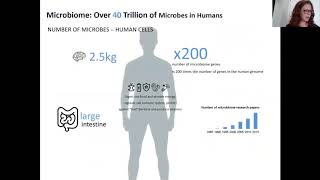
About 40 trillion microbes.
About 5 million microbiome genes, roughly 200 times the number of genes in the human genome.
1.95 (described as on the lower end).
Approximately the 82nd percentile.
Chapters
Hi there and congratulations on receiving your personalised nutrition recommendations. I hope that short clip gave you a brief outline about the background and what happened so far up until you received your recommendations. Today, I'm going to spend the rest of this session going through your personalised nutrition recommendations and showing you how you can use them in an everyday situation. I'm also going to go through your microbiome report and provide you with some insights that we found and your specific microbiome. And finally, I'll just sum up and talk about the effects that you'll see by following your day two personalised recommendations. So let's get started.
Okay, so I'm going to open up the fruits category and you'll be able to see a list of fruits that are better or worse for you.
Now, one of the fruits that you mentioned you enjoy eating is blueberries. So let's take a look at blueberries.
As we're going down the list, we can see blueberries received a bad score, so let's see if we can actually improve it by adding some fat, such as pecans. So I'm going to search for pecans and add just about 10 pecans. It's a nice amount to add and let's see how that affects the score. I'm going to add in half of 20, which is 10, and you can see that the score goes up. So that's great. Now you should be able to enjoy blueberries with pecans without worrying about your sugar levels spiking. I'm just going to save that meal into your menu and give it a name, blueberries and pecans. And then I'm going to put it into a folder under the name of Extras so that you can look at it afterwards. Okay, so what we're going to do now is we're going to compare that same example that we did for you with another customer and see how that affects him. So let's start off by doing the same thing that we did with you, Ben, and search for blueberries on their own. And one cup of blueberries. It's important that we select the same amount and let's see how that affects this customer, Harold, how it affects his blood glucose levels. So we select blueberries and we can see that 1 cup of blueberries on their own is not great. Now, what happens when we add the pecans like we did with you? Let's see if this actually will help, Harold. So we're going to search for pecans and this time we need to add 10 pecans like we did with you. So we'll select the 20 halves, halve that in two, and we can see when we add 10 pecans, the score is not as great as it did as it worked out for you. So what we can conclude is that the mix of the blueberries and pecans in your case, Ben, is really great for your glucose levels, but in Harold's case, not such a great mix. So we might need to find a different example so that we can allow him to actually eat blueberries with a different kind of fat or protein. So I'm going to take an example of a dinner that you usually enjoy eating, piece of roast chicken, and we'll add a cup of brown rice to that roast chicken and see how it affects your blood glucose levels.
So we're adding in a serving of the roast chicken. So far, it's a great score. It's only protein, so we're not surprised. And now we'll add some brown rice to that roast chicken. So we'll choose a cup of brown rice and we can see that the score is not so great. So it doesn't mean that you can't eat chicken and rice, but maybe we can switch the rice for something else, like sweet potatoes. So a different kind of carbohydrate and let's see how that works for you. So we'll choose one small sweet potato and that's actually a great option. So that's a really good meal for you and we can save it like we did with the blueberries to your menu. Again, we'll give it a name of the sweet potato with the chicken and we'll save it to one of your folders under lunch. So that's great. Let's check out another meal that you mentioned that you eat regularly. So I'm just going to go open up your menu over here on the bottom.
Just go over there to the menu and we'll scroll down and I actually previously saved this meal for you because you told me you like eating it. So you can see mixed vegetables with salmon and potato, and it's actually not a great option. Even though it's a really healthy meal, it's not so good for your sugar levels. I'm going to switch the salmon with a different protein, like some ribeye steak, and we'll see if this protein in this combination is better for your glucose levels. So I'm just going to switch that and you can see the score went up. So that's really cool. We can save this so we can update that meal and I can save that to your menu like I did with that other meal. So we're just going to change the name over here. So instead of the veggies with the salmon, we're going to not ribeye, we're going to change it to rib eye and I'm just going to update that so you can look back on that for later use.
Now, another way of using this app is you can actually use the search function to search for recipes. So you do like salmon. So let's see if we can come up with some recipes that contain salmon that are actually good for your glucose levels. So I'm just going to search salmon over here in the search bar and then I'm going to select see a list that comes up with meals containing salmon and we're going to see if we can find out some good combinations of salmon for you. So I just click on meals above there in the blue and as I'm scrolling down, you can see lots of different options. Just going to select one of these at random. The Salmon with Chili Mango salsa looks nice. And actually the app also gives you the link to the recipe. So I can click on that and then you can take that to the website and you can prepare that at home and you can see all the ingredients and the method as well. So that gives you a lot more variety and options to cook at home. If you're looking for some meal ideas and then we're just going to go back there now, what about if you're wanting to look up some specific brands and you want to see if you can.
Eat certain brands of foods that you like. So I'm going to show you an example here. If I look for chocolate, so we're going to look up chocolate and see if we can find out some brands of chocolate that are good for you. So I'm just going to again click on see results for chocolate, open up the brands and you can see a whole bunch of some good, some worse. I'll just select one of these again, the Hershey's one, and we can save that to your menu as extras. And you can therefore eat chocolate from time to time. Now, it doesn't mean that you can suddenly eat a whole packet of chocolate in the morning as much as you like. You need to still keep in mind that there are other things that are important when we're talking about nutrition, not only how it affects your sugar levels, but certainly if you are looking for an extra option to eat now and again, something sweet, then you know that you can have the chocolate, which is just pretty exciting.
Now let's move on to the next part of the presentation, your microbiome report. So, to start off, you might have heard of the microbiome before, but just a few fun facts about the microbiome. So, firstly, humans have about 40 trillion microbes, which is the same number as our human cells. A majority of them live in your gut, particularly in the large intestine. And we have the number of microbiome genes, which is about 5 million, is 200 times the number of genes in the human genome. So that's pretty crazy. Bacteria that we have in our microbiome help us with digesting our food, regulating our immune system, protecting against bad bacteria and also producing vitamins.
So the kind of sequencing that we use when we're analyzing your DNA of your bacteria is called full shotgun metagenomic sequencing. And we analyze the DNA as opposed to the RNA of your bacteria, which allows us to look at more specific species and the functionality of your bacteria in your microbiome.
So let's take a look at some of the things in your report. You can see in the chart on the left how your specific bacteria compare with the average population.
Now, microbial diversity takes into consideration bacterial richness and evenness and is associated with a healthy microbiome and overall wellness. In your case, your diversity is somewhere in the middle and similar to the average population.
Moving on, let's look at your probiotic bacteria. So your probiotic meter is on the lower end, 1.95 and compared to the average population, it's, it's lower. So it appears that a lot of the probiotic bacteria have a very low abundance in your microbiome. How can you increase this? So you can increase consumption of probiotics through specific foods like yogurts, cheeses, sauerkraut, pickles, kimchi, kefir and kombucha. The next part of the report is something called the short chain fatty acids, as you can see. So these are key bacterial fermentation products that are produced when available. Non digestive carbohydrates and fiber are fermented in the colon. They have a role in appetite regulation and providing energy to your colon cells or your colonocytes. In your case, you have a high abundance of producing propionate at the 82nd percentile of the deja population. So that's pretty, pretty high. While you have a lower potential of producing butyrate, which is another short chain fatty acid at the 33rd percentile of the danger population. How can you increase production of short chain fatty acids? You can do this by Eating more fibres, including inulin, fructooligosaccharides, pectin resistant starch, and foods containing these items such as artichokes, garlic, onions, asparagus, bananas and oats, for example.
The last part of the report that I wanted to show you was the vitamin B meter. So a large amount of B vitamins are provided through your food, but there are certain gut microbiota that produce various B vitamin derivatives. In your case, you have a lower likelihood of bacteria in your gut producing vitamin B12 and biotin and these can be found in animal based products and foods like nuts and seeds.
So let's spend a couple of minutes to recap what we learned today. Firstly, remember that a low score on your app, so a low score between 1 and 6 doesn't mean that you need to avoid that food, but rather learn how to improve it. Secondly, pay attention to portion sizes, so if you eat too much of a good thing, you won't necessarily experience the benefits. On the flip side, a small amount of something can give you a much better score than a large amount. And finally, it's really important to remember nutritional density. At day two, we focus on blood sugar, but we want you to be aware of other important elements like vitamin content, calories, processing of the food and saturated fat content, for example.
So following these recommendations over time should result in a number of changes. We expect to see an improvement in energy levels. We expect to see weight maintenance or weight loss, depending on your goals. We expect to see balanced blood sugar levels.
Less cravings for sweet food, more maintained hunger levels and.
More energy when you're doing exercise. When we're looking for healthy individuals, we're focusing more on balanced energy, less cravings for sugar, more appetite regulation. And while with people with diabetes, we're looking more at balancing their sugar levels and reducing their A1C levels. Now, the great thing about this all is that all these factors affect each other as well. So what that means is when you're having balanced sugar levels, you're less hungry, your weight is more maintained or you're experiencing weight loss. When you're craving less sugar, you're more able to lose weight, your exercise performance will be better. So all these factors together will also influence each other.
Ben would like to wish you good luck on your day two journey. I'd like to set up a consult in about two weeks to review how you're feeling and how you're doing in following your recommendations. And finally, remember to follow us on social media, on Facebook, LinkedIn, Twitter and Instagram. Good luck.
More from Ben




The Solution to Aging Might Be Closer Than Anyone Realizes - With Ben Goertzel



