Biohacking With The King Of Cannabis: Ozone Injections, Stem Cell Treatments, And The Magic Of NAD
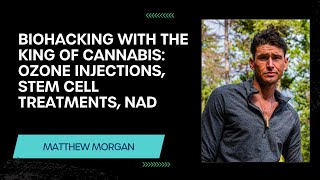
This YouTube interview (Ben Greenfield with guest Matt Morgan) traces Matt Morgan’s path from rural Montana to building and exiting major cannabis businesses across multiple states, working with celebrity brands, and partnering with family offices. It then shifts to Matt’s journey into biohacking and regenerative medicine after burnout — he describes using NAD (IVs/patches/injections), ozone therapy (IV and autohemotherapy), TRT (microdoses daily), growth hormone, a range of peptides, stem cell and exosome treatments (including IV and targeted joint injections), cold plunges, hyperbaric interest, and founding a peptide-access company (thehealthguys.com). The interview also emphasizes mentorship (Harold Schiffman) and investing in areas he uses.
Questions this video answers
5,500 acres.
12 years old.
Rich Dad, Poor Dad by Robert Kiyosaki.
About $120 million top-line revenue and $40 million EBITDA (across footprint in multiple states).
Harold Schiffman (Paradise Valley, Arizona).
Chapters
Got the Lamborghini posters on my wall. That's all I want is the finer things in life. How do I make enough money to get out of Montana, get away from the farm and the things that I started to despise.
Well, folks, a few months ago, I was down in Miami. As a matter of fact, if you heard my interview with.
With Gary Brecker down there and also with Dr. E, you you may have already kind of heard some of the very cool people that I met on that trip or heard about them and from them during a couple of interviews. But during that same trip, I actually wound up going out to dinner, out to a fancy sushi restaurant. Matt, what was the name of that restaurant we went to in Miami? It was fantastic.
Gecko Gekko. Yeah, Gecko in Miami. As a matter of fact, I wasn't quite prepared because I did the podcast with Dr. E, rode my bike across Miami, still wearing my street gear, showed up to the front of Gecko, and they wouldn't let me in based on how I was dressed. So I literally had to go to the department store across the street and buy clothing to come join you guys for dinner. So it's a good memory.
I do recall, I do recall you pulled up on the scooter.
That's right. Yeah. Yeah, that's right. It was a scooter. Wasn't a bike. It was one of those little, little motorized scooters I borrowed from Gary. Yeah, so. So anyways, and it was a great ride through Miami on the way back after dinner at like 10pm or whatever. I don't think I've ever ridden a scooter through so many clouds of cannabis smoke. And we can talk about that later because you might have contributed to that. But anyway, so you and I were having dinner and I just thought, like, you're one of. Have been calling Dr. E. Dr. D's. One of Dr. D's. De. I thought, like, you're one of his patients and friends. And we started talking during dinner and you got into all these, like, fringe health protocols and stem cell experimentations that you were doing and these really cool supplement and dietary stacks. And so, you know, I was pretty intrigued with you after that chat. And then you sent over to me afterwards via email some of the protocols that you're doing. And I thought, gosh, it'd be kind of cool to get Matt on the podcast, A, to talk about some of that kind of like cutting edge health stuff that you're up to and your whole biohacking regime. But B, perhaps just as interestingly, you know, you told me that you, you're from my neck of the woods. You're. You, you, you grew up, up in Montana, but now you're like a massively successful businessman in Miami, primarily in the, in the cannabis space, from what I understand. And, and just have a really cool story from that standpoint too. So I just figured we could hop on and share your journey with my audience. Good game.
No, totally. I thought our conversation was very mentally stimulating. Ben, I didn't know what to expect at dinner. Dr. D invites me to a lot of crazy dinners, but it was refreshing and to meet someone from my neck of the woods and, you know, I was, I was very. You're. You're a wealth of knowledge in the, in the biohacking space as well as just, you know how to live a happy, quality life. So, like, I, I really thoroughly enjoyed our conversation. I'm happy that we were able to do a follow up on your podcast.
Yeah, it was mutual. Of course. Any conversations are great over sushi. That epic. So, so, so anyways, I'll put all the shownotes if folks are listening@bengreenfieldlife.com Matt Morgan. That's M A T T M O R G A N. But Matt, tell me about how you came from Montana to Miami. That's a big loaded question. But we got time, so. So fill me on your journey.
Yeah, happy to do it. So, you know, I was born and raised in Montana. My grandparents had 5,500 acres outside of Missoula. And so for my early life, that's all I knew. You know, I grew up how I think kids should grow up. Riding bikes, you know, building rope swings into the river, getting muddy, getting dirty, hunting, fishing. Like, I wouldn't change my upbringing for anything. And, you know, I feel sorry for kids today that are so immersed in this technological.
You know, matrix that they're in now. It's.
It's sad, but the metaverse versus catching fish in a trout pond is a little bit different these days. Yeah. Yeah.
And it's just like, you know, depression, sky high anxiety, people can't sleep. It's pretty bad. So I'm very thankful that I kind of missed that whole technological advancing in my childhood and also where I grew up. And Ben, you can appreciate this. Being from the Northwest.
It'S like God's country. You know, they call it big sky country. You can see the stars crystal clear at night.
So growing up, you know, I worked for my grand. My grandfather a lot on the farm, but I also Tried other jobs. I worked in a huckleberry factory when I was 14 years old, making different huckleberry products. Huckleberries are this berry that grows up in the mountains of Montana. And they're all these different products are made from gummy bears to syrups, to honeys, to pancakes. I mean, you name it. And so then they ship them, you know, all over the country, sometimes globally.
Same thing in Idaho too, by the way. I grew up in north Idaho. Tons of huckleberries.
Okay. Yeah. I used to go to Lake Coeur d' Alene quite often. So familiar with the area. And it's one of the most beautiful areas in the world that I've seen, so. Got fired from every job I had as a kid. Couldn't hold the job, didn't listen to people, was very against the grain. Started reading a lot of books. My first book I read when I was 12 was Tony. Like my first self improvement book, I guess you could say, was Tony Robbins. Awaken the Giant within when I was 12. And it really started to make me just like.
Question things like authority and why they would make you do certain things. And then I was really starting to understand the power of the human mind. And then when I was 16, I read rich dad, Poor dad by Robert Kiyosaki, and I started to question, like, traditional education and this. I just. I didn't grow up with a lot from a financial standpoint, but I had a large family and it was very loving and everyone was happy. But money was not the center stone of our family. And, you know, we didn't really have a lot of money. So in my head, I was always like, you know, I got to get rich. I got to get rich. I'd have these posters with thumbtacks on my, like, you know, that 80s, like boards that walls were made of that you could like, punch right through.
Yeah. And by the way, this is super interesting too, because our stories parallel in this kind of weird way. My wife grew up. Well, she was born in Montana. She grew up as kind of like a.
Not not poor, but definitely, I would say, you know, not a money focused family. You know, ranch girl, farm girl, make everything from scratch, you know, and live by the skin of your teeth type of mentality. Whereas my family was based on my dad, whose father was a very successful businessman in Miami. And my dad wound up moving out to Idaho. And so I grew up in a family with access to wealth from Miami, whereas my wife came from a poor Montana background. So our family's kind of like a blend of You, Matt.
Amazing. And I appreciate the background. That's very helpful, Ben. So chugging along, you know, got the Lamborghini posters on my wall. That's all I want, is the finer things in life. How do I make enough money to get out of Montana, get away from the farm and the things that I started to despise and end up graduating high school by the skin of my teeth. Had so many absences, they almost didn't let me graduate. Had to go appear in front of a school board and tell them why I should graduate. Even though I had, like a 3.0 GPA or something. I was. I didn't. I didn't apply myself in school, but I still got pretty good grades.
So I graduate, I end up going to college because that's my family wanted. No one in my family went to college, so they're like, you need to go to college and get a good job. So I went to college, and I wanted to study business, of course.
Meanwhile, I just read Think and Grow Rich, which was a game changer for me. Probably the most powerful book I ever read. Really made me start to study the industrial Titans. But so that just. I read that in the summer go after I graduated high school. So summer going into college, and it really transformed my mindset, if you will. So end up going to college to study business. And I figured out that the business professors were basically entrepreneurs that couldn't hack it in the real world, and every business they started failed. So they came to make 300 grand a year and teach, you know, teach college as a professor. So I dropped out on my 10th day in college. My family was extremely disappointed and upset, and from there I was like, well, I got to do something to appease my family. So I.
Where was that, by the way? What college did you say you were at?
I went to the University of Montana, so. In Missoula?
Yeah.
Yeah. Grizzlies.
Yep. I know because I used to go. I used to drive over to Missoula every. Every spring where they'd had one of the first triathlons of the year of the spring season over Missoula. And the. The swim was indoors on the. On the Grizzly campus there, and the bike went all over. But the only thing I. I remember distinctly from that particular race, the Grizzly Triathlon, was almost every year. It was frigid cold, and you were literally, like, riding in your speedo and racing through campus, literally just like goosebumped out, you know, full of full on, frozen. And it was a great race. But, yeah, I've been over to U of M a few times.
Yeah, you know, it's, I mean, it's cold seven months out of the year there, maybe eight, you know, so it's 3,400ft up in the, nestled in the heart of the Rocky Mountains. And I actually learned how to swim when I was 7 years old at that grizzly pool that you're speaking of, where you did the triathlon. So funny. So became an electrician apprentice with the electrical union when I was 19 years old. And my family's like, oh my God, you're gonna be electrician. This is so great. You know, you'll make 70,000 a year. You'll be able to have a family support. I'm like, this is the best news we've ever heard. So I start doing that go around the, go around the state doing different high end electrical jobs because I'm a commercial electrician apprentice. And I did that for about 18 months. And the negativity on the job sites was just incredible. You know, how do, how do we work the least amount possible by still getting paid and not getting fired? And they also protected each other. So it was always, how do you stick it to the man? And that just really was a crippling mindset for me. So I, I resigned after 18 months as an electrician apprentice. And they did everything they said everything they could to try to get me to stay out. I was, I was a very good hand. But I resigned. My family again was very upset. You know, they just think I couldn't hold a job or do something for a long term. They thought there was something wrong with me and I was a party boy, so that didn't help. And so from there I actually, my father, for my 20th birthday got me my real estate course to get my real estate license. And after I resigned from, I took the course. Then after I resigned from electrical, I became a realtor. And I looked like I was 10 years old when I was 20 and I was wearing a suit that I was swimming in. So I can't imagine anyone would want to buy or sell a home with me. And so the way I funded that because I didn't have any money was I went and applied for like 80 credit cards. I got approved for like 40 of them. So I had like 60, 70,000 in a line of credit with these credit cards. And that's how I lived and started my real estate career, was with the credit cards. And I didn't sell a house for six months. I hired a real estate coach. I'M doing cold calls. Every day I'm cold, knocking on houses, getting stuff thrown at me. It was, it was eye opening and it really made me develop thick leather skin and I, it made me uncomfortable every single day to the point of I started not getting uncomfortable anymore. So I became comfortable being uncomfortable. And after six months I, I was maxed out on all my credit cards. I had $4 in my checking account. I was 60, 90 days due on my rent or not my rent, but my, all my payments, my truck payment. I had to get a truck so I could drive people around for real estate. And I had to move back in with my mom. And I was like at my, I was at like the wall and rock bottom, you know? Yeah. Like it was, it was kind of like the make or break moment. And I end up closing a real estate transaction. Made fifty five hundred dollars. And I was just like, yes, like, I'm rich, I've made it. And then after that I got confidence and started closing one after another. And I did like, I think I did like 13 transactions in my first year. Next year I'm running, I'm the managing partner of the real estate office. I'm running the company. So I'm crushing it. You know, buy the big house when I'm 22, have the new cars and I start working with developers and builders. And this is 2007, 8ish. And I'm over levered. You know, we're taking out loans to do all these developments, build spec homes, everything.
What city were you primarily operating in for your developmental real estate?
Missoula and the surrounding areas.
Okay.
And then, you know, the, the meltdown hit in, in the fall of 08 and I lost everything. I didn't understand what leverage was or being over leveraged or economic cycles. And I lost the cars and the house and you know, ended up was in my buddy's basement with like $300 to my name. So that was 2008. I was 23 years old. From there I'm like, all right, you know, I know I can be successful now. I proved it. Now I just got to figure out the next big thing to sink my teeth into. And after a lot of research online and, and observing some of my friends that were using medical cannabis, I was like, all right, I think this is the next big thing. I think marijuana is the next big boom. It's going to be like alcohol. It'll be the same size, it'll be accepted. And so I went all in on it in 08. I scraped together, I think $80,000 from friends and family because they, they saw me successful real estate. So I had a little bit of, of.
Juice there because they're like, all right, you know, he can obviously make money. And I built out a cultivation and went and gathered a bunch of patients and started growing medical cannabis. Failed miserably at first. It was much harder than I thought. And then I got into, I started getting my feet under me, doing well. And then this investor.
You were growing it yourself?
I was growing it and then selling it to the patient.
Okay.
As a caregiver. So then this gentleman that sold this waste disposal business for 40 million was like, hey, I'm building this high speed cultivation and spend about 3 million. Would you be my partner on it? And that was in Deer Lodge, Montana. So I was like, all right, I could do that. So we came out like 20,000 foot facility for, at the time, in 2009. That was a pretty big deal. And we started, you know, pushing out products, selling to patients and we were doing like 8 million in revenue or something and like a million EBITDA. So cranking right along for Montana standards. And then in 2010, Montana legislation came in. It was like, yo, this, this isn't going to work. There's a dispensary on every street corridor. We never, this is not how this program is supposed to be. We don't, we don't want this, you know, conservative Montana. And so they made it so you could only grow up to 18 plants as a provider. And and so I was growing like 3,300. So I had to shut the whole thing down and yeah, again, just had to eat it and basically start from scratch in 2010. So I started to look around the country. I'm like, I, I know I can do this now. I've proved myself in Montana. Where's the state that's, that's gonna rip open and you know, release a program that's very advantageous to the operator where I can really scale and do big business. It happened to be Arizona, so I packed on my Silverado and drove straight to Phoenix, Arizona in 2010 and open up a chain of hydroponic stores called Ugro that sells the lights and equipment and nutrients and things of that nature. I opened three of those and was selling that to all the kind of the caregivers and whatnot networking throughout the cannabis community in Arizona. I then apply for the license when that time comes in late 2010, early 11, and end up winning the Sedona license. At this point, I have a mentor so this is the first time in my life I have a mentor, an older gentleman. He's like a second father. He's been there, done that, built massive companies, four or five thousand employees. So he's like showing me how the world works. And, you know, I was like a stumbling entrepreneur until I met him in the minute. Since I met him, it just like went straight up.
So are you able to share his name or is he. He a top secret mentor?
Yeah, his name. His name's Harold Schiffman. He still lives in Paradise Valley, Arizona. He's almost. He's 40 years old than me, so he's almost 80 now. He was 65 when we met. And so he splits his time between Sedona and, and Paradise Valley, Arizona. He's actually writing his life book, and I'm actually one of the chapters. And I'm like his, you know, his. His protege, I guess you could say.
How do you get. Just for people who might be interested, when you run into somebody like that, do you simply ask them to mentor you, or was this just a relationship that organically developed?
So I'll kind of give you a little background on that. And people ask me this all the time, actually, but. And I had other mentors, but it just wasn't the lock and key fit like this was. And so my buddy in Arizona who I'd met was like, hey, you got to come to this entrepreneur class. It's every Wednesday. It's so good. This guy's the man. So I'm like, I don't really. I don't like classrooms. I don't like this nonsense, but I'll go. So I go, and there's like 50 entrepreneurs, and they're all shapes and sizes, all ages, all the way up to like 55, and all different businesses, all different size businesses. And the instructor was Harold. And you know, you have to go around the class, say your name, what you do. And I was annoyed that I was there. So they're like, hey, you know, I was like, hey, my name is Matt, and I grow pot. And he, like, looks at me funny and then just continues on with the class. And at the end, he was like, hey, can you stay after class? I want to talk to you. And I'm like, oh, my God, I'm getting in trouble in class that I'm not even really in. So I go up to the. To the front of the class after people are leaving or whatever. He's like, what do you mean you grow pot? I was like, I have these warehouses up in Deer Valley, I build them out and I grow cannabis and I sell to other caregivers and patients. He's like, I want to see it. So, like, three days later, I. I drove him or we met up there, and I roll up these. I had like, probably. I had two units. I probably had like 4,000 square feet. So I roll up these garage doors, not already done in Montana. So I knew exactly how to build it, exactly the throughput and everything. And these are like finely tuned machines this time. So I roll up the garage doors and he's like, holy crap. He's like, this is not what I had in my mind. And I'm like, yeah, it's like a machine. And so from that day after, we started talking, like almost every day, and he just started being like, hey, you know, do you need help with this? I. Because he had a massive network, right? Like all the, all the big boys in Arizona and beyond. And he's like. And I'm like, hey, I just won this license. I need to raise some capital. So he opened up his Rolodex and I raised like $7 million in 30 days.
Wow.
Pitching to his. Pitching to his people. And, you know, he became like a minority partner. And just, he's just. He's a guy that doesn't like. When you don't have a lot of money, you think money's the answer. And then when you make a lot of money, you realize that money's not the answer.
Yeah.
And what's really fulfilling as a human being is helping other people and seeing other people succeed. I had no idea why these older guys wanted to help me. I'm like, there's nothing in it for them because they already made all this money and they still feel empty, but they feel fulfilled when they see a young guy get to the next level from. From their tutelage.
Yeah. So by the way you bring that up is interesting because I never got that either. When people just go out of their way to help me. And I'm. I'm 41 now, and it's kind of interesting because I've started to get a lot of satisfaction when like the, the 20 or the 25 year old podcast or health influencer or personal trainer reaches out to me for advice. And I actually am able to tell them something that I wish I'd known when I was their age. But you don't realize that as you get older, it's just something you feel like doing. So, like, if you're younger and you're listening to this, if you have hesitation about reaching out to some older person who you admire in your sector for advice. I would say do it because you'd be surprised at the help that they'd be willing to give you. Even if they don't have a ton of time, they can make connections for you, they can network for you. And it is something that I've personally found a lot of satisfaction from.
I'm with you, Ben. The single most important thing for me and my success as mentors, reading the right books is up there as well. And also surrounding yourself with the right people, those three things are the most important things in the world as far as being successful and living a fulfilled life. Because no matter how successful we are, I still don't have the wisdom of an 80 year old. So we come up to hurdles and we come up to different sticking issues in our life, no matter what age we are. And it's nice to be able to call someone that's been there, done that and be like, if you. I'm 38, right? So I'm like, hey, you know, Harold, if you're 38, here's what I'm going through. He's like, well, if I could go back and do it again, here's how I do it. You know, like experience and wisdom are. There's no, there's nothing that you can exchange. I don't care how smart you are. It's just, it's not the same. So. And I love helping young people. I mentor some kids in their early 20s and I love to see like that, that gleaming glimmer in their eye, like the eye of the tiger almost. You know what I mean? Like, it's, it's like they have that, that same look you did when you were that age. You're like, oh, man. Like, I, I like this kid. He's a good. He looks like he reminds me a lot of. And they, they also.
Like you if they, you remind them of them when they were younger.
Right.
It's almost like they get a second shot and you're like their racehorse, Right?
Exactly. That's a great way to describe it. They can almost live vicariously through you.
So it's a. And it makes them feel alive again and young and like when you win, they win.
Yeah.
You know, through, through connection. So, you know, I talked to Harold for 45 minutes this morning while I was at the gym. Like, he's like, I have rich dad, poor dad, right? Like, I have my real dad, who I. He's like my best friend. And I have Harold, who's Who's like my second father.
Yeah.
And I, you know, I owe the world to him.
Yeah.
So anytime I start new, anytime I start a new company or anything, I just throw him a couple points on the cap table. Just, just cuz he is who he is and you know, I'd never be.
Able to do things too. You can simply give some of these people who are helping you out a little bit of equity on the side, of course.
And it's no skin off your back. Especially like, you know, when you're the, the maker of, of the destiny of the, of the company. Like throw them 3, 4, 5 points, you have majority of the cap table.
Yeah.
So yeah, it's, that's another way. That's just a little thank you card. And if any of these things blow up into 8, 9, 10 figure companies, like, it's a massive win for them too. And it's just like, hey, thanks, I appreciate you always being there.
Yeah, it's a good point. Good point. Okay, so, so you're with Harold, you're, you're building up these companies down in Arizona and then what happens?
Yeah, so I have a Sedona. Then I'm like, all right, I'm gonna go grab downtown Phoenix. I go negotiate Phoenix by the downtown Phoenix license. I have my vertical that Harold already saw and I expand on that and I get. So I, then I built the commercial kitchen, the extraction lab, and I open bloom dispensaries and the thing just takes off like a rocket because of the knowledge I'd acquired. And I was a younger CEO, so I was always using the new technology.
Like advances at hand that the older guys weren't using. So I'm firing mass email blast and slicing and dicing data and retargeting with emails and like no one was doing that in cannabis. They just opened a store and said, I'm going to sell this. And hopefully it sells. I treat it like a real business. Like, you know, like I'm running a, like a target. And so I'm using real world marketing. I'm attacking this like it's a, like it's like it's a normal business when everyone's like, oh my God, you have a cannabis license. You're selling cannabis like this coolest thing ever. I'm like, no, this is another, this is another commodity now. We got to brand it, we got to market it and we got to treat this like another business. So I ran from, in less than in 18 months, I went from 0,25 million in top line revenue doing like 8 million. But I had 125 employees. The thing was just ripping. I'm 20. I'm 27 years old at this point. You know, I became a millionaire at 27.
And I just, just curious about margins in the catalyst. You're an 8 million EBITDA. What, what do you know your approximate, like, net profit percentage?
It's five, six.
Yeah. Yeah. Okay.
So it just happens so fast. Like I, I go from getting a salary of 3,000amonth running my hydroponic stores to this thing takes off like a rock. And it's just like 10,000amonth, 20,000amonth, 50,000amonth, like 80,000amonth. I'm just like, you know, it's just like the lift was so crazy.
Yeah.
And so ran that up. Started to get the attention of private equity guys, family offices in late 2013, Q3. And I ended up becoming very close to a multi billion dollar family office out of Florida. And they were like, hey, let us buy out your partners in Bloom and let us become your partner and let's scale this nationally. I'm like, wow. They're like, we'll give you unlimited capital. You'll never raise capital again. I'm like, oh my God, this is incredible. So they tried to buy out the existing investors in Bloom. They want to 10x their investment. So they wanted 70 million. And the family office, like, we're not paying 70 million for these guys to get out.
Like.
So they brought me back to Florida, like, listen, we know you love Bloom, it's your baby, but we just, we really want you. How do we get you? I was like, make me an offer. So they said, we'll start a new company, we'll capitalize $100 million and we'll be partners. I was like, wow, okay, that's. That's the most money anyone's put into cannabis to date. And I'm 28 years old. Like, let's go, you know. So we start. I sold my interest of Bloom to a commodities trader from New York. And he actually built Bloom up further and sold it for $230 million about two years ago.
Wow.
So I start new co in Q1 of 14. I started buying license Arizona. I go apply in Nevada, Las Vegas, all around and start buying buildings. And I end up building a massive footprint over three states.
And run the thing up in three and a half years. I basically run up to 120 million. Top line revenue, 40 million EBITDA. I have over 500 employees under management. I was number one, 40 under 40 in cannabis in 2016 by several magazines. I'm doing celebrity brands running around with Berner, who you might have saw on the COVID of Forbes. We kind of grew up in the space together. I did Khalifa Kush for Wiz Khalifa.
And so it was just, it was a crazy time. And it was a lot of interviews, a lot of press, running a very large company that went from zero to nine figures in three and a half years. And so the thing was just printing money and doing very, very well.
And so with some, with some of these guys, like I think you say Khalif, like, like some of these rappers or other notable figures, you're literally creating customized strains for them that they're branding. And then their audience is purchasing cannabis strains that are, that are branded by and marketed by these specific celebrities or musicians, etc.
Correct. Correct. So Burner had cookies and we did some other brands with him. He, he's now like the. Forbes said he was the third or fourth most wealthy rapper because of his cannabis empire.
Wow.
So he's up there with like, you know, under like Diddy and Jay Z. Yeah. Wiz, you know, of course, has a massive following, does very well. But we did Khalifa Kush for him. And every time we do a drop of 1, 2, 300 pounds, it would sell out in 24 hours. Every kid wanted what Wiz Khalifa was smoking. He was like the modern day Snoop Dogg. Right. Of our time.
Yeah. So I can blame you for some of those cannabis smoke fumes. I rode my scooter through on the, on the ride back in Miami that night.
Possibly it could have been some inklings from the West Coast. The west coast culture of cannabis drives everything. That's where, that's where the global cannabis culture comes from, is the West Coast. California specifically. And so at the end of 17, me and the family office kind of had our differences, were butting heads. So I end up resigning a CEO and they bought me out. And after that I just, you know, I kind of. I kind of had some wealth and I'm just like, wow, what should I do next? And I was running around with this. I became really, really close to this guy named Dan Bulzerian. I don't know if you know who that is.
Yeah, I've heard his name before. Isn't he kind of like this high rolling, kind of controvers, commercial guy on social media who's showing himself with all the girls and yachts and things like that?
Yeah, yeah. So he lived in Vegas. I lived in Vegas because that's where Reef was headquartered. Both Kind of young, had money, you know, I had a lot of girls running around. So we end up coming together. And yeah, he's like a. I guess one way to describe is like a modern day Hugh Hefner. You know, he's like, he's about your age, always has 30, 40 girls around him, loves to shoot guns and race cars, hot trucks and all that kind of stuff. So we had a natural gravitation towards each other. Hung out, you know, for a few years, and he was like, hey, I want to do a cannabis company, bro. Let's partner. And so I was like, all right, let's do it. You know, you're one of my closest friends. This will be fun. We'll have a good time. So we started a company called Ignite, which he still has, and I. I helped him create it. Started all up. We ended up moving to LA together. And then I just kind of had some differences with some of the. Some of the people involved. So I just decided to remove myself after about a year of that situation. And then I did a biotech company after that. I took a step back from cannabis. I was a little burnt out. And I ended up doing a biotech company using plant compounds to create proprietary formulations to go after over the counter pharmaceuticals, synthetic pharmaceuticals. So I brought on like Robert Gallo onto my science team. He's discovered hiv. I brought on Daddy Mary. He was the number one cannabinoid researcher in the world. Joe Fortnack, he ran a massive pharmaceutical company, you know, was in charge of like 500 million in budget. So my, my team was like, stellar and it opened up a lot of doors. So I did that.
Through 1819.
And then built that up. And then that got acquired in Q1 of 20 by a publicly traded company right before COVID hit. So I timed it pretty well.
All luck, of course. And then Covid hit. I'm just kind of hanging out, you know, didn't have a lot to do. Everything was kind of on standstill. And that's when I decided to move to Florida because they had less restrictions than most, most other states. And I've been out here ever since. Took. Took some of the wealth I acquired through my journey and deployed it into a very diversified portfolio. I have some operating companies, some passive investments in there. And then I built and hired a team that oversees and manages that stuff. So now I get to oversee that at a very high level, look for new opportunities, and then do cool stuff like podcasts with you.
Yeah, podcasts and stem cell injections, which we'll get into. But first, like, if somebody does Google your name, one of the first results that comes up is some viral YouTube video about how you lost $2 million in 48 hours. What was that all about?
So that was back in the day when I really couldn't afford to do something like that. And it was 2009, actually.
And I knew cannabis knew how to cultivate, but I wasn't, like, an expert. Like, you know, as far as building a cannabis company, I'd say I'm top 10 in the world. But to get into the nitty gritty of growing the cannabis, I always hire experts for everything, and I'm kind of the conductor of the symphony. But I was like, hey, kick on the CO2.
Higher.
Higher. Because CO2 makes the canopy get larger, the buds get bigger. More money was growing in these massive horse troughs that were like 200 gallons. And I was growing, like, six plants in a horse trough. It was very archaic compared to how we grow today. But, you know, this was 14 years ago, so cut me a little slack. CO2 is heavier than our atmospheric air. Well, I figured this out the hard way in the most very expensive way, but in this room was big. It was like 6,000ft. And I didn't know this, but the plant's root zone breathes oxygen. The plant's canopy breathes CO2.
So I was pumping CO2 into these rooms, getting ready for a harvest, trying to make as much money as possible. That CO2 sank into those big horse troughs where it had nowhere to go, and it literally suffocated those roots. Every single plant in their died in 48 hours, and I was, like, two weeks away from harvesting.
Wow.
Yeah.
Did you lose it all or were you able to fix the plants?
No.
Wow.
I lost it all.
Wow. Amazing. So. So it turns out that even if you're the organizer or the conductor of the orchestra, you got to know a little bit about the chemistry, too.
Well, that's what made me dangerous, is I kind of have a branding and marketing mind, but I started on the cultivation side of cannabis. So I understood. And I'd been through the trials and tribulations of cultivating, which is probably one of the harder parts of cannabis. So I came from that and then built the vertical from the back up to the front end. And so that's what I feel like. Gave me a step up against almost all the other competition. Like, in 17, Reef was like, the largest, most profitable legal cannabis company in the country.
Wow. Wow. Amazing. Well, you know, the. I don't think Cannabis, even though it's known for a lot of its medicinal and health uses, I think there's possibly a stereotype in the cannabis industry that it is like the, the gold tooth, you know, pot smoking rapper who might be an influencer or an entrepreneur in the industry, or the dude who's kind of sort of businessman but has, you know, dreadlocks and it's high in his own supply half the time and maybe you can't trust him. And I didn't really get that impression from you. It seems like you're, I mean, not only are you a physically fit specimen, but you also seem really into the health side of things. So when did that become a thing for you?
So first of all, I think if you're going to use a mind altering substance, I think that anything natural is the best way to go. Like alcohol is very, very bad for you. In my opinion, coming from someone that's drank a copious amount of alcohol in my life, I drank heavy from 14 to 34 years old. If so if you're going to use something mind altering, I would recommend mushrooms or cannabis. Psilocybin or thc. Pick your poison.
But what would be an example of a synthetic option that you would compare to those that you would think is less favorable?
Acid LSD for psilocybin for cannabis. I mean there's synthetic, like there's synthetic stuff they sell at smoke shops. It's really bad for you. They spray these like horrible things on it to get you high. Yeah, yeah. But I'm trying to think of something that's like more mainstream, I guess.
Like ketamine is very mainstream.
I like ketamine though. I think ketamine has its place in the world. And I've actually had a prescription to ketamine before for sleep, but it didn't help me sleep at all. It actually had a counter kind of.
Kind of floods the glutamate receptors in such a way that it makes you tired, but you don't get good sleep architecture with ketamine in most cases, unless it's like a very small dose to deal with a little bit of anxiety and even that's better for daytime use, not right before you go to bed. So yeah, ketamine, even though you might feel like you're super relaxed, you're not going to sleep well on it. You're going to more kind of like lay there and kind of half journey in your mind and not be able to shut down a lot of the kinesthesia or the synesthesia that occurs when you have that in your system.
And that's why I love you, Ben, because you can drill down and give us a real world snapshot of what's.
Going on and by the way, total rabbit hole. And then we can get back. Because I actually want to hear about, I want to use this chance to jump into some of your health protocols and this giant list that you sent me of all the things that you do. But LSD is interesting. I had a fascinating podcast. It might come out by the time this podcast is released with Andy Triana of Superbrain. And he described to me how like more than half shockingly high percentage of the top ultra marathoners in the endurance athlete community are not only using low dose thc, which didn't surprise me ever since I read this book called Runner's High, about how THC can be used for focus and a little bit of a painkilling effect during very long trail runs like up in the mountains, or extremely long bike rides or swims or things like that. You know, like around two and a half to five milligrams of thc. But what shocked me was the number of them who use LSD, you know, like a 10 to 20 microgram dose of LSD for the similar. I think the focus enhancing and nootropic effects of that wouldn't surprise people, but there's a lot of people who microdose with it for daily productivity or creativity. But it turns out it is one of the strongest substances known for shifting the body into beta oxidation or fat burning during exercise. And so for endurance athletes who are going for very long periods of time, this combination of LSD and THC in low doses appears to be like the secret sauce that a lot of the top people are using now. Isn't that interesting?
That's incredible. I had no idea. I just thought it was a bunch of people, you know, watching the walls melt. Yeah, no, no.
And I've, I've taken like 10, 20 micrograms of LSD before as a nootropic agent. And it actually, it is something that seems to have, you know, as promised effects in that department. But obviously you have to be incredibly careful because, you know, the difference between say like 10 micrograms and 50 micrograms could be the difference between a very productive day and a very distracted, hyperactive, you know, what, walls nearly melting type of day. So yeah, that one you got to proceed with caution. But it is, it is interesting. Now you have this whole like, protocol that you sent to me. As a matter of fact, you're kind enough to shoot over me. Like your Monday through Wednesday protocol. And a lot of the stuff I think people will be familiar with, like cold plunge, red light things along those lines. But I think what, what first kind of like perked up my attention when we were at dinner was you said, oh yeah, you know, I go down to, I think you said Costa Rica. I do these crazy injections. Like, I think it's a, some kind of a stem cell protocol. So tell me a little bit about that and, and your, and just your, your general regime in general, you know, we, we have some time to dig into it, so.
Well, first of all, I'll tell you about how I got started this. I think it's important.
I, I, I built two nine figure, three nine figure companies by the time I was 33 years old. And so I'd say I'd done more than most in that amount of time. And I was a big partier. My neurotransmitters were destroyed, looking back. And so I burned out when I was 33. Didn't want to get out of bed, didn't want to leave my house. And that was very unlike me. I'm a very high energy person, high output, don't sleep that much. And so it was very uncharacteristic of me. And I started searching for something to get me back on track. And this new thing started to pop up in Beverly Hills called NAD Plus.
Oh yeah.
And so I was like, you know, one IV of 250 milligrams was like a thousand dollars. So I was like, I'll try it. And so I go to this, this high end doctor's office, I, I, I get this IV in me and it feels like the spider man serums going into me. Like it was the craziest feeling I'd ever felt. I was so run down. And so can you imagine what, you know, NAD is basically getting your cellular structure back to an original state. Imagine how much work it was doing inside of my body. So I felt like I was like, literally I, it was unexplainable. So after I did, I was like, wow, I feel a little bit better. Long story short, I did it four days in a row and then I start doing it two, three times a week and I start to get back on track and I'm like, wow, like, and I, I come from a very addictive family from a genetic sequence like alcoholism, drug abuse, like, you name it. And so I get very into things like business, right? And I like cars and I like, I like biohacking. And health. And so I was like, well, if this is out there, what else is out there? And that's, that's what really hyper, I guess, thrusted me into this whole realm. Yeah.
And by the way, I'm glad you pointed that out about nad, because a lot of people view it as like an age reversal or longevity agent. But if you're beat up, if you're sleep deprived, if you're addicted to a substance, if you've had a long bout of travel and your circadian rhythmicity or your inflammation is off or up, it is almost like this magical shotgun molecule for all of those type of things. I mean, I did a subcutaneous 1000 mig injection when I got up this morning. And I'll usually do an injection or an IV once or twice a month. I wear the patches two or three times a week, which slow bleeds about a thousand milligrams over 12 to 14 hours into my system. And then I also take oral supplementation with the, I use the biostack lab stuff and I go five days on, two days off. So my body just stays super sensitive to the nad. And so, yeah, I use nad, patch, injection, IV and oral pretty frequently in my own protocol. And I have a very kind of hard charging lifestyle. A lot of travel, less sleep than I'd love to have. And it's a game changer for me.
Yeah. Anytime I don't, I feel a little off in the morning, I'll shoot two 5300mg into my shoulders and you're back. I mean, it snaps you right out of whatever you were in.
Yep.
But it's one of my favorite things in the world.
So I started doing that. Next thing you know, I'm, I'm looking at, you know, IGF1 and some different antioxidants. And then I started just getting more and more into this routine meeting. I, I actually stumbled upon you. I was, I was working with a Biohacking Doctor named Dr. Michael Major in Scottsdale, Arizona. Oh, you know, get me on a reg. Yeah.
Oh my God.
So that's my buddy.
Oh, Mike's amazing. Mike's the guy I get my, my sexy time lozenges from for, for me and my wife. The PT141 to Dallas Morphine lozenges for, for date nights. Oh my gosh. Yeah, he's, he's amazing. He's a wizard. I still haven't had him on my podcast, but I need to at some.
Point so that he was really like my first like day to day coach. Like he would come to my house three, four times a week, and we would hang out. But Mike. Mike put me onto. He's like, bro, you got to start listening to this guy named Ben Greenfield. Like, you know, the. So that's. That's how I first got, you know, discovered you. Yeah. And so Mike got me on some really cool stuff, and that's where I started direct injecting ozone into my veins. Mike was the one who showed me about it. And so we started to have, like, ozone parties at my house, you know, a couple times a week.
Tell me about that direct injecting ozone into your veins.
So I have an ozone machine at my house, and then we fill up 60ml syringes with the heaviest concentration of ozone that the machine will produce. And then I actually give myself an iv, which I used to be scared of needles. Now I'm getting myself IVs just to push. Pretty wild.
That's interesting. You know, my setup, I think I. It's a little bit time consuming these days. I just use an ozone oil suppository and get the rectal delivery of ozone. But the. The way I've used my ozone machine is I'll actually pull two 60cc syringes of blood out of my arm. And then I put that in with another couple of 60cc's of ozone from the ozone generator. And then I've got simply O3, makes a blood irradiation device. So I pass the blood through that blood irradiation device, then it goes back into the other arm. So you get ozone plus the blood irradiation, which uses the. The light photons to activate more ATP and kind of cleans up the blood a little bit too, which is fantastic if you have, you know, not that I'm trying to give up medical advice, but you have like, lime or mold or something like that. And so you can do what you just described, but you can pull the blood first, ozonate it, irradiate it, then pass it back through and simply O3. Has one of those home machines to do it.
I'm gonna actually check that out. Yeah, Because I used to go to the doctor, and they'd pull out a couple liters of blood, and then, you know, inject with ozone and spin it or whatever they do, and then put it back into me. And then we just started injecting straight into the blood. But you just got to go slow and be careful, obviously.
Yeah, yeah, yeah, be careful. If you haven't done this before, I highly recommend you seek the advice of a physician friend Or a nurse practitioner or medical professional. But anyways, yeah, ozone is great.
And if I didn't. If I didn't have Mike at my house, who's, you know, doctor, I would never, like, have tempted this on my own. You know, I had professionals at my house like the first dozen or two dozen times, maybe more, that we did it. So, yeah, injecting gas straight into your vein just sounds disastrous in itself. So.
Yeah. Yeah. Okay. So. So you do the ozone and the nad, and that's part of your protocol. And this. These are two things that kind of started to get you into some of these other things that you're doing.
Yeah, I mean, and what I did, I started to have real issues in 2019 when I was just doing NAD and. And I. They wanted me to check me into the Mayo Clinic because I couldn't gain weight. I was taking like 80 pills a day, probably clogging up my whole digestive system. And I went, did a blood test, and my test was like a. Like a 180. I had no testosterone in me.
Oh, okay.
Yeah. So I. I got on. On trt, and now I run it around a thousand. But it changed everything, you know, I. It turned me into a new human. Then that's after. While getting on TRT is where I met Dr. Mike. And so that's when he opened up Pandora's box to me. Of all the things that are out there.
Yeah. How do you administer your trt?
I do it daily. I do. So I do microdosing daily. I think I've tried it every way, and for me, it's the best by far.
You mean injection?
Yeah, microdose injection every day in the shoulder. Cool.
Cool. Yeah. I know a lot of people who microdose use the, like the scrotal cream, like a little bit of that in the morning or in the evening. And they. If, like, microdosing is way better because it more naturally mimics the natural diurnal variation of testosterone. You know, if you micros with the needles, obviously it's more injections. A lot of people don't care about that. But people who are needle phobic often go with the microdosing morning and evening using something like the gel or the cream.
Yeah. As far as delivery, I'm. If I can inject, I always inject. Yeah, but I get it. A lot of people don't like that.
You know, they don't like the pincushion effect.
Yeah. Right.
So. So you got nad, you got ozone, you have testosterone, and by now you're Starting to feel pretty good. Yeah.
Yeah. Started trying out some other things. Some inhibitors for growth hormone, you know, IVmorelin, CJC157 or. No, CJC. What is it?
CJC1295. You mean stimulators of growth hormone? Not, not, not inhibitors, growth hormones, secretagogues. Yeah, exactly. I think the, the, the CJC ipamorelin combo in the morning and the Tessamorelin in the evening. That's the best peptide combo I've ever found for, for increasing the growth hormone. And, and it gives you tremendous, like, muscle gain, fat loss, sleep benefits. So that's, it's a great peptide stack.
I'm actually on to just straight growth hormone at this point. I'm using genotropin.
Yeah, yeah, that's good. If you have, if you have growth hormone receptors, a lot of these plant flavonols, like Kerasotin, for example, they'll actually increase growth hormone receptor sensitivity and kind of allow it to be, I guess, in layperson's language, a little bit more naturally distributed throughout the body. Because some people get concerned about, you know, carcinogenic potential, growth hormone, et cetera. But I think if you're having a lot of plant flavanols and polyphenols and even in slightly higher doses using something like Kerasotin or injectable keratin, that goes really well if you're using straight up growth hormone.
Interesting. I'll, I'll have to check that out. I appreciate the, the feedback on that.
Yeah, yeah, for sure.
So, yeah, I did that was, was doing a. Matt started doing a massive amount of glutathione. Felt, you know, that made me feel even better. And, and so just continue down the path. I had the lozenges that you love from, from Dr. Mike and obviously that, you know, adds another level to your, to your relationship status with, with your loved one.
And then I moved out of Arizona and I moved to Miami and someone said, hey, you got to come down to Costa Rica. There's a lot going on. So I went down there. I met these crazy stem cell doctors at this party that has just started a new clinic called RMI International. And it was actually the, the brains or the visionary of the clinic. His name was Vincent Gia Papa. He's out of that, like, pharmaceutical nucleus up in New Jersey.
Okay.
And he was actually running up for the, for the Nobel Prize in 2014 for his work in stem cells. And we can get into that as well. But he, he was like, you know, one of the godfathers of Stem cells. And I like what all these guys had to say. I told them about my regimen I was doing for, for biohacking. They were very impressed that, you know, all the things I was taking simultaneously. I met Dr. D and he expanded my program even much further, which you saw. I sent that to you as well.
Yeah.
And they're like, why do you try stem cells? I'm like, I mean, what could go wrong with stem cells? Let's, let's go. So I end up doing a, my.
First treatment was a lot, by the way. If you're, if you hook up with a shitty organization, obviously.
Yeah, yeah.
You know, discs injected and blown up and you know, in the back or people aren't using ultrasound guided imaging. So yeah, stuff can go wrong, but if it goes right, it's really right.
Yeah. And thank God, like, you know, I didn't get connected to some guys that were doing it in their van or something. And it was some of the top guys in the world. Now looking back and so end up just for the first time. I did 100 million stems, all three types in the intravenous and about four, I didn't feel anything. And then four hours later.
I, I called the doc. I'm like, hey doc, I don't feel so good. Like I can't even hold my head up. Like I think, I think something might be going wrong. He's like, he's like, I just put 100 million new cells in your body. Like your body wants to rest, like go to bed.
Yeah.
So I went to sleep for about four and a half hours. I woke up and I've never felt like that in my life. I felt like I'd been looking at the world through like through like a blurry lens and someone took that off and I saw the world. And I'm in Costa Rica. Like so I'm in the jungle. And I looked, I, like I'd never seen the colors that vivid. And it just, my mental clarity had. I never felt it like that. And my sense of well being, it was like I was on drugs, but I was, I wasn't. And I just felt like my self confidence and I felt like I could do anything.
Yeah, yeah, you feel, you feel superhuman. I mean like when the, when the pain and the soreness wears off for me when I do, because I do that full body stem cell makeover up in Utah and you're like hobbled up for a good several days afterwards and as soon as that wears off, like you'll go to the gym and just Crush it and wake up the next day and feel like you didn't even work out. Like, it's, it's nuts. What happens when you get a high, high stem cell count delivered into every joint in your body or via intravenous administration? You know, I think a lot of people, again, like nad think it's just a longevity play, but I mean, you feel superhuman on these things afterwards for.
Like seven to 10 days, you're walking on water. And then I tore both shoulders micro, like small tears, you know, about an inch in each shoulder, exact same place from bench pressing and being, being stupid. So instead of. I've never had surgery in my life and I'm trying to avoid it at all costs if I can. And so they're like, hey, come up and let us inject stem cells directly into the tears with high definition ultrasounds. So I went and did that. Obviously very painful. But I was back in the gym in two weeks lifting light weights. In six weeks. I was, I was fully recovered in six weeks. And that was a year and a half ago. And I've had no issues ever since because when I would box and spar, like, I'd get shocks through my shoulders. When I do, when I'd hit something hard because of that tear would just be like, you know, it would give me a shock. And I know I still train heavily and I, I feel nothing. Like, I, it's like my shoulders are.
Brand new and so how often do you go to Costa Rica for these injections?
Obviously my schedule's busy, but I, I go three to four times a year.
Okay.
I would do it every month if I could.
Yeah, yeah. And, and when you go down there every time, are they doing joints or is it intravenous administration or.
No, I always do intravenous. But then like, you know, if I have an issue with the joint or I have an acre of pain somewhere, I'll direct inject. There's. Yeah, but normally it's intravenous. I did a stem cell facial where they do 500 injections into your face with, with robotics.
Oh, wow.
So that, that was super cool. You look crazy for, like, it looks like it's like a vampire facial. Yeah, but it's, you know, they're about. I don't know if I was talking about this publicly, but army is going to do a, a clinical.
On humans and I'm going to, I'm going to go in, I'm going to do the clinical.
Okay, well, if I get, I get sued for you saying that I'm going To blame you. So. So what's the clinical involve?
So this is what Gia Papa was in the running for the Nobel Prize. He essentially, as we know, stem cells can clone themselves. And GM Papa was able to signal the stem cell to clone itself into a younger iteration of itself. So in about 18 months, he could take any age stem cell and get it back to its version of when it was first created or born.
And so when he injected those back into the study, or the rodent or the canine.
Those are the two subjects for the study. The stem cells from when that mammal was born went back into the specimen, it went into their bone marrow, signaled their bone marrow to start secreting their stem cells from when they were born again at a high level. And so what they found is it increased life expectancy by, in the rodents and canines, an average of 40%.
Wow, that's amazing.
And so he believes he can carry that over into human beings.
Man. Well, keep me posted on that. That's actually super interesting. And for people who didn't quite catch his name, again, the doctor is Dr. Vincent and his last name is G.M.
Papa.
G.M. papa.
G, I, A, A, M, P, A.
Okay, got it. G and Papa.
E, A, P, A.
Okay, got it. Go. G and papa.
Okay, stopping. Dr. Vincent. G, I, A, M, P, A P, A. Something. It'll popular.
I'll find it and put it in the show notes. But he's still life.
Yeah, he's in this. He's in his 70s, and he looks very, very good for his age, let's just say that.
Crazy. And, you know, a lot of guys like this who are into the biohacking, they don't do a whole lot from a fitness standpoint, or at least not as much as I think they probably should to kind of work on grip strength, cardiovascular status, VO2 max, you know, walking speed or running speed or the other things that make you, you know, in a phrase, harder to kill. And it seems to me like you actually seem to keep your body pretty well put together as well. It's not just about, you know, the injections and, you know, the creams and lotions, so to speak. Are you doing anything special from a fitness standpoint using any interesting biohacking technologies or anything like that?
So I, I trained pretty hard. I do weight resistant training for 60 to 70 minutes four times a week, breaking up, isolating different body parts. I also train MMA twice a week with one of the Bellator champions. And then I. I've been running as well. I just moved a new house in Fort Lauderdale, some real close to the beach. So, like this weekend I ran six miles by the beach.
Okay.
And it's just, just that the humidity and the heat and you just sweat. Like you get that runner's high like, like you read about.
Yeah.
And so I, and I just turned 38 in March, but I really have no issues with my body at all. I feel like I'm training almost to the level of a, I don't know, a semi pro athlete. You know, I'm, I'm doing a few hours of mma. I'm doing four to five hours away resistant training. I'm running.
I do a lot of stretching. I have a physical therapist that I see one or two times a week. He scrapes me, he cups me, he stretches me.
You know, I feel better at 38 than I did at 20, but I also do. So I have a cold plunge in my house, so I cold plunge at least once a day. I found my sweet spot for cold plunging is in the mid 40 degree range.
Five to seven minutes. I've also found if I go too long in the cold plunge that it affects my sleep. I'm a very, very finicky sleeper, probably from messing with my neurotransmitters and using substances for a lot of my life. Oh, and you, when we talked then, I was suffering from severe sleep issues. Still. I don't know if you remember that.
I do remember that. Yeah. What'd you wind up doing about it?
I gave up cannabis.
Okay, that's interesting because I think when you shared your initial protocol with me, you were doing like a 10. I was going to ask you about this on the podcast. Like a 10 meg edible to sleep.
Yeah. So I, I, I, I stopped. March 15, which is my birthday, my 30th birthday, I stopped then. It was a week of misery. I, anxiety through the roof, want to crawl out of my skin. But I, I broke through it. And I've been on edibles for sleep for, for 12 years. Since I was in my late 26 or 27, I started taking edibles for sleep, and I've been taking them every night since. So I broke a habit of 12 years because I've tried everything for sleep. I talked to your buddy up in northern Florida, and what I, what I came to the conclusion of it was something wrong with my neurotransmitters. I, I could sleep, I could fall asleep easily, could pass out. I was not hitting REM and deep like I should, not even close. Like maybe a third.
Yeah.
And so my sleep has improved so Much. It's incredible. I'm. I'm getting seven solid hours. Three, three to three and a half of deep in rem. My mental clarity is much, much better than it was when I was using THC on a nightly basis. I don't know if I'll ever go back.
Yeah, not uncommon. And a lot of people, whether it's cannabinoids or hefty users of whatever, regularly using ketamine or microdosing excessively or doing too much psilocybin on the weekends or whatever. I think this is patterned into a lot of people's lives, even health enthusiasts, for example. And what happens is long term serotonin desensitization. And when that happens, you got to use a sledgehammer stuff to get yourself to sleep at night, to just flood yourself with serotonin. And it builds up over time. And people kind of start to get on that upper downer roller coaster ride where you're using these downers to get to sleep. And then you got to rip yourself wide awake during the day and then take your microdose and then you still want to go out on the weekend and you journey or whatever. Like, I think it's a much more rampant problem than a lot of people will admit. And it just comes down to unintelligent use of the rampant access to supplements, plant medicines and compounds that traditionally probably would have been more pharmaceutically accessible that people are just. They have a whole pantry of and are able to use right and left whenever they want. Yeah, I agree. It messes up sleep big time.
Yeah, Now I'm deep. Like, I take a lot of GABA for sleep, which I'm a huge fan of. Gaba. Yeah, I. Magnesium L Theanine, you know, the apogen, like the normal culprits. But I wake up crisp and then I cold plunge. When I wake up now, and it feels like I took like 10 espresso shots. Like, I have so much energy and my mental, my mental clarity is just, it's, it's ridiculous. So I'm almost like, I almost like I've been on substances. Like I started drinking when I was 14. You know, I haven't had a drink since New Year's Eve, but I really didn't get off all substances until March 15th of this year when I gave up cannabis. So I'm almost like I have a high of mental clarity and soberness. It's wild, but it's like I just keep elevating and I'm addicted to it.
I'm glad you said that. About the cold plunges too. So I cold plunge about three or four times a day. I have the Marozco right outside the door of my office. Right. So I can literally, I got a couple towels in my office, I can walk out there, plunge, come back in. And I hate long cold plunges. They make you distractingly cold. Takes a long time to warm up for the first little bit you're working, you're shivering and everything. But I instead do 30 to 60 seconds three or four times a day. I'm out there anytime I feel a dip in energy or after my little afternoon post lunch siesta. And it's a game changer. I think some people think, oh, I'm gonna do a cold plunge. I gotta be in there 5, 10, 15 minutes. But man, there's something to be said. Even if it's a cold shower for that quick 30 to 60 second dose. Yeah. Then jump right back into what you're doing and you're right. Like stimulant free in terms of exogenous supplementation and massive effects.
I think cold plunging could take the place of caffeine in our society if people were willing to do it. But it takes a lot of mental strength.
I don't know. I still think they drink a lot of espresso and coffee in Sweden and Switzerland and Norway, but you know.
No, no, they do. I'm just saying, like, I know.
I think cold joke, being in cold.
Water be a great replacement for, for stimulants.
Yeah, exactly. Or do also, you know, if you want the increased fat burning, I like to actually go in there after, you know, green tea or coffee or some blood glucose disposal agent because it's just free fat burning.
So. Funny story. Today I did a, I'm doing a niacin flush because I had a little. My blood, my last blood panel, which I pull my blood every 60 days. There was a little bit of cholesterol in there that we didn't like. So we're. I'm doing a little bit of a niacin flush and I took the niacin turn beet red and then got in the cold plunge. It's one of the toughest cold plunge I've ever done. For whatever reason.
Yeah.
Like I can normally handle very cold and I was just like shivering in there and maybe because the niacin was flushing out all the heat out of my body.
I'm not sure it increases nerve sensitivity. So. So, you know, anything that touches your skin is going to feel hotter. If you would have gotten the sauna the sauna would have felt hotter, the cold is going to feel colder. Sex is going to feel better, which is why a lot of people like those blood flow precursors prior to sex. So, yeah, across the board, it'll make everything kind of feel a little bit more intense or at least more noticeable. So, yeah, you know, you're obviously in the investment space and, you know, enormously successful and smart businessman. Now that you're into health, are there certain things you see coming down the pipeline, whether biohacking technologies or supplement companies or certain supplements like the NAD that you found that you've kind of got your eye on right now?
Yeah. So I love, like, I only invest in things I believe in because when I tell people about it, I have to actually believe in what I'm saying. Right. Like, I made that rule when I was 20 years old. I'll never sell something I don't believe and I can't do it. So I had such a good experience with the stem cells. I invested in that company. So I'm a shareholder of that company.
And now the RMI company. Yeah.
And it's. My investment's like 7x in like three years because I did. I did one Instagram post and got like 300 and some comments on when I did stem cells. I think I generated like a hundred leads for RMI from that one post.
Wow.
And so I invest in things that I like. And so the la. The latest thing I actually invested in was peptides, because peptides have changed my world in so many different ways. And there's a peptide for almost every application, no matter what you're trying to achieve. And so what was frustrating to me is that a lot of doctors were overcharging for peptide regimens and getting people on peptides. And I don't think the peptides should just be for the 1 or 1% of the wealthy or the 5% of society. I think they should be for everyone because they really will help, you know, human beings and mankind. And so me and a couple of my buddies that are very, very successful, and they're also my age, we're like, hey, let's just start a peptide company where we don't really charge that much. We charge like a, you know, a moderate amount of profit over the cost from the compounding pharmacy, the compounding manufacturer. And we will, we'll. We'll make this accessible to everyone. We'll make this, like, let's, let's serve. Let's not service 2,000 rich people. Let's try to service 200,000 people so that we, we service a lot more people and just not make as much money off them more. More of like a Walmart or Costco play instead of like a Louis Vuitton play.
Yeah, yeah.
And so yeah, our new, our new company is called the Health guys. The health guys.com and we just launched that about 30 days ago. It's going very, very well. So I, it seems like people are very receptive to wanting to better themselves and become a better version of whatever they are.
What kind of peptides do you like to use?
Do I like to use? Yeah.
Well, I use TRT, which is not a peptide, obviously. I use NAD three to four times a week. I'm a big fan of BPC157. I actually use GHK Copper quite a bit. I'll do scrubs with.
Have you used epitolin?
I have, yeah, yeah. Typically one or two times a year. I'll do about a 10 to 20 day regimen based on the longevity research.
Yeah.
And by Dr. Convincen out of Russia. Absolutely.
And then you ever, you ever messed around with Moxi at all?
I have, yep. Very similar to Epitalin in terms of the dosage cycle.
Yep, yep, yep. Also I like to do is I've done a couple scrubs I really enjoy with like SS31 at, you know, followed by. I believe it's Fox 04.
Yeah, yeah. For some of the antigen receptor modulation.
Yeah, yeah.
I've also for cognitive ability, I've also been using quite a bit of C Like and C Max.
Oh, those are fantastic. The intranasal version particularly, it's kind of like, for example, you know, it's one of those things where if you beat up, if you feel down, if you got a little bit of inflammation or you're feeling a little sluggish. It's also fantastic, by the way. And I, you know, obviously not FDA approved, but can be very effective for depression and anxiety type of symptoms as well. You know, there's two or three squirts per nostril, the C length, C Max combo. So yeah, that's fantastic.
Yeah, that's one of my favorites. And to be honest, you know, you said not FDA approved, Ben, but the more I find out about the, the, the health industry, I almost prefer like a lot of times, like I'm losing more and more faith in the FDA knowing how tied they are to big pharma and I try to stay away from synthetics as much as possible.
And so sometimes I prefer when it's not FDA approved because that Might mean that it actually works very, very well.
Yeah. And you know, the thing about that is, you know, you and I are kind of like curious pioneers who like to research this stuff and learn a lot about it. I think the, the good thing, despite them having many shortcomings, is that the FDA does serve as a gate or as a barrier to ensuring a whole bunch of people don't willy nilly get their hands on a bunch of stuff that could potentially harm them. Because lots of people aren't like you and me, they're not going to read the research, they're not going to know the dosage. There's going to get a whole bunch of stuff that they feel like gives them an effect and then we create, you know, same issues a lot of people have with sleep and excessive uses of plant medicine. So I think that if, if, if a good customer education experience is set up. Yeah, the, the FDA regulations become a lot less necessary. But I think that there are many people and I always have to remember this, I'm like a lot of people aren't going to do their research, they're just going to buy it because somebody said it, not know how to use it. And that's where the FDA does protect you a little bit.
Yeah, I agree with that. And you got to be very mindful of where you're sourcing things. And you're right, 80% of population will just click it and get it. Like they won't, they won't do any back checking. So that's a very valid point. The FDA will definitely save you when it comes to like I guess, toxic products, heavy metals, things of that nature.
Yeah, yeah, exactly. Basically if you don't know what you're doing and have no clue where to start and nobody's there to help you think twice about using a non FDA approved compound. Basically.
Yeah, exactly.
Yeah. Yeah. Well you know, you're going in so many directions and the Peptides company sounds fantastic. Anything else that you think is going to be a big trend in the next five, ten years in the health and wellness industry?
I'm super excited about the biotech space in general. I think it's going to grow 10x in the next several years. I want to see what AI is going to actually do to it. You know, I. Scares the living hell out of me, but I think it will progress certain things at a high rate of speed. I think stem cells and exosomes are going to be a huge thing in the future as we fully understand how to use and harness.
My next treatment on Stem cells. I'm actually going to do one arm of exosomes, one of stem cells. So I get the immediate spike of the exosomes followed by the trailing release of the stem cells.
Yeah, that's a great plan. I rarely do stem cells now without simultaneous IV administration of exosomes.
Yeah. So that'll be my new protocol moving forward, I think. But I, you know, I do believe we're going to really push the boundaries of, of the, the life expectancy of a human being. We're making advancements so quickly now and that's only going to further, further speed up from an exponential standpoint. So.
Like I said, I'm really excited. Like that study GM Papa is doing, if that really comes to fruition. I mean, you're talking about a life expectancy of 120 years in a human, you know, something like that. So yeah, you know, like I said, and I'm always like, kind of looking like, what's the next thing, you know, like we have the peptides on the scene, which they've been around for quite some time now, but it just seems like more and more is coming up. I'm a big fan. I've really been looking at hyperbaric. I'm going to buy a hyperbaric chamber soon and just keep adding to my regimen and further refining it.
Yeah, good investment. My post lunch siesta time is usually when I experiment with all the technologies out there for meditation, napping, sleep, et cetera. And I experiment with most of them in the hyperbaric chamber. I climb in there and I'll drag in like a neurovisor or a brain tap or an Apollo or a Happy or whatever. And I've kind of like built in this nap time just to be able to experiment with new devices. And that hyperbaric is a, it's, it's fantastic. I use the one shout out to HBOT usa just like their home soft shell chamber that goes up to about one and a half atmospheres. And that's my little, my little lab experimentation device in the Zen den in my basement. You're going to love it if you, if you get a hyperbaric. They're fantastic.
Yeah, that's, that's something next to my list. So no, I appreciate the heads up on the brand and everything as well. Check that out.
Yeah, yeah. Well, I know we're running short on time. I'm going to put all the shownotes@bengreenfieldlife.com Matt Morgan I know you guys probably learned about a whole bunch of cool stuff that you can dig into. And Matt, as I suspected, this conversation was just as fascinating as a dinner conversation that we had. And I just really appreciate you coming on and sharing this stuff with my audience. It's pretty neat to see how small, poor Montana boy becomes kind of like the king of cannabis in the US Then moves on to getting health and biohacking and stem cells and peptides and beyond. So it's a cool story and I'm sure a lot of my listeners are going to be keeping their eyes on you now. No pressure.
I appreciate it very much, Ben, and I'm sure I'll be coming to you trying to get some more biohacking advice when we move forward. And, you know, I just, I really appreciate. I really appreciate everything thus far, and I look forward to continuing our discussions in the future.
Word, man. Well, you know where to find me and those you listen and you also do. BenGreenfieldLife.com Matt Morgan. Check them out. I'll make show notes for you guys with links to all this stuff and plenty more information. I'll have a link to the vital YouTube video on how he lost $2 million in 48 hours. So, Matt, dude, thank you so much for coming on, man. I really appreciate it.
Thanks, brother. I appreciate you more than I can express. And guys, go check out my new site, the healthguys.com super excited about the launch, and I want to get peptides in everybody's hands.
Word. I love it. Next time we'll do this over sushi. All right? Let it, bro.
Done.
Okay.
Later, bro.
More from Ben




The Solution to Aging Might Be Closer Than Anyone Realizes - With Ben Goertzel



