Can a Chiropractor SOLVE Tongue Tie Problems?!
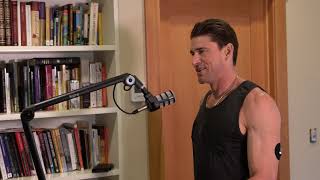
Neil performs a detailed craniosacral and myofascial assessment on Ben Greenfield, finding a longstanding tongue tie, sphenoid and parietal restrictions, and multiple joint misalignments. The live session includes intraoral manipulation, visceral work, and targeted compressions that improve mobility and nasal airflow.
Chapters
I think that we have a lot to learn from each other.
I think that's what we need to focus on. I think that's what we need to focus on. I think that's what we need to focus on. I think that's what we need to focus on. I think that's what we need to focus on. I think that's what we need to focus on. I think that's what we need to focus on. I think that's what we need to focus on. I think that's what we need to focus on. I think that's what we need to focus on. I think that's what we need to focus on. I think that's what we need to focus on. I think that's what we need to focus on. I think that's what we need to focus to focus on. I think that's what we need to on. I think that's what we need to focus on. I think that's what we need to focus on. I think that's what we need to focus on. I.
Think that's.
It's not just about the financial condition, but it's also about the fact that we have so much to do. We have so much to do today, we have so much to do in the future. We have so much to do, we have so much to do, and we still don't know where the future is going to take us. And if we don't know where the future is going to take us, we have so much to do. And if we don't know where the future is going to take us, we have so much do. And if we don't know where the future is going to take us, we have so much to do. And if we don't know where the future is going to take us, we have so much to do.
Thank you very much.
I think it's a good thing that we've been able to do this for a long time. I think it's a good thing that we've been able to do this for a long time. I think it's a good thing that we've been able to do this for a long time. I think it's a good thing that we've been able to do this for a long time.
I'm going to go through a list of the things that we're going to be doing. I'm going to go through a list of the things that we're going to be doing. I'm going to go through a list of the things that we're going to be doing. I'm going to go through a list of the things that we're be doing. I'm going to go through a list of the things that we're going to be doing. I'm going to go through a list of the things that we're going to be doing. I'm going to go through a list of the things that we're going to be doing. I'm going to go through a list of the things that we're going to be doing. I'm going to go through a list of the things that we're going to be doing.
For those who follow some of the research that we have done so far, there's so many people who are going to lose their lives in trying to make a living out of this environment. And we're not going to let them. We're not going to let them die. We're not going to let them die. We're not going to let them die. We're not going to let them die. We're not going to let them die. We're not going to let them die. We're not going to let them die. We're not going to let them die. We're not going to let them die. We're not going to let them die. We're not going to let them die. We're not going to let them die. We're not going to let them die. We're not going to let them die. We're not going to let them die. We're not going to let them die. We're not going to let them die. We're not to let them die. We have a We're not going to let them lot of people die. We're not going to let who are trying to put their lives on the line. Some of them are doing it in their own way, but I think it's important for us to be able to do that. We have a lot of people who are doing it in their own way, but I think it's important for us to be able do that. We have a lot of people who are doing it in their own way, but I think it's important for us to be able to do that. We have a lot of people who are doing it in their own way, but I think it's important for us to be able do that. We have a lot of people who are doing it in their own way, but I think it's important for us to be able do that. We have a lot of people who are doing it in their own way, but I think it's important to do that. We have a lot of people who are doing it in their own way, but I think it's important for us to be able to do that.
The second thing is, when you are in the middle of the year and you have some problems, or you are facing some challenges, and you have to figure out how you are going to deal with them, I think it's important to have a plan. I think it's important to have a plan. I think it's important to have a plan. it's important to have a plan. I think it's important to have a plan. I think it's important to have a plan. I think it's important to have a plan. I think it's important to have a plan. I think it's important to have a plan. I think it's important to have a to have a plan. I think.
I'm not sure if we'll be able to see that in the future, but for now, we'll see if we can do anything about it. I think it's still a long way to go. I think we'll have to wait and see, but we'll have to wait and see. I think we'll have to wait and see. I think we'll have to wait and see. I think we'll have to wait and see. I think we'll have to wait and see. I think we'll have to wait and see. I think we'll have to wait and see. I think we'll have to wait and see. I think we'll have to wait and see. I think we'll have to wait and see. I think we'll have to wait and see. I think we'll have to It is wait and see. I think we a result of a long period of change in the world. And I think that we have to have the new rules. We have already seen, also, that the way in which people are doing things, the way in which people are talking, the way in which people act, the way in which people behave, the way in which they say things, the way in which they act, the way in which they act, the way in which they speak.
I'm not saying it's the only way, but I know it's the best way, and it's the only way to do it, and it's the only way to do it, and it's the only way to do it, and it's the only way to do it, and it's the only way to do it, and it's the only way to do it, and it's the only way to do it, and it's the only way to do it, and it's the only way to do it, and it's the only way to do it, and it's the only way to do it, and it's the only way to do it, and it's the only way to do it, and it's the only way to do it, and it's the only way to do it, and it's the only way to do it, and it's the to do it, and it's the only way to do it, and it's the only way to do it, and it's the only I'm going to say a few words about what we're going to be exploring today. We're going to be exploring some of the things that we're going to be doing in the rest of our lives. And I'm going to say a few words about what we're going to be doing in the rest of our lives. And I'm going to say a few words about what we're to be doing in the rest of our lives. And I'm going to say a few words about what we're going to be doing in the rest of our lives. And I'm going to say a few words about what we're going to be doing in the rest of our lives.
And I'm going to say a few.
Words about what we're going to be doing in the rest of our lives. And I'm going to say a few words about what we're going to be doing in the rest of our lives. And I'm going to say a few words about what we're going to be doing in the rest of our lives. And I'm going to say a few words about what.
Obrigado. Obrigado. Obrigado. Obrigado. Obrigado. Obrigado. Obrigado. Obrigado. Obrigado. Obrigado. Obrigado.
Obrigado. Obrigado.
I think it's very important for us to do that. I think it's very important for us to do that. I think it's very important for us to do that. I think it's very important for us to do that. I think it's very important for us to do that. I think it's very important for us to do that. I think it's very important for us to do that. I think it's very important for us to do that. I think it's very important for us to do that. I think it's very important for us to do that. I think it's very important for us to do that. I think it's very important for us to do that. I think it's very important for us to do that. to do that. I think it's very important for us.
Osobno, osobno, osobno.
I think that's a very good reason, because when you have a risk factor, when you have a specific risk factor, that is a more complicated problem, and you have a risk factor that is more complicated than it looks, you can still have a very good chance to succeed.
I'm going to show you how to do it in a minute.
We are so proud to be a part of such a strong community. We are so proud to be a part of such a strong community. We are so proud to be a part of such strong to be a part of such a strong community. We are so proud to be a part of such a strong community. We are so proud to be a part of such a strong community. We are so proud to be a part of such a strong community. We are so proud to be a part of such a strong community. We are so proud to be a part of such a strong community. We are so proud to be a part of such of such a strong community. We are so proud to be part of of such a strong community.
I'm not sure if that's the right way to put it, but I think it's the right way to put it. I think it's the right way to put it, but I think it's the right way to put it, but I think it's the right way to put it, but I think it's the right way to put it, but I think it's the right way to put it, but I think it's the right way to put it, but I think it's the right way to but I think it's the right way to put it, but I think it's the right way to put it, but I think it's the right way to put it, but I think it's the right way to put it, but I think it's the right way to put it, but I think it's the right way to put it, but I think it's the right way to put it, but I think it's the right way to put it, but I think it's the right.
I see a lot of interest from the local people, and I think that what's happening here is something that I think is important to remember, and that is, you know, I think that now, if you look at the history of the world, and I know a lot of people in this room, you see a lot of people who have done this before, and I know a lot of people who have done that before.
I'm not going to diss it, that's what I'm going to do. I'm going to do it in such a way that it's a bit different than what you guys are doing. I'm going to do it in such a way that it's a bit different than what you guys are doing. I'm going to do it in such a way that it's a bit different than what you guys are doing. I'm going to do it in such a way that it's a bit different than what you guys are doing. I'm going to do it in such a way that it's a bit different than what you guys are doing. I'm going to do it in such a way that it's a bit different than what you guys are doing. I'm going to do it in such a way that it's a bit different than what you guys are doing. I'm going to do it in such a way that it's bit different than what you guys are doing. that it's a bit different than what you guys are doing.
I think there's also a lot of people who don't want to be part of the global economy, and they don't want to be a part of the global economy, and they don't want to be a part of the global economy, and they don't want to be a part of the global economy, and they don't want to be a part of the global economy, and they don't want to be a part of the global economy, and they don't want to be a part of the global economy, and they don't want to be a part of the global economy, and they don't want to be a part of the global economy, and they don't want to be a part of the global economy, and they don't want to be a part of the global economy, and they don't want to be a part of the global economy, and they don't want to be a don't want to be a part of the global economy, and they don't don't want to be The following year, we've got a set of policies that we've been working on. And I'd say, last year, we had a bill that would determine what kind of economy the U.S. would be in in the next year. And we're working on that. But we also need to know what sort of agreements that we can make, so we have to look at the economy. If we want to be healthy, we have to look at the economy. If we want to be healthy, we have to look at the economy.
ლიელიელიე.
So yeah, I'm going to do what I do, which is explain what I'm finding as I'm finding it. And what I like to tell people is, I'm going to explain things. And, you know, this is going to be good because we're going to really find out when I say what's going on, you can like, yeah, you'd be like, oh, I feel that. But also, if you like want me to talk more, you just ask me questions. If you want me to still for a moment to be still and know that you are Ben and, you know, just want like silence for a minute, just tell me that I'll try to tune into that also. So what I'm feeling is your cranial tension, you've got some cranial restrictions, tight fascia on the head bones. Really specifically, if you can feel, you can flex all day at the sphenoid, but you can't extend there one bit. You feel that? So you can extend on the left side, you can extend a little bit, but the right side, nah-uh. That sphenoid is anteroflexed, and there's a lot more to that, but the sphenoid often can have control over the pituitary gland, which is the master hormone gland, as you know. So also then we're going to sink down, we're going to check the parietal bones, and you can feel how this left side glides, the right side, not so much. And then if I check your occiput, the shelf of the skull, you know, the master cranial bone, it is not easy to pull you into this extension, and it should, right? This should glide, and it doesn't. Is.
All this stuff kind of typical? This.
Is, I see it a lot, but it's definitely, it's not uncommon, but it's not ideal, right? It's not normal in one way. It's a lot of tension you have up here. So when I try to pull that occiput out of its anterior flexion, it doesn't want to do it. So you got that right occiput misaligned, right? Your left side, you can tip, okay, but the right, no. So the right side of tension. So then I get to Atlas, right? C1. Ooh, it's tense on both sides, and if anything, it's more there. So we'll get to that, because there's a lot of nuance to that atlas, that C1. Yeah. Well.
I pretend to be Atlas and carry the world, remember? You.
Carry the world on your shoulders, right? The.
Lyrics to the song we were talking about. That's right. Cover.
It all. Cover it all. And it's pretty good rotation to your left, so it's lateral flexion that way that's an issue. You can go this way all day, right? That's easy. Lateral flexion to the right, not easy. C2-C1 occiput makes the upper cervical complex, and that's where the brainstem is. The spinal cord is the biggest, yet the opening is the smallest, so then you have this compression that where the brain can talk to the body through all the nerves is a little harder for you. So we're going to open up that brainstem function with some good fascial work because What I know already without feeling is like, yeah, these tight SCMs, right? Tight scalenes, especially there in the right side. We'll get down to the hyoid bone. So now.
It'S subtle on you because it's a deeper restriction, but the hyoid, if you're familiar with it, is the throat bone, right? When you feel your left one, the left side, easy movement. Now if we get to the right side, it's tender, and you can feel not so much, right? So the throat bone doesn't move as well, and there's a whole lot of reasons why that's relevant, but we'll get to that. And it's often the hyoid when it's restricted, it pulls that C2 out of alignment, and the C1 in the occiput, and it's that throat bone that needs to be released to get the neck to finally hold. Then we have, you know, your trapezius is not too bad up here, I'm surprised. Thank.
You, good sir. You.
Know, I like to compliment traps whenever I meet them. But as we can see, the lower attachment of your upper trap, tough, right? That's a tough one right there. So we're gonna work on that. But then now, you feel this side? You actually have pretty good flexion, right? You can tip your head pretty far down. Now, the difference here is that when you go up into the um right you've got the atlas not moving well on the occiput but the scm yeah it's tight going into that clavicle but you know the scm is sternocleidomastoid so it goes from the sternum and the clavicle.
And i turn my head up into the right like that is super tight.
Right there okay we're gonna get there that's like your t2 so then if you go here now you can feel how rigid that scm is yeah right yeah and that's why that clavicle is misaligned wow so we're gonna work on all of that definitely already figuring me out Yeah, you've got some pretty good humoral motion. You've got a good sense of humorous. Yep. You.
Can humorally rotate with the best of them. That's.
Right. And then we're just going to get this arm, and we're going to do the same thing. Now you can feel that. This humoral head is jammed in theory, right? It's not moving up, so we've got to free that up. your external rotation is really good on this side too, so that's awesome. Better than most. So.
That'S swimming and tennis. That's.
So good. Yeah, and we're going to come back to some of these areas, but we're going to check out that extension. Yeah, we can feel, oh, that tricep's pretty tight in there, but whoo, this brachioradialis is fired up. Look what's happening to your fingers. flexing them that's how that's how these tight cords of tension are radius you know capitate a bunch of these bones are missing yeah so we'll get to that wow great and then yeah there's some good things we'll do with that cold are your fingers pretty cold yeah right.
Now yeah are they usually not usually no I mean, it's a little cold down here. I did jump in the cold pool at about 5 p.m. Okay.
And so it's, which has so many benefits, but does it typically, they remain cold for a while afterwards? Tough to.
Say. Okay. But.
I.
Am told sometimes I have cold hands.
And feet. Yeah, well, this retinaculum, when it's that restricted and.
When you're exposed, that's gonna be hard. Yeah, that makes sense. So we'll.
Work on that. And let's see this arm. Yeah, similar, I can already feel this tension right there, so similar, right? Now we'll get to this on the table, but right away I can tell that you have a really tight medial bicep, like right there. Interesting. So yeah, we'll do that. But the nature of these fascial restrictions, it just makes sense that it would be that way. So not only is your extension limited here, but your flexion, right? So then you have limitation on extension and flexion. Now that's like where you have a need for more mobility there. It's gonna.
Be a bitch for the pickleball surf. We'll get.
That, we'll get that. So now, okay, let's check a few more of these cranial bones out. So I'm gonna check the frontal bone, that moves pretty well. But I can already tell, yeah, see right there, that nasal bone, not moving well right there. And then your lacrimal bones, this one's tighter than this, right? And then your ethmoid already, you can feel easy, not easy. And then your zygomatic bone, that right one's pretty restricted. So we'll get to more of that on the table. We're also going to check just gently here into your thyroid alignment. You have tighter cricothyroid fascia on your left side. And then the parathyroid glands moving well. So we'll get to the thyroid on the table, because that'll be relevant. It's crazy.
How fast you can assess that stuff. But yeah.
Let'S now, okay, now what I'm going to do, I'm going to get you to sit right here facing that way. Okay. So bottom here facing that way. Okay. Then we'll get you lying face down for the rest. So we're going to go through.
C7. Yeah, you can feel that misalignment there. Yeah, that feels funky. And that's nerve flow to your shoulders all the way down to the fingertips. So there's an aspect there that could be playing its part. And oh boy, yeah, you mentioned it. Right in there, that could be your T2 rib. And these rhomboids are fired up. More on that left side, but they're both an issue. an unusual amount of misalignments in a row, but you know that's pretty indicative when there's a lot of myofascial restrictions, because it's really that that's the scaffolding of our alignment. I use.
My body. You use.
It, yeah. A lot. All right, well, let's get you face down. Let me put this paper down. Face down? We're gonna go face down, and then gonna get your face there, see if it's comfortable, and then you can put your arms right on back. So yeah, we're gonna get you all comfortable here. Just do a little bit of getting you to settle into the table. Now, I think you're doing a pretty good job relaxing, but what I want you to do is just kind of let your body sink into the table, into the ground. Just let your whole body come to a state of rest on the table so that you can just not hold your body, if you know what I mean. So we're gonna check flexion there. Okay. Yeah, your left leg's shorter than the right. You've probably been told that a bunch, right? Left pelvis is hiked up anterior. I don't.
Even remember. That sounds.
Familiar, yeah. Left, you know, you got left glute and piriformis tightness.
Definitely a lot of hamstring tension. So yeah, let's check.
This flexion out. Yeah, you feel that? That's your soleus, right? Soleus and gastroc. That's right. I see the clues, Ben. I see we're going to do some grand intro oral work. I see so many data points here that are indicating you have mouth tension. I mean, it's clear as day. So hopefully this is going to be a really expansive free because your tibia.
Your tibia is anterior, fibula is posterior, so we gotta adjust your ankles, definitely. And then, yeah, you got some arch bone misalignments. And I know it was the left toe, right? Okay.
Okay.
Did.
You, uh, did you hurt it doing anything?
Okay.
Left.
Toe, I've done a lot of like, kind of like some, in spartan racing primarily, like stepping on rocks and stuff during races and having to run like 10 miles on it. I just noticed the big toes.
Yeah and i can see that attempt right for that big toe to migrate medially and so we got that attempt of a bunion which we can oh and i can feel the inflammation okay well we'll get into that there's some.
There's definitely a good amount of inflammation in the plantar surface of your foot and then specifically in here. So I'm going to evaluate it more when we get you on your back to see what else we can shift for that. All right, so next up. I'm gonna be just you relax. I'm gonna lift your hip to see what the hip muscles flexors are doing and then I would say we'll feel under that right rib cage and boy right there is a lot of tension on your ql muscle All right and then Yeah, it's good getting your body a little warmed up for more what we'll do We'll check the left hip out from this side, too.
Yeah definitely some some left psoas tightness as well not nearly as tight here in the ql so that's good news okay well yeah so then i'm going to come up and check so i'm going to take your arm here and check your scapula there we go.
So that rotation's really good, but you can feel that, yeah, right underneath there, subscap and that on that left side. Okay, so we'll get to that, but let's put your arm back there, you can rest it, there we go. All right, so then we'll check this right one.
And here's the clavicle that I know, you know, right there, right there is stuck, okay. And you know what, it's pulling in your scapula anteriorly like this. So even though we need to shift the scapula, it's not going to be fruitful until we free that restriction on the front. So we'll get back to that. We'll check a few more things.
Yeah, definitely. Okay. All.
Right.
Ben. Next up, I'm going to get you to turn over on your back. I'll help you here rotate so we don't slide you off.
This table's nice for travel. My table on the back of the office is wide. But right now I'm shifting into a little bit of craniosacral fascial therapy. And even though my own system is like what I'm using, I really appreciated like pulling from the palate, so to speak, a lot of other wonderful people who have created systems too. And so just looking to see where there is fascia in your body that needs to unwind. So we're going to test out your adduction. and abduction now here is it okay to feel up to your pubic bone with these adductors yeah you feel how that right there adductors and hamstrings like cables and yeah all the way up to the pubic bone there's a lot of tension in there we'll get to that let's check on oh yeah that patella is out of alignment so your patella is superior right so that vastus lateralis attaches to that super patella tendon and is pulling that patella out of alignment. Interesting. So we need to help that. And, um, boy, yeah, you can feel what we had to do here is this medial movements too much. It's jammed when we go that way. So that medial collateral ligament is just too lax, but it's because of the patella out of alignment and the hamstring tension. But you're going to feel that lateral gastroc. Uh huh. Woo. lit up so we'll work on that and then yeah right here the spatella is to post or the fibulas posterior heel stuck the calcaneus this first metatarsals out of alignment that's probably the kinetic chain issue you have going on is all this is pulling yeah and then this what.
I hypothesize yeah you probably figured it out right you're saying i'm perfect doc.
I'M saying you are a specimen perfect You're beautifully and wonderfully made. So, you know, I also say I'm pointing out a lot of things, but I'm like narrowing in on the things that I need to shift. Just know on the other side of it, we're going to unravel and integrate you, put you back together here better than ever. A little.
Bit of order and entropy. That's right.
So now we're going to check out this right adductor. And yeah, you're going to find this left side comes up to allow for it. So definitely tighter right adductors. And you can feel that.
Rigid yeah so this is part of the map 70 data points the right adductor is always tied to the left side wow so i definitely think we're going to be doing some oh boy so here you got you tissues move right they glide here it's a wall right i don't have to i can force it yeah but i won't but right there you have a lot of tension on that quad especially that lateral side so that is all part of the pattern but I'm gonna see what this patella is doing. And so the good thing is this patella glides. We have good motion there. And then we have good lateral motion there. Yeah, so this knee joint is in better alignment, which is nice, but, oh man. Yeah, we gotta free up that gastroc. So those are some plates of fascial tension going on right in there. Okay. So then, Yeah, we have this tibia's anterior out of alignment, fibula is really posterior, and then you've got, yeah, this navicular and cuboid, just a bunch of ankle bones out of alignment in first metatarsal. So we will restructure your feet, so you'll be walking like a whole new man. Yeah. All.
Right.
Next up, let's get you to raise your arms. This will be a bit of a stretch. Okay. And also, Checking out shoulder alignment and tension. So that right arm's a little longer than the left, which we know it's not your arm. It's just indicating your C7 misalignment, but also that scapular issue. So now you can go ahead and put your arms down. Now we're gonna get into checking out your cradles. And I love to check positionally, because you know how you sit, gravity pulls. When you lie supine, gravity pulls. All the other postures, grabby interacts different ways. You've got some tension there, but the dural tube tension is really ends at L4. But now we got to go up and check upstream of the occiput. And then I'm going to check into the sphenoid, the mandible. They're 15. There's one diaphragm. We all know that one. Yeah, but altogether there's 15 because functionally there are points where the body has flow interstitial fluid and So maybe let me get you to slide up just an inch.
Or two. Okay. This.
Way? Up to me. Oh, up.
To you. Okay. That's.
Great. Okay. Good. So now if we check your nasal bone, you actually feel it's better here than it was sitting. Okay. And it's better here on your zygomatic bone. Definitively lying supine takes some of the strain of gravity on your body, but gravity is our friend. And so part of embryology, my work is to see how we can line up your axes of the center of gravity in your body so that you can flow more effortlessly with gravity. And that's going to be a really good thing for you, because boy, it's dragging you down, Ben, especially right here, right? You can feel how we need to free that, that, that, that difference there. So then next up, we're gonna go down, recheck the parathyroid. The thyroid actually frees up some in this position, which is nice. Then I'm gonna use a little bit of muscle testing and just feeling into the body to test your upper esophageal valve. That is pretty good. And we're gonna check your lower esophageal, you feel that tension, right? Lower esophageal valve is restricted, right? So then stomach, good. But then we get to the diaphragm and we can feel that right-sided tension versus the left, right? Remember what I said about the diaphragm? Right side. So it's not always that on everybody, but for you it seems to be true. Small intestines, okay.
What's that?
Liver's on.
The right side. Yeah, so I definitely check into that, right? So I'll see, is the liver restricted? No. Is the gallbladder? No. But that right kidney is. And so I'll get to that left kidney good.
And then the colon, you've got, for sure, the ileocecal valve is fine on the right, but you can feel this, right? That little gas bubble, so that's your sigmoid colon. It's like a hairpin turn for the colon. That can obviously often be fascially bound. So we'll get to that, but let's come back up here and see, we'll test into upper lungs, lower lungs, thymus gland, good. So, we, Rwy'n mynd i'w gweld.
And see if I can feel more of the way that that right kidney is misaligned. So what you can feel is the tension back.
There, right? So your.
Kidney is misaligned posteriorly. So if you feel that, how much resistance your body puts to me bringing it anteriorly, visceral issues predominate. They were fight, flight, right? They're vital organs. So if they misalign, they will drain the body. The body will not prioritize healing until we get the organs in right alignment. And that's, At first I look at this and I'm like, oh, that's nice and loose. And I'm like, it's too loose, too loose. Wow. So we're going to check the, for comparison, we'll check out your left kidney. And what we're going to find is this is way looser, right? Back there.
Yeah, you.
Feel that. And here.
It's crazy. Never had someone feel my kidneys before. And you.
Know what, it's actually not loose, you know, but it's way looser than that side. So you got a better kidney tone on the left, but I'm not convinced that it's not misaligned. So we're going to, we're going to peel back the layers there cause it's going to be helpful. So, okay. You can put your arm down wherever it's most comfortable. So, um, and we're going to raise that up. Okay. And can I have you come down an inch? Yep. There. And let me know. Well.
I think that's good. So next up, we've got to check intraorally. So for that, check in the mouth. You've had mouth work.
Exploring the house within, the roof, the floor. So we're going to check all seven frena. We're going to check lip muscles, cheek muscles, we're going to check pterygoids with the jaw muscles. Some of this you've had done, but my assessment is really thorough. We're going to check it. Okay, sounds good. So at any time if you need me to take a break, just go like that. It's hard to talk when I'm working in your mouth. So open up. I'm going to check your palate. And with the front of the palate, it's called the maxilla. The back is the palatine bone. Right away, your tongue's trying to push me out of your mouth, right? So that's tongue thrust. And your palatine bone on the left and the right's misaligned. So there's not as much sponginess as there could be. But we'll come back to that. And we'll say now.
Yeah, your lip muscles, right? Your orbicularis oris muscles have some tension. Not a ton, but you can see it, especially there. That tension right there. Okay, so let's check out your upper lip. And as you can see, that's a phrenum, right? You know you have a phrenum there. We have seven. Your upper lip has a little bit of scar tissue on it. Now, typically when I see this at one or two years old or something like that, you tripped and fell and it ripped open, and nobody knows that that happened. Most people don't know that that happened. So you kind of had an unplanned inadvertent upper lip release, as some toddlers do. Then if we go here, you don't have a cheek tie, that's not a buckle tie, B-U-C-C-A-L. It'll help you a little bit, and you can feel that, so yeah, boy, yeah. So what we have here is, there's a tongue tie. Yeah, so an anterior tongue tie, tip of tongue. Yours is posterior tie, and actually the guy I work with in the Bay Area, but offices in Beverly Hills, Saroosh Zaghi, head ENT, one of the leading worldwide tongue tie surgeons. We were just co-speaking at that symposium, San Diego, and now we're gonna call it, he's calling it, and it's in the field now, is a mid-tongue tie. Nobody knows that. A lot of people will not know what you're talking about. If you say posterior tongue tie, people are like, oh, Ben, you know about tongue ties. But you're ahead of the curve here. months to a year, it's going to be mid-tongue tie. That's more anatomically correct because it's not like the back of your tongue. You're all.
Over the newspapers. You're going.
To be like, Ben knows what's going on. But yeah, so four or five weeks in Utah. That's when that happened. Wow. Without a doubt. And it's why you have This twisting pattern of tension. But we've got to do another assessment here on tongue mobility. So I have gauze. We'll wrap your tongue, gently stretch it, take it in all planes of direction and see where the tightness is. Because even though you have a tie, we can see how much tension we can get out of that floor of the mouth. But we'll have another step before we do that. I'll have you go ahead and stick your tongue out. As much of it as you can. Wrap your tongue. Here we go. Okay. What I'm going to do is make sure that while I'm doing this we do not rub your frenum on your teeth. That is painful and agitating. And you can feel how tight that is. Right? So we can stretch you to the right. Not easy. Stretch your tongue to the left. Not easy. Down. Up. Really tough. Up and to the right. Down and to the left. Up and to the left. Down and to the right. Call that pluses and x's. It's evaluative and also releasing, but not yet, because that floor of the mouth is too tense. I already knew your right nostril was going to need body work, so the next step here is to check your nostrils. So we're going to check with your pinkies, then we're not going to use your pinkies in your mouth. Just so you know. That's the plan. So because that tension is so prevalent that we're going to follow the syntax of the body to see how we can release your tongue. But I know that your nostril might be part of it. So when I do this, the only thing that might happen is you might be tempted to sneeze. Just tell me or I'll back out. I just don't want to block your sneeze because it's too much pressure for you. So you can just say about sneeze or wave. We'll see.
Oh yeah, so I can tell already that... Ooh, that is pretty narrow, that opening. We have... Yeah, okay, so we'll just check. I'll be quiet for a moment. And I can tell as I stretch that zygomatic bone, we're widening and dilating the opening. Yeah, and we'll come back to that, but there's three bones in the nose that can release. And we're just gonna have you breathe in through that left nostril.
And out through the nostril. Okay, you can do it, you know, it's there. Now we're gonna check this right side. And then out. A little tough. It's actually.
Easier for the right. Is it?
Okay. All.
Right.
So we're gonna have to shift that right side.
Whoa, yeah, it's already easier. So releasing fascia on the left side in that turbinate actually cleared some of this tension.
There so if we can just get in a little bit i'm just gonna go really easy going because the slower i unwind this the more lasting the effect will be and also yeah this nasal bone is part of what's restricting it there we go past the first concha boy but that second is jammed so i can feel.
Um yeah.
It'S coming from that slightly deviated septum there we go past the second concha now good.
Job it can be you know it can be sensitive it can be intense and.
This is good i'll thank mr john dr john laurance for his preparatory work on your nostrils there we go wow that's good that that final one is opening wow.
Okay what i'm feeling here is a plateau and if we reach a plateau and your body tightens that's how i know it's done and i need to let go because keep you regulated instead of dysregulated here but it's opening more right there way to go way to breathe you're doing really well not easy but there are titans okay so we're gonna slowly let go.
Fully released. Way to go. All right. So now next step is we Not with the pinkies, but with the fingers, check the floor of your mouth, okay? Great, thanks.
For not using pinkies. We keep.
It clean here. Salty pinkies. Alright, go ahead and open up, and I'm gonna just feel that left side of the floor of the mouth. Nice, so there's a little bit easier time, right? Not enough, but there's a little bit looser tension there. Okay, so we're gonna come, but that side's a little looser. Now, what we'll see the most change is right here. Your lips are a little looser. There's still tension there. Okay, and yeah, now you can almost cover your nostrils with your lip, right? That's the goal.
Okay, but... Okay. There's still more. So now we unwind that map in your body. I muscle test and intuit to see where is that floor of the mouth tension coming. I test these four categories to start a test. Is it coming from muscle, fascia, bone, organ? Organ shows up. So then I can feel the energetic shift here, like right in that. It's like a burning sensation that goes down here and it's coming from that right diaphragm.
So yeah right there we'll free up that diaphragm.
Good.
That was pretty easy to loosen for the most part it's that area.
Then.
There we go.
Next up is your colon.
Yeah, and as we kind of unwound it, there's not really that left sigmoid tension anymore, right? But it's found itself right now in the lower right quadrant right there. So we're going to free that colon tension right there. It's okay for you? It's not too much? It's fine. Oh, good.
So I would say we're doing a little bit deeper visceral work than I might do if somebody's not experienced or hasn't had a lot of body work. So, that gives you frame of reference, like this is deeper visceral work. A lot of people, I'm not gonna need to get this deep. It might be really sensitive for them, but you can feel that. So yeah, good. So that was a shift right there. Good, okay. Now.
I'm going to recheck the floor of your mouth. Okay. So.
I.
Have you open up.
Good. And.
You.
Can feel that tongue is lifting a little easier. A little easier. Good.
You have a lot to unwind though, because sometimes I release one part of the body, the nostril, or the diaphragm, and that tongue elasticizes. I can tell you got a lot of built-up tension, but that's because you never had the kind of intricate untangling, right? First timer, Neil, first timer. First timer, you know. Okay, so now it's the kidney. and that is this way I'll release it which is gonna get your hand right there and now I'm gonna use a little paper towel try to keep my hands clean because I'll work in your mouth after this so okay I can always put on new gloves, but we'll see. This is the way I'm used to working. And so what you can feel is that already, and yeah, I would say, whoa, yeah, I can tell. Yeah, we got a little bit of blood from the intronasal work. I just noticed it on my pinky. A little bit of bleeding. Oh, yeah. You're doing okay. I'm fine, yeah. So, both nostrils, we got some. No blood, no foul. Okay, so we're gonna throw these gloves away. We don't wanna reuse those, so, cause I'll make sure we don't. All right, so we'll work with the hands now.
That kidney has already shifted some, which is really cool, because right here.
It'S not as loose, and you're gonna feel it, right? So we go up here, and you're gonna feel less tension, and already you can feel that cage lift more easily, right? So that's a motile kidney, that kidney's moving better already. But we're gonna wiggle it free, because there's still a restriction. Sometimes when we release the kidney, you can feel it go, and see it and hear it but um yeah it's just melting so in this case it's just tension that's melting there we go there we go all right.
Okay so that right kidney moving better but the left kidney is stuck too okay got the double kidney special here that's right okay and it's not gonna be as hard to release uh even though that left that right side was pretty there we go it already released felt it subtly back good kidney way to go kidney.
You know what's cool, in the Hebrew, the word for heart literally translates kidney rains. I know. Isn't that.
Cool? They worked a lot of that out of the modern day translations though, because we decided that the seed of emotions being in the kidney didn't seem sexy enough, I suppose. Yeah, and.
Then we look at the kidney and what it mainly does, right? Right. Electrolyte balance, mineral balance, blood flow, blood filtration. And the thing about the kidneys is like some people... Highly tied.
To emotions. And you.
Know what sits on top of the kidneys? The adrenals. Renal is, you know, kidney. Adrenal is... So what happens when a kidney misaligns? The adrenals come for the ride. So I often see adrenal fatigue issues can come from kidney misalignments. Crazy. Get that kidney shifted. Yeah, it's pretty cool. Of course.
I didn't know until tonight that the kidneys could be misaligned. All right.
So we're going to find here is that, let's see, I'm going to see if I need to do any more fascial work before we go back to the mouth. so i'm going to test muscle fascia bone organ we'll check into the limb system we'll check into any of these toxin points here deficiencies parasites virus okay so the math motions we'll check there So I'm going to put on some new gloves. We're going to work back in the mouth to see what we've accomplished and or what needs to be done. And as soon as we see that floor of the mouth drop in tension enough that I know that we've accomplished the systemic release of tension and allow us to get into better body work. Wow, cool. So this is kind of just like getting to a layer. It's crazy. And then we're going to be having some fun. It's like an onion. Definitely like an onion. Scallion, maybe, right? Don't have to cook a scallion, right? You can. Okay, so let's check. Go ahead and open up. And we're gonna feel, one, that that floor of the mouth tension, not nearly as tight as it was, because it's like easy for me to get my finger really low there, right? And then we're gonna go, right, like, see that tongue lift? Definitely easier. It's a stretch, man. I'm not kidding. This is a tough one. You're a tough cookie. Right? But it's because you've had this tongue tie for... You what? It's like 40-something... 42. 42? Okay, so... For over 42 years. You can feel how easy it is to... So this is not coming from me loosening up your lips. I'm not working on your lips enough to loosen it. So this is a systemic release, right? So you can feel that is cool. Now, your mentalis muscle is a totally different system. Has nothing to do with the floor of the mouth. It's weird, but by the work I've done, I've seen this has way more to do about the esophagus. So this is where we need to release your lower esophageal valve. Embryologically, I throw that word at you because crazily, when we develop in utero, the same cells that are our digestive system sprout our legs. So our legs' parents are the digestive system. And so often I find that in order to fully release the gut, we've got to release fascia in the leg. And on this case, it's your right leg. It's crazy. So I'm going to get some paper towel. Always with the paper towel, so we can go here. And we can see what we need to release.
And I'm definitely talking through it for a few reasons, right? But sometimes you get a couple sessions in and we're gonna do this without words. It'd be.
A boring video if you weren't talking. Right. My.
Goal though is that while the video is catching stuff, this is what I do my first visit with everybody. I'm talking through and narrating. I'm learning a ton, honestly. It's good.
Yeah. Even if we weren't doing this for the viewing podcast audience, it's extremely interesting. They're going.
To see Ben's leg be able to move wider than it ever could before. So right now you can feel it, right? How much tighter does that esophagus get when we bring this leg out? Yeah. Right? And then how much looser does it get when we go here? Yeah, it's crazy. Right? So we can't keep your leg there all the time. If you lived like this, you'd be, you know, pretty awkward. Leg up all the time. We're climbing on the couch, that's not Ben. So we need to unwind the fascia to enable us to extricate this leg tension and adductor tension with this esophageal valve.
And you know, if the lower esophageal valve is not functioning well or it's too tight, It could be that the enzymatic activity of the stomach and the esophagus isn't ideal, or it just is tight. I'm not always going to be able to see the corollary between fascial tension and organ function, but a lot of times it's overlapping. So here we go. We can feel that tension has dropped a lot. So now when I bring your leg out here, it barely pulls on it. It does, but that's because we need to work on your adductors separately. So we'll get back to that. So now let's see.
We'll work our way down.
Okay, so now in test muscle testing you and positionally I know we're going to get the next layer the best when I get you on your right side. So we're going to shift to you on your right side facing me this way. Okay. And then, I know we're going to put your back to the camera, but hey, you know. So here, let's make sure we slide you a little further towards. Yeah, there we go. So for me, I often will jump onto this side to check a few things here. Okay. And first thing I'll do is positionally, we're going to check what happens with your kidneys when you get on your side. And they're good.
Stomach. Diaphragm. Small intestine. And colon. Very good. Yeah, but now if I come up, we can feel how much tension there is on the esophagus.
And that's coming from this hip. So. Boy. That femur. Doesn't like moving. Oh. Especially right there, right? That posterior part of that femur does not glide. This day, this way, all day, right? Yeah. You go that way... So now let's put your leg into flexion, and that's really easy. Now we get your extension going, and here's where you can feel, yeah, if your psoas, you know, right there, is too tight, right? Your quad's gonna be too tight, and then that's gonna pull the patella. So we're gonna work on that when we get you back on your back, but I'll do a little freeing up of the psoas.
There we go. But honestly, you know, I could work on your psoas for an hour and it's not the answer. Because if this posterior femoral capsule isn't working, that is going to protect your hip extension. Interesting. Because for you to go into hip extension, what happens there? Yeah. Doesn't work. Yep. So have you ever had anybody work right in there? Not that.
I can recall. No. At.
Least.
It seems like a new sensation.
Yeah, and this we're getting into freeing the femur. There we go. You can feel it glide forward now. That's good stuff. So that's good, because that feels like once it released, it was way better, and now we're going to see that hip extension get a little better. And right there, we got elasticity.
Can you.
Feel my back pop right there? Yeah, because.
Now that psoas can extend more and that psoas goes into the femur. 05, 4, 3, 2, you know. Yeah, something popped. And now it's better at that esophagus, so that's good. Okay, so now we're gonna get up to your arm here and we'll check.
Okay, not too bad there. Good, we'll check into.
And boy yeah you can feel that subscap right there okay pecs oh yeah those have probably been tight you know yeah okay now here we come back to that i gave you that bookmark right yep that left.
Bicep right there that when you have tongue tie yeah always left medial bicep is really interesting babies to adults i see this wow crazy so what we need to do though this is why this is all so restricted okay gotcha huh and also it's really interesting but the uh you know i'll say biohack because it's true the biohack to freeing your left subscap muscle teres and your pec is to compress this left medial bicep And when you do that, you can feel that tenderness, right? It doesn't work if you go like this and dig in. It only works when you compress it like that. Then you'll feel those striations of muscle let go. And when you get into all that, all the way up, all you have to do is get about halfway up the bicep and you go back and check. And you're going to see that scapula let go, right? And then you'll see the pec. That's pretty.
Cool. Jeez, that's.
Crazy. So, you know, for your pec, subscap, teres, they don't like to be worked on directly. It's like pummeling them, right? The finesse of working on that medial bicep will change this arm. Wow. And so now we're going to see that that muscle tone, that rigidity, that sympathetic overdrive has left. That's crazy.
It's like.
A magic button. It's like.
The magic button for Ben and a lot of people. So now, um we're just gonna get a little bit of a pre-assessment into the pelvic movement and lower back and then we'll we'll see oh boy yeah so so what you can feel here is that left ilium yeah does not want to yeah it's just stuck immediately rotated yeah so we've got to unhinge it we'll get to that five cuatro, tres, dos, eso está todo bien, se pone muy tranquilo cuando llegas hasta aquí a la T12, que ocurre a través de la innervación de la cadena, así que definitivamente hay una relación allí, pero bien, así que eso es bueno, lo que vamos a hacer ahora es que te voy a hacer girar al otro lado, al lado izquierdo, al lado izquierdo, ahí está, bien, bien, y así vamos a Similar flow. I'm going to check this side and see what we have going on. Right away you can feel not too bad right there, right? That femur glides. Yeah. Where.
We'Re.
Going to find the issue is right here.
Boy, yeah, that femur and then right on the anterior superior side of that femur that is binding up in that vastus lateralis but we'll get back to that because um we're gonna see what else we need to do so let's get this leg into flexion and see how that goes pretty good and then um i would say we'll see what this feels like.
Yeah, the adductor's more the issue there. But if you can get up to here and you say, oh, the femur's freer on this side, but you get right into L5 right there. L4, L3. Now obviously I'm feeling very superficially. The psoas attaches deep to the spine, but we're checking the rippling effect of that tight fascia right there. So the psoas on the right is actually more restrictive.
And that's gonna be important as well.
I'll leave a footnote there. We're going to get that hand out. We're going to see what.
This motion is like. So what we're going to see also is that right and both rectus abdominal muscles are pretty fired up, right? Yeah. If the psoas has been restricted and it's going to be weaker, and if the psoas is weaker than the abs take on the work of the psoas, they overfire. And not only does that affect the abs, but it tightens fascia up the midline, the intercostal services, and it pulls this clavicle out of line. Oh, wow.
You said.
That right, clavicles, I don't know. So, now what you'll be interested to know, I hope, or will see, is that there's um we got to work up here and then down here and then back there so on this right side the difference is it's not the medial bicep as you can feel it's it's right on the medium the middle oh yeah right yeah that's the one that is like clockwork on we call the median yes yeah yeah median so right there whoo.
So if you were a baby, Ben, I would be working on this very gently, but this is one way you'd help babies nurse more successfully. No way. Is working on their right bicep, because often that fascial tightness goes into the clavicle, tightens the mouth, tightens the hyoid, doesn't allow the tongue to move up. Wow, which.
Then has effects from micronutrient status. Yeah, absorption. Growth, absorption.
Bioavailability, yeah. CSF flow locks up when the tongue gets stuck. Wow. Because the tongue is a lever that pushes up on the palate. I'm gonna.
Be such a good grandpa knowing how to tell my kids how to take.
Care of their babies. That's right. I said, this guy named Neil, he's had some stuff. And I think some of it's true. So we didn't work enough on the bicep. The reason I know is because, boy, because that's still tight, right? And because it didn't free up enough tension in your clavicle. So now if we get right into that, it's gonna be really uncomfortable for like 10 seconds or at least five compressions. Five, four, three, when we did a traverse the cubital faucet to get right into there, right? That, whew.
Good. And we have to work on your arms a little later, but right now we're just trying to get your clavicle to move, and the clavicle is an accessory joint for breathing, meaning if your clavicle's not moving well, you can't breathe as well. And vice versa.
It's also a major lymph source, right? The clavicle has a lot of lymph involvement. So here, but we got a lot better movement now. Yeah. Yeah. So that's good news. So that's a good place to put a footnote, put a bookmark. We got about 30 of those so far, but yeah, it's vastly bound right in there too. Wow.
Yeah, I love helping people's feet. I love working on toes because, you know, this first one is so tough when you have a predisposed, you know, stuff going on in that left glute and piriformis, you need toe flexion in order to initiate glute medius activity, right? I think.
That'S where a lot of people don't realize like how important the big toes are to the hip extenders. Oh, there.
We go. We got some Yeah, some mobility happening. And then I know that here there's a little bit of a metatarsal torsion that's going on. And that's really tough because you know, how hard is it to get between the metatarsals? It's tough, right? Because there's not much access. So what I have to do is just really get into compress and pull that, you know, that metatarsal into rotation right there. And if we can do that, and then we can get right up to the proximal part of that, you know, that joint, that's where it articulates with the ankle. And then we can really get that kinetic chain freed up some. Then we'll see, yeah.
How much.
Sorry what was that?
Yes.
Yeah, so many people, and you know how it goes, it's like, yeah, the question about like how often, or do I run into toe issues and feet issues as well as like the mouth and inextricable like tongue tie and bunion is hand in hand and so I'm the ones who have the tougher ties and more mouth restriction it's always more work on their toes so and you probably have these right correct toes you've worn those silicone toe spacers before yeah so so that's a really helpful for you but you know with this type fascia That's not easy for it. So you need this body work in order to disentangle those myofascial restrictions to where your body would want that separation. Yeah, so.
We'Re just really trying to disentangle as much as I can. Sometimes this is a layers thing, you know, this is, but, but, you know, it's not always linear. So I'm going to see what, if I can get that, That tibia to drop just a little bit more. I think it's going to be good. So let's see. And this is a good place to say, okay, I'm going to let it sit for a little bit. We've done a lot with it. We'll give it some time to unwind a little bit more and then we'll come back to it. Yeah. So now we can shift our attention to this right adductor and.
I can get into this some, and it doesn't need much because the tongue and the nostril, you know, releasing that helped, but it's still, boy, yeah. Yeah, so what's really cool is, I don't know if you've heard much about the synchrony between the sphenoid and the pelvis. No. Sphenoid and the pelvis? Yeah, you know that head bone? Under a functional MRI, they show that when you shift the sphenoid, simultaneously the pelvis shifts without touching it. That's the essence of craniosacral work, is when you shift the pelvis, you shift the cranial, and then when you shift the sphenoid, you can shift the pelvis. So there's often, when yours has been bound up that much, you gotta work on all the above.
Okay, so there's a good layer that we got right there.
There we go.
Okay, so then we're going to get you a little bit of some movement. Good. And then here's where we check. Ah, so yeah, like before there was no movement here. Better. Now.
We.
Got some glide.
Right there is where we get into the nitty gritty of where that there we go.
Okay.
We got about five seconds you're almost done four three two count a little slower because i need more time one half zero okay good.
Good. Patella's good. I'm.
Good at dodging punches. I've worked on enough MMA fighters to where when I work on their elbows, they think I'm going to do an armbar, so I have to be quick. Or, you know, toddlers want to bite.
That's right.
By now I've just figured out, if I can angle my finger in a certain way in the mouth, the teeth can't bite through the skin. So, just had to work on that. You know, Muay Thai boxers kick bamboo, I work on teeth.
Yeah, 100%.
So.
For sure breathing is a clue, but right away I feel that, and I know that's tough. So I can feel it with the tissue texture, resistance. And then for sure I could see and feel how you had to shift your breathing. Yeah, there we go. So that's definitely better than it was, but you can feel still here, this is happening. That inversion. So we really need to get the talus and the tibia. There we go. Shift.
There we go. Your calcaneus. Yeah, that was good.
Little bit of that kinetic chain stretch right from the foot all the way up to the back. But here's what we're trying to do. See that shift yet? We're trying to free that fibula. And it's here. If we can get it to shift there in the ankle, then it's going to really free up this part that's so hard to get to.
There, little bit.
So now I'm doing another osteopathic cranial check. It's not about the head and the sacrum. It's really about flow of those cerebrospinal fluid channels. You can check it from the head to the feet or feet to the head. So when I check right here, this is blocked, right? It won't move. So then if I check how far up does that go, it goes through the through line of that calf muscle through the Achilles. Okay. We're going to see how far up it goes. It goes up into the right femur, goes up into the L54321.
Visceral is good. If we check up to your occiput sphenoid. So as soon as I get to the sphenoid, feel how that lets go a little bit? Yeah. Yeah. So that's telling me we need to release your sphenoid to free that foot. Okay.
And what's nice is, like, we've got, we took care of some of these downstream tuggers, right? These limiters of dural tube tension. So your ox foot glides like it didn't before. Down through, you know, even through C7. C7, we haven't released that yet. T4, down through the thoracics, lumbars, a little stiffer, but we'll get that. So, we're gonna come back up. Can I have you scoot up a few inches? Towards you? Yes, thank you. and so now we gotta get to that sphenoid okay so here yeah.
On that right side it is not moving right there left side easy walk in the park gentle and breezy but right there we cannot.
We have to do a little bit of now craniosacral is gentle and loose so all you watching it's just easy for i'm just kidding i don't do craniosacral therapy when the sphenoid is this jammed i want to bypass a multi-session experience this is where i dip into embryology and i go right into um like uh it's it's not that deep right ben but it's deep tissue freeing of the cranials and when you do that you can really unwind and pass through several layers at a time, which would normally take at least three sessions. So I try to get that done as much as, you know, if you can, why not, right? Right now, we're going to go in there. And we're just trying to unwind that right sphenoidal misalignment, which comes from tongue tie. But it's crazy because you could think you release the tongue, right? The floor of the mouth and the tongue and that's the answer. It is not because this has been so bound up for decades that it needs to be extricated like very specifically.
There.
We.
Go. Good. So now we have flexion happening and a better extension of the sphenoid. It's a simple little bone, but it's profound, and it needs to flex and extend. Wow. All right, now let's see this foot. And now, I don't know if you can feel that, that foot can move. Yeah. That was.
Weird when you were working on that sphenoid, it was almost like a little.
Bit of an emotional shift. Oh, yeah. You ever get that? Yeah. What did.
You feel? Uh, gosh, maybe just like a little bit of almost like, um, man, maybe like a heart opening a little bit. Yeah. To describe.
But yeah.
That'S good. Maybe I'm still just kind of assessing what it.
Was, but I felt something emotional happen. Yeah.
It's like.
All of a sudden I can hear better, and even though my eyes are closed, it kind of became brighter inside.
My head. I love.
It. Yeah.
An endorphin shift is definitely a part of what I think happened. More than that, you know? More than that, like you're saying, the heart. Yeah, you know, let that ride, just feel free to let that just percolate.
You can externalize it or you can just let it go and just kind of explore it internally, but whatever sometimes if we Give space for that. It's really good to see what happens. So yeah.
There we go Okay.
Good so that fibula finally came loose a little bit.
More okay.
Now we're going to come back so now that unlocked more and now we're going to check the nasal bone it's up you know right below the frontal bone and it's right there.
Can I get you to scoot back a little bit? Sorry. You did it. You did the right thing. I'm speaking your language. That's right. That's right. Yeah. So right there. So.
It is really helpful. There we go. You feel that shift? Yeah. Yeah.
So it's right over your heart, but more like the chest and the sternum that released the nasal bone.
Yeah, good.
Now if.
We get a little bit, there, that's good. Okay, good, better.
Okay.
Okay.
Okay.
So.
Now we're going to recheck intraorally. Okay, that's what I was going to suggest. Yeah, you're tracking it, right? Always come.
Back. I am tracking here. This is super fascinating. That's cool.
Maybe I'll have you come down a couple inches. I go.
Through a lot of stuff like this. This is actually One of the more interesting forms.
Of fascia work I've encountered. I'm glad we are getting to these layers. It reminds.
Me a little bit of when I went down and interviewed those guys at the Human Garage in LA. Yeah. With.
A.
Little bit more of like a kind of like a chiropractic and organ piece.
Thrown in. Yeah. All.
Right.
Let'S have you open up.
Now what's nice is that you have these palatine bones, they're spongier, right? They can lift more easily. That's good because the palatine bones are the floor of the nose. So if the palatine bones move easily, the nostrils will work better.
Yeah, we have good...
Dropping of that tension of the floor of the mouth i know this is tender but now we can actually lift it we couldn't before this is good so there's a layer there now the next layer is to get these pterygoids to finally let go and so for that let me get you up a little higher let's go there so let's have you open wide.
There we go. Good. And then again a little bit more. There we go.
Okay, good. Now, this is the side I'm really excited about the potential of it loosening more. Let me get the right, I just want that right position. So what we're gonna do is we're gonna use the pillow, that's gonna help us out here. There we go. We'll drop this down.
I'll just put it back right where it was. That's good. Testing it out. Here we go. So now we'll go back in to check the pterygoid. And we're going to find more elasticity than before, which is nice. Good. And then we're going to have you open wide.
Good. Yeah. See, before we couldn't access that. It would have been mean if I would have dug into that. But now it's actually supple and we can help it loosen up.
Yeah, good. We're gonna trace that pterygoid muscle down. I like to say for the kids, it's the pterodactyl muscle that I learned. There's no such thing as a pterodactyl anymore. It's called a pterosaur. There we go, good. Okay, and now we're gonna go right there and have you open up a little bit more. Good.
Great, good job. Doing all right? That was a tough one. Yeah, that.
Was intense.
All right.
Okay. So now we're going to come back to checking occipital glide.
And we'll.
See...
Again, we'll.
Check it down through the cervicals. C7. Okay, so it's coming back to us that I need to re-release that.
I'm going to do that here. Okay. And so we're going to lean you this way and just right there. There we.
Go. Good job.
All right. Now we're going to recheck that tube tension, dural tube tension, and we're going to go right past that C7 in a nice way, but it keeps getting stuck right at the first rib, right in there. I didn't feel that. So it's subtle.
Good. So let's just let everything relax. Good. A little bit there. We're gonna get in a little bit more.
There.
We go. Okay.
Recheck.
The.
Occiput, good. And we go dural tube tension down. We bypass the C7 and T1 rib, and then we go to the RAS. Oh yeah, so now we have that.
The RASX to help.
Yeah, so hug adjustment, right? You hug you, you deserve it. I hug me? You hug you, you deserve it. I love me. You love.
Yourself. There we.
Go. Now you let go and relax, and then I'm just gonna lift up. I'm going to do a few adjustments like this.
Good.
Okay.
Good. Some of those we're ready to release really easily. Now we're going to roll you just a little bit this way. And we're going to check on that rib right there.
ĹĹĹĹĹĹĹĹĹĹĹĹĹĹĹĹĹĹĹĹĹĹĹĹĹĹĹĹĹĹĹĹĹĹĹĹĹĹĹĹĹĹĹĹĹĹĹĹĹĹĹĹĹĹĹĹĹĹĹĹĹĹĹĹĹĹĹĹĹĹĹĹĹĹĹĹĹĹĹĹĹĹĹĹĹĹĹĹĹĹĹĹĹĹĹĹĹĹĹĹĹĹĹĹĹĹĹĹĹĹĹĹ.
Yeah.
I can tell. A couple layers of deep myofascial work and we would get all these areas to release way more deeply. I like to say you're one and done, but you're multiple onions in one.
Yeah, some of those are on the precipice of releasing, so yeah. So there, now we'll recheck your abdomen.
Good. Move through some of that gas. There we go.
But your abdominal tone is way better, meaning your kidneys are at a way better place. That's good. So that's good. Yeah, small intestine, colon. So there's still more to do up here. Let's see, you can put your arms down.
So we gotta check here.
Mentalis muscle. So for the mentalis, we've got to.
Um so we'll see in the core here we'll check areas called perseverance clarity identity intuition instincts so it's showing up there's three wheels i see in the body on people i got this through a download all right talking with god it's like hey i see three wheels on people neil i want you to codify them When it's up here, it's in the spirit or intimacy. When it's here, it's in the heart. That's the second wheel. When it's here, it's in the core, but we're talking the immaterial core that happens in the first five years. And I see five aspects and I named them, right? I see perseverance, identity, Perseverance, Clarity, Identity, Intuition, Instincts. And for Instincts, that's when it shows up that there's a blockage or something there. So it attaches to your mentalis muscles. That's not on everybody. This is for you, what happens to be appearing.
So I'll sort of sift through here and might ask you questions, and if you feel like, oh yeah, that makes sense, we'll be tracking. If you're like, I don't know, I don't know, or I don't know, or it doesn't make sense, or I don't wanna go there, you just tell me, okay? So we'll just see. So instincts, and I usually see that in the first five years, so we go zero, one, two, three. Three years old. Who knows, it could be really simple, really small, but we'll see if it was more about.
Fear? No, that's not here. So if it was instinct, just like a self-protective mechanism. So maybe that was, you know, could have been a fall. I'm just going through these things and either you will say yes or I will feel the resonance on it and we'll see this let go. Sounds good. I don't.
Remember jack squat from when I was three. Right, so.
That'S the thing. Your body will release. If it does, we'll know we're on the right track. If it doesn't, then we'll say, okay, dead end, you know, and I'll let go. So we'll see if there was an obstacle due to something like falling, no. No, a self-protective mechanism was just... And there's also this area where it can come in through our senses, it can come in through our gates, right? Like our senses, there are gates. So we'll test whether it was a seeing thing, hearing, smell, taste, touch. See if you touch something hot. Yeah, you probably don't remember that, even if you did, but did you burn yourself? Was there any thing where your parents said you burned yourself at three? I have no clue. No, no clue. Okay, that's alright.
I mean.
You grew up where there was a lot of bonfires, right? Did you guys do a lot of fires? Campfires? Occasionally.
I.
Guess. Was it like in your yard you had a place to do that? I don't remember. Where did.
You grow up mainly? Lewiston, Idaho.
Do you have any yardage, like an acre or something? I mean.
When I was older, yeah. When I was maybe like ten, we moved out in the countryside. We had about six acres out there.
Okay, well let's just say maybe there's something there, maybe there's not. What I'm going to do is see if anything we talked about and we've uttered aloud in the conscious realm shifted any of this tension. If it did, mission accomplished. We don't really need to dig any deeper. so what i see is some right that's moving some what better and let's see if there's any more there's nothing else here in this realm to deal with there's nothing in your emotions or a heart or that wheel there's nothing here but it's not just physical so is it light sensitivity fascial muscle bone organ.
And then are you at all feeling like shaky jittery? Nah. Okay.
And is your tongue dry at all? Nah. Good. Okay.
So let's check back in here. The main goal is if this loosens up, we will have accomplished what we need to. Definitely freer here on that left side. But there's still a restriction there in that cricothyroid cartilage on the left side. There we go. If we free that up, I think that is a strand that needed to let go for that mentalis muscle. There we go.
Good. Let's check it again. And I'll say, yeah, it's better. Again, that might be a layers thing, so we'll let that be for now. And then we'll just see if we've got any more.
Yeah, that sounds a lot easier to lift than when we started, so that's good news. Good. Cool. Okay, so now.
We definitely have some layers to do in the chair. So I'm just going to see if that's the right move here. I think we're, I think that's probably the next place we need to go.
Yeah.
All.
Right.
So let's get you up and get you over the chair. And so we'll kind of see what's left to do and.
That we typically always end in the chair. See how everything integrated? Your sphenoid is moving a lot better, right? So that's really good news. Your parietals are moving a lot better. You've got your cranials gliding. You could feel that there was a lot to do right here, right? When you're lying down. So that's better. That's the vertex, right? That's the conjunction of a lot of the cranial bones.
Definitely better in the temporal bones. Now here's where we find good lateral flexion. Better lateral flexion there too than before, right? Yeah. So now here you can feel we actually have space in front of the occiput, right? We can glide it back better. But then you can find, like right, it starts to tighten up. So that's C1. Now if I was just, you know, Back in the day, doing awesome, beautiful, but standard chiropractic, what would I do? I'd adjust that atlas, right? That C1. Snap, crackle, and pop, baby. So we wouldn't carry the burden of the world on your shoulders anymore. But I know right underneath that common C1 issue is the throat bone. That throat bone's pulling that C1 out of alignment. um so in order to do this i get right in here betwixt the tissues so what i'm telling you that is because if i get on a vessel and you start to get dizzy just let me know i'll let go okay the goal is to not have you pass out however um i brought a lot of people back to consciousness experience one thing i want to make sure is you get your body back better than ever new and improved.
But yeah, good. So I feel like all that is moving really well. The last thing I want to check here before the ears is the nasal bone. That's better. So I'm going to say now one thing we see here is though your lateral flexion in the nasal bone is not as good. See how easy that nasal... The nasal bone is a little tiny bone, but it laterally flexes, which is crazy because while I call the tongue like a rudder of the body, the nasal bone is very much like a navigator. It's like the weather vane. So it is really important for you to be able to fully flex laterally at that nasal bone to keep your airway open with the nostrils. There we go.
Okay, so now we'll check your ears. So yeah, that left side's moving too well, right? Too well, right? So, have you heard your ears adjusted? Uh, I don't know. I don't think so. Okay, so I've learned to adjust... I've done.
Some crazy massages in Thailand, but I don't... Jared Whalen.
It'S somebody my brother and I know, chiropractic college, ran up behind me and went, whew, adjusted my ear. I'm like, whoa, what was that? Graduated, studied a little bit from a chiropractor who did it, but you know, a Romanian monk was the one who taught me how to adjust all four sides of the ears. They know everything. So to adjust your ear, I'm going to stretch and pull and you're going to feel it go... And that's the little gas releasing, but it's also the inner ear. There we go. So now you can feel the difference, right? Now you can feel how tight that is. So we're going to release this upper... There we go. That's good. So now, that's good. Not only is it good, it's like some people who have vertigo, it stops this on a dime. Wow. It can stop that on a dime. But yeah, right there, you got a lower lobe restriction. So that was a little different. We're going to go here, there, there. Oh, wow. Good. That's.
Pretty.
Cool. Yeah. Actually, it feels pretty good. Good. Yeah, I love it. It's one of my favorite things to do. So I have to do it on myself because I don't know anybody that adjusts all four.
There we go.
That's a.
Cool adjustment. Equilibrium and balance. And sometimes, like this 80-year-old, I release that on him, he's like, Neil, he's a welder, did all this stuff. He's like, you'll never believe it. I was like, what? The ocean stopped in my ear. I'm like, what do you mean? He's like, I didn't tell you, but for the last four years, I've had the ocean sound constantly in my ear. And you'd think that'd be nice, but it wasn't, because it was always there. All the time. Yeah. OK, so that's good, definitely. And let's just see. Now discerning what, if there's anything else that I need to unlock for today, knowing that I cannot possibly release everything because it's not good for you to get everything released all at once. It's just a question of if that atlas needs to adjust. And I think it can, so we'll do it gently here. So we'll lean you this way, right? So we'll just wiggle you, lean you.
Little bit but actually it's it moves too much on its own so that tells me it's actually a fascial restriction that's kind of what i wondered so we're just going to follow it follow yeah right there follow it through it's not comfortable not pretty but there one more there we go.
Good, not just unwound, so it's good. There. Okay, all right, well. Wow. There.
You.
Are. Awesome. Dude.
That.
Was incredible. Wow. Well.
For.
People who are still watching, bengreenfieldlife.com slash neil is where I'm gonna put all the show notes for this, and obviously a lot of information to soak up, and yeah, I'm still reeling from all that, but it was pretty incredible, man. Yeah. Yeah. Well.
I'm so glad. You're like a.
Diamond in the rough. Yeah. Unicorn. That's pretty.
Cool.
Though. Man, never had something like that before. I've done a lot of stuff. Yeah. So, it's.
Pretty.
Cool. Yeah. Yeah. I dig.
It.
I dig it.
Dude, thank you.
Yeah, yeah, you're welcome.
More from Ben




The Solution to Aging Might Be Closer Than Anyone Realizes - With Ben Goertzel



