Cupping, Urine Drinking, Dream Interpretation, Open Heart Surgery Using Acupuncture As...
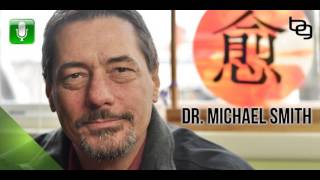
Ben Greenfield interviews Dr. Michael Smith about ancestral and Chinese medicine practices including cupping, acupuncture, pulse diagnosis, and urine therapy. Smith discusses how these traditional methods work alongside modern medicine, with practical examples from his clinical practice in Nelson, BC.
Chapters
Yo, yo, what's up everybody?
If you can hear the ocean behind me, it's because I'm in Kona, Hawaii right now. I just got done with eight and a half miles of crawling and climbing and stalking sheep down here on the big island where I'm used to going to race the Ironman triathlon. But this year I'm here hunting. I'm actually pretty, as my friends over across the pond would say, knackered right now. But I wanted to get on to get this show out to you because it's actually a pretty cool show. It's about drinking your own urine and why you should do that. Now there's a lot more than that, but part of it really is about, I'm serious, drinking your own urine. There are other things though, that you can, that you can do to your body that are far better than urine. For example, mushrooms. I have this stuff that I use pretty much now every day. I've talked about chaga extract before and how I dump it into my morning cup of coffee. I've talked about mushroom coffee and how I dump that into my coffee. And I've talked about all sorts of different blends like reishi and green coffee. And this week while I'm in Kona, I have the fantastic Kona coffee available to me. But it's about two miles down the road at the local ABC store and I have to go buy it. So this morning, before I headed out to hunt, rather than opting for the freeze dried coffee crystals that were here in the cupboard, I took two packets of the four Sigmatic mushroom coffee with lion's mane and chaga. I dumped that into my mug and I've been hunting for the past 12 hours with pretty much that, an avocado and a papaya. And that did the trick. So you can get this stuff too over@4sigmatic.com greenfield that's4sigmatic.com f o u r sigmatta.com greenfield when you go there, you can see all of my own personal favorite coffee blends that I use. And you can use coupon code BenGreenfield to get 15% off. That's code BenGreenfield to get 15 percent off of any of their fantastically flavored coffees. This podcast is also brought to you by something I should have done this morning because I use it for wakefulness every morning along with my coffee, but I rushed out of the condo without it, so. So it is something that travels with me all over the globe in my pocket. It's just like having the sunshine in my pocket. Basically you have the ability to suppress melatonin and to block your body's feeling for the need of sleep, making you think you're less tired. And there's this thing called a human charger that does that. It's this little device that interacts with proteins similar to those found in the retina of your eye, except these ones are on your brain. They're photosensitive proteins on the surface of your brain. You put these things are like headphones and they're white light that passes into your ear canals. You put it on for 12 minutes and it basically does everything that the sunshine can do, even when you don't have access to the sunshine. It's good for shift work, it's good for jet lag, it's good for low energy. And you can grab 1 for 20% off over@HumanCharger.com Ben HumanCharger.com Ben @ and you use code bfitness to save 20% off. So now that you have the sunshine in your pocket and some mushroom coffee, it's time to go learn how to drink your own.
Urine. Let's do.
It. In this episode of the Ben.
Greenfield Fitness Show, My primary focus is complex chronic autoimmune disease. So if you're referred to me, that's because you now have more than one autoimmune disease. So I tend to deal with some pretty complicated stuff. Once you go backwards through the industrial revolution, it's gonna be homesteading. And if you go back more through time, it's going to be hunter gatherers. And if you go back more through time, it's going to be primates living at beaches during ice ages, trying to learn to swim. If you just give your liver and kidneys at least a liter of water in that first two hours, not only are you going to be peeing like a champion, you're going to be getting rid of all that water soluble tissue waste as quickly as you.
Can. He's an expert in human performance and nutrition. Voted America's top personal trainer and one of the globe's most influential people in health and fitness. His show provides you with everything you to need need to optimize physical and mental performance. He is Ben.
Greenfield. Power.
Speed, mobility, balance, whatever it.
Is for you, that's the natural movement. Get out.
There. When you look at all the studies done, studies that have shown the greatest.
Efficacy.
All the information you need in one place right here, right now on the Ben Greenfield Fitness.
Podcast.
Hey folks, it's Ben Greenfield. And I guess it was A few months ago that I had the, the seal fit 20x at my house, which was basically like a 12 hour beat down where a whole bun of people from around the globe showed up and myself and Commander Mark Divine and some other Navy SEALs took them all through a crazy workout that lasted 12 hours. And that was designed, as the name implies, to make you 20 times stronger. One of the attendees for that event, a guy named Scott, who I've gotten to know a little bit since that event, he told me about a physician that he knows and that he's worked with up in, of all places, Nelson, bc. Nelson, BC is actually where I used to go drink when I was underage. It's like five hours, five hours north of my house. And I remember when me and my buddies were 16, 17 years old, we'd drive up to Canada so that we could drink even though we were underage. And it turns out that there is more to Nelson than simply underage drinking from American boys who have hopped the border. There is medicine up there, and in this case, medicine that's relatively unique fringe and that pushes the boundaries that is practiced by my guest on today's show, Dr. Michael Smith. And Dr. Smith is from the first nations up in Canada. That's where he hails from. And while up there in Canada, I know that he grew up on the diet of his indigenous ancestors, doing things like eating wild organ meats from the animals he hunted and feasting from the wild salmon that he caught. But he's kind of gone above and beyond just some of the medicinal traditions that I know he learned in the First Nations. And instead he's also studied martial arts, he's taught Canadian military self defense techniques. He in his practice does everything from neurosomatic therapy, which we'll talk about today, to from what I understand, bloodletting, pulse diagnosis, tongue diagnosis, all sorts of kind of interesting fringe medical tactics that I thought it would be really fun to dive into because he also seems to be practicing what he preaches. He's an athlete, he's a professional martial artist, he's an author, he's a speaker. He himself also has a podcast called Fusion Health Radio. He has a book called Returning to an Ancestral Diet and he has a website called Integrative Health Solutions. Don't worry if your head is spinning with all that. I'm going to keep show notes on everything that Dr. Smith and I talk about. If you just go to BenGreenfieldFitness.com ChineseMedicine that's BenGreenfieldFitness. Dot com ChineseMedicine because, as the name would imply, Dr. Smith also has some pretty vast experience with traditional Chinese medicine. So, Dr. Smith, it sounds like you could both kick our and also heal us up afterwards. So welcome to the.
Show. Thanks. Let's hope it doesn't go that.
Way. Yeah, seriously, I'm glad we're on Skype. So I'm curious about the uniqueness of your upbringing. So can you explain what it is that you experienced when growing up there in Canada and being involved with the first nations, what the first nations is, first of all, for people who aren't even familiar with that term and then kind of like how that influenced you from an ancestral health.
Standpoint.
So I think the word first nations basically is just the indigenous people of North America. Specifically, my people are the Dene people or the Hochlosne and Ishla Dine people, which would be the Mud Clan of the Navajo.
Nation. The Mud Clan. Why are they called the Mud.
Clan? I know it's kind of embarrassing. You know, it could be like Eagle Clan or Bear Clan or some badass thing. But no, we're the Mud Clan. The word actually means undifferentiated, like the primordial, I guess. And that particular tribe or clan is the story keepers, Storytellers, wisdom keepers of that nation.
So.
Interesting.
Okay.
Yeah. And that people, that language, the Athabascan language, goes from Toktoyoktok, which is way, way up north, all the way down to New Mexico, which is where the Navajo people are around Arizona.
So. Okay, got it. Now, when you were growing up with the Mud Clan, what does that mean? Like. Like, were you. Were you actually part of the Mud Clan? Like, like, what. What's your actual genetic.
Heritage? So I'm a mixture of, again, Dene, which people call Navajo in that part of North America. Up here, we're just called Dene.
And then I have some Sami, some Scottish, some Irish, and believe it or not, some English.
Royalty. Wow, that's.
Great. Yeah. Quite the.
Cocktail.
That is a cocktail for sure. What is it that you learned when it comes to the first nations in terms of medicine? Because familiar that they have. Don't they have something called, like, a medicine.
Wheel? Yeah. So the medicine wheel is basically the way we would organize traditional teachings around what you would look at very much like a compass. So there's the four directions, and then there's what's above you and below you, and then there's what's within you. So it's like seven directions. But most of the teachings are kind of compartmentalized into the northeast southwest way of seeing the world. I think that probably the most common thing that I end up talking to people about in that sense would be what we call the four puberties, which is about every 15 years people tend to become somebody else, which is kind of weird to go through if you don't know what's.
Happening. I've never heard of that or been familiar with that term. Every four years you go through a.
Puberty? No, there's four puberties in life. So about every 15 years.
You shift gears. I think in western astrology they call the second one Saturn return because it's like around 28. Saturn goes around the sun once or something and then you become your second.
Puberty. Okay, interesting. And so how does this medicine wheel actually.
Work?
Well, I don't know if it works. I actually use the term medicine wheeling because if you were to take say chakras from tantra or something like that, you could put it on a poster, give each one a special color and a special crystal and a special herb and gem or whatever, and it becomes kind of literal where when you look at medicine wheeling as just a natural process of reflecting on life, Given that there are four seasons, four directions, four stages in life, lots of fours sometimes that can help you frame how to balance a situation out. So another one. I don't know how deep you want to get into this specifically, but there's a thing called the four colors of time, which describe different kind of mood states people are in. So let's say you're in what we would call black time, which would be a pretty bad place to be. And if I'm in red time, which is kind of the get up and go workaholic kind of point of view, you and I aren't going to get along very well because you're kind of dealing with a deep internal stillness issues. And I want to run around and do push.
Ups. Okay, interesting. It's less of like a way that you would diagnose disease as much as it is like a mental construct for determining what stage of life someone might be.
In. I think the last time I went through the entire thing, it took me 62.
Hours. When you say went through the entire thing, what do you mean? What did you.
Do? Did a year long training where I just walked people through all the different teachings that I've picked up in my life from different elders and medicine people. And the whole thing took about 62 hours to go through everything I.
Had to say, okay, oh.
Wow. So you taught me. Was that recorded at all or where's a good place for people to learn more about the medicine.
Wheel? It's not something you're going to find written down with any kind of credibility because it's an oral tradition. It's very contextual. Like I said, you can't really literalize it and keep it in its own self nature, I guess, because once everything gets compartmentalized and literalized in the sense of written, and because it's written, it's now true, because somebody else could read it and know the same thing as you do, it kind of dies. So, I mean, there's lots of, I don't know, New age stuff out there that borrows from medicine wheel teachings. But again, it gets very kind of plastic and solid and it loses its, I don't know, its life force a.
Bit. Okay, got it. Well, I'll try and hunt down a little bit more about this concept of the medicine wheel and potentially put some links in the show notes for those of you listening in. But from what I understand, you actually got sick yourself. You had to deal with things like Crohn's and ulcerative colitis. And I'm curious if that is what influenced your interest in getting into medicine and if so, what you actually did to heal yourself using what you learned from both dwelling with the Mud Clan, which I just think sounds sexier than first nations, and also what you learned from traditional Chinese medicine. What's your story in terms of how you actually came into the interest in.
Medicine?
So, yeah, I guess I didn't really answer your original question. So I grew up in a hunting lodge up in northern B.C. so we grew up on moose and berries and mushrooms and all that kind of.
Stuff. What do you mean you grew up in a hunting lot, like in an actual.
Lodge?
Yep. Okay, and what's the difference between a lodge and a hunting.
Lodge? I guess lodge is where you would go to hang out and drink beer, and a hunting lodge is where you go to sleep and then wake up at three in the morning, get on a horse and go off into the bushes to shoot.
Animals. Okay.
Gotcha.
Yeah, so I grew up basically trapping and tracking and hunting and fishing and all that kind of stuff. We did have a school, but it was like a one room school that was, I don't know, really far away. And we didn't get there very often, but moved to the city, became an athlete, mostly a martial artist, because being mixed blood in this part of the world is a good way to get into a lot of fights. And about in my mid-20s, early 20s, one of my coaches had said that it would be better for me to be a vegetarian because of all these spiritual things. And I thought, well, you're a pretty impressive guy. I'll try that out. And within about three years, I went from 165 pound professional athlete to 112 pounds dying in the.
Hospital. So what happened exactly that you went £112 dying in the.
Hospital? Crohn's and colitis came on super, super fast. And I was actually in med school at the time, so I knew kind of what was going on. But at the same time, I have to admit, being a stubborn guy that thought I could beat anything, I just kept trying all kinds of really, really wacky stuff to control it or to keep myself from getting sicker. And obviously that didn't work out so well. So I spent a couple of nights in the icu, and that was a hugely potent experience for me, being, you know, sort of at the time in my mind, but pretty tough on invulnerable guy. I'm lying in this bed in a room with these three old men that are in their 70s and 80s, and they're coaching me and trying to inspire me to make it through the night while I'm begging the nurses to kill me because of the amount of pain I was in. So that was a big eye opener for me. Like, oh, my God. I mean, this is not working. I can't just be tough all the time. And here I am laying in bed and these little guys are trying to keep me just from freaking.
Out. Did you. Did you actually have like a. Like a genetic predisposition to two Crohn's or ulcerative colitis? You know, like something that you would have test with some kind of a lab panel or. Do you think that this arose due to stress from medical school or something.
Else? I think mostly it was just trying to be a.
Vegetarian. Okay, got.
It. So what.
Happened? How is it that trying to be a vegetarian would have caused that to.
Happen? Well, I went from a diet of mostly, you know, animals and plants and fats to trying to eat brown rice and tofu and quinoa and all that other fun stuff. And I mean, I'm sure you've talked to this, to this, to the ground and back, but I mean, with all the lectins and phytates and stuff in whole grains and beans that my body was not familiar with at all, I mean, I basically just triggered an autoimmune process that was probably latent. And it was. I mean, I'm sure stress had a lot to do with it at the time, too. I mean, med school and I was in a weird relationship and teaching something like four to six hours a day for martial arts, as well as studying all the time. So, yeah, it was a good combination of big shift in diet, big shift in lifestyle, big shift in stress, which is usually what gets us.
All. What'd you do? How'd you fix.
Yourself? I went back to basically eating.
Stew. Stew.
Maybe stew has a different term. When I think stew, I think of, like, big pots that my mom used to throw beans and some nasty meat into and a whole concoction of items and then cook it up to create food that would last two weeks. I'm curious if stew for you is bone broth or what stew.
Is. Well, I think it's evolved a lot since that was, like, 22, 23 years ago, I guess since then, I've written a gourmet cookbook. So I've gone from the kind of hellish stew that you're talking about. Some pretty damn good stew. But, yeah, for literally two years after I got out of the hospital, I pretty much just lived on stew and sausages and.
Salad. Wow. Stew and sausages and salad. Like. Like raw vegetables or cooked vegetables.
Or. I think a bit of both. I mean, this is a Chinese medicine thing, but. And if this is, I think people TMI just bleep it out. But basically, in Chinese medicine, if you eat a lot of raw vegetables and you see the raw vegetables in your poop, then you've got to cook your vegetables. So that was kind of mymy. Go to thermostat for or lab, test for how many vegetables I should be eating every.
Day. Do you know what's going on there from a gut standpoint in terms of you seeing raw vegetables in your poo? Why, that would be a sign. So you're saying if you see raw vegetables in your poo, corn in your crap, as Fat Bastard and Austin Powers would say.
If you see that, you're saying that, it's a sign that you need to cook down those vegetables or you need to chew them.
Better.
I think that would be a good start. And I'm trying to repress the urge to make weird choices. Weird voices about feeling my.
Belly. Anyway, Gut in my.
Belly. In my belly. There we go. How'd you get that.
Out? I want my baby back, baby back, baby back, baby back.
Red.
Anyway, so obviously, if you have low stomach acid, low pancreatic enzyme, Concentration or ejection, if your microbiome is all over the place, then you're not going to be able to break down the cell and the deep fiber in your plants and then you're going to poop them out. It can actually technically digest corn. So.
I don't think that one counts as a meter for digestive.
Health. Yeah, that one inevitably winds up in the toilet bowl. The corn does. But that's really interesting about the other vegetables being a potential sign for low stomach acid or something of that nature. Now, in terms of what you do now, did you, after going through the Crohn's disease and ulcerative colitis, finish medical school? Did you do that during medical school? Or what happened that launched you into the practice that you have now up in Nelson.
Bc? Well, I actually moved Nelson to start the school we call Academy of Classical Oriental Sciences. So I came here to actually teach and that was actually the time at which I ended up in the hospital because I was still trying to be a vegetarian and I was working about 70 hours a week writing courses and translating things between French, English and Chinese and, and all that. So that's actually when I ended up in the hospital was during the first semester of starting a.
School. Oh.
Wow. Which is nice and humbling, you.
Know. Yeah. So you started this school and how long ago was.
That? We started this school in.
1996.
Okay. 20 years.
Ago. Got it. And you've basically been practicing up there in Nelson since.
Then?
Yep. Okay, got.
It. Yeah. And I've also added like functional medicine, nutritional medicine, and I mean, I guess I could call it ancestral or evolutionary nutrition now.
But. Got.
It. I'm a learn aholic. I can't help.
It. You wrote this book too. Returning to an Ancestral Diet. What is that.
About? So about the first hundred pages is just on evolutionary nutrition, basic nutrition science, the kind of do's and don'ts. I think it's written probably around like a grade 10, grade 11 level. So it's mostly just like, meant for patients to get their arms around the basic information of what they need to do. Which is basically why I wrote it was just so my patients would have something to be able to access and carry around and take home and show their spouse so they could make sure they could eat real food and have a good resource. So there's besides about 100 pages of basic technical information.
Then there's about 500 gourmet recipes from around the.
World. When you say gourmet recipe, can you give me an example? I mean, are we Talking about like salmon and parchment paper or some type of fancy California cuisine. Rabbit rib or. What exactly would a gourmet meal be like for.
You? For me, gourmet just means that it's a good balance between seasonal, local, fresh and something your grandmother would have taught you on Sunday.
Afternoon. Like.
What?
Wow. I got thousands of recipes in my head. When it comes to mind, it's sort of the most popular thing if people ask me to go to a potluck. It's salmon riet roulade. So you take leftover salmon, you make your own mayonnaise, you throw in a bunch of spices and yummy things, then you wrap that up in sliced lox, which is smoked salmon, and then you would sprinkle over that a little bit of.
Chipotle and some squeezed lime and I mean.
It'S. That sounds really good. What did you call it? Salmon.
What? Riette, which is the French name for anything that's basically rendered down into a fat. And then roulade basically just means rolled up in.
Something. How do you spell, how do you spell.
Riet? R, I, L, L, E, T, T, E. Okay.
Gotcha. I think I have seen that term before. So you call it salmon roulette roulade. Okay, got it. Now, what about when you say returning to an ancestral diet. We live in an era of 23andMe and DNAFit and all these services that will test your genetics and then in addition to programming a diet according to your genetics, such as high carbohydrate or low carbohydrate, or let's say if you had like the, the APO e3.4 gene, like a, like a low saturated fat diet or more of like a Kitavan fiber rich diet, et cetera. We also are able to look at where our ancestors came from from a test like that, like sub Saharan African or Eastern Asian or, or Northern European or perhaps just a mutt like you of first nations and royal English.
Tribes.
How do you actually prescribe a.
Diet and say that it's ancestral when everybody's ancestry is.
Different?
Well, I mean, I agree with that in one sense totally, because I'm totally down with nutrigenomic medicine. I love getting people's reports back and looking at their SNPs and figuring out more specific details. I think if we were to take a magic camera or satellite in outer space and it has the magic power of going back in time. If you watch human history go backwards, you're going to basically bump into. Once you go backwards through the Industrial revolution, it's going to be homesteading. And if you go back more through time, it's going to be hunter gatherers. And if you go back more through time, it's going to be primates living at beaches during ice ages, trying to learn to swim. So unless you're from another planet, and that's totally cool, by the way, if you're from another plant, that's your evolutionary history. So when we speak about ancestral diets in the loosest, most general term, you're either going to go back and eat a homesteader diet, which would include oats and maybe some rice and millet and lots of fermented foods to balance that out, or you go back to what we now call the Paleo diet, which I have a couple of issues with. And then again, you would go back to what I call an Ice age diet. That's actually meant to make fun of the Paleo diet. But human beings intermediately between being primates and what we are now, as far as my research has shown, as well as some really old, traditional stories, our biggest evolutionary pressure was during ice ages, when we were living off mussels and fish and lobsters at the beach as primates. Profoundly healthy way to.
Eat. Okay, got it. So you're basically looking at, even back before humans would have spread to different areas of the planet, what we would have been doing at those.
Stages. Yeah, because, I mean, the thing that really fascinates me, Ben, is that when you take people through what I would call epigenetic resets, right. Evolutionary pressures around exercise, nutrition, I mean, basically everything you always talk about all the time.
Our epigenetic system says, I think this is familiar, and good things happened the last time we did this. So if you were to live off basically raw fish and fast growing green plants, you would have an epigenetic reset to what it's like to get through an ice age. As a primate, the most common thing I ask my patients to do in general with respect to an epigenetic or evolutionary reset, is to drink at least 2, 2 liters of water a day. But to make sure you're getting that first liter in the first two hours of your.
Day. And why would you want to get the first leader in the first two hours of the.
Day? So with respect to human history, we've been migratory way, way, way more than we've been in any way, kind of settlers, so. And you're a bit of a bush guy, so you've got some experience, you know, trekking around out there in the boonies. The hardest thing for humans to do without technology is to move water over land. So it's been a pretty normal thing for migratory people to fill your belly with water so you can carry it around on the bag on the inside, instead of trying to manufacture and then hanging onto a bag on the outside. Or you'd be doing a bit of both. So when you look at just a simple evolutionary hack or opportunity, just by doing that, your body resets a whole bunch of things back to that epigenetic or evolutionary opportunity. And I mean just in the common sense thing around tissue waste, you're sleeping, your body's trying to clean up all of the mess of your day. And you know, for athletes that's a bit bigger of a mess, or for people who, you know, party too much, it's obviously a much bigger mess. Your liver and kidneys want to put all this stuff into a water soluble state and they spend all this time doing that. And if you wake up in the morning and drink coffee, I mean, that's not going to really help you. So your liver and kidneys have to try and transpose a lot of these reactive oxygen species and basically mild toxins back into a fat soluble intermediate state until you get enough water for them to flip it back over to water soluble so you can excrete it properly. So it's a super simple, almost no brainer biohack, where if you just give your liver and kidneys at least a liter of water in that first two hours, not only are you going to be peeing like a champion, you're going to be getting rid of all that water soluble tissue waste as quickly as you can. And I don't remember the countries in my mind right now, but when I first got inspired to look into that a few years ago, at that point there was three countries in the world that if you were in the hospital, they made you do that, they made you consume that much water that way. And the statistics in those hospitals was pretty profound with respect to positive results on those patients. So I thought that seemed like a good.
Idea. Do you put anything in the water like lemon juice or baking soda or anything along those lines? When you do this liter within the first two hours when you wake.
Up? For myself, yeah, I'm always sort of goofing around with experimenting on myself. So right now I'm using leftover Chaga.
Tea. Leftover Chaga tea mixed with the water that you drink, or you just drink a liter of Chaga.
Tea. I just put out a couple of jars on the counter, fill them with Water and let them baseline to room temperature. And then I'll just pour a little bit of the leftover chag choco on top of that. But again, I could be using lemon juice, I could be using apple cider vinegar, I could be doing, like you said, baking soda, pretty much anything. That just seems like an appropriate thing to enhance what I'm doing, but that's what I'd be.
Doing. Yeah, interesting. I asked that just because I personally get a little bit bored with just regular water. And I spoke with someone on a podcast. I don't remember who it was. I think it was when I interviewed Hannah Crumb about kombucha, she touched on the fact that we actually see very little just pure plain water consumption when it comes to the dietary practices of many of our ancestors. And they'd be doing everything from watered down wine to mead, to fermented beverages like a kombucha or a water kefir, to teas, to coffees, to all manner of different herbal blends, but very seldomly just plain old water. And so I guess I don't really feel guilty anymore about really probably. I drink the equivalent of one to two large glasses of just plain water during the day. And other than that, for me it's everything from sparkling glass, bottled Pellegrino to I actually do some of that chaga tea like you just talked about, to lemons to baking soda and beyond. I just constantly like to put things in the drinks that I drink.
And I think that touches on something that.
Pretty big on, which has to do with intention. So if I'm having pure water instead of something more exciting, usually I do that with a sense of intention. And this might be a bit woo woo, but it kind of touches on the first nations side of things. I often ask my patients to blow on their.
Medicine. To blow on your.
Medicine? Yeah. So say you know how many capsules of nutrient nutritional supplements you take a day. But just imagine you've got your fistful of whatever you're going to be taking and maybe you're actually really dealing with a health problem than a biohacking experiment. But either way, I think this would be appropriate. I would say put those little supplements in your hand and then hold in your mind an image of what it is you see yourself attempting to do and that this stuff in your hand is your ally. So just once you get that image really potently warmed up in your mind, then you would just blow on the medicine or the herbs or your chaga tea or your clear water and to kind of imbue those substances with that sense of cooperation and.
Intention. That's really interesting. Do you think that, that in homeopathy and also when you look at Masaru Emotu, I think his name is the guy who will pray or show that positive emotions displayed over water could potentially change the crystalline structure of the water. And then in the case of homeopathy, there's this idea that when you have certain things in water, water remembers. Water is able to actually carry a signature of something that it's, that it's had in it. And I realize that some of this may sound a little bit woo to those of you listening in and I will admit there's not a great deal of peer reviewed clinical research behind it. But.
When you blow on water, do you think that there is.
Some kind of an exchange between you, your breath, any molecules or chemicals or compounds that might be present on your breath and the.
Water?
I don't think it's got so much to do with whether or not I've got great smelling breath or special molecules in my breath. I think it has more to do with.
Entrainment. What do you.
Mean? So we have this thing called the heart torus. Because if we're going to try and have this kind of a conversation and still use our left brains in the sense of peer reviewed studies actually mattering at all, because we're talking about something shamanic and shamanic is way more right brain than left.
Brain.
Okay. But if I was to park over in my left brain, the thing that makes the most sense to me would be entrainment, which is the bioelectric biomagnetic field that's emanating around our heart for about six feet, give or take on average, depending on mood, state of being intention. You know, I think if you're singing really intensely about something which we do in our ceremonies, the, the intensity of that bioelectric field is going to entrain or influence someone next to you. And that could be a human being, it could be an animal, it could be a cup of.
Water. That's really interesting. Okay, got it. So that's, that's, that's the kind of potentially the theory behind this concept of gently blowing on your water before you drink.
It. Yeah. But if we were both to just take a little holiday and sit in our right brain, how does that.
Feel? Mm.
Interest. I mean that's where I think 90% of the work I do in my practice, in my teaching, in my writing, in my day to day life is I've got a really really good brain. But it gets in my way because I stopped feeling and using intuition and being really, really deeply connected and present with things because I can bungee cord into my head and refer to like 900 books that I read or something like that. And it's a nice little escape for me because it's safe, it's easy and I'm in control. But when I go over to that other side of the opportunity we have here as beings and just deeply feel what it's like to stay connected and stay present and be conscious of even the opportunity, Even it's only 2% chance blowing on your pills is going to make your pills do something better. That 2% chance still feels 99% better than doing.
Nothing. How long do you, do you blow on the pills or blow on the.
Water? I think just for me it's just breathe in, breathe.
Out. Oh.
Really? I just breathe in and because I've been doing this since I was a kid, so I just hold in my mind that sense of. I mean, we use the word English, in English, we use the word prayer. But it would be more appropriate to think of it as an imagination that has momentum. Like I'm imagining something, I'm imaging it, I'm hoping for it. I. What do they call that? The abundance factor thing where I'm. The more intention you hold towards something, the more likely it is to come into being. So it's more of just a deeply present sensual moment of affirmation. And I don't want to, honestly, man, if somebody proved how this worked or didn't work, it would make me sad, right? And then it just becomes another.
Thing I know that might take some of the right brained spirituality out of it. Yeah, got.
It.
Hey, I want to interrupt today's show to tell you about something in my closet right here in Kona, Hawaii. I packed all of my clothes into this premium German polycarbonate suitcase. It's made by this company called Away Travel. And the coolest thing about this case, I actually discovered it while I was down here in Hawaii. It can actually charge cell phones and tablets and e readers because it's powered by a or has the ability to power anything that has a USB cord. A single charge on it will charge a phone five times. It's got a lifetime warranty. You can do a hundred day trial with this thing, which means you can live with it, travel with it, Instagram it, whatever you want to do. And then if you don't like it, you can return it for a full refund. They ship anywhere for free. And they have two different carry on sizes. Big carry on or a medium carry on or they even have a really large size for extended stays and four 360 degree spinner wheels, giving you a smooth ride through the airport. Along with a TSA approved combo lock. Pretty much everything that you would ever need is in this suitcase. It's probably the best suitcase I own. No, it is the best suitcase I own. I will say that because before this I owned really crappy suitcases and I really went, I went above and beyond with this suitcase. So you can get it@awaytravel.com Ben and when you go to awaytravel.com Ben you get 20 bucks off a suitcase if you use promo code Ben. That's promo code Ben@awaytravel.com Ben this.
Podcast is also brought to you if.
You like to own nice things like suitcases, by a razor handle that's not only the most ergonomically designed, comfortable, softest razor that you'll ever use. With a flex hinge, a comfortable glide, a lubricating strip, a textured handle, everything you'd ever want in the nicest razor known to man. But you can even get their midnight blue chrome razor handle engraved with your initials if you want to be that guy or gal with your initials on your razor handle has the foaming shave gel that comes with it. It's got like aloe vera in it, doesn't have any of the ingredients that'll give you man boobs. The shaving gel works just as amazing as the razors. Beautifully designed gift box this thing comes in if you want to give it to somebody that you like or somebody that's really hairy. And this Normally goes for $30 on Harry's.com H-A-R-R-Y-S.com but as a special offer for you and yours truly, because I have one too, we've partnered with Harry's to give you five bucks off your order when you enter code BEN at checkout. So you go to Harry's.com H-A-R-R-Y-S.com and you just enter code BEN at checkout. That gives you five bucks off anything from Harry's. And I must recommend their midnight blue chrome razor handle with your initials on it. So enjoy. And back to the.
Show.
So you have, in addition to just like blowing on your supplements, you have quite a few therapies that you do there in your office. And frankly, this is one of the reasons that I wanted to get you on the show was because you're doing some things I've never heard of. For example, I mentioned earlier when I was introducing you that you are the developer or one of the developers of something called neurosomatic therapy. Can you explain what neurosomatic therapy is and how you would use something like.
That? Well, I think the easiest way to use the term neurosomatic is just Mind.
Body.
You're just using a fancier title then because Mind Body was already.
Trademarked.
Kinda, yeah. But at the same time, I'll tell you the story about how this happened. So it was about 2003.
I was getting into some pretty potent shamanic ceremonial things, which was, I don't know, bringing up a lot of stuff in my experience that I didn't really know that I had had to deal with, which I don't know if people really need to know the details about that. But.
At the same time that I was starting to realize I had some pretty deep trauma stuff going on since I was a kid.
No synchronicity being what it is. I was at some party and somebody asked me, what do you think you know, would be the. How did they say it? They said, how long would it take if you were in a hurry, how long would it take to make someone clinically relevant in some kind of emergency situation? And we just sat around BSing about that. But I went home and thought about it and I sat down and it occurred to me, because of what I was going through at the time, around trying to decompress some childhood trauma, that seemed like the most effective thing to do because most people in a crisis would be dealing with trauma. So I sat down and. And honestly, I smoked a joint and thought about it and spent three hours designing this entire curriculum for using a hands on approach similar to like a combination of trigger point therapy, myofascial release therapy, Chinese massage, some real subtle tricky things like from craniosacral therapy that I'd picked up. And I just came up with this approach to decompressing trauma based on what I would call the eight layers of how human beings embody.
Distress. Walk me through what a typical session like this would actually look.
Like. So usually there's going to be an orientation first where I would walk a person through what those layers are and then ask a person to kind of imitate the kind of deep instinctual gestures that human beings have. And I mapped all that out actually as a martial artist, because in martial arts your job is to make the other person flinch long enough for you to knock them down. So, I mean, having all that experience of trying to charge people up into that flinch response and all the different things that that's about gave me this really clear map. So again, if I'm sitting in the treatment room with somebody, we're going to walk through that map in the first appointment so that they can give me and themselves a chance to really zero in on how much of their, I guess, vitality is held up in certain kind of postural habits. And a lot of these are deeply instinctual. And then we would. Sometimes I'll get people to draw what's called a somatograph, which is basically just a stick figure of a human, where you put a lot of symbolic.
Drawing basically on that picture. And then I'll take that picture and put it next to the treatment table so that as I'm going through the process of that treatment, I have the map that, you know, that I know that, you know is all about trauma. So if I'm working on. You say you're lying on your back, and I'm trying to release a lot of deep trauma and habit that's held in the back of your neck, which is something all of us do. As you're trying to release that with breath, and I'm trying to help you do that with very subtle kinds of axial traction and stuff. You're not just lying there getting a massage. You're lying there trying to do your best to decompress the actual experience of trauma that we both can confirm you're holding in that part of your.
Body. Okay, got it. What do people notice when they do this? I mean, do you get, like a detox reaction? Do you simply feel as though, like, a muscle is less guarded if it was a certain muscle or injury that you're working on, or what do you notice when you have it.
Done? I'd say about 20, 25% of the time, people just have a big emotional release, lots of sighing, maybe a bit of crying.
Than a lot of sort of smiling and laughing because it's. It's so empowering to know that you can tangibly decompress a whole bunch of stuff that, you know, you just don't know what to do with. So it's a. It's a big shift for people that way. I'd say maybe 5% of the time I might have to tussle with somebody because they go into a kind of like mild. Mild but explosive rage.
I'd say most of the time, people just start twitching like.
Crazy. Why would people Go into a.
Rage.
Have you been. You ever heard of Oscar the.
Grouch? Yes, the Sesame Street Oscar the Grouch? Yeah, the guy who has the pet.
Worm. I didn't know about the worm.
But I'm pretty sure he has a pet worm. I don't remember the pet worm's name. I'm sure one of our listeners does. If you do go leave a.
Comment, it's now up to you. Ben, you have to put that in the show.
Notes. That's.
Right. Just kidding. So I use Oscar the Grouch as sort of a metaphor for people because the reason why we all have Oscar inside of us is because we're trying to keep him in the can by pushing down on the lid. So if you spent the last 20 years of your life trying to run a business, raise kids, write books and do anything else that you're kind of interested in doing, but at least one of your limbs or at least one portion of your vitality is busy trying to keep that trauma or that memory or that weird urge you have or whatever it is in a can. You're basically, basically living with say 20% of your body's vitality and freedom, basically stuck doing a part time job to keep Oscar in the can. So one thing that I think it's important for anyone listening to be mindful of is if you're strong enough to hold the can lid on top of whatever it is you're holding into yourself, you're strong enough to be with whatever's inside the.
Can. Got.
It. So that's. For some people, that's the biggest thing, especially around addiction. Most people keep pouring if it's booze or something else over time, whatever it takes to keep that lid down. Once you come to the kind of conscious, at least possibility that you can handle what's inside the can and the lid is actually in the way of your healing. That's step one is just to pop the lid. And some people, when they pop the lid, Oscar comes out and he's really pissed.
Off. Yeah, it's kind of interesting. Whenever I'll do a full body foam rolling session or get a massage, in many cases I will have some emotional releases or I'll get on an energy high and feel very similar to as if I'd just had a good cry or something like that. And I know that there is definitely a link between fascia and neurotransmitters. I'm not sure that fascia actually produce neurotransmitters. However, I know they contain neurotransmitters. That kind of connect into the central nervous system through a sheath around the peripheral nerve. So, you know, it's interesting that some of this might be based on actual chemical signaling from the.
Fascia. Definitely. And there's also the. I don't have the chemistry of this in my head because I don't talk about this kind of thing very specifically very often. But if you imagine at the end of every peripheral nerve, if you can just imagine that that's what your body looks like on a certain level, at the end of every one of those nerves, especially the motor plate nerves, your body has the ability to hold catecholamines, basically just before they're formed. So as soon as a certain signal of stress or trauma goes on, the nerves release one charge. And again, the technical stuff is something I learned 20 years ago. So it's not in my head right now, but.
So if I was to do this in front of a room of people, usually what I do at this moment is I yell really, really loud. So I'm not going to do that because I think the effect would be really, really weird for.
Someone.
Yeah. Plus, I've got headphones on, so spare me. Spare my.
Ears. Yeah, yeah. But say I'm in a room full of people and I just yell really, really loud. Most people are going to jump out of their.
Chair. Right.
Right. Or at least startle a little bit. So part of the startle reflex is your body's ability to suddenly have the, like, epinephrine side of your adrenal system in every muscle at the end of every nerve, in the 2/10 of a second it takes you to go from sitting on your couch to dealing with the fact a bear just walked into your house. So, I mean, there's no way for all those hormones to get to the end of all of those nerves and get embedded into the effective motor plate of all those muscles from your adrenal glands to every tissue in the time it takes for people to go from zero to.
Startle. Okay, got it.
Right. So I'm using that kind of loosely. But there's all of these sort of, I would say, kind of like capacitors or little charges of energy, neurotransmitters, catecholamines, and other stuff that are held in little kind of emergency packages or whatever you want to call it throughout the body. And as soon as a very specific change happens, which is more of an electrical change than a chemical sort of circulatory change, the entire system can shift metabolic status. So if we can see that just in a general sense that, I mean, it's kind of obvious that that's how things have to work. When you're working on the opposite direction, which is through touch, through intention, through awareness, trying to reduce the body's need to hold on to all of those trauma specific kinds of chemistry and status, it's a huge shift for the person going through it. And this is where these conversations honestly get kind of hung up. Because with those kind of practices, what's really going on has to do with deep, profound conscious presence between at least two people.
Right. Because that's what it's really about. I mean, I love the geek out chemistry of how things can be explained, but when you're really in it as a patient getting that kind of an experience, the least thing that's interesting to you is what you can do with.
Language. Right.
Right. The most interesting thing to you is that you can completely trust yourself in your body in that moment. And for some people, that's a huge shift of.
Perception. Yeah, interesting. I'll hunt down some videos of what neurosomatic therapy looks like too, so that if folks, if you're listening in, just go to BenGreenfieldFitness.com ChineseMedicine and I'll hunt down a video so you can kind of see what this kind of stuff looks like. And by the way, Oscar the Grouch's worm is named.
Slimy. Oh.
Awesome. It's like that little light and dark orange striped worm named Slimy. But we digress. Yeah, I've also.
Seen that you implement bloodletting, or I guess that would be called phlebotomy, I suppose in your practice. Is that.
True? Not in the phlebotomy sense. I mean, there's a thing we do with little lancets in Chinese medicine where if a person has kind of a varicosity or other kind of congestion of blood serum in their body, you basically just wanted to get out what's.
A congestion of blood serum.
So.
Basically what we would call ischemia. So there's a bunch of blood trying to get through an area of the body, but circulatory status is impaired because of injury, because of congestion, because of mechanical stuff. I mean, obviously when you have enough congestion between your liver and kidneys, the blood return up from your lower body is going to be sluggish, which is going to produce spider veins, varicose veins and stuff. And from a Chinese medicine point of view, that kind of blood, as it gets darker and darker, is considered to be kind of Septic or toxic. So the idea is just to get it out of your body as fast as you can instead of asking your body to clean it.
Up. So you don't use leeches? Nope. Okay. Use lancets. And how do you actually use.
Those? You just put some iodine on the person. And I usually ask really distracting questions as I jab them until they.
Bleed. Is there actual science behind.
This? I think. I mean, it just makes common sense to me. And if you've got basically dead or dying blood cells sitting in a little.
Section of your vascular system, and it's just going to be a lot of work to clean up the tissue waste that's there, it just seems like a nice idea to be able to magically flush a metaphoric toilet and just get it out of your circulatory.
System. How do you know if blood cells are dead or dying in that.
Area? Because they come out.
Black. But how do you know before, like, before you actually go into. To lance.
Them? Well, you just see a presentation of, you know, an enlarged vessel or little bladders that happen on the vascular system themselves. It's like if you.
Almost. Like varicose.
Veins. Well, in a way. But imagine if you're piping up a bike tire when you just decide you really into the exercise part of it, and you just keep pumping the tire. What's going to happen to the.
Tire? Yeah, you get little areas where it starts to.
Bulge. Yeah. So you get those little bladder. Yeah, they get those little bladder bulges where it's the weakest in the membrane. So you can basically palpate and track that down. And that's where you would use the lancet, is to just pop that little bubble because the body's.
Stuck. Interesting. And so you just do that once, or is that like a practice that someone goes in for over and over.
Again? I think it would depend on the person, especially, I think, older people who are a bit overweight. That would be something. I think I would say, see that happening more regularly. Other people, it may be just once or twice. I mean, something I hardly actually ever do. So it's interesting that the rumor, Bill has it that I'm doing full monomies and leeches or.
Something. I talked to that guy Scott, who I mentioned earlier, and he filled me on all sorts of crazy things about you. So there's more. Just you wait. And then actually that relates to the next thing I wanted to ask you. And that's like this concept of blood cupping. Right. So we see the photos of, like, Michael Phelps from the Rio Olympics with the little cupping suction cup marks all over his body. But I don't believe he was actually doing blood cupping where you're actually, like, bleeding out through these cupped areas. Do you do blood cupping or any other forms of cupping in your therapy? And if so, how do you do it and.
Why?
I do cupping mostly for really deep tissue trauma, like someone who's been hit by a car or something.
And. Or someone with pleurisy, I think would be the next most likely thing. Pleurisy fluid congestion around your.
Lungs.
Okay. Now, how would getting hit by a car form a requirement for you to need something like.
Cupping? It's just a matter of getting the bruise to get as close to the surface capillaries as you.
Can. Okay, so you're talking about, like, blunt force.
Trauma.
Yep. Okay. So when you're bruised, I know that, for example, athletes will do this, just like introduce more blood flow into an area for healing or. Or removal of inflammatory byproducts. But when you're bruised, you're actually pulling the blood. I mean, is the blood actually coming out through the skin when you do something like.
This? You can do that. I mean, it's kind of like a really, really overdone hickey, but you can do.
That. Is that what you.
Do? I mean, I can and I would if I had to, but it's not something that I. That's not my objective when I use cupping. My objective with cupping is to just signal the body to focus more on increasing local.
Blood circulation, to just clean up a mess or to charge up the lymphatic system. Because if you're doing cupping, you're going to get minor little bubbles of lymphedema in the short term, and that excites the body to have to reregulate that. So in doing that, your body naturally upregulates, say, certain kinds of lymphatic.
Recycling. And when your body starts to increase that process, you're going to see things like pleurisy or other lymphatic congestion problems. Get.
Better. Yeah. Now, what about needling? Does needling work similarly? Because I've interviewed, I interviewed, I believe it was Dr. It was John Rusin, I think, who I interviewed and who does needling in his practice, like dry needling. Is that similar to cupping or similar to bloodletting in any.
Way? I think the easiest way to make this conversation really, really make sense for people would be to say that the term qi that people use for Chinese medic unfortunately gets stuck in the English mind as A noun. I know this seems like a bit of a, you know, an aside, but when you're thinking about the term chi as a noun, then.
You. So you think of it as like life force or.
Energy. Whatever you do in English, you're basically stuck with a noun. So not to just bash English, but it's a really, really limited language.
So if qi is a noun, it needs its own distinct circulatory system, and hence the hippie version of the meridians being some magic plumbing that science is too stupid to figure out, which causes all kinds of problems. Because qi doesn't actually really get used as a distinct word in Chinese. By itself, it can be, but it's really a rare thing. The term qi really just refers to the effect of circulation and the effective communication of every system in the body. So if you have liver qi as an assessment of the health of your liver, the qi just means circulation or communication with the rest of the body. So when we're doing needling with acupuncture.
The point choices can be determined by a textbook or by more intuition or by lots of experience. But when you're needling people.
Your intention is to improve the circulation in that area and the communication from that area to the other areas you're.
Needling. Okay, gotcha. So is needling acting more in the neuromuscular system than the cardiovascular.
System? I think it's going to work on all systems and then the ones we don't have words for.
Yet. Okay, interesting. Got it. So you do needling, you do cupping, you do bloodletting, and I also understand that you do some acupuncture. And I had a question about acupuncture because I had this fascinating video that I found of the use of acupuncturist anesthesia for, in this case, open heart surgery. They're actually using this as an alternative to anesthetic medicine for open heart surgery, which has shocked me. But have you seen this? And if so, can acupuncture be used for that level of pain.
Management? Apparently. I mean, I've seen it done on cows, I've seen it done on people. So the reason I bring up the cow thing is that for people who decide it's a mind over matter thing, where I just believe in acupuncture so much, just going to lie here and let you do your thing when you can see someone take a lung out of a cow with just acupuncture for the anesthetic, you're like, well, I don't think the cow believes in acupuncture. So maybe there is something going on here that's really, really quite deep. And I've never actually tried to use. Well, that's not true. I've done acupuncture anesthesia for dentist appointments for people, but I've never really tried to do that for surgery or anything like.
That. Okay, got it. But you do.
Acupuncture? That's mostly what I do as acupuncture. And I don't think I've done bleeding in the last two years just in case someone runs up my stairs looking to get some bleeding.
Done. When you do the acupuncture, do you do the thing where you electrify the needles or you start them on fire or anything like.
That?
No, I don't set them on fire. I have a friend who did that and he got sued for leaving big scars on.
People. What about the electrical charge that you can put on the.
Needle? Yes. So depending on what you're looking at in terms of your patient, you're going to choose different kinds of.
Sort of. There's the frequency, there's modulation, there's amplitude and all that kind of stuff. So depending on what I'm doing, I would either be doing.
A slower and lower current for a longer period of time or a faster and higher current for a shorter period of time, depending on the problem or the result I'm looking.
For. Okay, got it. So when you electrocute these needles, how are you doing that? Is there just like a wire that you use? Do you like to use an EMS machine or how does it.
Work? It's basically a very subtle version of an EMS machine.
Yeah. Okay, got it. Interesting. Okay, so acupuncture. And by the way, I've had a bit of acupuncture done. I have a local practitioner who I've interviewed on the show. He's actually a Chinese medical practitioner. When people ask me who my primary care physician is, I actually tell them it's Dr. Toby Hallowitz, who's the local Chinese practitioner. Even though I don't really have much of a primary care physician, as much as I bounce around practitioners based off of something that I might need to have done, I think it's kind of old school to have this idea of your one single primary care practitioner. Although my reasoning could be.
Flawed. Yeah, I think that's the best reasoning I've heard. I mean, one of the first things I ask people to do if they're in serious trouble, and I don't know if we've brought this up yet, but my primary focus is complex chronic autoimmune disease. So if you're referred to me, that's because you now have more than one autoimmune disease. So I tend to deal with some pretty complicated.
Stuff. Okay, so speaking of complicated stuff, dream interpretation. So I've looked in dream interpretation a little bit. Like you can associate, for example, like teeth falling out in your dreams as a deficiency of kidney qi. That's one example that I came across. And I know that you being in Chinese medicine, you being involved with qi, you may have some thoughts on this, but do you do dream interpretation at all in your practice? Have you messed around with that at.
All? Well, there's a lot of classic dream.
Reference in Chinese medicine. So there's. If you have this kind of dream, it means that like you said, if your teeth are falling out and your dream is your kidneys that are week. So there's sort of the classic stuff. And then coming from kind of a first nations cultural background where dreaming is at least as important, if not more important than just day to day stuff, I think I'd probably focus more on that side of my understanding with dreams with people, because it's a bit looser, it's less literal, and it's.
More like a psychotherapeutic conversation than me telling someone what, what they should think about their dreams. It's more of a chance of kind of drawing out their deeper intuition as well. Because if you can come to some sense of consensus and kind of a renewed awareness of something you're trying to figure out, then it's easier to focus on it. I really find it hard to read the books that here's A Thousand Dreams and what they mean exactly. So if you can memorize it now, you know, or not to bash Louise Hay, she's got lots of good stuff, but a lot of her stuff around. It's your left elbow, it's your dad. If it's your right knee, it's your grandpa or I don't actually know if that's what she means, but just in the sense that if we take any concept that's meant to be very subjective and then we try and make it very literal, what we're going to end up doing is having something you can read and remember, but it no longer really means.
Anything. Now, what are some common dreams that people have? Like I'll dream sometimes that, that my foot hits the ground and then when I take that step, I float way up in the air like I'm flying, jumping really high as I'm running down a Hill. Or I'll have the dream where I happen to be in a public place in my underwear or nothing at all, whatever I happen to be sleeping in that night.
And I think a lot of people have, in many cases, these common dreams. I know some people, too, will have the dreams about their teeth falling out. Are there common dreams that people have that you think have common.
Interpretations?
I think that's the choice we kind of would make consciously. And again, I'm trying to keep this at least my perspective that if you, like, say in Chinese medicine, if you're having those running, jumping, flying dreams, it's because, again, from a literal Chinese medicine point of view, that your lungs are weak. Right, right. And again, just because I said that and because it's traditional knowledge now, we're all supposed to just agree with.
That. Yeah, that makes.
Sense. So, I mean, and I'm not saying that's not right. I'm just saying the point I'm trying to make is that when you're doing things like dream interpretation, the more literal you get, the stupider you are, the more intuitive and subtle you are with what's actually going on with the person you're talking to, the more likely you're going to get something that's going to be potent and juicy and.
Useful. Got us. You don't have any common dreams and their meanings that you run across with your.
Patients? Well, I would say if you're going to do the I'm running and then I get this weird impulse to see if I can leap, and then I start swimming through the air. I mean, that's one of my favorite dreams that I have when I have them, because who doesn't want to fly? But from a traditional aboriginal point of view, that just means that your relationship with the fundamental elements of life.
We would say that your relationship with air is unbalanced, which means you could be spending too much time in your imagination or not.
Enough. Okay, got it. Yeah. I've read some interesting articles, like how being in your underwear or being nude in a dream might reflect that you have some kind of emotional or psychological vulnerability going on. Or if you're dreaming about navigating through certain rooms in your house or certain levels in a house, you're coming across little bedrooms or little areas that might reflect areas in your life that you've been neglecting. Or, for example, and one other that I've seen is if you dream about a vehicle, like a car, an airplane or a train or a ship, whatever you're doing in that vehicle could reflect the Direction that you feel like your life is taking or how much control you think you have over the path ahead of you. And it's kind of interesting. Even when I was in college, I used to look up little books on dreaming because I thought they were so.
Fascinating. Yeah, I think it's a super, super potent thing. I just would recommend anyone to stay as intuitive and contextual and patient. I mean, this is a weird aside, but when we take people out for what in English you would call a vision quest, which we usually do in the summer for young people, if they have a really potent experience and they're basically starving, sitting out there in the, you know, summer sun for four days, four nights with nothing else to do. So people tend to hallucinate because you're dehydrated. The teaching is that once you come back from your vision quest, if you have had some potent thing, you're not allowed to talk to anybody about it for at least four more.
Days. Why is.
That? So that you have a chance for the context and the meaning to settle or to sneak up on you in a way. Because if you have some hallucination or dream or vision and you take it really, really literally and you decide you're super, super potent now, and everyone should listen to you because you had this really big dream and now you're going to give yourself some special name and become cult leader or something, I mean, that's the danger of anything that's powerful is that it's.
Powerful. It's.
Interesting. So if you give yourself a few days, say if you did, like, an ayahuasca ceremony and you had this really big experience, if you give yourself a few days to let it settle, it might come to a.
Centered place in the way that you think of yourself and the way you think of that experience. Because, I mean, I've seen people come out of ayahuasca ceremonies, and I hope everybody listening knows what ayahuasca is. If not, we can get into that. But they think they're Jesus Christ. And they want to basically spend the rest of their life, you know, taking all kinds of hallucinogens, because that's what makes them feel cool.
Now.
Yeah. Instead of, you know, from a traditional point of view, people go to those ceremonies to heal and gain wisdom, to bring the wisdom back to the people. Yeah, it's not this narcissistic thing about, oh, wow, I'm so.
Cool. Yeah. It is kind of like that concept of, for example, when you have a problem, you sleep on it and you dwell on it before Necessarily trying to solve that problem right away. Or I know another common one is that I'll allow a buffer day after a conference that I've been to where I know a whole bunch of stuff will come across my plate as far as ideas, et cetera. I'll just set aside a whole buffer day in my hotel room before I fly home home just to go through all my notes and to kind of dwell upon and think about things. I think that practice in life can be pretty.
Beneficial. And I think I'm going to borrow that.
Hack. Yeah. Because it's like a lot of people be like, I'm going to fly straight home to my family. And you fly home to your family. I think you're an asshole because you'd lock yourself away in your office going through all the work that you have. I am of the mindset that I'll add that extra buffer day in, pay the extra money for the one extra stay in the hotel room and fly home after I've had like 10 to 12 hours to just digest whatever it is I need to digest so when I get home, I can be present for my.
Family.
That's. That's kind of my M.O. when I go to conferences and things like.
That. Yeah, I think that can. That kind of integration practice is super, super important, especially if you're going through a lot of change in your life. I mean, I think a lot of the people listening to this are probably going through, you know, a certain amount of change because obviously they're reaching out, trying to access experts and people like yourself. So if you're listening to this, just if you're going through stuff, give yourself time to integrate it. Don't be in a hurry to figure it.
Out. Okay, so I'm going to kind of flip a 180 here. I know that in Chinese medicine, one of the things that you'll run across is urine therapy. Literally drinking urine. Is that something that you, as a Chinese medical practitioner, have come across, have implemented at all in your practice, or what's your take on drinking urine or urine.
Therapy?
I don't make people do that.
Anymore. Anymore. So you've done.
It? Well, my first internship was with this person in a place called Rock Creek. It's not far from Nelson. She built this center up in the Middleton Mountains, and I thought that would be a great place to do an internship. So I'm going to go there. She would actually make her patients pee into a certain container at night because she wanted to examine it and she would. And then she would sneak it into their smoothie in the morning the next day because she didn't want to argue with them about whether or not they're going to drink their pee. So that was my first introduction to the whole thing. But I mean, when you look at the science sense to reintroduce to the top of your immune system what your body is dealing with at the bottom of your immune system, there's a lot of informational substances in urine that are basically what you would say from. And I'm using this.
Analogy, I guess everything from your diaphragm down is going from what it was on the outside of your body to becoming your body or becoming waste. Okay, so, and again I'm using that, that is just a easy to see image in your mind. It obviously doesn't really work that way. But if I have something that's coming out of the bottom of my body and I really need the rest of my immune system to know more about what my body's fighting against, like say a low grade infection or, or something, I drink the urine that tells the upper part of my immune system from the top all the way to the bottom to work harder at that.
Problem. It sounds a little bit woo woo, you describing it like that versus doing something like a blood or biomarker test to see what elements of the immune system might happen to be overstimulated versus just, I don't know, drinking your own urine to see what.
Happens. Well, I mean if I'm going to be talking about it from a traditional point of view, I just naturally decide that microscopes don't exist. But if I'm going to get into the microscopes, woohoo. I mean I've been doing functional medicine since 2002 and I mean, I don't know how I would possibly operate in the world without all the lab tests and stuff that I get to do. So I mean, I like that too. It's just, I think it's, you kind of have to keep Chinese medicine, at least part of it distinct from.
Science.
Okay? It's not that it's better than, or it somehow escapes the rules of science. It's just very contextual and it's before microscopes and honestly man, I mean, I'm a scientist, I got into engineering before I got into medicine. So I mean, I get science really, really well. What blows me away is that like for the last 5,000 years, China, Chinese medicine has been evolving without microscopes and they haven't missed a beat on how things.
Work. So when you're doing urine therapy Are you drinking like a whole bunch of urine? Are these like little tiny tinctures, like homeopathic remedies of urine or how does it.
Work? Well, I don't really do that.
Anymore. So if you just one were to do it, I guess I should.
Say if one were to do it, you'd be going on a fast, you'd be drinking lots of water, you'd be waiting until your urine gets to a certain.
The amount of smell or foam or cloudiness needs to go down. And then once you got to about three or four days to where your urine is less cloudy and stinky, then you would just drink a small amount of the first urine you release in the.
Morning. That's really interesting. And I found one article on it that says that urine is basically, they say nutrient filled. Blood passes through the liver where toxins are removed, and the purified blood then goes through another filtering process via the kidney, where components for which the body has no immediate use are collected in a sterile watery solution. And for that reason, urine is highly sterile, consisting of 95% water and 5% nutrients, including vitamins, minerals, proteins, antibodies and other beneficial ingredients. And advocates of what they call autourine therapy believe this combination can help to cure everything from the common cold to cancer, to boosting energy levels and sexual performance. And there are books with titles like the Golden Fountain that all extol the virtues of.
Urine.
Yeah, I mean the thing that I guess I would focus in on would just be the antibodies. I think there's probably less weird ways to get your.
Macronutrients. I mean, I'm a pretty open minded guy. I do everything from coffee enemas to THC capsules up my butt for all sorts of little.
Things. I guess if I got the.
Cold, I would be willing to try a few drops of urine just to kind of see what happens, I guess. But it's an interesting idea and I had to run it by you. Knowing that you're in Chinese medicine and knowing that does kind of have some of its roots in Chinese medicine. At least we know it's.
Sterile. Yeah, well, I think it's. If anyone's thinking about that, I would again just say give yourself at least three or four days to max your hydration and really kind of clear things out. And you're only looking for a very small amount first thing in the morning. It's just like dogs when they wake up, they go to the bathroom and then they lick their genitals and they get a little bit of the antibodies from their urine in Their mouth and then their immune system is just stronger in the way that it needs to be for them. But again, this is not what I.
Practice. That's just, just at one point in your life, have you ever drank your own urine? Okay, got it. Interesting. I cannot say the same, at least not on purpose. So a couple other quick questions.
I wanted to ask.
You. Diagnostics, specifically related pulse diagnosis and tongue diagnosis. I noticed that those are things that are practiced in Chinese medicine. Do you do either pulse diagnosis or tongue diagnosis? And if so, how do those.
Work?
Yeah, I kind of have to do that because it's the thing that confirms pretty much everything you're getting from an interview with people. So let's say I've just spent an hour asking you a whole whack of questions, and that gives us both a sense of what's going on and a sense of symptoms and signs and all that. And then usually after I've got a really good idea about what seems to be going on, you know, they just. In the sense of how medicine works, then I'm going to look at a person's tongue, and depending on its size, its color, the coating, the relative engorgement of the veins at the bottom of your tongue, the health of your gums, your lips. I mean, when you're examining someone in Chinese medicine, you're constantly basically just looking at them for micro movements, very, very subtle things, from, you know, their eyes to the colors of their ear to everything on their skin. So we're constantly evaluating people. But the tongue, obviously it's a muscle. As a muscle, it needs to be innervated. So you're going to see certain neurological things on the tongue. The tongue needs blood circulation, so you're going to get a. It's almost like taking a zipper off of a person's biceps. So you could take a really good look at the muscle body itself. Right. So if I can look at a person's tongue, and that gives me a really clear appreciation for how every other muscle in the body is doing for circulation and, I don't know, innervation.
Obviously, clearing of tissue, waste and stuff like that, your tongue is basically like a big dashboard light for everything else that's going on inside your body. I mean, the textbook's like something 4 or 500.
Pages. So what could you tell? What's an example of something that you've done recently, keeping patients confidential, of course, in which you found something from someone's.
Tongue?
Let's see, somebody came in, they were having some problems with their eyes, which seemed to Be because they were the. Before they saw me, they were in the hospital, so they were concerned about some mechanical thing. And I went through the usual interview process, and then I looked at her tongue and the bottom of her tongue. The veins were super, like, engorged, and they had those little bladder bumps. I was talking a little bit ago about pumping up inner tubes. So basically what that tells someone in Chinese medicine is that there's a significant amount of restriction and congestion in the portal vein system. We call it portal vein hypertension. So basically my thing was, although her eyes did have a mechanical issue, that they were becoming more and more sensitive and. Or weak because her liver health was getting more and more weak. And we didn't know why at that point, but it was very clear from her tongue that the clearance of blood between her GI tract and her liver was very, very slow. And on palpation of her abdomen, checking other pulses, other veins, it became very, very clear that this person was basically having really, really restricted hepatic function. And as we got more and more into that, everything got better. Of course, her eyes, too, but within how long? A few weeks?
Yeah. Her tongue became.
Normal. Interesting. What about pulse diagnosis? You also do.
That? Yeah. Yeah. That's a really tricky thing to. So the classic kind of perception in Chinese medicine. So if you're sitting here with nothing to do, just put your right hand in front of you like it's a mirror, and then take your left hand, wrap it around your wrist, and put your first three fingers on your radial pulse, which would be just below your.
Thumb.
Okay. So if you're doing that, and I'm just trying to give people something to do while they listen to us talk, my index finger of my left hand is now closest to my thumb, and that would be considered the pulse for your lungs and large.
Intestines.
Okay. And then below that would be where my middle finger would be resting. And that would be the pulse for your spleen and stomach. And then below that would be for the kidneys, but specifically what we call the yin of your kidneys.
So there's those places, and that'd be similar. Different organs, but similar things happening on the other arm. And then at each position of my fingers, there's three depths. So you have the pulse, you can feel just at the surface. And then as you press your finger down about halfway into the volume of the vessel, you're going have a different kind of sensation. And if you press a little bit more, then you're going to get a. You know, you're basically squeezing off the blood supply. So then you release the pressure just enough to feel the pulse that's actually happening up against that resistance, but at the deepest part of the pulse. So basically you have.
Six different positions and three different.
Levels. Is this something that is used primarily in Chinese.
Medicine?
Chinese medicine, Tibetan medicine.
Some traditions in central South America.
I think it's just kind of an intuitive thing too. So just finish up what I was going to say. So if I've got these three positions, three depths just on the wrist, when you start playing with qualities, there's 27 unique qualities to the pulse in Chinese medicine, there's five or six in Western medicine. The just tell you more about what's going on on the inside of the.
Body. Okay, interesting. And most of the main sites when you're doing pulse assessment are in the radial arteries on the left wrist and the right.
Wrist. That's the most common thing, depending on where you're trained. But once you have that, it's just sort of your general thing. You might also be checking distal pulses around your feet, your neck, other places, just because it's, it's a bit intuitive. I mean, if I was teaching a class on pulse diagnosis and I'm obviously I'd be probably speaking mostly Chinese. But.
No matter how hard I try and describe to someone what I'm feeling and how that makes it a slippery pulse or a wiry pulse, or a throaty pulse, the reality of that or the likelihood of that person actually being able to feel exactly the same thing and interpret it the same way, it's a bit messy. I mean, if there was a machine that would help people learn more exactly how to do this, maybe that would be cool. But I can't really imagine how that would work. But anyway, so it's a bit intuitive. And what one of my teachers was really big about was the reason why you train that way to put a specific finger over a specific pulse for a specific organ, is that your fingers become kind of like antennas. And over years and years and years of practice, you're kind of reaching into the space of their body and learning to listen for very specific things about that system and that organ. And you may be picking up some very tangible changes in the pulse that again, a machine might be able to figure out. But more importantly, on again the level of intuition. And this is about as woo woo as I think I can get away with here. Let's just say that we're all mildly psychic or we all have a really good sense of empathy or intuition. And over years, putting My finger on this spot, on people and listening really, really deeply for what is going on in that specific organ or system in the body. Given that I already have a pretty good idea what's going on from talking to the person, it just gives me a subtle sense of confirmation. And I'm still listening with.
A part of my attention on, well, I don't know for sure. So I'm going to keep listening and I don't know for sure, but I'm going to keep listening. And I think more than anything, that just gives a person an applied kind of empathy or an applied kind of intuition. Because you, I mean, after years, as soon as you, you know, I find my. Every one of my fingers, it's like it knows its job. You know, as soon as it touches that Pulse, I've got 20 odd years of going, and how are your lungs doing right now? Right, right. And, and it isn't a, it isn't a science in the sense of didactic, rational, measurable, labelable thing, which drives a lot of people a bit bonkers. But I mean, I've seen guys sit down, take a person's pulse and I mean, these people are like in their 80s and they're experts in every possible way and they'll tell you your life.
Story.
Wow. There's this amazing book called the Heart of Listening. It's a craniosacral therapy book. And I don't know if people want to. It's a pretty big book. But there's a really beautiful story in that book about the Dalai Lama's personal physician going on rounds in an industrialized hospital I think in New York or LA or something like that. And this little Tibetan guy goes in, he's taking pulses of all these people on the surgical floor of this hospital. And the doctors that are all white coat kind of scientist guys who seem to know everything, they followed him around to just smirk and giggle and watch this guy in a robe take people's pulses. And he sat down in one of the hospital beds or next to the bed, took someone's pulse and he was just sitting there perfectly still for 20 minutes. And he looks up and he says, when you were born, there was a hole in your heart. And the doctors all take a step back. Oh my God, that's crazy, because we just figured that out two weeks ago. This woman was born with a, a heart defect. And eventually it just got enough damage that it became apparent. And she'd had all these problems her whole life, but no one came to that conclusion until she was in that hospital and this little guy sat down and within 20 minutes said, well, you were born with a hole in your.
Heart. That's fascinating. And I'll put a link to that book, by the way, in the show notes. The Heart of Listening. I'm also a big fan of craniosacral therapy, by the way, as well. I've started to do a little bit on my kids. I'm not a massage therapist, but I just have them lie down on their backs and I kind of go through their skull and their ears and their jaw and the back of their heads and they absolutely love.
It. I.
Bet. Go.
Ahead. I was just going to say if either of your kids and you got a beautiful family, man. Holy cow. If your kids ever have a fever, you can drop the fever by 2 degrees with a simple craniosacral release. It's called a still point release. It's really easy to.
Do. Still point release. Okay, cool. I'll look it up. Up. We've talked about a lot today and a lot of this stuff doctors don't do, obviously urine therapy, but pulse diagnosis and tongue diagnosis and needling and cupping and a lot of these things. If someone wanted to find someone in their area who does some of the things that you do, is there some kind of a directory online? Is there some kind of a place someone can go to find.
Someone.
Who'S well versed in Chinese medicine or who incorporates some of the tactics that you incorporate in your.
Practice? Yeah, I think if you just looked up a local acupuncture licensing body, like every state, every province has its own licensing board for Chinese medicine for acupuncture. Functional medicine doesn't have any kind of credential kind of set up.
Yet. Is there like a national certification or international certifying body for.
Acupuncture? Oh, yeah, yeah, for.
Sure. So do they have like a directory or something like that that people could go.
Find? Yeah, that's what I'm saying is if you're looking for Chinese medicine, acupuncture, the fastest way would be to just call your government and say, what's the College of Acupuncturist phone number? And they'll have a list of all the licensed practitioners. And I think obviously it's best to go with somebody who's licensed because at least somebody sure they know what they're.
Doing. Right. Would a functional medicine practitioner's directory. I believe it's. What is it? Functionalmedicine.org Is that the website for functional medicine? I'm asking if someone were to go to a website like that and look at their directory of practitioners for the Institute of Functional Medicine. Can you also hone it down and filter it by, for example, functional medicine practitioners who also practice Chinese medicine? Do you know if they have.
That? I don't think anybody has that. And because there's about four or five different branches of functional medicine now, I think if you're going to be looking for practitioner, you just have to go to whichever system of functional medicine that person studied in, and then that's where you're going to find those lists of.
Practitioners. Okay. I'll try and find a few helpful directories or links for folks and I'll put them in the show notes for all this stuff over@BenGreenfieldFitness.com ChineseMedicine that's BenGreenfieldFitness.com ChickenMedicine where you can also check out Michael's book, his website, his podcast called Fusion Health Radio, and plenty more. So, Michael, thanks for coming on the show today and sharing all this stuff with us. If anything, you've at least gotten me to think seriously at some point in the near future about tasting, possibly drinking my own.
Urine.
Mission.
Accomplished.
It took an hour and a half, but I just might do it anyways, though. But thank you seriously for coming on the show and sharing all this stuff with us. I love some of the stuff that you're.
Doing. Yeah. It's a real honor to be on your show and thank you so much for what you're doing, Ben. I mean, what you're doing is making a lot of people's lives much, much safer and better. So thanks a.
Lot. Yeah. And people all over the globe now will start blowing on their water before they drink it. There we have.
It. If nothing else, that's a.
Win. All right, folks. Well, this is Ben Greenfield and Dr. Michael Smith from Nelson, BC signing out from BenGreenfieldFitness.com have a healthy.
Week.
You've been listening to the Ben Greenfield Fitness podcast.
Go to BenGreenfieldFitness.com for even more cutting edge fitness and performance.
More from Ben




The Solution to Aging Might Be Closer Than Anyone Realizes - With Ben Goertzel



