From Depression, Addiction & Low Energy to Becoming a Total Breathwork Ninja
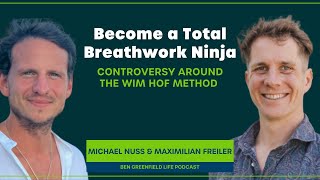
Wim Hof instructors Michael News and Maximilian Freiler explain the method's three pillars: breathwork, cold exposure, and mindset. A 2012 study showed participants could control their immune response to an E. coli injection through breathing alone. They walk through daily practice and a December retreat in the Bavarian Alps.
Questions this video answers
2012
~30 deep inhalations followed by breath holds (hold after exhalation and hold after inhalation); advanced 'power breathing' holds only after inhalation.
December 11th through December 15th (arrive Dec 11; retreat ends after lunch on Dec 15).
€2,500 (lodging additional, room costs roughly €500 depending on room chosen).
16 years old
Chapters
The whim of Apple is a very simple, a very simple constellation of three components. Like we said, the breathwork, the cold exposure and the mindset. So the way how you are actually doing it, and I think what we experience in this retreat is also the power of the community. So the doing these things together, like a cold exposure, like a real physical challenge was, or going into very vulnerable states, like in the breathwork together with a bunch of people. This is where really, I think just from the experience, the magic is happening.
Well, it has been years and years and years. I don't know how long since I interviewed Wim Hof. A lot of people now know who Wim Hof is. Even when I interviewed him years ago, he was pretty popular as the cold and breath work and immune system reinvention guru. Well, it turns out, you know, I also don't think this is any secret. I've been doing breath work and cold plunging for a long time. And even before I met Wim and interviewed him on my podcast, I'd been swimming a lot in cold water without realizing I was doing cryotherapy and cold thermogenesis. I was just training for triathlon and jumping in frigid rivers and lakes because I had to, not because it was trendy or cool or anything like that. And kind of the same for breath work, I was just doing it to enhance my lung capacity and VO2 max and inspiratory and expiratory muscle strength for competition. But since then, I've learned a lot more about the science of breath work, the science of cold. I've done a lot of podcasts about it, but I'm doing a special podcast on this whole topic today for two reasons. First, this is just absolutely great information for anybody. I've been training my own sons in cold and breath work since they were very young, just getting them very comfortable, being cold, getting into cold plunges, tweaking their physiology and their psychology with breath work. And I really think that it's one of the best things that a human being can have a working knowledge of. In addition, later this year in December, I am going to be in Germany, taking a small select group of individuals, possibly you, if you're listening in or watching on an actual retreat, a Wim Hof retreat in Germany, in the mountains of Germany. And you're gonna learn a lot more about that on this podcast as well, because my guests are going to be hosting that retreat along with me. They're Michael News and Maximilian Freiler. And Michael and Maximilian have hosted retreats before, in Germany, in Austria, in Poland, on breath work, on cold exposure, on mindset, even things like sweat lodges and apnea training and movement. And Michael has written a book, Alive the Real Power of Ice Bathing. I'm going to let him tell you his story. He's now one of the most active WIM HOF instructors in all of Europe, hosting around 20 retreats a year. So we're working with the best of the best on this retreat that we have coming up in December. And then Maximilian is also a leading WIM HOF instructor and has a pretty unique path himself in the realm of personal and spiritual development. Originally coming from the field of finance and investment banking. And now he's done a lot of study with people like Laird Hamilton and Edo Portal and of course, WIM HOF also. So stay tuned to this podcast for two reasons. If you want to learn more about breathwork and cold and how you can use it. And if you want to join me and Max and Michael in Germany December 11th through the 15th, all the show notes are going to be at BenGreenfieldLife.com Wim Hof podcast that's BenGreenfieldLife.com Wim HOFpodcast if you want to access anything, get into the retreat, check out more details, etc. So, Max, Michael, welcome to the show.
Thank you so much. Thank you, Ben, for the nice introduction.
Yeah, I'm excited to talk to you guys. And I guess, you know, I realize that you each probably have your own personal story, even though you're sitting, as we established before we started recording, so that we can get both of you in the video awkwardly close to each other for today's show. I don't think that you both have the same background story when it comes to how you got into all this. So I'll let you guys choose who wants to go first. But I'd love to hear kind of how you just discovered this whole idea of WIM HOF breathwork, cold, etc.
Yeah, I mean, we are close right now together, but we also close in everyday life because we work a lot together and actually we met in the instruction program of the WIM HOF Academy.
Well, I should clarify, by the way, before you keep going, you got to introduce yourself, you got to say who's who.
My name is Michael and yes, you're Max. And yes, I got into this whole thing because actually I was struggling myself at the time I discovered the Vermov Method. I was working as a social worker in Hamburg. It's a big city, very crowded, and as A social worker. I had a lot of stress and I did not have a healthy lifestyle at all. And with the time my energy levels were decreasing and my vitality was just going down and I started to develop a depression. And I was already at the point where I realized I really have to do something about this because I don't want to live like this. So I was already trying, you know, like going into nature. I did a therapy and yoga and stuff like this. And then this time I saw WIM HOF on YouTube and I saw his vitality. I saw him with a red skin on the top of the mountain, you know, and I thought I also want this, this unblocked aliveness, this vitality. So I become, became a Wim HOF instructor. I started, I started practicing it for myself. And this whole journey of personal development was skyrocketed by this because I believe if you activate the vitality, everything else becomes easier. And so I changed a lot in my life. I changed in the outside world, like where I live. I live now in the mountains, in the nature. I'm married now. I have much healthier relationships. But also, and maybe even more importantly, I changed a lot on the inside. And yeah, also here the WIM HOF method helped me tremendously. I would never have believed it's possible to feel how I feel today. Eight years ago when this whole journey started. And now I live in Germany, in the southern area, in the Alps and the Bavarian Alps. And there I host most of my retreats.
How about you, Max?
Yeah. So my. My journey with the Wim Hof Method started seven years ago actually in the us. I was in a very small surfer town in Trestles. And in a very random moment, someone showed me this breathing technique. And I didn't know anything about Wim hof. I didn't know anything about breathwork. I just heard or tried a little bit with meditation. And I remember this moment clearly. It was really like a door opener to my inside world. And then I realized that there is a lot to discover inside. And I realized also after the breathwork session that. Well, that the way I felt, also the way I felt my body, the way I could hold my breath, it was just so obvious that it's a. Something really very powerful happened. And in this time I was already. I was still pursuing this path of. Yeah, becoming this investment banking career path. Invested a lot of time, a lot of money and all of that. And then, whoa. I started realizing that I completely actually ignored what's going on inside of myself and really this, the WIM HOF method is like, I always describe it as like a sledgehammer to the inside world. And it was what I needed to kind of, yeah, wake. Wake up a little bit and also start realizing that everything happens inside of myself. And from there on, my life just changed. 180 degrees. And today, yes, a lot of other things, of course, I, I studied in the meantime, but the WIM HOF method was, for me, really just this door opener that I needed.
Well, I know that there's been a lot of controversy lately about the WIM HOF method, and I'd actually love to get into that in a little bit. There was even an article that came out just a few days ago that was very juicy and very controversial when it comes to a lot of people who have questions about the safety of the WIM HOF protocol. But before we even tackle any of that, how would you actually describe the WIM HOF method to people who aren't familiar with it?
So the WIM HOF method was developed by Wim Hof. He's a Dutch guy and he holds 26 Guinness World Records. And he did all kinds of crazy stunts, has the longest ice bath, he was swimming under the ice, the longest distance. He ran a marathon in the desert without drinking water, and more stuff like this. But at one point, also the science got interested in him and they studied his internal control and they saw that he has more control that than they thought is possible. For example, it's assumed that you cannot regulate your skin temperature. It's assumed that you cannot regulate your nervous system or your immune system. And with him, they found out, yeah, okay, he's actually able to do these kind of things, and he's also able to teach it to other people.
And what, what, what was that study actually looking at? How did they conduct that study?
So there were several kinds of studies. The first big one happened in 2012 when Wim Hof was injected with A E. Coli bacterium. So it's a bacterium that is not really active, it's just a shell. But the body reacts to it, like to a real invader. So the immune system, it goes up. It means the inflammation levels goes, go up usually. And on the outside, you see that people start shivering, they get a headache, they just look sick for like around six to eight hours. With him, they did the same thing, and he applied the breath work, and with him, they saw he had increased levels of adrenaline and a lower inflammation. So this was the first thing. The second thing was he had an increase in white blood cell count. So this was the first study, but there were other studies where they, for example, put him into a suit where water was pushed through warm water, then cold water, warm water, then cold water. And with every normal person, when the warm water comes, the skin temperature goes up. When the cold water comes, it goes down. And with him on the first day, it was the same thing because they asked him not to do anything special. On the second day, they asked him to do his thing. And yes, he went into the tube and they saw that the skin temperature stayed the same. It even increased a little bit when the cold water came. At the same time, they saw a stronger activity in the brainstem, where usually also you don't have a conscious access to. And because they did both one day without using his technique and one day with using it, they saw that actually there's this internal control to regulate the body heat. And for example, accessing the brainstem.
Okay, I've got a lot of questions. So first of all, you said when, when they asked him to do his thing, what does that mean? What was the thing he was doing and what was it the same for the E. Coli study? And also this example of the cold water, warm water study that you brought.
Up, that's a really interesting question because people always ask, what should I do now that I'm able to do this? And it's very interesting because in the second study, Michael explained the study.
With the temperature control, he couldn't do anything because he was in the fmri, and in the fmri, you are not allowed to move inside. So because they. They wanted to measure the brain waves inside. So you need to lay still. So he could. He couldn't do his. Like what he's normally doing, this deep hyper. This deep controlled hyperventilation. But what he was doing, he was just setting his intention. And beforehand, because I also asked him this question beforehand in the hotel, he did this breathing exercise, and he also didn't really know how to. How to really cope with this situation because he has never been in this situation before. But he just felt that he has the control inside that he can do it. So he set this strong intention that when they will pump the cold water through, he will bring up his body, his skin temperature. It was really the skin temperature that they measured. And he just did this consciously with the intention. So there was no specific breathing technique in this moment. It was really the power of the mind and the power of setting this intention.
Yeah. By the way, that reminds me of another book by Maximo Maltz called Psycho Cybernetics. It's got the book that originated the idea of the inner game of tennis and the inner game of golf, meaning that through visualizing things that you've actually practiced in the past from a neuromuscular or motor standpoint, you can elicit a very similar biological response. Thus you could practice your tennis serve, for example, while sitting on an airplane with your eyes closed without an actual tennis racket or a ball. And it sounds like because Wim had practiced his protocol, which I do want to describe at some point as we go along here, that he was able to elicit a similar biological response by simply visualizing the same protocol.
I think so too. It's like this neurological pathway to, to the deepest parts inside of your brain. And I think if you continuously practice thing, then you will, you, you gain the excess again. It's like really the body, if you don't, if you use it, if you don't use it, you lose it. And it's really like that on a. I think on a neuro, on a neurological level. And if you're just continuously starting to practice this, of course, I think you get access much more controlled also to these deep layers inside that, that are said to be. Not able to be to. To control like the immune system or the, the body temperature, which is. Yeah, the core in the core of the brain.
Okay, so for the FMRI study, he wasn't doing either breath work or cold water. He was just laying there. How about for the E. Coli study? What was he doing in that?
So he started doing the breastwork already before he got the injection. And then he kept doing the breathwork while the injection was there. And the same was happening when it was tested with people who are not Wim hof. So I think they started roughly an hour before they got the injection and then they continued breathing for another hour afterwards.
And they first did the classical Wim Hof breathwork protocol, which is 30 deep inhalations. Then you hold the breath after exhalation and hold it again after inhalation. And then they switch to another technique, which is an advanced technique called power breathing. And there you don't hold the breath after the exhalation, you hold it only after the inhalation.
Yes.
And they all did this lying down in the hospital beds. And in 15 minutes, within 15 minutes, their adrenaline levels they spiked higher than the person doing a first time, a bungee jump, just lying down in a hospital bed.
And these individuals were also injected with the same E. Coli as Wim was injected with exactly and did they all see or at least from a study standpoint, was there a significant impact on the majority of them in terms of the immune system regulation that WIM also experienced?
Yes, on all of them it was a variation, but all of them had a significant implant.
Okay. And there, there was no cold water or cryotherapy involved with this?
No, but they practiced with WIM HOF in Poland and did similar things that we will also do in our retreat in Germany. And there's several, several kinds of code exposures also. We do our visualizations in advance and yeah, the whole protocol, you know. And later the study was repeated because the, the scientists thought, okay, these people have practiced cold exposure in advance, maybe this was also responsible for the effect. So they divided it by three groups. One group that only cold exposure to prepare, one group did only the breath work in the experiment. One group did nothing and one group did the whole WIM HOF protocol. And the result was that as well the breathwork as the cold exposure both have an effect, the immune response both have an anti inflammatory effect. But the combination is the strongest. If you prepare in general with cold exposure, cold training and combine it in an acute situation with a breath work, then you will dampen the immune response the most.
Okay, got it. Now I know it's one thing to hear about it, it's another thing to do it. And that's one reason we're, we're doing this retreat. But you've mentioned a few times the whole WIM HOF protocol and we've talked a little bit. You know, you alluded to the 30 breaths in and out and the hold on the exhale and the hold on the inhale. But in terms of describing in more completeness what the actual whole WIM HOF protocol looks like, I'm just curious like what for you guys on a day to day basis, when you wake up in the morning, what is the WIM HOF method?
The WIM HOF method is a very simple, a very simple constellation of three components. Like we said, the breathwork, the cold exposure and the mindset. So the way how you are actually doing it, and I think the mindset is the one that is, let's say the least defined one. And I think what we experience in this retreats is also the power of the community. So the doing these things together like a cold exposure, like a real physical challenge or going into very vulnerable states like in the breath work together with a bunch of people, this is where really I think just from the experience, the magic is happening. That people open up to each other, that people see that they are not alone, they feel connected to themselves, to the world and to other people. And they see that they are mostly not alone with these difficulties that we face in life. And this in the paradox way boosts actually our confidence and, and also our belief, our outlook on life in general. And this is such a positive reinforcement loop in our mind. So I think people that practice the WIM HOF method by themselves, they usually have a totally different experience when they start practicing together in the group. The effects that actually this method has in the insights, it's just, it becomes a totally different new interpretation when you experience this in the power of the community. So this community part is really also a like we call it the inofficial official layer of the WIM HOF method.
Yeah, I've experienced the same thing when practicing with myself versus practicing with my sons, my 16 year old sons, who are also going to be at this retreat along with us. And I'm curious what your take on that is. Why is it that breathwork seems more powerful and I would say the same for cold therapy as well. When you do it with other people, is it the accountability? Is it similar to a workout where when you're doing something hard and other people are doing it along with you, you feel a little less isolated and a little more supportive? Is there something going on with the, the brainwave or the heart rate variability, electrical signals within the space where it's being done together? Or what do you hypothesize is going on there with the community component?
Yeah, I think everything that you said, because you know where we are deeply social, social beings and I think going also into the breathwork together, we, we enter deeper inside ourselves and the nervous system is also.
Changing. So in the breath work, we first activate the sympathetic nervous system with a deep breathing. Later when we hold the breath, we go deeply into a parasympathetic state. And I think also the nervous systems, they are connected to each other and also attune with each other. And the one thing is that you can achieve.
Strong physical sensations with this. If you do it in a group, people say like yeah, it's tingling stronger. I have stronger effects on the physical layer. But also if the group setting feels safe, what often happens is touching the emotional layer. And I believe when one person dares to open up, to really let go, it often opens also the door for other people to do the same. And this is where it gets really juicy because I think in this moment things really can Change on the inside.
Yeah, I've done combo frog poisoned and ayahuasca medicine with other people. And I don't enjoy that too much purging and puking and being in a, in a very like out of state, out of control experience in a room full of other people. But breath work seems different. You know, breath work, there's, there is an emotional purging that occurs, but it's one of the group activities. I would say working out would also fall into that category. And cold therapy and sweat lodges, by the way, which I want to get into, that I actually don't mind doing with other people. You know, even though I'm a, I'm kind of introverted guy, these are things that would all fall into the category of things I enjoy swinging kettlebells, cold therapy, sweat lodges, or heat or saunas and, and breath work. So back to the root of my question, which I still want to unpack just a little bit more for you guys. You wake up in the morning and you say to your friend or someone who asks you, I follow the WIM HOF method. What does that actually look like? Is there something you're doing every day or every week when it comes to waking up or at some point during the day doing breath work, following that with cold, doing some form of heat? You know, what, what's a sample week of someone who actually follows the WIM HOF method actually look like?
So the basic WIM HOF Method protocol that I follow is I, I wake up. My wife is also WIM HOF Method instructor. So we both go into it right away. We always start with the breathwork. I've been doing this now since eight years. I do this every morning and afterwards.
Right away, meaning like, you're still in bed, you're still in bed, or you get up and like have a glass of water, find a special place outdoors or in the basement or whatever and then do it.
Yeah, you know, maybe I go pee and have a sip of water, but I do it in the bed.
So for the breath work, what are you doing? Like, how many rounds? For how long is that?
Well, I almost. Yeah, I always do like more than three rounds, up to five or six rounds, depending how much time I have. So this will take 15 to 30 minutes roughly. The goal is directly to go into the cold exposure afterwards. But you have to understand also, I'm lying there with my wife and if you breathe a lot, you know, you go into the body and you're lying there together. So sometimes also before we go into the discomfort, we go into the comfort together. Because it's also a great way to connect if you breathe together.
Absolutely. And, and by the way, I, I get what you're saying. There's one app that we use, my wife and I called Othership and it has partner based breathwork protocols on there. It incorporates Wim hof, you know, Pranayama power breathing, box breathing, a whole range of different breathwork activities. But for. I absolutely agree. For foreplay, you know, in terms of the nitric oxide production, the connectedness, the breathe even sometimes we'll do it with our legs intertwined sitting in bed. Brush your teeth first, folks. If you're listening in, in and out of each other's mouths, we're doing the breathing into each other's faces and it's, it's fantastic for partner connectedness. I absolutely agree. So yeah, I could see if you're doing it with your partner in bed in the morning, there being a possible physical delay of game before moving on to the cold.
Exactly. I mean there's other protocols. We can go maybe another time into it or when we meet each other. But yes, then we go into the. I go, go outside, there's an outside shower or. I also, I chose my place to live next to a river. So most of the days I do an outside shower and roughly once a week I go into the river. And the river also stays cold in the, in the summertime because I live in the mountains.
Yeah. Maybe also share. So usually I also do. When I, when I wake up in the morning, the first thing I do is I usually I sit up. So because I tend to fall asleep if I'm, if I'm lying down. So it helps me really to sit up. And usually I start by doing nothing, just doing nothing and, and just checking in with myself to understand how, how was my sleep, how am I feeling, how is the state of my nervous system and so on just this. It's really, I think it's so beneficial for me to just get an idea of how, how am I doing today because it's different every day, every morning, but then I can adjust to, to what I really need. And sometimes it's really just doing nothing and observing the breath. And sometimes I need a little bit of an activation or I need a little bit, I feel a little bit low. Then doing some, some rounds of breath work really helps me. And, and I do usually less. I do very slow kind of breathing, deep breathing, maybe two maximum of three rounds of breathing. And this then really helps me to get started. Because of the adrenaline spike and also of the connection, just feeling the body sensations, feeling connected to myself. And then I also, like Michael, I live very close to a Lake just 100 meters away. And usually I get up in the morning, I do some stretches outside so there is some time in between. It's not so important that you go right after the breathing into the cold exposure actually. You have to be also careful to really, to really separate the Wim Hof breathing from the cold exposure. So how you breathe in the cold is completely different than actually when you do the Wim Hof breathing that we know. And then I go into the, into the, into the cold lake. But also maybe two or three minutes, very easy just to feel good, just to calm myself down, just to know, oh, I overcome this, this, this difficulty in the ice bath. But also not staying too long because if I stay too long then it sucks out the energy of myself. Even after many years of practicing. So keeping it very easy, very doable, very integratable into the day. And in that way I can also. I do it since many, many years because yeah, just, just doing it in a adaptive way and also.
Not in a forceful way, you know, like not forcing. I have to do like five minutes of, of cold exposure or so. So keep it light. I think this is super important.
Yeah, it's a very good point. I'm glad you made it. Many people who vilify cold exposure are vilified. And what, what I think is, is not to overuse the term fairly vilified, meaning excess sympathetic nervous system stimulation from plunging for five minutes or more at less than 40 degrees. Anyone who does that knows that you're distractingly, uncomfortable and almost hyper stimulated for too long. I think there's a time and a place for that. In some cases for building stress resilience on an infrequent basis. But my own practice is very similar to that of yours. You guys. I don't do breath work every day right now, although leading up to the retreat I'll probably increase frequency just to feel a little bit better going to the retreat. But right now I do three times a week I do it in the sauna with my sons. Usually in the morning around 8 or 8:30 or so before we start school and work, we heat up the sauna, we go in, we do anywhere from 20 to 30 minutes. We'll use the other ship app, the Breath Source app, sometimes the WIM Hof app. There's one instructor I've been following on YouTube recently, also a Wim Hof instructor named Kataro Waga. I don't know if you guys know him, but I've been following a few of his videos recently because I like to mix things up. And then we do about two to three minutes of sitting in the cold plunge, usually doing a relaxing form of breath work like box breathing or an inhale with long exhales and that's it. I mean that's really our own protocol and it works fantastically. And then occasionally about a couple of times a month we will do a longer, more holotropic ESH breath work session where we're going like 60 to 75 minutes in the sauna, sweating our eyeballs out, getting huge dumps of dmt, just kind of exhausting ourselves with breath work. And usually after that we'll go spend a little bit longer time in the cold, like we'll go jump in the river for 10 minutes. But again that's because we're just so hot and tired afterwards. So that's what our practice looks like right now.
Yeah, I think there's a lot of.
Similarities because this bringing in these variabilities, changing things up, mixing things up, doing research and I think this really helps just to prolong any kind of practice because usually for the people it's much easier to continue with the cold practice but the breath work, to keep the breath work alive, it's much more difficult because it really touches the sensitivity so how we feel ourselves. And I think if we go to more, more, more and more, it will be difficult to sustain.
A level that attracts us, that motivates us. But if we develop as well our sensitivity with these practices it becomes more alive and then we need less breaths for, you know, for more DMT maybe, you know. And so this is, this is really, I think this is really the key to understand this principle the way how you practice.
Yeah, despite the physical benefits of heat and cold and breath work, not much that we've talked about is going to build significant amounts of muscular fitness. Is there an exercise component to the WIM HOF method? And the reason that I ask is because I have had some people and I've even tried this myself, do things like on the exhale drop and do 20 push ups, you know, so doing rounds of WIM HOF but doing for example push ups or some form of an exercise in between each round. Do you guys ever do something like that?
Yeah, I mean this is games you can play. And in the beginning WIM HOF also included more physical exercises but now he broke it down to make it as simple as possible. And so the. Yeah, the basic practice is the. The breath work, the mindset, and the cold exposure. But what I observe in many people who do this for a longer time, you also start exploring other things, physical exercises, like we spoke about the sauna. Later, maybe we touch on the apnea, other forms of hormetic stressors in which we can learn about ourselves, about our nervous system, and stress the body in healthy ways.
Okay, got it. Yeah. And I think. I think, by the way, I should note real quick, there's a great book on Russian breathing or a form of Russian breathing called Systema Breathing. My sons and I are doing Soviet kettlebell training right now. I've been through the Russian Kettlebell certification and the Strong First Kettlebell certification. And breathing is a huge component of that. A lot of focus on controlled breaths, belly breathing, diaphragmatic breathing, et cetera. And that's why, for me, at least, in an ideal workout program, I'm doing cold heat breath work and some form of kettlebell training that incorporates a lot of these Russian systema breathing protocols. So I think if you're doing WIM hof, you can still incorporate other styles of breathwork into your. Your exercise program outside of WIM hof.
Yes, I totally agree.
It's like, it's just at the beginning. It's just good to have something, something graspable, something that we can. Where we can feel immediately the changes. And from there on, we can also, like, dive deeper into these things. But, you know, nowadays, it's like sometimes people are just very, very far away from. From these practices. And I feel like the WIM HOF method is through their simplicity and through this direct change that we can experience. It's just so good to get started with. It's so simple and so effective. This is really what I think, what. How it stands out.
Yeah. What are some mistakes? But besides what we've already stated, getting into water, cold water while you're still breathless or dizzy, which I think is. Is something people misunderstand. Some people even do WIM HOF breathwork in the water. Highly recommend against that. But besides that as being one mistake, what are some other mistakes that people make when doing or thinking they're doing WIM HOF breathwork?
Well, in the breathwork itself, I think the biggest mistake is to be superficial with.
With.
With the practice and focus on the. On the outside. So to focus too much on the protocol instead of feeling yourself.
Just performing it without feeling it. And I think this is like a dead end because these People often, they, they're looking then for a strong sensation, which you get in the beginning, but after a while this will decrease a little bit. And I think then it's, it's actually more important to feel the body and relax the body and have a deeper body awareness and then feel also into the more subtle sensations within the body. So I think using force and being distracted while doing the breath work is the most common mistake.
Interesting. What about the, what about the pace of breathing? Meaning When I first started doing Wim Hof, I would go.
And now it's much different. It's a long inhale, letting go in letting go. And I feel much better. Way less stress, way better nervous system regulation, a way better breath hold during the exhale. But I don't know about you guys, is that a common mistake that thinking that Wim Hof is just all basically hyperventilation?
Yes. And I think it's like always when we start, I mean, any, anyone who has learned something in the depth you will see when you usually start with something, you do it slow because when you do it slow, you feel more and you can observe better what's going on. So I think it helps to do it, to do it slow and also to do it, for example, through the nose in the beginning. Because when you breathe through the nose, you automatically access more the diaphragm muscle, which is, yeah, the main muscle for, for, for the inhale and the exhalation. So breathing through the nose and doing it slowly, I think this really facilitates conditions where we layer, where we learn proper breathing, more sensitivity and more understanding how it really impacts our inner state. And I think the more we understand this, the more we will be also just flexible with how we do it and what we need in a certain moment.
The Daily Mail recently published an article that I alluded to earlier. And the title of the article was the Truth About Cold Water Theory. And the subtitle was Experts Reveal Exposure Risk, Panic, Weak Limbs and Even Cardiac Arrest. As Iceman, Wim Hof's ice bath and breathing methods are linked to a string of deaths. Now, what do you guys respond with when you hear objections like that?
First of all, it's correct that ice water is dangerous, but it's not correct that this is linked to the vermouth method in the way they describe it. Because it's important to understand that ice bathing and winter swimming are two different things. So just to understand what happens if you practice the Wim Hof method, if you go to a fundamental workshop, there are several steps you Go through. First you sign a health waiver where you check for example for high blood, high blood pressure or preconditions with the heart. The second thing is the instructor will explain to you the safety protocols before you go in the water. For example, all the instructors will explain, don't do the Wim Hof breathwork in the water.
The third thing is if you do a workshop with a certified instructor, you will go in a very safe circumstance where you can always stand and it's not deep the water so you're not swimming around outside. You keep the head out of the water and you breathe very controlled and very slow. And if we look now on the, on this article, what they claim here or like what they are talking about is first the death of this girl Medlean. She was 17 years old. And yes, nobody really knows what happened with her. And that's a really tragic death of course. But yeah, there was also this lawsuit against Wim Hof and four days ago the court made a judgment about it and the summary was that the lawsuit has no merit. So yeah, so the second thing is what they point out is this 39 year old woman and yeah, she was, she was not doing a removal workshop. She was going to another company. I don't know what they did exactly, but in the article it said there first and foremost there was no waiver. They went in the water and then the instructor sprinkled her head with cold water.
And if we look at the causes that actually happen when people die in the cold water, there's a, there's a great, great article from Mike Tipton who is also mentioned in the, in this article. But I think they didn't really read it to be honest. But what he explains is that.
The most people who actually die in the cold water, they fall in the cold water and then they have the cold shock reflex. So they breathe in fast and if you are in water where there's waves, they breathe in the water. And this causes the drowning. This is the most common cause. People die in the cold water. There's also another option. How you can die is a cardiac arrest.
And this can happen if the whole body is under the water. And the cold shock reflex happens if the cold water hits the torso at the same time. If you put the head under the water, it will trigger this parasympathetic nervous system. And this causes a confusion because both the sympathetic and the parasympathetic are activated at the same time. And this can lead to a heart disrhythm. The heart gets out of the rhythm. And yes, to die from that, you still need a precondition with the heart. This is the only reason. Then you can die in this. But if you have a precondition with a heart, you can also die in the heat or doing a strong exercise. But just to make it clear, in the WIM HOF workshop, you will not just go under the water with your head. We stay outside of the water with the head. And also the other things that are mentioned in this article, like the weak limbs that are, they are a problem if you swim around outside. Of course, the hypothermia, a real dangerous hypothermia. Mike Tipton states like it kicks in the earliest after 30 minutes in the ice water. And in the WIM HOF workshop, you stay in for two minutes.
Yes, there's only one thing that the article mentions that's actually true. That can happen. Also in a WIM hof workshop is 1 out of 1 out of 10,000 people. They can have a memory loss, but it's yes, always short term. So they always come back after maximum of 24 hours.
Yeah, well, thank you for those clarifications. I think that whether it's free diving or triathlon or cold water swimming or any form of cryotherapy or even breath work, that there you, you should make sure that you're healthy enough to do so. I think everyone should be getting a regular lipid panel. I think they should be looking at something like a plaque score for the heart. I think they should be paying attention to heart rate variability. I think that you should know whether or not you have heart rate arrhythmias such as getting an ekg. You should be managing stress, getting adequate minerals and hydrating properly, you know, using magnesium, taking care of cardiovascular function. Because, you know, I, I know that deaths were a problem with open water swimming back when I used to do triathlon. And yeah, you put a stressed out, dehydrated, mineral depleted CEO who just came out of a 70 hour work week on the beach at 6am and you start a triathlon with a thousand people kicking around you and screaming and shouting and air horns, inevitably someone's heart is not going to be able to handle that. And it's sad and it's tragic when it happens, but a big part of it is you do need to be careful, especially depending on your heart health, piling stress on top of stress on top of stress. So, you know, I do think you want to be wise about these things. But I agree with you that that article is describing what happens when you do things wrong. Basically. I mean, I think that's, that's the best way to sum it up. You know, when you're doing it in the water for long periods of time, getting excessively cold and you know, breaking a lot of the rules, many of which we already discussed.
And none of that what they described happened ever in a WIM HOF workshop. It was completely other circumstances. And I think just taking these things out of the circumstances and not describing the real situation, it's just a real distortion of the picture. And I think, yeah, it's sad because, because I think it's such a powerful tool and we should more encourage the people to do it in a safe way, in a correct way. And also even they mention a protocol in this article and in this protocol they, they, they say that you should put the timer on 10 minutes in the ice cold water. So it's very, very distorted article, but.
There was something cool in the article I saw. They, they, they put in a picture, a sexy picture of you and the ice bath. Yes, I think it was the best thing about this article.
I know, I saw it. Yeah, yeah, yeah, it was great. I won't live that one down. And yet there's multiple research studies. You can find these easily on PubMed showing a link between breathwork, apnea training, CO2 tolerance, nitric oxide production and improved cardiovascular function, as well as a link between cold therapy and better vascular function, better blood sugar management, better blood pressure management, better management of blood flow issues such as Raynaud's phenomenon, better stress tolerance. And overall, if done right, I think that breath work and smart use of cold, and I would actually say the same thing for heat, are actually good, not bad for cardiovascular function.
I think it's even with water, if you drink too much water, you can also die. So every, every everything has its, has its risks as well. We are, we are. This, this is part of the life.
Yeah, I was going through the schedule for the retreat. I know we're going to be doing cold therapy, breath work. Of course. We have some hiking, we have fantastic luxury meals, there's a sweat lodge ceremony. I'd love to hear a little bit more about that. But then you also mentioned apnea training. What is apnea training and how is that different than WIM off breath work?
Well.
First it's important to understand that it's something completely different and that works also differently in the body. The effects that it has on the body and how we approach, for example, the breath hold in the WIM Hof breathing, we do a lot of inhalation and exhalation. And so we breathe out a lot of CO2. And like this, it's very easy to hold your breath for a long time in a safe setting inside, not in the water. Right. And in this moment, the oxygen levels can drop to pretty low levels, which triggers, you know, a healthy stress response. So the body improves the energy production, the mitochondria and the red blood cell count. The. In the apnea, we do something completely different. We. We don't do deep inhalation and exhalation. We slow down the breathing, want to be as calm as possible, hold the breath, and then the CO2 will rise up, which causes very strong discomfort inside. And in the apnea, you try to stay with this and learn to relax even though the CO2 is rising. And to be honest, I. I learned from Max about this. I attended a retreat where we did all kinds of exercises. It was not a WIM HOF retreat, but yes, we do this kind of work where we played. Also, for example, in a dark lake where you play a game with a friend, you hold a stone, you have to stay on the bottom until your friend comes, taps you and takes the stone. And then you can go up and take a breath while your friend is underwater. Then you go down again. And then this kind of circumstance, you learn so much about yourself because the CO2 is really like. Creates a lot of fear inside of yourself, but you also don't want to let your body down.
Just real quick, I'm sure everybody who just heard you talk about safety in this article, I've now just heard you say dark, cold lake, holding a rock underneath the water until a partner comes and taps you. Isn't that dangerous?
Well, first and foremost, you are under the water roughly one and a half meters, so you can just stand up and in any given moment.
Got it.
It's just creating a scenario that. That causes you stress, but you're actually safe, you know.
Okay, got it.
And of course I want to stress again, this is not a Wim HOF Method retreat. This is something else. But I want to mention it because, you know, in the WIM HOF method, you face the cold and you learn to deal with it in a calm way. This is another. Another scenario, another stressor with the CO2 where you also learn to deal with the stress. So it's a different thing. But the underlying principle are also like, bigger than that. And the same is true for the heat, which is also not a part of the WIM HOF Method, but we also use this tool.
Yeah, it's an emerging field in health and biohacking. The idea of CO2 tolerance. There are now carbon dioxide delivery suits. I've worn them, they look like a giant blueberry, but it's literally pumping CO2 in through a pump in through the suit where it's absorbed transdermally to generate CO2 tolerance or overload the body with more carbon dioxide than what normally experience. Some people are now using a device called a carbogen to breed CO2. And I've even seen James Nestor, the author of the book Breathe, write about the CO2 tolerance effect. Dr. Joe Mercola has also written about this quite a bit. And there is a benefit to building up tolerance to CO2, particularly when it comes to stress resilience. And the interesting thing is Wim Hof method is blowing off CO2, depleting CO2, which is the body's signal. It's a gaseous signal to cause you to engage in the breathing reflex. So when you breathe off CO2, you can hold your breath longer. And the opposite is true. With these apnea tables, you're retaining CO2. It's actually harder to hold your breath for a long period of time. But, but there are side benefits to increasing the levels of CO2 in your body. So you know, you're, you're kind of hitting it from both angles from a physiology breath component when you're doing both apnea training and WIM HOF training. Cause you're training yourself to tolerate both low levels of CO2 and high levels of CO2.
Right, exactly. And also your O2 capacity. And that the body learns also to do, to do. To deal with low oxygen levels. In the WIM HOF method and in the apnea training, the body learns how to deal with high CO2 levels in the body. So it's really tackling both, both, Both sides of the, of the spectrum.
Yeah. I just want to mention it one more time to make it very, very clear. Sorry. Just for the safety. Like, it's very, very important to understand that it's never the idea to do a hyperventilation and then dive under the water as long as you can. Like this is not the idea to combine these things.
Yeah, is. Yeah, that makes sense. I mean, and, and for me personally, I, I'll just come right out and say, you know, I go and do Laird Hamilton's underwater dumbbell pool training in Malibu. And I've done rock training in the ocean. Literally carrying a rock 15ft at the bottom of the ocean. I've done, I've gone as, as low as 80ft. Free diving. Like, I, I personally don't mind some of the badass stuff that flirts with danger, but yet at the same time, it's something like this retreat. We're not going to put you in situations like that, but I don't necessarily frown at like Wim Hof's underwater ice swimming record. I just don't want to encourage people to do something like that unless they're actually ready and they understand the risks. So back to the retreat. What about the sweat lodge?
Yeah, actually, like just last week I came back from the, from the Sundance. So every year I do the Native American Sundance. It's a, it's a very beautiful deep ritual where you fast for four days. Like you don't drink water for four days and you don't eat for four days. And every day in the morning and in the evening you do a sweat lodge and you dance in the sun during the day. So this is where, where I really learn. It's like the sweat, not the sweat lodge technology. It looks so ancient and it looks not like a technology, but it's really a technology for, for our consciousness and for connection. And this is also something that we both explore like these ancient traditions, these ancient rituals. And we do it in a. Yes, in a very respectful way, really learning from the people that. Doing it from the real natives and because this is. Yeah, there is a long tradition of passing on this knowledge and we also integrate this into the retreats because it's so beautiful, the effects on the people of. To not only shed a light to different stressors from different perspectives, but really also to connect with nature, to connect also with the things that we cannot describe about the life, the mystery, like this spiritual realm. Because in my mind it's so important to also touch on this layer, for really.
Tapping into your own essence of life, to really find the trust. And I think you cannot go around this layer. And this is also what we bring into. And I think the sweat launch is always after the people come out of the sweat lodge. They feel newborn and they feel something they haven't felt before, like a deep connection with nature. And the not, not the separation is gone. The separation of, oh, I'm a human being and everything else or the nature is not part of me. You feel like, oh, I'm, I am nature. There is no separation.
Yeah, you feel amazing afterwards. I've led or not led. I've attended some father son wilderness retreats at Twin Eagles Wilderness School, where My sons attend in the summers. And there's always a sweat lodge component and it's always transformative. It's. It's stressful. I mean, you're in there in the heat and they have the drums going and, you know, in this little claustrophobic and dark. But when you finish, you feel as though you've climbed a mountain. The sweat lodge we'll be doing at the retreat, is it a really big one? Like, will we have a lot of people in there?
Yes, we will be. It's a. It's a bigger. It's a big sweat launch and it's also part of it. Like, also, like in the Sundance, we are in the sweat launch with 60 people. It's not going to be that tight, but it's going to be tied up. But of course, also in a very safe way. There are clear instructions, how you get out. And of course, it's home to. Yeah, to check in all the time with the people and you can kind of guide it very well with the water that you're pouring over. It's not like in the sauna that this, this crazy heat is all the time there. You can much better regulate it. And yes, also to have a really clear structure how to get in, how to get out, how to act inside of it and so on. But, yeah, it's going to be tight. Yeah.
Okay, got it. Give me the overview of what this retreat is going to involve. So somebody's listening right now. They're like, that'd be kind of fun to go to Germany right before Christmas, you know, December. You can clarify on the day. It's about 11 through the 15th ish in Germany. But walk me through what people can expect if they were to come over there and meet me and my sons in Germany to do this Wim Hof retreat.
Well, first and foremost, it's in a beautiful place close to Munich. So you can fly into Munich. It's very easy, accessible. But then we go south of Munich into the Bavarian Alps in a nature area where you cannot drive with the car, you need a special permission. And there we have the retreat center. And this is also where I live in this area. And it's surrounded by the mountains with really the most beautiful mountain rivers. And yeah, you're surrounded by the nature. And of course, we will explain also what is happening physiologically. We're also very curious to listen to your talk, to go more into the perspective of the biohacking also of all of this. And then we will also do a lot of practical experience with Breathwork, Wim Hof style classical breathwork. We will also explore longer breathwork sessions. What you mentioned before, we will go into the cold in different scenarios. We will do ice bathing, gradually build up to it, but also go, for example, without a T shirt for a longer time. Outside we will do sweat lodges. And a big component of the whole thing will also be the music because the music is also very powerful to bring us together. And yes, I mean we want to bring together people who are really interested in exploring themselves, but also are willing to share vulnerable what's going on inside of themselves. Strong people, but also real people and bring them together and just create a force field so we can really deeply, deeply look inside.
I got, I got a few questions. Do we need to bring our own snacks and energy bars and food and stuff or are you guys doing, doing cooking and food prep for us?
So the cooking is done by the retreat center and they do an amazing job. Yeah, there was very, very, very healthy. And yeah, people are also always very, very happy with the food.
Okay, that's awesome. Cause we're foodies. How, how about, how about when you show up, do you need to have a lot of breath work under your belt? Or is, is there like a certain program you need to follow leading up to the retreat? Or could you theoretically show up having never done an ice bath or breath work?
Yes, it's, it's, it's no problem if you have not so much experience with it. We will also send out a couple of weeks before the retreat some protocols to follow just to get used to it, to feel more safe. And then you can also make more of the time and, and go deeper into it as well. This really usually helps the same with the cold. So we are gradually exposing ourselves and then when we are there, we can really do the real work that it's, that, that is usually very difficult to do alone. So yeah, and very often it's even, it's, it's, it's, it's, it's even better if you don't have so much knowledge before because then you just go in with a beginner's mindset. You're very open and, and, and, and, and, and you receive this sometimes can really help.
You have to fix all the mistakes you've been making. How about age limit?
Well, there's no real age limit as long as you're healthy. So we had people up to 70s, but you have to check in advance, of course. For example, some parameters that we will send out in advance.
How about how young can you be.
Yeah. 16 is a good age to start.
Okay, all right, got it. Yeah. Because my sons, yeah, they'll be 16. They're 16 year old twins. So they'll be there along with me. And how many people can we actually get into this retreat total?
If you fill it up completely, it's going to be like 30 spots in the place.
Perfect. Well, so first of all, if you're listening and you want to do this, go to BenGreenfieldLife.com Wim Hof I should ask you guys, this is important, of course, people, what's about the pricing people can expect for this thing?
So the price is €2,500 for the retreat and the lodging is an additional fee. And it depends what kind of room you choose. And you can see it all on the page that you were just mentioning.
Okay. If I wanted like, let's say somebody's listening in and they wanted the nicest of the nicest rooms, how much, how much would that be approximately, you think?
It's a. Roughly €500 for the, for the nights. It's the, the house itself. You also have to understand it's not a hotel, it's a, it's a community. And they live there and they do this really from the heart. And they are also part of my family. You know, I work a lot with them and we are really embedded there in the local community also. So it's very, very beautiful. It's a retreat center with a gigantic seminar space and they really do this from the heart. But it's not a hotel. It's much more, you know, there's much more family.
All right. I actually, I love that approach. So if somebody was going to do this, which day would they arrive in Munich?
So you can arrive in Munich on the 11th of December and this will be enough time because the retreat starts at 6:00 in the evening.
Okay, perfect. And then which day does it end?
It ends on the Sunday, the 15th.
So, so let's say someone did have to fly out of Munich if they left that Sunday night. Does the retreat end in the morning or in the evening?
It ends after lunch. And so you can easily go then in the evening from the Munich airport.
Okay. Or you could like, would there be an option if someone isn't flying out until Monday for them to find a place to stay on the night of the 15th?
Yeah, that would be no problem.
Okay.
Wow.
I'm so excited, you guys. My sons and I have been talking about this a ton.
Yeah. It's also a beautiful area. Many people who come to our retreats also add a week before or afterwards to go skiing, explore the area. There's a lot of hikes you can do and yeah, it's just amazing.
Awesome. Awesome. Well, first of all, if you go to BenGreenfieldLife.com Wim Hof that's you can get the details on the retreat. If you just want the show notes for this podcast. And to dig into my original show with Whim, learn more about some of the other stuff we talked about, go to BenGreenfieldLife.com Wim Hofpodcast so your two URLs are Ben GreenfieldLife.com Wim Hof W I M H O F or BenGreenfieldLife.com Wim HOF podcast Max and Michael, anything else you guys want to share while I have you on?
Oh, it's just such a pleasure, you know, like five years ago.
I was listening a lot to your podcast and it's so beautiful to be here now and to talk to you. So I feel very blessed in this moment.
Awesome. Awesome. Well, I'm honored to have you on. I'm so excited about this retreat. And Again, go to BenGreenfieldLife.com Wim Hof if you want to get in. And until next time, I'm Ben Greenfield with Michael News and Maximilian Freiler from the Wim Hof method, signing out from BenGreenfieldLife.com have an incredible week.
Do you want free access to comprehensive show notes, my weekly roundup newsletter, cutting edge research and articles, top recommendations from me for everything that you need to hack your life and a whole lot more. Check out BenGreenfieldLife.com it's all there. BenGreenfieldLife.com See you over there. Most of you who listen don't subscribe, like or rate this show.
If you're one of those people who do, then huge thank you.
But here's why it's important to subscribe like and or rate this show.
If you.
If you do that, that means we get more eyeballs, we get higher rankings. And the bigger the Ben Greenfield Live show gets, the bigger and better the guests get and the better the content I'm able to deliver to you. So hit subscribe, leave a ranking, leave a review.
If you got a little extra time.
It means way more than you might think. Thank you so.
More from Ben




The Solution to Aging Might Be Closer Than Anyone Realizes - With Ben Goertzel



