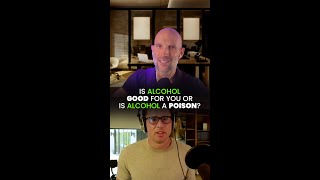
This is a YouTube video titled "The Truth About Alcohol: Performance Killer or Longevity Hack? | Ben Greenfield vs. James Swanwick" featuring a multi-speaker discussion recorded in June 2025. The conversation involves Ben Greenfield and other speakers discussing alcohol use disorder, neuroscience, and behavioral strategies such as gratitude practice to reduce cravings and improve well-being.
There are 400 million people in the world who are considered to have an alcohol.
Use disorder. I always say that alcohol can be.
Death by a thousand cuts. Over a few days, weeks, months, even a year or so, we don't really notice that cumulative effect. Instead of saying, don't do something, we say, do this. And in this case, it's, I easily only drink soda, water, or ice with a piece of lime. Tonight, I'm gonna drink alcohol free alternatives. And if we just say that to ourselves, then the study of neuroscience and human psychology and the way that the brain works, the RAS, those funny bundlE of nerves in our brain locks onto.
That and goes, okay, I'll do that for you. So what is the enjoyment that you derive from having that drink, maybe a.
Drink and a half, the four times a week?
Like, what do you feel? What do you feel are the benefits of that? Number one, alcohol causes a release of the inhibitory neurotransmitter GABA. You get binding of GABA to those receptor sites, and you get kind of this relaxed.
Socially lubricating type of effect. So a little bit of relaxation. A daily gratitude practice can reduce cravings for any drug by as much as 30%, which is fascinating. Living a life of appreciation instead of expectation, those things combined really drives human behavior in a very positive manner. Yeah, the dopaminergic.
Stimuli from something as simple as a gratitude practice has always been shocking to me.