I Agree With the New Dietary Guidelines (Mostly) – Here’s My Reaction Video!
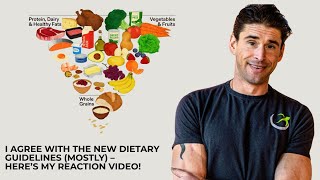
Ben Greenfield, a sports nutritionist, reviews the 2025 U.S. Dietary Guidelines and mostly approves. The guidelines recommend 1.2–1.6 grams of protein per kilogram of body weight, emphasize fermented foods for gut health, and suggest introducing allergenic foods to infants around six months. He notes the guidelines skip creatine and offers clarifications on sweeteners.
Chapters
All right, so I just finished a day of podcasting and emails and consults and all the million gajillion things I do, and somehow it slipped to my attention that the new dietary guidelines for Americans just came out. I have not seen them. I have not read them. I figured, why don't I just flip on the video cameras and probably annoy somebody on my team that they're not going to have to scramble, throw this thing up on YouTube because I'm a total Luddite and give you my take on the current dietary guidelines. I am not a registered dietitian. I am not a physician. I do have a master's degree in physiology with an emphasis on human nutrition. I have been a certified Sports Nutritionist by ISSN for, oh, 20 years. And I live and breathe a lot of this stuff. I don't. I don't sell food, so I'm unbiased. There. How do you like that? I'm not a farmer. I'm just trying to figure out how to share my screen. Honestly, that's. That's the number one most important objective right now. Okay, share screen. Let's see. Window. Okay, here we go. You can see I haven't clicked on them yet. I don't know what I'm about to get into. Show sharing the screen. Okay, click. Read the new edition. Let's make sure I'm still sharing the screen here. We've established my technical expertise is lacking. Okay, here we go. This is exciting. Dietary guidelines for Americans. Now, these only come out every few years. Oh, so this is pretty much we're stuck with folks till 2030. Unless a national emergency like a virus is declared. This is what we got. Okay. It kind of looks like they just took the food pyramid and turned it upside down. I mean, I'm just looking at the graphic because I mostly communicate with colorful pictures and very large font anyways. But, yeah, looks like they took the food pyramid and turned it upside down. Okay, so protein, dairy, healthy fats on the left, vegetables, roots on the right, whole grains towards the bottom. I mean, I don't really have a whole lot to say against whole grains. I would say sugar and junk food should be at the bottom, but maybe they unpack that here. Okay. The message is simple. Eat real food. Hopefully people in 2025 remember what that looks like. I'm not going to read this whole letter. It's a lot of big words and small fonts anyways. But it looks like a letter from RFK and Brooke Rollins from the US Department of Ag. Okay. Yeah. Basically, it's saying, eat real food. This changes today. Today we are realigning our food systems to support American farmers, ranchers, and companies who grow and produce real food. I'm just like. I have a hunch that this message will not be well received by big veganism. But let's see. Okay, so eat the right amount for you. Prioritize protein foods, every meal. Okay. 1.2 to 1.6 grams of protein per kilogram of body weight. All right, folks, we are in America. America. Not. Not many people know what a kilogram is. I believe 1.2 to 1.6. That should be about point. I think that's about.05 to. No, 0.6 to 0.8 grams per pound. I think. Let's see. 1.2 to 1.6 grams per kilogram to gram per pound conversion. Can't believe I'm having to do this in real time. Okay. And okay, okay. 1.2 grams per kilogram to grams per pound. Okay. 2 grams per pound. No, that's not right. Zero point. There we go. 0.5 grams per pound. Okay. So yeah, we'll be about roughly 0.55 to 0.8 ish grams per pound. That. That's what I would agree with, but freaking. Hey, change it to grams per pound on the list. We just don't do KG in the US we use freedom units. Okay. Gut health. That's new. Didn't see that on the old dietary guidelines. Diverse microbiome supported by sauerkraut, kimchi, kefir, miso. Americans are going to have to remember what those things look like. However, it's very, very Asian of us. I like that. Bottom of page two looks good. I would agree. I actually think RFK right now is eating a diet that's mostly carnivore plus fermented foods. So you might be biased towards this, but I could get behind the old ribeye sauerkraut thing. Eat vegetables and fruits throughout the day, frozen, dried, or canned with nowhere very limited. Sugars. Incorporate healthy fats. Again, this is a new one. We have lived in a somewhat fat phobic environment for a long time. It's new to see fats and proteins emphasized so much on our official dietary guidelines. I'm not opposed to that. I like the idea. Wow. Beef tallow made the list. Other options can include butter or. Or beef tallow. When cooking, prioritize oils with essential fatty acids. Those are fats your body can't make, like olive oil. Okay. Not bad. I like that better than Crisco and canola. Oil. Focus on whole grains. Okay, so even though the graphic has them at the bottom of the list, it's not like avoid them. So they are saying focus on them, but reduce the consumption of highly processed, refined carbohydrates such as white bread. Ready your package breakfast options. Flour tortillas and crackers. I just had to check to make sure. I'm recording. I'm recording. Okay, cool. Can get behind all of that. Limit highly processed foods, added sugars, and refined carbohydrates. To help identify sources of added sugars, look for ingredients that include the word sugar or syrup or end in ose. Generally, I would agree with that. But there, there are actually some sugars, let's say like. Or sugar substitutes like allulose. It's a negative glycemic index sweetener. Technically it's somewhat. Or you could argue that it's healthier than a lot of sugar substitutes. So just because it ends in O S E, don't run away. But it is, I think, a good thing to be aware of things like sucralose. I think if it ends with ol. You should also be careful though. So maltitol, sorbitol, mannitol, if you get gas, bloating, et cetera after you eat food, those are, are highly fermentable in the gut and cause problems for a lot of people. I'm still a bigger advocate of avoiding acid sulfan, potassium sucralose and aspartame. Aspartar, Aspartame, however we say it. However, generally the idea that they're getting across here is good. Just don't throw it out the window because it ends in ose. And also know that there are other ingredients you may also want to throw under the bus, like the OL and the ingredient. If you have gut issues. Limit alcoholic beverages. Consume less alcohol for better overall health. For. For the most part, I can get behind that. Okay, so sodium now is not something we're running away from, but highly processed foods that are high in sodium should be avoided. That is good infancy and early childhood. They're encouraging vitamin D supplementation. They are mentioning iron supplementation. They. Oh, here's a good one. This is, I think this is new. Introduce potentially allergenic foods. And I, I interviewed Marty Macary like two years ago. So it's no surprise that now that he's involved with the administration that this is in here. Introduce potentially allergenic foods, including nut butters, eggs, shellfish, and wheat with other complementary foods at about six months. So this is important because the rise in gluten allergies and peanut allergies, to name two, generally correlates with the heavy restriction of those foods from early ages by mothers. And what happens is, in simplistic terms, the body does not recognize the proteins in those foods and mounts an immune reaction against them. That is often like a hypersensitized immune reaction when a child, say, at 2 years old, actually gets the handful of peanuts, or at three years old, actually mows through like half a carton of cupcakes at Jimmy's birthday party. So the idea of introducing what they describe as potentially allergenic foods they name nut butters, eggs, shellfish and wheat and nuts, of course, would also be included amongst nut butters at an earlier age. I think it's a good idea. It actually allows the immune system to better recognize those foods and be less likely to mount an inflammatory reaction when presented with those foods later on. So that is good. I like that they've added that we don't have to run away from cupcakes and peanuts as long as the cupcakes aren't flavored with sucralose. Introduce food to infants and toddlers, middle childhood, adolescence, nutrient density. I'm not, I'm not going to read this entire list to you guys. I'm just giving you a brief. This video is getting really long already. They are encouraging folate rich foods. I'm kind of surprised they're not doing differentiating between synthetic folic acid and natural sources of dietary folate like methyltetrahydrofolate. Basically, the idea is that, and this is somewhat dependent on genetic pathways fortifying foods with synthetic folic acid. When that isn't metabolized properly, it can lead to accumulation of homocysteine, an inflammatory marker in the body. Therefore, if you're trying to get extra folate from food, you'd be better served consuming natural sources of folate. And they list some, some good sources here, like greens and legumes, or consuming a supplement with natural folic acid, not synthetic folic acid. And that's typically listed as methyl tetrahydrofolate. Sometimes they'll put natural folic acid on there. Just something to think about. And I'm certain that I'm putting forward these dietary recommendations. There were certain fish they decided to fry in beef tallow and certain things they didn't get deep into the weeds on. So just, just something to, to note for you, the reader, the listener, the viewer, vegetarians and vegans, they've got some warnings about potential nutrient gaps like vitamin D and E choline and iron. Actually pre comprehensive list here A, D, E, B, riboflavin, niacin, choline, calcium, iron, magnesium, phosphorus, potassium, Zika, protein, iron, vitamin B12, vitamin D, calcium and iodine. Those are the only one they forgot that didn't make the list. I'm surprised creatine isn't on the Dietary Guidelines. Imagine that. We have work to do, folks. Big Creatine is not going to be happy that they didn't make the list. With as much as creatine is talked about nowadays, you'd almost expect that it would be for the most part. I personally think this is a great list. You know, we could unpack it until the cows come home, the real fat ones with a lot of tallow. But ultimately this is a good list. I like what they've done with it. I like that we've kind of taken the food pyramid and turned it even more upside down. So good job rfk. And the other guy who we really don't see as much of, but I'll say his name anyways. Brooke Rollins, secretary of the U.S. department of Ag. Good job. I think these guidelines are very sound and I personally would be super happy if my kids and me ate this way. So I like it. I'm going to end this video. Thanks for watching. Leave your questions, comments, feedback. Subscribe if you like it. And thanks for watching.
More from Ben




The Solution to Aging Might Be Closer Than Anyone Realizes - With Ben Goertzel



