INSIDE Ben Greenfield's Biohacker DENTAL MAKEOVER!
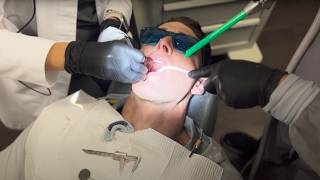
Ben Greenfield visits Dr. Aniko Loud for a bioesthetic dental makeover that uses jaw-motion analysis and custom appliances to reposition his bite. The work restores lost tooth length with composite restorations and aims to fix functional problems like high wisdom teeth that cause wear, with permanent work typically taking two full days.
Questions this video answers
July 26, 2024
19.5 mm (target); healthy vertical range stated as ~18–20 mm.
About 2 millimeters on the lowers and 2 millimeters on the uppers.
Two days (described as two eight-hour days).
"Vocal" (described as a ceramic-filled, BPA-free composite in the dialogue).
Chapters
Whole Health Dentistry in Phoenix. If you heard my first podcast with the great Dr. Aniko Loud, you know what you're about to get into. One of the most cutting edge, holistic ways to reinvent your mouth, your teeth, your jaw, your bite, and your beauty that exists. She's a diamond in the rough. Whole Health Dentistry. All of the shownotes, including a link to the previous podcast I did with Aniko, you can find@BenGreenfieldLife.com loudmouth that's right. I keep telling her she needs to launch a toothpaste brand called loudmouth, but it's BenGreenfieldLife.com loudmouth Let's go see Dr. Eniko Loud, one of the nation's most cutting edge dentists, to see what it is she has in store for my teeth today. Here we go. Follow me. So this office is chock full of all sorts of advanced materials for cone scans and x rays and looking at the spine, the head, the teeth, the neck, the jaw, and then the tooth and the jaw reinvention process takes place. So I've been working with Dr. Loud for over a year now to do everything necessary to make my mouth healthy. All right, Dr. Loud, I'm here. I got a camera with me today, by the way. Say hello to the camera.
Hello.
So I figured we could show them all the cool things, so. And Dr. Loud's a great teacher. She'll talk you through some of the stuff she's doing today.
So we are gonna.
Where do you want me?
And right in here.
My favorite place, the dentist chair.
So remember last time we did that space age kind of thing where we recorded how your jaw moves? Like, just how your jaw left and right sides move?
Yeah. What was that thing called again?
It's called the zebras.
Yeah, the zebra.
Zebras Jaw motion analyzer that uses optical triangulation to determine exactly how your jaw moves left and right. So then when we do dental work, that's custom made for your teeth and your jaw and your muscles.
Awesome.
So it creates more accuracy.
This is way different than just like the DIY mouth guard I can order on Amazon.
Yes, buddy.
That comes with it.
Yeah. So you've been wearing your appliance for quite a while now.
Yes.
And that appliance allows your muscles to relax and your joints to find its relaxed state.
Yeah, the one that we talked about in our first episode. You. You fit my mouth. You did all the scans and you made this mouthpiece that I've been wearing to gradually reshape my jaw over the past, like, years.
Here. Yes, definitely. So what it did, it allowed your joint to go back into. Inside the socket in a relaxed state. And then based on that, we did a bite registration. And what we're doing today is kind of adding back the trying in how. How we will look like when we add back the enamel to your teeth.
Okay.
And then this also allowed us to determine really what caused all the wear that you had on your back molars. I have it up here where you can see. See, the enamel is almost gone.
All my lovely grinding. Yeah. And by the way, that's an important thing you just mentioned that people who heard our first episode will understand. But this idea of adding the enamel back to the teeth.
Yes.
You kind of go in a different direction than a lot of dentists. They fix the teeth by making them pretty, you know, putting the enamel on. But you told me in our last show, like, that doesn't fix the underlying issue. And all that expensive work just gets degraded.
Yes, exactly. Over time. So. So for example, by doing this process, we figured out what caused most of your problems. And the wear. The grinding wasn't psychological for you. It was had to do with your wisdom teeth coming in much higher than the rest of the teeth. And that happens often in kids at 18. The wisdom teeth come in higher. And then what happens when you close that on that tooth? The jaw has to pivot and it slides forward to close all the way.
It's the price of being wise. And Nico.
Yeah.
Got my wisdom teeth, but they're not doing me any favors.
Yeah.
Okay, cool.
Like, imagine like a treasure chest. And when you take the lid and open the lid and you put a little rock on the back parts of the treasure chest.
Yeah.
You can't really close it.
Yeah.
But the mouth will force that to close until you can chew. Because you can't just chew with two back teeth.
Yeah.
So then during that grinding down process, you start, the brain gets signals. Hey, I need to level the field. I need to start contracting the muscles so we get rid of these teeth. So then here you can see how your teeth are like. Like there's like, no enamel that's completely flat.
They're like a millimeter crazy.
So your brain did that, but in that process also wore down your front teeth.
Yeah. Well, if you ask my wife, my mouth is anything but a treasure chest in the morning. But I did use mouthwash today, so I did my ozone oil. Oil pulling. Which I know you're a fan of.
Yes, I am.
Yeah. All right, Cool stuff.
So today, based on the bite that we took last time we did the mock up of how your teeth kind of used to be lengthwise and how we can rebuild the enamel. So again, the process we have is. I'm not going to grind down all your teeth. My goal is to add back enamel in, in like a bio ceramic composite material without damaging your teeth.
And what's a bio ceramic material?
It's. The company is called Vocal and he makes, they make this more like ceramic filled composite material that's BPA free.
Okay.
And it has a much better wear resistance and it's really esthetic.
Yeah. And we talked about that a lot in our last podcast about how many of these materials are not biocompatible or causing long term damage. And you, you educated me about, you know, cardiovascular disease and Alzheimer's and all these issues that begin with the mouth. And it might not just be the composite of the materials using your mouth, but even just the biome of the mouth due to food choices and, you know, alkalinity, acidity, et cetera. And that has a really big impact on, on chronic disease that I think a lot of people are unaware of.
And dissimilar metals, people have like different crowns done at different times and mercury fillings and the way they leak into the body.
Yeah, yeah, yeah.
So luckily you don't have any of those.
All right. No, I don't have any of those. No middle mouth.
So you're ready?
Let's do it.
Okay, cool.
Okay.
And even though my, my mouth might be otherwise occupied, you can, you can just fill people in on what you're doing as you go along here.
Yes. Okay.
So based on the mock up, we created these templates. So there are injection molding templates. So what I'm going to do, I'm going to place material inside these, put them over your teeth, and then we're going to take photos first. I'm actually going to verify the bite that we took on you to make sure it's accurate. And then we try these in and we'll take the photos to see how they fit in your face. And based on that, we modify things.
Okay. Yeah, I don't want to be stuck with inaccurate teeth for life.
Yes. No, we don't want inaccurate teeth. The goal is to more like more function and esthetics together, because function, most people don't understand this function is the most important. Like you said, if you put just pretty teeth in there, the whole system is still going to break down. And that was an expensive pretty teeth process.
Right, right, exactly.
But if you build function like nature creates beautiful function. So we come in with these beautifully shaped teeth that have a certain guidance left and right and forward and back. And that is meant to maintain health in the mouth. So we just rebuild the biology that nature created.
Incredible. Wow. And if people ask you what kind of dentist you tell them you are, do you use the word holistic, biological, something else.
So I don't really like labels.
Okay. I was just curious. Cuz, I mean you're. You're even getting an ayurvedic degree now too.
I'm getting a. So I think what I've done over the years is I've studied with so many different people, so I picked the best in everything and just kind of put it all together. So it's a fusion of functional medicine, biological dentistry, now AA and bio aesthetic dentistry.
Yeah, and bio aesthetic. That's right.
But it all boils down to, I would say I'm a root cause detective. Like I'm a Sherlock Holmes of dentistry. It challenges me when I don't understand why something is happening. And that's why I'm going to Ayurveda school also because there's like more knowledge that I get, more understanding. So more ways to help people.
Yeah, Gotta find all those hounds of Baskerville. The Sherlock Holmes. I like that. The Sherlock Holmes of dentistry. You should put that outside on your. On your window door. I told people the Shownotes are going to be@BenGreenfieldLife.com loudmouth. How do you like that?
I like that.
Still think you need to do a good viewing. Beauty and mouth care brand called the Loudmouth.
I like that a lot actually.
Endorsed by Ben Greenfield.
Yeah, exactly. Two thumbs up.
Yeah, that's funny. All writing.
Here, up here, waiting. Paper.
Close.
What's a favor do you.
The paper shows me where you contact me on this thing so I make sure that it's like even and where you need to be. Just relax your shoulders. There you go. And close now.
And then just open. So we're just trying to get your jaw to relax. There it is. Stay right there. Does that feel comfortable to you? Can I have the.
So now we do a couple bytes. We record the byte with this putty and then this will allow us also to double, triple check that everything still lines up perfectly.
So we work on creating.
Accuracy in a very dynamic system, which is always an ongoing challenge. The jaw is a dynamic system. It's connected to muscles and joints.
And I'm just marking this so we know which side is which.
And open.
This will be bite Number one, open a little more.
So now I'm going to measure. Urine is closed by.
Because we planned a certain type of vertical dimension for your bite.
And it has to be 19 and a half. So then I have calipers where I'm also measuring. Make sure we're there, open.
So a healthy vertical bite is anywhere between 18 to 20 ish. So we try to stay within that. And that's based on studies that were done on patients that have healthy bites and healthy teeth and healthy joints.
That's just what nature creates. And then relax your jaw and close. Last one.
So definitely a lot more steps involved in repairing something than just here, put them on.
And open. And that was that.
So we verified the height. We verified the bite.
Okay. So now these molds will go over your teeth. Okay. Okay. And I'm going to fill it with material in a second. I'm just trying it in. And then we clean off the excess.
You have crowns on your front teeth.
Yeah.
And.
These will go over your crowns. So when it comes to beauty, it's not going to be as pretty as your crowns, but it'll show us about the length that is missing on your front teeth. And then you see the chipping and aware and then the missing tips on your eye teeth. This will fill that in. Also.
Here'S the nice thing. This is very conservative because we're not shaving down your teeth while adding back what's missing.
Ready? So now I'm going to fill. No. So I'm going to fill this template with material.
Okay.
It's going to feel a little weird. All the excess kind of comes out and around, and then we will take it off.
So once we have the uppers and lowers in place, we check the bite again. And then, then we'll take photos and then kind of analyze it, how you look before and after and how this works with what we have.
Like in the treasure chest. Like when you close the treasure chest. The treasure chest, the. The. The lid of it works on a hinge. Right. So when you open it, the back opens just a little bit, but the front opens really wide. So when we have to add back length to your back teeth, because you're missing about 2 millimeters on the lowers and two on the uppers, that it's like a ratio. So if we open a millimeter in the back, it's about three in the front. So we have to be very careful what that does to how the teeth line up. Oh.
Okay, Yvonne, I am ready for the suction.
And then flowable.
Also so I'm going to peel off the excess. This stays on your teeth while we take photos.
So I added the material and now we peel off the excess.
So what this often does, when we.
Add back the proper length of the teeth, the upper lip immediately rolls up. So it's like an automatic lip lift. And then because the muscles here, this orbicular source was like a round muscle, when they're the lips are not supported, the muscles kind of like pull inwards a little bit.
I'm just going to add a little bit here in the areas where the little voids. This is just a temporary.
Just filling in any little voids that form there. So they'll look really good. This is more like a gross try in.
Go ahead, Kira. And I'll add a little more.
Easier to try on over natural tea versus crowns because crowns are slippery.
So this is based on bio aesthetic principles, is rebuilding biological form. And that determines healthy function of the jaw joints and the head and neck system.
Because the teeth determine how the jaw joints move inside their sockets. If the teeth have like really tight worn, they don't allow the jaw to move forward and back. The whole joint will remodel and will reshape.
Polishing on. Just relax your lip. Okay. It's going to feel a little different. So normally the edges of the upper teeth are supposed to follow the curvature of the lower lip and they're supposed to rest against the curvature of the lower lip, which is happening here.
Yeah, it's really interesting.
It's a different feeling.
Feels good.
And then when we add the lowers in, it might feel even better.
Wow.
You know, a couple of my colleagues in biosthetic dentistry, they're big fans of yours and they've been like waiting. When is he gonna fix his teeth? When is he gonna get it done?
Finally Gotta get all the way to Phoenix for it. Yes.
It's not the easiest thing. I'm ready for the lower.
So. Good. So usually it creates like a, you know, age rejuvenation. So it's a universal dentistry, like a facelift? Pretty much.
There's this trend now where people want to have their front teeth shaved down flat. That's the worst thing you could do. Oh, because you set yourself up for a lifetime of dental problems.
I don't want to do that.
It's just that you see a model sometimes they're really flat teeth. Like fat frontier. And even young, young girls, they not want their teeth.
You're like flat along the top of them.
Like the edges of them. Yeah, along the bottom of them.
The front teeth provide guidance in lateral movements and forward movements and when we chew. So when you chew your front teeth, as you slice the food, the upper teeth would guide the lower jaw backwards. So there's a dynamic to it. The eye teeth, as you move side to side to chew your food, keep you centered. So oftentimes people, when they chew to one side, they get used to chewing to one side. And most people do because there's some type of wear in their teeth. They overwork one side. So and somebody that's more pretty exposed to it, they'll end up with TMJ pain on that side from overloading one side.
But then also the body will respond to it because, like, the fascial plane start here, and then the jaw and the tongue are attached to the spine and the neck. And so the whole system starts breaking down. So everything starts diseasing on one side. And then what we see is, like, one shoulder is higher than the other, that one eye is higher than the other. So you could start seeing face asymmetries. We had a patient that I treated him in his 40s, and we tracked back photos when he was 16, 17, 18. And just, just like you, when the wisdom teeth came in, his face started changing because he started developing pain on the side of the jaw where the wisdom tooth was higher. Yeah. And then after we restored him, the symmetry started getting a little better. Like, you cannot undo that much damage quickly. But his face and everything relaxed, and he was out of pain. Luckily, you don't have pain, but most people come in here because the wear and dysfunction caused tremendous amount of pain.
Your lower teeth, in order to fit with the veneer, they also tip back and they started wearing down quite a bit. Remember how you chipped that swim tooth there?
But now we upright the teeth like how they used to be.
Do you feel how your front teeth are touching?
How does that feel different? Yeah, like in your body.
Do you feel anything in your body?
Sometimes my jaw just feels, like, super relaxed.
Yeah. Sometimes you feel a relaxation across the front of the body, too.
Yeah, I do. That's really weird. I don't think that's just placebo because you're saying it like, literally, like. Yeah. Everything just feels kind of like. Like tingly relaxed.
Like a sigh of.
Relief, like, I just had a glass of wine.
That's normal. Because then the system is like, oh, wow, finally.
That's incredible.
So now we try it in the lower teeth. And close again. Close on your back teeth. Sorry, I think I need to add a little more here. Just a little more here.
And open. And close. And open.
And close. And open.
And close.
Close on your back teeth.
Just relax your lower jaw and let it go back. There we go. And.
And open a little more. And then just relax on your back teeth. And close.
Try to close your lower jaw back. There we go. I know. It's not so easy. And open. And just relax your jaw. And close.
Just checking still the bite. Close and open. So the technician. This is the. So we create what's called the bioengineered bite. Every contact that goes on your teeth. How the hot teeth touch is designed with. Again, with efficiency in mind. When teeth are worn down flat, they have really wide, broad contact areas, and you have the tendency to clench much harder. You actually mash the food, so it's not very efficient for chewing, and you exert excessive forces on the teeth. And that's why teeth crack. When you have point contacts, it's proprioceptive feedback for the brain. So the muscles release. So it's very hard to clench.
Hard because you have point contact.
So there's more proprioceptive guidance. And close. Like open. Kind of how like a blind man uses a cane to fill things. So he's. It's a small thing. Instead of touching everything that he interacts with. So then the brain has that proprioceptive feedback. Oh, there's this point. I know I'm safe now. I can relax. I can't let the muscles go. I don't need to try to figure out where to put the jaw.
All right, go take a look. Yeah, yeah. It's kind of weird. Just feel it feels kind of funky. There's a difference. These are temporary, obviously, but this is the test. The size can handle that.
Yeah, yeah, it looks good.
Yeah. Yeah. All right. All right, so now we do photos, photo logs, everything. So there's a special camera room back here.
Yep.
I know how this goes.
Yeah.
I feel like I'm getting my mug shot taken.
Yeah.
All right. If you're watching this video and you want to listen to the podcast where we just go into the whole background of the style of dentistry that Aniko does, go to BenGreenfieldLife.com loudmouth a link to everything there. If you can kind of take a deep dive. There's not a lot of doctors or dentists in the country who does or who do what Aniko does. But a lot of times I'll tell people to call up her office and. And ask about it. And a lot of times people will literally fly here to do this. So.
Back in here?
Yeah, back in. Okay, so now I'm going to just peel everything off. Yeah.
And if you guys are watching or listening, you have questions. You know, I'll always have a comment section in the show notes. But you can also visit the website. What's your website again? Dr. Aniko.
Whole Health. Dentistryaz.com Whole Health.
That's a mouthful. Wholehousedentistryaz.com.
Yeah. Wholehealthdentistryaz.com as in Arizona.
Gotta start expanding. Go to Miami and Dubai and la. Clone yourself. Start teaching other people to do what you do.
I actually have an amazing associate. She's.
Yeah, we're working together here in this office.
Yeah. You know the Sherlock and Watson.
Yeah. Who's your associate?
Dr. Sophia.
Okay. Yes.
She's amazing. She's super passionate about what we do here.
How are you doing, Jessa? Good.
Thanks.
There you go.
So can you give him the mirror?
So if you look in the mirror, it's always impossible to see how. How it looks when you take him off. You want to hold this. Look at mine. Looks like I literally. So it actually is not a lot added in here, but you'll see how when I peel it off, just the tip is missing, right?
Yeah.
But the teeth that you'll see when I take this off, the teeth are tipped back a bit and when we added this material, they straighten up.
So we just peel this stuff off that we added on there. Go ahead and manufacture.
Side right there.
All here.
Yeah. Wow.
But that's what's missing here.
Wow.
You see, that's nice that we're able to add it on conservatively. Some teeth are missing more than others. This is a bit of a process to take everything off.
How long of a process is it once you put the real ones on? Is that quite. Quite a day?
It is quite usually two days. You also have crowns on the top.
That we have to take off and the lab has to make new ones like Jessa. Most of it is going to be.
Done in those two days and she's done. But yeah, it takes two eight hour days.
Because it's here we added in the block, but there I added one tooth at a time.
Yeah.
So technician makes me injection mold templates and then we added one tooth at a time and then verify that we're where we need to be and then next tooth and next tooth. So it takes quite a while.
But.
In my mind it beats like cutting down all the teeth and trying to do. Once you damage the enamel, it's gone.
I'm a big fan of tooth enamel. So if I don't have to cut it away, I feel really good about what I do. Because once you cut the tube, you cut the tooth, and you can't build it back. I mean, it'll never be the same. You can build it back, but it'll never be as healthy and as strong as it was when it had its enamel.
It.
You can catch up on a whole lot of reading, listening to audiobooks while we do this.
Yeah.
Or sometimes people, we give them a sedative so they sleep the whole time, and when they wake up, it's done.
Usually done in two sections. Just because it's a lot of work in the mouth, the patient gets really poor. So normally we do from, like, premolar to premolar in one day, and then we go back and be the back feet after that.
Wow.
In your case, you have permanent crowns on your front feet. And these are really flat. They're missing the stopping points. Like what you called.
When you closed down, there were some stops on them.
And so you'd have. You will have temporary clowns on your frontique while we're waiting for the technician to make the permanent one.
But we make them look really nice. They look like real crowns.
Huh. So is that the appointment in May.
That we do that? That again?
Is that the one come up in May that we do that today?
I think so.
Oh, yeah.
I may need to look at the schedule and make sure we're. I don't know if my team knew that it was today.
Yeah, we said initially. I think they did.
I mean, I layer.
Yeah.
Tamika can help you figure all that out.
Yeah.
Initially, we set two days for you and two days for Jessa.
Got it.
Okay.
Just cleaning out. Make sure there's no checking to make sure you floss properly.
Now I'm just checking to make sure.
There'S no temporary material stuck anywhere. And if it is, I'll pull it out.
I think it makes more sense now why we can't just jump straight into.
Like, go ahead and let's put the teeth on.
The bioengineered bite has to be very accurate and has to stay stable over a long period of time.
So what we put in your mouth will last and be comfortable.
There's a lot of doctors on the west coast that do this type of dentistry.
So if somebody's interested in learning about it, there's obi Biostatic dentistry, and there's a. There's actually a directory of all the dentists that provide this type of care.
Online for biostatic dentist yeah, we're all very dedicated. What's the website?
I think obi.org.
Biosthetic dentistry.
Those waffles were amazing this morning, by the way.
I'm glad you like them.
Every good status. Let's get waffles.
The healthy buckwheat waffle with berries.
Thank you.
I got it. Okay, so now when you close down, just close.
So if you want to see this close all the way, look at the difference between how this. This marks where the bite was open to, like, how much more airway he had with that, and this is, like, how close the bite is.
Yeah, it's crazy.
And that. That's like 15 and a half.
Ideally, you should be between 18 and 20.
I don't snore much.
Do I?
Yeah, but open a little. So you can see in a mount, too, how those back wisdom teeth, you've had them filled, but they're just like, super flat. So if you relax your jaw when you close down, those touch first. Right. You feel them touching first, and then you have to kind of slide a little bit.
Yeah.
To close the rest of the teeth. And that slide is what causes the slide against the teeth, and that caused the teeth to wear.
Wow.
So it's like a touch and slide. Touch and slide.
That was it.
All right, well, so we'll definitely be be putting some links along with this video for you, but you want all the resources. You want to listen to the big audio podcast I do with Anika where she walks through how this works, go to BenGreenfieldLife.com loudmouth and you can start down your road of getting a good bite. Thanks for watching.
More from Ben




The Solution to Aging Might Be Closer Than Anyone Realizes - With Ben Goertzel



