🔴 LIVE AMA with Ben Greenfield | Hosted by Karie Johnson | LIFE Network
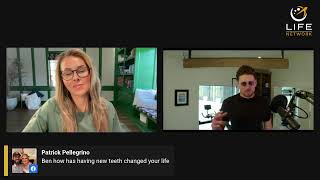
Ben Greenfield answers live audience questions on diet, recovery tools, and health optimization. He prefers keto with carb-cycling over IIFYM, recommends soft hyperbaric chambers for affordability, and advises premenopausal women to limit fasts to 12 hours if they exercise. He also covers nicotine delivery, plasma donation recovery, travel fitness kits, quitting marijuana, and dental reconstruction benefits.
Chapters
All right, you guys, we are live with Ben Greenfield. Ask me anything. Welcome, Ben. How are you doing today?
Hey, good. Hey, how you doing, Carrie?
We're doing fantastic. I know you and I are heading to Austin tomorrow for the health optimization summit. So I'm excited to hear your, your talk. What are you, what are you going to be speaking about?
You'll just have to wait and see. It'll be a surprise.
I'm excited. I think I have an idea, but I'm very excited and especially with all the, you know, just hype and well deserved type around your, your very hard earned, amazing book that you have put together. So in just celebrating Boundless together. So I'm really excited about that too. So with that, this is an AMA session for Ben and we are, you know, streaming across all prep platforms today. Facebook, YouTube. So you can stop dropping in any of your questions, anything you have for Ben. Like I've always said before he, you know, it's pretty hard to stump Ben, but I love the questions already coming in. So we're gonna go ahead and bring these up and yeah, start dropping them in the feed and we will get these going. Okay.
So.
All right, Ben. Keto with carb cycling for fat loss. And if you can, you might be able to Iify M. Is that intermittent fasting?
No, Iifym stands for if it fits your macros.
Oh, yes. Thanks.
All right.
Is there a question in there somewhere?
Yeah. So it looks like if it fits your macros versus keto with carb cycling loss.
Okay. Yeah. This is actually, I guess I would categorize it as maybe not to be too harsh, a mistake that a lot of people make in dieting. Iifym is kind of like the old school idea that you can eat anything that you want to, from whatever cherry turnovers to Twinkies to Oreos to steak and beer. If you hit your recommended protein, fat carb ratios by the end of the day.
So that's the definition of that. Just like, eat what you want as long as it fits your macros. I would say the one thing about that approach that does tend to work decently for some people is that often if it fits your macros is the diet used to get people to eat enough protein. And it's kind of like, well, get your whatever.
180 grams of super satiating muscle building protein each day and the rest of it's the icing on the cake. And the thing I do like about that approach is it's very simple for people to just say, okay, I'm going to get enough protein because a lot of people are protein deficient. But considering everything now from.
Toxins and microplastics and artificial compounds and preservatives in food that you might be not paying attention to if you're just focusing on quantity and numerical values versus food quality to the hormonal aspects of food. Meaning that there would be just from a nutrient density and hormonal standpoint, a far different reaction in the body to 500 calories of, let's say really good salmon compared to 500 calories of.
Pork rinds that you eat out of a plastic bag or something like that.
To finally the idea that there's nutrient density considerations here. So you could eat a certain allotment of carbs, fats and proteins per day, very few vegetables, flavanols, polyphenols, antioxidants, etc. And eventually build up anything from inflammation to nutrient deficits, et cetera. So IIFYM is just is too simple and runs the risk of you eating a lot of unhealthy, poor quality foods. Keto with carb cycling for fat loss. I've talked about that a little bit before, but it's just basically this idea that rather than following a strict ketogenic diet that long term might result in you not having enough glucose for things like thyroid support, testosterone support, the proteoglycans that make up your joints, et cetera, that you introduce carbohydrates here and there while still adhering to a somewhat carbohydrate restricted diet. This is actually pretty similar to how I eat. I don't eat a lot of carbohydrates most of the day. And then because dinner tends to be the most social meal that I have, the meal at the end of the day where I kind of want to have some whatever, sweet potato fries and sourdough bread, some dark chocolate and things like that, I kind of save my carb allotment for dinner. The added bonus that that can also give you a little bit of a bump in serotonin. So you get a feel good response, you get more of a melatonin release and you stock up your muscle glycogen stores for a good workout the next morning, which for me works out pretty well also because I like to work out fasted in the morning. So I would definitely say keto with carb cycling for fat loss wins out. But of course you could do keto with carb cycling for fat loss and it could still be an Iifym diet, right? You'd still want to pay attention to food quality, no matter which approach that you use. But for me, keto with daily carb cycling for fat loss works really well because I'm very active. In a less active person, you could do weekly carb cycling, literally eat high fat, low carb, pretty ketogenic the entire week, and then have some kind of a carb reload meal or day on a Saturday or a Sunday, which for people who are less active, Maybe only have 20, 30 minutes a day or something like that. To exercise or have any meaningful amount of physical activity is fine because you're not burning through that much glycogen, so you don't need to replenish it as much. So there's a few different flavors of ways to approach that diet. But the big picture here, tldr, is if you're doing Iify fym, pay attention to food quality, not just macros. And if you're doing keto with carb cycling for fat loss, do that and also decide how much carb cycling you're going to do based on whether you're a very active person or a not very active person.
Yes. Okay, so good. Thank you, Ben. Awesome. Okay, so next one coming in is Billy from Facebook. So our soft chamber systems, are they worth the money? What benefits do they provide compared to hard shells? And he said hyperbaric was a second follow up.
Yeah, yeah, that references the hyperbaric chambers. So I have a soft shell chamber.
They're definitely less expensive than hard shell chambers.
But they don't go to as high a pressure. Now, in a hospital hyperbaric setting for, say, like wound healing, traumatic brain injury, things like that, hard shells work really well and are a very good choice, but they're also very expensive. I mean, you know, a friend of mine, very popular biohacker in the space, Gary Breca, I was at his house a couple weeks ago. He has two hard shells, right? One that he podcasts out of and one with like a freaking, like gym inside of it.
You know that that's a pretty dent in the pocketbook, but it's a super cool setup. I just have a little soft shell chamber in my, in my lounge that I climb into to nap occasionally. I still get good oxygen delivery, so usually have a mask in there or a nasal cannula where you're breathing oxygen under pressure, so you get some of the longevity and oxygenation benefits. You don't get as many benefits as a hard shell. There's also the time component. Typical hard shell, you're looking at 10 to 20 minutes to pressurize and then another 10 to 20 minutes to depressurize. Right. So you got to bake in 20 to 40 extra minutes while you're in there to pressurize and depressurize. A soft shell is going to pressurize in three to five minutes. It's going to depressurize in three to five minutes. Right. So you're only spending eight to 10 minutes in there doing the pressure adjusting. So, you know, if I really wanted the best of the best, I'd think about a hard shell. But you know, there's some time considerations and definite expense considerations. And I think most people will get a lot of benefits out of a soft shell. The one I use is called the Vitaris, made by a company called Oxy Life. It's a Vitaris 320 like V I T A E R I s and it works pretty well. And you know, I can even zip myself up in there and, you know, don't need help to do it. So I think, I think that's a pretty good option for, for most people.
Okay, super helpful. Thank you, Ben. Okay, so Bonnie from Twitter is saying what? This is a good one too, because I actually just listened to this with Dr. Stacy Sims. What are your thoughts on women pre and post menopause? Working out, fasted. So Dr. Sims was just out recently with Mel Robbins and she said it's a hard no. What are your thoughts?
Depends on what you mean by fasted. Right. So.
Premenopausal women tend to see a little bit of a downregulation of hormones related to fertility with regular fasts that are longer than 12 hours. And even though there's not robust research on this, you could make an argument that exercising in that window would accelerate that deficit even more. Any of the women I advise or coach go 12 hours maximum for an intermittent fast. And if they're exercising, that doesn't mean that you finish dinner at 8pm and then you fast until 8am and then you go work out. No, you'd be working out sometime before 8am so that you're not exceeding that fasting window. Postmenopausal women are a little bit more like men where they can do just fine with a 12 to 16 hour intermittent fasting window. If you find yourself frequently cold, low libido men, erectile dysfunction women, poor sexual performance or lack of blood flow or lack of arousal, a lot of things you'd expect to see with a downregulation, fertility and hormone balance. And you probably should adjust your feeding window now interestingly, this gets even more complex. Back to the other question, like what are you having for dinner the night before? Right. Most people who have adequate carbohydrates with dinner and aren't carb phobic with dinner can thrive just fine on a morning fasted workout because again, you've got topped off muscle and liver glycogen levels. People who are doing the whole whatever finish dinner by 5pm in a really, really compressed feeding window. And not having barely any carbs at dinner because carbs are the devil. And then getting up at whatever, 4am for an elaborate three hour routine that includes a workout and then finally having breakfast at 10am Those are the people that need to worry a little bit more. Particularly if you're a premenopausal woman.
Right? 100%. Yeah. Goes back to bio individuality. Listening to your body too. So yeah, yeah.
And really like you don't have to be doing some kind of like a fancy urinary hormone panel every day to track it. That's why I like HRV or like ring wristband, whatever. If you're consistently seeing low HRV or dips in HRV in response to a new fasting protocol or switching to working out fast in the morning a lot of times that's a pretty good canary in the coal mine that it's too much for your particular nervous system to handle.
Exactly. And as a woman premenopausal, that can vary throughout the month for sure. So listening to the body. Okay, very good piggybacking off of that. David is saying if you he wants to try fasting, he's on several prescription meds. Any advice on how to do this?
I don't want to blow off the question, but that's like impossible to answer unless I know what meds.
Yeah, that's very true. That's a good point. Okay, well David, ping us on like Go Live network and we can maybe dive in a little bit deeper. Okay. So Greg from YouTube, what are good nicotine brands and the best way to take, Take it. Gum patches, et cetera.
Like a lot of gums, candies, lozenges, et cetera.
Microplastics and forever. Chemicals tend to be an issue, especially in the pouch material or in the fillers or additives or sweeteners used in something like the gums or the lozenges. Nicotine itself, of course, you need to realize it's highly addictive. It's vasoconstrictive, so it can raise blood pressure, cause erectile dysfunction, give you paradoxically a Crappy workout because even though it increases alertness, it decreases blood flow. So there's a lot of things to think about in terms of when you would time nicotine. And then of course also the fact that it's highly addictive means if you don't check yourself, you'll need more and more of it to feel the actual effects. But I'm not against nicotine when used responsibly as far as the delivery mechanism. Of course vaping's out due to the impact on the lungs. Gum is okay, but even some of the clean companies like I've thought about Lucy before, if you actually look at the label, there's still a lot of chemicals in there, right? Don't fool yourself. Cleanest way to go would be either a. A patch. As Greg mentions, you can get a 8-20mg nicotine patch on Amazon if you suffer with constipation. It can also help to trigger the ileocecal valve. So if you put it on the lower right abdomen in the morning, it can all increase alertness, but also help with the morning bowel movement. And there's not a lot of compounds in that besides nicotine. Some people like the taste, some people like the fact that when they have something in their mouth, they're less prone to snack eat. So if you went for a pouch, the cleanest company I know of right now doing pouches is called Ammo. I'm not affiliated with them in any way. I probably should look into that. But Ammo is super clean. I'm super comfortable with the ingredient profile of it. They've got a variety of flavors, it's all natural. They use even a coconut fiber in the patch rather than anything that has plastics and stuff in it.
That would be the cleanest way to go. It would be a really clean pouch like Ammo or like just like the GlaxoSmithKline or whatever nicotine patch off of Amazon.
Okay, really good tips. We'll have to look at Ammo for sure. Okay, so Mike from YouTube, is donating plasma good to do? Cheers from Boulder.
I mean, it depends. Donating blood or plasma in men who have high iron just because we don't lose iron or bleed as much as, say, like a premenopausal woman does. Can be a good thing to do if you have a genetic tendency towards hemochromatosis or iron overload. Donating the plasma itself, you do have a lot of albumin, proteins, minerals, other nutrients, fatty acids, cholesterols, et cetera and plasma. So if you were to do it, particularly if you were to do it regularly, you would need to replenish that. Typically, if you were to go in and do what a lot of these longevity enthusiasts are doing these days, which is a therapeutic plasma exchange, they are circulating the plasma out, replacing the albumin with healthy donor albumin, and then giving you an IV afterwards to replace all of the good stuff that the plasma filtration is pulling out. Think of it like reverse osmosis filtration for your water. You're doing a great job with a fine particulate, pulling out a lot of toxins, chemicals, et cetera. But you're also stripping all the good stuff, particularly the minerals out. So you need to remineralize. So if you were to do a therapeutic plasma exchange, you re nutrientize the body with an IV afterwards. And that's something that you would also want to consider even if you aren't doing a plasma exchange, but doing something like donating plasma. If I were to go donate plasma today, I would make sure that I'm eating adequate protein and amino acids for a few days afterwards and getting some kind of a vitamin mineral IV afterwards. But it's certainly not something that's dangerous to do.
Okay, awesome. Very good. Okay, next is Jen. So she's packing up for HOS Health Optimization Summit. So this is packing in general tips, then trying to keep it light. Should she do the PEMF mobility tools or both?
I guess maybe a good way to answer this question. And what's up, Jen? Jen's part of the coaching staff here at Life Network.
I'll tell you what, I usually pack in situations like this. So pemf, you know, these are typically big mats, big units, tough to find a portable unit. I don't travel with PEMF or any grounding or earthing technologies just because I never check bags and I go outside barefoot and ground and earth enough to where I just figure I'm getting the PEMF at home. So I don't pack that to save space. If I were going to pack pemf.
There'S a couple good portable devices. One called the Flexpulse. There's another one called the Seller eight. These are small, pretty compact, and you could travel with them. For me, part of it is space and part of it is complexity. When I get to where I'm going, I'm typically boots on the ground, racing off meetings and stuff. So I want to plug in and unpack as little as possible. That's really the only good reason I don't Travel with one of the really small portable PEMF devices though if I'm managing an injury I would. I don't travel with any mobility tools because I have a Mobot water bottle which doubles as a foam roller. So that's kind of like giving me a two in one. It's like a stainless steel bottle that was designed also to do deep tissue therapy. So I've got that. I do travel with a really, really small like massage gun type of thing. The one I use right now is made by Rapid Recovery. It's kind of like a vibration wand. And then my workout kit is super simple. I've got one elastic band. I try to choose a resistance heavy enough to where if I want to do 10 overhead presses, I can't do many more than that. And then blood flow restriction bands and one of those roll up door frame suspension straps so I can do push ups, pull ups elastic band exercises, all with blood flow restriction. And again, I travel all over the world and I don't check bags. And that takes up barely any space and weighs barely anything at all. So stepping back, big picture, my travel kit from a mobility and fitness standpoint is basically a small vibrating massage tool, a water bottle that doubles as a foam roller, an elastic band door frame suspension trainer and BFR bands. And that's usually enough to get me by. You know, of course a lot of times when you're traveling the hotel or whatever as a foam roller or, you know, kettlebell handle or whatever else you need for some deep tissue work.
Awesome. Yeah, that's so good. You are the world traveler, so it's good. Super good tips. Thank you. Okay, so this one came in from Instagram, so it is not. Okay, there we go. Sorry, There we go. From Matt. Any advice on quitting long term marijuana addiction?
Yeah, so.
When you're looking at any addiction.
You'Re looking at dopamine and typically opioid receptors that need a little bit of a resetting, so to speak. When you throw marijuana into the equation, you're also looking at the dependency of the endocannabinoid system on thc, which can be mildly addictive daytime. And then if you're using it for sleep, can be super problematic because when you're off and if you've been using it for sleep, you get withdrawal induced insomnia. Typically that lasts for a couple of weeks. So a few things to think about. The first is for the last part that I mentioned, just switching to a really good full spectrum CBD oil that you gradually work in as a replacement for sleep. If you're using marijuana for sleep is a good idea for evening, for daytime, anything from exercise to sunshine to cold plunging are all fantastic to get that dopamine release that you might be depending on marijuana for. There are also things that can relax you with fewer side effects and kill. I shouldn't say kill. Basically, THC causes massive free radical leakage in the mitochondria in the brain. It's something I do not endorse regular usage of. I might use THC containing marijuana one or two times a month. And not to be crass or anything here, but usually I would use it as a sex drug. My wife and I will have an edible on a date night or something like that because it is useful for that. But I don't fool myself into thinking it's good for the brain. It's not. CBD is not so bad. And also really useful for sleep. Has those anxiolytic effects without any of the brain issues. So daytime. The trick is to have some kind of a replacement. Kava is a great option, less problematic than thc. So that would be something you could use. There's a company like Trucava that has tinctures, cans, et cetera. If it's more of like the vape effect, a company called Fume makes natural essential oil vaporizers that you can use to replace the mouth feel and the fidgeting effect that a vape pen might be giving you. And then for the opioid piece, because there is a little bit of opiate receptor activity involved with an addiction like this as well.
That one can be a little bit more difficult to work on. But.
There are a few things that, for example, like a lot of Kratom users will use to reduce dependency on Kratom. One is phosphatidylserine. There's another one. It starts with an A. It's like Egmentene, something like that. I forget the exact name of it. I think it's agamentine. But that's another one that you use to replace some of that feel good opioid like effect. And then anandamide, which is one of the feel good components you find in dark chocolate, which you can also use as a supplement. And then mucuna pruriens, which is like dopamine. There's a company called Nootopia that makes dopa drops which are useful for this. So what you're trying to do is stimulate dopamine with ice baths, exercise and sunlight. Throw a little bit of extra in there with something like Phosphatidylserine egmentene and some kind of dopamine precursor like mucuna pruriennes. Switch to CBD in the evening. If you're a vape pen user, get something like a fume pen. And then if you're just like, screw it, I just need to push the reboot button. I would highly recommend you look into ibogaine. Ibogaine is not comfortable. You're basically paralyzed in bed. It can be hard on the heart if you have any electrical abnormalities in the heart, but it will do what months and months of addiction therapy will do. Within about 24 to 48 hours. You typically need to go to Mexico to do it. You could look into ambio a M, B I O. You could look into beyond without a Y, B, E, O, N, D. Those are two pretty good ibogaine clinics. You're usually there for five to seven days. But for severe addiction or just a full body reboot, whether it's, you know, anything from heroin to THC to, you know, painkiller drugs, that would be kind of like the big guns. Wow.
Lots of good tips there. Thank you, Ben. Okay, I want to be mindful of your time. How are you doing with maybe one more question?
Yeah, sure. Let's go for it.
Okay, awesome. So, Patrick from Facebook, how has having new teeth changed your life? So, Dr. Anika Loud, I knew that. That for you.
Yeah.
When I visited Dr. Loud out of sheer curiosity about what bio aesthetic dentistry actually was, I was happy with my teeth, but she really opened my eyes to the idea of a poor bite. Poor bite patterns and worn down teeth affecting nutrient absorption, affecting nighttime oxygenation, affecting the way that you carry your head, your cervical spine, et cetera. So I decided to bite the bullet, pun intended, and actually work with her to do a full reshaping of the jaw and.
The airway and teeth area using a mouth implant that she custom designs after doing X rays and scans. And then what she does after you've spent about a year and a half kind of reshaping the jaw, because if you do it before, you'll just wear down any new teeth that she puts in. She then uses a really biocompatible material that doesn't have any toxins or anything in it made of ceramic. They're called lumineers. So I did the whole mouth reshaping process and then topped that off with the lumineers. And.
I had really used to it, like, how much better I could chew food, how much easier it is for me to just mouth tape and breathe through my nose at night.
I think you could probably say that if you have a good smile, there's a confidence inducing factor to that.
I've been called an excessively confident asshole enough to where I don't think I ever struggled with the confidence piece. But for me, kind of like the nutrition, nutrient absorption, chewing ease and nighttime sleep and oxygenation piece was intriguing enough to do it. So. So just be careful who you go to that they're using biocompatible materials and perhaps more importantly, biosthetic dentists are very difficult to find, but they're some of the few practitioners. And Dr. Loud, by the way, is one of the experts within our Life Network, so she's available to you to ask these questions. It's one of the few forms of dentistry that doesn't just slap spending new teeth in you and then you grind them away after a series of years because the jaw alignment was never adjusted. And so that's something to bear in mind.
Very true. Oh my goodness. Yes. So good. Okay, Ben, thank you so much. And I know we did not get to a lot of the questions, so if you all could head to Life Network. Drop it in Life Network. We'll keep the conversation going and get to those questions as much as we can. We also dropped our new social feed on Life Network as well, so check that out. It is still a work in progress, so. But head on in there. Start putting in some questions in our forum and our social feed and then Ben and I and some of the team will be at the Help Optimization Summit this weekend. So tune in. We will be having all sorts of fun live feeds going out from there as well. So thank you, Ben.
Cool. Thanks you guys. Great questions.
Great. Thank you.
Bye, guys.
Bye.
More from Ben




The Solution to Aging Might Be Closer Than Anyone Realizes - With Ben Goertzel



