LIVE AMA with Ben Greenfield & Karie Johnson, March 2025
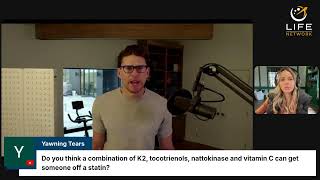
Ben Greenfield answers live questions on biohacking and health. He compares paraxanthine to caffeine, discusses peptides like BPC-157 and sourcing concerns, and covers chronic fatigue triggers including mold, Lyme, and EBV. He also shares budget supplement priorities and skin approaches for rosacea.
Questions this video answers
About 100–300 mg.
4–5 mg (LDN).
5 to 20 grams per day.
1 to 2 grams per day.
About 2 to 5 minutes of rapid shaking in the morning.
Chapters
Okay, Katie, try your Instagram one now just in case. So we should be try just one last time. It might still have mine. Looks like it's. It's connected. It's live. Okay, great. People joining. Awesome. Okay, welcome, everybody, to Ben's AMA live session. We are streaming right now with Ben. Ben, thank you so much for joining us today.
Thanks.
Yeah. All right, so we have 30 minutes, short and sweet to dive into all things Ask Me Anything with Ben Greenfield. So I'm Carrie Johnson, your host today with Life Network, and we're streaming across Ben Greenfield platforms, Life Network platforms. And just thanks to everybody for tuning in and of course to Ben. So we're going to keep it short and impactful. So if you have any questions right now, go ahead and start dropping them in the chat. We also have been fielding a lot of questions in our Life Network forums on social media already as well. But if you have some, drop them in the chat. Also say where you are tuning in from. I would love to hear anybody who's tuning in for, you know, anywhere around. All right, good. We already got some, some questions coming in. And let us know where you're coming in from too. I would love, love to shout you out. So. Okay, Ben, yo, we are gonna dive in. I will throw some questions at you. And you are, you know, just the man, the myth of 11 legend. So I know you can handle them. So the first one that's coming in is Max Feeney, and he has. What are your thoughts on paraxethinine? Paraxenine.
Paraxanthine.
Thanks. Paraxanthine. Thanks, Ben.
Yes, paraxanthine is a component of.
Caffeine or is very similar molecularly to caffeine. A little bit of a shorter half life doesn't seem to impact sleep architecture as much. And it has some unique properties, particularly in the realm of, like, motivation, confidence, some even say swagger. Some things that you don't necessarily get from caffeine itself. It's difficult to just get like a effective dose of paraxanthin by just drinking a cup of coffee because usually you need about 100 to 300 milligrams of paraxanthine to really feel the effects. But you can buy it as a standalone supplement. A lot of manufacturers are adding it to their compounds now. It's maybe been popular for about two years. An example would be I interviewed the folks from Update Energy Drinks. They use it in their drink as an alternative to caffeine.
Sean Wells, formulator, who has been on my podcast a few times. He has Been pretty clutch in bringing it to market. People like it because it doesn't give you a lot of the same jitteriness as caffeine. It's fantastic as like a pre workout, pre social event type of compound. Relatively safe and again because it's in and out of your system a little more quickly than caffeine. Less issues with sleep parameters. Although a lot of people including myself can take an effective dose even before dinner or something like that and still sleep just fine. So I would say it ranks up there as far as something efficacious, relatively safe, good alternative or additive to caffeine or coffee. Not that difficult to find, not that expensive. So I would give it a thumbs up.
Okay, awesome. Paraxanthine. I will forever pronounce that correctly now. Thank you Ben. Okay, so we have a lot of other questions coming in. Next one is from Mike. Ben, Recently I saw a rheumatologist and have CCP antibodies. I have some hand and wrist pain along with other musculoskeletal pain. I don't want to take any anti rheumatism rheumatic drugs. What would you do?
Well, this is more of a medical question so I should definitely say I'm not a doctor and we can't really give out medical advice on an AMA like this. So I would definitely speak with your doctor about this. When you do test and see elevated antibodies, in many cases those antibodies often which form a reaction against your own tissue and cause issues like hand and wrist pain. Those are aggravated or accelerated by environmental or food triggers. Typically if I'm looking at somebody's labs and I see elevated antibodies and again I'm not doctor, don't take this as medical advice. I recommend doing a really good environmental toxin and allergy panel and possibly even a mold, mycotoxin, Lyme, Epstein Barr panel to see what's triggering the autoimmune issues. An example of this would be to look into a lab company like say or have your doctor do this like Vibrant Wellness which has an environmental toxins panel and a mold and mycotoxins panel. They now have a microplastics and forever chemicals panel. So I would look at that offer really good gold standard food allergy panel. You could look at Zoomer. That's a really good one. I believe Vibrant Wellness actually does that one. And Cyrex would be another example. In many cases it can be as simple as a eliminating anything that's kind of putting fuel on the fire. And in the case of autoimmune issues, sometimes that's things like gluten or other wheat or what are called gliadin proteins, soy, dairy, eggs. Of course, it's better to test that you're not just randomly eliminating food groups. You don't need to eliminate, of course, like I mentioned, mold, mycotoxin, other chronic stealth infections can cause this issue too. But in addition to eliminating problematic food groups, typically you need to quell the immune reaction. An example of a way to do that that's used quite a bit in the functional medicine community is low dose naltrexone. Naltrexone is something that can modulate the immune response and quiet an autoimmune reaction. Pretty low dose, like 4-5mg. Pretty easy for your doctor to order from. For you, it's a very basic molecule, so in many cases you can also get it from online pharmacies. It's called ldn. Low dose naltrexone. And obviously your common anti inflammatories, curcumin, ginger, turmeric, et cetera. Those can also help to quell an inflammatory response. And then if you look at the realm of peptides, there are peptides like BPC157, Lorazatide, KPV, any of those can also have a pretty good effect on an immune system reaction. So it's kind of like you're quieting the fire on one end while removing anything that's putting fuel on the fire on the other end. But definitely talk with your doctor about it too, because this is more of a medical piece that you don't want to just kind of manage on your own. But those are a few things I'd at least be thinking about.
Okay, awesome. So good, Ben, thank you. And on the topic of BPC157, Mike from YouTube, I've also tried BPC, but it gives me an incredible, incredible fatigue that persists for around a day. Is that normal? Any ideas or alternatives?
Usually that's not the peptide, but it is impurities that are present in the peptide. A lot of times you'll find what are called lipopolysaccharides within the peptide itself. Those are contaminants. They can cause almost like a sepsis like reaction. Fatigue, malaise, swelling, redness, rash. And usually I'll see those from people who are just buying peptides online without much attention paid to the sourcing. I think in most cases it's best to get your peptide through a doctor. There's some orally bioavailable peptides I've talked about before. On my podcast and elsewhere, like Level Up Peptides out of Australia, I'm pretty safe with a lot of those oral versions where the risks become a little bit more of an issue with the injectables. So I wouldn't just be buying them from any online source. I would be going through a doctor. You could establish care at Bioreset Medical in San Jose. That's where I get a lot of my peptides. Or Conover Wellness in South Carolina. There's a lot of functional medicine docs who can prescribe you peptides, but typically what you're getting from the average peptide website is different than the purity of what a doctor is going to get for you. So I don't think it's the BPC157. I would be looking at the actual purity of the peptide you're using.
That's good. Okay, so we do have an audience member. Thank you. Ben Fulya in the audience. Fulya, do you want to say your question? If not, I can say it for you.
No. Do you want me to answer it for you?
Yeah. Okay, you got it. So fully, I believe you're from Germany, is that correct? Yes, yes, that's right. Yeah. So she's one of our Life Network members and she is here and she just dropped it in our chat here. So she would love to know firsthand, kind of tying off of exhaustion as well, firsthand advice on what to really do when exhaustion is all time present despite normal blood results and biomarkers.
Oh, I'm sorry, you're going through the exhaustion.
Normal is kind of a little bit relative because reference ranges often don't indicate what is actually good for feeling better. Sometimes they just indicate absence of disease.
Some of the places to start digging if you're exhausted on a regular basis. One would be, of course, something I referred to earlier, which is one of the number one causes that I see, and that's mold, mycotoxin, Lyme, Epstein Barr. Having your physician run a really good panel to see if you are presenting for any of those. In which case a lot of times you need to go through a detoxification protocol. A lot of times, ozone treatments, mold eradication treatments, et cetera, that would be one that the average lab test doesn't test for. Food allergies would be another, which I already mentioned. So some of those tests I mentioned for food allergies would be good. And then you can look at thyroid, right? You have elevated thyroid antibodies, high tsh. A lot of times the normal blood panel will only look at say.
T3 and a few other basic thyroid markers. Thyroid dysregulation is one big cause. Hormones that are looked at from a more holistic standpoint as far as 24 hour fluctuation, that's also a really good thing to look at. So like a urinary hormone panel rather than a blood hormone panel to see how levels are fluctuating up and down during the day and the metabolites that the hormones are getting broken down into. That would be like a Dutch test, for example. In many cases, environmental factors could trigger this. So let's say a lot of times I'll see people who have exhaustion or fatigue issues have a four legged stool going on. The first is that they've got sluggish methylation pathways, which can be ascertained via a genetic panel. You could test your genetics, see what the methylation panel is like. And then in many cases, if you are sluggish with methylation, you can add more bioavailable folate, a good vitamin B like boy complex, good amounts of choline, while avoiding synthetic sources of folic acid. And then the second leg of the stool is that in many cases because there's poor methylation, there tends to be poor toxin clearance. That typically is paired with a good detoxification protocol, regular use of the sauna, maybe something very simple like glutathione in the morning and activated charcoal at night to begin to upregulate liver detox pathways and bind and remove some of the toxins. And then the next piece would be in many cases, in addition to toxins, there's also metals that accumulate and so doing like a metal detox, which a lot of times go hand in hand with some of the protocols I mentioned earlier. Sauna, glutathione, activated charcoal, et cetera. And then typically in someone who has high toxin load, high metal load and sluggish methylation pathways. I'll often also see people who tend to complain of electro hypersensitivity, meaning high amounts of exposure to WI fi, smart appliances, Bluetooth, just basically an electrical soup. And so going through your home and your office environment with a building biologist or with an EMF meter to begin to unplug things, replace cables, turn things off, disable WI fi, hardwire when you can, et cetera. Those are some of the things you can do to tackle it. So I'm not saying that it couldn't be one or all of the little things I just described, but those are just a few reasons that people might have a normal blood panel but then still have chronic fatigue or exhaustion on a regular basis, then the last thing is I, I know in the health world going keto, going low carb, a lot of times that's pretty common if that is the case for you. In many cases I see active individuals who are using more of a therapeutic ketogenic approach and having 30 to 50 grams of carbs a day when they would feel a lot better, up around 250 to 300 or more carbs per day. So just eating more carbohydrates can also be one of the issues here too, especially in somebody who's active and kind of, kind of taking the carb phobic route. So that'd be another thing to look at from a macronutrient standpoint. So those are just a few ideas for you to start with.
Thank you all. Thanks, that helps a lot. Thanks Julia. Amazing. Yeah, just a few ideas. So good Ben. All right, so Nathan from Facebook, if you had to build an end all be all daily supplement stack on a budget of $100 per month or less, what would it be? Good question.
Oh, well, you know, it's always difficult to say what supplements you should be on if, you know, if I'm not seeing like lab blood work, biomarkers, because the last thing I want to do is tell you a bunch of stuff and then you just make expensive pee because whatever your vitamin D levels are already good, so you'll need extra vitamin D or you're great methylators. You don't need extra choline or vitamin B. But that being said, painting with a broad brush, I think a few of the no brainers from a supplement standpoint that are really well researched that would give you a lot of bang for your buck. If I could just choose four, I'd do something like just regular dirt cheap creatine monohydrate, five, up to 20 grams a day, especially on more cognitively demanding days.
So 5 to 20 grams of creatine a day, fish oil or algal oil like some form of a EPA DHA source, 1 to 2 grams per day, again like creatine. Reams of research on the safety and efficacy of a good omega 3 fatty acid supplement number three, less research, but so many people feel so good on it that I'd be remiss not to throw it in there. Some form of nad, NMN or NR for the cellular DNA and repair component. And then the last piece would just be kind of like insurance. You've probably heard of companies like athletic greens or organifi greens or one I've been showing on my Instagram page lately called Ima. It's got like 90 plus different nutrients and minerals in it. Some kind of shotgun formula like that, just to cover your bases from an insurance standpoint, if you're doing creatine, fish oil, nad and an IMA or an athletic greens or organifi greens or some type of good vegetable, fruit, minerals, type of powder, you'd be pretty close to 100 bucks a month and you'd cover a lot of your bases. Again, assuming you're eating a really good, widely varied diet, having a lot of dietary diversity, you know, taking care of things from that standpoint. So those are. That's what I would consider to be like a base supplement stack.
That's really good. Thanks, Ben. Okay, so coming in from Instagram, we have B. Marie is asking, what peptides or supplements would you recommend for traveling to high altitude?
Oh, I love that. It's actually just in Nepal and this came up a few times. Cordyceps, right? Cordyceps is a great adrenal kind of activator for the lungs, good for blood flow.
Beet root powder or beetroot extract for the nitric oxide piece, or using an actual nitric oxide supplement like.
Neo40 is a good one. Look up the work of Dr. Nathan Bryan. He has some good nitric oxide containing supplements that you could add into beets or as a replacement for beets or beet extract, beet powder, et cetera. Neo40, I think is the name of his company. Beet Elite is another good one. So that along with cordyceps, you're going to have a higher need for mineral and electrolytes and also glucose at altitude. So having some form of at least attention paid to carbohydrate intake, making sure you're not going too low carb, and then also throwing in minerals and electrolytes. And then I interviewed a guy on my podcast like five years ago. I see less research for this, but he made a pretty good case for two components like an algae extract like chlorella spirulina, et cetera, which kind of makes sense because it can assist with carrying oxygen through the body or increasing ATP production, especially in response to sunlight exposure. And then also shilajit, which is also used by a lot of Sherpas who guide people up Everest or do a lot of climbing expeditions. So what I would have in my bag is I'd have cordyceps, some form of vasodilatory agent like beetroot or nitric oxide precursor. Another one, by the way, is vascanox by Calroy, that's another nitric oxide precursor. And then shilajit, some form of like spirulina chlorella supplement. Adequate electrolytes and minerals hydration should go unsaid. And then just make sure you're not going super low carb.
So good. Okay, yes. Anecdotal experience straight from you because you just did it. Okay, so Vlad is actually one of our community moderators here at LifeNetwork and he's joining us here live as well via Streamyard. So, Vlad, I will let you ask your question.
Perfect. Thanks so much, Kerry. I'll keep it really quick and short as possible. He Ben, really appreciate your advice on this in advance. So I've had a chronic rosacea butterfly effect on my face. Maybe camera captures it since about 2019. And my dermatologist suggests creams and antibiotics. But I want a holistic approach. Obviously. I don't have any suspected allergic reactions other than to some of the like home dust or to some sort of microscopic bugs in the dust. And I was thinking maybe something like good environmental factors like city living and dust allergies play a role, which is in my case. And should I explore any other protocols, in your opinion? And many things. Appreciate you a lot.
Yeah. Cool. Vlad, I'm sorry you're dealing with that. And yeah, rosacea can be a little bit difficult, but you're on the right track. And that's similar to my reply about the autoimmune piece or the fatigue piece. Anything skin related is often triggered by insulin pathways or autoimmune pathways. So elimination of grains and dairy. Experimenting with that is usually a good idea from the insulinogenic standpoint, cleaning up the environment of toxins using really good HEPA air filtration technologies, making sure the home is clean, trying not to be near air pollution as much as possible. That can also be important. Then I've seen really good effects anecdotally for rosacea of people who are using topical or transdermal ozone. So an example of this would be like there's one company called simply O3. They have like an ozonated oil that can be applied topically that can have good effects against rosacea.
That would be also something to look at from a topical standpoint. And then I would also do testing, you may have heard me mention things like the Zoomer panel or the environmental toxins panel to see if there's any environmental or food components that are triggering some type of antibody reaction which could aggravate skin issues. So I would also consider that type of Testing as well. So those are a few places that I would start.
Hefty steam sauna or infrared sauna practice could also be really helpful for a lot of skin conditions.
Awesome.
Oh, sorry. One other thing is if you have one of those red light therapy or green light therapy face masks, a lot of people get good effects with those as well.
Awesome. And Vlad, you're coming in from Czech Republic, is that correct?
Yeah, yeah, yeah, I do. Thanks so much. I appreciate you.
Thank you, Matt. Appreciate you, Vlad. Okay, so we have two comments, one from Instagram and another from YouTube regarding rebounding trampoline. You've mentioned that many times in the past. So someone's curious. Do you still recommend rebounding in the morning to move limp and then I'm going to follow that one up after you speak to that one.
Yeah, but I mean, I travel a lot, so I, believe it or not, I don't travel with a fold up trampoline. I will just shake in the morning for about two to five minutes, just like rapidly shaking my body up and down. I'll even tap on specific lymph points. If you look up Dr. Perry Nichols, he has a big six lymphatic drainage protocol. Whether I'm jumping up and down on the trampoline in the morning at home or shaking and rebounding my body manually, when I travel, I will rub and tap the area on the clavicle area, back behind the neck area, on either side of the shoulders, the stomach, the groin and the back of the knees. And typically rub, rub, rub, rub, rub for about 20 seconds. Then tap for another 20 seconds or so to allow for really good lymph circulation. And then follow that up with more shaking and bouncing up and down. Because the G forces from shaking or bouncing or trampolining can really help to move stagnant lymph and improve lymph flow and of course help out with your immune system and with detoxification. So yeah, I still do some form of rebounding or like bounding up and down or vibration platform. That's obviously another option pretty much every day of the year.
Good. Okay, so to piggyback on that, we also have Sierra Menino from YouTube who is a pickleball enthusiast just like you, is rebounding on a mini trampoline daily doing 20 minutes health bounce rather than targeted hit. Substantial conditioning for my sport.
You'll see some old studies by the American Council on Exercise suggesting that rebounding is the equivalent of running.
If you look at the workout they were using, it was a pretty intensive rebounding practice. Like push ups and jumping jacks and heavy bounding and super hard sprints. And you could make an argument that if you're really pushing yourself and your heart rate is getting as high as it would be if you're using the aerodyne bike or sprinting or playing singles pickleball, that it might. It's pretty hard to push yourself on a rebounder though. That hard. I'm a fan of it. For the detox effects, you can get some cardio, but not enough for the average pickleball metabolic requirements. So I would say going a little bit more sports specific with sprints, calisthenics, plyometrics, et cetera would be better if you want to maintain really good fitness for pickleball. But if you look up like American Council on Exercises. Ace Ace. If you were to Google or Grok or GPT or whatever, Ace Fitness Trampoline study, you could probably pull up the actual workout they were doing on the trampoline to hit some of those VO2 max numbers. But yeah, I think it's hard to push yourself that hard on a trampoline. I've tried and it's almost like dangerous feel like, you know, like fall off and hit the wall and go flying off the trampoline. But I mean, theoretically, yes, but I think practically a little more difficult to pull off.
Very good advice. That's so true. I have fallen off mine before, so it's not fun. Okay, so yawning tears from YouTube. They actually have a few different questions here I'm trying to see. Okay, do you think a combination of K2 tocototrienols, nicotinase, you can correct me, Ben, and vitamin C can get someone off a statin.
This is one of those medical questions that I'm not really allowed to answer. If you're looking at a statin that's been prescribed for lipid abnormalities.
You could make a case for there being some things that might stave off plaque accumulation or have a lipid lowering effect that might do some of what a statin is intended to do. Some of those that you listed, in addition to K1, vitamin D, red ginseng.
About five other compounds may help with that. But you'd have to ask your doctor about it. Not to get all promotional, but if you go to Vitaboom.com Ben Vita Boom, you can see that I formulated a heart health product because I didn't personally want to be on statins and had some plaque and lipid issues. So I just rolled up my sleeves and came up with a formula that includes about 12 different compounds specifically designed to assist with supporting healthy plaque and healthy heart function. Kind of depends on your genetics, familial hypercholesteremia, the extent of plaque accumulation, the extent of lipid abnormalities, et cetera. That would dictate whether or not that would be enough to take you off of a statin. But it's at least something I think worth thinking about, especially because of the muscle wasting stripping of coenzyme Q10, et cetera, that's often associated with the statin. Even those issues, I think could be skirted by using a low dose statin like rosuvastatin ezetimide combo and then having a really good Coq 10 thrown in. But the answer is you could be on the right track. I'm not, you know, allowed legally to give you a strong yes or no to your question, but, you know, you could also, of course, check out the host of different heart health podcasts I've done. I got like five of them where we kind of discuss the reasoning behind some of the ingredients a lot of people use to wean themselves off of statins or that they would use as an alternative to statins.
Okay, great. Thank you, Ben. Okay, so I know we are at time and I want to be mindful of your time. So we can, we have a lot of other questions that have been coming in. We can save them for next time. Unless you have time for one more. Your choice.
Yeah, we could do. Let's, let's do one more. One more.
Okay. All right, so let's see here we have from Facebook, Jim Rocky, how to prevent graying of the hairs and how to prevent wrinkles.
Any protocol supplements for graying of the hair and wrinkles? Those are kind of two separate issues. Both can be related to.
Peroxisomes and oxidation as well as for the graying piece, accumulation of hydrogen peroxide in scalp tissue, which is also.
Consequence of oxidation. I typically recommend people really clean up their diet. Eliminate easily oxidized compounds, particularly sugars, seed oils, any significant amounts of alcohol, and ensure that your diet is very clean, especially when it comes to oxidized compounds that you find in processed foods, ultra processed foods, greasy foods, fried foods, vegetable oils, et cetera. Then.
There'S 80 pages in Boundless on the beauty protocol. But the TLDR is for the hair dermarolling some type of scalp application like C60. Or there's a company called Scandinavian Labs that has some good products, some other natural hair coloration products that you then combine with red light helmet or red light hat use and then for the skin, very similar use a good formula, really good skin repair formula like Olytora or Young Goose paired with something like a red light face mask. And then if you want to really delve into more cosmetic regenerative medicine, look into things like Exosome facial, stem cell facial, cold laser, Neoplasma. There's a lot of cool stuff that you can use to maintain skin beauty. Now in that sector, that's like a 40,000 foot overview. But the number one thing to think about is reducing oxidative compounds in the diet.
Awesome. And that's a great plug for your upcoming Boundless book coming out just with all the latest and greatest. So you are a wealth of inspo and inspiration. Ben, you were absolutely incredible. Thank you so much for your time. We are collecting all of these comments and questions to use at a later episode. We are going to be doing this monthly so stay tuned for we're going to drop this link every single month as much as we can. But we also have a 30 day free trial for a Life Network. So hop in. Life Network. We actually have a a Ben's Boundless body and energy challenge starting on March 22nd. It's free to join. We are going to have two live workout classes that I will be teaching. I'm super excited about that. So join us for that. It's going to do a deep dive into Ben's body section of his master class. So we'd love to see you guys in Life Network. Ben, thank you so much for joining us today.
Cool. Thanks everybody. Great questions.
Okay, thank you guys. Bye.
More from Ben




The Solution to Aging Might Be Closer Than Anyone Realizes - With Ben Goertzel



