Mark Sisson at 72: I Chased VO2 Max and Lost 32 Pounds of Muscle — Here's What Actually Works
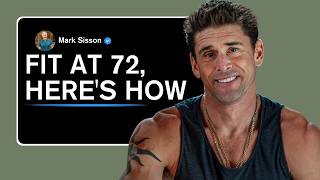
Mark Sisson, 72, chased VO2 max and lost 32 pounds of muscle. He now argues that grip strength, sprint speed, and balance matter more for longevity than any single metric. Skip the bio-hacking: master sleep, diet, and movement first.
Chapters
What is it about longevity that we really are seeking to achieve? And it's mobility, right? We want to certainly live longer, but we want to be able to do things as we live longer. We want to be able to walk around the world and travel and play with our grandchildren and sorts of types of movement. And my focus became one of more of a decathlete perspective, which is rather than focus on just that one metric, the VO2 max, all these things start to have real, real impact.
Mark Sisson is my podcast guest. He's been shaking up the world of health and fitness for 20 years plus. He ignited the ancestral health movement in 2006 with his wildly successful blog, which I think is back up based on what you're about to learn in today's show. He's got a book called "The Primal Blueprint." He founded Primal Kitchen food company, which you may know of as the crack cocaine-esque ketchup and mayonnaise that we all know and love that's super healthy and guilt-free. And he has a company called Peluva, one of my favorite shoes to wear, toe shoes. All of the shownotes for everything we talk about are at BenGreenfieldLife.com/Sisson2026. Mark's last name is Sisson. BenGreenfieldLife.com/Sisson2026. Let's go talk to Mark. Mark, it's been a while.
Yeah, Ben, it certainly has. Good to catch up.
As a matter of fact, I think by a while, I mean the last time I saw you kicked my ass with a fat tire ride on Miami Beach.
You got to tell me that was fun still, right?
Yeah, it was humbling, which I guess is fun. It was character building.
Yeah, exactly.
How's Miami treating you?
Oh, amazing. No, I love it here. It's my happy place. It's like a playground and a kid summer camp and a resort and a spa. What can I tell you? I like warm water. The water's 20 degrees warmer than what I'm used to in California. So, it's all good.
Probably a lot warmer than the pond in my Idaho backyard. I don't know how long ago you jumped back into this, but it seems to me like you've been writing a little bit more just from the newsletter I've seen, for example, online on Beehive.
Yeah. So, we had a big issue with Mark Staley Apple about 3 years ago. Can't talk too much about it, but because Kraft Company, Kraft bought Primal Kitchen and with it they got Mark's Daily Apple and there was a sort of a hacking incident that happened that they were unwilling or reluctant to put the site back up for a long time. So it's only recently come back up in terms of Mark's Daily Apple. Well, while that was down, I started thinking about all of the things that I want to say, all the thoughts that I want to put out into the, into the universe here. And I didn't have a platform, so I started site on Beehive. It's called Mark's Listen Untethered.
Subscribe to it, but I didn't know Mark's Daily Apple was up.
Yeah, it's just in the last, I think in the last couple of weeks it's up again. Yeah.
Well, is it going to be kind of like the database and repository of all the articles that you did over the years, but then your new stuff is now going to Beehive, or are you going to start publishing on Mark's Daily Apple again?
No, there's both. So, there's Mark's Daily Apple, which is more of the conservative dietary and fitness and health advice, And then Untethered is more of the spicy, my viewpoint on what's going on in the world and AI and economics and all that stuff. Yeah.
Oh yeah, we can get into that. Before we open the AI can of worms, I think maybe like a week and a half or so, you sent out your Old Man Olympics goals, which I thought would be kind of cool to get into because you're pretty much like you, You kind of fit in there, and I don't know if you appreciate this or not, with the— or in the category of a Laird Hamilton for me, just like a dude who's crushing it physically and mentally with age. And so, I always pay attention when I see somebody like you publish what your physical goals are. I'd love to dive into what the Old Man Olympics goals metrics are though.
Yeah. So, first of all, this came about as a result of my analysis of what's going on with the overhyping of the concept of VO2 max. And, guys like Peter Attia and Huberman and Rhonda Patrick and all of the pundits that we've known and loved for a long time seem to peg VO2 max as the gold standard for longevity and for risk reduction for all-cause mortality and things like that. And I started really examining VO2 max as a concept. I've obviously, as an endurance athlete, has been the major metric that I focused on throughout my career. But one of the things I want to point out early on is that I was a fairly good runner and a fairly decent triathlete in the early days, And my VO2 max was not that impressive. It was like 67 was the highest I ever recorded. And if you look at what's going on in the world of athletics now and marathon runners, the guys who are the best in the world, they have to have at least 80 and usually in the 90s. And Kristian Blummenfelt just recorded 101, which is the highest recorded VO2 max ever.
Oh my gosh. Wait, who got 101?
Kristian Blummenfelt, the guy who was the, you know, Ironman winning all the Ironman events now. Just ran 7:21 last, uh, in a, in an Ironman. Yeah.
Uh, do you know what he weighs? Because obviously part of it, he's a big boy.
I don't know what he weighs, but you look at him and he does— he doesn't even look skinny. He looks, you know, he's— he, he looks like a muscle— a well-muscled guy.
Okay, so he recorded a 1:01.
I know. So anyway, in con— so in the context of my, you know, rather meek and meager 67 I started in retrospect looking at what is it about VO2 max that is so— because Peter would say that people within the top 2% of their VO2 max for their age have a 400% lower risk of all-cause mortality than those in the lowest quartile, for instance, which anybody who's in the top 2% of VO2 max, is now almost entirely focused on VO2 max. You really have to be an endurance beast to be able to get that high and to record those sorts of numbers. And I think in the process, you have to forego a lot of other life skills, which is what happened to me as a marathoner. I didn't ski, I didn't play tennis, I couldn't play basketball or football because I was a runner. I was always sort of focused on developing aerobic capacity and anaerobic threshold and all of the metrics that we use in the endurance world to my detriment. Eventually, you become this skinny, wizened, old bag of bones and skin, but you can run a marathon and so God bless you. But I looked at what is it about longevity that we really are seeking to achieve? And it's mobility, right? We want to be able to do things We want to certainly live longer, but we want to be able to do things as we live longer. We want to be able to walk around the world and travel and play games and play with our grandchildren and dance and do all the sorts of types of movement and save ourselves in the event of a fire or not trip and fall and break a hip. So, my focus became one of more of a decathlete perspective, which is rather than focus on just that one metric, the VO2 max, uh, which, you know, they're using also as a proxy— like grip strength is another one they use as a proxy for.
Yeah, yeah. Well, the, the three you hear most often are VO2 max, grip strength, and, uh, walking speed.
Yeah, walking speed, right? Yeah. So in putting together this list of things, I just thought, well, like, what, you know, what would be a good, um, a measure of all-around fitness? And so I have things like A 90-second hang, dead hang. I mean, big deal, but that's a real measure of grip strength. How fast can you run the quarter mile? How long can you hold a plank? How many dips can you do? In my case, I want to do 20 dips. I want to do 1.5 times my body weight, 10 reps on a hex bar.
Yeah. And by the way, I thought the dips one was interesting. You tend to see push-ups and pull-ups. Kind of as the bodyweight exercise metrics. Did you just choose dips for a different reason?
I mean, again, that could be a proxy for pull-ups and push-ups too. It's like you could do all of those and throw those all into the list. But in this case, I just was putting together— Ben, it was literally the list for that day because the list changes every once in a while, right?
Well, it's a good list except for those of us who can't train for a hard stand-up paddle for an hour through the ocean or ride a fat tire bike in the sand for an hour straight. I could probably come up with the Idaho metric of that.
I'm sure you could, and I invite you to do so. And by the way, I put together a list that I felt I would be the only one my age in the world who could do it. So, I would win this particular decathlon. If my son got in, he'd say, okay, you have to play 9 holes of golf and at least be less than 4 over par or something like that. Right, right. It's just a, what it is, again, it's sort of a fun, not just a game, but it's a fun way. An analysis is a thought experiment on how do I organize my workouts so that I'm not too confined to just lifting weights. You know, if you, again, you look at some of the people in this space and it's just about lifting weights, it's just about heavy weights. It's just about forget the endurance stuff, forget all of the sprinting, just lift weights and you'll be good. So in my case, I want to sprint. Like, I'd like to be, I want to run the 100 in under 15 seconds, run a quarter in 90 seconds. Doesn't sound like much, but again, at my age, I'm 72, all these things start to have real impact. A 3-minute plank is, and then for example, one of them is stand on one foot with your arms crossed and your eyes closed, balanced for 1 minute. Try it sometime. It's not easy. So, again, now we're combining strength, endurance, mobility, speed, agility. At one point when I had my slackline, I would have said be able to traverse 100 feet on a slackline too. But, all of this in service to a well-rounded fitness, not just one that's focused, laser-focused on achieving a high VO2 max. By the way, one thing that people don't understand about VO2 max, it's genetically predetermined. There's a maximum that you can get and you can never train yourself above that genetic maximum. So, you can bust your ass for the rest of your life trying to get above— if you're a 45-year-old guy and your max is 55, you'll never get above 55 no matter how much training you do.
Ben Greenfield: I think those who would argue for the benefit of VO2 max would say, well, it's a general proxy for aerobic fitness which could translate to lowered risk of cardiovascular disease. And then, what I think you might be getting at is that the emphasis on it is so great that the training really shifts towards, you know, whatever, like weekly Norwegian 4x4 protocol and multiple high-intensity interval training sessions per week and getting your long zone 2 in and you kind of skew the training towards a pretty big focus on aerobics and not some of the other metrics that you've mentioned like mobility, grip strength, et cetera.
Yeah. So, you sacrifice muscle strength. I mean, best example I can give you is I was a 2:18, multiple sub-2:20 marathoner. I weighed 140 pounds. I weigh 172 now, so I'm 32 pounds heavier now, same body fat, I lifted weights. I was an aggressive weightlifter in those days, and I could put 225 up. I could do a lot, but I couldn't keep any muscle on because the running was so catabolic. The pursuit of this VO2 max high-end optimization, it was so catabolic that it cut into the rest of my life, the rest of my functional ability to navigate life and climb a ladder and get out of a window in a burning building and save your save your dog and whatever the real-life skills that people talk about. That was really the revelation. Now, one thing I will note is that most of the things that I do in terms of training, whether it's sprinting one day a week, heavy lifting including a heavy leg day, a bike ride, those all build VO2 max. So, the fact that I'm not focusing on VO2 max doesn't mean I'm not optimizing.
Yeah. I was going to say the fat tire bike, the stand-up paddle, you're definitely building it. And I think I mentioned the 4x4 Norwegian protocol. That's one, gosh, I think Dr. Rhonda Patrick has talked about that quite a bit. 4 minutes maximum sustainable intensity, 4-minute recovery, 4 times through. Last I checked, that can maintain VO2 max at once every 2 weeks. And, I think that's realistic for somebody to be able to throw in. But yeah, I think training every single day to increase VO2 max, something is going to be sacrificed. And arguably, some of that is going to be related to mobility and functional activities of daily living and strength, which are arguably more important than being at the pointy edge of VO2 max.
Exactly. By the way, the Norwegian 4x4, I love this because 50 years ago, we called that mile repeats.
Yeah.
It literally was. We'd run a mile, 440 times.
1:1 work-to-rest ratio. Yeah.
It's been around for a long time. So, it's just all these things get relabeled as some fancy new protocol because somebody retested it in a lab and found out, "Oh, yeah, it really does work." A hot topic, pun intended, in the biohacking and health optimization world is also thermal stress, the focus on sauna and then also cold plunging.
Obviously, whatever, being submerged in an ice bath for 3 minutes wasn't on your old man Olympics goals, but I'm curious, your thoughts on just thermal stress in general and where that would fit in?
I've been cold plunging for 15 years, and Ben, I'm over it. The bottom line of cold plunging is that it is distasteful, which is why people do it. It's a hard thing to do, and that's the main reason people do it. I don't believe, I don't buy into the brown fat activation for most people. I don't buy into the the anti-inflammatory benefits of it. I mean, maybe to a certain extent, if you're an NBA player and you've got a game tomorrow night and you sit in a cold plunge, as they have again for 50 years after tonight's game, so you can do it again tomorrow night. But so much has been written also in terms of cold plunging about the negative benefits of cold plunging. The fact that if it does have any anti-inflammatory benefits, don't do it after a hard workout or you'll negate some of the biochemical signals that that workout produced.
If you do, I mean, volume is important. I think a lot of that is looking at 10-plus-minute cold soaks long enough and cold enough to reduce muscle temperature considerably. I think taking a quick cold shower after workout or doing a 30-second cold plunge so you're not pitting out at work and sweating later on, is reasonable. But, the long cold soaks, yeah, I agree. You see inhibition of mitochondrial biogenesis and satellite cell proliferation, all those other things that happen.
Ben Greenfield: At the end of the day, cold plunging has become a dick-measuring contest with people seeing how long they can stay in and then brag about it. And, that's when I got over it. That's when I'm like, it is unpleasant. By the way, I started cold plunging not for any of those benefits. As an ex-triathlete, I hated swimming. I hated getting in an 81-degree pool and an 81-degree public pool until I got warmed up. I just hated that first experience. And so 20 years later, I'm out in my backyard in Malibu in my unheated pool. I'm like, this is bullshit. I'm going to train myself to get into cold water and not get all freaked out about it. And so every night at 10:00, I'd walk out from my house to my pool, which was variously between 48 degrees and 52 degrees in the wintertime. Walk in slowly, not dive in and jump out. Walk in slowly, give myself the mantra, it's not good or bad, it's just a sensation, and then stay in there for 3 minutes. And then I did have a Jacuzzi right next to it, so I'd get in the Jacuzzi and warm up, go to bed and sleep like a baby. So, it was more of a mental thing for me. It always was. It was never about the purported brown fat activation, fat-burning benefits. Jesus, I mean, I've got pretty low body fat as it is. I don't want to lose more.
Ben Greenfield: Yeah, that's funny. Parallel paths. I accidentally got into cold thermogenesis just because you have to train in the water year-round for triathlon. And so, Idaho winter, 5:00 a.m. in the morning, stand on the edge of the YMCA pool with a little draft coming in the door, 80 degrees. I mean, up here, low 70s and your body hits the water and you're goosebumping for at least the first 10 minutes of the swim and you're doing that 5 days a week and then during race season, multiple 40 to 60-minute forays in the cold water in rivers and lakes and oceans. So yeah, it's kind of forced cold thermo. I think for me, as far as the thermal stress component, a big part of it is I just love to hit the cold right after I finish my sauna session. It feels amazing. You get a big rush of endorphins, you feel good. But for me, it's not about shivering and fat loss is just about blood flow and that I take a siesta in the afternoon, I finish my siesta, I turn on the sauna right before I start a siesta, I get out, I'm in the sauna for 15 minutes, jump in the cold plunge, back to work. And to me, it's an incredible way to start the afternoon.
No, I don't disagree. But again, I think that's an activation of central nervous system and has less to do with the thermic effect of the heat and the brown fat activation of the cold and the heat shock proteins and whatever. It's just more like it feels good, which look, I would not deny you that at all. That's one of the reasons I did this every night in Malibu before I went to bed. Cold plunge, finish with a jacuzzi and sleep like a baby. So, I'm not denying that that has that benefit, but in terms of of the, you know, back to the old man Olympics thing, the ability to withstand 4 minutes in a 48-degree cold plunge, you know, doesn't intrigue me anymore.
Yeah. Nearly everybody that you mentioned early on, not that this is an under-the-bus podcast, Peter, Andrew, Rhonda, and many others have also in the past few years really, I think, increased the sales of non-alcoholic products, NA beer, NA mocktails, NA wine, NA tequila because of the stance that any alcohol period is toxic, poisonous, and bad. I think you have a different take on alcohol, but I'd be curious to hear your rant on alcohol.
Interestingly, I could give you some science that says that the body produces ethanol, And ethanol burns within the human body naturally, providing 7 calories per gram. We don't produce a lot of it, but we can produce up to 30 or 35 grams a day of ethanol on our own.
By the way, is that like a, like a Krebs cycle byproduct? Sure, sure.
So, and it's not a, it's not a massive one, it's not a major one, but it is definitely something that, that the human metabolism, the human liver is equipped to handle quite easily. Where it becomes problematic is quick overdoses. In terms of our ability to withstand small doses of alcohol, we certainly have that ability. It's been part of the human experience ever since we figured out how to ferment berries and mead and corn and honey and things like that. So now that brings us to what is the utility of it. Well, there's no real utility of alcohol. It's not like we do need it for fuel. There's no requirement for it. But the fact that we can, we do make it in our body and we can combust it. I mean, one of the examples I use is that 5 grams of glucose in the bloodstream is considered normal. And if you have 7 grams of glucose in the bloodstream, you are diabetic. Some overage of glucose is very problematic over the long haul as well. So, if we're just kind of arguing the different toxins, any of these things come down to, it's not so much the nature of the substance as the dose. All right, back to alcohol. So, I enjoy a glass of wine pretty much every night, and I think there are types of alcohol that are probably really problematic for a lot of people, especially the ones that have the sugars in them and lots of additives and things like that. I stay away from those myself. Certainly, if you're someone who has an organic issue with with alcohol and is lacking some of the critical enzymes in order to metabolize it, stay away. By all means, stay away. I'm not an advocate for everyone drinking alcohol, but for those come to me and say, look, I enjoy a glass of wine once in a while, but now all the pundits are saying any amount of alcohol is bad. I disagree. I don't think that any amount of alcohol is bad. I mean, I have a glass of wine at the end of the day to take the edge off. I would say any amount of stress, the amount of cortisol that I might secrete as a result of having had a bad day or stressful day or worrying about or ruminating about something is maybe mitigated by that glass of wine that I have.
Yeah. I think one of the interesting points you made in a recent newsletter about alcohol was basically, yeah, it disrupts sleep with hefty doses right before you get into bed, but having a glass of, I don't know, whatever, organic biodynamic red wine with a 6:00 PM dinner, is not going to thrash your 10:00 PM bedtime.
Not at all. And I drink, as you know, I've been a big fan of Dry Farm wines for a long time. These are wines that are sourced for their relatively lower alcohol content to begin with, for their lack of additives. There are no additives. These are biodynamic wines. These are wines that are grown without irrigation. So the grapes that they're used to, in many cases, are not as sugary and whatever that whoever grows these grapes has to produce the wine that year from that vintage, from that crop based on the natural rainfall. A lot of these wines are not overly macerated. You know, in the US we get a lot of these, particularly California cabs that are just so deep red, dark, you know, whatever, because the skins, the red skins are ground up and ground up and ground. That's where all the tannins And the histamines reside. And so, you put those in the wine. Now, you've got tannins and histamines and sulfites and added sulfites and sugar and extra alcohol. Now, you have something that's probably less desirable from the ability to have a glass or two and have zero effect from having had it other than a mild wine euphoria that lasts until you go to sleep.
Ben Greenfield: Yeah. I think the major issue with alcohol just from a kind of like an esoteric social standpoint is there are so many people that just associate it with partying, irresponsible activities, drowning your sorrows, escapism. It's pretty rare that I talk to people who literally are just okay with having a glass of wine with dinner and don't associate that with alcohol abuse. I mean, I've been probably averaging 3 to 5 drinks a week for almost 17 years. I can't tell you the last time I got drunk or the last time I had more than a glass of wine and a cocktail. You can actually drink responsibly and moderately. I just think so many people associate it with irresponsibility or lack of temperance. I mean, it doesn't have to be that way.
I don't disagree at all. And so, I speak to the people who got kind of freaked out by By, again, the online health pundits who suggest that any amount of alcohol is horrible for you and any amount of alcohol is bad. I'm not buying that. If you are, and to your point, I mean, I've been drinking wine my whole life and I can't say I've been drunk in the last 20 years.
If anything, I run into people who will do like the 75 Hard or, you know, some amount of time completely avoiding, completely abstaining. And, one of the first things that happens once they decide they're going to allow themselves to have alcohol is they go out on a bender and just get drunk and burn through a couple of 12-packs or a bottle of wine. And, it's like, well, by being consistent and moderate, you actually kind of paradoxically decrease the chances that you're going to fall into abuse because you never get to that point where you're like, "Gosh, it's just been so long." As I say, maybe I have a particular way of looking at at everything in life, which is, I use the minimum effective dose.
So what's the minimum effective dose of food I need to get through the day? Not what's the most I can eat. What's the minimum effective dose of protein? I don't want to get 200 grams a day. Maybe my minimum effective dose is 110 or 120. What's the minimum effective dose of exercise? I'm not an exercise fiend. I do as little as possible to stay as fit as I can. You've heard me say this in the past. It's better to look fit than to be fit. Now, the irony is if you do what it takes to look fit, you're probably pretty fit. And so, in the case of wine, what's the minimum effective dose of wine? There's a point at which, and I hit that, I'm like, "No, I don't want." I might have a half a glass of wine left and go, "Nope, I don't need to finish it.
I've had the wine that I need for tonight and that's it." Ben Greenfield: I think also, by the way, for those of you who haven't read some of Mark's deeper thoughts along with some really good science-backed citations on alcohol and its true effects. I'll link to some of his articles in the shownotes. So, we talked a little bit about cold plunging, VO2 max. It's no secret that biohacking is kind of the hot topic right now. Is there anything else in the whole biohacking world that you think is overrated? Or waste of people's time or complete distraction right now?
I got to tell you, I'm emerging, I guess, as the anti-biohacking guy. I'm not buying almost any of this stuff, whether it's the methylene blue, whether it's the compression sleeves, whether it's the getting 48 years of zen in 15 minutes with a headband on. We can go through the whole litany. And I go to some of these shows and I see some of the protocols and some of the equipment, and I have to roll my eyes and go, look, if you guys haven't covered the basics, get your sleep dialed in. And by that, I mean 67 degrees, dark room, some ambient white noise, and sleep 8 hours plus or minus a night. If you haven't figured that out, if you haven't figured your diet out, gotten your protein dialed in, gotten your eating schedule strategized so you develop metabolic flexibility, if you don't have your movement patterns, if you're not walking every single day, don't start talking to me about methylene blue or doing your, as Bryan Johnson recently did, your culturally appropriated ritual inebriation ceremonies.
I mean, Marc, I know a guy and he's working hard, 14-hour days, sleeping very little, eating when he gets a chance usually very quickly. And, he told me, "Look, I've been struggling with low HRV and I've heard the intranasal Semax and Selank peptides and a vagal nerve stimulator and this little device that you wear that kind of coordinates you into resonance breathing would be really good for me." And, my My reply was like, well, yeah, maybe, but there's a lot of low-hanging fruit going on right now and you can't C-Max snort your way out of sleeping 6 hours a night and then just grinding all day.
And I think I grew up in an era where, and you maybe even more so, when grinding was the only way to succeed, right? And so everybody bragged about working 70, 80, 90-hour weeks and forgoing their family life in pursuit of their career. And what kind of life is that? Then that's what you're focusing on. And if your health is going to suffer as a result of that, that was you making a choice. That's your fault. It's you making a choice. It's not like there's anything you can magically do to fix that. I think the thing that bothers me most about biohacking is this pursuit of the magic potion, the magic injection, the magic pill, the magic protocol that obviates the need to do the hard work. And you and I know that life is about doing the hard things and reaping the benefits. And at the end of the day, we're getting into a realm that scares the hell out of me. It's a realm of promised abundance.
Yeah, it's interesting. And maybe this is too broad of a stereotype, but I don't run into a lot of former athletes, competitive athletes, who tend to be prone to overdo the biohacking. It's usually the tech bros, the people who never really got a chance to push themselves physically in high school, in college sports, in club sports, whatever. There does seem to be a mentality of the type of person who never actually learned what blood, sweat, and tears in the gym actually felt like. And again, we just got done talking about the avoidance of overtraining being a good thing and the minimal effective dose of exercise. But I think there tends to be almost like a historical pattern of people who haven't really learned how to do the hard work trying to get dropped off by a helicopter on top of Mount Everest first.
And there is some of that too, right? So, that's probably my biggest complaint about this biohacking movement is that it is, you're right, a lot of tech bros. And I think the world of tech is full of people who are looking for problems that don't really exist, and then they create the problem, and then they find the solution for it. So, my favorite example would be Soylent, the tech guys who assumed that everybody must be programmers and everybody must hate to eat because you have to stop coding when you eat. And so, you order pizza in and you have Coca-Cola at your desk and you keep coding all night and you sleep on your desk in little catnaps, and then you have more pizza, another slice of cold pizza, and then you code. And somebody said, people hate to eat. There's just no time. Let's create the be-all end-all supplement. And they called it Soylent, and it was the worst. And they raised, by the way, something like $150 million to start this company with the assumption that people just wanted to add water to a powder, slam it down, and get back to work. People love to eat, man. It's like, what? But that's the tech community making an assumption about what's good for people. Because they're creating these problems.
Ben Greenfield: Right. Now, I think perhaps the 2026 equivalent of that is potentially the use of GLP agonists or triple agonists or quintuple agonists or whatever, which do have a time and a place, I think, for diabetes and obesity as a way to simply quell the hunger response entirely so that you can continue to hammer. And, there's a certain kind of flavor of almost anorexia-enabling that this has created where people are like, "Well, I need to push through the day. I don't want to think about eating, therefore I'm going to inject this not necessarily for metabolic management but just as yet another productivity hack." Exactly, a productivity hack.
I mean, it's when lawyers were taking Ritalin to argue cases against athletes who'd been caught doping. How do you like that one?
Yeah. No, that's the classic. I know people who are Provigil by day, Valium by night. And that's just 7 days a week. So, you mentioned AI earlier. I don't know what your stance is on that right now. I mean, you obviously write, you produce, you're a content creator, and then you also typically have pretty informed takes on on just social trends in general. So I would love to hear your thoughts on AI.
Well, it's pretty negative. My thoughts on AI, it's pretty scary. I mean, I think right now AI is a fairly useful research tool, but currently all it is is a word predicting device or a— now it's a content predicting device, but that spits out based on a prompt, spits out a randomized answer based on all of human input into the internet over the past, you know, 50 years. And as such, it's still based on human input, much of which is non-factual, much of which is non-scientific, much of which is opinion, biased, hate. And it's really difficult to cull this down and get what I would say a real source of truth to start with for AI. And so my own experience has been in the early days asking it about myself, stuff that I knew about myself and having it lie and then having it lie and I'm like, nope, you're wrong. And it defend itself, whatever. So I know we've, you know, it's gotten better and better, but I think the mistakes and the hallucinations are not gonna improve. I think it's still based on on human experience, which is limited. And at the end of the day, I feel like it's going to be a fairly good research tool. I feel like it's going to, it probably will eliminate the legal profession because law is just memorization and being able to pull up a factual case law and then apply it to the case.
Oh yeah. I mean, the legal profession, a great deal of programming, a great deal of writing and copywriting, a lot of social positions, a lot of customer service positions. I mean, I think I heard this was a Microsoft research report that the job least likely right now to be replaced by AI is phlebotomy. Literally, that's the thing that people still don't trust a robot to take their blood.
I love it. And no, that's a great point. Yeah. So a lot of these jobs are, Like in law, even in medicine, in accounting, there's no right answer. There's opinions, right? So CPAs don't have the answer. When you submit your stuff for taxes, you could submit all of your receipts to 10 different CPAs and you'll get 10 different amounts that you owe the IRS. So even some of these professions don't, there's no right or wrong answer. And so to have AI come in and maybe do a slightly better job with a more legitimized opinion, That's probably a good thing. I think, you know, radiology, they talk about radiologists, you know, being obviated again because you can feed enough imagery into an AI and have it make it a, probably a better diagnosis than a single individual could. You know, some of those, those are all existing jobs that are going to be rendered a little bit more efficient by AI. And I think that's what it does. I think When I see, like my son just set up a Mac Mini with 6 agents and he's reorganizing. He owns a warehouse, a fulfillment center, and he's reorganizing how the pallets are arranged and how the picking and packing happens. All of that is in service of maybe extracting another 5% efficiency from a relatively already efficient system. He's not inventing anything new. He's not. All he's doing is is extracting a little bit more margin. So at some point, all the margin that's available will be extracted, and then that'll be— then there'll be nothing else to do. I see people talking about, a lot of the Instagram people talking about, well, all you need is your, again, your Mac Mini, your Claude Code, your, you know, whatever other AIs you want to put in there, create all these agents, and everybody can start a business and everybody can be a millionaire. Within a few days. Well, what product are you going to sell and who are you going to sell it to?
Yeah, I think it was Elon Musk who basically said something to that extent, that at some point at the end of the day, there actually has to be someone making products that improve people's lives versus just creating digital products that train people how to make money making digital products.
No, and that's what it's become. It's become people selling programs to coach other people on how to make digital programs to sell other people programs. It's bizarre to me. So I think, I don't think there's going to be much in the way of innovation for the foreseeable future. It's just going to be this margin extraction, which, good example, trading on the stock exchange. There's no wealth being generated other than people extracting money from other people who already own stocks. So it's almost a zero-sum game on the stock exchange when AI is involved in Figuring out how to make a trade and how to extract a 10th of a penny more per stock because the trade happens quicker, or even the predicting, the sort of quant-type predictions about what's going to happen to this stock have nothing to do with the value of the company over time as much as it has to do with who's the idiot who's going to buy this from me in a week at a 5% premium. So all of this is just, it's just people taking money from other people. It's not creating wealth, it's not producing, it's not adding to the GDP. And that's what's scary about it. It's almost like it's become this selfish opportunity to extract rent from other people. Talk about everybody being a rent seeker. Now it's crazy. Unless you invent something new, unless you come up with something new, it's just going to be extracting margin from existing businesses.
Yeah. Invent something new, come up with something new or create products that are analog that people already use. Like my sons, I tell them, good choice, good decision. They're in the card game, board game industry. They're literally creating real analog products that require actual real humans sitting around the dinner table to utilize their product. And it has to be a novel unique game, not a carbon copy of Monopoly or Scrabble or whatever. So that's an example of creating something that actually has utility.
Yes.
And then, there's others. I just set up a Claude— what's it called? A co-work project that has access to my Slack, my Asana, my email, and my Google Calendar. And, at 5:45 a.m., it sends me a brief of my day, what to expect, when my meetings are, any important emails that are in my inbox, And then, at 8:45 PM, it sends me an end-of-day summary for me to review before I go to bed and prepare for the next day. And that, to me, is valuable and something that saves me probably 10 to 15 minutes in the morning and another 10 to 15 minutes in the evening. So, a few hours a week of just reviewing my calendar and planning out the day and reviewing the end of the day.
Okay. So, it's improving margin in your day. That's great. But it's not making your day, it's not doing everything for you yet. And the danger is when it starts to do it, when we have a robotics and we have, you know, our lives are meaningless because we have nothing to do. There's nothing to tinker with. There's no reason to go work in the workshop or to, because I can have my robot build that for me. Or the dream that everybody has about this infinite wealth and this massive abundance. Is probably the scariest thing of all to me, because first of all, you talk about abundance like it's a good thing. Abundance is not necessary. There's a point at which abundance becomes its own weight.
Obesity and diabetes is abundance.
Great example. Overabundance. Yeah. So, you know, when we talk about abundance, we have to be careful that we're, that we're not losing our humanity because now all of a sudden, and by the way, the big question I have, Ben, is why do you wake up in the morning? Like when everything is done for you and everything is, and you don't have to memorize anything. I mean, kids aren't going to have to remember anything. They're not going to have to. I just envision this world where everybody's a stupid idiocracy type world where because everything is done for you, you don't have to do the hard work. You don't have to put the time in to learn a language or to learn how to play the piano or or to learn some dance steps. It's all kind of done for you. What is there left to do? And then this is the same world where Dave Asprey says he wants to live to 180. I'm like, "Dude, why? What's going to be exciting about any day?" Yeah.
I think you have to be wired up a certain way to be inherently self-driven and possibly autodidactic to a certain extent to where let's say there is an age of abundance. You have a robot mowing your lawn and making breakfast and doing all your work for you. Well, there is the type of person who would still wake up and want to craft a beautiful piece of music on the piano or the guitar, or who would want to, whatever, get a rifle or bow and go hunting in the forest and learn to cook wild game, or who will do something that still scratches that creative productive urge. And you mentioned the movie, what's the movie where everybody's lazy in the future?
Idiocracy.
Yeah, Idiocracy. And then I think 95% of people will fit into the idiocracy bucket, but I like to think that some people will still have that inherent drive to be productive and creative in different ways. But I think that means a certain amount of nature, certain amount of nurture, But I like to think that guys like you and me would probably fall into the category of still waking up in the morning and wanting to just make shit.
Well, this is the thing. I'm a fairly wealthy individual and I can pretty much do whatever I want. And I get up in the morning and I have the same cup of coffee that I had when I was dirt poor. I do the same workout I did when I was dirt poor. I do the same 1-hour walk every night that I can do anywhere in the world with any amount of income. I still love my kids and my grandchildren the same amount, no matter how much money I have. I still appreciate a good hike in the, in the mountains, again, regardless of what the wealth is. So it's at some point you, you get to where you realize all we have is the things that make us human. And the layering on of more and more abundance to somehow make it that we don't have to work out that much because we can take a pill or we don't have to. I mean, for me, the real, the first thing happened when I realized I don't have to change the oil in my car. I don't have to replace the muffler myself in my car. I was in my 20s when I realized that, but it just gets worse and worse or whatever over time. Yeah. I just feel like So much of what makes life enjoyable has nothing to do with abundance or wealth, provided you have the right mindset.
Ben Greenfield: Yeah. I was at a different conversation a couple nights ago and someone was talking about the world of exercise mimetics and they brought up peptides called SlewPP32 or something like that, that basically causes mitochondrial biogenesis and skeletal muscle fiber growth or satellite cell proliferation with a pill. And, my wife was sitting next to me, she's like, "That sounds horrible. I love to exercise." I'm like, "Me too.
I'm not going to pop a pill." Ben Greenfield: But, the reason you love to exercise is because there's something in the human brain that wants you to do the hard stuff. And, that's why every day, I want to do something hard every day. And whether it's a workout, it's usually a workout, but sometimes it's just grinding it out, you know, a paper or something like that, writing an article. But there's something about doing the hard stuff every day that makes the rest of the day that much more valuable. And I think that's human nature. I think that's sort of our modern-day survival instinct, which is basically, I made it through the day. I can sit around the campfire and enjoy, you know, and be vigilant for the night prowlers, but sit around the campfire and enjoy the fruits of our hard work during the day. And I think people tend to lose that. And you're right, exercise is one of those things that it just doesn't even feel that good when you're doing it most of the time, but it really feels good when you stop and you really feel good about yourself. And there's some biochemical— there's some endorphin/dopamine serotonin convergence there that makes you feel like, "Oh my God, that was an amazing day because of the hard work." Ben Greenfield: Yeah.
What is it, Monday today? So, Saturday I released a podcast with Dr. Matt Dawson where we talked about the morphological and metabolic changes between or differences between weight loss achieved using GLP-like drug versus weight loss achieved through diet and exercise. And, as you would expect, there is just a slew of multi-organ system benefits that come from the approach that goes beyond the drug, like actually doing the hard thing as far as how that changes your body, staves off future weight gain, et cetera.
Ben Greenfield: I mean, that's the thing that scares me about this slew that you just talked about. What else is going on? What are the downstream effects Well, let's go back to GLP-1s. Let's go back to tirzepatide or some of these that have apparently as one of their side effects or other effects is the loss of appetite for sex and connection. Have you heard that?
Yeah. Yeah. Basically, almost like a dopamine blunting that goes beyond food.
Yes. So, the fact that it works for food, okay, great, but now you're not going to now you have the main reason you want to lose weight is get laid, but now you're not interested in getting laid. Or, you know, and it works for, again, alcoholics who, or drug addicts apparently, who don't now have the craving for that dopamine receptor or that cannabinoid receptor. But again, these are sort of multi-effect drugs that are only being used for the one specific effect that they're— or symptom that they're treating.
Right. And if they could be used like training wheels for self-control and willpower, then why do you see perhaps a few people outside of this curve, but why do you see rapid weight gain upon stopping the pharmaceutical if that happens?
They're basically short-term crutches that don't fix the Don't fix the problem.
The thing that I think I would be remiss not to talk with you about is I was golfing, but my every 10-year golf excursion last week and I was wearing the new kicks that you sent me, the Peluva golf shoes. I got a few compliments. I got the Peluva Court shoes now for pickleball and tennis. So, what's the latest with Peluva?
Oh, my God. We're just having so much fun. I mean, I get every day, I get testimonials that are basically tear-jerking testimonials about how we're changing lives, about people who had real foot issues, couldn't really walk without discomfort or couldn't work out in the gym without discomfort, now able to do so comfortably, fixing problems over time because they're reacquiring a good strong balanced gait. Rewiring their perfect kinetic chain that had been rendered imperfect by the shoes they were wearing before. We have a lot of people in the trails. We have a trail shoe called the ATR. We just, we just introduced this one. It was sort of a— it's the Ferrari of trail shoes now. But this is, uh, even, even right down to the colors, people are loving it. Again, the, the notion that you could somehow go off-road, go on the trails with boulders and jagged rocks and stuff like that and wear a stiff-soled, thick, high hiking boot and not tweak your knee. Just boggles my mind. When you're hiking, you want to feel the ground. You want to feel every rock that you step on. You want your foot to land in a different position every time you put it down, not be forced to land in the same position, but then slide off an angled stone or a wet angled stone because it was forced into it. Into a neutral position by the boot. So, reinforcing what the foot wants to do, the foot wants to be able to feel the ground. And by feeling what's underneath, by the time you weight that front foot, the brain knows exactly how to organize your kinetic chain, how to roll that ankle a little bit off that stone or how to scrunch the arch around that stone or how to allow those toes to articulate between the sticks or around the stones or over the divot or whatever, how deeply to bend the knee because you stepped off of a large stone. All these things, They get negated by stiff, regular hiking boots. And by the way, they get negated by running shoes, thick cushion running shoes, et cetera, et cetera. So Peluva was based on this idea that we want our feet to be strong and resilient and mobile. We want to reacquire this perfect gait that we were born with, got screwed up by because of the, you know, the so-called high-tech shoes we were wearing. So we make a shoe for all occasions. So you now have the, you have the court shoe, the pickleball and paddle shoe, We've got one of our top long drive guys in the world is wearing the golf shoe because he connects with the ground better on his tournaments. Again, I said the hiking shoe, we've got workout wear, we have a winter boot we just introduced.
That is good to know. I was going to ask you when the Sub-Zero or whatever is going to come out. I was actually in— as a matter of fact, I think I texted you a couple years ago. We were both somewhere international commenting to each other about how many looks and comments we get when we're wearing our peluvas overseas. But, I was in Germany 2 months ago and it was cold. I was walking every day in Munich wearing my peluvas, but my toes definitely get colder. So, fill me in on this, the winter boot.
Yeah. So, we have a winter boot. It's got a shearling lining. It's leather. It's just amazing boot. It comes up above the ankles. I should have brought one out. I don't know how many people are watching this versus listening, It's a really good-looking boot. And so I think we have one that looks like an L.L. Bean version of— remember the two-tone?
Is it insulated? Well, I have one of the boots. I like the brown kind of suede-ish looking boot that goes higher than the ankle, but it's not insulated.
No, no, that's the desert boot. That's been around since day one. That's a great going out to dinner boot. I wear that a lot with jeans. That's not what we're talking about. No, we have a legit winter boot. Now, when I say legit winter boot, if it's below 30, because of the toes, you're still going to have a little bit of an issue. But, you know, we have— you wear socks with it, and between the socks and the boot and the shearling lining inside, you'll be very comfortable, right?
I could, I could probably do like September elk hunting in it.
Yes, 100%.
Yeah, yeah. And stay whisper quiet. That's, that's the advantage. So one thing on your Old Man Olympics, back to that, is the 1 minute standing on 1 foot with arms crossed and eyes closed. Fill people in on this idea of just big toe activation, balance, and overall longevity when it comes to foot health because to me, that's one of the biggest advantages.
Well, when we talk about longevity, the lowest-hanging fruit in longevity, which nobody talks about, is foot health. If you think about it, after the age of 65, 1 out of every 3 people falls at some point and breaks a hip, and then 25% of those die within a year. Another 30 or 40% are rendered pretty much immobile as a result of that fall. All of which happens as a result of a common cascade of bad events that start with the feet. If your feet are strong, look, as a kid, you trip every day. You're a gangly kid, you trip over everything. Sometimes you fall, but most of the time you don't. You catch yourself, right? If you trip, your feet are strong enough and your quads are strong enough and everything's organized so that you reach out with the forward step and catch it and you don't fall. This goes away over time as you lose mobility and strength and resilience in your feet. This happens as a result of a lifetime of compressing the big toe against the other toes. I mean, the biggest, the most egregious effect of modern footwear is this squeezing the big toe against the rest of the other toes at the metatarsal head. Which in many cases causes bunions. But in all cases, a lot of people have bunions, by the way.
Yes, a lot.
And bunions, by the way, are not genetic. You don't have bunions because your mother had them or your father had them. You have bunions because you wore bad shoes. No indigenous people have bunions. It's a bizarre adaptation to crappy footwear. The big toe is the most important joint in the foot. It is essential for locomotion. It wants to splay outwardly and it wants to be the last point of contact when you push off. So if you're barefoot and you have strong feet, you plant with a heel, you roll off the big toe, plant with a heel, roll off the big toe. There's some supination and some pronation going on in there. The foot is supposed to do both as a part of this windlass mechanism that the arch, a strong arch provides. But the big toe is the most critical part of the foot. And the fact that that we squeeze it up against all the other toes and render it effectively useless and obsolete over a lifetime. It's criminal. So, Peluva was based on this idea that we want the big toe to be the hero, to be the part of the foot that regains its strength. You want it to abduct away from the foot. You want the toes to splay outwardly. Ben, if you run down a beach at low tide, on the hard-packed sand barefoot and you go back and look at your footsteps, your toes are splayed the widest when you're sprinting because the foot knows that's where the power is. So whether it's sprinting or walking up stairs, you land on your toes, your metatarsal heads, and your toes splay out when you're walking upstairs barefoot. The toes want to splay out where the feet want to be. They want to be used. The intrinsic muscles of the feet need to be used, and they become atrophied in most people. So with Peluva, we just said, look, let's let feet do what they're supposed to do. Let's let people reacquire a strong, perfect balance gait. Let's let them reacquire agility and mobility and resilience in their feet. And over time, that translates into the, the not just the ability to walk better and longer, but the desire to walk better and longer. I mean, I, I have so many people wearing Peluvis walking and thinking, I never felt so good walking. Every step I'm sort of conscious, semi-conscious, unconscious of every step I take and it feels good and people look—
Yeah, you could say the Peluvis to walking what sex without a condom is to sex.
That's okay. All right, I'll trademark that.
Put that on the website.
No, that's a good point. No, the ability to— When we're in Europe, we look for cobblestones a lot because we call that foot candy. Walking on cobblestones just feels so amazing, so great, as does bouldering on a riverbed. I know you've done that. And so, there's a lot of opportunities here to kind of reacquaint your brain with your big toe and with your feet because the big toe is wired to the brain. There's a direct connection between the big toe and the glute and the big toe and the brain. And without that, connection. You go to the gym and if you're wearing restrictive shoes in the gym and you start doing a leg day, you lose 20% to 30% of your glute engagement just by virtue of the fact that your big toe is not involved in that activity. Which is why I know you know this from your bodybuilding days, guys lift barefoot when they do leg days. If you're doing squats or lunges or RDLs or whatever you're doing.
And now you can do it without getting kicked out of the gym.
Bingo. Yeah. And, by the way, people would wear socks and say, "Well, I'm barefoot inside." No, socks do the same thing. Socks still squish the big toe against the other toes. I mean, we make a 5-toed sock, which is—
Yeah, I was going to say unless they're toe socks. Yeah.
Yeah, toe socks.
Yeah.
So, I mean, I feel more strongly than ever that we're changing the way the world looks at strength, foot health, mobility, and longevity through footwear.
Well, Mark, you and I actually had our last podcast, we also We also had a half hour of talking about foot health. I think this is your 4th or 5th time on the show. So, I'm going to link to, for those of you listening, all of my other podcasts with Mark, his website. We have a discount for Peluva Shoes. That's pretty good. I'll put that in the show notes. So, that's all going to be at BenGreenfieldLife.com/Sisson2026, S-I-S-S-O-N 2026. I'll link to Mark's Untethered newsletter. And then, now that I know Mark's Daily Apple's back up to that. And Mark, you're incredible as always.
Oh, thanks, man. You too. You got to get out here. We'll go paddling next time. I won't put you on the fat bike, we'll just go paddling.
Yeah. I'm game. I'll take on a challenge. I can practice.
Alright, cool.
Thanks, man. Thanks for doing this. I'll see you in Florida hopefully at some point in the next few months.
Yes, indeed.
Do you want free access The comprehensive show notes, my weekly roundup newsletter, cutting-edge research and articles, top recommendations from me for everything that you need to hack your life, and a whole lot more. Check out BenGreenfieldLife.com. It's all there. BenGreenfieldLife.com. See you over there. Most of you who listen don't subscribe, like, or rate this show. If you're one of those people who do, then huge huge thank you. But here's why it's important to subscribe, like, and/or rate this show. If you do that, that means we get more eyeballs, we get higher rankings, and the bigger the Ben Greenfield Life show gets, the bigger and better the guests get, and the better the content I'm able to deliver to you. So, hit subscribe, leave a ranking, leave a review if you got a little extra time. It means way more than you might think. Thank you so much.
More from Ben




The Solution to Aging Might Be Closer Than Anyone Realizes - With Ben Goertzel



