Nobody Mentors Fathers Anymore with John Schott
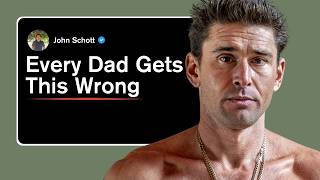
John Schott, a bodywork specialist and father of four, argues that fathers are largely ignored in wellness spaces. He created the Conscious Dad Protocol, a four-week program blending physical health, family nutrition, and identity work to help fathers build presence and purpose without toxic masculinity or retreat-style extremes.
Chapters
We have to take care of everybody else but the dad. If you have boys, as a man, you have to consider so many different aspects of raising conscious men that are not only just like healthy and robust, but also service-minded, have a purpose, have a deep passion for humanity and things like that to become a next-level person and next-level dad.
All right. So funny story about today's podcast guest. I met him after I did The Miami Triathlon, he was just a local connection, met me at the finish line and had literally cooked for me and my family and one of my buddies who did the race with me this luxurious kind of paleo meal that we sat down at the beach park in Miami and ate together. He was there with this whole beautiful family, a bunch of little kids running around, It was an incredible meal and then he proceeded to give me one of the most unique bodywork sessions I've ever gotten using a walker with tennis balls on it, I think, or call properly, to just use his body weight to go up and down my body for deep tissue massage. And, he later found himself on the podcast. However, it's been a solid, I'd say, 7 or 8 years since I last spoke to the great John Shot. John, welcome back, man.
Hey, Ben, man. It's great to see you. And yeah, I remember that day like if it was yesterday for sure. It was fun. It was fun.
I also remember it, but I'm sure that you using a walker, literally for those of you listening, like an old person's walker to go up and down my body, probably cemented it in my memory a little bit also.
Yeah, I figured that would do that. And by the way, that's what I get my older kids to use on me now these days because I don't have anybody like me around here to work on me the way I work on people. So, it's still a tool I use for sure. It's powerful.
I have been known to pay my sons $1 a minute to use the Therabody massage gun when I just don't have time to hire a massage therapist. I'm like, "Guys, 15 minutes. Want to make $15? Dad will lay down. Go to work." And, it works. The kids like it. It's just like doing construction on a Before we dive into why I really wanted to get you on the podcast today to talk about way more than just triathlons and bodywork, and that would be the topic of fatherhood, people are probably wondering what the heck with the walker, dude. Give people the overview of that.
Well, it's funny because usually when I say walker, the first thing that comes to mind is that I'm actually using the walker on the person digging into them. And then, that's not necessarily how it's used. The walker is placed in between somebody who's either on a Thai yoga mat or on the beach, in your case, that time that we were in South Beach, as a form of me holding myself up to use leverage to work with my feet. So what I'm doing is basically digging with my heels and the ball of my feet and so forth. And the walker's there so that I could use that leverage to not obviously topple over, and therefore I can manipulate my weight and use that as part of the bodywork technique as I'm digging in with my feet through calves, hamstrings, glutes, the whole nine.
Well, it works. I don't know if you remember when I was visiting my aunt down in Fort Lauderdale, you, I think, came over to her condominium complex and worked on me for a couple hours with the walker. It was incredible.
Yeah, we used two. We use a combination of the walker, and then I got you on the table to use more trigger point for, you know, almost like a, like a non-surgical surgery to use. Yeah, I use my hands and stuff, something That. So, it's fun either way.
Surgery without anesthesia. You guys, John has the big meaty muscular hands that everybody looks for in a massage therapist but has a love-hate relationship with. And, in our last podcast, I mean, we have so much to talk about when it comes to family and fatherhood today. We won't take a deep dive into this stuff, but John really got deep into light spectrum therapy, photobiomodulation, red light, water quality, minerals, frequencies of certain things we consume. So, he is a real icon in the space when it comes to kind of primal living. But, I mentioned, John, that you had a bunch of little kids running around when you were working on me in the park. You're a dad and you have been one for a while. So you pinged me about a month ago and showed me this new project that you've been working on. So catch me up to speed.
Okay. So at the time when we met back then, there was only 2 kids. Now there's 4. So we got 2 extra kids. And the reason I pinged you on it is because, I mean, I call it the Conscious Dad Protocol, and that's exactly what lights me up right now. You know, as a father, you see the trials, tribulations, and all the things that we handle as men who have to not only provide for your family but lead with example, by, you know, with a good quality example. If you have boys as a man, you have to, you know, consider so many different aspects of raising conscious men that are not only just like healthy and robust but also service-minded. Have a purpose, have a deep passion for humanity and things like that. So you can be, you know, an excellent, an excellent member of society. I also saw so much in the wellness, wellness sphere about neglect when it comes to fathers. Like nobody really addresses what the father goes through. And most men's programs are more either two kinds. One, that's the ultra very what I would say somewhat toxic masculinity type, go get the girls, you know, work out, get the money, the cars, this and that. And that has its own demographic and whatever, it is what it is. And then there's one where it's like you go off into retreats with other men, you're holding hands, you're doing all these different things, talking about your feelings and so forth and so on. And I think both have their place and all that, but none of them resonate with me.
Like if I had to choose, I lean a little bit more towards what you might describe as the toxic masculinity edge where I'd rather be off crawling under barbed wire and climbing mountains with a rucksack and jumping in cold lakes and doing hardcore shit with other dudes versus kumbaya by the campfire. But, you're right that the former seems to neglect a lot of the things that help a man to grow as a father, as a husband, as a leader, or even to grow spiritually. And so I interrupted you, but I think you were kind of presenting what the middle path might be.
Yeah, yeah. And one that hardly ever gets addressed. A lot of people, you know, one of the things that inspires me to do this is not only the fact that I have to hold myself accountable and I have to strive to be the best self I can be. I've built a lifestyle for myself that embodies health, wellness, robust living, and so forth. But there's also challenges challenges that come along the way when it comes to how do you handle situations where your kids are becoming teenagers? How do you handle situations where you have one teenager, the other one's 8 years old, and then how do they go out into a world where usually they don't necessarily face the same value system and realities of what it is to live within the— I don't want to say a bubble, but sort of a bubble that we've created as a family because of the values and high standards that we we aim to live to. And it's never perfect. There's always challenges. But I see that, you know, the dad often gets kind of like, okay, you're supposed to make the money and you're supposed to, you know, take care of your family and, you know, do everything hard and all that stuff. And we have to take care of everybody else but the dad. And, you know, I had my moments where, you know, I was— I remember a moment in Miami and I was driving in the middle of traffic, heavy traffic. I was just burning the candles at both ends, going crazy, doing everything I can, never being enough. And I saw my daughter's face without seeing my daughter, and she had this deep sadness about it. And I was like, where is this coming from? And I had to pull over because it was like one of those things where it just built and built and built and built and built and built. And it's like a pressure cooker, right? And it was going and going and going. And I had to pull over and I let the biggest, inside the car, the biggest primal scream that you could hear and just a full-on scream. And then followed by deep, deep tears. I was crying. I don't even know what the heck was happening. Now with all the bodywork and fascial work and all that stuff that I've studied and developed and all that stuff, I know exactly what was happening. But at that moment, I saw my daughter's face and I realized that this is not the way. And I'm building, I'm taking care, taking care, taking care, taking care. And there's no moment where you're either taking care of yourself or having some form of a healthy support system around everything that we take on as men, as fathers, as the head of families. And if somebody wants to be service to the community, which is very important to me as well.
I want to hear more about how you take care of your family in that respect as a, what you call a conscious dad. But kind of begs the question, like, what does a father do when they feel like that, when they feel the overwhelm and feel as though maybe they don't have support?
That's— I mean, I would say that's part of the reason why I'm, I'm bringing this to the forefront, because I, I don't know about you, you might have more friends than I do and support and things like that. You probably do because you have a vast network of the people you've develop throughout your career. But most men, I've realized, especially guys who are on my table too that I work on, don't find themselves that they don't really have them anywhere to turn to. And I liken this to the fact that, you know, in ancestral, you know, ancestral cultures and systems that did exist before modern times, there used to be a lineage of elders, and there used to be men who passed on some kind of either wisdom or passed on some kind of education, experiences, and so forth and so on down the line of other men and their sons and so forth. Now, I, I don't know about you, but my father didn't supply any of that. And as I talk to more of my clients and more people around my age and around the same age, there hasn't been any of that for a lot of us guys growing up where I had to learn how to drive from a friend of mine and shave on my own. And these are just minor examples, but they build up. So that system of like having that lineage handed down somewhat disappeared throughout the last decades or so. And my attempt is to try to help other people, other men gain that for themselves, but also offer a network of support for that because it is lacking, it is missing. And as a guy who's depleted and going through it, it's like they're running on poor sleep, processed food, no recovery. I mean, that's not a character flaw. That's like a physiological state. So part of that is taking care of yourself. So what does taking care of yourself look for most modern dads? Well, they're like a wife nagging. You have to eat better, you have to exercise, you have to do this while they're telling them other things. And there's no direction there. There's no blueprint there. There's confusion. There's maybe a website or something you can go into, but it doesn't really offer true and deep help when it comes to that. So I think those are things that are missing, and I'm trying to do my best. I'm not saying I'm the world's expert and have everything together and perfect and all that stuff because that doesn't exist. And that's fun. That's part of the journey, which lightens me up too because it makes me better and it tells me, oh, you got to come up with these guys and everybody else to become a next level person and next level dad.
Yeah, that resonates. My dad, very similar, probably similar to his dad, didn't really do a lot of conscious parenting in the way that you are describing. I also had to teach myself how to shave. I learned to drive from a driving instructor, fortunately. Learned a lot myself. I don't think my dad was a bad father, he just never had really conscious parenting modeled for him. And so, he never really applied that much to me. And then, I kind of got lucky in that through the podcast and interviewing guys like you, probably 3 or 4 times a year for the past 19 years, I've had some kind of father or mentor or person who specializes in rites of passage or community or personal growth, especially for males on my podcast. And, I've taken notes and applied and applied a lot of that into our family and the Greenfield Family Constitution, everything from our rites of passage to our morning comings and goings, to our evening family dinners, to how we challenge ourselves, to how we care for ourselves, to how I care for myself. And then, I think I also got a little lucky in that I've got a really good church in my local community that also provides a lot of support, a lot of opportunities for men, a lot of growth and camaraderie. And then, you combine that with a little bit of hunting here and there and the workouts and fitness community. But, I realize That kind of existence can be an anomaly for a lot of guys, but it doesn't have to be. So, I know that as a part of this program that you've put together online, you're kind of creating that community and also the education for guys over a few weeks to learn how to tackle all of this. But, I kind of want to throw some practical questions at you if you're game, just things that I've heard that guys struggle with or that I've struggled with myself. So, One would be the dad who's at work during the day and comes home and just feels depleted, tired, exhausted, knows that he needs to show up for his family when he walks in the front door but really feels as though he doesn't have a whole lot of energy left to give. What do you say to a guy like that?
It's about building a system around the lifestyle that you're living. So if you're in an office, you know, most of the day, what is it that depletes you? Right. A lot of times it's electromagnetic frequencies that are just draining your battery. So on that level, you know, I would say there's different ways to mitigate that, different ways to, to recharge your battery with very little input. So if you're taking a lunch break and I know you probably said this on your podcast, you've had many people, but it bears repeating. You're taking your lunch break, go outside, take it outside, get some sun, put your feet on the ground. And discharge some of that electromagnetic frequencies that are just building and building and building and depleting your battery. So, that's one way. How do you start the day? How do you start the day? Well, let's go back to the battery. The way I start my day is by taking what's called a Soleil solution. And these are all systems that you can put in place that you set it and forget them, but they're just a part of your lifestyle. So, this Soleil solution is basically a really high-quality sea salt, Icelandic salt that I make a concentrate out of. Which basically gobbles up a pristine form of water. And then I take 1 or 2 teaspoons of that and take a shot of water first thing in the morning. And that's putting electrolytes back in. It's charging your battery through the water. And that's one of the first ways you start your hydration process. And then as far as, as far as one of the, the main things that I do, speaking about the Walker and all that, it's, it's— I found the bodywork, deep, deep bodywork, myofascial release and things like that are essential to keep the human body limp, not only just, just supple and flexible and limber and strong, but it keeps it open to be able to have lymph, blood flow, oxygenation, and everything flow in the proper way. So if you're in an office, you have to figure out a way of modifying the chair, the height of your monitor. When you step out, can you take off your shoes and put— and, you know, take a call like you're doing, standing up and maybe pacing? Stepping on a lacrosse ball, things like that. So now your strategy is a bit different because if you, if you start your day that way and you calibrate your circadian rhythms with even a little bit of morning sun, you ground, you eat your lunch and get vitamin D in the middle of the day, you have the chair lined up so that your posture is, is better than it can be because you're sitting all day, and so forth and so on. By the time you're done, I think it's, it's a night and day, a different experience. So when you get— you leave, you come home, you're still charged, you're still hydrated, your body is still in a state where it could just go from office mode to, let's say, go do something like what I do sometimes with my kids and my wife is go play pickleball. So you're not going from 0 to 100 and you're getting that like snap when, you know, if you have a rope and you snap it, that's kind of what the body does in a way on the fascia level. So you want to prime your body to never have to have that rope go and snap or create some of those trigger points and things like that. So that's one of the ways that I would approach it. Obviously, there's more things. There's emotional elements to that. There's stress levels. Are you happy doing what you're doing and so forth and so on? And that's, I think, part of the discovery when it comes to more of the— not so much the lessons or the education, because a lot of this stuff is very easy to get and very easy to set up with somebody who's experienced and can lead you and shortcut the time period. But also just having that support again, you know, having a group of guys who are like-minded, who want to excel, want to lead and all this stuff. And now we're there for each other. We can be like, okay, what's going on with you? What's going on with you? Okay, how do we solve this? How do we not fix it but improve it? And what are the challenges and how can we overcome them?
Yeah, I think a lot of guys don't tie the biological to the psychological using some of the stuff that you've just described, right? Treating the body like a battery, charging it up by being outside, getting sunlight, water, minerals, et cetera, which seems like To some guys, it might just seem like woo-woo hippie, too primal, but it does add up big time. I think when you look at things, I guess to totally stereotype, guys more than girls struggle with like anger, impatience, even just acting without thinking in many cases, being very physically minded instead of taking an emotional or mental check first. A lot of that can arise from or biological patterns related to some of the stuff that you just described. I mean, for me personally, even though I have a home office, a lot of times I am on a road trip, I'm getting dropped up at the house by an Uber after having flown somewhere. I have been out running errands like a madman and getting home. One of my strategies is I pull into the driveway, I go around to the side of the garage, And, I have this one exercise I do where I bring both arms overhead and touch right knee, left elbow, left knee, right elbow. And, I'll do that 30 times and then shake where you take a deep breath in and just shake the whole body about 5 times. Usually, I'll drop and do 10 to 20 push-ups, kind of a few torso twists. And then, if I really feel as though I need positive self-talk. I realize this stuff sounds crazy like I'm going to a Tony Robbins conference before I walk in the front door, but I'll just say something like, "Ben, you got this," or "Alright, here we go," or "Time for a good time." And then, when I open the door, it's just that— And everything I just described literally is 2 to 3 minutes, night and day difference between opening the car door, walking to the front door, and opening the front door.
[Speaker:BEN GREENFIELD] Absolutely. I love it. I love it. The shaking part is big. Animals do that naturally. And then, there's the factor of pain, right? If you're in pain, you're not happy. So, it crosses over to your mood, it crosses over how you interact with other people, especially even your own kids and your own wife. So, all those elements that you just described and everything that I described about myofascial releases and having some of these minor technique, it doesn't really take a lot, make a big difference on how you feel. And that back pain, usually goes away when you know what you're doing. Knee pain, all these things. Now, and one thing that stood out with what you said right before you opened the door, it goes hand in hand with, with, with what I experience. I treat, I treat my family with love, with respect, with kindness. I like being around them. I like being around my kids and so forth. And that's part of what I've designed for our family. So I know 9 times out of 10, I would say 9, 9.5 times out of 10, I know that when I open that door from coming from a client, from coming from a long day, whatever it is, because I know that I'm going to be received by one of these kids with excitement, with screams, with "I missed you," with sometimes they jump on me. Even the ones that are big, they come running to the door, "Hey, he's home. We miss you." That changes your physiology just like that. It's not woo. It's nothing like, oh, you know, it's it's too much sensitivity and all that. It's just like touch. It's human. It's part of our design.
Yeah. And having the attitude that that is what's happening when you walk in the front door and that it's not just another era of extreme responsibility and tasks and chores to do. I think part of it is the attitude that you walk in with, which is why I think some of those physical practices, motion creates emotion before you walk in, can make a difference. How about, you know, like presence? You know how you have things on your mind from work, emails, Slack messages, something didn't go right, a fire that you still need to put out the next day, and then you're at home and you're with your family, maybe at dinner, maybe just chatting in the evening and you're kind of there but your mind is a million miles away. What do you say to a dad who struggles with that? Presence factor.
I mean, not to beat the dead horse with the whole physical aspect of it, but changing your physical aspect and your state leads you to become more in control of being present. Besides that, it's setting up systems. Setting up systems. Every person is different. Every person has a different style of the way they're living. It's hard for me to relate sometimes to a 9-to-5 job. I've never had one. I've been a solo entrepreneur. So it's hard for that, but there are systems in place that you can set for that. And there's rules. I mean, there's rules that you decide for yourself. So going back to a family meal, I mean, that's a part of the whole protocol that I'd like to introduce is like we're creating a food culture within the family. And what does that look like? It's not just healthy foods. Yes, of course, healthy foods is the part. How do you stock your kitchen? Do you have bone broth? Do you have grass-fed butter, do you have fruits, vegetables, high-quality proteins? That's the easy part, I think. But how do we build these meals and what is the culture around the building of these meals? And you have to set some rules for yourself and for your families like, hey, this is non-negotiable. We eat dinner at least minimum 2, 3, 4 times a week where everybody's there.
[Speaker:BEN_GREENFIELD] Quick interruption I'll throw in here. That does mean that— and I've just realized this through experience, As much as it would be nice for family dinners to be at the same time every night, we find that depending on the sports season, you just have to map it out. For us, we always have a morning family huddle and it lets us do that. So, at 7:00 a.m., we could be like, "Okay, it's your rugby, your lacrosse, mom's getting home at this time. How's everybody feel about like—" Usually, it's 7:00 for dinner, but a lot of times, we'll just be like, "All right, we're having a late dinner." 8:15, or we're eating on the road, 6:45. But, I think some people might have the perception that the perfect family has the perfect schedule day in, day out. But, as much as consistent meal times and consistent bed times are good for circadian rhythmicity, I think being together as a family trumps all of that.
[Speaker:BEN GREENFIELD] I 100% agree with that. I 100% agree with that. I can relate to a sports season. I got one that has basketball, the other one has volleyball, the other one has dance. I mean, remember, I have 4 kids now, so there's a lot of moving parts to this. And thankfully and grateful, I'm very grateful for my partner. My wife is extremely well organized. And the thing is, we share a deep value system. This was established early on. So she's aligned with the values that we both share as far as good nutrition, good water, circadian rhythms. I mean, all this stuff. Um, she's a mental health practitioner and she approaches her practice way different than most psychologists do. So things like that, I mean, that makes a big difference. And, and, you know, the program's not just for established dads. Part of what I wanted to also share is that if you're a young guy who's thinking of a family, a young guy who knows wants kids, there are certain things that you can do to set that up So that the, the, the trajectory of that when you get to that place is night and day a big difference. And that's part of it.
You mean like, like icing your balls in the sauna?
In the sauna? Yeah, you can, I guess.
I guess I'm talking more about a guy who's just thinking about like optimizing fertility. Yes, yes. But you mean the way that you build character leading into forming a family? What would be an example of that?
Well, not only that, but yes, definitely building character. And there's many layers to that. I'll give you an example from my life. Again, going back to fatherhood, I hardly had one. And I tell my sons all the time, listen, if I was to go back in time, what would I want from my father? It would be direction, example, and telling me, hey, when you're young, focus on establishing your financial system before you have kids. I would have loved somebody to guide me to that because I did not have that set up while I was growing, while I was in it. And then a few years later, boom, here comes the first kid and I'm not financially ready for that. So it becomes, it becomes a snowball, right? So if you're a young guy who's thinking of all these things, make sure your financials are, are, are set up, or you set yourself up for the biggest level of success for that. Not only that, but like, there's always— I wouldn't say there's a price to pay, but our choices have profound outcomes. I made a choice that I wanted to be there for my kids when they were little. So my businesses, I wouldn't say suffered, but were not as optimized as they could have been simply because I didn't want to miss anything. So we made that decision. So, it's been a slower climb towards that kind of level of success little by little by little, but I don't regret that because I didn't miss anything when these kids were tiny kids. And, those memories are priceless.
[Speaker:BEN GREENFIELD] You're speaking my language. I sold all of my equipment, got rid of all my personal training clients and gyms when my sons were born and literally moved into a tiny home office so that I could redesign lifestyle to do that. And, it was a little scary because I wasn't getting a paycheck. I wasn't reliant upon the rest of the gym team to get clients in the front door. I didn't have a personal trainer office. I literally had a blank screen on the computer when I woke up and that was where I was supposed to make my living. I also made the decision not to move to LA or Miami or New York City or another place where I could do the 6-plus-figure personal trainer thing because I wanted to be in a really safe and supportive environment for my family close to extended family. So, I built my business much more slowly than a lot of my peers and also put myself in an environment where there are fewer opportunities. But, typical day for me, I'm with my family every morning. I'm working really hard from 10:00 a.m. until about 2:00 p.m. I'm meditating or taking a quick nap. I'm back up, I'm working really hard from about 3:30 to 6:00 PM and then 90% of the time from 6:00 PM on and before 10:00 AM, I'm with my family and it's incredible and it means I've left some growth on the table. But even something like having a morning family huddle at 7:00 AM and an evening family dinner at 7:00 PM-ish creates bookends on my day where I can't be working at 7:00 AM and I can't be working at 7:00 PM. So, I have to be up early, done with some random tasks by 7:00 AM and then with the family and then same thing. I'm not in the office at 7:00, 7:15, 7:30 until I'm just done. I have to be done at 7:00 PM. And again, I think a lot of guys have yet to realize, but it's such a blessing to be able to realize The happiness and fulfillment that comes when you put family first, I personally as a man of faith would say family and faith first before business. And, it's so paradoxical because you're supposed to be the provider and send home the paycheck, but man, if you sacrifice family time to do that, it's a night and day difference.
[Speaker:BEN GREENFIELD] I agree. I agree and I relate 100% with that. My days tend to be somewhat similar to yours in, you know, in a way they're somewhat structured similar. I have a bit more variability than you do simply because of the nature. You know, I have the flexibility of setting up appointments with clients and in my appointments, thankfully, I'm extremely grateful that my clients are pretty awesome clients. They understand my situation and they, they they let me have a certain amount of flexibility when I see them and when I don't. And hey, can we move this around and this and that? Because all that moving around, it goes with putting my family first and then everything after that. And it works out. I mean, somehow it works out. It's not easy and there's a lot of friction. There's a lot of moving parts. But honestly, man, I wouldn't do it any other way. The fulfillment I get from all the things that I've that I've built for my family and for the people around me who I get to interact with is, like I said before, priceless. And that's one of the things I want to share with people. Whoever wants to find their way to that, I'm here. Hey, I want to provide support for that. I want this to be something that grows and grows and grows so that we together fulfill something that's missing in our society today. Which is a strong family nucleus. I mean, we see what the world's going through right now. We see a lot of the chaos. We see a lot of the challenges that we face. And a lot of them are two things, two things that you mentioned. One is having faith and connection to a higher power. And I respect people's beliefs and religions and all that stuff. We don't have to get into that. But that's one thing that drives us because we're soul people. And, and, and that extends into, okay, what's the role of a man as a leader of his family that trickles out into the world so that we don't get, you know, like my son say, scammed at every level? Because we're getting scammed by all these different things, right? Somebody who's strong, who's healthy, who has the ability to think for themselves— try scamming, try scamming somebody like that and see what happens, you know what I mean?
I want to kind of hear a little bit more about what people go through as they go through this 4-week Conscious Dad program. You kind of sent me the syllabus, so I had a little bit of a glance at it. But before that, I had one other question about your day. A lot of guys have the elephant in the room dad bod question, like how they can stay fit as a dad. Because a lot of my audience, they're coming out of the world of triathlon and Spartan racing and CrossFit and weightlifting, and they love to be fit and they're afraid once they have kids or as their kids start to grow or even as they devote themselves more to their family in the ways that we're describing, they're going to kind of lose their fitness and get winded climbing a flight of stairs. You know what?
I understand that. I understand that. And everything again comes back to systems and being able to adapt to the situation and the season you're in. For example, I don't work out as much as I did 5 years ago, 10 years ago in the way that I used to. I've adapted because number one, I have more kids. Number 2, I also have a lot of different elements in, in, in my lifestyle that make it so that I prioritize other things like my energy and also my, the buildup of, or lack of buildup of calcium and adhesions and all these different things. So I'm obviously, I have a bias and I'm a big proponent of bodywork and all that stuff that goes up the, the, the rung for me. As far as workout goes. That's a non-negotiable for me. Me and the lacrosse ball and the softball and all these things, they are like tied. And that's one thing that I invite men and anybody to kind of incorporate into it because it keeps you energized and it keeps you strong and all that. My situation is also a little bit different. I still work on people. I have a physically demanding part of my life that makes it so that I can not get away with because I enjoy movement, I enjoy, you know, doing energetic things in body, you know, and mobility drills and all this stuff.
You're like kneading human dough all day.
I'm kneading human dough all day, which also plays into isometrics, right? Yeah. You know, sometimes I got big guys or muscular people on the table, I'm like, you know what, I'm going to use this time just to get an isometric hold for myself if if it goes into it. You got a big hamstring and you're putting an elbow in there, or you're moving it while you're digging, you can hold your muscles while you're doing it. So I try to incorporate that in there. But between that and mobility, those are the two things that I use to keep myself fit. And then it's energy conservation, because if I'm driving all day and I'm taking these kids and I'm working on, let's say, 5 clients or 6 clients, which is kind of crazy to do, but I still do it because I like to keep my hands involved into what this fascia world is turning into, I go and I find my balance. I'm like, today's not a good day to work out. Today is a good day for recovery and more recovery than that. Today was a light day. Let's go. We can do a little bit harder than that. So you build systems based on the style, the lifestyle that you lead. I also play pickleball, like I mentioned before. People think, oh, pickleball is a joke. It's not a real sport. I don't know about that. Try it.
We got to play some— One of the best investments I made was converting a barn on our property into an indoor pickleball court and we get lots of family time out there. And then, I'd throw on there stacking. Ever since my sons were born, go on a walk, they're on your back and the walk is not just a walk, it's crawling, it's lunging, it's walking with them literally held overhead. Bike ride to the grocery store, we had a double bike. A trailer and could take groceries back and kids back while cycling. I obviously have this walking treadmill in my office now. I got a hand grip strengthener in the car. We basically just look at life through the lens of what if I couldn't go to the gym today, and then what are things that I can do to stay fit, especially with the kids? We did so many hikes and fitness walks with them. And, as a dad, I had to adopt, right? I would have kettlebells in my backpack. I have a weighted vest. I did a lot of bear crawling, a lot of pull-ups with one of them on my back from tree branches, lots of wrestling, lots of walking but walking loaded. And, if you start to just figure out ways throughout the day where you can get little movement snacks in, that really helps also. There's been super busy times in my life where— and this is just based on research. I have an Aerodyne that's in the room next to office, and I've had days that are just 12-hour jams. There's no way I'm going to go to the gym for an hour before or after because that's another hour away from family. So, for every hour, I will literally just slip in and do a 1 to 2-minute all-out sprint and that's it. But, by the time you've done 12 of those during the day, they add up. So, I think it's just accepting the fact that, yeah, maybe you're cushy, 50 to 70-minute protected gym time, isn't always going to be there, but you can still be pretty physically active throughout the entire day if you're creative about it. Yeah.
And, the other thing is food. I mean, I know you talk a lot about food on the show, but sometimes we can get a little complacent especially when kids are snacking and there's other things that you usually wouldn't eat because they're there. There's an element of setting yourself up so that you don't necessarily participate in that. Your metabolism is not the same as your 8-year-old, 9-year-old, 13-year-old's metabolism. They can get away with it and we could get away with it at that age, but it shifts. So, we have to learn how to shift with that as well.
[Speaker:BEN GREENFIELD] Yeah, I agree. And, there are ample opportunities as kids grow to eat 1,000 extra calories once you're finishing extra plates. And then, also kids, they're super active, they have high metabolisms, And sugar is something that I think is just around more and the kids sometimes can be a little bit more metabolically protected against. I'm not justifying having a bunch of sugar around your house, but my sons will have stack of pancakes for breakfast. I have a stack of pancakes for breakfast, I'm hypoglycemic by 10:00 a.m. and kind of foggy in the workday. I just know myself, but they're growing so fast, their metabolisms are so fast. I'm not going to tell them don't have pancakes for breakfast, but You have to check yourself when you walk past that sweet-smelling stack of pancakes in the kitchen and just understand, "Hey, I'm not a little kid. My metabolism has changed." And, you certainly don't want to tell your kids, "Hey, you just eat sugar when you're young," but there are metabolic differences with age that you have to be aware of as a father or a mother who's aging. So, hey, so this program, the Conscious Dad, again, you texted me probably 4 weeks and as soon as I looked at it, I was like, "Oh, dude, I got to get John on the podcast to talk about this." So walk me through what you've created.
I'm trying to make it so that it's not like a typical, oh, this is, you know, you go through X amount of days and pillars and this and that. I'm trying to make it so that this system is something you can build for yourself. It's realistic and it sticks. I put it as a 4-week program with just modules of the main things that I think move the needle for most men and most families. And it starts with week 1, which is called the Vital Dad, and it's reclaiming your physical edge. It's a lot with what we've been talking about. It's setting up systems so that everything in your lifestyle optimizes your body and optimizes your physiology. So you set up systems about circadian rhythms, grounding, some light body work. We go deeper into that on what's called module 3 or week 3, which is build movement and recovery. I go deep into recovery. That's my specialty. That's one of the things that I think moved the needle for a lot people. But it's a 4-week program. It's not meant to be this, this way and that's it. It's meant to be very flexible and based on context. I realized throughout the whole wellness experience that I've had throughout, through so many years, that a lot of times context gets this, just get thrown away. And, and people think this is the formula, you have to follow the formula. There's, you know, if you follow the formula the way exactly from A to Z, you're going to succeed and it applies to everybody. And as you know, that doesn't, that doesn't necessarily work. There is no formula for everybody. There's, there's, there's a baseline and there's a foundation. And that's basically what I'm presenting each week. Each week I'm presenting a piece of foundation that you can stack, like you said, into the lifestyle, into the lifestyle. So week one is more about the, the, the dad bod, the Vital Dad. It's getting systems in place so that you— it doesn't get away from you. And you're strong and you're able, and it's, it's mostly physical, but you see that there's energetics and all that stuff incorporated into that. The second week is called Family Nutrition Blueprint. So it's basically an ancestral type template but set for the modern times. You know, there we live in a technology-based society, it's not going to stop, and we need to be able to be fit or adapt to that. You know, fitness is not just about going to the gym, fitness is about your environment. Environment. And your environment looks very different in different ways. So that, and like I mentioned before, setting up a food culture for your own family where it's not just about the food, because putting healthy foods together, it's not that hard. Anybody can go to one of these ChatGPT things and create a meal plan for yourself based on gluten-free.
You can freaking take a picture of the inside of your refrigerator and get a meal plan. Without even going shopping. Yeah, exactly.
But the part that's missing there is the interaction with the food and your family. So I get kids involved in meal prep. I get, I get them cooking with me. We get to sit at the table, talk about what's happening, what the day was, what are our wins, what were our lows, things like that. Setting up that kind of food culture is a way of nourishing yourself and nourishing your family at the same time. And I think that's a very important part that gets missed by just eat healthy. Week 3 is more getting into movement and recovery. Movement looks different to different people. My template is things like MoveNat, functional fitness, things like that. Anything that gets the body moving with the fascia and the original design of the human body and also adapting to what you love to do. I'm not going to be here saying you don't do this because that's not functional and we have to adapt and we have to be conscious about things like that. I'm not a personal trainer, but I am a body worker. I'm a human body mechanic, and I know how to, like, these relationships with the slings and the recoil and all this stuff in the fascia works. And that's part of the thing that I would like to offer some of the members who want to participate in this. And then the last one, I think, is the most important part, is like identity and presence. The man your family organizes around. We forget that we're probably the biggest leverage that our family has because how we feel, how we show up, how we lead by example reflects all the way from your partner, your wife, to your kids and into society later on. And that awareness is gone. And I mean, it's extremely vital. And we start to rediscover that for ourselves and we discover it together and we start to set goals and things like that. And not in a like, this is a chore kind of a thing. This is exciting. This is what means a lot to me, and I want to start implementing that naturally. We get this— we have been getting through media this picture of men through sitcoms, through movies, TV shows, and stuff like that that have been bombarded into the psyche of us in general, but men as well, as men being weak, men being silly.
I know, Homer Simpson, Phil Dunphy, the Yeah, there's so many others. Peter from The Family Guy. Yeah, that, that, that's the, uh, the stereotypical expectation, right?
That, that, or you're just toxic masculine. Exactly. So there's those two extremes, right? And I'm like, no, there's way more than that. And there's way more ways that we can show up in a different, different state. And it all starts with awareness, and it all starts with this mindset, presence, leading. The family unit is what I think can change the direction of where our society goes in general. So this is, this is what I'm presenting. I'm not presenting myself as a guru. I'm not presenting myself as I know better than anybody. I'm presenting myself with a lot of experience, a lot of passion, and a lot of drive to actually truly help people, especially dads, because I am a dad in a mission to, to make things better. It's not really that hard.
So that's what it is. How many minutes per day? Because obviously, as we've already established, We're pretty busy.
Honestly, I made it so that it's not something else on a checklist. It's not something that, oh my God, I got to add this into my mix here. It's another added stress. There is a weekly call that I set up that ideally I would like everybody to join. It's just 1 hour a week where everybody's present. We present something based on the week module. Let's just call it that. And everybody participates and we start breaking everything down of what I'm presenting. But it's not so much meant to be a lecture, it's meant to be an open space for us to discover things related to the topic.
And if I can't make the call based on my schedule, am I getting a recording?
Yeah, absolutely. It's getting recorded. Part of the reason I designed it this way as well, you have me in your corner. I'm trying to make this one of my top priorities where I'm all in on this. I'm 100% dedicated to it. So where something feels stressful to you, like, "Oh man, I don't know how to do this in the kitchen," or, "I don't know how to incorporate my kids and all this stuff," you have access to me going, "Hey, how do we do this?" And then going back to technology, guess what? There's AI systems that help you save time. Whether it's with your business, whether it's with all kinds of things. I've also been diving into AI big time. I have some side businesses where I'm consulting with people to get back one of the things that is the most valuable things, right? Time. And it's impressive what we can do with that stuff. Oh, it's huge.
I mean, I know that AI seems like feeding through the fire hose right now, I have a 25-minute slot set per day where I have to start the timer and I'm not allowed to dick around. That's just pure AI learning and implementation time. 25 minutes doesn't sound like a lot, but that's a few hours a week. And I'm to the point now where at least every 3 days I'm setting up a new workflow. I just finished morning and evening dispatch. So, private Slack channel where I don't have to check anything else or be distracted by anything else. 5:45 AM, Tells me any emails in my inbox, any project in Asana, any Slack messages or threads that I need to check. Not for me to dive into that stuff right away, but it allows me to know what's on my plate for the day. And then same thing, 8:45 PM, same Slack channel, I get a debrief of everything that happened today, any calls to action, any last-minute things I need to take care of, fires I need to put out at the end of the day. And so rather than me opening whatever, 4 different programs Asana, Slack, email. What else is on there? Oh, Google Calendar. It's basically doing that all for me. It took 15 minutes to set up and I'm using Claude to work for that. So yeah, I mean things like that just for me, I do very, very well whether I'm writing a book or learning something new, allotting certain number of minutes of protective deep work to work on that and then just basically consistency, like every day except usually Sundays, which is kind of my Sabbath. I'm working through that stuff. So, I'm just giving that as an example to people listening in. And then, you're doing this as cohorts, right? You're doing for 4 weeks with a certain number of guys and then closing it and then opening it up again?
And then, after that, I'm still figuring out a way where there's a— I don't want to call it a subscription, but it's almost like a membership or something along those lines where they go through the 4 weeks, we set up systems, we do the whole program, and then there's still support after that. And that's one of the things that I definitely want to put out there because that support after that makes, I think, makes a big difference. This is, you know, in 4 weeks you can do so much. And again, you don't want it to be stressful. You don't want it to be like, shoot, I got 4 weeks to turn my life around. No, no, no. You know, it's not like that. It's not. This is setting up the foundation. Planting seeds and all that. And for me, I want to be available as much as possible.
Well, it's given people plenty of ammo. I know we've got a cohort. I think you structured it so there's an opportunity for people who are listening in to join one of the upcoming cohorts after this podcast comes out. So, the link I have for the shownotes is BenGreenfieldLife.com/DadProtocol. So, I'll link to the dates that this opens up. If you're listening right now in 2026, I think May is going to be coming up as the first cohort, right?
I think, yeah, May will be the first one. Yeah.
Yeah. Okay. And, if you're listening to this after May, just go to BenGreenfieldLife.com/DadProtocol and you can see whatever dates might be coming up next. I'll also link to my previous podcast with John, which was super fun. That was fun. And, John, I got to connect with you the next time I'm I'm down in Florida, man, and, uh, get walked on.
That I would love to. Maybe we can get one of my kids to walk on you while I walk on you. That's double. Let's go, let's go.
Four hands, four feet. Thanks for listening, John. Thanks for doing this, man. You're an inspiration. So you're doing a great job as a father and as a husband, so keep up the great work, man.
I appreciate it, man, and thank you for having me.
Do you want free access to comprehensive show notes, my weekly round roundup newsletter, cutting-edge research and articles, top recommendations from me for everything that you need to hack your life, and a whole lot more, check out BenGreenfieldLife.com. It's all there, BenGreenfieldLife.com. See you over there. Most of you who listen don't subscribe, like, or rate this show. If you're one of those people who do, then huge thank you. But here's why it's important to subscribe, like, and/or rate this show. If you do that, that means we get more eyeballs, we get higher rankings, and the bigger the Ben Greenfield Life show gets, the bigger and better the guests get and the better the content I'm able to deliver to you. So, hit subscribe, leave a ranking, leave a review if you got a little extra time. It means way more than you might think. Thank you so much.
More from Ben




The Solution to Aging Might Be Closer Than Anyone Realizes - With Ben Goertzel



