Solving The Clutter & Confusion In The Health & Biohacking World (And A HUGE Announcement)
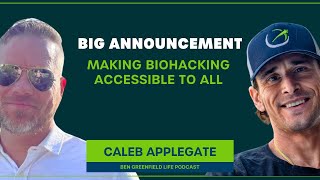
Ben Greenfield and Caleb Applegate announce the Life Network, a $16.99/month membership platform launching soon to cut through health information overload. It offers ad-free shows, expert access, workouts, and community challenges focused on mind, body, spirit, and practical biohacking without the noise.
Questions this video answers
$16.99/month
Golifenetwork.com
Mind, body, spirit, and community.
Chapters
What do you think is the biggest barrier for people who are tuning into podcasts like this?
Information complete overload.
Guilty as charged.
So how do you think about the information overload solution then?
I think this is like a really good lead in to talk about the advent of what you and I have been kind of concocting, creating, building, crafting in the background to solve these types of problems for everyday folks like us.
Yeah, yeah, I want to talk about that for sure, but I don't want to leave behind.
I'm super excited about today's show because I get to interview my best friend. And even though you might be wondering why the heck I'd just be interviewing one of my pals on the podcast, it goes way beyond that. So if you listen to my show, if you read my articles on my website, follow me on social media, or digest anything from Ben Greenfield Life. The the man at the helm of the amazing team working at Ben Greenfield Life and the president of the company is my guest on today's show, Caleb Applegate. Caleb, he'll share with you his. His deep history and an impressive career leading up to coming up to Ben Greenfield Life. But I thought, gosh, there's so much that you guys get that is produced in the secret Batman Labs up here in the Inland Northwest that I got to get the man behind the scenes on the show because he's a wealth of knowledge, not just in business, but he's also tuned into the health, the biohacking, the fitness world and beyond. And you're actually going to start seeing Caleb more and more places, too. For example, he'll be presenting at the Health Optimization Summit coming up in London. Although this podcast might be coming out after that show, you're going to see him a lot more popping up with some new projects that we have going at Ben Greenfield Life as well. So I thought, what the heck, Caleb, I might as well have you on the show. What do you think, Ben?
Thanks for having me, man. Pleasure to be here.
Yeah. And you have a. You have a pretty funny story that you tell. I think you tell it better than me about how we actually.
Connected up here in Spokane. It involves me dirty and barefoot.
It does involve you dirty and barefoot dialed in, zoned in on one of your. Your walking calls outside. But yeah, you're right, it's funny. We were, we were. This was right during the middle or actually at the beginning of COVID We were looking for land. We have three kids. My wife and I decided, hey, this is a, this is a good time to go get on a piece of property. And so we actually were able to get something, turns out, what, 10 minutes from murals Place, North Spokane. And literally the day that we're moving, we're driving down the road, and I see this guy, barefoot, shirtless, walking down the road, like, in the zone as you're walking. And I'm like, wait a minute, I know this guy. And so turns out I didn't have your number anymore because we had met years before through your mom, actually, and I had to message you on Facebook, dude, I think we just moved 10 minutes from where you're at. We should get together. And that. That kind of began the next season of our families getting together quite often.
Yeah. And at the time, you weren't, you know, at least to my recollection, you were, like, super tuned in to the. To the health and biohacking world at that point.
No, that's. That may be an understatement. No, in fact, I would. I would ping you all the time, if you recall, hey, what do you think about this? Or, hey, I'm feeling a certain way. And you would always send me, because you've. You've probably written about literally everything. I mean, you. You have the Bible with Boundless. Right. And so it's easy for you to just like, hey, check out this article, or, I just did this podcast, or you'd really get a lot of information extracted out of this new thing we just put out. And so it was like you were the information repository, and I was like, holy smokes, this guy is dialed in. I have to just have to keep asking questions. So I was probably that. At least at first, that annoying guy that kept pinging you.
Yeah, it kind of went both ways, though, because you were like, the expert on business building the metaverse, information technology, crypto, all these things that I didn't know much about. I think that would actually be interesting for people. Before we talk about the direction that you've taken with health and fitness and what your routines and rituals are looking like now, where'd you actually come from before that?
Right. Yeah, no, it's a great question. In fact, a pastor friend of ours likes to say, God draws straight with crooked lines. And I'm definitely that crooked line.
Story. And so, yeah, years ago, I started in the entertainment space. I was blessed enough to have my first film Produced by Leonardo DiCaprio's company, Appian Way. And so that was kind of the first.
Push into the film industry, into the entertainment space. And it was an amazing experience. Once in a lifetime opportunity. I was able to take my family. But we made the decision at that point that we didn't want to live in LA and raise our kids in la. And so we, we landed in Moscow, Idaho where you know, I would eventually meet you and other really great friends and we fell in love with the community and we knew because we were making that choice, the entertainment industry might not be as accessible. I would have to travel a lot. And so we looked at alternative opportunities on more of a local level. And it was through that that I opened a restaurant in Moscow, was able to experiment with a few startups, but ultimately started offering consulting services. And it wasn't that I put myself out there is that people would, would ask me advice on things or hey, would you be willing to step in and help with this particular project? And one of those projects, as it turns out, was a Minecraft gaming server that needed some business development executive help. And so I was able to kind of the the TLDR version of that was I'm not a gamer at all, but I did love business and so was able to make the connection with Mark Cuban and the Dallas Mavericks and envision and dream the American Airlines center arena inside of Minecraft. And so ultimately this got the attention of Microsoft and Mojang. All things considered, long story short, our server Mineplex was one of three that helped pioneer the Minecraft marketplace that we know today. And we were super early but helped kind of build that all out. So it was an amazing experience. And and then you mentioned Metaverse. This is where things get even more just funny and odd. It was through the gaming ecosystem. We were using.
This gaming community.
Connector, it's called Enjin and this was kind of pre NFTs pre Enjin coin ICO.
We were using the engine client and so through that process of getting to know the team over there, we started working together and so they brought me on as an advisor and then after a good amount of time of helping them kind of see things a bit different, they asked if I would come on board as a COO. So I ran Engine which was then a top 50 blockchain company for four years, had a blast, have huge respect for those guys. Was able to co found a token over there called EFI on Polkadot. And so yeah, it was just all things blockchain taking what I've learned from gamification but really digging into the software stack of things and understanding how information moves consequently, or I should say incidentally, Enjin pioneered the whole concept of a non fungible token. This was early days, 2017 right alongside CryptoPunks. Witek Radomsky, the CTO and co founder of Enjin, pioneered ERC 1155 standard and had envisioned this whole, what we coined a multiverse where a game could mint items, melt them and remint them in another game. In fact, it was a non fungible token that actually had value in an ecosystem of interoperability. So that's the whole metaverse web3nft.
Intersection.
So my very rudimentary understanding of that would be like the ninja sort of power that I acquired in one game could actually have some type of value and be traded across a different platform or something like that.
Yep, Absolutely.
Absolutely.
And VTech had such an incredible pioneering vision for this. I mean the stuff that engine did and has been doing still is just incredible cutting edge. Again, I have nothing but huge respect for those guys.
Well, you've come a long way baby, because now you and I have conversations about the EMF and blue light levels of VR headsets and how they could be heating and destroying tissue in the brain and so you've pivoted a little bit, man.
I have pivoted a little bit. Look, so Blockchain has been a blast. I still kind of dabble and I sit on a board of a company called Passage that previously I was the CEO of and another just incredible team. I love it. I think the principles behind blockchain governance, participation, bringing community together, an infinite ledger of transaction, history, immutability, trustless. I think so. So many principles that are embedded in the DNA of Blockchain. I, I just naturally gravitate towards. It's easy for me to talk about what is money, who, who assigns it its value. The advent of Bitcoin introduced all sorts of, I think, very critical, very compelling narratives and we should be asking these questions. However.
You and I got together and started just talking about the world of health and wellness and this was really my own journey of having some health issues and admittedly being a little bit, just a little bit overweight.
But you had an excuse for the sector that you were working in. I mean, it's kind of funny because I not to distract us too much, but river and Taran, my sons and I are headed over to America's biggest gaming convention called Gen Con because my sons have started this card game and board game business and we were watching the instructional video for registration and kind of like looking at videos of previous year's conferences and I warned them, I'm like, guys, this is not going to be a fitness convention, right? And not the Stereotype. I'm going to offend a lot of gamers, I'm sure, but I told them you guys are probably going to see, you know, a lot of giant monster energy drinks, neck beards, piercings, goth makeup, giant oversized T shirts and people playing Dungeons and Dragons and catan until like 3am under blue lights. Like, just be prepared that this, this is the sector that we're venturing into.
Yeah, no, it's true, it's true.
I think the.
Background.
Back end principles of gaming, usability, engineering, what draws a person to use a product, that type of conversation and kind of deep dive diligence is what I gravitate towards. I want to know what makes people tick, what makes what they like, what they need, what's, what's part of their everyday rhythm, what makes them better.
Now, now, since I brought you on to Ben Greenfield life, I'm just curious, what has changed? I realize it's a loaded question, but as far as like your routine, what you've learned, what big changes that you've made because you've transformed your body. I know that you're doing a lot now. As far as you know your own routine, what have been the biggest game changers for you in your own routine, things that you've picked up here?
Well, you've had two guests on your podcast that made a huge impact on me. Number one, Dallas Jenkins, who is a friend of yours, also a friend of mine. Dallas was the original individual that got me into the film industry and helped me out, introduced me to my entertainment attorney. And this is way back. This is like 2000, I want to say 2007 maybe by, by the way.
I'll link a link to that in the shownotes. BenGreenfieldLife.com Applegate is where the show notes are. BenGreenfieldLife.comApplegate Caleb's last name but Dallas Jenkins. And I'll put that interview in there. He, he directed the Chosen, which a lot of people are familiar with.
Yep, he did. He's had an incredible journey. But, but he gave some very practical everyday habits and disciplines that, that really spoke to me, you know, when I listened to that podcast and I hadn't connected with Dallas since he had done the Chosen, it's been a while, but was like, hey, I can do this. This isn't actually that difficult. I can do this. Another gentleman you had on your podcast was Michael Cherno, Creatures of habit and his discipline stack. I had to, I had to relisten to that over and over. I'm like, this Guy has his. Together. I mean, he. He is so dialed. And that I would say between those two, and then just being around you and. And just, you know, I don't want to be like, the guy that looks like you just ate a bag of Doritos. I want. I want to actually, like, try. Try to be better. And being around you, listening to a few of some of the guests that you've had on, I'm like, look, I've.
I've.
I've got to get serious about this. On top of that, I have a wife who's so. I'm 6 3, she's 5 3, and she's a personal trainer and loves homeopathy. Like, she has been the champion in our family. Really pressing for better health, better food, better environment, just all the way around, better ecosystem. And I'm the guy that's been like, you know, I have to work, I have to build, I have to create. I have to, you know, make a better life for my family. All the while, my own body is breaking down. And so I finally started listening to her who says, look at these things and listen to what Ben is saying, like, do these things. So I think it's been an amalgam of a bunch of different variables that have been very influential into my current routine.
Yeah, I get that sometimes. The spouse who says, you can't believe how much money you've cost me after my significant other recommended the insert podcast here, the Red Light Podcast, the Toxic Mattress podcast, et cetera. So my apologies to folks who. Who have had their spouse introduce them to my podcast, but it's kind of funny. Caleb, a couple of things came up for me as you were talking about those podcasts that were a couple of your favorites, the Dallas Jenkins Show. I also learned a ton from that. One of the big takeaways. I don't know if you tried this. He. He had debilitating low back pain. And one of the recommendations that he gave on there, amongst a lot of really great recommendations for low back pain, was to foam roll your butt. Foam roll your butt. And I started doing that more intensively, like two or three times a week. And it is incredible how if you kind of sit on a foam roller, you kind of slap one leg on top of the other leg, and you start at the base of your knee and just shimmy your body all the way up to your butt, get up to your butt, weave back and forth, dig into the tissue, then go back down to the knee. And you do that as about like 10 passes or so per Side and then I'll even lay myself on top of the, the foam roller and kind of like bring. It's difficult to describe on audio, but I'm going to try it. I'll, I'll loop one leg over the other leg and kind of like crack the back on one side and then loop over the other leg and crack the back on the other side. That, that's an incredible move. Did you try any of the, the butt foam rolling after listening to that one?
Yeah, no. Look, I didn't just try it. I've been doing it every single day since then. Um, that is the single biggest game changer because a lot like Dallas, I too have lower back pain or did, um, so I, I, I didn't just get a roller, though. I actually got one of those theragun rollers where you can like, create vibration. Oh, dude. Game changer.
Love it.
I do it every morning. So my, my morning stack is a little bit of a blend of what Michael Cherno talked about and Dallas talked about. So I start with rolling. So I'll do that a good, you know, 10, 15 minutes. And I do butt, legs, feet, even. Then I'll jump into a workout, usually 30 to 45 minutes. Oftentimes it's walking or running, or I do a lot of, like, peloton biking, which is really fun. And then I'll jump into the sauna, do that for 25 to 30 minutes, hit the cold plunge. Thanks to our friends at Marozco. I love their tub.
And then have some quiet meditative time, prayer time, and jump into my workday. So even during the workouts, though, I'll be, I'm kind of addicted to work. I love what I do.
Yeah, I want to dig into your ritual a little bit more. But you also mentioned Michael Chernow, and apparently he went and flew down in high with Lance Armstrong in Texas recently. I just found out about this, and Lance actually invested in, in that company that Michael and I talked about on the show, the Creatures of Habit Meal. One these little done for you oatmeal packets. And I got some of those after the interview with him. What I do is I soak them overnight in half apple cider vinegar and half water. And these are, these are like nostalgic flavors that you might remember from Quaker Oatmeal. If you're listening in like blueberry, and they got like a maple. It's fantastic. They got chocolate, they got a vanilla apple cinnamon, which is definitely nostalgic to the Quaker piece. You soak it overnight. These are glyphosate free oats. And it makes like this kind of like mushy pudding that I can use as a smoothie filler that I can use for dessert. Like a lot of times my dessert is yogurt with dark chocolate and berries. But sometimes I put a spoonful of that meal one in there. And for travel, it's incredible because you got these packets, you mix them up, you know, hotel room, you don't want to go down to the nasty continental breakfast. I'll even, I don't know if I told you this, Caleb. I'll surf to the airport. I go up to Starbucks when I want to have a meal in the airport because I always have a couple of meal one packets in my bag. And I asked them what, what I say so I can get free hot water, you know, because some of these baskets will charge you like 75 cents for hot water. As I say, it's not technically a lie, but I say I have oatmeal, but I forgot to get hot water. Do you have hot water in a spoon that you can give me in a cup? You know, I'm sure they think I probably got the oatmeal at Starbucks and we're gonna have to get hot water at Starbucks. But anyways, they graciously give me the hot water, the spoon, I mix up the oatmeal. And this is like, you know, usually as I'm walking to my gate, by the time I get to my gate, it's soaked in that hot water. It's nice, it's mushy, and I can have a meal if I'm traveling. And even though I often fast when I travel, some of these longer bouts, you know, if I've worked out in the morning, whatever, I want something to, something to crush that's healthy. So the, the meal one, I'm glad you brought it up because that, that's been a winner and it's, it's stuck for me. I got a whole pantry full of those things.
Yeah, same that's. I have it five days a week. Typically we do something else on the weekends because we're together as a family, but during the week, again, game changer, super practical in a packet. And I'm, I'm moving so quick on, you know, just in my routine in the mornings because I've got so much on my plate for the day. So I've got to be ultra disciplined, like down to the minute. So it's really nice to just take that packet, dump it in. I take some walnut halves, throw it in. I love putting the kion colostrum into that. I mean, it. It just makes it milky and smooth and. So good. Put some water in, maybe cut up a banana, and a pinch of Colima salt. I don't know if you've done that. So good, man. So good.
Yeah, it's incredible. This is turning into a giant commercial for creatures of habit. But one more tip is when you soak it overnight, even though it's got, like, pumpkin seeds and chia seeds got all this stuff in it, you put a few scoopfuls of chia seeds in there, and it turns into, like, this thick, gelatinous pudding. So you can make it even thicker with the addition of chia seeds before you do the overnight soak. So you gotta try that one if you haven't yet.
As it turns out, man, you and I are foodies. We like to eat good food.
I know, I know. How. How has your diet actually changed since you started kind of like soaking up a lot more from Ben Greenfield life and working behind the scenes, you know, chatting with, you know, chatting with, you know, partners like, you know, creatures of habit or whatever else, Getting your hands on a lot of this stuff. I'm just curious how it's evolved because. Well, I mean, I'll open the kimono on this a little bit. You know, the. The town that you and I kind of originate from and met in is a town that has a very kind of like. It's like a large reformed Protestant community, the church that you and I attended, but it's very much like giant Sabbath feasts and cigar and whiskey. And, you know, it's not necessarily focused that much on unhealthy diets per se. I was a part of that culture. I know. I know you were. But I'm just curious how it's changed from kind of like that general mentality to being a little bit more aware of. Of your nutrients in your diet.
Yeah, well, look, you are right. The. The. The community and culture that we've been a part of is. Is rich and beautiful and glorious and, you know, just eat. Eat the fat, right? Really lean in and enjoy God's bounty. I think for me, personally, because every body type is different. Being more aware of what I'm putting into my body. In other words, you know, I have a propensity to, like, sugar and sweets. It's, you know, cheesecake is probably one of the. The biggest things that I've at least recently been having to. To navigate, especially.
Especially, by the way, at my mom's coffee shop, that you alluded to. They 100. Pretty hefty cheesecake there.
Yeah, 100%. And so I just. It's. It's discipline, right? I don't say no. I say sometimes. And I try to work for it.
1.
One of the tips that you gave me, and this has been also a game changer, I was actually sharing this with some folks at a new gym that I joined yesterday. And that is like, going to bed hungry, right? It's okay to be hungry. Right before, the opposite of that was I'm eating so much that I'm constantly full. I feel bloated, I feel heavy, I feel thick. Going on a walk after dinner, and I'm just like, this is miserable. The opposite of that is eat just enough portion out what you need. Really? What is it that you need? That's the question that I've been asking myself. And the feeling of being satisfied and then turning into that hungry state right before bed, it feels good at first. You're like, man, I want to go snack or something. But if you hold the line, you feel so much better. And your mind is clearer, too.
Yeah, there's a certain character developing, stoic, shut up. The inner bitch type of mentality that's involved with going to bed hungry. But it's kind of funny because before you moved down to Moscow, you and I used to have a lot of these conversations over dinner. And I haven't even filled you in on this yet, but now I think you can have your cake and eat it, too. So I'll tell you why. You know our mutual friend Martin, who you're doing the Shark Tank panel with at the health optimization summit? Martin. Tobias.
Love Martin.
Yep. Okay. I don't remember if you were at this dinner. We were down at Lodge Pole in Moscow. Let me know if this. If this jogs your memory or if you weren't at this dinner. And Martin, who's also a foodie, he comes in, and I'd already ordered up, like, five killer appetizers. It was like pork belly and deviled eggs and these beautiful salads. And, you know, they're. They're wonderful, you know, fresh baked, warm bread with the butter there they put all sorts of herbs into. And Martin ponies up. He sits down, and I'm watching him during the whole dinner. He has, like, a couple of glasses of water and half of one of the deviled eggs, and he's like, I'm just not hungry. He's like, I can't eat. And it turns out that he had started onto a zempic the GLP1 agonist to try it out. Hopefully I'm not outing Martin on this show, so my apologies, Martin. But anyway, we were there.
I remember this.
Yeah, yeah, yeah, okay, you were there. They couldn't eat, he was nauseous. And that was when I first started thinking about GLP1. Now, long story short is since then I've written a lot of articles and done podcasts and some of the dangers of long term use of that peptide. But the mechanism of action is to increase GLP1, a GLP1 agonist as the name implies, and that makes you feel full. Well, you know, since then I've been looking at other agents that could act similarly that give you the same release of satiety inducing hormones. There's three of them, namely GLP1 called CCK1 called PYY. Turns out that you can consume certain compounds that make you feel full and satiated, meaning you can eat less for say dinner or lunch. If that's your vice, go to bed, feel satisfied, but also.
You'Ve eaten less. And two of the most powerful things I've found, besides I used to use ketones for this for a long time, the drinkable ketone esters. And now the two things are you can increase GLP1 production and appetite, regulating hormones via your microbiome. This company called Pendulum, they've been a sponsor of the podcast in the past. They have a, a probiotics called the GLP1 probiotic. And again, I don't remember if I've told you about these two, Caleb, but you take it when you wake up in the morning and it stabilizes your appetite throughout the day. It's Akkermansia albutericum and Lactobacillus probiotic blended together. So that's one strategy, but then the second one is even more powerful. So if you can trigger the bitter receptors in your small intestine, then you don't get hungry. The problem is the amount of bitterness that it takes to do that is highly unpalatable. Like a lot of people will say, oh, use apple cider vinegar or the peels of certain citrus fruits, or bitter melon extract or whatever. None of those are bitter enough to make you full. They're bitter enough to decrease your blood glucose response to a meal, but not to make you full. So there is an extract of hops, the same stuff that you would use to make beer. And this company in New Zealand, they figured out how to extract it. It's a, it's a.
Compound called amosarate and they put the capsule in a little lipid medium. You swallow it, it goes through your stomach intact. It opens up in your small intestine, hits all the bitter receptors without you having to taste it on your tongue because you'd literally, like, puke. It's so bitter. And your fullness, if you do this, say, like, couple of capsules an hour before lunch, couple capsules an hour before dinner. Again, you don't. It's almost dangerous because you want to enjoy your meal and you still enjoy it a little bit, but you don't think about food. You go to bed super full. It's almost, you know, you got to warn people, hey, be careful not to lose too much weight, lose too much muscle, et cetera. But those two are incredible. If, you know, if you, like me, are a foodie and just go to bed thinking about food, you got to try at least one or both of those at some point.
Good to know. Yeah. There are so many, I think, different things to try here. And for. For me, right now, I'm just trying to develop mental clarity and discipline is. I think it starts there If. If I can change my mindset on things. To me, that's. That's the biggest thing. And I have found personally that that's, like, the biggest obstacle out of the gate to conquer.
Yeah, it's. You know, this is something I wanted to ask you about, because I know you've thought about this a lot, coming from your background in gamification, in even community building and accountability. What do you think is the biggest barrier? You know, people who are listening in and they've already heard about, you know, foam rolling your butt and soaking oatmeal and chia seeds and, you know, taking a GLP1 agonist mimicking device and exogenous ketones and the, you know, the Moralesco cold plunge. What do you think is the biggest barrier for people who are tuning into podcasts like this and just getting dizzy, in terms of the advice and how to implement?
Yeah, it's a great question, and I would say, and this is just me speaking personally for myself and my family. It's information overload. Like, where do you begin? What is it? Okay, this is the information. Why should I care? Where does it intersect with my personal values and how I want to orient my life and how. And the. How. I think most people get tripped up because there's a lot of information out there. There's a lot of influencers and brands and products and services, and where do you even begin? Right. It is. It's just Information complete overload.
Guilty as charged.
So, so how, how do you think about the information overload solution then?
Yeah, I mean this, this is just again, personally anecdotal. We have been walking this journey with the Greenfield family and with a few other key, key folks like our good friend Dr. Leland Stillman, who's been tremendous in my family's life. And through this process we recognize that A, we can do better, B, there's a good chunk of information, C, how do you activate it? And I think for our family, the how has been a bit nebulous at times. It isn't always solvable by just changing up a supplement or eating at different times or eating different portions. There are so many different variables. And so I think this is, this is like a really good lead in to talk about the adventure of what you and I have been kind of concocting, creating, building, crafting in the background to solve these types of problems for everyday folks like us.
Yeah, yeah, I want to talk about that for sure. But I don't want to leave behind one thing. You mentioned Dr. Stillman, he's been on the show before. He's a genius when it comes to the type of testing that he does and then the replenishment program that you start on afterwards. What'd you learn from him? Or was there anything you found out about your body that you changed after working with Leland?
Yeah, one, one thing that I really respect about Dr. Stillman is just that he's, he's calm, he's collected and he doesn't panic. Right. You might have an issue or you might think you're dying. He's like, no, you're not. And here's what we need to do. And I like that.
Calm down.
Disciplined, sober minded leadership. So it isn't just applying medical prowess or information that he has, it's also his guidance through the process. And so I, I think what, what he and I have talked about over the past several years, a couple of years, is just how to make the process easier for, for everyday folks. What do I mean by that?
Everyone is bio, custom, individual. You know, you might see a great advertisement for the latest supplement package. It doesn't mean that you need that though. And I think that's something I've come to learn. Some, some products look incredibly sexy and I want to try this and, and it's awesome.
It does mean you need it. If your neighbor or your favorite biohacker or transhumanist has taken it to live to 160, it must, must be right.
Exactly But I think what, what working with Dr. Stillman has shown me is that that isn't always the case. Everybody's different, every body is different. And so using that as your starting point and going, what's your body telling you? What data can we extract from say a hair tissue mineral analysis? You know what, what you might have heavy metals that creating toxicity in your body. You might be deficient. You know, we, you and I, Ben, we live in the Pacific Northwest, which means we might not get as much vitamin D as someone that lives down in Arizona.
Right.
So there's a, there, there are variables and factors that play into this. And so as this bio custom.
Outlook kind of takes shape, it's important to know that it's not one size fits all. And that's, that's actually, that's been a game changer in our family because we, we would just go with the typical supplements protocol or typical, hey, this influencer says we need this. Turns out our chemistry might not actually need that.
The htma, the hair tissue mineral analysis that you mentioned, I actually really like that. It's a perfect example what you're talking about, right? It's like a 100, maybe a little bit more dollar test. You get it. And a lot of people are like, well it only tells me minerals and toxins. It doesn't tell me everything else. But everything from your copper to your zinc ratios to your sodium levels, potassium levels, indicators of sympathetic and parasympathetic nervous system balance. There is a ton that you can glean from that one test. I actually took Leland's entire HTMA course to learn how to interpret it better and just learned that, oh my gosh, this is more than just like a simple hair test for metals and toxins and minerals. Like it goes pretty deep and it is kind of cool how even though you can do, you know, like I've interviewed the folks from Wild Health, the fancy, you know, multi thousand dollar executive panel and the full body MRIs and the full genome analysis and the, you know, the metabolomics report for fatty acids and amino acids and micronutrients and all these things that you can do that, you know, we, and Certainly people like Dr. Stillman Walk people through the HTML is a perfect example of like, of taking the, the seemingly complex world of self quantification and at least trying to introduce some amount of simplicity to it, you know, 100%.
I mean it gives you a baseline to build off of.
Right?
Data is important. It's really important. And I would say that data without overload is A great starting point. Right? Just show me the basics that explain how I'm feeling, maybe why I'm feeling a certain way so that we can quickly get into the how. How do we start to solve for this?
Yeah, I mean, I know that you, it's kind of interesting because you're, you're, you're unique. I'm going to call you an avatar, Caleb, even though you're not blue. Your unique avatar in that, you know, I met you when you were really wanting to be healthier. You're super interested in a lot of the biohacks that I was talking about and for a lot of people, you know, it, it is not to kick that live to 160 horse to death, but it's not about, you know, bragging rights for living the longest time or owning, you know, the half million dollars worth of biohacks or whatever. It's more about having more productivity being unleashed to create more wealth, having time available and left over after your fitness and your self preservation efforts for family and hobbies and career and social life, etc. And so you know what? I would love to hear how you kind of, you know, in, in your situation, think about or thought about or began to tackle this issue that you kind of ran into. At least I think this is the way you, you kind of explained to me, like just knowing me, you know, as my friend, you get bombarded with a lot of information. Then once you came on at Ben Greenfield, life is just more information through the fire hose of health. And you know, you kind of came up with, with some solutions or potential ways to reduce some of that complexity and confusion.
Yeah, you're absolutely right. And again, so much of what you and I have talked about has been anecdotal. This is, this is me personally, my family and our personal journey. And part of the issues that, that we've hit up against time and time again is A, there's a ton of information out there, B, what do you do with it? And, and does all of it pertain to you?
Right.
You might see really cool supplements, but they may not be for your bio, custom, individual, self. And every body is different as we said earlier. So it's, it's sifting through all the noise. There's a lot of noise, but it doesn't stop there. Let's say you get down a path with a functional medicine doctor, how do you know if it's working? You started taking those supplements. Do, do you feel better? Is it placebo? Are you really starting to see change? There's New and different ideas and opinions and things that are always surfacing.
Right.
Who do you listen to?
Right. Or worse yet, by the way, because I run into this a lot. You listen to like 20 different podcasts and you've woven through maybe like four or five different doctors and you've got like four shelves in your pantry of all the supplements and creams and lotions and transdermals that you started on with one person or heard about on a podcast. And now you just kind of almost like dizzy when you walk into your pantry or open your refrigerator trying to figure out what to take and what's right for you.
Yeah, exactly. And the thing that you and I have discussed a ton through this, through this process of my journey, my family's journey is if that's happening with us, we can surely assume that it's happening with a lot of other folks out there. And so as you and I started thinking through not just the problems, but what could potential solutions look like? We've at the, from, from the outset been thinking about what we're coining is the every person, right? We think about the folks who are busy running their kids back and forth from school and husband's going to work and you know, trying to build a career. And we're not just talking about, you know, the elites, right, the top tier class A executives. We're talking about folks, just everyday folks who know something is off. We're trying to figure out easy solutions for, for that group of folks.
Yeah, it's a really good point too because I get this a lot. People come up to me at conferences or at events and they're like, well, I want to get healthy, but I'm not as extreme as you. Or they think the person I'm talking to is the elite biohacker or they have to sign up for some super duper, admittedly expensive, you know, private VIP coaching program with me in order to get healthy. And that's one thing that you and I have been talking about just the past few months is, you know, I've created journeys and transformations, but they're expensive and they're one on one and you gotta sign up to work with me. And furthermore, like, I don't even work with more than 10 people in a month, but yet we have all this information, all this content, all these connections, all these, you know, vetted and curated companies and products. All of these, all this information. Right, but you're a way better architect than me, Caleb, because for me, you walk into my office, it's not exactly clean But I kind of know where everything is, whereas you're good at kind of architecting a journey for someone to so called transformation or something that they might be seeking in the world of health. So when you presented to me the idea of the next evolution of Ben Greenfield life, I was actually pretty excited about it. But I'd love for you to share in your own words what you were kind of like laying awake thinking about at night and then, you know, voxring me about in the mornings.
You. Well, you are correct. You are the mad scientist, right? I go go into your Zen den and you've got the coolest gadgets on the planet and they're all like incredible in their own right. The question that, that you and I have been wrestling with is how do we, how do we take that and, and somehow make that or a version of that or information, the science behind that available to all people. And so yeah, we, we really started transitioning to what if, what if there was a place, one place, not walled gardens everywhere, which you see in a lot of different spaces, especially in the health and wellness space. What if there was one house with lots of different rooms, rooms with the best products, the best curated core contributing experts, right, in their various fields, all in that health and wellness space. What if, what if they could offer their services and what if you could build community around that? So in essence, what if it was the public square of all things transformation, geared for you and for your desired health transformation outcomes. Like this is a game changer. And this, this was the thing that I think you and I together identified early on is that that didn't really exist. And the what if became, well, let's build it, let's start putting the pieces together. Where do we begin? And that's where the architecture really came into place. But you've built, you know, a lifetime of incredible relationships. You've tried some of the coolest gear on the planet. Really, my job is just now building the architecture that connects it all and threads the needle.
Early on we were talking about podcasts, right? There's maybe Somebody subscribes like 15 different health podcasts, right? So you have all this information flying out out there. It's not structured. You don't know exactly what to do with it, but you have this information jumbling around inside your head and you're grabbing a little bit here and a little bit there, and maybe have a few friends who are doing the same thing, but they might listen to a few different podcasts and have their own approach. And then from a book, standpoint you've got something like Boundless, right, Which you referred to as the Bible earlier in the podcast. Well, that's also kind of a cookbook full of a lot of information. But you don't necessarily open it, you know, take your finger point, click, and all of a sudden be able to have a program designed for you that leaps out from the, say, the sleep chapter or the hormones chapter or the longevity chapter. And so what got me excited when I was talking to you early on in this process of what do we do with all this information? To actually make it accessible in a way that allows to someone, that allows someone to actually time hack this, transform themselves, but also kind of like have all these experts in your back pocket, like actually accessible to you to be able to be like, hey, Ben, I have a question. Hey, you know, I'm gonna hop on the Wednesday AMA and ask Ben this. And it correlates directly to the program that's been created for me that me and other members of a community are following to say, optimize sleep or optimize hormones or lose fat or we're on a, you know, we're on a, you know, a transformation challenge this month for say, buttery hips and mobility or whatever the case may be. So.
We threw around a few ideas, but I don't remember which one of us or a team member or whatever came up with the idea of a network.
We bandied about a few terms, but really what we've settled on is this idea of a life network, right? All things life optimization within one network that's not expensive, that consolidates all this information, that gives you access to your favorite experts and also gives you a roadmap to follow and a community to support you and have fun with you along that journey of transformation.
Yeah, no, Beautifully said. And here's the thing. I've spent years and years and years designing products, experiences using gamification, really digging into usability engineering this next chapter of my life. Together with you and the tremendous team at Ben Greenfield Life, we want to help you design your outcomes, design your transformation outcomes. This is about you and your journey. Again, so much of this was anecdotal for, for me and my family, right? I ignored, ignored, ignored. Now I'm like information overload. How do I distill it and create actual action orientation around it. Not just I'm going to get a gym membership. Not just I'm going to try to get a little bit more sleep or that's a cool supplement over there. We want you to connect with things that are going to create real lasting, both short and long term, true transformation. So it's, yeah, Life Network is, I think it's the future. I think it, it takes the power of data tracking with wearables and a lot of the cool products that are out there. And it also lets us, like, that's a foundational building block. It allows us to use that data coupled with real community data points. Like, how did you participated in a challenge, you did that workout. Who's tracking that? And one of the beautiful things with Life Network is that we emphasize four key things. Mind, body, spirit and community. These are the things that we've identified as our core pillars. What if you could have. This goes back to the what if, right? What if you could have a Life performance score more holistic view, not just how you slept or your hrv, but looking at the whole picture of things. So really, Life Network becomes a health tracking concierge team.
I'm doing it right now, by the way, Caleb, I'm wearing the, the Life Network branded ultra human ring. I think you have one too. Yeah, that's just like a sneak peek. If people are watching the video, it's@BenGreenfieldLife.com Applegate literally. Blood glucose, sleep, blood and biomarkers, activity, HRV, meditation sessions, breath work, coaching, all built into one beautiful curated ring, right. That's available to our members. Rinse, wash and repeat that with your sauna and cold plunge package, with your home environmental optimization package, et cetera. And it's kind of funny, Caleb, because.
Well, inside baseball for folks, we have these really fun annual Ben Greenfield Life Team retreats where we bring the whole team together. And I crafted a vision two years ago at the team retreat in which I described how, probably because I'm kind of like a content junkie and autodidact, I love to digest all this information from the healthosphere and then turn around and figure out a way to package that and make it palatable for people. I, architect or I, I, I described the vision of like a podcast network, right? What if we took what we've done with me and then we have, you know, we're, we're generating revenue from ads, but we've got the, the, the mommy endurance runner and the swimmer and the weightlifter and the biohacker and the nutrition junkie, et cetera, et cetera. And that was, you know, kind of sort of a cool idea. But you really showed me that, that like, people don't need just a bunch more content, right? They need an actual journey and they need it structured in such a way that they actually have a plan to follow. And yet I actually am excited about the content part of the Life Network too, because we have taken this idea of podcasters, albeit ad free, hooray within the Life Network. But tell me about the idea of the actual content in there, especially like the, the podcast, AMA audio, video learning type of stuff.
Yeah, I think you hit on some really important things here. One thing that I will highlight is the thing that I'm the most excited about is to your point, what do you do with all this information?
What our family needed, what I needed was movement, constant movement forward, one step at a time, movement in community. And then how do you take that information to make better informed decisions about yourself, your health patterns, and then how can you contribute back into the community? It's a beautiful flywheel, actually. And so when we look at the content inside of Life Network, it has a communal aspect to it. It's very dynamic. Instead of, I'm reading this and it's transactional. Here's what I mean by that. You don't just jump into Life Network and you're met with a bunch of different articles or some of Ben's beautifully produced epic masterclass course content. It is that, but it's so much more. You, you mentioned shows. So we have a show, a weekly show called Triumph Weekly. This is the summary of all things happening on the network. Everything from. We've got this, this VIP cooking event coming up. You know, members only. There's 50 spots this Friday. Make sure you don't forget to join, set your, set your timer and, and be first in line. You know, we've got different core contributing experts that we'll bring onto the Triumph weekly show. And this is only like a 10 to 15 minute show. Think of it like a, like a news anchor. Kind of like here's all things happening in the networks because it's a community. We want to celebrate wins, we want to highlight achievements. Right. Even if you didn't win a challenge, the fact that you, you participated, you just got there is, is a win in and of itself. And so we will have challenges, we'll have different shows. We have our new team.
Right, right.
You, you.
Well, go ahead. You talk about raw. This is your thing.
Okay, I'll talk about Rob, by the way, you were mentioning Team Triumph. Many of you were on the, the ladder platform or you're following my workouts. For those of you who missed that, that's all going to be in the Life Network now as part of Team Triumph. So you get your daily workouts, you get. It's a. I'll, I'll let Caleb and a little bit tell you about the super slick interface. Like we have not messed around as far as the interface goes and the usability. But part of this too is like I have thoughts sometimes when I'm interviewing a guest, right? I only have so much time. Typically there's an hour to an hour and 15 minutes allotted for me to interview somebody. I often keep my mouth shut when I disagree or when I want to argue back at a point. I often have things I want to share, post show that are on my mind that I don't get a chance to share just because there's only so much time in the day. And a lot of times I, I have things that I know I want the guests to talk about that we just don't have time to get to if I'm constantly interrupting them and arguing and pushing back and sharing my own thoughts, et cetera. You guys listen to the podcast, you probably hear that. Like I, I try not to talk over the guests too much. Um, I also have things that I want to talk about that go way beyond the twice monthly Q&As that I do. Like, tons of tips from, gosh, the raw episodes or everything from like things I'm doing for big toe and low back mobility to new family and relationship habits, to different ways I've been tapping into. You know, like some of the appetite control stuff Caleb and I were talking about earlier.
I wanted an ad free platform where I could just talk to you. Like you and me having a phone conversation where, hey, here's the. I actually have some clients who will do this to me. Like they'll, they'll pay for a consultation and they'll lead off the consultation with. So, Ben, tell me what you haven't been talking about in the podcast. Tell me about the new things you've discovered lately that are working for you. And basically, like my podcast and the Life Network, the Raw show is just that it's, it's quick, it's edgy, it's me, it's like 30 minutes long. And it's literally just my chance to, to share the stuff that I just don't get a chance to share with you on this normal podcast feed, the one you're listening to right now in an ad free environment with the ability for you to be able to interact with me within that environment. We're talking like ama's forums, not just me, but the other experts within the platform. So That's. I'm pretty excited about the Raw podcast, Caleb. It's been fun to record the first few.
I know. And you're crushing it. It's amazing because it, you're right. It's. You have so much in your orbit that's happening. All the crazy stuff that you get introduced to the people that you get to meet. I'm personally really excited about Raw with Ben Greenfield because it is. It's like meeting Oz behind the curtain. So it's going to be super fun. So we've got Raw, we've got Triumph Weekly, We've got several other shows that are already in production that will launch kind of post MVP of Life Network, which we. We are hoping for August Ish. Around that timeline. We'll be doing a friends and family release of that. We also Team Triumph, like you mentioned, but this is the biggest thing I think I'm the most excited about. We're going to be hosting debates. Do you want to talk for a minute about this? Because this was really. This was your brainchild and I know we've kind of ideated together, but this, this is so cool.
Okay, so this is something. It's kind of like herding cats for me, but I'm. I've got some really good debates that I'm going to be moderating. I got Sean Baker and Joel Green doing Carnivore versus Omnivore. I have a doctor who hates stem cells debating a doctor who's super into stem cells. I'm doing seed oils are bad versus seed oils are good. Just about, you know, keto versus, you know, a high carb diet is better for the thyroid and for metabolism. Anything that you've heard on two different podcasts, and you wish those people would just step into like celebrity deathmatch and go at each other, we're doing that within the Life Network. So basically, juicy, juicy debates on all the topics related to health, nutrition, fitness, biohacking. So that's kind of another cool feature.
Yeah, 100%. And there is no other platform that's going to spotlight conversation like this. Like, X is great, but it's such a generalized public square. What we're aiming to create here is a safe place around health, wellness and life optimization. So conversation movements in community. We're here together, and then you and I. I mean, it doesn't just stop there. We have really exciting plans to take this digital environment and kind of touch it down locally practically. So lots of cool stuff. We'll have our own merch line that we're dropping with some really epic, like Triumph T shirts we've got. I mean, the list goes on and on. I cannot wait for the public to see this and experience it. The other thing that I want to highlight here, because we've talked about, you know, what, what are some of the cool things inside the network, but one of the biggest things that, you know, just to just kind of be transparent for a minute that you and I have talked about is making this accessible and affordable for everybody, right? We looking at the health and wellness space, there's some just incredible products out there. Our desire though, and I think our family's desire is to make sure that every person on the planet has access to this, which means it needs to be ultra affordable, right? We, we have operating costs, there's a baseline fee, but we've put this thing at 1699amonth. 16.99amonth.
$16, not $1,699. $16.99.
That's exactly right. Which is a game changer. It doesn't exist in this space. Right?
And look, by the way, folks, I kind of like, let's not beat around the bush. I own Ben Greenfield Life. It's how I feed my family. And when Caleb came to me, he's like, we can do this at 16.99amonth. I'm like, oh.
I don't know if we're gonna actually generate any meaningful revenue from that. But it's really about a lot of people in the community, right? We wanna build a massive tribe and a network. And sure, there's things within the Life Network like, you know, if you join for $16.99, you're not gonna get like the $400 ring, right? Like, we make certain things accessible within the Life Network that you then get access to as a member that you can't get unless you're a member. But all the content, all the podcasts, all the debates, all the community, all the team triumph workouts, all of the forums, everything, it's 16.99amonth.
Yeah, it's, it is your one stop home, your family, your community of like minded individuals who are, who are wanting the exact same thing. And that is to feel better and take that desire and contribute back into the community, pour back into the community. Somebody, somebody asked me or I've been asked several times recently, you know, what are you expecting in terms of like users? And, and this is really important and I do feel compelled to share this. I've said this over and over and over again. You know, if we get 50 people out of the gate. I want to make sure those 50 people are loved on so much and that they are experiencing real outcomes and feel valued, that they want to tell 50 other people, you know, that, that so on and so forth. Our goal is to make this boutique experience be the best, most world class experience on the planet. Where you're not just getting information, but you're getting engaged.
Yeah, yeah. M is consolidated and curated. I want to tell a story to drive my point home. When I first started my podcast, this was like 17 years ago, right? This was before river and Terran were born, that I was this, you know, freckle faced personal trainer with a, you know, you. If you go back and find episode one, super high pitch voice, you know, skinny kids sitting in the gym, opening up my age old computer with the, with the computer camera turned on, talking into the camera and like thumbing through strength conditioning journals and research. It was like 17 episodes in when I interviewed my first official guest. I think it was Angela. Nath, shout out to Angela. I think she still listens to the show. Professional cyclists and triathlete. There was maybe like Jillian Michaels, Dave Asprey, Rob Wolf, I think Joe Rogan had a podcast, I don't remember, but there were less than 100 podcasts period. Right? This is where you had to like hard code your RSS feed to Apple, wait two weeks for it to get accepted. If it was over something stupid like 100 megabytes, it brought break. If any line of code was messed up, your podcast would disappear. And this was like the dinosaur days of podcasting. Well, kind of like blogging, you know, and the way that blogging transformed from the late 90s to the mid 2000s, you know, podcasting from the early 2000s to present day, even if you're just talking about like health and fitness podcasts, has absolutely blown up, right? There are thousands and thousands of podcasts, which means a stream of information that you could listen to all day long at 4x speed that you still would not be able to get through listening seven days a week. So one of the ways I think about the Life Network is what if it was all consolidated and curated and all you had to do is open the Life Network and just have those podcasts, like that's all the information you need. We've, we've split it. Mind, body, spirit. You've got all the advice you need. I'm looking over everything. I'm vetting all the guests, I'm vetting all the experts. It's an ad free Environment. Yeah, I mean, you know, I don't want to shoot myself in the foot here. You're still going to get a lot of value out of this podcast that you're listening to right now. But imagine if you were listening to this podcast, let's say something about, I don't know, haptic therapy for sleep. And you could actually go within the Life Network and on the weekly ama, say, hey, Ben, how come you didn't ask the guest xyz and are you actually using abc? Right. You can actually interact with me within the Life Network in a much more personal way. And not just me, but all these other experts and podcasters, by the way, many of which you're going to be familiar with when you join the Life Network. You're going to be blown away by the people we have in there. But the way I think about it is in an era of information overload, why not just cut to the chase, get the stuff you want and be supported by a community and experts who are ensuring you get the most out of that information.
Yeah, very well said. Yeah, I agree. Simplicity, affordability, accessibility and just a world class experience making it simple for people to understand what they need and what they need to get in community.
Caleb, I'm sure people are wondering and this is probably the dumbest thing I've ever said on my podcast, but I don't Remember what the URL is for the Life Network.
Golifenetwork.com we're not live yet. We're almost there.
We might be by the time this podcast comes out.
We might be. This is the beautiful thing. We're not promising the future. We've built it, it's functional, it works. We have an active, pretty big dev team working on this. They're doing an incredible job. Our entire team is filling this platform, this network with all sorts of incredible content, all the way from our coaching team to our partnerships team, to podcasts and all these new shows that we're creating. Again, shout out to our amazing team at Ben Greenfield Life. But everybody is, is incorporating into their, their daily rhythms, just, you know, content and contributions into the network. So this thing is going to be rocking. I cannot wait to unveil it to the world.
Yeah. And then huge amount of gratefulness to you, Caleb, because as you guys listening and heard, we're talking like, you know, mineplex engine passages, taking all this knowledge of how to make a slick user interface that's accessible, that's gamified, that's fun, that doesn't break every hour while you're on it, and then marry that to the best of the best. From health, from fitness, from biohacking, from longevity, nutrition supplementation, et cetera. This is where, Caleb, you came in.
At a really clutch point, being able to actually pull this off from a technical standpoint. And, and for all you listening in, I know we're getting a little long in the tooth here, so we'll wrap up pretty soon, but you have to see what this experience is like. And I mean, you, you, heck, just like, you know, when it's ready, go join. You don't, you don't have to stay in if you don't want to. Although I, I doubt that will be the case. But even if you just want to surf around, see what it looks like. Golife network.com and I mean, yeah, it's, I was even showing my wife and kids and they're like, wow, this is really professional. This looks really good. And you don't see that a lot in the health and fitness space. Something that's beautiful, but that also works.
Yeah. I was on with one of our newly onboarded core contributing experts that probably so many folks listening to the Ben Greenfield Life podcast would, would instantly recognize. And she, she was blown away. And she said, and I quote, you have no idea how this is going to change lives. This is the most beautiful platform I have ever seen in this space, end quote. And that was really encouraging from a guy who doesn't come from the health and wellness space to be able to take my, my background, kind of the culmination of everything that I've learned and intersect that with your expertise, your relationships, all the knowledge base that you bring in and mash that all together is really exciting to see all of that come to life. So I am, man, I couldn't be more thrilled. Thank you for the opportunity for believing in this and allowing us this opportunity to release a platform that will help change people's lives.
Well, if you're listening in, you know that I'm moving to Idaho. It just so happens I'm moving about 20 minutes away from Caleb. So we're going to keep building, keep architecting, keep creating beautiful things that will change your life and transform you. And the Life Network is now the hub for that. So if you're listening in, obviously you can ask your questions, your comments, your feedback, listen to other podcasts that I mentioned on this show, or learn more about Caleb and stalk him. If you go to BenGreenfieldLife.com Applegate but then GolifeNetwork.com may or may not be live when this podcast comes out. You'll see when you go there. It's super close. We're recording this podcast in advance of that just to make sure, but check out golifenetwork.com show notes are@bengreenfieldlife.com Applegate Caleb, thank you for being my best friend. And thank you for taking all these jumbled thoughts inside my head and this dizzying amount of kind of messy information and helping me to actually touch and transform a lot of lives with it.
Dude, you're the best. Love you, bro. Thanks for having me on.
I love you, too. All right, folks, I'm Ben Greenfield, along with the great Caleb Applegate. You're going to see more and more of him, trust me. Rising star in the health world. Check out the show notes@bengreenfieldlife.com Applegate check out Life's Network@golifenetwork.com thanks so much for listening and have an incredible week. Do you want free access to comprehensive show notes, my weekly roundup newsletter, cutting edge research and articles, top recommendations from me for everything that you need to hack your life and a whole lot more. Check out BenGreenfieldLife.com it's all there. BenGreenfieldLife.com See you over there. Most of you who listen don't subscribe, like or rate this show. If you're one of those people who do, then huge thank you. But here's why it's important to subscribe, like and or rate this show. If you do that, that means we get more eyeballs, we get higher rankings, and the bigger the Ben Greenfield Life show gets, the bigger and better the guests get and the better the content I'm able to deliver to you. So hit subscribe, leave a ranking, leave a review. If you got a little extra time, it means way more than you might think. Thank you so much.
More from Ben




The Solution to Aging Might Be Closer Than Anyone Realizes - With Ben Goertzel



