The 61-Year-Old Biohacker Who Is DEFYING Aging On An Unbelievable Budget
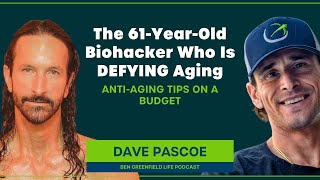
Dave Pascoe, 61, slowed his biological aging to 0.66 pace (aging seven months per calendar year) by ditching intense endurance training for yoga, sauna, and red light therapy. He takes telomerase activators like TA-65, tracks biomarkers obsessively, and maintains testosterone around 1,000 without TRT through supplements and whole foods.
Questions this video answers
0.66 (he stated "We age 7 months for every calendar year").
TA‑65 and TAM818.
Approximately 809 to 1295 (monthly checks in 2023).
61.
Mount Kilimanjaro (end of July/early August).
Chapters
I just happened to have my third qualifying test when I became aware of the competition. And I remember looking at my results and thinking, wait a minute, this can't be right. I'm thinking, I must be misinterpreting the results. I think even at my worst, my pace of aging was maybe 0.8.
What's your best result?
0.66. We age 7 months for every calendar year, so we get the other months for.
Well, it's been a few months since I interviewed someone who actually turned out to be a real popular guest, Julie Gibson Clark. She is this gal who seems to be defying aging while at the same time out outpacing, or I should say underpacing the aging rate of many of the tech billionaires and biohackers out there. Based on this platform called the Rejuvenation Olympics, where you can submit your true age genetic diagnostic testing results and see how fast or how slow you're aging. Well, there's somebody else who happens to be high, high up on the leaderboard, maybe near the top of it, and he's my guest on today's show. His name's Dave pascoe. Dave is 61. Correct me if I'm wrong about that, Dave, but based on my stalking of you, I believe that's your age. But he looks like he's maybe under 40. You can watch the video of today's show to see Dave and also check out his Instagram and everything else I'll link to in the show notes, which you can find@BenGreenfieldLife.com DavePasco. Dave's last name is spelled P, A, S, C, O, E. So Dave Pascoe, BenGreenfieldLife.com Dave Pasco. He is kind of like Julie, defying aging but not spending millions or billions of dollars a year doing it. He's not vegan, he's not calorie restricted. He's got a very unique approach. So I figured, what the heck, Dave, you and I might have a pretty fun chat here about all the stuff you're up to.
I think so. Oh, and by the way, the listeners, I look way younger on the audio only version. So.
You know, I get the opposite. I get the fact that a lot of people run into me on the streets and like, oh, we thought you were like, you know, old and with a long beard and had glasses or something. Like for some reason people think I'm like professorial or something.
I could see that you have the brains for it.
So. Yeah, occasionally. Yeah, well, yeah, I pretend so. Anyways, didn't you have a little bit of a history? Because I think you and I might have a similar background in this respect with endurance sports for a while. Aren't you still into endurance sports to a certain degree?
Kind of. I mean, I'm a terrible endurance athlete, but I still like to participate. I'm very slow. I'm one of those slow AF runners, if you've heard of this.
Yeah, so. So what. What exactly does endorse look like for you as far as your. Your participation in it?
So I've been doing marathons with Team World Vision. I think you're familiar with World Vision. I know you've done some 6Ks with them.
Yeah, World Vision is actually. I partner up with them. So I have this journal called the Spiritual Disciplines Journal, and a portion of the proceeds of every sale of that journal go to support World Vision. And then they go and build wells in Africa and educate farmers and do a lot of the great things that World Vision does. And my family also supports a young Ethiopian girl who we kind of, you know, adopted as a distance adoption through World Vision. So I absolutely love that company and what they do.
Oh, that's fantastic. I had a chance to go to Africa with world vision in 2019, and we got to see some of the communities that we've affected with clean water, and it was. It was night and day compared to the communities that still did not have clean water. It was just incredible.
Yeah, I've been wanting to go on that trip myself. At the Ben Greenfield Life Company, we have a team retreat every year and do this walk for water to raise money for those clean water initiatives. But I've never actually gone to Africa and Boots on the ground, seen what it's doing. But. But these runs that you're doing, you use that as a way to partner up with and help raise funds for Team World Vision.
Yep, absolutely. In fact, I'm going to be doing a climb of Mount Kilimanjaro here at the end of July, early August, and that's for child sponsorships.
Well, we might as well open up this can of worms right away, man, because I want to definitely get into your history and how you got into longevity in the first place and all the little things that you're doing to be so high on the leaderboard on the Rejuvenation Olympics. But I don't know if you're familiar with this researcher, probably the foremost researcher who kind of has raised an eyebrow at endurance sports and the potential for things like atherosclerosis or arterial stiffness. Or excessive aging from excessive endurance exercise. Dr. James O'. Keefe. He certainly brought to light the idea that too much endurance exercise could cause a lot of inflammation or accelerate aging or cause arterial stiffness or plaque buildup or things of the like. Have you ever thought about that?
Oh, yeah. I don't really think that endurance running is healthy for me. It was something I do for charity, so I'm willing to take the hit for the cause, but it's not something I do for my longevity.
But yet you seem to be doing a pretty good job based on your true age results despite that, you know.
Originally back like in 2012, I think I learned this from you actually listening to one of your podcasts or probably reading one of your blogs. Back then, I learned about telomeres and how they shorten with age every time a cell divides. And I learned about the telomere test that you could get. So I got the test thinking that, you know, hey, I'm going to be really in great shape. It's going to come back and tell me I've got the telomeres of a 20 year old, right? I was just turning 50. I was just starting my first marathon. So I was deep into the training of that. I was doing P90X. I had a really stressful job. I was taking care of both of my elderly parents who were battling cancer at the same time. And I took this test and it said I had the telomeres of a 68 year old at age 50. And I was pretty shocked because that was not the results I was expecting. Ended up taking a. They had.
You could make a consultation call with them. And so I took the call because I wanted to find out what they're, what possibly they could tell me. And one of the first things they asked me, which puzzled me, is they wanted to know about my lifestyle, you know, and at that point in my life, I knew lifestyle mattered somewhat. Like, you know, what you eat, how well you slept, you know, exercise was good. But I guess I didn't understand the depths of which my lifestyle was causing me problems. Because as I started to explain to them about the stressful job, taking care of my parents, doing P90X, doing the marathon training, they're like, whoa, whoa, whoa, stop right there. We've seen this before. We've seen this in endurance athletes that have very, very short telomeres. We've seen it in people who are caretakers, same way we've seen it with people who have incredibly stressful jobs. So basically they explained to me that the stress That I was putting myself under both, you know, emotionally and physically was eating me alive. So they suggested that I start, you know, maybe looking into doing things like yoga, meditation, things that I had been doing earlier in my life and I just completely forgotten about. I mean you get busy, the day to day life and you certain things fall on the floor and those were two of the things that I stopped doing. So yeah, for my sanity and for my health, I had to start including more rest days. I had to drop P90X while I was doing the marathon training, get back into yoga, more meditation, a lot more sauna, things that were better for my health.
Yeah, your path sounds a little bit similar to what actually led me to write that first book I wrote on endurance training called Beyond Training. Right. The idea that being fit on the outside doesn't necessarily mean that you're healthy on the inside. And for me it was low testosterone, thyroid abnormalities, joint pain, elevated inflammation, stress. And similar to you. Even though I don't think, and I'm sure that you've looked into this, telomere testing is the creme de la creme of age testing because it's kind of a small sampling of typically a small number of cells in the body and doesn't correlate as well to longevity as these new true age tests that I know you do now, but yet it can give you a clue. And it was the same thing for me. I'm like, dude, I'm like, I forget what I was. I think I was in the 50s when I was in my 30s. And it certainly made me think a little bit more about my ironman training and Spartan training and kind of like masochistic embrace of all these adventures that similar to you can be very fulfilling and kind of be a version of climbing your own personal Mount Everest or in your case, Kilimanjaro. But yeah, you don't want to fool yourself into thinking that it's necessarily life extending. But I also think it's nuanced, Dave. If you look at James o' Keeffe's research and he says that the benefits of endurance training, the so called Goldilocks zone, kind of tapers off at around 150 minutes of moderate intensity exercise per week. I think that that really does not specify zone 2 endurance aerobic training, meaning if you're moving at a low level physical activity throughout the day. I'm walking on a treadmill while I'm talking to you. My wife might be out gardening for six hours out in the summer heat today. I think that's far different than say the triathlete who's swimming and biking and running at a level relatively or significantly above the aerobic threshold and kind of semi running from a lion for multiple hours per day or sometimes up to 20 hours per week. So I think it kind of depends on what your definition of exercise is. And I think it is possible to actually be a marathoner or an ultra marathoner or like you say, a slow AF triathlete and still get a decent amount of non harmful aerobic exercise per week. But it's very, very easy if you're competing in triathlon, marathoning, et cetera, just because of the nature of the competition and the training to have quite a few elevations above that zone 2 zone and exceed that 150 minutes pretty easily. So for you with the telomere testing, I would imagine you kind of started to take a deeper dive after that.
Oh yeah, I started digging in everything I could about, you know, really what telomeres were, why they were shortened, what you can do to lengthen them.
I think at the time there really weren't any kind of telomerase activators available. But I mean as soon as they did become available, I began taking them.
Are you talking about the excessively highly priced like the TA? I forget what it is. TA65 and.
Yeah, TA65 and TAM818.
Yeah. I interviewed Bill Andrews way back in the day. Explain to people what that means. A telomerase activator.
Okay. So apparently through the study of cancer cells, they found that for some reason cancer cells didn't, their telomeres didn't shorten and they were producing an enzyme that was allowing them to lengthen. And so they named this telomerase. And by figuring out how cancer cells were creating them, they were able to produce synthetic versions of them and offer them in pill form. And so you probably know the science better than I do. In fact, I think I've learned at least half of what I know from you so well.
Yeah, yeah, you're definitely explaining it correctly. Yeah. So when you're activating telomerase, you're essentially activating a pathway that is going to inhibit the excessive shortening of telomeres unless you're going to do a better job with DNA preservation. And there are plant based extracts that can do this, like astragalus would be one. You know, some of the elements of like blue green algae like spirulina and chlorella can also have similar activity.
Seed oil. Yeah, Gatu kola. There's a Lot of different natural telomerase activators that are kind of part of the. Almost like the superfood protocol that you see a lot of people adopting. But then some companies have taken that to the next level and created kind of combinations that are really, really powerful. Telomerase activators, like the stuff that I interviewed Bill Andrews about back in the day. I'll link to that interview, by the way, in the show notes of this podcast for people who want to take a deep dive into telomerase activators. But is that. I mean, beyond telomerase activators, did you start to focus on some other things besides cutting back the exercise and using telomerase activators?
Yeah, I really started. Well, I started looking at all of my supplementation, to be honest with you, because I was taking a bunch of supplements and didn't necessarily know why. And I think I was trying to supplement myself out of a bad diet. So I began looking at my food and trying to remove processed foods that I was eating, eat much more plants, you know, whole raw, green, just good stuff. Anything with a barcode on it, you know, had to go out the window.
Yeah. And then just understanding why I was taking supplements, I started doing testing to see, like, did I even need these things or not.
So besides the telomere testing, what kind of testing did you start doing?
I found life length. As a company, I was able to get good blood tests through them. I tried to get blood tests through my doctor. In fact, I remember specifically asking him about getting a hormone panel because I wanted to know what my testosterone and my estrogens were doing. And he looked at me and he laughed. He goes, estrogens, you don't need that. Only women have estrogens.
Which is complete bunk, by the way. Chapter 16 of my book Boundless has a deep dive into the benefit, specifically of looking at estradiol. But full estrogen panel for both men and women, I think that's clutch. You know, for. For brain function, for free testosterone. Like, there's a lot of reasons, but. But anyways, you asked your doctor about that and they declined. Yeah.
I'm thinking this guy, he had one job and he couldn't even get that right. I mean, it was very disappointing. Yeah. So he gave me a testosterone test, but I don't even think it. I can't remember. It was either just free or total. It wasn't both?
Yeah, probably a blood. Total testosterone. That's what a lot of doctors are going to order.
So, I mean, that was not helpful to me. So I just did it myself through life length. Or not life length, sorry, that's the telomere test, life extension. I could get their male elite panel. In fact, now that I think about it, my very first test was not through them. It was through Quest and it was the Ben Greenfield Longevity Panel.
Yeah, yeah, yeah. I partnered up with Wellness FX way back in the day. I used to advise Wellness FX on their panels, and we came out with this massive. I don't think it's available now. I've replicated some of those panels you can find on my website. But, yeah, it was this massive, like, male panel that just tested all the things that maybe you'd have a hard time convincing your doctor to order for you.
I totally forgotten about that until just now. But, yeah, and that provided some really good data to take a look at and start changing up supplementation to try to target things into, I wouldn't say the reference ranges because, I mean, as we now know, the reference ranges are the range of, you know, the averages of sick people that their doctors say, yeah, you've got this problem. All right, let's give you a blood test, because if you're healthy, they won't test your blood. Rather maddening. So, yeah, I try to target the range of, say, healthy collegiate athletes to try to target my supplementation, too.
And where did the. The Rejuvenation Olympics enter into the scene for you?
That was kind of by surprise because I didn't know anything about it. When I was doing my True Diagnostic testing, I learned about True Diagnostic again, I suspect it might have been from you back in the day.
It was some podcast, but it was probably you.
So I was using them as just another, you know, another marker for how I was performing, like, just to validate that my supplementation was not causing me harm and was pointing things in the proper direction. So I just happened to have my third qualifying test when I became aware of the competition. And I remember looking at my results and thinking, wait a minute, this can't be right. Am I actually beating this billionaire guy? I'm thinking, I must be misinterpreting the results.
Do you mean Brian Johnson?
Yeah, that guy. Yeah.
Okay.
Yeah. And so I submitted my results thinking that they were just going to come back and tell me, no, no, you're misinterpreting that you're not beating Brian. Or it would have been that I was beating Brian. And then the question was going to be, will they actually publish a result if I'm beating him? And to their credit, they did.
Right. And you would question that. Just because I think he's involved with promotion of the Rejuvenation Olympics. And I know Brian, I've interviewed him. I think he's actually an ethical guy. I don't think he would tweak the results to ensure that so he could sell more olive oil. He'd appear towards the top, the top of the charts. It does appear that he's, he's doing that. But, you know, similar to when I saw Julie Gibson's, Julie Gibson Clark's results, you know, I saw yours. I've met you a couple times. You'll saw you down in Austin. And I thought, well, gosh, like, you know, he's, he's definitely not getting young blood transfers, but. And, you know, still doing endurance training and, you know, climbing Mount Kilimanjaro and, you know, doing the things that you're doing. So I thought it was very interesting that, that your pace of aging is so low.
Yeah, that was very surprising to me as well. I think even at my worst, my pace of aging, I think my highest test was maybe 0.8. I think it was.
Right. And what's your, what's your best result for Your age pacing?
0.66.
So for, so for every year, like if you take 365 days of every year, you would only be aging for 0.66 of those days, which comes out to what, 250. Doing a rough map in my head. 250. 260 something days.
We get seven months. We age seven months for every calendar year. So we get the other months for free.
Yeah. How much of this do you think is contributed or how much of this is attributed to genetics? Like, what do your parents look like?
If you saw my family, and I don't want to throw my family under the bus. Yeah. I wouldn't say that any of us look particularly young. In fact, my family tends to be overweight on average.
Although, you know, both of my parents have since passed and they both lived to the ripe old age of 89, despite not exercising, smoking, drinking, not eating well. So I don't deny that there's some good genetics there.
That sounds like my wife's side of the family, you know, Montana ranchers living up into their 90s and not really, you know, eating candy and, you know, drinking alcohol and not necessarily doing, you know, red light therapies and coffee enemas. So, yeah, I'm sure you've had a little bit of a good genetic hand dealt you, but I'm also curious, like, I want to jump into your actual protocol and what, what it looks like on a day to day basis as far as the big wins for you beyond some of the, the general overview that you've given us so far. So we don't mind. We got time. I want to take a deep dive into what a day in the life of Dave looks like.
Pretty much even before I get out of bed. I have a PEMF mat that I lay on. It's underneath my eight sleep, and I crank that up and I do some stretching before I even get out of bed.
What kind of PEMF mat do you use?
It's a Beamer, if you're familiar with that.
Yeah, yeah, that's a good one.
Yeah, they've got some good studies for blood flow. I'm sure they do many other things, but I think one of the only claims that they can make for the FDA's purposes is the, the benefit to blood flow.
And so when you crank that up, are you just laying there? Are you doing journaling or meditation or anything like that?
I'm, you know, I'm thinking about my day. Well, okay. So to be honest with you, and I can, I guess I can say her name because I think I've put it into do not disturb mode, but I have a Amazon echo dot. And so I will call her Neilia right now so that she doesn't respond. But I have, I have a smart home, so I have everything programmed. And I basically will say good morning to her and she will start telling me what's going on in my day. She'll read to me what's happening on my calendar, tell me the weather, let me know a fun fact, and then she'll start giving me the latest news from cnn, from Fox News and ABC News. So at least I'm kind of fueling my brain while I'm laying there.
And by the way, have we established the fact, and we probably should have established this earlier on, you're not married and you don't have kids.
Correct.
Okay. All right, that makes a little bit better sense now with the morning chat with the bot.
Yeah, yeah. In fact, it's one of the comments I see most to things that get posted about me is they always say, he's single, no kids. That's it.
That's the secret. That's the secret to lunch. I don't know. Yeah, yeah. I mean, you know, from a. If you want to really get a little bit esoteric and step back and look at this from an ancestral and evolutionary standpoint, it is True. That if you have children, you have in a way fabricated some sense of immortality or life extension in the progeny that you've created to come after you. That would theoretically give your body a biological message that it doesn't have to cling at so many years because you're living on through your children. And I think they've even shown everything from drop in testosterone with marriage and children and men, which might also be.
An unwandering mechanism to keep a man around the house, so to speak. But I think that there actually is something to the potential for, you know, even though I'm a happily married man with children, you know, if you don't have children, you might actually send your body a biological mechanism that. Or biological message that it might want to extend lifespan a little bit.
Yeah, there's still hope going on up here. So.
Yeah.
So. Yeah, so I'll do the stretching. I'll move from that. I'll. I'll probably do like five minutes bouncing on my little rebounder, which tends to get the bowels moving.
And then I'll do a little bit of incline on my, my incline table, which I just. Another podcast, it's been behind me, which I think is really obnoxious. So I moved it just out of the frame here, thankfully. But I have these things set up so that I have to trip on them on the way to the bathroom. So it's. It's nothing I have to go out of my way to do. It's just on the path.
Right. So it's a reverse psychology, keeping the bowl of M&M's off the kitchen counter so you don't eat it every time you walk by. It's like me, I got a kettlebell on the floor of my office and a Carol bike and a elastic band and a couple of 10 pound dumbbells. So every time I'm wandering in and out of my office, I'm always stopping to exercise on something. So you do the rebounder in the morning and that. You're right, that is great to get the bowels move. As a matter of fact, it's kind of funny. I have a biocharger, which is this fancy device that does like red light therapy and negative ions and PEMF and all this stuff all at once. It's kind of like a stack of a bunch of biohacks and it comes with all these different recipes for inflammation, for lymph, whatever. But there's a recipe on there called Raisin Bran. Every time I do it, every time I do it with One of my friends, the first response is like, we gotta go poop like crazy. As a matter of fact, I avoid using it a lot of mornings because we always have family meditation at 7am which is like typically right after I finish my biocharger session. And I don't like to have to literally like take a crap during family meditation. But yes, jumping up and down on the trampoline can elicit a similar effect. You're right.
So I do that and then eventually I move down to the basement, do my Carol bike. I do that about every other day.
And explain that one to people who aren't familiar with it.
Okay, so it's an AI driven bike that it's, it's high intensity interval training. And the way I do it, I do it the, the two 20 second sprints, right?
Which can be exhausting by the way, if you actually go as hard as you're supposed to go. I just got back from the health optimization summit in London and I raced the guy who was running the Carroll bike booth on it. We did the two by 20 second protocol. He maxed out at like 31300 watts, which is through the roof. I think I only hit like 850. And you're just, you know, two, two 20 second intervals doesn't sound like much. But if you don't have much time to exercise, it will definitely improve mitochondrial proliferation, lactic acid tolerance, give you a huge aerobic boost, metabolic increase with, with a pretty shockingly short period of time spent exercising. So you got your Carol bike. What comes next?
So then I'm mixing up a concoction of a bunch of different protein powders and leucine and L citrulline and yeah, the whole list is on my website. But I'll mix that up, I'll drink it, then I'll start the P90X workout.
Okay, so quick question before we jump in. Your P90X, that pre workout protein and everything that you do, are you doing any type of intermittent fasting, like how long is it after you've had your last meal, the night before that you're jumping into like a feeding protocol, breaking the fast, so to speak?
Yeah, good question. I try to eat dinner like between maybe 3 and 5pm oh gosh, you're killing me.
All the longevity enthusiasts I talk to, you guys all eat so early. And that's the part about having a family man, is we have these big glorious family dinners, but I'm still burping up steak when I get into bed at night. And I know, I know That I would have better autophagy if I didn't. But yeah, I'm definitely aware of the fact that eating earlier is better, but that's pretty early. What'd you say? Between three and five?
Between three and five. I like to be finished eating before six, so if I can finish eating by five o', clock, that's terrific.
And what time do you go to bed?
Usually I try to get to bed about between maybe 8:30 and 9:30.
And you don't struggle with having finished dinner, let's say at 5, and you got social events, et cetera. Afterwards, you don't struggle with thinking about eating and throwing a little extra food here and there?
It happens. Yeah. I mean, life gets in the way.
All the time, but generally like your last major meal of the day is like late afternoon, very early evening.
Yeah, like I said, I find my sleep scores are much better when I'm not digesting.
Yeah, yeah, me too. But kind of like you're kind of like your endurance training and climbing the mountain. You knowing that that might not be the best thing for longevity. It's kind of like me with family, happiness, togetherness, relationship, community. It's just like eating late is one of those things that's still in my protocol, despite that not being ideal. Okay, so you have your protein and then you go into P90X, which you're still doing, even though you found out that it might not be that healthy for you. You still do it.
Yeah, I don't, I don't kill the entire exercise. I mean, I pretty much do maybe 3/4 of it now because I think a lot of the things in P90X, they have you go through the whole circuit twice.
Okay. I actually haven't seen a P90X workout in forever. How do those go?
It's. Yeah, it's. I think it came out in 2006. I found it in 2008 and I've been doing it pretty much since then. So. Yeah, every other day is a weight bearing exercise. So you might have chest and back one day and then.
Chest, shoulders, and tries another day, back and biceps a different day. But in between those you'll have cardio days. So there might be a day of plyometrics, a day of Kempo karate, a day of like really extreme yoga, and then every other day there's an Ab Ripper X program that does a great job at shredding your abs.
Yeah, well, I've seen, I've seen your Instagram photos, man. You do have the. One of the better six packs of a 60 plus year old I've seen. So something's working. So you do P90X and then what?
So then I'll usually follow that up with a sauna session. My sauna is, like, probably my favorite biohack. It was one of my first purchases of biohacking stuff. Again, I think I learned about it from you on your podcast. In fact, I ended up buying the same sauna that you did from healwithe.com.
Okay, so. So in your sauna session, are you just like sitting there? Are you stretching, meditating, breath work, anything like that?
I don't have enough room in mind to work out like you do in yours. So I'll split 50, 50 whether I'll be doing meditation or I might just be goofing off and watching Netflix.
All right, so you got the sauna, and then what comes next?
Shower. And then pretty much on with my day.
Okay, and your actual job, you're an engineer, right?
Yeah, well, was as of September.
All right, so before you would have gone on to your job, but now what do you do after you're done with your sauna session? You just sit around, listen to podcasts all day?
Well, you know, it's funny because when I was still working, I think I was a lot more regimented because I had, you know, the eight hours of the day with conference calls, and there were things I had to do at certain times. And then, you know, so I had to force myself to get the biohacking in at specific times. Now that my time is more free form, it's. I. I'd like to. I hate to say that I think I'm a little less regimented now until I can come up with some. Some new patterns. But.
Building my website, doing these interviews, going on trips, it's almost become a whole new career direction for me.
By the way, your website's fantastic. We're kind of like Brian Johnson. You do a good job laying out your whole protocol. Much better job than I do, by the way. So anyways, I have, of course, because you have a lot of your information out there publicly, Dave. Like I do with a lot of my guess. Or all of them, really. You know, I stalk you, I read about you, I do my research, and I have found a few interesting things out about you. For example, you're not really into, like, the calorie restriction thing?
No, not at all. Not at all. In fact, my friends make fun of me when we go out to restaurants because I will order two meals. I eat like a pig. I don't count calories. But usually when I'm eating at home or even when I'm eating out, the very first meal that I have is an enormous salad. So I'm stuffing myself on vegetables to start with. Then I'll usually follow that up with a meat and maybe some carbs, but the meat would be condiment size portions. So I like to say I have a favorite restaurant, which is Ford's Garage. Locally. The first thing I'll get is a berries and gorgonzola salad with shrimp. And it's huge. It's a meal in itself. It's larger than my head, maybe two of my head put together and I'll eat that first. And then people are like, wow, you really killed that. And I'm like, yeah, that's only my first meal. Then I ordered the mushroom Swiss burger with avocado and an egg, sunny side up. And then, yeah, I kill that. Usually get like a side of either their Mac and cheese or if I'm really behaving, it's just a big side of broccoli.
Well, I've seen a lot of restaurant menus. That right there that you just described is probably pushing around 3,000 calories for a meal.
I wouldn't be surprised.
Yeah, yeah, yeah. Okay, so. So why is it that you, you aren't on the same kind of like calorie restriction bandwagon as a lot of these folks? You know, even Brian Johnson, when I interviewed him, I think he said, you know, every calorie has a fight for its life. What is it about your protocol that inspires you to just kind of eat ad libitum?
Honestly, I don't know. I. I really don't know. I think it's because I'm just so physically active during the day that I'm burning a lot of those calories. And so I know my, I know my metabolism is fast because of that.
Yeah, well, you know what, Dave? I think you've nailed it. Your protocol is very similar to mine. I eat like a horse. I probably eat around 4,000 calories a day. I still intermittent fast 12 to 16 hours a day, as we've established. You know, I do eat later on in the day. My first meal typically is until around 10am or so. I have usually a quick smoothie before I hop on a podcast or whatever. But this idea of the, I believe it's called the metabolic theory of energy. This idea that you fuel your body well with really good, nutrient dense, clean foods and then you engage in a high level of physical activity throughout the Day versus fasting, being somewhat sedentary, being cold and hungry and libido less and just kind of doing your whatever, your cryotherapy and a little bit of elastic band movement and stretching. I'm kind of one of those guys who's a little bit more like eat like a horse and swing kettlebells. Right. That's kind of my approach is. And maybe that's influenced a lot by my background in Ironman where you know, for me now working out maybe eight hours a week feels like nothing, you know, compared to the 15 hours a week I used to work out. But yeah, this idea of eating a really good amount of calorically dense food, not excessively restricting carbohydrates and having a high level of physical activity, I think it lends itself well to just life enjoyment, adventuring and getting out and doing a lot of things also. And frankly like food is an enjoyable part of life, it does also allow you to enjoy more food.
I totally agree. And I usually strive for that maximum nutritional density too. And I like to mix it up. I don't like to have the same meal every day. I know Brian sticks with the same stuff day in and day out. That would get boring to me.
Yeah, yeah, I usually have the same kind of smoothie in the morning. Lunch varies a lot of times, leftovers, but then dinner widely varies. You're always cooking together as a family and just kind of sometimes it's chicken, sometimes pork, sometimes steak, sometimes scrambled eggs and waffles, you name it. So the interesting thing though, and I'm sure some people might ask this, so I'm going to backpedal for a second. When you talk about the salad with the shrimp, which can be, you know, in some cases like a potentially toxin or metal laden shellfish or when you talk about like you know, the Alexa or the eight sleep or the potential for emf, it sounds to me like you aren't super orthorexic when it comes to a lot of the things that people really, really try to limit, like EMF exposure or like all super duper clean organic stuff. Or am I misunderstanding that?
Well, no, usually the food that I do is super duper organic. I mean I, I buy organic vegetables. All my, my meat comes from butcher box, so it's grass fed, grass finished, you know, the free range chicken, the Alaskan wild caught salmon. Yeah. So I mean food I don't, I don't skimp on at all. I'll, I'll spend the money for that. But when it comes to EMFs. Yeah. I think people would freak out coming to my house thinking that I live in a toxic soup of emfs because it is a smart home. And every, every bulb in my recessed lighting is a Philips hue bulb. So it's all, it's all, they're all Bluetooth connected and I've got these Amazon echo dots in every room. And yeah, I mean pretty much everything in my house is programmed, but I do employ some EMF mitigations. Like I have a blue shield cube.
My bedroom. And it's big enough, it's supposed to take, you know, take over the whole house and plus my neighbors as well. So presumably that's, you know, putting out some scalar waves that are overriding any of the, you know, EMF waves that might be impacting me.
Okay, so you're aware of it. You're, you're, you're not really converting your home into a stupid home like I have with mine. You still have a smart home, but you've got some EMF mitigation devices in there powerful enough to where it sounds like your neighbors might need to be writing you a royalty check for their, their borrowed EMF protection.
Even my smart meter, when I got the house resided, about a year ago I, I bought a bunch of different type of shielding fabric and I had that placed between the smart meter and my house like a pretty large swath. That way it's not radiating into the house, it's reflected back out.
Yeah. So maybe you are in the tinfoil hat wearing club. All right. Another thing I found out about you, Dave, is you've got pretty decent testosterone levels. But to my understanding, at least as far as I know, you're not using testosterone replacement therapy.
That's true.
Tell me about that.
So when I started looking at my markers, I noticed like my DHEA and my pregnenolone were a little low compared to what I thought they should have been for a healthy collegiate athlete. So I began supplementing with those. And I think for folks that know things about hormones, they know that those are upstream precursors of testosterone and estrogen. And if you supplement the upstream precursors, you're going to get boosts in those downstream hormones. And I saw a pretty good size increase in my testosterone from doing that. I also saw that from just getting out and running. I got a really nice kick in my testosterone. So I get frustrated when friends of mine tell me that they just go right to their doctor and get testosterone replacement and their doctor didn't even check any of those things and they didn't try Any of those things first. Yeah.
Addressing lifestyle and other supplementation factors. What are your levels at, by the way? Do you know what your total, your free levels are at approximately.
So I don't know this month, but I check usually every month. And my range from like in 2023 went from about 809 to like 1295, I think it was.
Oh, holy cow. For a TRT free 61 year old. That's, that's really good. Now, quick rapid fire for you. You know, you mentioned DHEA and pregnenolone. We know you're lifting weights and exercising. Rapid fire. Do you do cryotherapy or cold thermogenesis?
Cold showers.
Okay. Okay. Do you use vitamin D?
Yes.
Creatine?
Absolutely.
Magnesium?
Yep. Every night. I don't do it in the daytime because I, I do thyroid replacement hormone and that would impact my uptake of.
Yeah, absolutely. Okay. Using minerals like boron, for example.
Yes. Actually boron, I know that actually helps with testosterone anecdotally, but I was taking it because my cardiologist, Dr. Joel Kahn, had recommended that due to studies for heart health.
Yeah, yeah, yeah, he's on the right track. So everything I just asked you about that you do also increases testosterone. So you're basically kind of like on the gold standard protocol for what somebody would be doing if they wanted to have elevated testosterone without trt, except maybe the whole cold shower thing. Your balls don't get quite as cold as a cold soak, as you probably know. And so that is another thing. Probably Dr. Thomas Seger, the guy who helped to create the Morozco forge that I used to soak in, he's got lots of anecdotal.
You can't really call it research, but case reports of guys who have increased their testosterone considerably with these cold water soaks.
I was doing that. I actually bought a seven foot chest freezer and I caulked the seams in and it's, it's in my backyard and I used to fill that every, every year because I live in Michigan, so it doesn't, you can't have that. During the wintertime I would freeze solid and so I would use that. But it's, it's just not real practical because I like to put lotions on and so I'd have to take a shower first so that I don't scum it up with lotions and then just. There's nothing to keep it clean. I didn't have any kind of, you know, there's no filter or anything for it. So it just gets Scummy. Too quick.
Yeah, yeah. And I've, I've taken showers in Michigan before. The water gets plenty cold. How about, how about before sleep? What's your sleep protocol look like?
So being in the smart home, I do have the all of the lighting start shifting to red as the sun goes down so it automatically turns red and gradually dims as the evening progresses. And then I have every one of my screens automatically shift to red so the blue blocker option turns on.
Do you use a special software for that by the way? For the screens?
I used to. I don't seem to have to anymore because I think with Windows 11 it's sort of built in. I'll put blue blockers on, you know, the really ugly looking red ones, which is probably another reason why I'm single, to black out everything else.
So light mitigation before you get into bed, anything else that you do supplement wise or with the PEMF or anything like that to get you into the sleep mode.
I do use the PEMF again as I'm falling asleep along with counting my blessings for the day which usually pretty numerous and that gives me a great blissful sleep because I'm just ending my day in gratitude, which I love.
But yeah, I, I will do a little Netflix but I'll try to cut that short so that I'm not getting stimulation from a good exciting show just before bed. I'll try not to do any exercise before bed because I know that that riles me up and then I don't sleep as well. But usually I'm pretty exhausted from the day that by the time I my head hits the pillow, I go out, I'm out quick.
Yeah, I'd be very, very curious how much that early meal time influences that because most of the data I've seen is that it will improve sleep latency considerably. But when you travel, are there any fundamental tools or must haves that you take with you with all this travel that you're doing now that are kind of like the non negotiables that would go into your suitcase or your carry on, whether it's a supplement or a tool or anything like that?
I've tried to learn a lot from your protocols, but to be honest, no, I haven't really come up with a good strategy for traveling and I need to because my travel sleep is pretty bad.
Oh, okay. Yeah. Well.
I guess I could share with you since we're here. Probably my biggies would be on the actual flight itself. Hydrogen tablets or a hydrogen water bottle.
Ketones so that I don't need to eat the meals in the airport or on the airplane. They also have an anti inflammatory effect which is helpful for the radiation. Magnesium, which usually I only take before bed. But for a long haul flight I will take it prior to the flight because it helps a little bit with the EMF and the radiation and the calcium influx into the cells. And then I have typically one of those Apollo wearables that I put on my ankle. And between that noise blocking headphones, the nucalm app and a sleep mask, I can just sleep during an entire flight. Which is great because I actually really love to sleep on airplanes now because it's like the one time I'm not expected to be online or available to anyone or on a phone call. So with that protocol I sleep pretty well in the airplane. And then I do actually wear, speak of the devil, EMF blocking gear. I use some by a company called no Choice. Lams is another good one. Leela Quantum Tech now is making them. But I use some kind of EMF blocking gear especially for the long haul flights, the one to London that I was just on. And then when I get to final destination hotel, I always do grounding, almost always do a cold shower or a cold soak or a cold water swim. I wear like you do the blue light blocking glasses, but I also travel with a little red light headlamp, like a cheapo $15 headlamp from Amazon. So I can have the lights off in the hotel room at night and just get around with that with the curtains closed and the lights off. I do high dose melatonin right before bed like a megadose the first one to two nights when I get to my final destination. So that's just kind of reboots the circadian rhythm. And that's from traveling across multiple time zones. And then finally when I get up in the morning, I use a couple of portable blue light producing devices. I use one called the Retimer glasses that produce like a bluish green light that kind of wakes up your eyes. There's another brand called the IO A Y O similar thing. And then this other one called the Human Charger that puts bright lights in the ears. And between all that bright light in the morning and then the mitigation of light at night, some of those airplane hacks and then a little bit of grounding and earthing and cold I tend to do. Honestly these days I sleep better when I travel again. Absence of kids, absence of wife. I eat dinner earlier. Some of the things I'm not doing at home. I typically average about eight, eight and a half to nine hours of sleep a night when I travel with that protocol, compared to six and a half to seven at home. Just with all my duties and obligations and work and, you know, family and everything that I need at home. So that's kind of, kind of most of my jam. I probably forgot a few things.
That's fantastic. Yeah. I'll do some of the airplane ones that you mentioned. I have the noise canceling headphones. I'll do the hydrogen tablets. Astaxanthin.
Yeah, that's great. As an antioxidant. Absolutely. I forgot, by the way, I usually will wear for a long haul flight one of these NAD patches. There's a company called Ion Layer that makes. It's kind of like getting an NAD IV the entire time you're flying. But I just put a little patch on my upper buttock or my abs and it just does a slow delivery of about 500 milligrams of NAD into my system for about 12 hours.
Yeah, see, I wouldn't have thought someone of your age would have really even needed any additional nad.
I feel remarkably better using it when I travel and using it on any day for which I'm sleep deprived. I don't notice it that much if I'm not beat up and I'm not traveling. I'm not sleep deprived. But I. I do notice a significant uptick in energy. I don't put a lot of credence in these current NAD level tests to test your NAD levels. I don't think they're that accurate. Chris masterjohn actually did a sub stack about the potential inaccuracy of some of these tests. But just subjectively, I feel good if I use NAD when I'm beat up.
For sure, I question the inaccuracies of all of the tests, to be honest with you, because I've had a few tests where the same sample got ran twice by accident and came up with totally different results.
I've seen this too. Yeah. So, Dave, are there things out there, especially with your travel? Now, I know you are at one of the health conferences I was at. You see a lot of this stuff. You're now talking to more people, you're doing more podcasts. You mentioned you're listening to podcasts. Are there things that you'd like to try or implement that you haven't yet?
Oh, gosh, yeah. Lots.
Well, I know that everybody seems to be doing the Follistatin gene therapy now. I know you've Done it. Dave Asprey's done it, Brian's done it. That would be awesome.
It's incredible. Yeah, it's obviously a dent in the pocketbook, but the amount of muscle gain and recovery. Matter of fact, I'm probably going to go back to Dr. Khan's clinic in Dubai in October and follow that up with the gene therapy for testosterone called luteinizing hormone therapy, and then the one for cognition and nad called clothotherapy, because I was so, I mean, quick five minute intramuscular injection, it's kind of like a cheat code on life.
That would be fantastic. Those are definitely on my wish list. Those in the full body stem cell makeover.
I think if you were to do anything that was kind of expensive and you wanted to approximate the feeling just doing like an exosome infusion, because you're going to mobilize your own stem cell pool and you're a healthy guy who's already doing a lot of things right, you probably have pretty good stem cells stored away in your marrow already. And the latest, it was a rodent study on exosome infusions produced a 16% increase in lifespan based on mitochondrial pathways. So I think, you know, even though those also I, you know, those sometimes are a few thousand bucks a vial, it's still less than, you know, 70,000.
I did just do that recently. I joined Dr. Sandra Kaufman has Club Exosome. And so I joined in Las Vegas two weeks ago.
That's funny. I was with her at a conference in Utah a few weeks ago and she pulled me aside before dinner and shoved some exosomes into me. So yeah, she's the exosome lady. Apparently, any gear that you've seen out there that you think would be super cool to own.
Oh, I would love to own a Vasper. I just don't have the space for that or the pocketbook for that.
You know, the poor man's version, or at least the budget version, you put on BFR or blood restriction bands, you get on an exercise bike or an elliptical trainer, you do a HIIT workout and you preferably figure out a way to be cold during the workout. Like you jump in the cold pool before and after, for example. So because the vasper's cold, bfr, full body training, and then because you're on copper plates, there's also like a grounding component. But basically doing full body exercise with BFR bands on, you get kind of like around 70% of the effects or something like that. Even though it's not as sexy and Convenient.
Well, you're going to laugh because I do that. I have BFR bands. I. I crank the air conditioning up really high and force it into the basement. I get on the Carol bike and I'll do a workout with the BFR pants on it. I never even considered that as being the poor man's version.
But, yeah, the only thing you're missing out is, of course, the upper body part. But if you kind of, like, do a little, like, spin, classy style, stand up and push yourself up and down on the bars a few times or maybe do some push ups during the recovery sessions on the Carol bike, you can. You can get pretty close to it. So. Yeah. What about. What about red light therapy besides your infrared sauna? Are you doing much with that or.
I have a joovv. I probably also bought that under your recommendation. In fact, I think at one point my house might have looked like a showroom for the Ben recommends page.
I hear that a lot, particularly from pissed off spouses whose husbands or wives are spending way too much of the monthly budget on something they heard about on my show.
So I have my joovv like, right against my Carol bike. So while I'm on the Carol bike, I will also have the joovv on, but I'll do a separate joov session just for the red light treatment.
Yeah. Have you heard my interview with Tom Inkleton yet from the Causenta Cancer Protocol Clinic in Phoenix?
Yes.
That's what he does is red light therapy combined with exercise and oxygen mask. And even I did it in the video. Folks can watch the video if you want it. And a full body electrical muscle stimulation suit. And he's getting incredible results with, like 15 minutes of exercise a day in his patients. Wow. But the red light therapy he uses, I looked into it. It's super powerful. I think it's north of $100,000. It's like this full, like, wraparound giant red light unit that as soon as he flipped it on, I could feel the heat. I was sweating within, like, three minutes from the heat from this thing.
They had a bed at the biohacking conference. I think it was Immortalis.
Yeah, the Immortal Chamber. That one's ozone. Red light, PMF sound. That's crazy.
I felt the heat from that immediately. That was impressive.
Yeah. If anybody is listening in and you're like, just Google the name of your town. Plus, immortal bed, if there's one around you can get a chance to try.
Is definitely one of the most potent full body reboots I've ever experienced. Well, Dave, this is fascinating. Is there anything else that you wanted to bring up while I have you on the show? You know, any other message that you want to get out to people?
Well, you know, it's funny, I've had a couple different interviews with some really young, like 20 year old hosts. And one of the things I tell them is that if they're really looking to longevity and to live long, the thing they need to consider is they have to be able to fund that at some point they're not going to want to work forever. So if they want to live forever or they want to live to 120 or beyond, they got to start saving money. They got to start investing in like their 401k or their IRA now while they're super young and let that compounding really build up because it's going to make a huge difference to them by the time they're my age.
It does, yeah, it's an investment in time. Like I, you know, I spent so many years, you know, I started Greenfield Fitness Systems from my garage and that eventually became Kion and I took my first distribution when we started that like seven years ago from Kion, it was like the first time that I'd had like a sizable distribution from a company.
That I had created and that was now kicking off actual reasonable capital my way. Even though I've got a portfolio of maybe over 25 different health and fitness companies right now. Right, that's, what do you call it, Rich on paper, poor on cash or whatever. It's like that's not all liquidatable but all of those tiny, tiny little checks that I wrote along the years, eventually those will start to materialize and companies will sell and that money will start to come in. But yeah, thinking in the long game, it's the same lesson I teach my sons. They do an investment into their Roth IRA each year. They maximize contributions to that. You know, they, they work on their business, they invest time. And, you know, that was, you know, me from, you know, age 13, I've always been a saver, you know, usually saved, gosh, more than 80% of what I made since a very young age. And yeah, it definitely compounds and, you know, allows you to live the life you want, but it takes patience. Right. For me, I'm 42 now. I probably didn't feel like full close to like being financially comfortable until I was maybe 35 or 36. And so that was, you know, like at least 22 years of saving, investing and literally working, you know, typically 60 to 70 hours a week to get to that point. Well, Dave, I'm going to put the links to everything we talked about. My other interview with Julie, who I know you're friends with, my interview with Bill Andrews, the telomere guy, my interview with Tom Inkladon from cosm, everything I've discussed I'll put in the show notes. Also link to your Instagram channel, Dave, your fantastic website where you detail your protocol folks. Everything else that you heard about in this show, just go to BenGreenfieldLife.com DavePasco D A V E P A S C O E Dave, keep being inspirational. Keep putting this information out there. And I think you're going to help out a lot of people, especially people who are maybe over the age of 50 and thinking that they're on the gradual decline. Well, you're apparently on the up and up.
Well, thank you, my friend. And thank you for being such a great influence to me for all these years.
Yeah, my pleasure. It's great to hear at least somebody's listening in. So thanks for listening, folks. Until next time, I'm Ben Greenfield, along with Dave Pascoe signing out from Ben Greenfield Lifestyle. Have an incredible week.
Do you want free access to comprehensive show notes, my weekly roundup newsletter, cutting edge research and articles, top recommendations from me for everything that you need to hack your life and a whole lot more. Check out BenGreenfieldLife.com it's all there. BenGreenfieldLife.com See you over there. Most of you who listen don't see, subscribe, like, or rate this show.
If you're one of those people who.
Do, then huge thank you. But here's why it's important to subscribe, like and or rate this show. If you do that, that means we get more eyeballs, we get higher rankings. And the bigger the Ben Greenfield Life show gets, the bigger and better the guests get and the better the content I'm able to deliver to you. So hit subscribe, leave a ranking, leave a review.
If you got a little extra time.
It means way more than you might think. Thank you so much.
More from Ben




The Solution to Aging Might Be Closer Than Anyone Realizes - With Ben Goertzel



