The Biohacking Gym Of The Future?! The Dirty Truth About "Luxury" Hotels & Much More!
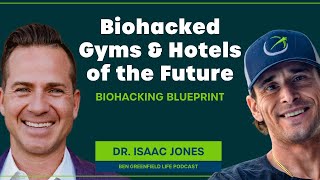
A long-form podcast conversation between Ben Greenfield and Dr. Isaac Jones covering biohacking, environmental toxins, personal health transformation, daily routines, family/life design, and building longevity-focused luxury hospitality (biohacked resorts). Jones recounts his recovery from ADHD, eczema and heavy-metal/mold/parasite exposures, outlines his morning/evening routines and declarations, and describes plans to develop low-EMF, detox-minded resorts and gyms of the future.
Questions this video answers
October 3–6, 2024.
Four children: ages 4, 6, 8, and 10.
He reported a done pace score of 0.62 (and referenced another biohacker at ~0.78).
Build around 10–15 properties in the next 10–15 years.
Approximately $250–$350 million per property.
Chapters
If you're living in a city, you're getting emf, you're getting WI fi, you're getting heavy metals, you're getting microplastic exposure at a high level. And of course, now they're doing, they're cooking chicken in plastic bags. They're bringing everything in in plastic bags. I mean, you've got this perfect storm nowadays where you've, you know, you've got the mRNA, you've got the microplastics, you've got the heavy metals, you've got stress, especially in the news. There's a lot of, you know, fear and anxiety that' constantly being thrown at us. So it's essential to combat, you know, all of these different things through various lifestyle strategies.
Well, my guest on today's podcast, besides walking on a treadmill, whoever does that during a podcast, weird, so odd, is also a dear friend of mine, Dr. Isaac Jones. Isaac is a multi time podcast guest. The last episode we did actually, Isaac joined me with his wife because if you're aware, I have this book called Boundless Parenting. Isaac and his wife Erica are two of the incredible featured parents in that book. And then the first podcast that Isaac did with me was all about fatigue. It was actually called five Hidden Causes of Fatigue. And I will link to that in the show Notes for today, which you're going to find@BenGreenfieldLife.com Dr. Jones the whole word doctor spelled out D O C T O R in case you didn't know how to do that. BenGreenfieldLife.com Dr. Jones Isaac is revolutionizing the health industry. He is not only working on some crazy stuff that we'll talk about today when it comes to innovative solutions for luxury, hospitality and health, but he has gone from curing himself of things like ADHD and eczema to working with hundreds of thousands of people around the world advising companies like Ancient Nutrition and Cell Core Biosciences and created sales in the health industry that exceed 800 million. And he is doing a lot when it comes to helping to disrupt and innovate in the healthcare industry. I'm actually flying down to Nashville. Gosh, it's coming up soon. It's like next month. Ish. October 3rd through the 6th, if you're listening. In particular, if you're a healthcare provider, you can come and hang out with Isaac and I down in Nashville. If you keep listening to the show later on, we'll tell you a little bit more about what's going on down in Nashville and why, if you're a chiropractic doc or physician or nutritionist or trainer or anyone in the healthcare professional industry, you may want to join us. But anyway, so. Isaac, what's up, man?
Hey, brother. Good to see you.
Yeah.
Excited about this.
This is going to be awesome. Me too. And I don't think I ever accused you of having adhd. However.
You are one of the most vibrant, active and energetic friends that I have. And I could imagine you as a little boy.
Probably being someone who might get that, shall we say, label. So we haven't talked about that at all before, though.
No, no, it's interesting. I mean, I was diagnosed back when I was like a little boy, and then it did get a lot worse as I was in high school. And that's when one of my teachers came up to me and she said, hey, look, you're struggling to listen in class. You need more time than everyone else. The recess bell rings and you're still trying to finish your test. What if you got an assessment done? What do you think about that? I was like. So I got an assessment done and they found I was dyslexic. I was. ADHD was dealing with a bunch of other challenges at the time, like acne and eczema all over my body. And it was interesting because I just took the traditional path of you get on the medication Adderall, and then you just hope for the best.
Yeah. And before I ask you about that traditional path, can I ask you a quick question about dyslexia?
Sure, yeah.
Well, this might not be the case for you, but I have many atheist friends who are dyslexic and they lay awake at night wondering if there is a dog.
Sorry, I couldn't resist, man.
I'm allowed to tell dyslexic jokes because my wife is actually also someone who has struggled quite a bit with dyslexia, and she's incredible now and has transformed that into amazing graphic design and interior architectural skills and all sorts of crazy things. But anyway, sorry for.
No, it's good.
Or derailing you there.
It's hilarious.
But.
Yeah, exactly. I mean, you've got. You had this kid that I knew I was smart, but I was just. I felt like I was stuck in a cage. And then when I went on these medications, my mom saw this kid that was like super vibrant, happy, running all over the place, very social, turned like introverted. I wasn't really myself. I was, you know, I felt like a lot more. I could. The way that I described it as a kid was I felt like I was locked in, in like a prison, in a basement of like a house, you know, and so, but. But she saw that and she was like, look, we need to find a solution. She brought me to these three doctors as a naturopath, a chiropractor, and a medical doctor that was a functional medicine practitioner. And three months after I got under care, it like completely revolutionized my life. Now is like, you know, 14. But I went from being in special needs because I had to be in special needs to take tests because I needed extra time, to being in, being one of the first kids finished the tests, which was like one of the, like, it was, it was like a dream of mine to be able to, you know, be able to finish a test on time, bring it up to the front, to the, to the teacher. And I, when I, when I started doing that regularly, I was looking up and I was like, wow, this is like the first time in my life that I've really been able to do that. But it just goes to show that, you know, we're going to be talking today about like, you know, biohacking blueprints, longevity blueprints, but this was like the first blueprint I followed that was customized to me, and it was, it had to do with a gut that was over grown with Candida, and I had dysbiosis. I had, you know, all these different challenges. You know, the other thing is that I was consuming foods with like, you know, blue number three and yellow number seven and, you know, all of these things that impact adhd. And I was probably eating a lot more sugar than I should have, but so they put me on a, on a separate diet and man, it was like three months later, I was getting, I was, I went from like Fs and Cs to getting straight A's. It was like the reason why I was, you know, I was, I was like, all right, I need to become a doctor to help other people, like the way I was helped. So that was where it started.
Yeah, I didn't realize that that's what influenced you to initially become interested in medicine. But what you just described, especially about the gut component, the Candida and the yeast component as it relates to the gut brain Connection reminds me of a classic book that I still recommend to a lot of parents with children who have add, ADHD tendencies, autistic tendencies, et cetera. It's called the Gaps book, the Gut and Psychology Syndrome book by Natasha Campbell McBride. Have you heard of this?
Yeah, it's a great book for sure.
For you. When it came to Something like candida, yeast, et cetera. And how that seemed to be triggering some gut brain dysfunction that led to your tendencies. Is that something that now, as a practitioner, you think is pretty common?
Oh, it's so common. And it was like one layer after another. I had micronutrient deficiencies, and I went on different multivitamins and brain supplements. And that was addressed. And it completely shifted and transformed my health. It upgraded my athletic capabilities. I was athlete of the year multiple years in a row in my high school and was pre Olympic qualifying in the 800 meter dash and all this stuff. So, yeah, I got to a place where.
I ended up getting an international scholarship because of all of this upgrade in my health to study in the United States from Canada. I grew up in Canada, and it was very cool. I went to one of the top wellness universities in America, did a lot of functional medicine training, chiropractic, functional neurology, the list goes on. Environmental medicine. But the thing that I realized is that the candida and skin issues would go away for a time. They would come back. And it was cyclical and obviously did a lot of good in transforming my diet and detoxing my body, overcoming deficiencies, but it was like it would kind of like, you know, cyclically come back. And I'm like, well, why is it coming back? And that's when I started digging deeper into the underlying kind of chronic illnesses.
Why people are struggling from chronic illnesses, why people have chronic inflammatory issues that can show up on the skin or in the organs or systemically throughout the body. And. And what I found was that I in particular had a lot of mercury toxicity, and I had some issues.
With biotoxic exposures from mold as well as parasites. And so when I addressed those underlying issues of the parasites, the mold, the heavy metals, the mercury, the cadmium, I had also lead in my body when I properly chelated, got rid of all. That's when the candida permanently went away. And the skin issues that I had been struggling with for 14 years completely went away. And so again, it's an inside job to transform the outside. But it was something that now, yes, I educate on this, I teach on this. It's a foundational element of even my longevity pyramid that I built.
To reestablish the normal kind of detox pathways of the body. And then remove the second phase is to remove the environmental toxins and the biotoxins out of the body to really maximize your health before you get to the higher levels of the longevity pyramid. But I mean, it has been amazing to see the transformations in other people. And now this is the science and the healthcare of the future. If you're really wanting to transform anyone's health, like you have to address microplastics, you have to address environmental toxins, you have to address biotoxins, etc. Or else you can't address the underlying causes of inflammation and you're just going to be dealing with more and more kind of cyclical issues like I did after I was working with these doctors initially.
Yeah, and your skin is very good. People watching the video you could see as a matter of fact when you were over at my house that last time for the mastermind wife got to meet all the guys and I think she said something like who's that guy who's like a 17 year old Ken doll? I'm like, that's Isaac, he's actually my age and.
Takes care of himself. The interesting thing that you mentioned though, regarding the yeast and the fungus and then the toxin overload, let's say it's perhaps lime, mold, metals, et cetera, how does that happen? Does the candida create an environment that allows you to accumulate metals or is it vice versa? Do the metals create an environment that allows for yeast or fungal accumulation?
You know it's funny is there's two theories on this. The parasite people, the doctors that are like really big into parasites, they say you get parasite overgrowth and the parasites, they bioaccumulate metals in their body and that's how you get metals in your body. But.
I totally, I've read the research on parasites and metals. Parasites definitely have metals. That's why it's sometimes dangerous to do, if you do have parasites to do a parasite cleanse if it's going to release a lot of heavy metals in your body. But the other thing that I know, I was dealing with was the mercury fillings in my mouth. I had around six mercury fillings in my mouth. I mean it's giving off, According to the EPA, around 10,000 times greater amount of mercury exposure than you should be getting every time you are chewing any type of food in your mouth. And so that was a very interesting kind of research that came out of Calgary, Alberta, I think it was University of Alberta.
And so I was constantly chronically exposed to mercury. And yeah, it was bioaccumulating inside of your body. But if you look at a lot of the fish eating communities, I have a business over in Japan. I was actually just in Kyoto at the Six Senses there. And what was interesting about being over there Is that they have higher levels of uranium toxicity and mercury toxicity because of the amount of methylmercury that's burned from dirty coal in China and India that gets into the ocean, that bioaccumulates or biomagnifies inside the fish that they're eating.
Wait, does the uranium also come from that? Is that a byproduct or is the uranium from radioactive decay?
Yeah, it would be from radioactive decay and Fukushima and some other places, but the uranium wasn't from. And isn't from the dirty coal being burned. That's more like the methylmercury and whatnot.
Okay, got it.
Yeah, but I mean. So I think we're getting it in multi dimensions now. It's like in the air, Microplastics in the air. I don't know if you saw the research that came out in March this year where it was showing arteriosclerotic development from the exposure of microplastics, which, of course, you and I have known for years. But it's more like us saying, yeah, environmental toxins, they bioaccumulate in tissues of the body. They could create a tumor, they could create arteriosclerosis, they could create Alzheimer's wherever it ends up in the body. But the research is now backing it up.
Yeah. And by the way, do you know that this isn't based on research? This is anecdote? But do you know he's kind of a funky guy in the wellness industry, but he's always got these interesting ideas. He's super fun to talk to. Ian Clark from Activation products. Oh, yeah, of course. I was at a party with him down in downtown Austin. We were talking about microplastics and toxins. And he points out to the right, he says, ben, see all these cars going by? I'm like, yeah. He's like, how much rubber do you see on the roads, considering the asphalt does create a certain amount of friction? I'm like, not much. He's like, where do you think from these millions of cars going by, you know, all over the planet every day. All that rubber that's basically in almost like a micro particulate form is going. And I'm like, I guess into the air. Because it's not like it's all over the. It's not like we're sweeping rubber off the roads that frequently, Right? Yeah.
Yeah. That's so sad. So intelligent. Yeah. I mean, honestly, I think we've known that for a while. I think there's actually research. Back when I was in school, they talked about how the microplastics from the rubber on the tires, they go up almost, like 100 meters in the air from just the. It creates almost like a microplastic plume. So it's like if you're living in a city, you're getting emf, you're getting WI fi, you're getting heavy metals, you're getting microplastic exposure at a high level. And of course, now they're doing. You know, they're cooking chicken in plastic bags. They're bringing everything in plastic bags. And it's, like, you know, sealed through. Like. I used to work at a grocery store when I was a teenager, and I remember I'd have to, like, seal the cookies that I was making in these plastic bags. And I was like. I could feel the heat of the. Of the machine around the plastic to make it, like, airtight. And I was like, that seems weird. I wonder if there's anything that's bad for you by heating up plastic next to a cookie. It's like you're getting sugar and microplastics.
Yeah. And a lot of people will say, oh, whatever. Chinese components that you order, toys, saunas, you name it, contain a lot of toxins and plastics. In fact, in many cases, that is not the case. It's the packaging. It's when you get your Amazon shipment and it's got the little crinkly plastic in it. Almost anything I get from Amazon that I'm gonna use in my home that arrives that I have to take out of plastic. First place that goes is the dish sink with soap and water for a hefty rinse. Because it's the packaging. Oftentimes more than, like, a lot of times, the plastic and the products themselves are relatively stable, unless you're heating them and drinking out of them or something. But the packaging is what you really have to pay attention to.
Oh, yeah, the packaging is terrible. So, I mean, you've got this perfect storm nowadays where you got the mRNA, you've got the microplastics, you've got the heavy metals, you've got a certain amount of stress, especially in the news kind of system. There's a lot of fear and anxiety that's constantly being thrown at us. So, I mean, it is essential. One of the things. And we can get into this later about, like, our routines and stuff, but it's essential to combat, you know, all of these different things through various lifestyle strategies, including breathing, which I do on the Breath Source app with you every day, Ben. Like, I love waking up and going to bed, like, doing breathing exercises with Ben Greenfield. It's freaking awesome.
So that I don't toot. So that I don't toot my own horn. Describe to people with the Breath Source app is so.
It's incredible. It's like you go to a breath class or if you've ever heard of these breath coaches out there, I mean, they're amazing. And I think people should hire breath coaches if they've never actually done breath work before. And if you want to just get started or if you have worked with a breath coach and you're wanting to create a maintenance program, I would highly recommend either getting started or going on maintenance with this Breath Source app. It's incredible. What it does is it brings you through this journey of breathing to the point where the first few times I've done the hour long one that you have, which is just incredible.
You feel amazing. I don't have the time to do an hour every day, so I do the 15 minutes and then the 15 minutes at night, most nights. But.
It brings you through a guided.
Verbal.
Breath kind of system. It's layered with music, but the music is layered with when you breathe and when you should be holding your breath, which is really cool. And then on top of that, if you care about your spiritual life and your spiritual health, Ben sprinkled in actual scriptures and, and spiritual mantras into, you know, the breath work.
Yeah, I won't lie. Like, just warning in advance every breath work session I have on there. I designed it with two goals in mind. One, for people who actually want something that's difficult and challenging. Although I included about. I think there's five or six sessions that are very like peaceful and relaxing. But the ones that are challenging, I'm like, I want people basically just to feel like they've literally worked out every last muscle in their inspiratory, expiratory body. And then B, I wanted people to, instead of experiencing a little bit of. And this might be offensive to folks, but I'm going to say it anyways. The kind of hippie dippy breathwork mantras. Oh, all the good inside you and, you know, create your own universe and manifest the yada yada from your third eye. I had it all based on prayer, Bible, God, you know, calling on God for strength and help rather than relying on your own strength and finishing a session, having done things like memorized a certain Bible verse or been super encouraged by literally connecting to God during the session. So. So I want it to be more about human connection to God and dependency on God than human dependency on the goodness within, if that makes sense.
Beautiful. I love that. Yeah. And that's how you, I believe how you actually get goodness, you know, is that it's accessible from above.
I know, I know. Even, I know we're kind of rabbit holing here, but even when, when Donald Trump, bless his heart, I heard him say the other day, he's like, I like Christianity. I like the idea that good people go to heaven. I'm like, no, actually, shitty people who have been forgiven go to heaven. Good people don't go to heaven because nobody's really able to be good. If we were, the world would be a much better place if we were just all left to our own volition. Good people.
Oh my gosh, tell me that, you know, that's. I'm super grateful that there's grace in this world. Cause I know that I probably wouldn't be where I want to be if I didn't have those foundational things you talk about in your breath work.
And for anybody who would argue with me, leave any young 2 year old human being to their own volition and tell me if they wind up doing good things or not so good things.
It's so crazy, right? You're like, how is this child doing something this evil?
But yeah, no, to wrap up all around the conversation, it's exciting times because we know that by addressing these underlying causes of inflammation and disease in the body, you create unlimited transformations in your body. And it's the foundation for high performance, for biohacking, for all this other stuff. If you're biohacking, biohacking would be really great. If you're doing some longevity stuff, you're taking ND plus or whatever, it's like, great, take senolytics, but you still have underlying issues in your body. If I never addressed the underlying dysbiosis and the microbiome in my body and the candida overgrowth and the mercury and probably the microplastics I had and all the other things. Not probably, certainly the microplastics I had and the micronutrient deficiencies, then I could be doing all this other stuff that we talk about. And it's not going to kind of move the needle as much as it could if you address those underlying issues.
Right? Yeah, yeah. And here's my question for you. When I interviewed you about the five hidden causes of fatigue, we took a deep dive into those illness issues. But now I talk with people and you would fall into somebody who's kind of in this category who have fixed some of the serious Issues. They're no longer metabolically super ill, but now they want to go from good to great. Right now they're asking me questions like, well, what are the biohacks? What are the things that can take me from feeling pretty good now that I've gotten rid of some of these issues that are causing fatigue, tiredness, or adhd, eczema, you name it. What are the things now I can do to really take things to the next level? Now, you talked about how you've got some biohacks around your house. You talked about how you have a routine. You are one of my friends who is very dialed in, on the cutting edge in terms of the manufacturers, the products, the tools, the things out there. So I'm curious what you're doing now that really moves the dial or even like, what your daily routine looks like now.
Well, I mean, first of all, iron sharpens iron. I literally have gotten so many good insights and aha moments when I'm reading your books and Boundless. If you guys haven't bought Boundless, I would highly recommend getting Ben's book on biohacking and longevity and optimizing your health. It's just a tome, a textbook.
I just rewrote the whole thing. By the way, the 2.0 version comes out in January. The other one's good. This one kind of is everything that's happened over the past four years since I wrote the original one.
Nice. Awesome. I can't wait to read that. So you know that I have routines in the morning, at night. One of the things that I think is important for humans to do at some point in their life is to sit down and think about their past. What was good and what was challenging about the past. And what beliefs did you create out of those challenges? Because.
What'S occurred for me is that if you want to elevate your psychology, create a lot more peace in your life, it's important to do some inner work around what past traumas have you had and what did your child brain interpret those traumas to be? And what beliefs did you develop because of that? And what is the opposite of those beliefs? That as an adult, you can use your frontal cortex to rewire in your brain and create a new bs, a new belief system around what you actually want to believe about yourself. So I'm a big fan of affirmations and declarations. There's a scripture in James that actually talks about declarations, kind of set the course of your life. You set the course of your life with your declarations or your Affirmations, it's really like the core elements of what you believe in. So in the morning when I get up, I go, I brush my teeth, I turn on my two panels, LED.
Photobiomodulation panels there. And then I begin my affirmations. So I brush my teeth and I begin my affirmations. And it's like different things that are. And I believe that if we're really honest with ourselves, we'll be constantly looking to upgrade ourselves at another level, you know, on and on and on through the rest of our life. I think integrity, you know, you becoming a more loving person, you becoming a more kind of like elevated human being, if you would like you. It's a mountain without a tough. Like, you're just going to always be looking to improve and upgrade. So this last cycle of declarations actually passed through Chat gtp and I was like, here are my old declarations. These are some things that I want to upgrade around my psychology. Then I want to add XYZ scriptures into it. And the declarations that it popped out for me in a few seconds were so fire. Obviously I edited them, but now I've got new declarations around my relationship with Erica, around.
My mindset, around money.
What's an example of a declaration?
A declaration, you know, something along the lines of, you know, as far as, like, my wife and I, I will say, like, Erica is a loving, caring person that, that always sees the best in me, you know, and, you know, because there's. There was like a belief early on in my marriage where I was like, she doesn't see the best in me, you know, and. And there was just like some insecurity around our relationship, around ways that my brain interpreted what she did and said, which she did not actually mean. It was just that my brain interpreted the way that it shouldn't have been interpreted. And so I actually created the opposite of those declarations with her because I was like, hey, babe, when you do this, does it mean that she's like, no. Like, well, what does it mean? Because I've been like, for years, I've been kind of pissed at you when you do this. And she's like, well, actually what it means is this. I'm like, really? Like, you actually love me and you're just thinking deeply. You don't have resting bitch face. You're not mad at me. You know what I'm saying? Like, so I was like, it was, it was like a big breakthrough. But then I would take the, you know, that, that, that, that like, belief that I developed and I, I flipped it on its head and I rewired my brain. So I, I do that with, you know, with a number of different things.
Okay. And then just real practical question, because the last thing I use GPT for is to take a picture of a water filter and ask it which pieces are missing and how to use it properly for camping. You're getting way more advanced than me. You obviously have this list of declarations. Do you memorize them or like when you're brushing your teeth, do you just literally like print them and hang them on the mirror or something?
So when I don't have a whole lot of time, what I've done in the past is I take my declarations and I will record them in memos inside of my iPhone and then you can turn it up on speed. I'm like, okay, this is a 20 minute declaration session that I do every morning or sometimes it's 30 minutes, depending on if I add more things into it. And so what I'll do is, hey, look, I only have 10 minutes. I'll turn the little bunny rabbit mode on and then I'll just put it close to my ear while I'm brushing my teeth and I'm in front of the red light panel and it, and it just goes through all of my declarations. But what happens is you end up like embracing it. Like, it comes up unconsciously throughout the day where you're like, you're faced with a negative thought and there's automatically a response in your brain. That is what you shared this morning when you woke up. Right? So yeah, you do memorize them.
You're going to program them into your brain basically while you're doing something you'd normally be doing during the day. Like brushing your teeth.
Yeah, exactly, yeah. And you know, and then I like to, you know, I like to verbally communicate them. I think there's something powerful about using your voice. So I'll kind of move away from where the kids are, my wife is, I'll get into my like little closet, you know, where Eric and I have our clothes and we just, you know, we. I will like say them out loud. And then I do my breathing, then I do my prayer, my meditation, and then I'm off to the races.
Also in the closet.
Yeah, I do that in the morning. Right? In the morning. And I'll also put on.
Different various devices that you probably use. Like, I'll use.
This red light kind of thing right here that I blasts into my brain. And I've got things to wear on my head?
Yeah, it's like neural programming. Basically, you tie activities such as affirmation, scripture reading, prayer, meditation, breath work, et cetera to a pleasurable activity. For some people, it's a cup of coffee. For guys like you and me, it's red light or sitting on a PEMF mat. But yeah, I'm the same way.
At first it seemed kind of gimmicky. I'm like, well, I'm going to read my devotional, but if I'm going to be sitting here anyways, I might as well do it some therapy. But it's more than that. It's kind of like tying positive habits to other positive habits. And I don't think that, let's say from a Christian standpoint, God is upset. If you're praying with a red light helmet on your head, I don't see an issue with it. Obviously, you don't spend the first hour of the day brushing your teeth and doing affirmations. Isaac, so what are some other big wins for you?
Yeah, so I get outside after I finish the system I just shared. I like to get outside to get, you know, some might for the first five or ten minutes. Typically right after that, my kids wake up. And so I'm always making breakfast with them. We have like a. I was sick of getting requests for what's for breakfast. So I created like a breakfast schedule that like cycles different meals for breakfast every morning. And then the arguments that would ensue about one child wanting this for breakfast and the other child wanting that. So we bypass that by having a good schedule for breakfast.
You are such a good father. I've rarely in my life ever made my son's breakfast. I had a different approach. I taught him how to cook and they've been making their own breakfast. I taught him through Tim Ferriss Four Hour Chef, how to make scrambled eggs. And then they just took things from there. And since they were 6, they just make their own breakfast. Maybe I'm lazy, or maybe I'm just trying to teach them how to fish instead of giving them a fish, but that's what.
I love it. Dude, you're giving me ideas. I would. I'm sleeping in from now on.
No, that's good. I mean, you know, and then I get to work typically, and you know, my office that I have right now, I've got just crazy amounts of stuff in here that, you know, that really help me maximize my productivity and keep my energy high throughout the day because I do, like, live on zoom, you know, like, for a large part of my day. So I've got, you know, balance boards. Here is a soft board that I love to use, is a good kind of business board. It's called the Fitter first soft board. I've got the higher dose, you know, mats and various EMF reducing kind of technologies. The company I used to use was Synergy Science, but now I've got this little card right here as well.
What kind of treadmill do you use in your office?
So this one is a, let's see here, Rhythm Fun treadmill that I got from one of the guys in our.
Brotherhood, Mastermind Rhythm Fun. Okay, cool. By the way, for those of you taking notes, BenGreenfieldLife.com DrJones I'll just hunt down all this stuff we're talking about and include it for you. So you're not working out before you start your workday besides lifting a spatula.
So yeah, no, I work out typically not in the evenings, right at the end of the day, at the end of my work day. So around 4 o' clock to 5 o', clock, I'll go out and work out. Now working out.
You'Ve taught me the word fitness, right? And workout versus fitness. So I'll go out on the weekends, Saturday, Sunday, and I'm being fit pretty much the entire day. I'm cycling, I swim every day with the kids by myself.
But the actual time that I've chalked out for myself, that works for my schedule because my wife likes to sleep in.
And I'm, I'm helping take care of the kids in the morning before I kind of hand them off to her, making them breakfast and all that. We've got a four year old, a six year old, an eight year old and a ten year old. And so I'm connecting with them, doing a lot of fun stuff with them before they start homeschool at 9 o'. Clock. But that's just the schedule and the rhythm that's been working for me.
And then I work. There's a guy by the name of David Jockers, he's one of my best friends and I go to his house.
On certain lunch hours throughout the week and we work out together and have a lot of fun outside and inside and all that kind of stuff.
I want to point out something very important that you brought up though, Isaac, and that's the family connection before work. This is something that we talked about a little bit in our last podcast on parenting. But entrepreneurs, employees, executives, I don't care what kind of job you have. Figuring out a way to carve out time for a family connection before.
The, pardon the expression, shit hits the fan and you start working, all of a sudden, you're too busy for the family. Even if you have a home office is so important for you, Isaac, it's making breakfast for me. It's a family huddle. 7am every morning. Everybody just knows you're there. We share our blockers. We share our dreams. We share how we slept. We share how we're feeling about the day. We share what we got going on. We share who's taking the car, where. We share what time. Me and my sons have our workout because we plan out which time of the day we're gonna work out based on the schedules, and we try to do it together. And so that's intentional, though. And what I want people to understand is Zach's intention. Like, he's got the breakfast calendar right. It's written, it's managed. You don't just organically expect that you're gonna somehow connect with the family every day. Before you start everything else, you have to calendar it in. And I wish that more parents were aware of the importance of that and did it. I call it bookending the day. You have, no matter what happens during the day, you've got something scheduled in the morning and something scheduled in the evening that no matter what happens, brings the whole family together.
I love it. I love it. And then blocking off, like, days like today's Eliana's birthday. She just turned four today, and I just went out and took her to her favorite restaurant for lunch and just spent the whole morning with her. And there wasn't really anything scheduled except for this podcast today and one other meeting. And so I think it's important. Date your kids. Be intentional about what? Dan Sullivan from Strategic Coach, one of my entrepreneur coaches, he said, you've got to block out your calendar first for your family and for leisure and travel, or else business and life will just completely gobble it up. And so before I go into any quarterly meeting with my team and I teach this to my doctors and health experts that come out to my seminars.
And that I coach and train, is that you've got to plan for how you're going to create freedom before you go into planning all the business stuff. And that's one of the hacks, right?
Yeah, yeah. And boundaries. And I won't talk too much about this, because I actually am going to share this at the Disrupt conference in October in Nashville that you're putting on. But.
Setting up those bookends of the Day also creates boundaries. Right. If I am going to dive into the email inbox, let's say at 6:15am I know I can't be in the office at 7am because everybody's got their ass sitting up on the living room floor waiting for me. At 7, same thing like after dinner, we all meet in my son's bedroom no matter what at 9pm so inevitably, as happens in business sometimes, if I decide I'm going to open my phone after dinner and check and make sure there's no email fires to put out, I've got like 10, 15 minutes max in between cleaning the kitchen and getting up to the boys bedroom. So I'm not starting any major projects at night because the whole family is sitting up there waiting for me to lead them in our evening routine. Right. And so the boundaries are also really important.
I love that. I absolutely love that. Yeah. And I mean, you know, as the kids have gotten older, the grandparents have taken over taking care of the kids for two weeks of the year. So Eric and I are able to travel. We went to Italy last year, went to Sensei in Lani island in Hawaii. This year we're going to go to Scotland. I'm going to be speaking at the Global Wellness Summit out there in November.
At the St. Andrews Golf Course. But I mean, it's like. But we've created a trip through Europe and some really fun stuff at that time. But I mean, I think it's important to be intentional about it and plan it ahead of time. So love the idea of bookending the beginning of the day, the end of the day, but also being intentional about how you're going to create your calendar before your business creates your calendar or the corporation creates your calendar.
Yeah, I know. Also, Isaac, you're doing a lot of work right now with some major hospitality organizations to create kind of like the biohacked hotel or luxury hospitality stay of the future. And although we could talk for hours about this, I know you talk about how you're on Zoom a lot. I know many of your zooms of late have been about all of that. For the people who are listening right now, I think what would be interesting is that as a result of some of that work you've been doing, I know that you've also dug into some of the latest, coolest gadgets, technologies, biohacks, et cetera, that could be featured in a location like that or that people might be interested in. What are some of the things people should know about that not a lot of the world is talking about? Right now?
Well, I mean, because of the amount of retreats that I've done with the doctors that I coach and train, the seminars that we've done at five star resorts and retreat centers all over the world, you know, what the. What the world views as five star, Ben, you and I do not see as five stars, you know, because I know you think exactly the way I do. When I was walking into this the first time, I was like, wow, everything around me is so beautiful. This is so five star. Everyone's saying, my pleasure, how may I help you? They're like, you know, there to support you almost to a fault, you know, and then, you know, you walk in and then you start breathing in their signature fragrance, and you're like, you get a headache, right? And then you go into whatever the new construction is of the hospitality room, and there's all these, like, glues that are off gassing like crazy. I'm like, well, I wonder what kind of materials that they're using to build this resort with. And then, of course, it's like chipboard and. And, you know, everything looks good on top, but, you know, you're still getting off gassing for several years afterwards. And then you go into your bedroom and you're on a petrochemical mattress and you've got EMF blasting through your body, and you go and take a shower, and there's no filter. That's actually taking away the fucking.
And look, I won't name any names because I don't want to piss off anybody. And actually, one of the guys who owns this property is one of my friends. But I was out at one of the hot spots out in Corleone, Idaho, where all the celebrities go the other day, and it's just like, oh, my gosh, like, full on endocrine disrupting chemicals all over the bathroom. The pool reeks of chlorine. There's rubber off gassing everywhere. No water filtration. People are drinking alcohol out of plastic cups out by the pool. I'm like, you guys come out here and you spend so much money on health span and lifespan, and you have no clue how much better you could be.
Exactly, dude. Exactly. So I. This is so. It was funny, like, a year and a half ago. I cast. So I hired a guy who married into a billionaire family in Panama, and he's like, I want you to see this private island that my. My family owns off the coast of Panama that we're building a Ritz Carlton reserve on. And so I went there and it was like, incredible. Like, and it really, like I'd already been building the concept of a longevity resort, an optimal wellness and optimal living resort for a while. But it, you know, and I worked with architects to develop the designs and everything. But just going to that island and seeing that I could put it right next to an Amman resort, I could put it right next to Ritz Carlton resort. And then the family wanted to support me in doing that. I was like, okay, this is getting real. But I need to, you know, ultimately find the best person in the world in hospitality. And that's Horst Schultze. He built the Ritz Carlton and the number one hotel in the world now three years in a row is Capella hotels that he founded and built as well. And so I went to his Contact Us page. I mean, how funny is this? I casted a vision of what I thought the future of, you know.
While you're brushing your teeth.
Yeah, while I'm brushing my teeth, exactly. But you know, he literally responded the next day and he was like, Isaac, the future of the industry isn't exactly what you're talking about. This is very exciting. Come to my office. And we've literally been having meetings ever since. I've been working with the chief development officers at Mandarin Oriental Capella Hotels, one and only resort, Amman Resort, et cetera, et cetera. I'm going to be speaking on stage with the CEO of Clinic Le Paris Simone at the Global Wellness Summit in Scotland coming up. So, you know, it's like amazing and so exciting what's happening and the amount of energy and like focus of people that are coming around us is incredible. And you know, I've done a lot of market research. I've gone to the six Senses, the Amman Resorts, the Janus, the, you know, the various medical facilities around the world. I've hired consultants from Canyon Ranch and that were the former CEO of Canyon Ranch and Sensei. And you know, you just learn so much and it's crazy how much of an opportunity there is to build not just these resorts but longevity real estate properties that will literally take the world by storm. So I'm really excited. I'm in the final kind of phases of wrapping up my business plan and I'm excited about being able to build one of these. It's going to be an expensive endeavor, each one of them. My goal is to build around 10 to 15 in the next 10 to 15 years.
And then each one will be probably 250 to 350 million. But I mean it's going to be incredible, you know, wave a Magic wand.
For me, the gym of the future, kind of like lightning round in a facility like this, what's going to be in it?
If you look at the gym of the future and what I've kind of like scoped out for my resort, you've got functional fitness areas. If you look at fitness, you talk about this in your book, you've got agility, you've got balance, there's brain fitness, there's endurance, there's strength, yada yada. So most gyms are designed just for these. Static techno gym. I'm going to build my muscles in one dimension and then get an injury later on in life because I'm just working this one muscle in one dimension. So again, you woke me up to this, I think in 2011 when you wrote your fitness book, which is a great book, even relevant to today.
But ultimately you want a holistic approach to fitness. You want to have.
A functional fitness area. I'd have an AI based fitness area where you're using things that can actually challenge your body and really raise up your heart rate.
Like an ARX or something like that.
Arx Carol bike. Yeah, exactly.
Maybe like certain areas, depending on the spacing, having some tonal devices, et cetera.
So you've got that.
Call you out though, if tonal. Hope you're listening tonal because I've been on you for this for years. Add an ethernet port. Port in the back of your darn tonal. So we can have wifi off in the gym. Right? The gym of the future also needs to be hardwired, right? The one time, the two times when you really don't want a huge dirty electricity induced calcium influx into your cells is when you're sleeping and when you're exercising. The gym of the future needs to be low emf in my opinion, low emf.
And that's one of the things I talked to the designers about. I'm like, could we just have a kill switch for WI fi so that we can sleep in a WI fi free zone? And they're like, yeah, we can totally do that. Nobody's done that. Nobody's thought of that. I'm like, how do you not think of that? It's like essential for sleep, you know?
I know. You ought to see me when I get to the Airbnb and often the hotel room, if I can find it, closet's getting open under the bed, everywhere. I'm looking for where I unplug the wifi router when I go to bed.
Exactly, exactly. And oftentimes it's right behind the headboard. You know what I'm saying?
Conveniently, yeah. That's where you want the highest signal, of course. So you can doom scroll before bed.
Yeah. So there's all these other elements. I mean, you'd have an area that I believe that you should have a biomechanical optimization area with a chiropractor that is going to help you optimize your posture, adjust you any way that you need to do, and then also create a structural biomechanical plan for you for your posture to be optimized. If you watch Ben Greenfield walk into a room, his chest is up, his ears over top, the center of his shoulder, it's like textbook posture. Most chiropractors don't even have the posture that Ben Greenfield has. But it's an essential part of our longevity. Like, if we lose our posture and the proper lordotic curve in our cervical spine and lumbar spine, you know, ultimately you're going to. Once you lose that structure, you lose the function. I could go on. I mean, the food will be different, farm to table, like organic, you know, all of the things. The houses will be wired differently. So, you know, there's going to be in each resort a residence club that people will probably want to be a part of. And each house will be like a longevity home that will, you know, will also have all these, like, features within, within, within them. But there's so many, like, little secrets that the team has asked me not to share, which I wish, you know, wish I could. But, I mean, once we launch the first one, hopefully in the next three to five years, we'll be able to show the world.
It's so interesting you have these conversations. I have conversations like this, too. People.
Use those examples I was talking about, about the fancy resort in Coeur d'. Alene. People are like, oh, well, you said plastic. What do you recommend instead? I'll say glass. And they'll say, okay, well, what if I want to go deeper than that? And I'll say, well, you put like a hexagonal structured water device underneath the glass. And people are like, oh, the pool. What do you do? I say, use minerals. They're like, well, what do you do beyond that? You can oxygenate and structure the pool water or. Yeah, I mean, there's so many directions you can go. Or they're like, whoa, what do you mean, turn? Like, the WI FI signals bouncing around. What could I do about that? And you say, well, you could do hardwired Ethernet. Well, what do you do beyond that? Well, you could use Li Fi, the new light enabled Internet signaling that uses light packets instead of wireless packets.
You could go so deep on the build your own blue zone style concept for luxury or I mean I'm building a home in Idaho, so this is all top of mind for me because I'm using a lot of these concepts at my new home build in Idaho. But yeah, what I look forward to is, and I don't want to sound like too rich dudes who go to five star resorts talking about how to upgrade their highfalutin stay they're so privileged to go to. But what I think is important is you want to be able to take yourself or your family on vacation or on business and not come back feeling destroyed. And ideally coming back with even longer telomeres or lower inflammation or better hrv. Basically your environment supports you or even grows you when it comes to your health. And so I dig what you're doing.
Which is really interesting because if you actually look at data like Oura ring or Whoop band or Garmin watch or whatever and you look at when people go to these resorts, what do they typically do, right? They typically get worse sleeps than they do at their own house. They typically, you know, you know, stay up a little bit later, they may be drinking or whatever. They typically say at the end, I need a vacation from my vacation so I can recover, you know, from my. So, so the vision is like, why, why wouldn't you want to have an incredible time like transform your, your body, your mind and literally walk out where your skin, hair, nails are completely different, your body internally has been completely shifted and transformed, you know, and it's possible now. You know, one of the technologies, tissue regenerative therapy, I mean I tore my, my meniscus and rebuilt it within four months after the orthopedic surgeon said, you definitely need surgery like asap. I can get you in next week.
Yeah, that's, that's the, the TRT shockwave style unit.
Yeah, it's, it's a softwave trt.com I believe. Softwave trt.com and I mean, and then what I've been using as well is stem regen, which is a great product. So stem regen essentially cycles stem cells out of your bone marrow into your blood and then the stem cells go to work in the different areas that need healing. But man, it's just, it's remarkable what, what ends up, you know, getting created and what you can do now with your health. I truly believe now I did a dung pace score with, with one of the lab companies. And I scored a 0.62, which I was like, is that good?
That's, that's, that's massively good. That's a very low. It's a very low rate of aging based on the tele years analysis.
Yeah, exactly. And then they're like, Isaac, they're like, that's number two in the world right now. And I'm like, what? I'm like, really? I'm like, that's crazy. And I had, I won't use the person's name, but one of the, you know, top biohackers in the world as well, up on my stage. And he's talking about how his done face score is 0.78 or something like that. And I didn't, I honestly, I was like, oh my gosh. Like, he's bragging about that on stage. I'm like, I can't go up on stage and tell the 0.62 now.
My last one was 0.66. You got me beat. But. So I know we're starting to run against time, but one thing I was thinking about as you were talking about this is like right now.
Because you're right, travel is what really takes it out of you. And if I'm working and this is for myself, this applies to myself too. If I'm working with a client or an executive, I have them literally walking in the hotel room, unfolding their grounding and earthing mat from their suitcase, taking out their hydrogen water bottle and their filter, unplugging the WI FI router, using a curtain over the curtains to make sure that the light doesn't come in, unpacking all of their little special superfood oatmeal packets and alcohol alternatives and hydrogen tablets and glutathione. And it's like you have to do so much and they're staying at five star hotels and it would be so nice to just be like, yeah, I'm just packing my underwear and some socks and a swimsuit and a T shirt. Because when I show up, everything's already dialed in. I don't have to be fighting this battle.
Exactly. And that's exactly what's being created right now. So I'm excited about it. I can't wait to geek out with you a little bit more about all of the different things because I've been getting some great ideas from you around how to build this, but just super appreciate how you show up and all of the insights that you have around.
What these. It's really A lifestyle, what this lifestyle kind of concept can really look like.
Give me this 60 second overview of Nashville for people who want to go to disrupt because me and my wife, my wife's going to come too.
You got Jessa Ben Greenfield coming. I mean, you're going to be talking about both business and biohacking longevity stuff. So I'm excited to have you come and share your knowledge and wisdom with the group. A lot of people don't realize how successful you've been from a business perspective, so I can't wait for them to learn a little bit of the insights around that. You've got Michael Hyatt, who's a New York Times bestselling author around productivity and business growth and development. He's going to be talking about how you can create more freedom in your life and save hours and hours a week of productivity using these different strategies and solutions. We've got one of the top AI experts that's actually helping health coaches, doctors and health professionals reach out to prospective patients, all using AI, where the prospective patient and client is actually thinking they're talking to an individual. And it's like a real conversation. And they're going to be talking about how they actually set up and tee up all these consults, which is really amazing. We've got a lot of the world's top brands, right. We've got people that are building supplement companies, people that are building digital online empires. Some of the largest, most successful clinical, clinical experts and practices in the world will be there. We really do typically attract the top 1% of health businesses in this space. So I'm going to be talking about how to really set yourself up to win. A lot of the marketing, sales and practice management strategies around team growth, et cetera, that's working in the 21st century, in 2024, and really how to prepare and navigate yourself for a down economy. And a lot of people are talking about how the economy is kind of shifting. But we're going to teach you how to prep for that and how you can position yourself in a way that you can be successful in either an up or down.
Yeah. So October 3rd through the 6th. October 3rd through the 6th in Nashville, Tennessee.
I think you get a discount or a VIP something something. If you go to BenGreenfieldLife.com disruption 2024 Isaac, I have a call in 41 seconds and counting. So here we go. If you want the show notes to this show, like you, Isaac, I live on Zoom. Go to BenGreenfieldLife.com DoctorJones D O C T O R Jones. I'll link to the other podcast that Isaac and I did. Keep your eye on this guy, especially what he's doing in the luxury hospitality industry. I'm sure at some point in the future I'll be able and he'll be able to share more with you on that. And then if you want to join us in Nashville for a pretty good time October 3rd through the 6th, 2024, go to BenGreenfieldLife.com/2024. All right, folks, over now do you.
Want free access to comprehensive show notes, my weekly roundup newsletter, cutting edge research and articles, top recommendations from me for everything thing that you need to hack your life, and a whole lot more? Check out BenGreenfieldLife.com it's all there. BenGreenfieldLife.com See you over there. Most of you who listen don't subscribe, like or rate this show.
If you're one of those people who.
Do, then huge thank you. But here's why it's important to subscribe, like and or rate this show. If you do that, that means we get more items, we get higher rankings. And the bigger the Ben Greenfield Life show gets, the bigger and better the guests get and the better the content I'm able to deliver to you. So hit subscribe, leave a ranking, leave a review.
If you got a little extra time.
It means way more than you might think. Thank you so much.
More from Ben




The Solution to Aging Might Be Closer Than Anyone Realizes - With Ben Goertzel



