The Indiana Jones Of Superfoods: Stem Cells, Air-To-Water Machines, Coffeefruit & More With...
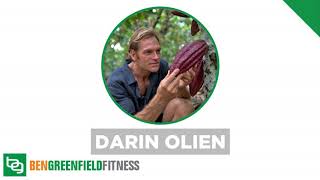
Ben Greenfield interviews Darren Olian, a "superfood hunter" and formulator, about sourcing exotic botanicals, quality control, and practical applications. Key topics include maca, yacon, sacha inchi, moringa and a newly highlighted baru nut; claims about totipotent stem cells (their sensitivity to alcohol/caffeine and possible activation by dietary compounds); coffee fruit extract as a BDNF activator; and water tech (air-to-water machines and molecular hydrogen). Darren references clinical work, proprietary processes, and upcoming product availability.
Questions this video answers
Super Life
Eating one cup of blueberries per day for 30 days increases proliferation of totipotent stem cells sixfold (claim made in interview).
coffeefruit.com (mentioned as a source for coffee fruit powder)
Baru (baru nut); a new shipment/launch was mentioned for July 4th and availability at superlife.com.
Darren stated a serving contains about 24 g protein, roughly one-third of daily magnesium requirements, high potassium, iron, copper and fiber (claimed 100% of daily fiber in a serving).
Chapters
Oh, hello.
Were you expecting Indiana Jones? This is not Indiana Jones. You may have clicked through to this podcast, seeing that it's about the Indiana Jones of superfoods. And my guest is indeed the Indiana Jones of superfoods. Pretty cool little biohacker if you ask me. I met him in a sauna after.
A workout at Laird Hamilton's house.
But this is not he.
This is Ben Greenfield.
And before we jump into a thrilling podcast with this cat, I want to tell you about Red Juice.
Red Juice. Feel the heat, baby. This thing bumps up your metabolism all.
Day long with one big old scoop or sip.
It's a brand new product created by.
The same folks who brought to you the lovely, lovely green juice that I drink every day. They just invented this red juice that is fantastically tasty right up there with their green juice.
And yes, I have been known to.
Go overboard and put both the red juice and the green juice into the my morning smoothie. So you get a 20% discount off of either the red or the green juice. You go to BenGreenfieldFitness.com Organifi the code BEN gets you 20% off of the green juice, and the code REDBEN gets you 20% off of the red juice.
How cool is that? I'll put all of that information in the show notes for today's show as well. This podcast is also brought to you.
By the Human Charger. I'm actually about to fly to Finland tomorrow and in my bag I have.
This thing called the Human Charger. It's very cool.
So when I get to Finland, it's.
Going to be dark.
I will go to bed, I'll take care of my circadian rhythm. I'll probably have some nice fish and a Finnish beer and sit in the sauna. But in the morning, as soon as.
I wake up, I will blast my.
Ears for about 12 minutes with this white light that basically hits the photoreceptors in my brain.
Tells my brain it's the morning.
Reduces jet lag, improves mental alertness, mood. Whether you've been traveling or not.
The thing fricking works. If you're just tired in the afternoon.
Stick it in your ears, the orifices on either side of your head. You can visit BenGreenfieldFitness.com HumanCharger and enter code BEN20 to get 20%. Yes, count it. 20% discount on the Human Charger.
Amazing little device.
Looks like a little MP3 player, but.
It'S much more than that.
BenGreenfieldFitness.com HumanCharger and enter code BEN20 for 20% off.
In this episode of the Ben Greenfield Fitness Show.
As soon as you cut it, it starts to oxidize, so you're losing. The clock is ticking on the beneficial compound. Electrolysis then activates, turns on and creates hydrogen. And hydrogen is the greatest antioxidant on the planet. From an orthopedic standpoint, this has probably one of the most power endogenous ways that you could heal your body.
He's an expert in human performance and nutrition, voted America's top personal trainer and one of the globe's most influential people in health and fitness. His show provides you with everything you need to optimize physical and mental performance. He is Ben Greenfield.
Power, speed, mobility, balance, whatever it is.
For you, that's the natural movement. Get out there. When you look at all the studies done, studies that have shown the greatest efficacy.
All the information you need in one place right here, right now on the Ben Greenfield Fitness Podcast.
Hey, folks, it's Ben Greenfield. And I first met today's podcast guest when we were sitting inside a barrel sauna at a pool workout down at Laird Hamilton and Gabby Reese's pool. And this dude was sitting across from me in the sauna. He was talking about stem cells. And a lot of times when I hear people talk about stem cells and superfoods and nutrients and anti aging, it's just kind of like the, the same old, same old. But he was talking about like these random superfoods like coffee, fruit extracts and totipotent stem cells and throwing around terms and nutrients that I really hadn't heard many people talk about as intelligently as I was hearing this guy talk about them. So it turns out that he's actually known as the Indiana Jones of superfoods. He is an actual superfood hunter. That's what he does is he hunts down some of the best foods and ingredients from around the world from these exotic locales. He's a supplement formulator. He's an environmental activist as well, and a pretty renowned authority on nutrition and hydration and the health potential, especially of the type of foods and herbs that we're gonna talk about today as we delve into what this guy does and some of his crazy stories from hunting down some of the most.
Amazing yet little known superfoods on the face of the planet. His name is Darren Olian and Darren is the formulator of something you may have heard of before called Shakeology. He's designed also full plant detoxification programs. He has written a book that I happen to have in front of me right now that I finished a few weeks ago called Super Life. The five forces that will make you healthy, fit, and eternally awesome. So prepare to have some fun talking to a guy who basically travels around the world finding crazy stuff to eat. Darren, welcome to the show, man.
Hey, thanks, Ben. It's awesome that we finally got connected.
I know we've been trying to do it for a while since that workout. And actually, you know what, from what I understand, your hair is still wet and you've just come from one of those very workouts. So just for people who aren't familiar with this, what kind of shenanigans are you guys up to this morning out of the pool?
Yeah, so our pool workouts are. People think of like, oh, swimming laps and things like that, but it really, over the last decade and day one with Laird and a few of us started this kind of introducing weights into the. Into the, into the water, in the deep water, and really not just lifting weights in a traditional sense while holding your breath. We ended up coming up with 30 plus different moves of everything from exploding on the bottom with a 60 pound weight and then clawing your way to the surface for a breath, and then swimming across the water with a 50 pound weight, pulling you down and trying to stay on the surface like infinite amounts of. And the interesting thing is, Ben, because you've experienced a little bit of this. I've experienced a lot of it.
You guys go for like three hours.
It's crazy. Yeah, it's pretty nuts. And the interesting thing, it's this world of.
Almost precise movement and a protective kind of zone of the water, but also aggressive enough to be able to perform it. But at the same. Same time, you have to stay calm because the moment you freak out, you lose your oxygen, you can't sustain the movement. It's a very interesting thing because once I think you introduce the water with explosive movements and that kind of the Zen aspect of almost the, you know, riding the line of parasympathetic and not turning on. Because it's interesting, we just had a fighter this morning come UFC guy and trains a bunch of those guys, and I'm telling you, their first experience in the water, when it's that aggressive kind of fight mode, they don't do well and you can't fight with the water and you can't fight the movement and you certainly can't fight breath. So you have to remain calm. And so that's, that's so the humble nature of that of these exercises. And this kind of workout is, I think, you know, something that's always interesting. And of course, you know, playing with the breath, meaning like before you do an exercise, you know, you nose breathe and then you breathe out all your air and then perform the exercise, it triggers these certain.
Strains and proper stresses within the aerobic system that we don't normally put ourselves under. So we kind of start while already at the wall and then you realize that how comfortable can I be when all of the alarms are going off? And then you start to realize, yes, it's uncomfortable, but you have more time and more space than what you thought before.
And the crazy thing is what I noticed after doing it is you're pretty gassed during the workout. You definitely get that big nitric oxide release. And when you're doing what, for example I was alluding to earlier, you're kind of getting out in between some of the movements and the exercises and hitting the sauna for a little while and the cold pool, so you get this dump of nitric oxide. But by the time that you get all of that in and you get all the oxygenation benefits and the nitric oxide benefits and the blood flow benefits and the breathwork benefits, you're actually not sore the next day because there's not a whole lot of like eccentric muscle damage that goes on when you're lifting weights underwater. So it's a, it's a very unique workout. And, and dude, to return back to that story of meeting you there the last time I was down in Malibu or a few times ago, you know, it turns out that you know a lot of what I discovered that you know about nutrients because you travel around the world hunting down superfoods. And I am, and I'm sure our readers, probably, our listeners probably are too extremely curious how one becomes a superfoods hunter. So how did you get a job like that, dude?
Well, I gotta say I never set out. It wasn't my five year old dream. I wasn't planning on that. And certainly, you know, and also to caveat that is the term was given, it wasn't something I looked for, but it really came out of, you know, I got hurt playing college football. I changed my major to exercise physiology and nutrition. And once I kind of got that, and I would call it base learning in college, the college time, it's kind of a base learning in that base learning of nutrition and physiology. I just, it turned on the curiosity gene in me. And that's really where, you know, I graduated, I moved to Boulder, Colorado. I worked with this Great guy, Dale Greenwald, and kind of apprenticed with him and exercise science and physiology. And then I did some nutritional counseling and all of that, and it was great, and it was applicable and it was wonderful. But then all of a sudden, I started playing with food, and I started looking very intensely at supplementation and started not just reading labels of ingredients of food and supplements, but actually start digging into them and seeing what they were. And then I really come to understand that why are most supplements and most foods just completely going sideways as it relates to beneficial compounds, beneficial ingredients? And that's really where. Well, instead of just.
Seeing that, I really believe that if you see it and you're drawn to it with passion, then that's a good indication that that's a purpose. And so.
I, once that happened and I lost my father to alcoholism. That kind of world kind of said, you know, don't mess around anymore. Let's do this. And so I started doing a lot of aggressive fortune. And I just had every plan of just making my own company and jumping on planes to the Amazon. Made sense to me in the sense that it's my responsibility. If I'm formulating something, then I'm going to know it, because just nerding out on a Google search and doing some research is just not good enough. And that was just a moral compass for.
So you didn't just want to go to the Wikipedia page for, say, like, Sacha inchi protein. You wanted to actually go hunt down what the stuff actually looked like and where it was harvested from.
Yeah. And listen, my father was an agricultural professor at the University of Minnesota. So it's in my genes, I guess, because I didn't even realize that until later in life. But. But I was like, I want to meet these people. I want to look them in the eye. I want to look at the shamans, I want to look at the researchers in countries of origin. I want to make sure trade is being done fairly. I want to make sure that they're growing it correctly. I want to make sure that's processed correctly. And once you open up that can you come to understand how easily all of it can go south. Because if you're not showing up, if you're not dictating the quality assurance, if you're not dictating what kind of, for example, what kind of compounds you want to preserve and how you're going about in a formulation or the preciousness of foods as they degrade over time, like, if you're not actively involved, you'll just have an eager Producer working with some eager farmers. And it's not like they're going out to dupe America or dupe the world. They're just, they, they want an economy. And so I came to realize that it's super important not only for the knowledge of how it is indigenously they have used these materials, but also the quality assurance and the quality control of how these things are.
Ultimately end up in these packages and these capsules and these things. So, you know, a part of my dedic is to improve the. Whether I formulate with something or not is to improve the landscape of some of these so called superfoods and botanicals and herbs. And that's what I started a superfood conservancy that's dedicated to kind of building that platform so that I can go in with the team and start helping these things out. So.
Right, give me an example of, you know, a food or a plant that you found. Like when you go to a place like the Amazon, you know, do you recall like one of, one of the first superfoods that you, you know, that you discovered or that you decided to come back and put into a formulation like, you know, I know for a while you were formulating the shake, the shakeology formulations, which have a ton of different things in them, you know, from maitake to reishi to green tea extract and maca and schisandra. But tell me a story of you actually going and finding one of these and what you actually do, I mean, do you harvest it, do you eat it, do you taste it? What happens?
All the above depending on what it is and where it is. But I think, yeah, so I had some preliminary information about. I had been playing with some adaptogenic herbs and of course I had some connections into the South America. So I was starting to reach out to see if there's any comparable producers and kind of setting up some sort of itinerary of when I showed up. And some of those first ones were maca.
Maca is an incredible endocrine.
Adaptogen.
And that is a Peruvian plant, isn't it?
Peruvian, yeah, it's endemic to Peru.
Or a root or a plant.
It's a tuber. So it is a root. Yeah. And so Peru is the tuber capital of the world. Right. So the International Potato center is there and colleagues that I know were studying maca, studying this other route called yacon root, which is a very, very. One of the highest natural food forms of prebiotic. So the fructo oligulosaccharides, that prebiotic that Food for the microflora. And it was also kind of an Incan canteen that the Incans used to use. And so, okay, so there's this interesting mix of.
You mean a canteen, as in they carry liquids in it?
Yeah. So the yacon essentially is a big, fat looking little bigger than a sweet potato look. But if you crack that open, the moisture content, the vitamin content, and then of course, the polysaccharides.
The prebiotic activity, all of these things had this essential so they could take, they could harvest. And yacon is in the sunflower family, so it grows these huge stalks and these big.
Flowers and stuff like that. So they would harvest these and just put them in their sacks and journey for the day. And they'd crack these open. You'd get a huge amount of liquid and water and electrolytes. And so it kind of became this interesting kind of Incan canteen thing.
So, of course, then how do you not follow that? What's in this thing? What is this about? And so I showed up with maca, went to 15,000ft to the maca, essentially a certain zone.
In a place called Waneen that grows maca, and so ended up there, met some small farmers, and I've known those same farmers for over a decade now. And so understanding the botanicals, understanding hearing literally sitting around the table with five, six, seven generations.
Of understanding and growing and using these plants, for me was the most important part of this thing, because I need to feel it in my bones, and I needed to see how it was used.
So it was really that Peruvian trip. This is like in 2004, 2005. So I went there with maca. Not only did I find maca and intimately understood now how it was grown and why it had its adaptogenic compounds because of the strain of literally the only thing growing at that elevation. But then lower in the Andes, we found yacon and then studied with the head researcher at the potato center, understanding there's these precious, you know, compounds, these prebiotic things. And, you know, I have. And I have relationships with those people to this day. And then the other side, in the jungle side, I ran into the. Which you brought up, Sasha Inshib. So, Sasha inschi sacha inchi.
S A C H A I N C H I sacha inchi.
Exactly. Sasha insi.
So I introduced selling bees, by the way.
Oh, beautiful. Then we'll. Yeah, there's some. There's some good opportunity here then, with botanicals. So Sasha inchi became a very interesting thing. And because Sasha Inchi was essentially Incan, Gold. And why was it ink and gold is because of the perfect balance of omega 3, 6 and 9 for the human biology. Right. So as we know, essential fatty acids, it's not just about the omega 3, it's not just about the omega 6, it's not just about the Omega 9. It's the balance and that ratio that the body then converts most efficiently. And the Sasha Ninji came in at an.
Plant based omega that was nothing was comparable to it. So the first action I saw with that was the oil and heat resistant, huge amount of antioxidants. And then of course the quote unquote byproduct of cold pressing the oil was this incredible. Still a little oil in there, but also this great balanced plant protein in the Sasha Nichi protein. So I ended up using by the.
Way, just a complete aside here. It's a very cool looking planet. It's shaped like a star. It's like a seed or a nut covered by almost like a star shape. If any of you haven't actually seen this, go to a Google image search for Sasha Inshi. And it's an amazing looking star shaped, I believe they call it what like a mountain peanut or a.
Yeah, it's basically like a nut that's inside of this star shaped fruit. It's very cool.
Exactly.
Sorry to deal with derail your conversation about Omega 3 sixes and nines, but.
No, but that was it. And so those were kind of my three Yacon Maka and Sasha Insu were my three kind of things that I hooked in on.
And again they're in three vastly different geological areas.
And then I started meeting the producers and then I ended up in, in Lima to where these things are produced and how the care is given so that the active compounds are still there. And so that's because again once I got aware of not only how to grow it and how it was used indigenously. Now how do you preserve that special qualities of these and any other botanical in the way that they translate into this, you know, this mass marketed American.
World. And most unfortunately most ingredients and botanicals mostly are marketed well and the quality is not great. Yeah. So you could turn bags over and say oh cool, yeah, it's got Sashi too and oh cool, it's got Mach in there too. But largely there's a lot of issues that can happen.
I hear you. I've been taking deeper and deeper dives into the world of nutrients and ingredients. And I just formulated my first energy bar, for example. And in terms of the sources, everything from White chia seeds to Spanish almonds. I mean, it's like there's a huge variety as far as quality is concerned. So it really is kind of crazy. But, you know, one of the things I actually really wanted to be able to pick your brain about, Darren, was this idea behind stem cells. And I don't recall the details of the conversation that we had when we were in the sauna on that first day that I met you, but I believe you had two different ingredients that you were excited about having discovered specifically for their ability to be able to somehow build a certain type of stem cell.
Can you.
Can you fill me and the listeners in on. On that conversation we had?
Yeah. So this is a, you know, and. And what you were saying, too.
I didn't.
I didn't know who you were either. And I was also, when you were talking, I was like, oh, this is interesting. This is cool. Like, so I was equally intrigued by what you were saying because obviously you weren't just throwing out, you know, words. You were.
What was I talking about? Like enemas or something?
No, exactly. Yeah. We're doing enemas in the sauna too.
And then you stick up your butt.
Yeah, yeah, yeah, yeah, yeah. So no, I mean, you had mentioned stem cells, and then, of course, you know, you know, I started, you know, salivating. And so.
Basically, to answer your question is for the last year, I have been in negotiation with, and we should be signing this week with one of the leading researchers in stem cells that you probably haven't heard about because name yet, because we're not signed. And he's also a researcher and scientist, and he doesn't necessarily want to be blasted with the lay person just coming at him. So I protect him in that way. But we will share that information when times. Right. But he blew my mind in about five minutes with the understanding of stem cell. And what he said was, most of the stem cell that are being looked at and being utilized are not the stem cell that by definition can turn themselves into any tissue or any organ, period. Across the board, anything in your body. That's what's called a totipotent stem cell. It's. It is also immortal. It never ages, ever. So what happens with the body is that through lifestyle, through choices we make, through stress, through alcohol, by the way, annihilates, kills, destroys stem cells.
Really. Now, by the way, I always have to ask this. When someone says something like this, are we talking about like glass of antioxidant rich red wine, Sardinia style alcohol intake? Are we just Talking about like out and partying on the weekends or is it just any alcohol, period?
Well, these are questions I also have for him in terms of. Because I'll give you another example of that as well.
So obviously you have huge antioxidant aspect to a red wine. You have some cardiovascular benefit to alcohol. The issue is that most people, when they look at certain compounds or certain, dare I say, foods, they all want to find the benefit so that it fits their lifestyle without understanding the full picture. Now, from his point of view, any alcohol kills these types of stem cells. So before a procedure, if he'll do an inpatient procedure where he makes billions of these stem cells, sends them blood with their, they're not mesochymal, they're not taking out of the lipids, they're not taking out of the bone marrow. These are different stem cells, which is why they only work 10 to 20% of the time. He puts them back in the body and all he knows is by doing certain things, you either annihilate them and it's harder to harvest or that you're doing certain things and it clearly shows up that the body is making more of. So caffeine now also doesn't kill them as bad as alcohol, but it disrupts them.
Yeah, And I do believe that, by the way, because of the recent research that showed that coffee and the antioxidants in coffee can decrease the rate at which telomeres shorten, while caffeine actually increases the rate at which they shorten. So it's like there's an aging effect of caffeine, but an anti aging effect of the actual coffee.
Exactly. And that's the confusing nature of the marketplace, period. Right. That's, that's exactly the point of like when people try to justify their bad habits. They'll, they, they will. If you're not looking at the, from the right perspective or the bigger perspective, then you can easily find the justifiable peer reviewed data disappointment your situation. So yeah, Ben, if someone came to you and said there's all these antioxidants, blah, blah, blah, blah, but they're also not taking the fact, this other research about the caffeine, because inversely related or intimately related is the telomerase that is a side effect of the creation of totipotent stem cells. So just take that in for a second. So the more totipotent stem cells you create in your body or create the environment for turns on as an exhaust system almost of telomerase, which is your anti aging enzyme that keeps Immortality. Right.
So there's this very intimate relationship between telomeres and your stem cells and these.
Totipotent stem cells specifically, which can be deleteriously affected by some things that you mentioned, like alcohol metabolism or exposure to caffeine, which I would imagine probably differs genetically from person to person. But overall, the message should be taken with a grain of salt, depending on who you are. But these totipotent cells, Darren, from what I understand, those are really only present in our body early on in human development. And I believe it's called the morula, or the.
Early embryonic stage of, for example, a fertilized egg is where you see a lot of these totiputin stem cells. So we actually have the ability to create those later on in life, is what you're saying.
Hundred percent, Without a doubt. And they're always. So the doctor I'm working with has the patents for a. The only person on the planet who's able to identify them. The only person on the planet who's able to know where they proliferate, so know where they hang out and also how to not only proliferate but also circulate. Because once they're out of their area of proliferation, they are then able to, by a certain type of initiation, they circulate. So now you have circulating totipotent stem cells, but now what's the activator? And the activator is chronic or acute injury or pain or repair or whatever it is. So what happens, Ben? It's that same old story. If you create an environment where you maybe you're stressed or you're partying all night and you're drinking a lot and you're waking up and you're having your caffeine and going and eating your egg McMuffins and everything else or whatever, you're creating environments that shut that system down, not to mention the zillion other issues that you're going to be running into, but you're shutting down your body's ability to create these stem cells. And so now we're starting to find what are the compounds. And this is where I come into his research. What are the compounds that turn that right back on again? And he can track those totipotent stem cells. So this isn't like some idea that we're just hoping happens. No, this is very scientific and something where I'm going to be in the next two years be setting up clinical trials to support all of the future compounds, because we already know of a handful of compounds that absolutely. So Let me give you and your listeners.
Something that they could do right now.
So we know it's not eating placentas, is it?
It is not. It's so much easier and so much better for you, so.
You have to eat it raw. No, I'm just kidding. So if you eat and you can find this research already out there, but we can validate it on the totipotent stem cell, if you eat one cup of blueberries a day for 30 days, your proliferation of totipotent stem cells goes up by six times.
So what does that tell you?
I'm feeling very good that I put blueberries on top of my coconut ice cream last night.
Very good, exactly. So you're a repair and anti aging miracle just by eating consistently blueberries right now.
I've talked about blueberries on the show before, by the way, Darren, in light of the that they were a sirtuin activator. Now is that the same mechanism of action by which there sirtuins being activators that mimic calorie restriction and delay aging in mammals? Things like green tea, dark chocolate extract can do some of the same things. Is that what you're talking about? Or is there also this completely separate side effect of it increasing totipotent stem cell availability?
As far as I can tell, it's this. I mean nothing's, you know, everything's related. But as far as I can tell as of now, because the full on research hasn't started, whereas we, we isolate certain compounds to know within blueberry what that you know, is it the anthocyanins? What kind of anthocyan. Anthocyanins within the blueberry are we looking at or do we need the complexity of the blueberry itself? And if a blueberry does that, I have A list of 20 very powerful compounds that through preliminary research is indicating that will turn these stem cells on exponentially. So I don't have a good answer for you right now, but I.
Well, at this point it almost doesn't matter. I mean, if we know that it's a sirtuin activator and we also know that there's some evidence that it could increase totipotent stem cell availability. It's just frickin. It doesn' include blueberries in your diet. Right. This is coming off a little bit like a podcast that I did with Sean Stephenson a couple years ago. And by the way, for those of you listening in, I'll put links to everything that Darren and I are talking about in the show notes and the shownote URL. For those of you listening in is BenGreenfieldFitness.com superlifepodcast that's BenGreenfieldFitness.com SuperLifePodcast and in that interview, Darren, Sean and I went into everything from aloe vera gel to marine phytoplankton to colostrum chlorella curcumin, all sorts of different things that he discovered and actually used to, in his case, regenerate his back after nearly destroying his back. And it sounds like you've got your own list going.
Yep.
Hey, I want to interrupt today's show to tell you about the mattress that I have in the spare room in my home. I got this mattress because it is not only one of the most obsessively engineered mattresses that you will find on the planet, but it's also got this marriage between foam layers that have this nice firmness with a little bit of sink and a little bit of bounce and you'll sleep like a baby on it. I mean, a log, because babies don't sleep very well at all, as my children remind me whenever I say sleep like a baby. However, this mattress will help you to sleep.
So how?
Well, basically, not only is it designed, developed and assembled in the usa, but they've put intense engineering into this thing.
You get a 100 night trial with free, no hassle returns if you're not.
Happy, free shipping and returns to USA and Canada. The thing has over 20,000 reviews with an average of 4.8 stars on Amazon, Google, you name it, and here's how you get it. Go to Casper.com Ben and when you enter promo code BEN, you save $50 off this Casper mattress. That's Casper with a C Casper.com Ben and use promo code BEN to save 50 buckaroos off of your purchase. And now you can sleep like a.
Log, just like I said.
This podcast is also brought to you by Onnit.
So I've been out in my driveway.
Every single morning doing this amazing workout where.
Well, it's not amazing.
It's actually really hard and it makes.
Me really hungry for my morning smoothie, but it's making me strong like a bull. So I have an Awnit mace and an old tire.
Now I swing the Onnit mace on the tire and then I go and.
I do kettlebell swings with the Onnit zombie kettlebell. And then I have the Onit gorilla kettlebell, which I just posted to my.
Instagram page that I'll swing every time.
I walk out of my office.
That all allows me to get uber, uber fit. And even though I don't have them.
Yet, they're really cool and they're on.
My wish list and I think you should get one. They have the new Star wars kettlebells, the Darth Vader ones, the Han Solo ones. Is it Han Solo? No, yoga mat is the Han Solo.
The kettlebells, they have the Imperial Stormtrooper, they have the Bounty Hunter and they.
Have the Darth Vader.
So by the way, if you, the good folks at ANA are listening, why don't I have these yet?
They're amazing.
I need to get these.
But I have the zombies and I have the monkeys. And you get a discount on any of these and all of the fine, fine fitness gear, supplements and functional foods. Functional delicious foods from Onnit by going to BenGreenfieldFitness.com o n n I t BenGreenfulFitness.com Onnit and you save 10% on any purchase from Onnit.
So check it out.
And now let's go superfood hunting.
There was one, there was something and, and just shut me down. If you can't talk about this, but I think you talked about something like was it coffee, fruit or some kind of a Coffee.
Oh yeah, yeah, yeah, yeah. So that at least at this point not necessarily related to the stem cell. But I would venture to guess that it might be once we look into it. But it had most of the relation to the activation, the most powerful activation of bdnf. So the brain derived neurotropic factors. So the synergy between the coffee bean and the coffee fruit. Now the bean itself has certain action and we all know that it's the most consumed beverage on the planet.
Coffee.
But then the fruit has largely been discarded for centuries. So friends of mine over the last decade figured out the process of alchemy and the process of processing it in a way that doesn't allow for the.
Destruction of the fruit. So when processed and dried correctly, the synergy between the fruit, which by the way is one of the greatest antioxidants that we know of along with chaga. But the bean and the fruit itself creates the synergy. And that synergy happens to be one of the greatest activators of brain derived neurotropic factor. And of course we know that when someone of dementia, someone of Alzheimer's, guess what, the BDNF is in the toilet. So that's one very powerful indicator that this is turning on that part of the brain. And the brain's ability to repair, create new neuronets and then add on top of it the tumarones and the curcumin turmerones are turning into be very powerful which are part of the turmeric. So we've got curcumin which is a very active compound in turmeric obviously and then we have turmerones that are also very active compound in turmeric that are also obedient. So now what we're really talking and I'm doing some research with some doctor in North Carolina who's leading the research in TBI work, traumatic brain injury stuff with the NFL. And so we're circling the wagons around stem cell and BDNF work to turn on the brain again and also repair some of the acute and chronic trauma.
This is very interesting and Darren, I've seen just from a usability standpoint, brewable coffee fruit that you would purchase much like coffee and brew like tea. Is this something if someone were to supplement with it that they'd need to look for in encapsulated form or is there like a chewable or even a tea like this that you could buy off of Amazon for example?
Yeah, so I think there's.
So this is definitely a proprietary process of 10 years of friends of mine are in the supplement industry and they are. I don't think they're currently selling it, but they're selling it to some companies and I would have to do some. I mean I don't want to say because I don't know, but it is coming out.
I mean I definitely be curious about it in terms of how one could actually implement this into their diet because it's obviously a little bit more fringe than blueberries. It's really interesting though that research that you're talking about the synergicity between the fruit and the bean for thefor the effect on the brain derived neurotrophic factor. That's extremely interesting. And I believe it might be the folks at Bulletproof who I think are doing a supplement like a nootropic that has coffee fruit extract in it. And I'm not sure if there are other supplements out there that have, that have coffee fruit in them, but that's really interesting.
Yeah, yeah, it could be. I don't know. I mean I know the guys that have perfected it in this last year are starting to reach out to some people but they have the proprietary process. I think if you go to coffeefruit.com.
Is that them coffee? Yeah, it should be. So maybe they are selling it Looks like they are. So it's coffeefruit.com.
You should be able to buy it.
Yeah, you can get powder. Interesting. Okay.
Yup.
Cool.
So, and listen, I've been, I've been sucking this stuff down for two years because I listen, I went there again. This is where like, okay, they're telling me this stuff. I've looked at coffee fruit for, you know, eight years and it was never really up. It was, it wasn't there. And they have also done clinical trials. So everything that I'm telling you is not just, oh, we hope it is. These guys have done their own clinical trials to prove the BDNF increase. And so of course then I went down to Barrack where the coffee plantations are, and the process, and put my hands in it, actually helped process some of this stuff to really understand it. And this stuff's for real. It's pretty incredible. Now keep in mind that most people as they associate neurotropic stuff is I need to feel like you're not looking for a caffeine buzz. You know, you're looking for, you're giving your body the blueprint.
So that it can have neurosynaptic increases. So you're not looking to stimulate. So don't be duped by people. I mean, I can see this happening coffee fruit with a bunch of caffeine in it, but now that you know a little bit about the caffeine, well, don't take high amounts of caffeine, don't annihilate your stem cells in the, in the process, but get the benefits of the, of the coffee fruit.
Yeah. And are you doing anything? And the reason I asked this, Darren, is because I'm on a quest personally to decrease my age. By the time I'm 40, I want to have a biological, meaning a telomere Test, age of 25. That's my personal goal. And I'vei've been doing testing with this company called Telo Years, who I interviewed on a podcast to do with one drop of your blood, an evaluation of the telomere length on white blood cells. And that's how I'm gonna be tracking my progress. I'm curious for a guy like you who's trying out some of these compounds, are you just going by the way that you, you look and you feel, or are you doing any type of self quantification of blood or urine or saliva or some other biomarker?
Yeah, you know, over the years, 15 years ago, I was doing, you know, certain ph, acidity, alkalinity tests. Just to, you know, that was some of my first.
Saliva taste is a good measure of how the emotional body has influenced your physical. And then the urine ph is just a good indicator of, of where your body's hanging out in terms of its balance. Because once that acid alkalinity is off, then you're really going to go sideways and there's not a, there's not a lot of trying to sleep or recover that's going to repair that. But now, yeah, I've had my telomeres measured and you know what I'm really waiting for is hopefully by in about a month I'm going to be flying back out to North Carolina. And before we move into the full on, we have contracts with the military with the stem cells and all of this stuff. I'll be receiving many treatments myself for the stem cells. So that's where it's going to get really interesting.
So you're going to do an actual stem cell injection?
Oh, yeah.
And what type of stem cells are you getting?
That's the totipotent. That's the.
Oh really?
That's the mother.
Not a lot of people are doing now. Is a totipotent stem cell injection correct?
No one knows how to do it.
And is this a completely experimental procedure that you're going down to do that isn't available to the general public?
Technically speaking, yes.
Interesting. Wow. I'm going down to Miami in August to do a stem cell injection, but it's not a totipotent cell. That's really interesting. You'll have to keep me updated on how that goes because that's certainly the type of thing that I know we have a lot of, a lot of listeners who are very interested in the fringes of anti aging would be quite interested in. So.
Well, this is something that I'm very deep into the business organization of it. So I will have access into how, from a business standpoint, how we go about bringing this to the general population. And it's obviously from sports performance, it's huge. From cosmetic, it's huge. From orthopedic. Just to give you an idea, one of the treatments of a ex professional tennis player who was bone on bone, both knees, had to walk with a cane, extreme pain, they did a.
Extraction, take the blood, made a few billion stems. Totipotence sent them back in the blood within two hours and within a week that guy had cartilage back and he was hitting the ball in the tennis court again.
Wow.
So that's what we're talking about. I have Several other stories. But from an orthopedic standpoint, this has probably one of the most powerful endogenous ways that you could heal your body.
And this is just a random lab in North Carolina.
Well, it's not a Rand. No, it's not a random lab.
It's under the super smart Batman facility. Pretty. At this point, yes. But.
We'Re very close to getting a big chunk of change that we're gonna turn this on in the next few months. Wow.
Keep me posted on that. That's definitely something I would be interested in. I got a few other questions for you, Darren. First of all, in your book, this super life book, you of course talk about a lot of these different superfoods that you've been discussing. But then you also get into some lifestyle and even clothing based choices. But one thing that you discussed that I hadn't really seen talked about before is this idea behind an air to water machine. Air to water machine. And how does that fit into your life?
Yeah, so well, I would give you. Yeah. So I mean, for the, probably the last 15 years, I've been looking at water from many different angles. And.
There'S natural moisture in the air. And so I got involved with this. Air to water. So you have essentially a coolant. You have a fan and you condense water and then you run it through a filter and you're creating water from, from the air. And it, it measures out pretty good. Right. So it's fairly neutral because there's no contaminants that can travel in that way. And it's so a neutral ph. Pretty decent.
Oxygen reduction potential. And so for probably, yeah, 10 plus years I've been, I've probably had three, four, five machines in my house. The problem is actually taking the moisture.
In the air and converting it into water.
Oh yeah? Yeah. Like gallons a day.
Interesting. Wow.
Yeah. Yeah. So from a sustainable side, from a. I don't need to be connected to the world to create a water source. It's very, very attractive. I've been involved with many of the companies. Largely there's an issue with power as it relates to the collection of water because usually it comes down to power, but it also comes down to the scalability and the maintenance of these machines. So as of now, I don't even use mine anymore because it's just over time. So I've gotten a lot more sophisticated.
From there as a stepping stone into other water technologies. So. So obviously I talk about from different angles because you can be duped with water pretty easily. You can have Someone come in and say hey, this is a miracle water. It's a 8.5 alkaline water. It's going to save your life and cure all diseases and all that. And obviously that's not true, but it's also giving you a little bit of an indication as to what the water is. Obviously you want a water that's slightly alkaline, but you also people don't look at the total dissolved solids or the tds. So the tds, I can influence water all day long with putting some sodium bicarbonate in tap water and I can drive that ph up to 9, 10 and I can sell that on the market as the best PH water on the planet. And you know, but it's not hard to do. But what you really need to start looking at is the oxygen reduction potential, the orp and also that the activated hydrogen. So that's really where water becomes a super elixir, a super transporter and an anti aging really entity. Because if you're most water is dead, right? It's died because natural vortation and a water never moves in a straight line, it vortates, right? So that's the governing organization of the universe in vortation. So as it vortes and twists down in the river, you're gaining the electric field from the earth and you're getting the electric fields from the sun and you're creating electrolysis. That's electrolysis. And electrolysis then activates and turns on and creates hydrogen. And hydrogen is the greatest antioxidant on the planet.
It's pretty amazing. And by the way, for those of you listening in, I've been doing some experiments lately with actually drinking water made. Well, it's activated hydrogen water more or less very similar to what Darren is talking about. And.
That'S just literally like the past two weeks I've been experimenting with drinking a couple of bottles of that per day. And I'm just kind of paying attention to my body and doing my urine strip testing to see what happens with my PH and testing a lot of other things. But yeah, it's really interesting. I wasn't aware of this air to water machine. Now I noticed that for example, Darren on Amazon there's a company called Air Life or Air2Life. Is this the type of machine or Air Water Life, Sorry, Air Water, yeah. Is that, is that the company who makes the machine?
That's one of them.
Okay.
That's one of them. I mean they all come from China so they got. So they're similar, they're all the same technology, just with a different sleeve, you know, so it's, it's pretty simple.
So the idea behind the hydrogen water is there are now companies out there and are there actual filters out there as well that can infuse water with hydrogen to help to neutralize oxygen free radicals 100%.
And this is where the research I've been doing for a long time, I've just narrowed in. I mean, if you come to my house, Ben, you'd appreciate it because I have six water systems, right? So I test, I look, I beat them up, I test, I have all the little gauges. I can test hydrogen, I can test orp, I can test tds, I can test phone. And I know instantly what's happening. And so I narrowed in on a company and probably within the next month I will have one of the most badass, convenient, easy to install water filtration systems and activated on demand hydrogen makers. And I'm so excited because that's one of the biggest things you could do to influence your health besides learning how to breathe. And you know, that's a whole playing devil's advocate here.
If we're talking about something with that level of superoxide dismutase and other antioxidant enzyme activity, are you concerned at all about, for example, like blunting the hormetic response to cold or heat, sunshine or exercise in terms of excess antioxidant intake?
100%. No, because it's selective with negative, with active or negative, called negative hydrogen, it doesn't go down those pathways. It's only going after the, the oxidative free radical damaging molecules. It's incredible.
I understand what you're talking about.
Now.
Last week as I was looking into this, this hydrogen water, there's a guy named Tyler LeBaron and I'll put a link to a video that he has online. He's part of the Molecular Hydrogen foundation organization and he actually goes into that selectivity. And I believe it has to do with the, the ability versus non ability for certain components to cross the cell membrane. Is that correct?
Exactly. Exactly.
Interesting. Yeah. The name of that video is what is molecular hydrogen? And for those of you who want to wrap your head around, this is like an hour long YouTube, but it's one. What is molecular hydrogen? I'll link to that one in the show notes for those of you who want to watch it. This guy is involved with selling anything at all. He just has a really interesting presentation on how molecular hydrogen can act as kind of like a selective antioxidant like that. So that's super interesting. You know, the way that I do it, Darren, is I've got my well and my well water goes through. I get the well water tested just because I still get concerned about glyphosate or, you know, excess iron, things like that. So it runs through a filter, my well water does. So it's all run off solar power. So we harvest the energy from the sun, run the well water through an iron filter and then also a manganese filter because both of those are very high in the water. And then it goes through a series of glass vortex beads, basically this giant structured water unit that restructures the water before we drink it. But then the other thing that I do to ensure I'm getting adequate minerals is I have a few giant glass mason jars and a whole bunch of Himalayan crystal salt stones at the bottom of jars. So what I do, and I can see them from my office right here on the edge of the deck. I take those and I fill them up with this well water. And each jar has all these stones in the bottom of it. And then I set those out in the infrared light in the sun. So they sit out in the sun all day. Then I take them in at night and in the morning I have about a half cup to a quarter cup of that water to mineralize the body. And it is frickin. It's amazing in terms of stabilizing ph and oxidative stress. So, yeah, water is important for those of you listening in and wanna go inject stem cells or hunt down coffee fruit, you may wanna think about what water you're drinking first.
So 100%.
It's definitely something that Darren addresses in his book too. These air to water machines and beyond. Darren, one other thing I wanted to ask you about was because you're constantly all over the place and you've hinted quite a bit at things coming down the pipeline and I'm curious about any new superfoods that you've discovered or new superfood you've discovered or somethingsomething that you think is kind of under the radar, that you're excited about, that you can without getting murdered in a dark alley somewhere because you've violated the terms of an NDA that you can actually share with any of us about kind of a new superfood or something you think you'd like to share with folks as a little insider tip.
Absolutely. So one that's very, very exciting is. So I got a. So I'll keep suspended for a second, but the suspense Up. So I was contacted by a couple Brazilians. And as you know, Brazil has got a huge amount of biodiversity, obviously of the Amazon, but it also has a huge amount of biodiversity in the savannah, or what is called the cehadou. And the cehado is largely. The vegetation is as big as the Amazon, but also it's mostly under the ground because it's not as wet. But it has an incredible tapestry of botanicals that no one's really heard of. And so I got invited and they said, hey, have you heard of this nut? And I'll tell you in a second. And I'm like, no, could you send me some samples? And so I sent it and I tasted it and it was like, literally one of the most delicious nuts I've ever eaten in my life. And then I said, well, we got to get this tested, because I got to know what's going on. Came back.
The most nutrient dense nut I've ever seen in my life. Like, it makes an almond look like a poor stepchild. So, of course, before I did, you know, did anything further with these guys, I said, okay, we're going to Brazil because I have to see if this is sustainable. I have to see if this is scalable. I have to see if this is clean. I got to see if the quality is. So we showed up in the Cehado of Brazil, which is 20% of Brazil, and we discovered this little thing called Barunut B A R U and this sucker. Yeah. So we, we have a little bit of it and we've sent it out and it just. People just go absolutely berserk over it. And come July 4th, we have a brand new shipment coming in and we're launching it to the world. And I'm gonna get you some, Ben, because you're gonna. You're gonna lose your mind. So it's.
You know what's kind of crazy is if you search for brew nut on Amazon, there aren't actually any brunettes available on Amazon. But your book comes up.
Yeah. Cause they're. They're out of stock. Because a lot of these things, like, you know, you think these things just show up, but that takes work. You know, we've met, we met hundreds of farmers, we met suppliers. We know every player down there. And so in order for this to come and this exotic nut from around the world, you obviously have to do some work. And so that's what we're locking in. And July 4th, we'll be launching again. It'll be. So you'll be able to go to superlife.com and find the brew nut.
Wow. Now is the brew nut related to anti aging or these totipot in stem cells as well or is that something you like because of different properties?
Just different properties. So for example, a nut rarely has fiber. This has got 100% of your daily requirements in a serving of brew nuts. It's got 24 grams of protein, it's got a third of your magnesium requirements for the day, which is crazy huge amount of potassium, iron, copper omegas and it tastes like a frickin peanut without any of the aflatoxins.
Wow.
Right. So, so this thing is, it's ask, ask Neil, ask our friend Neil Strauss about it. He's like, you eat these things, it's like crack there. It's like they're so delicious. Kids love them. It's just so, so that's, that's really exciting find.
Yeah. And, and while you're talking, I'm looking at a few of these studies on both oxidative stability as well as some of the antioxidant constituents. And it looks like there's some pretty interesting studies they've done on not only a, a lack of any cytotoxicity or anything like that from these, these baru nuts, but also so in terms of mitigating a lot of different variations of oxidative stress, it looks like they've got a wide range of applicability. Exactly.
So just as a comparison, right. So it's got five, I think 500% more antioxidants than an almond does.
So.
That'S the, you know, Ben, listen, you know, how did I end up superfood hunting? Well, it was because I cared and I needed to show up. But now I love this stuff. Like, like, are you kidding me? Showing. Bringing something to the world in a way that is nutrients and dense and delicious and necessary is like one of my greatest joys. Right? So, you know, so when I find these things, it's less about, yeah, let's make this a successful business because that needs to be sustainable. But most importantly, let's get the medicine as food back in our world again so that we don't kind of drag this body chemistry set around like you're committed to, right. You want to reverse the aging process. But most importantly, we all want to just be able to do anything we want for as long as we want. And so one of my goals is to continuously bring these things to the market and also continue to improve the ones that aren't very well. And one of my projects is Going on with moringa right now because the moringa in the marketplace is horrible. Like, I've, I've, I've.
Why and why do you like moringa.
So much.
This thing?
Because you talk about in your book quite a bit.
I do. It's like if there was, if there was a, a plant.
Posing as a vitamin pill, it would be called moringa. So 36 active antioxidants, chlorella.
Huge amounts of vitamin C, vitamin A, vitamin E, like seven times what an orange would have in it and vitamin C. And so it's usually a plant will have a couple compounds that are beneficial and then of course we want to extract those and then sell them on the market. Moringa, literally you'd be losing money trying to extract one of them because it's got hundreds and hundreds of beneficial compounds that it's like literally taking a vitamin pill every day. And they call it the nickname the vitamin tree. And in Africa, I was talking to these tribal guys and they were saying like, I was like, moringa, do you know moringa? And they were like, oh, you mean Nevadai? And I was like, what is Nevadai? Never die. And I was like, never die.
Wow.
So they say a, the plant never dies. Easy to grow, but by taking it, you're getting so much of the benefit by these compounds that you'll never die.
So of course I spent time on six different continents.
Running around looking at moringa. And here's the issue. What happens when you harvest a plant that has antioxidants? It has antioxidants because it's trying to survive because of the environment that it's in. As soon as you cut it, it starts to oxidize, so you're losing, the clock is ticking on the beneficial compounds. And of course all the water soluble vitamins are so vulnerable, starting to plummet. So what happens is you can grow this in Philippines, Indonesia, Cambodia, Africa, all of these places, you can grow it, but you need to have the proximity of the, of where you're, you're where you're producing it and do that right in order to lock in the nutrients. And no one's doing it very well. So I have a project in Africa, I have a project here in the States that's going to turn the tables upside down and that's actively happening. So we harvest here in the States in mid July and we're going right to testing and I guarantee you it's going to prove that the constituents are exponentially greater than all of that crap on the market.
As you do all of this. Darren, are you doing all of this very similar to how you ran the company Shakeology, where you're planning on developing your own line of nutrients and ingredients? Are you working more as like a formulator for other companies?
Yeah, it's a good question. So, you know, so Beachbody hired me in 2006 to, you know, formulate Shakeology with Isabel Daigler, the wife. She's brilliantly smart as well. And so I gathered a lot of the formula. She put some input in that. And we, we charged ahead on something that largely is hard to do with a very intense, complicated formulation.
So we charged ahead and it became a $600 million a year business for them. So I'm an independent contractor, but I do support my product that I did, so I endorse it. So I can't run around creating my own nutraceuticals and sell them to the world. I can do some stuff behind the scenes, and largely I'm doing a lot of stuff behind the scenes, and that is just working with the suppliers, working with the guys that are doing it to go, listen, you're paying too much and you're not getting anything, so let me do some of this. And so some of these guys would be like, okay, as soon as this test comes in, we're putting a PO and then I'll go to the farmers and go, okay, let's plant, let's go. And let's, you know, so a lot of that stuff. And yeah, I do some consulting here and there and people reach out and I get like, again, like, I can do a lot of stuff and influence some things behind the scenes. Every once in a while I'll get interested in something and I might be able to do more. But, yeah, so that's, yeah, very cool, man.
Well, at some point, perhaps I'll have to just hire you to put together. I've been taking copious notes. So by the way, you guys can go to BenGreenfieldFitness.com superlifepodcast that's BenGreenfieldFitness.com SuperLifePodcast for Darren's book and for some of the other episodes that I've done on stem cells and anti aging and blood testing for aging and a lot of these superfoods that Darren talked about. But, Darren, what I need to do is figure out some way for me to wake up in the morning and have a smoothie. So so far, my list of ingredients are as follows. I need sacha inchi protein, coffee, fruit extract, moringa blueberry, and I'm thinking maybe some resveratrol, aloe vera, phytoplankton, maybe some colostrum.
For sure.
Some dark chocolate, turmeric or curcumin, green tea extract, a little bit of this Pau d', Arco bark tea, which I drink every day anyways, and then perhaps top it off with some baru nuts and we'd be talking.
We'd be talking, man. I may. Maybe you throw a couple medicinal mushrooms in like jaguar or Rishi and then you're set.
Yeah, man. Let's, let's figure out a way to, to make this a smooth. We'll call it, we'll call it the Ben and Darren Anti Aging Smoothie. There you go.
You're being confused with Ben and Jerry's, but we'll be Ben and Jared's. I like it. Sounds cool.
Better than Chunky Monkey baby. Well, Darren, thanks so much for coming on the show and sharing all this stuff with us folks. If you have comments, if you have questions, if you have feedback, if you have your own superfoods to add, your own smoothie recipes to add, or perhaps you are willing to come and just basically be that person who sits in my kitchen mixing all this into a Ziploc bag for me and making me smoothies comprised of anti aging ingredients and injecting them into my right butt cheek. You can do all that and more. Just go to BenGreenfieldFitness.com Super Life Podcast. That's BenGreenfieldFitness.com superlife podcast. And until next time, I'm Ben Greenfield along with the Indiana Jones of Superfoods, Mr. Darren Olie and himself signing out from BenGreenfieldFitness.com have a healthy week.
You've been listening to the Ben Greenfield Fitness Podcast.
Go to Ben Greenfield fieldfitness.com for even more cutting edge fitness and performance advice.
Sa.
More from Ben




The Solution to Aging Might Be Closer Than Anyone Realizes - With Ben Goertzel



