The Latest New Health Gadgets, The Intersection of AI & Biohacking, And Miracle Mornings
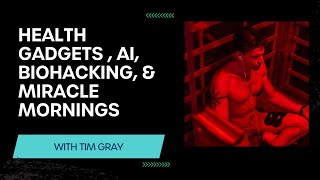
Conversation between Ben Greenfield and Tim Gray (Health Optimization Summit founder) about biohacking gadgets, clinical/supportive modalities, daily routines and AI in health. They discuss devices such as the Human Regenerator (full-body cold atmospheric plasma bed), Neurovisor (light-and-sound meditation visor), breath trainers (Aerofit), vagal stimulators (gammaCore, Pulsetto), blood filtering/pheresis, ozone therapy, and bioregulatory peptides. Tim also describes his health history, use of Miracle Morning practices (silence, affirmations, visualization, exercise, reading), testing approaches (HRV, live blood analysis, NutriEval metabolomics), and logistics for the London Health Optimization Summit (June 16–18; target ~2,000–2,500 attendees, ~120 brands).
Questions this video answers
May 20, 2023
2019
June 16–18 (year implied 2023)
Target ~2,000–2,500 attendees and ~120 brands
About 11 minutes per session (app allows playlisting multiple sessions)
Chapters
There's actually one device that I really want to bring up. I'm not sure if you've heard of it yet, but it's called the Human Regenerator.
No, I've heard about. Have you heard about it?
Oh man, it's a great name. Yeah, it's incredible. So it's basically, they call it health furniture or equivalent and it's a bed. It looks like, you know, white, shiny, very luxurious. It delivers electrons free electrons, negative ions and anions. Basically when you're lying down on a bed for 30 minutes, I would say it's like it's recharging your mitochondria, recharging every cell in your body. Now, apparently it gives off, I think they said, 30,000 volts in a. Almost like a sphere around you when you're lying on the bed in a 30 minute session. It basically is like having sunlight and grounding all in one go, charging yourselves.
All right, Tim, this is going to be fun. Last time we went all over the map on all the crazy biohacks and routines and cool stuff you're up to and some of the insider stuff you get access to before everybody else does. So I know a lot has happened in the past year. I'm stoked. I always look forward to talking to you. And I know that some people might not have just like dropped their podcast player and gone back and listened to the first episode that we did last year. So in case people don't know who you are, give kind of like the Cliff Notes of your backstory and how you got into all this.
Yeah, no worries. So.
Basically, 10 years ago, 12 years ago, I got sick. Doctors couldn't help me. And this is. I was going off of forums and trying all these different crazy stuff on my health because doctors couldn't help me. And all the tests came back normal. So. And I just had to start digging and digging and digging and digging and this thing.
I know, I forgot, sorry. What were you sick with? What was it? Or I mean, what, what symptoms?
Yeah, Well, I was 200 mile an hour business guy. I was running a couple of companies. I was waking up at 8 o', clock, driving into the office, working through till 8 or 9 o' clock at night, eating, jumping into bed, wash, rinse and repeat. So I thought I was just normal human. I didn't realize this was crushing life. Yeah, indeed, indeed. And I started getting chronic fatigue and bloating and.
Thrush in my mouth and a whole load of different things which ended up exploding into a point where I got back from 16 hour flight from Bali and I got stuck with kidney stones in the hospital in my ureter. And yeah, so basically they didn't know why I was forming kidney stones. They said it's something I had to live with for life. And as a result, I spent a whole year pretty much stressed out that I was going to be peeing another one of these things out anytime soon, which is pretty painful.
So how long does it take to pee out a kidney stone?
How long is a piece of string? Yes. I mean, really, it depends on how big it is and how long it's taken you to form it.
But the problem was that I didn't pay it out. It stuck in my ureter for three days and it feels like a knife is cutting you open from the inside out. They do say, and I can't obviously speak from experience, but it's on, on a par with giving birth, if not worse. So I wouldn't wish it for anyone, to be quite honest.
I've heard it's worse than a gun wound. And my apologies to all the women out there who are about to or who have given birth actually recently. Just got done with a podcast with this guy, Dr. Nathan Riley, who's like a holistic OBGYN, who describes it as this sacred orgasmic experience where you're supposed to embrace some of the suffering and breathe through. And like, I actually have seen some data. I think maybe it was the guy who does Freakonomics who did say that gunshot wounds and a couple of these medical conditions, namely kidney stones and gallbladder attacks, are more painful than giving birth. And you know, my, my complete respect to all the women out there, but I think there are some things that are more painful depending on how you approach them and what your breath work tactics are and whether or not you got the, the epidural. But I got to tell you, Tim, not to, not to derail your story too much here. I want to get back into it. I actually had a gallbladder like, like a past, a gallbladder stone, I suppose you would call it. You know, these mineral depositions in the gallbladder. And this was right when I was like on the tail end of experimenting with eating a whole bunch of fats. I had, I had interviewed the guy.
Who, he's, he's the guy who wrote like the croissant diet and the wine diet, and we did a whole interview about all the beneficial fatty acids in pastured pork. And so I thought, I'm going to try and experiment with this. And for like a week I was eating pork chops and bacon and, you know, all manner. Yeah, what else was that? There's pork belly. I had pork ribs, and I was even using this special pork fat that he sent. And like, a week into this, we're sitting at the dinner table, and all of a sudden I feel, like, this intense pain, like, just radiating through my rib cage. I stood up from the dinner table, made it halfway down the hallway, dropped to my knees, belly crawled into the bathroom and nearly passed out on the bathroom floor. And I started doing breath work. Like, I started doing box breathing. Like, four count in, four count, hold. Four count out, four count, hold. And Jess is, like, standing outside the bathroom door with the car keys, ready to take me to the hospital. I'm like, wait, wait, wait. I'm going to breathe through this. But it was. It was like the kind of pain where you kind of wish you were dead. And then after 15 minutes, I stood up, I used the restroom, it went away. And within like, a half hour, I was fine. It was the most horrific pain ever. And I can't imagine having something like that also happening in. In your ureter with. With a kidney stone, but I can only imagine.
Oh, it was bonkers. Yeah, it was bonkers. Absolutely crazy.
Yeah.
Actually, talking about your gallbladder, have you. Have you done a liver flush before? Or what do you think about the liver flushes?
Oh, yeah. You mean, like, where you're doing olive oil, lemon juice, ghee, you know, Dr. Chris Shade @ Quicksilver. He'll even throw in, like, some of his liver sauce and stuff like that. I've done those flushes before. And you certainly wind up with a ton of what appear to be, like, small, white, round mineral depositions in the toilet when you use the restroom, as though the body actually is flushing out the gallbladder. And I don't know if there's a lot of deep science behind these liver and gallbladder flushes, but I think that if you can get through the fact that you're going to have to be near a toilet, which, I mean, any, like, any guy who's done, like, a colonoscopy procedure is kind of used to that one day where you're just. Yeah, you're pretty much tied to the toilet. But, you know, I. I don't think it's gonna. Unless you're severely dehydrated or mineral depleted, I don't think it's gonna hurt you. I would imagine there's. There's probably less intense ways to care for the liver and the gallbladder But I suppose if you put it through the ringer, those, those flushes can be helpful. But yeah, you gotta be prepared to, to be. Be friends with the porcelain God for a.
While.
Oh yeah. So last time I did it, and there isn't a lot of science supporting it, but I do find it, it's fantastic. And in terms of bowel movements for days and days afterwards, it's a lot better. But I did 17 runs to the toilet last time I did one. 17. It's pretty intense stuff. Yeah. But I mean I did get, I cleared out a lot.
Of. I can just imagine keeping track like a prisoner in a, in a cell with the little hash marks on the wall by.
The.
Well, I had a post it note. I had a post it note on the shower curtain.
Yeah. All right, so you had these kidney stones, you had all these.
Issues.
Yeah. And all the doctors would prescribe me as they said, oh, you'll probably got kidney infection and this and that and take antibiotics. So I was taking antibiotics for three months basically. And after that I wasn't digesting food pretty well. My energy dropped to the ground. I got brain fog. I started getting tendonitis because they'd put me on ciprofloxacin, which is a, has a black box warning and quite bad for a lot of people. So.
It'S. That's like, that's like the antibiotic that can cause tendon.
Rupture. Yep. Yeah, it's, it was a slippery slope. And the more doctors I saw, the more that they just prescribed me stuff. And I just, it's one day I went into the doctors and I said to him, you're like, what's wrong with me? And he shrugged his shoulder and said, tim, we can't find anything wrong. And I knew there was. So, you know, I kind of at that point started researching forums. And again, this was around 2010, something like that. So it's quite.
Right. 13, 20 generations, years listening in, have a big question mark over their head when you say forums. But think, think Reddit pretty much like, you know, it's the best place to go for medical advice. Right. The comments section of a blog or forums or possibly the comment section of a YouTube video.
Right? Yeah. And this, this is really before, you know, your Dave were doing anything on content and there was, you know, there was hardly any functional doctors. Instagram wasn't this big, big thing full of influencers or giving the best health advice on their posts and stuff. So you had to really dig into research and forums and look at what people were commenting on. So I just kept on digging and I mean, obviously it came around that I had mercury poisoning at the time from the amount of Malcolm fillings I had and the amount of sushi I was eating and down to my, my genetics. I have, you know, a double snip on the MTHFR and mtr. So I'm not a good methylator.
So the doctors obviously don't test for mercury. They don't test for B12 deficiencies, they don't test for various other things like, such as candida levels and all these things. So of course what they were checking for were showing. Okay. But what the functional doctors these days check for was showing actually there's a whole load of stuff off whack. So really I just kind of took it into my own hands and started researching. And you know, later on I heard about bulletproof coffee and biohacking. And then the space has obviously erupted since then. So it was just a journey of learning and testing stuff on myself. And then obviously it evolved to become a meetup and then onto the health optimization summit where I kind of know, share all of the cool things I've learned and all of the speakers and authors from around the world and just continue to share the knowledge I've.
Learned. When did you start the.
Summit?
Sorry? When did you start the.
Summit? Summit. The first One was in 2019. Pre. Pre Covid. Okay. So yeah, but we had meetups since 2017, so we've had like 16 or 17.
Meetups. Nice timing on that start. Start putting all your energy into the conference before COVID hits. Yeah. By the way, the forums thing is funny that you bring that up because I don't know if I told you this before, but I pretty much like built my business early on in the day when I was first becoming like an Internet influencer, you know, starting online coaching, stuff like that, whatever you want to call it on forums. Like I had like Friday forum day where for eight hours a day I was on like every, in my case this was, this was for the triathlon market. But every endurance forum, triathlon forum, marathon or forum, long distance swimming or open water swimming forum, all I would do all Friday was go in and reply to people's questions, almost like an ama. And it wasn't like self promotional or anything. I was just basically answering questions and trying to be helpful. But as the forums are, are structured, you have like a bio with a clickable link. So in my bio I would always say, hey, want to learn more? Want to get coaching for me etc. And then I have a link back to my coaching website and my training plans. And this was all just like early on, almost kind of like SEO backlinking. Except even then the search engines didn't scrape forums that well. So people wouldn't necessarily find you on a search engine, but they'd find you by being a member of these forums. So I literally like every Friday for gosh, like two years, all I would do the entire day was answer questions on forums. And it actually worked like back then. It was good.
Strategy.
Yes. I mean it was a good. I actually think that I'm starting to go back to using forums again in Cure Zone and looking at Reddit and see what people are talking about because it's often not policed in the same way and you can often find out juicy things that have been blocked in other places. So I actually quite enjoy going back to that area now. But you know, for the last, for the last five or six years it's pretty much been, you know, PubMed or you know, research sites or looking at other authors books and you know, well, you know the.
Drill. So you know, I'm curious for you from like a, from, from, from a biohacking or fitness or health standpoint are when, when you're going throughout your day and you're getting exposed to all these new ideas, tactics, tools, books, etc. What's it actually look like for you as far as how you're structuring your day to be able to research or experiment with or try a lot of this stuff? Are you just like full time doing that or are you writing or what's your actual daily routine look like when it comes to being able to explore this.
Stuff? It's a good question. I mean, I'm a full time biohacker these days and that involves testing devices.
Meeting speakers, hanging out with speakers and traveling around the world and testing different things. Really that's pretty much my full time job these days.
Part of it is obviously organizing speakers and brands with the conference, but really it's testing this. So my day's pretty structured most of the time. I do have a couple of days a week where it's no structure and it's basically just free flow to be in flow state. But generally I work out first thing in the morning and one of the things that I've implemented that has made me so much more productive and happier is actually implementing the morning miracles. And I think I mentioned them briefly on our last podcast, which was.
It's basically based on a book Called the Morning Miracles. And it's, it's about silence, affirmations, visualizations, exercise and reading and you sit down and basically meditate, read, exercise and before anything else. So you awake, you hydrate or do whatever you do your Morning miracles, which sets you up for the whole day, every day. And that's a non in terms of visualizations as you know how powerful they are, affirmations in terms of how they can help you grow so much silence obviously is my form of meditation which where I reflect on the previous day to be better. But really this is the foundation of my day without question and without exception. And after that I have, you know, for instance, the day is structured. For instance, it's my time in the morning to test out devices to do whatever I need before the call Start at like kind of 10 or 11 in the morning and then it's calls through till 2 o' clock and then I have head down time in the afternoon. So I do change this from day to day depending on, you know, depending on the day. But really a lot of my day is dedicated to testing using different biohacks these.
Days. Yeah, yeah. And I think the Morning Miracles, I think it's Hal Elrod is the book and the program. I'll hunt it down and put it in the show notes for folks. But I'm curious just as far as that Morning Miracles, the silence piece, what's that actually look like? Are you just like sitting quietly with the eyes closed and if so, for how.
Long? This is a really great question actually because I've always had trouble meditating. I've always been, you know, 200 miles an hour, not wanting to sit still, always wanting to achieve stuff. And I tried the Sense 8 device which I still use from time to time but it was a staple for me because I found that it the Sensei meditation device help me hold myself accountable to doing it with a.
Device. Describe.
That. However, what the sensei is so sensate is like a teardrop shaped device which you actually put on your chest on your breastbone and it pulses, vibrates or.
On your chest in time with the music or the sounds to help you get into a deep meditative state. It's a vagus nerve stimulation device as well. So it's really think of it as a purring cat on your chest while you're meditating which really takes you out of the mind space, puts you into the kinesthetic position and helps you to distance yourself from the outside world. So for me that really guided me into being more of A meditator. But I still relied on a device When I read the Morning Miracles, however, it said silence. So I would sit there and I would challenge myself to 10 minutes of silence. Nothing, literally nothing. And whatever came up came up. But as I did this more and more and I forced myself to do this instead of meditation. Silence is a key different, like differentiator with it. Because I didn't care what came up. And I found eventually the more that I did it, the more my brain looked for things that I had done the previous day where I could have been a better human, whether it could have been helping someone better, how I could have worded something better to someone. If something triggered me, reflect on that and ask myself why did I react in that way? So every day I'm self correcting from the previous day in my 10 minute silence. So this is really about self growth and understanding things where I could have been better, how to be better. And I found since then I've been a self correcting machine and worked through years of stuff very, very quickly just from a ten minute.
Reflection. That's interesting. It sounds like almost unintentionally it shifts you into a state of, you know, what are many ancient philosophers would have called examine or self examination, even without necessarily meaning to do so. If you let your thoughts fall back into the previous day's failures, mistakes, lessons learned, et cetera. I still think self examination, which I do at the end of the day by playing the day back like a movie in my mind, typically as I'm falling asleep or sometimes with my family during evening meditation, It's a tremendous way to keep in touch with that concept of how you live your day, is how you live your life. Because it's pretty easy to get into this Groundhog Day scenario where you're not really improving, not learning from your failures, not growing as a person, but if you've carved out a certain time of day to actually measure that so that it can be managed, I think it's an incredible tool. And interestingly, I think it was Dr. Peter Martone, who's like this sleep specialist who I had on my podcast. He taught me that if you're trying to fall asleep or trying to relax, if you engage in forward thinking, like planning what you're going to do, maybe when you get up from a nap or the next day, or a conversation you're going to have, or an email that you're going to write or whatever, you actually see a shift in electrical and blood flow activity to the frontal cortex where you kind of host a lot of your ruminating thoughts, and it will increase sleep latency or disrupt napping patterns or relaxation. But the complete opposite occurs if you force yourself to instead think back to. And you can start with very simple things like what I have for breakfast this morning, and what was the first thing I did when I got up, and then maybe what did I have for dinner last night? What was my workout yesterday? Who did I talk to? And you train your brain to start to shift into the past. It's actually an incredible way to. To relax you, because, I mean, Tim, you've probably seen, like, these devices. I think there's one called the ebb ebb that you literally wear around your head. And it circulates cold water near the forehead to apparently vasoconstrict and cause blood flow to shift away from that frontal cortex. And it is interesting because it. Because it does have that same relaxing effect. Unfortunately, it's difficult to relax with this giant headset on. But this idea of past processing versus future processing is something I find really.
Interesting.
Yeah, I mean, they say that, well, it's important to visualize where you want to go, but it's also important to visualize and work through where you've been. And I think it's empowerment opposed to most people. And I've put myself in this category for pretty much my whole life of running around so much, doing so much stuff, and says actually, instead of being, doing. And we are human beings. And I think when you actually start reflecting on the things that trigger.
You.
Or.
You can actually craft them or adjust them. So I think it's a really. In terms of making me grow up as a human and to work through things and make my relationships better. And my health, my psychological health, which means physical health, obviously catches up with that as well. It's been probably the biggest game changer of my last two.
Years. Amazing. And that sensate device, by the way you mentioned, I've messed around with that thing a little bit, and it actually works remarkably well, especially if you do want to, like, silence ruminating thoughts, because it's vibrating. You describe it as like a cat purring on your chest, which is a perfect analogy because that's what it feels like. It's super relaxing. And then, I don't know if this has crossed your mind, Tim, but I thought, well, gosh, if haptic sensations on the chest lull me into a state of relaxation, what if I were to combine this, something like the Apollo, which is like haptic sensation for your wrist or your ankle and sometimes when I want to check out in the middle of the day for a little nap or a siesta, I'll put that sense aid on my chest and the Apollo on one of my ankles or on my wrist, and you kind of get the double vibratory sensation. It seems to work incredibly.
Well.
That's an interesting stimulus of like, for instance, if someone's touching on your shoulder, you can't focus on the feeling on your hand. So it's going to be really interesting how your brain's going to flick between the two things and probably confuse you and really make you calm. Really interesting. I have to try.
That. Yeah, it is. I mean, it's that same theory of, like the guys at Human Garage over in la, they used to do massage on the inside of your mouth where they literally go in with rubber gloves. And it was incredibly uncomfortable and painful, but they always had like two or three therapists working on you. So while one of them was doing that, the other would be like rubbing your head and another would be working on the feet. And you were actually able to tolerate a lot more pain with that kind of distractibility. So, yeah, there's, there's definitely something to it. Hey, you, you said that you have a silence and the meditation, the, the affirmations as a part of this miracle mornings. And then there were two others. One was exercise. What was the last.
One?
So affirmations, silence.
Visualizations. That's.
Right. And.
Reading. Visualization. Reading. Okay, what, what's the, what's the, the fitness routine look for you right.
Now?
So because I've been traveling so much, I found it very hard to be very consistent with gyms and things like that. And I find that I like to keep it consistent. So what I've been doing is using body weight at home or when I'm at my other. Well, either of my homes. Which evolves on pull ups, press ups, sandbags, kettlebells, Roman chair, uh, because I'm working on balancing my, my hips and strength on the lower side, um, and keeping it really light and simple. To be quite honest, I think the main reason was this. I was pushing it very, very, very hard in the gym. And I went from.
Hold on, 67 kilos to 75 kilos pretty quickly, which meant obviously my appetite went up. I felt like I was an eating machine and I was pushing myself a bit too hard. And being an ectomorph, putting on weight and eating is, you know, where you, you know, as a fellow ectomorph, how much you have to eat to Put on considerable weight a.
Lot. I gotta, I gotta exceed 4,000 calories a day to gain.
Weight. Yeah, it's exactly the same. And I actually had a quite big jaw surgery with A biological dentist, Dr. Dom, I think he might have been on your podcast. Oh yeah. And I had quite a big jaw surgery done and so I had to stop working out. And it took six weeks for it to heal actually, just because my body didn't quite want to. So I kind of backed off of the gym. I needed to back off with the eating. And now since then I've just been ticking over and letting my body catch back up before pushing it again. So I think, you know, the, I think the biggest issue that I find with biohackers or questions that I get from my followers is that, you know, they don't, a lot of them don't actually want to work out, they just want the result, but they don't want to put their work in. And I think what I found works well for me when I'm traveling or you know, have a heavy workload such as before a conference is having things that you trip over near you, you know, such as the pull up bar between the lounge and the kitchen or a rebounder next to your standing desk which is just down here. And you know, the kettlebells, which are three feet away so I can pick up and do.
Something. For those of you not watching the video version, I'll link to it. BenGreenfieldLife.com Tim Gray tube. You can see some of the stuff littering Tim's room. And much of the chagrin of my wife. Tim. I'm the same. There's like a yoga swing hanging above the dining room table upstairs I have one of the. I'm trying to get my neck stronger. So right now I have one of those iron neck devices. And so they're right at the entrance to the stairs going down from our bedroom. So I just remember to do it when I walk by it. There's at least three different rooms that have a kettlebell on the floor, a couple more foam rollers. Like you really can't be in any room of the house without something to either do deep tissue work or some kind of quick fitness drill. So I think, I think it's an incredible hack, unless you live with a hyper clean person, in which case you might need a little bit of spousal or marriage or relationship counseling. But nonetheless it actually is a pretty good track. And you know, I'm curious for you, especially with the summit and you know, Your, your public facing image as a biohacker. If you probably a little bit like me, get certain like devices and, and you know, new fitness hacks and gadgets sent your way and if so, if you stumble across anything particularly interesting or something that's going to be interesting at the summit this.
Year. Yeah, there's a few, there's a few devices. I mean one that I'm sure you're very familiar with that is actually coming for the first year for us is the.
Neurovisor. Oh, tell people about it. And I actually have a story about the Neurovisor, but go.
Ahead. So basically it flashes lights in your eyes when you obviously have your eyes closed and you meditate. And I would compare it with making you have hallucinations from certain different hallucinogens and helps you access different mental states or feelings, I would say from taking no substances.
And it basically flickers very fast. Some people obviously can't use it because of migraine trick. Being a migraine trigger maybe?
Yeah. But it's funny because I, when I first saw it, I thought, what a ridiculous device. Like who just another device. But actually the more I've played with it and the more I've heard from other people about their experiences with it, the more I realize actually it's pretty, pretty good device. But I'm intrigued to hear your.
Thoughts on.
It. They sent me their new model a few weeks ago, so this is kind of top of mind for me. And just people know, it's literally like, I don't know if people have seen like a brain tap before, which is like a light sound stimulation machine, but it's like this visor with a set of light panels. You lay back, you close your eyes and then depending on the setting that you choose on the app that accompanies the device, it might be doing a session for creativity or mood enhancement or meditation or deep sleep or what have you. And most of the sessions last around 11 minutes. Although the app has this cool little feature called Playlist where you can string multiple sessions together if you want to do like a neurovisor session for an hour or whatever. So anyways, like Tim said, as soon as you flip a thing on and close your eyes, it feels like you've taken a heroic dose of psilocybin. I mean like you're just off on another planet and sometimes you'll lay there and you'll feel like you've been laying there for like 30 seconds. The 11 minute timer goes off. You're like, holy cow, I don't know what just happened, but it's a, it's a complete disconnect in a very cool way that can shift the brain into these different brainwave states afterwards. So it's almost like a priming for the brain depending on what state that you seek. So, you know, for example, my sons are working on a new card game right now and I've had them running the creativity session where they'll just like drop down for a quick 11 minute neurovisor session during the day before they go to their drawing and their writing. And I think there really is something to it from, from an enhancement standpoint, depending on, on what you want to do. I'm not trying to make this sound like a big commercial for Neurovisor, but anyways, so I have one of these sound healing tables, Tim. And the sound healing table allows you to like pull in any audio from a phone. I mean, you could watch a movie through your body if you wanted to just feel the movie soundtrack rather than just listen to it. But the soundtable also has a headphone port where you can be listening to a track while simultaneously having that track blasted through every cell of your body. So it's pretty cool. And my idea was, well, the Neurovisor has all these built in music tracks that accompany the lights. So why not hook up the headphones, hook up the Neurovisor to the sound table, drop back and do a session and it's stellar, like it's super cool. So. And it's very, very simple to pull off. You have these sound healing tables, you just plug it in, but you're getting the light, the sound, and then the full body vibration from the sound all at the same time. It's a super cool experience. So anyways, I've had my sons do a few too and they're just like, they're, they're enamored with it. It's pretty.
Crazy. Is there a brand, is there a brand on the.
Table? You know that I have kind of like a budget friendly one. It's probably the best one out there. But there's a company called Biomat. They're like a Korean company. They make these infrared mats and, and I think they even have like a PMF mat. But they have what's called a, an acoustic therapy mattress. So that's the one that I have and it's pretty cool. If you want to experiment with an app like that and feeling, you can do the same thing with new calm. You could do a new calm session. And rather than just listening to it. You can feel it through your whole body. So it's pretty.
Cool. Nice. Yeah, nice. I'll check those guys.
Out. Obviously not. You know, I would classify that as a little bit more like a brain stimulation device, but it could be used, like, before a workout, like you were describing, to prime the brain. Anything else in the fitness or the exercise category that you've come across.
Lately?
Well, I like the Aerofit still, and I'm not sure if we discussed this.
Before. Oh, that's breath device. Yeah. Tell people about that.
One. Yeah. So it's a device you put in your mouth, and instead of nasal breathing, obviously it's mouth breathing. But for a few minutes a day, it's not a problem. It's a lung strength and capacity device. So it gives you different challenges. On your phone, breathe out for, like, 10 seconds, and you follow the graph and then breathe in and then hold and then breathe out. And it gives you all these different exercises. You can see how you progress in terms of lung strength and capacity over a period of time. It's actually one of my favorite devices because I think breath work for me is one of those things that I really have to push myself to do. Cold showers or ice baths, you know, doesn't bother me too much, but for some reason, something to do with breathing on a daily basis. A breathwork session is challenging for me to motivate myself. But when I have the device and it's on my, you know, my coffee table where I sit in the morning, read, I pick it up and I do it. And so it's actually really interesting to see your lung strength and capacity increase over a period of time. It's great for, obviously, sports. I found that when I started using it that my headaches were significantly better. My snoring before I had the laser therapy done reduced significantly. And I tracked my. My snoring nightly, um, as well as when I'm swinging, swimming in the sea, for instance, I find I can hold my breath significantly longer than I used to be able to. So it's almost like having a new body when it comes to breathing. And you can see it in the.
Data. Yeah, yeah. I actually met them at the Summit last year, and I have a device. It's up on my bed stand, and I do most of my breath work with my sons. And by the way, for those of you wondering if breathwork ever gets any easier, those first two minutes, it's kind of like a hard workout, like it never does. You just got to get through the first two minutes, though. And then your body kind of falls into the routine. But still for me, after years of breath work, like the first couple minutes, like, ah, here we go. Gotta get the lungs warmed up. But that's, that's totally normal. And so, yeah, I love that aerospace device. Now you mentioned, I believe, the vagal nerve implications of something like breathwork. Have you messed around with any of these vagal nerve stimulators? Like there's one called A. And this is top of mind because one of my friends got a migraine headache and she had to come over last night and sleep at our house. And so this morning I gave her this thing called a gamma core, which you hold up against the vagal nerve on the right side of the neck for two minutes, then the left side of the neck for two minutes. And it delivers this mild electrical sensation that helps to calm a lot of the cranial nerves. There's several other devices that are now marketed and available for personal use as vagal nerve stimulators. But have you ever messed around with any of those.
Tim?
I've played around with a few in the past. Not this gamma core one, which I will actually check out because I get a lot of people talking about migraines and it's a family something that my family's had pretty much their whole lives. So I'm going to explore that one. But there's various different ones that pop up on around.
Trying to.
Remember. The brand is another one, Pulsetto, spelled two T's that's a little more affordable than the gamma core. And it ties to an app on your phone you can set for anxiety, for stress, et cetera. A session lasts like 10 minutes. And that one's nice because, you know, if you it's hands free, it just hangs around your neck and you apply a little bit of electro gel to either side of the neck and that one seems to work pretty well. It's not quite as powerful as the gamma core, nor do I think is it like FDA cleared for headaches. Like the gamma core is for things like cluster headaches and migraines. But it's super interesting. You know, in functional medicine they a lot of times for trauma therapy and stress and anxiety, they'll do a stellate ganglion nerve block of the vagus nerve, meaning they literally use like ultrasound guided imaging and go in to the right side of the neck and typically inject very near the vagal nerve something like exosomes or a fluid and then they'll go and do the same thing on the left side and Obviously you'd want someone who's highly trained to do this because like you're right next to the carotid artery and. Anyways, I had my first stellate ganglion nerve block done by Dr. Matt Cook a couple of weeks ago and it's, it's very interesting. You, you have it done and immediately the entire body goes into Zen mode. I mean I sat up from the table and I felt like I smoked a couple of joints and it was just like total pure relaxation. You could have freaking come in there and insulted my mom and I just would have sat there and smiled. It's, it's. And, and nowhere like the vagal nerve simulators worked but I'd never had anything like that. Like, like a nerve block that just completely almost like reboots the vagal nerve and the nervous system and some of these cranial nerves. It was, it was pretty crazy. I don't know if you've ever looked in one of those, but if you haven't, it'd be cool to have the.
Experience. I haven't, I haven't. But I have played around with the pulse setto and in fact the pulsetto guys are going to be at the conference in June. But yeah, we've, I mean in terms of fitness devices, actually, there's actually one device that I really want to bring up and I'm not sure if you've heard of it yet, but it's called the Human.
Regenerator.
No.
Yeah, it's incredible. So it's basically, they call it health furniture or equivalent and it's a bed. It looks like, you know, white, shiny, very luxurious. It's aimed for, you know, like the ultra wealthy gyms and clubs in Monaco and things like this. Quite a lot of the big, quite a lot of the big tech founders and CEOs have got.
Delivers electrons free electrons, negative ions and anions. Basically when you're lying down on a bed for 30 minutes, it produces the byproduct is mild ozone. So you can just about smell it when you're on the device. It's, I would say it's like it's recharging your mitochondria, recharging every cell in your body. Now apparently it gives off, I think they said 30,000 volts in a, almost like a sphere around you when you're lying on the bed.
And in a 30 minute session it basically is like having sunlight and grounding all in one go. Charging yourselves within this.
This. That's. I'm going to have to try it when I'm So will that be on the expo floor if people want to try.
It? Oh, yes. Oh.
Yes. Okay. It sounds very interesting. You know, you look at a lot of these multimodal strategies, you know, like, you know, the biocharger, for example, that you stand in front of, and it does infrared light and electromagnetic frequencies and. Right. Frequencies and negative ions. Or there's this new institute out in Lexington, Kentucky. I interviewed the guy, Dr. Jeremy Stitch. They developed this thing called the Amortal Catalyst, which is a device that sweeps the entire body with PEMF. But then they have, like, this $150,000 bed. I think there's only, like, one right now that's actually been made. It's in Denver, and it does hydrogen therapy, ozone sound therapy, pemf, infrared light. Everything you'd want to do as far as, like, a fringe, you know, recovery or cellular enhancement modality all at once. You know, there's like that HOCAT device, which is kind of similar, which is like ozone plus pmf that you sit inside and, you know, I don't know your thoughts on this, Tim, but it's very difficult with some of these strategies that you're doing all at once to say that there's any human clinical research behind them, because this stuff's very difficult to study. And I know there's probably several scientists just snickering about these to crazy biohackers experimenting with all these fringe modalities. But from an anecdotal standpoint, I can tell you a lot of these multimodal beds or devices, I think they're just like electrical medicine that you can have at.
Home. Well, the funny thing is this is where the human regenerator comes in, where science is backing it. It's called cold atmospheric plasma, and that's not plasma in terms of the blood, and it's basically anion. Anion gas. And it's used in a healing modality in a small focal, like, for instance, post surgery and things like that. But what these guys have done have actually put it onto a whole body scale. So it's completely and utterly like, if you look at NIH PubMed site and look at cold atmospheric plasma and the applications and the implications for it to, you know, speed up the mitochondria and fix multiple health issues. Some of the more serious ones, which I will not mention, it's fantastic. And these guys have just opened it up to be a full body application opposed to focal little area. So when I first heard about it, I was like, big claim. I think it's going to be Rubbish. But why not? And they said, come out and see us. Come and see the factory in Germany. We give you a demo of it, we'll run through all of the science, we'll show you everything. And it's like I tried it. I was like, dude, this is amazing. It's actually one of the best modalities I think I've used. And I think if you combine the human regenerator and this isn't an ad for them by the way, I just, I absolutely love it. And they've just opened a clinic in London, a showroom in London. So I'm going to be using it weekly from here on in. But they, it's. If you use the human regenerator to recharge your mitochondria, you have ozone IV to kill off any viruses and support your.
All of the things you can get from the city or toxicities and things. And.
Then the new one that I'm pairing with, that is actually blood.
Filtering. You mean like plasma.
Pheresis? Yeah. So basically they take your blood out, they separate off the plasma, they filter it, you see what it's collected, that is microplastics and things and they obviously they put it back in. So I've been having that in Austria and I think with the ozone, with the filtering and the human regenerator, I think you pretty much got.
Charging and detoxification all wrapped up into three modalities. And this is my superhuman stack right now.
Wow. Well, it's made in Germany, so at least we know it's not going to break. You know the, the interesting thing is, you know, I'm curious if you're quantifying this, like whether it be a blood work or heart rate variability measurements or even like some of these newer aging clocks, you know like there's like the Dunedin pace clock or the Horvath clock or anything like that. Like have you actually done any pre post tests to see if it's at least for you as an unequal one.
Working? Yeah. So, okay, so first things first. Heart rate variability, I track all the time, obviously. And I found that after doing the human regenerator specifically then I got about a 20% increase in my heart rate variability. Now I'm a sympathetic dominant type, so my heart rate variability tends to be lower than the parasympathetic dominant, obviously. But I found that my average is almost double since beforehand. And this is when using the blood filtering, the human regenerator, ozone. So it's been a significant shift for me and I think it's partly because viral load, historically I had toxoplasmosis and various other things I needed to deal with. So I think that what this has helped me with is just my body deal with things that have been lurking around for a long time. So it's been, it's been interesting. So the other thing is live blood analysis. So seeing my.
Under live analysis beforehand and then a few weeks afterwards and it looks much better. One thing I did note from that actually was that even though I was hydrating properly, I still wasn't hydrated properly in the blood red blood cell. And I needed more grounding because my red blood cells weren't equidistant, they were still clumped together a bit too much. So looking in real time. Yes. In terms of blood work, I do the Nutrival, which is actually my favorite blood test of all, the Nutrival from Genova Labs, which is the metabolonics test. So you look at yourself on a cellular level and see what your deficiencies.
Are.
Explain that one to people. The.
Nutrival. Yeah. So Nutrival basically looks at your neuronal cellular level. It looks at the expression of the cell. So metabolomics. And so what that does is it can see what the expression of the cell is. And say we're looking at the cell and we see that you are deficient in B12 and here's what you should supplement in terms of a dose to get that cell to where it should be. Now, the basis is.
If your engine is firing correctly, that is it has all the oil, the water and whatnot that it needs to run correctly, your body will do so and it will heal things that it has going on. So looking at the Nutrival on a cellular level, instead of looking at the genes, what could go wrong, or blood work or urine, that things aren't working quite right. Looking on a cellular level, you know what your body needs to operate correctly. So. So that's why the Nutri Eval is my.
Favorite. Yeah, I agree. It's a very comprehensive test if you want something that goes above and beyond your basic lipid panel, complete blood count, metabolic panel, et cetera, because it'll look at things like fungal markers, upstream and downstream, metabolites of certain compounds, amino acid balances for all the different ratios of amino acids, and it gives you a lot more insight than a standard blood panel would based on that particular lab. And that's a blood spot test. So, yeah, I'm a huge fan of the Nutrival and use it with a lot of My clients who want to take a deeper dive. It's interesting too. I was actually doing some research last week for one of my clients whose mom is dealing with chemotherapy right now. And we were looking at modalities that have some research behind them for increasing the cytotoxicity of chemotherapy. And it turns out that a cancer cell that is either heated or hyper oxygenated tends to be far more susceptible to death upon chemotherapy, radiation, or the use of some of these chemotherapy drugs. And so cancer hyperthermia, I don't know if you've looked into that at all. These super duper hot units, way hotter than a sauna. You actually have to wear a rectal probe that's inserted and then you're trying to get the body temperature above, I believe about 107 degrees Fahrenheit. That would be one example of using hyperthermia for cancer. And there's a lot of really good research behind it. But I wasn't aware that ozone and not quite as effective, but secondarily hyperbaric oxygen also pair really, really well with chemotherapy as far as increasing the efficiency, potentially even decreasing the amount of necessary treatments or the treatment time for something like chemo. So, you know, while I'm certainly not a doctor and I don't want this to be taken as medical advice, I think that even for cancer patients, especially those undergoing chemo, looking into some of these things like ozone, like hyperbaric, like hyperthermia, based on some things I was reading recently, so it's top of mind, could actually be a good idea to at least.
Investigate. I agree, I agree. I mean, I have a big background in hyperbaric oxygen therapy. I had London's first private clinic for it back from 2016, which I sold back in 2018 19. But the amount of people that contacted us for cancer treatment support was quite insane. But we were for biohackers and for health, not for cancer patients. So we couldn't really look after them, unfortunately. But the point is there is such a big need for it. It's crazy. And I think as a supporting modality to other things, it's fantastic. I mean, Dr. Scott, share. Our mutual friend is obviously excellent on this exact topic. I've discussed with him at.
Length. Oh yeah, he's a big fan of taking your methylene blue and your nitric oxide precursors and hopping in the hyperbaric, which I think it's actually a pretty good strategy. So, you know, we haven't talked a lot about like, like diet or supplements or some of these, you know, meal replacement trends, etc. I think somebody, somebody sent me a link to this stuff. I don't know if you've seen it before, Tim, this brand new fermented milk alternative called Space Milk. Have you seen Space Milk.
Before? No, I.
Haven'T. Yeah, I scoffed the same as you when I first heard about it. Then I went to. I think the website was like spacemilk.com it actually doesn't look half bad. It doesn't have a bunch of Frankenfuels in it. It's not like the, like the Soylent. But anyways, I thought it was interesting. It got me thinking. Well, I should ask Tim if there's any kind of like, you know, vendors or folks who are going to be the export people you've discovered lately who are doing some cool things in like either meal replacement or supplements. Because I know when people go to the summit they're often walking around the expo floor trying out all these different drinks and brews and blends and capsules and meals and bars. But is there anything particularly cool you think that's going to be interesting.
This year in terms of meal replacements? A really amazing point you raised because there's things like this is Food Company and there's Huel and all this stuff and people keep on come to me and say, oh yeah, I'm super healthy. I eat heel in the uk. Human, it's called Human Fuel Huel, but in fact it's got cyanocobalamin for instance, B12, which is not the active form. It's got various other crap added to it. And people think they're eating, they're having a healthy.
Meal. Probably synthetic folic acid, I would.
Imagine. Yeah, yeah, exactly, exactly. And it's like all of them are like this. And then like even some of my smartest, most successful friends think that they're doing the right thing by eating some of these plant. These meal replacements were often plant milk in them and plant based. I just think there's such a big gap in the market for a very, very clean meal replacement shake with none of the crap in it. So that's something that I haven't been able to source just yet. But in terms of supplements, we've got probably about eight or nine different supplement brands at the conference. We cap it at kind of that kind of level because there's, there's so many available and I don't just want a conference field of supplements, but we've got super botanicals which are tinctures, super clean tinctures. So there's One for libido, one for sleep, one for meditation, and various other things, which is a really nice brand I've been testing for the last few.
Months. What's the.
Brand? Super.
Botanicals. Super botanicals, huh? Okay. And this is like a tincture that you would put into your mouth and hold for a.
While. Yes, that's right. And they're actually like every single brand at the conference obviously has been vetted by me. And that means I've tested every single product or I've used every single product or do use the products that are on the floor. So that's, that's probably the newest kid on the block in terms of what I really do like. And I'm not sure if you're familiar or have worked for them or not, but timeline, nutrition. The urolithin A.
Guys. Yeah.
Yeah. So I love, I love their urolithin A supplement, actually. And I especially like their whey protein. I really. That's just one, like, if there is a meal replacement, it's.
That. And that's just like a clean whey protein that they've added. Urolithin A, which is kind of like a. It's like an age reversal longevity type of compound that acts as a cellular protectant, repairs DNA a little bit. It has some mitochondrial enhancement properties. It's very interesting because you can actually make it yourself in your gut from the right type of probiotic strains or a, you know, wide intake of a variety of fermented foods. And then you can also produce quite a bit from a lot of the fibers and oils and components of something like wild blueberries. But from what I understand, timeline has kind of like hyper concentrated it. I have a bunch of their stick packs up in my pantry and I'll occasionally toss one into my smoothie. But that's, that's, that's a big one for.
You. Yeah, I love it. I mean, it's one thing that I have every single day in terms of.
Supplement like that, and I just, I find that it works well for me. They've just actually sent me the new face cream, morning and night face cream, and they said that it really helps with tissue.
Regeneration. But they sent that to me too. I started using it like last week. But I have people make fun of me because I have like a whole pantry full of all these skincare products that get randomly sent to me. And I, you know, it's, it's like six of one, half a dozen the other. But it is interesting to put urolithin A in a skin Compound. It seems to make sense. And I think I checked out a little bit of the research on their website and doesn't, doesn't look half bad. It's obviously a clean, you know, cream or lotion. And you know, you talk about the meal replacement thing, Tim. It's funny because, you know, I have the supplements company Kion and we're like super simple over there, right? We just like, we choose really good ingredients but we try to make supplements that aren't super fancy. Like not all these crazy formulations and you know, things that can be difficult to source and keep in stack and hunt down raw ingredients for. But I remember a few years ago I actually looked into formulating a meal replacement that because of its complexity and weirdness and the uphill battle with the flavor profile, as you'll note, as soon as I explain what it is, we didn't really bring it to market. You can make it yourself. It's essential amino acids. I tried to get as close to like the composition of breast milk as possible with a little bit of extra fatty acids and proteins. But you do, you do, you put this into a blender on ice, you do a couple scoops of amino acids, you know, like 10 grams or so of amino acids, then you add colostrum and then you use ketones because actually, or you could use MCT oil powder as well. And then you use like a really good monounsaturated fat source like an olive oil or an avocado oil or macadamia nut oil or what have you about a tablespoon of that, a couple scoops of aminos, a couple scoops of colostrum and then like around 30, 45 mil of these ketone esters and you blend all that with ice and you know, there's a low hanging fruit and an idea for anybody who wants to get into a complex meal replacement formula idea, but I would certainly sign off on that one. I've done it a few times. And I mean considering you've got like in a giant smoothie bowl, you know, like maybe 200 calories and it's satisfying a ton of different needs across the board, which would be amazing too if you're trying to lose weight and not have high calorie intake. That's my meal replacement blend.
Idea. That sounds amazing. I mean, with Colostrum, to be honest, I love that stuff. We've actually got a brand that's doing a super clean grass fed colostrum at the conference this year. But one of the supplements, I do want to give a Shout out to, or should I say talk about right now is the bioregulators. So there's a brand called, I think it's Profound Health. Yeah. So we've got. They do thymus gland, they do prostate gland, they do kidneys, they do liver, they do red blood cell, they do bone marrow. Like bioregulators are obviously.
Peptides. Yeah, they're bioregulatory.
Peptides. Yeah, exactly, yeah. So peptides in terms of injectables in the UK aren't allowed yet other than for research purposes, but bioregulators, which are the capsule formulas, are fantastic. So I've been testing those for a few months now. I really like the bone marrow one. My body went in muscle testing. Kinesology seems to really like the bone marrow one specifically. So I've used that one quite a.
Lot.
Yeah. But yeah, that's one of the exciting brands for me at the conference actually this year because I've wanted a bioregulated brand for a long.
Time. Yeah. I don't know if you heard my interview with Phil Mikans, who has studied up on a lot of the work from Russia, namely the work of Dr. Kavinson on the decreased all cause risk of mortality and very impressive age reversal results in both rodent and human models with the use of these bioregulatory peptides, probably the most well known being epitalon or epithelium, depending on how you want to pronounce it. And based on what I've seen in my discussions with Phil, with Dr. Cook, with a few others in the peptide community.
I've done For the past two years, twice a year, a 10 day stint of peptides. You know, if you, if you do them all, you know, every oral one, you know, the one for the thymus, for the liver, for the gonads, for the spleen, for the pancreas, et cetera, it's equivalent about 30 capsules a day. But even though you can't do it over there in the uk, here in the US there's a few companies that have a liquid injectable where it's all in the liquid and the peptides don't interfere with one another, they're all mixed together and you just draw up a syringe with, you know, like, like about 50ccs in saline water and you just inject that once like subcutaneously around the ABS for 10 days. And it's not one of those things where you feel like a million bucks right away, but you're kind of like looking at a lot of the longevity data and seeing what happens from a mitochondrial and a telomere shortening and a methylation clock standpoint. And I really think it is, you know, there's, there's like almost 40 years of research in Russia on these things, yet they're just now hitting the us it sounds like they're kind of new in the UK as well. But oral or injectable bioregulatory peptides I think is an absolutely amazing.
Idea. I think Game changer. I think they're a game changer personally, as with peptides in general. I mean it's going to challenge the pharmaceutical industry in the coming years, I think once they're a bit more released. But it also means that the.
FDA is being a little bit naughty about it over here. No, they don't, they don't like peptides very much. So it's kind of.
Difficult. Yeah, I wonder why.
Yeah, it's a shame. But I mean I do think that once they're regulated and properly pharma manufactured and whatnot, I think it's going to be a good thing for the world when they are. But in the meantime, the bioregulators are great. I'm very happy with them. I mean I was testing several peptides at one point. One of them was kpv, which was an anti fungal for my. I had a mold issue in my home and so clearing that out and I found that that literally smacked me around the face. I had to be very careful with it. But generally they are great. But again that's an injectable. The bioregulators in capsules are so easy. Yeah. And I find them to be super.
Effective. Yeah. And I mean like it's kind of the same idea behind like organ glandulars. Like there's companies over here in the US like ancestral supplements, about like a bottle of powdered thyroid or a bottle of powdered liver, pancreas or spleen. And some people scoff at this idea of like supports like, like if you eat a specific organ it goes on to nourish the target organ in the body. But they've actually done amino acid tracer studies on some of these glandulars and showed that the peptide fragments actually wind up in the actual organs in significant amounts based on the glandular extract. Considering I haven't seen similar studies for the bioregulatory peptides, I'm sure they exist probably in Russian literature. But based on the fact that these are fragments that are way shorter than just like eating the glandular, it's kind of like A hyper concentrated version. I would not be surprised if the same thing is going on with the peptides. And speaking of peptides, by the way you talk about that KPV1, which is also amazing for pain and inflammation, but one that my wife and I have been experimenting with a little bit on date nights. It's a troche, actually. I, I just have a doctor and he, he calls into the compound pharmacist and I just have it sent up to my house as a trochee. But, but it's amorphine, which is kind of like, kind of like it's a disinhibitory type of compound and kind of makes you all loosey goosey and touchy feely. Very similar, something like oxytocin. And then he compounds that with tadalafil, which is of course the active vasodilating component of Viagra and PT 141, which is like the king of libido enhancing like sex machine peptides. And if my wife and I take one of those trochees, you know, like whatever, about half hour into dinner on a date, by the time the date's over, we can't keep our hands off each other for like a good six to seven hours. Like it's crazy. So obviously not something you use every day. But that stuff is amazing. With the only side effect being of course you don't sleep well if you're a dude because of the, the, the intense prior plasmic effect of the PT141. But if you can overcome the, the, the, the effects of pitching a tent the entire night you're asleep, that's actually a pretty good stack. PT141Amorphine at.
Delphil. I would love it. I would love an.
Intro. His name's. Okay, I'm just going to say his name because now his phone's probably going to blow up. It's Dr. Mark Major down or Dr. Mike Major down in, down in Phoenix. He compounds it for me like he had. He gave me one once, told me to try it on a date night. I tried. I'm like, dude, where can I get more of these? These are amazing. So cool. So, so as far as the, as far as the summit itself goes, anything else you think it's going to be particularly interesting there that you're excited about, whether from an experiential standpoint, like any of the parties or breakouts or dinners or speakers or vendors or anything.
Like that.
One thing I've got to say is it's going to be the biggest One yet. So that's number one. We've got more people than we've ever had before. So we're looking for 2,000. We're on target for 2,500 biohackers and there's 120 brands which is like nearly 30% bigger than last time. So it's going to be a bigger experience. We've got a side event happening in Piccadilly Circus on the Thursday for our title sponsor which is the Monk Ice Bath. I'm not sure if you saw that last year or not. Then that will have breathwork, ice bath, sauna and the whole experience.
You know. You know in the center of London where the big lights are big on the corner, it's basically we're hiring that space there. So we've got that on the Thursday for a side event. So it's a really nice side event going on there. The Friday night is the VIP experience for the speakers and the VIPs in the evening which is going to be again it's always a nice, that's my favorite part actually. And then over the weekend we've got a Saturday night party.
At the venue and then Sunday down at wind down party afterwards. And I think, I think actually you're, you're doing a month. I think you might be a Monday event as well over at the Human Lab I think from memory as well. So that's going to be a.
Nice like a side biohacking event over there too. So plenty of excuses to go to London. It's June 16th through the 18th, right.
Tim? That's right.
Yeah. 16th through 18th or June 16th through 18th. So yeah, I recommend if you're in the area. You know what's funny? I know that you posted to your social media Tim, asking if anybody had questions. I don't know if we'll have time to get to many of them today, but I saw one question that came through was what are the opportunities and risks associated with using AI for health optimization and information? I don't know if you have any thoughts about that maybe while you're, while you're noodling on that. I actually prior to coming over to London for this upcoming summit, I used GPT and I think you're putting me up at like the, the King's Cross Hotel or something like that. I asked it for a good 2 mile walking itinerary for each day with every stop that I could make along the way to see London culture. Places that weren't really tourist traps but that a lot of the locals frequented. I Asked it to give me a 1 to 2 paragraph summary of the meaning and the history behind each stop. And then also recommend a restaurant with good local farm to table style organic food for each night based upon that walking itinerary. And so within like 60 seconds it had spit out what I would normally pay a travel agent, like you know, a thousand bucks to create for me. All right there, printable entire walking itinerary for London, which was, which is pretty interesting. Not that I want to put any travel agents out of a job. Hopefully this just allows travel agents to scale what they do far more effectively and by using the right prompts, do a great deal of good for their current clients. But what do you think about the emergence of AI and GPT and where that might tie into what you're doing with health optimization or.
Biohacking?
I think the application for it is going to be amazing when they allow it for discussing medical terms or medical things. Not that we sit necessarily in the medical side of things, but anything that chat thinks is medical esque, it says we can't diagnose. But I heard last week that actually that they, they used AI to give it a load of symptoms that someone was having and it successfully diagnosed a 1 in 100,000 chance correctly diagnosed someone's condition. So I would say if you're hunting around for a doctor in the future and you can't seem to get to the bottom of what you've got going on, you know, chat AI for instance, can look at everything and give you the odds of what it could be. So I think that it's potentially massive for the future. But I do think considering who owns it and that it's not allowing medical diagnosis or support right now, that it could be limited from doing.
So. Right. Data privacy and security issues are the main concern for me. Obviously if, if you're using GPT frequently to diagnose health issues, then you know, if, well if you're like me, your health information mostly out there in public anyways with all the lab tests and stuff I push out online. But for the average person who wants privacy protection, you know, you should proceed with caution. It's, it's kind of like you know, self Googling or using Dr. Google but on steroids. Particularly if you use these newer autonomous agents which basically use GPT4 and you'll tell it something like, whatever, I have a strange growth on my right forearm and it'll go down this deep rabbit hole, it'll tell you, okay, step one, we're going to take a picture of this and do this, this and this. Next, I want you to install this browser extension and this app to your phone, which are going to allow you to upload this in high pixel format so that AI can take a closer look at it. And then the next step is here's the list of different telemedicine experts who are connected to these apps who can help you. Like, it literally is like putting the computer to work for you, which is pretty amazing. And then I guess from less of a GPT standpoint, some of these new voice and video recognition technologies, like there's one I've been messing around with called Omotone, they originated with research on the ability to be able to diagnose or early detect Covid and it's all based on voice signature data. And now it's to the point where it can detect certain deficiencies, certain areas of muscular tightness. And I raised an eyebrow on it and I did a few different omotone analysis and it Correlated with almost 100% accuracy to symptoms, to blood work, to muscle tightness, to areas of previous injury. Nuts. And then a similar device called the Attune uses face recognition blood flow technology to look at HRV blood pressure, heart rate, stress levels and, and brain wave patterns based on a video analysis that takes like 90 seconds of your face. So I think some of these, some of these new technologies, kind of like that old tricorder in Star Trek, that literally can be used from your phone via your voice and video analysis to detect and identify different symptoms and medical issues, sometimes in a very preventive fashion, is, it's, it's, it's intriguing. I think we're kind of, kind of just at the cusp of all the different technology that's going to be at our fingertips. Again, similar to a travel agent, not to put a doctor out to have a job, but to instead hopefully allow doctors to go out and do even greater things with potentially a little bit of extra time on their hands, you know, like finding a cure for cancer or.
Whatever. Well, imagine, imagine we can fit in our aura data or my fitness pal, our recent blood work, our microbiome, you know, our recent symptoms and you know, diagnosed from a 360 is much better than any doctor or any functional practitioner or any standalone test could do. Yeah, it's pretty, pretty crazy, isn't.
It? Yeah, it's pretty impressive. So I know that, gosh, if, if you guys are listening and you want to come geek out with a bunch of people and just like talk about this stuff at parties till you're blue in the face and go to some amazing meetup events. Check out all these Expo 4 gadgets lay in that cool overpriced bed Tim was talking about and everything else. Come to the summit. I'll. I'll link to everything that Tim and I talked about in the show notes@bengreenfieldlife.com Tim Gray 2 and I forget. I got like a link and a code for people to save on a ticket. I forget what it is, but I'll put that in there. Or you can go to BenGreenfieldLife.com calendar if you want to check out the London event and everything I'm up to over there and get a discount on other VIP ticket or one of the one of the regular tickets. But it'd be cool to see a lot of, a lot of podcast listeners come out and Tim and I will both be there. So you can come say hi to us and talk to us about any questions you have from this podcast. Listening to two crazy dudes talk about the unproven biohacking modalities that hopefully someday get proved by science.
Right? Yeah, for sure. They're happening one by.
One. Yeah. Well, awesome, Tim. Well, it's always a pleasure talking to you and I guess I'll see you in what, less than two months or.
So. Yeah, see you in six weeks, mate.
Yeah. All right, cool. Well, folks, thanks for listening in. I'm Ben Greenfield along with the great Tim Gray from the Health Optimization Summit in London. Again, show notes are@BenGreenfieldLife.com Tim Gray 2 spelled an A. Tim Gray, the number 2. Thanks for listening and have an amazing.
More from Ben




The Solution to Aging Might Be Closer Than Anyone Realizes - With Ben Goertzel



