The Man I Call "Scraper": Snowboard Shredding, Fascia Fluffing, Protective Chakra Energy Balls &...
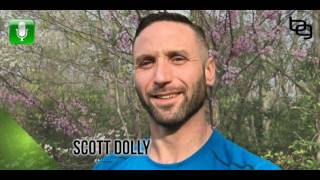
Ben Greenfield talks with Scott Dahli about scraping tools for fascia adhesions and soft tissue work, how they differ from foam rolling for dense scar tissue, and his approach to movement screening. They also cover qigong, Reiki, and other energetic practices Dahli uses alongside the hands-on work.
Chapters
Howdy. Howdy. Hey. That's how we talk in Washington state. I swear, if you've ever been here, that's exactly how we talk. Hey, it's Ben Greenfield, and in today's show, you're gonna hear an interview with this dude I call the Scraper. This cat showed up at my doorstep a few months ago and we went shredding on the snowboard. We did a bunch of fascia fluffing. We made protective chakra energy balls. We went off the deep end. You're gonna really dig this dude. Before we dive into the discussion with him, I want to tell you about how crank your muscle gains to new heights by flooding said muscles with huge amounts of amino acids without actually increasing your protein intake by a single gram, but by instead breaking down every shred of protein that you eat in an extremely complete way. It's this stuff called masszymes. I've had the cats who create this stuff on my show before, and they make one of the most powerful digestive enzymes on the face of the planet. Then they combine it with the most potent protein digesting probiotic in the world called P3OM. It's a super powerful one two punch combo that helps you break down protein and reduces the demands of your digestive organs to actually break down and process food. So you clear away undigested protein that would normally be able to just rot in your gut and allow bacteria to thrive. And instead you produce a whole bunch of neurotransmitters and you free up a ton of amino acids for muscle repair and recovery. So it's called called Buy optimizers. And the 1,2 combo is the combo of Mass Zymes and their P3OM probiotic. You get a 10 discount off of that 1,2 combo, and all you need to do, no discount code required, is you go to BenGreenfieldFitness.com Biopt as in B I O, P T. That's BenGreenfieldFitness.com BuyOpt. This podcast is also brought to you by the best green superfood powder on the face of the planet. It's not heat oxidized. It's not sprayed with a bunch of chemicals. Instead, it's a gently dried superfood powder. They infuse it with coconut. They infuse it with ashwagandha, which can increase testosterone and decrease cortisol. I love the taste. I could drink this stuff all day because they add mint and spirulina and beets and matcha, green tea and wheatgrass and a whole bunch of other superfoods to it tastes amazing. And there's no juices, there's no mess, there's no cleanup. You get a 20% discount off of this greens superfood blend. How you go to BenGreenfieldFitness.com Organifi that's BenGreenfieldFitness.com organifi that's O R G A N I F I and the discount code that you can use to get 20% off of any order from BenGreenvilleFitness.com Organifi is the discount code. Ben so enjoy that tasty goodness. Be sure to brush your teeth afterwards. Get rid of all the greenness on your lips and your cheeks and tune into today's show because it's a doozy. Enjoy in this episode of the Ben Greenfield Fitness Show.
And it is way, way healthier because you're also loading weight closed chain. You're loading your spine now. You get bone mineral density. You get endocrine system response. You get proprioceptive feedback efferent signaling. If you're looking at your training open chain to closed ch, most of your training should be closed chain. I got some meditative quartz crystal singing bowls which are used for meditation and chakra tuning. And I was at this event where I took them to and this lady just came up to me and she said, I didn't know who she was. She said, young man, do you know how strong of an empath you are?
He's an expert in human performance and nutrition, voted America's top personal trainer and one of the globe's most influential people in health and fitness. His show provides you with everything you need need to optimize physical and mental performance. He is Ben Greenfield.
Power.
Speed, mobility, balance, whatever it is for you, that's the natural movements get out there. When you look at all the studies done, studies that have shown the greatest efficacy.
All the information you need in one place right here, right now on the Ben Greenfield Fitness Podcast.
Hey, folks, what's up? It's Ben Greenfield, and I have to admit that I've met a lot of interesting characters and crazy cats in my life. And my podcast guest on today's episode is is absolutely no exception. His name is Scott Dali, but I am, for the purposes of this podcast episode, going to call him the Scraper. I don't know if he's open to that idea, but perhaps we'll find out later. Anyways though I first met Scott in Costa Rica. We were at a digital detox, hot yoga and adventure getaway retreat called Runga R U N G A Runga. And that's the same event at which I hung out with Eric, who's also a previous podcast guest who appeared on the how to Cure Yourself of Cancer episode in which he described how he cured himself of stage 4 cancer using a whole bunch of fringe modalities. Fantastic source of knowledge. So I spent a lot of time with him in Costa Rica at this Runga event. I also spent a lot of time with another former podcast guest who originally introduced me to Scott Joe DiStefano, a Spartan Racing bigwig who I interviewed in the episode about travel, proofing your immune system, underground bodyweight workouts, and a whole lot more. So I'll put a link if you want to listen to those other two episodes up over at BenGreenfieldFitness.com TheScraper that's BenGreenfieldFitness.com thescraper so anyway, speaking of this gentleman, Scott, a few months after Runga in Costa Rica, Scott pulled up to my house in Spokane, Washington, which he flew up to from his place down south. And he pulled up in a big black SUV jam packed with snowboarding equipment and a bag full of all these strange body adjusting and almost like scraping tools. And the ensuing weekend was like this geek fest of biomechanics and physiology and him fixing my fascia and all this woo woo chakra energy work and amazing meals that we ate together and a whole lot more. And in today's episode we're going to take a deep dive into the huge body of knowledge that Scott has, especially when it comes to fixing your body. This guy is high in demand when it comes to all things fascia. So Scott, welcome to the show man.
Thanks man. Been had my eye on your show for a while and just following you as another, you know, kind of person out there cutting the way here for all of us. And it's cool to be on here man. Thanks for having me.
Yeah, no worries. And by the way folks, Scott has a master's degree in athletic training. He's a certified strength conditioning specialist. He's an instrument assisted soft tissue mobilization specialist and he's also for the past 11 years a certified Reiki master. But it's that instrument assisted soft tissue mobilization specialist piece that I wanted to jump into right away, Scott, because when we first met at Runga in Costa Rica, you took out this like briefcase full of medieval esque torture tools and you proceeded to scrape me. And I'm curious if we could start right there. Like what exactly do you do with these Tools, how do they work?
It's a great place to start. When you look at healing the body and all of the modalities that we've gotten ourselves into here in the United States and around the world, the fascia has been just, I mean, completely overlooked. It's like even in cadaver lab when you're in school, you just pull the adipose tissue out of the way, cut the fascia out of the way and you're like, look, the biceps. So what we're realizing, you know, these days out on the cutting edge of how to align the body, how to heal the body, how to increase nerve conduction velocity, how to restore movements, is if your fascia is bound up, then you're not going to move correctly. It's just, it's that simple. So when you are trying to get into healing a specific injury or a certain pathology, or just, you know, my knee hurts, say for example, after five mile runs, I don't know what I did. It's just tracking a little off the whole time. And most of the time it's just like these fascial adhesions that are something stuck to something else. So now the gate hinge doesn't hinge correctly and now you have chronic knee pain. So it's pretty, pretty amazing what you can do with this set of tools that just kind of get you some purchase, get you some connection with the micro adhesions or major adhesions that are in the fascia, muscle to muscle, muscle group to muscle group, or intramuscular adhesions that are just having a toll on our bodies. Okay, there's no self check system.
If I could interrupt real quick, like when you say intramuscular adhesions, a couple of things come to mind. First of all, you showed me this video actually when you were working on me. We were like sitting in Costa Rica, looking out over the city, way up high on that yoga retreat mountaintop we were at. And you pulled out your laptop as you were, I think you're working on my back or my shoulder, and you showed me this video. It was like a five minute video and I'll link to it in the shownotes over@bengreenfieldfitness.com thescraper and it was called the fuzz speech and it had to do with these adhesion. So, so why'd you show me that video? Like, like what is it about that video that kind of outlines what you're saying?
Like if you, if you tell people what's fascia? You know, some of us that are in the game. It's like, we know, but other people is like, what is fascia? So what Dr. Gile Headley has done, and that video is from 2005 or something. I mean, he's been doing. It is. It really shows.
What's his name?
Dr. Guile Headley. I believe it is Guile Headley.
Okay.
Yeah. It shows people, like, if you sit in a car for three hours and you get out, every person on this planet will stretch. Why? Why do you feel like you need to go, oh, my goodness, I just sat for three hours? It's the human condition of all of this. Sticky, white, viscous. It's fluid, and it becomes hardened material in our body. Collagen based. Fluid based. That literally makes us, or actually makes us. It's mostly collagen based. It's extremely strong. We can talk about some research today where they've researched the tropo collagens that make the collagen are actually five times stronger than steel. So we're really walking around five times stronger in steel. If we were just to, like, train, right, move, right, open ourselves up to letting ourselves be as strong as we can be. We're walking around in machines, Ben. And we're not training them right. We're not healing them. Right.
What'd you call it? Tropocollagen.
It's a tropocollagen.
And what is that?
So when you get into, like, the matrix of what our fat tissue is made up of, three main components jump out. Collagen, reticulin, and elastin. Collagen is about 75% or more of what makes us us. Then there's different types. We don't need this to turn into a, you know, histological lecture. But collagen is the stuff that makes us. So within collagen, right, you can just keep diving down the rabbit hole. Then there's microstructures that make collagen called tropocollagens. When you stress a tropocollagen or a collagen, you could stretch it out lengthwise, and that's called a tensile kind of stress. Or you could shear straight across it, and that's a shearing stress. If you stress tensile collagen, it's five times stronger than steel. If you go shearing force across ruptures, a lot easier. So our total capacity to generate force or absorb force has a lot to do cellularly with tensile and shearing forces of the tropo collagens within the collagen that makes US real world example for people that couldn't really necessarily follow that is your ACL rupturing because you planted to cut, right? Just running and your knee slid forwards, it sheared across the femur, the tibia sheared forwards on the team, on the femur, and now you rupture your acl, right? That's a shearing force across it. Whereas if you were going to keep everything aligned, five times stronger than steel, baby. You got parkour, people. You got, you know, American Ninja Warrior, Spartan athletes. You have right now, athletes are really, really breaking the mold of what we thought people could do. And I promise, we're just getting started.
Wow. Okay, so, so the scraping tools that you. These are all manner of different, like, sizes. They're like butter knives and like freaking, like little, little handheld things that you're putting between your fingers. Like when it comes to this tropical collagen stuff that's like stronger than steel. How do those little tools even make any difference when it comes to moving my fascia around to get it kind of aligned or oriented in the way that you would like for it to be if you're correcting a imbalance or say, like, you know, shoulders too far back or too far forward or something like that?
Yep, awesome question. So, you know, for the people that are familiar with foam rolling or, you know, mobility ball stuff, right, like, you know, shout out to K Star, Kelly, Star. Anyone hasn't, you know, bought the Supple Leopard and just geeked out on it, please do. It's a great starting place. It kind of gets into surface area ratio, like, right? I could roll in this foam roller and then I got this 6 inch in diameter thing rolling across my fascia. You know, as an n of 1, 1 person research for yourselves, go roll on a foam roller, stretch your hip flexors out, say a deep lunge stretch or a couch stretch. Roll in a foam roller for five minutes on your hip flexors and then retest that. I bet you you're going to have more length. So that's all the way across all the quadriceps. If we get into what you really did there. Vastus intermedius, vastus medialis, vastus lateralis. You just kind of got them unstuck from each other and that actually works.
The reason I'm interrupting you, dude, is because I had this guy on my show.
A couple of months ago who does this form of training called Eldoa and he was very adamant on the show that foam rolling does absolutely nothing because the connective tissue is just too dense. And too hard for a foam roller to even make any kind of a difference. And you seem to be saying something different. So does the foam roller. In your opinion, have you actually observed it to cause any type of mechanical shift in this tropic collagen or this fascia?
Without a doubt. You know, I treat, man, I'm somewhere like 40,000 plus, you know, clients in my career from around the world, you know, internationally, nationally, plus just the 70 people I treat a week out of my place in Winchester, Virginia. It's measurable and objective. There's actually, you know, research out right now. I believe you've quoted the research on some of your shows where they're actually like, yes, this does affect the actual fascia collagen nature. You can affect your collagen just by stretching. So it gets. I'm not going too big of a tangent here. I'll tie it back in. But there's elastic changes and plastic changes within our musculoskeletal system and our fascia. So stress, strain, curve. If you just warm up for a game and you're a little looser, you have made an elastic change to your tissue property. I'm warm for the game. I cool down after the game. My hamstrings aren't any longer, but if I stretch long enough, not even use anything, if I stretch long enough, I can create a plasticity change. And now I actually have an inch more of muscle tissue length. The Aldoa Method 1. I support it like, you know, anybody listening to this? Check Aldoa Method out. It's awesome. I think the young man you had on your show, he just hasn't really had enough life experience to see, like, scar tissue, man. I mean, you know, I'm working with a lady right now that has full blown adhesive capsulitis of the shoulder, frozen shoulder, where the fibroblasts have just become hyperactive and they are just laying down collagen. Fibroblasts are the name of the cells that make collagen. And they're just laying down collagen like their life depends on it. They've gotten a hyperactive state. They're building collagen faster than we can stretch it out. And we're battling that right now. So when you get dense scar tissue stuff, what this young man is saying, he just kind of, like I said, he's just awesome, dude. I listened to that podcast. He just needs a little more experience with some hardcore adhesion stuff. If you have scar tissue formation and it is dense and hard, will a foam roller affect that I would agree with him. Probably not. You don't have the surface area to pressure ratio needed now. You know, give me a surgical stainless steel tool with a beveled edge specifically designed to floss the trough between vastus lateralis and it band or to get in and around the articulations of your malleolus on your ankle to help get the talus unstuck so you can get to full dorsiflexion. Let me push you when you with that tool and talk about how much force can I generate, how can I wedge this tool in here to open stuff up? And I break apart scar tissue and affect collagen all day, every day. It's not even a, it's a no brainer.
And these tools, these are, these are originally called like Graston tools, right?
So the whole history of that, if we want to go like way back in the day and give a shout out, we would go to like Roman times. They would actually bathe the athletes and competitors and then scrape their skin preparing them for battle. Now next to that we have Guasha, which came out of China, which is scraping of the skin. They have a lot of eastern methodology and concepts to that about what it's doing to your chi, your meridians, your flow, but you're also getting some superficial tissue stuff going on. And then in 1987, ish David Graston came. He was an engineer here in America and he had like water, he had patella tendonitis or something. He was rolling a number two pencil on his supra patellar tendon and it actually started making it feel better. Long story short, he talked to some medical colleagues, said, is there anything here? He came up with Graston tools. So a lot of the times people will say, oh, you're getting Graston technique. Well, in 1987 you were getting Graston technique. Nowadays there's Graston, Hawk Grips, Adhesion breakers, K Tools, which is kinectools out of, I think United Kingdom or something is where K Tools are out of Kinectools. The Fibroblaster. Eric Creasy. There's a bunch of tool makers in the game. Graston is just another tool maker in the game. I align with Hawk Grips. One, I'm a scientist. It really has been just scraping something on the skin. A butter knife is a butter knife. These are $600 butter knife specifically built for fascia. Right. Like maybe it does a little bit better job. So the, the weight of the tool, the bevel of the edge how it fits in my hand, it really is just the more familiar you get with it, the more you can tell a good, good tool for a good tool. I love hot grips, you know, but to speak about it, if there's a Graston practitioner near, you go see them. The tools work.
Yeah, yeah. Now, now, now the skin turns all red. Like. Like, there's almost like a red rash. And you'll see this. A lot of times, like, on Instagram, people have worked with a. With a scraper who have done Graston or, you know, have used, like, these hock tools that you're talking about. Like, you get work done and the skin turns really red. And you. When you worked on me, you were using that, I think, the way that you described it as a way to get clues about areas of the body that actually needed work. Like, you'd scrape me and you'd be like, you see that red mark? Like that right there? That area needs work because it has a red mark on it. Can you explain how that works? Like, why the red mark appears and then how that gives you clues as to where to work?
I'm actually excited about describing this part on your show just because of the reach you've created on your show. You know how most things work in this world where we'll build in a certain direction, and then maybe we're a little wrong, and then we have this massive swing in the other direction. We're like, okay, you threw the baby out with the bathwater people. So Gua Sha purposely tries to, like, make your skin red, form a bunch of these dots and stuff. And that's a little. The goal of the treatment is not to make the skin red. The goal of the treatment is not to bruise people. And that is what's like creating this big swing and stuff. However, if there's an accumulation of Patakii, which. If I punch you and I rupture blood vessels, that's a bruise. That's a contusion. If I'm doing advanced manual therapy or ISTEM and I'm releasing capillaries from fascial restriction, and I'm getting these little red dots of histamine and blood flow from a restricted capillary that busted. That is totally fine. As those layers of protechiae start to build. Now, really, you can just do too much in one session because the person's lymphatic system isn't going to drain all of the work you've just done right from that. Like, I've had deconditioned patients and I've had, I mean NFL athletes, a deconditioned patient that maybe sits around, smoke cigarettes. They may take a week to heal. You're still looking at their skin like, wow, you still have stuff on your skin. I was working with a professional golfer one time who was taking vasodilators before he worked out pre workout supplements, just training at a high level. Two days later you couldn't even tell I worked on the guy. I mean his system just rolled through it. So now that in that you get people that are just watching something and then they take the tools and you just hear this and they're literally just scraping the crap out of somebody, just beating their skin and then it gives the rest of us kind of like this, ooh, kind of bad name. Like sometimes I don't like when people post pictures where I've got a lot of release out of them because of the controversy. Like I'm going to, you know, I'm always learning. I'm a humble student, but I've been doing this a long time. I'll create more of a skin reaction or more of a release than typically is taught because I'm now going to hold the hand of that tissue with proper movement mechanics, ice therapy afterwards or heat therapy afterwards. And I'm going to like walk it back to health. So you can be more aggressive with the tools, but you're responsible now as a clinician, if you do everything X, Y and Z afterwards, you can do more advanced istem where you're really battling some stuff like try to fix adhesive capsulitis, frozen shoulder. Really, really a good case of it without putting a couple marks on the person's skin. Good luck, man. You know what I'm saying? Sometimes it's okay to bruise people as long as your head writes about it, about what you're doing with it.
Right, Right. How'd you learn all this in the first place? When you discovered these tools, you start doing work on yourself. Is there like some kind of like a certification process for this kind of stuff or how does that work?
Yeah, no, great. Again, great question. The within the powers that be. You can get Graston certified. Hawk Grips just made a course I've written. I wrote my own course about three years ago. I have my own course. I was fortunate. I kind of came out of school like you said in the introduction. I've been practicing a lot of hands on stuff for a lot of years. Ended up working in a clinic where there was hands on practitioners. They had some Graston tools.
Got my Hands wet. Just learning from other practitioners. And then I got the opportunity to work with Dr. Jim Matchett. I regard him as one of the most advanced manual therapists that I've ever worked with. He's Graston certified. He's Factor PM certified. That's actually another company that I mentioned there in the list. And he has every active release technique certification that there is. Upper extremity, lower extremity, nerve flossing, spinal and master level. He was the chiropractor for the Washington Redskins for a year or two. I mean, the dude is just a solid. He's an athletic trainer and chiropractor. So, you know, you can go take a course for a weekend. Even somebody taking my course is just there for a weekend. I had the opportunity to work alongside this guy for three years, Ben. So I really understudied under somebody that had 20 plus years of experience for three years. And then just like, you know, I hope I have interns all the time. I always want my interns to outdo me. That's how we evolve as people. So as the young buck learning from him, I was now able to take new concepts like me and you just sit around and talk about, apply it to the 20 years and just wealth of experience this guy had. And now I'm out here writing my own courses, kind of doing my thing. But it was really him. As you know, every lecture I do, I reference him because he really did teach me and guide me for about three years on how to do stuff.
Yeah, some of the most talented bodywork practitioners that I've worked with. And you kind of fall into that category. Somebody who has worked on my body and just seems to just know it inside and out. Within just like the few hours that you worked at me on me in Costa Rica and then up here in Washington, almost everybody seems to have worked with some kind of like a mentor or an expert. Like they've been an apprentice. It goes a far, far longer way, in my opinion, than studying a book in a university setting, like actually having like that person that Obi Wan Kenobi that you study under. And yeah, this guy sounds amazing. I wish he lived next door to me. I wish you lived next door to me. Dude, I'd have you over every day to do all this bodywork. Because after you left, after the few hours of work that we did, I mean, I felt amazing. And that's not to say that other people I've. Like that Eldoa guy we mentioned, he came to my house for the weekend and showed Me a bunch of tricks that were just amazing. And then I had another girl come to my house and show me how to do these core foundation exercises. And again, game changer. But I think that getting together with a bodywork practitioner and picking up some of these tips and tricks, if you're listening in and you like to use your body or you're feeling beat up, I mean, it's one of the best things you can do. Now, Scott, one of the things that you told me when you were working on me was that you talked about closed kinetic chain exercises. And you also, one of the first things that you had me do when you worked with me was you just had me walk. You were watching me walk, looking at my gait. What were you looking for? And then what did you mean when you told me I needed to do these closed kinetic chain movements?
So when you look at. It's one of the things I did my master thesis on the functional movement screen. People can look that up as medical practitioners. PTs, chiros, orthopedic surgeons. You learn an orthopedic clinical exam for musculoskeletal pathology. I can test this tendon, this ligament, this structure, and we can find out specifically what's going on. Blah, blah, blah, blah. It's. It, it serves its role. But really, as we advance, we're running into its limitations, which are single joint approach treatment, which I won't get on that soapbox of how we need to stop treating single joint approach stuff. When you watch somebody walk, once you start to develop this Thomas Myers anatomy trains kind of mind, and you start looking at a global movement pattern. You know, if you remember, after I got done watching you, I looked down at your ankles and I was like, I can help with that ankle. Also because I could see how the hip was moving, how it was affecting the ankle collapse, and how the shoulder was then affected by the pelvis. And you're. I'm looking at the whole thing. So that when we now take this fascial alignment and I might have to get in specifically on your shoulder rhomboids, periscapular area, coracobrachialis, pec minor. Get, get some tension off the anterior tip of that scapula, working it around, floss the rotator cuff, try to get serratus firing a little bit better. If I don't get the hips under, if I don't go work on your iliopsoas, rectus femoris. If I don't go unlock the front of your hip so I can get your glutes to tip so you can get to a good spinal neutral. I cannot, this is a fact. You cannot get the shoulder into full neutral appropriate position if the hips are not also in line. So when I'm watching you move, I'm looking for total fascial kinetic chain of alignment or malalignment or dysfunction. When you look at just how we've evolved, you know, you gotta love us. We're humans, we like to do stuff. Sometimes it's not always the right stuff. Hopefully we drop it off eventually. The Gold's Gym bodybuilding movement was great. There's a simplicity of strength training, Ben. Pick heavy shit up, set it down, you will build muscle. But now what happens if we start strength training isolated muscles? Like, I'm going to do preacher curls to make my biceps bigger.
I love those, by the way. Preacher curls?
Yeah, man. You know, veins pumping on the biceps gotta look good.
All day long, baby.
All day long, baby. If you think about your scapula and I contract my bicep, a lot of people don't know that one of the attachments of the bicep actually hooks to the scapula. So coracobrachialis. Also, if I don't retract my rhomboids first to hold my scapula back when I contract my bicep, they work. It works in both directions, people. It doesn't just pull my forearm to me, it also pulls my humerus forwards, so sometimes all the way out of the front of my shoulder joint. So if we isolate the bicep all the way around on a preacher curl so that we isolate it, does it build bigger biceps? Yes. Does it do a good job making them stronger? Yes. Does it support total function and upper extremity kinetic chain movement? No.
Yeah, because you pull your humerus forward. That's why you. When we were working in Costa Rica, one of the first things you had me do when you were evaluating my shoulder was you had me do a pull up. I think I just like grabbed the bookshelf inside of your little condo there to do the pull up. And what you were looking for was what contracted first. I think you were looking to see whether the forearms and the biceps move first or whether the upper back and the scapula moved first just to see what was actually firing or if it was actually firing in the correct sequence. So those are the kind of things that you look for. And then in terms of closed kinetic chain exercises, what's an example of something that you would, that you would like, an issue you'd see and Then an exercise that you'd prescribe based on that issue, like something common that you see.
Beautiful. So the preacher curl is an example of an open kinetic chain exercise. The distal part of the limb is moving first, so the distal moves on the proximal. And I just kind of gave that because listeners can follow bicep curls and understand it. One of the biggest ones is we were taught for years as medical practitioners doing rehab that if someone just had their ACL reconstructed, you do short arc quads. Short arc quads are where you sit and put your knee over a bolster. Anybody had a meniscus tear or something out there, they've probably done these. And you just fire the quads and straighten the knee. Fire the quads and straighten the knee. That is an open kinetic chain exercise. So the definition, like if we're going to pull out the medical Webster and say, what is the definition of open chain? Closed chain. Open chain is the distal segment of the limb moves on a fixed proximal. The closed kinetic chain is that the distal part is fixed and the proximal moves on it. Now what does that mean? That means that another big word here, arthrokinematics. There's no really way to dumb that down. It's just called arthrokinematics. That is how the joint surfaces move in approximation to one another via open chain or closed chain. Here's the importance. It's opposite. So if I stand here and I swing my leg forwards like. Or if I just pick my hip flexors up and then straighten my knee out, right. There's a way the tibia moves on the femur, which is everything's moving forwards. Now if I fix the tibia and I sit back into a squat, the femur moves on the tibia. So the joint arthrokinematics are reversed. And it is way, way healthier because you're also loading weight. Closed chain, you're loading your spine now. You get bone mineral density, you get endocrine system response. You get proprioceptive feedback, afferent efferent signaling. There is much. If you're looking at your training, open chain to closed chain, most of your training should be closed chain.
Really. Hammer strength machines, anytime you sit down and a machine is holding and balancing the weight and you use your big muscles to just move the weight the machine is holding, you are becoming more dysfunctional. You might look gorgeous, you might become ripped and be sponsored model. I will be doing your rehab at some point, I promise.
Yeah, that's like the leg extension machine, right? One of the best ways to get injured at the gym, you can hit the same VMO or inner quad muscles or those quad muscles in general. I mean even something as simple as a closed kinetic chain exercise, because that's the way I like to think about it, is a closed exercise. Your feet are touching the floor, touching a surface. And an open exercise, they're open, they're a lot of times not in contact with anything. And an example of an alternative exercise that I've done is when I've rehabbed my knee from certain injuries is instead of doing a seated leg extension machine, you're just standing on one leg and then the other leg has an elastic band or a cable or whatever attached to it and you're just doing extension of the leg as you keep the quadriceps contracted forward and back. So you're having a balance on one leg extend and contract the other leg and then you switch the band to the ankle of the opposite limb and you do like cable kick forwards or elastic band kick forwards with that leg and all of a sudden you turn on a whole variety of new muscles, right? Your core is working, your balance muscles are working, your quads feel like they're on fire, and you get all the same type of, type of muscular activation as you do with something like a leg extension machine, but far more with none of that, none of that, that, that issue that's created when you're just locked into the, the joints of the actual machine, which a lot of times don't move the same way that your body moves.
You got it brother, you got it. That's, that's the point there.
I'm, I'm a smart cookie, Scott. I learned fast.
Hey, I want to interrupt today's show to tell you about this form of electrical muscle stimulation that especially in my opinion for recovery, blows anything else out there out of the friggin water. Because it uses what's called a dynamic decaying waveform instead of the square state waveform that a lot of these other electrical muscle stimulation devices use. This means that it, it grabs your muscle in a very therapeutic way, recruiting slow twitch all the way up to fast twitch muscle. You can use it for performance and you can use it for recovery and you can use it for massage. I like to use it for injuries especially because it helps my injuries heal way faster. I just slap the electrodes around an area that's been injured or that is sore, turn this thing on for 20 minutes and within 20 minutes I'm totally pain free. It works like gangbusters. It's called a Mark Pro, M A R C Pro. Over 100 different pro teams in the US alone use this thing and it's well worth it. They've got one called the Mark Pro Professional, I believe is what it's called. But it's basically like their amped up version, the Mark Pro plus. That one is the only major recovery product that's FDA cleared for pain relief. The Mark Pro plus is what it's called. That's the one I recommend. That's the one I have. Anyways, so the way that you get it is you go to markpro.com, that's M-A-R C pro.com and you use promo code BEN to get a 5% discount. 5%. This podcast is also brought to you by MVMT Watches. That's MVMT Watches, some of the most stylish watches that you're ever gonna find. This company was started by a couple of broke college kids that wanted to wear stylish watches, but like college kids couldn't afford them. So they started their own watch company. And that's exactly how I started, started my own company, built a following, launched in a podcast, YouTube Radio. And they did this, except instead of with health, they did it with watches. And these are watches that look like $500 watches and they're under a hundred bucks. The one that I have is called the Gunmetal Sandstone Leather. It's their Chrono series. They do men's and women's. But check out the Chrono series. It's like the sexiest watch on the face of the planet. I get a ton of compliments on it. And they give you free shipping, they give you free returns on these seriously clean designs that look amazing just in time for Father's Day, by the way. So check them out. Go to MVMT watches.com just like it sounds like mvmtwatches.com Ben. When you do that, not only do you get free shipping and free returns, but you also get a free a 15% discount. MVMT watches. Check it out. Enjoy your watches. And now back to today's show.
Hey, you guys, what's up? I have said this before on the show. I kind of get sick of fitness and health and nutrition podcasts. I don't listen to that many of them. I listen to like the frickin like TED Radio Hour and other podcasts that have to do with finances like Planet Money and spirituality, like sermons. But there is one fitness podcast that I actually listen to quite a bit and it's actually Quite good. It is hosted by three guys who I actually really appreciate in terms of just, like, their honesty, their clarity, their straightforwardness, their raw, real personalities. These guys are called the Mind Pump guys. At least that's what I call them. Their podcast is called the Mind Pump Podcast. Raw Fitness Truth. You should check it out. They had an episode with this cat named Paul. Check. You could find all their episodes on itunes or on their website, mindpumpmedia.com and one episode that I think you should take a listen to. This is actually a cat that I'm gonna have on my podcast hopefully pretty soon. But their show with him is one that I really think you should listen into. It's pretty mind blowing. It's this guy named Paul Chek. Paul Chek C H E K. He's one of the first guys who I followed in the fitness industry as far as, like, using his book like a bible. They call it Paul Check the Holistic Gangster. Check it out. Mindpumpmedia.com or go to iTunes. And it is episode number 5 17. So check these guys out. You're gonna love their show.
I want to delve into some other things, though, that you surprised me on when you came and visited me up here in Washington. Like, we. We spent a ton of time out at Mount Spokane. I remember that one day where it was just like magic. Do you remember that? When. When the powder was coming down, it was epic.
Like, even, even, like day two was up there with me. You were like, bro, you had to bring some good juju with you because I live next to this resort and this is pristine. I mean it.
And nobody was there.
Oh, man. There was the first.
Yeah. Make sure you guys listen in. I live about 20 minutes from the base of Mount Spokane, which is this great little mountain you can come to in Washington and to snowboard or ski at. And there's, you know, Scott could back this up. Like, you get to a chairlift there and you're on the chairlift within like a minute. Like, the lines are. Are absolutely nothing. We were even there, I think close to like New Year's or something like that. And it was still just nothing in terms of traffic. And there was this one day where it was just dumping powder. And you and I, I think we went up and down the mountain a good, like, dozen times on this epic run that just destroyed our quads. Speaking of quads, every single time down. And it was literally just like, like surfing through. Through powder. It was like we were weightless. It was pretty cool stuff.
It was. Yeah, man, I've waited. Being an east coast snowboarder, everyone else there's got to, you know, feel a little love for me there, man. I've waited so long to have that kind of experience of where you're just again and again and again of just like 3 foot fresh track powder, wispy, dry. Oh, man, it was, it's, it was one of the coolest snowboarding experiences I've ever had, man. And it's so cool to be with you and be that. That resort is like just special. It's like so just. I don't think there's a high speed quad on it, which just really gives you this, like, tucked back in the mountains of Washington kind of feeling. I'm a country boy, man. That is right up my alley.
There were a few times where we got separated. We were up on the mountain, I think, and there was this guy that you rode up with on the chairlift. You're telling me this story because I want to get in like some of your Reiki and your energy work. And I think the way you described it to me is like, he was, he was nervous or something like that, and you somehow helped him out with, with like, with like your energy or your chakra. I don't remember exactly how you described it, but do you remember this story? Yeah.
So, I mean, it really just is, you know, when think about any of us, you know, so you, you, you lecture and educate people on light sensitivity and you're like, you know, I came to your house and you're like, hey, man, I remember the one time it was so awesome, I was like, you had to go somewhere and I was still there doing work. And I'm like, hey, I can't find a cable. Can you kick your wifi oil? And you were like, well, I could, but I don't really like to leave it on for a long time because it's bad for the dogs.
Right, Exactly.
I was like, I love just how true and real you keep it, you know. So Ben, for people that you know, haven't been to your house, Ben has 30 foot cables coming out of the wall in every bedroom so that you can hook your leg.
There's no signals you got to plug into the wall. We do Airbnb sometimes at our house too. Same thing. It annoys people, but yeah, I mean, it has an effect on plants, it has an effect on animals, has an effect on people. I mean, we don't need to delve into that right now, but yeah, so I'm careful with it.
That is an unseen, you can't see it. Frequency that's out there that you know through just a lot of knowing and feeling and getting in line and educating. It's real, right? I mean, it's not. It's like gravity. It's like. It's not debatable, guys. It's out there. So when you get into energy work, there's a lot of right out the gate, red flags, standoffishness, woo, woo. Whale sounds, people that are out there, and I don't even associate with them, like, it is so rare. It's actually, it's made me smile that I'm going to be on your show with such exposure and actually talk about energy work, because it's not something I talk about a lot just because I get tired of defending it. But it's real. I've been practicing for like 11 years. When you look at meditative energy, when you look at biophysics, when you look at frequencies that are around us, they affect us. We are part of them every day. And an example would be for, say, you feel fine and you walk into a room and suddenly the room is pushing on you than you're pushing on the room. You know what I'm talking about? Like, you're just like, I just felt weird when I walked in there. Everybody can relate to that. Well, what is that? What do you feel weird for? What is your unease? What is your. So, you know, some of us who's practiced, say a healing touch, which is what Reiki means, or they've practiced how to help calm other people's energy fields down. Some of us kind of can identify what's going on with that and can help calm the energies and frequencies of those around us.
Yeah, it's interesting, this whole concept of everybody having their own, I guess, their own specific amount of life force or energy that they express, and some people being stronger in that than others. There are some people that are true healers, and I think a big part of it is that they not just possess the ability to, say, take a butter knife and scrape fascia like you do, but also they can direct their energies very similar to something like Reiki when they're working on someone. And it's actually something kind of cool I've been doing with my children because we're going through. There's this guy named Robert Key, and he has this really good book called the Master Key, and it's all about qigong or Qi gong, how he uses it, how he manipulates his energy to help others. But then he has a series of videos. And I've been bringing my kids through these videos in the morning where we'll do things like create an energy ball or put our fingers in the shape of almost like a sword and create an energy blade. And I bring my kids through just like about two to five minutes of shaking. So you shake your whole body like up and down and up and down. That kind of activates a lot of that energy, a lot of that key. You get a lot of nitric oxide flowing as well. So it's good for that. And I'll take them through this video and my kids will face each other and they're twins so perhaps their, their energies align a little bit better. But they'll face each other after these exercises and, and I'll put a link to, to the video that we use in the show notes if you guys want to check it out. But they'll like. River will push towards Terran with Taran's hands not touching rivers. And Taran will feel his hands getting pushed backwards. And then Taryn will reverse the energy and push River's hands away. And then they'll make like this giant ball of energy and move their hands apart and together. And it's so cool to see these two little nine year old boys playing with invisible energy and actually feeling it coming out their fingertips. And I think you're right that some people depending on how connected they are to nature and their own bodies and invisible energy and I know this sounds really woo woo to a lot of people, but this is some pretty, this is some pretty sick. Basically they can manipulate their energy and their life force, their ki with just these simple movements. And I think that you and I want to talk a little bit more about even like this protective bubble that you made when we were at the lodge. But you can basically project this on other people to calm them down, that's what you're saying?
Yeah. I've been 36. I got into kind of transcendental meditation. Been practicing yoga Since I was 19, I think I was 20 or 21. I got some meditative quartz crystal singing bowls which are used for meditation and chakra tuning. And I was at this event where I took them to and this lady just came up to me and she said, I didn't know who she was. She said, young man, do you know how strong of an empath you are? I went no, what's an empath? And that lady, her name was Christine Southworth. She then became my Reiki master and I studied under her also for three years. So you Know, for me, it was Reiki is like three levels of a. You know, you kind of. You practice, you feel you go through stuff just like you're talking about, and then you just practice, how can I use my energy to actually calm other people? And you look at qigong healing. I've been practicing qigong healing for a long time also. Again, my ego doesn't need attention for it. People would just say, like, wow, your hands get really hot when you're working on me. I'm like, yeah, I just do this a lot. I just got to brush it off. Or I've worked in multidisciplinary places when they're like, I like these other guys. But I just feel better when you work on me. And it's like, well, I just say, okay, yeah, that's cool. I'm glad I can help. But it's because I'm really doing a lot more than just working on your shoulder. You know, it's like emotional pain not connected to what's going on. Suddenly your shoulder hurts more. And there's a whole hierarchy of how to heal somebody that isn't just this mechanistic way that we kind of go about just trying to be so robotical here in the US Specifically with trying to heal something. It's an organic approach, man. So. So, yeah, you learn how to do distance healing. You learn how to, you know, some of us have dealt with any sort of anxiety or stuff. I loved your question when, you know, you ask about, how do we. How can we use that stuff to decrease anxiety, kind of ease some tension. And you look at, like, you know, you track your delta waves when you're sleeping. Well, let me tell you, if you don't know how to calm your energy field down, you're not going to get to parasympathetic sleep recovery. You're not going to get in there, Your body's not going to hit that frequency so that you can actually rest and heal yourself. So when you walk into places, you know, as a feeler, man, like in the lodge, like, I'm just on, like, it was packed. Your kids were a little tired. We were trying to find a place to go. There was this unease. We sat down at the table, you know, and anyone who again walked into a room like that, you can relate to the situation. And then maybe just by chance, eventually the group chemistry happens within your own little table. Suddenly, now you're part of the group and you don't feel like every eyes on you, awkward standoffishness. Well, some of us that Practice, you know, Reiki or healing or energy work. We can expedite that process so that, you know, by the time you went to the bathroom and came back, you came back to this cool little bubble. Me and your kids sitting there talking. They were calm, they were in it. Just a little extra intention, you know, and kind of some weaving on my part. And now we're kind of our own little unit as part of the group, not getting beat by all these energies around us.
Now, what does that mean exactly when you say you, like, drew a bubble? Like, like, like, do you just envision. Because I've messed around with, you know, like these, these qigong videos where you learn how to create a bubble of energy and kind of like manipulate like this ball of energy back and forth. You see? Are you saying that you just like make that ball bigger and, and put you and the people around you inside of it?
Yes. Yeah. Have you seen Alec Gray's work?
No. Who's that?
I mean, Google it. If you got him up, like, he's just this really cool artist that draws physiological structures so, like skeletons, muscles, sitting in a full lotus position with all the chakras blaring, this cool multi dimensional looking stuff in the background with, say, the artery system there, plus all the meridians. So he's just this real cool artist that depicts the conversation you and I are talking about in art. If you just look at some of his drawings, that's definitely some of the ways my mind works when I'm weaving energy around people or, you know, it's, you know, you, you. If I'm in a room and somebody's. It could be a large room, it could be, you know, 50 yards of a room or the other end of a football field.
I can usually tell you how that person's feeling even if they're like 75 yards away. That's crazy. It's just practice, man. It's just like you said, some of us, you know, might be a little better at it than others. But I really. It's in every person could do it. I practice it every single day. Practice, like you said.
Just when you say you practice it, what do you mean? Because that's what I want to ask about. You know, one thing I like to make sure that I do on this show is give people practical recommendations if they want to take a deep dive into this stuff. So you talked about how you're a qigong healer. You talked about how you practice this stuff. Can you describe, like, what it means that you practice it? And then also, if People wanted. You know, if people are thinking, hey, I want to learn more about qigong healing, or I want to, like, work with a qigong healer, like, where do you even find out how to. How to start to down this road?
Yeah, I'll get to the first part about practicing. The second part about how to start down the road is a little sad. It's becoming a lost art. But one is just practicing self awareness. One is just waking up, checking in, being aware that there's much more than just you for the way that you're feeling right now. And then a great example is one of our new instructors, like, you talked about the bounce thing. One of the things that I do is just bounce on my toes a lot. I'll be on my floor at Evolution, working with a patient, and I'm just start hopping up and down on my toes, and I'm just talking while I'm hopping. Well, one of our new instructors one day went up to my girlfriend Julie and said, hey, what is Scott doing? Like, I see him. Why does he always hop on his toes? And, you know, I had explained this to Julie. She had practiced with me, and Julie said, it's something about Qi Gong. He's like pulling energy up from the earth. And that's called your bubbling well. And you're pulling energy up from your bubbling well. And she kind of. And the instructor is awesome. She's like, well, if Scott's doing it, I'm gonna start doing it. And she just, you know, you'll hopping up on her toes. I just love it because she's just that in, you know, she feels some stuff and she's just like, well, Scott's doing it. I'm gonna hop on my toes too. So it's. It's a simple thing like that is just to stand, sit back in your heels, tip your pelvis. And if you just. Just like you said in your mind's eye, if you just envisioned, I'm pulling energy up from the earth through the heels of my feet, I'm pulling it up through my body into my belly, which is where I can actually hold my chi. And I just create this nice little warm ball there, there. So notice I said warm. So not only can you visualize it, you could feel it, like, sit and play with, like, you know, I do you and I talked about Wim Hof. I practice Wim Hof stuff. I practice my own inner fire. I've done Kundalini Breath of Fire stuff. That's actually where Wim Hof got a lot of his Stuff from. Is he a practice yogi? I mean, he, like, learned Sanskrit so he could learn, like, real, real yoga. And then now he's taking a lot of his Kundalini breath of fire stuff and just blowing science's mind with it, man. Like, how does this dude do this? Well, he's practiced the stuff you and I are talking about right now.
Yeah. You grow a beard and you go climb Mount Kilimanjaro and your bare feet and people start listening to you.
Right, right.
He's been on this podcast a few times. Yeah, man. You have a beer, man. You love the world, man. You do the breath and then you go in the fire, man. Then you go in the cold. He's an intense dude. We might actually climb. Climb. He reached out to me a few weeks ago. I climbed Mount Kilimanjaro barefoot in February because I've done. I've done all of his techniques, and I've got his whole program and everything. It actually is. It. It does work. It gets a little like, he's. He's pretty over the top. I love him. He's pretty over the top. And. And, you know, some of his stuff, I think is a little bit overhyped. And sometimes I get tired of everybody talking about how they're doing the. The Wim HOF protocol, when really all it is is just like I tell people, it's pretty much just like breathing and getting in cold shit. But it actually, it does work. And it's a perfect example of how you could take this stuff, this breath work that allows you to move energy around your body and then take it into the streets and actually apply it. You mentioned talking. You were talking about how you help people who are nervous or you draw a protective bubble around you and your loved ones when you're in a big, stressful crowd, but then also just freaking jumping in cold water. It helps with that. Or. Or walking around barefoot and not actually feeling snow through your feet when you're walking barefoot in the snow. Or even being able to, like my kids have been doing, right, affect each other's energy and even do healing energy work on others without actually touching them. It's very cool stuff and it relates to something else. I wanted to be sure that I asked you about Scott, and that is your work with sound, because you're also into sound bowls and healing frequencies. And by the way, for those of you listening in, I mean, this is what I like about Scott. I'll put a link to his website. If you just go to BenGreenfieldFitness.com TheScraper but the dude, you know, he, he. Well you, you run, what do you run, like a five minute mile?
Last year I tested a 440 mile.
Yeah, so 440 mile. And, and you power lift as well, right?
Yeah, we have a, you know when you look at training paradigms like you and I are getting into the little bit of the woo woo stuff right now, but I train NFL athletes, pro spartan athletes athletes. I'm a jiu jitsu competitor myself. I work with black belts that are ranked on the top team in the world. We train hard. I just had a guy doing a 775 pound yoke carry in my facility the other day. We do full on clean and jerk snatch. I have a mother of three, 40 years old that just deadlifted 320 pounds last week.
Yeah, I mean so, so, so just you guys know, you know Scott, when he came to my house, he had walked in after a day of snow snowboarding and I was in my, I was in my gym deadlifting when he walked in and I walked away from a relatively light bar for a deadlift. It was 225 that I was doing reps with. And Scott after a day of snowboarding walked up front, racked it and started banging out front squats with 225. And so you know, he's a big old tattooed athlete doing this stuff. He's not some like woo woo skinny kale juice sipping yogi who's telling you about sound healing and frequencies. So that all being said, Scott, you are into sound bowls and healing frequencies. So tell me more about that and what you do with that.
So when you look at the human energy field, if we just want to, you know, go down that path of study, the chakras are kind of aligned in this like cd.
You can tune the. I didn't want to geek out too much there. Just think of ta. You can tune the human body's energy field. Like you can tune a guitar are. It's one of the ways that singing bowls were actually like kind of developed was just to sit and to do. You know, if people are just. If you practice meditation, if you don't practice meditation, sit and oh, if you actually can just, you know, have the space to.
And feel where you feel that, then go.
And see where you feel that. You will feel different vowel sounds, kind of different places in your body and if you can actually train yourself to have different notes, you will feel different notes resonating in different areas in your body. So a full set of singing bowls are actually for the seven notes of the scale. And if you have a chakra off, your energy flow can be off, and you need to balance that.
How do you learn how to use singing bowls?
That was something that came out of, like, 20 years of practicing yoga and practicing meditation. And that was one of the things when my reiki master walked up to me and just said, young man, do you know how much of an empath you are? I guess there was just an innate kind of predisposition, gift, whatever. I'm a feeler man. I can just feel things. And the first time I was around a singing bowl man, did they just speak to me? So I had a full set of singing bowls before I ever knew what healing was. Just because they spoke to me, I felt them. And then.
There'S books out there that you can read.
There's books on chakras where they actually talk about the different energies associated with each chakra. Notice when you look at. And we know western medicine wise, what is the physiological cascade of why butterflies in your stomach happen? Well, your second chakra is also your emotional processor. So we can say, well, no, it's this chemical cascade or it's this neurotransmitter cascade that ends up making your belly feel like this. Or we can also talk about. Your second chakra is dealing with some energy that you feel emotionally uneasy about, and now you feel it warble, which is butterflies in your stomach.
Interesting. It's so cool. And you were talking about how Qi gong and this concept is kind of a lost art, and how it's sad that you have difficulty hunting down ways to learn this kind of stuff. But do you have resources that could point people towards. I'll be honest, Scott, this is kind of a selfish question because I'm also heavily pursuing being able to master my own energy and life force a little bit better, being able to master some of these lush qigong arts, and I'm eating up information all over the place about it. But do you have any tried and true resources you could point me and the audience towards? When it comes to learning more about this and marrying it with all the hardcore training that we're doing, I think.
There'S a place in New York City, it's one of them, that the name of it's not going to come to mind. But this monk was on Stanley Superhumans, if anyone's familiar with this, it was like, humans that showed, like, just this really cool ability that isn't supposed to be human. And he's a monk that Actually started his own school in New York and they did the one inch punch. So we're talking about healing, but now we're going to talk about power production with it. So everyone knows the Bruce Lee one inch punch, all that stuff. Well, they had a woman who does crash test dummy testing on this show. And I'm going to mess these numbers all up. So I'm just going to use arbitrary.
Numbers here. But let's say the like newtons of force in an average 30 mile an hour car wreck is just for arbitrary sake, say two Newtons. And that's what she's seen on her 15 years of crash test dummy research where they have the actual force measures on the crash test dummies when the car hits. Well, they took one of the super, super slow mo cameras and they watched this monk do a one inch punch into a dummy and measure the force. And he hit like 3.7 on a 1 inch punch. And it was like 1.7 Newtons more than a 30 mile an hour car crash.
Holy cow. And are you saying you can go to New York and learn from this guy?
Yes.
Really?
But he's that on the, this Discovery Channel had this, had the Stanley superhumans kind of thing on it. So again, and you know, I'm kind of not doing it justice here other than to say, you know, it was on the show. I'm sure you can look it up.
I mean, I'm gonna look him up. I'm going to New York in July. Well, I'm doing the Pennsylvania Spartan race, and then I'm flying over New York to interview Tom Brady's trainer. And maybe I'll look up this dude while I'm over there. That's really interesting.
The cool part about the one, the super slimmer video was if you just looked at, you know, traditional bias tries chest back. A one inch punch isn't just straightening your triceps. You watch this Monk, just like we just talked about bouncing and pulling energy up through your heels. You watch this whole ripple effect from this monk's feet all the way like wave undulating through his core out to his fist. And there's that, the one inch punch.
Interesting. And this guy lives in New York City.
Well, that was on the, on the show. If I'm remembering correctly, he's in New York City.
Okay, if anybody's listening and you got a connection to this cat, let me know because I'll go interview him. And, and I'd love to learn a little bit more about how to, how to train like he does. And don't get me wrong, like, I'm like, my kids are in jiu jitsu every week. You know, I'm, I'm all about putting hands on barbells, getting strong, rolling actually, you know, learning how to, how to take a punch. You know, I've done, you know, boxing lessons myself. You know, I, like, I don't want you guys to think that, that you, you can't completely neglect select just pure physical muscular training. I think when combined with some of these things that we're talking about, Scott, like sound frequencies and healing bowls and learning how to master your ki and your energy, I mean, that's why I'm teaching my kids a lot of this stuff, because I want them to be strong, resilient young human beings who have a real appreciation for nature, a real appreciation for caring for their brains and amplifying their cognitive performance, making their bodies better and making their minds better, but then also enhancing the, their spirit, their life force, their energy. And so that I think is what goes into being the ultimate human is to optimize mind, body and spirit and have a mastery over all these things. And dude, you're a good example of somebody who's doing that yourself. So I really appreciate you coming on the show and sharing this stuff with us.
I'm the same way, Ben. It's like when you look at this human body, I want to run, jump, climb, I shoot guns, tactically, I bow hunt. I mean, you and I just kind of went down this rabbit hole of eastern thought and medicine. But it's how I actually became more of a western practitioner is if you break your humerus in half and it's sticking out of your arm, you might need some plates and screws in that. You might need to go do some tricep extensions or some bicep curls to get that muscle back. So it's where a lot of people go wrong in the camps and the gang wars that happen today of all something, none of something else. Training with free weights, closed kinetic chain exercises. There's no way around it. You're not going to become a six minute marathoner if you don't go run. You can't sit and meditate your way into that. It's just what it is. One of the other things about just kind of my story I would like to feature is you just talked about, you know, I run a 440 mile, yada yada. I've had seven orthopedic surgeries, man. It's where a lot of, you know, you asked me how Did I learn all this stuff? I just have a. I'm not going to stop moving. I have dislocated my left knee, the femur drug, the tibby. The femur drug. My medial meniscus off of the bone when it dislocated, so tore my acl. I don't have a medial meniscus in my left knee. Two knee surgeries on my left knee. I've completely ruptured my left Achilles tendon. You can palpate it. It's complete rupture. There's fiber wire in it you can touch. I dislocated my shoulder, fractured my clavicle. I have two disc bulges in my low back. I have disc bulges in my neck. I almost cut my thumb off at one time. I mean, I have been rugged on my body. And if you come train with me at 36 years old with this list of orthopedic surgeries that I have, it's like, dude, how do you keep on? I'm like, man, the stuff that I'm talking about works. It works. Think about if you had cancer, if you got a cut on your skin and you're laying on your deathbed dying of cancer. I bet you that wound on your skin starts to heal some. I bet you it may even heal before you die of cancer. Your body is constantly trying to heal itself, help it, support it, stop hijacking the system with all of this like big pharma shit and actually just support its movement, support its life force energy, put good food in your body, get rest. And it is amazing the healing that is just right here in us, that we're just stifling.
When I first did the Ben Greenfield fitness show, for about the first five years, it was all pure training. It was all lifting, it was all endurance training, it was all mitochondrial density. And then I began to shift into some of the biohacks, right? Like cognitive performance, everything from like photobiomodulation to tdcs to electro stem. And also at the same time it started to merge into a lot more kind of advanced recovery techniques or anti aging techniques that went above and beyond just like, you know, limiting blood sugar or say, you know, using a foam roller. You know, we're talking about things like, you know, dry needling. Some of the things that we talked about today using, you know, things like, you know, padiaco bark tea and fringe essential oils and things like that, that. And now it's kind of beginning to delve into this whole spiritual and energetic aspect. And sometimes I think people who are a first Time listener will hear an episode like this and be like okay, well this is all good and well, but tell me about the best deadlift form and what I'd encourage you to do if you're listening in is you have to go listen to other episodes. You have to go listen to things to understand that I've covered the full spectrum and the kind of stuff that Scott and I talk about today. While it might seem fringe, this stuff really is just as important as the physical training, just as important as the mental training, just as important as the crazy biohack. So definitely take some of this stuff to heart and access some of the resources that we have. I'll put them over@BenGreenfieldFitness.com thescraper BenGreenfieldFitness.com theScraper and then also Scott and myself and Joe DiStefano who introduced me to Scott, got a whole bunch of other cool people. Eric, the guy who, who I had on the show talked about curing himself of cancer, who's a really great resource on like you know, ketosis and different types of techniques for mitochondrial health. We're all going to be in Panama this winter at this event called Runga R U N G A and I'll put more information about that in the show notes as well because I believe you can still get into that. It goes like December 8th through the 21st. You can just kind of like show up at any point during that time frame that you want to just hang out for as many days as you want. I'm definitely going to be there for, for at least a good week of that time. So come meet Scott there along with me if you'd like to. And then you can also just head over to Scott's website because he, you're which, which city are you based out of, Scott? What's, what's the main city?
Winchester, Virginia. We're about an hour and a half out of Washington D.C. yeah, cool.
So if you're new there you can definitely go see him. Otherwise just like come down to friggin Panama and hang out with us for a good time down there. Anyways, go ahead Scott.
That's just you know, Runga is really just this unplug. You know you have people like myself, Ben and you know, you know Ben and I really did go down the rabbit hole here some extra thought because him and I have studied. Ben has a master's degree also you know, day to day guys. I treat people on, you know, I have a whole gym membership where I program Strength training and movement all day long. My clients and patients that are on my schedule are all physical rehabilitation, movement stuff. So the day to day work is just this physical stuff that everyone is interested in. I use Hawk grips tools on every patient all day long, getting the fascia aligned. Because we're at a deficit here, guys. You know, it's not like, well, let me decide to like, you know, get my life back on track. It's like we're 30 years in on tightening up. You know, just like you have to start living differently if you're going to kind of actualize your full potential and how good you can feel. And there's some of us, myself and Ben out there that are really trying to live that example. It's why I just make the reference of all my injuries. It's like I still move pretty well for stuff that would other people would shut them down forever because of the stuff Ben and I are talking about. And that's what runga is about for the whole week or two weeks is like, heal, learn how to live, connect with some of these, you know, cutting edge brains that are out here trying to, you know, evolve us a little bit forwards. And Jody Stefano has just done a knockout job assembling a team of professionals and then making this event. You know what it is? I'm proud to be part of it.
Word. Yep. 100% on the same page as you. So if you guys have, if you're bored this December and you want to come out to Panama, do it anyway. Scott, thanks so much for coming on the show and sharing this stuff with us and everybody else. You're listening in. Go to BenGreenfieldFitness.com TheScraper to access all the show notes and also leave any questions for Scott or I. We'll jump in, we'll reply to your questions and do the best we can to point you in the right direction. So until next time, I'm Ben Greenfield along with Scott Dahli signing out from BenGreenfieldFitness.com have a healthy week.
You've been listening to the Ben Greenfield Fitness podcast.
Go to BenGreenfieldFitness.com for even more cutting edge fitness and performance advice.
Sam.
Sa.
More from Ben




The Solution to Aging Might Be Closer Than Anyone Realizes - With Ben Goertzel



