The NAD Mistake 99% of Biohackers Make (Molecular Biologist Explains)
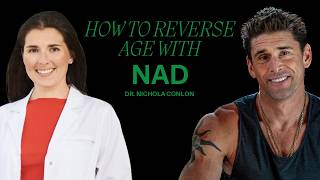
In this interview Ben Greenfield talks with Dr. Nicola Conlon, a molecular biologist and founder of Nuchido, about the biology of NAD+, why it matters for energy production and cellular repair, and why most biohacker approaches miss the mark. They explain that NAD+ is a ubiquitous redox cofactor that cycles between oxidized and reduced forms for mitochondrial ATP generation, and serves as a consumable co‑substrate for DNA repair enzymes and sirtuins. NAD+ levels decline roughly 50% every 20 years due to reduced activity of the salvage‑pathway enzyme NAMPT and increased consumption by the inflammatory enzyme CD38. Simple precursor supplementation (NR, NMN) often fails because the bottleneck is the impaired salvage pathway, leading to nicotinamide buildup, activation of the methyl‑transferase NNMT, and wasteful methyl‑nicotinamide excretion. Dr. Conlon critiques NAD+ IVs and patches as biologically implausible and potentially pro‑inflammatory. She describes Nuchido’s oral “TIME+” formula, which combines nicotinamide (a stable B3 precursor) with ingredients that (1) activate NAMPT (rutin, alpha‑lipoic acid via AMPK), (2) inhibit CD38 (apigenin from parsley), and (3) block NNMT‑mediated methylation (EGCG from green tea). Clinical data from a double‑blind, placebo‑controlled crossover trial showed that TIME+ raised intracellular NAD+, increased NAMPT expression, reduced inflammatory cytokines, lowered glycated serum protein, and reversed biological age by ~1.3 years in 28 days, with secondary benefits to sleep, skin quality, energy, and HRV. Lifestyle factors such as exercise, fasting, caloric restriction, and adequate sleep also naturally boost NAMPT, while chronic inflammation, sedentary behavior, and poor sleep exacerbate NAD+ loss. The conversation ends with practical advice on supplement use, the limited evidence for NAD IVs, and upcoming talks at the Health Optimization Summit.
Chapters
I think a lot of people don't really realize, like, what an NAD+ supplement actually is.
An important point to make is that NAD+ is naturally found in every single cell in our body anyway. There's two main things to remember when it comes to NAD+ that it's important for. The first thing is energy production in our mitochondria, and the second thing is for cellular maintenance and repair. That's general rule of thumb: high NAD+, lots of energy, lots of repair. Low NAD, less energy, less repair. That's like how you can remember it in the most simplest terms.
Ben Greenfield: My guest on today's podcast is Dr. Nicola Conlon. She's a molecular biologist who specializes in the study of cellular aging. She had a career in drug development, and then she founded a company called Nuchido, which specializes in anti-aging, rejuvenation, and healthspan. By boosting NAD+ levels. So, all the shownotes are going to be at BenGreenfieldLife.com/NAD+, like P-L-U-S, BenGreenfieldLife.com/NAD+. Here we go. Alright, Nicola. So, I took NAD today and like a lot of people, I thought I was taking NAD, but if you look at the label, it doesn't actually say NAD. It's got, like a lot of these products will say, nicotinamide, I think nicotinamide, or is it niacinamide?
The niacinamide and nicotinamide are actually structurally the same thing.
All right, good. So, I'm not confused that some people say one thing and some say another. I think a lot of people don't really realize what an NAD supplement actually is or how they're designed. And, you're kind of the GOAT with this stuff. You're a molecular biologist who studies aging and knows a lot about NAD. So, I eventually want to get into this idea of why a supplement says like NAD a lot of times on the front of it, but then if you look at the label, that's actually not listed as an ingredient. But before we even get into that, I would love for you to describe why people might want to think about NAD in the first place in terms of what it does, in the body, like how the body produces it and recycles it? Because I know there's some pretty complex pathways, but of anybody, you could probably explain them.
Yeah, I mean, that's a great question. First of all, what you said about people having their NAD and then looking and going, but this has got no NAD in it, like, where's my NAD? And getting really confused. That's probably one of the most common questions that I get. But the other thing is, you know, about what NAD actually is. So an important point to make is that NAD is naturally found in every single cell in our body anyway. So this is not something that we're trying to artificially add or boost or anything like that. It's something that's naturally in our cells and it's involved in many different reactions in our body, uh, over around 300 different reactions. But what I always say to people is there's two main things to remember when it comes to NAD+ that it's important for. The first thing is energy production in our mitochondria. So NAD+ is part of the Krebs cycle. That literally helps to take the energy out of our food and turn it into ATP, which is the energy currency of our cell. So without NAD+, we wouldn't be able to perform that critical act of respiration in our bodies. And the second thing that it's really important for is for cellular maintenance and repair. So aside from its role in energy production, NAD+ also acts as a fuel for a lot of the repair enzymes and pathways in our cells. So you know, constantly our cells are getting damaged. They're having to make sure that this damage is repaired. And a lot of the different processes that repair this damage actually rely on NAD+ as a fuel to power this repair. So that's general rule of thumb. High NAD+, lots of energy, lots of repair. Low NAD+, less energy, less repair. That's like how you can remember it in the most simplest terms.
Okay. So if NAD+ is part of the Krebs cycle, And by the way, as a part of the Krebs cycle, would you call it an enzyme, a cofactor, or protein? What's the proper terminology?
I guess for NAD, it's a redox molecule. Okay. So, NAD is specifically designed in its structure to flip between different states. So, what it does is it flips between its oxidized form and its reduced form. And essentially, the change between these two states is whether NAD is holding onto or donating electrons. And it's these electrons that are important for something called the electron transport chain, and that is the system in our mitochondria that creates ATP. So that's what NAD is important for there.
Right. So acceptance and donation of electrons would be its role as a redox agent in the Krebs cycle. And so that would make sense in terms of its contribution to energy production after you consume food. But for the DNA repair piece, is it simply that it plays a role in cellular repair because the body is using the ATP from the Krebs cycle to allow for the energy necessary for repair? Or does NAD+ play a different role than a redox agent when it comes to the DNA repair piece?
Yeah, it plays a completely different role. So, in terms of the repair and things like the DNA repair enzymes and things like that. It actually acts as a, what we call a cofactor substrate. So again, I sort of get people to visualize this as a fuel. It's like the fuel for these enzymes so that they can work. And the interesting difference is that when NAD+ is used for this fuel purpose to activate repair, it's actually used up. So it's broken down into its precursors, whereas when it's used for energy production, it's not broken down. It just flips between these states of losing and gaining electrons. So it's not actually used up in that state. It stays the same amount of total NAD+. It's just in a slightly different form. But when it's used for repair, it's actually completely degraded back into its precursors or its building blocks.
Okay. And I would imagine that's where recycling comes in because the body has to somehow get NAD+ back into action for the DNA repair piece.
Exactly that. And I guess this is one of the, the biggest myths about NAD+. Is that, you know, people think we get it from the outside, we get it from our diet, like somehow we are obtaining it from an external source. But actually our body makes all the NAD+ it needs. And well, technically not quite true. There's a little bit that does come from the diet, but the majority of our NAD+ is actually made within ourselves. And our body has quite a cool little process for doing this. It's something called the NAD+ salvage pathway. And what happens is when NAD+ is used up, so when it's used for repair or it's activating things like the sirtuins, which again are something that kind of goes hand in hand with NAD+, it's actually consumed. It's broken down into one of its precursors, and that precursor is something called nicotinamide, which we mentioned before. And then what happens is this nicotinamide is then literally picked back up by the cell. And it's converted back into NAD again through this salvage pathway. And there's an enzyme in this pathway called NAMPT, and that's the main critical enzyme in this pathway. And it's quite a cool little way for the cell to manage its NAD levels effectively. Because if you think about it, if NAD demand goes up, more of that NAD is gonna be used. It's gonna be broken down. It's gonna form more precursors that then are essentially the raw material that the body then needs needs to then produce more NAD. So, it means that as NAD demand goes up, the activity of the salvage pathway also goes up, which then meets the demand for the NAD supply.
Ben Greenfield: Okay. So, NAD, which it's nicotinamide adenine dinucleotide, right? That's what the NAD stands for. So, if the body is going to produce it in the first place, are all three of those components coming from food like the nicotinamide adenine dinucleotide, Or is it specific precursors in foods that are used to then make those? Because like you mentioned, I don't think you find much like intact NAD+ in food versus the precursors.
Yeah. So, NAD+ itself is, it's very unstable. So, like it's not something that survives well outside of the body. The precursors on the other hand are. So, precursors are like the building blocks for NAD+. They're much more stable. and the building blocks for NAD+ are vitamin B3, which is nicotinamide, or its derivatives. So you'll hear of things like, um, nicotinic acid, niacinamide, um, nicotinamide riboside, um, nicotinamide mononucleotide, NR, and NMN. So these are all just slightly structurally different versions of this vitamin B3 precursor, and it's those different precursors that the body actually uses to make NAD+. So yes, what you were saying about diet, we do get those things from our diet, but ultimately that pool of NAD+ that we have in our bodies is just constantly turned over. It's constantly made and recycled and made and used up and recycled again. It's not like once it's used and it's gone, we then have to get more precursor and then ensure that's turned into NAD+. It's actually that pathway which is self-sustaining. At least it is when we're young.
Okay, got it. Yeah. And I do want to talk about that. You were talking about the precursors for nicotinamide? Is it pure happenstance that the word nicotine sounds like nicotinamide, or can people take solace in the fact that their Zen pouches are restoring their NAD levels?
No, definitely not. It's just a complete coincidence. Yeah.
So, the trope that you hear online is, well, your NAD levels decline with age. And so, as you age, it becomes more important to take some kind of supplement that will restore NAD levels. It sounds to me like from what you were just hinting at, that's true, but I would love for you to get into that, like what actually happens when we age and if there's something to this idea of supplementing to restore what we lost so we can continue to make energy and repair DNA.
Yeah, absolutely. So obviously we've known about NAD for a long time for energy production, but its role in terms of repair and regeneration, that's a much more newer area of science. And when scientists realize that NAD actually declines with age quite substantially, so it's estimated a half every 20 years, and this is, this is from birth. So even by the time you're 20, it's half. Then by the time you're 40, it's halved again. What they realized was that, okay, this molecule that's actually very important for keeping our repair switched on declines significantly with age. So why don't we prevent this decline? So at this point, we didn't really understand why it was declining. We knew it was declining, but didn't really know the mechanism behind it. So people started to look at all different ways to boost NAD+, and one of the most obvious ways was to try with pure NAD orally. Very quickly we realized that's not a possible way because it's very unstable. It gets degraded.
By the way, I'm assuming that's like synthesized in a lab, the pure—
Yeah, synthesized. Yeah, like chemically synthesized NAD. I mean, by the time you even put it in your mouth, there's probably no NAD left because it degrades just in a bottle. So yeah, it— what's crazy is the amount of companies on Amazon still selling, um, you know, the highly pure, purely certified NAD, which will just not have any NAD in it by the time gets to your house.
Not to rabbit hole too much, because we might get to this, but could you theoretically like reconstitute it and figure out a way to inject it in the bloodstream or intramuscularly to skirt those issues?
In the lab, if we do any experiments with NAD+, the NAD+ is frozen and it's stored in very particular conditions. And if you're going to use it, you have to get it out and reconstitute it and use it within a very specific timeframe. So it's a tricky thing to work with. But this is why precursors became exciting because everyone was like, okay, these precursors are the building blocks. They are not as unstable. You can take them orally. They go into the body. And if you give the body more of the raw material, hopefully it'll produce more NAD again. And we know to a certain point they do. But then we started to see all of the research coming out, which shows us why NAD declines. And the big sort of gaping hole in this precursor theory was the main reason why NAD declines is because that main enzyme, that NAMPT enzyme in the salvage pathway, that makes and recycles NAD+ from these precursors declines with age. So it's kind of like if you go in a factory, you saw production's gone down, you realize that the machines weren't working. Like, there's no way that you would think it would just be a good idea to just keep on loading the factory with raw material and hope you're gonna get more NAD+ out at the end.
Right.
And that's effectively what we now realize with just supplementing with simple precursors like NR or NMN. You can give the body as much as they want, but if you don't have this salvage pathway to actually turn them into anything, then you are not going to effectively boost or sustainably boost your NAD levels.
Okay. So, it's a reduction in NAMPT. And would there be factors besides just age alone that might aggravate or contribute to that reduction? The reason I ask, by the way, is because I've personally found, and this is anecdote, I don't know of any actual controlled studies on this, that supplementing with some form of NAD seems to help me quite a bit with sleep deprivation. So, I'm wondering loss of sleep, chronic inflammation, are there other lifestyle factors beyond age that would contribute to that reduction of NAMPT, NAMPT?
Yeah, we'll call it that. Yeah, no, absolutely. So we know that the natural ways to activate NAMPT, which by the way is an enzyme that does naturally fluctuate, it goes up and down because it almost acts like a bit of an energy sensor in the cell. So the things that make NAMPT become switched on and produce NAD+ is when the body senses an energy stress. So this sort of idea of homeostasis where a little bit of stress kind of pushes us in the right idea. The right direction to, um, have repair and things like that. So if you look at anything that causes an energy stress, so exercise, fasting, both of those things naturally switch on NAMPT because what does that do? That increases NAD+ production. And what does NAD+ do? It gives us more energy and it gives us more repair to help the cells survive that period of stress. So on the flip side, if you look at a lot of people's lifestyles, we are sedentary way more than we ever should be, way more than evolution designed our bodies be. And we're also eating a lot more often and a lot more calorific foods than again, our bodies were ever designed for. So, you know, one of the theories is that the reason that people are becoming much more chronically depleted in NAD+ is simply our lifestyles. We're not giving our bodies that little bit of hormetic stress to actually switch on NAMPT and, you know, increase NAD+ production. And sleep, sleep. Sorry, I missed your other question. Sleep. Really? Yeah, really interesting one. So this I think is an area That's not spoken about enough when it comes to NAD+. So sleep and our levels of NAD+ are actually critically important for regulating our circadian rhythm. So our whole circadian rhythm, our 24-hour sleep-wake cycle, and not just sleep, but our hormones, our metabolism, everything is controlled by two transcription factors in our cell called CLOCK and BMAL. And these transcription factors basically switch on about 20,000 different genes on and off on a 24-hour cycle. And NAD is one of the biggest factors, or the level of NAD is one of the biggest factors that actually influences these transcription factors. So as your NAD levels fluctuate throughout the day, these influence your circadian rhythm, which is why NAD levels have such a big impact on quality of sleep. So that's probably why you've noticed that.
Okay. I have another question related to the drop in NAD. But I might need another clarification before asking it. And that's with this enzyme, the NAMPT, is the reduction in it only going to influence the NAD activity that's involved with DNA repair or would the reduction of it also influence the NAD used for energy? Because it sounds to me like with energy, NAD isn't getting used up, it's just getting oxidized and reduced. But with DNA repair, it's actually getting used up.
So it will overall lower the levels of NAD+ that are available. And if you think about NAD+, it almost has to be prioritized in the cell. There's certain things that are gonna grab it and use it. So energy production is one, you know, NAD+ in the mitochondria is, is slightly different because it's, it's a different pool. If you think of the mitochondria and the NAD+ inside the mitochondria, it's kind of enclosed in its own little membrane. So that pool kind of sits separately to the NAD+ pool that's in the rest of the cell. That is getting involved in DNA repair and other, other factors like that. The sirtuins then, I mean, they are, you do have DNA in the mitochondria and you do have sirtuins and things like that in the mitochondria, but genuinely we think of them as sort of separate pools. But overall, anything that's impacting NAD+ production impacts everything. But the ones that are impacted the most are the ones that are the consuming enzymes.
That leads to my question, which is if, the Krebs cycle is where NAD assists with ATP production. I know that glucose is utilized in the Krebs cycle to make ATP. Could shifting to just like a higher fat diet and mitigating carbohydrate consumption allow for a slowing of the reduction in NAMPT and almost the ability to be able to hold on to slightly higher NAD levels?
Kind of. But again, in those different— when you're switching between different metabolic respiration, you know, glycolysis or aerobic respiration, oxidizing fatty acids, oxidizing glucose, you're still using NAD in its redox form. So where it's flipping between states, it's still not getting used up. The really critical things that drain our NAD supplies are repair. So number one, repair. So DNA repair, but actually perhaps even more important than that is is inflammation. So we know that one of the most prolific NAD-consuming enzymes in our cells is something called CD38. And CD38 is basically an enzyme that triggers inflammatory responses in the cells. So if you think of the sort of inflammatory cascade, it kind of sits at the top. And if there's any inflammation going on, it gets activated and it sounds, it sends a downstream message to switch on inflammation in the cell. And the way it does this is by using NAD+ as a fuel to drive its enzymatic activity. So what we see is in people that are either chronically inflamed or generally older people who have much higher levels of just lower-grade smoldering inflammation, we see increased expression of this CD38 enzyme in their cells. And this again is, is, is constantly consuming NAD+. And just to put it into perspective of how much it consumes. So if you imagine, again, NAD is a fuel. So for one cycle of CD38's enzymatic activity, it uses around 100 molecules of NAD just for one cycle. For something like the DNA repair enzymes or the sirtuins, they use about 6 or 7. So you can see that a very small increase in inflammation can have a huge impact on NAD levels.
Okay. Now, a lot of people will have heard of NAD IVs, and I think NAD patches are also becoming pretty popular as a way to just like mainline NAD into the system. What do you think of those?
So, as, as a scientist who has studied NAD for the last decade, I personally would not have an NAD IV. This is something that I've always said because from a scientific perspective, if you look at the data, it doesn't make sense. So I know that there's a lot of anecdotal evidence out there, you know, people taking them saying that makes them feel much better. It helps with addiction. It does this, it does that. But if you just go back to the fundamental biology, the molecular biology, I'm a molecular biologist after all, and look at the evidence, it doesn't make sense for a couple of reasons. The, the first thing is that NAD+ is a very large and charged molecule. If you look at its chemistry and NAD+ has to get from the blood, which is ultimately where you're infusing it or injecting it or putting it in via a patch or whatever it is, you, you know, either in the blood or in the extracellular space, it ultimately has to get into the cells to perform its function. And cells don't let things in and out like very easily. There's very few things that can just freely diffuse across the cell membrane, but the things that cells really don't like letting in are large and charged molecules. They are literally cannot get through. So that means that our cells have to have a special door or a channel to let it in. And there's still a lot of argument over whether our cells have that door or that channel to let it in. It's thought that there are some channels, um, called CX43 channels and neurons and some of our heart cells that may let NAD+ in. But the rest of our body, it's very unknown. So the first issue is, does it actually get into the cells? And that's a big problem because the second issue is that NAD+ does not do anything useful at all in the blood. And this is an area where I hear a lot of people saying, oh yeah, NAD+ can do things outside the cell in the blood. It does things outside, but nothing helpful. The only thing that we know that NAD+ does outside in the blood is actually activate CD38 and cause inflammation, which obviously we don't want to happen. The other problem is that you're putting a huge amount of a molecule that's naturally not found outside of the cells. It's found in the cells because that's where the mitochondria are. That's where the DNA is. That's where the sirtuins, that's where NAD+ should be. All of a sudden you're putting a huge concentration into the blood, which is outside the cells, and the cells see that as a threat. They're like, oh my goodness, what has happened? So I have always had this theory that surely this must be triggering some sort of inflammatory reaction. And that's why when people have NAD IVs, they normally don't feel the best. You know, you feel sick, heart palpitations, things like that. And I've always had this as a theory. And in the last couple of months, this theory has been proven because there's a paper that's been released. It's in a preprint at the moment. I actually saw the data presented at a conference for the first time. That showed within NAD IVs in a human clinical trial that it actually causes an inflammatory reaction. So they saw an increase in white blood cells, neutrophils, cytokines. Again, it makes complete sense. You're putting a huge amount of an intracellular molecule outside the cell. The body's gonna think, what the heck has happened? Is there a trauma? Is there some damage? And it elicits a unspecific inflammatory reaction to deal with whatever the perceived stress is. So I think that's really going to throw a cat among the pigeons in terms of IVs. But again, scientifically, it kind of makes sense.
Yeah. Okay. So we don't know whether it's getting into the cell. It sounds like it would be difficult, but the mechanisms remain unclear. But we do know that it causes inflammation. So we can't say for sure, but you'd be hard pressed to find good evidence that it would be helping. So you're simply relying on anecdotes that people say they feel great. Afterwards. And I fit into that category. Like, I feel awesome after I get an NAD IV in terms of just like energy, sleep that night. But I realize that's anecdotal. I'm n 1. But what about some people who are using like niagen now, which is I think NR if I'm not mistaken, as an IV?
Yeah. So, NR is just a precursor. So, you've got the same issues where if you take a precursor, orally or take it via an IV, it doesn't matter where, how you take it. You are still just giving the body more of the raw material without fixing the salvage pathway.
Okay.
And actually what, again, we're now seeing some issues with this associated with this. So for example, we spoke before about the fact that if you, the main reason for NAD decline is first of all, the salvage pathway, that enzyme that's not recycling the NAD when it's being broken down. So what should happen is NAD+ should be used up, it should be broken down into its precursor, which is nicotinamide, and that nicotinamide should be recycled back into NAD+. If you don't have adequate levels of that salvage pathway working because of the dysfunctional enzyme, what happens is we see a buildup of the precursor. So we see a buildup of nicotinamide in the cell, and cells don't like it when things build up. So when it's not getting recycled, it's building up, the cell's like, oh my goodness, we need to get rid of it. So what the cell does is it then switches on a methylating enzyme. So this is an enzyme called NNMT, right? And this methylating enzyme specifically sticks a methyl group onto the nicotinamide and it chucks it out of the cell as methyl nicotinamide for urinary excretion. So you can start to see how all of a sudden we're getting this problem where if you are ignoring these problems and you are plowing loads of precursors into the cell, whether that's oral NR or IV NR or it's NMN, that, that will be getting made into NAD+. It will be getting used once, it will be getting broken down in nicotinamide, and then this nicotinamide is just building up and building up because your cells can't do anything with it. And then the methylation problem starts to happen. So you'll probably be familiar with people saying, oh, you know, if you're taking high dose NR or NMN, you better take some trimethylglycine or SAMe or some methyl donor, especially if you're poor.
Methylation and you'll feel better. And, by the way, I've tried this and you do, but what you're saying is that the reason that you take it and you feel better in your opinion is because your cells are just crying out for extra methyl donors, not because that's a good thing but because they need it to produce or activate this NMNT.
[Speaker:Ben Greenfield] Exactly. And, this isn't an opinion actually. So, this is hard fact data. And the really interesting thing is a lot of the data comes from the clinical trials on precursors. So if you look, there's a, a clinical study done on NR, and what they show is that if you increase the dose of NR and measure how much NAD+ that turns into, um, basically as the dose goes up, it gets to a certain point where it plateaus. Okay. Then it doesn't matter how much more NR or how much more raw material you give the cell. The level of NAD+ just is flatlined. But they also measured the amount of methyl nicotinamide, and that just goes up, up, up, up, up. Because what's happening is your salvage pathway has reached that capacity where it doesn't matter how much more raw material you put in, in the factory. It's got to the point where it can't deal with it anymore, and it's just actively excreting it out of the cell as methyl nicotinamide. So, you know, the evidence is there. There's a real reason why people say take methyl donors, because it is a real problem. But for me, it's just crazy. It's like, hang on a minute. Like, this is like we're going into the drug space where we're taking a drug to fix the side effect of another drug. We're now taking a supplement.
Doctors are now recommending a caffeine or a cup of coffee during or before as well, because caffeine can increase the NAMPT activity. So a lot of times now, if you get an NAD IV or niagen, you're recommended a cup of coffee and a methyl donor. Prior. Have there been any studies that you know of that have actually looked at long-term meaningful clinical outcomes of NAD IVs?
No. So the really crazy thing is there's actually only 2 studies that have looked at IV NAD in humans to look at, does it even boost NAD? Like 2 studies ever.
Does it even boost? You mean intracellular NAD?
Yeah. Does it, what is it doing? Like, is it doing anything? And you know, first of all, the, the side effects aren't great when they're looking at the safety of it. But one study showed there was a small increase in NAD+, but it looked like the majority of the NAD+ was just getting broken down into precursors. Then it was the precursors that were getting taken up into the cells, in which case you then have the same problem that if the salvage pathway isn't working, then that's, you know, a recycling issue again. But the other, um, one basically showed it didn't increase NAD+ and it's causing inflammation. So yeah, it's a, it's a really, you know, it's probably one of the most asked questions I get. And people always say, oh, well, you know, you're gonna be biased, you have an NAD+ company. But you know, as a scientist, it's, it's like I'm only presenting what data is there. If one day suddenly there's a great clinical study and it shows amazing benefit, that's brilliant. You know, that would be great. NAD+ is a great thing to boost, but at the minute the, the science is just not what it shows. So I always I would just say have a little bit of caution there.
You know, between now and the Health Optimization Summit in London this September, I'm going to plot a way to get you to do an NAD IV with me in the VIP room because I want to see your anecdotal response and how you feel. Yeah. But yeah, I would basically tell people who are listening, we're using sub-q NAD or intramuscular NAD or IV NAD or NR. It's your own journey. And, like me, if you anecdotally recognize benefit, go for it, but the research isn't there. And, as Nicola just pointed out, there might be potential inflammatory or methyl burden on your body. So, of course, leave your questions and your comments and your feedback at BenGreenfieldLife.com/NAD+, which is where the show notes are because I would love to hear other people pipe in on this and ask your own questions about this. But as you just mentioned, Nicola, you have helped out with the design of an oral way to address Salvage Pathways and NAD precursors. It was the one that I took this morning. And like I mentioned, it's like niacinamide, which is B3, right? Yeah, B3. And then, a bunch of herbs or what look like herbs on the label. Can you go into the scientific rationale behind this new— do you pronounce it Nuchito?
Yeah, that's correct.
Nuchito. Nuchito. It sounds like a fancy Mexican chip cheese and sour cream with salsa recipe.
The name actually derives from Japanese actually. Oh, okay. So, Okinawa, one of the Blue Zones. Japanese nachos. Okay. So yeah, so when I started getting into the NAD+ space and looking at all this research and seeing that the ways people were boosting NAD+ just didn't really make sense based on what the data was showing us about why NAD+ declines, basically I started doing a lot of research on how we could develop a formulation that's actually fixing all of these root causes of decline. So something that is not only giving the body the raw material but it's also switching back on that salvage pathway by activating NAMPT. It's also inhibiting CD38 to prevent wastage of NAD+ because it's those two things combined that really cause its mega depletion. You know, you've got, as people are getting older, not only is their production going down, but also their uses, usage is going up because inflammation's increasing, damage is increasing, the body's using more. So you've got these two compounding factors that are making the whole situation worse. Then on top of that, you've also got the methylation problem. Our bodies are now— our cells are now increasing expression of this methylation enzyme that is effectively removing any precursor that could become NAD+. So you've got all these different points in the NAD+ system or this NAD+ factory that are going wrong. And what I wanted to do was look, is there a more sensible way and a more sustainable way to actually fix this issue? Because at the end of the day, if something's gone down in the body, if it's declined and we now know the reason why, surely it's better to fix the root cause of the problem rather than just kind of ignore it and, um, you know, chuck all the raw material in there. So this was, um, originally a, a pilot formulation that we, we tested. And what we found is that you actually could switch back on natural NAD+ production. So all of these issues that we were talking about, you could actually fix. So the Nuchido TIME+ formula is effectively being developed to address all of these different issues. So yes, we've got a precursor in there. So we actually use nicotinamide. We don't use NR or NMN. Simple reason being is that despite all the fuss over NR or NMN and which one's better, if you look at the head-to-head comparisons, with plain old vitamin B3, nicotinamide, there actually doesn't seem to be a benefit at taking these more expensive precursors. And actually, again, looking at the salvage pathway, nicotinamide is the precursor that our body naturally makes and recycles. And it's actually the only one out of all of them that can freely diffuse across cell membranes. So you can get it into every cell. So, right.
So, so NR, NMN would have to get reconverted back into nicotinamide to make it into the cell.
Some of them do, but— or they can get taken directly up, but they need a special channel. So remember earlier we were talking about these channels, and not every cell has the channel. Also, there's an argument that NMN doesn't actually get absorbed itself. It gets, um, turned to NR, and then it's the NR that gets taken up. There's a bit of a debate within the world, but I think the main— the— yeah, the key thing is that nicotinamide is freely bioavailable. It's very well absorbed. We know it works really well. We know it's the natural precursor So that's why we use nicotinamide. The other ingredients in there, the herbs that you mentioned, are all very much about activating and this NAD recycling pathway and dealing with some of the issues of NAD decline. So we have a couple of ingredients in there that do that. We've got two different ingredients that activate NAMPT. So one of them is rootin. So rootin actually is a direct activator. Of an AMP-T. So it directly switches on its expression.
R-U-T-E-I-N, rutin.
Uh, R-U-T-I-N. And then the other one that we use is alpha lipoic acid. And alpha lipoic acid is an indirect activator. So the way that this works is it actually switches on something in our cells called AMPK. And AMPK is like an energy sensor. It gets switched on during exercise and fasting. And it's this AMPK that actually tells our cells to produce more NAMPT. So that also works via that mechanism. So we've kind of got two different mechanisms of action that are switching back on this NAMPT enzyme.
ALA via the AMPK pathway and then rutin directly is switching back on the NAMPT.
Yes, exactly that. The other ingredients that we've got in there, so one of them is apigenin. We use this as a parsley extract. So if you see parsley on the label and like, what on earth is the parsley doing? It's actually because it's got a really high concentration of apigenin. Yeah. Good friend.
Yeah.
Um, no, really, really high concentration of apigenin. And we, the reason again, we don't use pure apigenin is that's not bioavailable. You've gotta take it in its, its raw form for its absorption. And this apigenin is actually a really, really good inhibitor of CD38. And that's important for two, for two reasons. The first, we don't wanna waste NAD, but perhaps the even more important reason, which I haven't mentioned, is when you are boosting NAD, everyone's boosting it because they want it to switch on repair or activate the sirtuins. But the reality is that if you have any inflammation in your body, which means CD38 is chronically overexpressed, CD38 has what we call a high affinity for NAD+, and that means it will grab NAD+ if it's available in the cell before any of the other beneficial things will even get a look in. So if you are boosting NAD+ and you've got inflammation and you're not inhibiting CD38, that NAD+ will be inadvertently driving inflammation rather than driving repair. And that's really important.
And I am assuming if CD38 is like cleaving NAD+ or binding to NAD+, that would then lead to a higher need for NAMPT and the salvage pathway. So it's kind of creating this deleterious feedback loop.
Exactly. It doesn't matter how NAD is being used, whether it's being used for good stuff or bad stuff, it's being used, it's being broken down, it's being turned into nicotinamide that piles up, the methylation problem gets worse, and you go around in, in this continuous cycle. And again, what we see in a clinical trial with NR is that when levels of NR increase, you actually see increased levels of something called ADPR. And that's the, the basically the downstream product that CD38 makes. So giving NR without inhibiting CD38 is actually driving inflammation. And again, this is in the clinical studies.
Let's say I was gonna formulate an NR supplement. I would want some kind of a CD38 inhibitor in there.
Absolutely. Yeah. Which is exactly why we put the CD38 inhibitor in ours. It's like, it has to, you have to address that problem. And then finally, the other sort of element in there is looking at this methylation problem. So we have green tea in there specifically for the reason that it contains a high level of EGCG, and that is an inhibitor of this methylating enzyme. Because again, we want to correct the system. So we're switching back on the enzyme. So our body should be recycling NAD+. We are making sure the NAD is used by the correct processes and that the breakdown products of that NAD are then not getting methylated, but they're actually getting recycled. So, by inhibiting that methylating process, you ensure those precursors that you have in the system are actually getting recycled and not excreted and methylated.
Yeah, I looked at a paper that you guys published that showed a pretty helpful salvage pathway that was showing that CD38 basically is producing nicotinamide, NAM, right, as it cleaves to NAD. And then, from what I could understand, the NAM is getting converted into NNMT. And because that requires increased methylation, the EGCG is acting as a sort of— is acting as a methyl donor to allow for excretion of the NNMT. NMT, or is EGCG doing something else besides it, like methyl donation?
Yeah, no, so not quite. So, so when the, the nicotinamide is broken down, sorry, the NAD is broken down in a nicotinamide that piles up in the cell and that switches on the activation of this enzyme. So NNMT is a methylating enzyme, right? So what EGCG does is it inhibits that enzyme. So, it means that the raw material, the nicotinamide, is now staying in the cell. It's not getting excreted. We're not wasting methyl donors and it's getting recycled like it should be.
Ben Greenfield: NAM would normally get converted into methyl nicotinamide. EGCG is blocking that activity. So, more of the NAD can get— or the NAD, yeah, the NAD can get reconverted. Is it the NAM that's getting reconverted via the salvage pathway? Yes. Okay. The NAM is getting reconverted in the salvage pathway to NAD+.
That's right. It's really hard to explain these without— I normally have a little diagram.
Okay. So, question is, of course, does this work? I know you guys have a paper, I'll link to it in the show notes. It came out, it was pretty recently, wasn't it? It was like last year at some point?
2024.
Yeah.
Okay.
2024. Yeah. The use of a systems approach to increase NAD+ in human participants. What'd you guys look at?
So this was, I think, really important for us to do this because as a company, we pride ourselves on being like very scientifically credible and, you know, bringing out products that actually have good data and science behind them. My background is actually in drug development, and when I left my very credible job in drug development to start a supplement company, everyone was like, oh, supplements don't work. You know, they've got no clinical evidence, da da da. And that's what I really wanted to change with this company, where we were bringing out products that have really good scientific thought and also have the data to back them up. So we did a full human double-blind placebo-controlled crossover study. This is, you know, a gold standard in terms of trial design. And, you know, we wanted to test it because the other thing was I was kind of going directly against what the whole rest of the industry was doing. Everyone was going on about NR and NMN and whether that was the best thing. And I was saying, hang on a minute. Who cares about the precursor? We need to switch back on this enzyme. We need to start our bodies naturally producing NAD again. So we really wanted to prove it worked in humans, not cells, not rats, not whatever— humans. So in this clinical study, not only did we measure NAD levels, so we show that NAD significantly increases after 7 days, it continues to rise. But more importantly, we showed that you can switch back on that NAMPT enzyme. So again, we showed that versus the placebo. There was a significant increase in the levels of this enzyme. So not only are you boosting NAD+, but you are boosting it because you are switching back on your body's own natural reproduction cycle and recycling pathway. The other things we looked at were more of the downstream effects. So again, I mentioned before, a big worry about boosting NAD+ without actually looking at CD38 or inhibiting CD38 is that you might be driving inflammation, which again is what we're seeing in some of the other studies. So one of the other important things to measure was inflammation. So we measured the levels of inflammatory cytokines in these participants, and we actually showed a reduction in inflammation. So again, we're really confident that not only are we boosting NAD+, we're doing this via switching on the people's own natural NAD+ production pathway, and then this NAD+ is actually going towards useful things rather than driving inflammation.
Okay. And then of course, the million-dollar question is, did you measure whether that was clinically meaningful when it comes to actual biological aging patterns?
Yeah. So, well, just before we answer that, one of the things we actually did measure was biological age in these participants. So we measured a couple of other biomarkers. So one was glycated serum protein, GSP. This is something that is where— it's a common biomarker measured to look at cardiovascular function. It's where, um, sugars become irreversibly bound to the proteins in our body and causes our arteries and veins, our, our arterial stiffness, things like that, our skin, our collagen to stiffen. That is a clinical biomarker in terms— we know that that leads to increased cardiovascular disease, et cetera. And again, we saw a significant reduction in levels of GSP just in the 28 days that we did this study for. The other thing was biological age. So we saw a reversal of biological age. This was measured using the GlycanAge test. of 1.26 years in 28 days as well. So we know that this is improving all around cellular health. In this study, we didn't measure any sort of, um, clinical outcomes in terms of is this affecting a disease status or is this affecting quality of life and things like that. But we have done other studies since then that aren't published. But what we did measure in those different studies were a number of things. So one of them was, um, sleep Sleep. So we get constantly reports back of an anecdotal evidence that it improves people's sleep. So we did a sleep study and showed that it increases quality of sleep significantly.
Pulling up my phone here to look at my sleep score cuz I actually took it yesterday too.
Brilliant. Yeah. Well, people look for improvements in the quality of sleep and also HRV is, is what we see in, uh, when we're talking about sleep improvement. The other things that we've measured is is if you are taking a supplement to boost cellular levels of NAD and improving cellular health on the inside, does this actually translate to improved things on the outside? So for example, our skin, because again, we were getting so much positive feedback about skin quality. So we did a study where we looked at, uh, it was a 3-month study and participants had no skincare changes, skincare treatments anything like that. They were given just the oral supplement for 3 months. We then measured their blood. We showed it gave a significant increase in NAD+, but we'd also measured their skin quality with a special camera called a Visia scanner that basically takes pictures of all the redness, inflammation, lines, wrinkles, hyperpigmentation, everything like that, and saw a significant reduction that not— was not just visible with the scanner but actually visible to the naked eye in terms of redness and rosacea. So again, we showed that on the outside you can actually see a significant change.
Probably part And that was due to the antioxidants and polyphenols that you'd be getting from parsley leaf and green tea leaf extract and things like that too, right?
Obviously, they're going to also have other benefits as well. The other things we've looked at are in terms of quality of life, energy levels, all again saw a significant improvement in those factors too.
There we go. 90% sleep score last night, 7 hours and 48 minutes. Night before, I didn't take it the day before, that was 84% at 7 hours. So, I'll keep tracking, but that's the only thing I've kind of like changed is to try taking Nuchido. Now, some people might be curious because you, of course, see the idea of hormesis being a good thing, right? Mild inflammatory bursts at certain points during the week or or mild sympathetic nervous system stressors such as cold bath, plant anti-nutrients, low-level radiation, et cetera, earthing, grounding, sunshine, cold, heat, plants, all these things that we do for health are mild hormetic stressors and therefore constantly calling inflammation or production of inflammatory cytokines might limit something like mitochondrial proliferation, muscle satellite cell growth, et cetera. So, based on that, could you make a case for the need to pulse something like Nuchido, like take it a few days on, a few days off? Do you do it 7 days a week or what's your take on that?
So, in terms of the inflammatory side, so say, I guess the theory that you're going with there maybe is that if we're going to inhibit CD38, this inflammatory drive, that maybe you're not going to get the benefits of certain hormetic stressors. When it comes to CD38, it's something where it's so chronically overexpressed that any inhibition of it is going to be a benefit rather than a hindrance. So I wouldn't say that would be a problem. Also, the other thing is that you just need to inhibit it such a small amount to have such a big impact because of how much NAD+ it uses. On the flip side, just looking at NAD itself and boosting NAD, could having too much NAD cause this problem? Again, if you look at all of these things that induce hormesis in the body, the vast majority of them then have their beneficial downstream effects by actually elevating NAD. So they are actually increasing NAD.
Okay. So you personally would be okay with taking this 7 days a week?
Yeah, yeah, absolutely. And I'm a big fan of all— I do all the things that you've mentioned, the sauna, the heat stress, the cold shock, all of those things I think are very complementary. I don't want to say it, but it's almost like in some ways, for example, the ALA in the product is mimicking the type of hormetic stress that you're getting from some of these practices like fasting, like the energy stress by activating AMPK. That's how they are. Ultimately working. And NAD+ itself is, when you look at its function, obviously it's a really interesting molecule that it has such a diverse range of beneficial effects. But the really cool thing about it is that intersection of where it sits between energy production on one side and repair and maintenance and switching on a lot of pathways on the other side. So if you think about, we haven't spoke about the interaction between NAD+ and the sirtuins. Again, the sirtuins, when they are switched on, not just having them in the cells, they've got to be switched on. We know that they activate many beneficial downstream pathways that promote cellular health, reduce inflammation, activate autophagy. The link with NAD+ is that they need NAD+ as a fuel again. So again, if you think about it, it, when NAD+ levels go up and down because of things like energy stress, that then signals to this other side of pathways in our cell that can massively influence how the cell behaves. So NAD sits at this really neat intersection between sensing the energy of the cell and almost sensing the environment to then deciding how the cell's gonna react. Is the cell gonna perceive this as stress and switch on repair? Or is the cell gonna be like, do you know what? Loads of energy, not much stress in the environment. We'll just keep NAD turned down. We'll keep NAMPT turned down, and we don't need to switch on all this beneficial repair 'Cause it costs a lot of energy. So why would we if the body's safe, the cell's safe? So it's really a neat kind of molecule at what it does and how it does it.
And would you classify green tea extract, reutin, parsley leaf, or anything else in there as being a source of sirtuins? Or would one theoretically want to still include sirtuins significantly in the diet if taking a supplement like this?
So, I mean, sirtuins, it's not something you get from the diet. Again, it's an enzyme, it's a deacetylase enzyme, but you can increase increase expression of it. Um, I guess the, the big area of, uh, conversation is what increases expression of it. There's a lot of argument that things like resveratrol can, but then there's also a lot of argument that it doesn't. Um, interestingly, we actually measured levels of sirtuin expression in our human clinical study and again showed a significant increase in the levels of sirtuin in these people. And we don't even have resveratrol in there. So we know it does increase the levels of sirtuin and it also increases levels of NAD and put them both together. You get the beneficial things happening. So, we do know that that was increased as well.
Ben Greenfield: Yeah, interesting. Okay. Well, this is pretty fascinating and obviously, there's a lot of NAD, NR, NMN supplements out there, but I've known about you and yours since the Health Optimization Summit, I think, and now I'm using it. So, You guys gave us a discount at BenGreenfieldLife.com/NAD+, where I would love to hear people pipe in on your own thoughts. I know the part about NAD IVs was probably pretty surprising to a lot of you, but I would just love to hear your follow-up questions on that because I read them and I often pass them along to podcast guests. So, Nicola might have a chance to chime in also. And then, her and I are both going to also be speaking or at the Health Optimization Summit in London this September. I'll link to that also in the show notes. Nicola, thank you so much for doing this.
No, thanks for having me. It's been great to just geek out about NAD, I guess.
And I am going to check and see if there actually is a great Mexican culinary supplement called Nachito. So, Nachito coming soon. Source, maybe there'll be like blueberry Nachito. For the extra sirtuins. But in the meantime, get your new Cheeto at BenGreenfieldLife.com/NAD+ and have an incredible week.
Perfect. Thank you.
Do you want free access to comprehensive show notes, my weekly roundup newsletter, cutting-edge research and articles, top recommendations from me for everything that you need to hack your life, and a whole lot more? Check out Ben bengreenfieldlife.com. It's all there, bengreenfieldlife.com. See you over there. Most of you who listen don't subscribe, like, or rate this show. If you're one of those people who do, then huge thank you. But here's why it's important to subscribe, like, and/or rate this show. If you do that, that means we get more eyeballs, we get higher rankings, and the bigger the Ben Greenfield Life show gets, bigger and better the guests get and the better the content I'm able to deliver to you. So, hit subscribe, leave a ranking, leave a review if you got a little extra time. It means way more than you might think. Thank you so much.
More from Ben




The Solution to Aging Might Be Closer Than Anyone Realizes - With Ben Goertzel



